Home Blog Page 5662

Graph-based digital twins to boost resilience of supply chains

NEO4J.COM

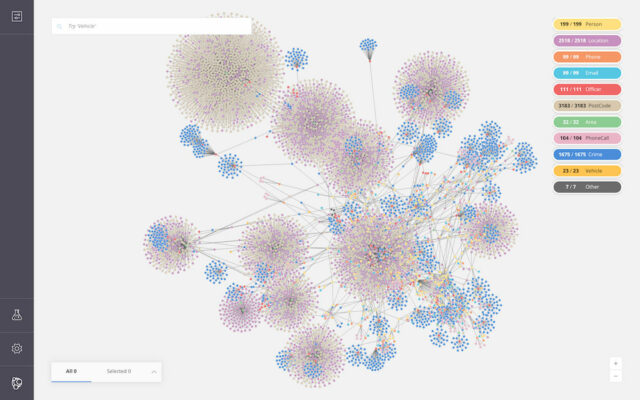
Knowledge graphs, data integration models composed of linked entities, are ideal for managing modern supply chains that run on multi-dimensional networks, an information technology specialist said. 

“What knowledge graphs do is bridge data siloes by bringing data together, and then creating a connected supply chain that … provides a trackable and in-depth picture of all the products, suppliers, and facilities, and the relationships between them,” said Maya Natarajan, senior director for knowledge graphs at Neo4j, Inc., a graph database management system. 

The pandemic — which complicated aspects of the supply chain, including finance, lead time, demand changes, and production performance — required businesses to have a deeper understanding networks and dependencies, said Ms. Natarajan in a Neo4j event on Nov. 1. 

Knowledge graphs can be used to create digital twins — or virtual representations of a physical asset, process, service, or system — which can then be augmented by real-time data from industrial Internet of Things devices.  

Constructing a digital twin is a way to build long-term supply chain resilience, according to management consulting firm McKinsey & Company; the virtual replica allows businesses to simulate how a product, process, or service performs before it is implemented.   

You can get granular with knowledge graphs, as these “give you an accurate representation of what’s actually happening in reality,” said Michael Moore, Neo4j’s principal for partner solutions and technology. 

Mr. Moore cited the example of a bulldozer manufacturer that can have digital twins for every single bulldozer its manufacturing line produces. This, he said, allows a view of each equipment’s sales contracts, warranties, and customizations. Metadata can also be included in the digital twin to list each equipment’s vendors and buyers, as well as information like when the equipment was last serviced and for which issue.  

“We start to bring in all of that context with knowledge, for you to make good operational decisions on how you want to build and manufacture this particular product,” Mr. Moore said in the same event.  

“By putting your digital twins — whether that’s a supply chain or manufacturing digital twin — into a graph database, your ability to get real-world fidelity is very, very high,” he added. — Patricia B. Mirasol

As yen tumbles, gadget-loving Japan goes for secondhand iPhones

APPLE.COM

TOKYO — For years Japanese shoppers eagerly shelled out for the latest gadgets, but now a tumbling yen has put new iPhones out of reach for some and sparked a growing secondhand trade in a major market for Apple Inc. 

The Japanese currency’s fall to a 32-year low against the dollar has squeezed consumers and accelerated a broader spending shift in the world’s no. 3 economy. Industry watchers say Japan’s shoppers have become more open to buying secondhand, thanks in part to the rise of online auction sites. 

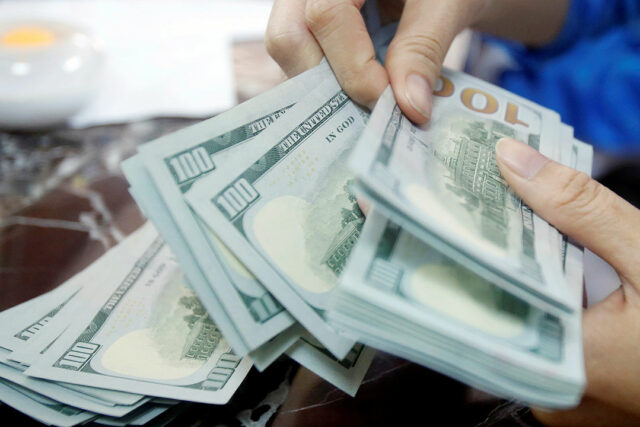
In July, Apple hiked the price of the entry-level iPhone 13 by nearly a fifth. The basic iPhone 14 later debuted at 20% more than the iPhone 13 did, even as the US price stayed flat at $799. While the dollar has surged against global currencies this year, the yen has been particularly hit, dropping 22%. 

Salaryman Kaoru Nagase wanted a new phone but couldn’t justify the price of an iPhone 14, which starts at 119,800 yen ($814). Instead, he bought a used iPhone SE 2 in Tokyo’s Akihabara electronics district for less than a third of that. 

“At more than 100,000 yen the iPhone 14 is too expensive and I just can’t afford it. It would be fine if the battery lasted for 10 years,” he said. The iPhone SE 2, released in 2020 but without the dual rear camera of the iPhone 14, was a “good balance” of cost and features, he said. 

Apple declined to comment for this story. But in an annual regulatory filing last month, it said Japan sales fell 9% in the year ended September 24 due to the yen’s weakness. 

Apple Chief Financial Luca Maestri also acknowledged to analysts last month that the strong dollar had led to price increases for its products in some countries, but sales had still grown by double digits in Indonesia, Vietnam and other markets facing currency challenges. 

Sales of used smartphones grew nearly 15% in Japan to a record 2.1 million in the last financial year and are likely to reach 3.4 million by 2026, according to technology market research firm MM Research Institute.  

100,000 YEN BARRIER
Taishin Chonan bought a used iPhone 13 after the screen cracked on one of the two devices he carries for personal use. The replacement has higher resolution and a better battery and camera than the iPhone 7 he had been using. 

“Up until now I’d only ever bought new phones, this is my first time buying used,” the 23-year-old said. “The new models are expensive.” 

Even after the price hikes, the iPhone 14 sold in Japan is the cheapest among 37 countries when tax is taken into account, MM Research Institute said in a September survey. More yen weakness could prompt Apple to raise prices again, the research firm said, potentially denting its hefty 50% share of Japan’s smartphone market. 

The latest iPhones are now priced above the 100,000 yen level that is a “major psychological barrier” for many shoppers, said Daisuke Inoue, chief executive of Belong Inc., a unit of trading house Itochu Corp. that sells used phones and tablets online. 

Average sales on Belong’s Nicosuma e-commerce site have trebled since Apple raised prices in July compared to the average over the previous three months, Mr. Inoue said. At Belong’s operations center outside of Tokyo, shipments of used phones were unboxed and sorted before being inspected, graded and cleaned by rows of workers at long tables. 

The phones were then photographed from multiple angles for sale online. Belong uses Itochu’s global network to help it source used devices both in Japan and overseas, depending on where the best prices are, Inoue said. 

Some of the devices are bought from businesses, such as tablets previously used for payments in cafes or displays in taxis, he said. 

Many Japanese have traditionally been wary of secondhand items, including electronics, but that is changing. 

Marketplace site Mercari has seen strong growth in sales of used smartphones, while sales of home appliances and electronics have also grown, a Mercari, Inc., spokesperson said. 

With Japan open again to foreign tourists, the secondhand iPhone market is getting another boost. 

Retail chain Iosys Co. Ltd. has seen a surge in foreign tourists buying used iPhones in the last two months. 

“The yen just keeps weakening,” said Iosys executive Takashi Okuno. “That trend of visiting Japan and buying an iPhone is coming back.” — Reuters

Developing countries need $1 trillion a year in climate finance — report

ILIGAN CITY DRRMO

SHARM EL-SHEIKH, Egypt — Developing countries need to work with investors, rich countries, and development banks to secure $1 trillion a year in external financing for climate action by the end of the decade and to match that with their own funds, a report said on Tuesday. 

The report, released ahead of talks on climate change finance at the COP27 summit in Egypt, said the funding was required to cut emissions, boost resilience, deal with damage from climate change and restore nature and land. 

“The world needs a breakthrough and a new roadmap on climate finance that can mobilize the $1 trillion in external finance that will be needed by 2030 for emerging markets and developing countries other than China,” said the report, commissioned by the current and previous climate summit hosts, Egypt and Britain. 

It said the total annual investment requirement of developing countries would hit $2.4 trillion by 2030, with half coming from external financing and the rest from public and private sources in those countries. 

Current investment stands at around $500 million, it said. 

The biggest increase should come from the private sector, both domestic and foreign, while annual flows from development banks should be tripled, it said. Concessional loans, which offer more favorable terms than markets, should also be stepped up. 

“Unlocking substantial climate finance is the key to solving today’s development challenges,” said Vera Songwe, one of the report’s authors. 

“This means countries must have access to affordable, sustainable low-cost financing from the multilateral development banks to help crowd in investments from the private sector and philanthropy.” 

Delegates at the climate summit in Egypt are expected to focus on financing issues on Wednesday. 

The report also calls for grants and low-interest loans from the governments of developed countries to double from $30 billion annually today to $60 billion by 2025. — Reuters

China’s trade unexpectedly shrinks as COVID curbs, global slowdown jolt demand

REUTERS

BEIJING — China’s exports and imports unexpectedly contracted in October, the first simultaneous slump since May 2020, as a perfect storm of coronavirus disease 2019 (COVID-19) curbs at home and global recession risks dented demand and further darkened the outlook for a struggling economy. 

The bleak data highlights the challenge for policymakers in China as they press on with pandemic prevention measures and try to navigate broad pressure from surging inflation, sweeping increases in worldwide interest rates and a global slowdown. 

Outbound shipments in October shrank 0.3% from a year earlier, a sharp turnaround from a 5.7% gain in September, official data showed on Monday, and well below analysts’ expectations for a 4.3% increase. It was the worst performance since May 2020. 

The data suggests demand remains frail overall, and analysts warn of further gloom for exporters over the coming quarters, heaping more pressure on the country’s manufacturing sector and the world’s second-biggest economy grappling with persistent COVID-19 curbs and protracted property weakness. 

Chinese exporters weren’t even able to capitalize on a prolonged weakening in the yuan currency since April and the key year-end shopping season, underlining the broadening strains for consumers and businesses worldwide. 

The yuan on Monday eased 0.4% from a more than one-week high against the dollar reached in the previous session, as the weak trade data and Beijing’s vow to continue with its strict zero-COVID strategy hurt sentiment. 

“The weak export growth likely reflects both poor external demand as well as the supply disruptions due to COVID outbreaks,” said Zhiwei Zhang, chief economist at Pinpoint Asset Management, citing COVID disruptions at a Foxconn factory, a major Apple supplier, as one example. 

Apple Inc. said it expects lower-than-anticipated shipments of high-end iPhone 14 models following a key production cut at the virus-blighted Zhengzhou plant. 

“Looking forward, we think exports will fall further over the coming quarters … We think that aggressive financial tightening and the drag on real incomes from high inflation will push the global economy into a recession next year,” said Zichun Huang, economist at Capital Economics. 

Growth of auto exports in terms of volume also slowed sharply to 60% year-on-year from 106% in September, according to Reuters calculations based on customs data, reflecting a transition from demand for goods to services in major economies. 

Overall exports to China’s major markets of the United States and European Union also slumped in October, off 12.6% and 9% year-on-year, respectively.  

DOMESTIC WOES HAMPER GROWTH
Almost three years into the pandemic, China has stuck to a strict COVID-19 containment policy that has exacted a heavy economic toll and caused widespread frustration and fatigue. 

Feeble October factory and trade figures suggested the economy is struggling to get out of the mire in the last quarter of 2022, after it reported a faster-than-anticipated rebound in the third quarter. 

The Ukraine war, which sparked a surge in already high inflation globally, has added to geopolitical tensions and further dampened business activity. 

Chinese policymakers pledged last week to prioritize economic growth and press on with reforms, easing fears that ideology could take precedence as President Xi Jinping began a new leadership term and disruptive lockdowns continued with no clear exit strategy in sight. 

Tepid domestic demand, partly weighed down by fresh COVID curbs and lockdowns in October, hurt importers. 

Inbound shipments declined 0.7% from a 0.3% gain in September, below a forecast 0.1% increase, marking the weakest outcome since August 2020. 

The harsh impact on demand from strict pandemic measures and a property slump was also highlighted in a broad range of Chinese imports; purchases of soybeans declined to eight-year-lows last month while copper imports fell and coal imports slackened after hitting a 10-month high in September. 

On top of the global slowdown, frail domestic consumption will put more strain on China’s economy for a while yet, analysts say. 

“Insufficient domestic demand is the main constraint on China’s short-term recovery and long-term growth trajectory,” said Bruce Pang, chief economist at Jones Lang Lasalle. — Reuters

How corporate chiefs dodge lawsuits over sexual abuse and deadly products

PIXABAY

Hollywood producer Harvey Weinstein’s rape conviction landed him in prison. Allegations of serial sexual abuse cost him his career and his movie studio. His company went bankrupt and later settled legal claims by about 50 women. 

But one group of wealthy insiders walked away relatively unscathed — the Weinstein Company’s board of directors. 

Some women alleged that the board knew for years that the producer had paid off some of his accusers, buying their silence through nondisclosure agreements. But the studio’s Chapter 11 filing ended up legally shielding the directors. As part of the settlement, a bankruptcy judge granted the board members — some of them billionaires — lifetime immunity from lawsuits related to the movie mogul’s alleged abuse. 

Most of Weinstein’s accusers approved the settlement, with its liability releases. But eight voted against it, and four jointly filed a formal objection to the releases for the directors, whom the women had sued or planned to sue. One of them, Dominique Huett, alleges Weinstein sexually assaulted her in 2010. She told Reuters she wanted the board members to answer for their actions in court. The judge’s approval of the settlement with liability releases, over her protest, “felt like I was being coerced into something once again,” Ms. Huett said. 

Such immunity grants have become a pervasive but little-understood feature of the US bankruptcy system. The releases are now granted by judges in 9 of 10 major Chapter 11 cases, a Reuters examination has found. Corporate scandals regularly bring down US companies. But their wealthy executives and directors often escape accountability for alleged wrongdoing by demanding these liability releases as a condition of any company settlement with creditors, including lawsuit plaintiffs. 

The Weinstein Company’s board members had no comment. A Weinstein spokesperson said the producer denies assaulting any women. 

The lawsuit shields, requested by the company or organization in bankruptcy, are called “nondebtor” releases because they are bestowed on people and entities that never have to declare Chapter 11 themselves. The recipients effectively get the benefits of bankruptcy protection without the associated financial or reputational damage. 

The releases shield them from any legal claims from creditors, including lawsuit plaintiffs, outside of a bankruptcy-court settlement. The released parties often include the same people who control or influence the amount and terms of the company’s proposed settlement — owners, executives or directors. 

Nondebtor releases first emerged in the late 1980s as a tool to help resolve a unique legal dispute: an avalanche of lawsuits over cancer-causing asbestos. Three decades later, the immunity grants are ubiquitous: Judges approved such releases in 90% of the largest U.S. bankruptcies completed between 2012 and 2021, according to a Reuters review of 626 cases compiled by BankruptcyData, a division of New Generation Research Inc. 

Reuters reviewed bankruptcies of companies with more than $100 million of assets. It’s the first comprehensive examination to show how pervasive these liability shields have become. 

Reuters separately examined 29 US bankruptcies that were preceded by mass tort litigation against companies or other entities, many of which included allegations involving dangerous products or sexual abuse. The review found that about 1.2 million claimants in these cases have signed away their rights to sue related parties or face pressure to approve such releases in ongoing bankruptcy-court negotiations. 

Judith Fitzgerald, a former bankruptcy judge who served for more than 25 years, called the large number of affected claimants identified by Reuters a “shock.” Some judges, she said, are handing out releases liberally and with little regard to objecting plaintiffs’ concerns. 

The 29 bankruptcies included those of 14 Catholic dioceses or religious orders and the Boy Scouts of America amid lawsuits alleging child molestation; the collapse of opioid suppliers Purdue Pharma LP and Mallinckrodt plc over their alleged roles in a deadly addiction epidemic; and the controversial “Texas two-step” bankruptcies executed by major companies including Johnson & Johnson and Saint-Gobain, which created subsidiaries to absorb their liability from lawsuits over allegedly dangerous products. 

Saint-Gobain and Johnson & Johnson said in statements that their subsidiary bankruptcies provided a fair and equitable way to resolve litigation through settlements the companies have agreed to fund. The Boy Scouts declined to comment; a judge in September approved a settlement in which the organization will pay abuse victims $2.46 billion. The United States Conference of Catholic Bishops declined to comment on the bankruptcy filings of local Catholic organizations. 

Some beneficiaries of the legal shields agree in negotiations to contribute to settlements in exchange for their releases; but others pay nothing. That was the case with Mark Trudeau, the former chief executive of opioid supplier Mallinckrodt, who was accused of playing a pivotal role in the opioid crisis that landed his company in bankruptcy. Mr. Trudeau allegedly pushed the drugmaker to boost sales of the potent painkillers by keeping patients on higher doses for longer periods. 

Mr. Trudeau and Mallinckrodt have denied any wrongdoing. They had no comment for this report. 

Plaintiff-creditors typically have little choice but to sign away their rights to sue, according to legal experts. That’s because judges suspend trial-court lawsuits during bankruptcy negotiations, leaving plaintiffs who resist settlement terms unable to seek compensation elsewhere. 

Despite the releases’ impact on some victims, halting their quest for justice, many judges, bankruptcy attorneys and even plaintiffs attorneys defend their role in the process of bringing inevitably messy disputes to closure. Most claimants who alleged abuse by Weinstein, for instance, supported the settlement. 

“The last thing they want is to have to go through years of public litigation and risk getting nothing at the end,” said Debra Grassgreen, who represented all unsecured creditors, including lawsuit plaintiffs, during the January 2021 court hearing to finalize the agreement. The women, she said, chose the “certainty and privacy” offered by the settlement. 

Here’s how the process for granting nondebtor releases works: Judges must approve the bankruptcy reorganization plan that contains the settlement terms, including the releases. They typically view the liability shields as a tool that makes the organization in bankruptcy, along with related parties receiving the releases, more willing to pony up money for a settlement to resolve the case. 

Creditors, including lawsuit plaintiffs, also vote on the plan, and many who have no plans to pursue further litigation accept the releases as necessary to move the negotiations more quickly toward compensation for their claims. But judges can still sign off in cases where some creditors fiercely oppose the settlement or its liability releases — as in the Weinstein Company bankruptcy. 

Some attorneys, judges and academics question the legal basis of releases that require plaintiffs to give up their constitutional right to a jury trial. In practice, they say, large numbers of claimants who are bound by the releases never approve them. That’s because individual creditors often don’t vote at all on the bankruptcy reorganization plans that include the releases, in part because the key points are buried in impenetrable legalese. Further, they argue, the releases strip the legal rights of all potential future plaintiffs who might otherwise sue over the same harms. 

Proponents of nondebtor releases counter that large and complex bankruptcies often can’t be resolved without immunity grants as an enticement for decision-makers contributing money to settlements. In trial courts, they argue, a few plaintiffs might win big, while most get smaller judgments or nothing. The releases, they say, allow more plaintiffs to get paid more quickly through settlements. 

The liability shields’ effect on plaintiffs can transcend money, however, as was the case with some of Weinstein’s accusers. Ms. Huett wanted her day in court, she said, where her accusations could be fully aired and everyone involved held accountable. 

“He had so many enablers for so many years,” Ms. Huett said of Weinstein.  

WITHOUT CONSENT
Nondebtor releases were originally designed for a narrow purpose that had nothing to do with shielding corporate leaders. 

Manufacturer Johns-Manville, overwhelmed by asbestos lawsuits, declared bankruptcy and created a first-of-its-kind trust to compensate current and future plaintiffs. Manville’s insurers received nondebtor releases in exchange for giving the trust $770 million. The intent was to prevent plaintiffs from collecting twice, through the settlement and an insurance claim. 

Congress codified the practice in 1994 in a new law that only mentioned asbestos cases. Since then, however, some federal appeals courts have found that judges have broad power to approve such releases in all kinds of bankruptcies. 

Thomas Salerno, a Stinson LLP bankruptcy lawyer who represents companies and creditors, said the releases serve the greater good. He compared them to the immunity grants prosecutors give lower-level criminals to coax their cooperation as witnesses against more serious offenders. 

“As distasteful as it is, bankruptcy is about recovery to creditors, monetary recovery — not about moral victory,” he said. 

Lindsey Simon, an associate professor at the University of Georgia School of Law, used a different comparison in a paper published in February’s Yale Law Journal. She called recipients of the releases “bankruptcy grifters” who act as “parasites” on another entity’s Chapter 11 filing. She noted in an interview that released people and entities reap bankruptcy protections without ever filing. 

Judges are split on the crucial question of the consent required from claimants to grant the releases. 

If a reorganization plan wins enough support — usually a majority of creditors who bother to vote — some appeals courts allow judges to approve the plan, with its liability releases, over the objections of a minority. 

The US Trustee, a bankruptcy watchdog within the US Department of Justice, objected to nondebtor releases in more than a quarter of the cases that Reuters reviewed, often over a lack of consent from claimants. Clifford J. White III, an attorney who led the Trustee office for 17 years before retiring in March, said judges should not take away a victim’s day in court unless that person expressly agrees to it. 

“To be voluntary, you need affirmative consent,” he said. 

Judges have mostly rejected that philosophy. Only 7% of the cases examined by Reuters contained clauses that required such explicit plaintiff consent. In cases where the US Trustee objected to liability releases, most judges declined to make any significant changes in response. 

A few judges, however, are pushing back on the immunity grants. US District Judge Colleen McMahon last year overturned a reorganization plan for opioid maker Purdue Pharma because of the liability releases it contained for the company’s owners, wealthy members of the Sackler family. 

Plaintiffs objecting to the releases appealed the bankruptcy court’s settlement approval, which landed the matter in Ms. McMahon’s court. Ms. McMahon ruled that Congress never intended to allow bankruptcy courts to force plaintiff-creditors to accept nondebtor releases in cases that didn’t involve asbestos. She called the releases an “extraordinary form of relief.” 

Controversy over such releases “has hovered over bankruptcy law for thirty-five years,” Ms. McMahon said in her ruling, which Purdue has appealed. “It must be put to rest sometime.” 

Plaintiffs alleged that Sackler family members were culpable for the harm their company’s addictive product caused. Family members have expressed regret over the opioid crisis but denied they bear responsibility, saying they always acted ethically and lawfully. 

Sackler representatives did not comment for this story. 

Fewer than 20% of the more than 600,000 eligible claimants had voted on the reorganization plan that included the releases; more than 95% of those voting approved it. In a statement, Purdue said the result signaled “extraordinarily broad support” by creditors for the proposed settlement as “the fairest and best way to deliver billions of dollars of value” to opioid victims. 

Sackler family members had offered to contribute about $4.5 billion to the settlement in exchange for the releases. After the judge rejected that settlement plan, they upped their offer to up to $6 billion — without dropping the demand for lawsuit immunity. The new settlement proposal hinges on whether an appeals court upholds or reverses Ms. McMahon’s ruling invalidating the liability releases. 

Congress is also wading into the controversies over the releases, with a bill that would severely restrict the legal shields, authored by US Senator Elizabeth Warren, of Massachusetts, and other Democratic lawmakers. Republicans have opposed a similar bill in the House of Representatives. 

Ms. Warren said in a statement that the Reuters review of major Chapter 11 filings “confirms the troubling frequency with which giant corporations are using nondebtor releases and coercive tactics… to game the bankruptcy system and escape accountability.”  

WAVE OF DEATHS, LAWSUITS
The release granted to Mallinckrodt’s Mr. Trudeau illustrates how corporate leaders use the bankruptcy process to escape potential legal liability for harms their companies are accused of inflicting. Over the years, Mr. Trudeau collected more than $100 million in compensation before the company filed for Chapter 11 protection. 

When the firm settled with plaintiff-creditors in February, Mr. Trudeau received a liability release, paying nothing in exchange for it. 

Mr. Trudeau, a veteran Big Pharma executive, became president of Covidien’s pharmaceutical division in 2012. The business was spun off to create Mallinckrodt as a separate company the following year, with Mr. Trudeau as chief executive. The new firm, among the largest US opioid suppliers, relied on sales of the painkillers for most of its growth. 

As sales surged, so did fatal opioid overdoses, growing from 23,166 in 2012 to 68,630 in 2020, according to the US Centers for Disease Control and Prevention. 

Mallinckrodt faced a swelling tide of opioid-related litigation from consumers and governments. The company filed for bankruptcy in 2020, just days after the state of Rhode Island sued Mr. Trudeau personally, alleging he pushed higher opioid sales on doctors and patients while trivializing risks. 

The liability releases in the bankruptcy-court settlement terminated the state’s lawsuit against Mr. Trudeau. Also canceled were more than 3,000 other lawsuits against Mallinckrodt, along with any future opioid-related claims against the company. 

Mallinckrodt declined to comment on the settlement or the releases. Mr. Trudeau did not respond to repeated inquiries. Details about the executive’s business moves are laid out in court documents reviewed by Reuters, including internal emails, marketing presentations and a deposition of Mr. Trudeau. 

Mr. Trudeau had taken over his new job with a strategy to increase opioid sales to boost profits. Many of the opioids Mallinckrodt sold were generic versions of oxycodone and hydrocodone. But the company’s hopes for major growth in 2012 involved Exalgo 32, a brand name drug. Exalgo 32 was the opioid hydromorphone, formulated as a slow-release capsule delivering a larger, 32-milligram dose. 

Mr. Trudeau personally requested an analysis of “patient persistency” for a meeting to discuss the launch of Exalgo 32, according to a June 2012 email to Mr. Trudeau from Mallinckrodt’s marketing vice president. That term means keeping people on the drug for longer periods of time, according to presentation slides from the meeting. “Patient persistency will be key to success,” one slide read. Some plaintiffs in lawsuits against Mallinckrodt alleged internal company documents showed the company’s intent to addict its customers. 

Mr. Trudeau, in his deposition for a separate lawsuit Rhode Island filed against Mallinckrodt and other opioid makers, testified that he did not know the meaning of “patient persistency” as it was used in the presentation, along with other language such as “increase average prescription dose.” Asked whether he bore any responsibility for the deadly opioid crisis, the executive answered: “I do not.” 

Overall, Mallinckrodt hoped to make up to $148 million a year in sales of Exalgo 32, the document showed, with about $30 million of that coming from maximized patient persistency. 

In its 2020 lawsuit against Mr. Trudeau, the Rhode Island attorney general cited scientific evidence showing that patients receiving higher doses of opioids are about nine times more likely to suffer overdoses than on low doses. That’s because their tolerance to the drug’s painkilling properties grow at a much faster rate than their ability to withstand its respiratory side effects, including dangerously slow breathing and lack of oxygen. The lawsuit alleged Mallinckrodt never disclosed those risks. 

The Rhode Island attorney general did not respond to requests for comment on its lawsuit and the liability releases granted to Mr. Trudeau in bankruptcy. 

Exalgo 32, after it went on sale, ultimately did not produce the explosive sales Mallinckrodt wanted. But the company continued selling large quantities of generic opioids. In 2017, Mallinckrodt agreed to pay $35 million, without admitting wrongdoing, to settle Justice Department allegations that it failed to report suspicious opioid orders. 

The generics served a critical business purpose: funding Mallinckrodt’s strategy to bolster its stable of drugs through acquisitions. “That’s our money generator,” Mr. Trudeau said of the generics in an interview with the St. Louis Business Journal in 2015. Rhode Island cited the article in its lawsuit. 

By 2021, Mallinckrodt had agreed to pay states, hospitals, families and other plaintiffs about $1.7 billion to resolve their opioid-related claims against the company. Then, in September 2021, the company presented a reorganization plan to US Bankruptcy Judge John Dorsey that it had negotiated with key creditors. 

Buried in that document was language conferring legal shields to a list of “Protected Parties” — including current and former officers and directors — from liability they faced in cases brought as a result of opioid claims. 

Rhode Island’s attorney general objected to the releases, arguing in a court filing that Mr. Trudeau “personally made no financial contribution whatsoever” to the fund set aside for opioid claims. An attorney representing Mallinckrodt countered at a court hearing earlier this year that Mr. Trudeau should get the release because Rhode Island had not provided evidence that the state was likely to prevail in its lawsuit. 

In a February opinion, Judge Dorsey rejected the Rhode Island objection, reasoning that allowing the state’s case to proceed could hold up the settlement for the overwhelming majority of plaintiffs that accepted its terms, a prospect he called “absurd.”  

‘NO ONE WAS HELD ACCOUNTABLE’
Another creditor whose lawsuit was halted by liability releases was Dominique Huett. 

Ms. Huett alleges that Weinstein sexually assaulted her in a Beverly Hills hotel room in 2010, when she was an aspiring actor. She sued the studio in 2017. She later added Harvey Weinstein as a defendant, and she planned to sue former members of its board of directors. 

Weinstein was fired after a spate of similar allegations that year, and most board members resigned. The company declared bankruptcy in March 2018. 

Huett is among four women who jointly filed an objection to the liability releases granted to former board members and other company officials in its 2021 bankruptcy-court settlement. Three of them alleged Weinstein sexually assaulted them; the fourth alleged a hostile work environment. All told Reuters or said in court filings that they wanted to hold board members accountable for failing to control Weinstein’s serial misconduct. All were prevented from doing so by the liability releases. 

The wealthy businessmen on the board included publishing heir Dirk Ziff and James Dolan, owner of the New York Knicks and New York Rangers. Another member was Weinstein’s brother, Bob Weinstein, who co-founded the studio. 

Ms. Huett alleged the studio’s board knew of sexual misconduct allegations against Weinstein going back to the 1990s and was aware he had settled with multiple accusers. When the board renewed Weinstein’s employment contract in 2015, it added a clause requiring the producer to reimburse the company for any future legal settlements over personal misconduct, according to a copy of the contract reviewed by Reuters. 

Ms. Huett said she wanted to force the directors to take the witness stand. “I wanted it to go to trial. I wanted it to be public record,” she told Reuters. “No one was held accountable.” 

Reuters sought comment from 10 former studio board members who faced lawsuits from Weinstein’s accusers and received liability releases in the bankruptcy. All declined to comment or did not respond to inquiries. Most have previously denied knowing of the allegations against Weinstein before they were publicly reported. 

Another of the four women, Alexandra Canosa, said the releases stopped her from appealing a dismissal of her 2018 lawsuit against former board members. Ms. Canosa alleged Weinstein raped and sexually assaulted her over multiple years starting in 2010 during a relationship she characterized as abusive. A judge ruled in 2019 that the board members could not be held liable, in part because the alleged assaults did not happen on company property. 

Ms. Canosa is still furious about being forced by a bankruptcy judge to give up her right to appeal the case. “When you lodge a case that is all about bullying and coercion, and your case ends with bullying and coercion, there is something really wrong,” she said. “It felt really humiliating. It still makes me very angry. It’s, to me, very unresolved.” 

US Bankruptcy Judge Mary Walrath approved the settlement over the objections of the four women. The directors contributed nothing out-of-pocket to the settlement, but agreed as a group, along with company officers, to stop pursuing reimbursement for about $10 million in attorney’s fees from insurance companies that covered their legal risk. That represented about half of the group’s total fees. The concession paved the way for insurers to contribute more money to a settlement with Weinstein’s accusers. 

Ms. Grassgreen, the attorney who represented all unsecured creditors in the bankruptcy, told the court most of the women supporting the settlement had a strong desire to “stop the suffering.” 

The settlement gave the approximately 50 Weinstein claimants no choice but to accept almost all of the releases. The one exception: They could opt out of giving lawsuit immunity to Harvey Weinstein himself — but only if they agreed to reduce their portion of the settlement payout by 75%. 

Ms. Grassgreen said the provision offered the women objecting to the releases their “day in court against the real bad guy.” 

The four women disagreed, calling the opt-out “re-victimization at its worst” in their filing. “It is particularly disturbing both on emotional and financial levels,” the filing said. “To preserve her right to pursue Harvey Weinstein, a rape victim must agree to release her alleged rapist” from paying most of her portion of the settlement. 

Ms. Canosa said she had to choose whether to release Weinstein before she knew the amount of her settlement offer. She reluctantly agreed, she said, rather than accepting what she called the “punishment” of being forced to take “a massive reduction in a number you don’t know.” She was ultimately paid $475,000. 

Ms. Huett, who also ultimately agreed to give Weinstein a liability release, called the forced settlement reduction a “disgrace” in an interview. 

Paul Zumbro, the Cravath, Swaine & Moore LLP lawyer who represented the studio in bankruptcy court, said neither the Weinstein directors nor the insurance carriers would have approved the settlement unless they received liability shields. The insurers, he said, also refused to allow an opt-out provision for claimants wanting to preserve their right to sue Harvey Weinstein without forcing them to accept a reduced settlement. “It was a fight (and a victory, frankly) to get any compensation for anybody who elected to opt out,” Mr. Zumbro told Reuters in a written comment. 

Judge Walrath declined to comment about her decision to impose the releases on the objecting claimants. In her ruling approving the bankruptcy settlement, she said the “exceptional” case “cries out” for imposing the releases over the objections of the four women. 

Ms. Walrath argued that the majority of women who supported the deal might receive nothing in a settlement if she denied the legal shields because insurers refused to pay without them and the studio had only $3 million to dispense to all creditors. The settlement’s collapse would leave Weinstein’s accusers with only the dicey prospect of pursuing further litigation. “The victims do not need to be put to that burden,” she said. “They have suffered enough.” 

The settlement required the about 50 claimants to compete for portions of a $17 million insurance payout, according to court records. 

Juda Engelmayer, a spokesperson for Weinstein, said he denies assaulting anyone and that the producer and Huett had a “fully consensual relationship.” Mr. Engelmayer pointed to previous public statements by Weinstein representatives saying Canosa’s allegations were untrue and “mystifying” to Weinstein, who had considered her a “good friend.” 

Mr. Engelmayer said the bankruptcy settlement was “fair and equitable” and declined further comment on the liability releases. 

New York state’s highest court has agreed to hear Weinstein’s appeal of the rape conviction that landed him in prison. He is currently standing trial in Los Angeles on a different set of rape and sexual assault charges, to which he pleaded not guilty. 

Ms. Huett said she believes her ordeal has damaged her career. Her last notable acting role was a small part on a TV show in 2015, though she hopes to find new opportunities in the entertainment industry. She spends much of her time advocating for sexual abuse victims. She declined to say exactly how much she received in the Weinstein Company bankruptcy settlement. 

When Ms. Huett first received word that the bankruptcy judge had approved the liability releases, it felt like a “gut punch,” she said. 

“They all just ended up getting off the hook,” Ms. Huett said. 

“They, essentially, got away with it.” — Reuters

Hong Kong relaxes COVID rules for inbound tour groups

LOK YIU CHEUNG-UNSPLASH

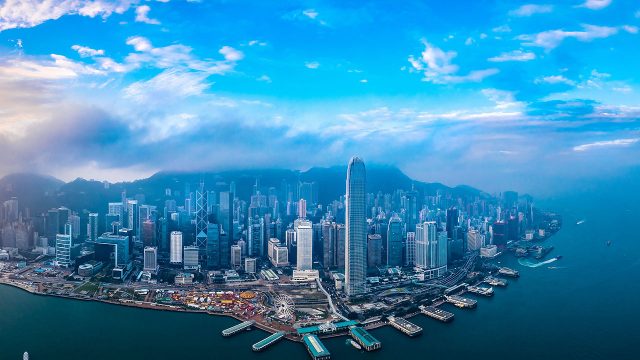
HONG KONG — Hong Kong’s government said on Monday it was relaxing coronavirus disease 2019 (COVID-19) restrictions on inbound tour groups including allowing them to enter theme parks and museums after arriving in the financial hub. 

Hong Kong has relaxed many of its stringent coronavirus policies in recent months, including hotel quarantine for international arrivals as of Sept. 26. 

International arrivals are still, however, subject to multiple coronavirus tests and barred from entering bars, restaurants and venues like sports clubs for the first three days. 

The government said specific arrangements for visiting tourists would be launched this month, without specifying a start date. 

“The relevant arrangements can support the gradual resumption of the inbound travel market in an orderly manner and provide more favorable business environment for the travel trade,” the government said. 

The announcement came after Hong Kong last week hosted a high-profile financial summit for which more than 200 financial executives who flew into the former British colony were exempted from Hong Kong’s rules for international arrivals. 

Many local residents have pointed to inconsistencies in government policy and said authorities should remove the restrictions for everyone equally. 

Hong Kong’s economy has been battered by the coronavirus restrictions which have lasted for nearly three years with many small and medium-sized businesses closing down. — Reuters

Hyundai Motor Philippines expands local lineup and puts forward new era in the MPV market with the STARGAZER

Hyundai STARGAZER

Hyundai Motor Philippines, Inc. (HMPH) expands its lineup with the launch of the new STARGAZER. The brand is putting forward a new era in the local MPV segment through futuristic styling, advanced driver assistance technologies as well as premium space and comfort. This 7-seater model was made to suit Filipino families that are looking for a smart purchase that can meet their daily mobility needs and match their modern lifestyle and taste.

Future-Oriented Exterior Design

The eye-catching elements of the STARGAZER is inspired by the brand’s “pioneering spirit.” The front sports a boldly styled skid plate, flush-type radiator grille, and unique multi-face reflector (MFR) headlights. The fascia is rounded out with a horizontal LED strip that cuts across and integrates the Day Time Running Lights (DRL) and positioning lamps.

Going over to the sides, it shows off a one-curved silhouette. This sleek body and angular wheel arches help to minimize air resistance for enhanced aerodynamics. Centered around a stable body ratio characterized by a longer wheelbase of 2,780-mm, which is the largest in its class, and shorter overhangs, that translate to a roomier interior. Designed to provide better visibility and a sense of openness with the addition of a PVC-fitted delta glass between the A-pillar and side mirror as well as the quarter glass melded towards the back. Furthermore, it has flag-type side mirrors, that maximize field of view while minimizing wind noise, and 16-inch diamond cut alloy wheels.

Behind, there is a simple yet sleek bumper and rear skid plate emphasizing the model’s wide stance and stability. Completing the visual identity and high-tech image that the STARGAZER embodies is its distinct H-signature tail lamp, which spans on the entire rear.

Refined And Human-Centric Interior

The innovative exterior is complemented with a customized interior. Influences of “modern furniture” meshed with practicality are found to mimic the comforts of home living. Getting in and out or moving around the second and third rows is easy, as the STARGAZER leads in respect to head room, leg room and shoulder room. These passenger rows are also not just highly configurable but have slim seatbacks to enable a wider flat loading surface for cargo when fully folded down.

There is a total of thirty-one (31) storage spaces incorporated unto the dashboard, center console, seats, and door trims. Notable ones being the ledge beneath the front air vents for essential small items, a transferrable cup holder guide at the center for varying beverage container sizes, front row seatback table and pockets for snacks, booklets or documents, and the luggage board that can be opened to better organize trunk items. These were thoughtfully placed to ensure all-around convenience for everyone onboard whether during business or leisure trips.

The STARGAZER also has an interface that stands out both in function and design. It has a 4.2-inch TFT-LCD cluster with a digital tachometer, speedometer, fuel indicator and the like. This intuitively displays different vehicle information and is in sync with the four (4) drive modes namely Eco, Smart, Comfort and Sport. Aside from that, there is an 8-inch touchscreen display with wireless phone projection for Apple Car Play and Android Auto. Connectivity-wise, there are two (2) device holders and six (6) chargers, including a wireless power charger below the main AC panel.

Efficient And Carefully-Engineered Performance

The driving performance of the STARGAZER was fine-tuned to the regional climate and road conditions of the ASEAN region. This is evident through the excellent engine output, precise handling, trust-worthy braking, and top noise, vibration, and harshness (N.V.H.) ratings.

Running on a 1.5 Smartstream Intelligent Variable Transmission (iVT) engine, it produces 115-ps of power and 14.7 kg-m of torque. iVT is one of the brand’s flagship proprietary technologies that configured to shift gears more responsively with less delay or lag resulting to a smoother and more enjoyable ride while having better fuel economy. Whereas Smartstream, is the next-generation powertrain line of Hyundai vehicles developed for optimal airflow, heat and friction control, more effective combustion, and reduced exhaust that better regulate gasoline consumption.

Additionally, the STARGAZER has assistive functions that prevent potential accidents such as the Emergency Stop Signal (ESS), a feature that causes the brake lights to blink in the event of emergency braking which warns cars going in the same direction, and Hill-Start Assist Control (HAC), a feature that maintains force momentarily when the brake pedal is released after stopping on an incline which keeps the vehicle from rolling back.

Unparalleled Safety and Smart Technologies

The host of safety features that comes with STARGAZER is unmatched in the market. Its highly rigid chassis made up of high strength steel equate to superior mean strength and torsional stiffness that lessen deformation in the event of collisions. This is supported by a 6-airbag system (driver, passenger, side and curtain) and Tire Pressure Monitor System (TMPS) for even greater protection.

Hyundai SmartSense

It is also equipped with Hyundai SmartSense, the brand’s driver assistance system that keeps both passengers and pedestrian safe:

1. Driving Safety

a. Forward Collision-Avoidance Assist (FCA) — alerts the driver if the system detects a risk of collision from the front like sudden slow-downs or stops. In emergency situations, the system will automatically apply emergency braking.

b. Lane Keeping Assist (LKA) — makes use of the front-facing camera to detect lanes and alert the driver if the vehicle deviates from its route without using proper turning signal and automatically steers the wheel to keep the vehicle in its position.

c. Blind-Spot Collision Avoidance Assist (BCA) — monitors blind spots while driving by alerting the driver through the rearview mirror. Designed particularly for moving out of parallel parking spots.

d. Safe Exit Warning (SEW) — sends a cluster message and a warning by turning on the side mirror warning light when a vehicle is approaching from behind while someone is opening the door.

e. Driver Attention Warning (DAW) — analyzes the driver’s attention level and provides a warning as an alert to stay active

f. High Beam Assist (HBA) — switches the high beams to low beams when the system detects an oncoming vehicle on the opposite side of the road.

2. Driving Comfort

a. Lane Follow Assist (LFA) — utilizes the front-facing camera to recognize lane markers and controls the steering wheel so that the vehicle stays on its lane.

3. Parking Safety

a. Rear Cross-Traffic Collision Avoidance Assist (RCCA) — monitors rear blind spots with radar and issues an instrument cluster message, plays a warning sound and turns on the outside mirror warning lamp if a vehicle is detected. Should the driver fail to take action, the system automatically engages the brakes to prevent collision.

b. Reverse Parking Distance Warning (PDW-R) — uses an ultrasonic sensor system to detect obstacles behind and provides an audible warning when danger is detected.

c. Rear View Monitor (RVM) — provides a live rear view while driving in reverse and displays the projected trajectory while backing up.

Not only that, it possesses smart controls that allow the owner to remotely start the ignition and roll down or close the windows from outside the vehicle just by pressing and holding down the buttons of the key. This is especially helpful before getting in, when parked outdoors under the sun for an extended period.

The new Hyundai STARGAZER comes with a five-year or 200,000-km (whichever comes first) free Preventive Maintenance Service package and is already available nationwide in the following variants and colors:

 

1.5 GLS Premium IVT
PHP 1,218,000*

1.5 GLS IVT
PHP 1,128,000*

1.5 GL IVT
PHP 998,000*

Creamy White Pearl

Magnetic Silver Metallic

Dragon Red Pearl

Midnight Black Pearl

*Introductory retail nett price, excludes freight and other provincial charges

The full model specifications can be found at the official website. Discover more about Hyundai’s 7-seater MPV through the online launch premiering @HyundaiMotorPhilippines in Facebook at 7:00 p.m. on Nov. 9, Wednesday. Speak to a sales executive and book a test drive by dropping by the nearest authorized Hyundai Motor dealership.


Spotlight is BusinessWorld’s sponsored section that allows advertisers to amplify their brand and connect with BusinessWorld’s audience by enabling them to publish their stories directly on the BusinessWorld Web site. For more information, send an email to online@bworldonline.com.

Join us on Viber to get more updates from BusinessWorld: https://bit.ly/3hv6bLA.

Dollar reserves jump to $94B in Oct.

REUTERS

THE Philippines’ dollar reserves rose to a two-month high as of end-October and ended eight straight months of decline, thanks to the National Government’s (NG) higher foreign currency deposits with the central bank.

Gross international reserves (GIR) reached $94.1 billion as of end-October, up 1.9% from the $93 billion as of end-September, based on preliminary data from the Bangko Sentral ng Pilipinas (BSP).

This was 12.8% lower than the dollar reserves of $107.89 billion as of end-October 2021.

“The month-on-month increase in the GIR level reflected mainly the NG’s net foreign currency deposits with the BSP, which include proceeds from its issuance of ROP (Republic of the Philippines) Global Bonds, and upward valuation adjustments in foreign currency-denominated reserves (or non-gold reserves),” the central bank said in a statement.

Ample foreign exchange buffers protect the country from market volatility and ensure that it is capable of paying its debts in the event of an economic downturn.

The level of dollar reserves as of end-October is enough to cover about 6.7 times the country’s short-term external debt based on original maturity and four times based on residual maturity.

It is also equivalent to 7.5 months’ worth of imports of goods and payments of services and primary income.

“Influx of dollars from the ROP bond issuance increased reserves from its previous month-on-month declines,” China Banking Corp. Chief Economist Domini S. Velasquez said in a Viber message.

The Marcos administration raised $2 billion (P118 billion) from its first dollar bond issuance in October.

The BTr sold $500 million worth of five-year bonds, $750 million worth of 10.5-year bonds, and $750 million worth of 25-year sustainability bonds.

“I think some components of the GIR benefiting from improved inflows, chief of which is the ROP issuance, and better reserve position,” Security Bank Corp. Chief Economist Robert Dan J. Roces said.

According to the BSP, net international reserves rose by 1.1% to $94 billion as of end-October 2022 from $93 billion as of end-September.

Net international reserves refer to the difference between the BSP’s reserve assets (GIR) and reserve liabilities, including short-term foreign debt, and credit and loans from the International Monetary Fund (IMF).

The BSP’s reserve assets also include foreign investments, foreign exchange, reserve position in the IMF and special drawing rights (SDR).

The BSP’s foreign investments stood at $80.01 billion as of end-October, 1.7% up from $78.71 billion in the prior month, but 12.2% down from $91.20 billion in 2021.

Meanwhile, the level of foreign exchange reserves declined 11.6% to $1.45 billion as of end-October from $1.64 billion in September, and 48% lower than the $2.81 billion seen last year.

Reserves with the IMF went up by 3.2% to $739.1 million in October, from $716 million in the previous month, but 6.1% lower than the $787.3 million a year ago.

SDRs — or the amount which the Philippines can tap from the IMF’s reserve currency basket — dropped to $3.604 billion as of end-October, 9.2% lower from the $3.97 billion in October 2021.

The Philippines received $2.8 billion worth of SDRs from the IMF in August last year as part of the latter’s efforts to help countries recover from the coronavirus pandemic.

The value of the BSP’s gold holdings dipped 0.75% month on month to $8.271 billion in October. It was also 9.4% lower than the $9.13 billion a year ago.

“We think that reserves will likely stabilize soon as the country’s trade deficit narrows and remittances remain healthy. Lower global commodity prices led to lower growth of imports in September, and we expect this trend to continue moving forward,” Ms. Velasquez said.

The trade deficit narrowed to $4.821 billion in September, from the record $6.021-billion deficit in August.

“GIR would likely hover near current levels with external factors still a challenge. However, current levels and import cover also suggests monetary authorities have some ammunition to fend off currency volatility,” Mr. Roces said.

The central bank has been active in the foreign exchange market, helping the peso rebound from its record low of P59 to $1 in October. The peso depreciation has been attributed to the US Federal Reserve’s aggressive monetary tightening and the strong demand for dollars.

As of Monday, the local unit weakened by 12.9% or P7.58 from its P51-per-dollar finish on Dec. 31, 2021.

“Planned aggressive tightening of the BSP, matching the Fed point on point, will likely help buoy the Philippine peso without eroding our reserves too much,” Ms. Velasquez said.

The Monetary Board is widely expected to deliver its second 75-basis-point (bp) rate increase this month as it seeks to tame inflation and slow the peso depreciation. It has so far raised 225 bps since May, bringing the policy rate to 4.25%.

The BSP is expecting a GIR of $99 billion for this year and $100 billion for next year. — Keisha B. Ta-asan

Inflation seen to peak in last 2 months

A woman buys fresh vegetables at the Marikina Public Market. — PHILIPPINE STAR/ WALTER BOLLOZOS

HEADLINE INFLATION is likely to peak in the last two months of 2022 as holiday demand and seasonal inflows of remittances may fuel inflationary pressures, ANZ Research said on Monday.

In a report, ANZ Research said the near-term inflation outlook remains challenging, even as global oil prices are now below the $100-per-barrel level.

“The steady rise in core inflation resonates with a buoyant domestic demand. The approaching festivities and the expected seasonal increase in remittances likely indicate that economic activity will tick higher in November and December,” ANZ Research said.

“It is therefore possible that headline inflation will reach its peak in either November or December before showing signs of moderation,” it added.

Inflation accelerated to 7.7% in October, from 6.9% in September and 4% in October 2021. The October print was the fastest pace in almost 14 years. Core inflation, which excludes food and fuel volatile prices, quickened to 5.9% in October from the revised 5% in September.

For the 10-month period, inflation averaged 5.4%, still lower than the BSP’s 5.6% full-year forecast.

Bangko Sentral ng Pilipinas (BSP) Governor Felipe M. Medalla earlier said inflation will peak before the end of the year. “Of course, anything can happen but our best guess that it will peak either this month or the last month of the year,” he said in a Nov. 4 interview with Bloomberg TV.

After the higher-than-expected inflation print in October, Pantheon Macroeconomics revised its average inflation forecast to 5.7% (from 5.4% previously) this year, and to 3.6% (from 3% previously) for 2023.

“Nevertheless, our core view remains appropriate, in that the headline rate should peak before the end of this year, before sliding persistently throughout 2023, returning to the BSP’s 2-4% target range by the middle of the year, at the earliest,” Miguel Chanco, chief emerging Asia economist at Pantheon Macroeconomics, said in a separate report.

ANZ Research also said it expects inflation to return to the BSP’s 2-4% target range by the second half of 2023.

The BSP projects inflation to average 4.1% next year before easing to 3% in 2024.

Meanwhile, the government has allocated around P206.5 billion for cash transfers and subsidy programs under next year’s proposed national budget to help ease the impact of rising inflation on most vulnerable Filipinos.

“We feel and understand the plight of our countrymen as we face the unfortunate impact of the inflation due to several factors that some are beyond our control,” Budget Secretary Amenah F. Pangandaman said in a statement on Monday.

Of the P206.5 billion, the Department of Social Welfare and Development (DSWD) will receive P165.4 billion for its social assistance programs.

The Department of Health will receive P22.39 billion for financial assistance for indigent Filipinos, while the Department of Labor and Employment (DoLE) will be provided with P14.9 billion for a program that helps disadvantaged and displaced workers.

The Department of Transportation (DoTr) will get a P2.5-billion budget for fuel subsidies for public transport drivers, who are most affected by volatile pump prices. The Department of Agriculture (DA) will get P1 billion to provide fuel subsidies for corn farmers and fisherfolk. 

“We will continue prioritizing the implementation of existing programs geared to provide targeted subsidies and assistance to the most vulnerable sectors and we are hopeful that these interventions would effectively balance our need to sustain our growth momentum while cushioning the impact of global inflation,” Ms. Pangandaman said.

Next year’s budget also includes funding for the Pantawid Pamilyang Pilipino Program (P115.6 billion), pension for indigent senior citizens (P25.3 billion), and sustainable livelihood program (P4.4 billion).

An economist said the planned subsidy programs are a “prudent and pragmatic” solution to help the poorest of the poor cope with rising prices.

“Instead of giving subsidies or reduction of taxes to everyone, given the limited funds of the government after incurring large debts since the pandemic started, that should be (addressed) in the coming years through tax reform,” Rizal Commercial Banking Corp. Chief Economist Michael L. Ricafort said in a text message. — Keisha B. Ta-asan and Luisa Maria Jacinta C. Jocson

PHL seeks $600-M loan from WB

REUTERS

THE Philippine government is seeking a $600-million loan from the World Bank (WB) to support reforms that would help achieve a “resilient, inclusive and sustainable financial sector.”

The World Bank board is expected to approve the Philippines’ second financial development policy financing at its Dec. 20 meeting.

Documents from the World Bank website showed the loan aims to boost the Philippine government’s efforts to strengthen the resilience of the financial sector, expand financial inclusion for individuals and firms, and to support climate, disaster risk and sustainable finance.

“This operation builds on the reform agenda initiated under the first financial sector development policy loan and focuses on the continuity of reform implementation that spans the recent political transition,” the multilateral lender said.

In 2021, the World Bank approved a $400-million loan to help the Philippine financial sector’s recovery from the COVID-19 pandemic.

Among the programs supported by the second loan are the expansion of the Philippine Deposit Insurance Corp.’s deposit insurance coverage; strengthening the prudential supervision of banks and conglomerates, as well as the Bangko Sentral ng Pilipinas’ (BSP) capacity to address banking risks at an early stage.

The loan also supports the expansion of digital financial services through digital banks, developing a financial consumer protection program, and boosting the credit reporting ecosystem.

Reforms will also include the establishment of the Catastrophe Risk Insurance Facility, adoption of BSP requirements on climate risk management, among others.

“Supporting an inclusive economic recovery and addressing climate change risks through promoting a green economy became a priority for the Philippines. The proposed operation will enable the financial sector to play an effective role to achieve this goal,” the World Bank said.

The Department of Finance will be the program’s main implementing agency.

Development policy loans typically support policy and institutional changes needed to create an environment conducive to sustained and equitable growth as defined by borrower-countries’ own development agenda, according to the World Bank.

As of March, the World Bank was the Philippines’ third-largest source of official development assistance, with loans and grants representing 23.38% of the total.

The World Bank is currently supporting 15 ongoing programs and projects worth $4.96 billion, in areas like transport, rural development, disaster risk reduction and management, social protection, Customs modernization, and COVID-19 response. — L.M.J.C. Jocson

Driven to excel

The Entrepreneur Of The Year Philippines 2022 has concluded its search for the country’s most undaunted and unstoppable entrepreneurs. Entrepreneur Of The Year Philippines is a program of the SGV Foundation, Inc., with the participation of co-presenters the Asian Institute of Management, the Department of Trade and Industry, the Philippine Business for Social Progress, and the Philippine Stock Exchange. In the next few weeks, BusinessWorld will feature each finalist for the Entrepreneur Of The Year Philippines 2022.

Lisset Laus-Velasco
Chairperson and CEO
Global Cars Philippines, Inc.

AN IMMERSIVE, hands-on approach gave Lisset Laus-Velasco a headstart in the family business. Even at a young age, she would spend summer break working as a cashier at the family-owned gas station. In 1995, she joined the family’s dealership, first as a sales consultant before being assigned to different departments and business units.

Following its exit in the 1970s, Ford reentered the Philippine market. The Laus-owned Global Cars Philippines, Inc. (GCPI) established a small Ford dealership in San Fernando, Pampanga in 1999.

Working at GCPI, Ms. Laus-Velasco witnessed Ford’s relaunch. At that time, she was in the middle of obtaining a Master’s degree in Business Management at the Asian Institute of Management (AIM).

In 2001, her father, the late Levy P. Laus, acquired the Ford Libis dealership, where she was assigned to the finance department. She eventually took on a more active leadership role as chief financial officer.

Finance, Ms. Laus-Velasco said, was initially a challenge but she soon learned to enjoy digging into the company’s numbers. This gave her a much better understanding of the business beyond just selling and marketing cars.

This holistic understanding of the financials, operations, and servicing led her to the importance of after-sales, which she focused on when she became executive director at GCPI.

In 2004, Ms. Laus-Velasco became chief operating officer and managing director of GCPI after the company opened its third dealership in Dagupan City. Under her leadership, the company continued to expand and now has 10 Ford dealerships in its portfolio.

Ms. Laus-Velasco attributed her entrepreneurial traits to her father. She fondly recalled how her father used to bring her along to different business and social functions to expand her network, even teaching her how to change tires. This made it even harder to cope with his unexpected death in 2019.

Losing her father while bearing the responsibility of upholding his legacy was one of the most difficult times in her life. As the eldest female and head of the business, Ms. Laus-Velasco assumed the position of chairman and chief executive officer (CEO) of the Laus Group of Companies (LGC), assuring stakeholders of business continuity.

She had big shoes to fill while navigating the new, challenging family dynamics. Since then, the Laus family continued to nurture both their business and close ties through consistent family governance sessions. With their strong family bonds and shared vision, they were able to work through the challenges together.

Little did Ms. Laus-Velasco know the challenges she had to overcome would prepare her for an even bigger disruption — the coronavirus disease 2019 (COVID-19) pandemic. Seeing the need to innovate, she introduced virtual selling, where customers can buy a vehicle without leaving their homes.

Her father had always expressed his desire to help in the development of Pampanga and the rest of Central Luzon. Ms. Laus-Velasco honors her father’s legacy by continuing the programs of the Levy P. Laus Foundation. This led her to become one of Ford’s 2021 Salute to Dealer Honorees, the first Filipina entrepreneur to ever receive this honor. She was also the lone honoree from Ford’s International Markets Group.

Aside from the foundation, Ms. Laus-Velasco also champions education by providing scholarships and on-the-job training for technicians and partnering with the Department of Education (DepEd). She helped facilitate the donation of unused engines to a Pampanga technical school to provide students with hands-on experience.   

To advocate environmental sustainability, she piloted the Balik Baterya Program, which collects used lead-acid batteries at LGC-owned Ford dealerships for recycling and use in the production of new industrial and automotive batteries. The company is also exploring solar options for its offices and use of accredited disposal groups for their used oils.

In 2019, LGC partnered with Rise from Hunger, an Ayala Foundation program that provides food for undernourished children.

As a patron of Central Luzon arts and culture, Ms. Laus-Velasco also started the “HeART of Central Luzon,” where LGC dealerships hosted free art exhibits in their showrooms.

She recognizes the importance of diversity and inclusivity in the automotive industry. As a woman that had to embark on her journey in a male-dominated industry, she rose above the stereotypes by elevating her leadership and personally demonstrating her passion for cars and customer care.

Today, Ms. Laus-Velasco runs all 65 dealerships of the LGC alongside her siblings, and handling the diverse business units of the Pampanga-based conglomerate.

At the end of the day, she measures the success of the business by the happiness of her customers and her people. GCPI focuses on providing convenience, innovation and value-added services to ensure customer satisfaction.

One cannot help but think that the late Levy P. Laus would be very proud of how his daughter inherited his drive for excellence and service — this time, in the driver’s seat.

The media sponsors of the Entrepreneur of the Year Philippines 2022 are BusinessWorld and the ABS-CBN News Channel. Gold Sponsors are SteelAsia Manufacturing Corp., Uratex, and Navegar. Silver Sponsors are Intellicare, OneWorld Alliance Logistics Corp., and Regan Industrial Sales, Inc. Banquet Sponsors are Uratex and MerryMart Consumer Corp.

The winners of the Entrepreneur Of The Year Philippines 2022 will be announced on Nov. 21 in an awards banquet at the Grand Hyatt Manila. The Entrepreneur Of The Year Philippines will represent the country in the World Entrepreneur Of The Year 2023 in Monte Carlo, Monaco in June 2023. The Entrepreneur Of The Year program is produced globally by Ernst & Young (EY).

ACEN fully divests from its coal power plant unit

SCREENGRAB FROM YOUTUBE/ACENERGY

AYALA-LED ACEN Corp. has completed divesting its stake in a 246-megawatts (MW) coal-fired power plant subsidiary South Luzon Thermal Energy Corp. (SLTEC) through a mechanism that funds the transition from coal to renewables.

In a disclosure on Monday, ACEN said the move will allow the early retirement of the coal plant in Batangas, bringing the company closer to its target of 100% renewable energy generation by 2025 and its transition to cleaner technology by 2040.

“ACEN continues to blaze the trail for energy transition in the Asia-Pacific. As the company has successfully divested its coal asset, ACEN commits to a just energy transition. We have established mechanisms to ensure that stakeholder interests, especially those of the people and communities of SLTEC, are effectively addressed,” said Eric T. Francia, president and chief executive officer of ACEN.

The coal retirement was made through the energy transition mechanism (ETM), which was developed by the Asian Development Bank to “leverage low-cost and long-term funding geared towards early coal retirement and reinvestment of proceeds to enable renewable energy.”

ACEN’s divestment from SLTEC is said to be the world’s first ETM deal. Through the mechanism, the coal plant’s operating life of up to 50 years will be cut in half, which will help to reduce about 50 million metric tons of carbon emissions, the company said.

The energy company said it received P7.2 billion from the transaction for reinvestment in renewable energy projects, which it used for refinancing debt and transaction fees.

The ETM for the SLTEC plant involved P13.7 billion in debt financing provided by the Bank of the Philippines Islands and Rizal Commercial Banking Corp., and P3.7 billion in equity investments from the Philippines’ Government Service Insurance System (GSIS), The Insular Life Assurance Co., Ltd. (InLife), and ETM Philippines Holdings, Inc., for a total deal value of P17.4 billion. GSIS also invested P2.2 billion in redeemable preferred shares by SLTEC.

“Our priority is to find ways to grow and sustain our funds to ensure that we are able to provide our over two million members and pensioners their benefits. We also fully support investments that prioritize optimal environmental, social, and governance (ESG) factors or outcomes consistent with our corporate social responsibility,” said Jose Arnulfo A. Veloso, president and general manager of GSIS, in a media release.

In a separate disclosure, ACEN said its subsidiary in Australia has started construction works on its 400-MW Stubbo solar project.

Anton Rohner, chief executive officer of ACEN Australia, said the project is the company’s second 400 MW or 520-MW-direct current solar farm after the construction of its New England project, which is currently being commissioned.

The Stubbo solar project will connect to the existing 330-kilovolt (kV) network between Wollar and Wellington.

The solar farm is expected to produce enough clean energy to power more than 185,000 households. Its development includes the approval for a 200-MW-hour battery energy storage system, which will allow the project to be adapted to dispatch energy during peak hours and to provide stability to the grid.

ACEN Australia has more than 1.5 gigawatts of projects under construction or at an advanced stage of development.

Shares in the company closed 1.14% lower to finish at P6.05 apiece on Monday. — Ashley Erika O. Jose

ADVERTISEMENT
ADVERTISEMENT