Home Blog Page 5658

Senate bill requiring telcos to cover all remote areas within three years refiled

A BILL seeking to require all public telecommunications entities and internet service providers to cover all unserved and underserved areas within three years has been refiled, a senator said on Wednesday.

Senate Bill No. 329, or The Better Internet Act, seeks to provide fast, reliable, secure and affordable internet to Filipinos all over the country.

“The internet has become a necessity as indispensable as electricity and water,” Senator Mary Grace S. Poe-Llamanzares said in a Wednesday statement. “We rely on it for health, education, business, governance and more.”

The bill directs public telecommunications entities, or companies that require a Congressional franchise, and internet service providers, which operate without a franchise, to adhere to minimum standards for connection, reception, pricing, and billing practices to uphold and protect consumer rights.

“Service providers must pick up and maintain an acceptable internet speed to boost connectivity across sectors and empower our people,” Ms. Poe said.

“Undoubtedly, the internet has become an essential tool to survive and thrive,” she noted. “We should therefore bolster public access to it.”

The National Telecommunications Commission will be tasked with enforcing providers’ compliance with internet speed, quality and consistency, as well as other coverage obligations.

Service providers are also encouraged to provide a higher internet speed to their customers. There is no minimum internet speed requirement for free internet service.

Noncompliance will result in a maximum fine of P2 million per count of violation. The penalty is 1-2% of a service provider’s annual gross income if it earns less than P10 million.

 “Ensuring access to fast and affordable internet connection is not only an option if we want our country and people to be competitive. It should be a priority,” Ms. Poe said.

According to the Speedtest Global Index, Manila, which has an average mobile internet speed of only 18.49 megabits per second, ranked 110th among 139 countries or territories in internet speed as of November 2020. It has the second slowest internet speed among the 10-member Association of Southeast Asian Nations. — Alyssa Nicole O. Tan


Succession, Squid Game to face off for top Emmy award

Squid Game

LOS ANGELES — Succession, the HBO series about a conniving media mogul and his feuding family, racked up 25 Emmy nominations on Tuesday, including one for the prestigious best drama prize.

It will square off against Netflix, Inc.’s South Korean thriller Squid Game, the first non-English language show to be nominated for an Emmy.

Squid Game tells the story of cash-strapped contestants who compete for prize money, sometimes with fatal consequences.

Netflix sci-fi hit Stranger Things, and HBO’s Euphoria, about teens navigating sex, drugs, and social media, also were nominated for the drama trophy at television’s highest honors.

Feel-good series Ted Lasso will defend its title as best comedy, one of the show’s 20 nominations. The fish-out-of-water story from Apple TV+ will compete against Hacks, Only Murders in the Building, and The Marvelous Mrs. Maisel, among others.

Lasso star Hannah Waddingham, who won a supporting actress Emmy last year, said she was shocked by her second nomination because she thought: “I’ve had my minute.”

“It’s a bit of a magic moment for all of us,” she said of the show’s cast. Ten Lasso actors were nominated.

HBO’s The White Lotus, about vacationers and staff at a ritzy oceanfront resort, secured 20 nominations and scored a slot in the best limited series field.

Winners of the Emmys will be announced on Sept. 12.

Television Academy CEO Frank Scherma said the group received a record number of submissions this year, a sign that production was thriving after shutdowns during the COVID-19 pandemic.

Streaming television shows dominated the nominations, continuing a trend as audiences flock to online viewing. HBO and HBO Max received 140 nominations overall. Netflix scored 105.

‘CRYING SHAKING AND THROWING UP’
Fourteen of the nominations for Succession, which won best drama in 2020, came in acting categories. Brian Cox, who stars as patriarch Logan Roy, will compete for best actor against Jeremy Strong, who plays his troubled son Kendall.

Newcomer Severance, a psychological thriller about office workers, earned 14 nominations and will compete for best drama, leaving star and acting nominee Adam Scott at a loss for words.

“It’s overwhelming. I was really deeply surprised and flattered and honored,” Mr. Scott said in an interview.

Abbott Elementary, a new series from Walt Disney Co.’s broadcaster ABC, made its way into the best comedy race.

“Crying shaking and throwing up has new meaning to me because I real life did all three,” Quinta Brunson, who was nominated for writing and acting on the show, wrote on Twitter.

Steve Martin and Martin Short will compete for best comedy actor for Hulu’s Only Murders in the Building, about true-crime podcasters, though voters passed over their co-star Selena Gomez in acting categories.

Contenders for best comedy actress include Rachel Brosnahan for her role as a 1950s housewife and comedian on Mrs. Maisel, along with Issa Rae of Insecure and Hacks star Jean Smart.

Hacks, about a seasoned female comedian looking to extend her career, received a nomination for the second year in a row for best comedy series.

“I think it’s a really important thing, especially in this moment in time in our country, to highlight women and to tell their stories,” Jen Statsky, co-creator of Hacks, said in an interview.

For best drama actress, nominees included previous winner Zendaya for Euphoria, Laura Linney for drug-dealing drama Ozark, and Melanie Lynskey for new series Yellowjackets about high school girls forced to survive in the wilderness.

The final seasons of tear-jerker This is Us and comedy black-ish did not make the cut in major categories this year. Emmy voters also skipped over popular Western Yellowstone. —  Reuters

Cebu Pacific, PAL announce additional domestic flights as demand increases

PHILIPPINE STAR/ MICHAEL VARCAS

BUDGET carrier Cebu Pacific and flag carrier Philippine Airlines (PAL) are adding more flights to key domestic destinations, as demand for air travel continues to rise amid looser travel restrictions.

Cebu Pacific, operated by Cebu Air. Inc., on Wednesday said it will increase the number of flights from Cebu to Iloilo and Tacloban.

“We have seen consistent demand for these routes, and we hope to keep expanding our footprint as more people confidently fly again,” Cebu Pacific Chief Commercial Officer Xander Lao said in an e-mailed statement.

As the Gokongwei-led carrier expands capacity at its hubs outside Metro Manila, there will be two more weekly flights for Cebu–Iloilo and Cebu–Tacloban routes, starting Aug. 5.

Weekly flight frequency for Cebu-Iloilo route will increase to nine times from seven times weekly.

Meanwhile, the Cebu–Tacloban route will increase to 16 times from 14 times weekly.

The budget carrier said it fully restored its pre-pandemic domestic capacity in April. “The airline surpassed its December 2019 level for domestic capacity, as it (registered) 109% restoration in (the first week of) July 2022,” Mr. Lao told reporters during a gathering last week.

Cebu Pacific currently operates an average of 340 flights a day, covering 34 domestic and 18 international destinations. This is equivalent to around 64,000 seats offered in a day, the airline said.

Meanwhile, Philippine Airlines said there will be additional flights between Manila and Basco (Batanes) by the end of July.

PAL said the airline aims to help promote local tourism, as part of economic recovery efforts.

From July 24, a new Sunday frequency will bring PAL’s Manila–Basco–Manila services to four flights weekly (every Monday, Wednesday, Friday and Sunday), it said in an e-mailed statement on Tuesday.

Starting Aug. 2, the Manila-Basco-Manila services will increase to seven weekly flights, giving travelers a full week of daily morning departures from both Manila and Basco, it added.

“PAL will continue to add more flights on other domestic routes to meet the travel needs of the flying public and promote tourism, while always prioritizing safety and health concerns,” PAL Senior Assistant Vice-President for Philippines Harry D. Inoferio said.

In May, the airline said it was on track to full restoration of pre-pandemic domestic flights.

As for the international flights, the airline expects to get back to 2019 levels — except for China market — by end of the year. — Arjay L. Balinbin

France to cut nitrites in food after agency confirms cancer risk

PHOTO BY BERND DITTRICH ON UNSPLASH

PARIS — France said on Tuesday it intends to cut the use of nitrites in food after the national health agency confirmed they raise the risk of cancer, falling short of a full ban feared by processed meat makers who use it in products such as ham and sausages.

The move follows a French parliament bill in February aiming to gradually reduce the use of nitrites in cured meats, calling on the government to act based on the outcome of a review and recommendations by health agency Anses.

Anses’review, published earlier on Tuesday, confirmed a World Health Organization report in 2018 linking nitrates and nitrites ingested through processed meat to colorectal cancer.

The two substances are also suspected to be linked to other cancers such as ovarian, kidney, pancreas, and breast, Anses said, also referring to other scientific findings, as it advised cutting nitrates and nitrites to a minimum.

Nitrate is used as a fertilizer in farming while nitrite is widely used in processed meats to extend their shelf life and gives boiled ham its pink color.

The government said a ban was not justified after Anses said that, based on French people’s consumption habits, 99% of the population did not exceed the permissible daily doses for all exposures to nitrites or nitrates.

However, it would present a plan to parliament in the autumn aimed at cutting or eliminating them when possible, it said.

Processed meat consumption should be limited to an average of 150 grams per week, Anses said, or about half the 280 grams consumed by French adults.

French processed meat producers group FICT stressed that the industry had already significantly reduced nitrite use and echoed Anses’ warning of counter-effects of reducing nitrite use without alternatives.

A lower use of nitrite reduces ham’s expiry date and increases the risk of salmonella in cured sausages.

“If we caused microbial accidents because there are no more nitrites it would be even worse than the hypothetical risk mentioned,” FICT Chairman Bernard Vallat said.— Reuters

New Clark City draws interest from Singaporean investors at international road show

STATE-RUN Bases Conversion and Development Authority (BCDA) and Filinvest Land, Inc. (FLI) said on Wednesday that their recent investment road show in Singapore was “well-received” by investors, with some expressing interest in the New Clark City, a master-planned community in Central Luzon.

“We are quite pleased with the keen interest of the event’s attendees in New Clark City, in general, and Filinvest New Clark City, in particular, especially for the Filinvest Innovation Park as a location for establishing future industrial facilities in the Philippines,” FLI Senior Vice-President Francis V. Ceballos said in an e-mailed statement.

The BCDA is looking for private sector partners to help implement various projects in the New Clark City, Joshua M. Bingcang, BCDA senior vice-president, told over 50 Singaporean investors during the road show on June 27.

“We are already at the Phase 1 of development. We are done with planning, we are already at the implementation stage. We have investment opportunities that are very much welcome for our business partners,” he said.

He talked about opportunities in the setting up of a multi-modal transport hub, eco-theme parks and ecotourism spots, as well as mixed-use, retail, and food and beverage establishments.

There are also investment opportunities in research and knowledge-based pharmaceutical and medical facilities as well as data centers, he said.

FLI President Tristaneil D. Las Marias urged the Singaporean investors to consider the Filinvest Innovation Park as their next investment destination.

The Filinvest Innovation Park, spanning 120 hectares, is part of the 288-hectare township project of the BCDA and FLI in New Clark City. It is planned to be a sustainable, resilient, and future-ready hub in Central Luzon.

Mr. Ceballos said that construction power is ready and available at the Filinvest Innovation Park, while water and wastewater utilities will begin commercial service by early 2023.

He added that the first batch of ready-built factories will also be available next year.

“Phase 1 (of the Filinvest Innovation Park) is now ready to accept locators looking to construct their own facilities, particularly, companies involved in the fields of logistics, e-commerce, light manufacturing, and data center operations.”

Meanwhile, Philippine Ambassador to Singapore Joseph del Mar Yap said that the Philippine Embassy in Singapore and the Philippine Trade and Investment Center-Singapore are ready to assist investors planning to do business in the country.

“As both the Philippines and Singapore fully reopen our borders, we look forward to more robust cooperation, trade and business, tourism and mutual exchange between our two countries. There are many promising areas of mutual cooperation between the Philippines and Singapore — smart city and digital technology, financial technology, sustainable industries, renewable energy, consumer sector, just to name a few,” Mr. Yap said. — Revin Mikhael D. Ochave

Host Filipinas face the winner of Vietnam-Myanmar fight in semis

FILIPINAS in heartbreaking 1-0 loss to ASEAN powerhouse Thailand. — PFF

DESPITE the 1-0 heartbreaker to Thailand, Philippine coach Alen Stajcic feels the Filipinas turned in a generally fine performance during the battle for the Group A pennant, which they can build on heading to the AFF Women’s Championship semifinals.

“I thought that was a really good game,” said Mr. Stajcic, noting the good attacking and resilient defending overall in the rivalry game witnessed by a 2,923-strong crowd.

“It was probably the best football we played in the tournament, but unfortunately, we didn’t make our chances. But in terms of football on the pitch, I was pretty happy.”

Stats showed the Filipinas actually creating more scoring opportunities, 11 against eight, with five on target, one more than the Thais.

But it was the Thais who broke through in the 75th with Kanyanat Chetthabutr capitalizing on the defensive miscue by the Philippine backline to head in the winner.

“We played very well for nearly throughout the game but were punished by that one error. But that’s football, especially when you play against top quality opposition like Thailand,” said Mr. Stajcic.

“We also had four or five good chances, but we failed to complete them,” he added.

The Group A runner-up Filipinas hope to grow wiser from that slip-up as they’re set for a semifinal battle with the Group B topnotcher on Friday. That would be 2019 champion Vietnam or 2019 bronze medalist Myanmar, which were slated for a face-off in the final group game last night.

Either way, Mr. Stajcic sees a tough pairing.

“Vietnam and Myanmar played one less game than us (in the group stage) and they had an easier group so that’s a massive advantage for them,” said the Filipinas’ Australian mentor.

He was referring to the five-team field in Group B that also includes Laos, Cambodia and Timor-Leste as opposed to the Philippines and Thailand’s bracket that has Australia, Malaysia, Singapore and Indonesia with the combatants playing five games in a span of nine days.

“That’s extremely grueling. The fact that Vietnam and Myanmar had one game less really puts them at a big advantage (in the semis),” he said. — Olmin Leyba

Fake job text scams likely to persist as joblessness worsens

By Arjay L. Balinbin, Senior Reporter

FILIPINOS can expect more phishing attacks as unemployment in the country continues to worsen, experts said.

Cybercriminals use text messages to trick mobile phone users into visiting malicious websites to obtain their personal information, including banking information, credit cards, and addresses.

“The phishing machinery relies on urgency or something that’s closest to the hearts of consumers, so when you see it and it’s meaningful to you, you click on it,” Yeo Siang Tiong, general manager for Southeast Asia at Kaspersky, told BusinessWorld last week.

If unemployment rises, attacks can be expected to come “in the form of job scams,” he added.

According to the Philippine Statistics Authority (PSA), the unemployment rate in the country jumped to a three-month high in May, while job quality deteriorated despite increased economic activity. Unemployed Filipinos rose by 165,000 month on month to 2.927 million in May.

There were 6.668 million underemployed Filipinos in May, 269,000 more than the 6.399 million underemployed in April.

Many of the job offers made by fraudsters pose as being from giant tech companies like Amazon.

“I’m an Amazon HR. You are invited to be part of our team. You can work from home. The hourly salary is P9,000. Accept the job,” read one of the phone messages from an unknown number. The message included a link to a website.

The PLDT group has said it blocked more than 600,000 text messages linked to smishing, hoaxes and spamming from January to May.

Meanwhile, Globe Telecom, Inc. said it blocked more than 138 million spam and scam messages from January to June 15 this year.

University of the Philippines Professor Emeritus Rene E. Ofreneo said he is not surprised that cybercriminals are taking advantage of the job situation in the country.

“Jobs available to Filipinos are inadequate, and for many Filipinos, job offers from abroad are a liberation, an economic liberation, because most of the jobs available locally are of low quality and low-paying, and in the first place, it’s very difficult to find jobs these days,” he said in a phone interview.

“It is important to warn Filipinos. They are really preying on those who are gullible and desperate for better life and better opportunities,” Mr. Ofreneo said.

Mr. Ofreneo added that the government and the private sector should immediately address unemployment and underemployment in the country.

“The inadequacy of available jobs needs to be looked into — meaning, inadequate in terms of our support, income and skill matching — not just the level of joblessness,” he said in mixed English and Filipino.

SECURITY SOFTWARE, STRATEGIES NEEDED
Kaspersky’s Mr. Yeo said Filipinos should have security software on their smartphones to protect themselves from cybercriminals.

“How much financial transactions do you do on your phone compared to your laptop? We used to install protection software on our laptops because we did most of our transactions there, but when we shifted to mobile, we didn’t change our behavior. This is probably because there’s a false sense of security,” he said.

Secuna, a cybersecurity testing platform, said the government and companies should rethink their cyberdefense strategies as cyberattacks are expected to further increase amid the shortage of cybersecurity talents in the country.

Citing a study by cybersecurity company Fortinet, Secuna said most organizations in the Philippines struggle to hire cybersecurity talents due to a skills shortage, resulting in more severe cyberattacks.

“The first line of defense is awareness. With the rising threat of cybercrime activities, it is most important that we reconsider and create new strategies to recognize vulnerabilities and their warning signs to stay one step ahead of cybercriminals, Secuna Chief Executive Officer and Co-Founder Allan Jay “AJ” Dumanhug said in an e-mailed statement.

Subway can be sued over its tuna, US judge rules

PHOTO FROM SUBWAY.COM

A FEDERAL judge said Subway can be sued for allegedly deceiving customers about its tuna products, including a claim it uses other fish species, chicken, pork and cattle instead of the advertised “100% tuna.”

US District Judge Jon Tigar in San Francisco called it premature to accept Subway’s argument that any presence of non-tuna DNA might result from eggs in mayonnaise, or cross-contact with other ingredients that its restaurants’ employees handle.

“Although it is possible that Subway’s explanations are the correct ones, it is also possible that these allegations refer to ingredients that a reasonable consumer would not reasonably expect to find in a tuna product,” Mr. Tigar ruled on July 7.

The judge also said the plaintiff Nilima Amin, an Alameda County resident who claimed to order Subway tuna products more than 100 times from 2013 to 2019, could try to prove that the salads, sandwiches, and wraps “wholly lack” tuna.

He rejected Amin’s argument that “reasonable consumers” would expect only tuna and nothing else, calling it a “fact of life” that tuna products could contain mayonnaise and bread. Mr. Tigar also dismissed another plaintiff from the case.

In a statement, Subway said it “serves 100% tuna” and was disappointed the “reckless and improper” lawsuit could continue. “We are confident that Subway will prevail when the court has an opportunity to consider all the evidence,” it added.

Amin’s lawyers did not immediately respond to requests for comment.

Subway has more than 37,000 restaurants.

It has repeatedly defended its tuna in TV ads and on its website, and said changes were not needed. Menu revamps this month and last July included no tuna changes.

Amin’s lawsuit relied on findings from a marine biologist who tested 20 tuna samples from Subways in southern California.

Testing at UCLA’s Barber Lab found that 19 samples contained “no detectable tuna DNA sequences,” while all 20 had chicken DNA, 11 had pork DNA, and 7seven had cattle DNA, the complaint said.

Many people cannot eat various meats because of diet or religious concerns.

The lawsuit seeks damages for fraud and violating California consumer protection laws. Mr. Tigar dismissed an earlier version last November. — Reuters

Tax court grants Tricom’s P49.5-M claim for refund

THE Court of Tax Appeals (CTA) has granted the appeal of technology company Tricom Systems (Philippines), Inc. to cancel and set aside its tax liabilities for 2006 totaling P49.49 million.

In a 24-page decision dated July 7, the court’s special third division said the revenue officers assigned to conduct the tax assessment were not authorized through a Letter of Authority or LoA.

The tax court also prohibited the commissioner of internal revenue (CIR) from enforcing the collection of deficiency taxes assessed against the company.

“Consequently, there exists sufficient legal basis to grant the instant petition and it, therefore, becomes unnecessary to address the remaining arguments raised by petitioner (Tricom Systems, Inc.) in this case,” Associate Justice Erlinda P. Uy said in the ruling.

“Accordingly, the subject tax assessments are inescapably void, and thus, bears no valid fruit.”

The company’s tax liabilities represented deficiencies in income tax, value added tax, expanded withholding tax and working tax credit.

The court noted that the revenue officers were only authorized to conduct the assessment through a memorandum of assignment and a revalidated prior LoA, which it said were not sufficient to grant authority.

The CIR’s failure to issue a separate LoA for the new officials assigned to perform the audit went against the Bureau of Internal Revenue’s own guidelines, the CTA added.

“The memorandum of assignment, referral memorandum, or any equivalent document is not proof of the existence of authority of the substitute or replacement revenue officer,” it said, citing prior jurisprudence.

Under the country’s revenue code, a revenue officer may examine the deficiency tax liabilities of a taxpayer only through an LoA issued by the revenue regional director.

The tribunal noted the practice of reassigning new revenue officers without a separate LoA to continue a deficiency tax assessment or audit violates the taxpayer’s right to due process.

The petitioner is a private company based in Makati City that provides its clients with information technology support services and distributes business communication products. — John Victor D. Ordoñez

Choco Mucho collide with Cignal for solo lead at PVL Invitational Conference

CHOCO Mucho eyes solo lead in Premier Volleyball League. — PVL

CIGNAL and Choco Mucho renew their budding rivalry as the they collide on Thursday for the solo lead in the Premier Volleyball League (PVL) Invitational Conference at the Filoil Flying V Arena.

The HD Spikers turned back the Army Black Mamba Lady Troopers, 25-17, 21-25, 25-20, 25-20, in the conference opener on Saturday while the Flying Titans steamrolled the Chery Tiggo Crossovers, 25-21, 25-21, 25-23, on Tuesday to likewise open their campaign with the bang.

Cignal and Choco Mucho currently share the lead with Creamline and PLDT, but the winner of their 2:30 p.m. showdown will seize the solo lead.

The duel would also rekindle the rivalry that spawned from the HD Spikers’ battle-for-third win over the Flying Titans that was decided via quotient after the two split their two games.

It was especially heartbreaking for Choco Mucho as it won the first game of that fateful series only to lose the second that handed Cignal the third place trophy after Creamline swept Petro Gazz in the finals.

Their series would have gone to a deciding Game 3 if the Creamline-Petro Gazz title clash had gone to a decider too.

Choco Mucho coach Oliver Almadro, however, would rather focus on just improving every game.

“We will treat our every game as a learning experience for us to improve more,” said Mr. Almadro.

Kat Tolentino is expected to ride the crest of her spectacular 22-point effort in their last outing that also saw setter Deanna Wong showing excellent form after a shin injury she sustained last April.

Cignal, for its part, is expected to rely on Ces Molina, who had 16 hits including four kill blocks in their first win, and the duo of skipper Rachel Anne Daquis and Roselyn Doria, who  each had 10 last time.

In the other game, it will be Army Black Mamba and Petro Gazz tackling each other at 5:30 p.m. — Joey Villar

Term deposit yields slip amid US recession fears

YIELDS on the central bank’s term deposits inched down on Wednesday as expectations of a recession in the United States caused oil prices to decline.

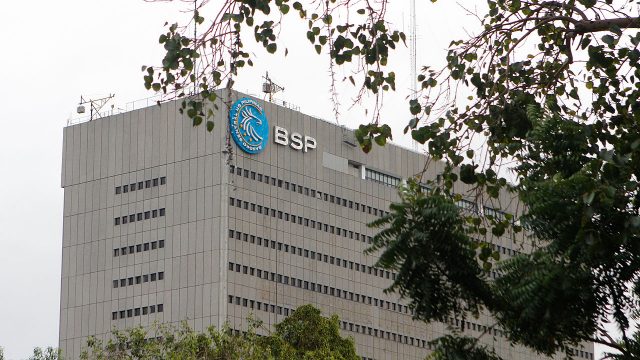
The term deposit facility (TDF) of the Bangko Sentral ng Pilipinas (BSP) attracted bids amounting to P385.602 billion on Wednesday, well above the P330-billion offering but declining from the P479.514 billion seen a week ago.

Broken down, tenders for the seven-day papers reached P204.109 billion, higher than the P160 billion auctioned off by the central bank but failing to beat the P232.213 billion in bids seen the previous week.

Banks asked for yields ranging from 2.64% to 2.71%, narrower than the 2.58% to 2.725% band seen a week ago. This caused the average rate of the one-week deposits to decrease by 0.99 basis point (bp) to 2.6838% from 2.6937% previously.

Meanwhile, bids for the 14-day term deposits amounted to P181.493 billion, above the P170-billion offering but down from the P247.301 billion in tenders seen on July 6.

Accepted rates for the tenor were from 2.625% to 2.75%, inching lower than the 2.6253% to 2.7588% margin seen a week ago. With this, the average rate for the two-week deposits slipped by 0.64 bp to 2.7235% from 2.7299% logged in the previous week’s auction.

The term deposits and the 28-day bills are used by the BSP to mop up excess liquidity in the financial system and to better guide market rates.

The BSP has not auctioned 28-day term deposits for more than a year to give way to its weekly offerings of securities with the same tenor.

“The results of the TDF auction show that liquidity in the financial system remains ample. Looking ahead, the BSP’s monetary operations will continue to be guided by its assessment of the latest liquidity conditions and market developments,” BSP Deputy Governor Francisco G. Dakila, Jr. said in a statement on Wednesday.

Meanwhile, Rizal Commercial Banking Corp. Chief Economist Michael L. Ricafort said in a Viber message that term deposit yields were marginally lower on Wednesday as signs of a possible recession in the US “led to downward correction in the prices of global oil to three-month lows and also lower prices of other commodities, as well as the easing of US Treasury yields.”

Oil prices and bond yields dipped on Tuesday as traders fretted over prospects of further central bank tightening and worries about the health of economies worldwide, Reuters reported.

The yield on 10-year Treasury notes was down 3.1 basis points to 2.96%, having dropped back below 3% overnight as investors bought safe-haven Treasuries amid a sell-off on Wall Street.

The two-year US Treasury yield, which typically moves in step with interest rate expectations, was down 3.1 basis points at 3.039%.

Growth fears were weighing on oil, despite concerns about tight supply. Oil prices fell sharply on Tuesday, pressured by the strong dollar, demand-sapping COVID-19 curbs in top crude importer China, and fears of a global economic slowdown.

On Wednesday, the US benchmark 10-year yield was 2.9724%, having traded either side of 3% for the last week.

Oil prices paused their overnight declines. Brent crude was little changed at $99.60 a barrel with US West Texas Intermediate crude at $95.89.

TDF yields also dropped despite the weakening peso and expectations of a rate hike by the BSP next month.

The peso rebounded on Wednesday, closing at P56.26 per dollar, rising by 11 centavos from its P56.37 finish on Tuesday, which was a near 18-year low.

Still, year to date, the local unit has weakened by 10.31% or by P5.26 from its close of P51 versus the dollar on Dec. 31, 2021.

BSP Governor Felipe M. Medalla last week said the central bank is prepared to raise benchmark rates by 50 bps at their Aug. 18 meeting to keep inflation in check after the peso on Thursday breached the P56 level against the dollar for the first time in more than 17 years.

He said the US central bank’s hawkish stance has placed “strong depreciation pressures” on global currencies such as the peso, which adds to inflation risks.

The Monetary Board has raised benchmark interest rates by a total of 50 bps so far this year via back-to-back 25-bp hikes at their May 19 and June 23 meetings, bringing the overnight reverse repurchase facility or policy rate to 2.5%.

A 50-bp hike at the August meeting will bring the BSP’s key rate to 3%. Mr. Medalla also said last week that the central bank may need to raise borrowing costs by at least 100 bps more this year to bring the policy rate higher than the midpoint of its 2-4% inflation target.

Headline inflation reached 6.1% in June, the fastest in nearly four years. This brought the first-half average to 4.4%, above the central bank’s 2-4% goal but still lower than its 5% forecast for the year. — K.B. Ta-asan with Reuters

Twitter sues Elon Musk to hold him to $44-B deal

WILMINGTON, DE — Twitter, Inc. sued Elon Musk on Tuesday for violating his $44-billion deal to buy the social media platform and asked a Delaware court to order the world’s richest person to complete the merger at the agreed $54.20 per Twitter share.

“Musk apparently believes that he — unlike every other party subject to Delaware contract law — is free to change his mind, trash the company, disrupt its operations, destroy stockholder value, and walk away,” said the complaint.

The lawsuit sets in motion what promises to be one of the biggest legal showdowns in Wall Street history, involving one of the business world’s most colorful entrepreneurs in a case that will turn on staid contract language.

On Friday, Mr. Musk said he was terminating the deal because Twitter violated the agreement by failing to respond to requests for information regarding fake or spam accounts on the platform, which is fundamental to its business performance.

Mr. Musk, who is the chief executive officer of electric vehicle maker Tesla, Inc., did not immediately respond to a request for comment.

The lawsuit accused Mr. Musk of “a long list” of violations of the merger agreement that “have cast a pall over Twitter and its business.” It said for the first time that employee attrition has been “on the upswing” since the deal was announced.

Twitter also accused Mr. Musk of “secretly” accumulating shares in the company between January and March without properly disclosing his substantial purchases to regulators, and said he “instead kept amassing Twitter stock with the market none the wiser.”

Shares of the social media platform closed at $34.06 on Tuesday, up 4.3%, but sharply below the levels above $50 where it traded when the deal was accepted by Twitter’s board in late April. The stock added another 1% after the bell.

Mr. Musk said he was terminating the merger because of the lack of information about spam accounts and inaccurate representations that he said amounted to a “material adverse event.” He also said executive departures amounted to a failure to conduct business in the ordinary course — although Twitter said it removed that language from the merger contract during negotiations.

Twitter also said it did not share more information with Mr. Musk regarding spam accounts because it feared he would build a competing platform after abandoning the acquisition.

Twitter called the reasons cited by Mr. Musk a “pretext” that lacked merit and said his decision to walk away had more to do with a decline in the stock market, particularly for tech stocks.

Tesla’s stock, the main source of Mr. Musk’s fortune, has lost around 30% of its value since the deal was announced and closed on Tuesday at $699.21.

In a separate filing, Twitter asked the court to schedule a four-day trial in mid-September.

In a memo to Twitter staff on Tuesday, Twitter Chief Executive Parag Agrawal sought to reassure employees about the future.

“We will prove our position in court and we believe we will prevail,” he wrote in the note, which was seen by Reuters.

Legal experts have said that from the information that is public, Twitter would appear to have the upper hand.

“In its complaint, Twitter is taking a strong position that Musk had a case of buyer’s remorse — and that, and not bots, is the reason for his decision to walk away from the deal,” said Brian Quinn, a professor at Boston College Law School. “The facts Twitter presents here make an extremely strong argument in favor of Twitter getting this deal closed.”

Mr. Musk is among Twitter’s most-followed accounts and the lawsuit included images of several of his tweets, including a poop emoji, that the company said violated the merger’s “non-disparagement” clause.

Mr. Musk tweeted the emoji on May 16 in response to a pair of tweets by Mr. Agrawal, explaining the company’s efforts to fight spam accounts.

It also included an image of a text message Mr. Musk sent Mr. Agrawal after Twitter sought on June 28 reassurances about Mr. Musk’s financing for the deal.

“Your lawyers are using these conversations to cause trouble,” Mr. Musk texted to Mr. Agrawal. “That needs to stop.”

Twitter noted that after Mr. Musk said he was terminating the deal, he sent tweets on Monday that Twitter suggested his requests about spam were part of a plan to force spam data into the public sphere.

“For Musk, it would seem, Twitter, the interests of its stockholders, the transaction Musk agreed to, and the court process to enforce it all constitute an elaborate joke,” the lawsuit said. — Reuters