Home Blog Page 5601

As Biden turns 80, Americans ask ‘What’s too old?’

TWITTER/FLOTUS

WASHINGTON — Joseph R. Biden, Jr., turned 80 on Sunday, making him the first octogenarian president in US history.

He celebrated his birthday with a brunch hosted by his wife, Jill, a celebration that got an extra lift this weekend with his granddaughter’s wedding at the White House on Saturday. 

With Mr. Biden already the oldest person to serve as president, the 2024 race for the White House is shaping up to be uncharted territory for the United States. The nearly 250-year-old democracy celebrates youth, but millions of Americans — including presidents — are now working well beyond the traditional retirement age of 65. 

Ronald Reagan was 77 when he left the White House, but Mr. Biden would be 86 by the time a second four-year term ends, should he win it. His leading potential Republican opponent, Donald J. Trump, would be 82 when he left office if he won in 2024. 

As a society, the United States is aging, and working until later in life. The 65-and-older population is projected to nearly double from 52 million in 2018 to 95 million by 2060. By 2026, more than one in four men over 65 will still be working, the nonprofit Population Reference Bureau projects. 

Some Americans have concerns about the advanced age of the two most likely 2024 candidates. 

While 71% of Democrats think Mr. Biden is “mentally sharp and able to deal with challenges,” 46% say he may not be up to the challenge of running in 2024, according to a Reuters/Ipsos poll taken Nov. 8 and 9. About a quarter of Republicans, 26%, think Mr. Trump may not be up to 2024 because of his age. 

Political affiliation aside, 68% of people surveyed think Mr. Biden may not be up for the challenge two years from now, and 49% say the same about Mr. Trump. Some 86% of Americans said they believe the cutoff for serving as president should be age 75 or younger, the poll found. 

Mr. Biden’s occasional verbal stumbles and tendency to meander off script during live appearances have been seized on by his Republican critics as proof he’s too old for the job. His supporters say the president, who overcame a childhood stutter, has been ad-libbing in public speeches for decades. 

Mr. Biden’s prospects for a second term got a boost last week when the Democrats did better than expected in midterm congressional and gubernatorial elections. 

Asked about concerns over Mr. Biden’s age, the White House said his recent record speaks for itself. 

“As then-candidate Biden said in 2019, ‘watch him,’” responded spokesperson Andrew Bates. 

“Since then, he won the most votes of anyone in American history, achieved unprecedented job creation, made big corporations pay their fair share in taxes, empowered Medicare to negotiate lower drug prices, and signed the most significant gun reform in 30 years and the biggest infrastructure investment since the 1950s,” Mr. Bates said, calling it “the most successful legislative record of any president since Lyndon Johnson.” 

“Keep watching,” he added. 

Some Biden supporters said they admired Democrats’ success under Biden, but were still uncertain about a possible next term. 

“I think he’s done a great job in the time that he has had,” said Illinois resident Paul Klenck. “I am concerned that someone well into their mid-80s would serve as president. I can’t think of a more demanding job than that.” 

Others said criticism of Mr. Biden’s age was discriminatory. 

“Some people at 60 should go nowhere near political power,” New York City resident Catharine Stimpson, 86, said in an interview. “I think the satire about him and the sneering at him is ageism. So let us look at the individual.” 

Asked about his birthday in a recent MSNBC interview, Mr. Biden had a reaction that may be familiar to anyone over 50: disbelief. “I can’t even say the age I am going to be. I can’t even get it out of my mouth,” he said. 

Mr. Biden said questions about his age were “totally legitimate” but that it was his intention to seek another term. 

AGING AMERICA, AGING LEADERS 

The outgoing Congress is one of the oldest in US history, with more than half of the House of Representatives and two-thirds of the Senate part of the “Baby Boomer” generation born between 1946 and 1964, Pew Research shows. 

Some members have years on Messrs. Biden and Trump. Outgoing House Speaker Nancy Pelosi is 82. Senate Republican leader Mitch McConnell is 80. Republican Senator Chuck Grassley of Iowa, 89, won another six-year term last week. 

Americans are not necessarily comfortable with that situation. Two-thirds of people surveyed support the idea of having an upper age limit for federal officeholders, including the president, members of Congress, and Supreme Court justices, the Reuters poll shows. 

However, Mr. Biden does not even register in the top 10 list of the world’s oldest current serving leaders, which is led by the 89-year-old president of Cameroon, Paul Biya. 

“There’s a reason why other societies look to their elders for wisdom and guidance. It’s because they have that experience, which should not be discounted,” said Deborah Kado, co-director of the longevity center at Stanford University. 

Ms. Kado and other experts on aging said they saw no signs Mr. Biden is unable to fulfill his duties. 

Stuart Jay Olshansky, an expert on aging at the University of Illinois at Chicago, said Mr. Biden may be a member of a subset of older Americans who are “super-agers,” with the mental faculties of people decades younger. 

“Age has been weaponized and people from the other party, whatever party you’re dealing with, will always try to say that there’s something wrong with this individual,” he said. “Those of us who study age as a profession say: ‘Stop using age as a weapon.’” 

The Reuters/Ipsos poll, conducted online in English throughout the United States, gathered responses from 1,003 adults, including 468 Democrats and 342 Republicans. It has a credibility interval — a measure of precision — of 4 percentage points either way. — Reuters

 

Why US seeks closer security cooperation with the Philippines

AMERICAN and Filipino troops attend the opening of the annual joint military exercises called Balikatan on March 28, 2022 at the Philippine military’s headquarters in Quezon City. — PHILIPPINE STAR/ WALTER BOLLOZOS

WASHINGTON/MANILA — US Vice President Kamala D. Harris visits the Philippines this week in the Biden administration’s latest high-level engagement with America’s oldest Asian ally and an increasingly vital strategic partner as tensions rise with China over Taiwan.

The following are some of the main issues surrounding her visit: 

Why is the Philippines so important to the United States? 

The Philippines is a former US colony and became a US treaty ally in 1951, five years after independence. During the Cold War, it hosted some of America’s largest overseas bases, facilities vital to the US wars in Korea and Vietnam. Philippine nationalism forced Washington to vacate those in the 1990s, but in recent years the allies have cooperated on counter-terrorism and in response to rising Chinese military pressure in the South China Sea, where the Philippines has rival claims. 

Today, because of its geography, the Philippines is central to US plans to deter and respond to any Chinese attack on Taiwan, a self-administered island China claims as its own. 

Tensions over Taiwan are expected to feature when Ms. Harris meets with President Ferdinand R. Marcos, Jr., on Monday, Manila’s ambassador to Washington Jose Manuel Romualdez told Reuters. 

Ms. Harris also plans a highly symbolic stop on the Philippine islands of Palawan in the South China Sea to show US support for its ally. 

How does the country fit into US planning for a possible conflict over Taiwan? 

Of the five US treaty allies in the Indo-Pacific — Australia, South Korea, Japan, the Philippines and Thailand — the Philippines is closest to Taiwan, its northernmost land mass of Luzon just 200 km (120 miles) away. 

Experts such as Randall Schriver, who served in the Trump administration as the top Pentagon official for East Asia, said Luzon is of great interest to the US Army, in particular, as a potential location for rockets, missiles and artillery systems that could be used to counter an amphibious invasion of Taiwan. 

He said the political environment for greater military access appeared to be improving under Marcos after a rocky period of relations during the six-year term of President Rodrigo R. Duterte, who sought closer ties with China. 

Washington has carefully courted Marcos and Harris’s visit follows two meetings between President Joseph R. Biden, Jr., and Mr. Marcos and a visit by Secretary of State Antony Blinken to Manila in August. 

How are Washington and Manila boosting security cooperation? 

The two sides have moved ahead with an Enhanced Defense Cooperation Agreement that dates back to Obama’s presidency and that languished under Duterte. EDCA allows US access to Philippine military bases for joint training, pre-positioning of equipment and the building of facilities such as runways, fuel storage and military housing, but not a permanent presence. 

To what extent the Philippines would allow its territory to be used to defend Taiwan remains unclear. Mr. Romualdez, the ambassador to Washington and a relative of Mr. Marcos, said in September it would let US forces use its bases in the event of a Taiwan conflict only “if it is important for us, for our own security.” 

The United States has proposed adding five more EDCA sites to the current five. Southeast Asia expert Gregory Poling at Washington’s Center for Strategic and International Studies said Harris’s trip could bring an announcement of an agreement. 

How would a Taiwan conflict affect the Philippines? 

Mr. Poling believes it would be extremely difficult for the Philippines to remain neutral in a Taiwan conflict given its proximity to the island and its treaty obligations to the United States. It would be the most likely destination for Taiwanese refugees and the some 150,000 Filipinos living on the island would be endangered by any Chinese attack. 

“They have commitments to the Americans under the alliance,” Mr. Poling said. “So if they want American support in the South China Sea, the Americans will expect Philippine support on Taiwan.” 

What would the Philippines expect in return? 

Mr. Schriver said that with the Pentagon’s rising concern about a possible attack on Taiwan, Washington would want assurances over access within the next year or two, though any overt planning for a Taiwan contingency is highly sensitive for Manila. 

Mr. Poling said providing Manila sufficient funding to help modernize its long-neglected armed forces was key. Washington recently announced $100 million in foreign military financing and $66.5 million for EDCA sites, but amounts are small compared to what Washington sends to the Middle East and Ukraine. 

“The second Philippine demand is a continued clear commitment to defend Filipinos in the South China Sea,” Mr. Poling said. “They have that rhetorically, but the question for both sides is, do they have it functionally? If there was a Chinese attack on a Philippine base in the South China Sea tomorrow, could the Americans actually do anything about it? And that is far less clear, which is another reason EDCA is so important.” — Reuters


Next unicorn could come from the Philippines — QBO Innovation Hub

IdeaSpace Foundation, Inc. and QBO Innovation Hub Team (L-R): Head of Community & Ecosystem Dave Del Rosario, Head of Startup Development Alwyn Rosel, Executive Director Katrina Chan, and Head of Partnerships Ross Fallorina

There’s no reason why the next unicorn should not come from the Philippines, a Filipino startup space declared.

The Philippines is filled with many startups and startup founders who have amazing ideas that can solve many problems and pain points in various industries, QBO Innovation Hubs Executive Director Kat Chan said during a media gathering hosted by QBO and IdeaSpace Foundation last Oct. 22 in Makati City.

“We believe in the ideas being generated by our Filipino startup community. All they need is that great push, the encouragement, and the resources to bring their initiatives to the next level. The next unicorn can come from the Philippines,” Ms. Chan added.

She also explained that the mission of both IdeaSpace and QBO Innovation Hub is to level the playing field in the global startup sector by providing local Filipino startups with the resources, mentoring, and the network that they need to be able to compete.

IdeaSpace and QBO are one of the pioneer movers in the Philippine startup sector. IdeaSpace Foundation is a nonprofit organization that runs founder-focused programs for early-stage startup sounders. QBO Innovation Hub, on the other hand, is a space for Filipino startups to come together, flourish, and help them succeed.

The executive director has expressed her optimism of the startup sector especially now that more and more people are finally understanding what startups are.

“There was a time when many people didn’t even know about startups — what they are, what they do. But now there’s even a drama series revolving around startups. Times have changed. Now people have realized that anybody can start a startup. If they have a great idea, they can tap into a supportive local community that can help them realize their dreams,” she said.

Ms. Chan added that IdeaSpace Foundation and QBO Innovation Hub’s support for startups is concretized in its yearly event, the Philippine Startup Week.

The Philippine Startup Week is considered the largest startup conference in the country. The week-long event brings together the local startup community and highlights the various sectors, entities, and homegrown high-potential startups contributing to the growing Philippine startup ecosystem.

This year’s edition, themed “Homegrown Heroes: Cultivating Future Tech Giants” was held last Nov. 14-18 at the Blue Leaf Pavilion in Taguig City.

Local circular economy startup closes oversubscribed seed round

Humble Sustainability, a circular economy startup from the Philippines, closed its seed round led by Swiss-based venture capital (VC) fund Seedstars International Ventures and with participation from iSeed Ventures, an early stage VC in San Francisco; and angel investors like Alan Wong, co-founder of Ula, as well as Sagar Achanta, who has held product leadership roles at Amazon, Booking.com and Disney+.

The fresh funding will enable Humble to continue bringing companies’ excess inventory back into circularity through its technology services.

Humble helps some of the largest e-commerce, logistics and retail companies in the Philippines make their returns and excess inventory the hero, while extracting high value from the items for their clients.

With a vision to create a community where any item can be brought back into circularity by anyone, Humble’s advocacy of “circular living” reduces waste from both ends, by preventing items from being disposed of and decreasing demand for the production of new items. As Humble continues to grow, it hopes to become a leader in circular economy and sustainability in the Philippines, with initiatives in mind like carbon footprint tracking, innovation grants and raw materials extraction.

Founded by passionate advocates of sustainability, Humble CEO Josef Werker and COO Niña Opida used their combined years of experience growing and scaling companies in the past to build Humble as a means to create a more sustainable Philippines.

“Our dream is to make living circular as normal as possible, starting with the way we buy things and what we do with them. We’re not environmental scientists, but we’re really passionate about making an impact in this area, and this is the decade where action has to happen,” Mr. Werker said.

Leading Humble’s seed round was Seedstars International Ventures, a seed-stage venture fund dedicated to emerging and frontier markets. Seedstars Partner Patricia Sosrodjojo said that Humble is a great fit to their fund’s thesis of supporting early-stage companies that can create meaningful impact with an attractive business model.

Aside from iSeed Ventures, Mr. Wong and Mr. Achanta, Filipino strategic investors and serial entrepreneurs such as Paco Sandejas and Richard Eldridge, among others, also participated in the round.

Mr. Werker said that their new investors bring more than capital as they are all actively involved and are bringing immense value.

“We’re really grateful for their trust and guidance; we have already learned so much. This journey started because our dream is to make a real impact towards one of the world’s greatest challenges. The crazy ride continues,” he said.

To address a seen problem of unused and wasted inventory, Humble uses two main channels to bring items back into circularity. High-quality items are sold on their e-commerce platform, Thrift by Humble, while everything else is sent to their network of business-to-business (B2B) buyers and recyclers. This allows Humble to ensure all items are sent to new, sustainable homes.

Thrift, an extension of Humble’s initial brand, was launched in October 2021 with the objective of providing consumers with a sustainable alternative to e-commerce. The products offered on the platform are high quality and the deals are hard to beat anywhere else online.

With the impressive growth that has taken place, Humble is on track to continue scaling as they expand their network to more partners and buyers from a variety of sectors. Humble is also set to hire more employees for their ever-expanding team. For available openings, write to grow@humblesustainability.com.

For those who would like to sell their items with Humble, or purchase sustainably-sourced items in bulk, reach out to team@humblesustainability.com or through their dedicated B2B platform, http://humblesustainability.com.

BSP sees slower growth until 2024

THE ORTIGAS business district pictured on Nov. 9, 2021. — PHILIPPINE STAR/ MICHAEL VARCAS

THE PHILIPPINE ECONOMY is expected to hit the government’s growth target this year, but the central bank sees slower expansion through 2024 due to the impact of high interest rates.

In its latest monetary policy report, the Bangko Sentral ng Pilipinas (BSP) said gross domestic product (GDP) growth will be likely within the 6.5-7.5% target of the Development Budget Coordination Committee (DBCC).   

The Philippine economy expanded by 7.6% in the third quarter, bringing the year-to-date average growth to 7.7%.

“But economic headwinds could result in slower GDP growth in 2023 and 2024,” the BSP said. “The forecast for 2024 is lower, reflecting the slower external demand as well as the impact of the BSP’s monetary policy tightening.” 

The BSP did not give its forecast but the DBCC targets 6.5-8% GDP growth in 2023 and 2024.

The BSP last week increased the benchmark policy rate by 75 basis points (bps) to 5%, the highest in nearly 14 years. Rates on the overnight deposit and lending facilities were also increased to 4.5% and 5.5%, respectively.

Since May, the Monetary Board has raised policy rates by 300 bps to curb inflation and support the peso.    

The BSP said domestic economic activity has recovered above its pre-pandemic level, amid the easing of mobility restrictions and resumption of face-to-face classes.

“Domestic growth is seen to remain robust over the succeeding quarters in view of looser mobility restrictions, strong capital formation, return of domestic and foreign tourism, as well as greater MSME (micro, small and medium enterprises) activities induced by the resumption of face-to-face classes,” it said.

The implementation of the Corporate Recovery and Tax Incentives for Enterprises (CREATE) law, Financial Institutions Strategic Transfer (FIST) Act, and the second tranche in the reduction in personal income taxes will further boost the domestic outlook in 2023 and 2024, the BSP said.

The BSP noted the economy is expected to operate at “slightly above potential.”

“Estimates from the BSP’s Policy Analysis Model for the Philippines (PAMPh) 4 indicate that the output gap is projected to turn positive in 2023, reflecting largely the sustained expansion in 2022. The output gap will return to broadly neutral territory in 2024 as the impact of policy interest rate adjustments take hold on the economy,” it said.

“Improved external trade competitiveness and sustained remittances amid peso depreciation, notwithstanding the slowdown in global growth outlook, could drive the higher domestic output gap. Meanwhile, potential output is expected to sustain its recovery given the continued reopening of the economy, improvements in labor conditions, and investment growth.”

INFLATION
The BSP said inflation is projected to remain elevated in the near term, and above the 2-4% target range until the second quarter of 2023.

“Inflation is seen to decelerate back to within the target range by Q3 2023 and approach the low end of the target range in Q4 2023 to Q1 2024 due to negative base effects, before stabilizing at the midpoint of the target by Q2 2024,” it said.

“The projected deceleration of the inflation path can be attributed to the easing global oil and non-oil prices and negative base effects from transport fare adjustments in 2022 as well as the impact of BSP’s cumulative policy rate adjustments.”

The BSP last week raised its average baseline inflation projection to 5.8% this year, from 5.4% previously. It also hiked the inflation forecast to 4.3% from 4.1% for 2023, while lowering the 2024 forecast to 3.1% from 3.2%.

“However, high inflation remains to be a risk. We forecast inflation in November to hit 7.8% or even higher, with upside risks still largely from food,” China Banking Corp. Chief Economist Domini S. Velasquez said.

October inflation rose to a near 14-year high of 7.7% in October, from 6.9% in September and 4% a year earlier. Excluding food and fuel prices, core inflation grew to 5.9% in October.   

“We cannot say it will not exceed 8% definitely as vegetable and meat prices are on an uptrend. We might see some pressure still as we approach Christmas where demand tends to increase,” Ms. Velasquez said.   

Security Bank Corp. Chief Economist Robert Dan J. Roces said the growth outturn in the third quarter points to a “comfortable space” to do more rate hikes.   

“Forward guidance so far points to more tightening ahead with the central bank still having a lot of work to do, as core inflation remains above-target and still climbing — indicating stronger pass-through of food and energy prices amid demand-side appetite — which continues to lift price expectations,” he said.

If the US Federal Reserve continues policy tightening, BSP Governor Felipe M. Medalla told Reuters the central bank will have to raise interest rates to prevent the peso’s weakness from further stoking inflation.   

The US Federal Reserve has increased borrowing costs by 375 bps since March, which brought the policy rate to 3.75-4%.

“We think that BSP will continue to be aggressive, matching the Fed in December of 50 bps. Until early next year, the BSP will likely move in lockstep with the Fed both to prevent the peso from depreciating and also as domestic core prices continue to accelerate,” Ms. Velasquez said.   

Asian Institute of Management economist John Paolo R. Rivera noted that as inflation has not yet peaked and as the Fed is showing signs of slowing down, the BSP may still hike rates but not as aggressive as 75 bps.   

“However, should inflation uptick faster as expected, BSP can use other monetary tools to temper inflation,” he added. — KBT

PHL ranking in corruption index declines

BW FILE PHOTO

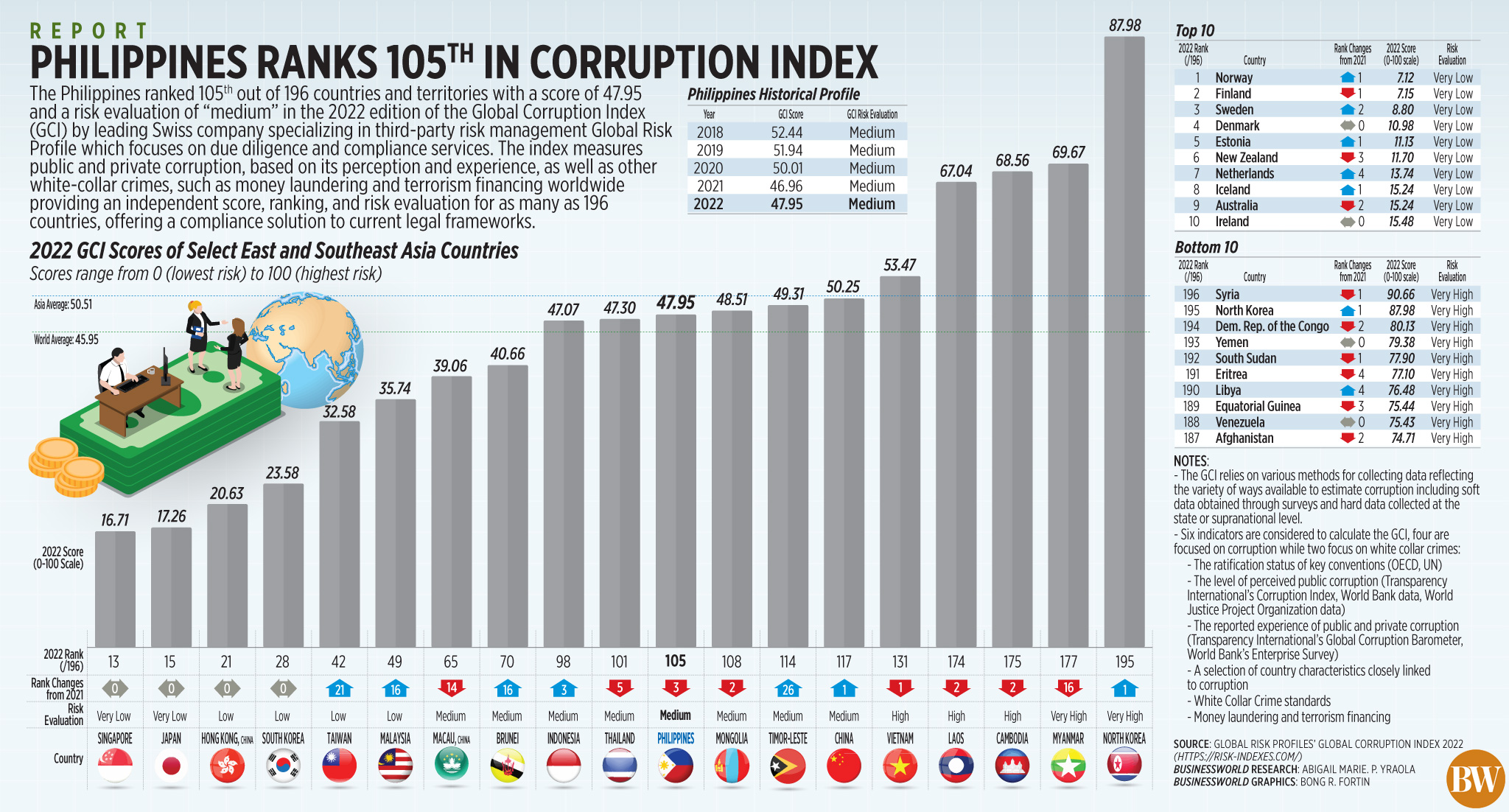
THE PHILIPPINES slipped three places in a corruption index released by Global Risk Profile (GRP), which noted that financial aid programs during the pandemic created opportunities for corruption and bribery.

In the Global Corruption Index 2022, the Philippines ranked 105th out of 196 countries and territories. In 2021, the Philippines ranked 102nd.

This year’s report showed the Philippines had a “medium” risk level for corruption. Its overall risk score stood at 47.95, slightly higher than last year’s 46.96.

Philippines ranks 105<sup>th</sup> in corruption ndex

The country ranked 111th in 2020, 101st in 2019, and 108th in 2018.

The index measures public and private corruption, based on its perception and experience, as well as other white-collar crimes, such as money laundering and terrorism financing worldwide.

Among Southeast Asian countries, the Philippines lagged behind Singapore (13th), Malaysia (49th), Brunei (70th), Indonesia (98th), and Thailand (101st)

The country was ahead of Timor-Leste (114th), Vietnam (131st), Laos (174th), Cambodia (175th), and Myanmar (177th).

The Office of the Press Secretary, which is currently headed by Cheloy Velicaria-Garafil, did not immediately give comment on the report.

This comes after the Philippines’ score fell in a global bribery risk index, as its scores for government and civil service transparency saw the biggest drop.

The country also saw a decline in its ranking in an economic freedom index, which observers said reflected the weakness of domestic institutions in preventing political corruption and other irregular activities.

In its report, the GRP said the pandemic, which had unlocked loans and credit at a fast pace, “triggered new opportunities for corruption, bribery, falsification of submissions and embezzlement of public funds, therefore draining new resources.”

It noted that Europe saw a slight decline this year “maybe due to the introduction of 2020-2021 facilitated loans.”

The Philippine government implemented strict lockdowns in 2020 to curb COVID-19 infections. It distributed cash handouts for the most vulnerable sectors affected by the lockdowns.

Halsey A. Juliano, a political economy professor, said the Philippines is prone to massive corruption during emergencies or disasters.

“Development aid from funders like International Monetary Fund, World Bank, Asian Development Bank and JICA required long-term efforts at imposing accountability structures to make sure money goes where it should,” he noted.

“At the same time, joint government efforts can and have been used by local political clans as ‘patronage gifts,’” Mr. Juliano said, citing politicians’ penchant for putting their images on bags of relief goods distributed during disasters.

Maria Ela L. Atienza, who teaches politics at the University of the Philippines, said the previous administration is partly to blame for the country’s latest ranking.

“There were high-profile cases of anomalies in government transactions and procurements during the pandemic,” she said in a Viber message, citing an alleged corruption scandal involving multibillion worth of pandemic contracts awarded to Pharmally Pharmaceutical Corp. under the previous administration.

“The high-profile Pharmally investigations and the fact that the Senate did not endorse filing of cases against possible people involved because President Duterte might be investigated also showed the lack of political will on the part of officials to deal with possible cases of corruption,” Ms. Atienza said.

HUMAN RIGHTS
Meanwhile, Ms. Atienza said human rights promotion is vital in curbing corruption.

“[Respect for human rights] might have also affected perceptions about anti-corruption drives of the government, which continues to lack genuine people’s participation and feedback.”

“Domestic and international human rights advocates have criticized the deteriorating state of human rights in the Philippines,” Ms. Atienza noted. “This concern remains as the presidency has changed.” — Kyle Aristophere T. Atienza

Pandemic unleashes flurry of new Filipino entrepreneurs

BW FILE PHOTO

By Joseph L. Garcia, Reporter

AUDREY CRUZ was one of the many Filipinos who sold pans of sushi bake at the start of the coronavirus pandemic.

She and her team have since transitioned to Mexican food with OnlyPans, and the small pandemic-born business now boasts of two brick-and-mortar stores near the Philippine capital.

The business has also caught the attention of mainstream media and now has a large following on social media — about 28,000 followers on Instagram.

“I only had P3,000 with me as a thrifty corporate worker,” she told BusinessWorld in an e-mail, referring to her seed money. “That was my last money before pay day. I gave in, bought the items, created a sushi bake pan and sent it to friends. The next day, they were asking me to sell it.”

Everything started online and the business thrived as a cloud kitchen, Ms. Cruz said. She opened her first store in La Union province in northern Philippines and transferred earlier this year to Poblacion, a lively area in the financial district of Makati that’s home to backpacker lodgings and avant-garde art galleries.

Ms. Cruz was one of many who jumped on trends during the early years of the pandemic, when people were trapped in their homes amid state-imposed lockdowns.



Back then, many people honed their skills and some managed to parlay these into microenterprises.

For all the economic damage caused by the global pandemic, there has been an unexpected bright spot — a surge in entrepreneurship.

Micro, small and medium enterprises rose by 13% to 1.076 million from a year earlier, accounting for 99.5% of Philippine businesses, according to the Trade department.

Almost half of the 1.08 million Philippine businesses registered in 2020 and 2021, creating jobs for 2.2 million Filipinos, data from the local statistics agency showed.

The extraordinary conditions of a global pandemic lent differing results for micro and small entrepreneurs.

Economic researcher Miro Capili picked up on a pandemic food trend — burnt Basque cheesecakes under home-based Done Well Bakery.

“Our peak was 50 cakes a week — not bad for a 60-inch family oven and a basic KitchenAid,” she said in an e-mail. “Our best season was the week of Father’s Day and the run-up to the holidays.

Unfortunately, the business closed at the end of 2020.

“I had kept my full-time job the whole time I ran the business,” she said. “I was operating out of our condo in Rockwell, so it was a few square feet of space for the whole operation. It was difficult to scale and make operations efficient. So when work got busy, I ran out of time to take orders, and the bakery died a natural death.”

Chrisxavior Bautista Aguila, behind the leatherware brand SATO, picked up crafting during the early months of the pandemic. Not satisfied with his own wallet, he taught himself how to make one.

Mr. Aguila now has about 4,300 followers on his online store on Instagram, and has since expanded his product line from small leather goods to bags.

“I’ve thought of pursuing my dream and starting SATO long before the pandemic happened. I already have a timeline,” he told BusinessWorld in an e-mail.

The entrepreneurs all spoke of the difficulties they faced in opening a business during the crisis.

“It was a very, very tough journey,” Ms. Cruz said. “We had to close down our La Union branch many times because there were no customers when there was a lockdown.”

She thought of giving up the business, but she persisted because of the support of her business partners.

“They invested in me because they knew I could do it, in those times. I felt my team really believed in me. That was the thing that brought me here now,” she added.

The pause provided by the pandemic opened up opportunities for entrepreneurs. But even with time as capital, conditions were far from ideal, Ms. Capili said.

‘EXISTENTIAL DREAD’
Global supply chain issues and lockdowns affected her home-based business.

“I had to recalibrate and test my recipe every time my preferred cream cheese brand was unavailable,” she said.

But she looks back with fondness. “Baking gave me a way to rechannel the existential dread brought on by the pandemic, and it was a pure form of joy to make people happy with your own recipe. Those two conditions were enough.”

Mr. Aguila was a little more optimistic. “I saw the pandemic in a different light — with eyes wide open — as the great beginning. The pandemic was and is the perfect opportunity to build a long-lasting relationship with your clients.”

“I call it building loyalty. I connect with them on a personal level and remind them that I am not a robot or a big corporation who is only after their money.”

Ms. Cruz looks back on the lessons she learned from starting a business during a crisis. “Always be very flexible. It was a traumatic moment when the coronavirus made the world stop, so you always have to be ready.”

“Study the digital world and how it works because that’s the direction of the mass market too,” she added.

Ms. Capili doesn’t expect to open a new business anytime soon, busy as she is with her full-time job. “But who knows, maybe once I have more time?”

“I’ve always wanted to sell sourdough or cold brew. Or maybe open a restoration business for luxury bags. But I’d have to be sure I’ll have enough time and energy before committing,” she said.

Still, she learned a lot from the experience. “I learned how important it is to know your brand from the start and to build it with a solid marketing strategy,” she said.

An entrepreneur should also have a vision and know what they want to get out of the business, she said.

She also learned the importance of keeping strong relationships with reliable suppliers and being flexible and resourceful to overcome supply chain problems.

“Most importantly, I learned that it’s fine to acknowledge when something good has to end — at least for the time being. Circumstances change and that’s okay. It’s all about honoring your priorities.”

Since Ms. Cruz has transitioned from online sales to running a physical store, she had to make changes in how she runs the business.

“Before, we relied on online and digital sales. Now, we can interact real time with our customers. It’s more experiential especially since we’re an open kitchen.”

Logistics and sourcing problems continue, and entrepreneurs also have to contend now with rising prices, Ms. Cruz said.

“Most of the things we need fluctuate in price. The saddest thing is, it doesn’t go down, it continues to increase.”

Mr. Aguila is sticking to tried and tested pandemic strategies.

“When the pandemic started, we were all stuck at home and everyone just kept browsing the web relentlessly,” he said. “There’s a high chance that most people have seen a few of your posts already and have purchased some of your products.”

There’s also no reason not to raise one’s game especially now when everything is slowly getting back on track.

“Social media is the new word of mouth — it’s nonnegotiable. It’s already served on a silver platter and you just need to eat it.”

BW Economic Forum returns with ‘Forecast 2023’

THE RECENT global economic outlook has become “gloomy and more uncertain,” according to the International Monetary Fund (IMF). As businesses bounce back from the pandemic, countries are facing shocks from Russia’s invasion of Ukraine, rising inflation and a global economic slowdown. A possible global recession is further complicating the outlook.

Despite this growing uncertainty, there are opportunities to build a better and more inclusive future. Businesses have to prepare to respond to future disruptions, as well as look at opportunities to start sectoral shifts, refocus economic plans, innovate business strategies, and maximize areas for growth and collaboration.

The award-winning BusinessWorld Economic Forum, which returns to a face-to-face event on Nov. 29 at the Grand Hyatt Manila, will guide the Philippine business community in discovering areas of opportunity.

With the theme “Forecast 2023: Opportunity in Uncertainty,” this year’s economic forum will set the stage for top speakers and experts to discuss relevant economic and business issues before an audience composed of policy makers, industry and business leaders, investors, professionals, and entrepreneurs.

The day-long forum will feature keynote addresses by House Speaker Ferdinand Martin G. Romualdez on “Key Legislative Measures to Boost Philippine Businesses”; Finance Secretary Benjamin E. Diokno on “Sustaining Recovery through Mounting Risks”; Krishna Srinivasan, director of IMF’s Asia-Pacific Department, on the 2023 economic outlook; and Neo Gim Huay, managing director of the Centre for Nature and Climate at the World Economic Forum, on “Transforming the World for the Better: Updates on the 2030 Agenda for Sustainable Development.”

The first panel discussion, “Planting the Seeds of Growth: Boosting the Agriculture Sector and Ensuring Food Security,” will bring together Mercedita A. Sombilla, Agriculture undersecretary for policy, planning, and regulations; Bruce J. Tolentino, a private sector board member of the Bangko Sentral ng Pilipinas; and Dr. William S. Co, PCCI chairman and chairman of the agriculture and fishery committee; and Ricardo Manuel M. Sarmiento, president and chief executive officer (CEO) of Vitarich Corp. The panel will be moderated by BusinessWorld Editor-in-Chief Wilfredo G. Reyes.

“Powering the Future: The Philippines’ Roadmap to a Diverse and Sustainable Energy Industry” will be the theme of the second panel discussion. Panelists include Michael O. Sinocruz, director of the Department of Energy’s Energy Policy and Planning Bureau; James A. Villaroman, chief renewable energy officer of AboitizPower Corp.; Miguel de Jesus, executive director and head for commercial operations at ACEN Corp. BusinessWorld Sub-Editor Victor V. Saulon will moderate the panel.

“Education For All: Working Together towards High Quality and Inclusive Education” is the theme of the third panel which will feature Epimaco V. Densing III, Education undersecretary; Dr. Maria Cynthia B. Bautista, vice-president for academic affairs at the University of the Philippines; and Cris Ngo, learning manager at Phinma Education. Santiago J. Arnaiz, chief communications officer of Starfleet Innotech, Inc. (SFIO), will moderate the panel.

“Exploring the Digital Sphere: Embracing Technologies and Consumer Banking of the Future” will feature Marvin Germo, CEO of Stock Smarts; Archieval B. Tolentino, president of Information Security Officers Group; Kristoffer Rada, head of public policy at Tiktok Philippines; and FitzGerald S. Chee, vice-president and head of consumer platforms at Bank of the Philippine Islands. BusinessWorld Senior Reporter Arjay L. Balinbin will moderate the panel.

The economic forum will also feature fireside chats on relevant trends in business.

Cosette Canilao, president and CEO of Aboitiz InfraCapital, will talk to SFIO’s Mr. Arnaiz about the topic “Moving Forward Collaboratively: Strengthening Private-Public Partnerships.”

Jean-Marc Arbogast, country manager for the Philippines at the International Finance Corp., will talk to One News Anchor Danie Laurel about “Growing the Green Movement: Opportunities in the Philippines’ Green Finance and Infrastructure Market.”

Acumen Strategy Consultants President and CEO Pauline Fermin will talk to BusinessWorld Multimedia Editor Sam L. Marcelo on the topic “Responding to the Changing Skills Demand: Upskilling and Reskilling the Current and Future Workforce.”

Jon Canto, co-managing partner for Philippines at McKinsey & Co., will also talk about the firm’s insights on the 2023 Philippine economic outlook.

During the forum, BusinessWorld will launch its newest offering called BWorldX, an e-commerce site that will bring together the print and digital products as well as exclusive content.

This year’s economic forum will be hosted by One News Anchor Danie Laurel.

Interested attendees may register for this most-awaited annual gathering of the Philippine business community at www.bworldonline.com/bwefforecast2023/ until Nov. 25.

The BusinessWorld Economic Forum 2022 is presented by Megaworld Corp., with gold sponsors Ayala Corp., PLDT and Smart, Turkish Airlines, and National Grid Corp. of the Philippines; silver sponsors Metro Pacific Investments Corp., Globe, BPI, Meralco, BDO, GT Capital, Wilcon Depot, Inc., Toyota and SM Investments Corp.; bronze sponsors First Gen Corp., GCash, SGV & Co., and Aboitiz InfraCapital, OnwardIR, Unilab; and donors AboitizPower and Upson International Corp.

Partner organizations include American Chamber of Commerce of the Philippines, Asia Society of the Philippines, British Chamber of Commerce of the Philippines, French Chamber of Commerce and Industry of the Philippines, European Chamber of Commerce of the Philippines, Management Association of the Philippines, Philippine Chamber of Commerce and Industry, Philippine Franchise Association, Philippine Retailers Association, and media partners — One News and The Philippine Star.

MPTC won’t drop CTBEX despite overlap with San Miguel project

THE METRO Pacific Tollways group said it will not give up its original proponent status (OPS) for its unsolicited proposal to construct the 50.43-kilometer Cavite-Tagaytay-Batangas Expressway (CTBEX) despite San Miguel Holdings Corp.’s Cavite-Batangas Expressway (CBEX) overlapping with the project.

The group will not participate as a challenger in the Swiss challenge process for the CBEX unsolicited proposal submitted by San Miguel Holdings to the provincial government of Cavite, said Metro Pacific Tollways Corp. (MPTC) President and Chief Executive Officer Rodrigo E. Franco recently.

“That would be messier; we don’t want to give up our original proponent status,” he told BusinessWorld when asked if MPTC would participate in the Swiss challenge process.

Mr. Franco noted that the alignment of CBEX overlaps with the group’s proposed P25.24-billion CTBEX, which is expected to provide linkage between Metro Manila-Cavite and Batangas.

“There’s (some) overlap. That’s the scenario,” he said, noting that the group’s proposal is still awaiting approval from the National Economic and Development Authority (NEDA).

CBEX is a 27.06-kilometer toll road traversing through the municipalities of Silang, Amadeo, Tagaytay, Indang, Mendez, and Alfonso in Cavite, as well as Nasugbu in Batangas where a San Miguel Corp. company also operates a toll expressway, the 41.9-kilometer Southern Tagalog Arterial Road, which is commonly known as STAR Tollway.

CBEX is planned to have three access or interchange points. These are in Silang, Cavite; Tagaytay; and Nasugbu/Alfonso.

Meanwhile, CTBEX of the Metro Pacific Tollways group will traverse mostly the rural areas of Silang, Tagaytay, Amadeo, Mendez, Alfonso, and Magallanes in the Cavite province and Nasugbu in Batangas. In 2018, the Department of Public Works and Highways (DPWH) awarded MPCALA Holdings, Inc., a unit of MPTC, the OPS for CTBEX.

The project will have interchanges in Silang, Pook, Aguinaldo, Amadeo, Mendez, Alfonso, Magallanes, and Nasugbu.

“This project aims to provide a free-flowing, high-facility alternative route for traffic presently plying Aguinaldo Highway and Sta. Rosa-Tagaytay Road, which are experiencing congestion during peak periods and weekends,” the DPWH said on its website.

The department also said that coordination with the Metro Pacific Tollways group for the submission of the remaining documentary requirements to NEDA is ongoing.

On CBEX, the Cavite government is currently seeking interested parties to pre-qualify and submit comparative proposals for the selection of the province’s joint venture partner to develop the project.

The province’s private partner will “finance, design, construct, operate and maintain the project under a 35-year concessional period,” Cavite Public-Private Partnership Selection Committee Chairman Renato A. Abutan said in an advisory.

Challengers are expected to submit their qualification documents, technical proposals, and financial proposals as one bid package not later than Jan. 24 next year, he also said.

MPTC is the tollways unit of Metro Pacific Investments Corp., one of three key Philippine units of Hong Kong-based First Pacific Co. Ltd., the others being Philex Mining Corp. and PLDT, Inc. Hastings Holdings, Inc., a unit of PLDT Beneficial Trust Fund subsidiary MediaQuest Holdings, Inc., has a majority stake in BusinessWorld through the Philippine Star Group, which it controls. — Arjay L. Balinbin

Bringing Japan to BGC

COMPANY HANDOUT

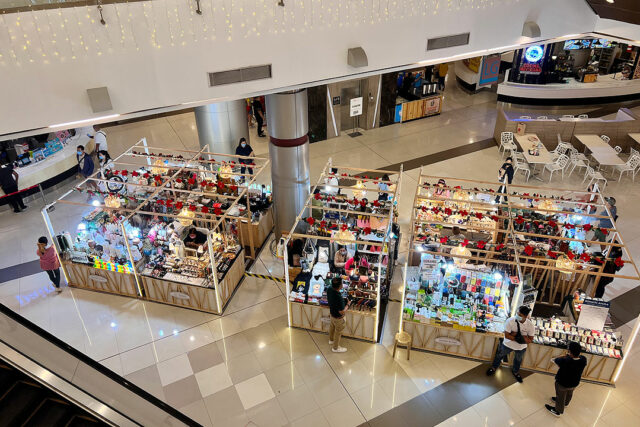
THE FIRST Mitsukoshi in the Philippines had its soft opening last Friday, bringing the first department store in all of Japan to the country.

Mitsukoshi Holdings Ltd. has its origins over 300 years ago in 1683 as a kimono fabrics store in Tokyo. According to a presentation by Akio Inuishi, Division Manager of the Overseas Real Estate Division of Isetan Mitsukoshi Holdings Ltd.’s Overseas Business Department, the store also introduced price tags to Japan.

The store was restructured in 1904 to become a department store, the first in Japan.

During a press tour in the Mitsukoshi BGC mall last Thursday, a Mitsukoshi lion statue, which is also found at the main store in Japan, was unveiled by its executives. Inspiration for the lion came from a 1905 trip to London by Osuke Hibi, the store’s first Senior Managing Director.

The mall’s Mitsukoshi identity is tethered by Mitsukoshi Beauty and Mitsukoshi Fresh, respectively, a beauty store showing off Japanese brands and a supermarket.

The supermarket is a special treat: it comes with a dedicated sushi and sashimi section, a cooking section where one can have their purchases prepared and eaten on the spot, among many international delicacies like Spanish jamon (ham), wine selections from France all the way to Chile, and a special section devoted to sake.

THE MITSUKOSHI NAME
This is one of the few stores in Southeast Asia to bear the Mitsukoshi name, as Isetan Mitsukoshi usually sets up shop in Southeast Asian countries with the Isetan name. It has 28 overseas stores, including in Singapore, Malaysia, China, and the US; this one in the Philippines its 29th.

“It took eight years to finally plant the flag of Mistukoshi in our country. It started as a simple courtesy visit by the Nomura real estate executives back in 2014, that led to a dinner in BGC,” said Federal Land, Inc. Chair Alfred Ty in a speech on Nov. 17.

The mall itself is a result of a tripartite development between Federal Land, Nomura Real Estate Development Co., Ltd., and Isetan Mitsukoshi. The mall is built on the podium level of The Seasons Residences, a mixed-use development from the same partnership.

The mall, designed by Asao Tokolo — whose work was seen in the victory ceremony podiums during the Tokyo 2020 Olympics — shows a modified Japanese gateway structure which symbolizes Filipino-Japanese camaraderie, according to a release. Meanwhile, columns at the entrance hall have been covered with thread, taking 600 hours to make, the thread symbolizing a connection between the gods and men.

CUSTOMER SURVEY
During the opening, Mitsukoshi BGC General Manager Morohoshi Mitsunori told BusinessWorld that market research for the tenants began as early as 2017. “We started a customer survey of Manila,” he said. “We went to the customers’ houses to see the inside of their refrigerators, the inside of their closets — something like that.”

Such visits led to tenants such as the country’s first Kinokuniya (a Japanese bookstore chain), opening in the mall with a partnership with local bookstore chain Fully Booked. According to a release, almost half of the retail space in the bookstore will be devoted to Japanese manga and Japanese books.

The mall has 16,950 sqm. of retail space, spread across four stories (including a basement level) with 120 tenants in total, with a 55% opening ratio. Mr. Mitsunori said that the mall plans to open completely by the first quarter of 2023.

“We’re trying to manage and collaborate with tenants so we can achieve the (opening) next year,” Momoko Umemura, Manager of Isetan Mitsukoshi’s Overseas Business Division, told BusinessWorld.

MARKET POTENTIAL
“One of the reasons why we chose the Philippines to launch is the market potential for the business side,” Mr. Inuishi told BusinessWorld in an interview. “Comparing [it] to the other Southeast Asian countries, the Philippines has the most energetic growth in the market, population increase — it’s very attractive for a retail company.”

He also credits Federal Land and their efforts, saying, “Without Federal Land, especially Mr. Alfred (Ty) — he loves Japan, and he loves Mitsukoshi,” said Mr. Inuishi. “He contacted us. Without his existence and Federal Land’s existence, maybe the Philippines is out of our concern.”

Speaking about the difference between shopping in Mitsukoshi here and abroad, Mr. Inuishi said, “We don’t want to push our Japanese style to the Philippine market. In the past, we make mistakes as well.

“How do we mix? Sometimes 50-50, sometimes 70-30, sometimes 100 and 0. How do you make a balance?” he said of mixing Japanese and Filipino shopping style. — Joseph L. Garcia

Sta. Lucia expects sales from upscale 128 Nivel Hills at P8B

128 Nivel Hills

STA. LUCIA LAND, Inc. and its Cebu-based partners launched what they call a high-end, five-star development in Cebu City from which sales are expected to reach at least P8 billion.

Siguro pagbebentahan diyan not less than mga P7 [billion] pero, kasi may mga price increase, aabot ng more than P8 [billion],” said Sta. Lucia Land President Exequiel D. Robles in a media briefing on Saturday in Cebu City.

(Sales would possibly be no less than around P7 billion, but because of price increases, these could reach more than P8 billion).

The project — 128 Nivel Hills — is a two-tower master-planned development that is now in its early stage of construction in the city’s Lahug district, after being stalled during the height of the pandemic in 2020. A branded hotel is planned to be the third tower.

Mr. Robles said revenues from the project would be realized through the years when buyers pay their property purchase in installments. He added that taxes, marketing, advertising, and maintenance expenses could account for nearly 10% of what the project will bring.

Sta Lucia Land’s partner in the project that overlooks Cebu City’s skyline is Diamond Hiland, Inc., which is a partnership between Carlos Yeung’s MSY Holdings Corp. and former ambassador Philippe J. Lhuillier’s PJL Leisure, Inc.

Liezel Tuazon-Magpoc, president and chief executive officer of Sta Lucia Land’s marketing arm, said separately that the completion of the project is targeted in 2026.

“We start turnover by 2027. So, [for the] whole two towers, we expect about P8 [billion] to P9 billion proceeds,” she told reporters when the project’s showroom was opened on Saturday.

128 Nivel Hills will have two towers and a branded hotel for which the partners are in talks with possible managers. Its first tower will offer 576 units, of which 366 are residential units with the rest, or 210 units, for the condotel.

The second tower will have 613 residential units sized from 28 square meters (sq.m.) for a studio to 163.9 sq.m. for a four-bedroom unit. In between are two-bedroom, and three-bedroom cuts.

The partners expect the project to become one of Cebu City’s “coveted addresses” because of its location.

For the condotel — a condominium that offers facilities usually provides by hotels — investors can expect their units as a source of income aside from their upscale lifestyle offerings.

Ms. Tuazon-Magpoc said the project’s construction started at the height of the pandemic, although it was stopped in 2020 during the excavation phase.

“This is a three-basement building so the excavation really took a lot of time,” she said about the initial two-year phase of construction. “We started doing pre-selling internationally, but then the pandemic happened.”

Selling efforts went full-blast in 2022, Ms. Tuazon-Magpoc said, adding that in just four months, the first tower’s inventory of units was 30% sold.

“Right now, majority of the units sold are with the condotel. The second to 12th floors are condotel units,” she said. “And then, [from the]14th floor to the 36th floor are residential units.”

For the condotel, the buyers from the start were mostly overseas Filipino workers — from France, Italy, and the United Kingdom, she said.

“When we actively started selling here in Cebu, we were surprised that even the doctors, the professionals are also investing in the condotel,” she said.

Ms. Tuazon-Magpoc said the strong take-up of the project’s unit could be due to the company’s lead in starting the condotel concept in Cebu. She said those who have invested in condominium units might be looking at the potential of a condotel, which could also diversify their investment portfolio.

Martin Philip S. Yeung, president and chief executive officer of MSY Holdings, said the pricing of Sta. Lucia Land’s units are “extremely competitive” for Cebuano buyers.

“You have to really strategically situate your pricing where it is actually reasonable that professionals can also afford,” he said, adding that Sta. Lucia Land’s pricing is one of the reasons why the project was able to sell 30% of its units in a short time.

Ms. Tuazon-Magpoc said prices of the project’s units range from  P3.5 million for a studio unit and nearly P10 million for the large multi-bedroom units.

Asked about the next phase of the partnership with Sta. Lucia Land, Mr. Yeung said: “The hotel.” Discussions are going on with different hotel operators for the third tower.

“The third tower is already in planning. The design, everything, is already set,” he said.

The Sta. Lucia group said it has so far completed more than 300 projects spanning over 12,000 hectares of land across 70 cities and municipalities in 10 regions and 15 provinces. — Victor V. Saulon

Trident tested strategy

The Maserati MC20, powered by a 621hp twin-turbo V6, is the brand’s first-ever super sportscar. — PHOTO BY KAP MACEDA AGUILA

Maserati PHL brings in MC20 supercar; Grecale crossover coming in Q1 ’23

DESPITE THE HIT that businesses of all stripes took because of the pandemic, there were admittedly some bright spots which kept the wheels of our economy moving. An area of note is the luxury segment, which ostensibly funneled the spending of not just the moneyed set, but even those on the fringes of wealth. As disposable income suddenly couldn’t be spent on travel and such, what remained as viable enticements for many were watches, gadgets, and, as one would imagine, cars. Thus, opportunities remained, and were taken advantage of, by those who saw the writing on the wall.

Take the case of Modena Motorsports, Inc., official country importer and distributor of Maserati, which continued to stay busy even during the darker days of the COVID-19 spread. “On the ground, during the pandemic, we were quite active,” underscored Maserati Philippines Assistant General Manager Natalia Bryzgalova in an exclusive interview with “Velocity.” She continued, “Even when other brands were hesitant to hold events, we still tried to reach out to our clients — and not let them forget about us. We still had some get-togethers — of course, following restrictions and we tried to keep people as safe as possible; big open areas, outdoors.”

In tandem, the brand was evolving its marketing strategy. Shared Maserati Philippines Assistant Marketing Manager Bea Tamonan to this writer, “For the longest time, we’ve been heavy with on-ground activities — particularly because of the culture of the luxury market in the Philippines. But Maserati has been transitioning into digital. We’re trying to capture a market we can’t reach if we solely rely on onsite activation.”

She added, “Lately, we’ve been trying programmatic buy-ins — geo-targeting kind of ads and lead-generation forms. We’re also doing more dynamic content online — more collaborations through videos and not just usual lendout articles. We’re trying to improve the customer journey when you visit the website as well.”

And with the recent addition of the MC20 supercar in the local portfolio, you can very well say that Maserati is adopting a three-pronged (hello, trident) strategy to further its visibility. “I’m really very proud of the whole team for that. We’ve been ‘Maserati-ly’ audacious,” added Ms. Bryzgalova with a smile. Toward the end of next year, Maserati Philippines is also set to open shop along EDSA’s famed automotive row. “We’ll be moving to a new house — a 3S (sales, service, and spare parts) facility adhering to Maserati corporate standards. It will allow us to serve our customers better. We’ll have more time, more touchpoints with clients.”

That new establishment, continued the executive, will be embodying the “new direction, style, and DNA of Maserati” when it comes to showrooms. “I don’t want to give spoilers, but from what I know, there is still no showroom in the world that is 100% compliant with those new standards. It will be something very surprising, a very unconventional car showroom.”

Maserati Philippines has also been cashing in on the SUV craze that crosses all price points. Its Levante SUV, whose hybrid version was brought in earlier in the year, has enjoyed “steady demand,” revealed Ms. Bryzgalova. “I don’t think that it’s a secret to anyone, but the volume driver has been the Levante SUV… the hybrid variant has also helped us bring down the price of entry into Maserati… Hybrids will enable us to tap a new market.”

Speaking of hybrids, the executive divulged to “Velocity” that the company is looking to bring in its new compact luxury SUV, the Grecale, by the first quarter of next year (as early as January, if everything works out). This will effectively become the entry point for the premium Italian car maker — with its hybrid variant expected to get all the fiscal and non-fiscal relief due it.

The MC20 and Grecale are definitely part of the messaging of the brand. “We’re targeting a younger market, obviously. This is a new design of Maserati and the direction it’s going to have toward cleaner lines, more appealing to a wider audience. It’s also one of the ways to reach out to more people,” she said.

While the Grecale will sit on one end, the MC20 (or Maserati Corse 2020, a nod to the brand’s return to racing) is considered the halo car of the brand. The two-seater is the first vehicle equipped with Maserati’s Nattuno engine, said to be “a ground-breaking, patented 630hp V6 engine with the new MTC (Maserati Twin Combustion) technology. Nettuno was conceived, developed, designed and built entirely by Maserati, and uses a pre-chamber combustion technology derived from Formula 1 engines.” It can speed from a standstill to 100kph in an incredible 2.88 seconds — on the way to a top rate of 326kph.

As of press time, three units have been spoken for in the Philippines. Consider that, aside from its steep acquisition price, only six examples of the exotic-looking MC20 are hand-assembled each day. That makes it a true halo car, indeed — an indispensable part of enhancing the Maserati stock and image in the Philippines.

ADVERTISEMENT
ADVERTISEMENT