Home Blog Page 5562

Wounded Pulisic sends United States through to last 16

CHRISTIAN Pulisic could not even celebrate scoring against Iran after he injured himself as the United States beat Iran 1-0 Tuesday in an entertaining Group B decider to storm into the last 16 of the World Cup.

Needing a win to reach the knockout stages, the Americans were relentless in attack in a high-tempo game and broke the deadlock in the 38th minute when Sergino Dest’s perfect header found Pulisic, who clashed with the goalkeeper as he bundled the ball in and was too injured to celebrate.

Spurred on by an electric atmosphere at Doha’s Al Thumama stadium, the US team oozed confidence and was always in control against an Iran side who could have advanced with a draw.

Yunus Musah and Weston McKennie were instrumental in almost every US move, with Dest always troubling Iran, who were outplayed and created few chances.

The meeting between the two diplomatic adversaries was the first at a World Cup since the 1998 tournament in France, a match dubbed “the mother of all football matches.”  Reuters

FIFA names first female refereeing trio for a men’s World Cup

STEPHANIE Frappart, Neuza Back and Karen Diaz will become the first all-female refereeing team for a men’s World Cup match as they have been named to take charge of the Costa Rica-Germany Group E match on Thursday, FIFA announced.

Frappart, the fourth official for the Poland-Mexico Group C clash last week, will be the main referee as she reaches another milestone after being the first female to officiate at a men’s World Cup qualifier in March and Champions League match in 2020.

The 38-year-old Frenchwoman will be joined by Brazilian Neuza and Mexican Diaz as assistants.

Salima Mukansanga of Rwanda and Yamashita Yoshimi of Japan are also taking part at the tournament in Qatar. — Reuters

UN: Philippines increased HIV fund amid gender aid mismatch

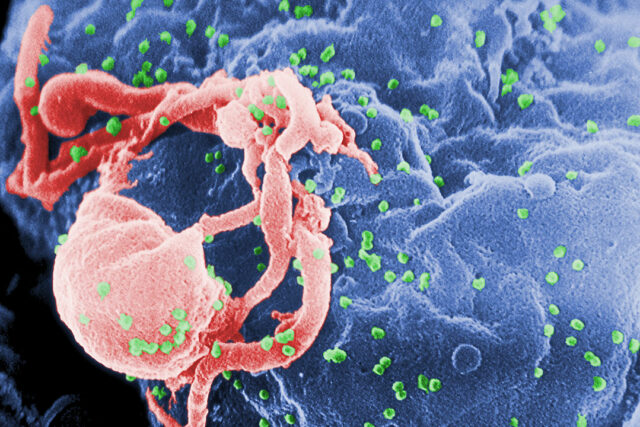
AN ELECTRON micrograph of HIV-1 budding (in green) from a cultured lymphocyte. — CDC

By Kyle Aristophere T. Atienza, Reporter

THE PHILIPPINES was among the countries that have increased public spending on HIV, according to a United Nations (UN) report, which noted that civic groups played key roles in HIV prevention in some Southeast Asian nations amid a coronavirus pandemic. 

But the Philippines just like other nations in the Asia-Pacific region, faces mismatch issues in terms of public investment in HIV response, denying key population segments of state support.

UNAIDS said the Philippines, which had 1,054 HIV-positive people as of February, joined Ukraine, South Africa, Indonesia and India on the list of countries that have boosted public spending on HIV.

Botswana, the Dominican Republic, El Salvador, Ghana,  Kazakhstan, Lesotho, Malawi, Mozambique, Nepal, Nigeria, Papua New Guinea, South Sudan, Tajikistan, Togo and the  United Republic of Tanzania were also on the list. 

“Regardless of how big or small the prevention spending, spending on key populations is much lower,” said Taoufik Bakkali, UNAIDS regional director for Asia and the Pacific, as the world celebrated World Aids Day on Dec. 1.

“This is a reflection of the inequality of focus of investment and the issue of inefficiency in programming.”

Spending on HIV accounted for 6.7% of total government public expenditure on health in low-income countries, representing 12% of government expenditure on health in eastern and southern Africa, the UN agency said.

Donor funding had helped catalyze increased domestic funding, it said citing higher external HIV funding from the US president’s Emergency Plan for AIDS Relief and the Global Fund in 2018 to 2021. 

A number of high-income countries were cutting back aid for global health at a time when international solidarity and a surge of funding is most needed, according to the report.

Funding for HIV programs in low- and middle-income countries was $8 billion short in 2021, it said. 

“Increasing donor support is vital to getting the AIDS response back on track,” the UNAIDS said in a statement. “Budgets need to prioritize the health and well-being of all people, especially vulnerable populations that are most affected by HIV-related inequalities.”

“Fiscal space for health investments in low- and middle-income countries needs to be expanded, including through substantial debt cancellation and through progressive taxation,” it said. “Ending AIDS is far less expensive than not ending AIDS.”

AIDS is the late stage of HIV infection that occurs when the body’s immune system is badly damaged by the virus, according to HIV.gov.

Last year, 650,000 people died of AIDS and 1.5 million more people got infected with HIV, according to the report. Asia and the Pacific region  had the world’s second-highest transmission rate.

HIV infections have been rising where they had been falling in the past 10 years, InDepthNews said, citing UNAIDS data.

“Malaysia and the Philippines are among the countries with rising epidemics among key populations,” it said.

UNAIDS said youth-led civic groups in the Philippines played a key role in boosting anti-AIDS measures in the country during the pandemic,

“Youth-led and youth-serving networks of key populations in India, Indonesia, the Philippines and other countries… stepped up during the COVID-19 pandemic to provide home delivery of antiretroviral therapy, condoms and psychosocial support, both in person and virtually, to their peers,” it said, 

UNAIDS said without the efforts of nongovernment groups to help gay men and men who have sex with men in 2016 to 2020, Ukraine’s HIV incidence in 2021 would have been 44% higher.

Earlier this year, UNAIDS said the AIDS response was in danger, with rising new infections and continuing deaths in many parts of the world. In its latest report, the agency cited inequalities as the underlying reason.

It said legal barriers to the HIV response remained in 39 countries in Asia and the Pacific region.

It cited the refusal of governments to legalize some aspects of sex work as well as the criminalization of same-sex relations in the region.

Possession of a limited amount of drugs for personal use, HIV transmission and exposure as well as nondisclosure of HIV status remained a crime in some countries.

It also noted the restriction of entry, stay and residence of people living with HIV in the Asia-Pacific region.

UNAIDS said social justice and human rights are key to addressing health issues.

The UNAIDS report noted that due to stigma and discrimination, one of three men in Myanmar who have sex with men avoid seeking heathcare, while two of three women who use drugs in Malaysia have an unmet need for reproductive heathcare, the UN agency said..

It added that one of five transgender women in Cambodia have been “thrown out” of a housing in their lifetime.

At least 50 transgender or gender nonbinary people died in the Philippines between 2010 and 2021, according to a 2021 report by The Fuller Project, which focuses on women and gender issues. “But the real death toll is likely much higher.”

Harmful masculinities are discouraging men from seeking care, the UNAIDS said.

“While 80% of women living with HIV were accessing treatment in 2021, only 70% of men were on treatment,” it said. “Increasing gender transformative programming in many parts of the world is key to halting the pandemic. Advancing gender equality will benefit everyone.”


Philippines to release 500 more inmates by yearend

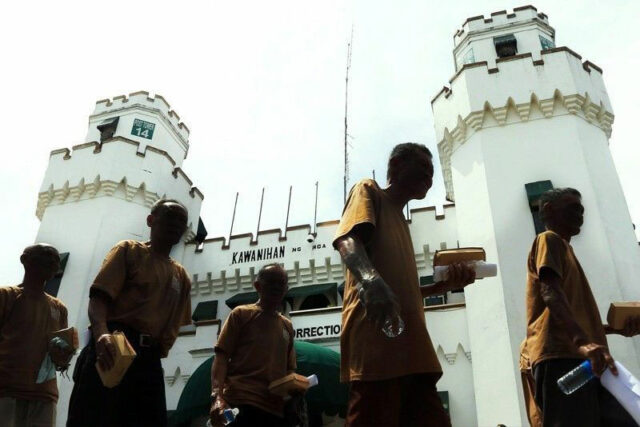
PHILIPPINE STAR/EDD GUMBAN

THE PHILIPPINES’ Bureau of Corrections (BuCor) on Wednesday said it plans to release 500 more inmates by yearend as it tries to decongest one of the world’s most crowded jail system.

The bureau is also considering parole and clemency for elderly prisoners, national prison officer-in-charge Gregorio Pio P. Catapang told a televised news briefing,

“This is what Justice Secretary Jesus Crispin C. Remulla ordered me to do,”  he said in Filipino. “If it could be done, we should free the elderly inmates aged 65 to 70.”

“The marching orders given to me are to keep reforming BuCor and to decongest our jails,” he added.

The Justice chief earlier said the Department of Justice (DoJ) was studying the “supervised release” of inmates aged 65 to 70, citing a decrease in crimes committed by people under the age group.

Last week, BuCor released 234 prisoners who served their sentences from seven prisons.

Mr. Remulla earlier told the United Nations Human Rights Council he seeks to release 5,000 inmates by June of next year.

He said there were efforts to decongest the country’s jails and that he wanted to change the culture of the local justice system, which he said was prone to delays.

The government has released more than 700 inmates in the past two months.

Many of the country’s jails fail to meet the UN’s minimum standards given inadequate food, poor nutrition and unsanitary conditions, according to Human Rights Watch.

With 215,000 prisoners nationwide, Philippine jails and prisons are overfilled more than five times their official capacity, making them the most overcrowded prison system in the world, according to the World Prison Brief.

In August, Mr. Remulla said the DoJ would build a P2.5-billion “world-class” maximum security facility in the town of Sablayan in Occidental Mindoro. It also plans to move the national penitentiary’s minimum security facility to Nueva Ecija in northern Philippines.

The Commission on Human rights has repeatedly flagged the worsening congestion in the country’s jails, more recently spurred by the arrests of suspects in ex-President Rodrigo R. Duterte’s war on drugs that has killed thousands.

“We hope that what we are doing here at BuCor will be meaningful since those imprisoned should have the hope to be free and rejoin our society,” Mr. Remulla said in mixed English and Filipino during the release of more than 200 inmates at the national penitentiary on Nov. 24. — John Victor D. Ordoñez

On Bonifacio Day: Workers rally for wage hike as Marcos hails them as ‘modern-day heroes’ 

REUTERS

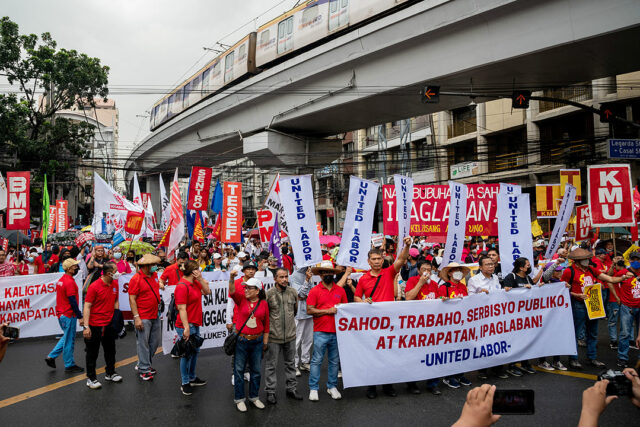
A SENATOR on Wednesday urged the government to develop a comprehensive labor and compensation plan, backing workers and activists who held a rally on Wednesday to push for better wages as the Philippines commemorated the birth anniversary of revolutionary hero Andres Bonifacio.  

President Ferdinand R. Marcos, Jr., meanwhile, hailed workers as the countrys modern-day heroesas he called for patriotism as exemplified by Bonifacio.   

Together let us face the challenges of the times with love for country, determination, courage, and honor so we can build a Philippines that we can be proud of,Mr. Marcos said in his speech in Filipino at the commemoration ceremony at the Bonifacio Monument in Caloocan City.   

On the other hand, Senator Ana Theresia N. Hontiveros-Baraquel said the state should create programs that guarantee adequate income and employment in “volatile” economic conditions.  

“I think it is an urgent matter that we heed the calls of labor groups,” she said in a statement. “The pandemic’s effect on our economy has been extraordinary.”  

The lawmaker backed the proposed initiatives of labor group Nagkaisa, which called for reforming the country’s region-based wage-setting procedures, addressing issues of contractual workers, and developing a public employment program.  

“Their proposals are vital to understanding the most pressing issues of our economy, even the everyday problems of Filipino families,” Ms. Hontiveros said.  

LABOR, RIGHTS GROUPS
Nagkaisa was among the groups that joined Wednesdays demonstration in Manila. Protest rallies were also held in other main cities of the country.    

“Contractualization, both in the private and public sector, significantly weakens the exercise of other labor rights such as freedom of association and collective bargaining, thus, keeping the life of endoworkers to the barest minimum,” labor group Sentro Secretary General Josua Mata said in a separate statement.  

Federation of Free Workers Vice-President Julius H. Cainglet earlier told BusinessWorld in a telephone call that workers need higher wages to cope with the rising prices of food and utilities.  

Rights group Karapatan, in a statement, said Bonifacios 159th birth anniversary should be taken as an opportunity to re-learn and live out our peoples history.  

At present, the poor majority face greater challenges and struggles amidst high prices of basic commodities and poverty,Karapatan said.   

Peasants remain landless and are unable to afford expensive farm inputs without sufficient support and subsidy from the governmentWorkers are slaves of their meager wages and without social protection, while millions are forced to work outside the country,it added.   

Headline inflation increased to 7.7% in October from 6.9% in September, the quickest increase in nearly 14 years, according to the Philippine Statistics Authority.  

The Philippines’ jobless rate dropped to 5% in September, a new low since the start of the pandemic. This translates to 2.5 unemployed Filipinos. However, job quality worsened in the same month as Filipinos seeking more work rose to a six-month high of 15.4% or 7.33 underemployed Filipinos. 

“Our labor groups are hoping for direct dialogues with the current administration and we should listen to their pleas,” Ms. Hontiveros said in Filipino. John Victor D. Ordoñez and Kyle Aristophere T. Atienza

Baguio tourist arrivals hit near pre-pandemic level

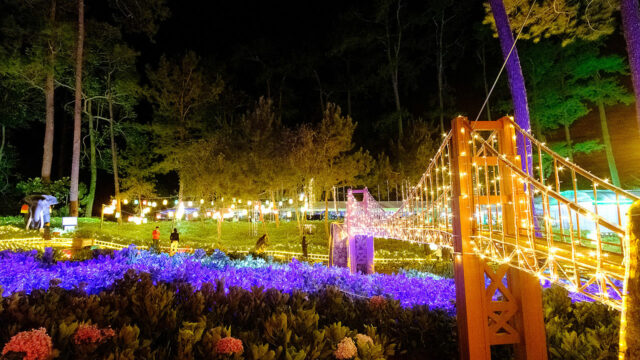
THE BAGUIO Botanical Garden is decorated this year with a ‘Christmas Around the World’ theme. It is open daily from 7 a.m. - 3 p.m., and 6 p.m. to midnight. — BAGUIO CITY-PIO

REGISTERED visitor arrivals in the mountain city of Baguio reached about 1.2 million from March to November and a surge is expected in December with the Christmas holidays, according to the city government, noting that 1.57 million tourists were recorded in 2019.   

Supervising City Tourism Operations Officer Engr. Aloysius Mapalo said this years official count does not include day visitors who do not pre-book in accredited accommodation establishments.   

Despite the presence of the Visitors Information and Travel Assistance (VISITA) registration platform, the recorded number of tourists by the accredited tourism-related establishments does not still reflect the real state of the local tourism industry,he said.   

Mr. Mapalo said the return of visitors to one of the most popular destinations in northern Philippines has been a big boost to local businesses hit hard by the pandemic lockdown.   

He cited that businesses along with the city government lost an estimated income of P5.7 billion in 2020 with visitor arrivals dropping to 268,000.   

Continued restrictions in 2021 kept visitor numbers at about 300,000.  

The conduct of various tourism-related activities over the past several months contributed in enticing tourists to visit the city and become aware of its rich culture and history as a designated (UNESCO) Creative City for Crafts and Folk Arts,the tourism official said.  

He said various activities lined up for the Christmas celebration are expected to keep drawing in guests.   

He added that the tourism industrys recovery momentum is seen to continue next year, especially with the Baguio Flower Festival or Panagbenga in February. MSJ

Half of world’s democracies in decline, says watchdog IDEA

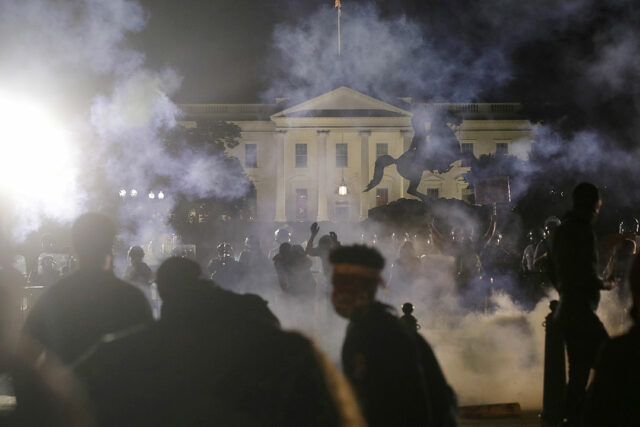
Protesters rally at the White House against the death in Minneapolis police custody of George Floyd, in Washington, D.C., U.S. May 31, 2020. — REUTERS

By Eduardo Porter

STOCKHOLM — Half of the world’s democracies are in a state of decline amid worsening civil liberties and rule of law while already authoritarian governments are becoming more oppressive, an intergovernmental watchdog group said on Wednesday.

In its annual report, the Stockholm-based International Institute for Democracy and Electoral Assistance (IDEA) said democratic institutions were being undermined by issues ranging from restrictions on freedom of expression to increasing distrust in the legitimacy of elections.

Several factors, such as Russia’s war in Ukraine, rampant inflation, a looming global recession, climate change and the COVID-19 pandemic provide significant challenges.

“The world faces a multitude of crises, from the cost of living to risks of nuclear confrontation and the acceleration of the climate crisis,” IDEA said in its 2022 study on the state of democracy, relying on data compiled since 1975.

“At the same time, we see global democracy in decline. It is a toxic mix.”

IDEA bases its Global State of Democracy Indices on more than 100 variables including measures such as freedom of expression, and personal integrity and security, which are then grouped and aggregated into broader categories.

The report said the number of “backsliding” countries — those with the most severe democratic erosion — has never been so high and included Poland, Hungary and also the United States, with its problems of political polarization, institutional dysfunction and threats to civil liberties.

In Europe, almost half of all democracies have suffered erosion in the last five years, it said. However, democratic values and institutions are increasingly seen as a fundamental bulwark against Russian aggression, especially in Ukraine, but also in most countries in the region.

“The Russian war of aggression in Ukraine has shaken Europe, forcing the region to rethink security considerations and deal with impending food and energy crises,” IDEA said.

It said democracy globally is under threat from challenges to the legitimacy of credible election results, restrictions on online freedoms and rights, intractable corruption, and the rise of extreme right parties.

“Never has there been such an urgency for democracies to respond, to show their citizens that they can forge new, innovative social contracts that bind people together rather than divide them,” IDEA said.

The report found that authoritarian governments were engaging in ever more repression of dissent, and that more than two-thirds of the world’s population now lived in “backsliding” democracies or under authoritarian rule.

Globally, the number of countries moving toward authoritarianism was more than double the number moving toward democracy measured over the past six years.

On a positive note, Africa remained resilient in the face of instability. Countries including Gambia, Nigeria and Zambia all saw improvements in democratic quality. — Reuters

Best and worst cities for expats to live and work in

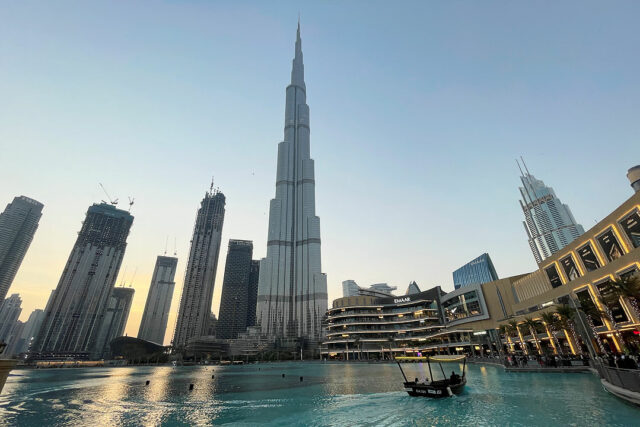
GENERAL VIEW of the Burj Khalifa and the downtown skyline in Dubai, United Arab Emirates, Sept. 30, 2021. — REUTERS

THREE different cities on three separate continents are the best places for expats to live and work, according to a new survey.

Spain’s Valencia topped the InterNations Expat City Ranking list 2022 — with respondents raving about quality of life, public transport and sporting opportunities — followed by Dubai, which was lauded for the welcome it gives new arrivals. Mexico City came in third for its affordability.

Not faring so well was Johannesburg, which ranked bottom of the 50-strong list, with those surveyed branding the South African city unaffordable and unsafe. Sitting just above it are Germany’s Frankfurt and the French capital Paris, which both scored poorly when it came to affordable housing.

Miami was the highest-ranking North American city on the list, in 12th place, with New York clocking in at number 16 and Toronto in 19th position. In the UK, London limped in at 40th place.

Elsewhere in Asia, Bangkok came in sixth thanks to its low cost of living, Melbourne’s work-life balance earned it eighth spot, and Singapore rounded out the top 10.

InterNations collected information from 11,970 expats living in 181 countries or territories. Fifty cities met the sample size requirement of at least 50 participants per destination.

Here’s the top 10 in full — with a brief description by InterNations of each city’s major polling features:

Valencia, Spain: Liveable, friendly and affordable

Dubai, UAE: Great for work and leisure

Mexico City, Mexico: Friendly and affordable, but unsafe

Lisbon, Portugal: Amazing climate and quality of life, mediocre work options

Madrid, Spain: Great leisure activities, a welcoming culture

Bangkok, Thailand: Expats feel at home despite safety concerns

Basel, Switzerland: Expats satisfied with finances, jobs, quality of life

Melbourne, Australia: An easy city to get used to

Abu Dhabi, UAE: Excellent health care, worry-free bureaucracy

Singapore: Easy administration, satisfying finances, improved career prospects

And the bottom 10:

Rome, Italy: Expats feel at home despite low quality of life

Tokyo, Japan: Hard to navigate but quality of life high

Vancouver, Canada: Housing unaffordable and local residents not so friendly

Milan, Italy: Troubling financial situation, difficult working life

Hamburg, Germany: Expats unhappiest here, have hardest time making friends

Hong Kong, China: Frustrating environmental and work-life factors

Istanbul, Turkey: The worst city for working abroad

Paris, France: A top destination for culture and cuisine — if you can afford it

Frankfurt, Germany: Struggle with digitization, administration and language

Johannesburg, South Africa: The world’s worst expat destination. — Bloomberg

COVID protests escalate in Guangzhou as China lockdown anger boils

REUTERS

SHANGHAI/BEIJING — People in the Chinese manufacturing hub of Guangzhou clashed with white hazmat-suited riot police on Tuesday night, videos on social media showed, as frustration with stringent COVID-19 rules boiled over, three years into the pandemic.

The clashes in the southern city marked an escalation from protests in the commercial hub of Shanghai, capital Beijing and other cities over the weekend in mainland China’s biggest wave of civil disobedience since President Xi Jinping took power a decade ago.

Resentment is growing as China’s COVID-hit economy sputters after decades of breakneck growth, which formed the basis of an unwritten social contract between the ruling Communist Party and a population whose freedoms have been dramatically curtailed under Mr. Xi.

In one video posted on Twitter, dozens of riot police in all-white pandemic gear, holding shields over their heads, advanced in formation over what appeared to be torn down lockdown barriers as objects fly at them.

Police were later seen escorting a row of people in handcuffs to an unknown location.

Another video clip showed people throwing objects at the police, while a third showed a tear gas canister landing in the middle of a small crowd on a narrow street, with people then running to escape the fumes.

Reuters verified that the videos were filmed in Guangzhou’s Haizhu district, the scene of COVID-related unrest two weeks ago, but could not determine when the clips were taken or the exact sequence of events and what sparked the clashes.

Social media posts said the clashes took place on Tuesday night and were caused by a dispute over lockdown curbs.

The government of Guangzhou, a city hard-hit in the latest wave of infections, did not immediately respond to a request for comment.

China Dissent Monitor, run by US government-funded Freedom House, estimated at least 27 demonstrations took place across China from Saturday to Monday. Australia’s ASPI think tank estimated 43 protests in 22 cities.

EASING CURBS
Home to many migrant factory workers, Guangzhou is a sprawling port city north of Hong Kong in Guangdong province, where officials announced late on Tuesday they would allow close contacts of COVID cases to quarantine at home rather than being forced to go to shelters.

The decision broke with the usual practice under China’s zero-COVID policy.

In Zhengzhou, the site of a big Foxconn factory making Apple iPhones that has been the scene of worker unrest over COVID, officials announced the “orderly” resumption of businesses, including supermarkets, gyms and restaurants.

However, they also published a long list of buildings that would remain under lockdown.

Hours before those announcements, national health officials said on Tuesday that China would respond to “urgent concerns” raised by the public and that COVID rules should be implemented more flexibly, according to each region’s conditions.

But while the easing of some measures, which comes as China posts daily record numbers of COVID cases, appears to be an attempt to appease the public, authorities have also begun to seek out those who have been at recent protests.

“Police came to my front door to ask me about it all and get me to complete a written record,” a Beijing resident who declined to be identified told Reuters on Wednesday.

Another resident said some friends who posted videos of protests on social media were taken to a police station and asked to sign a promise they “would not do that again”.

It was not clear how authorities identified the people they wanted questioned, nor how many such people authorities contacted.

Beijing’s Public Security Bureau did not comment.

On Wednesday, several police cars and security personnel were posted at an eastern Beijing bridge where a protest took place three days earlier.

‘HOSTILE FORCES’
In a statement that did not refer to the protests, the Communist Party’s top body in charge of law enforcement agencies said late on Tuesday that China would resolutely crack down on “the infiltration and sabotage activities of hostile forces”.

The Central Political and Legal Affairs Commission also said “illegal and criminal acts that disrupt social order” would not be tolerated.

The foreign ministry has said rights and freedoms must be exercised within the law.

White House national security spokesperson John Kirby said on Tuesday that protesters in China should not be harmed.

COVID has spread despite China largely isolating itself from the world and demanding significant sacrifices from hundreds of millions to comply with relentless testing and prolonged isolation.

While infections and death numbers are low by global standards, analysts say that a reopening before increasing vaccination rates could lead to widespread illness and deaths and overwhelm hospitals.

The lockdowns have hammered the economy, disrupting global supply chains and roiling financial markets.

Data on Wednesday showed China’s manufacturing and services activity for November posting the lowest readings since Shanghai’s two-month lockdown began in April.

Chinese stocks were steady, with markets weighing endemic economic weakness against hopes that the public pressure could push China to eventually reopen.

International Monetary Fund chief Kristalina Georgieva flagged a possible downgrade in China growth forecasts. — Reuters

Migrant workers face worse choices than building World Cup stadiums

COMMONS.WIKIMEDIA.ORG

THE global financial crisis of 2008 dealt a blow to thousands of Indian laborers. They were set to join hundreds of thousands of compatriots providing the workforce for a construction boom in Dubai. Then the world economy spasmed, the price of oil tanked, and international finance dried up. Hundreds of construction projects across the United Arab Emirates (UAE) stalled. And the workers were left stranded at home, work permits in hand.

Three years later, survey teams deployed across India to interview thousands of these workers, many who managed to get to jobs in the UAE just before the crisis hit and others who drew the short straw: Hired by the same construction company just a few months later, they never left India and had to settle for a local job.

Their lives took very different paths: Those who shipped out to the Gulf, researchers found, earned four times as much as those who stayed, a gain on par with the wage gap between a university-educated worker and an illiterate laborer in India.

The World Cup in Qatar has drawn the spotlight onto the plight of its migrant workers — 2.2 million of them in 2020, according to statistics from the United Nations. That is 50% more than a decade earlier, when Qatar won the rights to host the tournament. Nearly 80% of them come from Bangladesh, India, Nepal, Pakistan, the Philippines, and Sri Lanka.

Human rights organizations have come down hard on FIFA for not doing more to guarantee the rights of these desperately poor laborers who built the gleaming stadia where the matches are being played. They protest exploitative work, rampant wage theft, and high death rates, as well as the lack of unions and the use of coercive contracts that tie migrants to a single employer.

And yet Qatar’s minimum wage ranges from four to eight times that in India. Much like the Indian workers who made it to Dubai before the global financial crisis slammed the door shut, the laborers that got jobs building Doha’s stadia are the lucky ones.

“It is a life-transforming amount of money,” said Michael Clemens of the Center for Global Development, who led the research on Indians in the UAE. “It can mean the difference between life and death for a family member who gets sick, between opening a business and not opening a business, between getting off the farm or staying on the farm permanently.”

Migrant work in places like Doha, Dubai, and beyond is, in fact, the most powerful tool the world knows to reduce poverty. As Glenn Weyl, a research economist at Microsoft who teaches at Yale, noted in a paper for the “Normative Ethics and Welfare Economics” conference at the University of Chicago several years back, migrant work in the Persian Gulf does more to reduce global inequality than the combined welfare states of the rich world.

“If the OECD countries adopted policies similar to Qatar’s,” Weyl wrote, “such adoption would likely exhaust the supply of poor migrants globally and thus essentially not just eliminate global absolute poverty, but also elevate nearly all individuals outside the global middle class into this group.”

The benefits of migrant work cannot be ignored. A study by economists at the World Bank and Yale University of a lottery in Bangladesh to allocate visas for migrant work in Malaysia’s palm oil plantations found that remittances doubled the income of winner households in Bangladesh, compared with loser households. It increased their consumption and their investments in land and housing. They were less indebted and had lower poverty rates. 

Winning the visa lottery delayed migrants’ marriage and paused new family formation. In households of married migrants, women’s participation in decision-making increased markedly. Winners invested more in their human capital — enrolling in vocational training and language courses.

There is, of course, a legitimate fight to be had to ensure that wages are not stolen and working conditions are humane.

Acknowledging the potential for abuses, governments in some countries have gotten involved in managing the process. For instance, the Bangladeshi lottery was put in place by the governments of Malaysia and Bangladesh to end recruitment malpractices. The program reduced intermediation fees to $400 per migrant, from the $3,000-$4,000 that private recruiters used to charge.

New Zealand’s Recognized Seasonal Employer scheme, an agricultural guest-work program for nationals of poor South Pacific island countries, raised the household incomes of poor families in Tonga typically by a factor of 10 and increased child schooling and Tongans’ self-reported standard of living. A study by researchers at the World Bank placed it “among the most effective development policies evaluated to date.”

Critics of the conditions migrant workers toil in — who often seem to deem cheap migrant work in rich countries as inherently exploitative and wrong — too often lose sight of a critical question: What is the counterfactual?

Take, for instance, the tragic reports of deaths of immigrant construction workers in the construction sites across Qatar. These reports rarely consider the alternatives these workers have.

Maheshwor Shreshta of the World Bank estimated, for instance, that the two-year mortality of Nepali migrant workers in Malaysia and the Persian Gulf countries was 1.3 per thousand. The mortality rate of average Nepali men with the same age distribution was more than three times higher: 4.7 per thousand.

The critique of the “exploitation of desperate migrants” often assumes that their decision to migrate is based on misinformation and fraud. It may seem like a good idea, but the outcome will inevitably be horrible. One could also make the contrary case, though.

In fact, the flood of outrage and criticism from many developed country NGOs and pundits about the dangers of migrant work might prevent prospective migrants in the world’s poorest countries from taking a step that might drastically improve their lives.

“National and international media have given considerable attention to the numbers of Nepali workers who die abroad, and to the exploitative conditions they work under,” Shreshta wrote. “This focus could give potential migrants a misleading impression of mortality rates.”

In one field experiment with Nepali workers, Shreshta found that inexperienced prospective migrants overstated the mortality risk of migration by seven times. And many still wanted to go. If you faced their choices, chances are that you would as well.

BLOOMBERG OPINION

The battery years

JOHN CAMERON-UNSPLASH

SMC Global Power Holdings Corp., the energy arm of San Miguel Corp., is readying to sell “battery” power to the public at P2-3 per kilowatt-hour, as soon as it gets the permit to do so. It has so far completed a network of battery energy storage facilities nationwide with a capacity of over 500-megawatt-hours.

The company is said to be investing $1 billion to build 32 battery energy storage facilities all over the country, with a total capacity of 1,000-megawatt-hours, by 2023. This is to ensure “reliable power supply nationwide, even in far-off areas” through the distribution of stored power from its battery facilities when needed.

The intermittent nature particularly of “renewables” will be addressed with the integration of battery storage into the power grid, according to SMC President Ramon Ang, who told media that battery storage, “and other bridge technologies, will allow us to truly achieve a just and inclusive transition to a clean energy future.”

Energy generated from renewables such as solar and wind can be stored in a network of battery storage facilities connected to the grid. When needed, stored energy can be supplied to the grid from these facilities. Battery storage plants are being readied in Albay, Bohol, Cagayan, Cebu, Davao del Norte, Davao de Oro, Isabela, Laguna, Leyte, Misamis Oriental, Pampanga, Pangasinan, and Tarlac.

A report by the Philippine News Agency noted that these battery facilities “will minimize power wastage and redirect otherwise unused capacity to remote areas,” and are viewed as the “most sustainable technical solution to the country’s power quality and reliability issues.” The facilities “will make viable use of intermittent renewable sources, such as solar and wind, by efficiently storing the energy for electricity when the sun is not shining or the wind is not blowing.”

“The major challenge of renewable power everywhere in the world is intermittency. With renewables, the ability to generate power is always limited. You cannot generate solar power at nighttime, or when weather conditions block sunlight. You cannot produce wind power when there’s no wind. When there’s a drought, you also can’t produce hydropower. Battery storage is key to mitigating all these issues,” the report quoted Mr. Ang.

Building battery storage facilities nationwide is a key component of the SMC strategy to move away from coal and transition to liquefied natural gas power and renewable energy. SMC battery storage facilities use advanced lithium-ion battery technologies, the same system that reportedly currently dominates grid-scale Battery Energy Storage Systems or BESS worldwide.

SMC is moving in the right direction, I believe. But there are concerns emerging in light of developments in battery technology as well as the increasing demand for electric vehicles worldwide. Manufacturing of rechargeable batteries for electronics, electric vehicles, and grid storage is the largest global use for lithium, representing 71% of total demand. Given this, moving forward, perhaps more suitable battery technologies may be considered for future BESS projects in the country in place of lithium-ion or Li-ion.

Some experts note that the use of Li-ion technology may be unsustainable. Of late, Li-ion has been extensively used because it has become cheaper. However, the demand for Li-ion batteries is now being driven up by the demand for electric vehicles, among others. Newer and cheaper battery technologies may have to be considered for future BESS projects.

And then there is the fear that the mining for lithium and control over its supply is bound to become the subject of “war” between countries, perhaps sooner than later, much like oil production and supply have become global concerns since the oil crisis of 1973. In fact, the control over lithium started as early as five years ago given the high demand for it by mobile phone makers.

In a March 2022 online commentary by Alex Koyfman on Wealth Daily titled “Why China’s Lithium War Is Far More Important Than Putin,” he noted that “oil in all of its forms as a fuel is on the way out” since electric vehicles are the future. “By 2030, more than half of the new cars produced globally will be battery-driven. By 2035, sales of gas- and diesel-powered vehicles may be outlawed entirely in Europe,” he wrote.

In this connection, he also noted that “China is already hard at work becoming the world’s biggest energy supplier for the next 50 years. At the heart of it all is the one element essential to current rechargeable battery production: lithium. In 2021, Chinese mining and battery companies acquired 6.4 million tons of lithium reserves — the previous year, all acquisitions by all companies totaled just 6.8 million tons.”

Koyfman quoted Seth Goldstein, a senior equity analyst at Morningstar, who noted that “Chinese companies have done the math and realized how much lithium they’re going to need to meet either battery or EV growth plans and have decided to try to secure that by going after some of the most promising junior projects in development.”

Koyfman added that “Lithium is to the 21st century what oil was to the 20th… because, like gas, lithium-ion batteries won’t only be responsible for taking you to work or your kids to school. These batteries are responsible for storing power on all levels, from the charge powering your phone, to the energy driving our biggest trains and ocean-going vessels, to the overflow production coming from our power stations.

“Without a steady and growing supply of lithium, human civilization will grind to a halt just as quickly as it would if somebody switched off the oil spigots around the world,” he added. And this further emphasizes the urgent need to develop alternative battery technologies that can replace lithium-ion, and to begin considering options with respect to new BESS projects.

Lithium mining is also becoming very controversial given its impact on the environment. In Portugal, for instance, German broadcaster Deutsche Welle reported that the government has embarked on a multibillion-euro national lithium strategy that involves open-cast mining, refining, and processing lithium ore for export. Portugal reportedly controls an estimated 10% of overall lithium deposits in Europe. However, the government plan to exploit lithium — or “white gold” — is being opposed by environmentalists.

Then there are speculations that Bolivian president Evo Morales was overthrown in 2019 over the control of his country’s lithium reserves. While Australia is the world’s largest lithium producer, accounting for nearly half of global production in 2020, Morales’ Bolivia, Chile, and Argentina are considered the “lithium triangle” with nearly 50 million tons of lithium between the three countries.

Simply put, there is great concern that lithium is replacing oil among the most important commodities in high demand globally. And whatever the world experienced with oil — the fight for control of supply and its impact on consumer prices and inflation — will also happen with lithium, eventually.


Marvin Tort is a former managing editor of BusinessWorld, and a former chairman of the Philippine Press Council

matort@yahoo.com

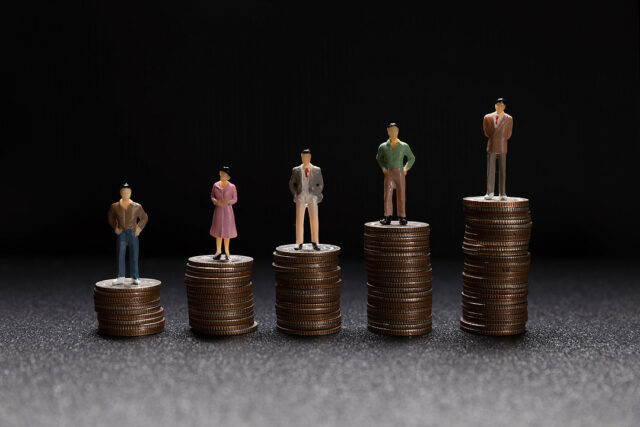
Income inequality and the quality of democracy

JCOMP-FREEPIK

Over the past several days, television networks, newspapers, and social media have reported that a recent World Bank study showed that income inequality in the country remains very high.

Warren de Guzman of ABS-CBN states in a report dated Nov. 24, that the country’s income inequality was measured using the Ginni coefficient, which tracks the difference or disparity between wealth distribution of income levels. Zero indicates perfect equality with higher coefficients indicating higher inequality. Stated another way, the Ginni coefficient measures the extent of disparity and inequality between sets of statistical values, in this case, income.

The De Guzman report states that “with a reading of over 40, the Philippines has the second highest income inequality in East Asia, behind only to Thailand.”

The same report says that the country also ranked 15th out of 63 nations worldwide with high income inequality. The World Bank also noted “that the top one percent of earners in the Philippines captured 17% of national income, while the bottom 50% — the poorest half — only accounts for 14%.

Setting aside the data presented by the World Bank, one will be able to clearly visualize such disparity by imagining certain areas in Metro Manila where pockets of affluence lie literally side by side with pockets of poverty. Not too far from middle-class gated villages or subdivisions are areas populated by informal settlers. Property developers however ensure that land values are protected by simply offering to purchase surrounding properties that will not blend with their project concept before actually starting the development.

We have known the fact of income inequality for years and have seen its manifestations all over the place: from the pockets of poverty juxtaposed with pockets of affluence we mentioned earlier, to the number of private vehicles in the streets compared with the insufficiency of public transport. A recent report of the Asian Development Bank says, “Manila needs better public transport.”

There are, of course, reasons for this inequality and there are dangerous consequences on social cohesion and, bottom line, on democracy.

Income inequality starts at the moment of birth when children born into poverty do not get the proper nutrition and are therefore deprived of proper brain development. Unless proper nutrition interventions are implemented in a systematic and strategic way, the malnourished child will not perform well in school. In fact, he or she may not even be able to set foot in school regularly as parents opt to mobilize their children for odd jobs to help augment meager family income. The children grow up to be like their parents — unskilled, untrained, and unemployable, and undeserving of even the legal minimum wage.

There are to be sure reasons for income inequality other than poverty at birth. One possible reason is an environment that is incapable or disinterested in developing the potential of gifted persons. Otherwise-talented individuals are not given equal access to opportunities for a better education. This lack of access is being mitigated by some of the country’s top institutions of higher learning by providing scholarships for a specific percentage of student enrollment for poor but deserving students. While providing equal access to opportunities should ideally be guaranteed by society, no one can guarantee equal results and outcomes. In a competitive market society, individuals must strive to show the best results.

When we refer to income inequality as having dangerous consequences to democracy, we accept the notion that income inequality threatens the survival of a strong middle class on which, in turn, the survival of democracy depends.

Zambian-born economist and analyst of macroeconomic and international affairs, Baroness Dambisa Moyo, author of Winner Take All: China’s Race for Resources and What it Means for the World and other books, wrote in 2018, at the height of Trumpism that “across the world, democracy is under siege.”

While Trump, an avowed enemy of liberal democracy and disdainful of the rule of law, suffered defeat in the 2020 elections despite his and his loyalists’ claims of a stolen election, his politics of anger and polarization still resonate in some parts of the world. Then Brazilian president Jair Bolsonaro openly espoused Trump’s views and even got Steve Bannon as his political consultant. Fortunately, Bolsonaro lost his reelection bid to former president Luiz Lula da Silva. Bannon has been sentenced to four months in prison for defying a subpoena the House issued in line with its investigation of Bannon’s involvement in the Jan. 6, 2021 insurrection.

Moyo explains that citizens of some countries, especially the young — 18 to 29 years old — say the democratic form of government is a less preferable way of getting things done. However, this survey finding in 2018 runs counter to the 2022 election results in Brazil and the midterm polls in the US. In the US, surveys show first-time young voters came out in droves to reject election deniers and proponents of excessively divisive politics.

Media, especially social media, has also helped poison the democratic well with fake news rendering voters less able to make quality decisions based on objective information, says Moyo.

Moyo holds the view that the veracity and very survival of democracy depends on a strong, prosperous middle-class — one that is able to hold government accountable.

An article says that according to research by Prof. Adam Przeworski of the New York University, in countries with a per-capita income below $1,000 (per year), the life of expectancy for a democracy is only around 12 years. In addition, Przeworski states that a democracy can survive “come hell or high water” when a country’s average per capita income is above $6,000, although the number is not adjusted for inflation.

The link between income and stable democracies is, at a certain level, intuitive, according to Moyo. After all, at the heart of democracy is an economic contract between citizens who consent to pay taxes and a government that, in exchange, safeguards the security and welfare of the nation by providing public goods such as education, healthcare, nutrition, and national security. In essence, any economic challenge that threatens the middle class places this contract — and ultimately, democracy — in peril. Obviously, burdensome debt obligations and fiscal deficits compromise the ability of governments to provide these public goods.


Philip Ella Juico’s areas of interest include the protection and promotion of democracy, free markets, sustainable development, social responsibility and sports as a tool for social development. He obtained his doctorate in business at De La Salle University. Dr. Juico served as secretary of Agrarian Reform during the Corazon C. Aquino administration.

ADVERTISEMENT
ADVERTISEMENT