Home Blog Page 5540

Team Smart Omega CODM visas OK’d in time for world championship

SMART Omega Call of Duty: Mobile (CODM) team finally got their visa application approved Dec. 5, in time for the CODM World Championships in North Carolina, USA slated Dec. 15-18, 2022.

Last July 2022, House Bill 01285 or “An Act Declaring the Month of October of every year as ‘National Esports Month’ and for other purposes” was also filed in the Congress to support the continuously growing esports scene in the country where Smart Omega has already made its mark with competitive professional teams in CODM, Mobile Legends: Bang Bang, DOTA 2, and Hyperfront.

The real Davis

Heading into the 2022-23 campaign, the knock on 2012 first overall pick Anthony Davis was that he couldn’t stay on the court with consistency. He possessed otherworldly talent that all and sundry could see whenever he suited up, but when, and if, he could suit up was another matter altogether. His brittle body often got in the way of his greatness, causing him to miss a whopping 215 contests in 10 seasons. Which was why not a few quarters have questioned his capacity to take over the reins in the face of Lakers top dog LeBron James’ advancing age and dwindling efficiency.

For a while there, it appeared as if Davis would prove critics right. Right off the bat for the Lakers’ current campaign, he appeared timid and slow, and, worse, ineffective. And with the purple and gold struggling to squeeze every last ounce of competitive juice off their uneven roster, his inability to stand out, let alone dominate, discounted their chances to win. James was clearly on the wane, and yet he appeared to have no drive to institute a changing of the guard.

Admittedly, Davis strove to be available for every match. Given his injury history, it was a testament to the conditioning work he did in the offseason that he had to be sidelined only once in the Lakers’ first 11 outings. Still, he looked relatively listless, not quite submissive but definitely deferential. It was not what longtime habitues of the pro scene — and not what even James — envisioned for him. Something, anything, had to change, and not simply because he needed to prove he deserves every penny of his $37.98-million contract for the season.

The good news is that the real Davis seems to have had the impetus to show up, and how. For some fortunate reason, he found cause to accept his alpha status when James went down with a groin injury 11 games in. Over the next five stops, he showed his brilliance on both ends of the floor; he put up monster numbers on offense even while erasing countless mistakes of the Lakers on defense. And, if nothing else, his excellent run as the go-to guy in the lineup gave him the confidence to keep being so even with his more illustrious teammate back on board.

At this point, it’s evident that where the Lakers will end up depends on Davis. James may be on the way to making history as the National Basketball Association’s top career scorer, but its relevance will increase significantly with collective success. And that success is being fueled in large measure by his singular feats. Considering the way he’s playing, there is no better marquee name. It has taken a decade for him to reach his potential, but the wait looks to be worthwhile.


Anthony L. Cuaycong has been writing Courtside since BusinessWorld introduced a Sports section in 1994. He is a consultant on strategic planning, operations and human resources management, corporate communications, and business development.

Drone strikes show Putin his homeland isn’t safe

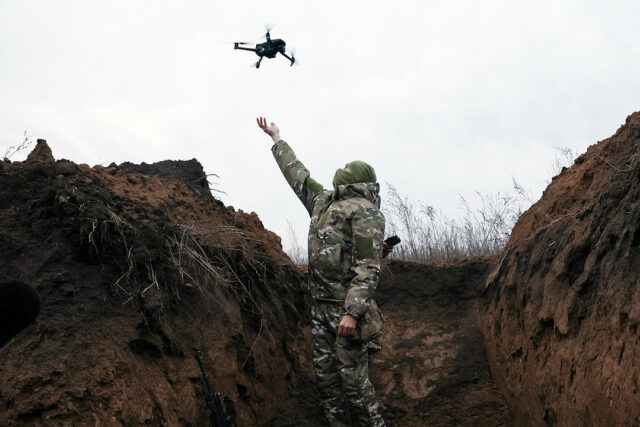
“GHOST,” 24, a soldier with the 58th Independent Motorized Infantry Brigade of the Ukrainian Army, catches a drone while testing it so it can be used nearby, as Russia’s invasion of Ukraine continues, Nov. 25. — REUTERS

REPORTS of significant attacks against two Russian air bases are a new and dangerous twist in the Ukraine war. One of the explosions was at the Engels-1 air base in the Saratov region, the other at Dyagilevo in the Ryazan area — both hundreds of miles inside the Russia-Ukraine border. Several Russians were reportedly killed or wounded, and at least two aircraft damaged. Moscow immediately blamed Ukraine for the strikes, which appear to have been conducted using unmanned aerial vehicles.

While the Kyiv government hasn’t openly taken credit, it hasn’t denied culpability. One adviser to President Volodymyr Zelenskiy tweeted: “If something is launched into other countries’ airspace, sooner or later unknown flying objects will return to departure point.” Hardly cryptic.

The strikes occurred against an important tactical backdrop: an escalating Russian bombing campaign against Ukraine’s critical infrastructure. As his ground game continues to falter, Russian President Vladimir Putin has taken to the air to punish the civilian population. It is the latest in a series of Russian war crimes, coming just as winter descends and electricity and heat become matters of life and death.

Assuming Ukraine launched the drone strikes against what are legitimate military targets, albeit over 300 miles into Russia, what are the implications for the overall conflict? Should we worry about serious escalation?

Having watched the Ukrainians suffer for months from murders, rapes, indiscriminate bombing of civilian residences, and attacks on electricity, water, and nuclear power plants, it is increasingly hard to counsel them to simply sit back and take what Putin wants to dish out.

The Ukrainians are mad as hell and not going to take it anymore — not while they have the ability to reach out and touch Russian military targets.

Leaders in Kyiv are going to try to maintain a minimal level of deniability about strikes within Russian territory, but there’s little doubt they will conduct them. From their perspective, there is little to lose. Russia is already on a full war footing, and short of using nuclear weapons (a line even Putin would hesitate to cross) the Kremlin really doesn’t have additional combat cards to play.

These strikes may have been calibrated to serve simply as a demonstration of Ukrainian capability. Going ahead, Kyiv can go bigger, but will be careful to strike only purely military targets, maintaining the high ground over Russia in terms of international law. Unless Putin stands down from the air war (highly unlikely) his homeland will be under attack.

Western backers will try to restrain the Ukrainians from launching larger-scale attacks, hoping to reduce the risk of the conflict spiraling further and drawing in the North Atlantic Treaty Organization (NATO) directly. NATO will try to mollify the Ukrainians by offering more and better surface-to-air missiles to defend their cities, and may seriously consider supplying combat aircraft.

If the Ukrainians are given tools to truly “close the skies” over their nation, they might be more amenable to refraining from long-range attacks. But as things stand, Ukraine has every right to respond against targets inside Russia. Doing so with unmanned vehicles is a prudent path. Unless the West is willing to protect Ukrainians from a terror campaign from the sky, we should get out of their way.

On the other side, these attacks will likely harden the Russian military’s resolve and provide Putin with the talking points he wants for the Russian population: Ukraine is attacking us! But more than nine months into his brutal war, his approval rating at home is suffering and his international support dwindling. Sanctions are biting the economy, and price caps on Russian oil went into effect on Monday. Europe is holding together well in the face of Russian energy blackmail.

Much like the famous air raid on Tokyo by US Colonel Jimmy Dolittle in the early days of World War II, the drone attacks show a weakness in a supposedly invulnerable home front. It may help ordinary Russians to see the mounting costs of what might best be termed “the war of Putin’s ego.”

BLOOMBERG OPINION

The Philippines and the European Union: Embarking on the same journey

MARKUS SPISKE-UNSPLASH

The COVID-19 pandemic dealt a blow to the Philippine economy and exposed many gaps and weaknesses in our system that had been present for some time.

Today, almost three years after the imposition of the first lockdowns, and as we try to recover from this crisis, we find that the traditional ways in which we did business and understood business growth models have changed drastically. So, if we are to recover fast and achieve sustainable development, we need to make our economy more resilient to future shocks and other uncertainties.

A big part of the effort to become resilient is to position the Philippines as a highly progressive and viable market in the international stage — and this we can do through accessibility for trade and investment, environmental sustainability, adaptive labor market, and improved quality of life.

It’s a daunting task but one that can be achieved through a multi-stakeholder, whole-of-society approach where the government partners with the private sector and civil society.

Our friends from the European Union (EU) recently gave us some encouraging words that the Philippine economy could achieve this feat — that in fact, we have made steps in the right direction, and that we only need to continue making the right policy decisions in order to accelerate what we have begun.

During the second day of the Pilipinas Conference, organized by the Stratbase ADR Institute and held on Nov. 21 and 22, members of the EU community shared their insights on how the Philippines is doing in the area of global trade and investment, specifically in efforts to open the economy and attract investments in particular sectors. The panel discussion called “Balancing Recovery with Progressive Development through Global Cooperation” occasioned a conversation on how to strengthen the partnership between the Philippines and the EU.

In his keynote speech for the session, Luc Véron, the European Union Ambassador to the Philippines, emphasized that open, rules-based trade and investment is crucial to achieving sustainable economic recovery because it generates growth and, consequently, jobs. Collaboration between and among countries is important, he said.

“Beyond legislation and beyond economic agreements, global challenges can only be addressed through international cooperation — we have to embark on the same journey. This is the only way to achieve sustainable transformation of our economies and create a better life for us and future generations,” he said.

Part of the sustainable future he envisions is tackling climate change, especially since the Philippines is one of the countries that are most vulnerable to its effects. Mr. Véron said he welcomed the revision of the Implementing Rules and Regulations of the Renewable Energy Act that now allows 100% participation of foreign investors in the sector.

Chris Humphrey, Executive Director of the EU-ASEAN Business Council, said that the Philippines has a dynamic and growing economy with a lot of positives — its people, natural resources, and geographical location. “It is unlocking the potential of all these great things that you have which could be the key to getting more trade and investments coming in.”

He spoke with candor as he said our trade and performance has been steady — “generally improving but far from spectacular. And spectacular is where you want to get to.”

He also sees the environment as key. “Unfortunately, you are a nation very prone to climate change issues. Improving life and accelerating work in these areas have the potential to attract more investments, particularly from Europe. These will create employment and conditions that allow for further investments in other sectors.”

Lars Wittig, President of the European Chamber of Commerce of the Philippines, meanwhile said that the Public Service Act is where they see the most groundbreaking reform made in several decades. “That was really a major change and also a shift in the whole approach and embracing of foreign investments and trade and local cooperation.”

Philipp Dupuis, Head of Trade and Economic Affairs of the Delegation of the European Union to the Philippines, pointed out an imbalance in the structure of Philippine exports to the EU — “Eighty-two percent of Philippine exports are electronics, in particular semiconductors, 16% in agriculture. There is little diversification,” he said.

“And even though the EU GSP+ offers tariff freedom for 66% of the tariff lines, only a few tariff lines are actually used by Philippine exporters. There is potential here. Or an opportunity.”

Mr. Dupuis also pointed out several issues that are central to achieving growth: sustainability, the environment, climate, human rights, labor rights, and good governance. European businesses are becoming increasingly interested in the Philippines, he said, and there is a lot of potential that has yet to be untapped.

For many decades, our country has nurtured a deep and lasting partnership with the EU. The insights of the members of the EU community have great strategic value, especially as we ponder the best steps we should take to achieve recovery and sustainable growth after the ravages of the pandemic. We at the Stratbase ADR Institute look forward to an even stronger collaboration with the EU in our bid to make our economy not only dynamic and robust, but resilient to external shocks, as well.


Victor Andres “Dindo” C. Manhit is the president of the Stratbase ADR Institute.

Artificial Imagination: AI art and its implications on copyright

STOCK PHOTO | Image by Brett Jordan from Unsplash

In 2016, several art scholars and museums embarked on a project to digitally produce 17th century artist Rembrandt’s next work, by using a computer to analyze his paintings and generate a new one that was digitally based off the style present in his works1. Considered a groundbreaking innovation at the time, anyone, nowadays, can generate artwork through computers by merely typing a text prompt of what they would like to see. AI (Artificial Intelligence)-generated artwork has even started to see mainstream use, with renowned magazines like Cosmopolitan2 and The Economist3 using AI-generated artwork for the covers of their June 2022 issues.

The rapid rise in popularity of AI artwork, especially over the past year, has raised concerns regarding its potential impact on intellectual property, especially on copyright, which gives the utmost importance to creations made by human minds. Under the Philippine Intellectual Property Code (IP Code), copyrightable works are original intellectual creations in the literary and artistic domain protected from the moment of their creation, which include works such as drawing, painting, and pictorial illustrations4. The IP Code specifies that copyright belongs to the author of the work5, and an author is defined as the natural person who created the work or whose name is indicated on the work6.

Under Philippine copyright law, only humans may own and create copyrightable works. In the United States, whose IP law and jurisprudence Philippine IP law patterns itself after, it seems that the copyrightability of AI-generated artworks depend on whether the creation of the artwork is described as “assisted by” AI or “autonomously created” by AI, given that a graphic novel in which only the artwork is listed as generated by AI has been successfully registered7 in the United States Copyright Office while a painting listed as wholly created by AI was not8.

Apart from copyrightability, there are also concerns as to the risk of copyright infringement with AI art. Under the IP Code, the author or his/her assignees has the exclusive right to carry out or authorize the reproduction, arrangement, and other transformation of the copyrighted work9. Given that the AI models used to generate the art are trained using pre-existing images which may already be covered by existing copyrights, unauthorized reproduction of the images may occur. There are also possible liability issues if the image generated by the AI resembles copyrighted characters or trademarked logos.

In looking at whether the use of pre-existing images by the AI models constitute copyright infringement, one may turn to Section 185 of the IP Code for guidance. Under Section 185, the fair use of a copyrighted work for criticism, comment, news reporting, teaching including multiple copies for classroom use, scholarship, research, and similar purposes shall not constitute copyright infringement. In other words, it may be argued that the use of the pre-existing copyrighted images to train the AI models is for research or another similar purpose. The issue of infringement may also be sidestepped if the pre-existing images are part of public domain, such as Rembrandt’s paintings.

As for determining whether or not an AI-generated artwork which resembles an existing copyrighted work too closely constitutes fair use, the IP Code has adopted10 the four-factor test from United States jurisprudence, which considers the following: 1.) the purpose and character of the use; 2.) the nature of the copyrighted work; 3.) the amount and substantiality of the portion used; and, 4.) the effect of the use upon the potential market for or value of the copyrighted work. Accordingly, such determination of copyright infringement would have to be on a case-to-case basis.

All in all, the legal implications of AI art are still very much a gray area. But as the use of AI art for both personal and commercial use is becoming more widespread, it is hoped that we will soon see a definitive stance on where exactly AI art stands when it comes to copyright.

1    Guadamuz, Andres, 2022. “Artificial intelligence and copyright,” accessed on Nov. 28, <https://www.wipo.int/wipo_magazine/en/2017/05/article_0003.html>.

2 Liu, Gloria. 2022. “The World’s Smartest Artificial Intelligence Just Made Its First Magazine Cover,” accessed on Nov. 28, <https://www.cosmopolitan.com/lifestyle/a40314356/dall-e-2-artificial-intelligence-cover/>.

3 The Economist, 2022. “How a computer designed this week’s cover,” accessed on Nov. 28, <https://www.economist.com/news/2022/06/11/how-a-computer-designed-this-weeks-cover>.

4 Republic Act No. 8293, Section 172.1.

5 Republic Act No. 8293, Section 178.1.

6 Republic Act No. 8293, Section 171.1.

7 Benzine, Vittoria, 2022. “A New York Artist Claims to Have Set a Precedent by Copyrighting Their A.I.-Assisted Comic Book. But the Law May Not Agree,” accessed on Nov. 29, <https://news.artnet.com/art-world/a-new-york-artist-claims-to-have-set-a-precedent-by-copyrighting-their-a-i-assisted-comic-book-but-the-law-may-not-agree-2182531>.

8 Chalmers, William, Maya Medeiros, David Yi, 2022. “IP monitor: Copyright protection for AI-created work?,” accessed on Nov. 29, <https://www.nortonrosefulbright.com/en-za/knowledge/publications/68947aaf/copyright-protection-for-ai-created-work>.

9 Republic Act No. 8293, Section 177.

10 Republic Act No. 8293, Section 185.1.

This article is for general informational and educational purposes only and not offered as, and does not constitute, legal advice or legal opinion.


Razel Ann P. Esteban is an associate of the Intellectual Property Department of the Angara Abello Concepcion Regala & Cruz Law Offices (ACCRALAW).

rpesteban@accralaw.com

+632-8830-8000

Preparing for the next evolution of Southeast Asia’s digital consumers

PRISCILLA DU PREEZ-UNSPLASH

SOUTHEAST ASIA is adjusting to a new normal with the welcome return of travel and in-person gatherings, be it at work, with family and friends, while shopping, or for play. While it’s easy to slip back into old routines, some habits adopted during the pandemic — such as a heavier reliance on e-commerce — are here to stay. As economic headwinds buffet the world, important questions about the digital consumer landscape are emerging. Should companies continue to invest in the online experience, given that eight out of 10 consumers in the region are digital consumers? Or will consumers return to offline habits?

As it turns out, the answer is not black and white. In June, Bain & Company and Meta partnered to conduct an annual survey of more than 15,000 digital consumers and more than 20 business leaders across Southeast Asia to better understand the forces shaping the business landscape. The results, captured in our SYNC Southeast Asia report, Southeast Asia’s Digital Consumers: A New Stage of Evolution, show that the future may lie in a hybrid and connected experience that effectively bridges online and offline advantages.

While the rate of e-commerce adoption slowed across Southeast Asia in 2022, the outlook remains positive. E-commerce penetration growth is the highest across the Asia-Pacific region — higher even than China and India — and now accounts for 11% of total retail for a worth of $129 billion. E-commerce sales are rising, and average basket sizes grew from $52 to $56 across most categories. Increasingly, though, consumers are demanding an integrated shopping experience that enables seamless movement between online and offline channels at different stages of the consumer journey.

Channel preference is not the only consumer behavior in transition. Brand-switching is edging up, especially for non-essentials. This is certainly noticeable during Mega Sales days as consumers chase deals. But they are switching for other reasons, too, including value, quality, and experience. At the same time, e-commerce marketplaces as well as nontraditional avenues for digital shopping — such as business messaging, live-buying, and classifieds — are edging out direct-to-consumer channels. Social media is gaining traction as a platform for nontraditional e-commerce. And, as Southeast Asia’s creator economy expands, video is emerging as an important anchor point. The relevance of video as a social media platform has grown from just 7% in 2020 to 21% in 2022, at a compounded annual growth rate of 70%.

Even as business leaders adapt their strategies to match rapidly shifting consumer preferences, they need to keep an eye on emerging technologies, such as the metaverse. The Southeast Asia region overall ranks above most other markets in terms of Web3 development and fintech, including the use of e-wallets, cryptocurrency, and non-fungible tokens. Metaverse-related technology is also making inroads among digital consumers, with 69% of digital consumers having used such technology in the past year. Immersive virtual 3D interactions are just a few years away from widespread adoption; the metaverse could be a major hub within a decade. As consumers embrace virtual reality for social and business purposes, they’ll expect the same capabilities to infuse the shopping experience.

All these factors are converging to create significant opportunities for disruption. Business leaders can seize the moment with a multipronged approach that tackles current economic challenges, enhances the consumer experience, and optimizes underlying technologies and operating models. Based on these trends, we have identified six strategies to help businesses determine a path to growth.

1. Stay the course: Despite inflationary pressures, geopolitical issues, and potential industry-wide “belt tightening,” businesses should continue their investment and business development strategy in Southeast Asia. The region’s GDP is expected to outpace most other markets and hold steady against inflation. Consumption per capita is on a high-growth track, making the entire region an attractive market with untapped potential.

2.  Have an inflation plan: Inflation is here to stay; businesses must address it head-on by transforming their price-to-cost equation. Practical initiatives to consider include enhancing revenue growth management, redefining the overall value proposition to enlarge value margin, and reducing costs through procurement, the labor force, and supply chain reinvention.

3. Balance security with efficiency: Businesses need to adopt supply chain strategies that reduce their vulnerability to disruption. To succeed in today’s environment, the traditional view of supply chains must change from global and lean to resilient, sustainable, and responsive. This transformational change will demand bold, unconstrained thinking across the end-to-end operations value chain.

4. Build a hybrid strategy: An integrated omnichannel strategy is the future of the consumer landscape. This is a multiyear journey that requires businesses to obsess over their customers, foster lifetime loyalty, remove barriers to conversion, and revisit offline retail spaces.

5. Invest in the future: The metaverse is ascendant, and business leaders need to begin laying the foundation for a more virtual future. They can effectively marshal their resources by focusing on industry forces they can identify and plan for, developing scenarios for alternate futures, building a portfolio of bets to balance commitment and flexibility, and continuously planning and allocating resources to enable adaptation.

6. Focus on talent: Businesses need to upgrade their operating models to streamline and constantly assess how they source, organize, manage, and retain talent. Developing compelling consumer experiences will depend on a workforce that is talented and committed, teams that are empowered and entrepreneurial, and systems that allow for the free flow of information.

The time for action is now. Digital consumers across the region have high expectations and a greater willingness to experiment with new products, platforms, and funding mechanisms. They will not wait for their favorite brands to catch up. Long-term bets will pay off for businesses that adapt alongside or even ahead of consumers. There’s no time like the present; business leaders should start integrating post-pandemic consumer preferences into their planning cycles now and iterate along the way.


Praneeth Yendamuri is a partner at Bain & Company based in Singapore. DHRUV VOHRA is a managing director at Meta Business Group Southeast Asia based in Singapore.   

Jollibee in talks to sell a stake in Vietnam’s Highlands Coffee — sources

REUTERS

SINGAPORE — Jollibee Foods Corp, the biggest fast-food operator in the Philippines, is in advanced discussions to sell a minority stake in its Vietnamese coffee chain Highlands Coffee, two sources with knowledge of the matter told Reuters.

Jollibee, controlled by Philippine billionaire Tony Tan Caktiong, is considering a sale that could value the fast growing coffee chain at roughly $800 million, one of the sources said, declining to be named as the information is confidential.

The group is looking to sell 10% to 15% of its stake in Highlands Coffee to an investor, the source added, declining to name the party.

Jollibee declined to comment. Highlands Coffee did not respond to Reuters requests seeking comment on Tuesday.

Jollibee initially bought a small stake in Highlands Coffee a decade ago and then took a controlling interest. Highlands Coffee, which was established in 1999, began as a coffee products packager in Hanoi and has since grown to become a chain with more than 500 stores in Vietnam and the Philippines.

The sources said the stake sale, if successful, could eventually pave the way for an IPO of Highlands Coffee, a move that Jollibee has been considering since many years.

Vietnam, with a population of 99 million, is Asia’s fastest growing economy with gross domestic product seen expanding 8% this year and 6.5% next year, the government said last month.

A boom in coffee drinking has spawned big domestic brands in Southeast Asia. Last year, Indonesian coffee chain Kopi Kenangan was valued at more than $1 billion in a funding exercise.

Jollibee has been rapidly expanding overseas and especially across Southeast Asia, aiming to capture growing consumer spending in the region of some 680 million people.

Jollibee operates the largest food service network in the Philippines with more than 1,500 stores in 17 countries, including U.S. brand Coffee Bean & Tea Leaf and its own fast-food chain with the ubiquitous smiling bee logo. — Reuters

Indonesia passes law barring extramarital sex, curbs dissent

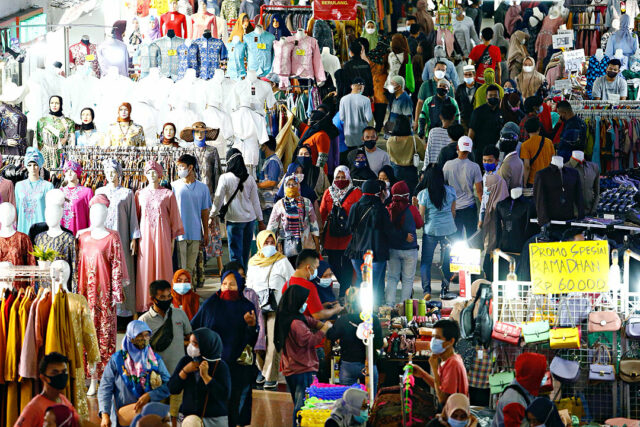
PEOPLE wearing protective face masks are shopping in Tanah Abang textile market in Jakarta, Indonesia, May 3, 2021. — REUTERS

INDONESIAN lawmakers have passed a contentious criminal code that outlaws extramarital sex and raises penalties on abortions as part of legislation that sparked violent protests when introduced in 2019.

Parliament passed the bill at a plenary session on Tuesday, which also adds limits to how much people can criticize the president and public institutions, and restricts the rights of LGBTQ citizens. The next step is for President Joko Widodo — better known as Jokowi — to sign off on it.

Indonesia’s Minister of Law and Human Rights, Yasonna H. Laoly, told Parliament that Jokowi has agreed to issue the law. The move to revise the penal code is meant to shed Indonesia’s colonial ties to the Netherlands, Mr. Laoly said. The existing penal code dates back to the era when Indonesia was a Dutch colony.

“We have tried to accommodate feedback on various issues as best as we could,” Mr. Laoly said. “We have made a historic decision to do away with the Dutch’s heritage law.”

Though the different party factions in parliament approved for the bill to be passed, some urged the government to be cautious in enforcing the law to protect the rights of the public, especially the freedom of speech, and for journalists not to be criminalized in carrying out their duties.

DEMOCRACY SETBACK
Iskan Qolba Lubis, a member of the Islamist political party Prosperous Justice Party got into a brief argument with the House when he called for the removal of the provision that penalizes criticisms against the government as well as the president and vice-president. Having the provision would wind back democracy in Indonesia and betrays the objective of reformasi — reforms in Bahasa Indonesia — which was the reason for the ouster of the dictatorial president Soeharto in 1998. Such a provision could be abused by future leaders, he said.

“This provision will take away the rights of citizens to voice their opinions. This could be abused by future leaders,” Mr. Lubis said. “Throughout the whole world, citizens have to criticize their governments.”

Days of demonstrations erupted after the bill was introduced in 2019, prompting President Joko Widodo — known as Jokowi — to delay the legislation in order to get more feedback from the public. In the end, little was changed, signaling the strength of Indonesia’s conservative religious parties, despite Jokowi’s call to avoid identity politics heading into the 2024 elections.

The last presidential election in 2019 saw candidates actively courting conservative Muslim voters, with Jokowi selecting cleric Ma’ruf Amin as his vice presidential running mate. Two years earlier, Jakarta’s ex-governor and Jokowi’s ally Basuki Tjahaja Purnama, known as Ahok, was convicted and jailed for blasphemy after being accused of insulting the Koran. Mr. Ahok’s backers said his comments were manipulated by conservative opponents.

Lawmakers did have a watered-down version of the legislation they could have taken up, but that was bypassed in favor of the current bill.

While the move will win praise from Indonesia’s conservative Muslims, it may further undercut popular support for Jokowi among those backing a more secular public policy. Indonesians are already unhappy in the face of the fastest inflation in seven years and higher petrol prices following the removal of state subsidies. A recent survey showed trust in Jokowi’s government has declined to its lowest since the start of his second term as president in 2019

The law’s passage could also undermine Jokowi’s efforts to court investors and bolster economic growth, endangering his plans to develop a new capital city for Indonesia in East Kalimantan province on the island of Borneo.

US Ambassador to Indonesia Sung Y. Kim said that his country remains “concerned that morality clauses attempting to regulate what occurs in a household between consenting adults can have a negative impact on Indonesia’s investment climate.”“Criminalizing the personal decisions of individuals would loom large within the decision matrix of many companies determining whether to invest in Indonesia,” Kim said in a speech at the US-Indonesia Investment Summit in Jakarta on Tuesday. “The outcome could well result in less foreign investment, tourism, and travel.”

Here’s why Indonesia’s new penal code is controversial:

Free Speech

There are at least 14 articles in the original bill seen as threatening free speech and press freedom. Among them is a defamation law that calls for a maximum of three and a half years imprisonment for insulting the president and vice-president. Others include laws prosecuting slander against government agencies.

Peaceful protests without permits are also punishable with fines and up to six months in jail. Currently, Indonesia’s government typically turns a blind eye toward peaceful assemblies and protests done without permits. That could now change.

In addition, the legislation says journalists can face up to two years imprisonment for publishing “incomplete stories,” though it’s not clear what that means or who will make that determination.

Abortion, Adultery

While abortion is already illegal in most cases in Indonesia, the new penal code would punish women who have abortions with as much as four years imprisonment.

Another article in the criminal code penalizes extramarital sex, punishing violators with up to two years imprisonment and expanding the definition to include both adultery and sex between people who live together.

Opponents argued that criminalizing adultery isn’t in line with international laws that include a right to privacy. They also say the law risks endorsing public vigilantism, such as a case in 2020 in West Java where a mob in a village accused an unmarried woman and man of engaging in pre-marital sex and forced them to parade around naked, according to the Jakarta Post.

Religious Insults

The penal code calls for the prosecution of people who “expresses in public opinions or commit hostile acts or blasphemy against the religion professed in Indonesia” with a sentence of up to five years or a fine.

Indonesia grants official recognition to just six religions and is the world’s most populous Muslim country. The new provision is widely seen as covering insults to Islam and would contravene Indonesia’s obligations under the International Covenant on Civil and Political Rights.

Death penalty

The new penal code would impose a 10-year “probationary period” on individuals who are sentenced to death. If, within that period, a convicted criminal is determined by a judge to have mended his or her ways, capital punishment would be changed to a 20-year jail sentence or life imprisonment. — Bloomberg

Wirecard in the dock as Germany’s biggest fraud trial starts

REUTERS

MUNICH/BERLIN — Former Wirecard executives go on trial on Thursday, two years after the collapse of the payments company that produced Germany’s biggest post-war fraud scandal and sent shockwaves through the country’s political and financial establishment.

Austrian former chief executive Markus Braun and two other high-ranking managers of the defunct blue-chip company are facing a number of charges, including fraud and market manipulation, and could be jailed for up to 15 years if convicted.

Mr. Braun denies wrongdoing and accuses others of running a shadow operation without his knowledge.

The prosecution has said Wirecard’s management invented vast sums of phantom revenue to hoodwink investors and creditors.

A verdict in the Munich court is not expected until 2024 at the earliest.

Founded in 1999 and based in the Munich suburb of Aschheim, Wirecard had a fairy tale rise and became a showpiece for a new type of German tech company that could compete with the established titans of Europe’s largest economy.

Wirecard, which started out processing payments for pornography and online gambling, rose to be worth $28 billion and displaced Commerzbank in Germany’s DAX blue-chip index.

REPUTATIONAL DAMAGE
Wirecard batted away suspicions of wrongdoing from some investors and journalists and successfully lobbied German authorities to investigate those who were scrutinizing its finances.

But in June 2020, Wirecard was forced to admit that 1.9 billion euros were missing from its balance sheet.

The government of then Chancellor Angela Merkel, which had previously backed Wirecard’s pursuit of an acquisition in China, briefly considered bailing out the company.

But within days, Wirecard became the first-ever DAX member to file for insolvency, owing creditors nearly $4 billion.

“The Wirecard scandal has caused lasting damage to the reputation of our financial center and our business location internationally,” said Danyal Bayaz, state finance minister of Baden-Wuerttemberg, who was formerly on a parliamentary committee investigating Wirecard.

“Politicians, financial regulators, banks, auditors, supervisory boards — almost everyone has made a fool of themselves with Wirecard, with high costs for investors,” he told Reuters.

“The investigative committee in the Bundestag (parliament) has uncovered many mistakes and identified weaknesses that urgently need to be addressed. We are on a long road to restoring lost trust in our regulators and institutions.”

Munich prosecutors and a special police task force pursued an investigation, carrying out 450 interrogations, searching more than 40 properties in Germany alone and sifting through 42 terabytes of data, resulting in a 474-page indictment.

Authorities in more than two dozen countries have become involved, from Switzerland to Singapore, Austria, the Philippines, Britain and Russia.

Prosecutors will draw on evidence from Braun’s co-defendant Oliver Bellenhaus, the former head of Wirecard’s subsidiary in Dubai, who became a key witness after turning himself in to the German authorities in 2020.

Another former Wirecard executive, Stephan von Erffa, is also on trial. He has publicly expressed regret about the events at Wirecard but denied orchestrating them. His lawyer said Mr. Von Erffa did not want to comment on the charges.

In the ructions that followed Wirecard’s demise, the head of German financial regulator BaFin resigned and the head of Germany’s accounting watchdog also stepped down.

Ms. Merkel and her then Finance Minister, now Chancellor, Olaf Scholz faced criticism for bungling oversight of the company. Ms. Merkel and Mr. Scholz have said they are not to blame. Mr. Scholz beefed up BaFin’s powers and installed a new leadership in 2021. Mr. Scholz also criticized Wirecard’s auditor, EY, for failing to catch the fraud. EY has said it acted professionally.

There are 100 court dates provisionally scheduled until the end of next year in the case. — Reuters

Fuel runs short at South Korean petrol stations as union plans general strike with truckers

PHILIPPINE STAR/KRIZ JOHN ROSALES

SEOUL — A nationwide strike by South Korean truckers has led nearly 100 petrol stations across the country to run dry, government data show, and a national trade union said it would launch a general strike on Tuesday in support of the drivers.

The truckers’ strike over a minimum pay program, which began on Nov. 24, has seen two negotiation sessions between the union and the government, but so far there has been no breakthrough.

As supplies of fuel and construction materials run low, the South Korean government has stepped up pressure to end the strike.

President Yoon Suk-yeol on Sunday ordered preparations to issue a return-to-work order for drivers in sectors such as oil refining and steelmaking, where additional economic damage is expected. Mr. Yoon last week invoked such an order, the first in the country’s history, for 2,500 truckers in the cement industry.

The Korean Confederation of Trade Unions (KCTU), an umbrella union under which the truckers’ union falls, has called the President’s “start work” order the equivalent of martial law and says the government should negotiate.

The KCTU said it had planned a walkout on Tuesday to support the truckers’ protests.

As of Monday afternoon, nearly 100 petrol stations had run out of fuel. About 60% of them were in Seoul and Gyeonggi province, a densely populated region near the capital, according to Korea National Oil Corp. data. That is up from the 21 petrol stations that the industry ministry had said were out of fuel on Nov. 28.

Amid soaring fuel costs, as many as 25,000 truckers are calling on the government to provide a permanent minimum-pay system known as the “Safe Freight Rate,” which was introduced temporarily in 2020 for a small portion of more than 400,000 truckers.

In their second strike in less than six months, those truckers are fighting the bitter cold and the government’s narrative that they are well paid “labor aristocracy”.

The Yoon administration has said it would not give in to the union’s demands. The government has said it would extend the current program for three more years.

The impact of a general strike is unclear and depends on participation, said Han Sang-jin, a KCTU spokesperson.

Labor minister Lee Jung-sik said on Monday that a general strike would not win public support.

The strikes have disrupted South Korea’s supply chain, and cost more than 3.2 trillion won ($2.46 billion) in lost shipments over the first 10 days, the industry ministry said on Sunday.

Losses are expected to have grown in various industries, but traffic at ports has slightly improved to 69% of its pre-strike average since the back-to-order was issued, according to the government. — Reuters

Chinese hackers stole millions worth of US COVID relief money, Secret Service says

REUTERS

WASHINGTON — Chinese hackers have stolen tens of millions of dollars worth of US COVID relief benefits since 2020, the Secret Service said on Monday.

The Secret Service declined to provide any additional details but confirmed a report by NBC News that said the Chinese hacking team that is reportedly responsible is known within the security research community as APT41 or Winnti.

APT41 is a prolific cybercriminal group that had conducted a mix of government-backed cyber intrusions and financially motivated data breaches, according to experts.

Several members of the hacking group were indicted in 2019 and 2020 by the U.S. Justice Department for spying on over 100 companies, including software development companies, telecommunications providers, social media firms, and video game developers.

“Regrettably, the Chinese Communist Party has chosen a different path of making China safe for cybercriminals so long as they attack computers outside China and steal intellectual property helpful to China,” former Deputy Attorney General Jeffrey Rosen said at the time.

The Chinese embassy in Washington did not immediately respond to a request for comment. — Reuters

France says making masks mandatory in transports hinges on COVID situation

GOLDEN STATUE at the Trocadero square near the Eiffel tower wears a protective mask during the outbreak of the coronavirus disease 2019 in Paris, France, May 2. — REUTERS

PARIS — The decision to make wearing face-masks in public transportation mandatory again to contain a new surge in the COVID-19 epidemic will depend on the evolution of the situation, French Health Minister Francois Braun said on Monday.

“I invite people to put on masks in public transportation even if it’s not mandatory,” he told reporters during a visit of French hospital.

“The decision (to make it mandatory) will depend on the evolution of the pandemic,” Mr. Braun said, adding that option was “on the table”.

As of last Friday, the seven-day moving average of daily new COVID infections stood at 54,824, a more than six-week high in France versus less than 25,000 in early November.

However, it is still well below levels of over 100,000 seen over March-April and in July, and a record of over 366,000 in January.

The number of people in intensive care units for COVID-19 has reached a peak since Aug 8, at 1,113 and total hospitalizations for the disease are close to 20,000 again for the first time since end October.

Last week, French Prime Minister Elisabeth Borne said she recommended that people wear masks in public transport and when they come in contact with vulnerable people. — Reuters

ADVERTISEMENT
ADVERTISEMENT