Home Blog Page 5520

AC Health’s Healthway Multi-specialty Center adds 3 new branches to serve more patients in the Greater Manila Area

In photo (L to R): Healthway Philippines Inc. President & CEO Jaime Ysmael, Healthway Multi-Specialty Center The District Imus Manager Dr. Maria Catherine Lim, Healthway Chief Operating Officer Dr. Suzanne Ringler-Pama, AC Health President & CEO Paolo Borromeo, Healthway Clinic Operations Head Reynalyn Tomada

AC Health and Healthway Philippines, Inc. (HPI) are proud to announce the expansion of Healthway Multi-Specialty Centers across the Greater Manila Area before the end of 2022.

Since the Healthway brand started in 1998, the chain has established itself with seven main branches in key cities in Metro Manila, grown a network of around 800 specialist doctors, and served more than two million patients to date.

This December, patients living and working in Pasig City, Quezon City, and Imus, Cavite will now have access to the same quality of healthcare services known of the Healthway brand through its new branches in Estancia Mall, Ayala Malls Cloverleaf, and The District Imus. The multi-specialty centers offer a comprehensive range of out-patient services, including specialty consults, imaging, laboratory, specialized diagnostics, ambulatory surgical services, dental services, physical therapy, and an outpatient pharmacy within the premises. All new branches also boast of a refreshed look to further enhance the overall experience of visiting patients and customers.

“At Healthway, we will continue to innovate to deliver relevant and quality healthcare; to inspire and motivate each other by cultivating a culture of inclusiveness, excellence, and sincere service. We assure our patients that they will receive quality care that Healthway can only provide, the Healthway kind of care,” said Healthway COO Dr. Suzanne Ringler-Pama.

In addition to the opening of the new branches, existing centers are also expanding, starting with the new dedicated wing for preventive care at Healthway Multi-Specialty Center Market! Market! This is for companies, families, and individuals who look beyond routine check-ups.

Healthway President and CEO Mr. Jaime Ysmael affirmed, “For 24 years, Healthway has been the healthcare provider of choice of millions of Filipinos. Opening new Multi-Specialty Centers and expanding our range of services are a manifestation of our continuing commitment to reach out to more individuals, as well as elevate the standard of healthcare by offering a healthy and hopeful life to our community of patients.”

Healthway Multi-Specialty Centers also play an integral part in HPI’s network and in the broader healthcare ecosystem of AC Health, as a convenient touchpoint for patients to see their doctors, schedule diagnostics, and purchase their medicines, all in one accessible, outpatient, and mall-based facility.

Visit the new clinics or schedule a visit to any Healthway Multi-Specialty Center today located in SM North EDSA, Festival Mall, Alabang Town Center, Adriatico Manila, Shangri-La Mall, Market-Market, and Greenbelt 5.


Spotlight is BusinessWorld’s sponsored section that allows advertisers to amplify their brand and connect with BusinessWorld’s audience by enabling them to publish their stories directly on the BusinessWorld Web site. For more information, send an email to online@bworldonline.com.

Join us on Viber to get more updates from BusinessWorld: https://bit.ly/3hv6bLA.
Budget deficit narrows in November

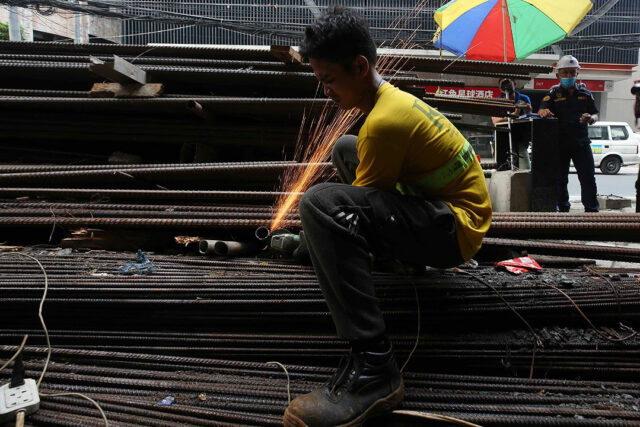
A WORKER cuts metal in a construction area in Binondo, Manila, March 24, 2022. — PHILIPPINE STAR/ RUSSELL PALMA

By Keisha B. Ta-asan, Reporter

THE NATIONAL Government’s budget deficit narrowed to P123.9 billion in November, as revenue growth outpaced state spending.

Data sent by Finance Secretary Benjamin E. Diokno to reporters on Wednesday showed the fiscal gap shrank by 3.7% to P123.9 billion last month from the P128.7-billion deficit in November 2021.

Month on month, the November deficit widened from the P99.1 billion in October.

In the 11 months to November, the budget deficit shrank by 7.2% to P1.24 trillion, from the P1.33-trillion gap in the same period last year. 

Mr. Diokno said this was 75% of the revised P1.7-trillion full-year deficit program.

The Bureau of the Treasury (BTr) has yet to officially release its cash operations report for November.   

In November, revenue collections jumped by 16.57% to P331.1 billion, from P284.4 billion in the same month in 2021.

Tax revenues increased by 15.92% year on year to P312.9 billion in November. The Bureau of Internal Revenue (BIR) collected P237.1 billion, up by 12.53% year on year, while the Bureau of Customs (BoC) saw its collections surge by 30.74% to P75.7 billion. There were no revenues recorded from other tax offices.

Nontax revenues went up by 28.96% to P18.2 billion in November, as the BTr reported a 13.25% drop in revenues to P5.3 billion. Other offices saw a 61.04% increase in revenues to P12.9 billion.

Meanwhile, state spending rose by 10.24% to P455 billion in November, from P412.7 billion a year ago.

Primary spending — which refers to total expenditures minus interest payments — rose by 12.43% to P428.9 billion year on year from P381.5 billion.

“Fiscal deficit has picked up for November and it is expected because it is almost the end of the year and the National Government has to ramp up spending,” UnionBank of the Philippines, Inc. Chief Economist Ruben Carlo O. Asuncion said in a Viber message.

However, interest payments declined by 16.43% to P26.1 billion in November.

“Interest payments were softer than the last period. Nevertheless, the momentum of the reopening of the economy and pent-up demand is still obvious with revenue growth,” Mr. Asuncion said.

For the January-to-November period, revenue collection continued to expand by double digits.

Revenue collection in the 11-month period hit P3.28 trillion, or 18.13% higher than last year.

Tax revenues rose by 17.5% to P2.96 trillion. The BIR accounted for the bulk of tax revenues with P2.16 trillion, up by 12.56% from a year ago. BoC collections surged by 35.31% to P789.2 billion, which helped offset the 30.68% drop in revenues from other offices.

On the other hand, state spending reached P4.51 trillion as of end-November, up by 9.9% from the P4.1 trillion a year ago. Mr. Diokno said this accounted for 91% of this year’s P5-trillion disbursement outlook.

Primary spending rose by 9.44% to P4.05 trillion, while interest payments jumped by 14.2% to P459.3 million.

ING Bank N.V. Manila Senior Economist Nicholas Antonio T. Mapa said in an e-mail that revenue collections continued to improve as expected amid the improvement of economic activity.

“However, we would like to highlight that the strong BoC gains may fade as commodity prices have likewise moderated,” he said.

Mr. Mapa said a “sharp dip” in revenue collections is anticipated next year due to the scheduled reduction in income taxes.

“This could delay some of the improvements in fiscal consolidation,” he added.

Under the Republic Act No. 10963 or the “Tax Reform for Acceleration and Inclusion” law, individuals earning P250,000 and above annually would experience a fresh round of income tax reductions starting January 2023.

The Development Budget Coordination Committee earlier this month raised the 2022 revenue target to P3.51 trillion, equivalent to 16.1% of gross domestic product (GDP), from P3.3 trillion previously.

It also hiked the full-year disbursement outlook to P5 trillion, equivalent to 23% of GDP, from P4.95 trillion previously.

The deficit projection was also revised to 6.9% of GDP or around P1.5 trillion this year, from 7.6% or P1.65 trillion previously.

DTI to impose anti-dumping duties on cement imports from Vietnam for 5 years

Workers are seen mixing cement at a construction site in Quezon City, May 19, 2020. — PHILIPPINE STAR/ MICHAEL VARCAS

ANTI-DUMPING DUTIES will be slapped on certain cement imports from Vietnam for five years, the Department of Trade and Industry (DTI) said.

In a department order dated Dec. 16, Trade Secretary Alfredo E. Pascual said dumping of Ordinary Portland Cement Type 1 and Blended Cement Type 1P from Vietnam in the country poses an “imminent threat of material injury to the domestic cement industry.”

This comes after the DTI reviewed the final report of the Tariff Commission (TC) regarding its investigation on alleged dumping of cement imports from Vietnam. The petition was filed by Republic Cement & Building Materials, Inc., CEMEX Philippines Holdings’ subsidiaries — Solid Cement Corp. and Apo Cement Corp., and Holcim Philippines, Inc.

The TC had earlier ordered the imposition of anti-dumping duties on cement imports from Vietnam.

In its report, the commission noted that the locally manufactured cement products are similar to the ones imported from Vietnam.

“The volume of imports [of both types of cement] at dumped prices is not negligible, accounting for 53% of total Philippine cement imports from July 2019 to December 2020,” the commission noted.

Dumping occurs when exporters sell their products to an importing country at a lower price compared with its normal value when used in the home market.   

Based on the World Trade Organization (WTO) anti-dumping agreement, member countries are allowed to impose anti-dumping duties to mitigate any injury to the local industry.

According to the TC’s final report, the country’s Type 1 and Type 1P cement imports rose by 11.2% to 5.896 million metric tons (MT) in 2020, and 16.2% to 6.850 million MT in 2021.

In the first half of 2022, Type 1 and Type 1P cement imports rose by 7% to 3.5 million MT, compared with the three-year average of 3.27 million MT between 2019 and 2021.

“The existence of threat of material injury to the domestic industry” is imminent in the near future, as indicated by the significant rate of increase of dumped imports into the Philippines capturing substantial market share; presence of price undercutting, price depression and price suppression during the (period of investigation),” the TC said.

It also cited the significant available production capacity of Vietnam, which can accommodate more exports to the Philippines, as well as the Philippines’ open market.

The DTI order identified 11 cement companies from Vietnam that will be slapped with definitive anti-dumping duties.

The dumping duties on Type 1 cement starts at $1.61 per metric ton (/MT) or 3.9% of the export price, to $10.29/MT or 27.64% of the price.

Dumping duties on Type 1P cement exports range from $1.43/MT or 3.41% of the export price to $16.42/MT or 54.82% of the export price.

The DTI said the order will take effect after the period for the filing of a motion for reconsideration lapses, in case there is no motion filed or if the motion is rejected.  The Bureau of Customs will then issue a memorandum order.

Provisional anti-dumping duties were imposed on cement imports from Vietnam between December 2021 to October this year, driving prices higher. — Arjay L. Balinbin

SEC says it will only  accept online, offsite payments starting Feb.

STOCK PHOTO | Image by David Dvořáček from Unsplash

THE SECURITIES and Exchange Commission (SEC) will accept only online payments and payments made to Land Bank of the Philippines (LANDBANK) branches starting February next year, as it continues with its “zero face-to-face transaction policy.”

In a notice, the SEC said all payments starting Feb. 1, 2023 will only be accepted through the Electronic System for Payments to the SEC (eSPAYSEC) at https://espaysec.sec.gov.ph/payment-portal/home or at any branch of LANDBANK.

The regulator said it will close the cashier’s office located at the SEC headquarters in Makati City and all SEC extension offices by end-January. These offices will accept over-the-counter (OTC) transactions until Jan. 31, 2023.

“The shift to online and offsite payments furthers our unwavering commitment to ensuring the transparent and efficient management of our funds,” SEC Chairperson Emilio B. Aquino said in a statement.

With the shift, transaction fees and any other amounts collected in through eSPAYSEC and LANDBANK will directly be deposited to and reflected in the SEC’s accounts, Mr. Aquino said.

The move is also in line with the zero-contact policy and automation of business-related transactions mandated by Republic Act (RA) No. 11032 or the Ease of Doing Business and Efficient Government Service Delivery Act of 2018. The law aims to establish efficient service delivery, prevent graft and corruption, reduce red tape and expedite transactions in the government.

In March 2021, the SEC launched eSPAYSEC, a web-based system that allows for the payment of fees and penalties to the SEC online using cashless payment options.

Clients who intend to pay will need to enter the reference number provided in the payment assessment form issued by the SEC, select their payment option and provide the required information.

“Once the payment goes through, the system will generate an electronic official receipt, which clients will likewise receive through e-mail,” the regulator said.

The eSPAYSEC can accept payments from debit and credit cards powered by Visa, Mastercard and JCB, as well as digital wallets such as GCash and Maya. However, a “minimal” convenience fee will be collected.

“This also complements the transacting public’s pivot to cashless transactions, and the National Government’s push for the digital transformation of public services to improve ease of doing business in the Philippines, as in the case of the SEC,” Mr. Aquino said.

Recently, the SEC signed a memorandum of agreement with LANDBANK which will allow payments for SEC-related transactions to be made through its Online Collection (OnColl) facility in all 609 branches nationwide.

The signed deal expanded the SEC’s previous partnership with LANDBANK which only covered payments for SEC-related transactions in selected branches.

Around 2,000 SEC-related transactions, such as applications for company registration, processed through LANDBANK’s OnColl facility every month.

The SEC and LANDBANK are also looking to expand contactless payment options for SEC-related transactions through the use of the bank’s web-based payment channel link. — Justine Irish D. Tabile

BoI approves P729-billion investments in 2022

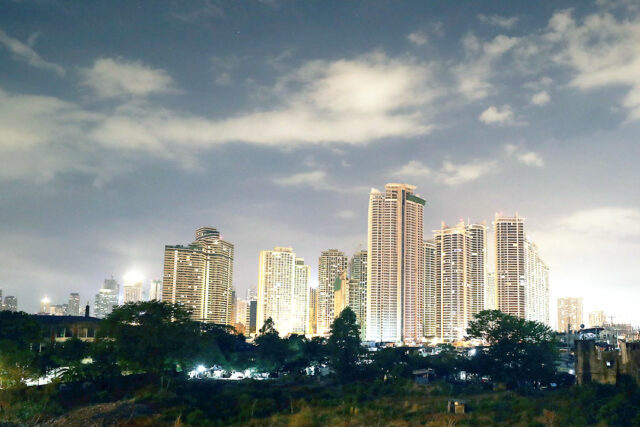
BUILDINGS at the Makati central business district are seen in this file photo. — PHILIPPINE STAR/ MIGUEL DE GUZMAN

THE BOARD of Investments (BoI) approved an estimated P729 billion worth of new investments this year, as investor confidence in the Philippines improved despite global uncertainties.

Figures provided by the BoI on Wednesday showed that this year’s investments are 11% higher than the P655.4 billion approved investments in 2021.

“The 2022 BoI approval levels clearly indicate that despite the lingering effects of the COVID-19 pandemic especially in the first half of the year, coupled with global decline in investments due to the Russia-Ukraine War, investors continue to have strong confidence in the Philippine economy,” Trade Secretary Alfredo E. Pascual said in a statement.

Trade Undersecretary Ceferino S. Rodolfo said that the BoI is aiming to generate P1 trillion worth of investments for 2023.

“Moving forward, as directed by Mr. Pascual, we are targeting P1-trillion investments for 2023. We have a healthy pipeline of strong leads, including those generated and further confirmed through investment missions by the Secretary and through the presidential visits by President Ferdinand R. Marcos, Jr,” Mr. Rodolfo said.

The BoI said the approved investments are projected to generate 260,000 jobs. The investments were poured into the power and information and communication sectors.

Top sources of investments are Singapore (57%), Japan (22%), the United Kingdom (7%), the United States (3%), Virgin Islands (2%), and South Korea (2%).

On Tuesday, the Philippine Economic Zone Authority (PEZA) said it approved 198 projects that are expected to generate P140.7 billion this year, 103% higher than the P69.3 billion in 2021. The agency surpassed its 6.7% growth target for 2022. — Arjay L. Balinbin

Global economy bets on China learning to live with COVID

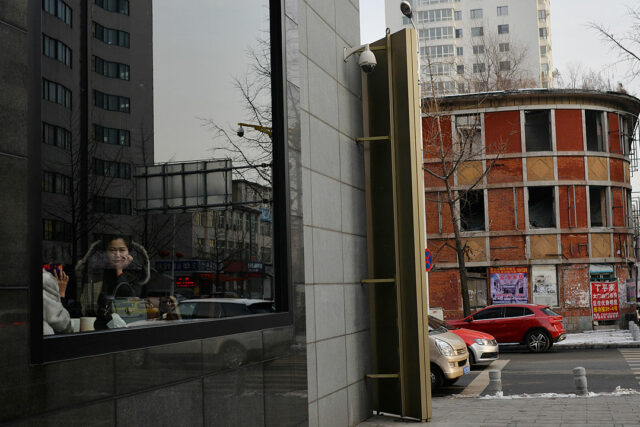
Women sit in a Starbucks Café in Dandong, Liaoning province, China, Dec. 22, 2018. — REUTERS/TINGSHU WANG

THOSE who believe the world economy can avoid the hardest of landings next year are watching China closely to see whether its move to loosen pandemic restrictions will help that scenario come about or end up wrecking it.

The knock-on effects of ditching “zero-COVID” remain highly uncertain given China’s patchy vaccine coverage, fragile health structures and the lack of clarity about the real extent of infections as coronavirus disease 2019 (COVID-19) cases start to surge.

The World Bank on Tuesday cut its China growth outlook for this year and next, listing the impact of the abrupt loosening of strict COVID-19 containment measures alongside other factors including its shaky property sector.

Bank of Japan Governor Haruhiko Kuroda cited the resurgence of virus cases in China as putting downward pressure on the global economy, while Taiwan listed the spread of COVID-19 in China as one big uncertainty facing its economy.

Yet the consensus view remains that if China can get a grip on what US Treasury Secretary Janet Yellen this month called the “very complex problem” of switching its COVID-19 stance, this would boost both its domestic economy and the global one.

That would in turn bolster the belief of policy makers in Group of Seven (G7) countries that their interest rate hikes will end up taming inflation and that any recessions that result will be relatively shallow and short-lived.

“If you look forward six months to the exit of the COVID wave… we’ll be getting to a point where China just like everyone else gets to live with COVID,” said Mike Gallagher, director of research at Continuum Economics.

“The big strategic play is towards reopening. It is just going to be very bumpy.”

‘RISKY SITUATION’
One such bump could be if global supply chains are disrupted again as Chinese workers start to fall sick in large numbers, reigniting inflation elsewhere just as central bankers see signs it has finally started to peak.

But equally, those inflationary pressures could be canceled out if China’s woes led to softer global demand for commodities.

“It’s hard to say… how those two will offset each other,” Fed Chair Jerome H. Powell told reporters last week after the US central bank’s latest interest rate hike.

“It’s a risky situation,” he said while adding it “doesn’t seem like it’s likely to have a material overall effect on us.” The New York Fed’s Global Supply Chain Pressure Index, launched about a year ago, already edged higher in October and November in a moderate reversal of a persistent loosening of global supply bottlenecks seen through most of 2022. But some argue that the fact that the rest of the world’s economy has long since reopened and started producing goods means that any supply snags due to China this time around would not be as pronounced as they were last year.

Much will depend on the policy response of Chinese leaders who have pledged to support the slowing economy and to cushion the impact of rising COVID-19 infections.

Fitch Ratings Chief Economist Brian Coulton said he expected a rise in infections to cause initial disruptions to activity early next year due to sickness absences and social distancing.

“However, there should be a stronger recovery in activity from the middle of next year,” he said.

The World Bank now sees China’s economy growing 2.7% this year and 4.3% in 2023, somewhat slower than its September forecasts of 2.8% and 4.5%, respectively. But for now, that will not be a major preoccupation for policy makers elsewhere.

In the “risk assessment” part of its statement explaining its latest rate hike last week, the European Central Bank dwelt on various threats to the region’s outlook, starting with the Ukraine war. China’s COVID battle was not among those risks. — Reuters

PLDT, PSE say no fraud involved in P48-B overrun

BW FILE PHOTO

PLDT, Inc. maintained on Wednesday that its probe into the P48-billion budget overrun has so far yielded no evidence of fraudulent activity.

“PLDT has not unearthed fraudulent activities in relation to the capex (capital expenditure) overrun,” the company told the stock exchange before meeting analysts and investors for a “special briefing” at the Dusit Thani hotel in Makati City.

“The business and the outlook for the business continue to remain healthy,” it added.

Meanwhile, Philippine Stock Exchange, Inc. (PSE) President and Chief Executive Officer Ramon S. Monzon said a preliminary investigation revealed no indication of fraudulent trades before the company’s announcement regarding its massive budget overrun on Friday last week.

“We look at buying and selling and basically, a lot of transactions are institutional trades, not personal trades, and mostly by foreign brokers,” Mr. Monzon told the ANC television program.

The Securities and Exchange Commission (SEC) is investigating the alleged “sell-off in shares” before the disclosure. It directed PSE and Capital Markets Integrity Corp. to submit initial reports on their investigation into the trading activities that resulted in the sudden and sharp decline in the share prices of PLDT before the announcement.

“We’ve actually looked at trading activity last Friday before the disclosure, and we’re not limiting our inquiry or investigation to that particular day. We’re looking at the PLDT trade for the last month and a half, about late October to last Friday,” Mr. Monzon said.

At the special briefing in Makati, PLDT Chairman Manuel V. Pangilinan, who avoided the press, explained to investors and analysts the company’s decisions on its elevated capex, according to an attendee who requested anonymity.

“They explained the decisions on the capex whether the purchases were within the budget,” the attendee told reporters.

PLDT’s Jeremiah M. de la Cruz, senior vice-president and head for consumer business, said separately that the company’s officials are “working together as one team.”

“It’s business as usual” for home business, he added.

PLDT shares closed 19.35% lower at P1,192 apiece on Monday after its announcement on Friday of the capex overrun. The stock was down 28.54% from its P1,668 peak last week.

According to the company, it is undertaking a management reorganization process and has initiated improvements in its processes and systems to address weaknesses.

The P48-billion budget overrun represents 12.7% of PLDT’s P379-billion capital expenditure over the past four years.

PLDT shares closed 5.04% higher at P1,250 apiece on Wednesday. — Arjay L. Balinbin

Holiday rush seen to come in later, shorter this year

DEMAND for consumer goods, which usually spikes during the holiday season, is seen to be shorter this year versus other years, according to Philippine Amalgamated Supermarkets Association, Inc. (Pagasa).

“The difference between this year and other years is the rush is more last-minute and it’s going to be a faster rush because sandali lang (it will be short),” Pagasa President Steven T. Cua said in an interview with BusinessWorld Live.

Mr. Cua based his expectations on consumers spending the money that comes in immediately while waiting for their 13th-month pay, subsidies, and foreign remittances from family members abroad.

“Once [the money] comes, I’m sure it goes out. So, money’s going to circulate very quickly in the last few days,” he added.

Meanwhile, Mr. Cua said that sales and foot traffic in malls and supermarkets have been picking up.

“Yes, you can feel the Christmas rush … Traffic is the first thing which indicates whether there’s a rush or none,” he said.

Consumers may expect small to no more price increases left for the holidays, said Mr. Cua.

Medyo wala ng (there would be no more) increases … If there’s a spike in prices of goods, it’s because regular suppliers cannot supply anymore because of traffic, because of lack of supply, because they have been distributed,” he added.

According to Mr. Cua, because of the lack of supply, some retailers will have to buy from wholesalers, which could increase cost acquisition and prices on the shelves.

“That’s the reason why prices go up during Christmas, not because retailers want to take advantage of the season,” he added. — Justine Irish D. Tabile

SMC, Cebu Pacific: Traffic to peak this week

SAN MIGUEL Corp. (SMC) and Cebu Air, Inc. (Cebu Pacific) are expecting the holiday traffic to peak this week and have advised motorists and travelers to plan their trips to avoid lengthy delays.

“Traffic buildup and congestion at our expressways, ports, and airports is something we all expect at this time of the year, especially as restrictions have fully eased,” SMC President Ramon S. Ang.

“We appeal to our motorists for their patience and understanding as we anticipate heavy traffic,” he added.

According to the firm, it has deployed additional traffic management personnel at all its tollways to provide roadside assistance and help manage the flow of vehicles at exit points.

It has deployed additional personnel in the Southern Tagalog Arterial Road, South Luzon Expressway, the Skyway System, NAIA Expressway, and the Tarlac-Pangasinan-La Union Expressway.

SMC’s infrastructure unit will also be waiving all toll fees in its tollways for the Christmas and New Year holidays. For the Christmas holiday, the waived fees will begin at 10:00 p.m. on Dec. 24 and end at 6:00 a.m. on Dec. 25. For the New Year holiday, the schedule will run from 10:00 p.m. on Dec. 31 to 6:00 a.m. the following day.

Meanwhile, low-cost carrier Cebu Pacific has made preparations to ensure a smooth and easy passenger experience during the peak travel season.

The Manila International Airport Authority (MIAA) removed the initial screening equipment or x-ray machines at the entrances of Ninoy Aquino International Airport’s Terminal 4 on Dec. 16 and at Terminal 3 on Dec. 20.

“This is a welcome initiative that Cebu Pacific fully supports as MIAA aims to reduce passenger queues at the airport,” the airline said.

Cebu Pacific gave its passengers six reminders: allot enough travel time, check in via its official mobile application, check flight information, self-tag luggage for select domestic destinations, bring only one carry-on bag, and check the baggage policy.

“We are grateful to everyJuan for choosing to fly with us this holiday season,” the carrier said, referring to its consumer branding. “We look forward to more travels with you, your friends, and your families in 2023.”

Currently, Cebu Pacific has a total of 34 domestic and 19 international destinations. — Justine Irish D. Tabile

Vitarich expands capacity in Mindanao as warehouse opens

VITARICH

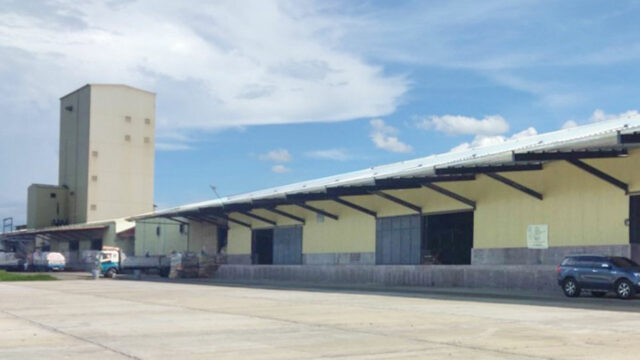
VITARICH Corp. has opened a 9,000-square-meter (sq.m.) warehouse in Panacan, Davao City to further serve the growing demand in Mindanao, the firm said on Wednesday.

“This warehouse is a necessary investment which we believe will set us up for further growth as we strengthen our presence in Mindanao and serve the growing demand,” Vitarich President and Chief Executive Officer Ricardo Manuel M. Sarmiento said in a disclosure.

The new warehouse is the company’s largest and will be able to store 6,600 metric tons (MT) of raw materials and finished goods. It will sit in its feed mill complex with 6,000 sq.m. allotted for storage and 3,000 sq.m. for loading, unloading, and parking.

The facility expanded Vitarich’s inventory capacity in Mindanao by 47% to 11,900 MT.

“With increased capacity, we can ship main commodities in bulk to manage our risks related to raw materials and ensure that we continue to scale up and support food security at all times,” Mr. Sarmiento said.

By the end of the third quarter, Mindanao accounted for P3.4 billion or 40% of the company’s total revenues.

Meanwhile, its feeds segment showed a compound annual growth rate of 15% from 2016 to 2021.

Over the past years, the company has been upgrading and expanding its facilities including a modernized plant in Bulacan, enhancements to management systems, and other investments in technologies and capabilities that enable end-to-end processes.

Vitarich is a poultry integrator and manufacturer of animal feeds and food products in the Philippines. — Justine Irish D. Tabile

Philippine history on a plate

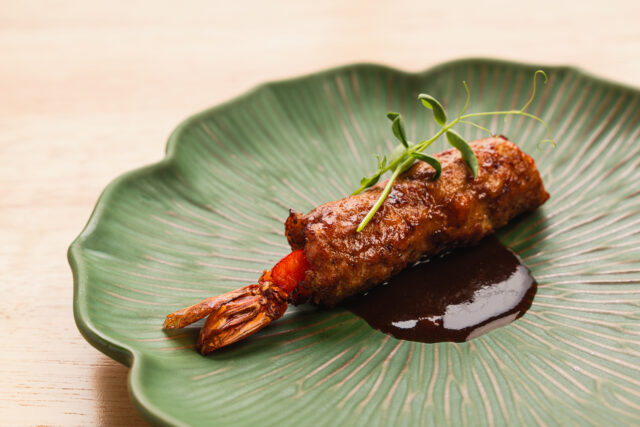
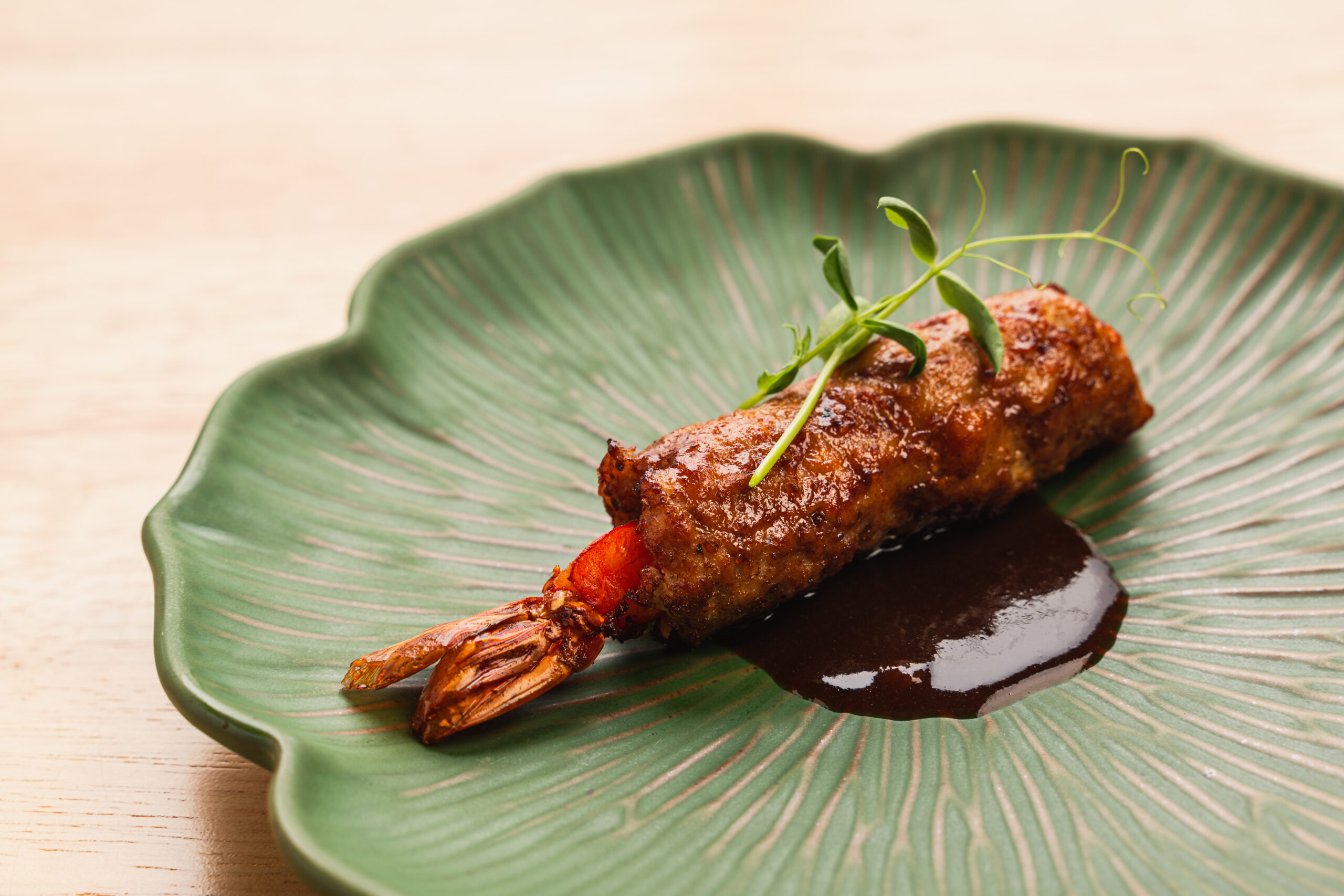
CAMARON Relyeno

Tatung Sarthou’s 10-course degustation in Lore honors all the regions of the archipelago

By Joseph L. Garcia, Reporter

“ANOTHER Tatung restaurant,” one might say, but Lore is different from anything the celebrity chef has done before.

During a tasting late last month at his new restaurant, Lore, Myke “Tatung” Sarthou, who has won at the Gourmand World Cookbook Awards for his books, presented a 10-course menu that felt like a long love letter to the Philippines. In a “feasting” (not a tasting) degustacion, all the country’s regions were lovingly represented, each dish evoking a memory of something to love about this country.

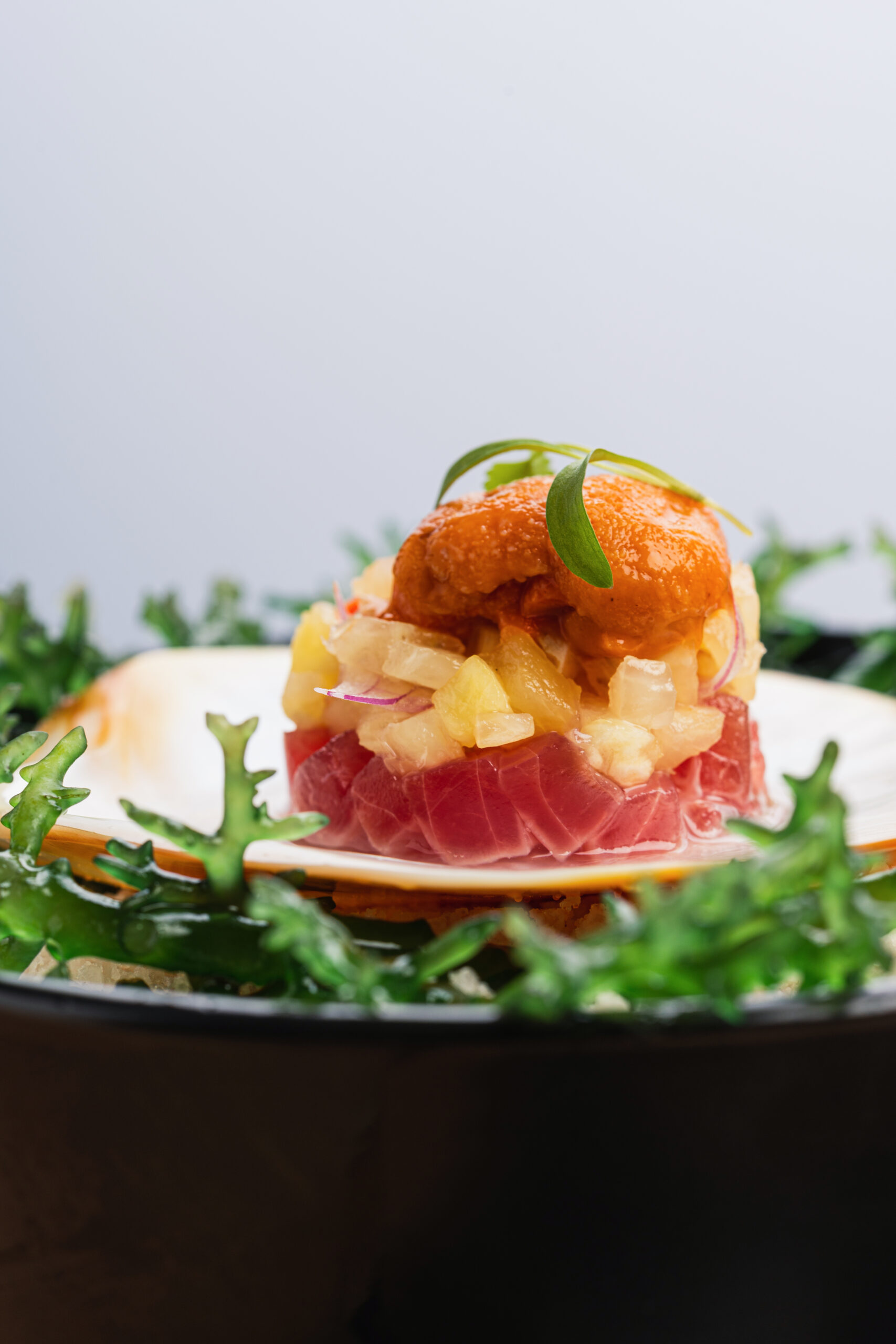
For starters, Mr. Sarthou presented homemade bread with three spreads: an indulgent chicken galantine with raisin jam, chicken liver pate, and tinapa (smoked fish) butter. A kinilaw (raw fish dressed with acid) of tuna and sea urchin with pickled pineapple and sweet potato strings was laid out on a mother-of-pearl shell and sprinkled with sea salt, a worthy praise to the fish. A Camaron Relyeno (stuffed prawn), made with a fried prawn-stuffed sausage wrapped in caul fat and infused with five-spice powder, was served with a sauce made with Haw Flakes (a Chinese-inspired candy made with plums). It smelled and tasted like Chinatown, and reminded one of kikiam (a Chinese pork dish), albeit one made by fairies, maybe.

A Lumpia Fresca (fresh spring roll) inspired by Cebu’s own Chinatown — Mr. Sarthou hails from Cebu — had shrimp, crab, and turnip peeking through a blanket of squid ink crepe, served with a garlic sauce and dots of cilantro gel. The freshness in its nature warranted the name, and the seafood played with the crisp turnip, while the garlic cream sauce brought a smile. This particular dish was inspired by a recipe from the 1918 book Condimentos Indeginas by beauty queen and journalist Pura Kalaw.

A Mariscos con Sarsa Verde (seafood with green sauce) tried to bring back memories of old Pampanga with smoked hamachi and seared scallops with a green puree of spinach, green tomatoes, and almonds. The green paste gave gravitas to the clean flavors of the fish, each ingredient so bright and clear that it was almost a palate cleanser by itself.

Another dish inspired by Condimentos Indeginas was the Pato con Salsa Tsokolate, duck with a chocolate sauce with grilled corn salsa. This was arguably the star of the show, with depth and nuance while the duck itself was robust, forward with a flavor that suggested a sense of completeness.

A strawberry sorbet cleansed the palate, setting the stage for a Bringhe (a local paella) with coconut-infused adlai grain topped with jamon de Bulacan and seared foie gras and garnished with clam foam. The ingredients are undoubtedly luxurious and a delight, but the adlai grain centers all of it and brings it back down to earth.

Moros y Kristiano (Muslims and Christians), a signature of Mr. Sarthou due to his admiration for Mindanao, sees slow-braised short ribs in black and white coconut sauces served with pickled eggplants. The black sauce is made by burning the coconut and grounding it into a paste, and the effect gives it a taste of the summer sun, making everything it touches rich and earthy.

The meal ended with a Mango Jubilee, a sponge cake drenched in tres leches, its mango filling flambeed at the table.

Mr. Sarthou began his career in the culinary world with a private dining establishment in Quezon City. After opening strings of restaurants, appearing on TV, and writing award-winning cookbooks, he slowed down this year by going back to his roots with a private dining establishment in Antipolo, as well as opening Lore (with the help of restaurateurs George Pua and Jackson Go).

Known for his YouTube channel Simpol, which teaches Filipino cuisine in a format that’s simple and relatable, we ask this chef about the upscale direction of Lore (the 10-course degustacion costs P4,800). “I made something I really wanted to do. You can’t go upscale if you if you’re not ready. I just reached a point where probably I’m more ready. I have the capacity to do it, and I’m going for it. It’s now or never,” he said.

“I don’t want to end my career not aiming high enough,” he said. “It’s not about being upscale — it’s really having a platform where you can be able to express your cooking philosophy.”

Self-taught in the kitchen and with a past in journalism, Lore serves as a stage for his own storytelling skills — here, the stories are told not through words, but through taste. The story he’s trying to tell here is the global nature of Filipino food, shaped as it was by centuries of trade.

“We have to acknowledge that once in history, the Philippines was a center of trade,” he said, pointing to regional trade that gave us Southeast Asian flavors and Chinese influence, but also European and American colonial overtures that shape what we consume today. All this is scattered on the background that is our Filipino nature, and how we shape what we have been given to something that is ours alone.

“How do you tell the story of Filipino cuisine? It’s to really try to find your roots, try to connect the dots, and tell it in a manner that is elegant and fluid,” he said.

“Philippine cuisine is really more than what we give it credit for,” he said. “It’s really about Filipino ingenuity, creativity, resourcefulness. I want to be able to tell that.”

Lore is located at the 3rd Level of One Bonifacio High Street Mall in Taguig.

Jollibee readies global sustainability agenda

BW FILE PHOTO

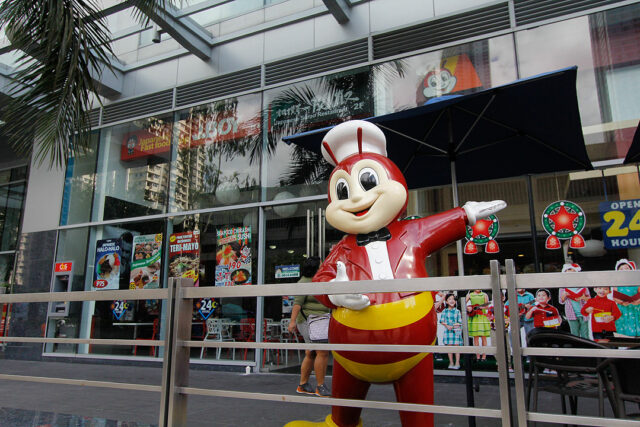
JOLLIBEE FOODS Corp. (JFC) is set to launch a global sustainability agenda by the first quarter of next year as it commits to having sustainable business practices.

“With our sustainability agenda in place, we are strengthening our efforts by looking at all areas of operations and markets and prioritizing aspects where we have the greatest impact,” JFC Group Chief Sustainability and Public Affairs Officer Jose Miñana said in a statement.

The group’s sustainability agenda named “Joy for Tomorrow” will focus on three areas — food, people, and planet — and will be aligned with the United Nations Sustainable Development Goals.

Ernesto Tanmantiong, JFC president and chief executive officer, said the launch will provide more value to the company’s stakeholders, customers, investors, suppliers, and communities where it operates.

“Our Sustainability Agenda serves as an anchor for sustaining our growth momentum while contributing to create a better future for all. We want to serve food that people trust, treat the planet responsibly, and help make people’s lives better,” Mr. Tanmantiong added.

The group has also formalized an environmental, social, and governance council which will be composed of key members of its leadership team with Mr. Tanmantiong as its key sponsor.

“As one of the fastest-growing restaurant companies in the world and the largest in the Philippines, Jollibee group recognizes its responsibility and opportunity to impact sustainability issues in the quick service industry,” Mr. Tanmantiong said.

JFC operates in 34 countries and has over 6,300 stores globally. It has eight wholly owned brands which are Jollibee, Chowking, Greenwich, Red Ribbon, Mang Inasal, Yonghe King, Hong Zhuang Yuan, and Smashburger. — Justine Irish D. Tabile