Home Blog Page 5454

Rising online crackdowns across Asia target citizens, Big Tech

REUTERS

HO CHI MINH CITY/BANGKOK — During the coronavirus disease 2019 (COVID-19) lockdowns in Vietnam last year, blogger Bui Van Thuan took to Facebook to criticize a government plan to use soldiers to deliver groceries to people confined to their homes in Ho Chi Minh City. Days later, he was arrested. 

Mr. Thuan, 41, a former teacher in the country’s northern province of Hoa Binh, was last month sentenced to eight years in prison for propaganda, and a further five years of probation. 

Vietnamese authorities charged Mr. Thuan with “making, storing, disseminating or propagandizing information, materials and products that aim to oppose” the nation — a charge that is increasingly applied to online content as the state exerts greater control over the internet, human rights groups say. 

“The Vietnamese government has long been in control of traditional media in the country,” said Phil Robertson, deputy Asia chief at Human Rights Watch. “Now they are trying to control the online space.” 

“They have passed a raft of legislations to that end, and are deploying the state machinery to go after people online, forcing content moderation and removal decisions on platforms, using cyber trolls and by controlling internet access,” he said. 

Mr. Thuan is just the most recent target of Vietnam’s tightening grip on the internet, with authorities arresting dozens of journalists and bloggers — and even a popular noodle seller — on similar charges. 

Vietnam’s authorities last month said they had tightened regulations to deal with “false” content on social media platforms — so that it must be taken down within 24 hours — making the Southeast Asian nation one of the world’s most rigorously controlled regimes for social media companies. 

Yet Vietnam is not alone. Online censorship reached an all-time high in 2022, with a record number of governments blocking political, social, or religious content, according to Freedom House, a non-profit based in Washington DC. 

The rising “digital repression” has serious consequences for fundamental rights including freedom of expression, access to information and privacy, “particularly for people living under authoritarian regimes,” it said in its annual report. 

“In some countries, it’s about limiting the voice of political dissidents, activists and others critical of the government,” said Damar Juniarto, executive director of digital rights group Southeast Asia Freedom of Expression Network (SafeNet). 

“But governments also want to control Big Tech firms — they see them as being too powerful, too influential,” he told the Thomson Reuters Foundation. 

‘DRACONIAN’ TIMEFRAME
More than three-quarters of the world’s over 4.5 billion internet users live in countries where authorities punish online expression, according to Freedom House, which ranked China as having the worst environment for internet freedom. 

Elsewhere in Asia, Indonesia enacted rules this year to make social media platforms remove content deemed unlawful or that “disturbs public order” within four hours if considered urgent, and 24 hours if not. Those who do not comply could face fines, criminal charges or being blocked in the country. 

Its new criminal code has also tightened controls on so-called “fake news” and insulting the president online. 

Vietnam’s Minister of Information and Communications Nguyen Manh Hung told parliament its new laws were needed, as there was a risk that “false news, if it is handled in a slow manner, will spread very widely.” Companies that do not meet the deadlines may have their platforms banned. 

Meanwhile, Singapore last month passed an Online Safety Bill that requires social media sites to block “harmful content” within hours, failing which authorities can ask service providers to block access to that content to domestic users. 

India said in October it would set up a government panel to examine user complaints about content moderation decisions by social media platforms, sparking concerns about censorship. 

And in Thailand, a new law that took effect this month allows authorities to force online service providers and social media platforms to take down content within as little as 24 hours without a court order. 

Digital rights groups Access Now and Article 19 said in a statement that the short time-frame for removal is “draconian” and “places unreasonable time pressures on platforms to respond, incentivizing them to err on the side of caution”. 

Thai authorities have said the new rules are needed for national security and “public safety” purposes. 

GROWING ASIAN MARKETS
Populous Asian nations make up large markets for social media platforms: there are more than 400 million users of Facebook in India, and nearly 500 million for YouTube. Indonesia has about 176 million Facebook users and some 139 million YouTube users. 

Crackdowns on online content — which accelerated during the pandemic under the guise of limiting disinformation — are an attempt by Asian governments to rein in big tech firms, according to Juniarto of SafeNet. 

“With elections coming up in several countries, we can expect to see more restrictions online,” he said. 

“For the platforms, these are big and growing markets, so they will have to think about how to handle these new regulations and greater government controls,” he said. 

Meta, the parent company of Facebook, and Alphabet’s YouTube did not respond to requests for comment on the new laws. Company officials have previously told Reuters they were concerned about compliance and possible government overreach on online content. 

In Vietnam, officials “have clearly become harsher” with the new rules, said Trinh Thi Nhung, wife of Mr. Thuan. She has been told to limit her social media posts about her husband, and she and her family were being watched online and offline, she said. 

“I’m feeling extremely worried about this,” said Ms. Nhung, who sells honey for a living. 

Vietnamese authorities have said they found more than 100 articles Thuan had posted on two Facebook accounts, of which more than two dozen were “against the state.” 

Ms. Nhung said that authorities have not been able to prove the Facebook account they cited in the charges belongs to him, and maintains that her husband is innocent. 

“I’m very sad but I don’t regret his actions,” she said, adding that it was hard for her and her seven-year-old daughter to be separated from Thuan. 

“I will always support him because I trust him and take pride in him.” — Thomson Reuters Foundation

Twitter back online after global outage hits thousands

AKSHAR DAVE-UNSPLASH

Twitter Inc. suffered a major outage on Wednesday, leaving tens of thousands of users globally unable to access the popular social media platform or use its key features for several hours before services appeared to come back online. 

The incident is the social media site’s first apparent widespread service disruption since billionaire Elon Musk took over Twitter as CEO in late October. 

Downdetector, a website that tracks outages through a range of sources including user reports, showed more than 10,000 affected users from the United States, about 2,500 from Japan and about 2,500 from the UK at the peak of the disruption. 

Most of the reports came from users stating they faced technical issues accessing the social network via web browser. 

Reports of Twitter outages fell sharply by Wednesday evening, according to the website, with some users later commenting service had returned to normal. 

Twitter did not immediately respond to a request for comment and the social network’s status page showed that all systems were operational. 

Mr. Musk tweeted later on Wednesday that “Significant backend server architecture changes” had been rolled out and that “Twitter should feel faster,” but his post did not make any reference to the downtime reported by users. 

During the outage, some users said they were unable to log in to their Twitter account via desktops or laptops. A smaller number of users said the issue also affected the mobile app and features including notifications. 

Others took to Twitter to share updates and memes about the service disruption, with #TwitterDown trending as a hashtag on the social media site. 

Some attempts to log in to Twitter from desktops prompted an error message saying: “Something went wrong, but don’t fret — it’s not your fault. Let’s try again.” 

Mr. Musk tweeted he was still able to use the service. 

“Works for me,” Mr. Musk posted, responding to a user who asked if Twitter was broken. 

The outage comes two months after Mr. Musk completed his $44 billion takeover of Twitter, which has been marked by chaos and controversy. 

Hundreds of Twitter employees quit the social media company in November, by some estimates, including engineers responsible for fixing bugs and preventing service outages. 

Thousands of Twitter users were also hit by a global outage in February and July, before Mr. Musk’s takeover. 

Other big technology companies have also been hit by outages this year. In July, a near 19-hour service outage at Canada’s biggest telecom operator Rogers Telecommunications shut banking, transport and government access for millions. — Reuters

Infra woes to blame for holiday traffic

Primo V. Morillo, convener of The Passenger Forum, explains that holiday traffic is a symptom of long-standing infrastructure problems.
 
Interview and text by Brontë H. Lacsamana. Video editing by Earl R. Lagundino and Sam L. Marcelo.
 

UK to consider COVID curbs for arrivals from China — Telegraph

REUTERS

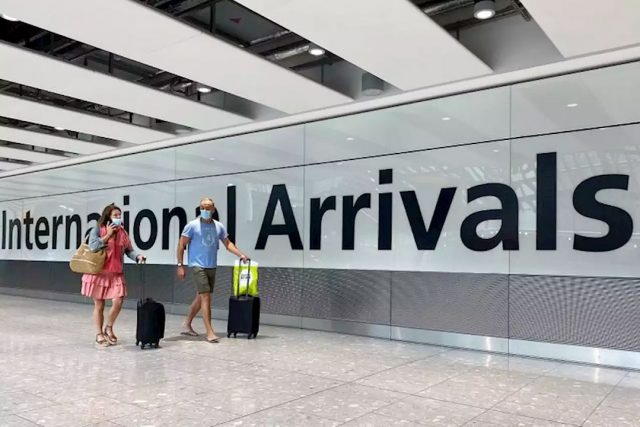
The United Kingdom (UK) will consider on Thursday imposing coronavirus disease 2019 (COVID-19) restrictions for arrivals from China, including requiring tests for the coronavirus, the Telegraph reported.

Officials from the Department for Transport, Home Office and the Department for Health and Social Care (DHSC) are expected to decide today whether the UK should follow the United States and Italy in imposing COVID restrictions for travelers from China, the report said.

The Prime Minister’s spokesperson had said earlier on Wednesday that the restrictions were “not something we are looking at,” the report added.

DHSC did not immediately respond to a Reuters request for comment on the report.

The United States imposed mandatory COVID-19 tests on travelers from China on Wednesday while Italy has ordered COVID-19 antigen swabs and virus sequencing for all travelers coming from China. — Reuters

Southwest Airlines flight disruptions no longer weather driven, US says

STOCK PHOTO | Image by Stela Di from Pixabay

WASHINGTON — US Transportation Secretary Pete Buttigieg said that large-scale flight schedule disruptions at Southwest Airlines were no longer a weather-driven issue and showed a “system failure” within the company.

“We are past the point where they could say this is a weather-driven issue,” Mr. Buttigieg said in an interview posted by ABC News on Wednesday. “Don’t get me wrong, all of this began with that severe storm. We saw winter weather affecting the country and severely disrupting all airlines.”

Nationwide, at least 60 people died in weather-related incidents in recent days, NBC News reported.

The rest of the aviation system and other airlines seemed to be back from the weather disruptions, Mr. Buttigieg said.

“So what this indicates is a system failure (at Southwest), and they need to make sure that these stranded passengers get to where they need to go and that they are provided adequate compensation, not just for the flights itself … but also things like hotels, like ground transportation, like meals because this is the airlines’ responsibility,” he said, adding that he had spoken to the company’s leadership.

More than 2,500 Southwest Airlines flights were canceled as of Wednesday morning, according to the flight tracking website FlightAware.

US airlines had canceled thousands of flights as a massive winter storm swept over much of the country before the Christmas holiday weekend, but Southwest’s woes have deepened while other airlines have largely recovered.

Southwest Airlines had told Reuters that it would reimburse customers for travel-related costs and that it had already processed thousands of requests by Tuesday.

Its boss, Bob Jordan, said the low-cost carrier needed to upgrade its legacy airline systems and apologized to customers and employees in a video message. — Reuters

Human hair recycled in Belgium to protect the environment

BRUSSELS — Coiffeurs across Belgium are sweeping up and bagging hair clipped from their customers, and then handing it over to a non-governmental organization that recycles it to protect the environment.

The Hair Recycle project feeds locks and tresses into a machine that turns them into matted squares that can be used to absorb oil and other hydrocarbons polluting the environment, or made into bio-composite bags.

Project Co-founder Patrick Janssen, explaining that 1 kilogram (2.2 lbs) of hair can absorb 7–8 liters (1.8–2.1 US gallons) of oil and hydrocarbons, said the mats can be placed in drains to soak up pollution in water before it reaches a river.

“Our products are all the more ethical as they are manufactured locally … they are not imported from the other side of the planet,” he told Reuters. “They are made here to deal with local problems.”

The project said on its website that hair has powerful properties: one strand can support up to 10 million times its own weight, and as well as absorbing fat and hydrocarbons, it is water-soluble and highly elastic due to its keratin fibers.

Isabelle Voulkidis, manager of the Helyode salon in Brussels, is one of dozens of hairdresser across the country that pay a small fee to the project to collect their hair cuttings.

“What motivates me, personally, is that I find it a shame hair is nowadays just thrown in the bin, when I know that so much could be done with it,” she said, as she combed and clipped one of her customer’s hair. — Reuters

Hong Kong scraps most COVID rules, though masks still mandated

MAN CHUNG-UNSPLASH

HONG KONG — Hong Kong will cancel its stringent coronavirus disease 2019 (COVID-19) rules from Thursday, city leader John Lee said, meaning that arrivals will no longer need to do mandatory PCR tests while the city’s vaccine pass would also be scrapped.

All measures would be canceled on Thursday, apart from the wearing of masks which still remains compulsory, Mr. Lee told a media briefing on Wednesday.

“The city has reached a relatively high vaccination rate which builds an anti-epidemic barrier,” Mr. Lee said.

“Hong Kong has a sufficient amount of medicine to fight COVID, and healthcare workers have gained rich experience in facing the pandemic,” he added.

Mr. Lee said his government is aiming to reopen the borders with mainland China by Jan. 15 and was working with authorities over the border to ensure an orderly re-opening.

He said the authorities have been preparing for the scrapping of all restrictions.

“The time is appropriate for us to do this, having prepared for six months to do this,” said Mr. Lee. “The whole society is preparing for this. We are doing all this according to our local epidemic situation.”

Hong Kong’s vaccine pass requirement, which was imposed in February and was a must for people to access most venues in Hong Kong, will end from Thursday. Social distancing rules such as a cap on gatherings of more than 12 people in public will also be scrapped from Thursday.

The city has for nearly three years largely followed China’s lead in tackling the novel coronavirus, with both places being the last strongholds in adopting a zero-COVID policy.

The removal of the curbs is likely to result in an increase of travelers to the former British colony who have previously shunned it due to strict restrictions.

In an abrupt change of policy, China this month began dismantling the world’s strictest COVID regime of lockdowns and extensive testing. The country will stop requiring inbound travelers to go into quarantine from Jan. 8, authorities said this week.

Restrictions on travel between Hong Kong and the mainland were imposed in early 2020. The reopening was postponed several times due to outbreaks in Hong Kong or the mainland.

International passengers arriving in Hong Kong since mid-month are no longer subject to COVID-related movement controls or barred from certain venues, the government announced in December.

Business groups, diplomats and many residents had slammed Hong Kong’s COVID-19 rules, saying they threatened its competitiveness and standing as an international financial center.

The rules have weighed on Hong Kong’s economy since early 2020, speeding up an exodus of businesses, expatriates and local families that have left amid a drive by Beijing to more closely control the former British colony. — Reuters

ISOG finishes 2022 with successful cybersecurity campaign, community development initiatives

As 2022 draws to a close, the Information Security Officers Group (ISOG) celebrates its milestones for the year. In 2022, the leading information security professional organization in the Philippines successfully implemented four cybersecurity forums, a Cybersecurity Excellence awarding ceremony, and community development initiatives including scholarship grants and rescue support donation.

In its mission to strengthen the country’s information security, ISOG held its METAVERSE I AM SECURE forum series in May, June, July, and September 2022. With the theme “Traversing Beyond the Cyberspace”, the four virtual forums brought together more than 2000 C-Suite attendees and over 450 local and global companies to discuss the most pressing issues and the latest solutions in the Metaverse.

In October 2022, ISOG held the first I Am Secure Cybersecurity Excellence Awards ceremony at the Shangri-La at the Fort. The event gave recognition to 20 outstanding Filipino cybersecurity experts with exceptional contributions in their respective roles as Chief Information Security Officer or Senior Head of Security; Chief Risk Officer or Risk Manager; Chief Information Officer or Technology Head; and Data Privacy Officer.

“Looking back at the milestones we made this year, 2022 is indeed a productive year for our organization. We are thankful for the support and participation of our members and partners for making our programs a success. We are also grateful that aside from achieving our objective of strengthening cybersecurity in our country, our group also carried out programs that help uplift the lives of our fellow Filipinos,” said ISOG President Archie Tolentino.

Alongside these cybersecurity programs, ISOG carried out initiatives that contribute to community development. Through its Balik Eskwela Program, ISOG provided scholarship grants to Manila Science High School Alumni Foundation Inc. The organization likewise donated school supplies such as printers, cleaners, and speakers to assist in the return of face-to-face classes of Leodegario Victorino Elementary School and Camp General Emilio Aguinaldo High School. Moreover, ISOG supported the Philippine Red Cross in its emergency humanitarian aid operations by donating two boats, several life vests, ropes, and floaters.

“We are very excited for 2023 as we are all set to carry out a new lineup of programs and activities that will bolster memberships, strengthen the shield and continue digital transformation. ISOG is looking forward to another meaningful year ahead as we continue securing the country’s digital landscape,” said ISOG Vice President Chito Jacinto.

For more details about ISOG, visit ISOG’s official website at www.isog-org.ph and socials at LinkedIn, Facebook, YouTube Channel.


Spotlight is BusinessWorld’s sponsored section that allows advertisers to amplify their brand and connect with BusinessWorld’s audience by enabling them to publish their stories directly on the BusinessWorld Web site. For more information, send an email to online@bworldonline.com.

Join us on Viber to get more updates from BusinessWorld: https://bit.ly/3hv6bLA.

‘Better years’ ahead for PHL — Diokno

Families take photos at a Christmas village of Orchid Gardens Resort Complex in San Fernando, Pampanga, Oct. 24. — PHILIPPINE STAR/ MIGUEL DE GUZMAN

DESPITE a looming global recession, the Philippines is still expected to have one of the highest growth rates among six Association of Southeast Asian Nations (ASEAN) member-economies next year, Finance Secretary Benjamin E. Diokno said.

“After the highly unprecedented pandemic, followed by Russia’s invasion of Ukraine and a weakening China growth, the global economy is likely to face a mild recession next year. But for the Philippines, the worst is over, and better years are expected,” Mr. Diokno said in a statement.

For 2022, he said that the economy will likely grow faster than the government’s official target range of 6.5-7.5%.

The Development Budget Coordination Committee (DBCC) projects gross domestic product (GDP) growth at 6-7% in 2023, a narrower band than its previous target of 6.5-8%.

“Many institutions and experts have predicted a global recession in 2023, and consequently, downgraded Philippine GDP outlook to less than 6%,” Mr. Diokno said.

“But an average GDP growth of 6.5% is nothing to be sneezed at: it is still one of the highest, if not the highest, growth rates among ASEAN+6 economies.”

The Asian Development Bank (ADB) earlier this month gave a 6% GDP growth forecast for the Philippines next year. This is the second-fastest growth forecast among Southeast Asian economies, after Vietnam’s 6.3%.

Mr. Diokno said the positive outlook is due to several reasons, including the early approval of the 2023 national budget and the adoption of the first-ever Medium-Term Fiscal Framework and the Philippine Development Plan (PDP).

“This means that the programs and projects of the National Government will start to run from day one of the new year. This is especially relevant for public construction which is about one-fifth of the national budget. Ideally, public construction has to start in the first half of the year because of the favorable weather conditions: more sunny, less rainy, days,” he said.

President Ferdinand R. Marcos, Jr. on Dec. 16 signed the P5.268-trillion national budget for next year.

Mr. Diokno noted the PDP would help accelerate economic recovery, and put Mr. Marcos’ eight-point socioeconomic agenda into action.

The optimistic outlook for the Philippine economy is also partly due to its “strong international credit profile,” he said.

“In a sea of downgrades as a consequence of the pandemic, major credit agencies have maintained the Philippines’ investment-grade credit ratings,” he added.

In September, Moody’s Investor Service retained the Philippines’ “Baa2” credit rating with a “stable” outlook.  Fitch Ratings also maintained the Philippines’ long-term foreign currency issuer default rating at “BBB”, while S&P Global Ratings affirmed the Philippines’ investment grade rating of “BBB+.”

Mr. Diokno also cited the country’s stable and resilient banking system, as well as adequate buffers against external headwinds, as reasons for his positive outlook.

“In addition, the country has a steady supply of foreign exchange from overseas Filipino remittances, export revenues from business process outsourcing firms, tourism receipts, and inflows from foreign direct investments,” he added.

The Philippines now has a more favorable economic environment after it removed barriers to foreign investments, and is committed to pursuing more infrastructure projects, Mr. Diokno said.

“As long as the country stays united and its political leaders and policy makers remain focused on economic growth, the Philippines’ future remains bright. The trajectory of its growth will make the country one of the leading economies in the Asia-Pacific region,” he said.

Meanwhile, the Department of Budget and Management (DBM) said that around P2.58 trillion of next year’s national budget will be used for the government’s eight-point socioeconomic agenda.

“This aims to address the immediate concerns of the country, such as inflation, by protecting the purchasing power of families and consumers. The recently-approved national budget also targets to mitigate the socioeconomic scarring brought by the COVID-19 pandemic,” the DBM said in a statement on Wednesday. —  L.M.J.C. Jocson

BoC raises next year’s revenue collection target

CUSTOMS Commissioner Yogi Filemon Ruiz inspects the numerous unpaid and abandoned balikbayan boxes at a warehouse in Sta. Ana, Manila, Oct. 27. — PHILIPPINE STAR/EDD GUMBAN

By Luisa Maria Jacinta C. Jocson, Reporter

THE Bureau of Customs (BoC) raised its revenue collection target for 2023 to P901.3 billion, as the Philippine peso is expected to further depreciate against the US dollar.

“Based on the emerging target approved by the Development Budget Coordination Committee (DBCC), the Customs bureau is expected to generate P901.3 billion in revenue next year,” according to the BoC Financial Service.

“The emerging collection target is (18%) higher by P135.8 billion compared to the 2023 Budget of Expenditure and Sources of Financing (BESF) program level of P765.6 billion due to higher exchange rate assumptions despite lower projected Dubai crude oil price and slower import growth compared with 2022,” the BoC Financial Service added.

The DBCC earlier this month upwardly revised the peso-dollar exchange rate assumption to P55-59 in 2023, from P51-55 previously. Economic managers noted the peso “continues to depreciate due to heightened global uncertainties and aggressive monetary policy tightening of the US Federal Reserve.”

According to the DBCC’s latest assumptions, Dubai crude oil price is expected to slip to $80-100 per barrel in 2023, from $98-100 this year.

The DBCC also lowered the imports growth target to 4% in 2023, from 6% previously. This is much slower than this year’s 20% growth goal.

Next year, Customs is expected to collect P570.3 billion in value-added tax (VAT) from imports, P207.4 billion in excise taxes, P105.1 billion in import duties and P18.5 billion in other fees.

The BoC’s collection target for 2023 is 24.9% higher than this year’s P721.5-billion target, which has already been exceeded.

From January to Dec. 27, the BoC has already collected P851 billion. This figure is 18% higher than its target for the period and exceeds last year’s collection by 32%.

“We are ending the year with so much surplus and this will be (used) for more projects and services that the government can deliver… we can make our infrastructure and education better… and we can give more assistance to those in need,” Customs Commissioner Yogi Filemon L. Ruiz said in a virtual presser on Wednesday.

From January to Dec. 21, the BoC raised P292.49 million from public auctions.

The BoC also recorded 671 seizures of smuggled goods valued at P23.582 billion from January to Dec. 22. Of this total, seized agricultural products amounted to P1.226 billion and seized illegal drugs were worth P11.953 billion.

Mr. Ruiz said that the BoC has been implementing a “whole of government” approach in its effort to stop smuggling.

“This is not only a case that involves the BoC, it involves other agencies. If prices are high, that means to say there is a scarcity of supply. If supply is scarce, it means Customs has been effective. (However) we have to look at how this would economically affect ordinary consumers,” he said.

“This is not an overnight solution. We’ve set in place several mechanisms to address this, especially in the first quarter of 2023. You will see the effect of these processes.”

Mr. Ruiz said that the BoC is looking into the possibility of donating smuggled agricultural goods to Kadiwa stores.

“We can also donate to agencies that are directly addressing relief operations and can better utilize these seized agricultural products subject to their regulatory inspections. If they can certify these products are fit for human consumption, we are very open to that,” he said.

The DBCC targets to raise P3.7 trillion in revenues next year, higher than the P3.5 trillion goal this year.

Telcos told to explain SIM registration issues

PEOPLE are seen using their mobile phones in Divisoria, Manila, Dec. 27. — PHILIPPINE STAR/EDD GUMBAN

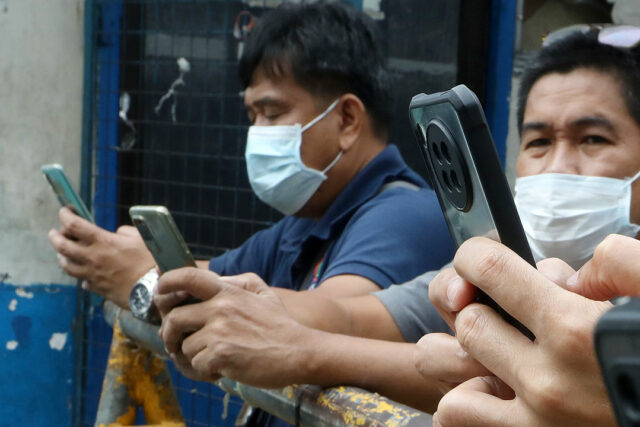
THE National Telecommunications Commission (NTC) ordered the country’s major mobile network carriers to explain issues encountered on the first day of the mandatory subscriber identity module (SIM) card registration.

NTC Deputy Commissioner and Officer-in-Charge Ella Blanca B. Lopez issued a memorandum dated Dec. 27 to DITO Telecommunity Corp., Globe Telecom, Inc., and Smart Communications, Inc., asking them to submit the written report the next day.

“You are hereby directed to report to this commission the incidents of incomplete registration, platform involved, number of subscribers affected, geographical area, and actions taken to address these issues, as well as actions to mitigate or eliminate future incidents of similar nature,” Ms. Lopez said in the memorandum.

She said the commission received “numerous incidents involving unsuccessful or incomplete SIM registration from the general public” on Tuesday, the first day of the mandatory SIM card registration.

“There are also initial social media reports of registration sites being down or inaccessible to subscribers,” she added.

Sought for comment, DITO said in a statement that it was already in “close coordination” with the commission.

DITO said there were close to 500,000 subscribers who registered their SIM cards as of 1 p.m. on Wednesday.

The third telco player has said nearly 15 million subscribers and potential customers are expected to register.    

Smart, the wireless arm of the PLDT group, said separately that it was already preparing to send its report to the NTC. Smart has around 67 million subscribers who need to register their SIM cards.

BusinessWorld is still awaiting comment from Globe Telecom regarding the NTC memorandum.

In a statement e-mailed to reporters late Tuesday, the Ayala-led telco said it reported to the NTC that its SIM registration portal, new.globe.com.ph/simreg, was inaccessible on the first day. Globe’s registration portal was accessible as of 4 p.m. on Wednesday.

“Globe is committed to making SIM registration easy and convenient for its 87.9 million customers. However, it is very unfortunate that we discovered potential minor vulnerabilities in our microsite that require careful patching in order to prevent any serious threat to customer data,” Globe said.

“We take this very seriously hence even minor issues are given utmost attention. This happened despite all the preparation, technical tests and due diligence we have conducted,” it added.

Globe said that such issues prompted the company to make the site temporarily inaccessible as customer data security is “paramount and any problem detected is treated with utmost severity.”

It asked the NTC for a maximum of 72 hours to monitor its SIM registration portal to ensure it is technically stable.

Smart said on Tuesday that its registration site also experienced latencies due to a high volume of subscribers accessing the portal.

The SIM Card Registration Act, which took effect on Oct. 28, requires the registration of all SIM cards in the country.

All mobile device users have to register their SIMs on their telcos’ authorized registration platforms within 180 days from the effectivity of the law or until April 26, 2023. The DICT may extend the registration period by another 120 days.

Hastings Holdings, Inc., a unit of PLDT Beneficial Trust Fund subsidiary MediaQuest Holdings, Inc., has a majority stake in BusinessWorld through the Philippine Star Group, which it controls. — Arjay L. Balinbin

Business group expects economic gains from Marcos’ state visit to China

MOTORISTS use the Binondo-Intramuros Bridge, April 6. — PHILIPPINE STAR/KRIZ JOHN ROSALES

THE PHILIPPINES should expect more partnerships with China in trade, tourism, agriculture, public housing, and security after President Ferdinand R. Marcos, Jr.’s state visit next week, a Filipino-Chinese business group said on Wednesday.

“We are hopeful for enhanced Philippines-China economic and development partnership, especially in areas of agriculture, trade, infrastructure, energy, tourism, and people-to-people exchanges,” Henry Lim Bon Liong, president of the Federation of Filipino-Chinese Chambers of Commerce and Industry, Inc. (FFCCCII), told a public forum on Wednesday.

“Likewise, there are opportunities to explore technological cooperation in telecoms, bioscience, medical science, energy, mining, and industrial development,” he added.

Mr. Marcos is scheduled to meet Chinese President Xi Jingping during his state visit to China, which starts on Jan. 3. The FFCCCII will be part of the Philippine business delegation to China.

Mr. Lim Bon Liong said the Philippines should also consider fisheries cooperation between rural coastal fishing communities, as well as partnerships in security, disaster preparedness, public housing and public health.

“We hope this state visit shall pave the way for more infrastructure cooperation, especially since China is now the world leader in modern and high-speed trains, in bridge and other construction technologies,” he said.

China has funded several Philippine projects such as the Estrella-Pantaleon Bridge and the Binondo-Intramuros Bridge.

Citing China’s “growing consumer market,” Mr. Lim Bon Liong said Beijing would need sources of tropical fruits like banana, pineapple, durian, avocado and mango.

“Let us export and sell more to China,” he said.

The Philippines should also take advantage of the opportunity to attract more tourists from China, which is further easing coronavirus disease 2019 (COVID-19) restrictions from next month.

China was the second largest source of inbound travelers to the Philippines before the pandemic. In 2019, 1.74 million Chinese tourists visited the Philippines, up 38.58% from 1.25 million in 2018.

“We in the Philippines have already opened our doors to foreign tourists and we hope this state visit of President Marcos can help us woo affluent China tourists again to visit our country as they reopen for travel,” Mr. Lim Bon Liong said.

Hotel owners are hoping to welcome more inbound travelers from China by the first quarter of 2023.

China is set to reopen its borders that have been mostly closed since 2020. Starting Jan. 8, China will stop requiring inbound travelers to quarantine, and is set to allow Chinese citizens to resume travel overseas.

“With this development in China, we’re hoping that by the first quarter, we can see some movements into the country already. But, of course, this will depend largely on the protocols that will be determined by health authorities,” Philippine Hotel Owners Association Executive Director Benito C. Bengzon, Jr. told One News’ BusinessWorld Live program.

Flag carrier Philippine Airlines (PAL) announced on Dec. 23 that it would resume flights between Manila and Xiamen beginning Jan. 13.

“Starting with one flight per week, operating every Friday, the PAL route to Xiamen will build up frequencies over time, in line with the easing of restrictions and applicable government authorizations,” PAL said in an e-mailed statement.

PAL also said that it would work towards resuming flights to more cities in China.

MORE INVESTMENTS EYED
Meanwhile, Michael L. Ricafort, chief economist at Rizal Commercial Banking Corp., said Filipino exporters would likely benefit from Mr. Marcos’ visit to China.

“We should expect more exports to China, which is among the country’s biggest export destinations,” he said in a Messenger chat.

Mr. Ricafort said improved foreign relations between the two countries — against the backdrop of the South China Sea dispute — would be “helpful” to the country’s business transactions with China.

China claims more than 80% of the South China Sea, which is believed to contain massive oil and gas deposits and through which billions of dollars in trade passes each year. It has ignored a 2016 ruling of a United Nations-backed arbitration court that voided its claim based on a 1940s map.

The Philippines has been unable to enforce the ruling and has since filed hundreds of protests over what it calls encroachment and harassment by China’s coast guard and its vast fishing fleet.

Terry L. Ridon, a public investment analyst, said Manila should get clarity from Beijing on the status of joint exploration plans in the disputed waterway and other commitments made during former President Rodrigo R. Duterte’s term.

Mr. Marcos should ensure that revenue-sharing arrangements are “more favorable” to the Philippines, he said in a Messenger chat.

Mr. Duterte led a foreign policy pivot toward China and away from the US, the Philippines’ oldest security ally.

Mr. Marcos, who took office in June, has vowed to make the Philippines a “friend to all” and “an enemy to none.”

“The President must ensure that economic concessions made during the Beijing trip should in no manner diminish our victory in the Hague ruling. It is a red line that the Philippine delegation should never cross,” Mr. Ridon said.

He also said the Philippine government clarify the status of ongoing and prospective development loans made under the previous administration and “determine whether Beijing remains committed to contributing to the country’s development.”

In July, the Transport department announced that the Philippine government had scrapped its loan applications with state-owned China Eximbank for three multibillion-peso railway projects undertaken under the previous administration.

“Beijing has to do more in developing relations with the Philippines,” Mr. Ridon said, noting that China’s advocates in the Philippine business sector tout enhanced bilateral relations but Chinese coastal militia continue to harass Filipino fishermen within the country’s exclusive economic zone.

Last month, a Chinese coast guard vessel allegedly took by force a rocket debris that was being towed by a Philippine Navy ship in the South China Sea.

Following the incident, Mr. Marcos had questioned why Chinese account was so different from the Philippine Navy report. He previously said his January visit to China could be an opportunity to find a way to avoid further incidents. — Kyle Aristophere T. Atienza and Arjay L. Balinbin

ADVERTISEMENT
ADVERTISEMENT