Home Blog Page 5454

Endangered pink iguana hatchlings seen for first time on Galapagos island 

WIKIPEDIA
WIKIPEDIA

QUITO – Scientists have discovered hatchling and juvenile populations of the Galapagos pink land iguana, an endangered reptile native to a sole island on the Ecuadorean archipelago, for the first time since the species’ discovery just decades ago. 

Native only to the slopes of Wolf Volcano on the Galapagos’ Isabela Island, the iguana is considered critically endangered and just several hundred are left, according to estimates. 

“This discovery marks a significant step forward, which allows us to identify a path going forward to save the pink iguana,” Director of the Galapagos National Park Danny Rueda said in a statement on Tuesday. 

The iguanas, which can stretch up to 18.5 inches (47 cm) in length, were first discovered by national park rangers in 1986. However, scientists took decades to recognize the pink iguana as a separate species from others on the island. 

Their population is threatened by introduced species on the island, particularly rodents, the national park said. 

“Knowing all the aspects that make their existence vulnerable will allow us to take timely actions, mainly against invasive species and thus avoid interrupting the natural cycles of these fragile ecosystems,” Rueda said. 

The Galapagos Islands, with its unique wildlife, was a key force behind British scientist Charles Darwin’s theory of evolution. It is home to a number of species not found anywhere else including giant tortoises, flightless cormorants and several species of iguanas, including the pink iguana.  

The Wolf Volcano is one of the most remote spots monitored by the national park, which installed a research and monitoring station at its base. — Reuters  

Carlos, Compuesto the prince and princess of ‘Batang Pinoy’

ARCHER MIGUEL CARLOS with Philippine Sports Commission chair Noli Eala, emerged the most be-medalled athlete in the country’s centerpiece grassroots program with a fantastic seven-gold performance.

Archer Carlos harvests 7 golds; Baguio tops with 29 golds

ILOCOS SUR — Archer Miguel Carlos of Puerto Princesa sprinter Leonelyn Compuesto dominated their respective events to crown themselves prince and princess of the Philippine Sports Commission’s (PSC) Batang Pinoy that concluded here on Wednesday.

Mr. Carlos, 12, emerged the most be-medalled athlete in the country’s centerpiece grassroots program with a fantastic seven-gold performance following triumphs in 20 meters, 25m, 30m, 40m, 1440, Olympic round and mixed event with Lizette Mayumi Rioja at the San Ildefonso Central School grounds.

Ms. Compuesto, 15, for her part, completed a magnificent sweep of all the girls’ sprint events as she reigned supreme in the 200m, 400m, 4x100m and, just yesterday, the 100m and 4x100m with Realyn Lanuza, Jesalyn Materdan and Alessandra Nicole Capellan.

In the century dash, the 15-year-old Masbate Sports Academy standout had to survive South Cotabato’s Schenley Faye Ombid in a photo finish in ruling the event and emerging the fastest girl in the games.

Ms. Compuesto clocked 13.11.103 seconds as against Ms. Ombid’s 13:11.109.

In stark contrast, Ms. Compuesto’s Masbate team was just a cut above the rest and finished a little less than 15 seconds ahead of the field.

When it was over, Ms. Compuesto hugged her teammates who were shedding tears of joy, passed out in exhaustion and rushed to the nearby clinic where she eventually regained consciousness.

And then she remembered the reason that fueled her dreams.

For Mr. Carlos, his sheer hard work finally paid off.

Equally impressive were Jathniel Caleb Fernandez of Baguio and Adrianna Jessie Magbojos of Sta. Rosa, who topped the Olympic round for U10 and scooped up six mints apiece also in archery.

Tanker Julian Lowers De Kam of Lucena lorded it over the pool with a five-mint harvest capped by a 4x50m freestyle relay triumph alongside Reinielle Mikos Trinidad, Peter Cyrus Dean and Zahjeed Isaac Sarmiento in 1:47.38.

Mr. De Kam’s other conquests came in the 200m, 400m and 1500m free and 100m butterfly.

Cagayan de Oro’s Zhaoyu Capilitan shone the brightest in chess at the Baluarte in Vigan with a triple gold haul in individual and team standard gold and team blitz gold with Ashzley Aya Nicole Paqinol.

When the curtains fall in the country’s centerpiece grassroots development program, Baguio came out reaping the fruits of its investment in youth sports as it ended up on top with a 29-gold, 27-silver and 35-bronze harvest ahead of Laguna (18-10-13) and Quezon City (15-9-13).

Rounding out the top 10 were Lapu Lapu (14-6-5), General Santos (13-12-10), Pasig (13-9-9), Iloilo City (12-10-13), Masbate (11-7-6), Lucena (11-7-3) and Davao City (9-13-28).

Host Ilocos Sur Gov. Jerry Singson and PSC Chair Noli Eala were both delighted at the competition’s successful turnout while sponsor Milo gave out special awards it named “Pursigido Awards” at the closing rites at the Quirino Stadium in Bantay. — Joey Villar

UP Fighting Maroons want payback, vow finals return

MALICK DIOUF of UP drives to the basket against Ange Kouame of Ateneo during the UAAP Mens basketball Finals game 3 at Smart Araneta Coliseum, Dec. 19. — PHILIPPINE STAR/ RUSSELL PALMA

ONCE again, there is no way to go but up for University of the Philippines (UP) after a tough fall from the UAAP throne.

Unseated after only a seven-month reign, the Fighting Maroons want no less than payback of their own with a promise of a finals return in Season 86 for the third season in a row.

“That’s life. We played and fought until the end but God has other plans so we just have to live with it and bounce back. I think we can expect a lot come Season 86. We have to get our revenge,” said UAAP Season 85 MVP Malick Diouf as UP fell to Ateneo, 75-68, in the winner-take-all Game 3.

“Hopefully we learn from it and bounce back next season. We’ll come back stronger next season. We’ll come back better,” added Carl Tamayo, who joined Mr. Diouf in the Mythical Team.

Messrs. Diouf and Tamayo, despite their individual awards, however could not put an icing on the cake with the foiled comeback attempt of the Fighting Maroons after trailing as big as 20 points.

In the process, UP was denied a historic feat of winning two titles in one year after snapping a 36-year title drought last May in Season 84 at the expense of former three-time champion Ateneo, which was quick to regain its crown.

“It’s been a lot of work, having two seasons in one year. It’s not the way we want it to end but I won’t let that take away from all the lessons and friendships that we’ve built,” said James Spencer, who also vowed to return for his final year.

“It’s been a hell of a ride. We’re finally gonna have a whole offseason so a lot more time with the group. A lot more time to build chemistry. I think we’ll be good. We’ll be back there again.” — John Bryan Ulanday

New York Knicks wallop Golden State Warriors for 8th win in a row

IMMANUEL Quickley scored 22 points off the bench to lead six players in double figures for the New York Knicks, who never trailed as they extended the NBA’s longest active winning streak by routing the visiting Golden State Warriors 132-94 on Tuesday.

Jalen Brunson scored 21 points and Julius Randle (15 points, 12 rebounds) posted a double-double for the Knicks, who have won eight straight — their longest streak since a nine-game run from April 9-24, 2021.

Quentin Grimes scored 19 points, RJ Barrett had 18 points and reserve Miles McBride added 10 points for the Knicks, who beat the Warriors in New York for the first time since Feb. 27, 2013. Mitchell Robinson (nine points, 10 rebounds) just missed a double-double.

Jordan Poole scored 26 points for the Warriors, who fell to 1-2 since superstar shooting guard Stephen Curry sustained a left shoulder injury on Dec. 14. Mr. Curry is out indefinitely.

Jonathan Kuminga had 13 points while Moses Moody, Klay Thompson and Ty Jerome all scored 11 points for Golden State, which lost for the sixth time in eight games.

The Knicks opened on an 8-0 run before the Warriors scored 12 of the next 16 points and tied the game for the only time on a trio of free throws by Poole. Mr. Barrett responded with a second-chance basket for New York, which twice allowed Golden State to pull within two points before carrying a 33-25 lead into the second quarter.

The Warriors mounted an 8-2 run to start the second before Mr. McBride and Mr. Quickley hit consecutive 3-pointers. Golden State cut the deficit to five before Mr. Brunson went on a personal 9-0 run as the Knicks took their first double-digit lead. New York never led by fewer than nine the rest of the way and was on top 69-56 at the half.

The Warriors cut the deficit to 10 three times in the third quarter before the Knicks began pulling away for good. Mr. Robinson’s free throws gave New York its first 20-point lead at 88-67 with 5:37 left.

The Knicks led 100-81 at the end of the third and scored the first 11 points of the fourth to go ahead by 30 for the first time. New York took its biggest lead when Svi Mykhailiuk drained a pair of free throws for the game’s final points with 58 seconds left. — Reuters

Crowd crackdown to send right message before women’s World Cup — FA chief

MELBOURNE — Football Australia (FA) boss James Johnson has said strong and decisive sanctions against the A-League fans involved in a violent pitch invasion will send the right message ahead of the women’s soccer World Cup.

The local game’s image suffered a blow last Saturday when more than 100 fans stormed onto the pitch during the Melbourne Victory-Melbourne City game, injuring several people, including City goalkeeper Tom Glover and referee Alex King.

Police have charged over a dozen people in relation to the incident while governing body FA banned two for life and is mulling sanctions against Victory.

The crowd trouble has embarrassed Australia in the lead-up to co-hosting the World Cup next year with New Zealand.

“It’s strong and decisive action that needs to be taken,” Mr. Johnson told Australia’s ABC on Wednesday.

“Strong sanctions against individuals, strong sanctions against clubs on behalf of their purported fans.

“That sends not only the right message to the local community but it certainly sends the right message to FIFA, to AFC (Asian Football Confederation) and to the millions of people, the billions of people I should say, that will watch the women’s World Cup when it comes here in July, 2023.”

Mr. Johnson said Victory could lose championship points or play its remaining home games at closed stadiums.

The pitch invasion came in the wake of the A-League’s unpopular decision to sell the rights to host its title-deciding Grand Finals for both the men’s and women’s competitions to Sydney through to 2025.

With Grand Finals traditionally hosted by the top-finishing teams, the move triggered an intense fan backlash and was condemned by former players and media pundits.

Mr. Johnson said the A-League needed more dialogue with fans to explain the Grand Final decision.

“On the one hand the league needs to grow its own economy … but on the other hand they also need to ensure that fans remain at the heart of their decision-making,” he said. — Reuters

Argentina’s victory, memorable; Morocco’s accomplishment, historic

SERGEY_KANDAKOV-FREEPIK

Lionel Messi led Argentina to a World Cup victory after what most called the “most thrilling” and all-time great games in the 92-year history of the tournament. It was a classic battle between European and South American football.

Argentina drew first blood through Messi and Angel Di Maria, but not to be outdone, France’s Kylian Mbappe scored late in regular time. The score at the end of the regular period, 2-2.

Messi gave back the driver’s seat to the Argentines in the extra period only for Mbappe to equalize, 3-3, to take the classic match to a penalty shootout.

The 2022 World Cup was Argentina’s third tournament victory, having won the title in 1978 and 1986. It was Messi’s fifth World Cup appearance, but the first time for him to lift the trophy, and, most likely, the last for the 35-year-old.

Certainly, the 2022 World Cup was a financial success, which explains the smugness of Giovanni Infantino, the Swiss-Italian president of FIFA. The prize money added up to $440 million, with Argentina pocketing $45 million and runner up France ending up with $30 million. In addition, each team which qualified for Qatar 2022 gets $1.5 million. It is a relative windfall for the national associations, the players, and others in each national team. Players will receive hefty paychecks from the Cup, not to mention the endorsements to follow.

The smugness was also evident in the statement of Qatari officials who were asked to comment on the deaths of two migrant workers, a Filipino and a Kenyan, during the then ongoing tournament. The Athletic reported that Alex (complete name and nationality not reported) died after falling at his worksite, a FIFA training base. Other reports stated Alex was a forklift operator who slipped head first from a platform. At any rate, the Qatar World Cup’s chief executive, Naser al-Khater, reportedly responded: “We have a successful World Cup. And this (migrant worker’s death) is something you want to talk about right now?” The Athletic added that Khater reportedly said, “Death is a natural part of life, at work or in sleep.” So, that’s that for those migrant workers and their families. It seems that a template has been established for rationalizing one’s wrongdoing by hosting a high-profile sport event.

While everyone is of course focused on the thrilling championship match, the financial success of Qatar 2022, the dismissive and even callous response to the death of migrant workers, and other newsworthy events at the World Cup, there is no denying that the other big story is the performance of Africa, represented by Morocco.

Located in the northwest corner of Africa, Morocco has a population of 37 million, smaller than champion Argentina’s 46 million. Morocco became the first African country to make it to the semifinals of the FIFA World Cup. No matter that the Moroccans lost to France 2-0, which paved the way for the French’s mano-a-mano with Argentina — the Moroccans had already made history. And from that point on, as stated by Rory Smith of The New York Times in a Dec. 15 article, “regardless of which team (Argentina or France) emerges triumphant Sunday, though, which story line is reverse-engineered as destiny, on some level this will always be Morocco’s World Cup, the one that made it a trailblazer, a record-breaker, a watermark that will not fade. From this point on, a whole slew of achievements will be the first since Morocco.”

Morocco became the first team from the Arab world to make it to a World Cup quarterfinal. As early at that point, that achievement had already acquired great significance for Africa and Arab culture.

The road the Atlas Lions — the nom de guerre of the Moroccan national squad — took to the semis was, like all World Cup struggles, tortuous. The path to the exclusive circle of four teams started with a 0-0 draw against Croatia in Group F. The Lions went on to top Group F with seven points against Croatia’s five. Morocco had beaten Belgium and Canada. The Lions then turned back Spain, a former colonizer, 3-0 in penalty kicks to make it to the quarterfinals. Next came a 1-0 victory over Portugal for the historic entry into the semifinals.

By this time the Moroccans had already achieved a Cinderella performance and were up against another colonizer, France. The Moroccans’ magical run ended in a blaze of glory despite going down, 2-0.

Prior to the World Cup, most Baby Boomers associated Morocco with the movie Casablanca, named after the city with the same name in Morocco which was the film’s setting. The movie starred Humphrey Bogart and Ingrid Bergman as former sweethearts involved in a complicated situation, the roots of which are traced back to Paris early during World War II.

As underdog lovers watched with fascination how Morocco dismissed heavyweights like Belgium, Spain, and Portugal, the inevitable question was asked: “How did a small country where 30% of the population live on $5.50 (about P300) a day get that far?”

Some, like David P. Woods of The Score.com, in an article entitled “What makes a country great at soccer?” (July 2, 2014), have theorized that there are several reasons for a country’s success in soccer.

First, is a big population base. Presumably the reason for this is that a big population provides a wider and deeper base from which to identify talent for high level international competitions. While success in international competitions doesn’t necessarily indicate the ideal of mass participation and inclusivity, somehow, the population factor is not an advantage in the case of countries with the biggest populations: China, India, Pakistan, Bangladesh, and Indonesia. While soccer is popular in these countries, none of them has reached the World Cup round of 32. Reasons for such an aberration range from corruption in the sport to poor administration.

The second factor is the presence of a training infrastructure. An example of how the presence of the training environment can have positive effects on football development is Costa Rica, which has a population of about 5.4 million. Costa Rica’s best World Cup performance was in 2014. The country topped Group D which included former champions Uruguay, Italy, and England who were all ranked within the world’s top 10. The Costa Ricans advanced undefeated into the round of 16 and defeated Greece in a penalty shootout. The Costa Ricans failed to make it to the quarterfinals comprised of eight teams, losing to the Netherlands.

Like the Philippine setting, there are three main centers of activity in a Costa Rican town: the market, the church, and the football pitch. In the Philippines, it’s a basketball court instead of a football field. But the presence of hundreds of football fields in Costa Rica and thousands of basketball courts in the Philippines have vastly different results: the Central Americans have come close to getting into the quarter finals of the World Cup whereas the Philippines has not made it that far in world basketball.

The third factor is passion. The Moroccans are passionate about football. In fact, African and Arab nations are football fanatics just as Filipinos are hypnotized by basketball (but again with different results).

There are similarities, however, between Morocco and Philippine national teams in soccer and basketball. More than one half of Morocco’s soccer squad were born outside of Morocco but with Moroccan parentage. Morocco had its own diaspora, just as the Philippines has had one for decades. Half of the Moroccan players were born in Spain, France, Germany, and other European countries and play and are stars in the European professional leagues. The other half were born in Morocco and play in Morocco. More than half of the Philippine women’s soccer team, which qualified for the World Cup in 2023 in Australia and New Zealand, are “Fil-overseas” players — they have a Filipino parent but were born, raised, trained, and play in the US, the UK, and other countries.

And that seems to be a key factor — the continuous high-level competition and training in serious soccer environments. You can train all you want but if you are never tested in a variety of high-pressure, high-level competitive situations often, you will never go far in any sport. Tenn Saso and chess grandmaster Wesley So (when both were still Filipino citizens) are examples of the value of constant exposure to high quality competition.


Philip Ella Juico’s areas of interest include the protection and promotion of democracy, free markets, sustainable development, social responsibility and sports as a tool for social development. He obtained his doctorate in business at De La Salle University. Dr. Juico served as secretary of Agrarian Reform during the Corazon C. Aquino administration.


Ring in the New Year with a rapid COVID test

LIFESTYLEMEMORY

FOR MANY PEOPLE, this holiday season feels like a return to 2019, with crowded stores, holiday parties, and travel plans. But one COVID concession we should retain at the end of 2022 — and well into 2023 — is the use of rapid antigen tests, especially before attending large gatherings or meeting with people at high risk. Unlike more intrusive measures such as isolation and masking, tests are almost painless. And President Joe Biden’s administration is now again offering four free tests to each household.

But there’s still confusion around these tests — their strengths and weaknesses in different situations, whether they’re just as accurate against the new variants (yes), and what benefit they can have to whole communities.

Yes, many people are tired of buying these tests and aggravated that testing positive can mean canceled plans or kids out of daycare. But one important reason to continue rapid-testing ourselves is to help diagnose people at high risk for severe disease as soon as possible — because the sooner they get the antiviral Paxlovid after developing symptoms, the better. Underuse of Paxlovid has been blamed for many of the ongoing COVID deaths.

Another reason to keep using them is that while rapid tests can miss some cases, testing right before a gathering can vastly decrease the odds of creating a super-spreader event.

That said, it’s critical to know the tests’ limitations. They’re not perfect — and not nearly as sensitive PCR tests. But for many purposes, antigen tests are better because you get results in 10 or 15 minutes. PCR tests are more sensitive but still too slow.

“When your goal is to stop transmission, or to identify when you’re infectious, PCR isn’t the right tool,” said Michael Mina, an epidemiologist at the biotech company eMed, which sells rapid tests.

Mina, who has been a big advocate of home testing since he was an assistant professor at the Harvard School of Public Health, says rapid tests are just as good at picking up the current variants as they were the variants of holiday seasons past. He estimates that rapid tests are better than 90% effective at preventing guests from getting infected and better than 90% effective for preventing your party from becoming a super-spreader event. That’s because the rapid tests are pretty good at detecting people who are carrying what Mina calls “sky-high viral loads” of the kind that could spread to multiple other people. “Does it mean you won’t turn positive tomorrow? No, but it means you’re not highly infectious right then, and that’s the most important thing.”

Some people with very low levels of the virus might never test positive on a home test — but Mina maintains those people are the least likely to spread the virus to others at a gathering. Super-spreading events are more often triggered by people who develop a high viral load but little in the way of symptoms.

Newer at-home tests are now being sold for around $29 each, promising near-PCR accuracy within an hour. That’s a good option for those with the resources, but there’s no reason to let the perfect be the enemy of the good. Lots of suffering can be avoided through judicious use of the cheaper tests.

The biggest weakness of rapid tests is in the instructions, which fail to adequately inform people about when to test, why to test, or how to interpret the results. In a study published earlier this year, researchers found that people did worse using the enclosed instructions than they did with no instructions at all.

To use the test effectively, you have to take the test immediately before your event or gathering — not several days before, as some people still believe. Ideally, you’d take two tests — one a few days before, and another the morning of the event, especially if you were in contact with someone who was sick.

And if you’re coughing or sniffling, it’s always better to stay home, even if you test negative — because you might have flu or RSV, both of which are going around this season and can be dangerous to vulnerable people.

If you test positive, you should isolate. There’s still a lot of confusion here, too. The CDC has issued different guidelines about how long to stay isolated after a positive COVID test — it went from 10 to five days without any change in scientific understanding. (The first day of symptoms or a positive test is considered Day 0.) “We find that 50% of people are still really infectious at Day 5,” Mina said. “Around 20% of people are still infectious at about 10 days.”

There has been some scientific disagreement about whether it’s really OK to end isolation after five days. Most say it’s OK, if you consistently wear a tight-fitting N95 mask. But there’s little reliable protection from the kinds of loose-fitting cloth and surgical masks most people choose. And to make matters more complicated, exposure time matters — so on Day 8, say, you may be unlikely to infect someone at the supermarket but still able to infect someone you’re sleeping next to for eight hours.

Mina recommends waiting till you get a negative test — though that can be more expensive, if you run out of the free ones. It wouldn’t hurt for the Biden administration to let families have more than four tests.

For many of us, this is going to be an almost-normal holiday season — not because the virus is gone but because we’ve got better tools to deal with it. Nobody wants to be remembered for bringing the unwanted gift of COVID-19 to their friends and relatives.

BLOOMBERG OPINION

Esteem engine

BENZOIX-FREEPIK

WHILE SELF-ESTEEM is an individual goal for achieving equanimity, the esteem of others, if publicly expressed even as a Viber post, can be a boost to the fragile ego. In a culture that places a high value on the admiration of others, flattery can get you places. The “esteem engine” is always heading somewhere.

It is important to flatter effectively and not be perceived as a mere toady whose favorable opinions are devalued due to their generous application even for the unworthy.

It is best to heap praises on a person for accomplishments he himself considers important. It doesn’t have to be the Nobel Prize for Peace (unless it concerns someone who got it). It could be pedestrian skills being publicly acknowledged, like ballroom dancing, karaoke singing, or a good clothes sense. A heretofore unknown accomplishment that has been unearthed from obscurity is best. (Did you know that Mr. X has been shortlisted for knighthood by the Knights of Columbus?)

Research is critical. The worst sin here is to be out of touch with a person’s present status. Flattering a subject who has just been ousted from a job you are slobbering over is the worst case of inadequate research. The subject is likely to take the attempted flattery as sarcasm.

Flattery is seldom considered too excessive or embarrassing by the recipient of the hosannas. Still, when introducing a guest speaker, complements must be moderated. Otherwise, as soon as the speaker opens his mouth, the audience is likely to be let down — Really? Is this then the famous business mogul whose turns of phrase can put Demosthenes to shame?

Effective flattery is done with an audience. What use is adulation if only the object of praise is there to hear it? Complimenting a person on a one-on-one basis is called seduction. This form of flattery can be effective for certain short-term goals. Although overdoing it can subject one to derision — I’ve heard that one before, Sir. Careful with your soup. It’s dripping on your shirt.

Does flattery automatically predispose a favor-giver to think well of the praise releaser? Again, the rule on prior research must be invoked. Misplaced flattery can be as deadly as an insult, as in remarking to an already resigned (or fired) cabinet secretary how effective his policies were, for the first few days. (Did you manage to save some?)

If one cannot give compliments because he is simply not up to date with what another has recently achieved, it is best to let the conversation provide the opening — did you read about my recent award? The conversation can be stilted when one is not too familiar with the other. Sometimes, the only opening available is the door to the exit. (I need to catch a cab.)

Run-of-the-mill compliments must be avoided. The usual greeting of “you look thinner” (I’m undergoing dialysis) can be embarrassing. It’s best to just stick to small talk about traffic and inflation, and the progress of the Ukrainian resistance.

Should you flatter everyone you meet? The accomplished flatterer selects his target, reserving his charms only for those powerful enough to advance his agenda. For the rest, he shows only indifference which is as exquisite a social skill as flattery and extends to who should be avoided altogether.

Special tributes to exiting executives, birthday celebrants, and the recent deceased have become part of our culture. These milestone events are complete with hosts and a program of speeches whose single theme is to flatter the honoree. They now include video greetings which are edited with appropriate music for maximum impact.

While “roasting,” or goodhearted teasing, heaped as a form of manly affection has been tried, it can have unexpected results. (There have been countless accomplishments attributed to our honoree, but unfortunately claimed only by himself and lacking any independent validation. He is truly a legend only in his own mind.) Can this be the start of a life-long feud?

There is a way of differentiating between mere flattery and true admiration. The former is intended to secure a favor or a privilege. The latter is a sincere expression of genuine regard, especially given to one who can no longer dispense favors.

Still, no amount of flattery when introducing a guest speaker can work… if you get her name wrong.


Tony Samson is chairman and CEO of TOUCH xda

ar.samson@yahoo.com

Shopee delays dampen holiday cheer

Delivery delays are putting a damper on the holiday cheer of Shopee’s buyers, sellers, and riders, who say that their complaints have been ignored by the online shopping platform.

“Shopee should immediately address the shipping delay which deeply affects the sellers and customers using the shopping platform. These delays have been occurring for quite some time now and the stakeholders are caught in its incompetence,” Ronald Gustilo, Digital Pinoys’ convener and national campaigner, told BusinessWorld.

Interview and text by Brontë H. Lacsamana. Video editing by Jino D. Nicolas and Earl R. Lagundino.

Coca-Cola Philippines brings the unstoppable magic of Christmas to communities  

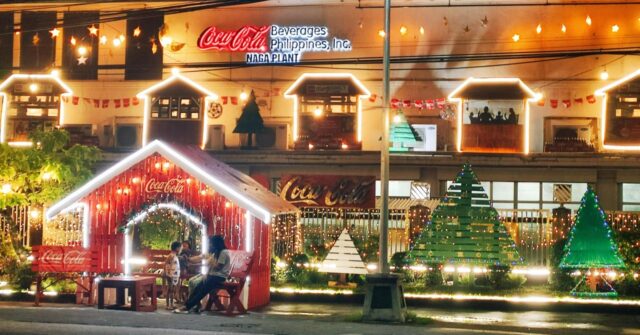
Coca-Cola Philippines welcomed this year’s holidays with its multi-channel campaign called “Christmas Always Finds Its Way”. A series of activities — from food fests to over 30 Coca-Cola sites lit up to a Santa web platform that people can use to send greetings — have been activated to bring more cheers and truly feel the magic of Christmas this year.  

Over 30 manufacturing sites of Coca-Cola Philippines in Luzon, Visayas, and Mindanao brightened up the skies as they lit up their Christmas decorations, signaling the beginning of the festive season in their respective communities. Lighting up the sites has always been a long-standing tradition as the company continues to bring the magic of Christmas to the communities it operates in. It is a testament of the camaraderie and hard work of over 10,000 employees to make every Christmas a bright one for the neighborhoods and consumers it serves. 

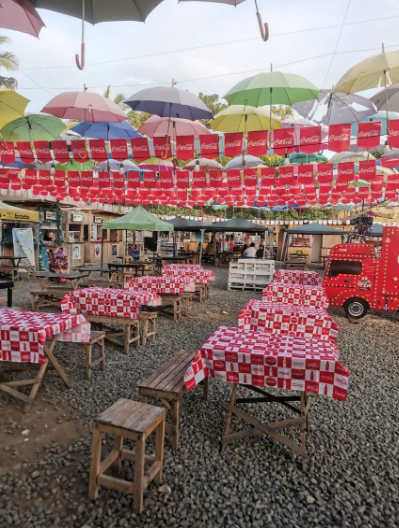
Coca-Cola’s Care-A-Van Community Takeover has activated over 40 food parks nationwide, signifying the brand’s commitment to bring the Christmas table closer to every Filipino this holiday season and providing a venue for families to enjoy the magic of the festivities with warm meals and a Coca-Cola. The Care-A-Van Community Takeover will run until December 31, 2022 in locations listed below.  

As part of the community takeovers nationwide, the Coca-Cola Care-A-Van visited Sitio Pintor in Barangay San Isidro, Rodriguez, Rizal last December 11, 2022 to host a Christmas party for over 460 families, made possible through a partnership with the Ronald McDonald House Charities (RMHC) Philippines and the Philippines Business for Social Progress. A first for the community, Coca-Cola Philippines and RMHC Philippines made sure tummies of kids and families alike were filled with meals and desserts from the McDonald’s Kindness Kitchen and refreshing drinks from Coca-Cola™. The families also enjoyed an electrifying performance from Coke Studio artist and Asia’s Soul Supreme KZ Tandingan, appearances of McDonald’s’ iconic characters, Ronald and the Gang, Happy Meal toys, exclusive giveaways, interactive game booths, and special surprises. 

List of Coca-Cola Care-A-Van Community Takeover Locations: 

  • Eat’s Pinoy Food Park – Bypass Road Brgy. Lakawan, Tayabas City  
  • Baywalk Food Park – Sandoval Street, Bgy. Pag Asa, Puerto Princesa City  
  • Calamba Christmas Bazaar – Chipeco Ave, Brgy Real, Calamba City  
  • Motoeats Food Park – Silang Junction South, Tagaytay, Cavite  
  • Puro Boulevard – Puro, Legazpi City  
  • Talisay Food Park – Brgy. Talisay, Lipa Batangas  
  • Marikina River Banks – Marikina City  
  • Sea Breeze Park N Eat – C.P. Tinga St. Hagonoy, Taguig City  
  • Lex Samgyup Park – Mapagkumbaba Corner Maginhawa St. Quezon City  
  • Saranay Food Street – Saranay Road, Barangay 171, Caloocan  
  • Malolos New Municipal Grounds – Mc Arthur H.W, Malolos, Bulacan  
  • Malamig Food Park – Triangle Street, Brgy. Malamig, Mandaluyong City  
  • Banate Baywalk Food Park – Banate, Iloilo  
  • Bacolod Basket – Lacson Street Bacolod City  
  • Cheese Sticks Food Park – Boulevard Dumaguete City  
  • GT Mall Food Park – Ungka Pavia, Iloilo  
  • Big Bang Food Park – Corner Legaspi St., San Pedro St, Davao City  
  • Jbm Food Ave – Aplaya, Digos City  
  • Paskohan Sa Tagum – Tagum City  
  • South Bay Park – Bario Hall Site, Dadiangas South, General Santos City  
  • Sogod Night Market – Poblacion, Sogod Southern Leyte  
  • Lapu-lapu Foodcamp – Marigondon Crossing, Lapu-lapu City, Cebu  
  • Kusina Sa Danao Foodpark – Danao City, Cebu  
  • Humayan Foodie Market – South Cebu Bohol  
  • Fortridge Foodpark – Totolan, Dauis, Bohol  
  • Catbalogan Food Strip – Brgy 7 Guinsorongan, Catbalogan City, Western Samar  
  • Gea’s Food Park – Tuguegarao, Cagayan  
  • Chariz Food Park – Santiago Isabela  
  • Hide Out Food Park – Bauang La Union  
  • Lakeshore – Mexico Pampanga  
  • Urdaneta Food Bazaar – Anonas Urdaneta City  
  • San Nicolas Food Park – San Nicolas Ilocos Norte  
  • Highland Mini Golf – Getha Subdivision San Sebastian Tarlac City  
  • Rose Garden – Shanum St. Baguio City  
  • Sta Maria Food Park – Sta Maria Road, Zamboanga Peninsula  
  • Pala-o Food Park – Pala-o, Iligan City  
  • Balingasag Baywalk Food Park – Brgy 3 & Brgy 6 Poblacion Balingasag, Misamis Oriental  
  • Uptown Sm Food Park – Upper Carmen, Cagayan De Oro City  
  • Dipolog Boulevard Food Park – Dipolog Boulevard, Zamboanga Del Norte  


Spotlight is BusinessWorld’s sponsored section that allows advertisers to amplify their brand and connect with BusinessWorld’s audience by enabling them to publish their stories directly on the BusinessWorld Web site. For more information, send an email to online@bworldonline.com.

Join us on Viber to get more updates from BusinessWorld: https://bit.ly/3hv6bLA.

Cryptocurrencies at crossroads after annus horribilis

REUTERS

 – To borrow from Britain’s Queen Elizabeth, 2022 is not a year on which the cryptocurrency world shall look back with undiluted pleasure.

Crashes, contagion, collapses came in such quick succession that investors were, towards the end of the year, asking serious existential questions.

After all, the largest cryptocurrency, bitcoin BTC=BTSP, has not kept its head above water for more than a week at a time, and is down about three-quarters from last November’s $69,000 peak.

The market value of the 22,000-odd tokens and coins is now at less than a third of the peak $3 trillion in November 2021, and many of them are comatose, if not outright dead.

That’s been a brutal reality check for an industry that kicked 2022 off with dreams of widespread mainstream institutional adoption, of bitcoin supplanting even gold as the world’s inflation hedge, as well as endorsements from the likes of Tesla Inc chief Elon Musk and the wild celebration of billion-dollar non-fungible tokens.

Not only did cryptocurrencies get slammed by the Fed’s uber hawkishness, their slide also triggered the crash of a stablecoin called TerraUSD, that then wrought a ‘Lehman moment’ as funds and brokers such as Celsius and Voyager went bankrupt.

What some saw as the final nail in the crypto coffin was the collapse of Sam Bankman-Fried’s FTX exchange last month.


WHY IT MATTERS

Unlike in 2017, when bitcoin crashed just as spectacularly, there are far fewer diehard crypto buffs predicting a bounce this time.

Rather, 2022 has become the “I-told-you-so” case for regulators, who’ve largely maintained an arm’s length from the crypto world or even banned trading in cryptocurrencies.

The European Central Bank reckons bitcoin’s modest bounce this month is an “artificially induced last gasp before the road to irrelevance”.

Indeed, the one extenuating factor this year has been how mainstream finance has mostly escaped contagion. The excesses, the uncontrolled lending and fudging of billions of dollars have happened overwhelmingly within the crypto ecosystem.

At the same time, the idea that decentralized finance and private crypto coins can operate in the shadows of the traditional banking system, and thrive, now appears delusional.

As retail and institutional investors lose trust in crypto operators, a host of policymaker voices and even crypto barons are joining U.S. SEC Chair Gary Gensler in calling for regulation.


WHAT DOES 2023 HOLD?

UBS strategist James Malcolm points to the increasing correlation between cryptocurrencies and micro-cap US stocks as testament to how bitcoin and other tokens could survive on the fringes, as a niche, diverse asset in investment portfolios.

“It’s wrong to say this thing is going to curl up and die completely because there are elements of it which can be useful in other areas, and there is probably a modest cryptocurrency market which will continue to thrive on the margin of financial markets,” he says.

Yet, the sort of regulation that investors need to feel safe dealing with crypto brokers and exchanges, be it transparency or capital adequacy, could take months, if not years to implement.

“Some asset managers are looking at this as a 10-15 year journey to digital assets becoming fully mainstream,” Morgan Stanley said in a note summarizing the bank’s discussions with the crypto industry.

Next year could meanwhile see traditional financial world use the crypto malaise to up its game: snap up platforms and assets in the blockchain world, issue tokenized bonds and stocks or maybe even roll out more central bank digital currencies.

As UBS’s Malcolm says, it might just go to show that crypto was meant to be more “an evolutionary than a revolutionary development in financial markets.” – Reuters

UK ambulance staff follow nurses in striking over pay

STOCK PHOTO | Image by Hans from Pixabay

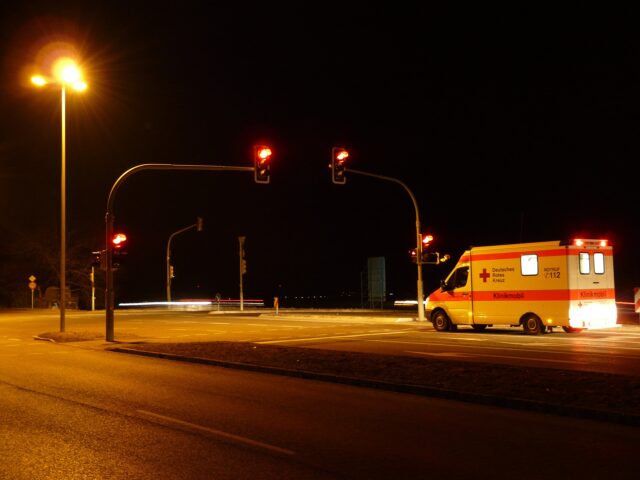
 – Thousands of ambulance workers in England and Wales will strike over pay on Wednesday, increasing the strain on a state-funded health service a day after nurses walked out, with hospital bosses saying the action would put patients at risk.

The government said the “deeply regrettable” strike would result in fewer ambulances on the road.

Health and Social Care Secretary Steve Barclay said the National Health Service (NHS) would prioritize those with life-threatening needs.

“My message to the public is to take extra care tomorrow and plan your activity accordingly,” he said. “You may also want to check up on more vulnerable friends, family and neighbors.”

The GMB Union has said pay in the health service has fallen 17% in real terms since 2010, while demand for ambulances has risen 77% in the same period.

Rachel Harrison, the union’s national secretary, said the government could solve the dispute at any time.

“We have tried everything to raise pay, the issue that is causing this dispute, but the government will not listen and will not talk,” she said in a statement on Wednesday.

Ambulance workers – and the public – deserve better. The government needs to talk pay now.”

An independent pay review body has awarded more than 1 million NHS workers a pay rise of at least 1,400 pounds ($1,704), equating to an increase of at least 4% for most ambulance staff, according to the government.

Unions have asked for a rise above inflation, which stood at 10.7% on the consumer price measure in November.

The NHS Confederation, which represents national health service organizations, said the strike risked patient safety.

“We cannot guarantee patient safety, we cannot avoid risks in the context of this industrial action,” chief executive Matthew Taylor told BBC radio on Tuesday.

The army has been put on standby to help drive and direct emergency vehicles, but soldiers will not have all the powers that regular ambulance drivers have to respond or provide clinical care. – Reuters