Home Blog Page 5451

Japan’s Kurabe plans P2-B plant in LIMA Estate — AIC

ABOITIZ InfraCapital, Inc. (AIC) on Thursday said Japanese manufacturing company Kurabe Industrial Philippines, Inc. is investing P2 billion to build a plant in the former’s industrial estate in Batangas province.

In a press release, the Aboitiz group’s infrastructure arm said it had signed, along with Philippine Economic Zone Authority (PEZA), an agreement with the foreign firm, which will mark its entry into the Philippines.

“This partnership demonstrates our shared commitment to attracting foreign investment to the Philippines—which aims to generate employment, boost commerce and local trade and reinforce the economy,” said AIC Economic Estates Head Rafael Fernandez de Mesa.

AIC said the deal with Kurabe was signed in Tokyo in November during a Philippine business delegation’s Japan roadshow, which followed the registration agreement between PEZA and Kurabe. Kurabe is said to be classified as an ecozone export enterprise.

The deal includes Kurabe acquiring a 5.9-hectare property within the 800-hectare LIMA Estate, which offers industrial lots to companies, including foreign-led ones that are expanding their local operations.

AIC said the estate in Batangas province’s Lipa-Malvar industrial corridor currently hosts 140 locators, 167 retail stores and restaurants, a four-star hotel, and a transportation hub. More than 4,000 households and at least 65,000 employees are also in the estate.

Aboitiz affiliates offer locators a suite of services for construction, power, and water utilities.

AIC quoted Kanazawa Takenobu, Kurabe Co., Ltd.’s chief executive officer and president as saying that the manufacturer “decided that the Philippines is the best location to disperse our business.”

“[AIC] is undoubtedly our choice partner for this expansion, given its well-established reputation and its strong relationship with Japanese business owners. Knowing that a dedicated Japanese team from AIC is accessible to meet our needs provides us with a sense of security and comfort,” the Kurabe official added.

AIC said Kurabe’s P2-billion investment is allotted for land, factory equipment, and construction of the facility, which is set to break ground in 2024.

It said the facility will manufacture and assemble Kurabe’s automotive products, which include car seat heaters and wiring, and steering wheel heaters and wiring. It added that upon completion, the facility is expected to have a workforce of 2,000 from Batangas and nearby areas.
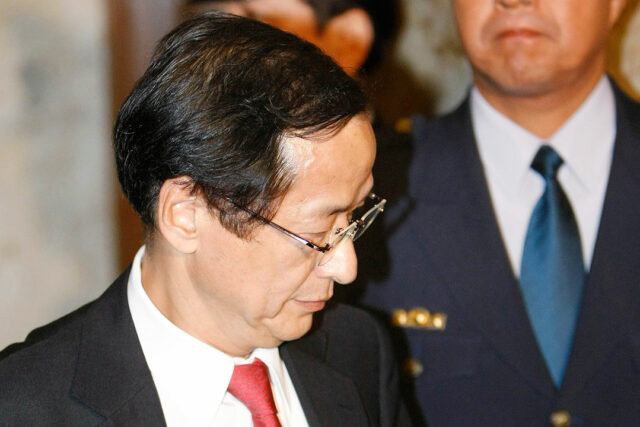

Ex-BoJ deputy Yamaguchi strong candidate for next central bank head

HIROHIDE YAMAGUCHI — REUTERS

TOKYO — Former Bank of Japan (BoJ) Deputy Governor Hirohide Yamaguchi, a vocal critic of Governor Haruhiko Kuroda’s stimulus program, is emerging as a strong candidate to become next head of the central bank, the Sankei newspaper reported on Thursday.

The choice would reflect Prime Minister Fumio Kishida’s increasingly clear shift away from former premier Shinzo Abe’s “Abenomics” reflationary policies, which served as a backbone for Mr. Kuroda’s stimulus, the paper said, without citing sources.

Mr. Yamaguchi had been considered a less likely candidate compared with deputy governor Masayoshi Amamiya and former deputy Hiroshi Nakaso. Mr. Amamiya and Mr. Nakaso have both served under Mr. Kuroda, and long been considered top contenders to succeed the dovish governor when his second five-year term ends in April.

But Mr. Yamaguchi is attracting more attention as a strong candidate as Mr. Kishida’s administration distances itself from Abenomics, the Sankei said, adding that Mr. Kishida’s choice of new BoJ governor will become clear as early as next month.

A career central banker with deep experience in monetary policy drafting, Mr. Yamaguchi served as deputy governor for five years until 2013. He served under former governor Masaaki Shirakawa, who was criticized by Mr. Abe and Mr. Kuroda for being too cautious of taking radical steps to pull Japan out of deflation.

Since retiring from the BoJ, Mr. Yamaguchi has warned of the rising cost of prolonged easing and criticized Mr. Kuroda’s stimulus as relying too much on the view that central banks can influence public perception with monetary policy.

In an interview with Reuters this month, Mr. Yamaguchi said the BoJ must make its monetary policy framework more flexible and stand ready to raise its long-term interest rate target next year if the economy can withstand risks.

The BoJ shocked markets this month with a surprise tweak to its bond yield control that allows long-term interest rates to rise more, a move aimed at easing some of the costs of prolonged monetary stimulus.

Although Mr. Kuroda has ruled out the chance of a near-term rate hike, many market players are pricing in the possibility of a further withdrawal of stimulus when Mr. Kuroda’s successor takes the helm next year. — Reuters

Worker suspected of selling trade secrets

An anonymous letter came to the chief executive officer (CEO) informing him of a worker believed to be selling the company’s sales strategies and other related confidential information to a competitor. The CEO gave the letter to the human resources (HR) department and the department head involved for proper disposition. How do we handle this case? — Half Moon.

“Employee loyalty begins with employer loyalty,” says American businessman, author and columnist Harvey Mackay. “Your employees should know that if they do the job they were hired to do with a reasonable amount of competence and efficiency, you will support them.” So, what happens if you don’t support them?

This happens when employees feel aggrieved due to meager income, an unfair work situation, or inhumane treatment, among other things. People who believe that they’re being taken advantage of often take matters into their own hands. But selling trade secrets to a competitor is an extreme case.

Most disgruntled workers would simply leave and join another company. This case is extraordinary. Of course, not all disgruntled workers are lucky enough to have a replacement job waiting for them. Maybe they don’t have what it takes to be an interesting find for another employer.

What I’m driving at is the need to discover why your suspect is resorting to that extreme measure of selling for profit the company’s trade secrets. This is for us to prevent a recurrence of this unfortunate situation. It may take some time to understand all the reasons, but it is a fair guess that your suspect is extremely angry with your management and organization.

SOLUTIONS
Don’t rush to judgment on this. It is a very serious allegation to make against an employee. You should not be emotional in managing this case as you don’t want the matter to escalate. Handle everything logically and legally while keeping the following in mind:

One, investigate the matter quickly and quietly. First thing to do is to take the anonymous letter with a grain of salt. How did the letter come about? Was it through regular post or private courier? What if the letter turns out to be a hoax? Or what if that poison pen letter was intended to malign an innocent person?

If you take the bait, how would you protect the interests of your organization in the event of a wrongful prosecution? Are you ready and able to pay for damages in case a suspect turns out to be innocent? The answers to these questions are often enough for some organizations to ignore the issue.

Two, alert everyone on the proper handling of proprietary information. Do this while you’re trying to investigate the circumstances of this case. Review all policies with lawyers to make the protection of company data everyone’s responsibility of everyone. This includes requiring all managers and workers to sign non-disclosure agreements.

The rule of thumb is to limit the spread of information only to those who need to know. The fewer people with access to confidential information, the better for the organization.

Last, treat managers and workers the right way. When you treat everyone with dignity and respect, it becomes more difficult for them to be disloyal to the organization. Train your line managers and supervisors to engage their direct reports about their motivations and career expectations. As much as possible, make salary and benefits a non-issue.

If your company can’t afford to pay much, think of alternative ways to compensate for that. It may include giving them challenging work assignments that help build their confidence and the skills necessary for career advancement. If not, empower the workers to solve organizational problems that have proved difficult to manage.

Another option is to offer soft rewards like flexible work schedules. Try to maintain a friendly work atmosphere and an enjoyable environment.

COMPLEX ISSUE
You can’t keep from receiving anonymous letters. Receiving one is a symptom pointing to  a complex issue like the possibility of a labor dispute with an employees’ union. Sometimes, the case may stem from a personality clash between two or more managers.

Maybe it has something to do with the organization’s succession plan. Perhaps some manager is engaged in empire building, requiring one of the workers to be framed in order to taint the reputation of a leading candidate for promotion. The potential causes are endless. You may not be able to discover them all.

Whatever the case, if you’re playing it fair and square with the workers, it should be easy for them to reciprocate being treated well. Maintaining a generally humane policy is the only thing here that you can control.


Chat your workplace questions with Rey Elbo on Facebook, LinkedIn or Twitter or send them to elbonomics@gmail.com or via https://reyelbo.com

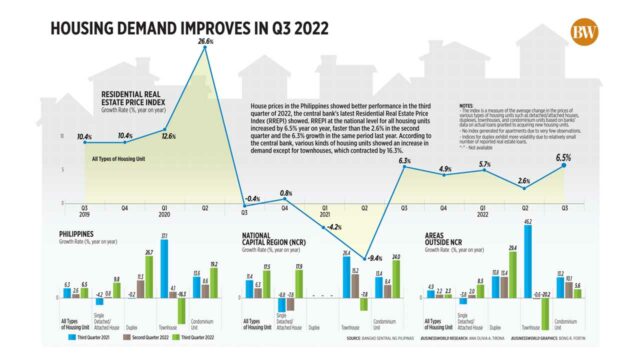
Housing demand improves in Q3 2022

HOUSING PRICES nationwide posted a faster annual growth in the third quarter, driven by sustained demand for condominium units, particularly in the Philippine capital region. Read the full story.

Housing demand improves in Q3 2022

Entertainment News (12/30/22)


The Super American Circus comes to town

DANCERS, aerialists, jugglers, and acrobats take the stage at The Super American Circus at the Newport Performing Arts Theater, Newport World Resorts, in Pasay City. The show runs daily until Jan. 8 (3 p.m. and 8 p.m.). Produced by Global Entertainment Productions, the company’s president and CEO, Cornell “Tuffy” Nicholas, is also the show’s ringmaster like his father was with the Ringling Brothers. It features 16 main acts with 20 main performers including a motorcycle team in the Globe of Danger, the Sky Wheel, and the High Flying Motorcycle. Tickets are available at SM Tickets with prices ranging from P1,000 to P5,000. Tickets are also available at the venue’s entrance. For more information, visit https://www.facebook.com/profile.php?id=100085444545608.


The Sound of Music coming to Metro Manila in March

METRO Manila will be one stop on Broadway International Group’s multi-year international tour of Rodgers and Hammerstein’s The Sound of Music which was launched in Singapore in the 4th quarter of this year. The production of one of the world’s most beloved musicals of all time will have multi-week stops in the Philippines, India, Malaysia, China, Hong Kong, and Taiwan in 2023, with other additional countries to be announced. The Metro Manila performances will be from March 7 to 26 at the Samsung Performing Arts Theater in Circuit Makati. The tour is led by Jill Christine-Wiley as Maria, Trevor Martin as Captain Von Trapp, with Daniel Fullerton as Rolf, Lauren Kidwell as Mother Abbess, Joshua La Force as Max, Lauren O’Brien as Liesl, and Annie Sherman as Elsa. “It is a great privilege to bring this cherished Rodgers & Hammerstein musical to Manila, particularly at this time of global recovery. Our goal is to celebrate the spirit of musicals and sing ‘Do-Re-Mi’ with audiences everywhere!  We are thrilled to light the Broadway musical torch once again in Manila, and to perform this fantastic production in the Philippines,” Simone Genatt and Marc Routh, co-founders and producers of Broadway International Group said in a joint statement. Messrs. Genatt and Routh have worked on many international productions in Manila including Cinderella starring Lea Salonga. The tour highlights the original creative work of three-time Tony Award winning director Jack O’Brien, Broadway choreographer Danny Mefford, and Musical Supervision by Andy Einhorn. The Sound Of Music is presented in special arrangement with Concord Theatricals, NETWorks Presentations and Broadway Asia Company. For more information, visit www.broadwayasia.com.


More OPM artists cover E-Heads songs

AFTER the release of original Pilipino music (OPM) acts SB19 and NOBITA’ versions of the Eraserheads’ “Christmas Party” and “Magasin,” more OPM acts have come together to pay tribute to the Eraserheads. Pop singer Ace Banzuelo reinterprets “Ang Huling El Bimbo,” transforming the epic anthem into a spacey jam. “It’s great that I’m allowed to give it the sound and approach that I want. A lot of the original was kept, but a lot was taken away. This project became meaningful to me throughout the process because I was producing it as if I had written the song,” Mr. Banzuelo said in a statement. Alt-rock newcomers Of Mercury and Any Name’s Okay vocalist Sof Abrogar join young hip-hop artist Alex Bruce in reinterpreting “Superproxy,” a cross-genre smash originally performed by the Eraserheads and late rapper Francis M. “This song is a masterpiece. It’s iconic. I wanted to add a little spice, a little flavor, and a bit of contemporary oomph to it. Our reworked version is a fusion of old school and new school,” said Ms. Bruce in a statement. Apart from the revamped tracks, five of the Eraserheads’ legendary albums — Ultraelectromagneticpop! The 25th Anniversary Remastered Edition, Circus (25th Anniversary Remastered), Cutterpillow, Fruitcake, and Sticker Happy — have been re-released in full 360-degree spatial sound to give listeners a new immersive music experience. Ace Banzuelo’s “Ang Huling El Bimbo” and Of Mercury, Sof Abrogar, and Alex Bruce’s “Superproxy” are available on all digital music platforms worldwide via Sony Music Entertainment.

How PSEi member stocks performed — December 29, 2022

Here’s a quick glance at how PSEi stocks fared on Thursday, December 29, 2022.


Peso rebounds versus the dollar ahead of long holiday weekend

BW FILE PHOTO

THE PESO rebounded against the dollar on the last trading day of 2022 ahead of another long weekend, which could lead to increased spending.

The local currency closed at P55.755 versus the greenback on Thursday, up by 44.50 centavos from Wednesday’s P56.20 close, data from the Bankers Association of the Philippines showed.

The peso opened Thursday’s trading session at P56.17 per dollar. Its weakest showing was at P56.18, while its intraday best was at P55.67 against the greenback.

Dollars traded dropped to $807.8 million from $882.85 million on Wednesday.

Rizal Commercial Banking Corp. Chief Economist Michael L. Ricafort said in a Viber message that the peso appreciated on Thursday from the previous session ahead of the long weekend, which could lead to another round of increased holiday spending.

“The long Christmas holiday weekend and the following long New Year holiday weekend may still lead to accelerated holiday-related spending, though by a lesser extent shortly before the New Year celebrations,” Mr. Ricafort said.

He added that the peso strengthened on the back of a dip in global crude oil prices as coronavirus disease 2019 (COVID-19) cases surge in China, the world’s largest oil importer.

Reuters reported that oil prices dipped on Thursday as surging COVID-19 cases in China dimmed hopes of a recovery in fuel demand for the world’s largest crude oil importer.

Brent crude futures fell 79 cents or 1.0% to $82.47 a barrel by 0730 GMT, while US crude fell 80 cents or 1.0% to $78.16 a barrel.

The scale of the latest outbreak and doubts over official data prompted some countries to enact new travel restrictions on Chinese visitors, even as China dropped travel restrictions on Wednesday.

However, for 2022, the peso depreciated by P4.755 or 8.53% from its P51-per-dollar close on Dec. 31, 2021.

The peso saw a volatile trading year as global central banks began unwinding their pandemic-driven easy monetary policy due to growing inflation risks.

It recorded a fresh record low of P59 against the dollar this year on Oct. 3, down 13.56% from its 2021 close, due to hawkish statements from the US Federal Reserve chief. The local unit finished at this record low again on Oct. 10, 13, and 17.

Still, the peso began its gradual recovery later that month as the Bangko Sentral ng Pilipinas (BSP) likewise became hawkish, even matching the Fed’s policy moves as it sought to support the currency.

The BSP has raised benchmark interest rates by 350 basis points (bps) since May in its fight against rising inflation.

Meanwhile, the Fed has raised borrowing costs by 425 bps since March.

Both are expected to continue tightening next year as inflation remains elevated amid supply constraints.

For next week, Mr. Ricafort sees the peso moving within P55.55 to P56.05 per dollar. For Tuesday, the local unit could trade between P55.65 and P55.95 to start 2023, he said. — AMCS with Reuters

Main index ends flat ahead of key economic data

BW FILE PHOTO

THE MAIN INDEX closed almost flat on Thursday after Wall Street declined and on window dressing as investors wait for the release of key economic data.

The bellwether Philippine Stock Exchange index (PSEi) inched down by 0.15 point to close at 6,566.39 on Thursday, while the broader all shares index rose by 12.71 points or 0.36% to 3,462.04.

For the year, the PSEi declined by 556.24 points or 7.81% from its close of 7,122.63 on Dec. 31, 2021.

“Philippine shares were able to remain flat despite the broad sell-off in the US, as recession fears weighed on investor sentiment in a losing week, month and year,” Regina Capital Development Corp. Head of Sales Luis A. Limlingan said in a Viber message.

“With 2022 in the books, investors started the last chance for window dressing. On Thursday, traders are expecting the latest data on weekly jobless claims before the bell,” Mr. Limlingan added.

Wall Street ended weaker on Wednesday due to mixed economic data, rising coronavirus cases in China, and geopolitical tensions.

The Dow Jones Industrial Average fell 365.85 points or 1.1% to 32,875.71; the S&P 500 lost 46.03 points or 1.2% to end at 3,783.22; and the Nasdaq Composite dropped 139.94 points or 1.35% to 10,213.29.

“The PSEi closed at 6,566, which is relatively flat to its movement in the last shortened trading week of the year as investors remain absent in the market amid the holiday season,” Unicapital Securities, Inc. Equity Research Analyst Neil Andrew L. Maderaje said in a Viber message.

“Going into next year, investors wait for the first key economic data from the Philippine Statistics Authority (PSA), [which is] the release of December 2022 inflation data,” Mr. Maderaje added.

He said the PSEi may continue to move sideways in the first trading week of 2023 as investors are likely to remain cautious due to higher interest rates and global recession concerns.

Headline inflation is seen to settle within the 7.8% to 8.6% range in December due to higher electricity rates and rising prices of agricultural goods, the Bangko Sentral ng Pilipinas said on Thursday.

The PSA is likely to release December inflation data next week.

Most sectoral indices closed higher on Thursday, except for holding firms, which declined by 69.72 points or 1.07% to 6,433.27, and industrials, which lost 3.42 points or 0.03% to end at 9,351.16.

Meanwhile, property added 47.34 points or 1.64% to close at 2,928.71; mining and oil climbed by 103.62 points or 0.96% to 10,808.92; financials increased by 7.63 points or 0.46% to 1,645.03; and services rose by 6.94 points or 0.42% to close at 1,634.23.

Advancers outnumbered decliners, 120 versus 68, while 49 names closed unchanged.

Value turnover surged to P6.17 billion on Thursday with 1.13 billion shares changing hands from the P3.7 billion with 1.09 billion issues traded on Wednesday.

Foreigners turned buyers on Thursday with P207.5 million in net purchases from P120.47 in million net selling recorded the previous trading day.

Mr. Maderaje placed the PSEi’s short-term support at 6,450 and resistance at 6,700. — J.I.D. Tabile

Marcos continues ban on e-sabong operations

PHILIPPINE STAR/IRISH LISING

PRESIDENT Ferdinand R. Marcos, Jr. has ordered the continued suspension of online cockfighting operations in the Philippines, known as e-sabong, citing the need to protect public morals and safety.

“There is an urgent need to reiterate the continued suspension of all e-sabong operations nationwide, clarify the scope of existing regulations and direct relevant agencies to pursue aggressive crackdown against illegal e-sabong operations, in accordance with law,” according to an Executive Order (EO) signed for the President by Executive Secretary Lucas P. Bersamin on Dec. 28.

The order indefinitely suspends online streaming or broadcasting of live cockfights outside arenas or any premises where cockfights are being held.

It also prohibits online or offsite betting on live matches and other related activities streamed live “regardless of the location of the betting platform.”

The suspension order does not cover the operations of traditional cockfights authorized or licensed under existing laws.

The EO stressed that the state “has the paramount obligation to protect public health and morals and promote public safety and general welfare.”

The state-run Philippine Amusement and Gaming Corporation (PAGCOR) has been tasked to coordinate with local government units and other concerned government agencies and private entities on the EO’s implementation.

The Department of the Interior and Local Government (DILG) and the Philippine National Police (PNP) are also directed to assist PAGCOR, and take appropriate action against violators.

PAGCOR, in coordination with the DILG and PNP, should submit regular reports to the President through the Office of the Executive Secretary.

Former President Rodrigo R. Duterte ordered the end of e-sabong operations in May, citing the game’s impact on family values.

The former leader initially refused to suspend e-sabong because of the revenues it generates for the government, which saw its budget deficit widen during the coronavirus pandemic.

The Philippine government’s budget deficit narrowed by 3.7% to P123.9 billion in November from the P128.7-billion deficit in the same month last year.

Revenues from online cockfighting averaged P400 million monthly last year and P640 million a month since January 2022.

E-sabong gained popularity during the pandemic as Filipino gamblers, restrained by mobility restrictions, only needed to place bets using their mobile phones.

The disappearance of at least 30 people allegedly linked to online cockfighting activities prompted a Senate investigation and public calls for its suspension.

Policy analysts earlier told BusinessWorld that stopping e-sabong operations abruptly without providing a clear strategic roadmap for affected sectors would likely force small-time operators and their workers to operate illegally.

On Wednesday, PAGCOR issued a statement warning online gamers and gamblers against patronizing illegal sites, or those without a license issued by the agency.

It noted that gambling sites not listed on PAGCOR’s website are considered illegal. — Kyle Aristophere T. Atienza

PHL, China foreign ministries to sign accord for ‘direct communication’ on sea incidents

DFA.GOV.PH

THE FOREIGN ministers of the Philippines and China will sign an agreement during President Ferdinand R. Marcos Jr.’s state visit to China next week to open direct communication lines and avoid tensions in Philippine-claimed areas in the South China Sea, according to the Department of Foreign Affairs (DFA).

The agreement, which will be signed by Philippine Foreign Secretary Jose Enrique A. Manalo and Chinese Foreign Minister Wang Yi, would establish “direct communication” between their ministries at various levels, DFA Assistant Secretary for Asian and Pacific Affairs Nathaniel G. Imperial told a news briefing.

He said the accord aims “to avoid miscalculation and miscommunication in the West Philippine Sea (WPS),” the part of the South China Sea that is legally owned by the Philippines.

Mr. Marcos, 65, will visit China on Jan. 3 to 5, his first state visit for 2023 and the first outside of the Southeast Asian region.

The state visit comes as the Philippines continues to be dragged into the trade competition between China, the world’s second largest economy, and the United States, which has vowed to protect freedom of navigation in the South China Sea.

The DFA official said Mr. Marcos would raise issues related to the sea dispute during his meeting with Mr. Xi Jinping, but declined to clarify whether the Philippine leader would touch on Beijing’s island-building activities in the disputed area.

“In these meetings with Chinese leaders, the president will discuss the full range of our bilateral relations, both the positive aspects and the sensitive aspects of our relations, which includes the issues of the WPS and China’s activities in the areas.”

China claims more than 80% of the South China Sea, which is believed to contain massive oil and gas deposits and through which billions of dollars in trade passes each year. It has ignored a 2016 ruling of a United Nations-backed arbitration court that voided its claim based on a 1940s map.

The Philippines has been unable to enforce the ruling and has since filed hundreds of protests over what it calls encroachment and harassment by China’s coast guard and its vast fishing fleet.

The Philippines will also renew the agreement on its participation in the Belt and Road Initiative of China, which the DFA said complements the infrastructure program of the Marcos administration.

Mr. Imperial said the Philippines is looking at possible grants from China amounting to 1.5 billion Renminbi or about P12 billion, as well as sign framework agreements on three priority bridges crossing the Pasig-Marikina River and the Manggahan Floodway bridges project.

According to Mr. Imperial, there is strong interest from Chinese investors in the Philippine economy, especially in agriculture, renewable energy and nickel processing.

“China imports 70%of its nickel ore and concentrates requirements from the Philippines. So there’s a lot of potential in those sectors,” he said.

The Philippine government would also finalize an import agreement on durian and push for possible Chinese investment in durian-producing regions in Mindanao, Mr. Imperial said.

He said Philippine Trade Secretary Alfredo E. Pascual will sign a memorandum of understanding on digital cooperation, which focuses on the exchange of best practices and capacity building on digital connectivity.

An agreement on tourism cooperation is also expected to be signed.

China was the Philippines’ second largest source of foreign tourists before the pandemic, accounting for 1.74 million Chinese visitors in 2019. — Kyle Aristophere T. Atienza

SIM card reg in batches, kiosks proposed

PEOPLE are seen using their mobile phones in Divisoria, Manila, Dec. 27. — PHILIPPINE STAR/EDD GUMBAN

THE GOVERNMENT and telecommunication companies should set up manned kiosks in shopping malls and public spaces such as community centers to help facilitate the registration of subscriber identity module (SIM) cards, especially for those who are not adept with online mobile applications, a lawmaker said on Thursday.

“This means an offsite venue would serve as an inquiry or information booth, and at the same time a registration center that would assist non-techie mobile users and those without internet access,” Senator Maria Lourdes Nancy S. Binay said in a statement

She called on the Department of Information and Communications Technology (DICT) and telecomm service providers to set up these stalls to make SIM card registration easier amid difficulties encountered since the start of the new law’s implementation on Tuesday.

“Maybe we can refer to the COVID vaccination centers of local government units as a template or operational model,” Ms. Binay said.

She also asked the DICT to roll out an “omnibus and unified” nationwide information drive, and provide free internet access in offsite registration centers.

Bohol Rep. Kristine Alexie B. Tutor, meanwhile, suggested that SIM card registration be done in batches based on the first and last digits of the phone numbers.

“They could simply issue a schedule listing the batches of SIM numbers that should register per week,” Ms. Tutor, one of the authors of the law, said in a separate statement. — Beatriz Marie D. Cruz

Death toll from flooding, landslides hit 33; rains expected in northern parts of PHL

PRIVATE sector groups, assisted by the Misamis Occidental provincial police, distribute relief goods in flood-hit areas on Dec. 28. — MISAMIS OCCIDENTAL PROVINCIAL POLICE

THE DEATH toll from floods and landslides triggered by continuous rains since Friday last week in central and southern parts of the Philippines has reached 33, according to authorities.

The national disaster management councils report as of Thursday morning logged in 32 deaths, which does not include at least one more in Mati City in Davao Oriental province that has been confirmed by the local government.   

Search operations were ongoing for three others in Mati who were buried in a landslide on Wednesday morning, according to the citys information office.   

The National Disaster Risk Reduction and Management Councils (NDRRMC) count covered 18 deaths in Northern Mindanao, six in Bicol, four in Zamboanga Peninsula, three in Eastern Visayas, and one in Caraga.  

Seven of the reported deaths have already been validated,NDRRMC said.   

The agency also reported 24 people still missing, 11 of whom were in Bicol and Eastern Visayas, and one each in Zamboanga and Northern Mindanao.  

It added that 11 people were reported injured.  

The flash floods and landslides were mostly triggered by a shear line and the northeast monsoon, according to state weather agency PAGASA, which issued warnings as early as last week.   

A low pressure area that developed late Tuesday brought more rains in areas that were affected since Christmas day.   

NDRRMC said 124,853 families or 486,485 people in 139 cities and municipalities across 10 regions have been affected.   

The agency said 24,557 families or 101,613 people were still staying in evacuation centers.  

The disaster has also damaged 4,068 houses, 746 of which were totally destroyed.   

The typhoon has caused damage to infrastructure initially estimated at P51.55 million.  

Damage to agriculture, meanwhile, has hit P208.54 million, affecting 9,195 farmers.  

NDRRMC said state assistance to those affected by the typhoon was estimated at P49.43 million so far.  

PAGASA said the low pressure area has dissipated as of Thursday and reduced rainfall is expected in the Visayas and Mindanao.   

The shear line and northeast monsoon, however, will bring light to moderate and at times intense rains in northern parts of the country, including the island provinces in MIMAROPA.  

Local disaster management teams and emergency responders were advised by the weather agency to remain on alert for warnings of heavy downpours and possible flash floods and landslides. Kyle Aristophere T. Atienza 

ADVERTISEMENT
ADVERTISEMENT