Home Blog Page 5445

Group raises pending Supreme Court case on train fares   

PHILIPPINE STAR/ MIGUEL DE GUZMAN

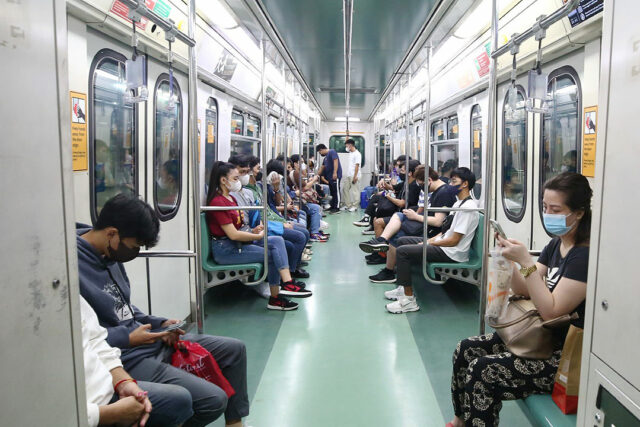
A GROUP on Thursday raised a pending case they filed in 2015 before the Supreme Court questioning train fare hikes after a reportedly approved increase for the Light Railway Transit lines (LRT) in Metro Manila.  

Carlos I. Zarate, executive vice-president of party-list Bayan Muna, prodded the High Court to rule on the petition to review the unilateral and unjustified imposition by the government of fare hikesin the Metro Rail Transit 3 Line and the LRT lines effective January 2015.  

The former DOTC (Department of Transportation and Communication) pushed for a fare hike on all the lightrail systems in December 2014 saying that this is geared to improve the services of MRT and the LRT. But instead of improving the services, for instance the MRT service worsened with 3 to 4 daily glitches, with some even endangering the lives of passengers after the increases during that time,Mr. Zarate said in a statement.  

Mr. Zarate said there was insufficient public consultation for another fare increase.   

The government-owned Light Rail Transit Authority (LRTA) issued a statement Thursday clarifying that the reported fare hike approval for LRT lines 1 and 2 is still subject to the regulatory process, including public consultations and full board concurrence.   

Bayan Muna said they are still considering whether to file a motion to expedite the pending Supreme Court case. In 2017, the group filed a motion to resolve their petition.  

As our people are now much burdened with the non-stop rising of prices of the basic commodities and utilities, we plead for the High Court to resolve the said case the soonest,Mr. Zarate said. Beatriz Marie D. Cruz

Gin Kings focus on Myles Powell, seek to beat Dragons in Game 7

PBA IMAGES

LAST time Barangay Ginebra played a Game 7 in a PBA title series, a record 54,086 fans showed up at the Philippine Arena and the crowd-backed Gin Kings took care of business against old rival Meralco, booking a 101-96 win to collar the 2017 Governors’ Cup crown.

On Sunday, in the same cavernous venue in Bocaue, Bulacan, the Gin Kings seek to pull off a similar trick as they dispute the Season 47 Commissioner’s Cup diadem with ultra tough Bay Area.

“I hope they (crowd) all come. It’d be nice,” Ginebra coach Tim Cone said as the PBA’s most popular club shifts focus to the sudden death after the Myles Powell-powered Dragons forced a 3-3 series deadlock with an 87-84 thriller last Wednesday.

“Right now, we’re really not so worried about the crowd. We’re more worried about trying to win a game. We want to win a great game for them, not just for the people who are out there but the people watching at home,” he added.

The Gin Kings failed to make it a triumphant moment for the 22,361 souls in the sixth game at the Smart Araneta Coliseum the other night, squandering a seven-point lead early in the fourth and losing steam in the endgame.

“It was a really great game. Our guys battled through all the rough spots. We had chances at the end of the game to hit but we just didn’t knock down our open shots. So we move on, think about Game 7,” said Mr. Cone, who would have preferred the decider to go on as originally scheduled today but would now make the most of the extra turnaround time to prepare.

After its painful “meet-Myles Powell-moment” last Wednesday, Barangay Ginebra channels its resources into devising schemes against the newly-reactivated import.

Spitfire guard Mr. Powell, who came back from foot injury to replace frontliner Andrew Nicholson (ankle sprain), dropped 29 points on 11-of-20 field goal clip, making 12 in the payoff period, to pick up the life-saving W in his maiden outing against Ginebra.

“We’ll look at it and rethink,” said Mr. Cone, whose squad only learned of the Powell-for-Nicholson switch while at practice the day before Game 6.

“We have time now. We had like 45 minutes to set the game plan for him in our last practice. So hopefully, we’ll have a little more time and think (about) what we’re doing about it. Look at him a little bit (more).”

Ginebra has been accustomed to defending against the 6-foot-10 Mr. Nicholson, who manned the fort in four of the first six meetings of the tournament. But the entry of 6-foot-2 Mr. Powell changed things up radically.

“We haven’t experienced him before. We didn’t play him in the elims. So this was the first time we had him,” said Mr. Cone. — Olmin Leyba

Monteverde supports Carl Tamayo’s decision to turn pro

GOLDWIN MONTEVERDE is throwing his all-out support to Carl Tamayo following his decision to open a new chapter basketball career in Japan. — PHILIPPINE STAR/RUSSELL PALMA

LIKE a true family, University of the Philippines coach Goldwin Monteverde is throwing his all-out support to Carl Tamayo following his decision to open a new chapter in his rising basketball career in Japan.

Mr. Monteverde said it was not an easy pill to swallow given their long history together but he will always stand by who he considered a “family” ever since.

“I am honored to be his coach for many years. We will definitely miss him during practices and games. I will miss his company because more than just my player, Carl is family,” said Mr. Monteverde, who was the first to trust on the then Cebu teen prospect Mr. Tamayo.

The player-mentor duo, before their success in Diliman, traced their roots way back when Mr. Monteverde brought Mr. Tamayo from Talisay, Cebu to Manila at only 13 years old.

They started in Adamson juniors, where Mr. Tamayo worked his way up from Team B, before building a dynasty in National University – Nazareth School. Upon their transfer to Diliman in college, the two weaved magic anew by helping UP end a 36-year UAAP title drought.

“His departure from the UP Fighting Maroons may not have been the ending we had all imagined, but his contributions here will definitely be remembered. While this move somehow saddens me, I trust his decision and I will always stand by him with 100% support,” added Mr. Monteverde.

Mr. Tamayo this week signed with Ryukyu Golden Kings in the Japan B. League after two seasons with UP highlighted by a championship in Season 84 and runner-up finish in Season 85 aside from Rookie of the Year and Mythical Five citations.

For Mr. Monteverde, that was more than enough for him and the entire UP community to pay tribute to their prized cager as he embarks on a new path overseas.

“On behalf of the UPMBT coaching staff, we wish Carl the best on his journey in the B-league. Thank you to the UP community and to everyone giving their full support to Carl Tamayo, our Fighting Maroon #33,” he concluded. — John Bryan Ulanday

Maximum haul of two gold medals for gymnast Yulo in Cambodia SEAG

WORLD champion gymnast Carlos Yulo and Gymnastics Association of the Philippines president Cynthia Carrion. — GYMNASTICS ASSOCIATION OF THE PHILIPPINES

WORLD champion gymnast Carlos “Caloy” Yulo is a favorite to sweep all seven events in the Phnom Penh Southeast Asian Games (SEAG)  slated May 5 to 17.

But no thanks to a bizarre rule host Cambodia has imposed, the pocket-sized dynamo from Leveriza, Manila could only take home a maximum of two gold medals.

“In gymnastics, they said that even if Caloy win seven gold, he can only receive two,” Gymnastics Association of the Philippines president Cynthia Carrion yesterday told The STAR.

The decision would prevent Mr. Yulo from surpassing, if not duplicating, his five-gold and two-silver harvest in last year’s Hanoi Games where he emerged the most bemedalled Filipino athlete.

And that is apart from an earlier decision by the organizers to remove women’s artistic gymnastics (WAG) where the country snared two mints in last year’s Hanoi Games as well as rhythmic gymnastics (RG) from the calendar.

“And there’s no WAG nor RG, where can we win medals? What kind of games they are playing,” she said.

Ms. Carrion, however, stressed Mr. Yulo will still participate for the love of the sport.

“It will look bad if we don’t. We’re doing it out of sportsmanship and for the sport that we love,” she said.

The host hasn’t done it in gymnastics alone.

In fact, it removed bodybuilding completely, merged muay thai with Kun Khmer, a Cambodia martial art, and restricted participation by visiting countries in other martial arts and disciplines.

They’re just doing every trick in the book to win.

POSADAS SETS SIGHT ON PRODUCING WORLD-CLASS ATHLETES
Fresh from his recent promotion as head coach of the national track and field team, George “Jojo” Posadas has set his sights at not just preparing the Nationals for a busy year but also producing Asian and world-class athletes.

Mr. Posadas, 60, took over from Dario de Rosas and Sean Guevarra after serving as part of the national coaching staff for more than three decades.

Now it will be up him to help chart the team’s course as they plunge into action in several competitions including the Phnom Penh Southeast Asian Games set May 5 to 17 and the Hangzhou Asian Games slated Sept. 23 to Oct. 8.

Mr. Posadas said they are awaiting word from the PSC when can majority of the national team members be given dormitories four months before the start of the biennial event in the Cambodian capital.

He said except for the long-distance runners who are in PSC facilities in Baguio, the rest of the squad is training on their own.

He, however, assured they remain focused on eclipsing, if not replicating, its five-gold, seven-silver and 14-bronze haul in last year’s Hanoi Games.

Ang goal ko ay mag-produce ng home-grown, Asian caliber going to world caliber talents,” said Mr. Posadas.

(“My goal is to produce home-grown, Asian caliber to world caliber talents”, said Mr. Posadas) — Joey Villar

Chef-de-mission Lozada pushes for 800 athletes in 1,200-strong delegation to Phnom Penh games

THE PHILIPPINE Olympic Committee (POC) has sounded the warning bells — it’s time to meet up and talk with the Philippine Sports Commission (PSC) since the Phnom Penh Southeast Asian Games is just less than four months away.

“Hopefully, we’ll be officially meeting with the PSC not later than Wednesday next week to get the task rolling,” said Chito Loyzaga, chef-de-mission (CDM) of the country seeing action in the biennial meet set May 5 to 17 in the Cambodian capital, during the POC executive board meeting in Tagaytay City.

While PSC Chairman Richard Bachmann, who has just assumed his position for only two weeks, vowed his full support to SEA Games-bound team, he hasn’t officially sat with his POC counterparts yet to finalize everything.

“The POC objective is to participate in all events possible, there’s no issue there,” said the basketball legend and national baseball chief. “That’s our mindset, the CDM staff and the entire organization.”

Mr. Loyzaga said he’s looking at fielding about 800 athletes and 1,200-strong delegation to 13-day event that programmed 608 events in 49 sports, which was far larger than the 530 events in 56 sports in the 2019 edition the Philippines hosted and the 526 events in 40 sports in Vietnam a year back.

“With that goal, we’re looking at a more than 800-athlete delegation and a total delegation of 1,200 — counting the coaches, medical and administrative staff,” he said.

Mr. Loyzaga said that with the PSC board already constituted with a quorum of a chairman and three commissioners, he is confident that discussions on the Cambodia SEA Games could be done swiftly.

“As a former athlete, I aim to win, always go for the win. But you can’t win all the time,” he said. “It will be a tough challenge in Cambodia.” — Joey Villar

Manchester City exit League Cup after shock loss at Southampton

SOUTHAMPTON, England — Champions Manchester City crashed out of the League Cup after suffering a shock 2-0 defeat at struggling Southampton in the quarter-finals on Wednesday.

Southampton, bottom of the Premier League table, scored twice in the first half through Sekou Mara and Moussa Djenepo and City never seriously threatened to get back into the match.

Mr. Mara scored his first goal for Southampton in the 23rd minute as he connected well with a whipped cross by Mr. Lyanco and the hosts doubled the lead five minutes later when Mr. Djenepo spotted City goalkeeper Stefan Ortega off of his line and curled a stunning effort into the top corner.

City, who have won the League Cup six times since 2014, failed to register a shot on target as the second-half introduction of substitutes Kevin de Bruyne and Erling Haaland failed to spark a revival for Pep Guardiola’s side.

Southampton captain James Ward-Prowse told Sky Sports that his side played without fear.

“(It is) a special night. These games are special to play in especially when you’re struggling in the league. We knew this was a distraction from the league and a great showcase. We showed no fear.

City came into the game off the back of a 4-0 demolition of Chelsea in the FA Cup on Sunday but failed to replicate the free-scoring form.

Manager Pep Guardiola named a strong side with Joao Cancelo, Jack Grealish, Ilkay Gundogan and Kalvin Phillips among the starters, yet apart from an early shot dragged wide by Gundogan they made little impression on the game.

It was Mr. Grealish who had made the error which led to the hosts’ opening goal, giving away possession to Lycano who raced up the wing before providing the cross for Mara.

Mr. Jones has failed to halt Southampton’s poor Premier League form since taking over in November, but has won all three of his team’s games in cup competitions — against Lincoln City, Crystal Palace and now City. — Reuters

James on accolades

LeBron James is in the news again. Not that he is ever really absent from conversations about the National Basketball Association. He has long been, and — even at 38, in his 20th year as a professional — continues to be the face of the league. It’s why he’s currently leading the voting for the All-Star Game, and why every single utterance he makes generates buzz, both positive and negative. Sometimes, it’s simply an offshoot of his status.  At other times, it’s because he looks for the opportunity to make waves — for one reason or another.

Take, for example, Sam Amick’s article published in The Athletic. The journalist noted James’ desire for the Lakers’ front office to make roster moves that would improve the competitiveness of the purple and gold, as accentuated by the quote, “Y’all know what the f— should be happening.” Never mind the surefire Hall of Famer’s other pronouncements that his focus is on his game and how it impacts what happens in the court.

Certainly, there’s a huge disconnect between what James has repeatedly pointed out, and what he delivered as a parting shot to Amick. On one hand, he says he will do his job, and that he’s ready to work with the teammates he has. On the other, he mutters, practically under his breath, that all and sundry cannot be deaf to the call for the Lakers to pull the trigger on a deal that makes them better immediately — even at the expense of the medium term.

James cannot be blamed for wanting change in the here and now. After all, he’s on the downside of a distinguished career, and far be it for him to see his remaining time in the sport’s grandest stage scraping the bottom of the barrel. He still aims to do battle for the hardware, to put some semblance of meaning to his exertions with the ball in his hands. And although he keeps on rewriting the record books, he’s keen on making the accolades count.

Make no mistake. The Lakers are under no obligation to sacrifice their future for little more than marginal improvements in the present. Then again, they must know the price of having James in the fold. Why is he headlining their cause? For what purpose? The answers clearly align with the need for them to at least put him in position to be relevant for them as he is to the NBA. Else, they’ll be wasting the chance to capitalize on the influence he wields.


Anthony L. Cuaycong has been writing Courtside since BusinessWorld introduced a Sports section in 1994. He is a consultant on strategic planning, operations and human resources management, corporate communications, and business development.

GCash, BSP, DILG join hands to launch PalengQR-PH in Bohol

(Left to right) GCash Chief Compliance Officer Atty Cef Sison, Tagbilaran City Administrator Cathelyn Torrecmocha, BSP Deputy Governor Berna Romulo-Puyat, GCash President and CEO, Martha Sazon, VP for Commercial Sales and Operations, Luigi Reyes and Tagbilaran Vice Mayor Adam Jala at the GCash booth offering the crowd favorite, “GCash Piso Treats” during the event.

Launches with over 280 market stalls/TODAs in Tagbilaran City

Leading mobile wallet GCash has partnered with the Bangko Sentral ng Pilipinas (BSP), Department of the Interior and Local Government (DILG), and the local government of Tagbilaran City for the rollout of the Paleng-QR Ph program in the Bohol capital.

The Paleng-QR Ph program, jointly developed by BSP and DILG, aims to build the digital payments ecosystem in the country by promoting cashless QR payments in public markets and local transportation, particularly tricycles.

“Under this partnership, our merchants at the Dao Public Market and the rest of the micro, small, and medium enterprises (MSMEs) in Tagbilaran City are enjoined to display their GCash QR code at their stores with the statement ‘We accept GCash here’. This way, we are empowering our small vendors to adopt cashless transactions in our efforts to boost digitalization in how they do business,” Martha Sazon, chief executive officer of GCash, said during the launch of the Paleng-QR Ph in the city on Jan. 10, 2023.

The launch gathered key officials from GCash, BSP, DILG, Tagbilaran local government unit (LGU), and market stakeholders.

Capitalizing on the QR Ph initiative, the program, which was launched in June 2022, seeks the policy championship and enjoins LGUs to push for the acceptance of digital payments among market vendors, community shopkeepers, and tricycle operators and drivers (TODA) in all cities and municipalities in the country.

Onboarding of vendors, MSMEs

With the program’s entry to Bohol, Sazon noted that they have so far onboarded a total of 5 public markets, 133 market vendors in Dao, and 155 TODAs to allow payment through GCash.

Currently, there are about 138 active GCash Pera Outlets where GCash users can cash in and cash out.

GCash QR codes deployed as of January 10, 2023 are all operational and widely used by locals and tourists. GCash to GCash transactions continue to remain free of charge ensuring convenience to its patrons.

“We fully support the Paleng-QR initiative of the government because we believe that in order for Filipinos to really adopt cashless transactions, the natural place to introduce this is where they usually spend their money – the wet markets or “palengkes”. We aim to enable more Filipinos to thrive in this digital era,” Sazon explained.

Expressing her optimism on the program’s rollout in Tagbilaran, City Mayor Jane Yap pointed out that this is an important breakthrough in the City’s financial inclusion efforts.

“We welcome this milestone partnership with GCash, especially since we, at the City Government, have been supporting the City’s efforts towards digitalization. This is an important step to achieving that goal. With this collaboration, we are optimistic of the economic benefits that it will bring especially to our Boholano vendors,” Yap said.

By using the GCash app, merchants can easily receive and transfer money securely and conveniently with just a few taps on their smartphone, saving them time and effort. In the same way, it is also convenient for customers who use digital and cashless payment.

“We have definitely made progress in this program. We are on the right track in making financial services easier to access and understand through our GCash app. With this long-term partnership, we aim to create a brighter, more financially-inclusive future for Filipinos,” added Sazon.

Currently, GCash has over 71 million users nationwide, giving Filipinos easy access to savings, loans, investments, and insurance.


Spotlight is BusinessWorld’s sponsored section that allows advertisers to amplify their brand and connect with BusinessWorld’s audience by enabling them to publish their stories directly on the BusinessWorld Web site. For more information, send an email to online@bworldonline.com.

Join us on Viber to get more updates from BusinessWorld: https://bit.ly/3hv6bLA.

Investing a mountain of debt?

BW FILE PHOTO

In a sense, it was something to be proud of, that Department of Finance announcement the other day that investors swamped the National Government’s second overseas $3-billion bond sale. The bond sale consisted of three buckets of maturities with interest rate ranging from 4.74% to 5.5%. Oversubscription at $28.2 billion allowed our Treasury to upsize the offering from $2 billion to $3 billion.

This bond sale followed the maiden offering of the Bongbong Administration amounting to $2 billion in October 2022. The pricing was reportedly tighter than expected, with strong support from institutional investors.

In the many times in the past that we participated in similar fund-raising exercises for the Republic, such robust demand would indeed be considered as “a strong vote of confidence by foreign investors.” For National Treasurer Leah de Leon, it was a reaffirmation that Philippine credit is a favored proposition during these uncertain times and dimming global prospects.

But why is a resilient and favored economy like the Philippines borrowing big from the external capital markets?

This is to help finance the budget deficit.

For 2023, the Development Budget Coordination Committee (DBCC) announced that the National Government (NG) is looking at a fiscal deficit of P1.471 trillion or a huge 6.1% of GDP as a result of the large excess of public spending, programmed at P5.177 trillion, over public revenues, expected at P3.707 trillion.

This new borrowing, plus all other prospective borrowings from both local and foreign capital markets, will increase the stock of public debt that will have to be serviced as they fall due. The latest Treasury report put the outstanding NG debt at a record-high P13.644 trillion as of the end of November 2022. The latest bond sale will increase the external debt component that reached P4.22 trillion or 31% while domestic debt ended November 2022 at P9.43 trillion or 69%.

The estimated NG debt-to-GDP ratio as of the end of September 2022 was nearly 64% compared to only 40% prior to the pandemic in 2019. For external debt alone, the estimated ratio with GDP was 20% against 2019’s 13%. While elevated, these debt ratios remain manageable because of the prospects of sustained economic growth for the next six years.

The DBCC also announced the target real GDP growth of 6-7% this year and 6.5-8% for 2024 through 2028. Fiscal deficit is expected to taper off from 6.1% this year down to the pre-pandemic levels of 3% by 2028. With lower fiscal overhang, the propensity to borrow is expected to decline.

From a sustainability perspective, these growth and fiscal deficit projections are highly desirable.

What is also promising is the implementation of the 2022-2028 Medium-Term Fiscal Framework (MTFF) that aims at consolidating the resources of the NG to be better used. This is expected to usher in a high-growth path that is sustainable through 2028 as it ensures consistency of budget programs with the MTFF.

It would certainly bring in a lot of public goods if the top five priorities are pursued and attained: education, public works and infrastructure, health, social welfare, and agriculture.

What are the wild cards, the risks, to this positive scenario for the next six years?

Last year, the Philippine Institute for Development Studies (PIDS) released an analysis of the 2023 President’s Budget authored by Justine Diokno-Sicat, Robert Palomar, and Mark Ruiz. In this paper, the three authors projected that the Philippines’ debt to GDP ratio would peak at 66.2% in 2024. Henceforth, it would gradually decline. Following another recent PIDS paper on assessing public debt sustainability in the Philippines by Margarita Debuque-Gonzales, Diokno-Sicat herself, and John Paul Corpus, they also identified several risks to the country’s goal to attain fiscal and debt sustainability.

A major risk is the possibility of a policy reversal that “would compromise the previous improvement of Philippine debt.” A good example of policy reversal is the proposed Maharlika Investment Fund because it would effectively deprive the NG of some of its precious revenue sources that include dividends from the Bangko Sentral ng Pilipinas (BSP), LandBank, Development Bank of the Philippines (DBP) and other government-owned and -controlled corporations including the Philippine Amusement and Gaming Corp. (Pagcor) and other public gambling casinos. Instead of being counted as revenues, their dividends will be earmarked directly to fund the Maharlika fund.

We are not talking of peanuts here.

Between 2016 and 2021, total dividends of corporate public agencies averaged P69 billion. If we add the BSP’s average remittances of nearly P14 billion during the same period, we are looking at over P80-billion foregone revenues that would have to be covered by higher borrowings. In six years, they sum up to around P480 billion. At an exchange rate of P55 to a dollar, that means the NG will have to sell bonds worth more than $8.7 billion.

It is not a stretch but we need to stress that what the Maharlika effectively does is to push NG to borrow money to compensate for that part of its revenues that would be sequestered by Congress to fund Maharlika. The authors of the bill should be able to demonstrate that the fund, under a global recessionary condition, could generate a return to investment higher than, for instance, the all-in cost of the latest bond sale of the Republic.

With all the fundamental objections to its concept, viability, and even governance, it would be difficult to support its potential benefit in mitigating the country’s debt and fiscal deficit. It needs to make a mountain of debt to have the funds to invest. That is the long and short of Maharlika.

The other risk comes from macro-fiscal shocks. We believe the likelihood of this risk materializing is quite high because the pandemic is still around and raging in countries close to the Philippines. The peso-dollar rate remains precarious because the country’s current account and overall balance of payments positions are both in deep negative territory. Policy rates are also likely to continue rising because inflation is entrenched above the 2-4% inflation target. Geopolitical tension remains high because aside from the Ukraine and Russian hostilities, China and the US are engaged in some low-intensity conflict. Aggregate demand could be undermined because inflation remains elevated while the global economy is preparing for a recession.

The implementation of the Supreme Court’s ruling on the Mandanas-Garcia case is also a budget nightmare. As we wrote two years ago in this column, between the goal of helping grow the economy and keeping fiscal sustainability, the Supreme Court’s ruling “threw big rocks at the wheels.” The High Court prescribed that the calculation of the local government’s share or what is now called the National Tax Allotment (NTA) should be changed from 40% of national internal revenue taxes collected by the Bureau of Internal Revenue (BIR) to 40% of “all” national taxes including those coming from import duties and other taxes collected by Customs.

An earlier PIDS paper written by Rosario G. Manasan cited a DBCC estimate that the NTA allocation would increase from P847.4 billion in 2021 to P1.1 trillion in 2022. For 2023, some P820 billion is envisioned for distribution to local government units. That is easily 21% of the P5.268-trillion national budget. This is an incremental expense that would be carved out of the national budget. With all those intelligence, confidential, and pork barrel funds tucked into the budget, the NG would literally squeeze blood from stone. As usual, borrowing is easier done than introducing new tax measures when the population could hardly afford onions, sugar, rice, and corn.

Finally, the PIDS paper identified two additional risks: net losses of PhilHealth (Philippine Health Insurance Corp.) and the military and uniformed personnel pensions. Our own take is that while the alleged net losses of PhilHealth, amounting to as much as P154 billion, has been the subject of controversy, some independent actuarial assessments consider PhilHealth non-viable if all claims are serviced promptly by the state insurance.

On the other hand, the cost of the military and police pension immediately hurts the budget. As it is unfunded and non-contributory, the retirement benefits are indexed to the plantilla position of the incumbent so that the payout literally explodes at some point. If this set-up is not restructured, this pension system would likely incur a P9.6-trillion unfunded reserve deficit. As expected, Congress is now apprehensive that the budget will fail to meet this enormous funding requirement.

This is indeed “an imminent existential threat.”

All up, while the Philippine government currently runs a sustainable fiscal position, the fiscal space might start dwindling. What is worrisome is that the ability of the government to raise revenue, or tax buoyancy, is higher in the short run than the long run which is more relevant for building fiscal sustainability.

While sustained economic growth is quite promising because of the resiliency brought about by past policy and structural reforms, the risks are rather formidable and they are easy to materialize into real challenges. We might end up incurring more debt to keep the momentum of growth, or keep the image of an investing economy in this uncertain and unfriendly new world.


Diwa C. Guinigundo is the former deputy governor for the Monetary and Economics Sector, the Bangko Sentral ng Pilipinas (BSP). He served the BSP for 41 years. In 2001-2003, he was alternate executive director at the International Monetary Fund in Washington, DC. He is the senior pastor of the Fullness of Christ International Ministries in Mandaluyong.


It isn’t perfect, but…

FREEPIK

The inflation rate remains sky-high. Low productivity is putting the country’s food security at risk. Filipino fisherfolk are unable to fish in much of the Philippines’ own waters. Poverty and hunger are devastating millions. Entire regions are flooded and reeling from the onslaught of climate change. The pandemic is still a problem, and the economy yet to recover.

But to some of the allies of President Ferdinand Marcos, Jr., none of these seems as urgent as amending the 1987 Constitution so they can correct its supposed “imperfections.”

The House of Representatives Committee on Constitutional Amendments will begin hearings by Jan. 26 on proposed resolutions calling for constitutional amendments through a constituent assembly of both houses of Congress.

Senator Robin Padilla, the only non-lawyer to chair the Senate counterpart of the House Committee, has repeatedly stressed the “urgency” of amendments that would enable the Constitution to “keep up with the times,” although he has not been clear on the specifics of doing that.

Even Presidential Legal Counsel Juan Ponce Enrile has echoed the call for a constituent assembly, although apparently not to amend, but to totally do away with the 1987 Constitution and to draft a new one.

Many Filipinos are unfamiliar with the particulars of their country’s Constitution, but every opinion poll has found that they oppose amending it because they fear that its proponents will use the opportunity to keep themselves in power.

The behavior of past regimes suggests that it can indeed happen.

Ferdinand Marcos, Sr., for example, initiated the drafting of a new Constitution during his last years in office so he could run for a third term, which, under the provisions of the 1936 Constitution, was not possible. He proclaimed it in force in January 1973, and based his staying in office beyond that year on its provisions.

Amendments to the 1987 Constitution could indeed include extending the terms of office of incumbent officials. But equally possible and as dangerous is that among the possible changes could be the weakening of the Bill of Rights, and the repeal of the limits on the President’s power to declare martial law.

The first proposal to amend the 1987 Constitution was made 10 years after it went into effect. In 1997, the outgoing Ramos administration argued that a parliamentary system and extending the terms of incumbent officials would be more responsive to the demands of development and ensure the continuity of an administration’s policies, beginning with those of Ramos’ own. Because many thought it a shortcut to its advocates’ staying in power beyond 1998, the citizenry rejected the idea.

During the Joseph Estrada administration, its adherents limited their proposed changes to the economic provisions of the Charter that they said discouraged foreign investments. It was again rejected, but the Gloria Macapagal-Arroyo regime, which favored a shift to the parliamentary system, echoed its focus on economic “liberalization.” It was again opposed by various sectors, including much of the business community.

Elected President in 2010, Benigno Aquino III opposed any attempt at amending that document, which, after all, was among his late mother’s legacies. Upon ascending the Presidency in 1986, Corazon Aquino convened the commission that drafted the most liberal Constitution in Philippine history.

Then candidate Rodrigo Duterte proposed during the 2016 presidential campaign the adoption of a federal form of government, and upon his election created a consultative committee to study the 1987 Constitution. That body produced a draft mandating a shift to federalism. But the regime seemed to lose interest in it in the face of its problems with the COVID-19 pandemic and its impact on the economy, and with its failing “war on drugs,” the human costs of which had called the attention of the International Criminal Court.

No constitution is so perfect as to remain unchanged, but once begun by the illiberal wing of the oligarchy currently in power, amending the present one could further endanger whatever remains of Philippine democracy.

Most of its advocates say that they want “only” the economic provisions of the Constitution amended, such as those limiting to Filipinos ownership of land and the mass media and the practice of the professions, as well as those requiring State partnerships in economic enterprises only with corporations that are 60% owned by Filipino citizens.

The provision on professionals, land ownership, and State partnerships are meant to protect and encourage Filipino businesses and such practitioners as doctors and lawyers. The mass media, meanwhile, are not only commercial undertakings; they are also vehicles of information and shapers of opinion. Those responsibilities cannot be left to foreign-owned media enterprises, which, once operating as Philippine-based businesses, would first and last protect the interests of the corporations behind them.

The consequences of amending the economic provisions of the Constitution may not be as purely beneficial as they seem to be — and the process could also open the gates to the amendment or even the abolition of those provisions the ruling oligarchy despises, among them the Charter’s Article II Section 26 mandating a ban on political dynasties, and Article III, the Bill of Rights.

Congress has repeatedly refused to pass the enabling law that will implement the anti-dynasty provision of the Constitution. Its members have instead either denied the existence of those very real dynasties, or, themselves being part of such families, defended their continuing dominance in politics and governance.

They also reject the thesis that dynastic dominance in politics and governance prevents those who may not be as privileged but who are better qualified to run for public office. Access to political power is so limited to a handful of families that it denies the Philippines the services in government of the more competent who can introduce the political, economic, and social changes that are needed for the country to move forward.

Among the atrocities that have been proposed in the past are changes to the Bill of Rights by limiting its application, eliminating parts of it, or adding to Article III Section 4 the phrase “the responsible exercise of,” which would transform its declaration that “No law shall be passed abridging the freedom of speech, of expression, or of the press, or the right of the people peaceably to assemble and petition the Government for redress of grievances” into “No law shall be passed abridging the responsible exercise of the freedom of speech….”

Those were obvious attempts to enable any regime to diminish the freedoms protected by Article III. Nothing can stop their or their variations’ being reintroduced should Congress convene as the constituent assembly the majority — and Juan Ponce Enrile — prefer as the means of amending the Constitution.

Any or all of the above, and even worse, could happen. One need only recall how, even with the provisions the dynasts are likely to target still as intact as when they were drafted, they have succeeded in violating such rights as those of free expression, press freedom, and due process.

The proposals for a constituent assembly to amend the Constitution suggest that the power elite still needs one that would legitimize what they have been doing and whatever else will redound to their personal, familial, and class interests. Not necessarily would they amend “only” the 1987 Charter’s economic provisions. They could also transform its Bill of Rights into a mockery of its own name, forego the next elections, and complete the country’s ongoing descent into another tyranny.

The 1987 Constitution may not be perfect, but as things stand today, it is all we have.


Luis V. Teodoro is on Facebook and Twitter (@luisteodoro).

www.luisteodoro.com

The geoengineers are just winging it

YOSH GINSU-UNSPLASH

THERE is no law or treaty to prevent a private company from tinkering with geoengineering — in this case, releasing sulfur dioxide high in the stratosphere in order to alter the climate.

And so there will be no fines or arrests following the recent news that a startup quietly pulled off such a release last year by launching two balloons over Mexico. This sort of environmental manipulation can alter the energy balance between the sun and Earth. In the upper atmosphere, sulfur dioxide forms suspended particles of sulfuric acid that act to scatter sunlight and cool the planet.

The Clean Air Act isn’t set up to deal with this sort of thing — it’s focused on power plants, cars, and regional air-quality standards, said UCLA environmental law professor Edward Parson.

The startup responsible is called Make Sunsets, and their plan, according to MIT Technology Review, was to use this scheme to counter global warming. They’d make money by selling carbon credits — companies emitting greenhouse gases could pay them to release cooling particles that would allegedly nullify their emissions. According to the plan, each gram of sulfur would cost $10 and offset one ton of CO2.

The main problem is that it wouldn’t work. Sulfuric acid particles can only mask global warming for a year or so. Then they settle out of the atmosphere while the carbon stays up there for thousands of years. And there are likely going to be side effects from doing this at any useful scale. Parson called it a case of “a rogue pseudo-scientist claiming to help the environment.”

Luke Iseman, the chief executive of Make Sunsets, told me he became obsessed with the idea of geoengineering after reading the science fiction novel Termination Shock by Neal Stephenson, in which a Texas billionaire launches sulfur into the stratosphere. He says he understands the scientists’ criticisms that the effects of the sulfur don’t negate emissions, but he believes it’s the only feasible way to buy the time needed to stay below “a catastrophic level of climate change.” He said he plans to make two more launches this month from Mexico, and that his ultimate vision is to spend the next 20 years releasing “as much as I possibly can while doing it safely.”

But there’s no scientific consensus that geoengineering is the only way to avoid catastrophe. Scientists, including several panels assembled by the National Academy of Sciences, have looked at the possibility of using geoengineering to battle global warming, but no field experiments have been carried out.

What we know so far comes from a couple of a natural and unintentional experiments. Volcanic eruptions, such as the one at Mount Pinatubo in the Philippines in 1991, can trigger a year of cool weather, and scientists have calculated that components of smog are holding down the global temperature about 1 degree Celsius, though smog also causes millions of deaths from respiratory illness.

The good news is that the releases from Make Sunsets are too tiny to cause any harm. But the bad news is that it won’t advance science.

For years, scientists have been trying to do a small release they could track. But so far, doing this through official channels has run into resistance. Scientists have tried to run an experiment called SCoPEx from Mexico and Sweden but been blocked by environmental groups.

Carefully monitored scientific experiments might give us useful knowledge about how natural and human-generated sulfur works in the atmosphere and under what circumstances it might be a reasonable thing to release — say, if it gets so hot in India that tens of millions of people are likely to die, a scenario described in Kim Stanley Robinson’s 2020 novel The Ministry for the Future.

Harvard physicist David Keith, who has studied the prospects of geoengineering, said it’s possible to calculate how many lives you could save from heat and extreme weather, balanced with lives that might be lost to geoengineering’s side effects. But of course, there are unknown unknowns, and geoengineering is a very bad substitute for technologies that reduce emissions or capture carbon.

One past incident that vaguely resembles this one happened in 2012, when California businessman Russ George dumped iron into the Pacific Ocean off the coast of British Columbia with the goal of fertilizing an algae bloom that was supposed to absorb carbon and feed salmon. George claimed the iron caused the salmon to rebound the following year, but since it wasn’t a controlled scientific experiment and salmon populations fluctuate normally, there was no way to know if his actions had any effect.

Perhaps this sort of thing comes with the startup culture of the 21st century — the flow of vast quantities of money around Silicon Valley, the hubristic sense that the private sector can solve a problem that has stymied governments, and a fashion for looking like you’re doing good for the planet.

Parson, the environmental lawyer, says the most important thing right now is to make sure this company’s plan to use sulfur releases to sell bogus carbon credits doesn’t get any traction. And after that, we need a rational discussion about geoengineering. “Who gets to say it’s okay to do this, and if it’s done, how much is done and where and under what protections and with whom in charge?” asks Parson. “These are unexplored questions.”

The upper atmosphere has no regional or national boundaries. What happens in one place affects everything. That’s true of many activities now — from cutting down rain forests to activities that risk releasing viruses.

“Move fast and break things” might be a motto that works for startups, but it doesn’t inspire confidence when we’re talking about our one and only planet.

BLOOMBERG OPINION

The year of the return of reason

ANDREW GEORGE-UNSPLASH

Perhaps there is indeed something wrong when perfectly ordinary and commonsensical statements, such as “motivate yourself” to “get back to work” and “be glad you still have a job” are greeted with outright derisively bitter anger.

The point of working is that it’s work. You’re expected to tolerate it. It’d be unsurprising if you hate it. But that’s why you’re paid for it. In this incredibly topsy-turvy social media-dictated world we live in, things that need not be said have to be now explained: you do that work because you agreed to do it for pay. You can always opt out of doing it — quit, so to say — but it’s ridiculous to expect to be paid for quitting. Actually, it’s insane.

But apparently the entitlement mentality is such that it’s now reached derangement levels.

Almost everyone now claims oppressed status. And yet the absurdity and inconsistency grows more bizarre by the day.

Considering that we are being besieged with proposals for divorce and same sex unions, and considering further that annually 57% of newborn Filipinos are born of single mothers, one would think that the deteriorating state of marriage and the family would have a place of prominence in the national consciousness. But no.

Instead, it’s the “marginalized community,” the LGBT+ (with around 1-5% of the population) that does. It has the country celebrating Pride Month, able to command corporations’ structure their marketing and business campaigns around the LGBT+ community, have Congress legislate upholding LGBT+ interests, have local government units hold LGBT+ parades and pageants, make universities adjust their academic policies to accommodate its will, demand churches cower and not teach doctrines that offend the LGBT+, and clear-headed writers have their works censored.

Speaking of doctrines, Pope Benedict XVI died just before the new year. Amidst the many reflections on his life and pontificate, several significant pieces focused on the effect his writings had on the clarification and settling of Church teachings.

The consensus seems to be that many of Benedict’s works seem to have been — at least for now — unraveled the past few years. Your guess is as good as anyone’s as to the cause. A politicized clergy and progressive religious order are possible reasons.

For now, the Catholic Church seems quite obsessed with becoming Protestant: it has lashed out against the faithful that insist on receiving Communion kneeling and on the tongue, and those that prefer praying the Traditional Latin Mass. It continually encourages — by the clergy’s silence or by actions — evangelical practices of the faithful taking the Orans posture (i.e., holding up both hands) while saying the Lord’s Prayer and clapping after the Mass. Many parishes refuse to say the St. Michael Prayer after the Mass, as per tradition.

The fact that some priests see nothing wrong in dancing to the “Ting Ting Tang Ting” song inside the Church and while wearing their priestly vestments, or inviting celebrities into the Sanctuary during Mass is, of course, a whole new level of ludicrous. That it followed two years of the Catholic clergy meekly allowing churches to be closed, depriving the faithful of the Sacraments, and decades of priests preying on children, makes it tragic.

And the Sacraments are certainly what is needed nowadays, what with all those reports of athletes and healthy young adults suddenly dropping dead. But what’s sadder than the deaths is the cavalier attitude with which those deaths are greeted. Nary a call for investigation, no outrage, no suspicion cast on anything. Certainly not the COVID vaccines. Just sheer acceptance of those deaths, even by the very family of those youths that died for no discernable reason.

Suddenly, everything became attributable to the will of Fate.

Interestingly, that perspective would have been more helpful when incredibly inept government officials, with their ever-helpful media lackeys, decided to impose what became the world’s longest continuous lockdown. Then, every life was important. Zero deaths the uncategorical goal.

But now? Apparently, no cost is too dear, all to ensure everyone is jabbed or boosted. Constitutional rights, individual autonomy, and science be damned.

Which leads then to undoubted biggest casualty of this pandemic: science. Like most anything nowadays, that word has become mangled to the point of being meaningless. What used to be understood as the study of the physical world through repeated experimentation (i.e., trial and error, with emphasis on learning from errors), “science” instead was used by COVID narcissists as a bludgeon to bully reasonable people into silence.

So much so that with evidence piling up on reports of healthy young people suddenly dying, of public mask mandates clearly inutile (see Japan), and that lockdowns have been the most devastating public policy ever imposed on nations (see New Zealand), only to see supposed medical experts doubling down and vociferously insisting on vaccines, masks, and lockdowns? That’s not science, that’s a cult.

Hopefully, 2023 is the year that insanity steps out and reason comes back.


Jemy Gatdula is a senior fellow of the Philippine Council for Foreign Relations and a Philippine Judicial Academy law lecturer for constitutional philosophy and jurisprudence

https://www.facebook.com/jigatdula/

Twitter @jemygatdula