Home Blog Page 5435

South Korea to end pre-departure coronavirus tests for overseas travelers

A MAN walks along a nearly empty street in Seoul, South Korea, July 12, 2022. — REUTERS

SEOUL — South Korea will from Saturday no longer require travelers to the country to test for COVID-19 before departure, although they will still need to take a PCR test within 24 hours of arrival.

The latest relaxing of rules comes amid an easing in case numbers with daily COVID infections hovering around 100,000 in recent weeks compared with more than 180,000 in mid-August.

“The weekly number of infections has declined for the first time in nine weeks and the virus is showing signs of slowing down,” Lee Ki-il, the country’s second vice health minister, told reporters.

Wednesday’s announcement, which follows steps by Japan and other countries to scrap the pre-departure test requirement, comes as South Korea is set to mark the country’s thanksgiving holiday of Chuseok next week. The number of infections could increase following the holiday season but the figures are likely to remain within control, said Peck Kyong-ran, head of the Korea Disease control and Prevention Agency.  South Korea still has an indoor face-mask mandate and requires those testing positive for COVID to isolate for seven days. — Reuters

US plans to move COVID vaccines, treatments to private markets

REUTERS

WASHINGTON — The US government expects its supply of COVID-19 vaccines and antiviral treatments to run out over the next year and is preparing for them to be sold via the commercial market, the Department of Health and Human Services said on Tuesday.

President Joseph R. Biden’s administration expects to run out of federal funding for buying and distributing COVID-19 vaccines by January, although it has already bought over 170 million doses for a booster campaign later this year, according to a blog post written by Assistant Secretary for Preparedness and Response Dawn O’Connell.

The administration has procured enough of Pfizer’s antiviral treatment Paxlovid to supply the pills until mid-2023, Ms. O’Connell said, but other therapeutics made by Merck & Co. and AstraZeneca are likely to be sold on the commercial market sooner.

“Our goal is to transition procurement and distribution of COVID-19 vaccines and therapeutics from a federally managed system to the commercial marketplace in a thoughtful, well-coordinated manner that leaves no one behind,” she wrote following a meeting with private sector representatives.

Based on current projections, Ms. O’Connell said, the supply of AstraZeneca’s preventative treatment Evusheld will run out in early 2023, followed by Merck’s antiviral pill Lagevrio (Molnupiravir) in the first or second quarter.

The lack of additional Congressional funding means supplies will run out earlier than expected, Ms. O’Connell said.

“We have always intended to transition this work to the commercial market and have been planning for that transition for some time now,” she said. “Unfortunately, the timeline to make the transition has accelerated over the past six months without additional funds from Congress to support this work,” she said.

Funding is still needed for developing new vaccines, treatments and tests, as well as to manage the transition, she added.

The government also cited a lack of funding on Monday, when it said Americans would no longer be able to order free at-home COVID tests from its COVIDTests.gov website starting next week. — Reuters

Taiwan vows to ‘counter-attack’ if China’s forces enter its territory

REUTERS

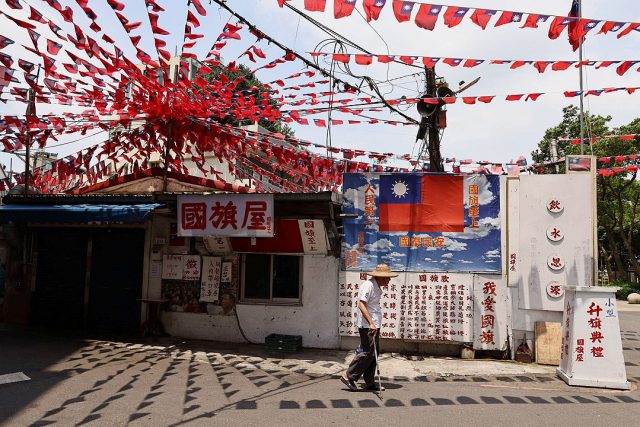
TAIPEI — Taiwan said on Wednesday it would exercise its right to self defense and “counter-attack” if Chinese armed forces entered its territory, as Beijing increased military activities near the democratic island.

Beijing, which claims Taiwan as its own against strong objections by the government in Taipei, has held military exercises around the island this month in reaction to a visit to Taipei by US House of Representatives Speaker Nancy Pelosi.

Taiwanese defense officials said China’s “high intensity” military patrols near Taiwan continued and Beijing’s intention of making the Taiwan Strait separating the two sides its “inner sea” would become the main source of instability in the region.

“For aircraft and ships that entered our sea and air territory of 12 nautical miles, the national army will exercise right to self-defense and counter attack without exception,” Lin Wen-Huang, deputy chief of the general staff for operations and planning, told reporters at a news briefing.

Taiwan has complained of Chinese drones repeatedly flying close to its small groups of islands near China’s coast.

The military will exercise the same right to “counter-attack” Chinese drones that did not heed warnings to leave its territory after posing threats, Lin added.

Taiwan fired warning shots at a Chinese drone for the first time on Tuesday shortly after President Tsai Ing-wen ordered Taiwan’s military to take “strong countermeasures” against what she termed Chinese provocations.

China’s Foreign Ministry this week dismissed complaints from Taiwan about drone harassment as “not worth fussing about,” prompting Taipei to label Beijing as nothing more than thieves.

In the same briefing, Ma Cheng-Kun, a director from military academy National Defense University, said China might further move to reject passage of foreign naval ships through the strait without its permission.

“After the new military normal status has been consolidated, then the risk of collision will increase if foreign naval ships insist on the rights of navigation and freedom,” he said.

US warships and those from allied nations such as Britain and Canada have routinely sailed through the strait in recent years, including two US Navy warships last week.

Taiwan’s armed forces are well-equipped but dwarfed by China’s. Ms. Tsai is overseeing a modernization program and has made increasing defense spending a priority.

China has not ruled out using force to bring the island under its control. Taipei rejects Beijing’s sovereignty claims, saying that the People’s Republic of China has never ruled the island and that only Taiwan’s people can decide their future. — Reuters

Recommended, but not required

PHILIPPINE STAR/EDD GUMBAN

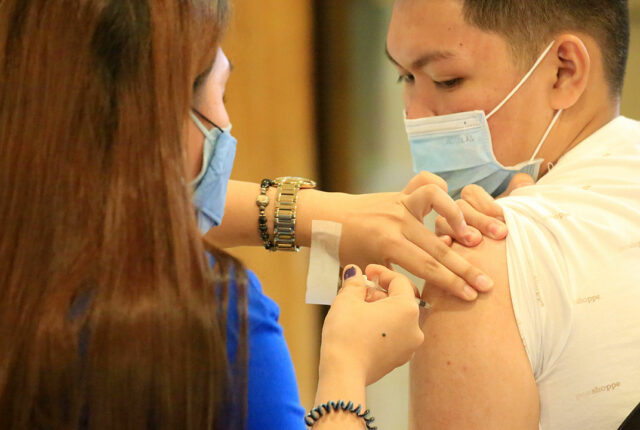
The Department of Health (DoH) was reported to have removed the requirement for college and university students to be vaccinated for COVID-19 prior to attending face-to-face classes. Although, vaccination remains highly recommended. However, lack of it should not prevent a college or university student from attending classes in person.

“The benefits of in-person and face-to-face schooling now outweigh the risk of COVID-19 infections,” DoH officer-in-charge Maria Rosario Vergeire was quoted in a Star report. She added, “The DoH will keep working with CHED and our colleges and universities to ensure safe higher education.”

Other than the Philippines, countries that no longer require proof of vaccination for university students are Australia, the United Kingdom, Canada, New Zealand, and Singapore. In supporting the Commission on Higher Education’s updated guidelines for full face-to-face classes, DoH noted “the high COVID-19 vaccination coverage in Philippine higher education, with 77% of students and 90% of [school] personnel already fully vaccinated against the virus.”

But Ms. Vergeire added that “even as proof of vaccination is no longer needed, vaccination and boosters for all eligible individuals is still strongly recommended… Let us keep the wall of immunity strong.” To date, vaccine boosters are being made available to all minors and adults who want them, while a second booster is also available for seniors and those who are immunocompromised.

Meantime, new generation vaccines are being produced abroad, developed to combat newly emerged variants of the highly infectious COVID-19. However, it remains uncertain whether the government will centralize and pay for the procurement of these new booster shots, or if these new vaccines will be made available to the public at their own expense.

Personally, I am uncomfortable with the DoH decision to no longer require proof of vaccination for older students. The pandemic is not yet over. And given the high vaccination coverage of the higher education sector, anyway, then why bother to lift the requirement? After all, vaccination remains highly recommended. Lifting the requirement may just have the opposite effect.

Moreover, if the intent of lifting the requirement is to promote greater access to higher education, then as long as the unvaccinated will be given alternative modes of attending classes, like online, then access should not be an issue. To me, vaccination is not the issue, but mandating class attendance then limiting the options to in-person or face-to-face modes.

I can understand that requiring proof of vaccination makes attending classes in person “exclusive” to those who have been vaccinated, to the detriment of those who have not been vaccinated for one reason or the other. In short, proof of vaccination limits access to higher education, especially if online alternatives are set aside.

However, I also believe that the right to higher education can be impeded by the vaccination requirement only if alternatives will not be made available to those who want or need them. In fact, requiring or mandating face-to-face classes — even for those unvaccinated — is also a form of exclusion particularly for those who lack the means or resources to attend school in person.

Cases in point are those with disabilities or who are immunocompromised. Given the present state of public transportation, amidst the pandemic, requiring them to attend classes in person or face-to-face is a form of exclusion or a limitation to access, regardless of their vaccination status. And for the immunocompromised, to be forced to be around unvaccinated students in school even poses a significant risk to their health.

Again, to me, proof of vaccination is not the real issue, but the decision to require physical class attendance and to limit access to higher education to only in-person or face-to-face modes. More worrisome is that by doing this with higher education institutions now, then primary and secondary educational institutions are sure to follow.

Just yesterday, my son’s high school informed the student body of the possibility of full-time face-to-face classes being required for all by November. I am not too worried for my son since he has been vaccinated and boosted. And that, for now, proof of vaccination remains a requirement for those who have opted for “blended” learning — attending classes in person twice weekly.

Moreover, the school kept full online learning available to students who opted for such, whether for health or financial or personal reasons: some students have had to move to the province, but wished to finish their education in the same school; financially constrained families find it more economical to do school from home; or, some parents are still uncomfortable with face-to-face classes since their children are immunocompromised.

In this line, the school also committed that for those who have opted for full online learning for the year, they can remain in their chosen learning modality for the entire year even if full-time face-to-face classes restart by November. This is given that those who opted for pure or full online may have very good reasons or justifications for doing so, and to change modalities midstream may be improbable for them. For sure, any change will be highly disruptive, to say the least, particularly for those who have limited resources, mobility, or access.

Bottomline, it is alright to remove the requirement for proof of vaccination for all students, whether primary, secondary, or tertiary level. However, for the remainder of this school year at least, full-time in-person or face-to-face classes should not be mandated for all. Alternatives to in-person classes should still be made available to students and their parents, while the pandemic is ongoing and the state of public health emergency remains.

It should be the government’s burden and obligation to look for ways and means to ensure students’ access to education, from basic to higher education, and to accommodate those who are unvaccinated, immunocompromised, or with disability by providing them alternatives to in-person schooling while the threat of COVID-19 exists.

To simply mandate or require full-time in-person schooling by November, or to go back to the way things were pre-pandemic, is the lazy solution to limitations to access to education. COVID-19 had forced us to adopt more creative approaches in educating our children. Some of these approaches worked, some did not. We should learn from our mistakes and move on. To simply go back to the old system of schooling, which was obviously broken anyway, is not the way forward.


Marvin Tort is a former managing editor of BusinessWorld, and a former chairman of the Philippine Press Council

matort@yahoo.com

Masks down, Singapore smiles on high-earners again

NAMCHA PH-UNSPLASH

IF THERE’S ANY DOUBT that COVID is in the rearview mirror for Singapore, set it aside. The country is making new efforts to lure the foreign talent it needs to stay in the game as one of Asia’s preeminent global cities and hubs for business. Having tumbled out of the pandemic looking good, due in no small part to blunders by rivals like Hong Kong, Singapore wants to press the advantage. Implicit in this is a recalibration of the signals transmitted to the outside world.

While the tiny republic has always presented itself as far more open than neighbors, the most recent campaign has stepped up a few notches. The government said on Monday that it’s overhauling visa rules, establishing a new five-year pass for foreigners earning at least S$30,000 ($21,431) a month that allows them to work at multiple companies and lets dependents seek employment. Requirements to advertise jobs locally before hiring expats will ease. Manpower Minister Tan See Leng depicted the changes as an opportunity: “Both businesses and talent are searching for safe and stable places to invest, live and work in. Singapore is such a place.”

Singapore’s safety and stability have never really been in doubt. There’s little violent crime or theft — it’s a great place to raise children — and the People’s Action Party has governed since independence from Malaysia in 1965. What had been in question in the past few years, accelerating during the pandemic, was how much Singapore really wanted to add more of the world’s best and brightest to its 5.5 million population. Eliminating or smoothing some barriers to immigration will be nice, but it’s going to require a change in attitude, too.

The same global talent that Singapore wants to attract encountered ambivalence, at best, and what many expatriate workers regarded as punitive labor and immigration regulations during some of the toughest days of the pandemic. These were preceded by a deep recession and an electoral setback for the PAP in 2020 that was widely perceived as partly backlash against too many foreigners taking plum jobs. Expats confronted restrictions on the ability of spouses to work, an escalation in the minimum salaries for work passes, and no guarantees of getting back into Singapore if you left to care for ill folks at home. Ministers lined up to warn multinational employers against stripping local headcount when laying off staff. Firms suspected of not giving homegrown talent a fair shot were placed on a watchlist.

Singapore can, of course, make what laws it wishes. It has first and last say on who comes in, on what terms. Nobody I know questioned that. But the message became very mixed. Leaders said that closing off would be the republic’s demise, but there would often be sufficient caveats that local constituencies felt their concerns were being addressed. Finance came in for some withering scrutiny, despite a long-term ambition to make the country a hinge point for money markets. Business got the message: In July last year, as parliament debated the workforce, Citigroup, Inc. issued a press release trumpeting the appointment of Singaporeans to senior jobs.

Now, with more economies reopening, the message is shifting, at least in tone. This was on vivid display during Prime Minister Lee Hsien Loong’s National Day Rally speech, in which he announced the repeal of a controversial law criminalizing sex between men that had long been a source of bad PR. Lee didn’t draw a direct link, but devoted important parts of his address to the need to stay engaged in the world. In the hunt for talent, Lee said, “Singapore cannot afford to be creamed off, or left behind.”

Singapore wants to prevail in a rough post-pandemic period characterized by the end of low levels of inflation, interest rates, and wages. A scramble for human capital will be another — and more challenging — trademark of this new era. It’s not just high-flyers that Singapore needs, as vital as they are. The new visa’s floor of S$30,000 a month is comparable to the income of the top 5% of Employment Pass holders. The reopening has been accompanied by a labor shortage at most levels, from contractors to work on home renovations to engineers and technology executives. Tan stressed that the government is committed to grooming local talent and leadership. Wooing stars from abroad creates the kind of vibrant economy that gives Singaporeans opportunities, he said.

The visa initiatives were unveiled hours after wearing masks against COVID became voluntary indoors, with exceptions for public transport, healthcare, and food preparation. It had been a long wait. After more than two years, kids can see the faces of their teachers in classrooms, and each other. More pragmatically, with business travel and tourism on the rise globally, Singapore has dispensed with yet another deterrent, albeit one that wasn’t onerously enforced the past few months. (The presence of red-shirted “safe-distancing ambassadors” has been scaled back. SDAs used to be a common sight taking photos of patrons drinking lattes at tony cafes downtown, haunts for expats and Singapore’s cosmopolitan class, in their vigilance for violations of protocol.) 

Still, along Orchard Road malls on Monday evening, there wasn’t an obvious difference. Indoors and outdoors, many people kept masks on. Attitudes and hard-learned habits can’t be turned around overnight. Is the warmer reception for foreign expertise best seen as evolution or revolution? I’ll give Singapore the benefit of the doubt. If it doesn’t work out, officials can always nudge the pendulum again. Pragmatism will still rule.

BLOOMBERG OPINION

Impact of greed

PIXABAY

Over the month, two former heads of government have continued to find themselves in trouble with their respective countries’ justice systems.

On Aug. 8, agents of the US Federal Bureau of Investigation (FBI) executed a search warrant at former US President Donald Trump’s Mar-a-Lago resort in Palm Beach, Florida. The warrant was served in connection with an investigation into Mr. Trump’s handling of classified documents that may have been illegally brought into the former president’s private residence. Sources familiar with the investigation said a few days later that the documents may have included some classified “top secret,” and definitely 184 classified documents that may have put US national security at risk, and possibly some classified nuclear weapons documents. The mishandling of the documents could also lead to charges of obstruction of justice.

Halfway around the world, one of Malaysia’s former prime ministers, Dato Sri Haji Mohammad Najib bin Tun Haji Abdul Razak or simply Najib, returned to a Malaysian court on Thursday, Aug. 25, for a second corruption trial, this time over the plunder of the 1MDB state funds (1MDB stands for 1Malaysia Development Berhad, a sovereign wealth fund). Newspaper reports in 2016 alleged that Najib siphoned about $700 million in 1MDB funds into his personal bank account. That report led to other equally damaging revelations. Najib established 1MDB shortly after he assumed office in 2009.

Najib, 69, served as Malaysia’s 6th prime minister from 2009 to 2018. Mahathir Mohammad, who was Prime Minister for 22 years, backed up Najib, his protégé, in 2013 when the latter’s stay as prime minister was in grave danger. Mahathir, however, turned against Najib when documented reports of corruption at 1MDB started surfacing. Mahathir believes that Najib, who is facing about 42 charges, will eventually receive a royal pardon. King Al-Sultan Abdullah has not publicly commented on a petition by Najib partisans for a royal pardon.

Najib was imprisoned last week to start serving a 12-year jail term after he was found to have illegally received $10 million from a unit of 1MDB. He arrived in court for the trial of the second corruption charge that began in 2019. He arrived in court without handcuffs.

Trump’s strategy continues to be to manipulate huge sectors of media and a great number of gullible members of the Grand Old Party who believe that the 2020 presidential elections were stolen from Trump. Surveys show that these Republican rank-and-file favor Trump as the party’s presidential candidate for 2024 in a return bout with President Joe Biden, if the latter decides to run for reelection.

A master showman, Trump showed his disdain for rules, and even the US constitution itself, when he appeared to back the assault on the US capitol on Jan. 6, 2022 to prevent the proclamation of Biden as the winner of the 2020 presidential elections. Trump believes that all issues can be solved by proper PR, good and imaginative messaging, fake news, and pure bombast and braggadocio. It does not matter that a legal issue is just that, a legal issue. For him, a legal issue can be solved by PR and constant repetition of lies and half-truths.

At this point, Judge Bruce Reinhart approved the warrant ordered the unsealing of the FBI affidavit which had prompted the issuance of the search warrant for Mar-a-Lago. Reinhart is also overseeing the criminal investigation of Trump.

The US Department of Justice complied with the order by making public a redacted document, with many portions blacked out to protect sources, informants, and even US intelligence agents or spies working overseas gathering information about adversaries of the US and its allies. Writer Hugo Lovell reports that, “in an earlier two-page ruling, the judge (Reinhart) said the Justice department’s (then) proposed redactions were narrowly tailored to keep secret grand jury material, the identities of uncharged individuals and sources and methods used in the criminal investigation — and the remainder could be made public.” Lovell says that the partial release of the affidavit is a major juncture in the developing investigation, being led by the Justice department’s national security division.

In what observers state is a flanking move designed to create division within the Justice department and intelligence agencies, Trump has filed a motion to have a different Florida court appoint a so-called special master or arbiter to determine what seized materials can be used as evidence against him and to force the Justice department to provide a more detailed list of what the FBI retrieved from those 16 boxes brought by Trump to his private residence. Preliminary reports indicate that the judge where the motion was submitted is favorably considering the appointment of such an arbiter. The judge was appointed by Trump in 2020.

The move is further proof that Trump and his legal team will take advantage of all the rules available in a democratic setting when they are to Trump’s personal advantage and to be contemptuous of those same rules and laws when they do not suit his agenda. The tactic is typical of fascists who come into power using democratic institutions, only to dismantle those same institutions when they seize power.

For those who can still remember, the FBI execution of the search warrant in 2022 is in stark contrast to the execution by the Philippines’ National Bureau of Investigation (NBI) of a search warrant on the home of former Ambassador to the United Nations and then incumbent 1971 Constitutional Convention (ConCon) delegate, Eduardo T. Quintero.

Quintero had delivered a privilege speech during a ConCon session to denounce a bribery attempt to influence the amendment of the 1935 Constitution. The successful amendment would have allowed, the Philippines to shift from a presidential to a parliamentary form of government, among other things. Events happened in rapid succession, culminating in an NBI search team recovering more than P370,000 from an unlocked drawer in Quintero’s home. The implication was that Quintero was bribed to do the expose.

In 1988, the Supreme Court ruled that the NBI raid on Quintero’s home was orchestrated “from beginning to end” to destroy Quintero. Quintero died in exile in San Francisco, California, in 1984. He was quietly allowed to leave Leyte, his home province, in 1977, for the US. Quintero’s name is inscribed in the Wall of Remembrance of the Bantayog ng mga Bayani in Quezon City, together with thousands of other martyrs.

Back to Trump. In the meantime, duly constituted authorities want and need to protect America’s security and those countries whose security depend on the stability of the international order. These could now be in jeopardy because of one man’s greed.


Philip Ella Juico’s areas of interest include the protection and promotion of democracy, free markets, sustainable development, social responsibility and sports as a tool for social development. He obtained his doctorate in business at De La Salle University. Dr. Juico served as secretary of Agrarian Reform during the Corazon C. Aquino administration.

Noise can be soothing

YOGENDRA SINGH-UNSPLASH

WE ASSOCIATE SILENCE with calm and contentment. But can noise also be just as soothing?

Noises are the vital signs of life. At a party, rowdy laughter, loud conversations, or sudden breaking into song (You’ve lost that loving feeling) indicate delight in each other’s company. What can be more worrying for a host than a party where the only noise is the buzzing of mosquitoes, the shifting of chairs, and the mastication of food? (How’s the chicken-rice?)

The previous administration ratcheted up the level of noise with late night threats, curses, and obscenities, accompanied by sign language using the dirty finger for televised addresses. The informal “state of the nation” routine occurred with announcements of alert levels and their accompanying lockdown status. This was awaited with fortnightly dread — senior citizens and children will be imprisoned.

Political noise is not limited to those in power attacking their critics. The uproar now includes those back in power attacking their favorite media target and fulminating against a possible revitalization — we’ll make sure you stay dead and buried. The other side of this noise are critics pushing back just as raucously.

Social media has been at the forefront of the noise barrage. Critics or their targets are not always mentioned by name. They can be color-coded, yellow being a common object of bile. And pink has somehow quieted down and blended with the wallpaper. There seems to be a truce in terms of noise-making.

In competitive sports like college basketball, part of the enjoyment of the game is the noise level which is just as competitive as the game on the floor. The cheers are formulaic (get that ball) and can get louder as the game heats up. No longer fashionable, as they were in the 1960s, are the parking lot taunts and car-bashing.

Being noisy is a healthy coping mechanism for stress. Anyone teetering on the verge of road rage understands that shouting and screaming at an offending motorcyclist who cuts one or drives towards him in a counterflow are harmless, when done inside the privacy of the car with the windows closed. Taking action like cutting across the offender’s vehicle and brandishing a weapon with threats can have dire results. Letting off steam noisily and privately is an acceptable substitute for threatened violence.

Coffee shop discourse (kapihan) on the state of the nation does not really distract from the enjoyment of a debate. The multi-tasking Filipino can sound off and then attend face-to-face meetings with the same adversaries in a corporate setting. Noisy exchanges improve the quality of thinking and conversational acumen. (We can agree to disagree.)

Is political noise no longer noticeable like airplane takeoffs and landings for people living beside the airport? The economy no longer seems to require silence or a chorus of voices singing praises to carry on with its recovery process.

Noise has become acoustic wallpaper that we are getting accustomed to, like soothing sounds of crickets and swaying bamboos in the wind at the dentist’s office. Of course, the drilling of a cavity can be both noisy and painful, but it gets the job done.

Do dissenting voices and the organized trolls that attack them signal volatility that turns off investors? Noise can be irritating only when it persists in its strident tone and embraces a single fixation. A low hum of conflicting ideas is manageable. It helps if the topics of controversy change now and then.

Voices which are raised to promote a healthy business environment and welcome investments can be enhanced. The law of relevance still applies. A legislative determination to oppose progress and oppose business forces getting together to be stronger should be loudly pushed back.

The re-entry of a big media player that had a discarded frequency land on its lap is still a good sign of free expression. Even when a media company is part of the halleluiah chorus, it still makes noise that can be soothing.

What can be more invigorating than the noise of lively discussion and the cheer of a common purpose? Silence after all doesn’t always mean acceptance. Sometimes it reflects fear of being caught on the wrong side of a debate.

Let freedom ring… and make its soothing noise.


Tony Samson is chairman and CEO of TOUCH xda

ar.samson@yahoo.com

One dose HPV vaccine or two? Up to gov’t to decide, says Merck

FREEPIK

The governor of Quezon said local government units (LGUs) must prioritize health in their budgetary considerations.

“Financing is a major contributor to how well or how poorly a program performs,” said Governor Angelina “Helen” de Luna Tan, who is also a medical doctor, at the 11th HPV Summit on Aug. 30.

Quezon province has started work on contracting a province-wide health system for the delivery of population-based health services. It is also strengthening its service delivery networks for cervical cancer elimination and providing vitamins and supplements to the poor.

“Everyone knows it takes longer for cervical cancer to develop in women with a better immune system,” she said.

Nearly all (99.7%) of cervical cancer is caused by the human papillomavirus (HPV); it is the most common gynecologic malignancy in the Philippines.

The Philippines will also have to decide whether it should offer single-dose HPV vaccination, said Dr. Melvin Kohn, regional director of Medical Affairs Lead for Vaccines of Merck’s Europe office.

The World Health Organization’s Strategic Advisory Group of Experts on Immunization (SAGE) reported on April 11 that a single-dose HPV vaccine delivers “solid protection” comparable to two-dose schedules.

“The biggest challenge is around durability, and in demonstrating that durability,” Dr. Kohn said, adding that the administration of two doses to provide a “prime boost situation” is a well-established paradigm.

“Without a boost, how do you demonstrate that 20, 30 years down the road, people who have been vaccinated [with a single dose] will still be protected?” he said. “Each country will have to decide that for themselves.”

“There’s a very important role for federal leadership … ,” he added. “You have strong federal leadership, but how that gets to be implemented is complicated across the country.” — Patricia B. Mirasol

China sets October start for congress seen as Xi coronation

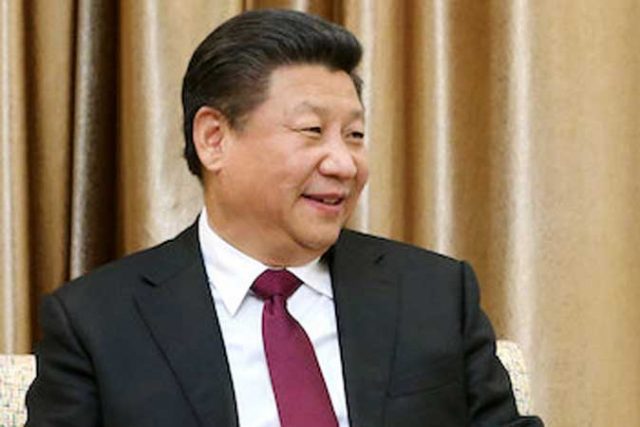
Chinese President Xi Jinping. — WIKIPEDIA.ORG

 – China‘s ruling Communist Party will hold its five-yearly congress beginning on Oct. 16, with Xi Jinping poised to secure an historic third leadership term and cement his place as the country’s most powerful leader since Mao Zedong.

The Politburo announced on Tuesday the start date for the congress, which typically lasts about a week and takes place mostly behind closed doors at the Great Hall of the People on the western side of Tiananmen Square in central Beijing.

Xi, 69, has steadily consolidated power since becoming party general secretary a decade ago, eliminating any known factional opposition to his rule. He is expected to exert largely unchallenged control over key appointments and policy directives at a Congress that many China-watchers liken to a coronation.

Despite headwinds that have buffeted his path to a third term – from a moribund economy, the COVID-19 pandemic and rare public protests to rising frictions with the West and tensions over Taiwan – Xi is poised to secure a mandate to pursue his grand vision for the “rejuvenation of the Chinese nation” for years to come.

Since assuming power, Xi, the son of a communist revolutionary, has strengthened the party and its role across society and eliminated space for dissent.

Under Xi, China has also become far more assertive on the global stage as a leader of the developing world and an alternative to the U.S.-led, post-World War Two order.

“He will take China to an even more Sino-centric approach to policy, particularly foreign policy,” said Steve Tsang, director of the University of London’s SOAS China Institute. “He will also reinforce the importance of the party leading everything in China, and the party following its leader fully,” Tsang said.

Xi‘s likely ascendancy to a third five-year term, and possibly more, was set in 2018 when he eliminated the limit of two terms for the presidency, a position that is set to be renewed at the annual parliamentary meeting in March.

On Wednesday, the website of the party’s official People’s Daily posted an infographic highlighting Xi‘s vision, including one of his signature pronouncements: “Party, government, military, people, education; east, south, west, north, central: the party leads everything.”


KEY PERSONNEL

A day after the 20th Party Congress, Xi is expected again to be conferred the roles of General Secretary of the Communist Party and Chairman of the Central Military Commission.

With little change expected in broad policy direction, key outcomes from the Congress will revolve around personnel – who joins Xi on the Politburo Standing Committee (PSC) and who replaces Premier Li Keqiang, who is set to retire in March.

Contenders to be premier, a role charged with management of the economy, include Wang Yang, 67, who heads a key a political advisory body, and Hu Chunhua, 59, a vice premier. Both were previously the Communist Party boss of the powerhouse southern province of Guangdong.

Another possibility for the premiership is Chen Min’er, 61, a Xi protege who is party chief of the vast municipality of Chongqing but has never held nationwide office.

The makeup and size of the next PSC, now at seven members, will also be closely watched.

Two current members have reached traditional retirement age, and China-watchers will look for whether the inclusion of any new member reflects a need to accommodate alternative viewpoints, although under Xi the notion of “factions” in Chinese politics appears largely to have become a relic.

“After putting his loyalists into positions of power with this party congress, Xi will have a bigger mandate to push through whatever policies he wants,” said Alfred Wu, associate professor at the Lee Kuan Yew School of Public Policy at the National University of Singapore.


BEYOND THE CONGRESS

After the congress, many in China and globally will watch for Beijing’s efforts to stave off a protracted economic downturn, which raises the chance COVID curbs being eased, although a lack of widespread immunity among China‘s 1.4 billion people and the absence of more effective mRNA vaccines remain constraints.

Beijing’s strict “dynamic zero” COVID policy has led to frequent and disruptive lockdowns that have frustrated citizens, battered its economy and made China a global outlier.

Investors will also watch for how Beijing copes with souring relations with the West.

Xi‘s stated desire to bring Taiwan under Beijing’s control will also be in focus during a third term, especially with tensions heightened following U.S. House Speaker Nancy Pelosi’s recent Taipei visit. Taiwan’s democratically-elected government strongly rejects China‘s sovereignty claims.

Since assuming power, Xi has quashed dissent in the once-restive regions of Tibet and Xinjiang and brought Hong Kong to heel with a sweeping national security law.

Few China-watchers expect Beijing to make a military move on Taiwan anytime soon, and there is little sign of preparing society for such a high-risk step and the blowback it would provoke, such as heavy Western sanctions.

But for Xi, successfully resolving the “Taiwan question” would secure his place in Chinese history alongside Mao’s. – Reuters

New Russia gas halt tightens energy screws on Europe

 – Russia halted gas supplies via a major pipeline to Europe on Wednesday, intensifying an economic battle between Moscow and Brussels and raising the prospects of recession and energy rationing in some of the region’s richest countries.

The outage for maintenance on Nord Stream 1 means that no gas will flow to Germany between 0100 GMT on Aug. 31 and 0100 GMT on Sept. 3, according to Russian state energy giant Gazprom GAZP.MMRead full story

Data from the Nord Stream 1 operator’s website showed flows at zero for 0400-0500 Central European Time (0200-0300 GMT) on Wednesday. Read full story

European governments fear Moscow could extend the outage in retaliation for Western sanctions imposed on it after its invasion of Ukraine and have accused Russian President Vladimir Putin of using energy supplies as a “weapon of war”. Moscow denies doing this.

Further restrictions to European gas supplies would heighten an energy crunch that has already sent wholesale gas prices soaring over 400% since last August, creating a painful cost-of-living crisis for consumers and businesses and forcing governments to spend billions to ease the burden. Read full story

Unlike last month’s 10-day maintenance for Nord Stream 1, the upcoming work was announced less than two weeks in advance and is being carried out by Gazprom not Nord Stream AG, focusing on the last operating turbine at the station.

Moscow, which slashed supply via Nord Stream 1 to 40% of capacity in June and to 20% in July, blames maintenance issues and sanctions it says prevent the return and installation of equipment.

Gazprom said the latest shutdown is needed to perform maintenance on the pipeline’s only remaining compressor.

Yet Russia has also cut off supply to Bulgaria, Denmark, Finland, the Netherlands and Poland completely, and reduced flows via other pipelines since launching what Moscow calls its “special military operation” in Ukraine. Read full story

“Given events over recent months, we think the market may disregard Gazprom’s comments and start to consider whether the pipeline may not return to service, or at the very least may (be) delayed for any given reason,” said Biraj Borkhataria, Associate Director of European Research at Royal Bank of Canada.


‘ELEMENT OF SURPRISE’

German Economy Minister Robert Habeck, on a mission to replace Russian gas imports by mid-2024, earlier this month said Nord Stream was “fully operational” and there were no technical issues as claimed by Moscow.

Klaus Mueller, president of Germany’s network regulator, said while a resumption of flows would help Germany’s security of supply, no one was able to say what the consequences would be if flows remained at zero. Read full story

Europe‘s largest economy is making better progress than expected in filling its gas storage facilities, but it’s not enough to get the country through winter, he said.

The reduced flows via Nord Stream have complicated efforts across Europe to fill up vital gas storage facilities, a key strategic goal to make it through the winter months, when governments fear Russia may halt flows altogether.

“It is something of a miracle that gas filling levels in Germany have continued to rise nonetheless,” Commerzbank analysts wrote, adding Germany had so far been successful at buying sufficient volumes at higher prices elsewhere.

In the meantime, however, some Europeans are voluntarily cutting their energy consumption, including limiting their use of electrical appliances and showering at work to save money while companies are bracing for possible rationing. Read full story

At 83.26%, Germany is already within reach of an 85% target for its national gas storage tanks by Oct. 1, but it has warned reaching 95% by Nov. 1 would be a stretch unless companies and households drastically cut consumption.

For the European Union as a whole, the current storage level is 79.94%, just short of an 80% target by Oct. 1, when the continent’s heating season starts.

Analysts at Goldman Sachs said their base case assumption was that this outage would not be extended.

“If it did, there would be no more element of surprise and reduced revenues, while low (Nord Stream 1) flows and the occasional drop to zero have the potential to keep market volatility and political pressure on Europe higher,” they said. – Reuters

WHO places Asia director on leave after accusations of bullying

 – A senior World Health Organization director has been placed on leave, a spokesperson confirmed on Tuesday, following staff accusations of bullying and other complaints.

“The Regional Director for the Western Pacific Region, Dr Takeshi Kasai, is on leave,” a WHO official said in emailed comments, without giving details.

Two WHO sources confirmed to Reuters that the decision to place Kasai, a physician from Japan who has worked at the body for more than 15 years, on administrative leave was related to an ongoing investigation into various staff complaints.

Kasai was not immediately available for comment. An e-mail sent to the WHO Western Pacific office in Manila was forwarded to the headquarters in Geneva.

The Associated Press reported in January that the complaints included allegations of racist language and of sharing confidential vaccine data with Japan.

Kasai, who became the WHO regional director in February 2019, has previously acknowledged being “hard on staff” but rejected the other charges. Read full story

He is temporarily being replaced by the U.N. health agency’s number 2, Zsuzsanna Jakab, the WHO official added. – Reuters

Biden declares emergency over Mississippi water crisis

US PRESIDENT JOE BIDEN/FACEBOOK

US President Joe Biden’s administration approved an emergency declaration over a water crisis in the State of Mississippi and ordered Federal assistance late on Tuesday to supplement the state‘s response.

“Emergency protective measures, including direct federal assistance, will be provided at 75 percent Federal funding for a period of 90 days,” the White House said in a statement late Tuesday.

The Biden administration also authorized the Department of Homeland Security, Federal Emergency Management Agency (FEMA), to coordinate all disaster relief efforts in the state, the White House said.

Mississippi activated its National Guard on Tuesday to help distribute water to tens of thousands of Jackson residents after a long-troubled treatment plant broke down, leaving most of the state capital without safe running water, possibly for days.

Governor Tate Reeves declared a state of emergency for Jackson and surrounding communities, warning the area’s 180,000 people to avoid drinking tap water. He also called up the state National Guard to assist in efforts to bring relief to the city, which was battered by record rainfall and flooding over the weekend.

Tankers distributed non-potable water and bottled drinking water was distributed at several sites, the city said.

The state trucked in 10 tractor-trailers of water on Tuesday and was expecting another 108 trucks in the coming days, state emergency management director Stephen McCraney told reporters.

The breakdown occurred Monday when floodwaters seeped into the understaffed and poorly maintained O.B. Curtis treatment plant. An emergency team had the plant working at 40% capacity on Tuesday, senior state health officer Jim Craig said, and a temporary pump was expected to be installed on Wednesday and increase capacity further.

But the system was still short of sufficient water pressure to guarantee service citywide. Officials said they could not estimate how many homes were cut off.

The shutdown created havoc for businesses, and Jackson public schools, with nearly 21,000 students, were forced to move classes online as they had done during the coronavirus pandemic. Read full story

Supermarket shelves were stripped of bottled water, and police in a cruiser alerted people when supplies ran out at one distribution site in a retail parking lot. Volunteers apologized to people when they had no more water to give, urging them to return on Wednesday starting at 5 a.m.

“It’s a hurtful feeling when you don’t have any water, especially when you’ve got newborn babies,” Monica Lashay Bass, a mother of three, said from her car after queuing up for her allotment of bottled water.

People in Jackson have long complained about their water supply.

A pair of winter storms in February 2021 caused most residents in Jackson to briefly lose running water, and a year ago the U.S. Environmental Protection Agency year ago issued an emergency order saying the water supply could contain E. Coli, according to Mississippi Today.

In 2016, customers were told of high lead levels in the city’s water supply caused by recurring faulty water treatment techniques.

At a news conference, Jackson Mayor Chokwe Antar Lumumba on Tuesday welcomed the state aid but his comments further exposed a rift between the Republican state officials and the Democratic administration of a city that is more than 80% African-American.

The governor has alleged the water treatment plant suffered from years of city mismanagement, while the mayor accused the state of being absent from efforts to maintain and update the plant.

“We’ve been going it alone for the better part of two years,” Lumumba said. “And now we are excited to finally welcome the state to the table and all the valuable resources that they bring.”

Each side had been offered differing accounts of what happened, though they came to agree on significant facts by Tuesday afternoon.

The governor, who previously blamed pump failures, on Tuesday affirmed what the mayor had said: that floodwaters entered the treatment plant, altering the chemistry of the water, rendering the existing treatment inadequate, and forcing a shutdown.

Even before the crisis, the city had been under a boil water notice for the past month due to “elevated turbidity levels,” which makes the water appear cloudy.

The White House said on Tuesday that President Joe Biden had been briefed on the situation, and administration officials were in contact with state and local officials, including Lumumba.

Federal agencies were assisting state officials to identify needs and to deliver equipment needed for emergency repairs, White House Press Secretary Karine Jean-Pierre said on Twitter. – Reuters