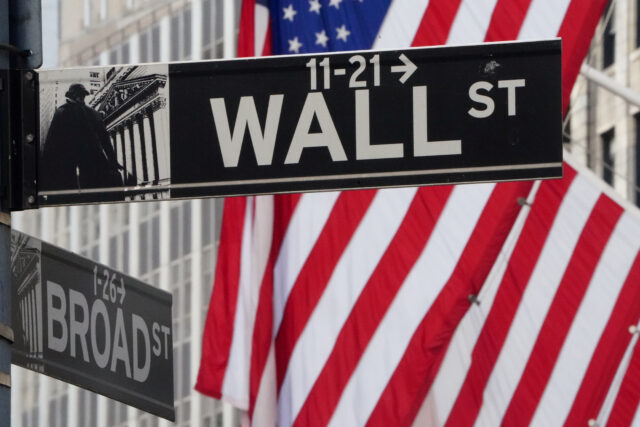
The Wall Street sign is pictured at the New York Stock exchange (NYSE) in the Manhattan borough of New York City, March 9, 2020. — REUTERS/CARLO ALLEGRI/FILE PHOTO
DAVOS, Switzerland — Confidence among companies in their growth prospects has dropped the most since the 2007-08 global financial crisis due to rising inflation, macroeconomic volatility and geopolitical conflicts, a survey by PricewaterhouseCoopers (PwC)showed.
With 73% of chief executive officers (CEOs) around the world expecting global economic growth to decline over the next 12 months, this gloomy view is the most pessimistic CEOs have been since PwC began the survey more than a decade ago, it said on Monday.
The “Big Four” auditor also said that it marked a significant departure from optimistic outlooks in 2021 and 2022.
The survey also found 60% of CEOs do not plan to reduce the size of their workforce in the next 12 months, while 80% do not plan to reduce staff remuneration in order to retain talent and mitigate workforce attrition rates.
The companies that did well in 2022 are likely to see a more challenging year ahead, PwC Global Chairman Bob Moritz told the Reuters Global Markets Forum (GMF) on the sidelines of the World Economic Forum’s annual meeting in Davos.
Nearly 40% of more than 4,400 chief executives surveyed said their companies would not be economically viable over the next decade unless they innovated and transformed at a faster pace.
“It is both the timeframe and magnitude that is surprising — how do I survive the next two to three years, and make my way through a challenging macroeconomic environment, while transforming my organization to be fit for growth over the next 10 years,” Mr. Moritz said.
The survey also found that companies are cutting costs, even as many do not plan to reduce headcount or compensation in the fight to retain talent.
“You’re starting to see some differentiation … in terms of those (firms) that have a debt-driven balance sheet that will struggle while dealing with rising interest rates and inflationary pressures, versus those that have done a good job managing down debt and have the capacity to transform their portfolios,” Mr. Moritz said.
Separately, two-thirds of private and public sector chief economists surveyed by the World Economic Forum (WEF) expect a global recession in 2023.
Other highlights from the PwC survey include:
Half the CEOs reported reducing operating costs, 51% said they were raising prices, and 48% were diversifying product and service offerings.
Climate risk did not feature as prominently as a short-term risk over the next 12 months relative to other global risks. — Reuters
DAVOS, Switzerland — Climate change is increasing malaria infections, the executive director of the world’s biggest health fund said in Davos on Monday.
Huge surges in malaria infections followed recent floods in Pakistan and cyclones in Mozambique in 2021, said Peter Sands, the executive director of the Global Fund to fight AIDS, Tuberculosis and Malaria.
“Whenever you have an extreme weather event it’s fairly common to have a surge of malaria,” he said at the World Economic Forum annual meeting in Davos.
The increase in extreme weather events, and the resulting large pools of standing water that attract mosquitoes, are leaving poorer populations vulnerable.
He said climate change was also changing the geography of mosquitoes. The highlands of Africa, in Kenya and Ethiopia, are now succumbing to malaria because of a shift in the low temperatures that once made the area unsustainable for mosquitoes.
Mr. Sands runs the world’s largest global fund, which invests in fighting tuberculosis, malaria and HIV/AIDS in some of the poorest nations in the world.
The fund, which set a target of raising $18 billion, has so far raised $15.7 billion, the largest amount of money ever raised in global health.
Part of the shortfall, he said, was a billion-dollar hit from currency fluctuations that affected donations.
Looking ahead, climate change is just one of the factors that could hamper efforts to eradicate the diseases, Mr. Sands said.
The war in Ukraine has led to a worsening of AIDS and tuberculosis. In middle income countries such as India, Pakistan, and Indonesia, tuberculosis cases amongst the poorest populations are also rising.
With fears of a global recession rising, Mr. Sands said those countries would come under increased pressure.
“I think the big concern from our perspective is what happens to health budgets in the 120 or so countries we are investing. And even within those health budgets, how much is being taken up by COVID?” — Reuters
PEOPLE shop for Chinese Lunar New Year decorations in Yu Yuan Garden in Shanghai, China, Jan. 31, 2019. — REUTERS/ALY SONG
BEIJING/HONG KONG — China’s population fell last year for the first time in six decades, a historic turn that is expected to mark the start of a long period of decline in its citizen numbers with profound implications for its economy and the world.
The drop, the worst since 1961, the last year of China’s Great Famine, also lends weight to predictions that India will become the world’s most populous nation this year.
China’s population declined by roughly 850,000 to 1.41175 billion at the end of 2022, the country’s National Bureau of Statistics said.
Long term, United Nations experts see China’s population shrinking by 109 million by 2050, more than triple the decline of their previous forecast in 2019.
That’s caused domestic demographers to lament that China will get old before it gets rich, slowing the economy as revenues drop and government debt increases due to soaring health and welfare costs.
“China’s demographic and economic outlook is much bleaker than expected. China will have to adjust its social, economic, defense and foreign policies,” said demographer Yi Fuxian.
He added that the country’s shrinking labor force and downturn in manufacturing heft would further exacerbate high prices and high inflation in the United States and Europe.
The national statistics bureau said in a statement that people should not worry about the decline in population as “overall labor supply still exceeds demand.”
China’s birth rate last year was just 6.77 births per 1,000 people, down from a rate of 7.52 births in 2021 and marking the lowest birth rate on record.
The death rate, the highest since 1974 during the Cultural Revolution, was 7.37 deaths per 1,000 people, which compares with rate of 7.18 deaths in 2021.
ONE-CHILD POLICY IMPACT Much of the demographic downturn is the result of China’s one-child policy imposed between 1980 and 2015 as well as sky-high education costs that have put many Chinese off having more than one child or even having any at all.
The data was the top trending topic on Chinese social media after the figures were released on Tuesday. One hashtag, “Is it really important to have offspring?” had hundreds of millions of hits.
“The fundamental reason why women do not want to have children lies not in themselves, but in the failure of society and men to take up the responsibility of raising children. For women who give birth this leads to a serious decline in their quality of life and spiritual life,” posted one netizen with the username Joyful Ned.
China’s stringent zero-COVID policies that were in place for three years have caused further damage to the country’s demographic outlook, population experts have said.
Local governments have since 2021 rolled out measures to encourage people to have more babies, including tax deductions, longer maternity leave and housing subsidies. President Xi Jinping also said in October the government would enact further supportive policies.
Measures so far, however, have done little to arrest the long-term trend.
Online searches for baby strollers on China’s Baidu search engine dropped by 17% in 2022 and are down by 41% since 2018, while searches for baby bottles are down more than a third since 2018. In contrast, searches for elderly care homes surged eightfold last year.
The reverse is playing out in India, where Google Trends shows a 15% year-on-year increase in searches for baby bottles in 2022, while searches for cribs rose almost fivefold. — Reuters
ROME — Italian investigators knew a lot of things about mafia boss Matteo Messina Denaro.
He liked wearing designer clothes, expensive sun glasses and Rolex watches, he loved video games and had a taste for luxury foods. He was also a ruthless killer who once claimed to have murdered enough people to fill a cemetery.
What they didn’t know was where he was.
But on Monday, after 30 years on the run, the most wanted mafioso in Italy was finally captured, seized in a private clinic in the Sicilian capital Palermo after police found out he was receiving treatment there for cancer.
“It is a day of celebration when we can tell our children that the mafia can be beaten,” said Italian Prime Minister Giorgia Meloni, who flew straight to Sicily when news of the arrest broke, underlining the importance of the capture.
Messina Denaro was born in the southwestern Sicilian town of Castelvetrano in 1962, the son of a mafioso. He followed his father into the mob and at 15 he was already carrying a gun. Police believe he carried out his first killing when he was 18.
The Castelvetrano clan was allied to the Corleonesi, headed by Salvatore “the Beast” Riina, who became the undisputed “boss of bosses” thanks to his ruthless pursuit of power.
Nicknamed “’U Siccu” (The Skinny One), Messina Denaro became his protege and showed he could be just as pitiless as his master, picking up 20 life prison terms in trials held in absentia for his role in an array of mob murders.
Details of his crimes emerged in the many court hearings.
Police say he was heavily involved in the planning of the 1992 murders of anti-mafia prosecutors Giovanni Falcone and Paolo Borsellino – crimes that shocked the nation and sparked a crackdown that led to Riina’s arrest in 1993.
He was also held responsible for subsequent bombings in Rome, Florence and Milan in 1993 that killed 10 people in an apparently failed bid to force the government to halt its war on the Sicilian mob, know as Cosa Nostra (Our Thing).
He was also found guilty of helping organise the kidnapping of Giuseppe Di Matteo, 12, to try to dissuade the boy’s father from giving evidence against the mafia. The boy was held for two years before he was strangled and his body dissolved in acid.
HOARDS OF MESSAGES Messina Denaro went into hiding in 1993 as a growing number of turncoats started providing details of his role in the mob. He communicated with other mafiosi via “pizzini”, small pieces of paper sometimes written in code distributed by messengers.
A mass of these notes was found in 2006 when police caught Bernardo Provenzano, who had led Cosa Nostra after Riina’s arrest. In a letter to a contact, Messina Denaro said he couldn’t believe how careless Provenzano had been.
“When I receive a letter, even from family members, I reply as quickly as possible and immediately burn the one that arrived,” he wrote.
He never married, but was known to have a number of lovers. Denaro wrote that he had a daughter, but had never met her. He is also believed to have a son, but little is known about him.
As police repeatedly swept Sicily looking for clues about his whereabouts, more correspondence emerged showing they were dealing with someone who saw himself very differently to the way he was portrayed by his foes.
“I only care about being a fair man, I have made fairness my philosophy of life and I hope to die a fair man,” he wrote in a letter dated Feb. 1, 2005, found in an abandoned hideout.
He quotes the bible and French writer Daniel Pennac, amongst others, and laments the fact he had little formal education.
In an eavesdropped recording from prison, Riina is heard complaining about his one-time protege, apparently perturbed by news he was investing in wind farms and angered he hadn’t taken charge of the mafia, like he had.
“The only guy who could do something because he was straight… didn’t do anything,” Riina told a fellow inmate.
Despite his notoriety, prosecutors have always doubted that Messina Denaro became the “boss of bosses” after Provenzano’s capture, saying it was more likely that he was simply the head of Cosa Nostra in western Sicily.
Nonetheless, the fact he managed to escape arrest for so many years showed he had a fierce, loyal following.
Whispers surfaced last year that he was seriously ill and prosecutors finally seem to have located him thanks to the fact he needed regular treatment at a Palermo clinic.
“We have not won the war, we have not defeated the mafia but this battle was a key battle to win, and it is a heavy blow to organised crime,” Prime Minister Meloni said. – Reuters
I am convinced that by combining the efforts of both public and private groups committed to helping the Philippine football national team to qualify for the World Cup, we can, in less than a decade, actually achieve what seemed to be in the past an impossible dream.
I am encouraged by the fact that world-class players like Lionel Messi, Kylian Mbappe, Gavi, Pedri, Ansu Fati, Ferran Torres and many others started to play for their respective national teams in the World Cup when they were still in their teens or at least in their early 20s. We should work on giving intensive training to the likes of Sandro Reyes of Southridge who, when he was 13, was admitted to the famous football school called La Masia of FC Barcelona which trained Messi, Iniesta (who won the World Cup for Spain in 2010), Javi Hernandez, and many other world-class players. If we do so, within a decade or so, we can have enough quality players to enable the Azkals qualify for the World Cup — way before the end of this century.
Among the most active in the private sector in promoting football (and futsal) as a national sport are the officials of the Henry V. Moran Foundation, headed by Danny Moran.
In an e-mail to me, commenting on the first articles in this series, he opined that the success of football in the Philippines will come more from the women’s rather than the men’s team — warming the hearts of those advocating gender equality. The Filipinas (the national Women’s Football Team, formerly known as the Malditas) already qualified to play in the Women’s World Cup to be held in Australia and New Zealand this year.
Danny informed me that Vic Hermans, the Technical Director for Philippine Futsal of the Henry V. Moran Foundation, observes that in the Southeast Asian region (and probably even in the whole of Asia), Filipinas are stronger and more diverse in their skills/abilities (due to different strengths coming from the diverse regions within the Philippine Archipelago). In addition, Filipino women are more competitive in sports as compared to their Asian and Middle Eastern counterparts, particularly in futsal. This is evidenced by the fact that our women have won more international championships in sports than our men, such as in golf, tennis, weight lifting, martial arts, and even boxing.
Danny reiterates the wisdom of starting with futsal as the way to develop football. Futsal is relatively new in Asia so the Philippines has better chances of taking a lead in its development, especially for women. Although the national Women’s Football Team made it to the World Cup, over 80% of the team members are Fil-foreigners, mostly from the United States. Because of the stiff competition abroad, especially in Europe and the United States, we are a long way from getting local players to ever qualify for the National Team. This problem is aggravated by the fact that we lack football fields in our public schools. There are very few local women’s football leagues. It is really a challenge to find local talents.
With futsal, girls from the ages of six to eight can start playing in our public-school basketball courts all over the country. Because of the huge numbers of our youth, some of these girls can find their way to the National Football team in the near future. There is also the psychological reality that as they reach their puberty, girls tend to be more mature, responsible, and motivated than boys of the same ages as reflected by the higher grades of girls in junior and senior high schools as compared to those of their male classmates. Dropout rates among girls at these school levels are also lower.
It is an opportune time to introduce futsal as part of the sports curriculum in public schools because of the renewed priority that Vice-President Sara Duterte, who is the Education Secretary, wants to assign to values education or character development in the public schools. There are private schools like those of the Don Bosco priests or of the Parents for Education Foundation (providentially headed by Danny Moran as Chairman) who consider “sports as means for character development.” The programs of these private schools can be used as templates for the widespread introduction of futsal into the public schools.
As Kevin Goco, a close associate of Danny in the promotion of futsal and football, wrote in an e-mail to me: “I believe DepEd (Department of Education) can learn a lot from the implementation of the Sports Club program in the PAREF (Parents for Education Foundation) schools. DepEd has a budget to fund the Sports Club program in public schools and it is a model based on a consultancy engagement with Stella Urbiztondo with the Department. Stella was also PAREF’s consultant for its own Sports Club Program. It has a head start and decided to roll out the Sports Club Program early in 2022 while DepEd is still in the deliberation stage on how to implement the program. I recently attended a conference hosted by DepEd where they discussed which sports to prioritize under the Sports Club program. The priority sports were all individual and indigenous sports (badminton, table tennis, sepak takraw, weightlifting). Futsal and football were not even in the list, and sadly most team sports were left out. It seems that the National Academy of Sports, which is the new government sports academy under DepEd and the Philippine Sports Commission (PSC), is prioritizing individual sports where there is a higher chance of obtaining medals, such as in weightlifting, table tennis, shooting and taekwondo.”
It has to be pointed out, however, that the focus on getting individual medals completely ignores the greater impact of team sports, if properly played, on the building of character and the inculcation of the appropriate values among a large number of Filipino youth. The fostering of individual sports has limited multiplier effects on vast numbers of school children, especially at the basic education levels.
Promoting futsal and football in the public schools, however, will not be a walk in the park. A good number of bureaucratic and cultural obstacles have to be overcome. It is, therefore, important that all sectors of Philippine society are convinced that football is a sport in which Filipinos can excel, given enough support, and that football is an effective means of developing the appropriate values among the youth.
I am fully aware of the hurdles very ably enumerated by my friend and former school mate at De La Salle University, Oscar Lagman, who wrote in this paper that aspiring to be qualify for the World Cup in the next decade or so is a “pipe dream.” I can only reply “nothing ventured, nothing gained.” I have also learned not to downplay basketball as I advocate greater interest among the youth in football. It need not be an “either/or” proposition. Even if football will always play second fiddle to basketball, our demographic dividend for at least the next 20 years will provide us enough young people for both sports.
Bernardo M. Villegas has a Ph.D. in Economics from Harvard, is professor emeritus at the University of Asia and the Pacific, and a visiting professor at the IESE Business School in Barcelona, Spain. He was a member of the 1986 Constitutional Commission.
The Philippines is one of the signatories to the Regional Comprehensive Economic Partnership (RCEP), which was signed on Nov. 15, 2020 after eight long years of negotiations. The free trade agreement (FTA) among the 10 member countries of the Association of Southeast Asian Nations (ASEAN), South Korea, China, Japan, Australia, and New Zealand is expected to bring significant economic benefits to its signatories.
The FTA aims to promote greater openness, create a more business-friendly environment, encourage closer integration of economies, and institute a stable, predictable, and rules-based system of trade. It will eliminate as much as 90% of the tariffs on imports between its signatories within 20 years of coming in effect.
For the Philippines, specifically, the FTA promises to be a crucial step in our shift to an investment-driven economy, given our underlying economic challenges and the lingering effects of the COVID-19 pandemic. Being an RCEP signatory will be crucial to our recovery and sustainable growth.
There is a crucial step, however, that needs to be taken before the Philippines can fully reap the benefits of being part of this agreement: Our country still has to ratify this treaty.
Only the Philippines and Myanmar have not yet ratified the RCEP. Former President Rodrigo Duterte, for his part, ratified it in September 2021 and forwarded it to the Senate for deliberation and eventual concurrence. Our senators, however, deferred their concurrence, seeing a need for safeguards for our embattled agriculture sector.
During the Senate hearings earlier this year, no less than the National Economic and Development Authority (NEDA) and the Department of Trade and Industry (DTI) argued that pursuing parallel efforts — for RCEP to boost our economy, and for efforts to improve the productivity and competitiveness of the agriculture sector — is definitely possible and in fact beneficial in the long run.
Thus, earlier this month, Senate President Juan Miguel Zubiri stated his commitment that upon the resumption of sessions this year, the Senate will prioritize the ratification of the RCEP and the passage of bills of national importance.
We hope our senators remain true to their word.
The RCEP’s specific benefits to the Philippine economy, given our peculiar situation and unique profile, are many.
Foremost, our co-signatories make up roughly 50.4% of our export markets, 67.3% of our import sources, and 58% of the source of Foreign Direct Investments (FDIs).
The RCEP will also improve our trade position, which as of November 2022 is in a deficit amounting to $3.68 billion. Imports continue to dominate our total trade, accounting for 60.3% of the total. The FTA could be an opportunity to gain access to a wider export market, increase export production, and lessen our reliance on imports by encouraging more investments, specifically in the manufacturing sector.
Investment-led growth will create higher quality jobs and more employment opportunities for Filipinos, making the economy more resilient and productive. Indeed, the RCEP will enhance investment opportunities through improved promotion, protection, and facilitation.
With lower tariffs, local industries will be encouraged to produce more and engage further in trade.
Of course, lower tariffs could be a double-edged sword and can also cause larger import volumes to flow to the Philippines, exacerbating the trade deficit. Still, I believe the exposure and increased access of the Philippines to export markets far outweigh this potential risk. The RCEP will enable our industries to compete in the international market and push our industries to be better and more efficient.
With concerns on agriculture addressed and fears assuaged, our senators must now move fast and concur with the executive ratification of the RCEP. Every day they tarry is another day of missed opportunities in export and employment. Most importantly, finally ratifying the RCEP will send a strong message to the rest of the world that the Philippines is committed to having a stable policy and regulatory environment. After all, we are aware that these are critical to attracting investments.
*****
Another opportunity is the upgrade negotiations for the ASEAN-Australia-New Zealand Free Trade Area (AANZFTA) that were concluded substantially last November. At that time, the Philippines was not able to make ambitious commitments regarding investments because reforms, such as amendments to the Public Service Act, had not yet been passed.
But now these game-changing reforms have been enacted into law.
This is now a valuable opportunity for the Philippines to demonstrate to the rest of the world that it is open to investment. Commitments based on actual legislation offer significant assurance to the international business community that the Philippines is a good place to invest in, and that policies are not made or changed on a whim: they have solid legislative, legal basis. Thus, these critical economic reforms cannot be arbitrarily undone.
Like the situation with RCEP, the AANZFTA offers a window of opportunity that would be important to our economic recovery and growth.
Ratifying the RCEP now and seizing its huge opportunities will show that the Philippines is ready to sustain a growth trajectory.
Victor Andres “Dindo” C. Manhit is the president of the Stratbase ADR Institute.
WHEN I recently went to talk to some school children about the nature of money, I brought props: a cowrie shell, a piece of play paper and a small handful of shredded dollar bills. Which of these, I asked, is money?
The point I wanted to make: It is all about belief. If everyone agrees something is money, it is indeed money. One particularly engaged child interrupted me just as I was getting going on the rai stones of Yap to ask: Can fiat currencies really survive? Not what you might expect from an 11-year-old.
The answer, of course, was that it depends what one means by survive. Carry on for many more decades under the same names of dollars, pounds, euros, etc.? Sure. Do so without losing purchasing power? Not a hope. Even inflation at 2% each year halves the value of your money in 36 years. And inflation at 2% for the long-term is something of a distant dream at the moment. CPI is down to 6.5% in the US and it will fall further from here, but it is very unlikely to settle at 2%, where most central banks still have their targets set.
We live in a world of very big government — one in which the answer to anything is more state spending (the UK’s response to rising energy bills, for example, is to have the state cover much of the cost) and in which governments have taken on vast investment responsibilities (in green energy, for instance). Deficits and borrowing will rise as a result. At the same time, the effort to build resilient supply chains and to reshore manufacturing will make everything more expensive, as will rising labor costs around the world. The disinflationary effects of China entering the global workforce are long gone (see Larry Summers on this).
So inflation is with us for the long haul. If you are holding cash, know that it is only a temporary king.
This all led the children and me to a discussion of whether there is anything that stays money forever. Enter physical gold, the only thing that has been considered real money by most people and that has maintained its purchasing power for nearly 3,000 years. This isn’t a particularly interesting conversation if there is no inflation: If a pound or a dollar holds its purchasing power, who needs gold? It is heavy, you have to store it, it has no yield. When inflation is on the table, things get more interesting.
With this in mind, you might have expected gold to be all the rage last year. It was not. Instead, even as inflation hit close to 10% pretty much everywhere, the gold price (in dollars at least) did nothing. Gold mining shares, a good way to get leveraged exposure to gold, fell more than 8% and demand for gold ETFs fell for the second year in a row. Exasperating stuff.
Still, things did pick up toward the end of the year. The gold price (in dollars) is up some 15% since the beginning of last November and the miners have begun to come good too: The GDX gold miners index outperformed the S&P 500 by 14.9% in November and 4.6% in December, say the analysts at Stifel. The outflows from gold ETFs also slowed for the third month in a row in December — with the US even seeing mildly positive demand, to the tune of around $530 million.
This year is looking good too: The gold price is up 7% in the last month in sterling and dollars. The VanEck Junior Gold Miners UCITS ETF (which I hold) is up 10% year to date. Might there be something brewing here? Stifel thinks so. For them, it’s all about the Fed pivot.
Since gold has been allowed to trade freely, there have been 10 periods in which US benchmark rates have peaked. Theoretically, a peak in rates is a positive for gold, which offers no yield so looks less attractive as an investment as interest rates rise and more attractive as they fall. But it works in real life, too. Look at the periods five months before each peak (possibly roughly where we are now given that US CPI has just seen its first monthly drop in more than two years) plus six months, and you see that gold averaged a gain of 18% during these times and also outperformed the S&P 500 by 9.7% through the rate peaks. Good news.
There’s more. Recessions have followed the rate peaks within 18 months 60% of the time (the average being 10 months) and gold has shown a strong tendency to do well in these periods too (beating the S&P500 by 26%) — particularly when recession coincides with a stock market downturn. Regardless of what regulators say about past performance telling us nothing about the future, this does give good reason to think about holding gold in the short-term.
It is also worth thinking about who’s buying gold at the moment. Last year, there was much talk about who the “mystery buyer” in the gold market was. It wasn’t, it turns out, money managers in the US (the ones who should have been looking at the same data as Stifel), but central banks.
Overall, the World Gold Council estimates that central bank buying has lifted gold reserves to their highest level since 1974, with massive purchases from Russia and China being key. The People’s Bank of China bought 62 tons of gold in November and December alone. Why? To build reserve currency status, to hedge against the dollar in the wake of rising sanctions risk, to diversify — all things are possible given the geopolitical environment.
TD Securities are unconvinced on the case for gold. To them, Chinese buying has created a nasty $150 per ounce mispricing in the market — one that will correct if they stop buying.
But you could look at this the other way around and take Chinese buying as a clear reminder that gold is one of the few things that everyone thinks is money — from the precocious 11-year-old I met last month to the heads of every central bank in the world. As Alex Chartres of Ruffer recently said on my podcast, there aren’t many other things you can turn to as a long-term safe haven in today’s markets.
A year ago, some thought Bitcoin might be a rival — a digital gold even. The market has now “kneecapped” that idea. These days, if you want gold you will need to buy, well, gold. That being the case, the question is not have you too much, but have you enough — the very same question the head of the PBoC is clearly asking himself right now.
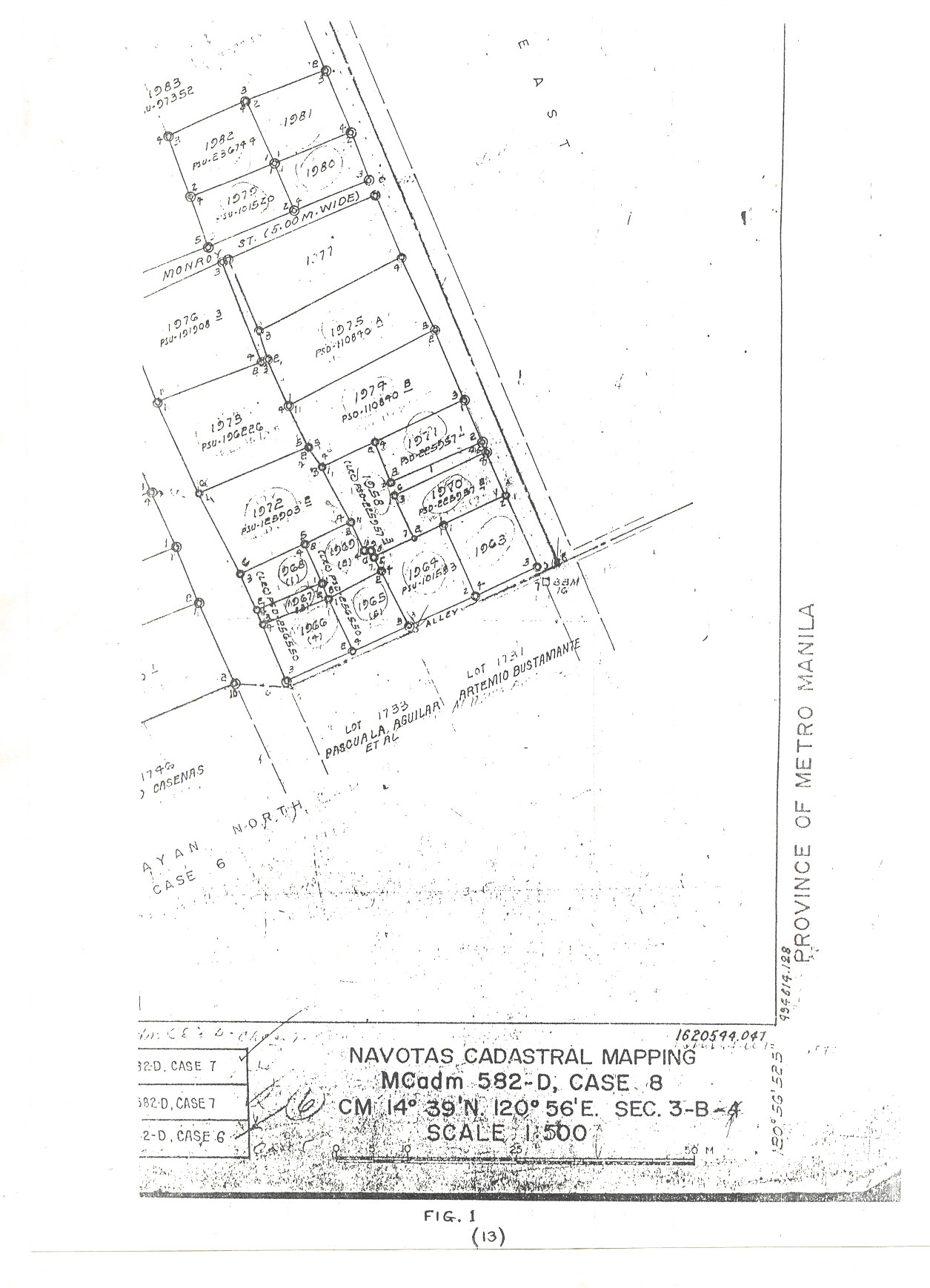
SAMPLE graphical cadastral map from https://cadastraltemplate.org/philippines.php
SAMPLE graphical cadastral map from https://cadastraltemplate.org/philippines.php
IN THE PHILIPPINES, with a total land area of 30 million hectares (ha), only alienable and disposable (A&D) lands (14.2 million ha) are included in the national cadastre, and information on them can be found in a public registry. The remaining forest lands (15.8 million ha) are not included in such a system and information on them is not available in a publicly accessible database.
CADASTRE? A cadastre is a parcel-based and up-to-date information system containing records of interests in land such as rights, restrictions, and responsibilities, etc.1 It usually includes the geometric description of land parcels linked to tenurial instruments and the value of the land parcel and its improvements.2
Recording of land ownership has been around since Ancient Egypt but the foundations of the modern-day cadastre were laid down by Napoleon Bonaparte in 1807 when he ordered the creation of maps and cadastral records.3 Forest lands are also included in the cadastre ,whether they are publicly or privately-owned.
Finland, Germany, and New Zealand have one cadastre that caters to all land classifications. In Turkey and Greece, there is a separate cadastre for forests. A forest cadastre is an inventory and record of interests in forest lands for various purposes. It is a tool for protecting, planning, development, and sustainable management of forests.
In the Philippines, although not yet established, a semblance of a pseudo-forest cadastre is being implemented through activities such as forest boundary delimitation survey and delineation of parcel forests and/or forest lands from the different tenurial instruments. However, one missing aspect of these initiatives is a systematic land information system and forest land registry that is publicly available.
DO WE NEED ONE? Yes. There are proposed bills in the House of Representatives and the Senate that seek to establish a forest cadastre, to include forest lands in the national cadastral system. As the bills frame it, the forest cadastre will also include mineral lands, national parks and protected areas, ancestral land domains, reservations and proclamations — those lands that are not subject to private ownership.
Prior to any development and management undertaking, having information is imperative. The forest cadastre is a public library of information on forest lands enabling the public to make informed decisions on sustainable use, management, and/or regulation of use of forest resources. The forest cadastre is like one huge jigsaw puzzle set and each piece is one forest parcel (regardless of size) filled with relevant information regarding the land and the forest therein. Where is the parcel/piece located? What are the dimensions? Is it tenured or not? Who are the claimants? Which parcels are available for commercial activity, and which are not? And the best part is that this entire puzzle set of information shall be made available to everyone.
It is high time that the Philippines considers its forest lands in its existing national cadastral system. Why?
First, the availability of relevant and parcelized forest land and forest information can help for the effective and efficient management, planning, and assessment of forest lands.
Second, a forest cadastre can help in monitoring resource utilization and provide a reliable basis holding stewards/managers accountable if forest lands have not been properly used and managed.
Third, there will be a better understanding and inventory of tenures that may lead to their potential registration other than absolute ownership, i.e., CBFMA, IFMA, SIFMA, PACBRMA, CADT, and CALT among others, and this may help facilitate access to better credit in formal financial markets.
Fourth, the needed information will be publicly accessible encouraging private sector investments in green development projects, not only to provide livelihood to up to over 25 million upland dwellers but also to help mitigate the negative effects of climate change.
Finally, the cadastre will help identify and resolve lingering boundary conflicts or issues in forest lands among different agencies with overlapping jurisdiction such as the self-delineation of ancestral domain lands.
PRIVATIZING FORESTS? The proposed forest cadastre does not equate to privatizing forest lands as the State remains as its sole owner per the 1987 Constitution. What the forest cadastre does is that it provides a systematic and parcel-based recording and mapping of interests in forest lands similar to the existing cadastre on A&D lands. In fact, this initiative is in line with Section 53. c. of Department of Environment and Natural Resources (DENR) Memorandum Circular 2010-13 as it states, “other lands which cannot be subjected to private ownership shall also be included in the lot survey and shall be issued a Cadastral Lot Number.”
With the decline of the country’s forest cover (7 million ha in 2015 from 14 million ha in 1950s), the increasing need to address concerns on climate change, and the decline of local wood production, it is of paramount importance that we sustainably manage our already diminished forest resources, and this is anchored on well-defined property rights and accessible reliable information.
1Panfil, Y., Mellon, C., Robustelli, T., & Fella, T. (2019). 3D Cadastre and Property Rights. New America. Retrieved Sept. 7, 2022, from https://www.newamerica.org/future-land-housing/reports/proprightstech-primers/3d-cadastre-and-property-rights/.
2Ibraheem, A. (2012). Development of Large-Scale Land Information System (LIS) by Using Geographic Information System (GIS) and Field Surveying. Engineering, 107-118.
3International Federation of Surveyors (2020). History of Cadastral Systems. Retrieved Sept. 7, 2022, from https://www.fig.net/organisation/perm/hsm/history_of/cadastre.asp.
Angela Arnante is a program officer at the Foundation for Economic Freedom.
(From left to right) Brian Poe Llamamzares with Dominic Rubio and Jack Teotico
Traditional Filipino Artist Dominic Rubio proudly wore his Time Master Apollo watch featuring one of his works during the opening of his exhibit “Ilustrados” at the Galleria Nicolas in Greenbelt Makati.
The proudly Filipino brand included Rubio’s painting on the Time Master Apollo special edition. The first 23 pieces were distributed to Rubio and Galerie Joaquin stores, where they were promptly sold.
Known as the Greek god of healing, Apollo is one of Time Master’s well-known watch designs. A percentage of the sales earnings were also given to Habitat for Humanity to support their COVID-19 Response efforts during the height of the pandemic.
Rubio is delighted with the product and the partnership with Time Master; nonetheless, he hopes for his artwork to have more detailed aspects exhibited on the watch in the future.
Joaquin “Jack” Teotico, Managing Director of Galerie Joaquin, stated that this is a significant milestone for Filipino artists to collaborate with and be incorporated in companies such as Time Masters in order to highlight and promote Filipino talents. He also anticipates expanding his relationships with Time Master and other brands.
“Rubio is one of the foremost artists of today because his works capture the sensibilities, aspirations, dreams, customs and traditions of our people,” Teotico said.
“His meticulous and methodical research on our way of life, costumes and architecture make his artworks important statements in defining the Filipino identity,” he added.
Along with Rubio and Teotico, Time Master Watches CEO Brian Poe Llamanzares was also present at the event, and they all exchanged greetings and expressions of gratitude for the collaboration.
“I believe the partnership with Mr. Rubio is ideal! His artwork blends perfectly into the style of our watches. I’m very happy to partner with one of the country’s leading artists to produce something proudly Filipino,” Brian said in a written statement.
Brian also revealed that they are currently working on a new collection with Rubio, which will soon be available.
The Filipino contemporary artist is also known for painting ethnic Filipinos from an earlier period at the turn of the century. He has held numerous significant exhibits, including ‘Asia 1900s’, Galerie Raphael, Taguig, Philippines (2008); ‘Chinatown,’ Galerie Raphael, Taguig, Philippines (2008); and ‘Old Manila,’ Galerie Joaquin, San Juan, Philippines (2007).
More than 20 of Rubio’s masterpieces are now on display at Galleria Nicolas from Jan. 7 to 16, 2023.
Spotlight is BusinessWorld’s sponsored section that allows advertisers to amplify their brand and connect with BusinessWorld’s audience by enabling them to publish their stories directly on the BusinessWorld Web site. For more information, send an email to online@bworldonline.com.
Britain’s Prince Harry and Meghan, Duchess of Sussex, arrive to greet members of the public in Kingfisher Bay on Fraser Island in Queensland, Australia Oct. 22, 2018. — REUTERS
LONDON — British TV presenter Jeremy Clarkson said he had e-mailed an apology to Prince Harry and Meghan after he wrote in a national newspaper column that he hoped the Duchess of Sussex would one day be forced to parade naked through the streets.
Mr. Clarkson, who gained worldwide fame as presenter of motoring show Top Gear, wrote in the Sun tabloid in December that he hated Meghan on a “cellular level,” earning widespread condemnation from politicians, his employers, and even his own daughter.
Mr. Clarkson’s opinion piece on the Duke and Duchess of Sussex became the most-complained about article for Britain’s press standards regulator, with more than 20,000 complaints received.
On Monday,Varietyreported that Amazon Prime Video was likely to part ways with Mr. Clarkson, citing sources who said the streaming giant would not be working with him beyond seasons of The Grand Tour and Clarkson’s Farm that have already been commissioned.
Neither Amazon Prime nor a representative for Mr. Clarkson immediately responded to a request for comment.
“The language I’d used in my column was disgraceful,” Mr. Clarkson said on Instagram on Monday, adding he had sent the apology on Christmas morning. “I really am sorry.”
Harry and Meghan have made headlines around the world in recent weeks after the couple released a Netflix series, and later Harry’s book, in which they accused the British tabloid press of misogyny and racism.
Prince Harry told broadcaster ITV that Mr. Clarkson’s comments were not only horrific and hurtful, but that they would encourage people around the world to think it was acceptable to “treat women that way.”
A spokesperson for Harry and Meghan on Monday said that while there had been an apology, “what remains to be addressed is his long-standing pattern of writing articles that spread hate rhetoric, dangerous conspiracy theories, and misogyny.”
“Unless each of his other pieces were also written ‘in a hurry,’ as he states, it is clear that this is not an isolated incident shared in haste, but rather a series of articles shared in hate,” the spokesperson said.
Following the widespread public backlash after his column was published, Mr. Clarkson has said previously he was “horrified to have caused so much hurt.”
He said on Monday that despite an apology from the Sun newspaper and his efforts to explain himself, more than 60 British lawmakers “demanded action to be taken.”
He said his employers — British broadcaster ITV and Amazon — “were incandescent.”
“It’s hard to be interesting and vigilant at the same time,” Mr. Clarkson said in his post.
“Very soon now I shall be a grandfather so in future, maybe I’ll just write about that.” — Reuters
The normalization of remote work and the push for privacy and data protection laws in the Philippines and around the world have led to a rise in security activity, a cybersecurity expert said.
Phil Rodrigues, Amazon Web Services’ security head for Asia Pacific and Japan commercial, talks about how organizations have made cybersecurity a top priority in doing business, driving the need for talent with both hard skills and soft skills like communication, flexibility, and leadership.
Interview by Brontë H. Lacsamana. Video editing by Earl R. Lagundino.
Since the telcos launched their SIM Registration platforms last Dec. 27, over 20.4 million Filipinos have already registered their SIMs, with Smart subscribers taking the lead with 10.3 million registrants as of Jan. 16.
According to the Department of Information and Communications Technology (DICT), all subscribers are given a period of 180 days or until April 26, 2023 to register their SIMs. The registration may be extended by the DICT for a period not exceeding 120 days.
But what exactly happens if you fail to register your SIM within the deadline? The SIM Registration Law states that all unregistered SIMs shall be automatically deactivated, which comes with all these hassles:
1. No outgoing and incoming calls. You can’t make or take urgent and important calls to and from your family and friends, as well as communicate with your colleagues at school, work, or business.
2. No sending and receiving messages. On top of being unreachable to family and friends through text, you’ll also go through the horrors of not being able to get your One-Time Password (OTP), which is now a common security feature in many social media apps, digital banking services, and online shopping sites linked to your account.
3. No internet access. The Internet has become essential in our increasingly digital world. And more than not being able to enjoy your favorite apps and sites, having no internet access also means getting cut off from important information and services that make life simpler and easier.
4. No load balances. Once your SIM is deactivated, all your remaining load balances will be forfeited.
Users who missed the deadline and got their SIMs deactivated may still process the reactivation of their SIMs not later than five days after the period set by the law.
Avoid all these hassles by registering your Smart and TNT SIM now
Avoid all these hassles by registering your Smart and TNT SIM now! Smart Prepaid and TNT subscribers can register their SIM and get 3 GB FREE data upon completing these three easy steps:
Step 2. Input your information and upload your valid ID
Step 3. Wait for an SMS confirmation and get 3 GB FREE Data
Smart is also making SIM Registration more convenient for postpaid subscribers, who simply need to confirm the personal information and IDs they submitted for their postpaid plan application. To do this confirmation, subscribers just need to text YES to 5858. They shall then receive a confirmation message from Smart upon successful SIM Registration and get 3 GB FREE data.
By registering your SIM now, you can continue to enjoy all the value-packed offers and amazing experiences from both Smart and TNT, powered by the country’s widest LTE network.
Spotlight is BusinessWorld’s sponsored section that allows advertisers to amplify their brand and connect with BusinessWorld’s audience by enabling them to publish their stories directly on the BusinessWorld Web site. For more information, send an email to online@bworldonline.com.