Home Blog Page 5416

Investor Ryan Cohen builds Alibaba stake, pushes for more share buybacks

Billionaire investor Ryan Cohen has built a stake in China’s Alibaba Group worth hundreds of millions of dollars and is pushing the e-commerce giant to increase and speed up share buybacks, people familiar with the matter said on Monday.

Cohen, who built his fortune by co-founding online pet retailer Chewy Inc. and cemented it with investments in videogame retailer GameStop and Apple Inc., reached out to Alibaba last August to express concerns, the people said.

In his communications, Cohen told Alibaba he thought the company could reach double-digit sales growth and nearly 20% free cashflow growth over the coming five years, according to the sources.

Cohen felt the company’s shares were undervalued at the time, according to the people, who declined to be identified because the investment is private.

Alibaba in November raised the size of its share repurchase program to $40 billion, increasing it by $15 billion, and said it would extend the time frame for the program through the end of March, 2025.

Cohen has told Alibaba executives that more can be done, suggesting the total buyback program could be raised to $60 billion, the people familiar with his communications said.

Alibaba‘s ADRs, traded in the United States, closed at $117.01 on Friday, up 30% since early August and up 27% this year. The price however remains far off its high of more than $300 a share hit during the COVID-19 pandemic.

The people said that Cohen is eager to have a collaborative, long-term relationship with Alibaba and that he has praised management’s capabilities.

Alibaba representatives were not immediately available for comment.

The company’s shares began an ongoing tumble in late October 2020, just as authorities in Beijing began a regulatory crackdown on the tech sector. The company lost about a third of its value by November 2022, though in recent weeks shares have recovered amid signs the Chinese government will ease its pressure on internet companies.

Over roughly the same period, Alibaba has steadily escalated its share buyback program. It first announced the scheme at the end of 2020, pledging to buy back $10 billion over a two-year period.

The Wall Street Journal first reported Cohen‘s Alibaba stake.

The Chinese e-commerce company could find a blueprint in how Apple has helped its own stock price as it repurchased shares, the people said. Cohen owns a stake in Apple worth roughly $800 million, they said.

As well as cutting the supply of shares available, supporting their prices, buybacks – often recommended by activist investors – can send a signal to the market that executives are confident about how high their companies’ shares might be able to climb.

Canada-born Cohen, 37, has a net worth estimated at $2.5 billion. He made a splash in the investing world two years ago when he joined the board of GameStop, igniting a frenzy in the stock price that turned the video retailer into a so-called ‘meme stock’ backed by retail investors.

He eventually forced out GameStop management and set out to revamp it into an e-commerce company.

GameStop’s shares, which underwent a stock split in 2022, are up 19% this year even though they are off 25% in the last 52 weeks.

Last year Cohen briefly invested in retailer Bed Bath & Beyond Inc BBBY.O and pushed for the company to consider selling its BuyBuy Baby chain or possibly the entire company. He settled with the company and three new directors joined the board.

Much of Cohen‘s net worth is tied up in a handful of stocks including Wells Fargo & Co., Citigroup Inc., and Netflix Inc. He also has real estate holdings and cash.

Cohen has said previously that he wants to find more undervalued companies to invest with and identify those that can be managed better and push them to adopt changes. – Reuters


The Icon Clinic now offers V-BOOST DRIP

Some people say beauty is in the eye of the beholder. Some say beauty is only skin deep. It doesn’t really matter which idea of beauty one subscribes to. One thing is for certain, good health and a strong body are the foundation of beauty. For this reason, The Icon Clinic has started offering its very own IV drip called V-BOOST DRIP.

The V-BOOST DRIP is a vitamin-infused drip that improves one’s immune system. It is composed of Vitamin C, glutathione, and collagen. Vitamin C, also known as ascorbic acid, has many functions in the human body. It not only helps with the development, growth, and repair of tissues, but it also helps the body absorb iron and boost its immune system.

Collagen, on the other hand, is a type of structural protein, meaning it is responsible for the formation of the structure of cells and tissues. Like Vitamin C, collagen helps repair tissues and boosts immune response. It also increases muscle mass, prevents bone loss, and reduces wrinkles and skin dryness.

Contrary to what some believe, the main function of glutathione is not just to lighten one’s skin. Glutathione, a peptide found in the human body, is known as a master detoxifier. It aids the body by reducing oxidative stress and inflammation, keeping the body drug-resistant, reducing the impact of uncontrolled diabetes, and many more.

One session of the V-BOOST DRIP only lasts for 30 minutes, but the benefits to one’s health last for much longer. As it is injected directly into the bloodstream, it bypasses the digestive tract, which makes it more effective than if it were to be administered orally.

To ensure the safety of all of their patients, The Icon Clinic assures everyone that the V- BOOST DRIP is only administered by an IV-registered nurse.

For more information about the V-BOOST DRIP and other services offered by The Icon Clinic, please visit www.theiconclinic.com.

Watch the V-BOOST DRIP video on this link: https://web.facebook.com/watch/?v=1203859610248321&ref=sharing&_rdc=1&_rdr.


Spotlight is BusinessWorld’s sponsored section that allows advertisers to amplify their brand and connect with BusinessWorld’s audience by enabling them to publish their stories directly on the BusinessWorld Web site. For more information, send an email to online@bworldonline.com.

Join us on Viber to get more updates from BusinessWorld: https://bit.ly/3hv6bLA.

Airlines face hurdles to cashing in on China re-opening

STOCK PHOTO | Image by L.Filipe C.Sousa from Unsplash

US and European airlines will benefit from pent-up demand for travel to China after its recent border reopening, but route approvals, fresh COVID-19 testing rules and not enough large aircraft remain barriers to rising sales, analysts and industry officials say.

Travel is returning to China, the world’s largest outbound tourism market worth $255 billion in 2019, after the country ended mandatory quarantines on Jan. 8. Airfares from China are now 160% higher than before the pandemic, data from travel firm ForwardKeys shows, due to limited supply.

Iowa-based lawyer Jinying Zhan, 50, said he paid $1,600 for a one-way ticket in December to fly via Chicago and Dubai to Guangzhou.

“I haven’t visited my family in three years, so I will go to the spring festival with my sisters,” he said. “Flights were very expensive.” Before the pandemic, he used to pay $1,000 to $1,500 for a round trip direct flight from Chicago.

A round-trip fare from San Francisco to Shanghai on United Airlines for a week-long trip in early March costs $3,852 in economy class and $18,369 in business class, according to a Reuters search on the airline’s website.

Global airlines are running only 11% of 2019 capacity levels to and from China in January, Cirium data shows, but the figure is expected to hit 25% by April.

Booking website Expedia said it saw US-China and Europe-China searches double after the reopening announcement.

Chinese airlines, with ample staff and widebody planes, and a cost and time advantage of roughly two hours from flying a more direct route using Russian airspace, are expected to be early winners.

But U.S. and European airlines, which have focused traditionally on the strong business travel market to China, and often cater more to the preferences of Western passengers, are poised to benefit from companies willing to pay a premium to rekindle face-to-face ties.

Trips to China “are already on the books for many companies and travelers as they kick off a new business year,” said Suzanne Neufang, chief executive of the Global Business Travel Association.


APPROVALS NEEDED

China‘s reopening comes as surging COVID infections have led the United States, Japan and others to require negative coronavirus tests from Chinese arrivals, discouraging travel.

Since regulatory approval from both countries is required to add flights, at a time of U.S.-China trade tensions, short-term capacity could be limited, industry sources said.

United, which had 584 flights to and from China in January 2019 according to Cirium, can now fly four times weekly from the US to mainland China. United said it could add services pending government authorizations.

Since Jan. 4, Air China, Hainan Airlines 600221.SS and China Southern Airlines have filed schedules with the U.S. Department of Transportation proposing to increase flights to as much as daily on some routes.

“There are some things brewing,” said US Deputy Transportation Secretary Polly Trottenberg, but gave no further details on US carriers adding more Chinese flights.

Foreign carriers seeking to add flights to China require approvals from the Civil Aviation Administration of China, which did not respond to a request for comment.

American Airlines said this week it would fly non-stop from Dallas to Shanghai twice-weekly from March, dropping a current stop in Seoul. However, other flights were paused as it assessed market demand and government regulations.

Delta Air Lines DAL.N expects to cautiously “rebuild capacity to China in line with demand starting later this year,” President Glen Hauenstein said when the company reported quarterly results.

China, which accounted for about 5% to 6% of long-haul travel from Europe in 2019, is also a key market for some European carriers including Germany’s Lufthansa LHAG.DE, Bernstein analyst Alex Irving said.

But European and U.S. carriers may prioritize their widebody planes for lucrative trans-Atlantic travel this summer, leaving them stretched to accommodate fresh demand for China, said George Dimitroff, an analyst with Cirium.

Many Western airlines parked large planes when international traffic plunged and production of new twin-aisle jets has been limited. – Reuters

Ukraine demands speedier weapons deliveries from West to confront Russian pressure

Army soldier figurines are displayed in front of the Ukrainian and Russian flag colors background in this illustration taken, Feb. 13, 2022. — REUTERS/DADO RUVIC/ILLUSTRATION

 – Ukraine insisted the West must speed up its supply of weapons, with the city of Dnipro reeling from a Russian missile strike that killed at least 40 people in an apartment block and Ukrainian troops under increased pressure on the eastern front.

Ukraine‘s army General Staff said on Monday that Russian artillery pounded about 25 towns and villages around Bakhmut and Avdiika, the two focal points of Russian attempts to advance in the strategic eastern industrial Donbas region.

It said Russia also kept up shelling of more than 30 settlements in the northeast Kharkiv and Sumy areas near the Russian border. In the south, Russian mortar and artillery fire hit several towns, including the regional capital, Kherson, which Russian forces abandoned in November.

Reuters was not able to verify battlefield reports.

“Very heavy fighting is continuing in the two key sectors of… Bakhmut and Avdiivka,” Ukrainian military analyst Oleh Zhdanov said on YouTube. “The enemy is attacking constantly and around the clock. And we are trying to maintain our positions. Russian troops are active at night – we are in great need of night vision equipment.”

Ukrainian President Volodymyr Zelenskiy said in his Monday night video address that the attack on Dnipro and Russia’s attempts to gain the initiative in the war underscored the need for the West “to speed up decision-making” in supplying weapons.

Western countries have produced a steady supply of weapons to Ukraine since Russian forces invaded last Feb. 24 but Mr. Zelenskiy and his government are insisting they need tanks.

Britain confirmed on Monday it was going to send 14 Challenger 2 tanks and other hardware, including hundreds more armored vehicles and advanced air defense missiles.

Germany is under pressure to send Leopard 2 tanks to Ukraine, but its government says such tanks should be supplied only if there is agreement among Kyiv’s main allies, particularly the United States.

Oleskiy Danylov, Secretary of Ukraine‘s Security Council, also mentioned on Monday night the need for an acceleration in weapons supplies because the government expected Russia “to attempt to make a so-called final push.”

Mr. Danylov told Ukrainian television that could take place on the invasion’s anniversary or in March.

“We must prepare for such events every day. And we are preparing … The first and last question is always about weapons, aid to help us defeat this aggressor that invaded our country,” Mr. Danylov said.

US Defense Secretary Lloyd Austin was to host allies at an air base in Germany on Friday to discuss further aid for Ukraine.


‘DEPORTATIONS’

Russia calls its actions a “special military operation” to protect its security because its neighbor grew increasingly close to the West. Ukraine and its allies accuse Moscow of an unprovoked war to grab territory and to erase the independence of a fellow ex-Soviet republic.

Russia’s invasion has displaced millions, killed thousands of civilians and left Ukrainian cities, towns and villages in ruins. Kyiv and its allies have also accused Russia of the large-scale deportation of Ukrainians.

Mr. Zelenskiy called on the Organization for Security and Cooperation (OSCE) on Monday to do more about Ukrainians he says have been forcibly taken to Russia.

The OSCE is the world’s largest regional security organization, consisting of 57 states, such as the United States, all European states, including Russia and all states of the former Soviet Union.

“No international organization has found the strength to gain access to the places of detention of our prisoners in Russia yet. This must be corrected,” he said.

The U.S. State Department estimated last year that between 900,000 and 1.6 million Ukrainian citizens, including 260,000 children, have been forcibly deported into Russian territory.

Russia denies deportations and says those arriving are war refugees. In November, the country’s emergency ministry said that some 4.8 million Ukrainians, including 712,000 children, had arrived in Russia since February. – Reuters

Microsoft to expand ChatGPT access as OpenAI investment rumors swirl

Microsoft Corp. on Monday said it is widening access to hugely popular software from OpenAI, a startup it is backing whose futuristic ChatGPT chatbot has captivated Silicon Valley.

Microsoft said the startup’s tech, which it so far has previewed to its cloud-computing customers in a program it called the Azure OpenAI Service, was now generally available, a distinction that’s expected to bring a flood of new usage.

The news comes as Microsoft has looked at adding to the $1 billion stake in OpenAI it announced in 2019, two people familiar with the matter previously told Reuters. The news site Semafor reported earlier this month that Microsoft might invest $10 billion; Microsoft declined to comment on any potential deal.

Public interest in OpenAI surged following its November release of ChatGPT, a text-based chatbot that can draft prose, poetry or even computer code on command. ChatGPT is powered by generative artificial intelligence, which conjures new content after training on vast amounts of data — tech that Microsoft is letting more customers apply to use.

ChatGPT itself, not just its underlying tech, will soon be available via Microsoft’s cloud, it said in a blog post.

Microsoft said it is vetting customers’ applications to mitigate potential abuse of the software, and its filters can screen for harmful content users might input or the tech might produce.

The business potential of such software has garnered massive venture-capital investment in startups producing it, at a time funding has otherwise dried up. Already, some companies have used the tech to create marketing content or demonstrate how it could negotiate a cable bill.

Microsoft said CarMax, KPMG and others were using its Azure OpenAI service. Its press release quoted an Al Jazeera vice president as saying the service could help the news organization summarize and translate content. – Reuters

Cash remittances hit 6-month low

Overseas Filipino workers are seen at the main airport in Manila in this file photo. — REUTERS

By Keisha B. Ta-asan, Reporter

MONEY SENT HOME by overseas Filipino workers (OFWs) in November grew by 5.7% to $2.644 billion, the lowest amount in six months, data from the Bangko Sentral ng Pilipinas (BSP) showed.

This was the quickest annual growth in 17 months or since the 7% in June 2021, and above the BSP’s 4% full-year target.

However, the amount of money sent by OFWs to the Philippines in November was the lowest in six months or since the $2.43 billion in May 2022. It also declined by 9.2% from the $2.911 billion in October.

Overseas Filipinos’ cash remittances (Nov. 2022)For the January-to-November period, cash remittances coursed through banks rose 3.3% to $29.38 billion, from $28.43 billion a year earlier. This was below the BSP’s 4% remittance growth projection for 2022.

In a statement, the BSP attributed the growth in cash remittances in November to higher receipts from land- and sea-based workers.

Cash remittances from land-based OFWs jumped by an annual 5.6% to $2.08 billion in November, while inflows from sea-based workers increased by 5.9% to $564.972 million.

OFWs may have sent more money to their families as inflation continued to accelerate, analysts said.

Headline inflation quickened to a 14-year high of 8% in November from 7.7% in October and 3.7% in November 2021, breaching the BSP’s 2-4% target range for an eighth straight month.

“As expected, November OFW remittances growth has risen further from a year ago as OFWs sent more money for the holiday celebrations,” UnionBank of the Philippines, Inc. Chief Economist Ruben Carlo O. Asuncion said in a Viber message.

Rizal Commercial Banking Corp. Chief Economist Michael L. Ricafort said cash remittances may have slumped to a six-month low due to the peso’s depreciation against the US dollar.

“The slowdown in OFW remittances amount to 6-month lows may have to do with the relatively higher US dollar/peso exchange rate compared to early 2022… that partly led to a lower amount of US dollars sent by OFWs to the country, given the higher equivalent of these remittances when converted to pesos,” he said in an e-mail note.

The peso rebounded to the P56-a-dollar mark in November, closing the month at P56.56, up by P1.41 or 2.5% from its P57.97 finish on Oct. 28.

“(Overseas Filipinos) tend to compensate for challenges onshore. With inflation hitting multi-year highs, we could see remittances show decent growth despite concerns about a global slowdown,” ING Bank N.V. Manila Senior Economist Nicholas Antonio T. Mapa said in a Viber message.

In the 11 months to November, the BSP said there were higher inflows from the United States, Saudi Arabia, and Singapore.

The United States was the biggest remittance source with a 41.4% share. It was followed by Singapore (6.9%), Saudi Arabia (5.8%), Japan (5.1%), the United Kingdom (4.7%), the United Arab Emirates (4.2%), Canada (3.6%), Qatar (2.8%), Taiwan (2.7%), and South Korea (2.5%).

Remittances from the top 10 countries cumulatively made up 79.7% of the total during the 11-month period.

Meanwhile, personal remittances, which include inflows in kind, grew by 5.8% to $2.93 billion in November from $2.77 billion a year ago.

This brought the year-to-date level to $32.65 billion, up by 3.4% against the $31.59 billion logged in the January-to-November 2021 period.

China Banking Corp. Chief Economist Domini S. Velasquez said remittance growth likely remained positive in December as OFWs sent more money for holiday celebrations and for the resumption of face-to-face classes.

“Improving sentiments in sending countries, such as the US and Asia, will help support growth,” she said in a Viber message.

All public and private schools should have transitioned to five days of face-to-face classes starting November, the Department of Education earlier said.

Ms. Velasquez said remittances usually increase when economic conditions in a country decline.

“For example, overseas Filipinos likely sent more money to help alleviate inflationary pressures. In December also, we saw an increase in overseas Filipino arrivals which can prompt higher spending in anticipation of the holidays,” she added.

“With inflation topping out at 8.1% we could see Filipinos based abroad send more cash to help beneficiaries cover expenses for the holidays,” Mr. Mapa likewise said.

The BSP expects cash remittances to grow by 4% again this year.

BSP rate may peak at 6.25% in 1st half

A man looks at the Metro Manila skyline, Jan. 1. — PHILIPPINE STAR/MIGUEL DE GUZMAN

THE BANGKO SENTRAL ng Pilipinas (BSP) could raise its benchmark rate by as much as 75 basis points (bps) to bring the policy rate to 6.25% in the first half, Fitch Solutions Country Risk & Industry Research said.   

“Our central forecast is for the BSP to hike its policy rate by an additional 75 bps to peak over 6.25% in the first half of 2023,” Fitch Solutions Country Risk analyst Shi Cheng Low said in a webinar on Monday, adding that inflation might take longer to peak.   

Last year, the BSP hiked its benchmark interest rate by 350 bps, bringing it to a 14-year high of 5.5% to tame inflation.

“We now only expect (inflation) to drop below the BSP’s upper target limit of 4% only in the fourth quarter of 2023. So, this would cause the central bank to persist its tightening cycle for a little while longer,” Mr. Low said.   

Headline inflation quickened to a 14-year high of 8.1% in December from 8% a month prior.

This brought the full-year average to 5.8% in 2022 — the highest since 2008. It matched the BSP’s full-year forecast but still significantly above its 2-4% annual target.

Last week, BSP Governor Felipe M. Medalla flagged a 25-bp or 50-bp rate increase at this year’s first policy meeting on Feb. 16 to further curb inflation.   

Mr. Low said there are some risks to the forecast, such as more aggressive tightening by the US Federal Reserve.

“Larger-than-expected rate hikes by the Fed could exacerbate downside volatility for the peso once again and this could prompt steeper rate hikes by the BSP to ensure currency stability,” he added.   

The US Federal Reserve increased borrowing costs by 425 bps last year, bringing its own policy rate to 4.25-4.5%. The Fed has signaled it will continue tightening this year to battle inflation. 

The peso closed at P54.575 versus the US dollar on Monday, up by 31.5 centavos from its P54.89 finish on Friday. Since its record low close of P59 against the greenback on Oct. 17, 2022, the peso has appreciated by P4.425 or 8.1%. 

Fitch Solutions also kept its growth forecast for the Philippines, noting that gross domestic product (GDP) could slow to 5.9% this year from an estimated 7.4% in 2022 due to the lagged impact of monetary tightening and persistent inflation. This is slightly below the government’s 6-7% growth target for 2023.

“The Philippine economy stayed resilient in the third quarter of 2022. The economy was supported by substantial expansion, investment growth, and the release of pent-up demand,” Mr. Low said.   

Third-quarter GDP expanded by 7.6%, bringing the average growth to 7.7%. This is above the government’s 6.5-7.5% target range for 2022.   

“However, there are signs that the economy’s strength will prove to be difficult to sustain going forward. For example, a buildup in inventories in the third quarter of 2022 suggests that demand may be waning, while business sentiment has continued to weaken,” Mr. Low said.   

“Additionally, inflationary pressures have not subsided in the Philippines. Elevated inflation would prompt the central bank to persist in its hiking cycle and high interest rates will feed through to the economy, weighing on consumption and investment growth,” he added.   

The Philippine Statistics Authority is set to release fourth-quarter GDP data on Jan. 26. — Keisha B. Ta-asan

WB loan for Cebu BRT set to expire by end-June

REUTERS

By Arjay L. Balinbin, Senior Reporter

THE WORLD BANK (WB) said the Philippines’ $116-million loan that would fund the construction of Cebu City’s bus rapid transit (Cebu BRT) project is set to expire on June 30.

The “revised closing date is June 30, 2023,” according to a public disclosure document from the World Bank (WB) released last month.

The World Bank had approved the loan package on Sept. 26, 2014, with the original closing date on June 30, 2021. However, the Department of Transportation (DoTr) sought a two-year extension, citing the impact of the coronavirus pandemic on the project implementation.

The $228.5-million Cebu BRT project was to be funded by the $116-million financing package from the World Bank, $25 million from the Clean Technology Fund, and €50.89 million from the Agence Française de Développement (AFD).

The Philippine government would provide $30 million in counterpart financing, according to the World Bank.

Benedicto Guia, Jr., manager of the DoTr National BRT Program Management Office, told BusinessWorld that the department intends to request for another extension for the validity of the loan packages from the World Bank and the AFD.

“Yes, we are working for the restructuring and extension of loans from both World Bank and AFD to December 2025,” he said in a phone message on Monday.

Mr. Guia said the groundbreaking for the project has been pushed back to February from Jan. 18.

“The groundbreaking has been moved to February, but we are still finalizing the exact day,” Mr. Guia said.

China’s Hunan Road and Bridge Construction Group Ltd. bagged the contract for the first phase of the BRT project that is expected to provide Cebu City’s residents with a more efficient, safe, and climate-friendly transport system.

The contract, which is worth P919.658 million, has two major components: the construction of the BRT infrastructure, including trunklines, sidewalk improvements, stations, and other appurtenances, from the Cebu Capitol to the existing South Bus Terminal and an urban realm enhancement, consisting of a link to the port, along Osmeña Boulevard.

According to the DoTr, the BRT project is part of the “basket of solutions” for Metro Cebu’s transport situation. Such solutions include “pedestrian access and urban realm revitalization for the city,” the department said in a statement.

The objective of the project, which is expected to carry 330,000 passengers daily, is “to improve the overall performance of the urban passenger transport system in the project corridor in terms of the quality and level of service, safety, and environmental safety,” it added.

Gov’t releases P18.3B for cash transfer program

Residents receive cash aid from the government in this file photo. — PHILIPPINE STAR/EDD GUMBAN

THE GOVERNMENT released a total of P18.3 billion in subsidies to about 9.2 million household beneficiaries as part of its targeted cash transfer (TCT) program, according to the Department of Finance (DoF).

“The TCT program intended to alleviate the initial shocks caused by high fuel prices on the most vulnerable households. Now that our economy is recovering strongly and world oil prices are gradually stabilizing, we are shifting our focus towards ensuring food security to control inflation,” Finance Secretary Benjamin E. Diokno said in a statement on Monday.

Under the program, the government granted cash payments for poor households amounting to P500 per month for six months.

The program, which was launched in June last year under President Rodrigo R. Duterte’s administration, was aimed at mitigating the impact of rising fuel prices and commodities on the most vulnerable households. It expired on Dec. 31, 2022.

The last payout of obligated subsidies was distributed between Jan. 4 to Jan. 14 this year.

The program initially targeted 12.4 million beneficiaries, such as low-income households who were previously beneficiaries under the Pantawid Pamilyang Pilipino Program (4Ps) as well as some former recipients of the unconditional cash transfer program.

State-owned Land Bank of the Philippines was responsible for distributing the cash subsidy through various mediums, including cash cards, other banks, electronic money issuers, and remittance centers. — Luisa Maria Jacinta C. Jocson

Nickel Asia board OK’s nearly P3B more for RE unit

LISTED mining firm Nickel Asia Corp. announced on Monday that its board of directors approved the additional investment of P2.92 billion in its subsidiary, Emerging Power, Inc. (EPI).

In its stock market disclosure, Nickel Asia said the investments will be through a subscription to more common shares of EPI, its renewable energy (RE) arm.

The company said the additional investments will fund EPI’s operations; the operating expenses of its affiliate, Biliran Geothermal Inc.; and the operating expenses of its unit, Mindoro Geothermal Power Corp.

The investments will also be used for EPI’s investments in the projects of its other subsidiaries, including the investment of EPI in Greenlight Renewables Holdings, Inc.

Greenlight Renewables is a joint venture between EPI and Shell Overseas Investments B.V.

With the additional investment, the company’s stake in EPI will increase to 95.8%.

Last year, Nickel Asia said the joint venture also aims to explore synergies with retail electricity supplier Shell Energy Philippines, Inc.

Greenlight Renewables was created to operate a capacity of around 1,000 megawatts by 2028.

Nickel Asia has an interest in mining all kinds of minerals. It also has business in the generation, transmission, distribution and supply of power.

For the nine months to September last year, Nickel Asia registered an attributable net income of P6.9 billion, up 12% from a year ago. Earnings before interest, tax, depreciation and amortization amounted to P11.1 billion or slightly higher than the earlier year’s P11.01 billion.

The company said that despite the lower ore sales volume sold during the period, revenues rose by 2% to P21.51 billion, largely due to higher nickel ore prices and favorable exchange rates.

At the local bourse on Monday, shares in Nickel Asia rose by eight centavos or 1.19% to end at P6.83 apiece. — Ashley Erika O. Jose

Sateco AG aims to expand investments in PHL, says BoI

SATECOGROUP.COM

GLOBAL silicone products maker Sateco AG is targeting to expand its investments in the Philippines, the Board of Investments (BoI), after its local unit allotted up to P800 million to put up a production facility in the country.

The BoI said in a statement on Monday that it met with Sateco officials led by Daniel Häfliger, its chief executive officer, on Jan. 12 on the sidelines of the 5th Philippine-Switzerland Joint Economic Commission meeting in Switzerland.

The meeting discussed the company’s expansion plans in the country, particularly its advanced engineering operations.

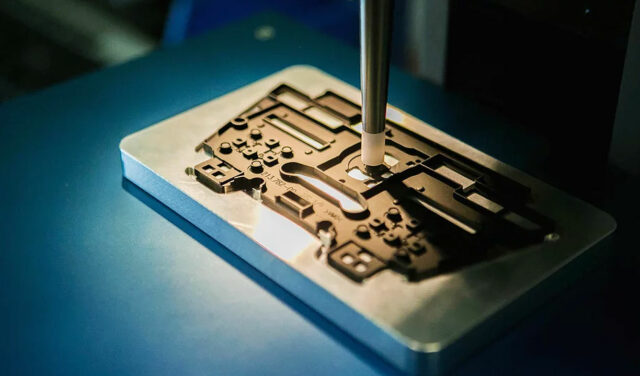
Sateco is a Switzerland-based manufacturer of high-precision silicon keypads and silicone sensors that supplies automotive manufacturers such as Daimler, BMW, Tesla, and Mitsubishi.

According to the BoI, Sateco registered with the Philippine Economic Zone Authority in November last year under the name Sateco Philippines, Inc. for a P600-million to P800-million production facility at the TECO Industrial Park in Pampanga, which includes the production equipment and land lease expenses.

Aside from the Philippines, Sateco has operations in Germany, France, Japan, Czech Republic, Hong Kong, and China.

Sateco’s project has two stages that will employ 300 to 400 workers by 2024 to make high-precision silicone keypads and silicone sensors, providing systems and solutions to the automotive, building automation, consumer goods, and freight transport sectors.

“The company is very much upbeat on their manufacturing operations in the Philippines. They plan to finish the construction of its state-of-the-art plant by September 2023 and start production end of the year. They want to complement their operations in China to cater to North America and Japanese markets,” BoI Managing Head and Trade Undersecretary Ceferino S. Rodolfo said.

Meanwhile, the BoI said Sateco can capitalize on more opportunities in the Philippines amid the adoption of electric vehicles (EVs).

“Electric and next-generation vehicles, including their strategic parts and components such as automotive electronics, batteries, and charging systems are among the priority areas for investment support and incentives in the Philippines,” the BoI said. — Revin Mikhael D. Ochave

Shakey’s says Peri-Peri to open in other cities

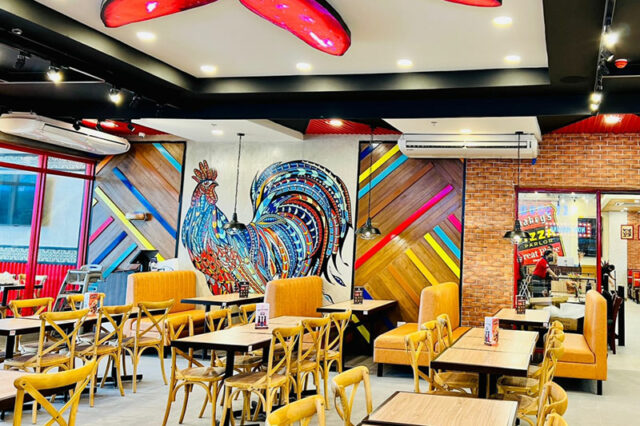
PERI-PERI SM City Tuguegarao

PERI-PERI Charcoal Chicken and Sauce Bar Is scaling up its expansion in 2023 after opening new stores in central and north Luzon last year, the listed company behind the casual dining restaurant chain said.

In a press release on Monday, Shakey’s Pizza Asia Ventures, Inc. said by end-2022, Peri-Peri tripled the number of its stores to 68 from 21 outlets in 2019, the year it was acquired by the food service group.

“Peri-Peri has grown significantly over the past 3 years, despite the pandemic. In a short span of time, it has become a strong number 2 player in the category,” Shakey’s President and Chief Executive Officer Vicente L. Gregorio said.

“Given its strong performance in the Metro, we believe it’s high time to expand to new cities and give their local residents a taste of Peri-Peri,” he added.

According to Shakey’s, the restaurant chain’s expansion program kicked into high gear upon entering the second half of 2022.

In the fourth quarter of last year, Peri-Peri opened stores in Baguio City; Tuguegarao, Cagayan; Cabanatuan, Nueva Ecija; and Cauayan, Isabela.

It also built a new store along the North Luzon Expressway Shell of Asia beside its sister pizza brand, Shakey’s.

“The fantastic response to Peri-Peri is greatly encouraging. To us, it means we’re on the right track — expanding the reach of Peri-Peri to provide more guests with unique and memorable experiences,” Mr. Gregorio said.

“We still see more opportunities for Peri-Peri,” he said, adding that the stores in the north “serve as our proof of concept.”

Shakey’s other brands include pizza chain Project Pie, R&B Milk Tea, and Potato Corner.

On Monday, shares in Shakey’s climbed by 15 centavos or 1.89% to P8.08 apiece. — Justine Irish D. Tabile