Home Blog Page 5375

Novak Djokovic back in old routine; Murray in epic win as weather disrupts Australian Open
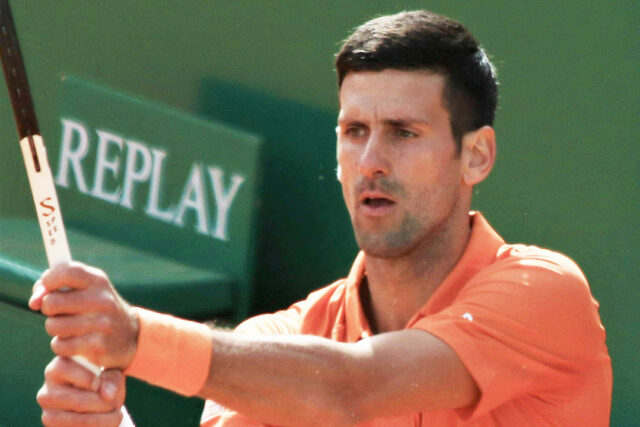
NOVAK DJOKOVIC — SI.ROBI

MELBOURNE — Novak Djokovic returned to the Australian Open nearly 700 days since winning the title for a ninth time and continued exactly where he left off at the Grand Slam he has dominated with a commanding first-round win on Tuesday.

After regular Melbourne adversary Andy Murray conjured some old magic to stop last year’s semi-finalist Matteo Berrettini in a five-set classic, Mr. Djokovic was cheered on to Rod Laver Arena to complete a manic day with scorching heat and drenching rain.

Deprived of a tilt at a record-extending 10th title last year after being deported on the eve of the tournament for not having a COVID-19 vaccination, the Serbian showed his class as he glided past Spain’s Roberto Carballes Baena 6-3 6-4 6-0.

Welcomed like a returning hero by the evening crowd, many sporting Serbian flags, the 35-year-old Mr. Djokovic was imperious throughout and rattled off the third set for the loss of four points to seal an 83rd win at the tournament.

“It was an unbelievable atmosphere,” fourth seed Djokovic, who has now won 22 matches in a row in Melbourne since his last loss in 2018, said on court. “Thanks for the welcome and the reception that I could only dream of. Very happy to be back.”

After the bitter memory of last year when Mr. Djokovic was confined to a hotel housing asylum seekers while awaiting his fate, his return was incident-free as he showed no sign of the hamstring niggle that had cast a cloud in the build-up.

It was far from routine earlier, however, as five-time runner-up Mr. Murray rolled back the years and saved a match point to beat Mr. Berrettini 6-3 6-3 4-6 6-7(7) 7-6 (10-6) in a near five-hour slog and former world number two Alexander Zverev edged Peruvian lucky loser Juan Pablo Varillas in another five-setter.

THREE-HOUR STOPPAGE
Organizers had their work cut out as extreme heat forced a three-hour stoppage on the outside courts. As night fell, a storm brought heavy rain, leaving 11 matches unfinished, including nine which did not even start.

Under the Rod Laver roof, second seed Ons Jabeur was given a scare by Tamara Zidansek before winning 7-6(8) 4-6 6-1.

Coming off a big pre-season, Mr. Murray channelled his halcyon days of 2016 as he raced to a two-set lead against the 13th-seeded Mr. Berrettini, who beat him at the US Open last year. Mr. Berrettini stormed back though and missed an easy backhand on a match point before Mr. Murray sealed victory in the deciding tiebreak with a cruel net cord.

“I just got a bit lucky there at the end with the net cord,” said 35-year-old Mr. Murray. “Right now I’m just unbelievably happy, just proud of myself.”

Twelfth seed Mr. Zverev had a huge scare against world number 103 Mr. Varillas but the German steadied himself to win a four-hour dogfight 4-6 6-1 5-7 7-6(3) 6-4 at the Margaret Court Arena. It was Mr. Zverev’s first win since tearing ankle ligaments in last year’s French Open semi-final against Rafa Nadal.

Top 10 seeds Andrey Rublev and Taylor Fritz eased into the second round earlier on Tuesday with Russian Mr. Rublev beating former finalist Dominic Thiem of Austria 6-3 6-4 6-2 as temperatures nudged 36 degrees Celsius.

EXTREME HEAT
Women’s seeds Aryna Sabalenka and Caroline Garcia earlier enjoyed the relative cool on Rod Laver Arena before the rising mercury sent fans scurrying for shade as organizers invoked the Extreme Heat Policy and halted play on outside courts without roofs.

Fifth seed Ms. Sabalenka, who opened the year by winning the Adelaide title without losing a set, kept up her fine form with an emphatic 6-1 6-4 victory over Tereza Martincova.

Fourth seed Ms. Garcia, who won the WTA Finals last season, was equally convincing with a 6-3 6-0 win over Canadian qualifier Katherine Sebov.

Ms. Garcia will face another Canadian in 2021 US Open finalist Leylah Fernandez, who beat Alize Cornet 7-5 6-2, her first win in the main draw at Melbourne Park.

Mr. Rublev and Ms. Sabalenka, like all Russian and Belarusian players, are competing at the tournament without national affiliation as a result of last year’s invasion of Ukraine.

Tennis Australia on Tuesday morning banned fans from bringing flags of either nation into the Melbourne Park precinct after a Russian tricolor was hung on a bush next to a court where Ukrainian Kateryna Baindl was playing on Monday. “I really thought that sport is nothing to do with politics but if everyone feels better this way, then it’s okay,” said Ms. Sabalenka. — Reuters


Brett Maher’s issues has Dallas Cowboys considering two kickers

COWBOYS kicker Brett Maher might have competition, or friendly company, when Dallas visits the San Francisco 49ers on Sunday in the NFC Divisional playoffs.

Mr. Maher made NFL history in the NFC Wild Card win over the Tampa Bay Buccaneers on Monday night with four missed extra-point attempts. Mr. Maher finally connected on a PAT in the fourth quarter.

“I’m Money Maher’s biggest fan,” Cowboys quarterback Dak Prescott said. “I talked to him individually. ‘I just said, let that go. We’re going to need you. I just played like — a week ago.’ So, I mean, that happens. … Personally, no doubt that he’ll come back next week and be perfect and help us win.”

Mr. Maher, 33, made 50 of his 53 PATs in the regular season and 29 of 32 field-goal attempts. His previous playoff experience came in 2018 with the Cowboys. In two games, he was 5-for-5 on PATs and 1 of 2 on field-goal attempts.

But Mr. Jones said Tuesday he won’t rely on a strong history with Mr. Maher and fears going into an elimination game with doubts at the position.

“This is a classic case of looking at what he has done for this team on the field all year, not just last night,” Jones said Tuesday on 105.3FM in Dallas. “But kicking is a technical thing. It has everything to do with, frankly, mentally having it all together as you step up there.

“We’ll read this thing as the week goes along. I thought when he came out at halftime, watched him warm up and he’s making all of the kicks. I figured that was behind him. But we will take a look at it. We can’t … go into the rest of this tournament with shakiness at kicker.”

Mr. Jones said he will consider carrying two kickers on the game-day roster at San Francisco.

“We did it last year, we had one that was good on shorter kicks and good on extra points,” Mr. Jones said, adding that he expects coach Mike McCarthy to be more willing to go for two points. “It’s an imposition to have to use up that extra roster spot, but it’s doable.”

Mr. Maher’s misses in the Cowboys’ 31-14 win were significant in betting results, with a 45.5 point total at most books. The “over” hit on each of the other five playoff games during wild card weekend.

Hall of Fame kicker Morten Anderson chimed in on Twitter, asking, “Are the Cowboys hiring?”

Mr. Andersen, 62, played in 2,544 career games for five different teams from 1982-2007 and made 849 of 859 career extra-point tries. — Reuters

INEOS confirms entering bidding process to buy Manchester United

JIM Ratcliffe’s company INEOS has formally entered the bidding process to buy Premier League soccer club Manchester United, a spokesperson for the chemical firm said on Tuesday.

The Glazer family, United’s US owners, said in November they had begun looking at options for the 20-times English champions, including new investment or a potential sale, 17 years after they bought the Old Trafford club.

In August, British billionaire Mr. Ratcliffe, a long-time fan of the club, expressed interest in buying United, Reuters reported. “I can confirm that we have formally put ourselves into the process,” an INEOS spokesperson said in a statement on Tuesday.

United declined to comment when contacted by Reuters.

The Times newspaper, which first reported the news, said formal bids were expected to start next month, with United potentially changing hands by the end of the season.

Interest from the United States, the Middle East and Asia is also expected.

Manchester United’s shares rose 1.2% in New York trading on Tuesday afternoon.

INEOS has long been involved in sports, with the company acting as principal partners to eight-times Formula One champions Mercedes, owning the INEOS Grenadiers cycling team and serving as performance partner to the New Zealand rugby team.

The energy company’s interest in the United sale process comes after the group also bought French Ligue 1 club Nice in 2019.

Mr. Ratcliffe’s name was widely mentioned among United fans as someone many would welcome, although there are fears he might be priced out with some estimates putting the club’s worth at more than $4.5 billion.

United fans have been clamoring for a change of ownership and the Glazers, who also own the National Football League’s Tampa Bay Buccaneers, have been the target of intense criticism as the team last won silverware back in 2017, lifting the Europa League and League Cup trophies.

The Manchester United Supporters Trust (MUST) said in November that the club needed new owners and fresh investment to halt years of decline and fans should be given a real say in how it is run in future.

In April, thousands protested outside Old Trafford, lighting flares and singing songs demanding the Glazers “get out of the club”. — Reuters

Manuel ‘Manolo’ Lopez, 80

ROCKWELL LAND

Manuel “Manolo” Moreno Lopez, former Meralco president and CEO, former ambassador to Japan, grandfather, father, husband, a public servant within the private sector and, most of all, a gentleman, passed away at the age of 80 on Jan. 12.

Perhaps, the best way to accurately describe and narrate Manolo’s life is to refer to Manolo, A Portrait, photo book put together by his wife, Marites Lagdameo, to honor him on his 80th birthday on May 24, 2022. The book is devoid of hyperbole, exaggerations, and downright misrepresentations to create a false identity. Manolo never needed such contrived, slick, and PR-oriented “alternative facts” because he, his family, and those who counted in his life, knew who he really was.

He was, as 1987 Constitution framer and former Commission on Election (Comelec) chairman Christian Monsod said in the photo tribute, a person of “quiet accomplishment.”

Portrait covers the years from 1942, the Martial Law period, the EDSA Revolution, Manolo’s retirement from Meralco, his ambassadorial stint in Tokyo, up to 2019, the year Manolo suffered a massive stroke. But that is going a bit ahead.

We engaged Manolo when he and my eldest brother, Luis or Sonny, were high school student-cadets at the Baguio Military Institute (BMI) and I was a grade school student at La Salle at Taft Ave. Sonny had heard of bullying by much older and bigger boys, twice my size, and he decided to visit the campus during recess with Manolo. Sonny had been a victim of a slapping incident when he was in Grade Two by a boy three grades ahead of him. He wasn’t going to let that happen to his younger sibling and invited an all-too-willing Manolo to sort out the matter. The two were able to confront the group of three boys who denied the “allegation.” Upon questioning, they said that they had actually engaged in bullying but were just teasing and perhaps taunting.

That was one aspect of Manolo’s character that constantly surfaces in the Portrait: fierce loyalty to friends as mentioned by Marites and close buddies. These close boyhood friendships were built over the years at BMI and the exchange of visits among the BMIers’ homes where their parents, like mine, would host seven or eight hungry young men for lunch or dinner when they would come down from Irisan Heights, just outside Baguio City, during the summer break.

In the Introduction that Marites wrote, she confirms this quality of Manolo’s personality, “But if there is any aspect of his life that speaks of him so well, it is the enduring presence of those alongside him. Beside his family, Manolo is almost never without the company of longtime colleagues, close business associates, fellow (art, guns, orchids, parrot, cockatoo) collectors, or boyhood friends. Where there were communal breakfasts and common hobbies before the global pandemic, there are now weekly Zooms and constant catchups over phone calls and group chats. All throughout this period of physical isolation, he has nurtured the bonds of friendship across multiple time zones and even multiple generations.”

Feeling isolated and sorry for oneself was something from which Manolo (and probably the entire Eugenio Lopez, Sr. Clan) was immune. Despite all the threats to their businesses and personal safety, the Lopezes, including Manolo, took all these as part of rendering “service to the Filipino people” in the most objective and truthful way.

As Marites says in the Introduction, “But you see, Manolo was never one to feel isolated — not even during the most difficult times across all the various posts he has held and the organizations he has led. Through the terror of Martial Law, the many storms that shook the corporate boardrooms, and the literal earthquake and tsunami that shook Japan very shortly after he became ambassador, Manolo’s spirit was always held aloft by the fierce loyalty and friendship of those around him, and by his own deep sense of responsibility towards his friends, his countrymen and his nation.”

In 1965, a newly married Manolo — after a stint at the Sta. Clara University — left his job at PCI Bank to accept his father’s invitation to join Meralco. He started his career at the bottom, working with meter readers and bill collectors.

Very fresh in one’s memory is the message three nights ago of Manolo’s youngest child, Mark, chairman of ABS-CBN, in response to the outpouring of sympathy for the Lopez family during the last night of Manolo’s four-day wake at Rockwell. Mike recalled that Manolo had asked his people to put together a management development program for him that included going up with linesmen to fix Meralco electric poles and installations, and to eat with ordinary linesmen “boodle style” while out in the city streets.

In 1966, Manolo was assigned to General Services where he was appointed Vice-President in charge of Purchasing and public relations. In 1968, Manolo got a chance to be involved in one of his favorite sports — basketball. Manolo served as owner of the Meralco Reddy Kilowatts after the Ysmael Steel Admirals disbanded and Manolo formed the Meralco team. The Reddy Kilowatts won a couple of championships on the backs of Sonny Jaworski, Big Boy Reynoso, Orly Bauzon, Boy Marquee, Larry Mumar and, later on, Francis Arnaiz. The Reddy Kilowatts were coached, at different times, by Fely Fajardo, Tito Eduque, and Bay Mumar.

In 1969, Manolo was appointed concurrent CEO of Meralco’s engineering subsidiary, Philippine Engineering and Construction Co. (PECCO). That same year, Manolo went to Harvard Business School to attend the Management Development Program. It is also during this year that Ferdinand Marcos made history by being the first Philippine president to get reelected. His vice-president, Fernando Lopez, Manolo’s uncle, was also reelected. After what should have been a celebration of a viable partnership, Marcos removed Fernando Lopez (FL) from the equation and eliminated a threat to the ambitions of another “FL.”

On Sept. 20, 1972, Manolo was on a Qantas airplane, flying back to Manila from a business trip in Australia, when Marcos signed Proclamation 1081 putting the entire country under Martial Law. Marcos also signed Letter of Instruction No. 2 ordering the military to take over all public utilities like Meralco. The order was carried out in the early hours of Saturday, Sept. 23, 1972, together with the arrest of opposition leaders like Ninoy Aquino, Jose W. Diokno and, a few days later, Eugenio Lopez, Jr.

On Feb. 28, 1986, Manolo returned to Meralco after being appointed its deputy officer in charge as it was one of several companies sequestered by the Presidential Commission on Good Government (PCGG). Upon his return, Manolo was hoisted on the shoulders of euphoric employees and officials of the utility.

Shortly after we assumed office as Secretary of the Department of Agrarian Reform in July 1987, Manolo and I flew on a Meralco helicopter over huge tract of land in then rebel-influenced Jalajala town in Rizal. Manolo said that Meralco was donating the land to the government’s comprehensive agrarian reform program. The power utility had shelved its plans to put up a nuclear power plant in the area. During the chopper rise, Manolo reminded me of the fun times he and my brother had. I reminded him in turn of the La Salle visit he and my brother made on “my behalf.”

On Sept. 30, 1991, after a five-year legal battle with the government over the ownership of Meralco, the Supreme Court lifted the sequestration order on the Meralco shares. The Lopez family gained 16% of Meralco through Benpres and First Philippine Holdings. After 18 years, Manolo was Meralco CEO without the need for a presidential appointment.

There is more that one can write about Manolo’s life which is very much intertwined — by fate and through no fault of his — with Philippine politics and its personalities. We stop at this point.


Philip Ella Juico’s areas of interest include the protection and promotion of democracy, free markets, sustainable development, social responsibility and sports as a tool for social development. He obtained his doctorate in business at De La Salle University. Dr. Juico served as secretary of Agrarian Reform during the Corazon C. Aquino administration.

Data and health

FREEPIK

Healthcare workers should always have quick and easy access to the most up-to-date medical information and technologies as they provide care and service to their patients. In this line, a well-planned data management system can allow healthcare personnel to make better informed decisions in the least possible time while delivering healthcare services.

This is the intention of the Universal Health Care Act, or Republic Act 11223, which was passed in 2019. However, more than three years since, many of the law’s provisions are still to be implemented or operationalized. The law’s main objective is to ensure that all Filipinos can access basic healthcare and ward accommodation, at the government’s cost. In this line, it also provides for the networking of all health information systems.

Ideally, anybody should be able to walk into the nearest clinic or hospital to get medical attention without having to worry about doctors’ fees, hospital cost, procedure cost, or even basic medicine. Moreover, one’s health information — including medical records and insurance information, if any — should also be accessible online to any of these medical facilities.

In fact, the Department of Health (DoH) book on RA 11223 specifically notes that the law “requires all health service providers and insurers to maintain a health information system consisting of enterprise resource planning, human resource information, electronic health records, and an electronic prescription log consistent with DoH standard.”

The DoH also notes the use “of integrated health information systems to reduce or eliminate overlaps, and ensure generation and reporting of quality and timely reports for operation and delivery of health services.” Systems should also allow “different health information systems and other e-health solutions of health care providers, insurers, and health-related entities to seamlessly communicate, share, exchange, process, and submit health and health-related data and reports.”

All health-related information will be shared with PhilHealth, which will maintain a “National Health Data Repository to ensure that quality health and health-related data and reports are readily available and made accessible to every stakeholder in the right way, and processed in a lawful, ethical, secure, consistent, and efficient manner at all levels of the healthcare system.”

Question is, three years into RA 11223’s implementation, where are we in terms of developing a National Health Data Repository (NHDR) and in instituting an Integrated Health Information System (IHIS)? To this date, I reckon, what we have is a fragmented system. At best, there are stand-alone systems that work in localized networks. I doubt very much if government hospitals, for instance, are all interconnected.

And this, to me, is the big challenge that should be addressed collectively by the government and the healthcare community. The initiative to maintain the NHDR, and to network all medical facilities, will require massive investment of resource, time, effort, and training. All stakeholders should be involved in the process.

The law actually requires the DoH and PhilHealth to develop and maintain the proposed IHIS and NHDR, as well as to institute a national health data standard for interoperability of all local health information systems. It is also their mandate to provide for a platform for the submission and processing of health and health-related data.

The law goes a step ahead by also requiring the government to produce an updated list of the mandatory national health data standards. These standards should be available in a standard health data catalogue as well as in the National Health Data Dictionary. The law envisions that connectivity to IHIS and the use of the NHDR will all be part of DoH and PhilHealth licensing and accreditation requirements in the future.

But other than providing for law three years ago, and additional regulations since then, it doesn’t seem like we are moving fast towards fully networking clinics and hospitals and integrating their information systems. At this point, many clinics and hospitals and healthcare facilities, particularly outside highly urbanized areas, do not even have stable internet or data connection. And, there is still no national data center for health information.

PhilHealth should urgently move on the creation of the NHDR, without which, integration won’t work. After all, PhilHealth is supposed to provide the platform for the safekeeping and exchange of information. The IHIS as well as NHDR are all integral parts of making universal healthcare a reality.

The law requires “all public and private, national and local health-related entities to submit health and health-related data to PhilHealth. These include administrative, public health, medical, pharmaceutical, and health financing data, which must be submitted through the [NHDR]. Such data will be made accessible to all stakeholders at all levels for healthcare utilization.”

The repository is supposed “to provide a single point of data submission and access to health evidence, and quality data and information. Up-to-date reports can be readily made available to support decision-making.” The NHDR also aims to improve access to public health and health-related data, and the management of patients’ medical records, and thus improve consultations and coordination of care as health information is easily exchanged between healthcare providers.

Imagine a situation where the NHDR gives the patient information on where to find specific medical assistance as well as physicians, with information on their experience, services, and fees. Patients can also search for health insurance institutions and the scope and cost of their packages. NHDR will also allow them access to information on DoH-licensed and PhilHealth-accredited healthcare facilities; accredited products and equipment; the cheapest drugs and laboratory examination services; and the location of nearest pharmacies and healthcare institutions.

Meantime, clinics and hospitals will gain access to patient records and medical history at the point of care. NHDR will also give them access to accurate and timely health data, as well as “evidence-based information to support clinical decision-making, and treatment design and assessment.”

All this aims to make the delivery of health services more efficient, and perhaps less costly, and mostly at government’s expense. This, after all, is the essence of universal healthcare. But the process starts with the collection of data and the effective sharing of information. The structure and system for this should already be put in place. In this day and age, data is health.


Marvin Tort is a former managing editor of BusinessWorld, and a former chairman of the Philippine Press Council

matort@yahoo.com

ASEAN needs cross-border payment system for social security

IURIIMOTOV-FREEPIK

WHEN Saw Sunday was severely burned and disabled in a workplace accident at a construction site in Thailand in 2019, his future looked bleak. However last month the former migrant worker traveled to Bangkok from his home in Myanmar to collect the first installment of benefit payments that he will receive for the next 15 years.

Saw Sunday was enrolled in Thailand’s Workers’ Compensation Fund and the Thai Social Security Office approved his claim relatively quickly. However, it was not possible for him to access the payment from Myanmar and ultimately, he needed to travel to Bangkok to collect his benefit.

Saw Sunday gaining compensation is a success. But it is also a sobering reminder of the difficulties migrant workers face to gain social protection and receive payments in the ASEAN region. Countries in the region need to establish bilateral or multilateral systems for cross-border payments of social security benefits.

Still, Saw Sunday is one of the lucky ones. The reality is that a large proportion of the 10 million international migrants in ASEAN have no access to social protection, both in their countries of destination and origin.

The COVID-19 pandemic was a stark reminder how badly migrant workers need it. During COVID-19, an International Labor Organization (ILO) rapid assessment of ASEAN migrant workers found that 97% who were unemployed had no access to any social security support. Limited access to healthcare, no sickness benefits, and no unemployment benefits exacerbated the COVID-19 impacts on migrant workers and threw many migrant worker families into debt and poverty. Employers also lost qualified staff which penalized them during the recovery phase.

On the policy front, some progress has been made in recent years in extending social protection to more migrant workers. For example, in Malaysia social security was extended to cover migrant workers in 2019 and domestic workers, including migrant domestic workers, in 2021. While these policy revisions are important steps in the right direction, more remains to be done to ensure that migrant workers in all sectors and all types of workplaces in ASEAN are enrolled in social security schemes equal to those available for local workers.

Countries of destination benefit from extending migrant workers’ social protection. Migrant workers as a group are usually net contributors to social security. Allowing this young, fit, and employed group to join and contribute to social security schemes helps build stronger and financially healthier social security systems by growing the tax base, spreading risk across a larger pool of members, and enhancing financial sustainability. This will be critical especially in ASEAN countries with rapidly aging local populations.

Due to the nature of labor migration in the ASEAN region, political commitment to provide effective and comprehensive social protection to migrant workers also needs to include portability of social security benefits. This means collaborative arrangements between social security organizations in countries of origin and destination to enable cross border payment of benefits, including periodic pension payments.

We commend the adoption by ASEAN leaders at their summit in Cambodia last month of the ASEAN Declaration on portability of social security benefits for migrant workers in ASEAN. This Declaration is a significant demonstration of the regions’ joint commitment to work towards portability of social security benefits for migrant workers. But a lot remains to be done to make this a reality for migrant workers.

As the next step the region needs bilateral agreements between governments to establish principles, processes, and administrative infrastructure for handling cross-border payment of benefits. Without concrete progress in establishing the required agreements and processes, the benefits of including migrant workers in social security and facilitating mobility will remain out of reach for ASEAN countries.

The International Labor Organization is committed to support our constituents and partners at grassroots, national, bilateral, and regional level to support efforts to ensure comprehensive social protection for migrant workers in the ASEAN region. Saw Sunday and 10 million other migrants in the region deserve this.


Panudda Boonpala is the deputy regional director of the International Labor Organization’s Regional Office for Asia and the Pacific.

Brand attributes

PATRIK MICHALICKA-UNSPLASH

BRAND attributes are usually applied to products promoted by advertising, pricing, consumer experience, and word-of-mouth. Sneakers companies develop a brand trying to appeal to non-athletes, even as they are endorsed by celebrities in professional sports. Brand attributes of products can be personal characteristics such as physical fitness, daring, agility, and, yes, sex appeal.

If brands of products acquire human traits to project empathy, do humans conversely acquire product attributes like durability, low maintenance, and dependability? Do high-profile business tycoons acquire their own brand attributes?

It is no wonder that lifestyle coverage of CEOs in TV talk shows and glossy magazines (online versions) feature the personality outside the cubicle, or “after hours.” His personal brand has non-corporate attributes akin to celebrities in entertainment like generosity, ubiquity, and closeness to the powers that be.

Modifiers have their corporate equivalent. “Adventurous” means risk-taker. “Family-oriented” means conservative and risk-averse. Pictures of moving to some luxurious resort property translates into free-spending leadership style, and likely to provide generous benefits to his executives beyond the Guaranteed Annual Cash Compensation (GACC) like stock options and family travel.

The head of an electric car company once branded simply as the richest man in the world needed a re-branding when he acquired a social media platform. Here, he fired a big chunk of human resources and positioned the platform as a free-for-all soapbox. He then acquired the new branding of a media maverick. Meanwhile his old company was missing a CEO and the acquired company, by a vote of the subscribers, wanted a replacement too.

Personal brands are not static. They change with the circumstances around the organizations they are associated with. Unlike sneakers, cars, detergents, or beach resorts, a person’s brand is dynamic. The personality is changed by events. It deals with the real world of conflict and bad decisions. A company like the exchange for cryptocurrency also consigns its leader to the corporate graveyard when it fails.

Of course, there are unbranded personalities. Because of the small space they occupy in social media, they do not merit any kind of branding. There’s nothing wrong with being an unbranded (or generic) personality.

A CEO just doing his job well and increasing shareholder value does not have much use for branding or being the cover story of a magazine or a corporate tabloid site. Such generic and low-key managers are capable of marketing outstanding products resulting in profitable companies that benefit their stakeholders. They don’t need to be interviewed while training for a triathlon or writing haikus and collecting art.

Branding can be unplanned and left to chance with no image consultant under retainer. The no-nonsense executive has a thought balloon — I’ll just do my job.

Or the profile can be a planned effort managed by the same marketers that give emotional attributes to burgers, yoghurt, and shampoos. Sir, what attributes do you want associated with you?

Establishing a desired image needs to be planned and cannot be hurried. It’s like selecting the color, material, and shape of floor tiles. Once installed, it is not easy to rip up and undo without having to change the wall color, furniture, and table lamps. Image must be built up and integrated with the person’s behavior. It must fit the personality of the subject. A paunchy guy cannot embrace a sporty image, even if it’s just for bowling.

Ordinary people go through life without being branded. There is no need to be mindful of perception if one is not even perceived. The worst that anonymous individuals get is an image that falls under the category of bad habits — too loud, bad dresser, always late, or freeloader. Now and then they are accosted by friends who have not seen them for a long time — my God, you’re so fat; your stomach needs to have a separate zip code. While this comment stings, it does not make the rounds of social media and become a viral hit.

The generic pill can sometimes produce the same therapeutic result without the additional branding expense. Should CEOs emulate excellent leaders who shun publicity? Can’t the corporate numbers speak for themselves? Maybe, being successful but unknown offers little appeal.

A good personal brand is earned… but not always as intended.


Tony Samson is chairman and CEO of TOUCH xda

ar.samson@yahoo.com

Singapore expects full tourism recovery by 2024

REUTERS

SINGAPORE — Singapore’s international arrivals beat forecasts in 2022, paving the way for its tourism sector to recover to pre-pandemic levels by 2024, its tourism authority said on Tuesday.

The city-state saw 6.3 million visitors last year, exceeding the Singapore Tourism Board’s (STB) forecast of between 4 to 6 million, while revenue from their spending was estimated to reach S$13.8 billion to S$14.3 billion ($10.45-10.82 billion).

STB’s Director of Communications Terence Voon said these numbers were achieved even though Singapore had quarantine measures in the first quarter of 2022, reflecting that there is “strong pent-up demand” to visit Singapore.

But factors such as flight capacity and any renewed border restrictions could moderate tourism recovery, said STB’s Chief Executive, Keith Tan.

Tourism contributes about 4% to Singapore’s annual gross domestic product, according to the STB. In 2019, the regional travel hub saw a record 19.1 million visitors and S$27.7 billion in revenue.

Following the announcement of reopening of Chinese borders, the Southeast Asian country is expecting 12 to 14 million arrivals and up to S$21 billion in revenue in 2023.

There were 3.6 million visitors from China in 2019, making it the largest contributor to Singapore’s tourism before the pandemic. But while it had strict travel restrictions in place, China was overtaken by Indonesia, India, Malaysia, Australia and the Philippines.

As of January this year, there are 38 flights from Singapore to China weekly, which is about 10% of the pre-pandemic capacity. The Singapore transport minister said in parliament last week that airlines have applied to operate more flights between the two countries, and the authorities will evaluate and approve them progressively.

“If Singapore were to receive more visitors in 2023 than it did in 2022, we could expect a decent boost from the resurgent services sector to act as a counterweight to softer domestic demand and slowing global trade,” ING said in an analysts’ report last week. — Reuters

Ukraine blames Russia for most of over 2,000 cyberattacks in 2022

A broken ethernet cable is seen in front of binary code and words “cyber security” in this illustration taken on March 8, 2022. — REUTERS

KYIV — A senior Ukrainian official blamed Russia on Tuesday for carrying out the bulk of more than 2,000 cyberattacks on Ukraine in 2022, speaking at a news conference that he said was itself delayed because of a cyberattack.

The official, Yuriy Schygol, told reporters that his livestreamed conference was forced to start 15 minutes late because of a Russian hack, though he did not elaborate or present evidence for his assertion.

“All that the Russian hackers could do was to delay the start of our briefing by 15 minutes,” said Mr. Schygol, head of the State Service for Special Communications and Information Protection.

During the news briefing, he said Ukraine had been hit by 2,194 cyberattacks in 2022, with 1,655 of those coming after Moscow’s Feb. 24 invasion.

Government institutions sustained 557 cyberattacks last year, he told reporters, laying the blame for the bulk of the attacks at Moscow’s door.

“Essentially all hackers who work with Russia, most of them don’t even hide their affiliation… they are all funded by the FSB (Russia’s Federal Security Service), are on military service, or are in the employ of those agencies,” he said.

There was no immediate comment on his allegations from Moscow. — Reuters

Court sentences Macau junket mogul Alvin Chau to 18 years in jail

Visitors take photos in front of a scale replica of Eiffel Tower in Macau, China, Aug. 16, 2016. — REUTERS/BOBBY YIP

HONG KONG — A Macau court sentenced a top gambling boss to 18 years in prison after he was found guilty of 162 charges, including enabling and operating illegal gaming, public broadcaster TDM reported on Wednesday.

Alvin Chau was chairman of Macau’s Suncity junket operator — which brokered the gambling activity of Chinese high rollers — until December 2021, a month after his arrest.

The sentence marks a dramatic turnaround for the businessman, who was also found guilty of fraud and of running a criminal syndicate, and who once presided over the gambling hub’s VIP industry.

Mr. Chau denied all wrongdoing during his two-month trial, which was watched closely by many in the former Portuguese colony, where he has a celebrity-like status.

Mr. Chau must pay the Macau government more than HK$6.5 billion ($830.66 million) as well as HK$178 million to HK$770 million to casino operators MGM China, Wynn Macau, Sands China, Galaxy Entertainment and SJM Holdings, TDM said.

Macau is the only city in China where citizens are permitted to gamble in casinos. Tax revenues from its casinos account for more than 80% of government income.

Chau’s lawyers had argued that he did not operate any illegal gambling or commit money laundering and that his business in the Philippines was permitted by local authorities there. No one from Suncity Group had promoted gambling on the mainland, his lawyers said.

Junket operators help facilitate gambling for wealthy Chinese in Macau, extending them credit and collecting on their debt on behalf of casino operators. Marketing or soliciting gambling in mainland China is illegal.— Reuters

Mr. Chau’s Suncity was a major player in Macau until 2019, before prior the coronavirus outbreak, accounting for about 25% of total gaming revenues, industry executives said.

That year, Macau casinos generated $36 billion in revenue.

The junket industry has collapsed in the former Portuguese colony since Mr. Chau’s arrest, with all of Suncity’s VIP rooms shuttered. Many other operators folded, hurt by poor sentiment and a lack of business due to COVID-19 related travel restrictions.

Macau’s government still permits junkets to operate but they face far more scrutiny after new legislation approved in December last year which regulates their licensing and activities.

Junkets are now only allowed to partner with a single casino; before they could work with as many as they wanted with little oversight.  Reuters

Chinese who lost relatives to COVID angry at failure to protect elderly

2019 Coronavirus Outbreak in Beijing — REUTERS/THOMAS PETER

BEIJING — Former high school teacher Ailia was devastated when her 85-year-old father died after displaying COVID-like symptoms as the virus swept through their hometown in the southeastern province of Jiangxi.

While her father was never tested, Ailia and her mother were both confirmed positive around the same time and she believes that COVID was a cause in his death.

As hundreds of millions of Chinese travel to reunite with families for the Lunar New Year holiday starting Jan. 21, many will do so after mourning relatives who died in the COVID-19 wave that has raged across the world’s largest population.

For many, bereavement is mixed with anger over what they say was a lack of preparation to protect the elderly before China suddenly abandoned its “zero-COVID” policy in December 2022 after three years of testing, travel restrictions and lockdowns.

Ailia, 56, said that she, like countless Chinese, had supported reopening the economy. Her father died in late December, weeks after China dropped its COVID restrictions.

“We wanted things to open up, but not to open up like this —  not at the expense of so many elderly people, which has a huge impact on every family,” she said by phone.

On Saturday, China announced that there had been nearly 60,000 COVID-related hospital deaths since the end of “zero-COVID” — a 10-fold increase from previous figures — but many international experts say that is an undercount, in part because it excludes people who died at home, like Ailia’s father.

Among those fatalities, 90% were 65 or older and the average age was 80.3 years, a Chinese official said on Saturday.

Many experts have said China failed to take advantage of keeping coronavirus disease 2019 (COVID-19) largely at bay for three years to better prepare its population for reopening, especially its hundreds of millions of elderly — criticism that China rejects.

Shortcomings cited included inadequate vaccination among older people and insufficient supplies of therapeutic drugs.

A Chinese official said on Jan. 6 that more than 90% of people above aged 60 had been vaccinated, but the share of those over age 80 who had received booster shots was only 40% as of Nov. 28, the most recent date for which that data was available.

“If only they used the resources used for controlling the virus for protecting the elderly,” said Ailia, who like many people interviewed declined to use their full name given the sensitivity of criticizing China’s government.

Chinese officials have repeatedly cited the importance of protecting the elderly, announcing various measures, from vaccination drives to setting up a task force in Shanghai, China’s biggest city, to identify high-risk groups.

Beijing’s decision to end “zero-COVID” came after rare widespread street protests against the policy in late November, but public complaint over China’s handling of the end of COVID curbs has largely been via heavily censored social media.

Several analysts said China’s handling of COVID had eroded confidence in the government, especially among upper-middle class urbanites, but they did not see it as a threat to the rule of President Xi Jinping or the Communist Party.

RUSHED AND CHAOTIC
Lila Hong, 33, who works in marketing for a carmaker, was in Wuhan at the start of the pandemic there three years ago. While her family made it through that harrowing initial period when little was known about the coronavirus, last month she lost two grandparents and a great-uncle after they caught COVID-19.

Hong recalls visiting with her father to a crowded Wuhan crematorium to collect the ashes of her grandparents — a grim but common experience during China’s COVID surge.

“It should have been a very solemn and respectful situation. You imagine it like that, but in fact it felt like queuing up in the hospital,” she said.

“I’m not saying reopening is not good,” said Hong. “I just think they should have given more time for preparatory work.”

A Beijing resident surnamed Zhang, 66, said he had lost four people close to him to the virus since early December including his aunt, 88, who was infected while in hospital.

Like others, he said he felt the aftermath of her death was chaotic, rushed and not keeping with tradition.

“People haven’t had the opportunity to say farewell to their loved ones. If we cannot live a decent life, we should at least be able to have a decent death,” he said.

“It’s very sad.”

TRUST DEFICIT
Of seven grieving relatives Reuters spoke with for this article, all but one said COVID was left off the death certificates of their loved ones, even though they believe it was a key trigger for their deaths.

Relatives were likewise sceptical about official death tolls, with several citing lost trust in the government during three years of “zero COVID” pandemic management.

Philip, a 22-year-old student from Hebei province, which surrounds Beijing, supported November’s anti-lockdown protests but feels let down by how the reopening has been managed and blames the government.

“It seems like they have all the power in the world and yet they did not do this well. If it was a CEO of a company I think he would have to resign,” said Philip, who lost his 78-year-old grandfather on Dec. 30.

“The hospital didn’t have any effective medicine,” he recalled. “It was very crowded and there weren’t enough beds.”

After his grandfather died, his body was removed from the bed, quickly replaced by another patient.

“The nurses and doctors were so busy. They seemed to be constantly writing death certificates and giving copies to relatives. There were so many deaths … it’s a huge tragedy.” — Reuters

Automaker BYD takes cautious approach to US in global EV push

BEIJING — Chinese electric vehicle (EV) giant BYD is embarking on a rapid global expansion to challenge Tesla but for now it’s stuck in the slow lane on its rival’s home turf.

While BYD has not fully articulated its global ambitions in public, a concerted worldwide push has become the single most important strategic focus for China’s biggest EV maker, four sources familiar with BYD management’s thinking said.

Besides a drive into some European markets already underway, BYD spent much of last year conducting a study on how to set up a US distribution network for its latest electric models, two of the sources said.

They described the study as advanced and serious, with specific recommendations from Detroit-based consultancy Urban Science on how many outlets in each state and city BYD would need, as well as formats for the brick-and-mortar stores.

The momentum was building towards an announcement at this year’s global CES tech show in Las Vegas, where BYD was planning to showcase a new generation of battery electric vehicles (BEVs) and plug-in hybrids for the US market, a BYD official said.

The announcement never came.

Tense relations between Washington and Beijing, anti-China sentiment in the United States and President Joseph R. Biden’s move to prioritize home-grown production of EVs and batteries all pushed BYD to hit the pause button, one of the sources said.

BYD’s management has yet to give the project a final green light and an aggressive US expansion remains unlikely for the foreseeable future, the source said.

“BYD is taking a cautious approach to the US,” the person said. “Think about all the US-China political tensions and then think about the craziness of the whole world now. You don’t want to jump into a big mess.”

BYD’s US project was complicated by the Biden administration’s Inflation Reduction Act (IRA), which imposes rules on where to source battery materials and disqualifies EVs produced outside North America for a $7,500 purchase rebate.

“Who would start selling cars with a $7,500 disadvantage?” said another of the sources.

BYD declined to comment for this report.

U-TURN
BYD, which stands for Build Your Dreams, was the world’s biggest seller of BEVs and plug-in hybrids in 2022 with a total of 1.86 million sales — the vast majority in China and well ahead of Tesla on 1.3 million overall.

BYD still trails Tesla in terms of fully electric cars by almost 400,000, though the Chinese company is planning to ramp up sales quickly at home and abroad, having already increased its BEV sales by 184% in 2022 from the previous year.

To be sure, BYD is not the only Chinese company in the auto sector to rein in its US ambitions because of the geopolitical backdrop and moves by Biden to promote local production.

Chinese battery giant CATL has slowed its planning for investment in battery plants in the United States and Mexico due to concerns the IRA rules on sourcing materials would drive its costs higher.

US firm HAAH Motors Holdings tried to import cars designed by China’s state-owned Chery Automobile and came up with plans for a US factory that would bring jobs to America.

But the two pulled the plug in 2021 when HAAH could not raise enough money to follow through, due to what executives described as concerns over US tariffs and trade tensions.

BYD has been making electric buses in the United States for years and supplies cities such as Los Angeles and Long Beach from a factory in Lancaster, California, built a decade ago.

But when it comes to EVs, BYD’s leaders, including Chairman Wang Chuanfu, knew as recently as five years ago that their cars were not ready for the global market, due to their quality and other deficiencies, two of the sources said.

They have since done a U-turn.

Leveraging its latest range of electric cars such as the Han sedan and the Tang crossover, BYD has stormed into a commanding lead in China, and made inroads into other markets starting with Norway in 2021, and now including Australia, Britain, Brazil, Costa Rica, Germany, Japan, Mexico and Singapore.

BYD is banking on lower costs than most rivals to eventually overtake the world’s biggest carmaker — Japan’s Toyota — as EVs become the cars of choice.

VERTICAL INTEGRATION
In the medium term, BYD, which is backed by Warren Buffett’s Berkshire Hathaway BRKa.N, is shooting for more than 3 million car sales a year worldwide, two of the sources said.

BYD did not respond to requests for comment about sales targets.

Global consultancy LMC Automotive believes the idea of selling more than three million vehicles before 2030 is not far-fetched, although it said most sales would still be in China.

LMC said BYD’s ability to offer a full range of globally attractive and well-priced full EVs in mainstream and premium markets made its sales aspirations credible.

Zhang Wei, founder of Yuanhao Capital Management and BYD’s 10th biggest shareholder as of the first quarter of 2022, believes BYD’s prospects should be even better.

He told Reuters the 3 million target would be within reach by around 2025 and BYD should be able to sell 10 million vehicles a year by the early 2030s.

Mr. Zhang, who began building a sizable stake in BYD around 2015, told Reuters he likes the company because its chairman has created the kind of vertically integrated, cost-competitive electric carmaker Elon Musk is still struggling to achieve.

Unlike many rivals, BYD can meet most of its battery and EV systems needs alone. It sources key battery materials in part from its mines in China and makes its own batteries and semiconductors, including the power-management chips that are crucial components in EVs, Zhang said.

“Other than windshields and tires, they can make on their own just about everything in the car. They have their own construction company that helps build factories. That’s how they can speed things up,” he said. “I would say BYD at this point is already better positioned than Tesla in the EV era.”

According to two Toyota officials who are close to Toyota’s joint R&D center with BYD in Shenzhen, BYD’s product development cost is 20% to 30% lower than at the Japanese carmaker.

“The high level of vertical integration in its battery supply chain gives it a clear cost advantage over similar carmakers, an enabler for rapid expansion both within and outside of China,” LMC analyst Al Bedwell said.

Still, even though BYD is taking a cautious approach towards the United States now, it will likely focus on the US car market in the longer term, the sources said.

“America is going to be a key, key part of this global push strategy,” one said. — Reuters

ADVERTISEMENT
ADVERTISEMENT