Home Blog Page 5335

Diokno vows to keep peso from breaching 60

BW FILE PHOTO

The Philippines will act aggressively to prevent the peso from weakening to 60 per dollar, including by deploying billions of dollars more in reserves, according to its finance minister.

The government is trying to prevent the exchange rate from “breaching 60” pesos to the dollar, Finance Secretary Benjamin E. Diokno said in an interview in Bangkok on Friday after the Asia-Pacific Economic Cooperation finance ministers’ meeting. When asked whether the government will do whatever it takes to defend the peso, Mr. Diokno replied: “Oh yes, that’s what the president said.”

Between now and year-end, the nation expects $15.8 billion in inflows from overseas Filipinos’ remittances and call-center receipts and it can use $10 billion of that to defend the peso, Mr. Diokno said, relaying his recent conversation with President Ferdinand R. Marcos, Jr., Dollar reserves, which have fallen more than 12% this year, remain robust at about $95 billion, he said.

“We are willing to spend some more just to defend it,” said Mr. Diokno, who ran the central bank before moving to his current role. “Let’s not worry about drawing down reserves,” he said. “That’s the reason why we’re building up our buffers” for hard times.

Mr. Diokno said he assured Mr. Marcos that the peso slump would have eased by the end of the year as Filipinos abroad send more money home for Christmas and it will eventually strengthen to 55 “where we want it to be.”

Drawing a clear line in the sand for the peso could be a risky strategy for the Marcos administration, given that soaring interest rates in the US have put pressure on currencies around the world. While authorities in Japan, India and beyond have intervened in recent months to support their currencies, few have been willing to defend explicit levels that might be tested by speculators.

“That’s a very strong commitment from Diokno,” said Sophia Ng, a currency analyst at MUFG Bank Ltd. But even with the boost from remittances “we think it will still be tough to counter a strong US dollar” especially with the Federal Reserve rate projected to exceed 5%. “There is basically no change in the fundamental drivers of the peso, hence we think there is still a risk for it to breach 60 and head towards our year-end forecast at 61.”

The peso plummeted to a record low of 59 against the dollar in late September and has held near that level since. The local currency advanced as much as 0.4% on Friday, while most peers declined against the dollar.

Mr. Marcos this week added to the chorus of government’s readiness to intervene in the currency market as the Philippines, among Asia’s fastest-growing economies, is also being squeezed by soaring prices and higher borrowing costs. Inflation at a five-year high and seen persisting through 2023 could reduce gross domestic product by 0.6% next year.

“It’s a good strategy to intervene more aggressively now as the dollar is expected to peak in a few months,” said Qi Gao, a foreign-exchange strategist at Scotiabank in Singapore. “Once the Fed starts to halt hiking rates, the depreciation pressure on EM currencies, including the peso, will be alleviated. So, intervening now will buy BSP more time and help slow the peso drop,” he said, referring to Bangko Sentral ng Pilipinas.

MORE HIKES

Mr. Diokno, who remains a member of the rate-setting monetary board, said the authority will probably consider an additional 100 basis points of policy rate hikes at its last two meetings for 2022. The board has already raised the key rate this year by the most in two decades.

Taking the benchmark rate to 5.25% by year-end from the current 4.25% is “good enough” but not the only measure, said Mr. Diokno. BSP has increased its key rate by 225 basis points this year, among the steepest moves in the region.

The economy can withstand tightened financial conditions and GDP is expected to expand at the low-end of its target, at 6.5% this year, which is “not bad,” said Mr. Diokno.

He sees inflation averaging around 5.6% this year and 4.1% next year, both above the central bank’s 2%4%. Price gains should cool to 3% by 2024, he said. The government is trying to slow price increases whenever possible, like in transport fares and even wages, said the finance chief.

DOLLAR BONDS

To further cushion the peso, the government plans to sell dollar-denominated bonds targeting overseas Filipinos, said Mr. Diokno. The Philippines plans to market the debt nationwide in December and aims to capture around 10% of remittances or at least $3 billion, Mr. Diokno said.

Earlier this month, the Philippines raised $2 billion from the sale of new dollar-denominated debt. That’s after some local auctions failed as the government rejected bids to prevent its borrowing costs from rising sharply.

Authorities are also watching for any signs of speculation and indications that informal channels for currency transactions are increasing. BSP has talked to market participants to make sure they’re not speculating, said Mr. Diokno.

“If you’re buying dollars for no reason at all, I think that’s speculation,” the finance chief said. To the central bank he has this message: “Don’t be absent in the market on a daily basis, because people might interpret that to mean we are letting go.” Bloomberg

For farmers, SMS remains king of communication

JCOMP-FREEPIK

In the age of 5G internet, the Philippine Rice Research Institute (PhilRice) intends to use short messaging service (SMS) to send crop production advisories to farmers who mostly rely on “dumbphones” — or basic mobile phones with keypads that are incapable of running touchscreen applications.

“Lack of access to telecom infrastructures in many rural settings, resulting in poor connectivity, is a challenge in agriculture,” said Angela Jenny V. Medez, a senior market analyst at International Data Corporation (IDC) Philippines, a market intelligence provider to technology vendors and investors. This, Ms. Medez said in an Oct. 19 email, leads to reduced yields, lower profitability, and missed opportunities to digitize operations.  

PhilRice identified “digital agriculture” as a core division in the development of its 2023–2028 strategic plan, to be released this December.

“We have to interconnect [our data sets] first so we can come up with a proper, site-specific technology recommendation for our farmers,” said Arturo C. Arocena, Jr., an information systems analyst at PhilRice and the lead developer of the Rice Competitiveness Enhancement Fund (RCEF)-Seed Program Information System under the Department of Agriculture.

In a summit organized by IDC earlier this month, the United Overseas Bank (UOB) (Thai) shared its digital transformation journey.

“First, you need to have a strategic foresight, which is the long-term plan to make the outcome you want — to see the landscape not only internally … but also externally,” said Kacha Chotchaisatit, senior vice president of strategy and business intelligences, channel and digitalization at UOB (Thai).

The next step, he said, is “processing what is more important in your organization.” 

“Adopt the agile method, starting small, and then learning along the way,” Mr. Chotchaisatit added. “Organizations do not need to wait for a big plan. … We started bit by bit [at UOB] as well. We adopted the agile method and then slowly transformed.”  

IDC projects information technology (IT) spending — including hardware, software, and IT services, but excluding telecommunications and business services — in the Philippines to grow by$ 3.9 billion, or by as much as 40% from 2020 to 2025.  

One-fifth (18.7%) of Philippine respondents in an IDC survey said they will invest in technology projects that address business continuity issues exposed by the pandemic as a crisis response. A further 17.5% also said they will have projects that support new business operational requirements triggered by the pandemic as an adoptive response. 

The Philippines is investing in digital infrastructure to ensure food security amid global headwinds, Ms. Medez said: “The same entities have launched different campaigns for capacity building to improve knowledge and awareness among farmers.” 

These, she added, are needed “due to the lack or inaccessibility to continuous learning programs and models that exhibit modern farming technologies.” — Patricia B. Mirasol

Online gaming seen as bellwether of Web3

IMAGE COURTESY OF YIELD GUILD GAMES

By Patricia B. Mirasol, Reporter

The online gaming industry will be the first to benefit from the adoption of Web3 since gamers already understand and are comfortable with using the decentralized Internet, which includes digital wallets and token accruement.

In-game economies — such as those in play-to-earn games like Axie Infinity — have room to grow as they are still in their earliest iteration, said Peter Ing, chief executive officer (CEO) and founder of BlockchainSpace (BSPC), a data aggregator and tooling provider for Web3 gaming guilds.

“In Axie’s economy … there are only two things you can do: you can earn and then only spend in one way,” Mr. Ing told BusinessWorld in an Oct. 18 interview. “You can imagine the economy’s not very robust yet.” 

“We will see a lot more utility coming out of these in-game economies; things like, what can I use the token that I earn here for? What if you could also take that token, take it out of the game, and use it to spend on buying lights and glasses?” he said. “First, you need to create that economy where there’s enough things to do using your currency within the actual ecosystem itself.” 

BSPC enables over 24,000 guilds, 80% of which began in the Philippines, and 2 million players in the metaverse. 

Gabriel “Gabby” Dizon, a pioneer of the Philippine game industry and founder of Yield Guild Games, started loaning out his digital assets in the blockchain-based game Axie Infinity when he realized that their acquisition cost stopped some players from joining. This initiative grew into a model wherein rental income from Axie Infinity “scholars” were shared among the players, community managers, and the guild. 

The economy is so new, Mr. Ing said, there isn’t any baseline yet for what accounts for a sustainable net income for guilds. 

“Eventually, we want to treat all your online earnings in Web3 to be the same as your earnings offline, like any other traditional business. You should be able to spend what you earn online in real life,” he said. 

BSPC, which mapped out micro-guilds in the Philippines in 2020 when Axie Infinity started gaining prominence, saw how these communities — by educating gamers on how to play, earn tokens, and exchange the latter into Philippine pesos — were instrumental in the rise of the number of gamers in the country to 3 million from 700. 

 “Never in the history of cryptocurrency have we seen such a vast adoption of any type of Web3 application,” said Mr. Ing.  

(At a separate fintech event, Coins.ph CEO Wei Zhou pegged crypto penetration in the Philippines at about 15%–20%.)  

The different metaverses being developed offer other use cases for Web3, Mr. Ing said. Digital assets such as non-fungible tokens (NFTs), which represent real-world objects like art and music, can also be applied to virtual land that offers customized experiences. 

“Let’s say you have a rollercoaster experience on that land. You can now charge for the experience to be able to use that roller coaster,” he said.  

Funding for Web3 businesses amounted to over$1 billion across 43 deals in the first half of 2022. 

Companies exploring Web3 revenue streams include fitness giants Nike, which acquired NFT collectibles studio RTFKT in December 2021, and Adidas, which purchased digital real estate in Sandbox, a virtual world that enables players to build, own, and monetize their gaming experiences in the Ethereum blockchain. 

According to Mr. Ing, those who work in crypto and believe in decentralization do not support the version of the metaverse envisioned by the social platform Facebook.

“It all comes down to ownership — because Facebook owns the IP [intellectual property], creator rights, and revenue streams,” he said. “In the decentralized version like the Sandbox, for instance, the assets are created and owned by the individual, and any revenue streams that may derive from the creation, or leasing, of the assets go back to the original creator.”  


Snap’s slowing ad growth sends inflation fears through tech sector

PIXABAY

Snap Inc. on Thursday forecast no revenue growth in the typically busy holiday quarter, sending a warning signal that rising inflation and the war in Ukraine could hurt other tech companies dependent on advertising revenue. 

Shares of Snap dropped 27% in after-hours trading. 

The owner of photo messaging app Snapchat is the first of the major tech firms to report quarterly earnings, and the results cast a shadow for other platforms that rely on advertising revenue such as Facebook owner Meta Platforms Inc., Alphabet’s Google, and Pinterest, which report their results next week. 

Snap’s poor results follow a similarly disappointing second quarter, in which the company painted a grim picture of the weakening economy’s effect on the social media sector. Its stock was down 77% so far this year even before the latest dismal results. 

Thursday’s results knocked over $4 billion off Snap’s market capitalization in trading after the bell. 

Shares of other companies that sell digital advertising also dropped, with Meta Platforms down over 4%, Alphabet down 2.7% and Pinterest losing nearly 8%. All together the sell-off in late trading erased over $40 billion in stock market value from internet ad companies. 

In a letter to investors, Snap said inflation caused some advertisers to reduce their marketing budgets. 

“We expect that the operating environment will continue to be challenging in the months ahead,” the company said. 

The company said its internal forecast estimates that revenue for the fourth quarter, which includes the holiday season when advertisers ramp up activity, will be flat from the previous year. The ability to forecast future quarters remains challenging, Snap said. 

The expectation of no growth in the fourth quarter was also a shock to investors. Wall Street had forecast 7% growth, said Brad Erickson, an analyst at RBC Capital Markets, in a note after the results. 

Revenue for the third quarter ended Sept. 30 was $1.13 billion, an increase of 6% from the prior-year quarter. The figure narrowly missed analyst expectations of $1.14 billion, according to IBES data from Refinitiv. 

Snap announced in August it would lay off 20% of all employees and discontinue projects such as gaming and a flying camera drone, in order to cut costs and steel itself against a deteriorating economy. 

The Santa Monica, California-based company said it would refocus on growing its user base, diversifying its revenue sources and investing in augmented reality technologies, which overlay computerized images onto the real world. 

The restructuring will help Snap “make as much progress as possible, as quickly as possible, in the areas of our business that we are able to control,” Snap Chief Executive Evan Spiegel said during a conference call with analysts. 

Daily active users on Snapchat rose 19% year-over-year to 363 million during the quarter. 

Snap said advertising revenue has historically followed the growth and engagement of its user base, and “we remain optimistic about our long-term opportunity.” 

But as advertisers face an economic downturn, they are likely to consolidate their ad spending to fewer and stronger platforms, said Kelsey Chickering, principal analyst at Forrester. 

“Unfortunately for Snapchat, their share of advertiser budgets will likely shrink further, as marketers shift into the most efficient and proven channels,” she said. 

Snap is also exposed to advertisers in categories such as mobile gaming, financial services, streaming and media, “which seem to have pulled back their budgets,” said Wells Fargo Securities analyst Brian Fitzgerald. 

Snap said it expects Snapchat daily active users to grow to 375 million in the fourth quarter. 

Adjusted earnings per share was 8 cents during the third quarter, beating analyst expectations of breakeven. 

The company on Thursday also announced a share buyback program of up to $500 million. — Reuters

Pfizer expects to hike US COVID vaccine price to $110–$130 per dose

PHILIPPINE STAR/ MICHAEL VARCAS

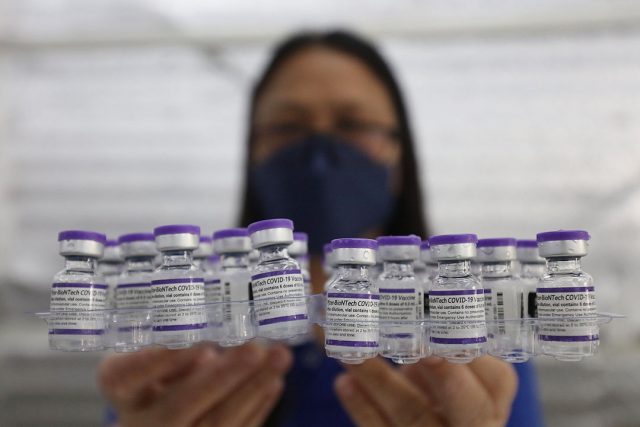
NEW YORK — Pfizer Inc. expects to roughly quadruple the price of its COVID-19 vaccine to about $110 to $130 per dose after the United States government’s current purchase program expires, Pfizer executive Angela Lukin said on Thursday.

Ms. Lukin said she expects the vaccine — currently provided for free to all by the government — will be made available at no cost to people who have private insurance or government paid insurance.

Reuters earlier on Thursday reported that Wall Street was expecting such price hikes due to weak demand for coronavirus disease 2019 (COVID-19) vaccines, which meant vaccine makers would need to hike prices to meet revenue forecasts for 2023 and beyond.

The US government currently pays around $30 per dose to Pfizer and German partner BioNTech SE. In 2023, the market is expected to move to private insurance after the US public health emergency expires.

“We are confident that the US price point of the COVID-19 vaccine reflects its overall cost effectiveness and ensures the price will not be a barrier for access for patients,” Ms. Lukin said.

It is not yet clear what kind of access people without health insurance will have to the vaccine.

Pfizer said it expects the COVID-19 market to be about the size of the flu shot market on an annual basis for adults, but that the pediatric market would take longer to build based on shots given so far.

So far the US rollout of updated COVID-19 booster shots which target both the original coronavirus strain and the Omicron strain has lagged last year’s rate despite more people being eligible for the shots.

Around 14.8 million people in the US received a booster shot over the first six weeks of the rollout of the new shots. In the first six weeks of the 2021 revaccination campaign, over 22 million people received their third shot even though only older and immunocompromised people were eligible at that point.

Ms. Lukin said she does not expect purchasing of the vaccines to transfer to the private sector until the first quarter of 2023 “at the earliest.” The move is dependent on the government contracted supply being depleted. — Reuters

Primeworld Land bags recognitions in this year’s property awards season

Primeworld Land Holdings, Inc. enjoyed the property awards season this year, having won various recognitions for their achievements in the real estate scene.

Three prestigious award-giving bodies, including the PropertyGuru Philippines Property Awards, The Outlook by Lamudi, and the Dot Property Philippines Awards, feted Primeworld as a developer and for its projects.

Primeworld bagged its first recognition in this year’s property award season at the Dot Property Philippines Awards 2022 last Sept. 15.

Dot Property conferred the honor of Best Investment Property in Cebu for this year to the Primeworld Pointe. It was the first award of its kind given by Dot Property.

“Primeworld Land is a young developer so for us to be recognized in this event is such an honor for us,” Primeworld Chief Executive Officer Sherwin Uy said in his acceptance speech. “[Primeworld Pointe] is a project we’re very proud of given its location and design. We look forward to turning over the property to the new homeowners.”

Primeworld Pointe is a 22-storey residential condominium located near the Cebu I.T. Park in Lahug, Cebu City. Featuring convenient spaces and setting, the development has been warmly received by the local market since its launch. It is the second condominium of Primeworld in Cebu.

Primeworld received its second award for the season at Lamudi’s The Outlook 2022: Philippines Real Estate Awards held last Sept. 17, where it was recognized as the Best Boutique Developer of the Year in Visayas and Mindanao.

In addition, its flagship project Primeworld District in Mactan Island, Cebu also received a special commendation as Best Premium Condominium in Visayas and Mindanao in the same awards event.

The development was further recognized at Property Guru’s 10th Philippines Property Awards last Oct. 7.

The award-giving body honored the Primeworld District as the Best Affordable Condo Development in Metro Cebu. It was also highly commended for Best Condo Landscape Architecture Design.

Located in Lapu-Lapu City, Primeworld District encompasses mid-rise condominiums and private villas where residents can live in a resort-style community and enjoy the amenities perfect for summer activities. The first tower is slated for turnover to its first batch of owners in the first half of 2023.

“Being recognized for our housing development by the region’s most prestigious property awards-giving body brings great honor to us as a young organization and the homebuyers we serve,” Primeworld said.

“While keeping our housing prices affordable, we also make sure that our developments’ features, such as amenities, landscape design, and build quality, are definitely of great value for money and truly deserved by our investors. This is a testament to our commitment to excellence and working towards our vision to uplift Filipinos by setting the standards for housing developments,” the developer added.

From its establishment in 2010, Primeworld has evolved from being a pocket housing developer to a full-grown housing development firm. Since then, it has been on a mission to build affordable homes designed to evoke comfort, security, and peace of mind from living in well-situated neighborhoods or convenient locations. The developer also seeks to address the real estate needs of prospective homeowners in underserved areas.

Primeworld Land has projects throughout the Philippines, from Metro Manila, Cebu, to South Cotabato. More developments will soon rise in various locations across the country.


Spotlight is BusinessWorld’s sponsored section that allows advertisers to amplify their brand and connect with BusinessWorld’s audience by enabling them to publish their stories directly on the BusinessWorld Web site. For more information, send an email to online@bworldonline.com.

Join us on Viber to get more updates from BusinessWorld: https://bit.ly/3hv6bLA.

Overlapping crises add urgency for IMF, World Bank resources, reforms

WASHINGTON — Global financial leaders are digging into a long to-do list after International Monetary Fund (IMF) and World Bank member countries sent them a clear message on what is needed to tackle overlapping crises: vast amounts of additional money.

It’s a big ask, and one that may prove too tall an order to fulfill, at least in the near term.

US Treasury Secretary Janet Yellen on Tuesday met with senior officials of the Group of Seven industrialized countries and multilateral development banks (MDBs) to press the case she laid out ahead of last week’s IMF and World Bank annual meetings for major reforms aimed at greatly increasing MDBs’ lending capacity and harnessing far more private capital to address climate change and other global needs.

At Tuesday’s meeting she called for the World Bank and other MDBs to set “ambitious private capital mobilization targets” and to improve their reporting on these efforts.

World Bank President David Malpass said at the meeting that the bank would use the “full suite” of its financing and guarantee instruments “to unlock larger volumes of private finance for quality, sustainable infrastructure.”

Last week’s IMF and World Bank meetings laid bare the increasing pressures on developing countries from inflation, energy and food shortages fueled by Russia’s war in Ukraine, slowing growth, mounting debt problems and growing vulnerability to climate shocks.

They also highlighted the inadequacy of the IMF’s and World Bank’s current structures — designed at the end of World War Two to focus on rebuilding peacetime economies — to deal with current global calamities. Opposition from Russia stalled new agreements from the G20 and the IMF and World Bank steering committees.

“The crisis of multilateralism has hit its worst point,” said Kevin Gallagher, who heads Boston University’s Global Development Policy Center. “This is not a time for incremental change. We need to seize this moment or it’s only going to get worse.”

MORE RESOURCES

Some civil society groups and even US lawmakers are calling for a second, massive issuance of IMF reserve assets to assist member countries, following a $650 billion distribution of Special Drawing Rights (SDR) last year. The action is akin to a central bank “printing” money, allowing some poorer countries to access underlying dollars, euros, yen, sterling and yuan currencies.

Argentina and other countries are also pushing the IMF to stop imposing surcharges on larger loans that are not repaid quickly, a move backed by some IMF leaders that could save affected countries billions of dollars.

But Ms. Yellen, who manages the United States’ controlling share in the Fund, rejected the idea of a new SDR allocation as inappropriate, saying that more existing SDR reserves needed to be loaned to poorer countries first. Washington also remains opposed to suspending IMF surcharges.

The IMF has recently created new lending tools, including a new facility to help countries deal with war-related food shocks, but Managing Director Kristalina Georgieva has said it soon could face larger demands on its remaining resources of about $700 billion as growth slows and more countries face debt pressures.

The IMF’s war chest stood at about $1 trillion before the coronavirus disease 2019 (COVID-19) pandemic struck in early 2020.

“We are far from being constrained,” Ms. Georgieva said at the start of the annual meetings, but added that she may seek to accelerate a contentious review of the IMF’s main quota resources before the current deadline of December 2023.

The talks raise thorny questions over demands by China and other large emerging markets to increase their shareholding — and power — within the institution, potential changes that had long delayed past reviews and would clash with strong anti-China sentiment in the US Congress.

Spanish Finance Minister Nadia Calvino, who headed the IMF’s steering committee this year, told Reuters the fund’s focus now was on tackling the immediate crisis, not the quota increase.

“We are coming out of the meetings with a much clearer focus of what is necessary to stabilize the world economy and put it on a sounder footing for tomorrow,” Ms. Georgieva said on Saturday.

“Yes, there is geopolitical tension. Yes, it translates into geoeconomic fragmentation, but there are areas where the world simply cannot succeed without us working together.”

WORLD BANK REFORMS

The World Bank’s steering committee on Saturday backed the US call for change, and asked World Bank leadership to deliver a roadmap for revamping the bank’s institutional and operational framework by the end of the year.

The goal was to “make the most efficient use of the WBG’s balance sheets,” generate new resources and mobilize more private capital, it said.

It also asked Mr. Malpass to develop a plan for implementing the recommendations of an independent panel that reviewed the bank’s capital adequacy rules, in time for next spring’s IMF and World Bank meetings in April. The panel concluded that reforms could unlock “several hundreds of billions of dollars” in the medium-term.

Mr. Malpass, who has been under pressure after comments made last month when he declined to say human activity caused climate change, has been publicly supportive of the “evolution” push, but few details have emerged about how the process could unfold. — Reuters

Affluent splash out on pricey Birkin bags but clouds loom

HERMES.COM

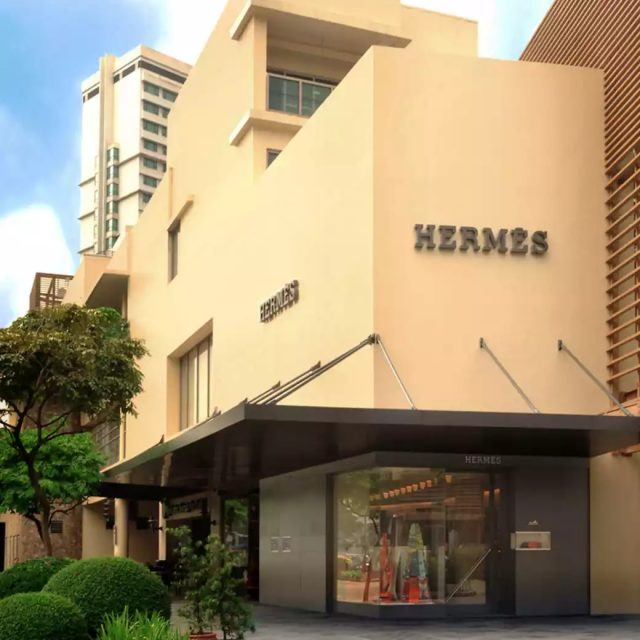
PARIS — Brushing off higher prices, affluent spenders continue to splash out on luxuries including $10,000 handbags and premium drinks, updates from Birkin bag maker Hermes and spirits company Pernod Ricard showed on Thursday.

Yet with prices set to rise further, analysts were asking how long the boom can last before even the wealthy decide they must tighten their belts.

Hermes and Pernod Ricard both said they will continue to raise prices, after beating expectations in the July–September quarter. Business was boosted by Americans returning to Europe and Asia and taking advantage of the strong dollar. Mainland China also saw a strong rebound after coronavirus disease 2019 (COVID-19) restrictions were lifted, although some restrictions have since been reimposed.

Analysts were looking closely for signs that the post-pandemic spending boom could ease after months of robust appetite from shoppers drawing on pandemic savings to treat themselves to designer labels and champagne.

Some expect the industry’s rapid sales growth to begin to slow in the fourth quarter or starting next year, with the strongest labels expected to grab market share as consumers flock to best-known names.

The fourth quarter will likely start to show a deceleration with “very different performance from different brands,” said Flavio Cereda, an analyst at Jefferies, predicting stronger labels like Chanel, Hermes, Louis Vuitton, and Dior, as well as some smaller brands like Moncler will accelerate market share gains.

Mr. Cereda expects “no big bounce” in business in China next year citing signals from the Communist Party Congress that authorities plan to maintain COVID curbs, and in Europe, predicts the “likely disappearance of the marginal buyer,” or someone who is not a regular or core luxury consumer.

Jefferies forecasts 13% sales growth for the industry this year and 7% next year.

PRICE RISES

The world’s biggest luxury group LVMH last week kicked off the earnings season with forecast-beating sales — and no signs of a let-up in demand.

The US market, which rose to become the world’s largest luxury market last year, has been closely scrutinized for any signs of weakness, particularly among less affluent shoppers and after data from credit card sales showed a decline in luxury spending in recent months.

“There was no slowdown in consumer demand,” in the United States over the quarter despite price hikes, Pernod finance chief Helene de Tissot said on Thursday, noting the company had raised prices at the start of the month in that market by mid single digits.

Pernod Ricard, which raised prices by around 7% globally over the quarter, said it was confident sales growth would remain dynamic through its 2023 fiscal year, as consumers continue to trade up to its premium spirits.

Hermes plans to raise prices sharply next year, following in the footsteps of rival luxury giants which have taken advantage of booming demand for fashion and handbags carrying designer labels.

Hermes, which has waiting lists for its prized $10,000-plus handbags, increased prices by around 4% this year and by 1.5-2% on average in previous years. That compares with double-digit price hikes at Chanel.

Companies catering to less affluent consumers have also so far been able to pass on price increases, trading updates from the world’s two biggest consumer firms, Nestlé and Procter & Gamble showed this week. Shoppers continued to pay more for goods like Nescafe coffee and Gillette razors despite surging inflation.

The results from Pernod and Hermes bode well for beauty giant L’Oreal and Gucci-owner Kering, which both report results later on Thursday. — Reuters

Improving infrastructure for better connectivity

Being online is part of the everyday lives of many Filipinos, whether for work or education, procuring services, or leisure. Filipinos are, in fact, spending long hours daily online. The Philippines ranked third among the countries spending the most time using the internet, as We Are Social and Hootsuite’s Digital 2022 October Global Statshot Report recorded that Internet users aged 16-64 years old in the country spent an average of nine hours and 39 minutes per day.

Connection to the online world has increased because of the lockdown, but it would much liklely remain vital in various aspects of Filipinos’ lives moving forward. Hence, there is a need for accessible and reliable connectivity across the country. And this involves bolstering and expanding digital infrastructure.

Based on Ookla’s Speedtest Global Index, last month, the country’s mobile median download speed was at 22.54 Mbps. Though its rank lowered from August’s 82nd spot to 85th out of 139 countries. Meanwhile, the country’s median fixed broadband download speed was at 78.69 Mbps, and inched a spot down to 46th out of 181 countries. But the Philippines had seen some improvements in its download speed. The country’s median mobile and fixed broadband download speeds in September last year were at 17.16 Mbps (ranked 99th) and 45.85 Mbps (66th), respectively.

World Bank also noticed progress in improving the country’s digital connectivity, as per its Philippines Economic Update June 2022 Edition. But it also noted that there are still challenges.

“The quality of Internet service (indicated by average download speeds) improved in 2020 and 2021 due to network upgrades and increased infrastructure deployment. However, there is scope for further improvement, particularly in smaller urban centers, rural areas, and islands planned for accelerated tourism development,” World Bank said.

Among the challenges in accelerating digital infrastructure rollout in the country, according to World Bank, is the underinvestment in broadband infrastructure, which is rooted in decades of lacking competition and out-of-date legal, policy, and regulatory frameworks.

“The slow rate of rollout of telecommunications infrastructure has been in part due to barriers to competition and restrictions on foreign direct investments,” it noted.

Efficient digital spectrum management is also lacking, bringing about an uneven playing field for prospective newcomers.

Digital infrastructure expansion is hampered by investment and competition restrictions as well. “The requirement for congressional franchise limits the ability of new telcos and independent internet service providers to deploy infrastructure, access spectrum, and use distinct types of Internet technologies,” it said.

It also took note of the complex permitting for network equipment and the lacking policy on infrastructure sharing, which slow down the rollout of network.

For its key policy recommendations concerning digital infrastructure, therefore, World Bank suggests expanding pro-competition legislation for the shared deployment of network infrastructure and simplifying the permitting.

“The government has taken steps to promote market entry and simplify complex permitting processes for cell site construction and cable laying through the passage of the implementing rules and regulations of the Public Services Act amendment, the National Broadband Plan, and the Common tower and pole attachment policy. However, more can be done in terms of enacting regulations for passive infrastructure sharing (ducts for optical fiber) and regulations for active infrastructure sharing (mobile),” it said.

In addition, the government could promote investment in connectivity through an efficient allocation of spectrum to stimulate an improved mobile network expansion in rural areas and furthering public-private partnership models for infrastructure to draw private investment.

Policies that could enhance connectivity in the country were also pushed by the Philippine Chamber of Commerce and Industry (PCCI) and Better Internet PH to the 19th Congress.

The partnership seeks to champion the Open Access in Data Transmission Act, Rural Wired Development Act, Satellite Liberalization Act, and Spectrum Management Act.

“We have been laggards behind our ASEAN neighbors for the longest time in terms of better internet and we should prioritize legislation that will improve our overall connectivity,” PCCI President George T. Barcelon said in a statement in May.

Mr. Barcelon considered that better Internet would have “profound impacts” on various sectors, including the government, economy, tourism, and education, given that having such would induce more foreign direct investments.

“We want to update policies to make it easier for ISPs (internet service providers) to build digital infrastructure,” Better Internet PH Lead ICT Policy Analyst Grace Mirandilla-Santos added. “Technology will overtake regulation, therefore our policies should be future-proof.”

Meanwhile, back in March, the Department of Information and Communications Technology (DICT) shared its three-year investment plan of about P50 billion for the development of the country’s digital infrastructure.

“Most of the budget will go to the National Fiber Backbone and the Accelerated Fiber Build through the regional and provincial rings,” then-DICT Acting Secretary Emmanuel Rey R. Caintic was quoted in a BusinessWorld report.

“We are very optimistic that they will give us that budget,” he had said. “We have been advocating, evangelizing, and promoting this digital infrastructure for the past two to three years. I believe they have come to realize, especially with the pandemic, that all the more this digital infrastructure is the way to go and it is the right investment to be done by the government.” — Chelsey Keith P. Ignacio

Globe is PHL’s Most Reliable Mobile Network in Q3, sustains network performance for better customer experience

Leading digital solutions platform Globe continues to cement its dominance as the Most Reliable Mobile Network in the Philippines, logging the highest consistency and availability scores in the third quarter this year.

This feat sustains its Q2 leadership, obtaining the highest scores in All Technology Consistency with 82.55 and All Technology Availability with 92.03, according to the third quarter analysis by Ookla® Speedtest Intelligence® data.

Consistency score is calculated based on the percentage of a provider’s data samples that meet the minimum 5 Mbps threshold for mobile download and 1 Mbps for upload. Smart and DITO scored 80.82 and 70.40, respectively, in this category.

On the other hand, availability identifies the network whose users spend the highest percentage of their time on all technology and is based on coverage scans taken on Android devices. Globe again emerged on top versus 90.69 and 90.68 of competition.

Reliability is an elusive recognition in the industry, with only a few telcos from around the world getting this rating. It is also the most sought after attribute of network performance that has a clear impact on customer experience.

“Ookla’s latest data is proof of Globe’s commitment to delivering the most reliable mobile connectivity to its customers across the Philippines, which goes beyond just speed. Only a few mobile operators in the world have managed to attain supremacy in both consistency and availability, which translates to best-in-class experience for our customers,” said Darius Delgado, Head of Globe’s Consumer Mobile Business.

Globe has been ramping up network expansion in line with its commitment to the United Nations Sustainable Development Goals, particularly UN SDG No. 9, which underscores the importance of infrastructure and innovation in driving economic growth and development.

To deliver a #1stWorldNetwork, Globe spent an unprecedented P92.8 billion last year to build 1,407 new towers, upgrade over 22,300 mobile sites to 4G/LTE, and install 1.4 million fiber-to-the-home lines and 2,000 5G sites nationwide.

For 2022, it has already spent P50.5 billion in the first half of this year for network upgrades to meet the growing data requirements of its customers.

To learn more about Globe, visit www.globe.com.ph.

Disclaimer:
Most Reliable Mobile Network in the Philippines:
Reliability based on analysis by Ookla® of Speedtest Intelligence® data for all technology Consistency and Availability data in the Philippines Q3 2022.
Ookla trademarks used under license and reprinted with permission.


Spotlight is BusinessWorld’s sponsored section that allows advertisers to amplify their brand and connect with BusinessWorld’s audience by enabling them to publish their stories directly on the BusinessWorld Web site. For more information, send an email to online@bworldonline.com.

Join us on Viber to get more updates from BusinessWorld: https://bit.ly/3hv6bLA.

BSP ready to use tools to support peso

PHILIPPINE STAR/ WALTER BOLLOZOS

THE Bangko Sentral ng Pilipinas (BSP) is prepared to use other tools to manage the peso’s volatility, which is contributing to inflation.

BSP Senior Assistant Governor Iluminada T. Sicat said the central bank’s approach “has been to smooth out excess daily volatility rather than defend a specific level or trend of the peso.”

The local unit closed at P58.94 per dollar on Thursday, barely changed from its P58.945 finish on Wednesday, based on Bankers Association of the Philippines data. It has weakened so far by 13.5% or P7.94 from its P51 close on Dec. 31, 2021.

“The BSP responded by raising interest rates aggressively while also participating in the foreign exchange market, although at a lesser extent than some of the major economies,” Ms. Sicat said during a Senate hearing on Wednesday.

“The BSP is also prepared to utilize other tools to respond to fluctuations in the exchange rate and to ensure that legitimate demand for foreign currency is satisfied,” she added.

Ms. Sicat identified the BSP’s liquidity-enhancing and management tools such as the US dollar repo facility, the exporters’ dollar and yen rediscount facility, and the enhanced currency rate risk protection program.

She said the BSP has access to its international financial arrangements that can provide insurance against crisis and has “pre-deployed non-monetary measures to respond to challenges, augmenting in financial stability.”

The BSP also has a bilateral swap arrangement with the Bank of Japan, and is part of the Association of Southeast Asian Nations (ASEAN) Swap Arrangement for $2-billion short foreign exchange liquidity support.

“Looking ahead, the Philippine peso is expected to be supported by sustained foreign exchange inflows that could help counterbalance the pressures on the currency,” Ms. Sicat said, citing gross international reserves, remittances and foreign direct investments.

“(These) can help provide insulation against the spillovers from the policy normalization in advanced economies as well as the geopolitical conflict between Russia and Ukraine,” she added.

Rizal Commercial Banking Corp. Chief Economist Michael L. Ricafort said the BSP’s tools and measures have been used in the aftermath of the Asian Financial Crisis.

“Partly as a result of all or a combination of these measures, local authorities have a good track record of stabilizing the peso for 18 years or from 2004 to Sept. 1, 2022 when the record high was maintained at P56.45,” he said.

“These measures help stabilize both the peso exchange rate and overall inflation, as well as inflation expectations. All of these measures would help prevent any speculative attack on the peso,” he added.

John Paolo R. Rivera, an economist at the Asian Institute of Management, said these measures can help temper inflation and manage the volatility in the foreign exchange market.

“However, it can also be reinforced by non-monetary means such as fiscal prudence as excessive government spending triggers inflation that triggers forex depreciation,” he said.

“A whole of government approach is key since monetary tools can only do so much. Sound economic leadership is also key,” he added.

BOOST LOCAL INDUSTRIES
Meanwhile, economists said the Philippines must boost the productivity of local industries and diversify its exports if it wants to take advantage of the strong dollar.

“In the past, we thought that all we needed to do was to depreciate the peso and exports would surge. We’ve now come to realize that it would take more than just a weaker currency to boost exports,” ING Bank N.V. Manila Senior Economist Nicholas Antonio T. Mapa said in a Viber message.

In theory, a weaker local currency against the dollar should be more beneficial for local producers who export.

Exports grew by 4.4% year on year to $51.155 billion in the first eight months of the year, amid sluggish global demand. Imports climbed by 26% to $92.966 billion, as the peso continued to weaken.

Year to date, the trade balance ballooned to a $41.811-billion deficit, wider than the $24.77-billion trade gap in the comparable eight months last year.

University of Asia and the Pacific Senior Economist Cid L. Terosa said that the country’s export growth is still below the 7% full-year target amid slowing global demand and rising inflation.

“Weak global demand (is) due to recessionary conditions has constrained demand for cheaper exports from the Philippines. Depressed commodity prices in world markets have limited opportunities for exporters to gain from a weaker peso since Filipino exporters are price takers,” he said in an e-mail.

“Finally, cheaper exports from the Philippines have not resulted in greater demand for them because of their nature. Many of our exports are semi-processed or don’t have considerable value-added.”

Jefferson A. Arapoc, who teaches Economics at the University of the Philippines Los Baños, said the country is heavily reliant on imports, “which is further amplified by our supply issues with some key agricultural commodities.”

“The government must devise a way to increase our domestic production capacity,” Mr. Arapoc said in a Messenger chat.

On Twitter, former Socioeconomic Planning secretary and economist Solita C. Monsod said this is the best time to make “exports more attractive and imports less attractive” to “get the benefit of the strong dollar.”

ING’s Mr. Mapa said the country needs to diversify its exports.

“We need to support our export sector to diversify our products to insulate us from episodes such as this where the bulk of our exports are from only one sector,” he said, citing the electronics sub-sector, which is the Philippines’ top export. 

In August, exports of electronic products fell by 1.6% to $3.66 billion. It accounted for 69% of manufactured goods and 57.1% of total exports during the period.

Mr. Mapa noted the Philippines could follow Indonesia’s example, as it shifted from raw material exports to exports of electric vehicle batteries and electric vehicles.

Mr. Terosa said that the country can also look into service-related exports instead of products.

“We can diversify export markets to reduce the impact of weak demand from a few markets. Since export in goods may not yield beneficial outcomes given weak global markets, the development of more exports in services can be pursued,” he said.

“Also, we can maximize benefits from free trade agreements and similar trade arrangements to ward off the negative impact of unstable global markets,” he added.

In the short term, Ibon Foundation Research Head Rosario J. Guzman said the government can implement policies that will facilitate the use of local materials in infrastructure projects and reschedule debt servicing.

Outstanding debt rose to a record-high P13.02 trillion at the end of August due to additional domestic borrowings and a weak peso.

For the eight-month period, the debt service bill dropped 24.91% year on year to P682.85 billion, with around 50.2% going towards interest payments, and the rest to amortization.

Ms. Guzman also proposed the regulations on foreign corporations’ use of foreign exchange amid the peso depreciation. The peso depreciation raises the cost of dollar-denominated loans. — Keisha B. Ta-asan, Luisa Maria Jacinta C. Jocson and Kyle Aristophere T. Atienza

Economic growth seen to slow to 6.2% in 2023

PHILIPPINE STAR/ MICHAEL VARCAS
Fitch Solutions Country Risk and Industry Research expects the Philippines to grow by 6.6% this year and by 6.2% in 2023. — PHILIPPINE STAR/ MICHAEL VARCAS

PHILIPPINE economic growth is expected to slow in 2023, amid higher interest rates.

“We expect GDP (gross domestic product) growth in the Philippines to come in at 6.6% in 2022 and 6.2% in 2023, after the economy grew by 7.8% in the first half of this year,” Fitch Solutions Country Risk and Industry Research Head of Asia Country Risk Raphael Mok said in a webinar on Thursday.

Fitch Solutions maintained its Philippine growth outlook, which is at the low end of the government’s 6.5% to 7.5% full-year target.

Mr. Mok said the Philippine economy benefited from the reopening of borders and election-related spending in the first half.

“However, we believe that these tailwinds will start to fade, while growth headwinds such as higher domestic interest rates and a deteriorating external position intensify, leading to a slowdown in growth over the coming months,” he said.

The Bangko Sentral ng Pilipinas (BSP) has hiked benchmark rates by a total of 225 basis points (bps) so far this year, bringing the policy rate to 4.25%. According to Mr. Mok, this has made the BSP one of the most aggressive central banks in the region.   

“A combination of elevated inflation, foreign exchange weakness and tightening global monetary conditions will prompt the BSP to continue its rate hiking cycle,” Mr. Mok said.   

Inflation zoomed to 6.9% in September, marking the sixth straight month that inflation breached the BSP’s 2-4% target.   

Average inflation quickened to 5.1% in the nine months to September, higher than 4% a year ago. However, it was still below the BSP’s 5.6% forecast for 2022.

As of Thursday, the Philippine peso weakened against the US dollar by 15.56% or P7.94 from its P51 close on Dec. 31, 2021 

In a note dated Oct. 14, Fitch Solutions said it expects the peso to reach an all-time low of P60 per dollar, bringing the average exchange rate to P55-a-dollar by yearend.   

“Weak external demand, combined with strong import growth, will see the current account deficit remain wide, exerting further downside pressures on the peso,” Fitch Solutions said.   

“However, the aggressive hiking cycle undertaken by the BSP will help provide some support for the unit, informing our view that peso weakness has only a little further to run,” it added.   

Mr. Mok said he expects the BSP to hike rates by an additional 75 bps in its remaining policy meetings this year, bringing the policy rate to 5% by yearend. Fitch also expects the BSP to hike by another 25 bps next year, to bring the benchmark rate to 5.25%.

“The Philippines’ external position has also deteriorated significantly over the last couple of months as seen from the widening of the current account deficit to record high,” Mr. Mok said.   

In the first semester, the current account balance ballooned to a $12-billion deficit from the $1.3-billion gap seen in the same period last year.

“This came on the back of weak export growth and surging import bills due to elevated energy prices and high demand for imports of capital goods and raw materials for infrastructure projects,” Mr. Mok said.

“We are now forecasting the current account deficit to widen to 5% of GDP this year, and 4.5% next year, from just 1.5% in 2021,” he added.   

The BSP expects a current account deficit of $20.6 billion (-5% of GDP) for this year. Imports of goods are expected to grow by 20%, while goods exports are seen to increase by 4%. — Keisha B. Ta-asan