Home Blog Page 5326

President Marcos, Jr. on food and nutrition security

Photo from pco.gov.ph

Food is a basic human necessity, and everyone needs food to live. However, providing enough food security and, moreover, nutrition security poses a global challenge to mitigate the risks of hunger, malnutrition, and even climate change, among other conflicts.

To address the global challenge of food security, the United Nations’ second sustainable development goal (SDG) is set to prioritize sustainable agriculture by the year 2023, as the World Economic Forum (WEF) noted. According to the WEF, agricultural sustainability can be achieved by implementing public-private partnerships, and effective business strategies, and by engaging in greenhouse emissions, water, and waste usage can boost productivity in agricultural sectors.

It is important to note that food insecurity is a significant driver of non-communicable diseases and, in worst-case scenarios, can impact the health of the planet.

Earlier this January, the WEF Annual Meeting once again tackled this issue in a panel session themed “Moving Towards Nutrition Security.” President Ferdinand R. Marcos Jr., one of the speakers, shared that steps that should be taken so that nations can attain nutrition security, which include boosting agricultural and fishery productivity, improving logistics systems and changing people’s lifestyles.

“We must invest in facilities, logistics and systems that bring nutritious food to our people, much like a grander scale of farm-to-table and increase the capacity of our institutions to enforce regulations that enhance food quality,” Mr. Marcos was quoted as saying.

He also raised the need to “cooperate to develop technologies that increase the nutritional value of our food and content and prolong their shelf life.”

The President also shared how he sees food security is being addressed in the country.

“Food security remains at the forefront of our national agenda. Anchored in our vision for a prosperous, resilient, and secure Philippines by the year 2040,” Mr. Marcos said.

“The overreaching goals of this administration are to build an inclusive society where no one is hungry, where Filipinos live long and healthy lives and where they are provided by an environment built upon trust and security and where they can be innovative, remains smart, and responsive to the problems of the day,” he added.

Prior to this session at Davos, Switzerland, Mr. Marcos told world leaders that food security is a serious global problem that it serves as a lens in which other global threats such as climate change and conflicts are seen through.

“Food security must be a top priority for all governments and developing economies must have the policy flexibility needed to ensure an increased domestic food production and diversification and to improve the local agricultural supply and value chain,” Mr. Marcos was quoted as saying in his speech at the Asia-Pacific Economic Cooperation (APEC) CEO Summit in Bangkok, Thailand last November.

The President mentioned as well at Davos that with the goal of providing sufficient and quality nutrition for all Filipinos, the Philippines has already developed nutritional programs, including the Nutritional National Council (NNC), that focus on addressing the hunger and nutritional needs of the country. Specifically, the NNC was established to formulate, coordinate, and evaluate national food and nutritional policies.

In addition, for Mr. Marcos, not only is the administration working on providing quality food security for all, but also on improving and strengthening the country’s agricultural sector, which plays an integral role in the impact of climate change and economic growth; and becoming one step closer in making the Philippines a “leading agricultural resource hub in the region and the world.”

Photo from pco.gov.ph

“The work to improve our agricultural sector and improve the plight of our farmers and fisherfolk has only just begun, we need to continue to open more opportunities to improve their well-being,” he was quoted as saying last October in a BusinessWorld report.

As cited by the 2021 Food Security Index, the Philippines was ranked 64 out of 113 countries in the food security matrix. Though not quite there yet, Mr. Marcos said, the Philippines was able to develop growth in food security, but it needs more.

“If we are to attain SDG on zero hunger, it bears emphasizing that the challenge of nutrition is different for you and for me, from your economy to mine, from us here to the people back at home. Among our priority interventions are those geared toward making food available, affordable, accessible, amid the looming global food and energy shortage,” Mr. Marcos explained in his opening remarks at the said WEF session.

According to Mr. Marcos, the administration is set to focus on productivity-enhancing interventions, research and development, and government spending on the agriculture and distribution sectors, by boosting productivity in the sector, using climate-resilient technologies, promoting agricultural production in non-agricultural areas, investing in facilities, logistics, and systems, and developing technologies that will help provide nutritious foods and increase the quality of food.

During the APEC CEO Summit, Mr. Marcos shared that alongside local nutritional programs, the Philippine government has expanded irrigation projects, worked on developing agri-trading and food logistics hubs, and collaborated with cooperatives and organizations to obtain refrigerated vans, freezers, chillers, and other related equipment.

Nonetheless, the administration is looking forward to their partnership with WEF towards sufficient and actionable plans for attaining food and nutrition security.

“The work of the WEF’s New Frontiers of Nutrition, a vital component of the equally vital Future of Consumption Platform, is commendable in this regard in providing us all in a first big leap towards nutrition security through a common paradigm on the purpose of nutrition and the future of food and developing principle and indicators to sustain our efforts while aiming to create economic value,” Mr. Marcos explained during the WEF panel session.

Additionally, he said the local government will also prioritize feeding programs in local schools, where the government will provide food for children in schools and assistance to Filipinos who are severely affected by the COVID-19 pandemic.

Mr. Marcos also mentioned the key to achieving food security is through system-based and data-driven cooperation.

With the Philippine leader’s commitment to the second SDG, he continues to aim for agricultural excellence and to grow and sustain development in food security and agricultural development.

“Let us incentivize a nutritious lifestyle, promote active and healthy-seeking behaviors across different ages and income levels and create an ecosystem based on the concept of a green and circular economy,” Mr. Marcos added. — Angela Kiara S. Brillantes

The President at Davos 2023: Highlights and issues raised

Photo from pco.gov.ph

The World Economic Forum (WEF) concluded its Annual Meeting for this year last Jan. 20, after a five-day convention of government and business leaders across the world, including Philippine President Ferdinand R. Marcos, Jr. and several other government officials as well as the country’s prominent tycoons.

Held in Davos, Switzerland, the 53rd WEF Annual Meeting was themed “Cooperation in a Fragmented World.” It aimed to serve as a platform to participate in dialogues and help find solutions through public-private cooperation.

During the annual meeting, Mr. Marcos talked about the state of the country’s economy, among others, as well as secure some investments on the sidelines.

The president also joined in a High-Level Dialogue on “Investing in Infrastructure for Resilience” and opened a panel session on “Moving Towards Nutrition Security,” as the Presidential Communications Office (PCO) reported.

PHL economy

In his opening remarks during the Country Strategy Dialogue at the WEF, Mr. Marcos highlighted the strength of the Philippine economy.

The PCO said the President cited the 2023 global economic growth projection of the International Monetary Fund (IMF), which is expected to be at 2.7%, slower than the previous year’s 3.2%.

“But for the Philippines, we project our economy to grow by around 7% in 2023. Our strong macroeconomic fundamentals, fiscal discipline, structural reforms, and liberalization of key sectors instituted over the years have enabled us to withstand the negative shocks caused by the pandemic and succeeding economic downturns and map a route toward a strong recovery,” Mr. Marcos was quoted as saying.

“We have seen inflation accelerating globally in recent months… We are mindful that while protectionist policies may be appealing, even necessary in the short term, there will ultimately be no long-term winners… We join the call for all governments to unwind any trade restrictions and reinforce our commitment to the World Trade Organization (WTO) reform,” he added.

Initiatives being carried out for the country’s continued recovery and making it more conducive for business were also shared by Mr. Marcos to investors during his opening remarks, the PCO said.

Mr. Marcos also claimed on Jan. 21 that economic leaders at the WEF tagged the country as part of the “VIP Club” of Southeast Asia for its economic performance.

However, IBON Foundation conveyed dismay over the Palace’s bullish assertion regarding the economy. In a Jan. 22 report by BusinessWorld, the think tank said that “facts show that last year was a tough one for poor and middle-class Filipinos.”

IBON also said that the relatively rapid growth seen in 2022 is a “misleading indicator of the economy’s trajectory,” as it was merely “a rebound from reopening and there was a statistical boost from being measured against the low base of an economy pressed down by lockdowns.”

The Philippine economy grew by 7.6% last year, according to data released by the Philippine Statistics Authority on Jan. 26. Last month, the government lowered its 2023 growth target to 6-7%.

Photos from pco.gov.ph

Investment commitments

During the WEF, Mr. Marcos also secured investment pledges from at least two foreign companies.

According to PCO, the president met with Gokul Laroia, Morgan Stanley’s chairman for Asia-Pacific, on the sidelines of the annual meeting.

Mr. Laroia told Mr. Marcos that the investment management and financial services firm would set up an office in Manila, and swore to support the government’s development initiatives.

The Malacañang also said that the President secured an investment commitment from DP World. The Emirati logistics company is looking into setting up an industrial park in Clarkfield, Pampanga.

“We are committed to investing in the Philippines. We’re committed to expand,” Chairman and Chief Executive Officer Sultan Ahmed bin Sulayem told the President on the sidelines of the WEF, according to the Palace. “We’re interested in the Philippines, in industrial parks.”

DP World currently operates ports in Manila and Batangas.

Despite these commitments, investment analysts were unimpressed.

“Investment pledges are always good, but until we actually see these pledges on the ground and start to get implemented, only then can we realize and reap real benefits,” Ruben Carlo O. Asuncion, chief economist at UnionBank of the Philippines, Inc., told BusinessWorld in a report last Jan. 20.

Meanwhile, Terry L. Ridon, a public investment analyst, said that Morgan Stanley’s commitment to building an office in Manila “does not constitute a commitment to undertake foreign direct investment (FDI) in the Philippines.” He said that the investment bank’s primary business covers portfolio investments and not FDIs.

He also said that DP World is “already well-established” in the country, and that the President does not have to go to Davos if only to persuade the logistics company to expand its operations here.

“In the final analysis, the president’s Davos trip should be judged based on the total cost of funding the delegation against actual investment pledges originating from the WEF itself,” Mr. Ridon was quoted as saying.

“It is difficult to put a specific number on the value of raising the president’s and the country’s international prestige through Davos, because this can also be done in other more significant and consequential international meetings and conferences,” he added.

Invitation to tech-collab center

Another highlight of the Philippine delegation’s attendance to Davos, WEF Founder Klaus Schwab had a meeting with Mr. Marcos as well, inviting the Philippines to join a technology-sharing center to be established by the WEF.

“When we inaugurate it, we will invite the Philippines to be amongst the first countries to (take) residence (and) showcase your investment opportunities in a much more effective manner compared to video conferencing because you bring people into the next (stages) of what’s happening,” Mr. Schwab was quoted as saying.

He told the President about the many discussions on the internet about three-dimensional, virtual interaction communities, joint with artificial intelligence, driving WEF to develop a global collaboration platform.

“We have all the representations of some countries, of companies and you can interact every time,” he said.

According to PCO, Mr. Marcos said he would task the Department of Information and Communications Technology (DICT) to engage with the WEF as the organization hands over materials to the country as a starting point.

Photos from pco.gov.ph

Sovereign wealth fund

The proposed sovereign wealth fund was also pitched by Mr. Marcos at the WEF, saying that it is one of the government’s efforts to diversify the country’s financial portfolio, according to PCO.

The President further talked about setting up a sovereign wealth fund in a breakfast meeting with international CEOs on the sidelines of the WEF. According to PCO, the President said that setting up such fund is a “good idea” to leverage government assets and pursue big-ticket infrastructure projects, especially in the agriculture and energy sectors.

The proposed sovereign wealth fund, or the so-called Maharlika Investment Fund bill, has been swiftly approved by the House of Representatives on Dec. 15. And recently this month, through Senator Mark Villar, a bill to create the Maharlika Investment Fund has been filed in the Senate.

Several critics and analysts have raised concerns over the controversial sovereign wealth fund.

The WEF Annual Meeting was held on Jan. 16-20. Along with Mr. Marcos and other government officials, the convention was also joined by seven of the country’s biggest tycoons to support the president’s participation. These businessmen included Sabin Aboitiz of Aboitiz; Kevin Andrew Tan of Alliance Global; Jaime Zobel de Ayala of Ayala Group; Lance Gokongwei of JG Summit Holdings; Ramon Ang of San Miguel Corp.; Teresita Sy-Coson of SM Investments; and Enrique Razon of International Container Terminal Services, Inc. — Chelsey Keith P. Ignacio

Martinez Vergara & Gonzalez Sociedad (MVGS): Driven by recent accelerations, now a driving force in the growth of the legal industry

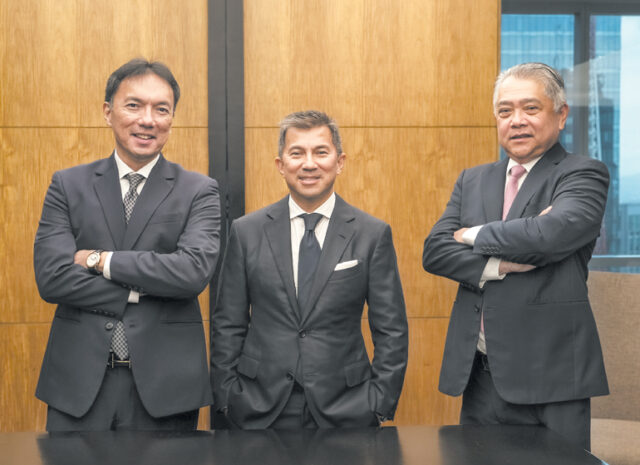
MVGS founding partners Attys. Eduardo A. Martinez, Manuel Z. Gonzalez and Mark O. Vergara

By Angela Kiara S. Brillantes

Despite the past years under the pandemic, Martinez Vergara & Gonzalez Sociedad (MVGS) saw steady progress in the legal industry as it expanded in Asia and strengthened its position as a cross-border firm. The expansive expertise and capability of MVGS when it comes to providing legal services have driven the law firm to establish its reputation and to continually thrive as one of the best firms in the Philippines.

“The outbreak of the pandemic served as a great driver for MVGS to reexamine its capabilities at both organizational and individual levels, with the aim of not just surviving but of thriving amidst the crisis,” Atty. Manuel Z. Gonzalez, senior partner at MVGS, told BusinessWorld in an e-mail.

The young law firm is known for its expertise in the fields of Banking and Finance, Capital Markets, Mergers and Acquisitions, Projects and Energy, Real Estate and Construction, Intellectual Property, Litigation, Dispute Resolution, Labor and Employment, Business Formation and Foreign Investment, Immigration, Antitrust and Competition, Taxation, Restructuring and Insolvency, and Corporate Services.

The need to adopt technological developments to be able to provide relevant legal services to clients has long been recognized by the legal industry, with said need becoming more apparent in the past few years.

The firm adopted many changes within the organization in order to adjust to the disruptions the pandemic has brought. MVGS employed systems for effective remote work arrangements; cloud technology for storing, managing, and sharing documents; business communication platforms for business operations and communication purposes with employees and clients; e-signatures for efficient transactions; and time-tracking applications for monitoring productivity within the organization.

While digitalization brings benefits to business operations, firms are also at risk when it comes to cyberattacks. Implementing cybersecurity is thus essential as well for firms, and in the case of MVGS, the firm invested in offsite data storage and online security to protect from cyberattacks, including hacking and cybercrime within the organization.

“These steps [digital solutions] not only allowed the firm to implement offsite and hybrid work arrangements but also enabled more convenient and faster access of clients to the Firm’s lawyers for legal services. Employing digital solutions allowed MVGS to expand its reach and engage with clients based outside of Metro Manila and even the country,” Atty. Gonzalez shared.

As MVGS celebrated its 15th year in the legal industry in 2022, the firm continues to live up to its reputation as a leading legal firm in the country, as it has earned recognition from esteemed rankings and directories of leading law firms, such as The Legal 500 Asia Pacific, IFLR 1000, Chambers and Partners Asia Pacific, and AsiaLaw.

In recognition of the firm’s recent achievements, MVGS also was ranked as a Tier 1 firm for Banking and Finance, Capital Markets, Immigration, Labour and Employment, Projects and Energy, and Real Estate and Construction by the Legal 500 Asia Pacific 2023. Whereas, for Corporate and M&A, Dispute Resolution, Intellectual Property, and Tax, the firm was ranked as Tier 2.

On top of the firm’s recognition, MVGS lawyers have also received recognition as top professionals and counsel in various fields. Attys. Shirley F. Alinea and Eduardo A. Martinez are recognized as renowned experts in the field of Dispute Resolution; Attys. Rosalia S. Bartolome-Alejo and Mark O. Vergara for Banking and Finance; and Atty. Manuel Z. Gonzalez for Projects and Energy.

Additionally, since 2020, Atty. Martinez was listed as one of the country’s top lawyers in the Philippines Top 100 Lawyers in the A-List of Philippines’s Top 100 Lawyers by Asia Legal Business.

“MVGS always aims to match its clients’ needs with appropriate strategies and legal services of the highest quality in a cost-efficient and timely manner. With its reputation for being an innovative and business-oriented law firm, MVGS has cemented its position in the legal industry and enjoys the confidence and trust of its local and foreign clients, including some of the Philippines’ largest conglomerates and institutional clients,” Atty. Bartolome-Alejo said.

On October 2021, the firm has partnered with Drew Network Asia (DNA), a formidable blue-chip legal network consisting of top-tier South East Asian law firms, such as Drew & Napier LLC, Makiram & Taira S., and Shearn Delamore & Co. The partnership with DNA resulted in the firm’s regional expansion while strengthening and diversifying the firm’s legal services. The addition of MVGS expanded DNA’s regional footprint in ASEAN which now boasts more than 480 fee earners and 150 partners in four countries: Singapore, Indonesia, Malaysia and the Philippines.

The firm has also maintained active membership across disciplines, namely the Integrated Bar of the Philippines, Philippine Dispute Resolution Center Inc., Philippine Institute of Arbitrators, Dispute Resolution Board Foundation, Tax Management Association of the Philippines, Financial Executives Institutes of the Philippines, Philippine Judicial Academy, TrustLaw, and the Intellectual Property Association of the Philippines.

A key takeaway from the pandemic years was that hybrid work or full remote work can bring and even further enable efficiency and productivity at work. Yet, for firms like MVGS, face-to-face interaction is still seen as an important part of their work.

“The legal profession, being one established and built on trust, however still requires regular personal interactions. Requirements of law have also not fully adopted digital solutions which means that secure offices for files, records, and documents, are still needed even post-pandemic,” Atty. Bartolome-Alejo said.

The MVGS partners also shared that the firm is looking to establish satellite offices outside of Manila as it recognizes the wider range of clients they are now able to reach, as well as the viability of working offsite with minimal capital required for the establishment of a physical space for operations.

“MVGS is also committed to keeping up to date with latest trends to ensure that it is able to competently and efficiently meet its clients’ needs,” Atty. Gonzalez added.

Gorriceta Africa Cauton & Saavedra: Adapting to emerging technology in the legal industry

By Bjorn Biel M. Beltran, Special Features and Content Assistant Editor

It is no overstatement to say that technology has completely changed the landscape of every industry in the world of business. From remote work through developments in information and communications technology, to artificial intelligence (AI)-powered retail networks and customer support, the way we do business is almost completely unrecognizable from that just a few decades ago.

Even in the legal industry, technology’s impact is unmistakable. The courts and other government agencies are relying more on online filings and submissions with regulators, as well as on technologies like videoconferencing.

Due to changes in the market, the legal industry is also facing new competition from businesses as well as other non-legal partnerships that offer tech-enabled services that were previously only offered by law firms.

Atty. Mark S. Gorriceta, managing partner at Gorriceta Africa Cauton & Saavedra (Gorriceta), said in an interview that the industry is evolving so rapidly and technology will play a crucial role in revolutionizing the Philippine legal and justice system.

“The rising adoption of emerging technologies has, and continues to change the world and this pushed the legal industry and even the regulators to also innovate. In this age of constant and rapid disruption through technological innovation, the regulatory status quo needs an upgrade,” he said.

“We foresee that the use of AI could potentially become the most significant disruptive innovation especially when used wisely. Although we do not think AI will replace lawyers, we believe it will only likely aid or complement our legal work.”

Gorriceta is an award-winning top-tier full service law firm in the Philippines. The firm is internationally ranked, recognized and multi-awarded for its excellence, innovative approach, and outstanding client service by organizations such as the Asia Business Law Journal’s Philippine Law Firm Awards.

The company specializes in the areas of Capital Markets, Mergers & Acquisitions, Technology Media & Telecommunications, Corporate and Securities Law, Banking and Financial Services, Data Privacy & Cybersecurity, Construction and Real Estate, Transportation Law and Taxation.

Gorriceta has also been ranked #1 for Technology Media & Telecommunications by various international and local organizations and have been consistently considered as Top Tier in various practice areas such as Mergers and Acquisitions, Tax and Trusts, Capital Markets, Banking and Finance, Projects & Energy, Data Privacy, Labor, Real Estate and Construction.

The law firm has offices in Singapore, Malaysia and Thailand through its partner firm Yusarn Audrey.

Atty. Kristine Torres, junior partner at the firm,noted that they take full advantage of technology to further bolster their services. “Being the leading law firm in the fields of Tech and Fintech, we have continuously invested in innovating the way we deliver our services through the use of technology,” she said.

“In fact last year, our firm has launched our virtual office space in the metaverse powered by our client, f(Dev)’ METAVRS. As far as we know, we are the only law firm to date who has created a dedicated virtual office space to further promote collaboration between our team and clientele and leverage our legal services through adoption of blockchain technology.“

Gorriceta has also spearheaded a widely-successful Law x Tech Summit for the past three years, and has continuously boosted its capabilities including training for their team to further adopt to the evolving legal landscape.

Navigating transformations in the business of law

Photo from freepik

By Bjorn Biel M. Beltran, Special Features and Content Assistant Editor

In a span of a few decades, the world has moved from an analog way of life to an almost entirely digital one. Nowadays, a person can work, study, order food, check finances, get a medical checkup, and purchase all their daily necessities without ever leaving the house.

It is through technology that many industries have seen massive transformations in their operations, prospects, and even revenues. The legal industry is no different.

For instance, New York-based expert consulting and insights firm Expert Institute have developed its Expert IQ software, which can automatically do the upkeep usually done by attorneys in doing background checks on their expert witnesses.

“Many attorneys unknowingly put more time and effort into conducting background checks on their retained expert witnesses than they need to. Even with all the research attorneys and paralegals conduct on experts, it’s possible to miss a detail about the expert that could impact their case,” Expert Institute wrote.

Another example is AI company ROSS Intelligence utilizing the capabilities of IBM Watson to perform legal research. Being able to learn legal terminology to conduct research automatically, Watson can sift through a volume of case law and statutes that standard legal search engines cannot compare to.

In the Philippines, attorneys at Martinez Vergara & Gonzalez Sociedad (MVGS) have been using technology to remotely access their data from anywhere and respond quickly to clients’ needs. Time-tracking applications are also making it easier to monitor productivity across the firm’s various projects and transactions, as well as transparency in services rendered.

Rosalia S. Bartolome-Alejo, head of Business Formation & Foreign Investment Practice Group and co-head of Banking & Finance Practice Group at MVGS, said that lawyers are now more equipped to collaborate on important matters using more productive digital tools.

“Legal technology has exponentially grown in the last decades, with emerging new technologies quickly outdating old methods of lawyering and doing business. From the days when legal technology merely provided communication, word processing, and documents handling facilities, digital technology now offers new approaches to solving old problems to make a lawyer’s life easier,” she said in an interview.

“Knowledge has become more readily available because of online research, forums, websites, search engines and legal databases. Advising clients has likewise become easier because clients have the same access, and so they become also more educated about their rights and remedies.”

Opening to change

The transformation has been far from smooth, however. Erika Paulino, partner at the Corporate and Commercial Group of MVGS, noted that there has been some resistance from law firms with regard to adapting to the changes brought about by digital technology.

Meanwhile, MVGS Senior Partner Eduardo “Dindo” A. Martinez noted that “legal practitioners were just happy developing digital capability in a leisurely phase, but the pandemic has forced law firms and lawyers to accelerate this learning process.”

Atty. Martinez added that “while the legal industry’s initial response may have been reactive, the pandemic provided the opportunity for law firms to reexamine their toolsets and make long-term changes to ensure business continuity and remain relevant in the face of technological developments.”

MVGS Senior Partner Manuel Z. Gonzalez also noted that there is likewise the challenge of weighing the operational efficiencies brought about by having hybrid work arrangements in place, against the professional isolation of lawyers among their peers. Regardless of the type of legal practice, great lawyers are honed by interaction with peers.

“Recognizing the impact of digital transformation to the legal profession, it has become a necessity for the legal industry to continue to adapt to the ever-fluid digital environment. Law firms will have to be flexible and open to continually transform themselves to be responsive to the changing needs of their clients and the global market,” Atty. Paulino added.

Because of the rapid development of the sector, Atty. Mark S. Gorriceta, managing partner at Gorriceta Africa Cauton & Saavedra (Gorriceta), said in another interview that for the legal industry digitization and adopting technology are the way forward to providing better legal service and client solutions

“We have seen a big shift in utilizing technology in the way we conduct court hearings and business meetings — which, prior to the pandemic, are typically conducted face-to-face. Many law firms like our firm, have also incorporated technology in its processes, internal communications and team collaboration, generating client leads, business development, and client engagements.” he said.

As more industries further digitize their operations, both legal firms and regulators must recognize and respond to every change to meet the demands of their clientele.

“Digitization has transformed the way law firms deliver legal services. Specific to our firm, while we adopt a hybrid approach, most of our dealings with clients have gone seamlessly remote with the shift to technology-enabled collaboration apps and platforms. Our work-flow and efficiency have also improved since we took advantage of legal technology tools such as virtual assistants, AI-enabled chatbots, cloud storage, online platforms, video-conferencing tools, digital signatures, remote notarization, and automation of traditional law firm practices such as e-billing, e-filing and e-hearings. Being the leading law firm in the fields of Tech and Fintech, we are proud that we have been on the forefront in this technological shift.”

The managing partner said that these opportunities do not come without any challenges or price. Like other industries, law firms should always remain cognizant and prepared to manage data and security  risk concerns, as well as the rising financial cost of adopting digitization in its traditional legal processes.

Adapting further

Atty. Bartolome-Alejo, meanwhile, pointed out that the country is still far behind its ASEAN neighbors in adapting government services to the digital age.

“We are a long way from full digital transformation, and with the pandemic experience which exposed the need for a faster and meaningful digital implementation, it is hoped that this remains prioritized,” she said.

“As a whole, though, the Philippine regulatory framework is supportive of innovation and digitalization. Governing laws are generally in place providing an enabling environment for technology-driven activities and transactions, with regulations covering among others basic contracting, consumer protection, data privacy, and intellectual property protection.”

Atty. Paulino added, “There are, however, uncertainties as to the actual implementation of these regulations and regulatory overlaps, which may be due in part to novelty of application as we slowly turn to technology.”

Even as the country moves past the pandemic, its impact will be felt for years to come. Mr. Gorriceta said that he foresees fintech, particularly emerging technology initiatives such as Web 3.0 and artificial intelligence (AI), will continue to make disruptions in the sector.

“We foresee that the use of AI could potentially become the most significant disruptive innovation especially when used wisely. Although we do not think AI will replace lawyers, we believe it will only likely aid or complement our legal work,” he said.

MVGS Senior Partner Mark O. Vergara added that lawyers face the challenge of learning technology so that they become comfortable with it and able to effectively use it to aid, rather than impede, their practice. 

“We need to accept that technology and digital innovations will continue to remove boundaries and drive us into the complex world of cross-border transactions and multi-jurisdictional issues. So, it should be a natural reaction that we integrate ourselves into this interconnected society and develop digital capability, but retain the inherent conservative values of respect for diversity, rule of law and social justice,” Atty. Vergara added.

Marcos signs EO adopting dev’t plan

THE TOWERING BUILDINGS of Makati’s central business district are seen in the background in this May 13, 2020 file photo. — PHILIPPINE STAR/ MIGUEL DE GUZMAN

PRESIDENT Ferdinand R. Marcos, Jr. has signed an executive order (EO) adopting the Philippine Development Plan (PDP) 2023-2028, which he said will help the country achieve its goal of becoming an upper middle-income economy by 2025.

“(PDP) is a plan that will set the Philippines towards becoming an upper middle-income country by the year 2025. But beyond economic development, the plan also focuses on social development and protection, disaster resilience, digital transformation and many other things,” Mr. Marcos said during the “From Plan to Action: PDP 2023-2028 Forum” in Pasay City on Monday.

The Philippines is currently classified as a lower middle-income country by the World Bank. It earlier targeted to graduate to upper middle-income status by 2022, but this was derailed by the coronavirus pandemic.

Under the PDP, the government targets 6-7% gross domestic product (GDP) growth this year, and 6.5-8% from 2024 to 2028. It also aims to lower the unemployment rate to 4-5% by 2028.

The Philippine economy expanded by 7.6% in 2022, the fastest economic growth since 1976. The jobless rate eased to 4.2% in November, the lowest level in over 17 years.

“The trajectory of our post-pandemic recovery is undoubtedly promising. Still, we cannot rest easy, knowing that we have much work ahead of us as we strive to sustain and improve our performance,” National Economic and Development Authority Secretary Arsenio M. Balisacan said at the same forum.

Mr. Marcos on Jan. 27 signed EO No. 14, which directs all concerned government agencies to adopt and implement the PDP, which is described as the country’s roadmap for the next six years. All agencies should align their budgets and programs with strategies identified in the PDP, as well as identify priority programs and projects under the Public Investment Program (PIP) 2023-2028.

“The timely signing of this EO sets us off to a promising start this 2023. By taking stock of the many lessons that we have learned from the past three years, the PDP clearly and coherently maps out our vision, timeline, and strategies for deep and genuine socioeconomic transformation,” Finance Secretary Benjamin E. Diokno said in a separate statement.

INFRASTRUCTURE
Department of Public Works and Highways (DPWH) Secretary Manuel M. Bonoan said that the government will focus on infrastructure, especially to alleviate traffic congestion.

“We will be embarking on addressing traffic congestion. The Philippines has about 510 kilometers (km) of expressway so we intend to continue the development of high standard highways through public-private partnerships and increase it towards the end of the medium term by another 700 km of expressway,” he said.

In an ambush interview, Mr. Balisacan said the government is finalizing its list of infrastructure projects.

“We are now in the process of finalizing the long list. Many of the agencies started submitting their priorities. We are reviewing all the submissions in the context of their responsiveness to the PDP. Out of this Philippine Infrastructure Program, it will be quite long because we have so many development needs and requirements,” he said.

Mr. Balisacan said these projects should be “sensitive to the goals and objectives of the PDP.”

Meanwhile, Tourism Secretary Ma. Esperanza Christina G. Frasco said the government will work to further improve roads, bridges, water systems, gateways, airports and seaports in key tourist destinations as part of the PDP.

Trade Secretary Alfredo E. Pascual said that the government is working on revitalizing industries.

“Our main goal is to retain quality jobs, jobs that are stable and higher paying. How do we achieve this? Through industrialization. Our strategy calls for science, technology and innovations so we can make and produce globally competitive and innovative companies. We want our industries to adapt technology like Artificial Intelligence (AI), smart manufacturing,” he said.

Other sectors that the government wants to further develop include industry, manufacturing and transport; technology, media and telecommunications; and health and life sciences.

‘RIGHT DIRECTION’
UnionBank of the Philippines, Inc. Chief Economist Ruben Carlo O. Asuncion said the PDP is a step in the right direction.

“The biggest challenge, even in past PDPs, is the gargantuan task of administration, enforcement, and/or execution of the plan’s different parts and intricacies,” he said in a Viber message.

Nicholas Antonio T. Mapa, a senior economist at ING Bank N.V. Manila, said he hopes that results can be felt as the government implements its development roadmap.

“Authorities must now move past these outlines and start to deliver short-term results that get us closer to the goals of robust growth, more resilient jobs, low food prices, fiscal consolidation, innovation and lower poverty incidence,” he said in a Viber message.

On the other hand, Jose Enrique A. Africa, executive director of think tank IBON Foundation, said the plan does not include any new ideas to develop local industries.

“The Philippines can build Filipino industry, distribute income and wealth fairly, and protect the environment,” he said in a statement. “But not with the PDP 2023- 2028, which is stuck in the past.” — Luisa Maria Jacinta C. Jocson and John Victor D. Ordoñez

Think tank says PHL may benefit from wealth fund, but flags political risks

A Philippines peso note is seen in this picture illustration on June 2, 2017. — REUTERS

THE PHILIPPINES could benefit from the proposed Maharlika Investment Fund (MIF) as long as the government can ensure that its first sovereign wealth fund (SWF) is independent and efficient, according to a report by the Milken Institute.   

However, the think tank also warned of political risks arising from the use of existing government funds for the MIF.

“(SWFs) have been drivers that enabled a number of emerging economies to achieve national development milestones and become players in the global economy. The Philippines could similarly benefit,” the Milken Institute said in its report titled “Best Practices of Sovereign Wealth Funds: The Case for the Philippines.”

It noted the Philippines should look at other SWF examples on “how to structure the MIF into a robust, independent, efficient and effective national treasure.”

“The Philippines could use its SWF to attract foreign direct investment, reducing the state’s burden to finance infrastructure through taxes and debt,” the Milken Institute said, citing Indonesia’s SWF that raised over $20 billion.

President Ferdinand R. Marcos, Jr. earlier this month pitched still-unapproved MIF to business leaders at the World Economic Forum in Davos, Switzerland. 

The Milken Institute said the Philippine government should first determine the SWF’s goals and the strategies for achieving it, as well as establish appropriate and realistic funding sources. 

“Political risks accompany the use of existing government revenue funds, especially from national savings programs and pension funds,” it said.

Under the latest version, the proposed MIF will secure funds from government-owned and -controlled corporations (GOCCs), and will require a lower initial capital of P110 billion from P250 billion previously. An earlier version of the bill drew criticism for proposing to secure funding from pension funds.

The Milken Institute said the Philippine government may not be able to tap into foreign reserves due to International Monetary Fund (IMF) accounting rules that prevent their domestic use.

Instead, it noted the Philippines may consider other funding options such as bond issuances or one-time budgetary allocations from a national surplus.

“These funding options are helpful, but are also much more vulnerable to political interference and potential conflict of interest,” it said.

The think tank also recommended monetizing sources of capital through the privatization of GOCCs, similar to the approach used by Singapore’s Temasek Holdings in 1974. 

“In the Philippines’ case, of 108 GOCCs, from insurance and financing to charity work and gaming, the top 31 GOCCs hold assets worth $323 billion, representing half of gross domestic product,” the Milken Institute said.

The Philippines could also use “less tangible” assets as a funding source for the MIF, such as resource exploration rights and use of assets in telecommunications or tourism sectors. 

“Any legislation for the new SWF should disclose how it will ‘ring fence’ or protect the funding, both to minimize the risk of political conflict of interest and to allow flexibility for the inclusion of new revenue sources,” the institute said.

It also emphasized that governance is key to ensuring the success of the Philippines’ first SWF, which is why “disclosure, transparency, and clarity of ownership and oversight are important.”

“Any government fund is at risk of political interference, as well as the temptation to withdraw from the fund in tougher economic times — both of which jeopardize the health and longevity of the SWF,” it said.

The Milken Institute noted that the MIF must design its operations and management systems to minimize risks of mishandling and lessen political influence.   

The Philippine government should also determine its long-term investment strategy for the wealth fund, as well as specific asset allocation, it said.

For instance, it should decide if the MIF will invest locally or internationally, noting that most SWFs pick overseas investments “as these generally perform better in terms of maximizing returns for future generations or smoothing revenue from traditional industries,” the think tank said.

“Ultimately, a well-structured SWF attracts foreign investment, increases the return on investment in national savings, and promotes growth and social development,” the Milken Institute said. — L.M.J.C.Jocson

Congress urged to reconsider bill on transport safety board

PASSENGERS queue before the check-in counters at the Ninoy Aquino International Airport (NAIA) Terminal 3 after flights were canceled due to technical issues on Jan. 1, 2023. — PHILIPPINE STAR/EDD GUMBAN

CONGRESS is being urged to approve a bill creating the Philippine Transportation Safety Board (PTSB), especially after technical glitches in the country’s air traffic system led to the shutdown of Philippine airspace earlier this month.

In a joint statement, seven members of the Joint Foreign Chambers (JFC), as well as the Safe Travel Alliance (STA) and the International Air Transport Association (IATA) said the 19th Congress should reconsider the PTSB bill.

“The recent incident involving the Ninoy Aquino International Airport (NAIA) and the alleged faulty air traffic management system has brought air transportation safety — and transportation safety, in general — in the spotlight. It was a strong reminder of the need to pass legislation creating the PTSB,” they said.

The JFC members, STA and IATA recently sent a letter expressing support for the PTSB bill to the Senate Public Services and House Transportation committees. The committees are currently holding hearings on the NAIA incident which led to the cancellation and delays of hundreds of flights on Jan. 1.

The bill seeks to create an independent and impartial transport safety body that will address the regulatory gaps in the transport safety bureaucracy. The proposed PTSB will facilitate the enhancement of transportation safety measures and standards.

“Currently, all investigations on transportation accidents are undertaken by the government agencies that have regulatory powers over the respective sector of the transportation industry. Because most of these agencies are also tasked to regulate and/or operate the sector, there is an inherent conflict of interest in the performance of their duties as investigating bodies,” the JFC members said.

While the 18th Congress approved the bill creating the PTSB, this was vetoed by President Ferdinand R. Marcos, Jr. last year.

In his veto message, Mr. Marcos had said the creation of the PTSB “is likely to create functional duplication, confusion as to authority, ineffectiveness, and deficiency in the performance of the responsibilities.” He noted the board will have the same functions as existing agencies under the Department of Transportation, Philippine National Police and the National Bureau of Investigation.

“The stakeholders expressed optimism that the current Congress can refine the bill so that the reasons cited for the veto can be addressed,” the foreign chambers, STA and IATA said.

If enacted into law, they said the PTSB can implement programs to prevent major transportation accidents.

The statement was signed by IATA, STA and seven JFC members — the American Chamber of Commerce of the Philippines, Australian-New Zealand Chamber of Commerce of the Philippines, Canadian Chamber of Commerce of the Philippines, European Chamber of Commerce of the Philippines, Japanese Chamber of Commerce and Industry of the Philippines, Inc., Korean Chamber of Commerce of the Philippines, Inc., and the Philippine Association of Multinational Companies Regional Headquarters, Inc. — JIDT

MPIC targets P500-M revenue from dairy business by 2025

By Arjay L. Balinbin, Senior Reporter

METRO PACIFIC Investment Corp. (MPIC) expects to generate P500 million in revenue from its dairy business by 2025, according to the president of its agriculture unit Metro Pacific Agro Ventures (MPAV).

“When [MPIC] invested in Carmen’s Best, we wanted it to become a half-a-billion business by 2027, and now we are cutting that shorter,” MPAV President Jovy I. Hernandez told BusinessWorld in a recent interview.

“By 2025, we will reach that, and that’s not yet with LR,” he added, referring to MPAV’s partnership with Israel’s LR Group to expand MPIC’s existing dairy business.

“If we add on the other subsectors, especially the LR, we are seeing a much bigger revenue that we’ll be contributing to the group,” Mr. Hernandez said.

MPAV and LR Group are investing P2 billion in the partnership, which aims to build a dairy facility in Bay, Laguna. They aim to produce at least six million liters of milk every year. The operation is expected to begin in late 2025 or early 2026.

The construction of the facility will start this year.

MPIC previously entered into a partnership with Carmen’s Best Group, which consists of Carmen’s Best Dairy Products, Inc., Carmen’s Best International Dairy Co., Inc., Real Fresh Dairy Farms, Inc., and The Laguna Creamery, Inc.

“I think the long-term aspiration is for MPAV, at a certain point in time, to become as big as the others. Maybe not as big as PLDT, but based on what we see today, the opportunities in terms of investing in agri subsectors, we think that it’s pretty sizable, and there is a chance that it will become a good revenue driver for the group,” Mr. Hernandez said.

He said the MPIC is also eyeing getting into the coconut production business.

“We want to invest in subsectors where we think the Philippines should be number one, and that is coconut. We used to be number one in coconut,” Mr. Hernandez said.

MPAV was set up by MPIC to be the arm that will drive all agricultural endeavors and the ambition to develop the food sufficiency of the Philippines’ agricultural sector, starting with the growth of Philippine dairy as an industry, according to the company.

MPAV noted that the Philippines imports a little over 2.8 million metric tons or 99% of its milk and milk by-products due to poor feed and management practices, high production costs, and the lack of adequate dairy infrastructure.

“MPAV’s mission to expand dairy farming allows over 10,000 Filipino farmers to have a better livelihood. Beyond that, the conglomerate can also help the Philippines become a more self-sufficient dairy-producing nation,” the company said.

MPIC is one of three key Philippine units of First Pacific, the others being Philex Mining Corp. and PLDT Inc. Hastings Holdings, Inc., a unit of PLDT Beneficial Trust Fund subsidiary MediaQuest Holdings, Inc., has a majority stake in BusinessWorld through the Philippine Star Group, which it controls.

Raslag to acquire 42-hectare Tarlac land for new solar farm

STOCK PHOTO | Image from Pixabay

RASLAG Corp. said on Monday that it plans to acquire about 42 hectares of land in Tarlac province’s Gerona town for around P273 million to serve as the site of a proposed solar power plant.

In a disclosure to the stock exchange on Monday, the company said it intends to purchase the property in barangays Plastado and Carino for its Raslag-6 project at P650 per square meter.

The acquisition price is exclusive of capital gains taxes, documentary stamp taxes, land reclassification and conversion fees, and other miscellaneous fees and expenses, it said.

Raslag said the transaction involves a downpayment of P61.43 million, apart from P27.30 million in earnest money to be paid upon the acquisition agreement. The balance is to be paid in nine monthly payments of approximately P 20.48 million.

Raslag-6 will be connected to the 69-kilovolt (kV) transmission line of the National Grid Corp. of the Philippines. Raslag said the additional operating solar plant would increase its income in the coming years.

The company said it would buy the property from “multiple sellers” at a price determined by the parties after negotiations. The acquisition will be financed by Internally generated funds but may also be aided by a bank loan or loans, “as may be necessary,” it added.

In a separate disclosure on Monday, Raslag said it tapped Solenergy Systems Inc. as the onshore engineering procurement and construction (EPC) contractor for Raslag-4 at P204 million. Pure & Pam, Inc. will install the 69-kV transmission line for the project at P35.09 million.

Pure & Pam will also construct the switching station for Raslag-4 at P26.90 million.

At the local bourse on Monday, shares in the company closed three centavos lower or 1.7% to end at P1.73 apiece. — Ashley Erika O. Jose

Gov’t fully awards T-bill offer as rates drop across all tenors

BW FILE PHOTO

THE GOVERNMENT fully awarded the Treasury bills (T-bills) it auctioned off on Monday as rates went down across all tenors amid strong demand from the market.

The Bureau of the Treasury (BTr) raised P15 billion as planned from the T-bills it auctioned off on Monday as bids reached P62.12 billion, more than four times the amount on offer.

Broken down, the Treasury borrowed P5 billion as programmed via the 91-day T-bills, with tenders reaching P16.58 billion. The average rate of the three-month papers dropped by 8.1 basis points (bps) to 4.152% from the 4.211% quoted for the tenor last week, with accepted rates ranging from 4.13% to 4.163%.

The government also made a full P5-billion award of the 182-day securities as bids reached P17 billion. The six-month tenor was quoted at an average rate of 4.875%, declining by 3.7 bps from the 4.912% seen the previous week, with accepted rates from 4.858% to 4.888%.

Lastly, the BTr raised P5 billion as planned from the 364-day debt papers as demand for the tenor reached P28.27 billion. The average rate of the one-year T-bill stood at 5.354%, 7.4 bps lower than the 5.428% fetched for the tenor last week. Accepted yields were from 5.33% to 5.367%.

At the secondary market before Monday’s auction, the 91-, 182- and 364-day T-bills were quoted at 4.3757%, 4.9535%, and 5.3947%, respectively, based on PHP Bloomberg Valuation Service (BVAL) Reference Rates data provided by the Treasury.

“Strong demand lowered rates, resulting in a full award across all tenors for the T-bill offering today,” National Treasurer Rosalia V. de Leon said in a Viber message to reporters after Monday’s auction.

Meanwhile, a trader said in a Viber message that T-bill yields followed “the general downtrend of bonds as of late.”

Rizal Commercial Banking Corp. Chief Economist Michael L. Ricafort also said that T-bill rates dropped “similar to the recent downward correction in the comparable short-term PHP BVAL yields.”

Mr. Ricafort added that the market also priced in expectations of a 25-bp rate hike from the US Federal Reserve at its Jan. 31 to Feb. 1 meeting amid easing inflation, which could be matched by the Bangko Sentral ng Pilipinas (BSP) in its own review on Feb. 16.

Data on Friday showed that US consumer spending fell in December, while inflation continued to subside, which could give the Fed room to further slow the pace of its rate hikes, Reuters reported.

Consumer spending, which accounts for more than two-thirds of US economic activity, dropped 0.2% last month. Data for November was revised lower to show spending slipping 0.1% instead of gaining 0.1% as previously reported.

Meanwhile, the personal consumption expenditures (PCE) price index edged up 0.1% last month after rising by the same margin in November. In the 12 months through December, the PCE price index increased 5%.

The US central bank raised its fed funds rate by 50 bps in December to a 4.25%-4.5% range following four straight 75-bp increases, bringing total hikes for 2022 to 425 bps.

Meanwhile, the BSP hiked borrowing costs by 350 bps in 2022 to bring down rising prices, with its key rate now at 5.5%.

BSP Governor Felipe M. Medalla said earlier this month that the central bank is likely to raise benchmark rates by 25 or 50 bps at its meeting as it still needs to anchor inflation expectations.

Mr. Medalla has also said the BSP will likely end its tightening cycle with one or two more increases this quarter, which will bring its key rate to around 6%.

On Tuesday, the government will offer P35 billion in reissued 25-year Treasury bonds (T-bonds) with a remaining life of 12 years and eight months.

The BTr wants to raise P200 billion from the domestic market this month, or P60 billion via T-bills and P140 billion via T-bonds.

The government borrows from domestic and external sources to fund its budget deficit, which is capped at 6.1% of gross domestic product this year. — Aaron Michael C. Sy with Reuters

SIM registration hits nearly 27 million a month after rollout, says DICT

PHILIPPINE STAR/EDD GUMBAN

THE Department of Information and Communications Technology (DICT) said 26.64 million subscriber identity module (SIM) cards have been registered as of Jan. 28, or a month after the registration law was rolled out.

“Based on records provided by the public telecommunication entities, the total number is 15.76% of the 168,977,773 million subscribers nationwide,” the DICT said in its latest report.

PLDT Inc.’s Smart Communications, Inc. reported a total of 13,632,034 SIM cards registered, accounting for 20.05% of its 67,995,734 users.

Globe Telecom, Inc., on the other hand, reported 10,883,887 registered users, or 12.39% of its 87,873,936 subscribers.

Meanwhile, third telco player DITO Telecommunity Corp. reported a total of 2,121,594 SIM cards registered, or 16.19% of its 13,108,103 subscribers.

The telcos are “continuously improving the process to ensure a smooth registration experience for end-users,” DICT Spokesperson and Undersecretary Anna Mae Y. Lamentillo said.

“As the deadline is set on the 26th of April 2023, we assure the public that SIM Registration will reach even the remote areas of the country,” she added.

Smart said its customers may go to SM Supermalls across the country to register their SIM cards.

“As of Jan. 30, Smart booths and touch points offering assisted SIM Registration services for prepaid and postpaid subscribers have been deployed in 36 SM establishments from Cauayan, Isabela in North Luzon, all the way to General Santos, South Cotabato in Mindanao,” the telco said in an e-mailed statement on Monday.

It said that eight more SM establishments will host Smart and TNT-assisted SIM registration booths in the next few days, bringing to 44 the total count of covered SM Supermalls.

Meanwhile, Globe said it has registered more than 11 million active prepaid SIM cards as of Jan. 30.

“We understand the importance of addressing the proliferation of scam and spam messages and have made it our priority to provide our customers with a seamless registration process. We are committed to meeting the deadline and continuing our efforts to protect our customers from scammers and fraudsters,” Globe said in a separate statement.

Hastings Holdings, Inc., a unit of PLDT Beneficial Trust Fund subsidiary MediaQuest Holdings, Inc., has a majority stake in BusinessWorld through the Philippine Star Group, which it controls. — Arjay L. Balinbin

ADVERTISEMENT
ADVERTISEMENT