Home Blog Page 5292

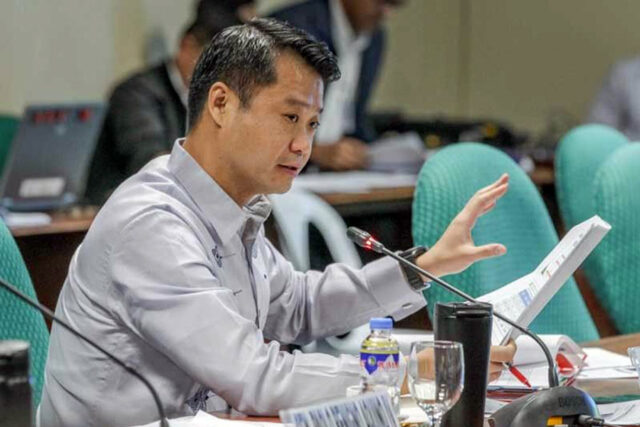
Small committee tasked to amend House’s P5.268-trillion budget bill
PHILIPPINE STAR/ MICHAEL VARCAS

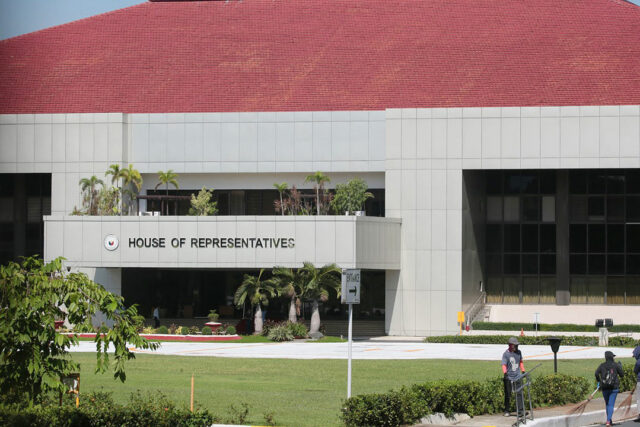
A SMALL committee has been appointed to amend the P5.268-trillion budget bill, which passed on third reading this week before the House of Representatives went on recess, according to majority leader Manuel Jose M. Dalipe, who will himself be a member of the amending team.

Mr. Dalipe said the other members are House appropriations chairman and AKO-BICOL Party-list Representative Elizaldy S. Co, Marikina Rep. Stella Luz A. Quimbo, and Minority leader Marcelino C. Libanan.

Terry L. Ridon, a public investment analyst, said via Facebook chat that the small committee follows the precedent of the last Congress, but called for further scrutiny of opaque budget items.

“All the proposed changes, particularly those covering massive intelligence and confidential funds, should still be pushed in this small committee and through the entire budget process in the Senate and the bicameral conference committee,” Mr. Ridon said.

Voting 289-3, the chamber approved House Bill 4488, or 2023 General Appropriations Bill, before adjourning for recess. 

The proposed spending plan is 4.9% higher than this year’s budget and the highest on record. President Ferdinand R. Marcos, Jr. on Tuesday certified it as urgent, allowing legislators to approve the measure on second and third reading on the same day.

“The expeditious passage of the proposed 2023 budget is the product of the collective effort of the entire House, in transparent and open proceedings where the majority accorded ample opportunity for the constructive inputs of our friends from the minority bloc,” Speaker Martin G. Romualdez said in a statement.

The bill allocates education P858.8 billion, up 8.2% from the 2022 level.

Mr. Romualdez said the budget is in line “with the eight-point socio-economic agenda of the Marcos administration to achieve sustainable growth.” 

Infrastructure funding across various agencies was P1.196 trillion, up 1.54%, including P140.4 billion for the Network Development Program, P88.5 billion for the Asset Preservation Program and P38 billion for the Bridge program.

Minority leader Marcelino C. Libanan said in his turno en contra speech that the minority does not necessarily oppose the budget but must do its duty in examining all spending programs.

“The scrutiny of the minority members of the proposed budget does not mean we absolutely disagree with it,” Mr. Libanan said.

Legislators with the Makabayan bloc voted against the bill, noting its swift passage.

ACT-Teachers Party-list Rep. France L. Castro said in her turno en contra speech that the proposed budget was not responsive to the needs of the people, saying that the need to meet fiscal targets appear to have taken priority.

The cuts to key programs of the Department of Social Welfare and Development (DSWD) and Department of Labor and Employment (DoLE) will affect the lives of the poor, Gabriela Party-list Rep. Arlene D. Brosas said in plenary.

“This national budget banners the theme ‘Agenda for Prosperity’ when in reality it is an ‘Agenda for Austerity,’ as funds for social safety nets and social services were drastically cut,” Ms. Brosas said. 

The DSWD’s proposed budget for 2023 is P197 billion, 3.8% lower, while DoLE was allocated P25.9 billion, down 29.9%. 

“The funds allocated for COVID-19 response are not enough, despite the claims of the current administration that it will strengthen the monitoring and surveillance capacity of the health system,” Kabataan Party-list Rep. Raoul Danniel A. Manuel said. — Matthew Carl L. Montecillo
Bill seeks VAT threshold indexed to inflation

PHILIPPINE STAR/ GEREMY PINTOLO

A BILL filed by Senator Sherwin T. Gatchalian to amend the tax code will index the threshold for value-added tax (VAT) exempt taxpayers to inflation, adjustable every three years.

Mr. Gatchalian, who chairs the Senate Ways and Means Committee, filed Senate Bill 1346, dated Sept. 27, which adjusts the tax administration rules via amendments to the National Internal Revenue Code of 1997.

The start date proposed for the indexing exercise is Jan. 1, 2023.

He also hopes to expand the number of banks eligible to receive tax payments to ease the process for taxpayers, who currently must transact at an authorized agent bank in the revenue district where they are registered.

Mr. Gatchalian also proposed online channels for making tax payments.

“For the benefit of our taxpayers, we need to simplify the process of paying taxes as we endeavor to enhance tax compliance and strengthen taxpayer’s rights,” Mr. Gatchalian said in a statement on Thursday.

The bill seeks to remove the option to pay internal revenue taxes to a city or municipal treasurer with jurisdiction over the taxpayer, while eliminating the distinction between documentation and basis of sales of goods and services, which will then require a sales invoice for both.

The bill states: “For purposes of value-added tax (VAT), the term ‘gross sales’ means the total amount of money or its equivalent which the purchaser pays or is obligated to pay to the seller in consideration of the sale, barter or exchange of services and the use or lease of properties, excluding value-added tax. The liability to pay VAT shall be at the time of the issuance of the invoice.”

“The value of services sold and subsequently refunded or for which allowances were granted by a VAT-registered person may be deducted from the gross sales for the quarter in which a refund is made or a credit memorandum is issued,” it added.

Any sales discount granted and indicated in the invoice, at the time of sale but not for a future purpose, may be excluded from gross sales in the quarter it was given.

It seeks to provide registration channels for taxpayers living overseas.

“Our bill seeks to modernize tax administration and establish mechanisms so that we can further improve and make tax collection more effective,” Mr. Gatchalian said. “We hope that these measures will further encourage our taxpayers to do their duty to pay proper taxes.”

The bill, a priority measure of President Ferdinand R. Marcos, Jr., remains pending in the Senate Ways and Means Committee.

The House of Representatives on Monday passed on third and final reading its counterpart bill, which its backers said would generate an estimated P73.1 billion in additional revenue over five years. — Alyssa Nicole O. Tan

Farm damage from typhoon estimated at P2.02 billion

PHILIPPINE STAR/KRIZ JOHN ROSALES/PPA POOL

AGRICULTURAL damage caused by Typhoon Karding (international name: Noru) has hit P2.02 billion, the Department of Agriculture said.

The storm damaged an estimated 150,693 hectares of farmland and affected over 91,944 farmers and fisherfolk, resulting in lost production of 117,663 metric tons.

Damage and losses were reported in the Cordillera Administrative Region, Ilocos, the Cagayan Valley, Central Luzon, Calabarzon, Bicol, and the Western Visayas.

The department said that it is providing assistance in the form of P170.34 million worth of rice seed, P23.16 million worth of corn seed and P13.55 million worth of assorted vegetable seed.

It will also provide P2.45 million in replacement animals, drugs and biologics for livestock and poultry, as well as fingerlings and fishing equipment.

Separately, farmer organizations are calling on the National Food Authority (NFA) and local government units to step up procurement of palay (unmilled rice) to support farmers in typhoon-hit areas.

The NFA should help farmers from Nueva Ecija and nearby provinces with crop insurance, the National Movement for Food Sovereignty and the Alliance for Resiliency, Sustainability and Empowerment (ARISE) said in a joint statement. 

“There is an urgent need to procure from farmers their produce without the usual stringent requirements. Procurement should also include additional dryers, hauling trucks and increased budgets for the NFA,” ARISE Convenor Arze G. Glipo said. — Luisa Maria Jacinta C. Jocson

BoI approves P560.4-M mattress project

SHANGRI-La Sealy Sleep Boutique

THE Board of Investments (BoI) has approved a P560.4-million project of Maxiflex Philippine Corp. in Plaridel, Bulacan, which will export mattresses.  

In a statement on Thursday, the BoI said the project will have an annual capacity of 680,000 all-foam and spring mattresses.

The BoI added that the funding for the plant will include an investment from mattress brand Uratex. Maxiflex and Uratex are affiliates of the RGC Group. The manufacturing plant will begin commercial operations in October.  

Uratex aims to export around 79% of its production to the US, New Zealand, Papua New Guinea, and Southeast Asia. The company’s export sales are projected to top P2.1 billion a year once at full capacity.

“This will provide a boost to the international footprint of our locally produced mattresses since a great majority of Uratex’s production will cater to foreign markets, leveling up our exports of high-value and high-quality products,” Trade Undersecretary and BoI Managing Head Ceferino S. Rodolfo said.  

“Uratex has long been known in the Philippines as it is the leading manufacturer of mattresses. The exports of its Maxiflex product around the globe will provide greater traction and awareness for Uratex as a world-class brand,” he added.

According to the BoI, the new facility will have bedding and mattress testing machineries that can carry out various performance and durability tests.

The BoI said Philippine exports of mattresses totaled $102 million against imports of $36 million, amounting to a surplus of $66 million in 2021. It was citing data from Tradeline Philippines.  

The top export markets for Philippine mattresses are the Netherlands ($58 million), the US ($35.4 million), and Japan ($8.1 million).

“According to Statista.com, the domestic mattress market is expected to reach $41 million in 2022. It added that the market is projected to grow yearly at 9.45% annually in the next four years with the market reaching nearly $60 million by 2026,” the BoI said. — Revin Mikhael D. Ochave

BIR files 78 tax evasion charges in first eight months

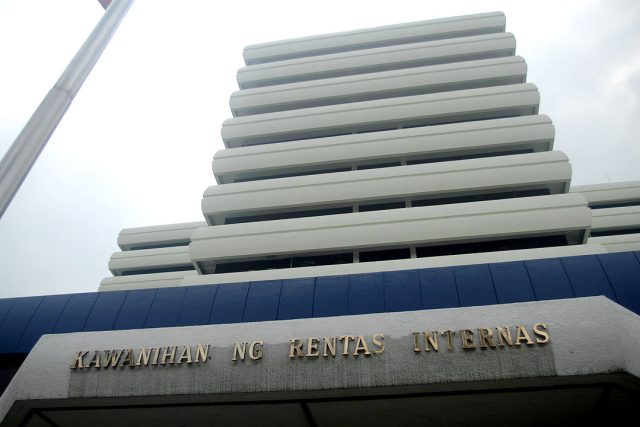
THE Bureau of Internal Revenue (BIR) said its Run After Tax Evaders (RATE) program filed 78 criminal complaints in the first eight months of the year, with the alleged taxes evaded amounting to P2.249 billion.

The 78 complaints are distributed across 11 revenue regions, according to the BIR’s Enforcement and Advocacy Service, with Makati City accounting for 16, Caloocan City 15, and the City of Manila 14.

The other revenue regions with charged parties were Quezon City (8); south of the National Capital Region (8); east of the National Capital Region (5); Laguna, Quezon, and Marinduque (5); Cebu City (4); Calasiao, Pangasinan (1); Pampanga (1); and Cavite, Batangas, Mindoro, and Romblon (1).

“In view of its deterrent effect on tax evasion, the RATE Program has been on top of the list in the BIR’s priority programs along with other tax enforcement activities, such as ‘Oplan Kandado’ program, broadening of the tax base and intensified conduct of audit and investigations,” the BIR said.

“By emphasizing the criminal nature of tax evasion, the BIR aims to enhance taxpayers’ voluntary compliance and promote public confidence in the tax system,” it added. — Diego Gabriel C. Robles

Power co-ops report P25.30 million worth of typhoon damage

DAMAGE incurred by electric cooperative due to Typhoon Karding (international name: Noru) has been valued at P25.30 million so far, according to the Department of Energy (DoE).

The National Electrification Administration (NEA) reported that as of Thursday, 12 electric cooperatives had notified it of damage to their facilities.

These are: Aurora Electric Cooperative, Inc.; Mountain Province Electric Cooperative; Nueva Ecija 1 Electric Cooperative, Inc. (Neeco I); Neeco II – Area 1; Neeco II – Area 2, Camarines Norte Electric Cooperative, Inc.; Pampanga II Electric Cooperative, Inc. (Pelco); Pelco III, Zambales Electric Cooperative (Zameco I); Zameco II; Abra Electric Cooperative Inc.; and Quezon II Electric Cooperative, Inc.

The National Grid Corp. of the Philippines (NGCP) also reported that as of Thursday, two of its transmission lines remain down.

The grid operator said that it hopes to restore the 230-kilovolt San Rafael-Cabanatuan line by Oct. 1, while the restoration timetable for the Cabanatuan-Bulualto 69kV line has yet to be determined.

The NGCP said that it has energized 15 of the 17 affected transmission lines.

Manila Electric Co. (Meralco) said in its report to the DoE that as of 2 p.m. on Thursday, it hopes to restore power service to part of San Miguel, Bulacan within two days.

The affected area has around 750 households, according to Meralco’s assessment report.

Tarlac Electric, Inc., said around 13,043 of 89,419 customers in its franchise area are still without power. — Ashley Erika O. Jose

Regional platform launched to attract investment in sustainable energy 

RAWFILM-UNSPLASH

A PLATFORM to attract investments in the region’s transitional energy projects has been established by the Institute for Climate and Sustainable Cities (ICSC), a Manila-based climate and energy policy group.

The platform is known as the Southeast Asia Information Platform for the Energy Transition (SIPET), ICSC said on Thursday.

“I cannot say how much investment will come in, but it depends on how we can encourage stakeholders to jump in, how the transition should proceed, and at what speed,” Renato Redentor Constantino, executive director of ICSC, said at a virtual briefing to accompany the SIPET launch.

The German-backed Clean, Affordable, and Secure Energy for Southeast Asia (CASE) project developed SIPET to facilitate and promote coordination in the Southeast Asian power industry during the changeover to more sustainable power.

“We designed SIPET as an open-source, transparent platform to encourage practitioners, experts, and advocates across Southeast Asia to coordinate and exchange information in a more seamless and inclusive manner,” Mr. Constantino said.

According to CASE, the energy transition in the region is hampered by a lack of institutional capacity, platforms for exchanging information, and duplication of work among stakeholders.

Mr. Constantino said SIPET is meant to address these challenges, while helping generate more investment for the energy sector.

“Our investment crisis is only a crisis because we need power in order to move forward… if we provide studies (and) data then we will have the basis (for determining) the kind of investment this region needs,” he added.

According to a statement issued by CASE, energy demand is expected to grow 80% by 2050.

“Through SIPET, we aim to facilitate the narrative in the power sector towards an evidence-based energy transition that robustly supports the region’s development strategies, and towards joint actions that secure a clean, affordable and secure energy future for Southeast Asia,” according to Simon Rolland, energy program director of Deutsche Gesellschaft für Internationale Zusammenarbeit Thailand. — Ashley Erika O. Jose

Zero-tariff policy on electric vehicles expected by end of 2022

REUTERS

THE proposed zero-tariff policy for electric vehicle (EV) imports is expected to be released within the year, an official with the Department of Energy (DoE) said.

Patrick T. Aquino, director of the DoE’s Energy Utilization Management Bureau, said at a briefing in Taguig City on Thursday that the policy is awaiting evaluation by the Committee on Tariff Related Matters of the National Economic and Development Authority.

“Based on our understanding, we are just waiting for the settling of the new officials. The zero percent ad valorem (tariff) is expected to be released within the year,” Mr. Aquino said.

Mr. Aquino added that the proposed zero-tariff regime for EVs is expected to run between five and seven years.

“You can expect the zero-ad valorem… irrespective of country of origin, to zero hopefully before the end of the year. There’s a requirement for an executive order for that,” Mr. Aquino said.

Current tariffs are between 5% and 30%.

“The net effect is that there will be a slight decrease in terms of the landed cost for EVs right now,” Mr. Aquino said.

According to Electric Vehicle Association of the Philippines Chairman Ferdinand I. Raquelsantos, the policy can help bring down the price of EVs, facilitating adoption.

In the case of an EV car priced at P1.5 million, “with zero ad valorem duties, it goes down to P1.2 million. You can save about P300,000,” Mr. Raquelsantos said.

Trade Secretary Alfredo E. Pascual previously said that the Tariff Commission recommended removing the tariff imposed on EVs in a bid to increase usage in the Philippines.

“We are opening our EV market to help develop an ecosystem for a viable market that can support the production of electric vehicles in the Philippines,” Mr. Pascual has said.

The Chamber of Automotive Manufacturers of the Philippines, Inc. (CAMPI) also declared its support for the removal of the tariff.

“CAMPI supports all EV technologies including hybrid electric vehicles (HEV), plug-in hybrid electric vehicles (PHEV) and battery electric vehicles (BEV). All these have potential for fuel consumption reduction and vehicle emission mitigation in the mid- to long-term,” CAMPI President Rommel R. Gutierrez has said.

EV adoption in the Philippines is projected to increase following the passage of Republic Act No. 11697 or the Electric Vehicle Industry Development Act (EVIDA), which lapsed into law on April 15.

The law calls for the creation of the Comprehensive Roadmap for the Electric Vehicle Industry which will lay down the development path for the EV industry.

EVIDA also requires the government and companies to meet a 5% EV quota on their vehicle fleets. — Revin Mikhael D. Ochave 

Oral arguments on ‘no-contact’ policy moved to December

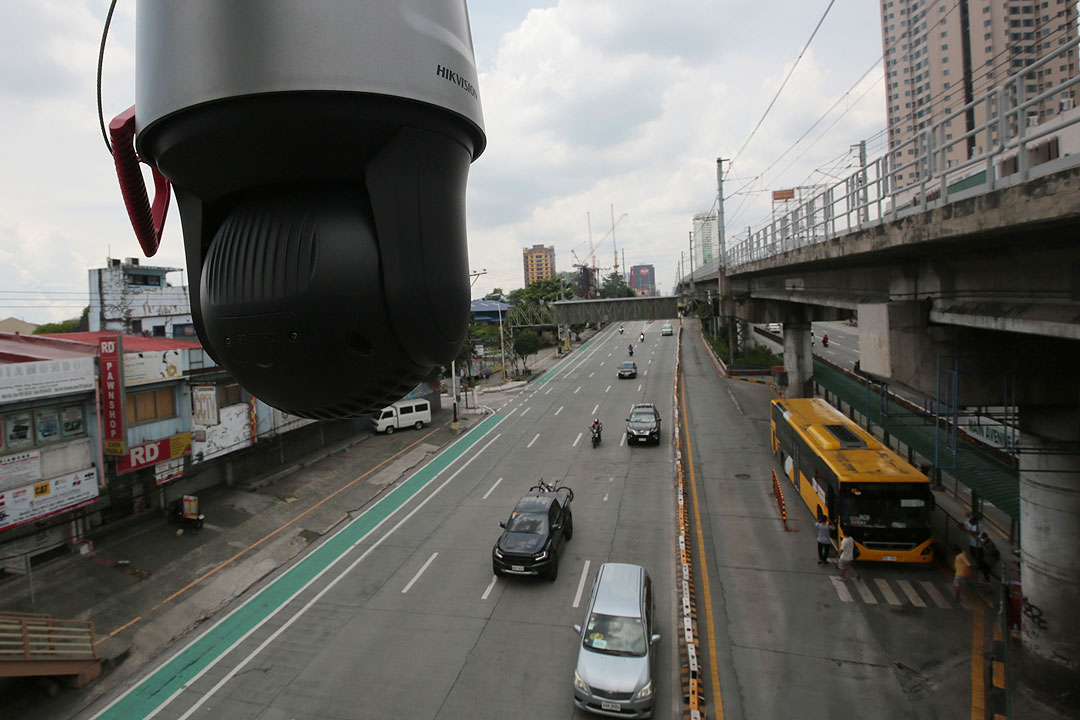
A CLOSED-CIRCUIT TELEVISION (CCTV) at Main Avenue in Cubao, Quezon City. — PHILIPPINE STAR/ MICHAEL VARCAS
A CCTV installed along Main Avenue in Cubao, Quezon City is part of the no-contact apprehension system used by the city government. — PHILIPPINE STAR/ MICHAEL VARCAS

THE SUPREME Court (SC) has set Dec. 6 for the oral arguments on several petitions filed against the government’s use of video surveillance and digital cameras to catch traffic violators.  

In a statement on Thursday, the High Court also set Nov. 4 as the date for the preliminary conference.  

The oral arguments for the cases were initially scheduled for Jan. 24 next year.  

“The Supreme Court likewise ordered that the Metropolitan Manila Development Authority (MMDA) be furnished a copy of the Petitions, and thereafter file its comment within 10 days from receipt of the notice,” said the tribunal.  

A copy of the court’s resolution has yet to be uploaded to the SC website.  

Last month, the tribunal issued a temporary restraining order (TRO) which stopped law enforcers from implementing the government’s so-called no-contact apprehension policy. 

Several transport groups earlier asked the High Court to void the policy, asserting that it is prone to abuse.  

A lawyer who was fined more than P20,000 for alleged traffic violations also filed a separate lawsuit on Aug. 18.  

The court said it issued the order “without necessarily giving due course to the petitions.” 

The TRO stopped the Land Transportation Office (LTO) from giving out motorists’ information to local government units. 

The policy was being enforced in the cities of Manila, Muntinlupa, Parañaque, Quezon and Valenzuela as well as by the MMDA, which has jurisdiction across the capital region Metro Manila. 

Mayors of the cities using the no-contact system have said the policy had minimized human intervention in traffic enforcement. John Victor D. Ordoñez

Solar energy projects planned for Cavite, Baguio under PEZA, UGEP partnership

UGEP-ENERGY.COM

THE PHILIPPINE Economic Zone Authority (PEZA) has partnered with Upgrade Energy Philippines, Inc. (UGEP) for solar energy projects within economic zones in Cavite and Baguio City.    

In a statement on Thursday, PEZA said UGEP will develop and implement 10-megawatt (MW) solar projects at the Cavite Economic Zone (CEZ) and Baguio City Economic Zone (BCEZ) under the first phase of the three-year partnership signed on Sept. 22.   

Under the memorandum of understanding, UGEP will conduct feasibility studies in CEZ and BCEZ to determine the viability of the first phase projects prior to its implementation,PEZA said.  

The agreement also allows UGEP to generate and sell solar power to end consumers in the zones through the designated distribution utilities within the ecozones.  

PEZA will assist UGEP in the studies, identification of land areas within the zones suitable for the project, and registration of the solar photovoltaics under the PEZA.    

Promoting the use renewable energy are extremely paramount in our country so we can save billions of pesos in energy and electricity consumptions, generate more jobs and at the same time, reduce our countrys share of carbon emissions, therefore, fighting the adverse effects of the global climate change,PEZA Officer-in-Charge and Deputy Director General for Policy and Planning Tereso O. Panga said.    

Meanwhile, Mr. Panga also pushed for more water-based ecozones in the country to boost sustainable development as he produced a foresight paper titled New Frontiers in Ecozone Development: Aqua-Marine and Renewable Energy Parks 

He said more water-based ecozones will help enable PEZA achieve blue economy and complement the countrys quest for economic, inclusive and sustainable development.”  

This innovative and transformative ecozone model, which is a major departure from the conventional land-based ecozones for the past 50 years, aims to put the Philippines among the pioneering economies in the region that will venture into aquamarine parks integrated with mariculture or marine farming, ocean energy/RE generation, hydrogen/oxygen production and marine eco-system regeneration,he added. Revin Mikhael D. Ochave

Apo Agua commits to deliver bulk water supply by Q1 2023

APOAGUA.COM

ABOITIZ-LED Apo Agua Infrastructura, Inc. has committed to have its P12-billion bulk water supply project operational by the first quarter (Q1) next year as it further ramps up construction work that was delayed by the coronavirus pandemic.   

Apo Agua President Anna M. Lu said in a press statement the project is being fast-tracked by hiring an additional team of experienced construction management professionals.   

Multiple seasoned contractors have also been mobilized, the company said.  

In August last year, the joint venture of Aboitiz Equity Ventures and J.V. Angeles Construction Corp. announced a target operation of 2022 as it stepped up construction work to make up for setbacks in schedule due to lockdowns and other restrictions during the coronavirus crisis.   

“We had a meeting with our management team and committee team with (Davao City) Mayor (Sebastian) Baste Duterte last week and shared to him the progress of the project. Mayor Baste is supportiveand he asked us to expedite the project timeline,” May Che Capili, Apo Agua external relations officer said.  

The company is contracted to supply 300 million liters per day to the distributor Davao City Water District. The water will be sourced from the Tamugan River. 

The project is considered the first in the country to use a water-energy nexus concept, where renewable energy will be generated through an integrated hydroelectric power plant. Maya M. Padillo

BoC-Dadiangas sub-port reaches final stage of ISO-certification

THE BUREAU of Customs (BoC) on Thursday said the port of Davao’s sub-port of Dadiangas is already in the final stage of the External Quality Audit amid its bid to become the second ISO Certified sub-port in Mindanao.  

The sub-port under the supervision of the BoC-Davao office is located in General Santos City. 

“Sub-port of Dadiangas undergoes the second and final stage of the External Quality Audit on Sept. 21 by its external certifying body, Tüv-Süd where the said Port was recommended the ISO 9001:2015 Certification,” the BoC said in a press release.  

“During the process audit, auditors from TÜV SÜD, a leading certification body, assessed and reviewed the actual processes enrolled under the Quality Management System (QMS) of the sub-port,” it added.  

Dadiangasport collector, Orlando Orlino, gave assurance that all audit findings will be complied with within the set timeframe, as well as expressed support for the port of Davao’s Quality Management Unit, which is guiding the sub-port’s ISO team.  

If realized, the sub-port of Dadiangas will be the second ISO-certified sub-port in Mindanao after the subport of Iligan.  

Davao District Collector Erastus Sandino B. Austria said the BoC aims to strengthen its efforts aligned with the ISO 9001:2015 standards.  

The ISO 9001 are international standards that reflect an organization’s ability to consistently provide products and services acceptable to customers and regulators. Diego Gabriel C. Robles