Home Blog Page 5289

DoF Secretary confident PHL will sustain growth

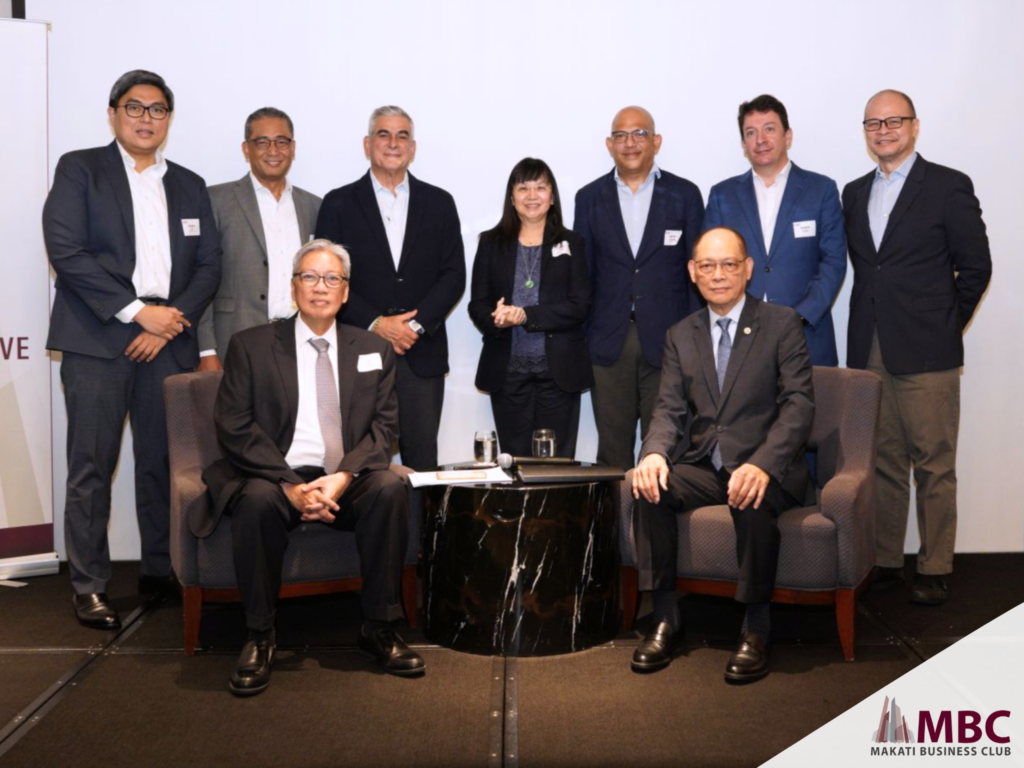
Optimistic prospects are expected for the Philippine economy due to the passage of liberalization reforms and the openness of the administration to collaborate with the private sector, Finance Secretary Benjamin Diokno said in a meeting with Makati Business Club (MBC) on Feb. 3.

“I’m pretty optimistic because there are new (investment) areas, more than we had before…I think we can grow at 6.5-8% but the main constraint will be the energy sector,” Mr. Diokno told MBC members and guests.

The country’s gross domestic product (GDP) grew 7.2% in the fourth quarter of 2022, led by accommodation and food service activities (36.1), transportation and storage (19.2), and other services (18.3), the government reported last week, beating consensus economist estimates of 6.6%. While this is among the fastest rates in the region, the Philippines is playing catch-up after suffering one of the biggest contractions in 2020.

Inflation inched up to 8.1% in December, the highest rate since 1976, resulting in average inflation of 5.8% for 2022. The Bangko Sentral ng Pilipinas raised its key interest rate to 5.5% in December, a 14-year high. While this may damp inflation, it may also slow the economy and job creation.

Globally, the International Monetary Fund has said 2023 “may feel like a recession.” However, according to Sec. Diokno: “I think it (inflation) has peaked…I think things are looking up and the future is bright for the Philippines.”

“MBC joins the rest of the private sector in supporting Sec. Diokno and the rest of the Administration’s policies to provide an enabling environment for the investment needed to create more jobs for Filipinos,” MBC Chairman Edgar Chua said after the meeting.

In his welcome and introductory remarks, Mr. Chua pointed out that Mr. Diokno “took on a formidable task” when he took over the Department of Finance. He noted how the new administration achieved quick and much-welcomed fixes to the IRR of the BOT Law, the Telecommuting Act, the Renewable Energy sector, among others.

Mr. Diokno’s meeting with MBC was the first installment of MBC’s “F2F with Cab Secs” series, which featured five other key economic managers. NEDA Sec. Arsenio Balisacan is next on Feb. 23. MBC has visited 11 other national government officials since President Ferdinand Marcos Jr. was elected in May 2022.

The “F2F with Cab Secs” series is part of MBC’s contribution to deepening public-private dialogue and collaboration.

“Efforts such as these are important because the government and business have to be partners,” Mr. Chua said. “Government provides the enabling environment — well-nourished kids, well-educated workforce, healthcare, infrastructure, peace and order — so we in the private sector invest and create jobs.”


Spotlight is BusinessWorld’s sponsored section that allows advertisers to amplify their brand and connect with BusinessWorld’s audience by enabling them to publish their stories directly on the BusinessWorld Web site. For more information, send an email to online@bworldonline.com.

Join us on Viber at https://bit.ly/3hv6bLA to get more updates and subscribe to BusinessWorld’s titles and get exclusive content through www.bworld-x.com.

Smart levels up Signature Plan 599 with double data and shorter lock-in period

Smart Signature P599 now comes with monthly 10 GB and only 6 months lock-in

Leveling up to a postpaid plan is now easier than ever as Smart has boosted its Signature Plan 599 by adding more data and shortening the lock-in period to cater to a growing number of subscribers who need bigger data allocation for their productivity and entertainment needs.

As Smart’s value-for-money SIM-only plan, Signature Plan 599 now comes with 10 GB data every month, which is double its previous 5 GB monthly data allocation, for only P599 per month.

Signature Plan 599 also comes with Unlimited Calls & Texts to all networks, and Landline Calls. To cap it off, the lock-in period has been shortened from 12 months to 6 months only.

Easiest way to get on postpaid

The easiest way to level up to the postpaid experience, Signature Plan 599 is best suited for subscribers who top up on a regular basis and end up spending hundreds per month to cover all their data, call, and text needs.

With 10 GB open access data, Signature Plan 599 empowers subscribers to accomplish more – whether it’s for uploading and downloading large files or going online for virtual presentations at work or school, with so much data left for accomplishing daily digital tasks and services like cab-hailing, online shopping, and food delivery, among others.

Subscribers can also use their monthly data for their mobile entertainment needs – from binge-watching movies and TV series, playing mobile games, streaming music, and staying updated on different social media apps.

Customers can sign up for the Signature Plan 599 in Smart Stores nationwide or via the Smart Online Store at https://smart.com.ph/Postpaid/signature.

Register your Smart SIM now

In compliance with the SIM Registration Law, Smart encourages all subscribers to have their SIM cards registered.

Existing Smart Postpaid customers simply need to confirm the personal information and IDs they submitted for their postpaid plan application by texting YES to 5858 and wait for the confirmation message from Smart.

On the other hand, Smart Prepaid and TNT subscribers can visit the https://simreg.smart.com.ph/ portal, while Smart Bro subscribers can refer to http://www.smart.com.ph/viewbroadbandsms to complete their SIM Registration.

Extensive network nationwide

Signature Plan 599 is powered by Smart, whose parent company PLDT operates the country’s most extensive fiber network, which spanned more than 1.09 million kilometers in international and domestic fiber as of end-September 2022.

This fiber infrastructure also supports Smart’s 77,200 base stations, including 7,300 5G base stations and close to 40,000 4G/LTE base stations deployed nationwide. Smart’s network covers 97% of the population with 3G, LTE, and 5G. These connectivity efforts are also part of the PLDT Group’s contribution in helping the Philippines meet the United Nations Sustainable Development Goal # 9: Industry, Innovation, and Infrastructure.

Know more about Signature Plan 599 at https://smart.com.ph/Postpaid/signature.


Spotlight is BusinessWorld’s sponsored section that allows advertisers to amplify their brand and connect with BusinessWorld’s audience by enabling them to publish their stories directly on the BusinessWorld Web site. For more information, send an email to online@bworldonline.com.

Join us on Viber at https://bit.ly/3hv6bLA to get more updates and subscribe to BusinessWorld’s titles and get exclusive content through www.bworld-x.com.

Philippine inflation beats expectations, lifts chance of bigger rate hike

PHOTO BY BERNARD HERMANT

MANILA – Philippine annual inflation blew past expectations in January to reach a fresh 14-year high on surging food prices, raising the chance of the central bank delivering a bigger interest rate hike to tame prices when it meets this month.

The consumer price index (CPI) rose 8.7% in January, the statistics agency said on Tuesday, well above the 7.7% forecast in a Reuters poll and topping the 8.1% rate in December, when the central bank had expected prices to peak.

Core inflation, which strips out volatile food and fuel items, also increased to a more than two-decade high of 7.4%, from December’s 6.9%, suggesting price pressures remain broad.

The Philippine central bank, which had forecast January CPI to come in between 7.5%-8.3%, said on Saturday it will focus on inflation rather than the Federal Reserve’s most recent 25-basis point hike when it meets on Feb. 16 to review interest rates.

Given the faster-than-expected inflation in January, Bangko Sentral ng Pilipinas (BSP) looks certain to hike interest rates by at least 25 basis points and with a bigger 50 bps likely to be on the table, ING economist Nicholas Mapa said in a tweet.

The Philippines’ broader stock index dropped 0.4% in early trade on expectations of a larger rate hike, while the peso had slipped 0.5% at 54.73 per dollar as of 0211 GMT.

The main factor behind January’s red-hot inflation was the 11.2% annual rise in food inflation, the quickest pace since 2009, and compared to the previous month’s 10.6%, and the 1.6% rate in the same month last year.

BSP Governor Felipe Medalla has previously signalled further rate hikes at the central bank’s first two policy meetings this year to bring inflation back within a target range of 2% to 4%.

Elevated inflation, plus the need to maintain interest rate differentials between the U.S. and the Philippines, have forced the central bank to embark on aggressive tightening, with the benchmark rate rising by a total of 350 bps last year.

National Economic and Development Authority (NEDA) Secretary Arsenio Balisacan said after the data was released that the impact of the central bank’s series of rate hikes in 2022 should be felt this year and result in a moderation in inflation starting in 2023. — Reuters

Treading the often-difficult path of making lives better

Generations of making lives better: PHINMA Chairman Emeritus Oscar J. Hilado; Chairman and CEO Ramon R. del Rosario, Jr.; and President, COO and Head of Education Dr. Chito B. Salazar.

Former US President Franklin D. Roosevelt was once quoted as saying, “Competition has been shown to be useful up to a certain point and no further, but cooperation, which is the thing we must strive for today, begins where competition leaves off.”

Indeed, in almost all things, a single person can do and achieve much less than a group working together towards a single goal. This is the foundation that patriotism is built on — countrymen supporting one another to make their nation the best it can be.

This idea is what guided Amb. Ramon V. del Rosario, Sr. (RVR), Don Filemon C. Rodriguez, and Ernesto O. Escaler in creating PHINMA Corp. A few years after the devastation of the Second World War, PHINMA was established at a critical time in Philippine history, when a nationwide rebuilding effort was in motion and foreign nationals ran most of the big businesses in the country.

“PHINMA started about a decade after the end of the second World War. And I think it was motivated by what I would call nationalistic objectives,” Ramon R. del Rosario, Jr., chairman and CEO of PHINMA Corp., said in an interview.

“My father had two things in mind: One was to help rebuild the Philippine economy, and the second was to show that Filipino managers are as good as any in the world. Those were two strong motivations for him.”

Mr. Oscar J. Hilado, the company’s current chairman emeritus, was the late Amb. del Rosario’s longtime assistant and partner in leading PHINMA. He recalled, “[RVR] and [Mr.] Rodriguez had established PHINMA as a company that was going to be a Filipino company. That’s why they got Filipinos to run the company. They had outstanding Filipino managers, but they were very much ‘Filipino’ more than just managers. They wanted to put the Filipinos first. This was passed down to me, this kind of outlook.”

PHINMA first made its name in the cement business, helping rebuild the country from where it was after the war. The company met considerable success until the 1990s with the Asian Financial Crisis, when “the roof fell on our heads,” as Mr. del Rosario put it.

The situation eventually led to PHINMA’s decision to sell off its cement business and rethink what it can do to help make the Philippines competitive with the rest of the world.

“We concluded that it is our people, and if we want our people to be competitive, one of the things we should do is help develop the human capital of our country. Therefore, we considered going into education. Education, particularly, that is accessible to the wider broader market.”

Since then, education has been one of PHINMA Corp.’s key businesses, alongside other investments into hospitality, property development, and a return to construction materials.

SERVING A CORE PURPOSE

Mr. Hilado, who had served the company during those early turbulent years, said that PHINMA had never been more dedicated to its mission of “making lives better” than it is now.

“I must confess, there was not very much time to think about what were the advocacies we were advocating. By contrast, PHINMA today is very clear-minded about what it wants to do, about making lives better. Ramon Jr. has structured the directions of PHINMA better than RVR and I did in all those years.”

Mr. Del Rosario emphasized their company’s commitment to their original purpose of becoming a force for good for the Philippines. PHINMA Education, he cited as example, served mostly an underserved market, consisting of families without any prior experience with tertiary education, those who more often than not cannot pay tuition upfront.

“That market is subject to a lot of uncertainties,” he said. “Kids who come to our schools are products of public schools; and, sad to say, almost all of them are not ready to enter college.”

“Right there we have to make a decision whether we will take them in or whether we will turn them away. But clearly in our minds, if we turn them away, these kids will never have a chance at a better life. They will be forever poor,” he continued.

“So, we made it part of our mission to work with these kids. We do not turn away anyone. We accept everyone who wants to come to our schools and even help them afford our tuition.”

PHINMA Education does this by offering a variety of programs to help students go to school, and more importantly, stay in school. Such programs include scholarships, helping students build self-confidence, demonstrating the value of education, connecting students with successful role models who came from similar backgrounds, and even offering constant guidance through house calls.

The results speak for themselves, Mr. Del Rosario pointed out. He said that their board exam results across fields like nursing to criminology, had an average of 80% pre-pandemic, even in licensure tests with a low overall passing rate.

Even in the pandemic years, when education in general took a hit, this rate stayed around 70%. They even saw an uptick in their enrolment figures during the period, boosting their student population to 124,000 last year and making PHINMA Education the largest education network in the country.

“PHINMA was set up with the intention to do good for the country. Even at the very outset, the intent of the company was to help build the country. It was out of love for the Philippines,” said Chito B. Salazar, Jr., president and COO, head of education of PHINMA Corp., and president and CEO of PHINMA Education.

THE PHINMA SPIRIT

Dr. Salazar noted that while the initial business of PHINMA has changed, the spirit remains the same. “I think this is what should drive business. Part of the difficulties in our world is because you always see businesses’ main role is to make a profit, which is important of course. But I don’t think making a profit is the first objective of business. I think any entity, any organization, any person’s first role in life is to somehow make the world a better place by their presence,” he said.

“Profit allows business to continue to do this in a sustainable way. You don’t need to ask for money from the government, you don’t need to rely on donations. It generates a profit in the process of doing good, and then it can sustain doing good. But, the first objective is always to make the world a better place.”

For Mr. Hilado, much of the success of PHINMA in doing good while doing well is thanks to the people who are dedicated to this mission of making lives better. “Every employee and stakeholder of our company is called to be good at what they do — even better than good, as we strive for excellence at all times,” he said.

“I am an advocate for a strong balance sheet and a good dividend policy. PHINMA is fair at all times — with associates, employees, customers, suppliers, and even our competitors. We are always honest, even while being fiercely competitive,” he added.

PHINMA employs this philosophy in all its businesses: in pursuing property development to provide affordable housing to Filipinos through PHINMA Properties; aiding national development by providing construction materials through PHINMA Construction Materials; and providing comfortable and safe stays for business travelers and tourists through PHINMA Hospitality.

Dr. Salazar is hopeful for the future of PHINMA, and looks forward to bringing the PHINMA spirit to other industries.

“The beauty of having a business driven with a mission of making the world a better place is that there will always be problems to solve. You won’t run out of things to do… Even though poverty and inequality still exist, there are new calls. One of the biggest is the environment. As we move forward, we’re now looking at new businesses and new ways to continue to help the world,” he said.

“I will admit that businesses — no one business in particular — have been responsible for many of the ills of the world. But this power can also be used in the opposite direction… It’s a good thing we have a very clear north star, [which is] precisely: What are the essentials for living a dignified life for Filipino families?” he continued.

The executives also expressed their confidence that PHINMA Corp. will maintain its altruistic spirit as it moves into other businesses.

“As long as you believe in what you’re doing, I think you have a good shot at it,” Mr. del Rosario said.

“I have never been more optimistic about PHINMA’s future as I am now. I sit back now and say, ‘Wow, those guys are going to run with this company. They know what they’re doing, and I like what they’re doing,’” Mr. Hilado added.


Spotlight is BusinessWorld’s sponsored section that allows advertisers to amplify their brand and connect with BusinessWorld’s audience by enabling them to publish their stories directly on the BusinessWorld Web site. For more information, send an email to online@bworldonline.com.

Join us on Viber at https://bit.ly/3hv6bLA to get more updates and subscribe to BusinessWorld’s titles and get exclusive content through www.bworld-x.com.


Imported onion SRP set at P125/kg

PHILIPPINE STAR/WALTER BOLLOZOS

THE DEPARTMENT of Agriculture (DA) approved a suggested retail price (SRP) of P125 a kilo for imported red onions in the National Capital Region (NCR) starting on Wednesday.

DA Assistant Secretary Kristine Y. Evangelista said stakeholders had recommended the price at a meeting on Friday.

“This has been approved. We took into consideration the importers’ price… wholesalers’ price, plus the expenses of retailers,” she told reporters in mixed English and Filipino on Monday. “With that, we came up with a price of P125 that was agreed upon by retailers.”

The DA will work with “market masters” to disseminate information about the SRP. The local price coordinating council will monitor and enforce the price in markets.

Ms. Evangelista said the department had made a cost structure to guide retailers in negotiating with the suppliers and in following the SRP.

“Since we took into consideration the landed cost, as agreed upon by the importers, we believe that the retailers will not have the reason not to sell at a proper price,” she said.

The SRP will only be implemented in NCR, she added.

At least 3,500 metric tons (MT) out of 21,000 MT that were authorized for importation arrived before the Jan. 27 deadline set by the agency.

Based on DA’s latest price monitoring, imported red onions per kilo is sold in wet markets at P180-P260; local red onions at P230-P320; and local white onions at P120-P250.

Raul Q. Montemayor, national manager of the Federation of Free Farmers, said the issue on onions has revealed the inefficiency and manipulation in local agricultural food markets.

“It is also sad that they are now using the imported onions to drive down the cost of local onions,” he told BusinessWorld in a Viber message.

Mr. Montemayor lamented how the DA had refused to import onions and allowed prices to remain high in December, which benefited traders and hoarders.

“Now that farmers are trying to get the best possible prices for their products, they are driving down the retail price of imports, and this will definitely result in lower farmgate prices for farmers. Whose side is the DA on?”

Ms. Evangelista said the agency is working closely with different agencies to help farmers and address hoarding.

On the other hand, Samahang Industriya ng Agrikultura (SINAG) Executive Director Jayson H. Cainglet said importation is “a death sentence” for local producers as farmgate prices of local onions continued to fall.

“The SRP on imported onions is meant to curb the exorbitant profits of importers while protecting the interest of consumers to buy cheaper onions,” he told BusinessWorld in a Viber message.

SINAG is discussing the SRP for local onions with the DA, Bureau of Plant Industry, onion farmers and other stakeholders.

The Department of Trade and Industry (DTI) on Monday said it would help the DA in monitoring the P125 a kilo SRP for imported onions.

“If it is really priced at P125, we all want that for consumer protection. So, we’ll find where that P125 price of onion is, to make sure that it is complied with by retailers,” Trade Undersecretary Ruth B. Castelo said at a televised briefing.

Based on the DTI’s own monitoring, she noted the retail price of onion still reaches as high as P350 per kilo, although some supermarkets are selling local onions at P180 per kilo.

“The prices of onion will start to decline once we get the local onion harvest. With the entry of the local harvest, there would be also a need to adjust the prices of imported onions,” Ms. Castelo added. 

NEW SRP BULLETIN
Meanwhile, the DTI is still looking at some figures before releasing the updated SRP bulletin for basic necessities and prime commodities (BNPCs).

“But as of now, consumers are rest assured that the prices of all the products in the SRP bulletin of the DTI are not moving. Until we make a new (SRP) publication after the August 2022 (SRP) publication, only then can our retailers increase prices in the market,” Ms. Castelo said.

In August 2022, the DTI issued an SRP bulletin, which reflected price increases for 67 out of 218 stock keeping units (SKUs) that were driven by surging production costs. Price increases at that time ranged from 3.29% to 10%.

Some of the BNPCs that posted price increases in the August 2022 SRP bulletin were canned sardines, coffee, noodles, bottled water, processed milk, detergent soap, candle, and condiments.

Previously, the DTI confirmed that there are pending price hike requests for BNPCs such as canned sardines, processed milk, coffee, instant noodles, bread, candles, bath soap, and detergent.

“We have seen justifications from the manufacturers on why they need to raise prices by so much. Because of the varying percentage and peso value of their price increases, we have seen a lot that are possible or justified,” Ms. Castelo said, adding that the DTI may still negotiate with manufacturers to implement smaller or staggered price increases. — Sheldeen Joy Talavera and Revin Mikhael D. Ochave

Faster PHL growth likely if Marcos addresses gaps in agri, good governance

The sunset is seen behind the Binondo-Intramuros Bridge in Manila, Feb. 5. — PHILIPPINE STAR/ MIGUEL DE GUZMAN

THE PHILIPPINE ECONOMY could grow by as much as 8-10% if the government can address the gaps in agriculture, investment, and good governance, according to economists.

“If President Ferdinand R. Marcos, Jr. meets these three challenges, we will reach 8-10% growth in the next five years,” University of Asia and the Pacific (UA&P) Center for Research and Communication Director for Research Bernardo M. Villegas said at a briefing on Monday.

He said the Marcos administration should aim for at least 2-3% agricultural growth every year to achieve the 8-10% gross domestic product (GDP) expansion.

Agricultural production, which contributes about a tenth to GDP, dipped by 0.1% in 2022 for a third straight year of contraction.

Economic managers have set a 6-7% GDP growth target this year, and 6.5-8% goal for 2024-2028.

Mr. Villegas said Mr. Marcos should also increase the “very low” investment rate in the Philippines to over 30%, which is the average in East Asia.

“We have the worst savings rate in Asia, we’re only saving 10% compared with our neighbors who have 25-40%. We cannot get it from local capital. (We need to) attract foreign direct investments (FDI), which he should target at $15-20 billion per year,” he added.

Bangko Sentral ng Pilipinas (BSP) data showed FDI net inflows declined by 8.3% to $7.635 billion in January to October. The BSP expects FDI net inflows to have reached $8.5 billion at the end of 2022 and $11 billion by the end of this year.

Mr. Villegas said the Philippines should also improve good governance.

“(Mr. Marcos) must fight corruption. If he can meet these challenges, we can reach 8-10% growth,” he added.

Based on the 2022 Corruption Perceptions Index (CPI), the Philippines ranked 116th out of 180 countries, up one spot from its worst-ever showing of 117th place in the previous year.

However, the country’s score was unchanged at 33 out of 100 in a scale that measures perceived levels of public sector corruption. A score of 100 means a country is “very clean,” while zero means it is “highly corrupt.” 

6% GROWTH THIS YEAR
Victor A. Abola, an economist at UA&P, said the Philippine economy is likely to grow 6% this year or at the low end of the government’s 6-7% target.

“For GDP, I expect it to be 6% with the services sector providing the lead. Hotels and restaurants are continuing to open up and we expect more tourists, not only abroad, but domestic demand has been driving the hospitality sector,” he said.

The economy grew 7.6% last year, its fastest growth in 46 years. It also exceeded the government’s 6.5-7.5% goal.

“We do have some fiscal space especially given our debt-to-GDP ratio. Our fiscal space is bound to expand by 2024. We expect the (debt-to-GDP) ratio will start declining to 60.1% this year depending on the rate of growth of the economy,” Mr. Abola said.

The country’s debt as a share to GDP was at 60.9% as of end-December, better than the 63.7% debt-to-GDP ratio as of end-September but still above the 60% threshold considered manageable by multilateral lenders for developing economies.

The government is aiming to bring down the debt-to-GDP ratio to less than 60% by 2025 and 51.5% by 2028. — Luisa Maria Jacinta C. Jocson

Filipinos crunched by rates, spike in cost of living

Shoppers head to Divisoria, Manila, Dec. 26, 2022. — PHILIPPINE STAR/WALTER BOLLOZOS

By Keisha B. Ta-asan, Reporter

GLORIA L. JAPON, a 48-year-old public school teacher from Cavite south of the Philippine capital, admits struggling to pay her housing loan in the face of spiraling prices.

Her household costs have increased as her four children in Grade 4 to second year college started attending face-to-face classes amid decreasing coronavirus infections. “Commodity prices would continue to rise, and there’s nothing I can do about it,” she said by telephone in Filipino.

Inflation might have hit as much as 8.3% last month, the Philippine central bank said, faster than the 14-year record of 8.1% in December.

Ms. Japon said her monthly loan amortization has increased by 6% to P9,600 from 2017. “I was taken aback.”

Interest rates started rising in May due to policy tightening by the Bangko Sentral ng Pilipinas (BSP), Domini S. Velasquez, chief economist at China Banking Corp., said in an e-mail.



The BSP raised borrowing costs by 350 basis points (bps) last year, bringing the key rate to a 14-year high of 5.5% as it tried to tame inflation.

“We could see the effects of higher borrowing costs on exchange rates and demand for securities,” she said. “As interest rates in the US continue to rise, investors are moving their money to US securities to take advantage of higher yields. The increased demand is then causing the dollar to strengthen further against other currencies.”

“The increase in housing loans could be driven by the country’s economic recovery and possibly some borrowers locking in interest rates in expectation of further monetary tightening by the BSP.”

Interest rates on loans, including those for housing and credit cards, are expected to continue going up given the lag in the effects of the central bank’s policy tightening.

“Rate hikes manage inflation expectations as they signal to companies and households that the BSP is taking action to directly slow economic activity, which in turn leads to slower growth,” ING Bank N.V. Manila Senior Economist Nicholas Antonio T. Mapa said in an e-mail.

“BSP policy actions do not impact inflation or prices per se, but they do impact economic growth indirectly,” he said. “By adjusting settings, the BSP is affecting liquidity, which is oftentimes referred to as the lifeblood of the economy.”

Philippine economic output grew by 7.2% in the fourth quarter, bringing 2022 growth to 7.6% — higher than expected and better than the government’s 6.5-7.5% goal. The government expects growth at 6-7% this year amid a looming global economic slowdown.

The International Monetary Fund (IMF) has said the economy would probably grow by 5% this year, mainly due to the BSP’s monetary tightening. This is higher than its 4.3% estimate for ASEAN-5 and 2.9% for the world.

“If you drain liquidity, you drain the lifeblood of the economy — economic activity slows and fewer people are hired,” Mr. Mapa said. “Fewer jobs created mean less purchasing power and less demand-side pressure, which finally leads to lower prices.”

The effects of monetary tightening are not directly felt because it merely sets into motion a series of events that would likely lead to slower growth, he said. Only then will inflation slow.

If the BSP hiked key rates by 100 bps today, projects and investments that are already in play would likely continue, Mr. Mapa said. But in the next six to 18 months, potential investments that are no longer going to happen — deterred by higher borrowing costs — would mean fewer people will be hired. “Therefore, the lag.”

‘SELF-FULFILLING’
The unemployment rate further eased to 4.2% in November — the lowest in 17 years and equivalent to 2.177 million unemployed Filipinos.

But job quality worsened, with the underemployment rate rising by 0.2 point to 14.4% from a month earlier. Underemployed Filipinos rose by 488,000 to 7.161 million from October.

The same could be said about credit cards, Mr. Mapa said. “Rates for credit cards were capped throughout the pandemic and had not been affected by recent rate hikes, which might explain why spending has been relatively resilient despite higher inflation and rising borrowing costs for all other types of loans,” he said.

He added that as the central bank adjusts the ceiling on credit card charges, there could be a similar slowdown in purchases.

The BSP raised the monthly interest rate ceiling for credit cards to 3% effective this month to reflect its recent policy tightening, after keeping it at 2% for the past two years.

Aside from indirectly affecting consumer demand, policy tightening is crucial to manage inflation expectations, Ms. Velasquez said.

“Inflation expectations have the potential to be self-fulfilling,” she said. “Seeing the BSP’s actions to bring down inflation, the public may be convinced that prices will eventually go down. Thus, people will only factor in modest price increases in their wage and price-setting decisions.”

“If the expectation is inflation will ease in the near term, businesses will not factor in large wage increases in their plans, so they may keep prices of goods and services at the same or just a slightly higher level, keeping actual inflation low,” she added.

Consumers are unlikely to borrow more due to rising interest rates. Bank lending growth slowed to 13.4% in December from a month earlier.

Consumer and business sentiment declined in the fourth quarter due to higher prices and rising interest rates. The consumer confidence index worsened to -14.6% from -12.9% a quarter earlier, while the business confidence index fell to 23.9% from 26.1%.

The central bank expects inflation to average at 4.5% this year, higher than its 2-4% goal, before easing to 2.8% in 2024.

Central bank Governor Felipe M. Medalla has said they would manage inflation expectations, signaling more rate increases in the first quarter. The Monetary Board will hold its first policy review on Feb. 16.

“I’m struggling because I’m the only one working in our family and my husband is jobless,” said Ms. Japon, the teacher. “We need to pay our housing loan for the next 14 years, otherwise I’ll end up suffering later.”

Globe agrees to lease telco towers to Thai group

GLOBE Telecom, Inc. has signed an agreement to lease telecommunications towers in Southern Luzon to a unit of Thailand-based Sky Tower Plc. to monetize its assets.

Globe’s lease partnership signed on Feb. 6 with the Thai firm will be through the latter’s Philippine subsidiary, Skytowers Infra, Inc. No amount was disclosed for the leased towers.

According to the Ayala-led company, the collaboration is a part of its overall strategy of monetizing passive assets to maintain a healthy balance sheet.

“This partnership represents an important step in improving digital infrastructure in the Philippines, and we are excited to work with Skytowers to bring sustainable solutions to the market,” President and Chief Executive Officer Ernest L. Cu said in a press release.

Globe said that Skytowers will complement its sustainability efforts as the tower company committed to reduce its carbon footprint by using renewable energy.

The parties’ collaboration was hosted by Thailand’s Ambassador to the Philippines Tull Traisorat, as the partnership is seen to promote economic growth and development locally and in Thailand.

“We look forward to further strengthening our relationship with Thailand in this venture and other areas of collaboration,” Mr. Cu said.

Thailand is one of the country’s major trade partners and a source of its rice imports. The Philippines and Thailand will celebrate their 75th anniversary of diplomatic relations next year.

Skytowers offers telecommunications services and fiber optic solutions to Thailand, Malaysia, Vietnam, and Indonesia.

It is affiliated with Electric Power and Telecommunication Infrastructure, which has extensive experience in engineering design and manufacturing.

In a separate press release, Globe expanded its collaboration with software and communications services provider, Amdocs, which is expected to make the telco’s 5G services faster across all its business lines and also allow monetization of select services.

“We are pleased to expand our collaboration with Globe Telecom and provide them with our latest charging platform, offering seamless monetization opportunities for standalone 5G and beyond,” Amdocs Group President of Technology and Head of Strategy Anthony Goonetilleke said.

In the expansion, Amdocs will be deploying real-time charging solutions across Globe’s multiple data centers.

“This will add resiliency and stability to Globe’s system ensuring seamless delivery of services without any disruption while enabling them to quickly launch differentiated 5G services to consumers and businesses across all lines of business,” said Amdocs.

The new platform will also support application programming interface-based charging, which will allow Globe to monetize digital and fintech services.

“Building on our partnership with Amdocs, their 5G-native charging solution will provide us with the benefits of flexible, efficient real-time charging and monetization capabilities, empowering us to meet emerging business demands and customer needs,” Globe Chief Information Officer Raul M. Macatangay said. — Justine Irish D. Tabile

A Brown unit secures P400-M funding for E-beam facility

A UNIT of listed holding firm A Brown Co., Inc. has secured a P400-million funding for the construction of a commercial electron beam or E-beam facility and cold storage in Rizal province.

In a press release on Monday, A Brown said its subsidiary, Irradiation Solutions, Inc., will use the financing facility from China Banking Corp. for the project’s construction and procurement phase, as well as to fund the auxiliary system from Radtech Vietnam Co. Ltd.

The project in Tanay, Rizal will be primarily designed to store food products and medical devices. In its initial phase, the facility is expected to accommodate as much as 20,000 tons every year.

The E-beam facility, which is said to be the first commercially available in the country, will also have services such as sterilization of medical masks, dressings, syringes, surgical staplers, and other single-use medical devices.

The facility is set to provide contract irradiation services that are said to improve the quality of agricultural and fishery products.

“This will enable local products, fruits, and seafood to be of export quality and gain wider access to international markets,” Irradiation Solutions President Paul B. Juat said.

The E-beam technology is described as the “most economical option for commercial and sterilization methods” in more than 60 countries.

“It will not only improve the safety and quality of food products in the Philippines, but it will also create new job opportunities and stimulate economic growth in the region,” Mr. Juat said.

According to the company, the Board of Investments has approved the project’s “pioneering status” under Republic Act No. 11534 or the Corporate Recovery and Tax Incentives for Enterprises Act.

The facility started construction in April 2022 with commercial operations expected to begin by the third quarter of this year.

“As the facility opens, products for irradiation treatment are expected to slowly scale up as customers get accustomed to the availability of the service,” A Brown said,

With the E-beam facility, the listed company expects Irradiation Solutions to contribute to A Brown’s net income starting in 2024. — Justine Irish D. Tabile

Manila Water readies plan for sanitation projects until 2037

PHILSTAR FILE PHOTO

MANILA Water Co., Inc. on Monday said that it would submit its completion plan to build and operate water, sewerage and sanitation projects until 2037.

In a regulatory filing on Monday, Manila Water said it had received on Monday a copy of the Jan. 17, 2023 notice from the Supreme Court (SC) that “denied with finality” a motion for partial reconsideration filed by the Office of the Solicitor General (OSG) for the Department of Environment and Natural Resources (DENR).

“It also stated that no further pleadings or motions will be entertained, and that entry of judgment will be made immediately,” the listed company said.

With the denial, the DENR will have no basis to continue to refuse to accept the company’s payment of fines as computed by the court, Manila Water said. The fines were imposed on the water concessionaires in their case for non-compliance with Republic Act No. 9275 or the Philippine Clean Water Act of 2004.

Aside from the fines, the company said the SC notice also mandated the east zone water concessionaire to submit as required by its legislative franchise a plan for the establishment and operation of water and sanitation projects until the 2037 period.

This includes a five-year completion target, which will achieve 100% water, sewerage and sanitation coverage by 2037.

In October last year, the SC unanimously affirmed its 2019 ruling that the Metropolitan Water Works and Sewerage System (MWSS), Manila Water, and Maynilad Water Services, Inc., should be held liable for violating Section 8 of the Clean Water Act.

However, the High Court also allowed the lowering of the fines imposed on the two concessionaires to P30,000 per day from P200,000 per day from the day of the violation on May 7, 2009 to Jan. 21, 2022, which amounts to P202.26 million.

In 2009, the DENR filed a complaint against MWSS and its concessionaires, Maynilad and Manila Water, for their failure to provide, install, operate, and maintain adequate wastewater treatment facilities for the sewerage system, resulting in the degraded quality and beneficial use of the receiving bodies of water leading to Manila Bay.

Section 8 of the Clean Water Act mandates the connection of existing sewage lines in all subdivisions, condominiums, commercial centers and other establishments, including households, to an available sewerage system within five years from the law’s effectivity in 2004.

Manila Water said it made several attempts to pay the fine but the DENR rejected the payment. The OSG then filed a motion for partial reconsideration on Nov. 2, 2022.

In the SC notice denying the motion, the court said that “the issues raised by the OSG have been passed upon and no substantial arguments were presented to warrant the reversal.”

MAYNILAD
Meanwhile, Maynilad is set to spend around P3.2 billion for the construction of four modular treatment plants in Cavite, the west zone water concessionaire said on Monday.

“Cavite is the farthest point of our concession area, so there are portions that do not yet receive 24-hour water supply. The new modular treatment plants will draw water from adjacent dams, and serve as a dedicated supply source that can lengthen supply availability for these underserved areas,” Maynilad Chief Operating Officer Randolph T. Estrellado, said in a media release on Monday.

The modular treatment plants are expected to be completed between 2023 and 2024, these will be located in the province of Cavite in the cities of Bacoor and Imus, the four modular treatment plants will have a combined water output of 47 million liters per day (MLD) which can provide water supply to about 200,000 households.

Metro Pacific Investments Corp., which has a majority stake in Maynilad, is one of three Philippine units of Hong Kong-based First Pacific Co. Ltd., the others being Philex Mining Corp. and PLDT Inc. — Ashley Erika O. Jose

Araneta unit to open P4-B third tower of Cyberpark in 2025

THE Araneta group’s ACI, Inc. is set to open the third office building of its 8-hectare Cyberpark development by the first quarter of 2025 which it expects to cost around P4 billion.

Called Cyberpark 3, the property will have 27 levels of office spaces, three basement parking floors, and two floors of retail space. The new addition to the P20-billion Cyberpark Complex is estimated to have 91,000 square meters (sq.m.) of gross floor area.

On Feb. 6, the company announced during its first concrete pouring the resumption of the project after being halted by the pandemic.

Once completed, the office tower will be connected to venues such as Smart Araneta Coliseum, Farmers Plaza, Ali Mall, and Novotel Manila.

Rowell L. Recinto, the Araneta group’s senior management consultant, said the complex will also be connected to soon-to-rise Gateway Mall 2, Styles Hotel, and the Manhattan Gardens residential towers.

“Cyberpark 3 is our latest solution to the need of companies and locators looking for options. Once completed, it will serve as a suitable, even superior, alternative to office spaces in the usual central business districts,” said Mr. Recinto.

The new office building highlights green initiatives and renewable energy solutions as it is said to carry a Leadership in Energy and Environmental Design (LEED) certification.

Among its sustainable features are its energy-efficient double-glazed windows and rainwater collection system.

“We will continue to introduce environmentally impactful design features and specifications in our Cyberpark constructions,” he said.

Cyberpark 3 is the third tower of the five towers expected to rise in the Philippine Economic Zone Authority-registered IT complex. The complex is projected to have a combined floor area of over 500,000 sq.m.

Araneta City opened the first two towers of the complex Cyberpark 1 and Cyberpark 2 in 2016 and 2018, respectively. — Justine Irish D. Tabile

Sangley airport consortium signs JV agreement

PHILSTAR

THE consortium tasked to build the Sangley Point International Airport on Monday signed the joint venture and development agreement with the Cavite provincial government, one of its members said.

In a regulatory filing, Yuchengco-led House of Investments, Inc. said it signed the agreement along with the Philippine members of the consortium, namely: Cavitex Holdings, Inc. and MacroAsia Corp.

Samsung C&T Corp., Munich Airport International GmbH and Ove Arup & Partners Hong Kong Ltd. are also involved in the project. Samsung C&T is the construction arm of South Korean tech giant Samsung.

The signing is part of the disclosure requirements of the Securities and Exchange Commission for the consortium. 

Cavite Governor Juanito Victor C. Remulla previously said that the airport project will begin by the third or fourth quarter of this year.

The Cavite provincial government awarded the project on Sept. 14 to the consortium composed of Philippine, European, and South Korean companies.

By 2028, the consortium expects to run the first phase of the project, which includes the first of the airport’s four runways.

The second phase of the project includes the two-runway system with facilities capable of handling at least 75 million passengers a year. — Justine Irish D. Tabile

ADVERTISEMENT
ADVERTISEMENT