Home Blog Page 5259

India to harvest record wheat, rapeseed crop in 2023

PAZ ARANDO-UNSPLASH

 – India‘s 2023 wheat production is likely to rise 4.1% to a record 112.2 million tons, the government said on Tuesday, as higher prices prompted farmers to expand crop-growing areas with high-yielding varieties and the weather remained favorable.

Higher wheat output could help the world’s second-biggest producer of the grain in replenishing depleted inventories and bringing down prices from record levels.

India, also the world’s second-biggest consumer of wheat, banned exports in May 2022 after a sharp, sudden rise in temperatures clipped output, even as exports picked up to meet the global shortfall triggered by the Russia-Ukraine conflict.

India‘s wheat output fell to 107.74 million tons in 2022 from 109.59 million tons a year earlier, data released by the Ministry of Agriculture & Farmers Welfare showed.

The country grows only one wheat crop in a year, with planting in October and November, and harvesting from March.

Despite the expected rise in output, India is considering extending a ban on wheat exports as it seeks to replenish state reserves and bring down domestic prices, government sources said last week.

India‘s rapeseed production in 2023 could jump 7.1% from a year earlier to a record 12.8 million tons, the government said.

A rise in rapeseed output could help the world’s biggest edible oil importer reduce overseas purchases of palm oil FCPOc3, soy oil BOc1 and sunflower oil.

The country’s rice production from winter-sown crop could rise to 22.76 million tons from 18.47 million tons a year earlier, according to the government.

India is the world’s biggest exporter of rice. – Reuters

Many companies and finance firms yet to set deforestation policy – report

STOCK PHOTO | Image by Picography from Pixabay

 – Almost half of the companies most reliant on the commodities responsible for deforestation, and the financial firms that back them, have no policy to rein it in, a report on Wednesday said.

Analysis by non-profit Global Canopy of 350 companies with the greatest exposure to palm oil, soy, beef, leather, timber and pulp and paper, and 150 banks and asset managers which lend to or invest in them, showed 201, or 40%, had no such policy.

Its annual “Forest 500” report comes just weeks after a global deal was struck by governments to protect biodiversity, and as policymakers in the European Union and Britain plan tougher rules to force companies to do more to stamp deforestation out.

Global Canopy said 100 of the companies had a deforestation commitment in place for all of the commodities to which they were exposed, up from 99 last year, yet only half were checking to ensure the policies were being followed.

A further 109 had no deforestation commitments in place for any of the commodities.

Global Canopy defined such a policy as one where the company states it protects priority forests linked to commodities it uses or finances, or is certified by a credible scheme as being deforestation-free.

While the number of companies pledging to get to net-zero carbon emissions by mid-century had grown five-fold in three years to 145, the lack of action on deforestation was hampering their ability to hit the target, the report said.

“It is now universally accepted that ending tropical deforestation is pivotal to meeting vital global goals on both climate and nature,” said Niki Mardas, executive director of Global Canopy.

“It is remarkable that while a great many of the companies in the Forest 500 have ambitious net zero targets, almost all of those risk missing them because of inaction on deforestation.”

Ninety-two of the financial institutions most exposed to the companies also lacked such a policy, the report said, broadly unchanged from the prior year. – Reuters

Air India seals record order for almost 500 Airbus, Boeing jets

 – Air India unveiled deals on Tuesday for a record 470 jets from Airbus and Boeing, accelerating the rebirth of a national emblem under new owners Tata Group as Europe and the United States hailed deepening economic and political ties with New Delhi.

The provisional deals include 220 planes from Boeing and 250 from Airbus and eclipse previous records for a single airline as Air India vies with domestic giant IndiGo to serve what will soon be the world’s largest population.

US President Joe Biden called the agreement “historic” and discussed it by telephone with Indian Prime Minister Narendra Modi – part of a flurry of high-level reactions as the scale of India‘s needs provided a rare bonanza for both competing plane giants in an industry where the winner usually takes all.

The Airbus order includes 210 A320neo narrowbody planes and 40 A350 widebody aircraft, which Air India will use to fly “ultra-long routes”, Tata Chairman N Chandrasekaran said.

Boeing will supply 190 737 MAX, 20 of its 787 Dreamliners and 10 mini-jumbo 777X.

Together with another 25 Airbus jets to be leased, the overall acquisition reaches 495 jets, an Airbus executive said.

Reuters exclusively reported in December that Air India was nearing record airplane orders approaching 500 jets.

Shares in Boeing rose 1.3% and Airbus rose 0.3%.

The airline’s renaissance under the Tata conglomerate aims to capitalize on India‘s growing base of fliers and large diaspora across the world.

New CEO Campbell Wilson is working to revive its reputation as a world-class airline and shake off its image as a tardy, run-down operation with an ageing fleet and poor service.

Indian and French leaders highlighted the political and economic importance of a deal involving the national airline.

“This important deal shows, along with the deepening of relations between India and France, the successes and aspirations of the civil aviation sector in India,” Modi said during a video ceremony with French President Emmanuel Macron.

“This achievement shows that Airbus and all its French partners are fully dedicated to develop new areas of dedication with India,” Macron said.

The aviation deal is expected to have industrial spin-offs, with Macron pledging co-operation in other sectors.

Chandrasekaran said Airbus and Tata were working on bigger partnerships, including an ambition “to bring in commercial aircraft manufacturing at some point in time in the future”.

Industry sources say India has repeatedly lobbied for Airbus to add a final assembly line in the country, matching a plant in northern China, but that the plane maker has so far rejected the idea on financial and industrial grounds.


INDIA‘S GROWING INFLUENCE

Air India‘s order tops American Airlines’ combined deal for 460 Airbus and Boeing planes more than a decade ago.

The first aircraft to arrive will be 25 brand-new Boeing 737 MAX planes and six Airbus A350s in the second half of 2023, with deliveries really ramping up in 2025 and beyond.

Even after significant expected discounts, the deal is worth tens of billions of dollars at a volatile time for plane giants whose jets are again in demand after the pandemic, but who face mounting industrial and environmental pressures.

“It is important for the industry because given the recent turbulence in the China market, the alternative growth market is India,” said independent aviation adviser Bertrand Grabowski.

India is also sending a strong political signal that it wants to remain attached to the West at a time when it has appeared ambiguous on Russian sanctions,” said Grabowski, a former banker with extensive experience of international deals.

The deal includes a major win for engine maker CFM International, a joint venture between General Electric and France’s Safran. It has been selected to power 210 Airbus narrowbody jets ahead of rival Pratt & Whitney, while bigger jets will be powered by GE or Britain’s Rolls-Royce.

British Prime Minister Rishi Sunak said the deal would create new jobs.

“Besides this deal being of unprecedented size, it was also incredibly complex,” Wilson said in a note to employees.

Air India, with its maharajah mascot, was once known for its lavishly decorated planes and stellar service but its reputation declined in the mid-2000s as financial troubles mounted.

The record order aims to put Air India in the league of large global airlines and make it an influential customer for plane makers and suppliers at a time when its home market is seeing a strong post-COVID-19 travel surge.

It reflects a strategy to recapture a solid share of trips between India‘s diaspora and cities such as New Delhi and Mumbai that are currently dominated by foreign rivals such as Emirates.

It will also put Air India on a stronger footing to compete with domestic rival IndiGo, which has a majority share of the Indian market and a strong position in regional flights. – Reuters

Onions put Philippines in a stew over food price inflation

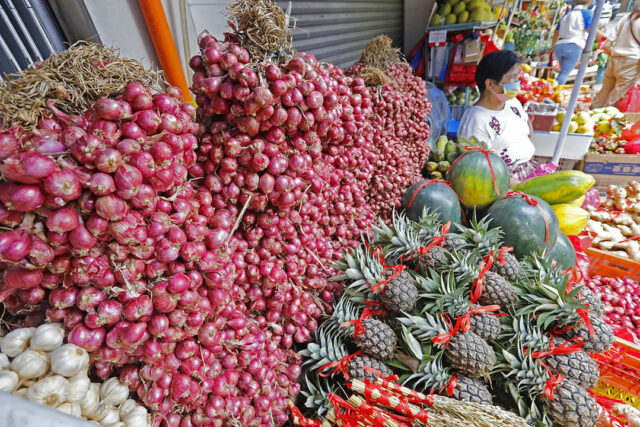
PHILIPPINE STAR/WALTER BOLLOZOS

MANILA – Putting quality over profit during inflationary times, Manila restaurant manager Ely Cundangan has refused to mess with her signature beef marrow stew – the same amount of onions must go in the pot no matter what.

“Our ingredients have become so expensive that we are almost earning nothing. But we can’t change the recipe,” said the 76-year old Cundangan, taking a break from cooking to man the cash register. “Our customers will surely notice, and we want to keep our customers happy.”

Elected last June, President Ferdinand Marcos Jr has struggled to fulfil campaign promises to bring down inflation, which hit 8.7% in January, driven by an 11.2% jump in food prices, the biggest since 2009.

Like the rest of the world, the Philippines is having to pay a lot more for energy imports, but it is the steepling prices of staple foodstuffs that has become most hard to stomach.

The cost of onions – a mainstay in almost all Philippine dishes – shot up from around P70 ($1.28) a kilo in April to as much as P700 in December, making them more expensive than meat.

Awkwardly for Marcos, who also holds the agriculture portfolio, the onion shortages stemmed largely from import delays. Imported onions, bought mostly from India and China, require sanitary and phytosanitary permits for quarantine and biosecurity purposes.

Acknowledging that part of the fault lay with poor planning, Marcos has acted to speed up imports and prices have tumbled from December’s highs, but rates in a Manila wet market are still around double the year ago levels.

“The price of onion is still like gold,” said Joey Reyes, a 52-year-old grocery store owner, who is waiting for prices to come down a lot further before she starts stocking onions again.

Consumer frustration is limited for now to social media memes, with some finding humour the best way to deal with hardship.

A bride from Iloilo city became the talk of the town after she walked down the aisle with a bouquet of onions, while one enterprising florist in the capital sold bouquets festooned with onions and chillies for Valentines’ Day.

“We wanted to have a different type of flower arrangement (for Valentines), especially since the prices of onions have gone up and we’d like to join the trend,” Nhits Evangelista, the 25-year-old florist, told Reuters.

Earlier this month, a branch of Japan Home Centre, a popular chain of retail stores in Manila, accepted onions as payment for a day, promising to donate the onions to food banks for families unable to afford the staple.

It is not just onions. Steep price rises for eggs and sugar have also whacked up the cost of putting food on the table.

Due to import delays and damage to crops from bad weather, the price of a kilo of sugar has nearly doubled to P100 from a year ago, hitting beverage companies, while eggs, which cost P6 a piece last year, were now selling at P10, as hatcheries are still reeling from outbreaks of avian flu.

Opposition politicians have criticized Marcos for not acting sooner to control spiralling prices, saying he should relinquish the agriculture portfolio and appoint a minister who can dedicate himself to the task.

And farmers are worried that the belated surge in imports will end up weakening prices just as they take their own onions to market during the February to April harvest season.

“We are nervous. We will get nothing from what we have worked hard for,” 41-year-old Jon-Jon Taberna, an onion farmer from the Nueva Ecija province. “No matter how good the crop is, if prices are depressed, you won’t make money.” — Reuters

US, Canada, European powers oppose Israeli settlement authorization

STOCK PHOTO | Image by Christine Schmidt from Pixabay

 – Foreign ministers of four European countries and Canada joined Washington on Tuesday in opposing a decision by Israeli Prime Minister Benjamin Netanyahu’s government to authorize nine Jewish settler outposts in the occupied West Bank.

The foreign ministers of Britain, France, Germany, Italy and the United States issued a joint statement voicing concern over the plans announced by Israel on Sunday.

“We strongly oppose unilateral actions which will only serve to exacerbate tensions between Israelis and Palestinians and undermine efforts to achieve a negotiated two-state solution,” they said.

Later, Canadian Foreign Minister Melanie Joly said Ottawa also strongly opposed the expansion of settlements and added that “such unilateral actions jeopardize efforts to achieve comprehensive, just and lasting peace.”

On Sunday, Israel granted retroactive authorization to nine settler outposts in the West Bank and announced mass construction of new homes in established settlements, prompting U.S. Secretary of State Antony Blinken to say he was “deeply troubled.”

Israel’s foreign ministry had no immediate comment but Security Minister Itamar Ben-Gvir, from the hardline religious nationalist bloc in Netanyahu’s government, said he wanted to go further.

“This is our mission. This is our doctrine,” Ben-Gvir said. “Nine settlements is nice but it’s still not enough. We want much more,” he said in a video message.

Most world powers view as illegal the settlements Israel has built on land it captured in a 1967 war with Arab powers.

Israel disputes that and cites biblical, historical and political links to the West Bank, as well as security interests.

Since the 1967 war, it has established 132 settlements on land Palestinians see as the core of a future state, according to the Peace Now watchdog group

Besides the authorized settlements, groups of settlers have built scores of outposts without government permission. Some have been razed by police, others authorized retroactively. The nine granted approval on Sunday are the first for this Netanyahu government.

Hussein al-Sheikh, a senior Palestinian official, welcomed the joint statement but added: “We demand that words be turned to deeds.”

With tensions in the West Bank already high, the move has alarmed world powers which fear an even greater escalation of violence. Israeli forces have conducted near daily raids in the West Bank, pursuing a crackdown begun last year in the wake of a spate of deadly Palestinian attacks.

This year more than 40 Palestinians, including both militant fighters and civilians, have been killed by Israeli forces. At the same time, 10 people have been killed in Israel in two attacks by Palestinians. – Reuters

IMF official says debt roundtable to focus on broad restructuring hurdles

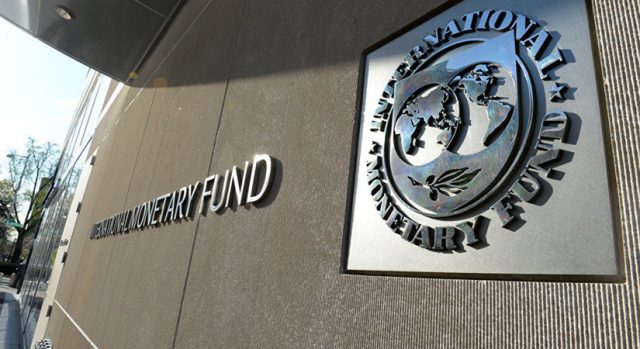
 – The International Monetary Fund’s strategy director on Tuesday said the goal of a new sovereign debt panel of creditors and borrowers due to meet on Friday is to try to reach understandings on common standards, principles and definitions for how to restructure distressed country debts.

Ceyla Pazarbasioglu, director of the IMF‘s Strategy, Policy and Review Department, told reporters that the Global Sovereign Debt Roundtable does not intend to discuss country-specific debt restructuring issues, but to address some of the broader impediments that have been delaying such relief.

The panel, organized by the IMF, the World Bank and India, this year’s leader of the Group of 20 major economies, is due to hold its first virtual meeting on Friday, Feb 17. This will be followed by an in-person meeting on Feb. 25 on the sidelines of a G20 finance leaders meeting in Bengaluru, India.

Participants include officials from creditor countries China, India, Saudi Arabia, the United States and other wealthy Group of Seven democracies.

Ms. Pazarbasioglu said the roundtable also will include the Paris Club of official creditors, the Institute of International Finance, the International Capital Markets Association and other private sector creditors that she declined to identify.

She said six borrowing countries that have recently sought or been through debt restructurings would participate, but declined to name them.

On Monday, three sources had told Reuters that these would include three countries that had requested debt treatments under the G20 common restructuring framework –Ethiopia, Zambia and Ghana — as well as Sri Lanka, Suriname and Ecuador.

“So it’s basically to discuss issues that have been impeding reaching a timely debt restructuring process, and the lessons from the cases that we had in the recent past, and to come up with technical solutions to address these shortcomings,” Ms. Pazarbasioglu said.

Zambia requested a debt restructuring under the G20 process more than a year ago, but has been held up by major creditor China’s insistence that local debt owned by foreign investors be included and that the multilateral development banks agree to reduce debt principal along with Beijing.

US Treasury Secretary Janet Yellen has been urging China to move faster on restructurings and to set aside these demands from country-specific debt talks and address them through the roundtable.


HAIRCUTS VS CONCESSIONAL LOANS

She said the group will try to identify key impediments to restructurings and come up with standards and processes to address them. It will try to reach consensus on the notion that highly concessional loans or grants from multilateral development can achieve the same goals as a debt principal “haircut,” she said.

Other concepts the group hopes to define more precisely include common parameters for analyzing debt sustainability, timing for issuing debt service suspensions and comparable treatment of creditors, Ms. Pazarbasioglu said. – Reuters

Inflation may remain high until Q3

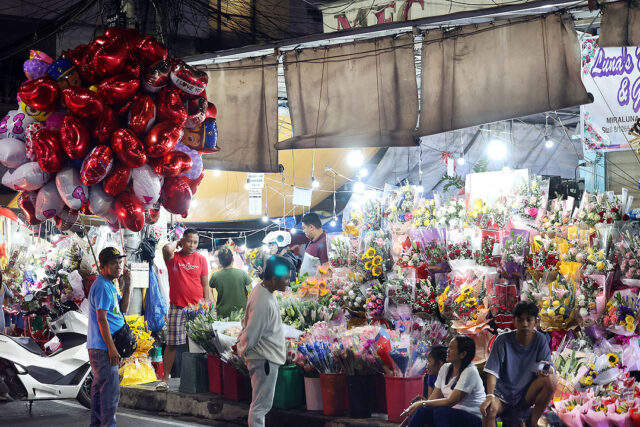
PEOPLE look for affordable flowers for Valentine’s Day at the Dangwa Flower Market, Manila, Feb. 14. — PHILIPPINE STAR/MIGUEL DE GUZMAN

HEADLINE INFLATION is likely to peak in February or March, which may prompt the Bangko Sentral ng Pilipinas (BSP) to continue tightening until May, ANZ Research said.

In a note on Tuesday, ANZ Research Chief Economist for Southeast Asia and India Sanjay Mathur and economist Debalika Sarkar said inflation could “accelerate further” and peak either in February or March.

“Even if inflation starts to descend from its peak, it will remain at elevated levels in the second quarter and third quarter. Any meaningful decline is only possible when domestic demand weakens and favorable base effects kick in,” ANZ said.

Headline inflation is also expected to return to within the BSP’s 2-4% target range only in the fourth quarter, it added.

ANZ revised its Philippine inflation forecast to 5.1% this year, from 4.3% previously. This is higher than the BSP’s 4.5% projection for 2023.

The consumer price index (CPI) quickened to 8.7% in January from the 8.1% in December, marking the highest in 14 years or since the 9.1% in November 2008.   

“Food inflation may continue to rise at least until February 2023, driven by La Niña events. The Philippine government’s official weather forecaster expects the weather conditions to improve from February onwards, but any favorable impact on food prices may only be evident after a few months’ lag,” ANZ said.

Food inflation rose to 11.2% in January from 10.6% a month ago, which was the fastest since the 11.3% in March 2009. This as prices of food items such as vegetables, eggs, and sugar sharply rose due to supply issues and weather disturbances.

ANZ noted food prices in the Philippines continued to climb in January, “in contrast with global and regional trends.”

“The continuous climb in services inflation is another source of concern. Unless pent-up demand for services retreats, it is unlikely that services CPI will stabilize,” it said.

ANZ noted the recent hike in water rates is estimated to contribute an additional 10 basis points (bps) to inflation this year.

Metro Manila’s two main water concessionaires began implementing higher rates in January. Manila Water raised rates by P8.04 per cubic meter, while Maynilad hiked rates by P3.29 per cubic meter.     

“After factoring in the current direction of inflation and all upside risks, we believe that the central bank will need to extend its tightening cycle to May 2023,” ANZ said.   

ANZ expects the BSP to raise borrowing costs by another 50 bps at its Thursday meeting, followed by two 25-bp hikes each at the March 23 and May 18 meetings.

“This takes our overnight reverse repurchase forecast to 6.50% (previously 6.00%) in this cycle. Combined with our inflation forecast, this translates into a real policy rate of 1.4% — signaling further room for monetary policy tightening if inflation remains more stubborn than anticipated,” it added.   

In a BusinessWorld poll conducted last week, the BSP is widely expected to raise borrowing costs on Thursday, with a slim majority of nine analysts forecasting a 50-bp rate increase, while eight analysts anticipate a 25-bp increase.   

The BSP raised interest rates by 350 bps since May 2022 as it sought to curb inflation. This brought the benchmark rate to a 14-year high of 5.5% last year.

BSP Governor Felipe M. Medalla last month said the central bank is ready to adjust policy stance as necessary “to keep further second-round effects at bay and prevent inflation expectations from becoming disanchored.” 

While not ruling out another supply shock, Mr. Medalla said January inflation was most likely the peak.

January inflation was above the BSP’s forecast range of 7.5-8.3%. It also marked the 10th consecutive month inflation was above the BSP’s 2-4% target range. — Keisha B. Ta-asan

CAMPI targets 10-15% sales growth this year

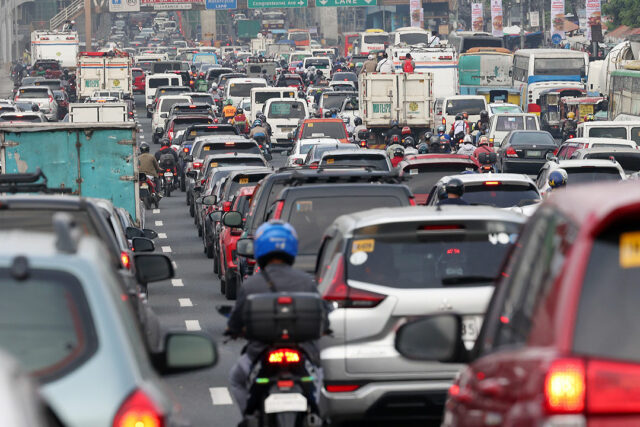
Motorists are stuck in traffic along Commonwealth Avenue in Quezon City, July 28, 2022. — PHILIPPINE STAR/MIGUEL DE GUZMAN

VEHICLE SALES in the Philippines may exceed pre-pandemic levels this year as the economy continues to recover, the Chamber of Automotive Manufacturers of the Philippines, Inc. (CAMPI) said.

CAMPI President Rommel R. Gutierrez said the industry is targeting to grow sales by 10% to 15% this year.

“We have seen the trajectory of sales growing last year. In fact, January (sales) is a really good indicator of what is to come this year. I think we are certain to hit the pre-pandemic level this year,” he told reporters during a media event in Taguig City late on Monday.

In 2022, CAMPI and Truck Manufacturers Association (TMA) members sold a total of 352,596 units, surpassing its sales target of 336,000 units. This is also near the pre-pandemic level of 369,941 units sold in 2019.   

“CAMPI-TMA was (over) 369,000 units (in 2019). We are already at 350,000 last year. It’s really a small gap and we are confident that we will more than hit the 2019 level this year,” Mr. Gutierrez said.

“We are optimistic that the growth will continue this year.”

Vehicle sales were off to a good start this year, as CAMPI-TMA members sold 29,499 units in January. This is 42% higher than the 20,765 units sold in the same month last year.   

Mr. Gutierrez expects auto sales to continue increasing this year due to pent-up demand.

“Yes, there is still pent-up demand. The supply continues to improve and in fact, we have many models coming this year. So, that will really boost the sales. All brands are really preparing for this year’s full recovery,” he said.

However, the industry is facing supply challenges arising from the shortage of microchips used in vehicles, Mr. Gutierrez said.

“For some models yes, (there are supply issues). Especially those Japan sourced models are really still affected by the shortage of microchips,” Mr. Gutierrez said.   

In January, the auto industry’s sales were driven by strong demand for commercial vehicles and passenger cars.

Commercial vehicle sales jumped by 46.8% to 21,993 in January, as sales of light commercial vehicles went up by 40.9% to 16,757 units. Sales of Asian utility vehicles surged by 87.1% to 4,587 units.

Passenger car sales increased by 29.8% to 7,506 units in January. — Revin Mikhael D. Ochave

PERA contributions increase by 30% in 2022

BW FILE PHOTO

CONTRIBUTIONS of voluntary members in the Personal Equity and Retirement Account (PERA) reached P329.55 million in 2022, the central bank said on Tuesday.

Data from the Bangko Sentral ng Pilipinas (BSP) showed PERA contributions climbed by 30% last year, from P253.35 million in 2021.

The number of PERA contributors also jumped by 16% to 5,100 in 2022 from 4,382 in 2021, the BSP said.

About 3,600 employed individuals contributed P223.71 million to the fund last year. This is followed by overseas Filipino workers (721) and self-employed individuals (785) who invested P60.58 million and P45.25 million, respectively.

“The increase in both the size of funds in investment and contributors shows that there is a demand for supplementary outlets for retirement planning purposes,” ING Bank N.V. Manila Senior Economist Nicholas Antonio T. Mapa said in an e-mail.

“The PERA legislation helped address the need for alternative investment outlets and it’s a positive sign to see that contributors are able to take advantage of the PERA law to jumpstart or build their retirement funds further,” he added.

Republic Act 9505 or the PERA law was passed in 2008 with the goal of encouraging Filipinos to save up for their retirement through a voluntary investment product.

Launched in 2016, the PERA is a voluntary fund scheme meant to supplement retirement benefits from the Government Service Insurance System or the Social Security System, as well as private employers.

Under the law, contributors aged 18 or older can make a maximum annual investment of P100,000 in their PERA account, while overseas Filipinos are allowed to invest up to P200,000 a year. The BSP has said there may be a need to adjust these contribution caps to account for inflation.

The PERA law also offers various tax incentives to contributors such as tax exemptions on earnings from PERA investments, a 5% income tax credit on contributions which could be used for paying income tax liabilities, and a tax-free distribution on qualified withdrawal of PERA investments.

When a contributor reaches 55 years old and an investment period of at least five years, he or she can redeem the PERA investment free of taxes.

“Higher returns on contributions likely prompted Filipinos to save more in their PERA accounts. Financial savvy customers would take advantage of better returns on their idle money,” China Banking Corp. Chief Economist Domini S. Velasquez said in a Viber message. 

Ms. Velasquez said job market improvements may have encouraged Filipinos to save more.

“As workers see better employment prospects, they have more opportunity to save more,” she said. 

The Philippines’ unemployment rate eased to a three-year low of 5.4% in 2022, equivalent to 2.67 jobless Filipinos. In 2021, the unemployment rate stood at 7.8%, equivalent to 3.71 million.

Ms. Velasquez said an increase in the deployment of overseas Filipino workers (OFWs) last year may have also lifted contributions to PERA.

In September 2020, the central bank launched the digital platform for PERA to make it more accessible to contributors.

“As an online marketplace, the digital PERA facilitates greater convenience and efficiency by enabling Filipinos to open PERA accounts, choose among different accredited PERA products, and settle PERA transactions electronically using their mobile phones or other digital devices,” the BSP said. — Keisha B. Ta-asan

Jakarta hopes to attract more Filipino tourists

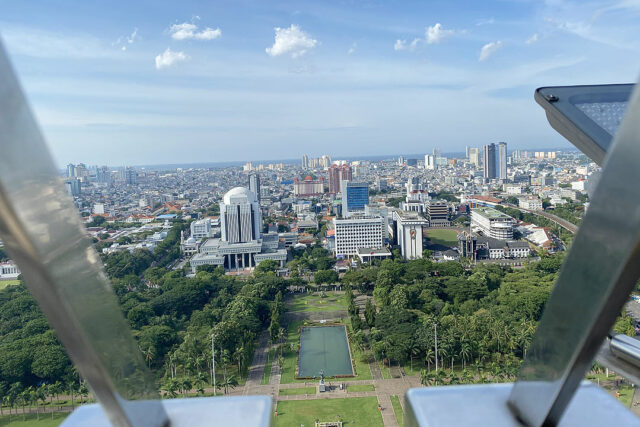
JAKARTA SKYLINE — the view from the top of the National Monument. — JOHN VICTOR D. ORDOÑEZ

By John Victor D. Ordoñez, Reporter

JAKARTA, Indonesia — The provincial government of Jakarta is hoping to attract more Filipino tourists this year, as the tourism sector rebounds from the coronavirus pandemic.

“We are trying to promote Jakarta to more Filipinos because we see potential in the Philippine market,” Hari Wibowo, who heads the Marketing and Attraction Division of the Tourism and Creative Economy Office of the Jakarta provincial government, told BusinessWorld last week.

“The easing of health restrictions and the reopening of our establishments make us hopeful that the tourism sector in Jakarta will improve this year.”

The Indonesian economy grew 5.31% in 2022, its best annual growth rate since 2013. This was driven by strong household consumption after the government lifted most pandemic restrictions. All remaining pandemic curbs were moved in December as coronavirus disease 2019 (COVID-19) infections plunged.

Mr. Wibowo said they plan to invite more travel agencies from the Philippines to tourism events in Jakarta, which is the capital and largest city of Indonesia.

“Jakarta is a destination for both business and leisure and we see it as a prime urban destination,” he said. “This is the place for doing business.”

He described Jakarta as the central business hub in Indonesia, with plans to expand direct flights with various airlines in Southeast Asia.

Jakarta is home to historical landmarks such as Old Batavia, which contains original Dutch buildings dating back to the 17th century, some of which have been converted into museums and cafés.

It also has enormous modern multipurpose structures like the Grand Indonesia and the state-owned department store PT Sarinah, the first high-rise building in the city.

Jakarta also boasts the largest stadium complex with a retractable roof in Asia, with its Jakarta International Stadium having a seating capacity of 82,000 people.

The city is also home to the Kepulauan Seribu, which translates to the Thousand Islands, a chain of about 342 islands and beaches stretching 45 kilometers into the Java Sea.

MORE DIRECT FLIGHTS
Mr. Wibowo said the government is working on more direct flights between the Philippines and Jakarta to boost tourism.  

Philippine Airlines (PAL) currently operates 10 weekly direct flights between Manila and Jakarta, PAL Spokesperson Cielo C. Villaluna said in a Viber message.

Last year, Jakarta reported 14,890 visitor arrivals from the Philippines, significantly higher than the 2,540 in 2021, according to data from the Jakarta provincial government.

However, this is still a far cry from the 57,593 Filipinos who visited Jakarta in 2018 and 45,521 in 2019.

The Philippines ranked third among foreign visitors to Jakarta before the pandemic in 2019, Mr. Wibowo said.

“Hopefully, with more collaborative projects between our two countries this year, we hope to have more Filipino tourists in Jakarta,” he said.

Indonesia is targeting between 3.5 and 7.4 million foreign tourists this year.

Last year, Indonesia attracted 5.47 million foreign visitors, more than three times the number in the previous year. However, this is still well below the 16.1 million visitors it welcomed in 2019.

Megawide unit studies terminal exchange for north

Commuters line up at the Main Avenue station of the EDSA bus carousel in Quezon City, July 18, 2022. — PHILIPPINE STAR/MIGUEL DE GUZMAN

A UNIT of Megawide Construction Corp. is looking at developing an integrated terminal exchange in the north for the EDSA Carousel bus rapid transit system that will serve as a counterpart of the Parañaque Integrated Terminal Exchange (PITX).

“The EDSA Carousel stops at PITX, it doesn’t have a counterpart on the other side. We are trying to look for a space [in the north], we will try to develop something there,” PITX Head of Corporate Affairs and Government Relations Jason T. Salvador told reporters in a recent interview.

According to Mr. Salvador, the idea of having a terminal exchange is to serve the provincial buses to help decongest the traffic in Metro Manila.

“Ideally there should be one in the north and one in the south. Kami na ‘yong sa south (We are the one in the south). So we are trying to look for one to serve that purpose and at the same time make the whole carousel, a real carousel,” he added.

The company is currently assessing the project in the north, with the feasibility studies expected to be done halfway through the year.

Previously, the infrastructure builder announced its plan to expand PITX by developing a smaller second lot.

The project, which will be on a 1.8-hectare lot owned by the Department of Transportation (DoTr), is expected to almost double the capacity of PITX as the company expects bus riders to go back to pre-pandemic levels.

“There are a lot of plans for lot two. This will be another PITX. Now we are using that as a parking lot for our provincial buses. We call that our staging area. But there are already plans, so hopefully within the year magawa na natin (we can finally do it),” Mr. Salvador said.

“As of now, we are averaging around 120,000 passengers per day in PITX. Although the terminal is built to accommodate 200,000 passengers per day, it’s getting crowded already. We want more convenience, more spaces for passengers, more shops and more restaurants,” he added.

According to Mr. Salvador, the company is just waiting for the go-signal from the DoTr and for plans to be laid down.

“The plans are being done. If it gets approved, if everything is laid down, then probably we can start this year but if not, earlier next year,” he said.

Meanwhile, Mr. Salvador said the company is interested to bid to be the operator of the EDSA busway that plies Metro Manila’s main highway if the government decides to privatize it.

“Ideally, it should be ours. The beauty of it is the passengers will have the reliability in the departure of the bus and the availability of the bus,” he said. “The government has been talking about it, that they will privatize the EDSA busway operations. If they are serious [about] that then maybe we can consider.”

Mr. Salvador said if the privatization happens, Megawide will have to put up another company to lead the operations.

The company has an advantage as it has studied the supply and demand of the buses as the operator of an integrated terminal exchange, said Mr. Salvador.

“We know the capacity, we know the demand of the public at what time and what day,” he added. — Justine Irish D. Tabile

PLDT confirms class-action lawsuit filed by US shareholder

PLDT Inc. confirmed on Tuesday that a US shareholder filed a securities class-action lawsuit on Feb. 6 in the federal district court in the Central District of California.

In a disclosure to the Philippine Stock Exchange, the company said the complaint was filed by Sophia Olsson, who is said to be a holder of PLDT securities.

The class-action lawsuit named PLDT as a defendant along with nine of its current or former employees.

A class-action lawsuit allows many people with similar grievances to sue a common defendant as a group, in this case, the US-based shareholders of PLDT.

In a 45-page document posted on CourtListener.com, Ms. Olsson filed a class-action complaint against PLDT and its officers for allegedly violating Federal Securities Laws where a jury trial was demanded.

The individual defendants in the case are PLDT Chairman Manuel V. Pangilinan; President and Chief Executive Officer Alfredo S. Panlilio; Chief Financial Officer and Chief Risk Management Officer Anabelle L. Chua; Chief Legal Counsel, Head of Legal and Regulatory Affairs, and Corporate Secretary Marilyn A. Victorio-Aquino; Vice-President, Head of Corporate Services and Liability Management Insurance, and Assistant Corporate Secretary Abner Tito L. Alberto; and First Vice-President of Financial Reporting and Controllership Gil Samson D. Garcia.

The case also identified three former officers of the company as individual defendants, namely Ma. Lourdes C. Rausa-Chan, Florentino D. Mabasa, Jr., and June Cheryl A. Cabal-Revilla.

The case read that it is “a class action on behalf of persons or entities who purchased or otherwise acquired publicly traded PLDT securities” between Jan. 1, 2019 and Dec. 19, 2022.”

In her allegations, the plaintiff Ms. Olsson said that the company issued “materially false and misleading statements” from 2019 to 2022.

The case cited the disclosures of the company that stated its capital expenditures during the period up to the latest regulatory filing where PLDT disclosed a budget overrun amounting to P48 billion.

After the company disclosed the budget overrun, it saw a 19.35% decline in the price of its shares to P1,192 apiece on Dec. 19, 2022.

“As a result of defendants’ wrongful acts and omissions, and the precipitous decline in the market value of the company’s common shares, plaintiff and other class members have suffered significant losses and damages,” the case read.

PLDT said it “has not been served with a copy of the complaint, as required under US law, and does not have any further information regarding the lawsuit at this time.”

On Tuesday, shares in the company closed unchanged at P1,326 apiece. — Justine Irish D. Tabile

ADVERTISEMENT
ADVERTISEMENT