Home Blog Page 5242

PHL likely to hit 6-7% growth target this year

PHILIPPINE STAR/WALTER BOLLOZOS
The Philippine economy is expected to expand with the government’s 6-7% growth target this year. — PHILIPPINE STAR/WALTER BOLLOZOS

By Keisha B. Ta-asan, Reporter

THE “CONTINUED NORMALIZATION” of post-pandemic mobility will help the Philippine economy expand within the government’s 6-7% target this year, but slower growth is likely in 2024, the Bangko Sentral ng Pilipinas (BSP) said.

“GDP (gross domestic product) growth is projected to settle within the DBCC’s (Development Budget Coordination Committee) target of 6-7% for 2023, but economic headwinds could result in slower GDP growth in 2024,” the BSP said in its latest Monetary Policy Report (MPR).   

“The full-year growth forecast for 2023 was adjusted upward from the previous MPR. Meanwhile, the growth forecast for 2024 is lower compared to previous round, reflecting weaker global prospects and the impact of cumulative policy rate adjustments of the BSP,” it added.   

While the central bank does not give its exact growth forecasts, the DBCC targets 6.5-8% GDP growth in 2024.

According to the central bank, the economy will be “driven by growth in the industry sector as manufacturers signal increased production plans as the economy reopens further.”   

Based on data from the Philippine Statistics Authority (PSA), the service sector expanded by 9.8% in the fourth quarter last year, while the industry sector grew by 4.8%. Annually, services jumped by 9.2%, and industry expanded by 6.7%.

Better labor market conditions, higher demand for tourism, and greater economic activity due to the resumption of face-to-face classes are seen to boost growth in the services sector, the BSP said.   

“Moreover, the implementation of the Corporate Recovery and Tax Incentives for Enterprises (CREATE) Law, Financial Institutions Strategic Transfer (FIST) Act, and the second tranche of the reduction in personal income taxes could help further bolster the domestic outlook in 2023-2024,” it added.

Meanwhile, the overall balance of supply and demand conditions, as reflected by the output gap, is expected to “remain broadly neutral” in the near term.   

“Estimates from the BSP’s Policy Analysis Model for the Philippines (PAMPh) indicate that the output gap is estimated to be slightly positive in early 2023, reflecting the sustained economic expansion in 2022,” the central bank said.   

The economy grew by 7.6% in 2022, exceeding the government’s 6.5-7.5% target, and the fastest growth since 1975.

“Thereafter, the output gap is seen to remain in broadly neutral territory as the impact of policy interest rate adjustments takes hold on the economy. A projected slowdown in global growth owing in part to tightening monetary conditions across countries could likewise dampen aggregate demand,” the BSP said.   

The Monetary Board last week increased the benchmark policy rate by 50 basis points (bps) to 6%, the highest in nearly 16 years. Rates on the overnight deposit and lending facilities were also increased to 5.5% and 6.5%, respectively.

According to analysts, higher interest rates could drag economic growth slower this year.

“Rate hikes always impact growth not just in the short run but in the medium term as it caps investment outlays and limits the increase in potential output,” ING Bank N.V. Manila Senior Economist Nicholas Antonio T. Mapa said in a Viber message.   

“Such moves are designed to combat mainly demand side pressures and will only help bring down prices by snuffing our growth momentum,” Mr. Mapa said.   

He added that the Monetary Board will still need to hike borrowing costs this year as inflation remains high, while fiscal authorities deploy more measures to improve local supply.   

BSP Governor Felipe M. Medalla last week said the Monetary Board may deliver a 25-bp or 50-bp rate increase at its next meeting on March, with inflation as the primary concern.   

Inflation, which is now running at a 14-year high of 8.7% in January, is expected to average by 6.1% this year before easing to 3.1% in 2024.   

Monetary authorities, which have raised rates for a total of 400 bps since May 2022, will next meet on March 23.    

“However, it is still possible to achieve the economic/GDP growth targets as the economy reopens further towards greater normalcy,” Rizal Commercial Banking Corp. Chief Economist Michael L. Ricafort said in a Viber message.

According to Mr. Ricafort, the robust economic recovery could still “overshadow” the risks of higher inflation, rising interest rates, and a looming global recession.

PCCI presses Senate on RCEP ratification

A Philippine flag is seen in this file photo. — PHILIPPINE STAR/EDD GUMBAN

THE PHILIPPINE Chamber of Commerce and Industry (PCCI) pressed the Senate to ratify the Regional Comprehensive Economic Partnership (RCEP), as it would provide “unparalleled opportunities for Philippine businesses and prime the country for further economic growth and development.” 

In a statement on Sunday, the PCCI said that it sent a letter to Senate President Juan Miguel F. Zubiri asking for the RCEP’s ratification so that the business sector could maximize the opportunities offered by the free trade agreement (FTA). 

“We cannot afford to miss out on the RCEP. Non-joining will disadvantage our exports in the world’s fastest-growing area. Furthermore, it is detrimental to our goal to bring in foreign investments as investors would rather look at an RCEP signatory country to obtain preferential treatments among the RCEP countries,” PCCI President George T. Barcelon said.

He said the government should make sure there are enough safeguards to address the concerns of the agriculture sector.

“Countries which have ratified the RCEP agreement are already seeing increases in their overall trade in just one year after its entry into force in early 2022,” Mr. Barcelon said.   

The RCEP involves the 10 member countries of the Association of Southeast Asian Nations (ASEAN), Australia, China, Japan, New Zealand, and South Korea. It seeks to open trade by eliminating 90% of tariffs among the participating economies, while the other tariffs would be gradually reduced within a 20-year period.

The RCEP was ratified by then-President Rodrigo R. Duterte in September 2021, but the previous Senate did not give its concurrence due to concerns over the free trade deal’s impact on the agriculture sector.

President Ferdinand R. Marcos, Jr., who concurrently serves as the Agriculture secretary, earlier urged the Senate to ratify the RCEP.

“If we want to eradicate poverty, we have to be integrated economically in trade and investment but you cannot do that, unless you’re competitive, unless you are attractive enough to businesses,” Anthony A. Abad, Trade Advisory Services chief executive officer and Abad Alcantara and Associates senior partner, told BusinessWorld via call.

“And the ones making the decisions on doing trade or investment with a country within RCEP are in the business or the companies so it’s a business decision,” he added.

The Philippines may face dire consequences if it does not become part of the RCEP.

“You can be isolated within this market. We will be bypassed again for investment and trade because we don’t have this agreement in place and they will always prioritize every other country,” Mr. Abad said.

The RCEP entered into force for Australia, Brunei Darussalam, Cambodia, China, Japan, Laos, New Zealand, Singapore, Thailand and Vietnam on Jan. 1, 2022. South Korea, Malaysia and Indonesia have also ratified the RCEP.

The Senate is currently debating the country’s accession to the free trade agreement.

Senate Minority Leader Aquilino Martin “Koko” L. Pimentel III, who chaired the Senate Foreign Affairs Committee during the last Congress, told BusinessWorld in a Viber message that “the real benefit is if we take advantage of the access to their markets and start producing goods which they find desirable and would patronize.”

Retired Pampanga State Agricultural University professor Roy S. Kempis, in a Viber message to BusinessWorld, said the RCEP will help the country get rid of “inefficient producers in the agriculture, manufacturing and service sectors.”

The country’s accession to the RCEP, Mr. Kempis said, is “long overdue.”

“We want to access their market, not be the market for their goods,” Mr. Pimentel said. “But in getting that access, we have to reciprocate and allow access to our market.”

John Paolo R. Rivera, an economist at the Asian Institute of Management, told BusinessWorld in a Viber message that the RCEP can be seen as “a tool to compel local industries to upgrade and be competitive.”

“Protection of local industries is okay, but no amount of protection can stop competition and our local industries must be ready for world-class production,” he added. “RCEP is a mega FTA. Readiness is as important as protectionism.” — Revin Mikhael D. Ochave and Alyssa Nicole O. Tan

Durex wants us to talk about sex

SOME of the offerings from Durex.

AS WE close out Valentine’s Week (it was last Tuesday), Durex reminds us all to have safe sex.

On Feb. 16, condom brand Durex invited guests to Poblacion’s Dr. Wine for the “What’s Your Pleasure?” Valentine Quiz Night, which led guests to answer questions based on sex. Many of the questions came from a regional study by Durex that surveyed 300 Filipinos, which led to insights such as 64% of Filipinas seeking more satisfaction in bed, or that 76% of women desire to have more foreplay.

“We want to normalize the conversations about sex and pleasure. This is why we do these things,” said Camille Taguba, Brand Manager of Durex Philippines. “We have a lot of products to enhance your pleasure, to let you explore your pleasure with your partner — or with yourself.”

Ms. Taguba also discussed their new campaign, #ComeTogether, which used the data from their regional survey about unequal sexual pleasure between the sexes. “We feel like everyone is entitled to pleasure,” she said.

This isn’t the first educational activity for Durex: it apparently has a rolling caravan that gives sex education talks at universities and communities (such as BPO offices). “We’re working with agencies who do have partnerships with the Department of Health (DoH) to drive (sex) education in universities,” Ms. Taguba said. “(We’re) driving condoms as an everyday essential.”

“In these types of events, in the key moments like Valentine’s Day, we want to equip them to be ready for sexual education,” she said. These “key moments” (which according to her, reflect spikes in sales) include Women’s Month (March) and Pride Month (June). “Sex occasions and condom usage during this period (Valentine’s Day) are very high,” she said.

Ms. Taguba said that in the ASEAN region, the Philippines has the lowest penetration rate for condom usage. This could be reflected in the increased rate of new HIV (Human Immunodeficiency Virus) infections in the Philippines. In A Briefer on the Philippine HIV Estimates 2020 by the DoH Epidemiology Bureau (DoH-EB), it counts that there had been a 237% increase in annual new HIV infections from 2010 to 2020, giving the Philippines the fastest growing HIV epidemic in the Asia-Pacific region. “If the rapid increase in new infections is sustained, the estimated number of people living with HIV will triple by 2030 and reach over 330,000,” the briefer warns.

Ms. Taguba explores maintaining a balance when it comes to being a brand — and a brand involved in a public health issue. “It’s about the brand’s purpose as well, of unleashing your true sexual self,” she said. Ms. Taguba explains the importance of brands like theirs jumping on to topics like sex. “With the Philippines specifically, it’s very taboo. It’s like a sin to talk about it,” she said in a mixture of English and Filipino. “But we want to let people know that it’s normal for you to experience these things, to want pleasure in your life.”

“But you need to be protected.”

Durex products are available in all leading stores nationwide and on Lazada and Shopee. — Joseph L. Garcia

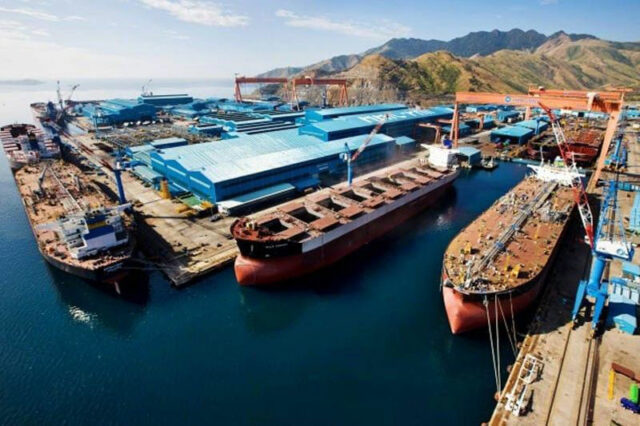
Local shipbuilders seek tax perks, funding access

PHILSTAR FILE PHOTO

By Justine Irish D. Tabile, Reporter

DOMESTIC shipping businesses are seeking the government’s help to support the projected rebound of the maritime industry from the pandemic through tax incentives and accessible funding.

“If they can give incentives to foreign ship businesses, bakit hindi nila ibigay sa (why can’t they give the same to) local shipbuilders?” said Gaudencio C. Morales, president of the Philippine Association of Coastal and Inland Water Ferries, Inc., on the sidelines of the Expo Maritime Philippines 2023 on Thursday.

Separately, Worldwide Maritime Operations Co. President and Chief Executive Officer Rachelle B. Lopez said: “We are very positive about the maritime industry after the pandemic. And this is why the domestic owners are asking help from the government to help them rebound.”

“What we are asking for is some support from the government in terms of our taxes and loans,” she added.

During his presentation, Mr. Morales asked the government to incentivize the shipbuilding and ship repair (SBSR) industry by establishing a special economic zone (SEZ).

“So ’yung mga i-import na materials na duty-free, doon na babagsak. Tapos ’yung mga local buyers doon na bibili (This should be where the duty-free imported materials will be co-located. And this is where the local shipbuilders will buy from),” Mr. Morales said.

Mr. Morales also said that by establishing an SEZ, the government can help in easing the process of getting imported raw materials and help the local shipbuilders avoid importation taxes.

Kung mawawala itong taxes, makagagawa ako ng vessel ng less costly (If these taxes will be removed, I will be able to build a less costly vessel). They can just provide us incentives so that our tax duties will be lessened,” he said.

In terms of getting funding, Ms. Lopez said that the company had asked various banks and lending institutions in helping startup shipbuilders.

“We talked with several banks to help them to be one of the allies of the [domestic shipping owners]. Na sana kahit papano pagbigyan naman nila (That somehow, they will give these small businesses a chance),” Ms. Lopez said.

Mr. Morales said that the government should immediately implement the 2022 Strategic Investment Priority Plan which will put shipbuilding on the list of investment priorities under the Corporate Recovery and Tax Incentives for Enterprises Act or the CREATE law.

Investment priorities under the CREATE law can have incentives such as income tax holidays, special corporate income tax, enhanced deductions, duty exemptions, and value-added tax exemptions.

“I have a good outlook for the domestic maritime industry. This is the best time to invest and enter the SBSR industry because of the supply and demand,” Mr. Morales said.

“The demand of shipyards for SBSR is big. Marami ngayong pila ng mga barko na naghihintay ng berth para maka-drydock (There a lot of ships that are waiting to berth for dry docking) which is a requirement of Marina,” he added, pertaining to Maritime Industry Authority.

Kung malaki ang demand for drydocking sa shipyards, maganda ang (If the demand for drydocking in the shipyards, then we can have a positive) outlook for the industry,” he added.

All about EV6

Positioned as ‘the ideal electric vehicle for executives,’ the Kia EV6 is a premium crossover SUV that boasts tech, good styling, and oodles of space. — PHOTO BY KAP MACEDA AGUILA

Kia is bringing in its first all-electric contender

OVER THE LAST month or so, you might have caught a glimpse of a vehicle (chances are it was on EDSA headed for Manila, or from Manila to BGC), and you just couldn’t make out what it was.

That was exactly what happened to several traffic enforcers, who had the eagle eyes to spot its plate number and realize that it was supposed to be “coding” the day STAR Motoring Editor Manny de los Reyes and myself took the out for a preview. We were among a batch of media and online content creators given the key fob to the Kia EV6 — set to be the first all-electric vehicle from the Korean brand to make it to the Philippines.

The first MMDA enforcer was a rather brash fellow on the corner of Taft and EDSA who, upon being told that it was an electric vehicle, chose to go with the line, “Wala pang memo sa min tungkol diyan (We haven’t received the memo about it).” Even a schoolkid would know, of course, that electric vehicles in all iterations and stripes, under the implementing rules and regulations of Republic Act No. 11697 (more commonly known as the Electric Vehicle Industry Development Act or EVIDA, which lapsed into law in the second quarter of last year), are exempt from the longstanding UVVRP or Unified Vehicular Volume Reduction Program.

The enforcer looked irritated after delivering his spiel, but clearly knew we were in the right. He waved us off and, voila, another enforcer waved to us like an eager K-pop fan. Repeat explanation, ad nauseam. In the absence of identifying plates devoted to electrified vehicles, I suppose this will be the lot of all you hybrid/EV owners out there, and I commiserate.

But the tide has begun to turn. One could argue that, for the first time, government, legislature, and the private sector are finally coming together in a meaningful way — especially with the recent approval of the zero tariff on electric vehicles. So, obstinate traffic enforcers aside, prospects are on the up and up for EVs and their fans.

I mean, one gander at the Kia EV6 should imbue you with all the positive vibes you need. Sleek, svelte, and unique, the EV6, first and foremost, looks good — the true face of the future for Kia and many brands on that inevitable path to electrification.

Kia is positioning the EV6 as a crossover, and it certainly has the heft to justify this classification as a sedan/SUV. Its large wheelbase which, at 2,900mm is even longer than the Sorento’s 2,815mm, translates nicely to great space for passengers within. I tried sitting in the rear bench, and it gives oodles of wiggle room — especially since it’s bereft of a hump on the floor to accommodate the traditional propeller shaft. Manny said he thinks the EV6 looks like a sport wagon like the five-door Mazda 3, or a “sporty five-door hatchback.”

Providing grunt is a 77.4-kWh lithium-ion-battery-powered permanent magnet synchronous motor which submits 229ps and 350Nm. Kia Philippines provides the relevant numbers for charging, saying that “normal AC (charging)” from 10% to full via an 11-kW charger will take seven hours and 20 minutes. Using a 50-kW DC fast charger, the battery will get from 10% to 80% in 73 minutes; an even more powerful 350-kW charger will get you to this state in a mere 18 minutes. The caveat though is that you should use these high-capacity DC chargers sparingly as they will degrade your battery more quickly when employed often.

The sole variant, to be made available to the public on March 21, is the EV6 GT Line. Expected to be priced below P4 million, the vehicle is being positioned for executives. This is a good idea and makes perfect sense for now, since EVs are still nascent — as our interviewee on the next page so aptly put it. Because of the price premium over conventional internal-combustion-engine-powered options, not to mention EV misconceptions and anxieties, EVs (pure EVs, as opposed to hybrids) are largely the domain of early adopters.

Manny agrees with the choice of target market. “It’s wheelbase length makes it the same or even longer than some mid-size executive sedans,” he said. “It’s a decent and very comfortable — even as a chauffeur-driven car.”

Speaking driving and being driven, Manny and I took turns at the wheel and in the front passenger seat, and we came away with similar impressions. We found the suspension system firm, but not harsh. “It’s a trademark of most European cars,” he said. And therein also lies one of the qualities of this Kia — it looks like a Euro vehicle, and that’s a good thing. It’s not luxurious, but certainly premium, Manny added. Indeed, you don’t get a feeling that you’re being shortchanged in terms of build quality and materials used. Kia engineers and designers definitely put a lot of thought to conjuring up the EV6.

I’ll add “futuristic” to the mix. An unbroken upright floating screen, which houses the 12.3-inch all-digital multi-function display and an instrument cluster, juts up from a textured dash. A single-louver A/C vent design runs underneath from the right-center vent to the passenger-side vent. Most everything can be controlled via the infotainment screen; no surprise there. But what may surprise drivers is the lack of a traditional gear shifter, which is supplanted by a rather unsexy but straightforward rotary knob. The engine, er, motor on-off button lies to its north.

Manny commented on how it was also the first time he saw a one-piece floormat the runs from the driver’s side to the front passenger’s. This underscores how much legroom is available for front occupants as well.

Back to driving impressions, we expected loads of torque on demand (this being an EV, after all), and the EV6 did not disappoint. But it’s still a little weird to not feel any harshness even when you heavy-foot the throttle. What NVH?

As we savored the EV6 experience, I also took the chance to direct some salient questions to our longtime STAR Motoring editor and BusinessWorld columnist. Is the country truly ready for electrification, I posed. “I think the prevailing issue is still range anxiety for a lot of EV buyers or prospective EV buyers. Having driven (the EV6) from Taguig to Manila and back, we only consumed less than 10% battery. It should have enough to bring it to Baguio and charge once you get there, then drive back.”

EV ownership is “really easy,” he added. “You just have to be a little more careful with the planning of your driving, but as far as running out of battery juice is concerned, there really should not be any problem — especially if you use it for the day-to-day office commute. It can do Monday to Friday straight without any charging at all.”

Okay, so if we can comfortably shelve range anxiety, are EVs are at a level where more people can comfortably buy them? “That’s the second issue. I would even put that issue first because the cost is still high,” replied Manny. “Then again, the EV6 in particular is not exactly an entry-level vehicle; it’s actually a premium one. The price comes with it and it’s not just because the technology is new. Yes, it’s expensive, but as far as the EV6 is concerned, it reflects the premium-ness of the vehicle.

“The entry-level EVs in the market now — the ones costing between P1.7 and P1.9 million are the ones that could ideally be priced lower; even the hybrids. They shouldn’t be costing that much more than their ICE-powered counterparts. The premium should be minimal — not P300,000 or half a million more.”

True. After all, the natural tendency for car buyers is to look across models and brands where they can get the most bang for their buck. The price tag for a sedan EV might, say, be even more than a mid-size, ICE-powered SUV. People will most likely go for the SUV.

“I would say that a government subsidy would be beneficial, especially for the non-luxury, non-premium hybrids and EVs to enable more of the market to experience the benefits of this new technology,” Manny continued. “I think that’s the best start because they did it in so many other markets abroad and it helped put more hybrids and EVs into the hands of new customers and drivers.

When we arrived back in Taguig, with myself at the wheel, there was still 409 km of charge on the EV6. Its recuperative properties, like in other EVs, allow for the transformation of kinetic energy developed when the vehicle is coasting or when braking, back into electricity which is used to charge the battery. Thus, when you look at the displayed range, that is only a nominal, real-time snapshot which can change depending on your driving habit or the terrain.

Since Kia Philippines teased the public with an EV6 preview at the Philippine International Motor Show last year, I’ve waited to get my hands on its wheel. Now that I’ve done so and seen the electric vehicle’s breadth of values, I can’t wait to know the final price tag — just as I can’t wait for more traffic enforcers to know what EVs are about.

Hope you finally got the memo, bud.

Levi’s celebrates 150 with 501

STILL from the film Fair Exchange

“BLUE jeans are the most beautiful things since the gondola,” once declared legendary Vogue editor Diana Vreeland. This year, the world celebrates the 150th anniversary of the invention of Levi’s blue jeans (based on the 1873 original patent filed by Jacob W. Davis and Levi Strauss).

During a press preview on Feb. 2 in Makati, Levi’s Philippines showed off new collections, as well as three short films that show the cultural impact of Levi’s.

Precious Cargo tells the story of how local fishermen brought Levi’s to Kingston, Jamaica in the 1970’s. This film was directed by Melina Matsoukas and shot by Academy Award-nominated cinematographer Bradford Young. The second film, Fair Exchange is about a beloved family cow and the son who swapped the beast for a pair of Levi’s, much to his family’s dismay. This was directed by Martin de Thurah and shot by cinematographer Kasper Tuxen. The third film, Legends Never Die, tells the story of one devoted Levi’s wearer who requested to be buried in his jeans. This specific fan asked all funeral attendees to wear their Levi’s jeans too.

Levi’s adds more choices for 501’s (its flagship product), if one should choose to be buried in the same way. The brand announced the launch of the Levi’s 501 81 and 54. The 81 takes its name from the year when Levi’s first released 501’s specifically for women (1981). It sits higher on the waist with a higher rise and features a slightly tapered leg as a nod to the ‘80s. The 54 is a tribute to the fit of an archival jean design from 1954 (think 1955’s Rebel Without a Cause). These feature a higher rise with a slimmer, slightly tapered leg. This year will also see the relaunch of SilverTab, a line released in the ‘90s to cater to Gen Z nostalgia and a preference for baggier fits.

Kat Costas, Marketing Lead for Levi’s Philippines, also announced a two-day event on May 20 (commemorating the day Levi’s received its first patent for their jeans) that will feature denim customization, and performances from bands.

“The 501 was made to be a blank canvas of self-expression, as expansive as the many people who have been wearing them. It’s actually an everyday uniform shared by millions,” she said. “That’s the story we want to tell.” — JLG

Global recruiter links rising inflation to employee retention

SURGING inflation is a key factor in an employee’s decision to seek higher pay, according to a survey by global recruitment firm Robert Walters which also said an employer’s response is crucial to talent retention.

“More than 70% of professionals will be looking for a new job if they are not seeing their salary at par with the inflation levels,” Robert Walters Philippines Director Alejandro Perez-Higuero told BusinessWorld in a virtual interview.

“72% of professionals expect companies to consider the cost of living for determining salary increments,” he added.

His comments reflect the results of Robert Walters’ Global Salary Survey 2023, which was conducted in September last year and involved more than 2,000 respondent companies and clients.

The country’s inflation rate accelerated to 8.7% in January, higher than the 3% registered in the same month last year and 8.1% in December, according to the Philippine Statistics Authority. The higher inflation rate was attributed to increases in home rentals, electricity prices, and water rates.

Mr. Perez-Higuero said employers should match salary packages to market rates and ensure clear roles to attract and retain talent.

“Make sure that they (salary packages) are competitive and they (employers) know what the market rates are in order to match those when it comes to retaining and hiring people,” Mr. Perez-Higuero said.

“Flexibility and other benefits are now more important than ever. Employees are going to appreciate employers that look after them. Employers should keep making efforts to understanding their employees’ needs from a benefits perspective,” he added.

According to Mr. Perez-Higuero, the survey also showed that employees’ salaries in the Philippines are expected to increase by 4% in 2023 amid surging inflation and higher living costs.

“Employees with the right skills, and with skills in demand, will be entitled to be more demanding when it comes to asking their employers to match their salaries with the increased costs of life,” Mr. Perez-Higuero said.

Mr. Perez-Higuero added that employers could better retain their employees if they improve their human resource (HR) policies and introduce employee learning and development.

“If employers want to retain their people, they’ll need to work on their learning and development or HR, policies or culture or capabilities so they can keep key employees constantly engaged. That will probably stop them to look for something else because they are actually challenged and they’re actually learning,” Mr. Perez-Higuero said.

“Nowadays, especially given that the workforce is slowly being populated by millennials and Gen Z, work-life balance is non-negotiable. There is a whole community out there where they can check a company’s background and culture before they decide to be recruited,” he added.

Meanwhile, Mr. Perez-Higuero said that the Philippines is expected to become a global shared services hub, attributing it to the country’s English-speaking population.

“As more and more startups — especially those that specialize in technology, finance, and digital services — enter the market this year, we expect the Philippines to strengthen its position in the global workforce market by the end of 2023,” he said. — Revin Mikhael D. Ochave

All aces for a fuel house

At the launch of the new and improved Shell V-Power are (from left): Pilipinas Shell Head of Mobility Marketing Arvin Obmerga, Shell V-Power Fuels Brand Manager Miguel Estrada, new brand ambassador Piolo Pascual, Pilipinas Shell Vice-President and General Manager Randy Del Valle, and Shell Global Solutions Fuel Scientist Andreas Schaefer. — PHOTO BY KAP MACEDA AGUILA

Shell says new V-Power line can restore engine to ‘like new’

By Kap Maceda Aguila

BEYOND the seemingly interminable task of comparing fuel prices across brands (and even individual stations), does it even matter what fuel goes into your car? The answer, if you didn’t already know, is of course. While government regulatory requirements and such standardize the fuels (or so we’d like to think), it’s important to get product from a reputable brand. After all, your car is a big-ticket investment you want to take care of.

Shell, which now boasts a considerable network of 1,150 mobility stations across the country, is upping the ante anew to keep itself top of mind among brands. On top of its efforts at evolving its stations into clean, one-stop destinations designed not just for those wishing to fill up their vehicles’ gas tanks, the company recently enlisted celebrity Piolo Pascual as its newest brand ambassador, who had said that his lifestyle and mobility habits — which include cycling — are fueled by Shell. “I’m happy to represent a brand that is about quality, service, and reaching as many Filipinos as possible,” Mr. Pascual stated. “When I’m out on a ride and stop at one of their stations, I can see how much they take care of their customers. Their passion for service is a value that’s important to me, helping me meet all my needs on the road. That’s why I trust Shell.”

Even more recently, Shell rejuvenated its product line at the pump by rolling out the latest version of its V-Power line of fuels. The company insists that the “new and improved Shell V-Power… cleans 100% of performance-robbing deposits and prevents future buildup on vital engine parts. Removing these deposits can restore up to 100% of engine performance.” This bold claim similarly applies for any V-Power-branded fuel — V-Power Diesel, V-Power Gasoline, and V-Power Racing (see interview below for more information).

On hand for the launch held at The Fifth at Rockwell in Makati City was Shell Global Solutions Fuels Scientist Andreas Schaefer, who joined Pilipinas Shell officials led by its President and CEO Lorelie Quiambao-Osial, Vice-President and General Manager for Mobility Randy Del Valle, and Shell V-Power Brand Manager Miguel Estrada.

Mr. Estrada shared in a speech that the V-Power brand was first introduced in 1998. “Over the past 25 years, it has been a successful part of our mobility offer for customers. It is that important.” Today, there are some 46,000 Shell mobility stations around the world, serving 30 million customers a day.

“Imagine the breadth of insights that we get to help us understand the evolving need of our customers,” averred Mr. Estrada. Globally, one in every five customers use Shell V-Power, making it the best-selling fuel type. In the Philippines, it is said to rise to one in three.

Mr. Shaefer said that the product’s latest formula has been specially designed with powerful cleaning agents that can remove deposits from key fuel system components and restore up to 100% of engine performance. “Vehicle manufacturers strive to increase modern vehicles’ performance and efficiency. More efficient engines require fuels to perform under tougher operating conditions, exposing them to gunk buildup and corrosion over time. With that in mind, Shell V-Power has been developed to work more effectively even in challenging conditions,” he added, and shared that these modern engines are particularly more susceptible to the adverse effects of these buildups because they are smaller.

“Vehicle manufacturers strive to increase performance and efficiency,” joined Mr. Estrada. “With engines’ reduction in size, they tend to (be more prone) to operating conditions where dirt can build up. V-Power is developed for these conditions. It’s now a step above… giving the best without compromise.”

The newest V-Power products have been developed over five years, and Shell said that “this latest development is in line with Shell’s mission to make life’s journeys better through its evolving range of fuels and a retail experience that puts forward convenience, quality, and choice for its customers.”

For more information, visit www.shell.com.ph/ShellVPower.

Designer Michael Kors celebrates power of women with new collection

MODELS present creations from Michael Kors Fall/ Winter 2023 collection during the New York Fashion Week in New York City, New York, US, Feb. 15. — REUTERS/CAITLIN OCHS

MICHAEL KORS celebrated women who inspired him at his New York Fashion Week show on Wednesday, designing his collection with Tina Turner, Jane Fonda and Yoko Ono in mind.

His designs included sexy slits, power suits, flared pants and sweeping coats and capes, playing with proportions by pairing long jackets or short flirty looks.

Mr. Kors put a twist on evening wear by designing sleek jumpsuits and evening gowns with daring cut-outs.

“There’s the moment in my life when I decided I wanted to be a designer. I fell in love with women who were very inspiring to me at the time,” said Mr. Kors. “But I also fell in love with Greenwich Village and this whole idea of urban bohemia.”

Mr. Kors selected a location that allowed the city to be a part of the show: “I’m a New York designer, so I love that people can watch from outside.”

The color palette was warm and earthy yet sophisticated.

“Beautiful shades of taupe and mocha, lots of chocolate brown. I think it’s a nice alternative to black and warm, and people look so great in it,” Mr. Kors said.

“And then I always think that metallic as a color … like putting on something gunmetal or bronze automatically just lifts the spirits and lifts and lifts your face. You look great.” — Reuters

LNG terminals seen to pose threat to PHL energy security

THE government’s approval of more terminals for imported liquefied natural gas (LNG) may have worsened the country’s looming power crisis, according to organizations focused on the energy sector.

“Taking a broader perspective will address the level of dependence we may be placing on LNG given its volatile fuel prices,” said Alberto R. Dalusung III, energy transition advisor of Manila-based policy group Institute for Climate and Sustainable Cities, in a Viber message.

Separately, Greenpeace campaigner Khevin Yu told BusinessWorld by phone over the weekend that the proposed LNG facilities require imported fuel, “posing another layer of problems in achieving energy security.”

Their comments come after the Department of Energy announced in January that Samat LNG Corp. had been given the notice to proceed with the construction of its small-scale LNG receiving terminal and regasification facility in Mariveles, Bataan. It is expected to start operations in 2024.

“It will only lock us down to these long-term contracts because it will require private energy companies to profit out of these projects, given that, there’s also a huge threat of volatile [prices],” Mr. Yu said.

LNG is being put forward as a solution to the country’s looming power crisis as the country’s only indigenous commercial source of natural gas — the Malampaya gas field — is expected to start depleting.

A report from Fitch Solutions Country Risk and Industry Research said the country might need to turn to the volatile spot market for LNG as the proponents of LNG terminal projects have yet to secure a long-term supply contract.

“The approval of more LNG projects amid high fuel costs and unsure import supply simply proves that there is a mismatch between our country’s energy development directions and energy security interests,” Gerry C. Arances, executive director of the Center for Energy, Ecology, and Development, said.

“LNG expansion means deepened reliance on imported fuels and vulnerability to global market volatilities. This is precisely why we have been raising alarm over the government’s promotion of LNG in the Philippines. All indicators tell us that LNG is not a solution to our power crises,” Mr. Arances added.

Samat LNG is the seventh receiving terminal to be cleared for construction in the Philippines after those proposed by Linseed Field Power Corp.; First Gen Corp.; Luzon LNG Terminal, Inc.; Energy World Gas Operations Philippines, Inc.; Shell Energy Philippines, Inc.; and Vires Energy Corp.

Linseed, an arm of Atlantic Gulf & Pacific Co., said that it had completed the conversion of a vessel into a floating storage unit for gas. The company is expected to start taking delivery of gas by March.

First Gen Corp., through its subsidiary FGEN LNG Corp., expects its LNG terminal to be completed by the first quarter of this year. — Ashley Erika O. Jose

‘It’s a transition, not a switch’

Mr. Shaefer explains the benefits of V-Power. — PHOTO BY KAP MACEDA AGUILA

Talking V-Power, sustainable fuels, and electrification

Interview by Kap Maceda Aguila

AFTER THE LOCAL launch of the latest iteration of Shell’s “best-ever performance fuel,” Velocity talked exclusively to Shell Global Solutions Fuels Scientist Andreas Schaefer and Pilipinas Shell Head of Mobility Marketing Arvin Obmerga. Here are the excerpts of our interview.

VELOCITY: What does the new Shell V-Power fuel mean for consumers? Will its properties help them save on fuel consumption — and by how much? What’s the figure like?

ANDREAS SHAEFER: Good question. I mean, because it helps you to clarify once again, what we refer to when we speak about engine performance improvement or rejuvenation of engine performance. In principle that refers to aspects like fuel consumption that you were just mentioning. Through cleanliness, you can improve fuel consumption efficiency as part of performance, but that also refers to that same power and acceleration, which obviously is improved in any cleaner engine — compared to a dirty engine.

In particular, to your question, we don’t quantify the fuel economy benefit at this point in time because I’m convinced that are too many types of cars that you can find in the marketplace that respond differently to our formulation. We could provide a kind of average benefit or the like but we have decided that we do not want to mislead customers, and we want to communicate honestly. So we don’t quantify.

But across various engine types and V-Power variants, will there be fuel savings?

MR. SHAEFER: Absolutely. We conducted different types of tests but we used the industry standard, and this relies on bench engines, because you can control bench engines better than full vehicles. The other positive thing about bench industry standard testing is that there is no doubt about this. It’s widely accepted in the industry. This is not just a test that we have made up in order to show the benefits that we want to communicate. On top of that, we have also conducted fleet tests with engines that we have sourced from the open market… to have that realistic test environment. We tested these vehicles under controlled conditions, for example, in terms of fuel consumption. We then operated these vehicles with Shell V-Power and observed statistically significant fuel economy benefits for the cars that we tested. We are very much convinced that the benefits that we are communicating are real.

We also source cars in a way to make sure that the car fleet that we are testing represents different engine technologies and also different brands that you can find in the marketplace to make sure that the results are really representative or as representative as they can be for target markets like the Philippines. But there are lots of vehicle brands out there. We just cannot test everything so it’s just technically impossible. What we’re doing is we investigate the market and try to understand how the car market looks like, using the brands that are most represented in the market, test those which gives us confidence that our results are really sensitive and meaningful for the customer.

How long will it take until a vehicle gets to the 100% clean state? Is it after a tank of V-Power? If I’m going to switch to the fuel, when can I expect my car at that 100% level and have that optimized performance?

MR. SHAEFER: It is a very quick effect; most of the effects can be perceived with the first tankful. There’s a huge amount of benefits that can be experienced in a relatively short timeframe. If you continue to fill up with Shell V-Power you see further benefits but customers can benefit really pretty quickly within the first tankful of the product.

ARVIN OBMERGA: We’ve made it clear in terms of the two main benefits of the product. The first one is 100% cleaning of vital engine parts which means you’ll feel it once you fill up with V-Power. But eventually, through consistent use, depending on how you use your vehicle and how much you fill in, you get the 100% restoration of engine performance.

MR. SHAEFER: And maintain it if you keep using it.

MR. OBMERGA: So if you use it consistently, you’ll to be able to get 100% performance in engine performance restoration.

Is the cleaning efficiency the same across V-Power fuel product types?

MR. SHAEFER: Yes, indeed it is. So, the amount of cleaning molecules that you can find is the same. The key benefit from Shell V-Power Racing is that it has an enhanced octane number that further supports the power and performance characteristics of the fuel, of course. But the cleaning level is the same.

Many are looking forward to a future that’s electrified, and I know that a lot of companies are also working toward formulating sustainable fuels. As a fuel scientist, can you speak about that or where Shell is at and what you and your colleagues are doing to help us realize these sustainable fuels which of course are better than fossil fuels? What’s the kind of work behind the scenes that you guys are looking at are doing?

MR. SHAEFER: Yeah, you’re absolutely right. For Shell, the development of sustainable mobility solutions is of key importance and we are working in that area using different types of approaches. We are, for example, looking into making existing conventional fuels based on hydrocarbons greener so like, by for example, bringing in biofuels. On top of that (are fuels) with increased efficiencies which lower fuel consumption also contribute to lowering CO2 emissions. Shell as a whole also works on electrification. We have a very, very strong footprint in that area and what we can offer our customers in the e-mobility area, but we’re also working on other types of let’s say, other types of fuels like LNG (liquefied natural gas) offerings.

We are also working on longer-term solutions like, for example, hydrogen, which is for us, interesting important area that we are looking at. We are also looking into making conventional fuels more sustainable — I mentioned biofuels — there are other components that we are also looking at on the scientific side in order to make sure that our fuels are as sustainable as they can be. So we are working at Shell on multiple fronts to make the mobility solutions more sustainable.

MR. OBMERGA: For the Philippines, compared to other countries, we’re a little bit nascent on electrification — compared to even our Southeast Asian neighbors. So we’re taking a demand-based approach, and currently the demand for electrification is really in its early stages. That’s why we continue to strengthen our proposition on our conventional fuels, and as Andreas has mentioned, for the Philippines it’s biofuels — although I must say it’s government-regulated or driven in terms of the mix.

I think that Shell has the technology in terms of biofuels for us to be able to meet the standards that the government will tell the industry. We navigate that space but, at the same time in parallel, we also navigate the energy transition. As we mentioned, it’s a transition, not a switch. So, it will take time for us to be able to go through electrification or other product solutions that Andreas mentioned such as hydrogen and LNG. I think that’s the space we play in here in the Philippines.

So obviously, it’s limited by local conditions, right? But just to clarify, Shell is ready to supply more sustainable, eco-friendly fuels once the local context where you guys operate, allow for that? It’s just a matter of time.

MR. SHAEFER: We have a lot of experience in the space. I mean, there are markets here in Asia-Pacific where you see much higher biofuel levels than in the Philippines. In Europe, for example, if you look into diesel fuels, we typically have biofuel content of seven percent, in the Philippines it’s two percent. It’s a very complex topic, but I would say that we’re ready. We have a lot of technology at hand that we can bring into the marketplace if the markets permit this.

Complexities of cold storage big hurdle in farm supply chain

REUTERS

By Beatriz Marie D. Cruz and Sheldeen Joy Talavera

MOST consumers, having bought their groceries for the week, might simply stash their vegetables in the refrigerator and not give them a second thought.

Blown up to industrial scale, however, the complexities of keeping produce fresh and saleable multiply, which might help explain why farmers find it difficult to store their excess harvest. Even if enough facilities were built to service the entire harvest, the practice of storing produce is all about finding the sweet spot between building properly-sized facilities, managing the difficulty of keeping multiple types of produce fresh, and doing so at scale to justify the cost.

“A cold storage facility is a huge refrigerator. It has separate compartments used for storing food products at different temperatures depending on need,” Anthony S. Dizon, president of the Cold Chain Association of the Philippines, said in an e-mail. “Cold chain practice for vegetables needs to be planned carefully to ensure that economies of scale are adequate to justify investment in storage facilities.”

He said the facility must have separate compartments for storing vegetables whose temperature needs vary wildly. Lettuce, he said, should be kept at 0 degrees Celsius, while bell pepper is best at 7 degrees.

“In the case of onions, they need to be stored separately to avoid odor contamination of other products,” Mr. Dizon said.

Onions are the food item of the moment, having experienced price spikes in recent months. It probably didn’t help the onion market that an onion farming cooperative complained to Congress last week about having lost millions of pesos after its harvest was stored at the wrong temperature.

According to the Philippine Onion Industry Roadmap, cold storage helps “balance the peaks and troughs of onion supply,” helping farmers save their bumper crops for release when demand picks up.

In 2022, the onion industry lost about 100,000 metric tons “due to lack of facilities such as cold storage and improper handling,” according to the Department of Agriculture.

Mr. Dizon said that onions should be cleaned and pre-cooled to avoid temperature shock. “Under proper storage conditions, onions are expected to last in storage for 6-8 months,” he said.

“(Cold storage facilities) are important so onions can have a longer shelf life,” Joy E. Dela Rosa, operations manager of Bonena Multipurpose Cooperative of Bongabon, Nueva Ecija, said by telephone.

What terms exactly are farmers given when they seek out cold storage services?

According to Mr. Dizon, a farmer must agree with the cold storage operator on storage conditions, cost, and duration.

“Storage charges for vegetable products depend on the item density, which dictates the quantity that can be stored in a specific area,” he said. Cold storage operators also charge for handling and transporting the produce outside the storage facility. A handling charge may also be collected for bringing the produce in and out of storage.

The admission process for any crop involves an inspection of the produce to check for damage, pests, or moisture.

“Onions can also be stored after they have been cleaned and should not (be older than) seven days after harvest,” Eric D. Batbatan of Royale Cold Storage, which operates facilities in Rizal and Bulacan, said by telephone.

Farmers and cooperatives usually store 1,000-10,000 bags of onions with Royal between April and December. The company’s capacity for onions is about 5,000 pallet positions.

He said improperly stored onions run the risk of sprouting or freezing, becoming unmarketable. In such cases, negligence will have to be established before compensation is paid.

“If we receive (good produce) at the inbound inspection, the responsibility rests upon us. If there is any damage, we would pay our client,” Mr. Batbatan said.

Mr. Dizon said the client is expected to take out insurance while the produce is kept in storage in third-party warehouses.

ADVERTISEMENT
ADVERTISEMENT