Home Blog Page 5224

Moving people and cargo

PHILIPPINE STAR/ MICHAEL VARCAS

On the railway front, it seems things are about to get worse before they get better. The government wants to deliver better railway service by 2028. But to do so, it needs to shut down the Philippine National Railways (PNR) starting this year. According to transport officials, the shutdown will allow for cheaper, faster line modernization in next five years.

Obviously, an empty house is easier to renovate than an occupied one. Residents are best moved out temporarily, to allow for faster — and thus possibly cheaper — work. On the other hand, to completely shut down the one and only heavy gauge railway operating north to south through Metro Manila — and for five years at that — will have its adverse consequences.

In building the Metro Manila Skyway, contractors found “creative” ways to go about the work without necessarily having to shut down existing tollways. The same applied to airports and seaports and light rail lines that were upgraded. In short, land, sea, and air travel were all upgraded without having to completely shut down service for five years. Can’t the government do the same for the PNR?

The Skyway was an elevated tollway built over an existing tollway, partly over the Pasig River, and partly over existing Metro Manila roads. None of the at-grade tollways or roads were completely shut down for a prolonged period to get the work done. In the case of PNR’s modernization, a new elevated track will be built also over the existing at-grade track in some parts of Metro Manila. Elevated stations will also be built.

In the interest of safety and expediency, since power and water lines located along the tracks will also have to moved, the government is opting to shut down PNR while construction is ongoing. And since the project will make use of the existing PNR “alignment” or tracks line, new land acquisition will be minimized. Even utilities relocation can be minimized.

Transportation Undersecretary Cesar Chavez told a House hearing that PNR would have to suspend all rail services between Malabon City and Calamba for about five years to hasten by eight months the construction of the P873.62-billion North-South Commuter Railway (NSCR). The shutdown will allow the government to quickly lay down new elevated tracks, save on land acquisition, and expedite relocation of water and power lines, and thus generate over P15 billion in savings.

The NSCR project, to be financed by Japan, includes new tracks from Pampanga to Laguna, the construction of railway viaducts and elevated train stations at Blumentritt, España, Sta. Mesa, and Paco in Manila; and new train stations from Manila to Taguig, Parañaque, and Muntinlupa onwards. The project aims to connect by 2028 the Clark International Airport in Pampanga to Malolos in Bulacan, then to Tutuban in Manila, then all the way down to Calamba in Laguna.

A tunnel will also be built to connect the North-South train line with the Metro Manila Subway. This will be under a separate contract that includes a 4.7-km underground rail and 1.7-km at-grade rail to connect the train’s FTI station to the subway’s Senate station. There will also be a subway line from the Senate to Lawton, which will then again connect the subway to the train going north.

By shutting down the PNR for five years, the government will gain eight months lead time and P15 billion in savings, Mr. Chavez said. The plan is seen as cost-effective. Anyway, PNR ridership has dwindled from a high of 50,000 daily pre-pandemic to about 20,000 to 25,000 now. Also, for the Alabang-Calamba line, the daily ridership is only about 2,000. More affected by the shutdown would be passengers to and from Tutuban, Manila and Makati, he added.

Thus, alternative modes of transportation will be offered, Mr. Chavez added. The Land Transportation Franchising and Regulatory Board (LTFRB) is expected to provide for more land transport options over routes to be affected by the temporary closure. Special franchises may be issued to select buses to service the affected routes and make stops near PNR stations.

The shutdown plan is most likely backed by study, especially with Japan financing the railway project. The concern, however, is that to-be-displaced train passengers will soon find themselves back on Metro Manila roads as PUV commuters. And this also means additional buses being dispatched on roads smaller and narrower than EDSA that run parallel to the train line.

For sure, this alternative mode will further congest Metro Manila roads and create even more traffic gridlocks. In short, for Metro Manila residents, whether motorists or users of public utility vehicles, things are bound to get worse within the year. All in the hope that public transport — after five years — will improve as we open a new commuter train line and a subway system.

There is no doubt that PNR, which previously ran to northern and southern Luzon in the 1950s to the ’70s, should be fully rehabilitated to become once more an effective and efficient transport for people and cargo in and out, and within, Metro Manila. That is, if the modernization plan is pursued in earnest.

As I wrote in a previous column, in many industrialized countries, prioritizing investments in mass transit infrastructure proved crucial to ensuring economic success. The Philippines can have only so many airports and seaports. Travel in the interior, and to and from and within cities, will be best served by a combination of efficient rail systems and rapid bus systems.

Traffic and congestion, particularly in densely populated urban areas, cannot be addressed by expanding the road network or by electronic road pricing systems. Mass transit is the more efficient solution. The rehabilitation, further expansion, and modernization of the PNR is the better option, in my opinion.

But rehabilitating heavy gauge rail at ground level is fairly easier to work on than those underground or overhead. Little to no digging is required, and all stations are above ground as well, requiring only new platforms and waiting sheds plus a few other creature comforts. However, at-grade rail can be affected by flooding, unlike elevated railways.

In the end, the PNR is opting for an elevated railway, at least in some parts. And this will make the rehabilitation work more difficult, thus necessitating a shut down for five years. But my greater concern with this option is that it limits the PNR’s ability to haul cargo to and from Manila’s port area to destinations in North and South Luzon.

The importance of the PNR, to me, includes its trains’ ability to haul bulk and containerized cargo. This is crucial to a growing economy like ours. Freight rail can help take more cargo trucks off roads during peak hours. Fewer cargo trucks also lighten the “load” of roads, making their maintenance easier. Cargo trains can also run for 24 hours and do not encounter traffic or port congestion. Heavy gauge at-grade rail can take even double-stack containers — one shipping container on top of another on a rail car.

However, it is not likely for an elevated train line — as what is planned for the PNR now — to take heavy bulk and containerized cargo. Double-stack will not be an option. As such, perhaps the government can consider dividing the line into commuter and freight, with freight service perhaps going to the private sector to modernize and operate. This may mean building two rail networks running on top of one another — passengers on top, and cargo at the bottom.

If the government will opt for modernizing the railway only for passenger travel, then this may be short-sighted. It will miss the golden opportunity to build things better, and to help further improve trade and commerce and quickly grow the economy by efficiently moving not only people but cargo as well. It is time to get cargo off our roads and onto the tracks.


Marvin Tort is a former managing editor of BusinessWorld, and a former chairman of the Philippine Press Council


matort@yahoo.com

One year of war against Ukraine: Acting together to ensure international law will prevail

PRESIDENT OF UKRAINE, Volodymyr Zelensky, at the annual session of the NATO Parliamentary Assembly — PRESIDENT.GOV.UA

FEB. 24, 2022 will forever be recalled as the day when Russia started its brutal, unprovoked and illegal invasion of Ukraine. This was and remains a case of pure aggression and a clear-cut breach of the UN Charter. This war is neither “just a European issue,” nor is it about the “West versus the rest.” It is about the kind of world we all want to live in: no one is safe in a world where the illegal use of force — by a nuclear power and permanent member of the Security Council — would somehow be “normalized.” That is why international law must be enforced everywhere to protect everyone from power politics, blackmail, and military attack.

One year on, there is a risk that people become inured to the images of war crimes and atrocities that they see — because there are so many; that the words we use start to lose their significance — because we have to repeat them so often; that we get tired and weaken our resolve — because time is passing and the task at hand is hard.

This we cannot do. Because every day, Russia keeps violating the UN charter, creating a dangerous precedent for the whole world with its imperialist policy. Every day, Russia keeps killing innocent Ukrainian women, men, and children, raining down its missiles on cities and civilian infrastructure. Every day, Russia keeps spreading lies and fabrications.

For the European Union (EU) and our partners, there is no alternative to staying the course of our “triple strategy”: supporting Ukraine, putting pressure on Russia to stop its illegal aggression and helping the rest of the world cope with the fallout.

This is what we have been doing for one year now — and successfully so. We have adopted unprecedented sanctions; cut our dependency on Russian fossil fuels; and in close collaboration with key partners reduced by 50% the energy revenues the Kremlin gets to finance its aggression. Working together, we have also mitigated the global ripple effects with food and energy prices declining, partly thanks to our Solidarity Lanes and to the Black Sea Grain Initiative.

It is not enough to say that we want Ukraine to be able to defend itself — it needs the means to do so. So, for the first time ever, the EU has supplied weapons to a country under attack. Indeed, the EU is now the leading provider of military training for Ukrainian personnel so they can defend their country. We are also offering significant macro-financial and humanitarian aid to support the Ukrainian people. And we have decided to respond positively to Ukraine’s request to join the EU. Finally, we are working to ensure accountability for the war crimes that Russia has committed.

Ukraine has shown its remarkable resilience, partly thanks to this support. And Russia has grown more isolated, thanks to global sanctions and the international condemnation by the overwhelming majority of states in the UN General Assembly. Our collective goal is and remains a democratic Ukraine that prevails; pushing out the invader, restoring its full sovereignty and, with that, restoring international legality.

Above all, we want peace in Ukraine, a comprehensive and lasting peace that is in line with the UN Charter and international law. Supporting Ukraine and working for peace go hand in hand.

If Russia’s illegal aggression were to succeed, the repercussions would spread globally. The risk of regional hotspots in Asia, such as the South and East China Seas, the Taiwan Strait, and others, to turn into open conflicts would increase. That is why Europe and its partners in the Asia Pacific have to take a joint stand. The support of many Asian countries at the UN and elsewhere for the principles of territorial integrity, sovereignty and international law has been crucial.

But the reverse is also true: the EU is fully committed to uphold international law everywhere, not just in Ukraine. We work for peace and security around the world including in the Asia Pacific.

We need to be clear that Russia’s actions are responsible for the economic shockwaves in terms of food, energy and fertilizers. We have always exempted food and fertilizers from EU sanctions and we are monitoring any possible unintended effects.

More broadly, the Russian invasion has underlined the need for both Europe and Asia to avoid excessive dependencies. We must reinforce our collaboration to build more resilient and inclusive economies, protect our democracies, and strengthen social cohesion.

History and justice are on the side of Ukraine. But to accelerate history and achieve justice, we need to amplify our “triple strategy.” We know this is a collective task. That is why the EU is counting on all its partners to act in a spirit of joint responsibility and solidarity: to ensure that aggression fails and international law prevails.


Josep Borrell Fontelles is the EU high representative for Foreign Affairs and Security Policy and vice-president of the European Commission.

The ratings game

FREEPIK

CAN RATINGS of political performance be accomplished with a small sample size to evaluate how the leader and his agencies are doing? How are the respondents chosen? And who really checks the results?

Periodically, the media come out with the approval ratings of the incumbent leadership. These quarterly exercises, previously conducted by just two established survey companies, now with unknown ones popping up with eye-popping numbers, are intended to give a reading of the government’s performance rating and popularity.

Bad numbers (when they come out) are met with a disclaimer from some designated spokesperson — we cannot be distracted from our mission by these ratings. We are not after popularity but results. But, if the numbers are favorable, the grabbing of credit is swift — we thank the respondents for their love and affection.

But what is an approval rating?

The final number expressed in percentages is a result of subtracting negative disapprovals from positive approvals. Thus, it is called a net approval rating. The statistics are based on responses of a sample, maybe a thousand respondents, theoretically a cross-section selected to represent the population of over a hundred million. Their approval comments (we really love him and his barong) are tallied. (Each time we see him going abroad, our pulses race with wild anticipation of what he has brought home from the trip.) These positives are then adjusted downwards by the negatives. (He’s never where you expect him to be.)

Perceptions and comments are seldom based on any personal experience with the subject. (I don’t have regular breakfasts with him.) It is secondhand information based mostly on social media, including posted and reposted pieces swirling around Viber groups and tweets, like dregs in a coffee cup.

Media, both traditional and its troll-driven online counterpart, play a significant role in influencing nationwide ratings. The quarterly rating is often understood by the palace occupant as a grade for his PR apparatus and robots. The negative ratings are reduced to a case of incompetence on the part of the spin masters — the good news is not getting out there. Let’s rock them, guys.

Respondents for surveys usually base their answers on personal joys (aid benefits in the pandemic) or travails personally experienced like joblessness, scarcity of onions, rising fuel prices, and icing smeared on waiters’ faces that are somehow linked to the establishment.

Other public institutions like the legislative body and the courts are also subjected to these same amorphous perceptions as bases for scores on how they are rated. Is it surprising that the ranking of high trust and approval are bestowed on agencies with the least encounters with the public?

What if we include in the survey a non-existent bureau like “Office of Formal Weights” (OFW)? Those who haven’t heard of this fictitious agency are not going to demur from giving an opinion (NA). They are likely to give it a high rating — it never harmed me. The least intrusive agency then gets high grades. And if it does not even exist, so much the better.

Corporate organization routinely employ an annual performance review of its executives. This is supposed to guide decisions on compensation, promotions, or even exits.

A set of “deliverables” expressed in numbers and timelines are either agreed on or imposed. Numbers are objective and follows the management dictum that “what cannot be measured, cannot be managed.” They include such metrics as market share, return on investment, customer complaints, and revenue objectives. These are all expressed in numerical targets and timelines. Such unquantifiable characteristics as popularity with the rank-and-file and embrace of the corporate culture are ignored, and can even become a liability — why is he so friendly with the waiters?

The metrics are in place and verifiable. If targets are met, fine. If they are not, a variance analysis, or justification process, kicks in to finalize a rating. Excuses are usually brushed off.

What if CEOs of large corporations are subjected to quarterly approval ratings by their employees, suppliers, and shareholders? Will it be a distraction from running the company efficiently and catering to customer needs? Will this process raise the importance of internal communications?

The consent and approval of the governed forms the basis of public ratings. As in all surveys, the results can be tweaked…without any call for a recount from the respondents.


Tony Samson is chairman and CEO of TOUCH xda

ar.samson@yahoo.com

Nuclear risk seen rising as Putin pulls back from treaty

RUSSIAN President Vladimir Putin. — REUTERS

LONDON — The last remaining treaty that limits Russian and US nuclear weapons was already in grave peril before President Vladimir Putin announced on Tuesday that Moscow was suspending its participation.

Now it may be beyond repair, raising the risk of a new arms race — in parallel with the war in Ukraine — in which neither side can rely on the stable, predictable framework that successive nuclear accords have provided for more than 50 years.

Security analysts said that could hugely complicate the delicate calculus that underpins mutual deterrence between the two countries, while also spurring other powers such as China, India and Pakistan to build up their nuclear arsenals.

In a major speech almost a year after his invasion of Ukraine, Mr. Putin said Russia was not abandoning the New START treaty — the agreement signed in 2010 that limits the number of Russian and US deployed strategic nuclear warheads.

But nuclear experts noted the treaty contains no provision for either side to “suspend” its participation, as he said Moscow was doing — they only have the option to withdraw.

Mr. Putin said Russia would only resume discussion once French and British nuclear weapons were also taken into account — a condition the analysts said was a non-starter, as it was opposed by Washington and would require a complete rewriting of the treaty.

William Alberque, director of strategy, technology and arms control at the International Institute for Strategic Studies, said Russia had decided it could live without New START but was seeking to put the blame on Washington.

“They’ve already made the calculation the treaty will die. The effort will be to pin the actual loss on the United States,” he said in an telephone interview.

The treaty effectively limits the number of warheads per missile that either side can deploy, so its demise could instantly multiply the warhead count several times over, Mr. Alberque added.

According to the Federation of American Scientists, Russia has an estimated 5,977 nuclear warheads in total, while the United States has 5,428.

“Both sides could immediately go from 1,550 deployed strategic warheads to 4,000 — that could happen overnight,” Mr. Alberque said.

That is potentially destabilizing because it creates a “use or lose” dilemma in which dense concentrations of the opponent’s warheads present more attractive targets, he said.

‘HUGE INSTABILITY’
Mr. Putin justified the Russian move by saying it was “absurd” for the United States to demand the right to inspect Russian nuclear sites, as the treaty allows, while NATO was helping Ukraine to attack them.

He was apparently referring to what Russia says were Ukrainian strikes in December on its Engels airfield near Saratov, 730 km (450 miles) southeast of Moscow, where Russian strategic bomber planes are based. Mr. Putin said, without providing evidence, that NATO specialists had “equipped and modernized” drones to conduct the attacks.

Ukraine has followed a policy of not publicly claiming responsibility for attacks on Russian soil.

James Cameron, a post-doctoral fellow at the Oslo Nuclear Project, said that if New START was abandoned, it would mark a return to Cold War-style guesswork about the adversary’s capabilities and intentions.

“So you have a huge instability in the relationship where both sides are acting on the worst-case scenario, adding ever more elaborate systems and plans for their use, and that ultimately leads to a much more unstable situation between the two sides and also greater risk of some kind of nuclear use,” he said in a telephone interview.

Both analysts said it was concerning that Mr. Putin had flagged the possibility that Russia might resume testing of nuclear weapons, even though he said Moscow would not take that step unless Washington did so first.

They said that could pave the way for Mr. Putin to accuse Washington of conducting or preparing a test in order to justify one of his own.

If he did, it would be Moscow’s first since 1990, the year before the breakup of the USSR. Alberque noted that the United States and the Soviet Union had used nuclear tests during the Cold War “to signal to each other when they were mad”.

Mr. Cameron said any Russian test would also be seen as a rung on the ladder of escalation in Ukraine and “an attempt to signal greater readiness to use nuclear weapons” in the context of the war. In the 12 months since the invasion, Mr. Putin has repeatedly reminded the West that Russia has weapons of mass destruction and has extended its nuclear umbrella to areas of Ukraine that Moscow has seized and now claims as its territory.

In the event that New START collapsed, or the two sides failed to renew it before it expires in February 2026, it would mark the end of more than half a century of arms control pacts between the two sides, and send a signal to other existing and would-be nuclear powers.

“What would that tell the Indians and Pakistanis, what would China do?” Alberque said. “This could be much more dangerous than the Cold War because you could have many more players racing up to higher numbers, and that would be terrible for global security.” — Reuters

South Korea’s world lowest fertility rate drops again

STUDENTS wearing masks rest in Seoul, South Korea, Aug. 25, 2020. — REUTERS

SEOUL — South Korea’s fertility rate dropped last year to a record low, data showed on Wednesday, in yet another grim milestone for the country with the world’s lowest number of expected children for each woman.

The average number of expected babies per South Korean woman over her reproductive life fell to 0.78 in 2022 down from 0.81 a year earlier, the official annual reading from the Statistics Korea showed.

That is the lowest among countries in the Organization for Economic Co-Operation and Development (OECD), which had an average rate of 1.59 in 2020, and far below 1.64 in the United States and 1.33 in Japan the same year.

The government has failed to reverse the falling birth rate despite spending billions of dollars each year on childcare subsidies.

As of 2020, South Korea was the only country among the OECD members to have a rate below 1, giving it a shrinking population.

Being married is seen as a prerequisite to having children in South Korea, but marriages are also plunging in the country amid sky-high costs of housing and education.

The nation’s capital Seoul logged the lowest birth rate of 0.59. — Reuters

German minister: Next World Bank president should be a woman

REUTERS

BERLIN — The next World Bank president should be a woman, Germany’s international development minister told Reuters in remarks that could strengthen the potential candidacy of Ngozi Okonjo-Iweala, the American-Nigerian head of the World Trade Organization.

Svenja Schulze, a party ally of Social Democrat Chancellor Olaf Scholz, casts the vote of Germany, one of the multilateral lender’s largest shareholders, in the ballot to choose a successor to David Malpass, who steps down in June.

“As Germany’s World Bank governor I say: It is time for a woman at the head of the World Bank,” she said on Tuesday.

“The World Bank must be a pioneer in fighting poverty and global crises like climate change, biodiversity loss and pandemics.”

Mr. Malpass, a former Treasury official, was appointed by former US President Donald Trump and has been in office since April 2019. He is stepping down before the end of his term. By convention, the World Bank president is a US citizen.

Ms. Okonjo-Iweala, who holds dual US-Nigerian citizenship, earlier worked at the World Bank. — Reuters

Where are the tomatoes? Britain faces shortage as imports hit

STOCK PHOTO | Image by Katharina N. from Pixabay

 – Britain is facing a shortage of vegetables, particularly tomatoes, after supermarket supplies were hit by disrupted harvests in southern Europe and north Africa, prompting two major grocers to limit customer purchases.

Asda, Britain‘s third largest grocer, said on Tuesday it had introduced a temporary three pack limit for purchases of tomatoes, peppers, cucumbers, lettuce, salad bags, broccoli, cauliflower and also raspberries.

“Like other supermarkets, we are experiencing sourcing challenges on some products that are grown in southern Spain and north Africa,” an Asda spokesperson said.

Rival Morrisons said it would impose a cap of two items per customer across tomatoes, cucumbers, lettuce and peppers from Wednesday.

Social media was awash with pictures of empty fruit and vegetable shelves, with tomatoes in particular short supply.

The British Retail Consortium (BRC), which represents all the major supermarkets including market leader Tesco and No. 2 Sainsbury’s, said the supply issues were industry wide.

It said difficult weather in southern Europe and northern Africa had disrupted the harvests of a range of crops.

“While disruption is expected to last a few weeks, supermarkets are adept at managing supply chain issues and are working with farmers to ensure that customers are able to access a wide range of fresh produce,” Andrew Opie, the BRC’s director of food & sustainability, said.

Grocers said the situation was exacerbated by less winter production in greenhouses in Britain and the Netherlands due to high energy costs.

Though largely self-sufficient in the summer, Britain typically imports 95% of its tomatoes and 90% of lettuces from December to March, according to BRC data.

Britain is particularly reliant on Spain, and increasingly Morocco, which earlier this month barred exports of tomatoes, onions and potatoes to West African countries to reduce domestic prices and protect exports to Europe.

Spanish producers also expressed concern.

“The situation is beginning to be worrying, as some companies are starting to have problems in meeting their clients’ schedules,” the Association of Fruit and Vegetable Producers’ Organisations of Almeria, Coexphal, said in a statement.


SNOW AND HAIL

James Bailey, executive director of upmarket supermarket Waitrose, said extreme weather rather than Brexit was to blame.

“It’s been snowing and hailing in Spain, it was hailing in North Africa last week – that is wiping out a large proportion of those crops,” he told LBC radio.

“Give it about a fortnight and the other growing seasons in other parts of the world will have caught up and we should be able to get that supply back in.”

A spokesperson for Marks & Spencer said the group was not immune from the supply issues but had mitigated by sourcing from alternative growing markets.

Last year Britain‘s grocers suffered supply disruptions due to Russia’s invasion of Ukraine but availability improved before Christmas, except for eggs.

Other European countries appear less impacted than Britain, with German wholesaler Metro saying it was unaffected. – Reuters

To raise prices or not? Consumer goods makers weigh bets while retailers fret

STOCK PHOTO | Image by THAM YUAN YUAN from Pixabay

Prices of everyday basics like Bounty paper towels and Cadbury chocolate may rise again this year while those of others like Clorox Co. wipes and Diet Pepsi are likely to remain steady, as manufacturers make differing bets on the strength of the consumer and their brands.

Goods makers’ strategies on further price hikes depends on their leverage with retailers such as Walmart Inc. and Tesco plc, who are pushing back against more increases in an uncertain economic environment.

Once-in-a-generation levels of inflation, stemming from pandemic supply chain snarls, government stimulus and the Ukraine war, have pinched shoppers’ pocketbooks globally.

The decision by companies to boost prices is hitting demand at big-box retailers like Walmart and Home Depot, both of which said Tuesday that inflation will result in worse earnings results for 2023 than previously expected.

In Britain, consumers paid 16.7% more for food in the month to Jan. 22 compared to the same period last year, while US prices for food eaten at and away from home rose 10.1% in the 12 months ended in January.

There are small signs the pressure is easing, with US consumer prices a month earlier declining for the first time in two-and-a-half years, due in part to gas prices.

“While the supply chain issues have largely abated, prices are still high,” said John Rainey, Walmart chief financial officer, during a call with analysts Tuesday. “There is considerable pressure on the consumer.”

As the “tide is turning a little bit,” some retailers are also now asking suppliers for “rollbacks” as the cost of fuel, for example, falls, another factor driving companies’ decisions, said KPMG consultant Sunder Ramakrishnan.

“The retailer would drop the shelf price, because manufacturers agree to sell it for less to the retailer,” Ramakrishnan said. “It’s been a fairly recent phenomenon. Not a lot of manufacturers are willing to volunteer to cut price.”

The cost of cardboard cases has decreased by as much as 50%, and transportation costs have plummeted as well, by 25-30%, Reuters reported last week. Some plastics and chemicals used in household goods have risen, executives have said, and labor remains costly.

“I’m frustrated by pricing,” General Mills Chief Executive Officer Jeffrey Harmening said Tuesday at the Consumer Analyst Group of New York’s conference in Boca Raton, Florida. “I’m sure our customers are too. I’m sure consumers are too, but that’s the environment that we’re living in.”


DIFFERENT PREDICTIONS

After more than a year of consistent price hikes, some consumer goods makers such as Kraft Mac & Cheese manufacturer Kraft Heinz Co are pressing pause as they weigh consumer demand for their items.

Kraft’s prices went up 13.2 percentage points in 2022 over the prior year, according to financial disclosures. Kroger Co is promoting a 20-ounce bottle of Heinz ketchup for $2.49 – below the $3.18 average price per unit of the condiment according to IRI, a Chicago-based market research firm.

Kraft-Heinz CEO Miguel Patricio said last week that private label, or store brands, are gaining market share, mainly from the company’s competitors.

It’s riskier for national brands to hike prices on products where consumers are increasingly buying store brand items, such as grocery and baby products, according to market research firm Numerator.

But other companies like Nestle SA, the world’s biggest food company, continue to plan price hikes in the future to recoup margins squeezed by high labor and fuel costs, a whiplash for consumers aiming to make sense of their household expenses.

Prices on Nestle’s products including Coffee Mate creamers already rose 8.2% last year, with an 11.75 ounce package of its Stouffer’s French bread pizza selling for $3.48 at Walmart. Frozen pizza prices have risen about 14% in the last year, according to IRI data.

Consumer sensitivity to prices is going up, even in the last couple months,” said Mark Hosbein, an executive at consulting firm Magid.

Magid’s data from surveys shows that consumers are spending dramatically more on groceries, rent and gas, forcing them to cut back on savings and eat out less. Magid’s data also shows shoppers are opting for cheaper items.


BIG BRANDS DIFFER

Brands that retailers and consumers see “core” or “very strong” in their segment also have more pricing power, Ramakrishnan said, because they help build sales for chains.

Coca-Cola Co’s CEO James Quincey, for example, said on Tuesday the company had “earned the right” to push price hikes on to consumers because its classic Coke and Fanta sodas lead the beverage category.

Executives at Bounty maker Procter & Gamble said the company was confident the US consumer “is going to hold up well” over the next few quarters, and planning more increases. A 16-ounce bottle of P&G’s Dawn Powerwash dish soap costs $5.99 on Target.com, after debuting at $4.99 about three years ago according to media reports.

“Retailers cannot truly push back on prices … if the company has an important brand,” Bernstein analyst Bruno Monteyne said.

The average prices consumers are paying for Kraft-Heinz and PepsiCo Inc. products have risen faster than Nestle’s, another reason why both Kraft-Heinz and PepsiCo may be holding off on hikes for now.

PepsiCo CEO Ramon Laguarta has said he expects shoppers to become more price-sensitive later in the year due to fears of a recession in the United States, its major market. – Reuters

Microsoft inks Nvidia game deal to assuage regulators over Activision merger

REUTERS

 – Microsoft Corp. has struck a 10-year deal to bring “Call of Duty” and other Activision games to Nvidia Corp’s gaming platform if the Xbox maker is allowed to complete its much-contested $69 billion acquisition of Activision.

Regulators and competitors like Sony have come out hard against the proposed MicrosoftActivision tie-up. The move may allay concerns by ensuring more ways for consumers to get games controlled by Microsoft, but regulators around the world have been skeptical about the acquisition.

Britain earlier this month said the deal could harm gamers by weakening the rivalry between Xbox and PlayStation, resulting in higher prices, fewer choices and less innovation for millions of players, as well as stifling competition in cloud gaming.

Microsoft President Brad Smith told a news conference on Tuesday he was now more optimistic of getting the Activision acquisition done after the Nvidia deal and a similar arrangement with Nintendo Co Ltd.

Phil Eisler, vice president and general manager of Nvidia‘s GeForce Now segment, said that titles such that “Call of Duty” will not be available on Nvidia‘s service unless Microsoft acquires Activision but that other Microsoft-owned titles such as “Minecraft” are covered immediately under the 10-year license agreement.

“We were a little concerned about it at the beginning,” Eisler said of the MicrosoftActivision deal. “But then we reached out to Microsoft, and they were very open about wanting to enable cloud gaming and work with us on a 10-year license agreement. So over time, they made us more and more comfortable with it.”

Eisler said Nvidia is not paying Microsoft for access to the titles, which is the same arrangement the company has with other gaming companies such as “Fortnite” maker Epic Games. Instead, Nvidia‘s 25 million customers will need to pay Nvidia for access to its cloud gaming platform and pay Microsoft for its games.

Shares of Microsoft fell 2%, Nvidia dropped 3.4% and Activision fell 0.7% in a broadly lower market on Tuesday afternoon.

Nvidia said it now supports the Xbox maker’s bid to purchase Activision, but the deal could still be a hard sell with regulators. European officials issued Microsoft warning about the deal earlier this month, while the U.S. Federal Trade Commission has asked a judge to block it. The British competition watchdog has said Microsoft may have to divest “Call of Duty.”

Smith said he hoped that rival Sony Group Corp. will consider doing the same type of deal with Nvidia.

Sony has led opposition to the MicrosoftActivision deal, saying last year it was “bad for competition, bad for the gaming industry and bad for gamers themselves.”

Apart from Sony and Nvidia, other companies including Alphabet Inc’s Google had expressed concerns to the FTC about the deal, according to media reports.

Microsoft has pledged to keep “Call of Duty” on Sony’s PlayStation. The popularity of the first-person shooter franchise is undimmed nearly two decades after launch, with the latest installment achieving $1 billion sales in its first 10 days in October.

The US tech giant has said the deal is about more than “Call of Duty.” It has said buying the company that also makes “Overwatch” and “Candy Crush” would charge its growth in mobile, PC, and cloud gaming, as well as consoles, helping it compete with the likes of Tencent as well as Sony. – Reuters

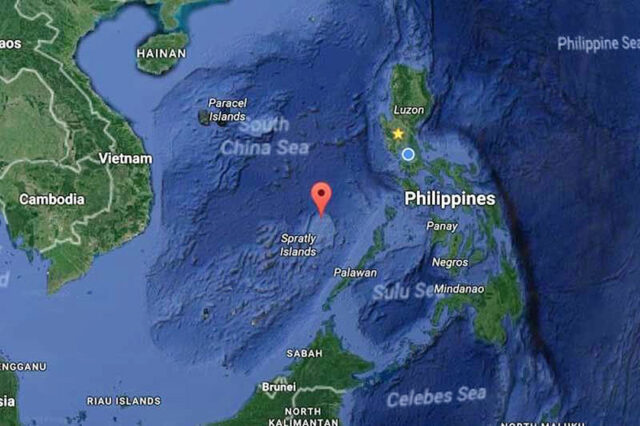
Australia, Philippines discuss joint patrols in South China Sea

PHOTO FROM GOOGLE MAP

The Philippines and Australia on Wednesday discussed pursuing joint patrols in the South China Sea, days after the Southeast Asian country held similar talks with the United States to counter China’s growing assertiveness in the disputed waterway.

Australian Defense Minister Richard Marles met with his Philippine counterpart, Carlito Galvez, in Manila, something they said they plan to do yearly in a bid to deepen the countries’ security ties.

“We did talk today about the possibility of exploring joint patrols and we will continue that work and we hope that comes to fruition soon,” Mr. Marles said at a joint news conference with Galvez after the meeting.

“As countries which are committed to the global rules-based order, it is natural that we should think about ways in which we can cooperate in this respect.”

With overlapping sovereign claims in the strategic waterway, the Philippines is ramping up its attempts to counter what it describes as China’s “aggressive activities” in the South China Sea, which has also become a flashpoint for Chinese and US tensions around naval operation.

The possibility of the Philippines and Australia holding joint patrols comes on the heels of similar discussions between Manila and Washington about conducting joint coast guard patrols, including in the South China Sea.

Military ties between Australia and the Philippines date back to 1922, and the two nations have an existing Status of Visiting Forces Agreement that provides a comprehensive legal and operational framework for defense cooperation.

Ahead of his meeting with Mr. Marles, Mr. Galvez had a call with US Defense Secretary Lloyd Austin where they discussed the decision to resume their countries’ combined maritime activities in the South China Sea, according to a Pentagon statement released on Tuesday.

The two talked about “concerning developments” in the South China Sea, the statement said, including the Feb. 6 incident in which China’s Coast Guard directed a military-grade laser at the crew of a Philippine Coast Guard vessel lawfully operating around Second Thomas Shoal.

China has said the Philippines’ account did not reflect the truth and that its actions were legal. – Reuters

Five absolute kitchen must-have products for an efficient cooking experience

Wilcon Depot’s excellent and practical Hamden kitchen appliances can transform an ordinary space into a work of art. These appliances can make the kitchen look luxurious and welcoming, from a sleek dishwasher, range hood, and oven to a stylish hob and induction zone.

Clean dirty dishes in an instant!

It is time to say good-by to hand-washing dishes. This automatic dishwasher is intended to save time and energy when cleaning dirty dishes, and it includes a variety of useful features that make it an excellent choice. It has control features like a water sensor and triple filtration, as well as a program that lets you set the level of your cleaning requirements. It has five different wash cycles: heavy, normal, eco, glass, and rapid. It also includes a water indicator light for checking the plates and utensils insideThese control panels will ensure that your dishes are clean, and they have child lock features to ensure the safety of every child at home.


Maintain quality air in the kitchen

Range hoods are an absolute must-have for any home with central air conditioning, and they are the ideal appliance for the busy kitchen. This product will keep the heat from cooking appliances out of the room by extracting all excess moisture and air from the area while maintaining a comfortable environment. It is innovative and can add style to the kitchen.


Cooking simultaneously without difficulty

This multipurpose cooking oven will completely transform your life, whether you are a novice or an aspiring chef. It is made of glass and stainless steel and has a glossy finish, making it ideal for your dream kitchen. The oven cooker has three gas burners in addition to its striking design, and it is equipped with great oven features like an electric grill (900 + 2000 watts), an electric oven (2000 watts), a mechanical timer, and nine other functions. All of these functions allow you to have an efficient kitchen experience.

Your new cooking partner

Give your kitchen a modern and efficient style by switching to this gas hob. It is simple to clean and maintain since the 4-layer steel explosion-proof glass surface is heat- and shock-resistant. Given its great features, which include safety features and an iron pan support that steadily maintains the cookware while it is cooking and is durable, heavy-duty, and adaptable, this hob is ideal for a friend or relative who lives alone.

The essential kitchenware

This induction zone never goes out of style. It is an excellent way to prepare meals without having to use the stovetop. Induction cooktops are an excellent way to conserve energy. It has excellent safety features such as a child lock, residual heat indicator, overheat protection, automatic shut off, auto pan detection, stop and go function, 99-minute individual timer, and, finally, overflow protection, which is a must-have for an optimal kitchen and cooking experience.

Wilcon Depot offers Hamden kitchen appliances available in a variety of high-quality and modern designs that will fit your space and lifestyle. Browse now and find the perfect appliance for your home.

Explore the limitless product selections that Wilcon offers, ranging from Tiles, Sanitarywares, Plumbing, Furniture, Home Interior, Building Materials, Hardware, Electrical, Appliances, and other DIY items.

For more information about Wilcon, you can log on to www.wilcon.com.ph or follow their social media accounts on Facebook, Instagram, and TikTok and subscribe and connect with them on Viber Community, LinkedIn, and YouTube.


Spotlight is BusinessWorld’s sponsored section that allows advertisers to amplify their brand and connect with BusinessWorld’s audience by enabling them to publish their stories directly on the BusinessWorld Web site. For more information, send an email to online@bworldonline.com.

Join us on Viber at https://bit.ly/3hv6bLA to get more updates and subscribe to BusinessWorld’s titles and get exclusive content through www.bworld-x.com.

Senate concurs with Philippines’ RCEP ratification

PHILIPPINE STAR/EDD GUMBAN

By Alyssa Nicole O. Tan, Reporter

Philippine senators on Tuesday backed progressively lower tariffs under the world’s largest free trade agreement, covering nearly a third of the global population and about 30% of its global gross domestic product.

With 20 affirmative votes, one negative vote and one abstention, the Senate approved on third and final reading a resolution which gives its concurrence to the ratification of the Regional Comprehensive Economic Partnership (RCEP).

The approval comes more than two years since the Philippines signed the mega-trade deal with 14 other countries — Australia, China, Japan, South Korea, New Zealand and members of the Association of Southeast Asian Nations (ASEAN) in November 2020.

The RCEP was ratified by then-President Rodrigo R. Duterte in September 2021, but the previous Senate did not give its concurrence due to concerns over the deal’s adverse impact on the agriculture sector.

President Ferdinand R. Marcos Jr., who is heads the Agriculture department, had lobbied for the Senate’s urgent approval of the trade deal.

On Tuesday evening, the only senator who voted against the RCEP concurrence is Senator Ana Theresia “Risa” N. Hontiveros-Baraquel, who said she was not convinced that the trade deal would be good for the country, and that the local industries were ready.

Dapa na po ang ating agrikultura. Hindi pa tayo nakakaahon sa pandemya. (Our agriculture sector is already suffering. We have not recovered from the pandemic.) This is not the time for RCEP. I vote no,” she said.

Senator Maria Imelda “Imee” R. Marcos, the president’s sister, abstained from voting because she believed the deal would not benefit the smaller citizens, citing farmers and those in need.

Before it was approved, senators amended the resolution to include a clause that required that “the Executive department use to the fullest, any exceptions and transition periods available to the Philippines, and not implement any unenforceable RCEP provisions that are detrimental to the Philippines’ interest.”

The Senate will also have to authority to recommend to the President the country’s withdrawal from the agreement.

“That amendment allows the Senate to be more proactive, the initiative or the idea to withdraw comes from us,” Senate Minority Leader Aquilino Martin D. Pimentel III said during the plenary session.

“We are asking him to also seek the concurrence of the Senate, but the decision and the initiative comes from the President,” he added. “

A Senate Special Oversight Committee on the RCEP agreement will also created, headed by the Senate President Pro Tempore. Members will include the Senate Majority and Minority Leaders, and the chairpersons or any designated member of the committees on Foreign Relations; Agriculture, Food and Agrarian Reform; Economic Affairs; Trade, Commerce and Entrepreneurship; Finance; and Ways and Means.

The Senate also amended the resolution to require the establishment of a Public-Private Agriculture Budget Monitoring Committee, as well as the enhancement of transparency in importation monitoring through a dedicated publication list on agricultural goods.

It also required for the Department of Agriculture to provide additional, specific interventions within its banner programs “to address the impact on farmers and fisherfolk who are producing the 15 products enumerated under the 33 tariff lines” and that these take effect before the implementation of the country’s commitments to the agreement.

The tariff lines affect 15 products, mainly fish fillets, frozen mackerel, celery, sausages, olives, spinach, olive oil, live swine, live chicken, black pepper, palm nuts and kernels, preserved sweet corn, chilis and other capers, preserved onions, corn starch, and feed for primates.

Ms. Hontiveros earlier told reporters there were still no efforts to protect the agriculture sector despite the delay.

“The agricultural sector said in the last Congress that they are not ready, we are not prepared agriculturally to really compete on a level playing field. They lamented that since the Senate deferred the decision on RCEP in the last Congress, until now, the preparatory programs and activities they requested have still not been implemented,” she told reporters.

Ms. Hontiveros said the RCEP will be a huge blow to the agricultural sector, adding that there are some doubts if the manufacturing sector will fully benefit as well.

Earlier on Tuesday, Socioeconomic Planning Secretary Arsenio M. Balisacan told a Palace briefing that the country’s accession to the trade deal will address long-standing issues in the agriculture sector and encourage investments.

“It must be ratified,” Mr. Balisacan said. “The future of our country depends so much on our ability to attract investors, particularly foreign capital because the domestic capital is not enough.”

“By being a member, we are saying to the world that we are ready for business, we play the rules of the game well, and your investments are safe with us,” he added.

He also noted that there was “no truth” in claims that the agriculture sector will be hurt by the free trade agreement, noting that the current problems are due to “past neglect.”

“Whether or not there is RCEP, we need to invest in agriculture. We need to address those concerns,” he added.

With the RCEP’s ratification, the Philippines will have no choice but to pay more attention to the agricultural sector to receive the full benefits of the deal, the secretary said.


MORE JOBS

The country’s accession to the RCEP is projected to generate 1.4 million jobs by 2031, according to Senate President Juan Miguel F. Zubiri.

Citing a study from the Asian Development Bank, he said that 308,490 jobs in agriculture, 77,683 jobs in industries, and 991,000 in services will be created if the Philippines participates in RCEP.

In a statement on Tuesday, Mr. Zubiri said that the country’s non-participation in the RCEP may lead to a 0.26% decrease in real gross domestic product (GDP).

On the other hand, he said joining RCEP will increase the country’s GDP by 2%.

“If we don’t join the RCEP, investors will go to other countries, because their market is wider. We will be left behind in foreign direct investments. There will be trade diversion,” Mr. Zubiri said.

Meanwhile, Foundation for Economic Freedom (FEF) President Calixto V. Chikiamco told BusinessWorld that the RCEP would improve the investment climate in the Philippines.

“The Philippines is the last among 15 member countries to ratify the treaty…. I think the effect would be immediate in the sense that the Philippines will be back in the radar of investors. While previously, investors may have written off the Philippines, now, the country is back in contention,” he said in a Viber message.

The Makati Business Club said RCEP would help businesses expand abroad, strengthen the economy and accelerate job creation.

“We believe joining RCEP is essential to this as it will comprise 15 countries, 2.1 billion people, and around 30% of global GDP,” it said in a statement on Tuesday.

“While RCEP would help us enter foreign markets, it would also expose our industries to more competition at home. We recognize that there are valid concerns about this. However, we believe that adequate safeguards have been included,” it added.


NO TANGIBLE BENEFITS?

The Senate had included several safeguards in Senate Resolution 485, such as the creation of an oversight committee to monitor the RCEP’s implementation. It also included provisions to ensure adequate border inspections and quarantine controls to deter smuggling.

“The guidelines are meaningless, they are mostly existing programs of the DA (Department of Agriculture),” Jayson H. Cainglet, executive director of Samahang Industriya ng Agrikultura (SINAG), told BusinessWorld in a Viber message. 

Mr. Cainglet did not believe “tangible benefits” would come about from the country’s accession.

Similarly, Raul Q. Montemayor, chairman of the Federation of Free Farmers (FFF), said in a Viber message to BusinessWorld that most of the guidelines were based on a listing of the DA’s current programs.

“(These) have not been effective in terms of improving our competitiveness, as evidenced by our increasing agricultural trade deficit of up to $9 billion and slow growth in non-traditional exports beyond banana, pineapple and coconut,” he said.

Mr. Montemayor also described the guidelines as seemingly “recommendatory,” calling for responsible agencies to make commitments instead.

He also expressed doubt that there will be major advantages resulting from the treaty.

“There is very little within the RCEP agreement that cannot be secured from the existing FTAs. All of the projected benefits mentioned by the proponents and their economic advisers are based on assumptions that rarely hold out in the real world,” he said.

Mr. Montemayor said lawmakers who concur with the RCEP should be held accountable should the trade deal adversely impact key sectors.

Earlier on Tuesday, the House of Representatives passed a resolution expressing support for the ratification of the RCEP.

ADVERTISEMENT
ADVERTISEMENT