Home Blog Page 5160

Gender should not affect hiring, promotion — Filipina executives

UNSPLASH

By Patricia BMirasolReporter

SUCCESS IN the workplace can be achieved by anyone through merit, determination, and having a supportive network, regardless of gender, according to Filipino women executives.

“Merit should be the primary factor. Regardless of gender, the person who is best suited for the role should be the one who is promoted,” said Tatiana Joy C. Cziomer, chief operating officer (COO) of etaily, a Singapore-based e-commerce company.  

Hiring is not about gender either, according to Kristine Claire E. Ongcangco, founder and CEO of software company Parlon.

“It’s just that there are some roles and industries that are dominated by a specific gender,” she said, citing computer programmers and the beauty industry as examples. 

“A role should not be boxed into a specific gender… We should welcome diversity and not be blinded by stereotypes set by society.” 

According to Grant Thornton International Ltd.’s Women in Business 2022 report, the Philippines is one of the top three countries with the highest number of women leaders in mid-size firms. In 2021, the percentage of female leaders in senior management roles increased to 48% from 39% in 2020.  

On achieving gender parity in boardrooms, Fleurette Navarro, iQor’s senior vice-president for global recruitment and Philippine human resources, said: “The first actions are corporate awareness and monitoring.”

“It is also critical that we monitor compensation and retention parity,” she added.

For Ms. Cziomer, a multifaceted approach can help narrow the gap.   

“To start, companies need to acknowledge and address the systemic barriers that women face in the workplace, such as unconscious bias and a lack of mentorship and leadership opportunities,” she said. 

Possible solutions, she added, include diversity and inclusion programs, mentorship opportunities, and alternate or simultaneous parental leaves until one’s child is three. 

“This type of policy can help alleviate the physical, emotional, and mental workload that often falls primarily on women when it comes to childcare,” said Ms. Cziomer.  

Taking care of one’s family is a valid life decision, said Mona Barredo-Dy of Gigacover, which provides gig workers with access to employment benefits. 

“Companies can be more open and accommodating of career interruptions,” said the sales and acquisitions lead of the Singapore-based fintech company. “Let job candidates use the skills they acquired during those gaps in their resumes for their next position.”  

They said that having a supportive network and being willing to learn were key factors in their career advancement.

“Instead of asking, ‘What’s in it for me?’ say ‘Why not!,’ advised Odezza D. Buenaventura, TELUS International Philippines’ operations senior director and site lead for TELUS House Araneta and TELUS Discovery.  

Ms. Buenaventura said that throughout her career, she was presented with opportunities that pushed her out of her comfort zone, such as managing training, launching an overseas site, and operating a new program.

View yourself as someone who can learn and do as much as anyone can regardless of your gender, culture, and age, the executive of the business process outsourcing company said.  

“I always tell myself that these are opportunities that will not knock on my door all the time. They came knocking on my door during those instances, so I wanted to prove to my bosses that they were right to put their trust on me,” she added. 

Ms. Barredo-Dy likewise talked about the importance of developing skills that foster growth.  

“[At my previous job,] I got to work with different teams, not just in marketing development lead generation,” she said. “I was exposed to end-to-end sales, but I’ve worked also with the marketing and products teams to see where services could be improved.”  

“Knowing that you can actively contribute to the success of your company gives you a sense of fulfillment, and can significantly affect your overall satisfaction with your career,” she added.  

Ms. Ongcangco, a startup founder, highlighted the value of leadership development programs offered by organizations such as She Loves Tech, SoGal Foundation, and QBO’s Startup Pinay.

They help “close the funding gap for women entrepreneurs by giving us access to different mentors, investors, and impactful opportunities.” 

Be bolder, braver, and more confident at SM Supermalls’ Women’s Month celebration!

Ladies, take center stage as SM celebrates Women Power throughout the month of March. Lots of activities both online and on-ground are in store to empower women and girls all over the country. 

Join the Future of Women Global Summit

SM Supermalls will be joining UN Women in kicking off the IWD 2023 celebration through a women’s summit on March 8, at the SM Aura Premier Samsung Hall. Focusing on the future of women in ICT, the two-part event will gather young women, country leaders, policy makers, and advocates together to share perspectives and affirm their commitment to supporting digital equality for women and girls. 

Support your local Womenpreneurs

Great finds for ladies are on sale at the SM Womenpreneur Market! This pop-up of small and medium businesses owned by women for women will give you everything you need from food and beauty to wellness and fashion! 

Wednesdays are for women!

Shopping on Wednesdays has become even more tempting because the Women’s Wednesday Sale is back! Achieve the glow-up you deserve with special discounts, deals, and promos on fashion, beauty, and fitness exclusively for women every Wednesday of March. So don’t hold back on your shopping; you deserve all these and more!

A beautiful treat of wellness all for you

Forda glow-up and pampering sesh tayo this month because lots of self-care deals are available at the Women’s Wellness Sale. Avail of great deals from wellness salons on facials, hair and body treatments, nail care, and massage from March 1 to March 31.

And more deals online!

Special deals are up for women via the SM Malls Online app. Get the best brand offerings every Wednesday from shoes and beauty and wellness to home and hobbies. Use the code WOMEN and get an extra 10% off, capped at 250. What’s great is that there’s no minimum purchase required! 

Also, a collection of brand vouchers will be sent to all women SM Malls Online shoppers valid all month. Wait for your Beauty Pass and give yourself the retail therapy you deserve with tons of discounts, GWP deals, samplers, in-store pick up bonuses, and mystery boxes!

Plus, the SM Malls Online app will be hosting self-care sessions online. Follow SM Supermalls on social media to get a dose of starter packages, Get-Ready-With-Me routines, and beauty products that your favorite beauty experts swear by.

Celebrate Women Power on IG!

Capture the beauty and power of women at the beautiful spots and installations all over SM. Be free to express your own uniqueness and creativity in the specially-designed selfie spaces in partnership with Selfie Studio. Don’t forget to tag us on IG!

We don’t know about you but exciting days await every SM woman. So be bolder, braver, and more confident! With these activities, you can confidently step forward in fashion, beauty, wellness, and express yourselves to make a positive impact.

Stay updated on all things women this IWD 2023 by visiting www.smsupermalls.com and following @smsupermalls on social media. 


Spotlight is BusinessWorld’s sponsored section that allows advertisers to amplify their brand and connect with BusinessWorld’s audience by enabling them to publish their stories directly on the BusinessWorld Web site. For more information, send an email to online@bworldonline.com.

Join us on Viber at https://bit.ly/3hv6bLA to get more updates and subscribe to BusinessWorld’s titles and get exclusive content through www.bworld-x.com.

More power to the people

FREEPIK

In October 2020, the Department of Energy (DoE) said it would no longer give permits for the construction of new coal-fired power plants. At the same time, it said it would allow foreign investors to fully own big geothermal plant projects in the country, noting the need for a “more flexible” power supply mix.

Then Energy Secretary Alfonso Cusi told the media it was his department’s aim to build “a more sustainable power system that will be resilient in the face of structural changes in demand and will be flexible enough to accommodate the entry of new, cleaner, and indigenous technological innovations.” And this will be done by shifting away from “traditional” energy sources like coal and oil.

I am unsure how things have worked out for the Energy department since then, but Energy Secretary Raphael Lotilla targets to increase the share of renewable energy in the power generation mix to 35% by 2030, and to 50% by 2040. He also said Chinese firms were looking into conventional nuclear energy and modular nuclear energy locally.

While I agree with the plan to shift to renewable, a ban on coal even temporarily can impact power prices significantly. Households are already burdened by high inflation and big hikes in consumer prices since 2022. Food and fuel costs have gone up significantly in a year’s time. Power costs have also been high, not just for residences but businesses as well.

The thing is, some industries require a lot more power than others. Mineral processors, for instance, such as copper and nickel smelters, require a lot of power. Even glass makers that operate furnaces, and manufacturers of consumer durables like cars and appliances. Power is one of their major production inputs, and among their biggest production costs.

In this line, I am uncertain whether increasing the share of renewable in the power supply mix will also meet the demand and need, particularly of the power-intensive manufacturing industry. Industries like cement, petrochemical, and plastic manufacturing are all power-hungry. Even food processing and manufacturing require a lot of electricity — and not the kind that can just be generated by solar panels on top of the plant.

Government policy calibrations will always have industry winners and industry losers. But, overall, the winner should be power consumers and the country. Lower energy and fuel prices benefit consumers and producers. But, also allowing producers the benefit of lower power prices will redound to consumers as well through lower prices of consumer goods.

Admittedly, power generation is a business. And, for those producing power, they should be able to sell their products at a profit. But how does one now balance the interest of those who are in the business of producing power, those who need a lot of power in their businesses, and consumers who also have their own power needs.

Straight out, power producers cannot be denied their return on investment. And consumers should have access to consistent, affordable, and reliable power supply. Profit vs affordability.

Caught in between are businesses that need lots of power as a production input. They should be able to produce efficiently to allow themselves a reasonable return on their investment, but at the same time keep their products affordable for consumers.

And this is where Secretary Lotilla and his team comes in. The importance of their policies cannot be overemphasized. Energy security is of paramount importance, next only to food security. Energy security, according to the Organization for Security and Cooperation in Europe, means “having stable access to energy sources on a timely, sustainable, and affordable basis.”

It is of prime importance precisely because “access to energy is not only crucial in supporting the provision of basic needs — such as food, lighting, water, and essential healthcare — but it is first and foremost a precondition to economic growth, political stability and prosperity,” the group said. Simply put, energy security and human development go hand in hand.

While Secretary Lotilla’s team works on power supply, the others in the President’s economic team should be working on inflation. Power supply can be stable and affordable as long as the situation allows or encourages more investments in power generation. The Return on Rate Base formula still works, as long as the rates set are reasonable for all concerned.

Power prices will never go down significantly, as it is unlikely that investments in generation — and in new power supply — will significantly exceed the demands of a growing population and economy. As long as supply is sufficient, then this should be good enough. No-shortage is easier to achieve than over-supply.

But power price increases can be slowed down as long as inflation is kept in check. As long as fuel prices — as inputs to power production — are in check. Shifting to renewables is a step in the right direction. Since Return on Rate, a formula allowing a fixed percentage of profit for power producers, works only if producers’ costs are also stable. Again, inflation plays a part here.

Ultimately, what is crucial is how Secretary Lotilla’s team provide for an environment conducive for more investments in power generation. At the same time, how his team can work with others in government to lower the costs of power producers. This is the only way for power generators to consistently produce affordable and reliable power supply.

In doing so, the government also provides for an environment that gives industries and businesses access to stable, reliable, and affordable power. In turn, producers and retailers can provide for the basic needs of consumers without having to significantly raise their prices on account of expensive electricity. Consumers also benefit from lower electricity prices at home.


Marvin Tort is a former managing editor of BusinessWorld, and a former chairman of the Philippine Press Council

matort@yahoo.com

Women are going gray. Time to get over it

RYAN RAYBURN/IMF PHOTO/FLICKER

ABOUT 10 years ago, I decided to let my hair go gray.

The reason was very simple: I couldn’t be bothered spending all those hours at the hairdresser every three months or so. I had two young children, and even with help at home — I was living in Hong Kong — that time felt wasted. And ultimately, who really cared? I didn’t, my husband didn’t. It’s saved money and time, and I’ve never looked back.

So, it was with frustration and some incredulity that I read about Lisa LaFlamme, the Canadian news anchor who let her hair go gray during the pandemic and then was let go (the owners of CTV denied that “age, gender and gray hair” were factors in terminating her contract). Here was an accomplished TV journalist, who had reported from war zones (going through the hassle of coloring her hair in the women’s toilets at Kandahar airfield and in a Baghdad bunker, according to the New York Times), seemingly dismissed over her appearance.

Age discrimination is one of the last frontiers of diversity and inclusion. It largely remains a taboo subject in workplaces. Stories like LaFlamme’s expose the entrenched prejudices women face as they hit middle age and show how much work there is still to be done.

The enduring fixation with how we age (and even that we age) detracts from what half of the population can bring to the table, and undermines women’s achievements, contributions and expertise. Nobody would judge a middle-aged man with gray hair (search for a photograph of Lloyd Robertson, who LaFlamme, 58, replaced when he retired at 77).

Those recoiling from a female who allows herself to look her age are feeding the expectation that as women get older, they must strive to keep looking younger. It once again places the onus on women to change to fit society’s ideal of what is acceptable. And it is exhausting. We already had to prove ourselves in our 20s, but come our 40s and 50s it feels like, once again, women need to show why they are worthy.

Lookism is more pointedly directed at females, and especially women in the latter part of their careers. While it spans professions, it does seem more pervasive and overt in television. Broadcaster Libby Purves succinctly spoke about the pressure on women at the BBC to appear attractive and youthful, while men were allowed to age gracefully.

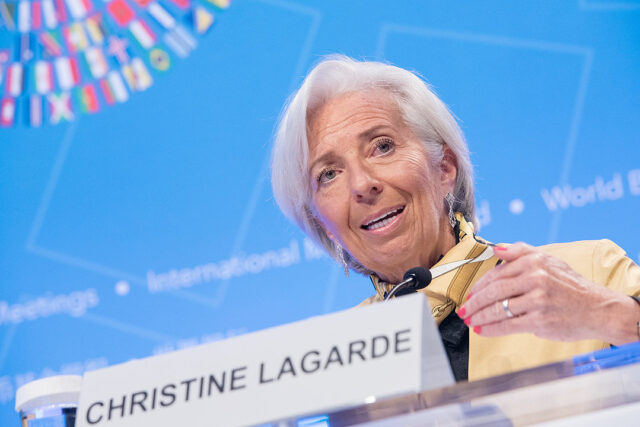
Television news is increasingly looking like an outlier. From central banking (Christine Lagarde, Janet Yellen) to fashion, even, women with silver tresses are holding positions of influence (Sarah Harris, the deputy editor and fashion features director at British Vogue found her first gray strand around 16 and never dyed her hair).

The mature model movement is thriving. Carolyn Doelling, a former American telecommunications and banking executive, became a model in her 70s and is now an Instagram sensation. And not to be outdone by her famous son, Maye Musk, yes, the mother of Elon, became a brand ambassador for CoverGirl at 69. And this list just gets longer.

The latest awards season has also seen a celebration of female actors in their 50s and 60s: Michelle Yeoh, Cate Blanchett, Jamie Lee Curtis.

These are small, but important wins in the fight against ageism. As women live and work longer — followed through their careers by a significant wage gap and watching their retirement savings trail men’s — we must stop penalizing them for something out of their control. Try instead acknowledging their accomplishments and remunerating them accordingly. While companies with a higher proportion of women in management in Asia Pacific contribute to better stock performances than those with a lower representation, females still earn 83 cents to every dollar males earn, on average, according to a Bank of America Corp. March 6 report titled More Alpha, Less Pay. (Alpha refers to the excess return of an investment relative to a benchmark.)

Still, there is some progress. Increasing discussion around menopause is a step toward demystifying what it means to be a woman in midlife. But it does run the danger of defining women in the second half of their careers, and can feel like a grand gesture, overcompensating for years of silence.

Women want to be included and accepted regardless of their stage in life or career. I shouldn’t even have to state the obvious here. That is the visibility they are asking for when they talk about becoming invisible in middle age. Not drawing attention to signs of ageing. Not feeling like there is an expiry date. For that, attitudes must change and we must approach ageism (which affects men as well as women) like any other diversity and inclusion topics such as gender, culture, race and disability.

This International Women’s Day, let’s call out the double standards: A gray-haired man is considered distinguished. A gray-haired woman gets harangued. We all age. Just get over it.

BLOOMBERG OPINION

The Administration’s objective to reduce the fiscal deficit to 3% of GDP by 2028: why and how?

WIRESTOCK-FREEPIK

A FEW WEEKS AGO, I attended a presentation on the Philippine economy and prospects for 2023. A discussant from the Department of Finance indicated that the Administration aims at reducing the fiscal deficit from 8.6% of GDP in 2021 (the result of the COVID pandemic) to 3% by 2028. She referred to this reduction as “solid fiscal management” that “will promote long-term growth.”

In this article, I will argue that this is a dubious target because the government cannot control the deficit. Moreover, claiming that this reduction will promote long-term growth is poor economics. So is the idea of “fiscal responsibility,” based on the false premises that sovereign governments have limited financial resources (operate with financial constraints) or that risk “running out of money.”

A responsible government ought to focus its efforts on attaining desirable objectives such as full employment, price stability, poverty alleviation, income inequality, financial stability, environmental sustainability, and the overall standard of living. Certainly, some of these are in the Administration’s agenda. However, setting a fiscal deficit target for 2028 obscures things and may end up affecting the achievement of the more meaningful targets.

Confusion about how government finances work is a result of three mistakes and fallacies. First, from the wrong analogy of equating government finances with those of a family or firm (the latter two do have a budget constraint). Second, from not recognizing that governments do not use your taxes to make payments but instead use fiat money. This is the national currency (Peso in the Philippines), not pegged to the price of a commodity such as gold or silver. The government issues it (foreign currency is a different matter). The value of fiat money is largely based on the public’s faith in the currency’s issuer, which is normally the country’s government or Central Bank. It is true though that many governments sadly self-impose constraints on their ability to issue fiat money. Third, and more complex, from a poor understanding of the operational realities of how Central Bank and Treasury coordinate their actions.

Let’s start by clarifying how governments make payments. Governments spend by crediting private bank accounts with Central Bank reserves. The payment of taxes leads to private bank accounts being debited. Then, if government spending is greater than taxes, there is a net crediting of reserve accounts at the Central Bank (an increase in the monetary base). Normally, the reserves created are greater than what banks need to hold, whether or not there are legal reserve requirements. Banks with excess reserves at the Central Bank will try to lend them on the interbank overnight lending market. However, when the overall banking system has excess reserves, there will be no demand for them. No individual bank can solve the problem of a system-wide excess of reserves. There must be a system-wide solution.

Before outlining the solution, it is important to appreciate the two pieces around which Central Banks and Treasuries organize their coordination. One is that the key policy tool of the former is the overnight interest rate. Once announced, the Central Bank needs to ensure that it stays within the set corridor (until there is a decision to change it). The other one is that government spending, tax revenues, and bond sales, all occur on the Central Bank’s balance sheet because the government’s account is a liability of the Central Bank.

What is the solution to the excess supply of reserves? This will cause the Central Bank’s overnight rate to fall. Once it has fallen below the target rate, the Central Bank will respond by selling bonds. In normal times, the Central Bank will have a limited supply of government bonds, and hence it can only sell the bonds that it has previously bought. So, in the presence of a fiscal deficit, the Central Bank would need the Treasury to create and sell more bonds in the primary market. The two institutions coordinate their operations to ensure that fiscal operations have minimal undesired impacts on banking system reserves. Hence, bonds will be issued more or less in line with the fiscal deficit in order to drain from the banking system excess reserves that result from spending above taxes.

What is the result of the Central Bank and Treasury coordinating operations? At the end of the year, one would find that government spending less taxes will be exactly equal to the change in base money, that is, the change to banking system reserves, plus the change in private sector holdings of cash, and the change in non-government holding of government bonds.

I must stress that tax revenues, bond sales, and issuance of base money are not alternative methods to finance the difference between government spending and taxes but different pieces of the process of conducting fiscal policy. Treasury cannot decide ex-ante the fiscal outcome (balance, deficit, surplus) since this depends on tax revenue generated over the course of the year, plus unplanned spending as a result of unforeseen events.

If the fiscal outcome (government spending minus taxes) of a nation could be known in advance, it would be possible to decide how to accommodate (finance) the gap via three options: taxes, selling public debt (an interest-earning alternative to money), or creating additional monetary base. In reality, the fiscal outcome is not under the control of the government and it is not even a useful target for policymaking. Rather, the fiscal outcome is determined by a combination of factors.

The fiscal outcome of a nation is the result of a combination of the discretionary policy choices taken by the government and the spending and saving behavior of the non-government sector (outside the power of the government). In other words, the government can decide how much it can increase spending and, ex-post, we will observe some combination of increased tax revenue (the degree to which taxes rise will depend on the responsiveness of tax revenue to rising aggregate spending and income), increased bonds held by the private sector, and increased monetary base (money holdings, or reserves held by banks and cash held by the non-banking private sector). The latter two will be identical to the fiscal deficit, and the split between the two will depend on the preferences for interest earning assets, given the overnight interest rate set by the Central Bank policy.

For these reasons, targeting in 2023 a fiscal deficit of 3% of GDP by 2028 is adventurous. It may indeed materialize, or it may not. Moreover, note that pursuing a 3% fiscal deficit objective is tantamount to claiming that, at the end of 2028, the Philippine non-government sector (domestic private plus external sectors) will run a surplus (net save) of 3%, since the three sector balances (domestic private plus government plus external) add up to zero. Note that this fiscal deficit represents a smaller surplus for the domestic plus external sectors than that provided by the current larger fiscal deficit. This deficit might be what the other two sectors desire in 2028. However, imagine that in 2028 the Philippines runs a current account deficit (the external sector) of over 3% of GDP. To constrain the fiscal deficit to 3% of GDP, will imply that the domestic private sector will be forced to run a deficit. If this materializes, I predict trouble.

To end: will the fiscal deficit of 3% of GDP materialize in 2028? It is impossible to know today. As noted above, the fiscal outcome is not under the control of the government. The fiscal deficit is, from an accounting point of view and ex-post, the difference between government spending and tax revenues. Yet, behaviorally, it depends on the saving desire of the domestic private and external sectors. In fact, it makes no sense to speak of the government’s balance without reference to the other two balances; and the sector balances do not tell us the complex causalities that lie behind the resulting outcome (that they add up to zero). What we know is that the fiscal outcome for a currency-issuing government like the Philippines is largely residual, rising when private domestic and foreign demand shrink and falling when demand rises. In other words, the fiscal deficit finances the desire by the non-government (domestic and foreign) sector to save overall. This is achieved by maintaining sufficient demand to produce a level of income that will generate the desired level of net saving. Consequently, a responsible government would seek to meet the desirable national objectives, and whether these require a larger deficit, a smaller deficit, or even a surplus in some circumstances, should not be the concern because such a government understands how its own finances work.

Let’s see what happens between now and 2028 and, in the meantime, dispel the idea that reducing the fiscal deficit is necessarily good for the Philippine economy.


Jesus Felipe is distinguished professor of Economics and director of the Angelo King Institute, De La Salle University.


Shopping trip

FREEPIK

SELDOM does travel writing mention shopping as a worthy activity, except when trolling famous flea markets in Istanbul perhaps. The commercial minutiae of what to buy and where to get it cheap seems not at all part of travel literature, though blogs have surely covered this arcane art.

Are Filipinos, when interviewed for a US visa on the purpose of a trip there, likely to admit that outlet malls are their objects of affection?

Few would confess to a weakness for retail therapy when traveling, even when they do the obligatory visit to museums and famous landmarks if only to have a photograph with the Eiffel Tower looming in the background. Eighty-six percent of Filipino outbound travelers have as their principal purpose for flying to foreign parts the urge to shop, maybe next to trying the native cuisine. (Please do not ask for my sample size.)

In a previously visited place, the city tour is dispensed with as the tourist heads for the shopping area after the hotel’s complimentary breakfast. In terms of “where to go next,” shopping or “taking a look at what they have” (and buying things one doesn’t really need) seems to elicit the quickest agreement among travel mates. (Are our credit cards valid here?)

Why is it embarrassing to equate travel with shopping? Here are some reasons.

You buy things you will not use. At a certain age, shopping just adds to the clutter of hardly used jackets and hiking shoes. Souvenir shirts may look good on the stalls but except for sleeping (and you already have the giveaway shirts for those) you cannot imagine any event where such collarless attire is appropriate. Except for art directors and porters having a drink at the neighborhood store, a T-shirt with a pagoda and the country of origin in big letters is useless even for ballgames. (It’s never the right color.)

Walking around a mall is the modern version of the Odyssey. (Penelope and Telemachus in this case are walking their dog.) This form of exercise does not promote a balanced aerobic routine as it concentrates on heel impact and weight loads hanging from especially thin strands. The shopper’s rule states that, “The level of pain in the heels and ankles is inversely proportional to the amount of available space for the check-in luggage.” Age tends to dissipate the appetite for getting the best bargain if this requires more walking.

There may still be the visits to temples and shrines for reclining deity if only to have some back home conversation with friends who’ve been there. (You mean you didn’t visit Angkor Wat?) Note that these activities feature only one set of clothes as they are all taken in one day. Even here, the shopper heads for the souvenir store rather than follow the guide around. This is the reason stores are at strategic exit points, even in the Vatican Museum.

There are ascetic travelers who promote the idea that travel should be limited to sights and culture. This type of traveler wears a T-shirt that says “I don’t shop.” He never refers to any country in terms of what he bought there. The only tourist lower than the shopper in the mind of this “real” tourist (regular bus on the way to visit Machu Pichu) is the one who stays in the hotel taking siestas after the linen is changed.

What’s wrong with wanting to increase another country’s GDP level? Malls, after all, also feature food courts. This culinary detour allows the shopper to try truly native cuisine at affordable prices, even if the plating is not a work of art. The food court is also the only place one can sit down with heavy bags in tow.

Food spices up the conversation. The adventurous eater is given some respect by the extreme traveler. Green papaya salad in Bangkok is a good experience that allows for vigorous body language involving a burning tongue and an open hand used as a fan — serves you right for not asking what this salad is spiced with.

Coming home from a trip, the shopper realizes her folly when trying to store her souvenir items. “Buyer’s remorse” is all too real for the shopping tourist. Stored suitcases in the big closet are still full… of unopened shopping bags.


Tony Samson is chairman and CEO of TOUCH xda

ar.samson@yahoo.com

In economics, women’s voices are still struggling to be heard

DCSTUDIO-FREEPIK

BERLIN — When Spanish Economy Minister Nadia Calvino found out she would be the only woman lined up for a photo call to promote the high-profile Madrid Leaders Forum last May, she walked out.

“We can no longer consider it normal that 50% of our population is not present,” said Ms. Calvino, who months earlier had vowed to not attend events where she was the only woman, in protest at the lack of female representation in economics and business.

There seems to be a lot to celebrate on International Women’s Day in the field of economics. Women head the International Monetary Fund, the World Trade Organization, the US Treasury and the European Central Bank. However, more broadly women remain a small minority in a field that is still seen by many as being dominated by men in suits and churning out policy divorced from the real world.

“The pervasive underrepresentation of women in economics is systemic and structural,” Ngozi Okonjo-Iweala, the first woman to head the World Trade Organization, told Reuters. “It is not just a matter of fairness but one of long-term global prosperity.”

The Women in Economics Initiative seeks to advance gender equality in the discipline. According to its 2022 Index, women represent from 10% to 24% of the top global positions in economics, covering academia and the private and public sectors.

“There are no women in the textbooks and most big names in economics are men,” said Sandra Kretschmer, economics researcher and member of the Women in Economics Initiative.

Friederike Welter is the head of the Bonn-based Institute for Small and Medium Enterprises (IfM) — the so-called “Mittelstand” sector key to Germany’s export successes.

She said the lack of women in top economic roles in itself discouraged other women to choose the field as a career.

“When I became head of this institute, automatically we had way more applications from women,” said Welter, who was appointed 10 years ago and is now considered one of Germany’s leading economists.

Janet Yellen, the first woman to head the Treasury and chair the US Federal Reserve, makes frequent reference to the issue. At a banknote printing event last December, she said more progress was needed.

It all starts early on. At university in both the US and Germany women represent about a third of those studying economics.

The reasons are complex. Economics entails a lot of mathematics and analytical thinking and there is a cliché that men are better at those, which can make women reluctant to choose this discipline, said Katharina Wrohlich, leader of the Gender Economics research group at the German Institute DIW.

Guido Friebel, from the Goethe University Frankfurt, said another factor could be the culture. “There is an extremely competitive culture in economics, it’s aggressive,” he said.

Later, there is a “leaky pipeline” between junior and senior ranks. While 40% of the positions are filled with women at the PhD level and the level of assistant professors and lecturers, the share of women falls to 27% at the senior level, according to a global study by Goethe.

That has led to an over-concentration on some subjects at the expense of others. Women and men tend to have different research interests, said Alisa Weinberger, economics researcher at Goethe. Women are doing more research in health, labor and education, while men focus on economic theory, macroeconomics and finance.

“We need more women choosing economics as a major, but we also need to keep these young women in the field,” Goethe Professor Nicola Fuchs-Schuendeln said. “Greater diversity would diversify the questions we ask as social scientists.”

In the higher ranks of the public sphere, only one in 10 central bank governors is a woman and only 15% of finance ministers, the index of the Women in Economics Initiative shows.

Women have held just 12% of the top jobs at 33 of the biggest multilateral institutions since 1945, and more than a third of those bodies, including all four large development banks, have never been led by a woman, a study showed this week.

The World Bank is taking a proactive approach to create a more positive environment and remove obstacles for female economists, said Kathleen Beegle, lead economist in the Human Development Team of the bank’s Development Research Group.

“Studies show women economists face a variety of hurdles in the profession, such as a lack of role models and a hostile work culture,” she said. The World Bank’s Research Group arranges mentoring opportunities and offers home-based work options to accommodate family care responsibilities, Ms. Beegle said.

Christine Lagarde, president of the European Central Bank, said in an event on Tuesday that more needed to be done.

“There are incredible opportunities that are wasted if women are left to the side of the economic road,” she said. — Reuters

Plastic entering oceans could nearly triple by 2040 if left unchecked

PHILSTAR

SINGAPORE — Plastics entering the world’s oceans have surged by an “unprecedented” amount since 2005 and could nearly triple by 2040 if no further action is taken, according to research published on Wednesday.

An estimated 171 trillion plastic particles were afloat in the oceans by 2019, according to peer-reviewed research led by the 5 Gyres Institute, a US organization that campaigns to reduce plastic pollution.

Marine plastic pollution could rise 2.6-fold by 2040 if legally binding global policies are not introduced, it predicted.

The study looked at surface-level plastic pollution data from 11,777 ocean stations in six major marine regions covering the period from 1979 to 2019.

“We’ve found an alarming trend of exponential growth in microplastics in the global ocean since the millennium,” Marcus Eriksen, co-founder of the 5 Gyres Group said in a statement.

“We need a strong legally binding U.N. global treaty on plastic pollution that stops the problem at the source,” he added.

Microplastics are particularly hazardous to the oceans, not only contaminating water but also damaging the internal organs of marine animals, which mistake the plastic for food.

Experts said the study showed that the level of marine plastic pollution in the oceans has been underestimated.

“The numbers in this new research are staggeringly phenomenal and almost beyond comprehension,” said Paul Harvey, a scientist and plastics expert with Environmental Science Solutions, an Australian consultancy focused on pollution reduction.

The United Nations kicked off negotiations on an agreement to tackle plastic pollution in Uruguay in November, with the aim of drawing up a legally binding treaty by the end of next year.

Environmental group Greenpeace said that without a strong global treaty, plastic production could double within the next 10 to 15 years, and triple by 2050.

A separate international treaty was agreed on Sunday to help protect biodiversity in the world’s high seas. — Reuters

Indian gov’t agencies to buy red onions as prices plunge

PHILSTAR FILE PHOTO

NEW DELHI — The Indian government on Tuesday said it has directed two of its agencies to “immediately intervene” and purchase red onion crops from the market after prices fell significantly over the last month, resulting in protests by farmers.

Prices of the crop have fallen to as low as 200 rupees ($2.44) per 100 kilograms prompting some farmers to dump the crop in fields in the western state of Maharashtra, the largest producer of red onion in the country, where rates have fallen sharply.

“The experts attribute this fall due to overall increased production in other states, reducing the dependence on the supplies from the major producing district of the country i.e. Nashik,” the government said in a statement.

India is the world’s biggest exporter of onion, primarily meeting demand of Asian countries including Bangladesh, Nepal and Malaysia. — Reuters

Thai headline inflation eases to 13-month low in February

REUTERS

BANGKOK — Thailand’s headline inflation dropped to its lowest rate in 13 months in February and came in below expectations, commerce ministry data showed on Tuesday, helped by easing energy and food prices.

The headline consumer price index (CPI) rose 3.79% in February from a year earlier, compared with a forecast rise of 4.18% in a Reuters poll, and against January’s 5.02% increase.

Inflation remains above the Bank of Thailand’s target range of 1% to 3%, suggesting the central bank will raise its key interest rate again at its next meeting on March 29 as it attempts to get inflation back within target.

The central bank has raised its policy rate by a total 100 basis points since August to 1.50% to contain price pressures.

The core CPI, which excludes fresh food and energy prices, rose 1.93% in February from a year earlier, less than a forecast increase of 2.10% in the poll and against January’s 3.04% rise.

Senior commerce ministry official, Wichanun Niwatjinda, said inflation is expected to be below 4% in the first quarter, due to a high base last year.

In 2022, headline inflation hit a 24-year high of 6.08%, with the core rate at 2.51%.

“We expect inflation in March to slow down or stay close to this month’s (February) level. It should not be much higher or lower than this,” Wichanun told a news conference.

Besides the falling energy and food prices, interest rate increases had also slowed consumer spending and investment in some areas, he said, adding inflation could drop close to zero or contract in the second half of the year if oil prices fall sharply.

The ministry, however, is maintaining its forecast for headline inflation at 2% to 3% this year for now. — Reuters

PHL healthcare sector sees 11% online hiring growth in January — report

TUNG NGUYEN-PIXABAY

Online hiring in the Philippine healthcare sector grew by 11% in January compared to December 2022, indicating a recovering job market, according to the latest foundit Insights Tracker report.

“The healthcare sector witnessed the steepest monthly growth… as health remains a top priority across rural and urban areas in the country, especially post-Covid, and fast-paced innovations have made accessibility to healthcare easier for Filipinos,” talent platform foundit said in a statement on Wednesday.

According to the company, there has been a consistent need for medical personnel in the Philippines.

Meanwhile, there was a 4% increase in overall hiring activity in the country on a month-on-month basis.

“Despite the 7% annual drop in e-recruitment activity, the month-on-month increase in hiring is a testimony to the reviving job market in the Philippines,” the foundit report said. “However, the emphasis remains on re-skilling and upskilling employees to thrive in current market dynamics.”

The Philippine job market is showing resilience, with positive momentum month over month, according to foundit Chief Executive Officer Sekhar Garisa.

“As businesses across various sectors pivot and incorporate technological innovations, the job market is experiencing a significant boost, particularly in the healthcare, retail, and IT industries,” he said.

Such sectors, he also said, are witnessing tremendous growth and creating new employment opportunities. 

The Philippines’ “robust supply chain and thriving service sector have added to this positive momentum,” he added.

According to the report, other sectors that showcased promising growth in January are logistics, shipping, and transportation (+7%), retail (+3%), hospitality (+3%), and IT/telecom (+3%). 

“The rise in e-commerce platforms, internet penetration across the country and increasing demand for industrial freight warehouses can be credited to the rising demand in these sectors,” the foundit report said.

EU executive to propose countries set own fiscal targets for 2024

REUTERS

 – The European Commission is likely to propose on Wednesday that EU governments set their own deficit-cutting goals when they prepare draft budgets for 2024, pushing ahead with its idea of country-specific debt reduction paths, an EU official said.

The Commission, the EU‘s executive arm, will publish on Wednesday its fiscal guidance for next year for the EU, to help coordinate the 27-nation bloc’s budget policies as the European Central Bank is trying to bring down record high inflation.

Until the outbreak of the COVID-19 pandemic in 2020, EU governments had to follow a common set of fiscal rules which call on all governments to cut debt by 1/20th of the excess over 60% of GDP every year and keep budget deficits below 3% of GDP.

But the rules were suspended during the pandemic and then again in 2022 because of the economic shock caused by the Russian invasion of Ukraine. The large differences in debt levels between countries now make a uniform application of the common rules across the bloc unrealistic.

Still, the one-size-fits-all debt reduction rules are to come back into force in 2024. But before they do, EU governments want them changed so that they better reflect the challenges of high public debt and need for investment that the COVID-19 pandemic and fighting climate change have created.

Despite some objections to the Commission idea of individual debt reduction paths from Germany, the EU executive arm is likely to propose that governments set their own targets for now, until a negotiated solution is reached later this year, one EU official close to the topic said.

EU Member States are to set their own fiscal targets that comply with the fiscal adjustment criteria set out in the Commission reform proposal, ensuring that the public debt ratio is on a downward path or that it remains at a prudent level and that the deficit is below 3% of GDP over the medium term,” the official said.

The Commission guidance will also apply to the so-called stability and convergence programs that EU countries have to submit to the Commission every April, in which they lay out fiscal plans for the next 3 years. – Reuters

ADVERTISEMENT
ADVERTISEMENT