Home Blog Page 5157

Greater WFH adoption seen improving employment outlook

REUTERS

By John Victor D. Ordoñez, Reporter

MORE remote and hybrid jobs will help boost employment this year with companies growing more flexible on work arrangements even with the easing of the public health emergency, according to the online job portal JobStreet.

“The market has reopened and as we’ve seen the number of ad postings and applications on our website (are) back to our 2019 or pre-pandemic situation,” Philip A. Gioca, country manager for JobStreet Philippines, told BusinessWorld in an interview last week.

“The difference is that the old roles and positions in 2019 are redefined now since remote work is now more prevalent.”

He said he is optimistic about employment improving this year.

The unemployment rate eased to a three-year low last year to 5.4%, the lowest since the 5.1% posted in 2019, the last full year before the coronavirus pandemic. 

Job quality was also at a three-year low as underemployment, an indicator of workers looking for more work, hit 14.3%, against the 14% recorded in 2019.

In September, the Department of Labor and Employment (DoLE) revised the implementing rules and regulations of the Telecommuting Law to bolster protections for work-from-home (WFH) employees, should they decide not to work in the office.

Workers in a WFH scheme are not classified as field personnel, except when their hours of work “cannot be determined with reasonable clarity,” according to the revised rules.

In a study released by JobStreet on March 1, about 46% of respondents said they prefer hybrid work, 28% are looking for fully remote work, and 26% said they want to work on-site.

Mr. Gioca said the online job search platform is collaborating with the DoLE to study the employability of senior high school students.

The upcoming study will seek to determine where senior high school students best fit in the workforce and to find out whether they are landing high-quality jobs, he said.

“Now, employers in the Philippines are taking skills and attitude over educational attainment when seeking new hires, which is a great equalizer,” Mr. Gioca said.

“Graduates from the top schools now have to be driven differently when looking for work and take into account attitude and skills.”

Union Bank of the Philippines marks PSEi return with a P12-B SRO

Union Bank of the Philippines recently concluded its P12-billion stock rights offering (SRO) with the listing of its shares at the Philippine Stock Exchange. At the bell ringing ceremony that opened trading for the week and jump started the PSE capital raising season, PSE president and chief executive Ramon Monzon warmly acknowledged the UnionBank milestone.

“I believe that the confidence of both the institutional and retail investors of UnionBank stems from the Bank’s reputation of being a trailblazer in digital banking, its strategic initiatives, and its top-notch and very able leadership team from its chairman Mr Eramon I Aboitiz to its president Mr Edwin R Bautista, and to the Bank’s directors and management officers,” said Monzon as he welcomed UnionBank as the first listed company to hold the bell ringing ceremony at the PSE Museum.

Monzon recognized the return of UnionBank to the 30-member PSE index after 14 years and concluded “At the PSE we are eager to see the next phase of UnionBank’s digital transformation, as the bank works toward its vision of leading the future in banking.”

In acknowledgment, UnionBank President and CEO Edwin R. Bautista said “The strong participation of our existing shareholders on our Stock Rights Offering, reflects their trust in the value that will be created by executing our strategies,”

Proceeds from the SRO will be allocated to support the growth of the Bank’s various business segments and its wholly-owned subsidiary UnionDigital. Bautista added, “With the completion of our SRO, we aim to pursue our long-term objective to become a leader in retail banking in the Philippines.”

Attending the listing ceremony were: Aboitiz Equity Ventures chief finance officer Jose Emmanuel Hilado, UBP director and Chief Finance Officer Manuel Lozano, UBP director Chief Digital Channels Officer and Chief Customer Experience Officer Ana Maria Delgado, UBP  director Samel Aboitiz, UBP President and Chief Executive Officer Edwin Bautista, PSE President and Chief Executive Officer Ramon Monzon, PSE COO Roel Refran, PSE Issuer Regulation Division head Marigel Garcia, Securities Clearing Corporation of the Philippines COO Renee Rubio and PSE general counsel Veronica Del Rosario.


Spotlight is BusinessWorld’s sponsored section that allows advertisers to amplify their brand and connect with BusinessWorld’s audience by enabling them to publish their stories directly on the BusinessWorld Web site. For more information, send an email to online@bworldonline.com.

Join us on Viber at https://bit.ly/3hv6bLA to get more updates and subscribe to BusinessWorld’s titles and get exclusive content through www.bworld-x.com.

Netflix tennis stars say series shows ups and downs of pro game

INDIAN WELLS, Ca. — Rising tennis stars featured in the Netflix tennis docuseries Break Point said it has raised their profiles and boosted the game’s visibility even if it does not always show their best side.

The show, which is filming at Indian Wells again this year, focuses on a group of up-and-coming players including Casper Ruud, Felix Auger Aliassime, and Taylor Fritz and as they try to navigate the pressure-filled world of professional tennis.

“One lady came up to me at Publix in Florida and said, ‘Me and my husband were watching you last night on the Netflix show,’” Mr. Ruud told reporters on Wednesday, the first day of main draw action at Indian Wells.

“But it’s not crazy. I haven’t been an overnight worldwide superstar.”

One episode follows Mr. Ruud’s run to the final of last year’s French Open and depicts a heated exchange between the Norwegian and the grounds crew after he was not allowed to practice due to forecasted rain.

“I was quite angry honestly because the court crew wouldn’t let us warm up before the match,” Mr. Ruud said.

“I don’t know if it was good or not but Netflix was there catching it all. It was something I almost forgot had happened,” he said.

“But it was a little bit funny also, looking back on what can happen sometimes for us. It’s not always a smooth ride.”

Canada’s Auger Aliassime feels the impact of the show most acutely in the US, where Netflix has its biggest market.

“Going to dinner or a grocery store, a lot more people are recognizing me and other players,” he said.

“They say, ‘I just watched your episode and I loved it.’ Nice interactions with people who maybe were not tennis fans before.”

Mr. Fritz’s episode documented his breakthrough victory in the Indian Wells final last year and while he was happy with how it turned out, he said it may have given the wrong impressions about the ankle injury he played through in the title match.

“I thought the episode was really great but there were a couple things that were missed,” the American said.

“I think the episode made it seem that my injury was in the warm-up before my match but it was at the end of my semi-final and I only realized how bad it felt the next day after.”

Mr. Ruud said he kept boundaries up between himself and the crew which limited his screen time.

“I didn’t invite Netflix to too many personal things,” he said. “Inviting them to my hotel room, or having my girlfriend Maria talk on camera, that’s not something she is so comfortable with. So there are many things that we said no to.

“But it’s been fun to be part of something Netflix has made together with (the Formula One) Drive to Survive and the golf series (Full Swing).

“It’s positive for us if more people are interested in tennis.” — Reuters

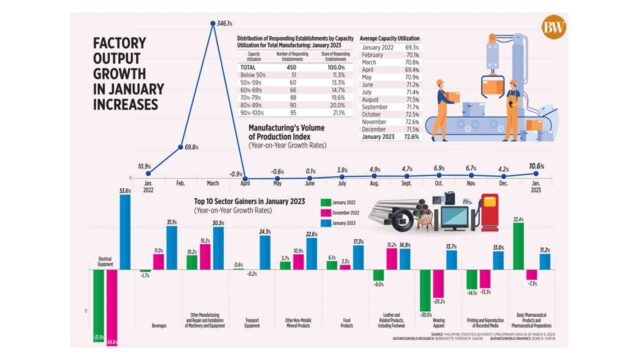
Factory output growth in January increases

FACTORY OUTPUT rose for the eighth straight month in January as the economy further reopened, the Philippine Statistics Authority (PSA) reported on Thursday. Read full story.

Factory output growth in January increases

Turkey cannot recover ancient Stargazer idol from Christie’s — US court

THE Guennol Stargazer — CHRISTIES.COM

NEW YORK — Turkey cannot recover a 6,000-year-old marble idol from Christie’s and hedge fund billionaire Michael Steinhardt after waiting an unreasonably long time to claim it had been looted, a US appeals court ruled on Wednesday.

The 2nd US Circuit Court of Appeals in Manhattan said Turkey “had reason to know” by the 1990s that the Guennol Stargazer might have been wrongfully removed from its territory.

It said Turkey therefore “slept on its rights” by waiting to sue Christie and Mr. Steinhardt, the idol’s owner, until April 2017, when the auction house listed the Stargazer for sale.

“Turkey sat on its hands despite signals from its own Ministry of Culture that the Stargazer was in New York City,” Circuit Judge Rosemary Pooler wrote for a three-judge panel. “Turkey’s failure to bring its claim (or even investigate it) until 2017 was unreasonable.”

Lawrence Kaye, a lawyer for Turkey, said the country is considering its next steps, after establishing at trial that it owned the idol and was “diligent” in asserting its rights.

“This decision will not deter the Republic of Turkey from continuing to aggressively seek the return of cultural objects that have been stolen from it,” he said.

A lawyer for Christie’s and Mr. Steinhardt declined to comment. The Stargazer is about nine inches (22.9 cm) tall, and named because its head tilts slightly upward toward the sky.

In claiming ownership, Turkey cited the 1906 Ottoman Decree, which asserts broad rights to antiquities.

But the country said it would be impossible to investigate everything in its “vast trove of unknown ancient artifacts,” and it was “neither aware, nor should it have been aware” of its claim to the Stargazer until Christie’s described the idol’s limited provenance in its auction catalog.

Pooler, however, said the Stargazer had long been on public display, including more than three decades at New York’s Metropolitan Museum of Art, and that throughout the 1990s the culture ministry published essays and presentations about it.

“The Stargazer has not lived in secrecy,” Pooler wrote.

Mr. Steinhardt and his wife paid $1.5 million for the Stargazer in 1993. Christie’s auctioned it for $14.5 million, but the buyer walked away. Wednesday’s decision upheld a Sept. 2021 ruling by US District Judge Alison Nathan, which followed an eight-day trial. Judge Nathan was later elevated to the appeals court.— Reuters

The Filipino entrepreneur

FINALLY, we have an entrepreneurship textbook by a Filipino for Filipinos. This is the main objective for the book The Filipino Entrepreneur – Opportunities and Strategies in a Growth Economy by Deogracias “Sonny” Vistan. Sonny is a professional banker, my colleague in Citibank and Philippine National Bank. He was  president of Land Bank of the Philippines and the Bankers Association of the Philippines. In 2002, he became an entrepreneur when he set up a successful ice cream business, Creamline, which was later purchased by a large conglomerate in 2015.

Part one of the book focused on entrepreneurs and on entrepreneurial principles, strategies, and risks and how to address them. The main topics are:

• To be or not to be an entrepreneur, the different kinds of entrepreneurs (the born entrepreneur, children of successful entrepreneurs, wealthy children of parents that owned considerable financial and or property assets, individuals that have investible funds for business, retired career professionals, the franchise specialist) experience, management skills and scale of business, capital required, risks and rewards, and the importance of commitment

• Preparing yourself for entrepreneurship, or how the entrepreneurs prepare themselves for the opportunities and the challenges

• Product or service, competition, brands and slogans. He discussed product differentiation, market niche, brand importance, logos, and taglines. He even let us guess popular taglines, both local and international.

• Production, service delivery and logistics, mainly about plant location, power supply, outsourcing, inventory management, regular overtime, and the importance of logistics

• Pricing strategies: cost, competition and price demand elasticity

• Channels of distribution, wholesalers and retailers, dealers and distributors, your own sales force, online retailing

• Traditional and digital advertising, or the advantages of digital versus traditional advertising, the benefits of using Facebook, Google ads, YouTube and Instagram. The top Facebook influencer is actress Marian Rivera with 26.6 million followers. On Instagram, it’s actress Anne Curtis with 18.8 million followers.

• Financial management, namely the responsibilities of the chief financial officers, relationships with banks and the importance of financial ratios. On relationships with banks, communication is important. It is best to be upfront with challenges faced and to come up with solutions together. He also talked about the importance of matching needs with funding tenors. Do not make the mistake of getting short-term loans for long-term needs.

Incidentally, the FINEX academy offers “The CFO Masterclass,” a two-month course with 12 sessions with a faculty of distinguished CFOs. The CFO course is chaired by Jeng Pascual, 2014 ING FINEX CFO of the Year.

• Human resources, internal audit and legal, or the importance of recruiting, training, compensation, labor union, the internal audit and legal environment. Is your HR still using traditional versus modern media such as LinkedIn or the Philippines HR Group?

• On the future of entrepreneurship, he talked about long-term opportunities and threats and industries with potential and limitations, the digital age, cashless/paperless environment, and the growth of online retailing.

The second part of the book containes case studies and real life scenarios of 15 medium-scale companies in various industries. Some of the featured companies aside from Creamline are:

• Jun and Pat Pacheco’s virgin coconut oil products under the brand name Cocolicious;

• Krie Lopez’s Messy Bessy household cleaning products and personal care items;

• Kenneth Cobonpue Designer Furniture based in Cebu;

• Gerald Castillo’s Eight Media Online Solutions on digital communications;

• Willy Soong, the “born entrepreneur,” Jaguar, sports cars and Racks Prime Ribs restaurant;

• Marjorie Aviso and Teleworks Philippines, a business processing outsourcing company;

• Danny Ignacio’s dormitory and condo real estate development; and

• Julio Sy, Jr.’s Tao Corp., an unusual conglomerate.

It was a privilege to attend Sonny’s book launch at the Manila Golf, which had the added bonus of meeting the entrepreneurs featured in the book. It was like attending a free training session in Entrepreneurship 101 as he explained the different principles and told the amazing stories of each of the 15 cases. It may also help to say a prayer to make Him a partner in your business.

The views expressed herein are her own and does not necessarily reflect the opinion of her office as well as FINEX.


Flor G. Tarriela is a FINEX trustee, was former chairman of Philippine National Bank, former Undersecretary of Finance and the first Filipina vice-president of Citibank N.A. A gardener and an environmentalist, she founded Flor’s Garden in Antipolo.


Probationary employee acting without authority

I have a young employee, a new-hire fresh graduate who is such an eager beaver that he ends up doing a lot of things outside of his authority and job description. Yesterday, he allowed two of our student-trainees to bring home company-owned laptops so they can continue working at home. Three weeks previously I had spoken to him about such lapses. He told me he wants to be empowered in order to exceed my job expectations. How do I manage this person? — North Star.

Employee empowerment is not absolute. Management must draw the line between the things that can and cannot be done by employees, regardless of their work experience, educational orientation and background. In many organizations even management has limited authority. They can’t simply make decisions on some things.

Even more so if they’re new to the organization and lack the expertise to make sound decisions. In your case, company laptops must be secured at all times and must not be brought out of the office without authorization. This policy applies to the contents of the laptops, whose loss could compromise trade secrets.

The laptops could also be stolen by student-trainees or anyone they meet on the road if they use public transport.

There’s nothing wrong with empowering people — it has many advantages. One of them is giving workers the chance to identify issues and solve them. Another is that it frees up management from focusing on mundane issues. A third is that it motivates ordinary employees to work on challenging assignments. However, these are subject to limitations, especially if the employee has not passed his probationary period.

You have reasonable grounds to be concerned about this. If anything bad happens, you can’t wash your hands of any responsibility because of command responsibility.

THREE CURES
The motivation of your newly hired worker is admirable, except that it is misplaced at this point. He has not yet passed probation and has not paid sufficient dues to be considered empowered. You’ve already spoken to him about similar incidents in the past, but this time, an informal talk may not be the right option for you.

What could possibly work with him? Explore the following:

One, allow the employee to understand the folly of his actions. This requires an enormous amount of tact. Start by asking him how he would deal with situations like the loss or damage to the laptops. How would he recover from such losses or damage? What’s the basis of his perceived “authority?”

In the first place, what are those tasks that can’t be completed during normal office hours by student-trainees? Are they allowed by the university or college that sent them to work as on-the-job trainees?

Further, in almost all organizations, laptops can’t be brought out of company premises without the benefit of a gate pass signed by a competent authority. In that case, who issued the gate pass? If an unauthorized employee signed the gate pass, why was it allowed by security? This question could open a can of worms.

Two, ask the employee to explain himself in writing. After your previous conversations, the time has come for you to issue a Notice to Explain (NTE) memo that lists specific provisions of your company’s code of conduct. If you can’t find any such policy, your best recourse is the Labor Code, Criminal Code, Civil Code or any Supreme Court decisions that you can use to justify your inquiry.

Generally, however, the best argument is to tell him that employers are still liable even if the worker is not authorized. This is the essence of “vicarious liability,” a legal doctrine that allows another person to be charged with the unlawful act or omission of another, unless the former has proven that it had exercised due diligence.

“Vicarious liability” is more or less similar to another legal doctrine called “respondeat superior” — both Latin words translated to mean “the master must answer” for any loss or damage done by the “slave.” In other words, that presumes the negligence of a worker is also presumed to be the negligence of the employer.

Last, emphasize the worker’s limited or zero authority. It’s prudent to categorically state that the worker does not possess any authority to make such decisions without prior verbal or written approval. You can amplify this by discussing office protocols and other administrative guidelines.

Related to this is the principle of chain of command that requires every worker to report and direct any communication to his line leader, supervisor, manager or boss unless there’s a clear emergency that could warrant the bypass.

Nevertheless, create every opportunity to engage your worker by discussing his personal interests and goals, at least in areas where you have the power to further his career. The worker may be tempted to argue about empowerment. If that happens, steer the person away from his interpretation of what an empowered employee should be.


Bring Rey Elbo’s popular leadership program called “Superior Subordinate Supervision” to your line leaders or chat with him via Facebook or LinkedIn or e-mail elbonomics@gmail.com or via https://reyelbo.com

MR. DIY to open 13 stores on March 17 to 19  

HOME products retailer MR. DIY is set to open 13 stores across the country from March 17 to 19 as part of its expansion in the Philippines.

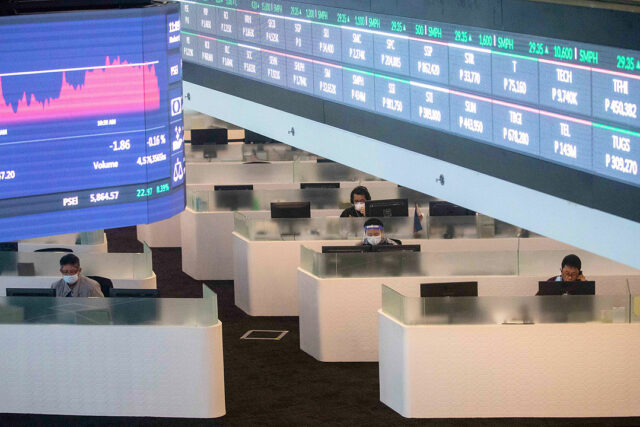
In a statement on Thursday, MR. DIY said that the 13 new branches will be spread across Luzon, Visayas, and Mindanao.

The new branches will be in malls and commercial areas in Kidapawan City in Mindanao; Lemery in Batangas; Nueva Ecija; San Carlos City in Negros Occidental; and Victorias City also in Negros Occidental.

MR. DIY is also set to open branches at GIG Mall in Las Piñas; Culiat Town Center in Quezon City; Puregold Tanza in Cavite; and RFC Molino Mall in Bacoor, Cavite.

Other areas identified in the press release are Lanao del Norte; Virac, Catanduanes; Zamboanga City; and Zamboanga Del Sur.

“MR. DIY stays true to its commitment to bring affordable and high-quality tool and items to keep you covered whether you are redecorating or modifying your home, refreshing your home decors, or sprucing up your backyard for fun summer activities with your friends and loved ones,” it said.

MR. DIY has over 2,000 stores across Malaysia, Thailand, Indonesia, Singapore, Brunei, Philippines, Cambodia, India, Turkey, and Spain.

The retailer offers about 18,000 shelf-keeping units across categories such as hardware, household and furnishing, electrical, stationery and sports equipment, toys, car accessories, jewelry, and cosmetics. — Revin Mikhael D. Ochave

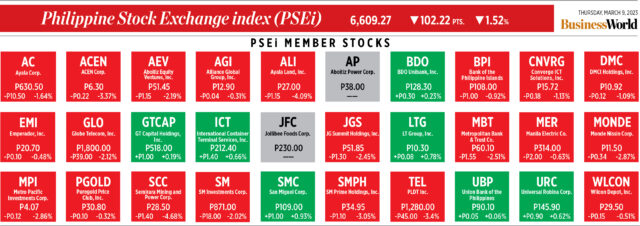
How PSEi member stocks performed — March 9, 2023

Here’s a quick glance at how PSEi stocks fared on Thursday, March 9, 2023.


Eurovision Song Contest final tickets sell out in 36 minutes

LONDON — Tickets for the 2023 Eurovision song contest grand finals in Liverpool, England, in May sold out in little over 30 minutes on Tuesday, organizers said.

Britain is hosting the 67th contest on behalf of Ukraine, the winner of the 2022 competition that was ruled out from hosting because of the ongoing conflict there.

The European Broadcasting Union asked Britain, which was the 2022 runner-up, to step in.

Tickets for the grand finals were priced between 160 pounds and 380 pounds ($192-456), while tickets for the two semi-finals were priced between 90 pounds and 290 pounds.

Around 3,000 tickets for a total of nine shows — six previews, two semifinals, and the grand final — will be made available for displaced Ukrainians for a charge of 20 pounds per sale, the British government said last month. — Reuters

Shares decline as Jan. unemployment rate rises

REUTERS

PHILIPPINE STOCKS dropped on Thursday as the country’s jobless rate went up in January, dampening market sentiment.

The benchmark Philippine Stock Exchange index (PSEi) declined by 102.22 points or 1.52% to end at 6,609.27 on Thursday, while the broader all shares index went down by 36.47 points or 1.01% to close at 3,549.19.

“The local stock market gauge saw a downward correction after rising for six straight days, after softer local employment data amid relatively higher inflation, interest rates, and risk of a US recession,” Rizal Commercial Banking Corp.   Chief Economist Michael L. Ricafort said in a Viber message on Thursday.

Regina Capital Development Corp. Head of Sales Luis A. Limlingan likewise said that the PSEi declined as the country’s unemployment rate worsened in January.

Data from the Philippine Statistics Authority released on Thursday showed the country’s jobless rate stood at 4.8% in January, translating to 2.37 million unemployed Filipinos. This rose from 4.3% in December 2022 and 6.4% in January 2021.

“Philippine shares slipped as traders processed fresh job market data, both locally and in the US, and comments from Fed (Federal Reserve) Chair Jerome Powell,” Mr. Limlingan said.

US Federal Reserve Chief Jerome H. Powell told US lawmakers on Tuesday that the Fed will likely need to raise interest rates more than expected in response to recent strong data, Reuters reported.

“In addition, the rise of non-performing loans in the country, the first in 10 months, also dampened sentiment. These data added to the lingering inflation and interest rate concerns in the economy,” Philstocks Financial, Inc. Research and Engagement Officer Mikhail Philippe Q. Plopenio said in a Viber message.

Banks’ gross nonperforming loan ratio went up to 3.28% in January versus 3.16% in December, data from the Bangko Sentral ng Pilipinas showed.

All sectoral indices closed lower on Thursday. Property declined by 82.04 points or 2.86% to 2,785.51; holding firms went down by 108.39 points or 1.69% to 6,302.80; mining and oil dropped by 153.41 points or 1.41% to 10,678.19; services fell by 13.17 points or 0.79% to 1,634.79; industrials lost 61.47 points or 0.63% to end at 9,636.32; and financials shed 9.07 points or 0.48% to close at 1,858.73.

Value turnover went down to P4.99 billion on Thursday with 880.58 million shares changing hands from the P5.46 billion with 870.39 million issues traded on Wednesday.

Decliners outnumbered advancers, 105 versus 72, while 52 names closed unchanged.

Net foreign selling stood at P438.27 million on Thursday, a reversal of the P12.27 million in net buying seen on Wednesday.

RCBC’s Mr. Ricafort placed the PSEi’s major support at 6,250 and resistance at 7,000-7,100, while Regina Capital’s Mr. Limlingan put support at 6,555.15 and resistance at 6,740.13. — Ashley Erika O. Jose

Peso climbs as dollar slips from three-month high

BW FILE PHOTO

THE PESO rebounded on Thursday as the dollar inched lower, despite the release of strong US data that affirmed expectations of a hawkish US Federal Reserve.

The local currency closed at P55.24 versus the greenback on Thursday, rising by eight centavos from Wednesday’s P55.32 finish, data from the Bankers Association of the Philippines’ website showed.

The peso opened Thursday’s trading session at P55.25 per dollar. Its intraday best stood at P55.14, while its worst showing was at P55.29 against the greenback.

Dollars traded went down to $926.3 million on Thursday from the $1.022 billion recorded on Wednesday.

The peso mostly traded sideways during the session and corrected along with the dollar index, a trader said in a Viber message.

“The dollar-peso exchange rate also corrected slightly lower after the gauge of the dollar versus major global currencies corrected slightly lower from new three-month highs recently,” Rizal Commercial Banking Corp. Chief Economist Michael L. Ricafort said in a Viber message.

“Federal Reserve Chair Jerome Powell, who earlier signaled the possibility of more Fed rate hikes and higher Fed rate peak if elevated inflation persists, stressed that no decision has been made on the size of the Fed rate hike in March 2023,” he added.

The dollar held near a three-month high on Thursday, underpinned by Mr. Powell’s message that interest rates would have to go higher and possibly faster, Reuters reported.

In the second day of his testimony to Congress on Wednesday, Mr. Powell reaffirmed his message, though he struck a cautious note, saying debate on the scale and path of future rate hikes was still underway and would depend on data.

That caused the dollar to pause its sharp rally from earlier in the week, retreating from close to a three-month top against the yen. It was down 0.6% at 136.55 yen.

The dollar index edged 0.05% lower to 105.57 and remained near a three-month peak of 105.88 hit on Wednesday.

In the United States, data released overnight painted a picture of a sturdy economy, doing little to assuage fears the Fed will ease up on its relentless rate hikes.

Job openings remain elevated, private payrolls beat consensus estimates and demand for home loans increased despite higher mortgage rates.

Fed funds futures now imply a nearly 70% chance the Fed will raise rates by 50 basis points (bps) this month, up from just about 9% a month ago.

The Fed hiked its target interest rate by 25 bps at its Jan. 31 to Feb. 1 meeting to a range between 4.5% and 4.75%.

Since March 2022, the US central bank has raised rates by a total of 450 bps. Its next policy meeting is on March 21-22.

“The peso is still relatively stable at familiar ranges recently after the recent signals from local monetary authorities that they are ready to use tools available in the policy toolkit to help stabilize inflation… as this could also support more comfortable interest rate differentials that somewhat support the peso,” RCBC’s Mr. Ricafort added.

The Bangko Sentral ng Pilipinas will hold its own policy meeting on March 23. It has hiked borrowing costs by 400 bps since May 2022, with its key rate now at 6%, to fight rising inflation.

For Friday, the trader expects the peso to trade between P55 and P55.50 per dollar, while Mr. Ricafort gave a forecast range of P55.20 to P55.40. — AMCS with Reuters

ADVERTISEMENT
ADVERTISEMENT