Home Blog Page 5094

Stocks decline as Fed, BSP hike benchmark rates

REUTERS

PHILIPPINE SHARES dropped on Thursday as the US Federal Reserve and the Bangko Sentral ng Pilipinas (BSP) raised benchmark interest rates anew.

The benchmark Philippine Stock Exchange index (PSEi) went down by 9.91 points or 0.15% to close at 6,536.36 on Thursday, while the broader all shares index fell by 7.20 points or 0.2% to end at 3,492.77.

“Philippine shares slid slightly as the Fed concluded its two-day meeting [on Wednesday]. The Fed raised rates by 25 bps (basis points), in line with Wall Street’s expectations. It also hinted that its inflation-fighting tightening campaign could be nearing the end, with the removal of the phrase “ongoing increases” from its statement,” Regina Capital Corp. Head of Sales Luis A. Limlingan said in a Viber message.

“Just now, the BSP raised its key rate to 6.25% (+25 bps), in line with estimates,” he added.

AP Securities, Inc. Equity Research Analyst Carlos Angelo O. Temporal said in a Viber message that local shares trimmed losses posted earlier in the session on the back of last-minute buying.

“Intraday, the index fell by nearly 0.8% due to rising fears of a recession abroad, as the banking crisis cast a shadow over the economic growth outlook,” Mr. Temporal said.

The Federal Reserve on Wednesday raised interest rates by a quarter of a percentage point to the 4.75%-5.00% range, but indicated it was on the verge of pausing further increases in borrowing costs after the recent collapse of two US banks, Reuters reported.

The much-anticipated rate hike by the Fed, which had delivered eight previous rate hikes in the past year, sought to balance the risk of rampant inflation with the threat of instability in the banking system.

The banking sector has been in turmoil after California regulators on March 10 closed Silicon Valley Bank in the largest US bank failure since the 2008 financial crisis.

The Fed has raised rates by 475 bps since March 2022.

Meanwhile, the BSP, in its own meeting on Thursday, also decided to hike benchmark interest rates by 25 bps to anchor inflation expectations. The latest move brought its policy rate to 6.25%, with cumulative increases since May 2022 reaching 425 bps.

Almost all sectoral indices closed lower on Thursday, except for mining and oil, which climbed by 39 points or 0.36% to 10,700.01.

Meanwhile, services fell by 7.79 points or 0.48% to 1,601.19; industrials decreased by 29.85 points or 0.31% to 9,424.88; financials went down by 4.55 points or 0.25% to 1,792.48; holding firms declined by 3.82 points or 0.06% to 6,349.21; and property dropped by 0.05 point to 2,771.20.

Value turnover went down to P3.69 billion on Thursday with 428.16 million shares changing hands from the P4.23 billion with 413.61 million issues traded on Wednesday.

Decliners outnumbered advancers, 98 to 56, while 62 names closed unchanged.

Net foreign selling rose to P395.66 million on Thursday from P9.87 million on Wednesday. — A.H. Halili with Reuters


Marcos issuing EO to address ‘water crisis’

BW FILE PHOTO

PRESIDENT Ferdinand R. Marcos, Jr. said on Thursday that he will issue an executive order (EO) creating an interim agency that will manage what he described as the “water crisis” until Congress passes a law establishing the Department of Water Management.

The text of the EO nor its number has not been released. The agency created by the EO, the Water Resource Management Office (WRMO), will ensure the implementation of “more cohesive policy” to address the water crisis.

In February, the Presidential Communications Office (PCO) said the WRMO’s first action will be to reduce reliance on groundwater and deep wells, and manage the supply of surface water.

“The WRMO would be under the Department of Environment and Natural Resources (DENR) and will be a transitory body pending the creation of a Water Resources department,” the Palace said.

The new office will have the authority to make binding recommendations to state-owned corporations providing water services such as the Metropolitan Waterworks and Sewerage System, Local Water Utilities Administration, and the DENR’s water resources board, the Palace said.

The PCO said the new office’s main functions also include formulating and ensuring the implementation of the Integrated Water Management Plan, which will integrate the plans of various agencies.

In his speech on Thursday at a water industry convention, Mr. Marcos described the Philippines as being in a “water crisis,” noting that “every single urban community and even some rural communities” experience water shortages.

“I call it a water crisis because it is,” he said in a speech. “It is something that we have continually postponed. We do not examine it.”

“We all know the Philippines is not a dry place, and why do we not have enough water?”

The President called for innovation in addressing the water crisis, citing the experience of Israel, a desert country that has revolutionized water recycling.

He said the water treated for reuse in Israel is also used for irrigation and other purposes.

“They use water three times. Every bit of fresh water is used more than once,” Mr. Marcos said. “This is the kind of thinking that we have to apply to the Philippines because of the crisis that we are facing and how debilitating it will be to the entire economy, to the entire society if our water supply problem continues to become more dependent on what we have been doing in the past,” he said.

“The creation of a water management office is most welcome while the bills in congress are being threshed out,” Senator Mary Grace Natividad S. Poe-Llamanzares said in a statement. “This is a timely intervention from the Executive which will hopefully alleviate the creeping water crisis.”

She said the EO lays down the groundwork for a “more integrated and holistic” approach to the water problem.

About 11 million Filipino families still have no access to clean water, the National Water Resources Board said earlier this week. — Kyle Aristophere T. Atienza

SC exploration ruling reviewed for impact on other energy deals

BW FILE PHOTO

THE Department of Energy (DoE) said it is reviewing whether a Supreme Court (SC) ruling rejecting a joint exploration deal with China and Vietnam in the South China Sea affects even those agreements entered into with “friendly countries.”

“Among the things I would like to consider in our discussions is precisely the perspective adopted by the Department of Justice under (previous governments) because does it mean for example that the Philippines cannot enter into an agreement with a friendly country for further exploration in different parts of the country?” Energy Secretary Raphael P.M. Lotilla told reporters on the sidelines of the Energy Efficiency Day 2023 conference on Thursday.

Mr. Lotilla said that the DoE is seeking a clarification on the SC ruling.

“I don’t want to foreclose that particular interpretation and how that fits into this administration,” he added.

In a ruling dated January but released only this month, the SC voided a 2005 government deal with China and Vietnam for joint gas and oil exploration in the South China Sea.

The SC declared the 2005 agreement unconstitutional because it allowed foreign entities to explore for Philippine natural resources without full government supervision.

The Constitution requires that exploration, development and use of Philippine natural resources be under full state control and supervision.

“Let’s look at instead whether or not there are issues that need to be further clarified because in the past, the Philippines also entered into international agreements with Australia, Norway where they assisted the Philippines… this is not actually the first time,” he said.

“We are a vastly underexplored country in terms of gas and oil and so every effort to explore the potential is there,” he said.

On March 18, the DoE said it is working with the Office of the Solicitor General to determine how to respond to the SC decision.

The joint marine seismic undertaking was signed in 2005 by the China National Offshore Oil Corp., Vietnam Oil and Gas Corp., and Philippine National Oil Co. — Ashley Erika O. Jose

Industrialists call for overhaul of corporate rehab law

BOC

By Beatriz Marie D. Cruz

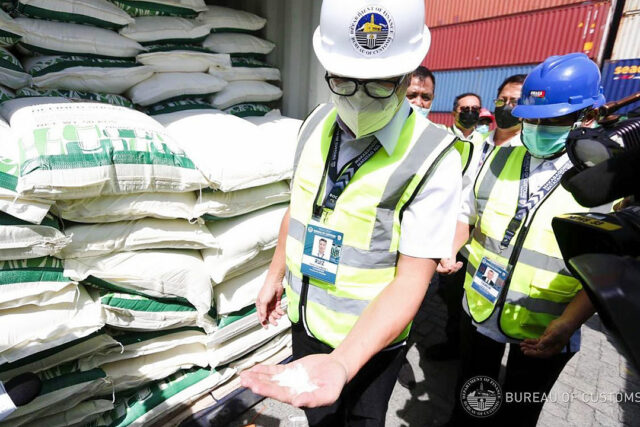
THE Federation of Philippine Industries (FPI) urged legislators to overhaul the laws governing corporate rehabilitation in light of the business closures caused by unfair competition from smugglers and rival firms that do not pay the correct taxes, as well as the impact of the pandemic.

Speaking at the House banking committee hearing on Thursday, FPI Chairman Jesus L. Arranza said rampant smuggling has caused Philippine companies “to sell less,” and noted “aggressive competition from companies who are not paying the VAT (value-added tax) and the corporate tax.”

“Therefore, we lose to them, and so the end result is unemployment (and) less utilization of capacity,” he said.

Mr. Arranza, who also chairs the Fight IT (Illicit Trade), said last year that the government loses over P250 billion in revenue yearly due to smuggling.

House legislators are conducting a separate investigation into alleged smuggling and price manipulation in the onion market. An ongoing investigation in the Senate is looking into smuggled sugar.

Under discussion at the House committee was House Resolution No. 797, which seeks to investigate whether the Financial Rehabilitation and Insolvency Act of 2010 (FRIA) has helped struggling businesses recover from the coronavirus disease 2019 (COVID-19) pandemic.

Mr. Arranza said in calling for amendments: “We have a lot of members who suffered some losses during the pandemic and we foresee that in the future, there will be more companies may be in the same predicament as those mentioned.”

He cited the now-liquidated Uniwide Group of Companies, Hanjin Heavy Industries, and Westmont Investment Corp.

SAGIP Party-list Rep. Rodante D. Marcoleta, author of the resolution, said, “There is a need to determine whether the existing provisions of the FRIA have indeed effectively or assisted financially-troubled persons or entities (to) recover from business reversals… which ultimately benefit the economy and prevent wastage of resources.”

The committee has yet to schedule another hearing to further discuss the resolution.

Bishop asks South Cotabato to clarify stance on open-pit ban

PHILSTAR FILE PHOTO

THE Bishop of Marbel has asked the South Cotabato province to clarify the status of its open-pit mining ban, following a Court of Appeals (CA) decision apparently permitting the controversial mining method.

The Diocese of Marbel, a city also known as Koronadal, which is the provincial capital, sent a letter dated March 16 to Governor Reynaldo S. Tamayo, seeking a “formal announcement” on the ruling from the province.

The CA decision, dated Aug. 22, 2022, “limits the open-pit mining ban to small-scale mining operations,” the diocese said. The CA ruling was handed down following an appeal of a Koronadal Regional Trial Court decision upholding the open-pit mining ban as a valid exercise of the province’s police power.

“We respectfully request the Governor’s good office to enlighten us on what their plan of action is regarding this decision,” the Bishop of Marbel, Cerilo Casicas, said in the letter.

The ban had resulted in the suspension of the proposed $5.9-billion Tampakan copper and gold mine.

Non-profit organization Legal Rights and Natural Resources Center (LRC) urged the provincial government to appeal the CA decision.

“This is not the end of the line for the open-pit mining ban. Certainly, the provincial government on behalf of their constituencies has the duty to appeal the CA decision precisely as the decision recognizes (the province’s) police powers,” LRC legal services coordinator Rolly Peoro said.

He said the authority of the LGU to regulate mineral and resource governance should not be limited to small-scale mining projects, adding that the province must defend its constituents’ right to environmental protection.

“Notwithstanding the pronouncement of the Court of Appeals, we remain firm in our stand that open-pit mining operations in South Cotabato pose a great risk to the integrity of the environment of our province and its neighbors. At stake are the health and livelihoods of many,” the Diocese said.

Tampakan is the largest underdeveloped copper-gold prospect in Southeast Asia. — Sheldeen Joy Talavera

JICA to provide tech assistance in developing sites along subway, North-South Rail lines

PHILIPPINE STAR/ MICHAEL VARCAS

THE Bases Conversion and Development Authority (BCDA) said it has signed an agreement with the Japan International Cooperation Agency (JICA), which will provide technical assistance in developing sites along the subway and North-South Rail lines.

In a statement on Thursday, the BCDA said it signed the technical cooperation agreement for developing transit-oriented developments (TODs) in the Bonifacio area. The project will serve as a prototype for sustainable mixed-use communities with train access, raising the potential of the two railway projects crossing BCDA property in Metro Manila.

The railway projects are the P500-billion Metro Manila Subway project (MMSP) and the P800-billion North-South Commuter Railway.

BCDA President and Chief Executive Officer Aileen R. Zosa and JICA Philippines Chief Representative Takema Sakamoto signed the Record of Discussions on March 21 for the TOD project.

The locations to be developed include four MMSP stations: Bonifacio Global City near the site of Market! Market!, the proposed Senate-Department of Education station, and the Kalayaan Avenue and Lawton Avenue stops.

Ms. Zosa said the TODs will help lower the Philippines’ carbon footprint, provide a more efficient link between major mass transit systems and feeder systems, and create more sustainable communities.

Meanwhile, Mr. Sakamoto said the TODs would support sustainable urban development in Metro Manila.

“This TOD will pave the way to further create business opportunities in and around railway stations. Consequently, the TOD can enhance the attractiveness of the Philippines to potential investors,” Mr. Sakamoto said.

The project for capacity development for TODs will run for three years from the start of activities. The BCDA and JICA will form a joint committee for project monitoring. — Revin Mikhael D. Ochave

DBP to offer loans for coconut farmers

PHILSTAR FILE PHOTO

STATE-RUN Development Bank of the Philippines (DBP) said on Thursday that it opened a special credit facility for coconut farmers, to finance projects all along the coconut value chain.

The Coconut Farmers and Industry Development (CFID) Credit Program will focus on capacity expansion, farm integration, and enterprise diversification to increase production and raise farmer incomes, DBP President and Chief Executive Officer Michael O. de Jesus said in a statement.

“We believe that a robust agribusiness sector is one of the keys to achieving a food-secure Philippines. Through this new loan program, DBP aims to pave the way for coconut farmers and agri-preneurs to thrive in a highly competitive market,” he said.

Coconut farmers can borrow up to 90% of the total project cost, the bank added.

DBP said 75% of the loan will be financed by the Coconut Farmers and Industry Trust Fund, while the remaining 25% will come from DBP funds.

Eligible for the facility are coconut farmer enterprises, cooperatives, and related organizations, the DBP said.

Loan proceeds include the acquisition of machinery and equipment, establishment of production and post-production facilities, as well as intercropping initiatives and livestock or poultry integration in coconut farms.

Mr. De Jesus said the CFID was launched in support of the Department of Agriculture’s efforts to strengthen the development of the industry and boost food production.

“DBP is ready to provide financing to viable projects and will continue to work towards redefining the traditional approach to agriculture lending by putting greater emphasis on the value chain and business side of the spectrum,” Mr. De Jesus stated.

DBP is eighth-largest bank in the Philippines by assets, according to the Bangko Sentral ng Pilipinas.

It posted a net profit of P5.6 billion in 2022, up 50% on the back of improved interest income and loan volumes. — Aaron Michael C. Sy

ADB urges regional governments to ease barriers to movement in aid of tourism

REUTERS

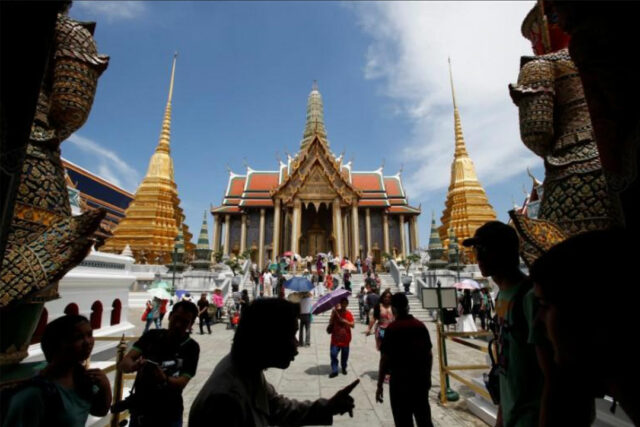
ASIA and the Pacific governments should address barriers to ease of travel in order to boost the recovery of international tourism, the Asian Development Bank (ADB) said.

The region needs “to work together to bring in more visitors from within and outside the region by adopting bilateral and regional agreements, and offering improved infrastructure and better skills,” it said in a blog post on Thursday.

The ADB said that the region’s tourism recovery is lagging due to its “cautious stance on reopening borders and more restrictive travel policies.”

“The flow of tourists into the region was only about 10.3% of the pre-pandemic figure of 343 million in 2019, despite bullish year-on-year growth during the first eight months of 2022,” it added.

The pace of tourism recovery has also been uneven in the region. Central Asia and South Asia are both at 33% of pre-pandemic tourism levels, followed by Southeast Asia at 12%, and the Pacific at 28%. 

“This is likely to change in 2023 as more destinations reopen, particularly in the People’s Republic of China, a major driver of outbound tourism, which opened its international borders for tourist activities in January 2023,” it added.

However, the bank said that the full recovery of international tourism by 2024 “remains uncertain.”

It said risks to recovery including the looming global economic slowdown, rising inflation, and geopolitical pressures.

“The brisk recovery of tourism rests on countries’ ability to make it easier to enter and leave countries, which entails stronger global and regional cooperation,” it said.

It cited the Philippines, which recently renewed its tourism cooperation deals with Brunei and Thailand, and is drafting a new tourism cooperation agreement with Malaysia to revive arrivals, which had declined by 10.2% between 2015 and 2019.

“Tourism-dependent economies must strengthen cooperation with countries outside the region. To counter the damage during COVID-19, caused by heavy reliance of Asian economies on East Asian members as their predominant source market. Countries should build partnerships with new source markets such as the US, the UK, and Europe, by working on common tourism standards,” it added.

The ADB also recommended improving transport systems across the region.

“For example, Central Asia’s nascent tourism sector stands to benefit from improved infrastructure being built across the region. Meanwhile, tourism arrivals to India, Bhutan, and Nepal are expected to benefit from the introduction of ‘regional travel circuits’ that package multiple destinations using different types of transportation,” it added.

There is also a need to address the tourism industry’s human capital challenges, including increasing youth and female employment, welcoming temporary migrant workers, enhancing skills, and establishing mutual recognition of tourism professionals. 

“These measures, along with harnessing digital technology, will raise competitiveness, increase transparency, and open the sector up to help more people in host countries,” it said.

“As the tourism recovery gains traction, countries in Asia and the Pacific must capitalize on the opportunities it brings. That includes learning from the pandemic and building a more resilient tourism sector for future crises,” it added. — Luisa Maria Jacinta C. Jocson

China accuses US of aggravating tensions as it meets with Manila

PHILIPPINE COAST GUARD FACEBOOK PAGE

CHINA on Wednesday accused the United States of worsening tensions by boosting military deployment in the Asia-Pacific region.

“The US side, out of selfish interests, remains trapped in a zero-sum mentality and keeps increasing military deployment in the Asia-Pacific,” Chinese Foreign Ministry spokesman Wang Wenbin told a news briefing in Beijing, based on a transcript posted on the agency’s website. “This would escalate tensions and endanger peace and stability in the region.”

“Regional countries need to remain vigilant and avoid being coerced or used by the US,” he added.

He also reiterated his opposition to a decision by Philippine President Ferdinand R. Marcos, Jr. to increase US access to military bases in the Southeast Asian nation under their Enhanced Defense Cooperation Agreement (EDCA).

Mr. Wang said physical consultations between the Foreign ministries of China and the Philippines would let both sides have an “in-depth communication on properly handling maritime disputes and advancing practical maritime cooperation, and exchange views on international and regional issues of shared interest.”

“We hope and believe that this round of consultation will help enhance mutual understanding and trust and bring about closer communication and coordination between the two sides, and galvanize joint efforts for the sound and steady growth of bilateral ties,” he added.

Last month, the Philippine government said it would allow the US to access four more military bases. Projects at five existing EDCA sites were almost finished, it added. Under the 2014 pact, Philippine military bases may be used for joint training, pre-positioning of equipment and building facilities such as runways, fuel storage and military housing.

Meanwhile, Chinese Ministry of Foreign Affairs Vice President Sun Weidong, said he expects friendly relations between China and the Philippines to continue.

“We need to… deepen our comprehensive strategic cooperation, enhance our cooperation in various practical areas and properly deal with our differences through friendly consultation,” he told Philippine envoys during a meeting at the Diamond Hotel in Manila streamed live on Facebook on Thursday.

Mr. Sun said consultations would continue under a “favorable atmosphere” amid talks on the South China Sea.

At the meeting, Philippine Foreign Affairs Undersecretary Ma. Theresa P. Lazaro said the Philippines looks forward to “utilizing these consultations to implement the consensus between our two leaders.”

Ms. Lazaro was referring to Philippine President Ferdinand R. Marcos, Jr.’s meeting with Chinese President Xi Jinping during his state visit to Beijing in January. The neighbors signed 14 bilateral deals covering infrastructure, agriculture, trade and tourism, while the Philippines also got business pledges from China worth about $23 billion.

‘SOLIDARITY’
The seventh Bilateral Consultation Mechanism on the South China Sea was the first since a global coronavirus pandemic started in 2020.

“In light of this fast-changing international landscape, China stands ready to work with countries in the neighborhood including the Philippines to enhance our solidarity and cooperation, communication and coordination to jointly uphold our shared interests and peace and stability of the region,” Mr. Sun said.

“It has been almost four years since the last physical Foreign Ministry consultations, and the Philippines attaches much importance to this mechanism,” Ms. Lazaro said. “Through these Foreign Ministry consultations, we hope to translate the outcomes of the state visit into concrete and high impact engagements that are mutually beneficial for our two countries and peoples,” she added.

The South China Sea, a key global shipping route, is subject to overlapping territorial claims involving China, Brunei, Malaysia, the Philippines, Taiwan and Vietnam. Each year, trillions of dollars of trade flow through the sea, which is also rich in fish and gas. 

More than 40 Chinese boats were still roaming near Thitu Island in the South China Sea, the Philippine Coast Guard said weeks after it accused its Chinese counterpart of endangering the crew of a resupply ship in an incident that has stoked long-running diplomatic tensions over China’s expansive claims in the waterway.

Mr. Marcos has asked the Philippine Army to boost relations with its foreign counterparts, highlighting the importance of international ties amid increasing Chinese assertiveness in Philippine-claimed areas in the South China Sea.

Local foreign policy think tanks and experts have been urging the Philippine government to partner with as many countries as possible to deter China’s expansive activities at sea. — Alyssa Nicole O. Tan

Philippine Ombudsman orders suspension of officials in COVID mess

COMMUTERS wait for available public transport along Taft Avenue in Manila. — PHILIPPINE STAR / MIGUEL DE GUZMAN

THE PHILIPPINE Ombudsman has ordered the suspension of 33 government officials over the purchase of what it called were overpriced coronavirus test kits in 2020.

In an order dated March 20, Ombudsman Samuel Martires said he found compelling reasons to suspend the Budget and Health officials pending investigation of the case.

“The evidence of guilt is strong,” he said, citing charges of “dishonesty, oppression or grave misconduct or neglect in the performance of duty,” based on a copy of the order. “The gravity of these offenses coupled with the seriousness of their participation would warrant removal from the service.”

Twenty-four current and ex-Budget officials and nine from the Health department were ordered suspended to prevent them from hampering the probe.

Senator Ana Theresia “Risa” N. Hontiveros-Baraquel, who sought the probe by the blue ribbon committee under its former chairman, ex-Senator Richard J. Gordon, Sr., said there is a further need to unmask the “masterminds behind the modus, well beyond the foot soldiers and mid-level officials.”

“Although the Ombudsman order only covers the COVID-19 test kits, we look forward to an investigation of the personal protective equipment and other overpriced procurements,” she said.

A special audit by the Commission on Audit would “paint an even fuller picture,” she said. “Any and all ill-gotten profit made from taxpayers’ money should eventually be seized and turned back over to the government where it belongs.”

During hearings by the previous Senate, lawmakers took Health officials to task for transferring about P42 billion to the Budget department’s procurement arm, which bought the medical supplies. Pharmally Pharmaceutical Corp. got P8.6 billion worth of contracts in 2020, according to the results of the probe.

“The Procurement Service-Department of Budget and Management (PS-DBM) respects and recognizes the authority and decision of the Office of the Ombudsman to suspend former and present officials and personnel of PS-DBM,” Procurement Service Executive Director Dennis S. Santiago said in a statement.

“We join the Office of the Ombudsman in its quest for truth and upholding public trust,” he said. “Rest assured that we shall implement the order within the specified time frame.”

He also vowed to pursue reforms at the agency. “Under the current leadership, the PS-DBM shall continue to implement and institute crucial procurement and administrative reforms, while implementing zero tolerance on irregularities and any form of corruption.”

The Department of Health (DoH) in a separate statement noted that while it respected the decision of the Ombudsman, it said its people were innocent. “While we commit to religiously comply with all procedures, the DoH vouches for the integrity of these officials who have played a significant role in the country’s COVID-19 response.” 

“We would also like to reiterate that the role of the DoH and the Research Institute for Tropical Medicine was limited to providing technical inputs as end-users in the conduct of the procurement of commodities for the COVID-19 pandemic,” it added.

“We ask the public to reserve judgement and keep an open mind until the investigation has been resolved.”

Senator Aquilino Martin “Koko” D. Pimentel III commended the Ombudsman, but said its actions and final decision should be monitored.

“During the pandemic, they made profit out of equipment purchased to fight against it,” Ms. Hontiveros said. “During the COVID-19, where many died, many suffered, the public treasure was even robbed. Let justice be served. This investigation is just the beginning.” — Alyssa Nicole O. Tan

ICC ruling lets victims, families recount realities of drug war

PHILIPPINE STAR/MIGUEL ANTONIO DE GUZMAN

By John Victor D. Ordoñez, Reporter

THE FAMILIES of victims of the Duterte government’s deadly war on drugs would be able to provide realistic observations of human rights abuses after the International Criminal Court (ICC) allowed them to, according to human rights lawyers.

“It is the right of victims to tell the ICC based on their experiences that the claims of the Philippine government of genuine investigation and prosecution of erring officials in the drug war were all based on lies,” Neri J. Colmenares, a former congressman and chairman of the National Union of Peoples’ Lawyers (NUPL), said in a Viber message.

In an 11-page decision on March 21, the ICC Appeals Chamber allowed families of drug war victims and the ICC’s Office of Public Counsel for Victims (OPCV) to submit comments and observations on the drug war and the government’s appeal to suspend the probe.

It ordered the ICC’s Victims Participation and Reparations Section to submit a report on the victims’ observations by May 22. The office was ordered to submit its own comments by April 18. The appeals chamber said victims should be involved in the proceedings.

The ICC also rejected the Philippine government’s request for access to the observations of the victims’ families and the OPCV. It said the ICC registry would update Manila on all public and confidential filings related to the appeal proceedings.

Earlier this month, the government asked the ICC to reject pleas by the families of drug war victims and the OPCV to testify in court.

The public counsel’s motion and the anonymous request from the victims fall foul of procedural and substantive requirements, state lawyers said in an eight-page pleading dated March 2.

The move came after 90 anonymous relatives of drug war victims objected to a state appeal to halt the tribunal’s probe of Mr. Duterte’s deadly drug war.

“With the decision, the victims will now have the opportunity not only to present their views on the appeal and properly ventilate their cause, but will likewise be represented in the proceedings before the appeals chamber,” NUPL President Ephraim B. Cortez said in a Viber message.

He said the ICC’s decision protects the interests of the families of the victims.

The Hague-based tribunal, which tries people charged with crimes against humanity, genocide, war crimes and aggression, suspended its probe of ex-President Rodrigo R. Duterte’s deadly drug war in 2021 upon the Philippine government’s request.

It was also set to probe vigilante-style killings in Davao City when Mr. Duterte was still its vice mayor and mayor.

Mr. Duterte canceled Philippine membership in the ICC in 2018. His successor President Ferdinand R. Marcos, Jr. has said the Philippines would not rejoin the international tribunal.

Last week, the ICC ordered the arrest of Mr. Putin and Russian Presidential Commissioner for Children’s Rights Maria Lvova-Belova for the war crime of illegally deporting children from Ukraine.

Political experts have said the order showed that the court was serious about punishing responsible officials.

“We have not been accorded justice here and we are hoping that the ICC will give victims the opportunity to seek accountability long denied since 2016,” Mr. Colmenares said.

Palace bars public access to records, info from terrorism suspects 

PHILIPPINE STAR/MIGUEL DE GUZMAN

INFORMATION obtained by the state from suspects under the Philippines2021 anti-terrorism law are now considered confidential files, according to a new Palace memorandum.  

A memorandum circular signed by Executive Secretary Lucas P. Bersamin on Mar. 17 states that records of surveillance of suspects along with interception and recording of communications acquired by a law enforcement agent or military personnel under the Anti-Terrorism Act of 2020 are among the latest exceptions to the right to information.  

The memorandum, which was released on Thursday, updated an executive order (EO) issued in 2016 during the administration of former President Rodrigo R. Duterte.  

The 2016 EO, which sought to promote transparency, set the rules for requesting information from executive branch offices   

In 2020, Mr. Duterte signed an anti-terrorism legislation that critics said was too broad and could be used to harass critics and activists.    

Two provisions of the law were declared unconstitutional by the Supreme Court in 2021, invalidating a provision that would have criminalized protests deemed by authorities as harmful. Kyle Aristophere T. Atienza

ADVERTISEMENT
ADVERTISEMENT