Home Blog Page 509

Startup QC welcomes fresh batch of innovators to Cohort 4

Quezon City further strengthened its role as a leader in local startup ecosystem development, as Mayor Joy Belmonte and the Startup QC Program Committee announced the nine innovative startups for this year’s Cohort 4.

Following a rigorous evaluation process held on Aug. 15, the committee carefully reviewed and deliberated applications submitted by early-stage startups from diverse sectors. Out of these, nine were identified as standout ventures worthy of endorsement to Mayor Joy Belmonte for further support and recognition under the program.

The nine startups represent a range of industries, including sustainability, information technology, health, and business management solutions. These finalists will join the growing roster of Startup QC awardees who are breaking barriers and building solutions that address real challenges in their communities, while creating pathways for sustainable economic growth.

Among this year’s finalists is Briyo Energy, which develops low-cost bamboo-based wind and hydro turbines designed to cut carbon emissions by 90% while delivering clean power to off-grid communities.

Carisle Media Corp., the team behind Hireable, offers a smarter freelance hiring platform that uses AI-driven matching, KPI tracking, and trial-hiring funnels to improve long-term outcomes for businesses and freelancers alike.

Household services also took the spotlight with Kazam, a one-stop app that connects homeowners with kasambahays, providing flexible, reliable, and on-demand household help.

Sports and recreation are represented by Laro (Synergize Sports Technology, Inc.), an all-in-one hub where players can discover, book, and join sports or tabletop games while also linking with venues and communities.

On the energy front, Nascent Technologies Corp. is introducing a drop-in sodium-ion battery specifically built for tropical conditions. The battery promises three times longer life, zero maintenance, and safer, greener performance.

In health tech, Agapai Technologies Corp. has created an AI-powered app to help parents detect developmental delays early and connect with care professionals in real time.

For businesses, Kahero Apps, Inc. provides a mobile-ready point-of-sale system with expense tracking and multi-branch management features, giving entrepreneurs smarter, real-time control of their operations.

Real estate innovation is driven by Soolok Properties, Inc., a platform that aggregates below-market homes, speeds up transactions, and offers ready-to-move-in options within 45 days.

Finally, Xamun Technologies, Inc. enables companies to build enterprise-grade software in weeks using an AI-powered, no-code system that still gives teams full control of the process.

Since its launch in 2023, the Startup QC Program has grown from a pioneering initiative into a strong advocacy for multi-sectoral innovation. To date, the program has received more than 200 applications, awarding equity-free grants of P16 million for 16 startups across various industries (P1 million/each), including sustainability, information technology, education, fintech, and creative enterprises.

Mayor Joy Belmonte emphasized the city’s commitment to supporting the startup ecosystem emphasizing the power of innovation to uplift lives and create equal opportunities for all.

The nine endorsed startups of Cohort 4 were formally introduced at the Startup QC Kick-Off Event last Sept. 19. From there, the teams will advance to the second phase of the program, where they will undergo intensive, tailor-fit mentoring and coaching with industry leaders and experts. This stage is designed to refine their enterprises, strengthen their business models, and further develop their products and services, preparing them to scale and create real impact in their respective sectors.


SparkUp is BusinessWorld’s multimedia brand created to inform, inspire, and empower the Philippine startups; micro, small and medium enterprises (MSMEs); and future business leaders. This section will be published every other Monday. For pitches and releases about startups, e-mail to bmbeltran@bworldonline.com (cc: abconoza@bworldonline.com). Materials sent become BW property.
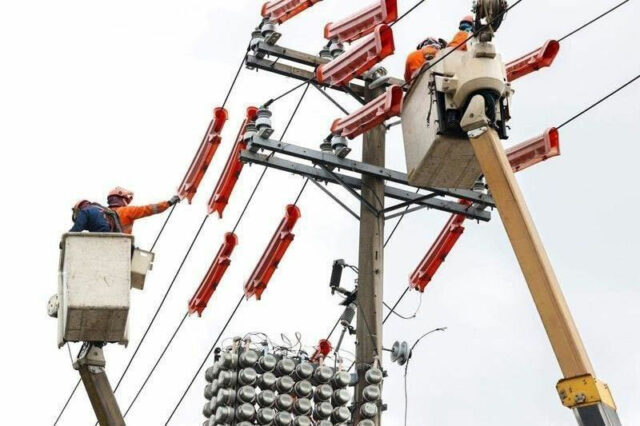
DoE allows Meralco to start bidding for 200 MW of renewable supply

PHILIPPINE STAR/JESSE BUSTOS

By Sheldeen Joy Talavera, Reporter

THE DEPARTMENT OF ENERGY (DoE) has cleared Manila Electric Co. (Meralco) to proceed with the bidding for 200 megawatts (MW) of renewable baseload power.

Speaking to reporters last week, Energy Undersecretary Mario C. Marasigan said the department had issued a certificate of conformity (CoC) for Meralco’s proposed competitive selection process (CSP).

“We cleared the first 200 [MW], but we deemed that the compliance of Meralco should be based on the observation of the PCC (Philippine Competition Commission) and ERC (Energy Regulatory Commission),” he said.

“So, in that sense, we deemed it okay to release the certificate of conformity,” he added.

Distribution utilities like Meralco conduct CSPs to procure power supply through a transparent and competitive bidding process aimed at securing the least-cost electricity.

Meralco submitted its terms of reference to the PCC and ERC for review. The issuance of a CoC by the DoE is a regulatory requirement before a CSP can begin.

The proposed 200-MW CSP will enable Meralco to comply with its obligations under the Renewable Portfolio Standards, which require distribution utilities to source a portion of their energy supply from eligible renewable energy sources.

The bidding forms part of Meralco’s plan to secure over 2,100 MW of capacity under its long-term supply procurement plan covering 2026 to 2046.

Mr. Marasigan said the decision now lies with Meralco on whether to proceed with the CSP if the company believes it has already addressed the regulators’ feedback.

“It’s up to them. If they feel that they have already complied with the comments of the PCC and ERC, then they can proceed,” he said.

Meanwhile, he said the DoE has yet to receive comments from the PCC and ERC on other proposed CSPs, such as the 600 MW of baseload and 450 MW of mid-merit power.

Lawrence S. Fernandez, vice-president and head of utility economics, said the company has yet to receive any CoC.

At present, Meralco is seeking ERC approval for its 20-year power supply agreement with First Quezon Biogas Corp. to source 1.25 MW of baseload supply from the latter’s biogas plant.

As the country’s largest private distribution utility, Meralco serves over eight million customers across Metro Manila and nearby areas.

Meralco’s controlling stakeholder, Beacon Electric Asset Holdings, Inc., is partly owned by PLDT Inc. Hastings Holdings, Inc., a unit of PLDT Beneficial Trust Fund subsidiary MediaQuest Holdings, Inc., has an interest in BusinessWorld through the Philippine Star Group, which it controls.

KMC Solutions opens nominations for third Startup Awards to recognize top emerging businesses

Business services company KMC Solutions has called for nominations for the third KMC Startup Awards, which aims to honor visionary entrepreneurs and groundbreaking businesses that are shaping the future of the Philippines’ business and technology landscape.

The third KMC Startup Awards is co-presented by OneCFO in partnership with Uniquecorn Strategies, Ideaspace | QBO, MAINPH, Founders Launchpad, and Kaya Founders.

This year’s awards introduce the Culture and Community Excellence Award category, which will recognize startups that integrate social responsibility and sustainability into their business models while delivering measurable benefits to people, communities, and the environment. The addition reflects KMC Solutions’ commitment to fostering a startup ecosystem that values both business success and social impact.

Winners will be selected from eight business categories, including the coveted Startup of the Year, Tech Innovator of the Year, Growth Champion, Innovation in Marketing, and Customer Experience Excellence Award. The awards will also recognize outstanding leaders in the startup space with the Breakthrough Leader Award and FutureTech Leadership Award.

The awards will culminate in a gala event on Nov. 13, where the winners will be announced.

Since its inception in 2023, the KMC Startup Awards has recognized over 30 of the most impactful and influential startups in the country. Notable previous winners include GoTyme Bank, Packworks, UNO Digital Bank, Kindred, Sprout Solutions, Mober, and Mylo Speech Buddy. 

“Every startup recognized here represents more than a company — it’s a signal of where our industries are heading. As the KMC Startup Awards enters its third year, we’re doubling down on a simple truth: when we invest in innovation and give founders the right platforms, we accelerate the Philippines into a future where we’re not just catching up, but leading,” KMC Solutions CEO Michael McCullough said.

The KMC Startup Awards offers a significant platform for emerging businesses to gain exposure, credibility, and access to valuable business development opportunities. Winning an award not only distinguishes businesses in a competitive market but also positions them as industry leaders, helping them attract top talent and potential investors.

KMC Solutions has been a steadfast supporter of the Philippine startup community. The launch of the KMC Startup Awards is a testament to its commitment to nurturing startups and fostering growth through innovative facilities and events, strengthening the startup ecosystem in the Philippines.

Nominations for the KMC Startup Awards 2025 are open until Oct. 13. Eligible startups must have been operational for at least one year and no more than 10 years. Companies from diverse sectors, including technology, healthcare, and finance, are encouraged to apply across multiple categories if they meet the criteria.

For more information or to submit nominations, visit https://kmc.solutions/startup-awards-2025 or the KMC Solutions Facebook page.


SparkUp is BusinessWorld’s multimedia brand created to inform, inspire, and empower the Philippine startups; micro, small and medium enterprises (MSMEs); and future business leaders. This section will be published every other Monday. For pitches and releases about startups, e-mail to bmbeltran@bworldonline.com (cc: abconoza@bworldonline.com). Materials sent become BW property.

SEC FARMS yet to gain traction in agri sector

TIM MOSSHOLDER-UNSPLASH

By Alexandria Grace C. Magno

THE Securities and Exchange Commission’s (SEC) program to ease capital raising for agribusinesses could help modernize the farm sector, though adoption has remained limited since its 2023 launch, according to analysts.

“SEC FARMS (Securing & Expanding Capital for Farms & Agri-Business Related Modernization Schemes) has strong potential to mobilize retail capital for agriculture through its fast approval process, P500-million project cap, and pre-funding rules that encourage discipline,” SM Investments Corp. economist Robert Dan J. Roces said in a Viber message.

“Early use of Group B auditors also reduces compliance costs for startups, though this comes at the expense of tighter oversight in the first five years,” he added.

Formalized under SEC Memorandum Circular No. 8, Series of 2023, the SEC FARMS initiative allows agribusiness companies to raise up to P500 million per project, with a 28-day review period from filing.

The SEC memorandum said the program also aims to attract investments from local and overseas Filipino investors by using fintech tools to modernize agriculture, raise productivity, improve food security, and promote sustainable growth in line with the Philippine Development Plan.

Rizal Commercial Banking Corp. Chief Economist Michael L. Ricafort said the program could further develop the capital market by providing much-needed capital to the agricultural sector.

“This would help fund further modernization, mechanization, and the adoption of the best global technologies to further boost productivity and output while also reducing costs, thereby improving the incomes of farmers and profitability of agricultural businesses,” he said in a Viber message.

Mr. Ricafort added that the initiative could encourage more local and foreign private sector investors to pursue agriculture-related ventures through innovative funding sources beyond traditional bank loans.

“Investors would also be encouraged to participate in nation-building by investing more of their funds in agriculture-related investments,” he said.

Under the program, the SEC eased certain auditor and financial reporting rules to lessen the compliance burden on agribusinesses while maintaining investor protection.

“For retail investors, added transparency would strengthen confidence. With these safeguards, the program can be both a catalyst for farm modernization and a credible option for small investors,” Mr. Roces said.

Mr. Ricafort also said that strengthening investor protection in agriculture would raise productivity, lower costs, ensure transparency, and provide safeguards such as calamity insurance and disaster management, benefiting both the agricultural sector and investors.

SLOW ADOPTION
Meanwhile, China Bank Capital Corp. Managing Director Juan Paolo E. Colet observed that the program has seen limited uptake since it was introduced in 2023.

“The framework has been in place since 2023, but it does not appear to have gained significant traction,” he said in a Viber message.

“Although the program simplifies some aspects of securities registration, the process still entails a degree of sophistication, such as preparing a detailed prospectus and complying with corporate governance requirements. Given these considerations, many entrepreneurs in the agri sector might prefer to get financing from banks and other credit providers,” he added.

Under the memorandum, a corporation must be specifically established for agri-based projects and register securities not exceeding P500 million per project, either through a single registration or a series of registrations. Proceeds from the sale of registered securities must not exceed 50% of the total project cost.

To qualify for SEC FARMS, companies must have secured seed money equivalent to the remaining 50% of the total project cost. If the project has already started, the company must report its completion percentage and show that available funds amount to at least half of the total project cost.

The SEC said it has been encouraging agricultural corporations to use SEC FARMS for simplified securities registration process and tap the capital market for funding.

When asked about the target number of participating companies, SEC Chairperson Francisco Ed. Lim said: “We don’t have a target [number of companies] yet.”

“The first thing we will do [is to encourage] takers. Since in SEC FARMS, it’s been a while since we had takers,” Mr. Lim said on the sidelines of the Powertrends 2025 International Business Forum on Friday last week.

Last month, the commission presented the SEC FARMS guidelines to industry players at a conference.

“Think of SEC FARMS as a new set of farming tools — lighter, sharper, and more efficient. With the right tools, your hard work will yield bigger harvests, not just for your families but for the whole nation,” Mr. Lim said at the Sept. 24 conference.

Ayala Corp. share price down amid macro headwinds

AYALA.COM

AYALA CORP. was among the most actively traded stocks last week amid macro headwinds and foreign fund outflows.

The holding company was the fifth most actively traded stock, with 2.25 million shares worth P1.09 billion changing hands from Sept. 29 to Oct. 3, data from the Philippine Stock Exchange (PSE) showed.

At the end of the trading week, Ayala Corp. closed at P490 per share, down by 1% from the previous Friday’s P495 finish. The decline was a reversal compared with the 1.1% gain of the holding firms index and the 1.4% rise of the benchmark Philippine Stock Exchange index (PSEi).

Year to date, the stock has dropped by 18.2%, reflecting the holding firms index’s 11.9% decline and the PSEi’s 6.4% slide.

Inzaghi Rafael D. Cabacungan, research associate at China Bank Securities Corp., said in an e-mail that Ayala Corp.’s share price declined week on week, weighed down by global macro headwinds that dampened investor sentiment and by foreign fund outflows from the broader market.

“One of the macro headwinds is the continuing uncertainty around the trajectory of US Federal Reserve (US Fed) policy rate cuts, especially beyond 2025,” Mr. Cabacungan said.

The US Fed’s policy committee will meet next on Oct. 28 and 29, with investors expecting the Federal Open Market Committee to reduce the US Fed funds rate by a quarter of a percentage point to a range of 3.75% to 4%. This would mark the lowest level since December 2022. The US Fed cut its key rate in September for the first time since December 2022.

A Reuters report said investors withdrew large amounts of capital from US equity funds as they turned cautious about lofty valuations following the recent rally and rushed to lock in profits.

According to London Stock Exchange Group plc’s Lipper data, investors pulled out $43.19 billion from US equity funds during the week, the largest weekly outflow since mid-December 2024.

Locally, the Monetary Board is set to hold its last two meetings for the year on Oct. 9 and Dec. 11. On Aug. 28, the Bangko Sentral ng Pilipinas lowered borrowing rates by 25 basis points (bps) to 5%. It has so far reduced policy rates by a total of 150 bps under the current easing cycle.

AYALA’S HONDA EXIT
“The transitioning of dealership operations should positively affect Ayala Corp.’s bottomline as this should support the growth of the company especially with the increase in capital expenditure,” Aniceto K. Pangan, trader at Diversified Securities, Inc., said in a Viber message, referring to ACMobility’s exit from the Honda dealership.

In a disclosure last week, Ayala Corp.’s ACMobility announced that it will stop selling Honda vehicles starting next year as it shifts its focus to electric vehicles under China’s BYD brand.

“ACMobility will begin turning over management and operations of these dealerships to new dealer principals towards the end of this year, the specifics of which will be announced by Honda Cars Philippines,” the statement said.

Mr. Cabacungan added that developments involving ACMobility and Honda Cars Philippines, Inc. had little effect on Ayala Corp.’s share price.

“It is worth noting, however, that such a move aligns with their focus on its dealerships with BYD and Kia, and their broader push to solidify their presence in the electric vehicles space,” he said.

PARTNERSHIP WITH SPINNEYS
In separate news, Ayala Corp. and United Arab Emirates-based supermarket chain Spinneys have entered into a partnership to open stores in the Philippines.

“We think Ayala Corp.’s new partnership with Spinneys reinforces their push to increase their exposure to the resilient local retail sector. This aligns with their recent partnership to bring back grocery chain Makro to the Philippines and their store network expansion for Anko,” Mr. Cabacungan said.

“Spinneys joint venture will further boost its retail segment with the success of its township projects. With the country’s favorable demographic profile, this will create synergies with its real estate business and further support its growth momentum,” Mr. Pangan said.

Spinneys is owned by Al Seer Group, a UAE-based consumer holdings company with interests in food, retail, hospitality, shipbuilding, and construction across more than 20 countries.

Ayala’s consolidated revenues fell by 2.3% to P90.52 billion in the second quarter, bringing its first-half total to P183.5 billion, up by 2% year on year.

The conglomerate’s attributable income in the April-to-June period rose by 16.8% to P10.76 billion from P9.21 billion a year earlier.

In the first half, net income attributable to the parent company inched up by 4.8% to P23.36 billion from P22.29 billion last year.

Mr. Cabacungan sees Ayala Corp.’s immediate support at P475-P480 per share, while resistance is at P508-P510.

Mr. Pangan pegged support at P476 apiece and resistance at P520. — Lourdes O. Pilar

YGG transforms Manila into Web3’s ‘City of Play’

Yield Guild Games (YGG) announced that the annual YGG Play Summit, the biggest player-focused Web3 gaming event in the world, will return on Nov. 18-22 at SMX Aura, Bonifacio Global City.

Recognized as the global epicenter of crypto gaming, the Philippines will take center stage in the Web3 community as the Summit transforms Manila into the City of Play, a pop-up cyberpunk metropolis inspired by the retro charm of a gaming arcade.

“Through play, there are endless possibilities. People can practice a range of skills that are as relevant to video games as they are to digital jobs; they can explore new worlds, and push themselves to grow,” said Mench Dizon, country head of YGG Pilipinas. “That’s what the ‘City of Play’ is all about — an urban wonderland where the world will gather to experience the essence of play, right here in Manila.”

The City of Play features four districts, each with its own theme and unique experiences for visitors to explore, connect, learn, and play in different ways: the Player District, a bustling commercial hub, with playable demos and showmatches; the Degen District, Home of the Casual Degen, the player who enjoys lite games while trading memecoins or perps; the Skill District, an educational hub and innovation quarter, powered by YGG Pilipinas’ Metaversity with anchor sponsor Sui Foundation; and The Arena, which will be hosting eSports tournaments for games such as Vibes TCG and Parallel TCG with prizepools reaching $100,000.

Additionally, the biggest annual Web3 gaming awards show, the GAM3 Awards by GAM3S.GG will once again return to the YGG Play Summit to award coveted international titles, including Game of the Year and Content Creator of the Year.

In 2024, the GAM3 Awards held its first-ever in-person ceremony at the YGG Play Summit, where it announced the winners after garnering over one million votes and 60 million impressions, featuring over 900 nominated games. The 2025 edition will take place on Nov. 21, at the Samsung Hall in Bonifacio Global City.

In addition to regular tickets, attendees can also opt for a VIP experience, which includes special rates for travel and accommodation as well as perks throughout the YGG Play Summit, including dining options and exclusive social experiences such as POB Crawl — a guided bar-hopping night with cocktails and drinks through Poblacion.

The event invites gamers, creators, builders, developers, investors, and innovators to discover new games, tools, and opportunities shaping the future of play.

For the latest information on the YGG Play Summit, visit the official website and follow YGG Play Summit on X.


SparkUp is BusinessWorld’s multimedia brand created to inform, inspire, and empower the Philippine startups; micro, small and medium enterprises (MSMEs); and future business leaders. This section will be published every other Monday. For pitches and releases about startups, e-mail to bmbeltran@bworldonline.com (cc: abconoza@bworldonline.com). Materials sent become BW property.

Napocor eyes reduced diesel use under new leadership

NAPOCOR.GOV.PH

STATE-RUN National Power Corp. (Napocor) is seeking to reduce its dependence on diesel as fuel for generation facilities that supply electricity to off-grid areas under its new leadership.

“Right now, the instruction is to decrease dependence on diesel fuel because diesel power plants are basically the majority of the Napocor generation facilities. And these generation facilities are the most expensive that we have,” Napocor President and Chief Executive Officer Jericho Jonas B. Nograles told reporters last week.

Napocor is mandated to provide electricity to remote and island areas not connected to the main grid through its Small Power Utilities Group (SPUG) plants.

At present, the company operates 173 SPUG plants, mostly diesel-powered, across 163 areas.

According to Mr. Nograles, the average cost of electricity generated from diesel stands at P30 per kilowatt-hour, of which P7 is pass-through while the remaining P23 is subsidized.

“The challenge that we have is to lessen dependence on diesel power plants… We’re trying to increase our renewable energy assets to decrease diesel dependence. And we are now currently overhauling the approach because the rollout is a bit slow,” he said.

He said the results of the review on renewable energy expansion may be released within six months.

Meanwhile, Mr. Nograles said Napocor’s “biggest challenge” is the ailing areas with huge debt to the company. “So, that’s under review and finding ways to help them.”

Mr. Nograles assumed the leadership of Napocor on Sept. 11 with a commitment to accelerate the company’s electrification mandate, including the expansion of renewable energy sources.

Before taking the helm of the state-run firm, Mr. Nograles served as vice chairperson of the House Committee on Energy, was a member of the Joint Congressional Power Commission, and participated in the Joint Congressional Committee on Biofuels. — Sheldeen Joy Talavera

Davao Doctors Hospital (Clinica Hilario), Inc.’s share ‘Buyback Program’ approved by Board of Directors


Spotlight is BusinessWorld’s sponsored section that allows advertisers to amplify their brand and connect with BusinessWorld’s audience by publishing their stories on the BusinessWorld Web site. For more information, send an email to online@bworldonline.com.

Join us on Viber at https://bit.ly/3hv6bLA to get more updates and subscribe to BusinessWorld’s titles and get exclusive content through www.bworld-x.com.

Puregold’s Got My Eyes on You shows how love is a luxury for Filipino breadwinners

Puregold’s hit TikTok series Got My Eyes on You shows how love is a luxury for Filipino breadwinners.

With 14 episodes released so far, Puregold’s hit boys’ love (BL) series Got My Eyes on You has ensnared viewers with its kilig moments, leaving them craving for more after each five-minute drop.

Set in the picturesque S-Cape Villa, the series is a catchy blend of swoon-worthy BL romance and a grounded and earnest look at the sacrifices Filipino breadwinners make for their families.

Sparks fly as Drew and Shawn battle it out to become S-Cape’s general manager, while undeniably catching feelings for each other.

At its very core, Got My Eyes on You is a charming enemies-to-lovers tale about Drew (Mikoy Morales), the dedicated villa operations manager; and Shawn (Esteban Mara), the always-calm-and-collected guest relations officer, who are both vying for the post of S-Cape General Manager.

However, the story is not a simple clash between ambition and attraction. Shawn, who comes from a well-off family, wants to prove his independence and capability despite a privileged background, while Drew carries the heavier burden: as a breadwinner, he supports his family and pays for his younger sibling’s education.

Dreams, duty, and love — Puregold’s Got My Eyes on You touches on these important themes.

In Episode 8, he makes this clear. “May pinapatapos pa akong bunso, eh. Kung prangkahan lang din naman, kailangan ko talaga ang posisyon na yon. Kaya ayoko ‘yang lovelife-lovelife na ‘yan. Hindi ko priority ‘yan,” Drew stresses, showing how young Filipino adults are inclined to set aside romance for responsibility.

Still, sparks fly between Drew and Shawn. Viewers have witnessed their playful bickering amid frequent teasing by villa co-workers, accountant Moira (Hannah Lee), and events coordinator Wilfred (Darwin Yu). The undeniable chemistry shines not just in heated exchanges but in softer moments, like when they hang out with their dogs, Matcha and Miller.

With 14 episodes released so far, fans cannot wait for the next GMEOY episode.

Fans could not get over the scene after the office party, where Drew, drunk and vulnerable, accidentally fell asleep beside Shawn and woke up in his arms. More than these moments of kilig, the series remains authentic. Drew’s struggle reflects a reality often underrepresented on screen — for many Filipinos, love feels like a luxury when there are mouths to feed and bills to pay.

Puregold Senior Marketing Manager Ivy Hayagan-Piedad explains, “The series is not just about kilig; it’s about reality. It is hard to think about love when you are thinking about family and survival, and this is the common Filipino experience. Got My Eyes on You, while a love story, also depicts a hard truth for breadwinners, and Filipino norm expectations.”

In the forthcoming episodes, viewers find answers to the question: will Drew’s heart win over his strong sense of responsibility, or will love remain out of reach?

Puregold’s ‘Got My Eyes on You’ is not just a love story, but a telling of the Filipino experience of struggling with love and family responsibilities.

Catch the latest episodes of Got My Eyes on You exclusively on the Puregold TikTok Channel (@puregoldph).

Subscribe to Puregold Channel on YouTube, like @puregold.shopping on Facebook, and follow @puregold_ph on Instagram and X, and @puregoldph on TikTok for more updates and behind-the-scenes content.


Spotlight is BusinessWorld’s sponsored section that allows advertisers to amplify their brand and connect with BusinessWorld’s audience by publishing their stories on the BusinessWorld Web site. For more information, send an email to online@bworldonline.com.

Join us on Viber at https://bit.ly/3hv6bLA to get more updates and subscribe to BusinessWorld’s titles and get exclusive content through www.bworld-x.com.

BDO Capital keen on financing hydropower, waste-to-energy projects

CBKPOWER.COM

BDO CAPITAL and Investment Corp. is expanding its green financing portfolio by backing the country’s first waste-to-energy (WTE) facility and the large-scale hydropower assets set to be turned over by the government, its president said.

In an interview last week, BDO Capital President Eduardo V. Francisco said the company is working with the Thunder Consortium — the winning bidder for the Caliraya-Botocan-Kalayaan (CBK) hydroelectric power plants (HEPP) — to finance the acquisition of the 796.64-megawatt (MW) complex in Laguna.

Aboitiz-led Thunder Consortium won the PSALM auction for the hydroelectric assets in June with an offer of P36.266 billion.

The consortium is composed of Aboitiz Renewables, Inc. (ARI), Sumitomo Corp., and Electric Power Development Co. (J-Power).

“We’re willing to finance the whole thing,” Mr. Francisco said.

The complex includes the 39.37-MW Caliraya HEPP in Lumban, the 22.91-MW Botocan HEPP in Majayjay, and the 366-MW Kalayaan I and 368.36-MW Kalayaan II pumped-storage power plants, all located in Laguna.

PSALM President and Chief Executive Officer Dennis Edward A. dela Serna earlier told BusinessWorld that the facility’s turnover is targeted for February 2026.

Meanwhile, Mr. Francisco said BDO is extending a $200-million loan to help finance the proposed WTE plant in Smokey Mountain, Tondo, Manila.

“We are looking to finance the first waste-to-energy project in the country,” he said.

Manila Integrated Environment Corp. (MIEC), majority owned by Phil. Ecology Systems Corp. of tycoon Reghis M. Romero II, plans to build and operate a WTE facility with a capacity of 3,000 tons per day of residual municipal solid waste, capable of generating 100 MW of electricity.

The WTE project is targeted to begin commercial operations by the fourth quarter of 2028.

BDO Capital, the investment banking arm of BDO Unibank, Inc., has funded P1.04 trillion worth of sustainable projects across the energy, infrastructure, water, transportation, and community development sectors since launching its Sustainable Finance Program in 2010. — Sheldeen Joy Talavera

Rates of Treasury bills, bonds may be mixed before CPI, BSP

BW FILE PHOTO

RATES of the Treasury bills (T-bills) and Treasury bonds (T-bonds) on offer this week could be mixed, tracking secondary market movements, before the release of September inflation data and the Bangko Sentral ng Pilipinas’ (BSP) policy meeting.

The Bureau of the Treasury (BTr) will auction off P22 billion in T-bills on Monday, or P7.5 billion each in 91-day and 182-day securities and P7 billion in 364-day papers.

On Tuesday, the government will offer P35 billion in a dual-tenor T-bond offering, or P15 billion in reissued seven-year papers with a remaining life of two years and six months, and P20 billion in reissued 10-year debt with a remaining life of nine years and six months.

T-bill and bond yields could track the mixed week-on-week movements seen at the secondary market as the market looks ahead to the release of the September consumer price index (CPI) report on Tuesday (Oct. 7) and the Monetary Board’s policy meeting on Thursday (Oct. 9), Rizal Commercial Banking Corp. Chief Economist Michael L. Ricafort said in a Viber message.

A trader said in an e-mail that the reissued seven-year bonds could be quoted at rates from 5.625% to 5.65% on Tuesday, while the reissued 10-year debt could fetch bids carrying yields from 5.975% to 6%.

The trader added that the bond auction could see “decent demand.”

Yields at the secondary market were mixed last week as the short-term tenors were supported by bets of further BSP easing, while longer tenors were affected by market concerns over uncertainties in the United States due to their government’s closure.

At the secondary market on Friday, yields on the 91-day T-bills went down by 2.01 basis points (bps) week on week to end at 4.9153, based on PHP Bloomberg Valuation Service Reference Rates data as of Oct. published on the Philippine Dealing System’s website. Meanwhile, the 182- and 364-day T-bills rose by 1.3 bps and 6.55 bps to close at 5.1765% and 5.3262%, respectively.

The seven-year tenor rose by 2.05 bps week on week to fetch 5.9533%, while the three-year bond, the closest to the remaining life of the papers on offer this week, went up by 2.51 bps to 5.6936%.

For its part, the 10-year bond inched down by 0.4 bp week on week to yield 6.0223%.

A BusinessWorld poll of 12 analysts yielded a median estimate of 1.9% for September inflation, within the BSP’s 1.5-2.3% forecast for the month. If realized, the CPI would be faster than 1.5% in August but would match the 1.9% clip in September 2024.

On the other hand, 10 of 16 analysts in a separate BusinessWorld poll expect the Monetary Board to pause at this week’s meeting due to emerging inflation risks following three consecutive cuts that brought its policy rate to 5%.

The remaining six said the BSP could deliver a fourth straight 25-bp cut to support the economy amid weaker growth prospects.

Last week, the BTr raised P22 billion as planned from the T-bills it auctioned off as the offering was almost four times oversubscribed, with total bids reaching P80.475 billion.

Broken down, the Treasury borrowed P7.5 billion as planned via the 89-day T-bills as total tenders for the tenor reached P21.93 billion. The three-month paper was quoted at an average rate of 4.828%, down by 5.5 bps from the previous auction. Yields accepted were from 4.71% to 4.9%.

The government also raised P7.5 billion as programmed from the 182-day securities as tenders amounted to P31.2 billion. The average rate of the six-month T-bill was at 5.075%, easing 0.6 bp from the previous week, with accepted rates spanning from 4.94% to 5.117%.

Lastly, the Treasury sold the planned P7 billion in 364-day debt as demand for the tenor totaled P27.345 billion. The average rate of the one-year T-bill dropped by 2.4 bps to 5.171%. Bids awarded carried yields from 5.027% to 5.215%.

Meanwhile, the reissued seven-year bonds to be offered on Tuesday were last auctioned off on Sept. 23, where the government raised P10 billion as planned at an average rate of 5.605%, well above the 3.625% coupon rate.

The 10-year debt papers on offer this week were last sold on Sept. 16, where the Treasury raised P25 billion as planned at an average rate of 5.075%, below the 6.375% coupon rate.

The BTr is looking to raise P180 billion from the domestic market this month, or P110 billion via T-bills and P70 billion through T-bonds.

The government borrows from local and foreign sources to help fund its budget deficit, which is capped at P1.56 trillion or 5.5% of gross domestic product this year. — Aaron Michael C. Sy

US economy is already on the edge — a prolonged government shutdown could send it tumbling over

STOCK PHOTO | Image by Ninjason1 from Freepik

The economic consequences of the current federal government shutdown hinge critically on how long it lasts. If it is resolved quickly, the costs will be small, but if it drags on, it could send the US economy into a tailspin.

That’s because the economy is already in a precarious state, with the labor market struggling, consumers losing confidence, and uncertainty mounting.

As an economist who studies public finance, I closely follow how government policies affect the economy. Let me explain how a prolonged shutdown could affect the economy — and why it could be a tipping point to recession.

DIRECT IMPACTS FROM A GOVERNMENT SHUTDOWN
The partial government shutdown began on Oct. 1, as Democrats and Republicans failed to reach a deal on funding some portion of the federal government. A partial shutdown means that some funding bills have been approved, entitlement spending continues since it does not rely on annual appropriations, and some workers are deemed necessary and stay on the job unpaid.

While most of the 20 shutdowns that occurred from 1976 through 2024 lasted only a few days to a week, there are signs the current one may not be resolved so quickly. The economy would definitely take a direct hit to gross domestic product from a lengthy shutdown, but it’s the indirect impacts that could be more harmful.

The most recent shutdown, which extended over the 2018-2019 winter holidays and lasted 35 days, was the longest in US history. After it ended, the Congressional Budget Office estimated the partial shutdown delayed approximately $18 billion in federal discretionary spending, which translated into an $11 billion reduction in real GDP.

Most of that lost output was made up later once the shutdown ended, the CBO noted. It estimated that the permanent losses were about $3 billion — a drop in the bucket for the $30 trillion US economy.

THE INDIRECT AND MORE LASTING IMPACTS
The full impact may depend to a large extent on the psychology of the average consumer.

Recent data suggests that consumer confidence is falling as the stagnation in the labor market becomes more clear. Business confidence has been mixed as the manufacturing index continues to indicate the sector is in contraction, while other business confidence measures indicate mixed expectations about the future.

If the shutdown drags on, the psychological effects may lead to a larger loss of confidence among consumers and businesses. Given that consumer spending accounts for 70% of economic activity, a fall in consumer confidence could signal a turning point in the economy.

These indirect effects are in addition to the direct impact of lost income for federal workers and those that operate on federal contracts, which leads to reductions in consumption and production.

The risk of significant government layoffs, beyond the usual furloughs, could deepen the economic damage. Extensive layoffs would shift the losses from a temporary delay to a more permanent loss of income and human capital, reducing aggregate demand and potentially increasing unemployment spillovers into the private sector.

In short, while shutdowns that end quickly tend to inflict modest, mostly recoverable losses, a protracted shutdown — especially one involving layoffs of a significant number of government workers — could inflict larger, lasting impacts on the economy.

US ECONOMY IS ALREADY IN DISTRESS
This is all occurring as the US labor market is flashing warnings.

Payrolls grew by only 22,000 in August, with July and June estimates revised down by 21,000. This follows payroll growth of only 73,000 in July, with May and June estimates revised down by 258,000. In addition, preliminary annual revisions to the employment data show the economy gained 911,000 fewer jobs in the previous year than had been reported.

Long-term unemployment is also rising, with 1.8 million people out of work for more than 27 weeks — nearly a quarter of the total number of unemployed individuals.

At the same time, AI adoption and cost-cutting could further reduce labor demand, while an aging workforce and lower immigration shrink labor supply. Fed Chair Jerome Powell refers to this as a “curious kind of balance” in the labor market.

In other words, the job market appears to have come to a screeching halt, making it difficult for recent graduates to find work. Recent graduate unemployment — that is, those who are 22 to 27 years old — is now 5.3% relative to the total unemployment rate of 4.3%.

The latest data from the ADP employment report, which measures only private company data, shows that the economy lost 32,000 jobs in September. That’s the biggest decline in 2-½ years. While that’s worrying, economists like me usually wait for the official Bureau of Labor Statistics (BLS) numbers to come out to confirm the accuracy of the payroll processing firm’s report.

The government data that was supposed to come out on Oct. 3 might have offered a possible counterpoint to the bad ADP news, but due to the shutdown BLS will not be releasing the report.

PROBLEMS FED RATE CUTS CAN’T FIX
This will only increase the uncertainty surrounding the health of the US economy. And it adds to the uncertainty created by on-again, off-again tariffs as well as the newly imposed tariffs on lumber, furniture and other goods.

Against this backdrop, the Fed is expected to lower interest rates at least two more times this year to stimulate consumer and business spending following its September quarter-point cut. This raises the risk of reigniting inflation, but the cooling labor market is a more immediate concern for the Fed.

While lower short-term rates may help at the margin, I believe they cannot resolve the deeper challenges, such as massive government deficits and debt, tight household budgets, a housing affordability crisis and a shrinking labor force.

The question now is not will the Fed cut rates, because it likely will, but whether that cut will help, particularly if the shutdown lasts weeks or more. Monetary policy alone cannot overcome the uncertainty created by tariffs, the lack of fiscal restraint, companies focused on cutting costs by replacing people with technology, the impact of the shutdown and the fears of consumers about the future.

Lower interest rates may buy time, but they won’t solve these structural problems facing the US economy.

THE CONVERSATION VIA REUTERS CONNECT


John W. Diamond is the director of the Center for Public Finance at the Baker Institute, Rice University.