Home Blog Page 508

PHL agri exports grow 21.5% in November

PHILSTAR FILE PHOTO

AGRICULTURE-BASED exports in November rose 21.5% year on year to $658.06 million, according to preliminary data from the Philippine Statistics Authority (PSA).

The PSA said agro-based exports accounted for 9.5% of total exports by value.

Exports in the first nine months rose 25.8% to $6.71 billion, it said.

Coconut products, the Philippines’ top agricultural export commodity, posted a 27.1% increase to $330.82 million in November. The commodity group accounted for 4.8% of total exports.

Fruit and vegetable exports grew 26.2% to $251.37 million in November, accounting for 3.6% of total exports.

Exports of other agro-based products, including seafood, rubber and various types of plant fiber, declined 7.7% to $75.70 million in November. This group of commodities accounted for 1.1% of total exports.

The strongest export growth rates were recorded for dried seaweed (343.3%), desiccated coconut (63.8%), raw coffee (59.9%), pineapple juice (40%), and bananas (38.8%)

The top declines in export growth were posted by rice (-100%), pineapple concentrate (-30.8%), mango (-30.1%), and unmanufactured tobacco (-29.9%). — Vonn Andrei E. Villamiel

Typhoons could add 0.6 ppt to Philippine inflation — IMF

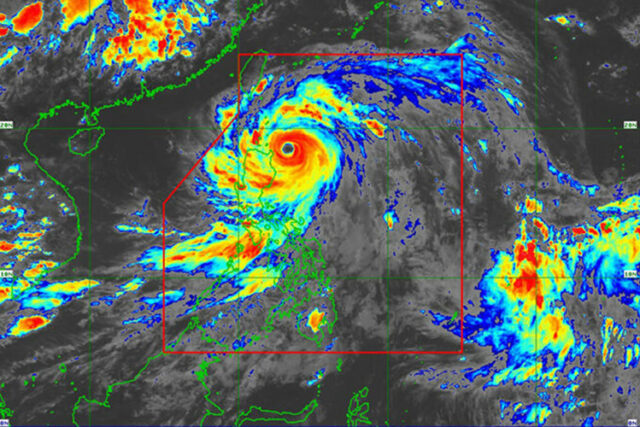
DOST-PAGASA FB PAGE

TYPHOONS are expected to add up to 0.6 percentage point (ppt) to Philippine inflation due to disruptions to supply chains and agriculture, according to the International Monetary Fund (IMF).

In a report following its Article IV Consultation with the Philippines, the IMF said: “Staff analysis suggests that climate shocks, operating through supply, demand, and expectation channels, increase inflation by up to 0.6 percentage point (annualized) in a typical year, and disproportionately impact the agriculture sector, pushing up food prices,” it said.

This year, the Philippines was hit by 23 tropical cyclones, leaving billions of pesos in damage, according to the government weather service, the Philippine Atmospheric, Geophysical and Astronomical Services Administration (PAGASA).

PAGASA said in a typical year, the Philippines will endure the transit of about 20 typhoons.

In the report, the IMF projected Philippine inflation this year of 1.7%, upgrading an earlier estimate of 1.6%. For 2026, it expects inflation to settle at 2.8%, up from its earlier view of 2.6%. 

Headline inflation began to pick up to 1.5% in August as multiple weather disruptions drove food prices higher. During that period, three storms and the southwest monsoon left at least P4.86 billion worth of agricultural damage.

Inflation accelerated further to 1.7% in September and October amid lingering effects from the typhoons, before easing to 1.5% in November.

This brought average inflation to 1.6%, in line with the Bangko Sentral ng Pilipinas (BSP) full-year forecast but slightly above the IMF’s latest estimate.

The IMF said the temporary inflation spike will be a consideration when the BSP decides on monetary policy.

“While accommodating some of the shocks risks triggering a rise in inflation expectations, tightening monetary policy to keep inflation at target would raise the cost of capital, which can delay reconstruction and pose a greater loss in output,” it said. “Faced with these trade-offs, the BSP should accommodate a temporary spike in inflation while containing any increase in inflation expectations.”

It added that the government could opt to reduce tariffs on food imports to curb the possible impact of such trade-offs.

Meanwhile, the IMF also noted that weather disruptions trim gross domestic product (GDP) by 0.2-0.3% yearly.

“Typhoons are the most frequent natural disasters in the Philippines, causing recurring economic losses — about 0.2-0.3% of GDP annually, mainly impacting agriculture — and contributing to higher inflation,” it said.

Philippine economic growth slumped to 4% in the third quarter, from 5.5% in the second quarter and 5.2% a year earlier, amid sluggish government and household spending.

The economy expanded by an average 5% at the end of September, below the government’s 5.5%-6.5% target.

Economy Secretary Arsenio M. Balisacan has said that the widespread cancellations of school, work, and travel due to the typhoons may have caused the slowdown in household spending during the period.

The IMF expects Philippine GDP growth to average 5.1% this year, a downgrade from its previous estimate of 5.4%. It also sees slightly slower expansion next year of 5.6% from 5.7% previously.

“Over the long term, the economic effects of climate shocks and trends are expected to increase, with climate models forecasting more intense typhoons and sea level rise causing economic losses reaching up to 2% of GDP annually in the absence of adaptation measures,” the IMF added. — Katherine K. Chan

Mindoro, Zamboanga ports to be configured for agri trade logistics

PANTAO, LIBON, ALBAY FB PAGE

THE Department of Agriculture (DA) said two new deepwater ports in Mindoro and Zamboanga del Norte will specialize in agricultural products, with the aim of reducing the cost of logistics for farm goods.

It said a port in Albay will also be rehabilitated to also facilitate the flows of such goods.

The two new port projects will receive P2 billion from the Philippine Fisheries Development Authority, while the Albay rehabilitation has been allocated P400 million.

The sites of the new ports are Abra de Ilog, Occidental Mindoro, and near Dipolog, Zamboanga del Norte.

The Albay project involves deepening Pantao Port to handle larger vessels.

Agriculture Secretary Francisco P. Tiu Laurel, Jr. told reporters at a briefing last week that the ports are expected to make transport more efficient for fertilizer and bulk agricultural products.

Mr. Laurel said Mindoro requires around 100,000 metric tons of fertilizer annually, which are transported through Metro Manila and Batangas before reaching the province via roll-on/roll-off vessels.

“With the new deepwater ports, imported fertilizer from China or Vietnam can be shipped directly to Mindoro, and agricultural products can be moved in larger vessels instead of small trucks,” he said.

The DA said construction of the two new ports is expected to begin before June, with full operations targeted by the end of 2027. The Albay port rehabilitation could be completed by mid-2027.

Mr. Laurel said the broader plan is to develop and construct up to 10 agri-focused ports, including five main ports and five auxiliary ports.

He added that the DA is also looking at constructing another agri-port in Batangas.

“Batangas is also a key area, but land for a port has not yet been secured. Most feed mills and poultry operations are in San Jose, and their products currently pass through a small port. If we can build another agri-port there, bulk shipments of soy, corn, wheat, and even cooking oil could go directly through it,” Mr. Laurel said. — Vonn Andrei E. Villamiel

US defense supply chain manager Anglicotech plans phased investment for Aurora ecozone

NEW.APECO.GOV.PH

ANGLICOTECH LLC, which manages defense supply chains, briefed the Aurora Pacific Economic Zone and Freeport Authority (APECO) about its investment timetable, which includes plans to expand when warranted, APECO said.

In a statement, APECO President and Chief Executive Officer Gil G. Taway IV met with Anglicotech Chief Executive Officer David Cooper on Dec. 19 to discuss the company’s continued engagement in the Philippines.

Anglicotech previously expressed plans to invest nearly P14 billion to develop climate-controlled warehouses for military goods, and ammunition and drone production facilities in Aurora.

Anglicotech started operating in Subic in 2024, providing defense logistics services, including foreign military sales for the Armed Forces of the Philippines and the US Department of War. — Vonn Andrei E. Villamiel

Embodying resilience in a disrupted world

In brief:

• Volatility is a current feature of the global economy, and CEOs are redesigning their businesses with confidence that they can operate effectively in this environment.

• Companies are adapting hybrid operating structures that balance global scale with regional and local resilience, creating new opportunities and competitive pressures for the Philippines and such other markets that can serve as demand hubs for global companies.

• As companies rethink how to serve Asian markets, the country’s large domestic consumer base, young demographics, English-speaking workforce, and improving infrastructure make it a credible destination for localized and regional operations.

For decades, globalization rewarded scale, cost efficiency and geographic dispersion. That model is now under pressure. Trade tensions, industrial policy shifts, regulatory divergence and geopolitical disputes have turned volatility from an episodic risk into a current feature of the global economy.

What is striking is not that disruption persists, but how decisively corporate leaders respond. According to the latest EY-Parthenon CEO Outlook Survey, 57% of global CEOs expect geopolitical and economic uncertainty to extend beyond the following year, yet confidence is rising, not falling. The CEO Confidence Index climbed to 83 in September, suggesting that leaders believe their organizations are better equipped for this scenario than they were a year ago.

Proactive CEOs embrace disruption as a catalyst for change. Rather than retreating in the face of challenges, over half of surveyed leaders (52%) are increasing their investments to accelerate portfolio transformation, recognizing that adapting to shifting market dynamics is essential for long-term success.

In the Philippines, while CEO optimism may be affected by some other local concerns, the leading CEOs are expected to continue their strategic investments in portfolio transformation and long-term value creation. For instance, in real estate, the leading players are heavily investing to reimagine and redevelop their existing malls and build new ones over the next few years. They are looking to unlock the full potential of their retail spaces by creating greener, more innovative and vibrant spaces for better lifestyle experiences and connections.

In banking, the race toward digital banking continues to heat up as close to half of the population remains unbanked and presents a significant opportunity for both the incumbents and new entrants to the digital banking space. These players are expected to continue making strategic investments to build or acquire new capabilities needed for them to get ahead of competition.

In the restaurant space, the country’s leading quick service restaurant (QSR) chain is expected to continue optimizing its brand portfolio and accelerating its international expansion.

Alongside a focus on transformation, CEOs are also balancing short-term financial performance with long-term value creation. This dual approach helps in navigating immediate challenges while building trust and strengthening stakeholder relationships. In fact, 41% of CEOs are transforming their portfolios specifically to improve financial performance, underscoring the importance of strategic investment in a rapidly changing environment.

For the leading CEOs, volatility is no longer something to be waited out. It is increasingly treated as a strategic input, shaping how firms allocate capital, structure supply chains, and deploy technology.

FROM REACTION TO STRATEGY
One of the clearest strategic responses emerging from the survey is the move toward localization and regionalization. Nearly three-quarters of CEOs report localizing at least part of their production within the country of sale. At the same time, just over half have reorganized supply chains around regional blocks.

This is not a short-term hedge against tariffs or election cycles. Up to 72% of CEOs say localization is now a long-term strategy. The pandemic exposed the vulnerability of overly centralized supply chains, and subsequent geopolitical challenges confirmed it. Many executives concluded that efficiency without resilience is no longer effective.

For the Philippines, this shift creates both opportunity and pressure. As companies rethink how to serve Asian markets, the country’s large domestic consumer base, young demographics, English-speaking workforce, and improving infrastructure make it a credible destination for localized and regional operations. At the same time, competition within ASEAN for investments has intensified.

DIFFERENT GLOBALIZATION
Localization should not be confused with retreat. Few multinational companies are abandoning global scale altogether. Instead, they are pursuing hybrid operating models, maintaining centralized advantages where they matter while decentralizing production, sourcing and decision-making closer to end markets.

In practice, this means that global companies are increasingly viewing markets like the Philippines not simply as export platforms or cost centers, but as demand hubs. Production closer to consumers reduces logistics costs, shortens lead times and mitigates exposure to trade disruptions. It also enables faster response to local preferences, regulatory changes and competitive dynamics.

For companies serving Southeast Asia, regionalization often means designing supply chains that can flex across ASEAN rather than relying exclusively on distant hubs. The Philippines, with its strategic location and improving connectivity, can play a more prominent role in these regional networks, provided policy stability and ease of doing business continue to improve.

LOCALIZATION OF TECHNOLOGY AND DATA
Technology and data stand out as the business areas where localization and regionalization are most advanced. According to the survey, 41% of CEOs are localizing technology and data operations while 44% are regionalizing them, both higher than in any other function.

This reflects a structural change in how scale is achieved. Automation, cloud computing and artificial intelligence have reduced the need for massive, centralized hubs. Digital platforms allow companies to maintain global standards while tailoring products, services, and processes locally.

For the Philippines, this trend is particularly consequential. The country has long played a role in global services, notably business process outsourcing. However, the nature of that role is changing. As companies regionalize technology, data analytics and digital operations, the opportunity shifts from labor arbitrage to capability-building in software development, data management, cybersecurity and AI-enabled services.

Regulation is also an important driver. Governments worldwide are asserting greater control over data, digital infrastructure and technology ecosystems. Localizing data and technology operations helps companies comply with evolving data privacy and digital sovereignty rules. Jurisdictions that offer regulatory clarity and digital infrastructure stand to benefit.

Beyond operational efficiency, localization increasingly serves a reputational and political function. Operating closer to customers and communities improves transparency and strengthens relationships with regulators and policymakers.

In the Philippines, where foreign investment is sometimes subjected to public scrutiny, visible commitment to local employment, skills development and sustainability can materially affect a company’s license to operate. Trust has become an economic asset that can lower operating risk and improve long-term returns.

DEAL-MAKING SHIFT
The landscape of mergers and acquisitions (M&A) is also evolving. The survey also points to sustained interest in deal-making, though with a notable shift in form. Rather than large-scale acquisitions, CEOs increasingly favor alliances, joint ventures and targeted investments, particularly in technology and intellectual property.

This trend allows companies to share risks and access new markets or technologies without the full commitment of ownership. In a regulatory environment that scrutinizes traditional mergers, these partnerships provide a more agile path to innovation and growth.

More than half of CEOs are investing to accelerate portfolio transformation, viewing it as central to long-term value creation. In the Philippines, while we still see more of traditional M&As in the deal market, partnerships sometimes provide faster market entry, better regulatory navigation and access to local knowledge than outright acquisitions. Just recently, we saw one of our largest local conglomerates entered into various partnerships in some of the sectors that they are in — retail, logistics, and healthcare.

We may soon see more of our major local players also entering into strategic partnerships. This preference for modular growth reflects a broader desire for flexibility.

NAVIGATING A VOLATILE BUSINESS LANDSCAPE
By investing in transformation, balancing immediate and long-term goals, embracing localization, and exploring strategic alliances, CEOs are not just surviving but actively shaping the future of their industries. Their proactive mindset and commitment to resilience position them to capture opportunities and drive growth in an ever-evolving business landscape.

Taken together, the trends discussed suggest that the Philippines stands at an inflection point. As global CEOs redesign their strategies for a volatile world, markets that combine demand growth, talent availability and improving digital infrastructure are gaining relevance. The opportunity is there, but capturing it will require policy consistency, continued investment in infrastructure, and a focus on digital capability development.

The lesson is clear: volatility is not a pause button on growth. It is a filter, separating organizations and markets that can adapt from those that cannot. Companies that succeed will be those that treat uncertainty not as an obstacle, but as a design constraint to build with accordingly.

This article is for general information only and is not a substitute for professional advice where the facts and circumstances warrant. The views and opinions expressed above are those of the author and do not necessarily represent the views of SGV & Co.


Noel P. Rabaja is the Deputy Managing Partner, Strategy and Transactions Leader, and Markets Leader of SGV & Co.


Myanmar votes amid civil war, junta chief downplays presidential role

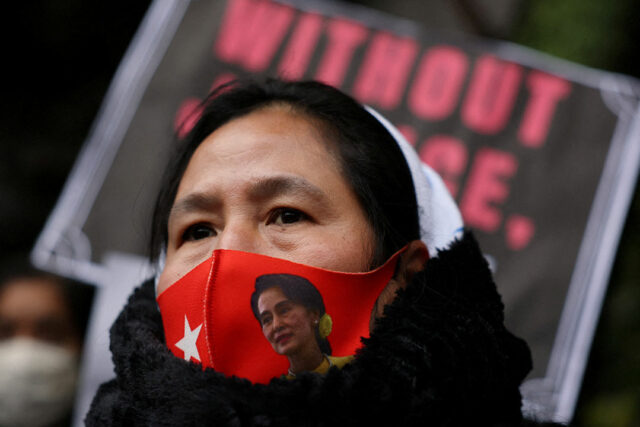
A MYANMAR protester residing in Japan uses a face mask with an image of Myanmar’s detained former leader Aung San Suu Kyi during a rally denouncing an upcoming election led by the military junta and demanding the immediate release of Ms. Suu Kyi and all political prisoners, outside Myanmar’s embassy in Tokyo, Japan on Dec. 14, 2025. — REUTERS/ISSEI KATO

OVERSHADOWED by civil war and doubts about the credibility of the polls, voters in Myanmar were casting their ballots in a general election starting on Sunday, the first since a military coup toppled the last civilian government in 2021.

The junta that has since ruled Myanmar says the vote is a chance for a fresh start politically and economically for the impoverished Southeast Asian nation.

But the election has been derided by critics — including the United Nations (UN), some Western countries and human rights groups — as an exercise that is not free, fair or credible, with anti-junta political parties not competing.

Nobel Peace Prize winner Aung San Suu Kyi, deposed by the military months after her National League for Democracy (NLD) won the last general election by a landslide in 2020, remains in detention, and the political party she led to power has been dissolved.

PARLIAMENT WILL PICK PRESIDENT, JUNTA CHIEF SAYS
Soon after polls opened at 6 a.m. (2330 GMT), voters began trickling into some polling booths in the country’s largest cities of Yangon and Mandalay, according to a witness and local media.

Dressed in civilian clothes, junta chief Min Aung Hlaing voted in the heavily guarded capital city of Naypyitaw, then held up an ink-soaked little finger, smiling widely, photographs published by the pro-military Popular News Journal showed.

Voters must dip a finger into indelible ink after casting a ballot to ensure they don’t vote more than once.

Asked by reporters if he would like to become the country’s president, an office that analysts say he has ambitions for, the general said he wasn’t the leader of any political party.

“When the parliament convenes, there is a process for electing the president,” he said.

MILITARY-BACKED PARTY SEEN AS FRONTRUNNER
Mass protests followed the ouster of Ms. Suu Kyi’s party, only to be violently suppressed by the military. Many protesters then took up arms against the junta in what became a nationwide rebellion.

In this election, the military-aligned Union Solidarity and Development Party (USDP), led by retired generals and fielding one-fifth of all candidates against severely diminished competition, is set to return to power, said Lalita Hanwong, a lecturer and Myanmar expert at Thailand’s Kasetsart University.

“The junta’s election is designed to prolong the military’s power of slavery over people,” she said. “And USDP and other allied parties with the military will join forces to form the next government.”

Following the initial phase on Sunday, two rounds of voting will be held on Jan. 11 and Jan. 25, covering 265 of Myanmar’s 330 townships, although the junta does not have complete control of all those areas as it fights in the war that has consumed the country since the coup.

Dates for counting votes and announcing election results have not been declared.

With fighting still raging in parts of the country, the elections are being held in an environment of violence and repression, UN human rights chief Volker Turk said last week.

There has been none of the energy and excitement of previous election campaigns, residents of Myanmar’s largest cities said, although they did not report any coercion by the military administration to push people to vote.

In the lackluster canvassing, the USDP was the most visible. Founded in 2010, the year it won an election boycotted by the opposition, the party ran the country in concert with its military backers until 2015, when it was swept away by Ms. Suu Kyi’s NLD.

ELECTION WILL LEAD TO ‘BETTER FUTURE,’ JUNTA SAYS
The junta maintains that the elections provide a pathway out of the conflict, pointing to previous military-backed polls, including one in 2010 that brought in a quasi-civilian government that pushed through a series of political and economic reforms.

For the first time, polling in Myanmar is being conducted via more than 50,000 electronic voting machines that will speed up counting and eliminate the possibility of fraud, according to the junta-controlled election commission.

Election observers from Russia, China, Belarus, Kazakhstan, Cambodia, Vietnam, Nicaragua and India have flown into the country ahead of the polls, state-run media reported on Sunday.

The junta’s attempt to establish a stable administration in the midst of an expansive conflict is fraught with risk, and significant international recognition is unlikely for any military-controlled government — even if it has a civilian veneer.

Zaw Min Tun, a junta spokesman, acknowledged that there would be critics among the international community that do not support the ongoing elections.

“However, from this election, there will be political stability,” he told reporters after voting in Naypyitaw. “We believe there will be a better future.” — Reuters

Winter weather in US Northeast leads to thousands of flight delays, cancellations

STOCK PHOTO | Image by L.Filipe C.Sousa from Unsplash

NEW YORK — A mix of snow and ice bore down on the US Northeast early on Saturday, disrupting post-holiday weekend airline traffic and prompting officials in New York and New Jersey to issue weather emergency declarations even as the storm ebbed by mid-morning.

People in much of the Northeast were advised to stay off the roads because of treacherous conditions, with states of emergency declared in New York and New Jersey.

“The safety of New Yorkers is my top priority, and I continue to urge extreme caution throughout the duration of this storm,” New York Governor Kathy Hochul said in a statement.

By early Saturday, about six to 10 inches (15 to 25 centimeters) of snow had fallen across an area from Syracuse in central New York to Long Island in the southeast of the state, as well as Connecticut, said Bob Oravec, a meteorologist with the National Weather Service’s Weather Prediction Center near Washington, DC.

New York City received two to four inches of snow overnight, with 4.3 inches reported at Central Park, Mr. Oravec said, the most since 2022.

“The good news is that the heaviest snow is done,” he said. “Only a few flurries remain this morning and those will taper off by the afternoon.”

But the effects were felt by travelers. More than 9,000 domestic US flights on Saturday were canceled or delayed as of early evening, with many in the New York area, including at John F. Kennedy International Airport, LaGuardia Airport and Newark Liberty International Airport, according to the tracking site FlightAware.

Representatives from American Airlines, United Airlines and JetBlue Airways told Reuters that the carriers had waived change fees normally charged to rebook for passengers whose travel plans may be affected by weather-related disruptions.

Ice storm warnings and winter weather advisories were also posted for most of Pennsylvania and much of Massachusetts.

New Jersey and Pennsylvania issued commercial vehicle restrictions for some roads, including many interstate highways.

“This storm will cause dangerous road conditions and impact holiday travel,” New Jersey’s acting governor Tahesha Way said in a statement. “We are urging travelers to avoid travel during the storm and allow crews to tend to roads.” — Reuters

Zelensky to meet Trump in Florida for talks on Ukraine peace plan

UKRAINIAN President Volodymyr Zelensky waves as he meets US President Donald J. Trump at the White House, amid negotiations to end the Russian war in Ukraine in Washington, DC, US, Aug. 18. — REUTERS/KEVIN LAMARQUE

PALM BEACH, Florida — Ukrainian President Volodymyr Zelensky and US President Donald J. Trump will meet in Florida on Sunday to hammer out a plan to end the war in Ukraine but face major differences on crucial issues and provocations from Russian air attacks.

Russia struck Kyiv and other parts of war-torn Ukraine with hundreds of missiles and drones on Saturday, knocking out power and heat in parts of the capital. Mr. Zelensky called it Russia’s response to the ongoing US-brokered peace efforts.

Mr. Zelensky has told journalists that he plans to discuss the fate of eastern Ukraine’s contested Donbas region during the meeting at Mr. Trump’s Florida residence, as well as the future of the Zaporizhzhia nuclear power plant and other topics.

Moscow has repeatedly insisted that Ukraine yield all of the Donbas, even areas still under Kyiv’s control, and Russian officials have objected to other parts of the latest proposal, sparking doubts about whether Russian President Vladimir Putin would accept whatever Sunday’s talks might produce.

The Ukrainian president told Axios on Friday he still hopes to soften a US proposal for Ukrainian forces to withdraw completely from the Donbas. Failing that, Mr. Zelensky said the entire 20-point plan, the result of weeks of negotiations, should be put to a referendum vote.

Axios said US officials viewed Mr. Zelensky’s willingness to hold a referendum as a major step forward and a sign that he was no longer ruling out territorial concessions, although he said Russia would need to agree to a 60-day ceasefire to allow Ukraine to prepare for and hold such a vote. A recent poll suggests that Ukrainian voters may also reject the plan.

Mr. Zelensky’s in-person meeting with Mr. Trump, scheduled for 1 p.m. (1800 GMT), follows weeks of diplomatic efforts. European allies, while at times cut out of the loop, have stepped up efforts to sketch out the contours of a post-war security guarantee for Kyiv that would be supported by the United States.

STICKING POINTS OVER TERRITORY
Kyiv and Washington have agreed on many issues, and Mr. Zelensky said on Friday that the 20-point plan was 90% finished. But the issue of what territory, if any, will be ceded to Russia remains unresolved.

While Moscow insists on getting all of the Donbas, Kyiv wants the map frozen at current battle lines.

The United States, seeking a compromise, has proposed a free economic zone if Ukraine leaves the area, although it remains unclear how that zone would function in practical terms.

Mr. Zelensky, whose past meetings with Mr. Trump have not always gone smoothly, worries along with his European allies that Mr. Trump could sell out Ukraine and leave European powers to foot the bill for supporting a devastated nation, after Russian forces took 12 to 17 square kilometers (4.6-6.6 square miles) of its territory per day in 2025.

Russia controls all of Crimea, which it annexed in 2014, and since its invasion of Ukraine nearly four years ago has taken control of about 12% of its territory, including about 90% of Donbas, 75% of the Zaporizhzhia and Kherson regions, and slivers of the Kharkiv, Sumy, Mykolaiv and Dnipropetrovsk regions, according to Russian estimates.

Mr. Putin said on Dec. 19 that he thought a peace deal should be based on conditions he set out in 2024: Ukraine withdrawing from all of the Donbas, Zaporizhzhia and Kherson regions, and Kyiv officially renouncing its aim to join the North Atlantic Treaty Organization (NATO).

Ukrainian officials and European leaders view the war as an imperial-style land grab by Moscow and have warned that if Russia gets its way with Ukraine, it will one day attack NATO members.

The 20-point plan was spun off from a Russian-led 28-point plan, which emerged from talks between US special envoy Steve Witkoff, Mr. Trump’s son-in-law Jared Kushner and Russian special envoy Kirill Dmitriev, and which became public in November.

Subsequent talks between Ukrainian officials and US negotiators have produced the more Kyiv-friendly 20-point plan.

CANADA, EUROPEAN ALLIES RALLY BEHIND KYIV
Saturday’s air attacks show that Mr. Putin does not want peace, Mr. Zelensky said to reporters after arriving in Halifax, Nova Scotia, where he met with Canadian Prime Minister Mark Carney.

In a brief statement with Mr. Zelensky by his side, Mr. Carney said peace “requires a willing Russia.”

“The barbarism that we saw overnight — the attack on Kyiv — shows just how important it is that we stand with Ukraine in this difficult time,” Mr. Carney said, pledging C$2.5 billion (US$1.83 billion) in additional economic aid to Ukraine.

European Commission President Ursula von der Leyen, who spoke with Mr. Zelensky along with other European leaders on Saturday, said on X that their shared objective remained “a just and lasting peace” that preserved Ukraine’s sovereignty and territorial integrity, while strengthening the country’s security and defense capabilities.

Mr. Zelensky said he would speak with European leaders again after his meeting with Mr. Trump. — Reuters

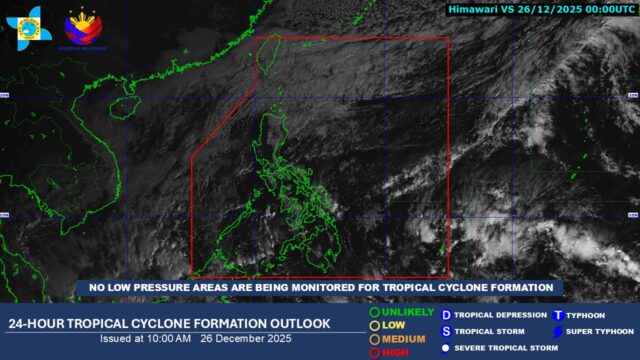
Northeast monsoon to bring rains to parts of Luzon over New Year — PAGASA

DOST-PAGASA FB PAGE

As the new year festivities are just days ahead, mostly cloudy skies and rains are expected to affect parts of Northern Luzon, while the rest of the country will see isolated showers, according to the state weather bureau on Friday.

In a weekly weather bulletin released at 12:00 p.m., the Philippine Atmospheric, Geophysical and Astronomical Services Administration (PAGASA) said that the said weather condition is likely to happen from Dec. 31 to Jan. 2.

Areas including Batanes and Cagayan are likely to experience mostly cloudy skies with rains due to the Northeast Monsoon, while the Ilocos Region and the Cordillera Administrative Region will experience partly cloudy to cloudy skies with isolated light rains.

For the rest of the country, PAGASA said to expect partly cloudy to cloudy skies due to the effects of the Easterlies and localized thunderstorms.

Meanwhile, for the immediate period of Dec. 26 to 27, the Northeast Monsoon will bring cloudy skies with rains over Batanes and the Babuyan Islands.

During these same days, mainland Cagayan, Apayao, and Isabela are forecast to have mostly cloudy skies with light rains.

From Dec. 28 to 30, the weather bureau expects the Northeast Monsoon to continue bringing rains over Batanes and Cagayan.
The Easterlies is also expected to bring mostly cloudy skies with scattered rain showers and thunderstorms to the Bicol Region, Eastern Visayas, and Caraga.

PAGASA noted that the outlook remains subject to change. “This weather outlook will be updated if there are significant changes in the forecast scenario through the issuance of 24-hour Public Weather Forecasts and Weather Advisories,” the bureau stated. — Edg Adrian A. Eva

Core inflation in Japan’s capital slows in December but no bar for further BOJ hikes

JAPANESE Yen and US dollar banknotes are seen in this illustration taken March 10, 2023. — REUTERS

TOKYO — Core consumer inflation in Japan’s capital slowed in December on moderating cost pressure for food but stayed above the central bank’s 2% target, data showed on Friday, firming the case for further interest rate hikes.

The data backs up the Bank of Japan’s (BOJ) view that core inflation will slide below its 2% target in coming months on easing cost pressure, before resuming a more demand-led increase that justifies additional rate increases.

But some analysts warn of the risk renewed yen declines may prod firms to keep raising prices, leading to sticky, cost-led inflation that could quicken the pace of BOJ rate hikes.

“Today’s data suggests food inflation may be peaking. But the weak yen may give firms an excuse to resume price hikes for food, which may keep inflation elevated,” said Yoshiki Shinke, senior executive economist at Dai-ichi Life Research Institute.

“The pace and timing of BOJ rate hikes will depend much on how the yen moves and how they affect firms’ price-setting behavior,” he said.

The Tokyo core consumer price index, which excludes volatile costs of fresh food, rose 2.3% in December from a year earlier, less than market forecasts for a 2.5% gain and slowing from a 2.8% increase in November.

While the slowdown is largely due to the base effect of last year’s bump-up in utility bills, it also reflected moderating pressure from food costs that have been the main factor pushing up broader inflation.

A separate index for Tokyo that strips away both fresh food and fuel costs – closely watched by the BOJ as a measure of demand-driven prices – rose 2.6% in December from a year earlier after a 2.8% increase in November.

The data will be among the factors the BOJ will scrutinize at its next policy meeting on January 22 and 23, when the board issues fresh quarterly growth and inflation forecasts.

GOVERNMENT APPROVES RECORD BUDGET
Separate data released on Friday showed Japan’s factory output fell 2.6% in November from the previous month, more than market forecasts for a 2.0% drop, due to cuts in automobile and lithium-ion battery production.

Manufacturers surveyed by the government expect output to rise 1.3% in December and 8.0% in January, the data showed.

Retail sales rose 1.0% last month year-on-year, roughly in line with a median market forecast for a 0.9% increase, data showed.

Japan’s government on Friday approved a record $785 billion budget for the next fiscal year, which will likely underpin consumption but add strain to the country’s already tattered finances.

The BOJ raised interest rates last week to a 30-year high of 0.75%, taking another landmark step in ending decades of huge monetary support in a sign of its conviction Japan is progressing toward durably hitting its 2% inflation target.

With core inflation exceeding the BOJ’s target for nearly four years, Governor Kazuo Ueda has signaled the BOJ’s readiness to keep raising rates if the economy continues to improve, backed by solid wage gains.

In a speech on Thursday, Mr. Ueda said the economy was making steady progress in durably achieving the BOJ’s price target backed by solid wage gains. — Reuters

DOST studying ways to make fire-resistant bamboo 

The Department of Science and Technology (DOST) is developing various research initiatives to make bamboo, a sustainable construction material, more fire-resistant. 

In a statement released Friday, DOST said the deadly fire in Hong Kong last November has sparked talks about the use of bamboo in construction and its fire safety. 

DOST-Forest Products Research and Development Institute (DOST-FPRDI) Director Dr. Rico J. Cabangon said that bamboo, like any other organic material, is naturally combustible. 

“(But) with proper testing, drying, treatment, and the use of fire-safety technologies, the risk of ignition and flame spread can be significantly reduced,” Mr. Cabangon said. 

Among the ongoing research at DOST-FPRDI to help bamboo become more fire-resistant is the development of a fire-retardant coating using nano-sized montmorillonite clay. 
The Institute said the material is a low-cost and less toxic alternative to imported chemicals. 

The coating forms a protective layer that delays ignition and limits flame spread. 

Initially developed for wood products, the technology is now being explored for bamboo applications. 

DOST-FPRDI is also developing a bamboo-derived cellulose nanofiber aerogel sourced from kauayan-tinik (Bambusa spinosa Roxb.). 

This material is designed as a safer and more sustainable fire-retardant additive for construction insulation, including bamboo-based applications. It is considered safe for both humans and the environment. 

To support these research initiatives, DOST-FPRDI operates its Fire Testing Laboratory, which evaluates the fire resistance of wood and non-wood materials, including bamboo. 

The facility exposes samples to a small flame for 15 or 30 seconds to assess ignitability and combustibility. 

Mr. Cabangon said that the said initiatives reflect the Institute’s proactive steps to address fire safety concerns over bamboo in construction. 

“Through expanding our testing services and research, we aim to ensure that bamboo remains a credible material for building and construction,” he furthered. 

DOST-FPRDI also emphasized that using bamboo in construction remains a more sustainable option than timber, as it can be harvested much earlier and absorbs carbon dioxide throughout its growth. It is also generally more cost-effective than metals and other conventional materials. 

Meanwhile, DOST Secretary Renato U. Solidum Jr. said the agency runs long-term programs to support the safe use of bamboo in construction and other applications. 

DOST-FPRDI is a government research institute dedicated to developing and improving forest and wood-based products, including bamboo. — Edg Adrian A. Eva

GCash represents PH at Mastercard Global Financial Health Coalition, showcases fintech expertise in international arena

Tony Isidro, President and CEO of Fuse Financing, Inc., represented GCash during the Mastercard ASEAN Inclusive Growth Summit in Malaysia, highlighting the importance of enabling credit access to MSMEs to support their growth.

Leading finance super app GCash is bringing its financial technology expertise as the sole Philippine founding partner in the Mastercard Global Financial Health Coalition, an international network of industry innovators focused on advancing financial health and resilience.

Represented by GCash lending arm Fuse Financing, Inc., its president and CEO, Tony Isidro, is sharing his knowledge on how to further financial inclusion on a larger scale through technology.

This perspective sets the stage for the participation of GCash in the Coalition, which aims to strengthen financial resilience in emerging markets by connecting people to the right tools — harnessing technology for protection and empowering long-term financial habits. Other members of the Coalition include DANA, TrueMoney, MTN Group Fintech, Airtel Africa, MOCO, Axian, Daviplata, and The Center for Financial Inclusion. 

“GCash has transformed how millions of Filipinos manage their money — bringing secure, digital financial services into everyday life. Through its lending arm, Fuse Financing, Inc., it has democratized lending in the Philippines, making credit fair and more accessible to millions, especially the unbanked and underserved segments,” Isidro said.

“By joining this coalition, we aim to extend that impact beyond our borders, sharing our mobile-first innovation and insights to help strengthen financial resilience across emerging markets,” he added.

More than account openings

For Isidro, the industry must confront a hard truth: opening an account is not enough to improve financial well-being. Real progress depends on whether people trust financial tools, understand them and use them regularly. Technology is central to building these behaviors. It strengthens security, simplifies transactions and enables users to take control of their financial decisions.

According to Isidro, however, many Filipinos remain outside the formal financial system despite the rapid expansion of digital adoption in the country. This gap is evident in a study by Mastercard showing that 49.8% of adults still do not have a formal financial account. This limits access to savings, credit, and insurance that are key to long-term financial stability.

Fuse Financing addressed this gap by offering credit products that are simple, secure and accessible through the GCash app. This accessibility led to a growth in lending activities, reflecting a shift in behavior as more users integrate borrowing into their daily financial routines. This pattern aligns with Mastercard’s findings that deeper usage of financial tools is closely associated with financial progression.

The Philippines illustrates how fintech platforms can reach communities that traditional banking has not fully served. Mastercard’s analysis also shows that when digital and physical tools complement each other, people are more likely to build consistent financial habits. This reinforces the role of technology as a driver of trust and adoption.

Isidro, as such said, the coalition strengthens the opportunity to bring this approach to more markets.

“We look forward to learning from fellow coalition members whose diverse experiences and best practices can help us further elevate our solutions. Together, we can accelerate progress toward a truly inclusive digital economy,” he said.

As the Coalition moves forward, the experience and expertise of GCash in driving adoption and responsible borrowing will contribute to a broader, regional effort to improve financial health. The goal is to build a digital economy where more people have the tools and confidence to advance financially.

For more information, please visit www.gcash.com.


Spotlight is BusinessWorld’s sponsored section that allows advertisers to amplify their brand and connect with BusinessWorld’s audience by publishing their stories on the BusinessWorld Web site. For more information, send an email to online@bworldonline.com.

Join us on Viber at https://bit.ly/3hv6bLA to get more updates and subscribe to BusinessWorld’s titles and get exclusive content through www.bworld-x.com.

ADVERTISEMENT
ADVERTISEMENT