Home Blog Page 505

CEOs Speak: What are you most excited about for the next three years?

STOCK PHOTO | Image by Pressfoto from Freepik

FROM navigating new technologies to expanding markets, executives across industries in the Philippines have plenty to look forward to. BusinessWorld asked them to share what excites them most in the years ahead.

Compiled by reporters Revin Mikhael D. Ochave, Sheldeen Joy Talavera, Ashley Erika O. Jose, and Beatriz Marie D. Cruz

LIPAD CEO Noel F. Manankil

OVER the next three years, we are highly focused on two transformative initiatives that will significantly enhance both land connectivity and passenger experience at Clark International Airport (CRK). Foremost among these is the anticipated launch of the Manila–Clark (CRK) express train service. This project of the Department of Transportation is a true game-changer in multimodal transport infrastructure and is expected to enhance accessibility to CRK. While we remain committed to delivering an enjoyable and seamless journey within the terminal, the express train directly addresses the growing demand for increased land connectivity vis-à-vis the growing number of flights that operate at CRK.

Jonathan Jack R. Madrid, president and CEO, Information Technology and Business Process Association of the Philippines

CONTINUING to deliver on the baseline targets of Roadmap 2028, our industry has been growing steadily in revenue year after year. That momentum allows us to invest in developing Filipino talent for the next generation of work. We are moving into a period where AI is no longer just a support tool but an active partner that can make decisions and orchestrate processes. This shift will create more high-value jobs that require critical thinking, adaptability, and empathy. With strong collaboration between government, industry, and academe, we have an opportunity to reinforce the Philippines as a global leader in digital services.

Philippine Nickel Industry Association Chairman and Carrascal Nickel Corp. President and CEO Antonio L. Co 

I AM LOOKING forward to sustained growth across our portfolio — particularly in mining, where gold, copper, and nickel continue to offer strong long-term value. We are committed to advancing world-class operations that highlight the Philippines’ potential as a key player in the global minerals supply chain. At the same time, we see expanding opportunities in the hospitality and food sectors, driven by a revitalized domestic market and renewed investor confidence. Across all ventures, our focus is on creating long-term value, elevating Filipino excellence, and contributing meaningfully to inclusive national development — while continuing to uplift the communities where we operate.

Eric T. Francia, president & CEO, ACEN Corp.

THE PHILIPPINES’ growing momentum in regional competitiveness — driven by advances in sustainable development, digital infrastructure, and tourism — presents an exciting path forward. At the Ayala Group, we’re leveraging synergies across our ecosystem to help transform key sectors that matter to national progress. ACEN, for our part, remains deeply committed to accelerating the country’s transition to a low-carbon future, enabling inclusive growth through renewable energy, and supporting communities as they adapt to a more resilient and sustainable economy.

Globe Telecom, Inc. President and CEO Carl Raymond R. Cruz

I’M EXCITED to lead Globe through its next phase of transformation, moving from being primarily a connectivity provider to becoming the Philippines’ most trusted and admired digital solutions platform. We’ll deepen our core strengths in mobile data, fiber broadband, and enterprise connectivity, while scaling new growth engines in cloud, cybersecurity, AI, and digital platforms.

Canon Marketing (Philippines), Inc. President and CEO Anuj Aggarwal

TO BECOME a $100-million company in the Philippines.

PLDT Inc. Chairman and CEO Manuel V. Pangilinan

I LOOK FORWARD to growing our agriculture business, which I believe holds enormous promise for our people. And also to PLDT’s centennial, which we’ll celebrate three years from now, in 2028 — prompting us to think not just about the immediate future, but about the next century.

Rick Santos, chairman and CEO, Santos Knight Frank

I THINK in the real estate side, I am really excited about the redevelopment of the Makati Central Business District and some of the changes in the zoning laws. I’m also excited about some of the new infrastructure and developments being planned so that’s great for the big cities like Makati or Bonifacio Global City (BGC). I think the other thing I’m excited about is the data center market, which will bring a lot more capital and jobs and connectivity here.

Jie C. Espinosa country manager, CBRE Philippines

I’M EXCITED to see how developers are starting to really pay attention to quality, Because overall, you go around the city, the quality that you see in areas like Fort Bonifacio… you’re starting to see it in Ortigas, and now it’s spreading to Quezon City. So ultimately, that will really change the landscape. It will change the behavior of most occupiers.

James M. Montenegro, country manager, Chroma Hospitality, Inc.

IN THE PHILIPPINE CONTEXT, I’m most excited about the rise of locally branded lifestyle hotels. With brands like Grafik Hotel Collection — one of our own — and others developed by key hospitality players, there’s a real opportunity to reshape the country’s hotel landscape. I firmly believe that lifestyle hotels capture the cultural strengths of the Filipino hotelier — showcasing our authenticity, creativity, and heartfelt care for guests. These hotels aren’t just places to stay; they’re immersive reflections of who we are and how we host.

Mober Technology Pte., Inc. CEO Dennis O. Ng

WE’VE ALREADY proven that green logistics can scale, now we’re focused on making it more accessible. What excites me most is helping others make the shift. We’re opening our infrastructure and tech to support small truckers and partners who want to electrify their fleet. That’s how we create real industry change.

Ross Joseph J. Romanillos, president and CEO of CTP Construction and Mining Corp.

I AM MOST excited about the opportunity to continue building a company that puts people at the heart of progress. We remain committed to providing stable and dignified livelihoods for our employees and creating lasting impact in the rural communities where we operate. In the years ahead, we aim to further integrate sustainability into our operations — strengthening our contributions to environmental protection, community development, and inclusive growth.

Emmanuel V. Rubio, president and CEO, Meralco PowerGen Corp.

OVER the next three years, I’m most excited about how MGEN is accelerating its growth while contributing meaningfully to the country’s energy transition. We are scaling up our renewable energy portfolio significantly — led by landmark projects like MTerra Solar. At the same time, we continue to optimize and diversify our entire generation mix to ensure long-term reliability, affordability, and sustainability. With each project, we move closer to our vision of energy security for the Philippines, powered by a diversified portfolio and strengthened by strong partnerships and purpose-driven growth.
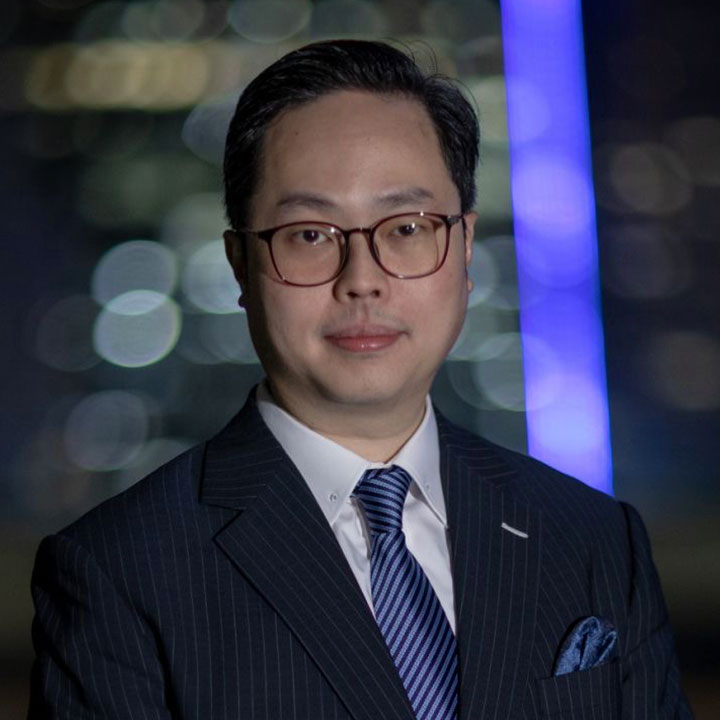
Jettson P. Yu, founder and CEO, PRIME Philippines

THE MOST exciting part for me is how the series of events globally will evolve, because of two things: artificial intelligence (AI) and war. When there’s war, the response across all sectors is to innovate and accelerate research and development to be ahead. Then you have AI, which is also an accelerator of innovation. So I’m very excited to see how this would shape the evolution  of mankind.

Catherine A. Ilagan, president and CEO, Filinvest Alabang, Inc.

THE NEXT few years will be transformative for FAI.  There’s a lot happening across our townships, and it’s exciting to see the momentum build.  In Filinvest City, a major telco company will soon start building their new campus headquarters, and that’s a real game-changer, which will mean more jobs, more movement, and a stronger business ecosystem in the Metro South.  In Clark, Filinvest Mimosa Plus is becoming the go-to leisure destination in the area, with retail projects opening soon and luxury residential living that offers a country club lifestyle.  Over in Cebu, CDM continues to ride the wave of growth, welcoming major locators and expanding its footprint. 

ING Philippines Country Manager Jun Palanca

THE CONVERGENCE of sustainability, digital innovation, and regional connectivity is reshaping the growth trajectory for our clients, our country, and ING itself. Over the next three years, we have a unique opportunity to move beyond adaptation and help drive meaningful impact — whether by accelerating the energy transition, supporting the digitalization of industries, or enabling cross-border investment that unlocks jobs and opportunities for Filipinos.

Jerry G. Ngo, East West Banking Corp. CEO

TECHNOLOGY continues to reshape banking by driving greater ease, efficiency, speed, and precision, enabling us to serve more people, more meaningfully, and at greater scale. As digital tools become increasingly embedded in everyday life, we see clear opportunities to accelerate digital adoption, elevate customer experiences, and expand access in underbanked areas, ultimately helping more Filipinos fulfill their dreams.

DragonFi Co-Founder and CEO Jon Carlo C. Lim

AT DRAGONFI, we’re thrilled to be the first broker-dealer in the Philippines accredited as a PERA (Personal Equity and Retirement Account) administrator. We’re targeting the launch of our PERA offering by October 2025, and we see this as a game-changer for long-term savings and capital market development in the country.

Arlo G. Sarmiento, CEO, Vivant Corp.

ADVANCING KEY PROJECTS that will shape our energy and water portfolio for years to come. In power, we’re scaling up renewable energy — starting with our first large-scale solar project in Luzon and wind farm in Northern Samar, which will diversify our generation mix and strengthen our presence in the national grid. We also have plans to expand our capacity in the off-grid market solidifying our lead as one of the largest players in the sector. We believe with our investments in these small islands, we would see more progress in the region in the next few years.

Kurt Lenard T. Gutierrez, co-founder and CEO, Dormy PH

FIRST & FOREMOST -— I’m really excited on how Gen Z will shift consumer & B2B trends as they enter the workforce, this tech-native, highly-entrepreneurial generation will surely make waves on digging the PH deeper into the digital space.

SMC Chairman and CEO Ramon S. Ang

OVER the next few years, people will begin to see and feel the results of the work we have been doing. Our expanded food manufacturing operations will make quality, affordable food available to more families. More Battery Energy Storage facilities will also come online. This will strengthen our grid and bring reliable power even to the farthest communities. Travel will also be easier and safer. SLEX TR-4 will be partially open, cutting travel time to Southern Luzon. MRT-7 will also be fully operational. This will ease the daily commute for thousands in Bulacan and help decongest Metro Manila. More importantly, we will be nearing completion of the New Manila International Airport project and its supporting infrastructure. This will not only transform air travel but also unlock our country’s full economic potential and competitiveness in the region.

Dante R. Bravo, president – Philippine Nickel Industry Association president and CEO – Global Ferronickel Holdings, Inc.

I AM MOST EXCITED about the opportunity to further align our operations with the country’s industrialization goals, particularly as global demand for critical minerals like nickel continues to grow. We aim to responsibly expand our operations so we can create more jobs, uplift more communities, and contribute more significantly to rural development — through infrastructure support, education, health services, and local enterprise stimulation. The next three years present a crucial window to deepen our impact — anchored on sustainability, innovation, and meaningful national progress.

Packworks Co-Founder Ibba Bernardo

WHAT energizes me: turning sari‑sari stores into digital-lifeline hubs

I’m excited that in the next three years over a million Filipinos will see their local sari‑sari stores not just as retail outlets but as community nodes offering banking, medicine, solar-powered connectivity, fintech, and more. As my fellow co-founder, Hubert Yap, said in BusinessWorld before, “We see sari‑sari stores of the future as pharmacies, power plants, and banks,” I believe this could become reality within just two years.

Francis Giles B. Puno, president and COO, First Gen Corp.

WE’RE EXCITED about expanding our renewable energy capacity and leveraging our diversified RE portfolio. We are building up our energy sources to grow to 13 gigawatts by 2030. We are excited because over the next three years, we expect to reap the benefits from our aggressive drilling campaign for more geothermal energy sources. Moreover, construction of our planned 50-MW solar facility in Batangas, will go  full swing this year.

Carlos Aboitiz, chief corporate services officer, Aboitiz Power Corp.

I’M EXCITED about AboitizPower’s growth story. We have initiated a comprehensive growth strategy, involving investments in our RE platform, new technologies such as natural gas, pump storage hydro, and battery energy storage systems, our DU franchise expansion in Davao, brownfield expansions in baseload thermal, and many more. In the next three years, we aim to have a larger, more diverse business delivering more sustainable, profitable growth for our shareholders, while delivering greater energy security, affordability, and sustainability to the Filipino people.

CEOs Speak: What trends or changes are you watching closely?

STOCK PHOTO | Image by Rawpixel.Com from Freepik

SHIFTS in consumer behavior, global market movements, and fast-evolving technologies are reshaping the business landscape. BusinessWorld asked executives across industries in the Philippines which developments they are monitoring closely.

Compiled by reporters Revin Mikhael D. Ochave, Sheldeen Joy Talavera, Ashley Erika O. Jose, and Beatriz Marie D. Cruz

Globe Telecom, Inc. President and CEO Carl Raymond R. Cruz

WE’RE TRACKING how AI is transforming industries, and how we can scale it responsibly to make our services more personalized, efficient, and secure. On the consumer side, shifts in household spending patterns, the impact of inflation, and the role of remittances are critical in shaping our pricing, offers, and financial services. And in the enterprise space, we’re watching the rising demand for integrated ICT solutions, as businesses look for partners that can support them through digital transformation end-to-end.

Emmanuel V. Rubio, president and CEO, Meralco PowerGen Corp.

WE’RE WATCHING four major trends that are reshaping the energy landscape: decarbonization, digitalization, decentralization — and what I personally believe is the inevitable next step — democratization. Decarbonization is pushing us to invest in utility-scale renewables and low-carbon technologies to meet climate goals without compromising reliability. Digitalization is changing how we manage and optimize assets — from generation to consumption. Decentralization is enabling more flexible, distributed energy solutions that bring power closer to where it’s needed.

LIPAD CEO Noel F. Manankil

THE LOUDEST TREND to watch out for is digitalization. Digital transformation continues to redefine the global aviation landscape, with airports around the world continuously adopting contactless technologies, seamless online processes, and integrated digital systems. As a premier international gateway, we at CRK are committed to aligning with these advancements for a consistent delivery of a world-class, future-ready passenger experience.

PLDT Inc. Chairman and CEO Manuel V. Pangilinan

LIKE EVERYONE, I’m watching AI, which is reshaping every industry before our eyes. I’m also observing Gens Z, Alpha, and Beta — the last one being the AI native generation. It’s always stimulating to think of how they’ll transform our workplaces, our economy, and our lives. And the issues which our Zs, Alphas, and Betas will face in their respective times.

Canon Marketing (Philippines), Inc. President and CEO Anuj Aggarwal

WE CLOSELY MONITOR evolving consumer preferences and rapid technological advancements — these are constant drivers of innovation for us. True to our slogan, “Delighting You Always,” we are committed to bringing the latest technology and meaningful solutions closer to our customers.

Philippine Nickel Industry Association Chairman and Carrascal Nickel Corp. President and CEO Antonio L. Co 

WE ARE CLOSELY WATCHING how shifting global demand for commodities — especially critical minerals like gold, copper, and nickel — is shaping new investment frontiers. At the same time, we’re tracking how changing consumer behavior, digital innovation, and tourism recovery are creating fresh momentum in the food and hospitality sectors. On the home front, we remain attentive to policy and regulatory shifts that could unlock greater competitiveness and long-term growth for Philippine industries.

Jonathan Jack R. Madrid, president and CEO, Information Technology and Business Process Association of the Philippines

WE ARE CLOSELY watching three major trends. First is the rapid adoption of Agentic AI, which can handle complex processes end to end and fundamentally change how companies operate. Second is the continued rise in global demand for outsourced and digital services, which supports consistent revenue growth. Third is the emergence of new hybrid roles like AI operations leads, prompt engineers, and AI auditors. These shifts make large-scale, enterprise-based training essential. The government’s P740 million commitment to upskill Digital Filipino Workers is a crucial step to ensure our workforce stays ahead. We believe that combining advanced technology with our culture of empathy will be our strongest advantage in the years to come.

Rick Santos, chairman and CEO, Santos Knight Frank

THE TRENDS I’m watching closely are healthcare, BPO (business process outsourcing), the energy sector, AI, and geopolitics.

Jie C. Espinosa, country manager, CBRE Philippines

THE TREND that I’m closely watching is AI, because it will have an impact on the IT-BPM (information technology-business process outsourcing) sector. Up to what extent, nobody knows yet. But we all know, we all recognize that down the road, it could impact the numbers.

James M. Montenegro, country manager, Chroma Hospitality, Inc.

I’M PARTICULARLY curious to see how AI will influence traveler decision-making, booking patterns, and online search behavior. We’re already witnessing how AI is transforming the way people plan their trips from personalized suggestions and dynamic pricing to real-time support through chatbots. What’s even more interesting to me is how this shift will affect local and independent hotel brands like our own, Grafik Hotel Collection. AI presents opportunities to compete smarter — whether through better-targeted marketing, deeper insights into guest behavior, or more tailored experiences that resonate with individual preferences.

Mober Technology Pte., Inc. CEO Dennis O. Ng

WE’RE OPTIMISTIC about how sustainable finance is evolving in the country and we’re hopeful the government keeps building momentum around EV adoption. Policy and capital will accelerate the shift, but we’re not standing still. We’ve built a working model, and we’re ready to scale with partners who share the same vision.

Ross Joseph J. Romanillos, president and CEO of CTP Construction and Mining Corp.

WE ARE CLOSELY OBSERVING how sustainability standards are evolving in the mining and construction industries, especially in relation to climate resilience and community engagement. We’re also tracking developments in workforce upskilling, environmental policy, and infrastructure investments that will help shape how responsible businesses like ours continue to grow — while remaining deeply grounded in service to people and the planet.

Carlos Aboitiz, chief corporate services officer, Aboitiz Power Corp.

WE’RE CLOSELY monitoring the energy transition, especially how a combination of evolving technology and market considerations is reshaping our energy landscape. We are actively transitioning AboitizPower’s energy mix, making complex decisions to create a more secure, affordable, and sustainable energy system for the Filipino people. This involves the strategic deployment of various energy technologies to ensure that we keep pace with the robust growth of the Philippine economy.

Jettson P. Yu, founder and CEO, PRIME Philippines

I AM WATCHING closely how people are reacting to what’s going on, because any business is always influenced by behaviors of people.

Catherine A. Ilagan, president and CEO, Filinvest Alabang, Inc.

WE’VE OBSERVED a growing trend where cities are becoming more people-centric. The term being introduced is “central social district,” which reflects a renewed focus on livability, wellness, and community connection. At Filinvest Alabang, Inc., we are proud to be leading in this space. Our townships are designed to support vibrant live-work-play lifestyles, with green-certified infrastructure, thoughtfully planned mobility systems, and inclusive public spaces.

SMC Chairman and CEO Ramon S. Ang

I’M ALSO HOPEFUL about the progress we can make in flood mitigation. Over the past five years, we have cleared more than 8.5 million tons of silt and waste from 163 kilometers of rivers, at no cost to the government or taxpayers. Imagine what more we can accomplish with continued partnerships with government, LGUs, and local communities. The next few years will be busy, but they will also be meaningful. And for me, the real reward is knowing that everything we do is meant to help more communities thrive and create opportunities for generations to come.

ING Philippines Country Manager Jun Palanca

WE’RE CLOSELY tracking the rapid evolution of sustainable finance in the Philippines. ESG integration is no longer a niche — it’s becoming embedded in strategy, capital-raising, and risk management across sectors. This signals a deep and lasting shift in how companies define value and resilience. Digital transformation also remains a defining force. From mobile payments to supply chain technologies, innovation is not just a competitive edge — it’s a prerequisite for agility in a volatile environment. Initiatives like the National Fiber Backbone and the Digital Payments Transformation Roadmap are expanding access and enabling new business models.

DragonFi Co-Founder and CEO Jon Carlo C. Lim

ONE OF THE MOst important trends we’re watching is the modernization of financial regulations in the Philippines. For too long, onerous and outdated rules have limited the ability of local fintech players to innovate and compete, placing them at a severe disadvantage compared to their foreign counterparts who often operate in more progressive regulatory environments.

Arlo G. Sarmiento, CEO, Vivant Corp.

FIRST, how national and local public policies enable the rollout of critical infrastructure especially in the water sector. At the end of the day, strong policy alignment is what transforms investment into real impact. On the power side, the evolving regulatory environment for the Retail Electricity Supply (RES) market — how it opens the energy market, how it protects consumers, and how it supports fair competition.

Kurt Lenard T. Gutierrez,  co-founder and CEO, Dormy PH

I’M CLOSELY watching AI, GovTech, & PropTech. AI is a no-brainer, but more interesting locally is how GovTech is rapidly pacing with the industry. The PHL Supreme Court has launched its policy on eNotarization, which I’m certain will trickle down to digitizing legalities in the country & eliminate red tape. I expect this to have trickle down effects towards PropTech, which is traditionally process-heavy — perhaps we’ll see a FinTech-like wave hit PropTech soon enough.

Jerry G. Ngo, East West Banking Corp. CEO

WE’RE CLOSELY observing how technology is making the industry more efficient, agile, and customer-responsive. From AI-enabled decision-making to seamless mobile interactions, the bar has been raised for ease, speed, security, and personalization. But just as important are the behavioral shifts we’re seeing. More individuals now blend digital convenience with in-person service, expecting both immediacy and connection.

Dante R. Bravo, president – Philippine Nickel Industry Association president and CEO – Global Ferronickel Holdings, Inc.

WE ARE CLOSELY watching the global shift toward green technologies, which is rapidly transforming supply chains, investment priorities, and regulatory landscapes across economies. Just as critical are ongoing reforms in our local regulatory environment, which will play a decisive role in shaping a more competitive and resilient Philippine mining industry, one that is well-positioned to secure its place in the global nickel value chain.

Packworks Co-Founder Ibba Bernardo

1. AI for the neighborhood store

Right now, I’m really excited about how micro‑entrepreneurs can use AI to help grow their businesses. That’s not developer-speak; it comes from watching Pack‑owned sari‑sari stores start predicting demand, managing stock, and crafting promos without spreadsheets. What used to feel like magic is now regular on mobile. Pair that with tools on Sari.PH Pro, and every neighborhood store’s inventory looks less like guesswork. AI helps us hyper‑customize solutions that are very relevant to the individual market as opposed to a one-size-fits-all rollout.

2. Connectivity becoming inclusion — not just convenience

3. Hyperlocal logistics and demand insight

4. Embedded finance for store‑level credit and inclusion

5. Public-private models as operational infrastructure

I’m watching realism meet opportunity.

Francis Giles B. Puno, president and COO, First Gen Corp.

WE’RE ALWAYS on the lookout for changes in policy and regulations that would allow us to operate more sustainably and attract capital to help achieve energy security and supply stability for the country. Technology-wise, we’re watching how energy storage solutions and smart grids will evolve as these will help the transition to RE and address intermittency. AI and data analytics are slowly optimizing power generation and distribution; they provide insights that are important for demand planning, supply allocation and even infrastructure support.

Condo market shifts prompt strategic rethink in Metro Manila

PHILIPPINE STAR/MIGUEL DE GUZMAN

By Beatriz Marie D. Cruz, Reporter

METRO MANILA’s condominium glut is prompting developers to adapt amid shifting buyer preferences and evolving market trends, according to experts.

The oversupply of mid-income units is leading developers to recalibrate pipelines, introduce sustainability features, expand services, and explore alternative uses for unsold inventory, while urban planners see opportunities for adaptive reuse and mixed-use projects.

Claro dG. Cordero, Jr., director and head of research, consulting, and advisory services at Cushman & Wakefield, said today’s urban development trends suggest that Metro Manila’s oversupply of mid-end residential units has far-reaching implications for the region’s future.

“With market uncertainties and evolving buyer expectations, developers must move beyond traditional practices and adopt innovative strategies that will not only enhance project quality but also build buyer confidence and resilience,” he said.

Likewise, mid-income developers are now expected to shift their strategies from a broad-market perspective to a more location- and lifestyle-specific approach, said Anjo L. Sumait, head of residential services at property consultancy firm Santos Knight Frank.

According to property consultancy firm Colliers Philippines, pre-selling condominium launches between 2022 and 2024 plunged by 58% compared with the property boom of 2017–2019.

As of the second quarter, about 30,500 ready-for-occupancy units remain unsold, Colliers noted. About 32% of these come from the lower middle-income segment, which are valued at P3.6 million to P6.99 million.

“In Metro Manila, it’s difficult to determine right now when developers will start launching aggressively,” Colliers Philippines Director and Head of Research Joey Roi H. Bondoc said.

“Developers are tweaking their strategies. They are recalibrating and launching less, but when they launch less, they’re more prudent.”

News of the oversupply could be traced back to the property boom in the mid-2010s, fueled by rapid urbanization, strong demand from Philippine Offshore Gaming Operators (POGOs), and the growing business process outsourcing sector.

However, this momentum was cut short in 2020 as the coronavirus pandemic normalized work-from-home arrangements.

POGOs, which drew significant take-up in the middle-income segment, were banned by the government last year. Following this “exodus” was an influx of vacant, ready-for-occupancy units, especially in the Bay Area.

DMCI Project Developers, Inc. (DMCI Homes), one of the country’s leading mid-segment developers, said the condo glut has prompted the firm to be “more rigorous in planning future launches within Metro Manila.”

“We recognize that today’s dynamic real estate landscape requires greater agility and precision,” DMCI Homes Vice-President for Marketing Jan O. Venturanza said.

“While these present near-term challenges, we view them as a natural market correction that pushes developers to be more strategic, selective, and innovation-driven.”

DMCI Homes has also been more responsive to changes in sales take-up, buyer behavior, and market sentiment, Mr. Venturanza said.

“Any adjustments to our launch calendar are therefore not a pullback, but a strategic effort to ensure product relevance, enhance customer value, and safeguard long-term viability,” he added.

“Rather than slowing growth, this approach allows us to innovate our pipeline, optimize existing developments, and strengthen customer engagement — positioning us for renewed momentum and sustainable success in the year ahead.”

STRATEGIES
To spur demand for existing inventory, developers must reposition older or underperforming properties through upgrades or alternative use cases, Mr. Cordero said.

“Converting vacant properties into co-living spaces, smart rental units, or even flexible commercial hubs offers adaptive reuse strategies that breathe new life into stagnant investments,” he noted.

Buyers are now looking for more value-packed offerings that integrate with different lifestyles, Mr. Cordero added.

“Developers should assess unit sizes and integrate multi-functional layouts that cater to changing lifestyles like work-from-home setups or family-friendly spaces,” he said.

Furthermore, offering essential yet unique amenities tailored to mid-income buyers, like coworking lounges or eco-friendly fitness spaces, can elevate the value of a development, he added.

Sustainability features have also served as an attractive price point for buyers, as energy-efficient systems, sustainable materials, and green spaces help make projects cost-efficient, Mr. Cordero said.

Sourcing raw materials locally could also mitigate supply chain disruptions, control unexpected price hikes, and enhance development timelines and turnover, he added.

“There’s also a growing demand among end-users and young professionals who value functional design, flexible payment terms, and the potential for long-term appreciation, an area we’ve seen traction in through our recent transactions,” Mr. Sumait added.

Homebuyers also seek more transparency in project progress, material sourcing, and financial options through digital platforms, Mr. Cordero said.

Roy Amado L. Golez, Jr., director for research and consultancy at Leechiu Property Consultants (LPC), said Metro Manila’s condo crisis has shaped the developer-buyer relationship into a more interactive and involved type.

“I think what’s happening now is the developer is not just a seller, and the buyer is not just a plain buyer,” he said.

According to Mr. Golez, buyers can now seek developers’ assistance in leasing, designing, and furnishing their units, while some developers offer laundry and cleaning services.

For instance, DMCI Homes has provided services like commercial-grade fiber connectivity, carpool programs, electric vehicle charging stations, and water recycling systems, Mr. Venturanza said.

The mid-income developer also seeks to attract homebuyers through well-planned layouts, lush open spaces, and resort-inspired amenities.

“We remain committed to delivering innovative, value-driven solutions that respond to the evolving needs of the mid-income market,” he noted.

Homeownership in the Philippines also remains unattainable for many Filipinos, with condominium prices in Metro Manila 19.8 times the median annual household income, according to American nonprofit research and education group Urban Land Institute (ULI).

Latest data from the Bangko Sentral ng Pilipinas showed that condominium prices in Metro Manila rose by 14.2% in the first quarter, up from 6.6% in the same period last year.

“There is also a growing preference for leasing instead of ownership among younger buyers, so residential leasing could be a business model that developers should explore more,” Mr. Sumait noted.

For veteran architect Joel L. Luna, a review of the country’s zoning laws and building codes would also help provide more affordable housing and efficient pricing.

“The practice of assigning high floor area ratios (FAR) to enable higher land values should be regulated. FAR was conceived as a mechanism to manage the level of development within an area to ensure that the systems that service such development (roads, open spaces, utilities) will not be overwhelmed and will be equitably enjoyed,” said Mr. Luna, who serves as the founder and principal of Joel Luna Planning and Design.

“Private developers, however, have used this as a means to charge higher prices,” he added.

He also cited the need to review and update building codes to provide options for innovative and affordable materials, like timber construction, which could lower the cost of condominium units.

To further reduce the cost of living and ownership in condominiums, developers should also incorporate more waste management as well as energy and water conservation systems, he added.

MARKET OPPORTUNITIES
Market shifts in the mid-income segment are a strategic opportunity to enhance the positioning of unoccupied units, according to DMCI Homes’ Mr. Venturanza.

He cited the increased demand for transport-oriented developments due to the sustained return-to-office trend, as well as the rollout of key transport infrastructure projects.

External sources of demand include remittances from overseas Filipino workers, and renewed interest from foreign retirees and long-stay expatriates, Mr. Venturanza said.

“In response, we are recalibrating our sales and marketing strategies to align with these evolving demand drivers — emphasizing strategic location, financing flexibility, and community integration. These efforts are expected to support stronger absorption of existing inventory and reinforce our value proposition in the mid-income segment,” he noted.

Mr. Sumait added that the rise of young, first-time buyers as well as newly independent households serve as potential buyers for unsold condominiums.

According to Mr. Cordero, unsold inventory may be repositioned as suitable for hybrid work arrangements.

“Repositioning and marketing unoccupied mid-income condos as ideal residences for hybrid workers can unlock untapped value — by marketing these as furnished units with functional spaces that double as home offices to create immediate differentiation,” he said.

Lastly, building mixed-use developments, which incorporate retail and office spaces, schools, parks, and transit connections, have seen growing traction among homebuyers, Mr. Luna said.

“A masterplanned development gives a sense of predictability that enables buyers to be at ease knowing that their investment is sound and may even appreciate in value over time.”

“By adopting a long-term vision, developers can ensure projects remain relevant and resilient through fluctuating market cycles, better absorbing shocks caused by oversupply,” Mr. Cordero said.

Foton pushes EVs forward with expanded pure-electric truck lineup

Foton recently introduced its new line of battery-powered vans and trucks (from left): EST 6x4 Tractor Head EV, Tornado 3.6 EV, Harabas TM300 EV, TransVan HR Cargo Van EV, Traveller Sierra EV.

Electric trucks are beginning to take a stronger foothold in the freight industry as manufacturers search for cleaner and more efficient alternatives to fuel.

Foton Motor Philippines, Inc. (FMPI) has taken a stronger step in this direction with the introduction of its new line of battery-powered vans and trucks.

The automaker recently launched several models that cater to both light and heavy-duty transport. The lineup includes the Traveller Sierra EV, Harabas TM 300 EV, Transvan HR Cargo EV, Tornado 3.6 EV, and the EST 6×4 Tractor Head EV.

The Traveller Sierra EV is a 12-seater van with a range of up to 303 kilometers. The Harabas TM 300 EV, with a 220-kilometer range, is best for small businesses needing efficient urban deliveries. The Transvan HR Cargo EV reaches 195 kilometers, while the Tornado 3.6 EV delivers 208 kilometers of driving range.

At the top of the line is the EST 6×4 Tractor Head EV. With a range of 200 kilometers, it is built for long-haul operations and can tow loads up to 45,000 kilograms. The truck has a torque output of 2,200 Nm and 484 horsepower, which allows it to handle heavy-duty requirements without the emissions linked to diesel trucks.

Charging speed has long been a concern for logistics companies considering electric vehicles, but Foton highlights shorter charging times in its latest releases. Using a direct current fast charger, the Harabas TM 300 EV can recharge in 30 minutes. The Tornado 3.6 EV takes about an hour, while the larger EST 6×4 Tractor Head EV reaches full capacity in 100 minutes.

A celebration of innovation

FMPI team at “EV Forward” showcase (from left): AVP for Heavy Business Division Christopher Sta. Maria, AVP for Brand & Marketing Jun Maneze, Chief Marketing Executive Lyn Buena, Deputy Sales Director Joshua Sytin, General Manager Levy Santos, VP for Legal and Compliance Atty. Grace Dimaano, VP for Production Jojo Vergara, and Field Sales & Training Manager Matthew Hildawa

FMPI marked its 18th year in the country with the introduction of its new lineup under “EV Forward” showcase, of which the company said will push the local transport sector toward cleaner mobility.

FMPI General Manager Levy Santos said the new lineup shows Foton’s vision to balance productivity and environmental care. He explained that the company wants to give businesses a practical option that reduces fuel costs, lowers maintenance expenses, and supports a greener future.

“Foton stands at the forefront of sustainable transport solutions and is a leading proponent of full Electric Vehicle (EV) solutions for both businesses and communities,” Mr. Santos said during the launch.

Deputy Sales Director Joshua Sytin also shared FMPI’s plan to build a wider ecosystem that supports companies in the shift to electric mobility. He added that after-sales assistance and solutions are included to help operators make the transition.

“We offer a glimpse into the future of transport logistics — one that is cleaner, smarter, and more sustainable,” Mr. Sytin explained. “But Foton’s commitment does not stop at delivering electric vehicles. We are dedicated to providing a complete ecosystem designed to support operations with integrated future-ready solutions.”

Foton’s “EV Forward” showcase was graced by (from left) Clark Development Corp. President and CEO Atty. Agnes VST Devanadera, Department of Energy-EVIMD Chief Science Research Specialist Andy Ulgado, and Electric Vehicle Association of the Philippines President Rommel Juan.

Prior to the showcase, Clark Development Corp. President and Chief Executive Officer Agnes V. S. T. Devanadera emphasized the importance of clean energy in local growth. She noted that “in every economic activity, you need mobility,” and announced plans to install more EV charging stations inside the ecozone to encourage businesses to adapt to electric vehicles.

Representatives from the Department of Energy and the Electric Vehicle Association of the Philippines were also present during the launch, showing the growing cooperation among industry stakeholders.

Foton is currently the third best-selling commercial vehicle brand in the Philippines. With its new EV lineup, the company aims to put more electric trucks on local roads.


Spotlight is BusinessWorld’s sponsored section that allows advertisers to amplify their brand and connect with BusinessWorld’s audience by publishing their stories on the BusinessWorld Web site. For more information, send an email to online@bworldonline.com.

Join us on Viber at https://bit.ly/3hv6bLA to get more updates and subscribe to BusinessWorld’s titles and get exclusive content through www.bworld-x.com.

Recalibrating the housing market to meet real demand

PRESIDENT Ferdinand R. Marcos, Jr. inspects a housing project under the Pambansang Pabahay sa Pilipino program in San Fernando, Pampanga on July 3, 2023. The housing development is composed of 30 12-story buildings with a mix of 25 sq.m. and 28 sq.m. units. — PNA PHOTOS/JOEY O. RAZON

THE Philippine housing market is at a pivotal point. Development has accelerated in recent years, but the growing disconnect between property prices and household incomes have become harder to ignore. This challenge, however, also presents an opportunity to rethink strategies, adjust priorities, and align the housing supply more closely with the realities faced by Filipino families.

UNDERSTANDING THE INCOME — HOUSING GAP
The Philippine Institute for Development Studies (PIDS), the government’s socioeconomic research arm, helps shape policy through evidence-based analyses. Its 2023–2024 Economic Policy Monitor: Wealth Creation for the Expanding Middle Class in the Philippines shows that in 2021, families earning below P24,060 per month were classified as poor to low-income, while those earning between P24,060 and P48,120 fell into the lower-middle-income bracket. Together, these groups account for 82.6% of households nationwide.

Assuming a 6% annual income growth since 2021 — and no changes in the number of families per income class — families at the upper end of this bracket could afford homes priced up to around P2.9 million under favorable financing conditions.

Yet, the Bangko Sentral ng Pilipinas’ (BSP) Q1 2025 Residential Property Price Index (RPPI) shows median nationwide house prices at P2.95 million and condominiums at P4.35 million. In Metro Manila, houses average P7.72 million and condos P4.81 million. Even in traditionally more affordable provincial markets, median prices have climbed to P2.85 million for houses and P3.37 million for condominiums.

The BSP’s recent shift from the Residential Real Estate Price Index (RREPI) to the more comprehensive RPPI offers a clearer view of price movements across regions and property types — and reinforces the finding that most Filipino families are priced out of the median housing market.

PROPERTY PRICES RISING FASTER THAN INCOMES
The RPPI recorded a 7.6% year-on-year increase in nationwide housing prices for Q1 2025, with Metro Manila rising by a sharp 13.9%. Within the capital, condominium prices grew 14.2% while house prices rose 11.2%. Outside Metro Manila, house prices were up by 2.9% and condominium prices by 1.8%.

Meanwhile, household consumption growth is projected at 4.5% in 2025, according to BMI Research, a Fitch Solutions company that provides economic, industry, and financial forecasts to help stakeholders make informed decisions across markets. The contrast in these growth rates highlights the widening affordability gap.

OVERSUPPLY AT THE HIGH END, SHORTAGE IN AFFORDABLE UNITS
Metro Manila currently has over 82,800 unsold condominium units, mostly priced between P3.6 million and P12 million. At present demand levels, this stock could take about three years to absorb.

In contrast, the national housing backlog reached 6.5 million units as of 2022. The government’s initial plan under the Pambansang Pabahay Para sa Pilipino Housing (4PH) Program was to build 1 million units annually, but actual production has fallen short. Under new leadership at the Department of Human Settlements and Urban Development (DHSUD), the target has been scaled back to 3.2 million units by 2028 due to financing and construction constraints.

This disparity — an oversupply of mid- to high-priced units alongside a shortage of affordable homes — underscores the need to realign supply with actual demand.

COST PRESSURES AND THE SHIFT TO HORIZONTAL HOUSING
Developers cite rising costs of materials, labor, and financing as major factors driving price increases. Vertical housing is generally more expensive to build than horizontal developments, which has fueled renewed interest in subdivision-style housing under the 4PH Program.

The Pag-IBIG Fund has responded with a special subsidized interest rate of 3% for the first five years of housing loans under the Expanded 4PH Program, specifically for first-time homebuyers. These loans cover socialized housing units priced up to P850,000 for house-and-lot packages and P1.8 million for condominiums, targeting families earning below P47,856 per month in Metro Manila and P34,686 outside the capital. While helpful, these measures remain limited in scope compared to the scale of the housing gap.

EXPANDING TO PROVINCIAL GROWTH AREAS
Developers are increasingly turning to emerging cities and provincial markets, where land is more affordable and horizontal housing demand is stronger. In Q1 2025, house prices rose by 3.98% in Metro Cebu and 2.92% in Metro Mindanao. These areas offer healthier absorption rates and provide a path toward more inclusive housing development.

BUILDING A MORE INCLUSIVE HOUSING MARKET
The numbers make it clear: the market is not short on housing — it’s short on the kind of housing that most families can afford. Addressing this requires more than building more units; it demands a fundamental shift in planning, financing, and delivery strategies.

This means targeting areas where land is accessible and demand is growing, updating zoning and land use plans, widening financing options, and fostering stronger partnerships between the government and private sector. Continued investment in transport infrastructure will also be key to connecting secondary cities with major employment hubs, making them more viable for working families.

With the right recalibration, the housing sector can transition from a supply-driven to a demand-responsive model — one that serves a broader range of Filipinos and makes homeownership a reality for millions still waiting for a place to call their own.


Roy Amado Golez, Jr. is the  director for Research, Consultancy, and Valuation at Leechiu Property Consultants.

SM Supermalls’ Bold New Era: All for You

MOA Sky Drone

From iconic destinations to evolved spaces, SM Supermalls is shaping malls that blend scale, innovation, and community for every Filipino.

SM Supermalls marks 40 years of retail leadership with a bold roadmap: to deliver one flagship mall every year from 2026 to 2030, transforming malls into future-ready spaces that anchor regional growth. Alongside these landmark projects, SM is investing over PHP150 billion in 16 major redevelopments and 12 new lifestyle malls, ensuring its entire portfolio evolves into greener, smarter, and more people-centered destinations by 2030.

The opening of SM North EDSA in 1985 forever changed how Filipinos shopped, dined, and connected. From that single vision grew a nationwide network of 88 malls, welcoming millions of visitors weekly and housing thousands of local and global brands. Today, SM celebrates this legacy as both a retail hub and a trusted partner, community builder, and symbol of continuity for generations.

SM Harrison in Manila

A Legacy Anchored on Trust

“At SM, we’ve always believed that success is shared,” said Steven T. Tan, President of SM Supermalls. “From the very beginning, SM was built on trust and relationships. We only win when our partners win.”

This philosophy has guided SM through decades of growth and transformation, from opening the country’s first supermalls to building nationwide retail destinations. Every milestone has been anchored on collaboration with tenants, partners, and communities. That same spirit of shared success continues to shape SM’s New Era vision, ensuring that the malls of tomorrow remain trusted spaces where people come together.

SM Sta. Rosa (Yulo) in Nuvali coming 2026

Redefining Retail

Over the next five years, SM will deliver landmark flagship malls that serve as ecosystems—combining shopping, dining, culture, and community in destinations that anchor regional economies. Planned projects include SM Sta. Rosa (Yulo) in Nuvali (2026), Harrison Plaza in Manila (2027), SM Malolos in Bulacan (2028), Cavite (2029), and Pasay (2030). These projects reflect SM’s ability to raise the benchmark for Philippine retail while remaining deeply rooted in local communities.

SM Iligan Facade

Beyond new flagships, SM is modernizing existing malls with open-air promenades, lifestyle zones, and sustainable features. These redevelopments will make SM malls more vibrant, sustainable, and people-centered.

All For You

SM La Union

This vision reflects more than just physical expansion. It highlights SM’s long-standing ability to adapt, modernize, and introduce new experiences that matter to Filipino families. SM is evolving its retail ecosystem to be tenant-led, offering dynamic formats, personalized leasing, and collaborative platforms.

Sustainability is a cornerstone, with smarter designs, renewable energy, and eco-conscious developments.

“This New Era is not about adding more malls,” Tan said. “It is about creating destinations that matter, modernizing the malls people already love, and ensuring every Filipino has access to world-class malling. Our promise is simple: everything we do is all for you.”

SM Zamboanga

He added, “Our vision is clear: we are building the next generation of malls for the next generation of Filipinos.”

With its reach, partnerships, and track record, SM is positioned to lead the next phase of retail and community development in the Philippines.

40 Years of Partnership

Tagbilaran Facade

The anniversary is being marked nationwide with over 4,000 exclusive partner-powered deals across all 88 malls—SM’s biggest shopping celebration yet. The milestone underscores SM’s unique position as a company that has grown hand in hand with its tenants while remaining the most loved retail channel, deeply woven into the daily lives of Filipino families.

“For four decades, you’ve been with us every step of the way, and for that, maraming salamat,” Tan said. “As we look ahead, we will keep evolving with you and for you. Because at SM—our success has always been shared.”


Spotlight is BusinessWorld’s sponsored section that allows advertisers to amplify their brand and connect with BusinessWorld’s audience by publishing their stories on the BusinessWorld Web site. For more information, send an email to online@bworldonline.com.

Join us on Viber at https://bit.ly/3hv6bLA to get more updates and subscribe to BusinessWorld’s titles and get exclusive content through www.bworld-x.com.

Evolution amid property disruption

STOCK PHOTO | Image by Duc Dao from Unsplash

AT COLLIERS PHILIPPINES, we always highlight that net demand for Metro Manila condominium units has been plummeting compared to take up we saw from 2017 to 2019, a period that was positively influenced by demand from offshore gaming firms from China. The covid-19 pandemic and the exodus of Philippine Offshore Gaming Operators (POGOs) jolted the Metro Manila office sector and this resulted in elevated vacancies, rental rate erosion, and correction of prices of offices for sale.

The office sector was heavily impacted, with net take-up in Metro Manila down to 195,200 square meters annually from 2022 to 2023 compared to 942,300 square meters every year from 2017 to 2019. The POGOs left a huge void in the office market and this gap has yet to be bridged. Some IT-BPM and traditional occupants including government agencies continue to look for office space and expand, but with 2.9 million square meters of vacant space, we estimate that it might take more than five years to fill the abandoned spaces.

For the office market we continue to see leases being closed by IT-BPM firms outside Metro Manila. Cebu remains a major destination for expanding firms and continue to take advantage of the locality’s highly skilled workforce, improving infrastructure, high quality lifestyle at a discount, and presence of massive townships offering live-work-play-shop lifestyle. Among the developers with office towers due to be completed over the next 12 to 24 months include SM, Filinvest Land, and Cebu Landmasters.

As I mentioned in my previous BusinessWorld column, it is a mixed bag at this point. We still see glimmers of hope for the property market post-covid. Opportunities are not just based on location. Some property firms are also seizing opportunities given the rising demand for the more expensive residential projects and the projected further reduction of interest and mortgage rates.

LOWER INTEREST AND MORTGAGE RATES TO STOKE PROPERTY
Colliers believes that the central bank’s decision to reduce interest rates should help revive demand in the residential market. In 2025, the central bank has cut basic interest rates by 75 basis points (bps) to 5.25%. Analysts are expecting the central bank to cut policy rates by at least 25 bps for the remainder of 2025.

Colliers expects the central bank’s policy rate cut to positively impact the Philippine property market. Lower interest rates should make mortgages more affordable, driving demand for mid-income projects in Metro Manila and horizontal developments in areas outside NCR (AONCR). The rate cut is also likely to spur consumer spending, benefiting the leisure and retail sectors. Lower interest rates should also entice traditional firms and manufacturers’ continued expansion, which should increase demand for office and industrial space across the country.

Lower interest rates should also guide developers with their promos and payment schemes. Colliers recommends that developers continue offering more attractive and carefully curated promos, particularly firms with a substantial number of ready-for-occupancy (RFO) units yet to be sold. Residential developers should be proactive in offering leasing and early move-in promos for RFO projects. All over social media, we see a number of developers offering rent-to-own programs and extending their payment terms to about 10 years. Some developers are even allowing buyers to move-in with little to no down payment and discounts of as much as 45% of Total Contract Prices (TCPs) for spot cash payments.

LAUNCHING THE RIGHT PRODUCT AT THE IDEAL LOCATION WITH THE RIGHT PRICE
Several developers are aggressively implementing their geographic diversification, and we believe that this should result in a more diverse Philippine property market, ultimately benefiting investors and end-users.

We recommend that developers carefully assess the attractive product types and price points to offer to areas where they are planning to expand. For instance, upscale to luxury projects remain popular in major central business districts (CBDs) such as Fort Bonifacio, and Makati CBD while affordable to mid-income projects are more attractive in fringe areas such as Alabang-Las Piñas, Manila North, Makati Fringe, Mandaluyong, and even the Camanava (Caloocan-Malabon-Navotas-Valenzuela) corridor.

Meanwhile, we believe that developers will continue to venture into horizontal residential projects outside of Metro Manila where demand comes from end-users. Colliers data showed that horizontal units in key provinces in Calabarzon, Central Luzon, Central Visayas, Western Visayas, and Davao region have better absorption with remaining inventory life (RIL) only ranging between 1 and 3 years.

REIMAGINING USE OF OFFICE SPACE
A third of our respondents in a previous Colliers poll use their office space to collaborate. Other respondents are making their spaces more productive by incorporating smart technologies (e.g., smart desks and meeting rooms) as well as quiet zones and privacy pods. In our view, the role of office space is now transforming with several companies now using their spaces to mount group activities (e.g., townhall meetings) for their employees. Colliers believes that reimagining and rethinking the utilization of office space will be critical moving forward especially as more companies intend to entice a greater fraction of their employees to return to office (RTO). Reimagining workspaces is also important as more companies are planning to implement hybrid work arrangements.

As companies encourage their employees to return to the office, landlords have a key role in making RTO more appealing. This can be achieved by organizing tenant engagement events that focus on enhancing the well-being of employees within office spaces.

PUSH FOR SMARTER, MORE RESILIENT DEVELOPMENTS
It’s good to see that office tenants are now prioritizing green and sustainable features when looking for office space. As Colliers Philippines previously highlighted, providing green, healthy, and sustainable office space is becoming popular, with landlords now taking advantage of demand from multinational companies and large Filipino firms highlighting sustainability. This will likely be the norm moving forward and occupying healthy and sustainable spaces will be pivotal in enticing employees to RTO.

Colliers estimates that around 1.1 million square meters (11.9 million square feet) of new office space is likely to be completed from 2025 to 2027, with about half of these spaces having green and/or sustainable certifications. We encourage landlords to cash in on this rising demand, especially from multinational corporations that require their Philippine units to hold offices within sustainable office towers and advance their parent firms’ adoption of sustainable development and Environmental, Social and Governance (ESG) practices.

Developers should also consider integrating green technologies (GreenTech) to differentiate their projects in the market. These include natural lighting, optimized air quality and rainwater catchment facilities. We also encourage developers to adopt sustainable features with the inclusion of green spaces such as vertical gardens in their upcoming projects. Property firms should also take a more aggressive stance in introducing artificial intelligence (AI) technologies into their residential projects. Colliers also believes that the launch of more property technology (proptech) features will be the norm moving forward. A number of developers have incorporated built-in fiber optic internet connection, videoconferencing areas and flexible workspaces which are suited for work-from-home (WFH) or hybrid working arrangements. We also encourage developers to highlight amenities such as open spaces and activity areas.

DISSECTING THE POPULARITY OF LEISURE-ORIENTED DEVELOPMENTS
The pandemic has highlighted the need for greener, more open spaces. This is a major reason why property firms now offer bigger spaces, whether for condominium or horizontal developments. These projects are classified as upscale and luxury developments based on total contract prices but are among the best-selling projects in the market post-COVID. We expect developers to continue launching similar projects, but the first movers definitely have an advantage.

Colliers Philippines believes that it is imperative for property firms to take advantage of the rising demand for resort-themed projects across the country. For one, these projects are banking on the revival of the Philippine tourism market, which the Marcos administration continues to aggressively promote. The tourism sector remains one of the major job-generating economic sectors of the Philippines, and the government’s emphasis on the sector will substantially benefit developers catering to local and foreign markets.

Leisure-themed developments also benefit from improving connectivity. Major projects in the Cavite-Laguna-Batangas (Calaba) corridor, for instance, are taking advantage of improving access from Metro Manila to Southern Luzon. Hordes of people visit their favorite destinations in the south during weekends and holidays, and the ease of travel has been facilitated by the completion of major public projects, including those connecting cities from north to south Luzon.

WHAT TO EXPECT FOR PHILIPPINE PROPERTY MOVING FORWARD
Recalibration is a must for developers to remain relevant.  We see property firms constantly innovating to fully take advantage of opportunities in the market —whether it’s office, residential, retail, leisure, or industrial segment. Evolution is crucial to achieving progression and developers must be on the lookout for the next property segment or location that offers the greatest returns!

Promoting for health technologies powered by artificial intelligence

Lifestylememory | Freepik

By Ranz Elifred F. Valdez, Science Research Specialist II, DoST-PCHRD

Artificial intelligence (AI) is steadily reshaping the country’s healthcare landscape, offering transformative solutions across diagnostics, patient triage, and hospital operations. Radiology departments are beginning to adopt AI tools that interpret X-rays and CT scans with remarkable accuracy. Telemedicine platforms now use chat-based systems to assess urgency in patient cases, while hospital administrators rely on predictive models to forecast admissions and streamline records management.

The Department of Science and Technology-Philippine Council for Health Research and Development (DoST-PCHRD), through its Digital and Frontier Technologies for Health Program (DFTH), is steering the country toward intelligent, tech-enabled health systems. By supporting research projects that integrate AI into diagnosis and public health surveillance, the council is helping bridge hospital-based care with community-level health monitoring.

Among the supported projects is the CHERISH project (A Retrospective Study on the Accuracy of AI-Powered Reading of Chest X-Rays in the Diagnosis of COVID-19 Pneumonia in a Tertiary Hospital), which utilizes AI to analyze chest X-rays and detect pneumonia, identifying whether the cause is COVID-19, bacterial, or viral. The model has demonstrated 100% sensitivity and 99% specificity. Through the CHERISH COVID-19 Detection App, radiologists can upload images, receive probability-based assessments, and share results with attending physicians, who then incorporate AI insights into their clinical evaluations.

On the other hand, the HealthPH project (HealthPH: Intelligent Disease Surveillance for Public Health using Social Media) uses AI to analyze social media posts written in Filipino and Cebuano for signs of emerging infectious diseases. This innovative approach provides early warning signals to health authorities, especially in areas with limited laboratory capacity, enabling faster detection and response to outbreaks.

PCHRD ANNUAL REPORT 2023

Another initiative is the UTAK AI project (UTAK AI: Clinical Landing and Federated Learning of Medical Imaging AI on Brain Tumors) implemented by the University of the Philippines Manila, in collaboration with Taipei Veterans General Hospital, Taiwan AI Labs, and Philippine General Hospital, which uses convolutional neural networks and deep learning techniques to improve brain tumor detection and diagnosis through Taiwan’s Deep Brain model. Building on earlier work by Taiwanese collaborators, the project is developing a local AI software for federated learning of medical imaging on brain tumors.

Adding a nutrition-focused application, the AINA project (Artificial Intelligence Nutrition Assistant: Development and validation of a deep learning food recognition system for dietary assessment among Filipinos) is developing an automated food recognition and dietary assessment system. Integrated into a mobile app, it can be used by nutrition and public health professionals, researchers, and food industry stakeholders to monitor clients’ dietary intake and quality.

These DoST-PCHRD-supported projects illustrate the breadth of AI’s potential in Philippine healthcare, from imaging-based diagnostics in radiology, neurology, and nutrition science, to surveillance systems for tracking infectious diseases. Telemedicine can also benefit from AI-assisted triage, guiding patients toward appropriate care before reaching a clinic or hospital. In rural communities, AI tools can serve as an initial screening method, reducing delays in treatment. Decision-support software can provide clinicians with relevant data and possible treatment options during consultations, while predictive models help health authorities direct limited resources where they are most needed.

creativeart | Freepik

The DoST-PCHRD, as the national coordinating body for health research and development, plays a vital role in advancing AI-powered health innovations. Through funding, technical support, and strategic partnerships, the council is helping build a future-ready healthcare system, one that embraces intelligent technologies while ensuring equitable, safe, and effective care for all Filipinos.

Ranz Elifred F. Valdez is a science research specialist at the Philippine Council for Health Research and Development, a sectoral planning council under the Department of Science and Technology.

Ortigas Land expands horizons with Costa Calatagan in Batangas

Amidst the Philippines’ thriving economy over the past few years are the many industries and regions that have given Filipinos thousands of jobs and have become hubs in their regions.

Based on data from global real estate services company Santos Knight Frank, the Philippine real estate sector has shown sustained growth in the first half of 2025, defying volatility that has plagued markets worldwide. This resilience has been attributed to, among many, the growing interest in leisure and lifestyle-oriented communities.

Meanwhile, the Luzon Economic Corridor, composed of Subic Bay, Clark, Manila, and Batangas, has been a magnet for investments as more and more countries and companies are expressing interest in the region. The corridor’s strategic location, coupled with infrastructure development and government support, continues to strengthen its reputation as a preferred destination for both commercial and residential projects.

One of the pioneers in real estate development in the Philippines, Ortigas Land has recognized this opportunity by introducing a community-centered coastal estate in Batangas, known as Costa Calatagan. The 45-hectare mixed-use leisure estate located along a 424-meter beachfront in Calatagan, Batangas, was launched a month ago.

This move bares Ortigas Land’s determination to diversify its portfolio and tap into the rising demand for resort-living, especially among families and individuals seeking long-term investment opportunities outside congested urban centers.

Costa Calatagan is master-planned as a low-density, mixed-use leisure estate with operational synergies between its hospitality and residential components. Shared amenities include a 5-hectare beach, seaside clubhouse with pools, a sports and recreation facility, and a pedestrian trail network, designed to promote connectivity, open space preservation, and long-term asset value. Rolling terrain was optimized to enable natural separation between product clusters and to enhance view corridors across the development, ensuring that every homeowner and guest enjoys a sense of privacy and exclusivity.

The estate integrates two primary components: an all-villa resort managed by Ortigas Land and a residential enclave offering a total of 219 lots. Phase 1 recorded a 94% take-up on launch day, underscoring robust market demand for leisure-integrated properties within drivable distance of Metro Manila. Phase 2 is slated to open in 2026, in parallel with the resort’s soft opening, ensuring that the estate’s momentum continues while gradually expanding its community base.

A defining feature of the estate’s residential design is the absence of back-to-back lots, enhancing privacy, light, and airflow throughout. This design choice responds to the modern homeowner’s desire for open spaces, better ventilation, and a stronger connection with nature. Many lots are situated within preserved mango and acacia orchards, providing natural shade, tree cover, and a mature, immediate landscape identity.

Private Villa homeowners will also gain access to exclusive amenities, including a dedicated clubhouse with an infinity pool that will deliver a quiet counterpoint to the resort’s hospitality core. These facilities are tailored to nurture wellness and recreation, catering to the growing market of health-conscious residents and travelers.

The Private Villas are positioned for long-term homeownership, with lot sizes ranging from 450 to 700 square meters, offering flexibility for custom-built residences designed for retreat and recreation. Such configurations provide room for creative architecture while maintaining the estate’s overall design coherence. For many buyers, these lots represent both a residential option and a generational investment that can be passed down to future heirs.

The resort component consists of over 123 villas and will be operational in phases in 2026. It will offer dedicated hospitality operations and service architecture tailored to high-value, low-density stays. A welcome pavilion with a guest pool and integrated ac­cess to select estate amenities are key features of the resort experience, ensuring that both short-term visitors and long-term residents can enjoy a seamless lifestyle. Five on-site dining concepts are set to further enhance one’s stay.

With direct access via the Zobel Highway, the estate is supported by strategic lifestyle partnerships, including Europa Yachts, which provides residents and guests with access to yacht charters and boat tours, and the Calatagan Golf Club, located approximately 5 kilometers south of the estate or about a 10-minute drive.

These partnerships expand the area’s recreational ecosystem and broaden appeal among experience-driven end-users. For leisure seekers and investors alike, the ability to enjoy a diverse range of activities within a short distance enhances the estate’s value proposition.

Costa Calatagan integrates sustainable estate systems including solar power, water reuse, and a planned green farm to support food and beverage services and to serve as an educational hub. This sustainability focus addresses the increasing demand for eco-friendly developments while ensuring long-term resource efficiency. It also aims to partner with local academic institutions to build a trained hospitality workforce aligned with estate values, highlighting Ortigas Land’s commitment not only to environmental stewardship but also to community empowerment.

This estate marks a new step for Ortigas Land, drawing on its mixed-use experience and applying a clear, well-managed approach to coastal development.

Now in its 94th year, Ortigas Land continues to build great places for life through its iconic estates for living, shopping, business, and entertainment. It is the developer behind some of Metro Manila’s best-known mixed-use projects: Greenhills Center, Capitol Commons, Ortigas East, and Circulo Verde. Its longevity in the industry speaks of its ability to evolve with the times and anticipate market needs, ensuring that each project resonates with its intended community. For more information, visit www.ortigas.land.


Spotlight is BusinessWorld’s sponsored section that allows advertisers to amplify their brand and connect with BusinessWorld’s audience by publishing their stories on the BusinessWorld Web site. For more information, send an email to online@bworldonline.com.

Join us on Viber at https://bit.ly/3hv6bLA to get more updates and subscribe to BusinessWorld’s titles and get exclusive content through www.bworld-x.com.

Is the Philippines ready to leverage the global supply chain reset?

STOCK PHOTO | Image by Macrovector from Freepik

By Jet Yu

THE first half of 2025 has been shaped by geopolitical shocks and local political frictions, with global attention fixed on US President Donald Trump’s unpredictable economic moves. For the Philippines, early developments offered promise: in April, while other ASEAN countries faced tariffs of up to 49%, the Philippines received the second-lowest rate at 17%, prompting the country’s positioning as a “China+1+1” fallback manufacturing hub.

That advantage was short-lived. Following regional negotiations, the Philippines’ tariff rose to 19%, matching Indonesia, Thailand, and Cambodia. While further negotiations remain possible, the Philippines must focus on strengthening fundamentals to attract both local and foreign investment amid these shifting trade winds.

High operating costs and structural barriers continue to challenge the Philippines’ industrial competitiveness

The Philippines faces significant hurdles to industrial competitiveness, starting with high operating costs. It has the second-highest electricity rate in Southeast Asia with industrial power costs roughly 40-50% higher than in Malaysia, Indonesia, Vietnam, and Thailand. For energy-intensive sectors like steel, cement, and glass, fuel and power can account for up to 60% of expenses.

Labor costs, once a key advantage, have also tightened: after recent wage hikes across ASEAN, the Philippines now sits mid-pack among ASEAN-5 economies. Structural and regulatory inefficiencies further dampen investor confidence. Slow permit processing, heavy bureaucracy, port congestion, and a shortage of large, ready-to-use facilities extend lead times and raise logistics costs.

Geographic advantage, robust policy support, and talent depth drive the Philippines’ regional investment competitiveness

Despite cost and regulatory headwinds, the Philippines offers clear strategic advantages backed by measurable progress. Approximately 141 kilometers from Taiwan, it serves as a rapid-response hub for semiconductor supply chains, with same-day air and overnight sea access for critical components. This geographic edge is reinforced by competitive incentives from the Philippine Economic Zone Authority (PEZA) and the Board of Investments (BoI), including income tax holidays, a 5% special tax on gross income, duty-free importation of capital equipment, and streamlined customs within ecozones. Thanks to this, PEZA approvals rose 59.1% year on year to P72.362 billion in the first half of 2025.

Infrastructure spending is also ramping up, with P1.507 trillion allocated in 2025 to the “Build Better More” program’s 194 flagship projects. Key undertakings such as the Subic–Clark–Manila–Batangas freight railway, Batangas Port expansion, and new international airports are designed to cut logistics costs, ease congestion, and boost inter-island and export connectivity, alongside investments in renewable energy and digital infrastructure.

Human capital remains a major asset: the Philippines ranks second in Asia in English proficiency, has a median age of 26.1 years, and produces over 800,000 tertiary graduates annually, including a strong STEM pipeline, thus offering a young, adaptable workforce for both labor-intensive and high-value manufacturing.

With these strategic advantages in place, the next question is where in the Philippines these strengths translate into the greatest on-the-ground potential. A closer look at the country’s most active industrial hubs reveals which provinces are best positioned to capture new investment flows.

Pampanga leads provincial warehousing demand, driven by world-class infrastructure and pro-business climate

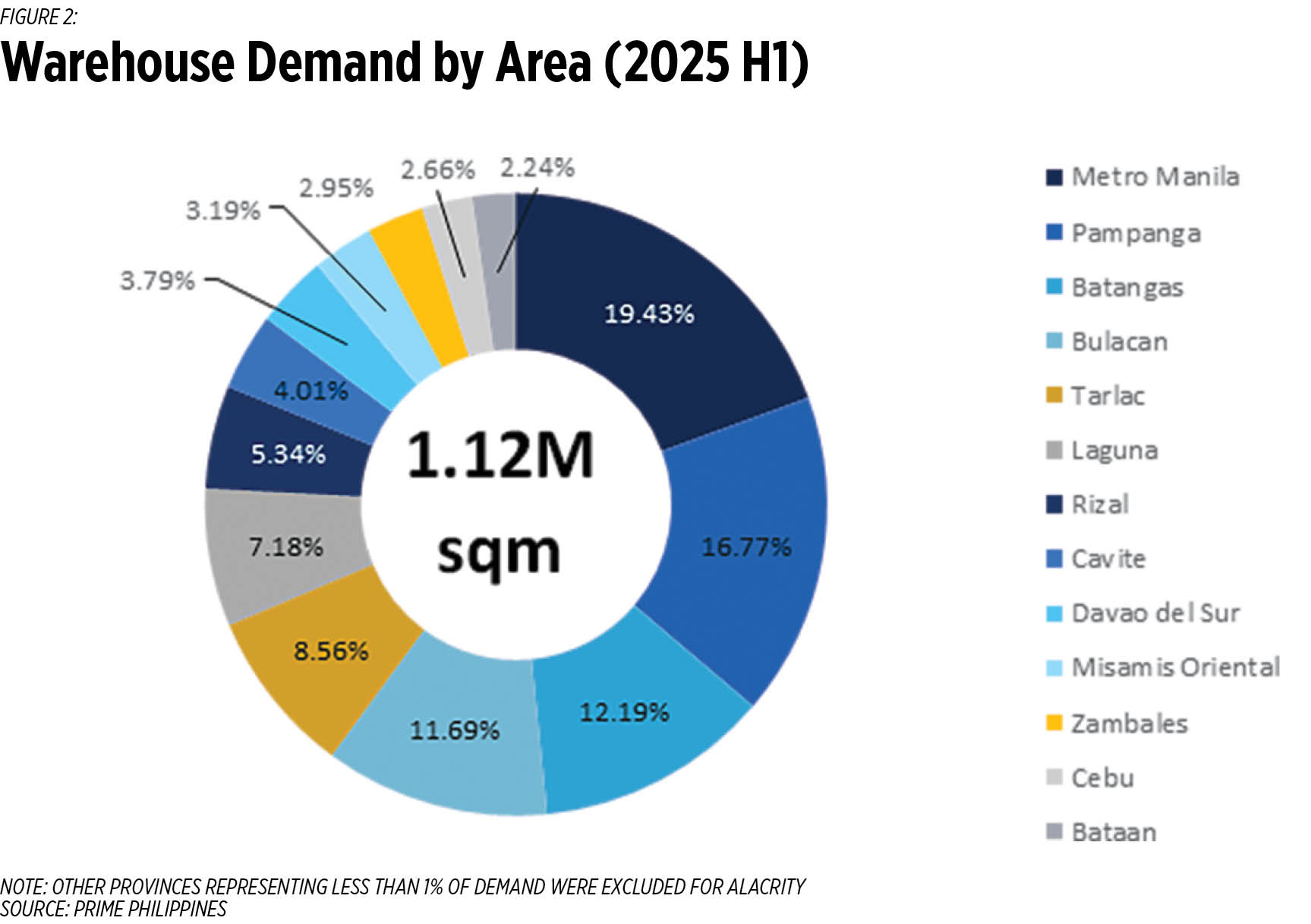
Pampanga, together with the Metro Clark area that extends into northern Tarlac, has emerged as one of Central Luzon’s most dynamic industrial and logistics growth corridors. Once regarded mainly as a secondary support hub to Bulacan, the province has rapidly risen in prominence, accounting for nearly 17% of national warehousing requirements in the first half of 2025, the most of any province.

The province’s connectivity is also among the best in the country, with Clark International Airport serving as a major gateway for cargo and passenger movement, SCTEX linking Clark to the Subic Bay Freeport Zone, NLEX connecting directly to Bulacan and Metro Manila, and future freight infrastructure such as the Subic–Clark Railway and Malolos–Clark Railway set to enhance regional distribution capabilities.

Metro Clark’s industrial surge is matched by a favorable business environment within its economic zones, offering 100% leasehold control for foreign locators, minimal bureaucracy, and a full suite of fiscal incentives from the Clark Development Corp. (CDC), PEZA, and BoI. With world-class connectivity, robust industrial demand, and a pro-investment regulatory framework, Clark is no longer just a strategic alternative — it is quickly becoming a primary choice for expansion. 

Robust port infrastructure and ongoing capacity upgrades fuel Cebu’s steady pipeline of warehouses and cold storages

Cebu’s robust port infrastructure — consistently handling the highest cargo volumes in recent years — anchors its position as Visayas’ industrial and logistics hub. This maritime advantage has enabled Cebu to command the highest average lease rate among key warehousing locations and secure the second-largest cold storage capacity in the country. Reflecting this strength, cold storage developers are doubling down, driving the country’s largest pipeline of new capacity entirely from existing operators.

However, challenges persist. Much of Cebu’s warehouse stock, particularly in the prime area of Mandaue, consists of aging facilities with limited connectivity. Poor zoning implementation and the city government’s push for commercialization have pushed industrial activity outward. Consolacion has emerged as the leading alternative, offering newer warehouse developments and soon hosting the New Cebu International Container Port.

Further northeast, Liloan is poised to become the next catchment area, supported by ample land supply and planned road upgrades. To the south, Talisay serves as Consolacion’s counterpart, with Minglanilla expected to anchor the bulk of upcoming warehouse projects. With port capacity continuing to grow and central warehouse availabilities becoming scarce, Cebu’s industrial expansion will inevitably spread outward, making timely investment in connective infrastructure critical to sustaining growth.

Modern warehouses, economic growth, and infrastructure development build Davao’s industrial edge

Just like Cebu, Davao stands as the most sought-after province for warehousing in its region, recording the third-highest occupancy rate nationwide at 98.3%. Despite robust demand and the presence of modern Grade A facilities that rival those in Metro Manila, average lease rate remains very attractive at P160 per square meter per month.

Its strategic location in the south of Mindanao makes it a vital gateway for logistics and distribution firms serving the southern market, reinforced by robust economic growth and major infrastructure upgrades. These include the Davao City Bypass Road, which will cut travel time between Toril and Panabo by nearly an hour; the Davao City Coastal Road, easing traffic while doubling as a storm-surge barrier; the Davao–Samal Bridge, reducing inter-island travel to just five minutes; and the Sasa Port modernization, which will expand maritime cargo capacity.

Investment appeal is further strengthened by the Davao City Investment Promotion Center, which offers multi-year tax exemptions and non-fiscal incentives such as permit facilitation and business matching.

With the scarcity of central district warehouse space, new developments are shifting northward to Tibungco, Panacan, and Mahayag, where fresh entrants are driving supply growth. Backed by modern facilities, growing connectivity, and pro-investment policies, Davao is poised to cement its role as the strategic industrial nucleus of Mindanao.

Strategic relief, cost reduction, and structural reforms will position the Philippines to capture high-value investments

To sustain industrial growth and attract high-value investments, the Philippines must pair immediate relief with structural reforms. Tariff shocks can be eased through targeted measures such as duty drawback, faster VAT refunds, and selective trade agreements, tied to export performance. Cost competitiveness can be strengthened by offering time-bound electricity subsidies to high-value sectors like semiconductors, advanced manufacturing, and cold storage.

Regulatory bottlenecks require a nationwide single-window clearance system, digitalized processes, and multi-year legislation to ensure policy stability. Skills gaps in advanced manufacturing can be addressed through specialized training hubs in industrial zones, industry-led apprenticeships, and globally recognized certifications.

Finally, port congestion and infrastructure gaps must be tackled through fast-tracking priority projects, improving operational efficiency, and building multimodal connectivity linking industrial parks to highways, ports, and airports.

While the Philippines lags its most competitive ASEAN peers, its strategic location, investment incentives, skilled workforce, and infrastructure pipeline form a solid base of sustainable industrial growth. Addressing cost, skills, and regulatory challenges with urgency could elevate the country from a promising alternative to a primary choice for global supply chain relocation.     


Jet Yu is the  founder and CEO of PRIME Philippines.

PRIME Philippines is the country’s fastest-growing and most disruptive commercial real estate advisory firm. Established in 2013, PRIME has redefined the brokerage industry by replacing outdated practices with innovation, data intelligence, and relentless execution. With full-service offices in Manila, Cebu, and Davao, PRIME has completed over 300 high-impact projects nationwide. Backed by a team of over 100 professionals, PRIME is multi-awarded and trusted by the country’s top developers, investors, and occupiers. It is involved in big ticket office transactions and holds the No. 1 position in industrial leasing nationwide.

Globe celebrates you on its 10th year of GDay

Globe Vice-President and Head of Feel Valued Tribe Bianca Wong opens the GDay 2025 Media Launch, marking the 10th year of Globe’s annual celebration of customer loyalty and connection.

Globe marks the 10th anniversary of its annual GDay celebration this September with a bold promise to bring joy, rewards, and meaningful experiences closer to customers. What started as a simple thank you a decade ago has grown into a nationwide movement, bringing together digital innovation, real-world experiences, and heartfelt surprises that celebrate the Filipino spirit.

“At Globe, we believe the most meaningful rewards are the ones that feel personal, those that are made just for you,” said Bianca Wong, Vice-President and Head of Feel Valued Tribe at Globe. “This GDay, we’re celebrating in a way that recognizes our customers’ diverse passions and everyday wins. Whether it’s a surprise gift or a chance to win larger-than-life prizes on the app, or a fan experience you’ve been wishing for, there’s something in store for everyone to enjoy, tailored to what matters most to them.”

This year, the spotlight turns to everyday moments that feel extraordinary. Across the country, Globe will activate GDay Pop-Up Booths in malls, stores, and neighborhood venues bringing the celebration closer to where customers live, work, and play. These on-ground activations in key cities like Cebu, Davao, Bacolod, Naga, Tuguegarao, and CDO, will transform familiar convergent spaces into joyful brand experiences filled with exclusive promos, partner rewards, and surprise giveaways.

Globe Integrated Program Management Manager Raymond Baritua presents the exciting lineup of activities for GDay 2025, including the G Raffle Rush, Provincial GDay Pop-Ups, GDay Surprise Gift, GFair, and the BINI Fan Meet.

Online, the GlobeOne app is the home of GDay. From daily surprise gifts to chances to unlock exciting rewards, customers can explore a seamless and rewarding journey with every tap. Whether it’s vouchers, lifestyle perks, or something bigger, the GDay Surprise Gift is designed to bring a moment of delight to every day.

For fans and music lovers, GDay 2025 adds a spark of excitement with the GDay BINI Fan Meet, happening on Sept. 13 at the Samsung Performing Arts Theatre. Over 1,500 Globe customers will get to experience a special afternoon with their beloved P-pop group, complete with live performances, fun interactions, and memorable moments on stage. The chance to get tickets will be made available in the GlobeOne app Redeem Rewards section, keeping the spirit of surprise and accessibility alive.

The celebration continues with the biggest G Raffle Rush, running from Sept. 1 to Oct. 31. Every week, customers can look forward to exciting, larger-than-life prizes, starting with a P50,000 grocery shopping spree powered by ShareTreats and P100,000 in GCash. Globe is also giving away a dream Japan trip for four with business class seats via All Nippon Airways, a luxury staycation for two at NuStar Cebu complete with Philippine Airlines Mabuhay Miles, and flagship gadgets from HUAWEI, HONOR, ASUS ROG, and OPPO Philippines. One lucky winner will even take home a BYD Atto 3 Dynamic Battery Electric Vehicle with P75,000 worth of charging credits and freebies from ACMobility through their new EVRO app. To top it all off, customers will have the chance to win not just one but two major properties: a Deluxe Studio Condominium unit in Amaia Steps Pasig and a two-bedroom house and lot in Amaia Scapes Trece Martires.

Customers can rush their way to a free raffle entry via the GlobeOne app to join and also use their available Globe Rewards points to earn more raffle entries and look out for the exciting drops of prizes every week.

Globe celebrates you everyday with personalized rewards made just for you. You can count on Globe to make everyday a GDay!


Spotlight is BusinessWorld’s sponsored section that allows advertisers to amplify their brand and connect with BusinessWorld’s audience by publishing their stories on the BusinessWorld Web site. For more information, send an email to online@bworldonline.com.

Join us on Viber at https://bit.ly/3hv6bLA to get more updates and subscribe to BusinessWorld’s titles and get exclusive content through www.bworld-x.com.

Tech-driven perils reshape Philippine banking landscape

STOCK PHOTO | Image by jannoon028 from Freepik

DIGITALIZATION has changed the way Philippine banks do business, and the coronavirus pandemic helped speed up the online shift even among customers, pushing preference for real-time payments as a matter of convenience.

But the move towards the digital space has also forced them to go beyond traditional communication methods and customer service channels and tap social media to engage with current and potential future clients.

The 2025 Global Digital Report by consumer intelligence firm Meltwater and creative agency We Are Social said that Filipinos spend an average of eight hours and 52 minutes daily on the internet, ranking third worldwide and well ahead of the global average of six hours and 38 minutes.

Filipino internet users aged 16 and above also ranked fourth globally in terms of social media usage, spending an average of three hours and 32 minutes on social media daily, the report also showed.

For the banking industry, which is in the business of handling other people’s money, reputation is a key currency — and with the way social media platforms are built, one isolated incident or complaint can spread like wildfire in a matter of minutes and cause problems for these institutions.

The Bangko Sentral ng Pilipinas (BSP) is well aware of the double-edged nature of social media. In 2021, it released rules on reputational risks, requiring all its supervised financial institutions to immediately report any incidents that could potentially impact their financial standing and affect stakeholder confidence.

This includes any issues raised on social media platforms that may affect its stakeholders and “lead to a full-blown crisis if not responded to in a timely and effective manner,” the BSP added.

“The business of banking is based on trust and confidence. And you know how trust and confidence can be eroded. Let’s say, you publicize in social media that this bank was hacked. This bank was victim of a major security breach,” BSP Deputy Governor for the Corporate Services Sector Elmore O. Capule said in a recent interview.

“In banking, your reputation is everything. So, unlike before, it escalates over a period of time. Before, there was panic. Now, because of social media, practically, it’s instantaneous. Whenever we see, let’s say, there’s news that this bank was victimized, in a matter of few hours, if you’re monitoring social media, its expansion is geometric.”

Mr. Capule said this puts banks in a tight spot as the real-time nature of social media requires them to respond immediately.

“Unlike before, if something happens, the calibration time is longer to make a response. Now, it’s practically real-time. So, in order to protect their reputation, they have to be able to respond very fast. And in banking, reputation is everything. So, it’s a challenge,” he said.

“But for me, in banking, that’s a drawback. Because in banking, there has to be a response. Now if you start reducing the response time, then the effectiveness of our tools to prevent panic, et cetera, is severely degraded. Let’s say, there’s panic. By morning, there’s a bank run… So, how do we react? It degrades that reaction time. For me, that’s the major issue.”

With the rise of digital banking platforms, a social media-driven bank run can happen in a matter of hours as customers can withdraw their funds instantly.

“Imagine, in a traditional bank, we have panic. What do I do? I run to the branch, fall in line. If you’re a digital bank, or digital electronic transfers, I can do the withdrawals at midnight. It changes the equation,” Mr. Capule said.

“That’s the challenge, right? How fast can you respond to the depositors for them to calm down?… If a banking crisis will happen now, how fast can the bank respond and the government respond?”

Bankers Association of the Philippines (BAP) President and Bank of the Philippine Islands (BPI) President and Chief Executive Officer Teodoro K. Limcaoco shared the same concern, noting that misinformation and disinformation is easier than ever to spread via social media platforms.

“There’s the ability of information to spread faster than it normally would. It’s a negative because you need to correct misinformation. You have to correct things that are not quite accurate. You have to get to that faster than ever before. And social media is just so pervasive. Unlike before when it was traditional media, if there was something misprinted by mistake, it’s easy to go to one person and correct it. Social media, let’s say someone comes up with a wrong fact or puts up a wrong card and it spreads, even if you correct that card, it’s gone beyond it,” Mr. Limcaoco said.

On the flip side, social media is also a convenient tool for banks to reach a wider audience — whether it’s to promote their products and services, respond to concerns, or warn them of emerging threats.

“Social media seems to be one of the main channels that people receive information. So, for banks, whether it’s BPI or any responsible bank, we do use social media to educate our clients and to market our products,” Mr. Limcaoco said.

“When things like Facebook and social media were just beginning, a lot of the big companies actually paid very little attention to it. Traditional media was still the main way of communicating. Today, I think there’s an equal emphasis on traditional media and social media.”

On BPI’s part, Mr. Limcaoco said the bank uses various social media platforms and forms of content to appeal to different kinds of audiences, making sure to be both informational and entertaining to make even just the idea of financial services more accessible.

“It’s hard. It’s really trying to reach people and make sure they have the willingness to learn as well. We’re out there, BPI, the BAP, all the member banks, we all have some program on financial literacy. It’s just getting the people to accept it because it does take time. Would you go to school for financial literacy? Let’s say we wanted everyone to do cooking — some people just don’t see the interest,” he said.

“Many people don’t understand the need for financial literacy… It’s just a matter of people being willing to learn and seeing the need to learn.”

FINANCIAL SCAMS
Improving financial literacy has become especially important in the digital age, which has given rise to the proliferation of scams via online channels, highlighting growing cybersecurity risks in the industry.

The BSP earlier said that its supervised financial institutions lost P5.82 billion from cyberattacks in 2024, up 2.6% from the previous year. Top cybersecurity risks faced by the industry include phishing, “card-not-present” fraud, account takeover or identity fraud, and hacking.

A survey released by global analytics software firm FICO in May 2024 showed that Filipinos are most concerned about falling for financial scams amid the surge in real-time payments, with 35% of respondents saying their top worry is the risk of being tricked into sending money to criminals.

Meanwhile, concerns about identity theft also persist among Filipino respondents, with over 23% citing it as their top financial crime concern. This was followed by having a bank account taken over by a fraudster (16%), their credit or debit card being stolen and used (13%), their cash being stolen (8%), and fake online retailers and fake advertisement tricking them into buying goods that never arrive (6%).

Sumsub Asia-Pacific Vice-President Penny Chai said one of the most prominent types of fraud driven by social media is romance scams.

“Romance scams often start on social media, dating apps, or chat platforms, where fraudsters can create believable profiles, sometimes using deepfake photos or videos to appear real. Once trust is built, the fraudster can create an elaborate story, like a sudden medical emergency, to extract money from a smitten victim fast,” Ms. Chai said. “Romance scams alone are already incredibly damaging but what’s more troubling is that they are increasingly part of larger, organized fraud networks… Such incidents highlight how the issue is not just limited to financial crime but part of a larger problem of human exploitation.”

“Social media has also made it easier for criminals to recruit money mules, especially young adults and students. Targeted online with false promises of easy cash, they are tricked into handing over their bank or credit card accounts to be used for laundering illicit funds,” she added.

The growth of artificial intelligence (AI) technologies has also resulted in increasingly sophisticated cyberattacks, with fraudsters now using bots to scrape data from various sources to build fake identities, Ms. Chai said.

Laws like the Anti-Financial Account Scamming Act (AFASA), which was signed in 2024 and implemented earlier this year, aim to address the increase in cybercrime involving financial institutions.

Prohibited acts or offenses under the AFASA include money mule activities and social engineering schemes, mass mailers, or human trafficking, as well as other offenses such as opening a financial account under a fictitious name or using the identity or identification documents of another person.

Under the implementing rules of the AFASA released by the BSP, banks are allowed to temporarily hold funds which are the subject of disputed transactions for acts prohibited under the law.

“I think AFASA is a major step towards fighting cybercrime… AFASA gives us the leeway and gives the ability for customers to report quickly to the bank and puts the responsibility of the bank to act on it quickly. It gives us the ability to go to the recipient bank, meaning the bank of the scammer, and try to hold those funds and try to retrieve them. So, AFASA gives us some rights that we didn’t have before. And therefore, we just have to figure out how to operationalize it,” Mr. Limcaoco said.

“The problem with cybercrime is the money gets in and then gets pulled out right away. So, AFASA gives the receiving bank the ability to hold the money first. It doesn’t have to return it, but you hold it, so it doesn’t get lost. That’s a major step that as the receiving bank, I can hold it. If I think it’s suspicious, I can hold it, and without any fear, because it’s part of the law.”

KEEPING UP WITH DIGITALIZATION
As technologies continue to evolve, Philippine banks need to keep up to reap the benefits of digitalization while guarding against the accompanying risks at the same time.

BSP’s Mr. Capule said their risk management regulations require banks to put in place systems to protect themselves and their customers from potential threats, including those stemming from the use of social media and the industry’s ongoing digital shift.

Moody’s said they expect more Philippine banks to adopt AI solutions to comply with regulatory requirements.

“Like their global counterparts, Philippine banks are increasingly adopting AI — particularly machine learning — for fraud detection and transaction monitoring. These tools help flag suspicious activities, enhance customer due diligence and analyze historical transaction data to combat digital banking scams and identity fraud. However, adoption remains in the early to mid-stages, with most efforts focused on pilot projects in fraud detection and basic automation,” it said in an e-mail.

“In addition, banks face unique challenges. With over 14 types of acceptable identity documents in the Philippines, establishing a single authoritative identity source is difficult and complicates fraud detection. The prevalence of money mules — where account holders collude with bad actors — also makes traditional rule-based detection ineffective. These complexities make AI adoption essential.”

However, operational, structural, and regulatory issues continue to hinder widespread AI adoption in the Philippines, it said.

“Globally, governance is still catching up with the rapid evolution of GenAI (generative AI). To navigate these complexities, banks need multi-disciplinary teams spanning technology, governance, ethics, business and data science. Agility is key,” Moody’s said.

It added that banks should be strategic about their AI and technology investments to unlock these solutions’ full potential.

“Banks must be clear about when to build and when to buy, and budget accordingly. While GenAI proofs of concept can be created quickly, the final stages — evaluation, guardrails and testing — are where challenges can surface. As regulated entities, banks require deterministic outcomes (where an exact input must equate to an exact output), but GenAI’s probabilistic nature makes this challenging. Bridging this gap requires partnering with established organizations that have invested resources in solving these problems,” Moody’s said.

“Well-targeted tech investments can significantly boost banks’ performance. Those that invest in AI and digital tools can benefit from faster credit decision-making, better fraud prevention and deeper customer engagement, which improve efficiency and trust. Enhanced data capabilities also support financial inclusion by enabling banks to better serve underbanked populations… In a market with a saturated banked population and many underbanked individuals, AI is a key differentiator. Banks that embrace it will be better positioned to compete and grow.”

To help combat financial fraud, Sumsub’s Ms. Chai said Philippine banks should adopt a multi-layered approach that is adaptive as these threats also continuously evolve.

“As fraud becomes more organized, scalable, and sophisticated, with tactics like deepfakes, synthetic identities, and organized fraud networks, relying on a single point of defense like OTP (one-time password), is no longer viable. Replacing OTP with biometric authentication is becoming a critical layer of protection, offering stronger identity assurance and reducing friction for users,” she said.

“What’s needed is a multi-layered approach that looks at the bigger picture. It’s not just about verifying someone once but about understanding how users behave over time, spotting patterns by ongoing monitoring, and being able to act quickly when something feels off. This is especially important since most fraud (76%) happens after the KYC (know your customer) process.”

Having these measures in place will help build Filipinos’ trust in the digital economy and make them less vulnerable to fraud, Ms. Chai added.

The AFASA’s implementing rules require banks to have a fraud management system for monitoring and flagging suspicious and fraudulent transactions.

Mr. Capule acknowledged that these systems can be expensive. “But that’s the cost of doing business,” he said.

All in all, these regulations will help ensure the stability of the Philippine financial system as the industry continues to evolve — and even with the threat of technology-driven bank runs, Mr. Capule said.

“Definitely, we have a lot of systems in place… But of course, we haven’t tested it yet. Thankfully, not yet. We’re looking at when we’ll have a major bank run… So, hopefully, the system is in place. But of course, if it happens, it’s the first time we’ll see it.” — Aaron Michael C. Sy