Home Blog Page 5021

Game-changing reforms

PHILIPPINE STAR/KRIZ JOHN ROSALES

Former President Rodrigo Duterte may have been better known (notoriously?) for his controversial drug war internationally, but his substantial legacy has been on the economic front. Despite the economic contraction that happened under his watch during the pandemic, he can be credited with numerous game-changing economic and social legislation.

Here’s a partial list: the Rice Tariffication Law, the Corporate Recovery and Tax Incentives for Enterprises Act better known as CREATE (reforming incentives and reducing taxes), the Tax Reform for Acceleration and Inclusion Law or TRAIN 1 (reducing personal income taxes on individual taxpayers), the Public Service Act Amendment (liberalizing foreign ownership in transport and telecommunications), amendments to the Corporation Code, the Build-Build-Build Program (hiking infrastructure spending to 5% of GDP), the Foreign Investment Act Amendment, the Retail Trade Liberalization Law, membership in the free trade bloc RCEP (Regional Comprehensive Economic Partnership), amendments to the Bangko Sentral ng Pilipinas (BSP) and Social Security System (SSS) Charters, the Increased Sin Taxes (RA 11346 and 11467), the Ease of Doing Business Law, the Real Estate Investment Trust Revised Implementing Rules and Regulations,the Personal Property Security Act (RA 11057), EO 127 on Satellite Broadband, EO and DAO on mining permit liberalization and lifting open pit mining ban, RA 11231 (Agricultural Free Patent Law) and RA 11573 (Land Titling Simplification Law) and, lastly, a political and economic achievement, the Comprehensive Bangsamoro Peace Agreement.

What about President Bongbong Marcos? So far, I haven’t seen his administration putting game-changing reforms or economic legislation on his agenda, save for one or two. The ratification of the country’s membership in RCEP and the issuance of the Implementing Rules and Regulations of the Public Service Act Amendment may be said to be game-changing, although the initiative started with the previous administration.

Another initiative that started under the previous administration (by former Socio-economic Planning Secretary Karl Chua) but which the Marcos Jr. administration implemented is the liberalization of foreign investments in the Renewable Energy sector. Previously, only majority-owned Filipino firms were allowed to invest in solar, wind, and ocean, under the old protectionist Department of Energy (DoE) Implementing Rules and Regulations (IRR).

However, Marcos Jr.’s Department of Justice issued an opinion that the natural resources provision in the Constitution didn’t cover solar, wind, and ocean as these energy sources weren’t depletable and represented kinetic, rather than potential energy. The DoJ opinion paved the way for the energy department to issue a new IRR to allow 100% foreign ownership in solar, wind, and ocean projects.

Because of this new IRR, a Danish firm, the Copenhagen Infrastructure New Markets Fund, recently pledged to invest $5 billion in developing 2,000 megawatts (MW) of wind energy in the Philippines. Kudos to Energy Secretary Raphael “Popo” Lotilla, who had been championing this reform, and Justice Secretary Crispin Remulla for making this investment possible.

A reform that the Marcos administration can rightfully proclaim credit for is the amendment to the IRR of the Build-Operate-Transfer (BOT) law or Public-Private Partnership law. The Duterte administration rushed a BOT IRR that was unfriendly to private investors before bowing out. Faced with an unfavorable fiscal climate for increasing infrastructure spending, the Marcos administration rightfully corrected the BOT IRR.

However, implementation is still unremarkable, and we have yet to see a fat pipeline of projects that will see fruition soon.

A piece of the Marcos administration economic legislation that could be game-changing is the New Agrarian Emancipation Act, which has yet to be signed by the President into law, although the bill had been ratified by both the House and the Senate on March 22.

The New Agrarian Emancipation Act condones agrarian reform beneficiaries’ P57-billion debt covering 610,054 agrarian reform beneficiaries (ARBs).

Probably, the Marcos Jr. administration wasn’t looking or was totally clueless, but the New Emancipation Act could have been a giant step backward rather than forward. As I wrote about in my last column, the House version contained a pernicious provision that said condoned farmers are prohibited from selling or leasing their land for 10 years, thereby preventing any form of land consolidation and tying them to the land even if they are too old or unwilling to farm.

Fortunately, the Senate dropped this provision during plenary and its version was eventually adopted in the bicam version ratified by the House and Senate. Both chambers, however, decided not to touch the existing Comprehensive Agrarian Reform Law (CARL), which contained a provision that agrarian reform beneficiaries can’t sell or lease their land for 10 years.

However, because CARL started in 1987 and we have the longest-running land reform program in the world, the majority of the Certificates of Land Ownership Award or CLOAS issued are now more than 10 years old.

I said the legislation could be game-changing because it will allow farm consolidation by leasing. However, it may be too soon to celebrate yet. After it’s signed by President Marcos Jr. into law, the Department of Agrarian Reform must formulate the IRR. It could put up new obstacles like requiring its permission for any sale or lease.

The administration should also optimize this law by getting the Land Bank or the National Development Company to consolidate farmlands by leasing them and subleasing to agribusiness ventures. And, no, this won’t lead to the displacement of farmers. Firstly, they will earn a rental income rather than the paltry income they earn from farming their own small plots presently (that is why most farmers now are just working part-time in farming). Secondly, they could be hired as farmworkers with more benefits and a steady income in larger, more productive agribusiness farms.

Apart from the New Agrarian Emancipation Act, I don’t see anything substantial in Mr. Marcos Jr.’s agenda that could be game-changing. The Maharlika Investment Bill, if passed into law, could even be a black mark on his record. The benefits of a merger of the Development Bank of the Philippines (DBP) and Land Bank are doubtful. TRAIN 3 or the Land Valuation Act, which started under President Duterte, has yet to be passed into law.

Charter Change to remove the foreign ownership restrictions in the Constitution can be game-changing, but Mr. Marcos Jr. has shown little enthusiasm for it.

There’s a lot of nice legislation in the Philippine Development Plan but I don’t consider them game changing. None of them address the big binding constraints to Philippine growth.

What are some of these game-changing legislations that I would like to see?

I would like to see an Apprenticeship Law. The present Apprenticeship law in the Labor Code restricts apprenticeship to technical industries only and limits it to six months. An expanded Apprenticeship Law will involve the private sector in improving the training and increasing the productivity of our workforce, most of whom graduate from K-12 without employable and relevant skills. An Apprenticeship Law will be both a labor market and education reform.

The economy should get a boost and food inflation could be controlled if the administration abolishes all quantitative restrictions and applies tariffs on all food imports, just as the previous administration did with rice with the Rice Tariffication Law. Short of that, the administration should pass a Livestock Development bill that will reduce the tariff on corn, which accounts for 60% of the cost of livestock. Our neighbor, Vietnam, imposes a 2% tariff on corn, while we insist on controlling the importation of corn and impose a tariff of 15% for out of quota importations when our projected shortage is 2 million metric tons annually. The result is high prices for pork and chicken, making them unaffordable to poor families suffering from protein malnutrition.

With the price of rice expected to increase in the coming months due to events beyond the administration’s control, such as the global shortage of fertilizers and the coming El Niño or dry season, the administration should be proactive and get the price of corn, a staple substitute, to fall. Otherwise, the administration may face a political crisis if both the price of rice and corn become unaffordable.

There are other bills that I would like to see go into law that are similarly game-changing: The Tree Growing Bill and the Forest Cadaster Bill, which will spur the development of the wood industry and help regreen our denuded forestlands; the repeal of RA 3018 and amendment of PD 194, which will liberalize foreign investment in the critical rice and corn sectors; and the Salt Industry Development Act, which can reverse the decline of the domestic salt industry.

If President Marcos Jr. wants to equal or surpass the economic achievements of former President Duterte, he must do more in getting game-changing economic legislation passed. Merging the DBP with Land Bank and organizing an ill-conceived Maharlika Investment Fund are not going to be up there with the historic economic achievements of President Duterte like the Rice Tariffication Law or the Public Service Act Amendment. These won’t make, in the words of his father, “this nation great again.”


Calixto V. Chikiamco is a member of the board of IDEA (Institute for Development and Econometric Analysis).


totivchiki@yahoo.com

EO on digital infrastructure should target red tape

KEVIN KU-UNSPLASH

The reality of red tape has crippling consequences to our nation. Red tape is a euphemism for the numerous bureaucratic bottlenecks, usually of a corrupt or administratively inefficient nature, that delay what should be a logically necessary and efficient process.

Alas, red tape has become so institutionalized and tolerated that it has become a critical factor in the timelines of projects, notwithstanding these projects’ potential benefits to society and to the economy. Without red tape, doing business would be easier. And when there is ease of doing business, investments both foreign and domestic would come.

The curious thing is that eliminating or even minimizing red tape in specific fields has been shown to yield extraordinary results that should prompt our government leaders to act decisively on this regard.

For example, in the area of telecommunications and connectivity, two joint memorandum circulars addressing red tape have resulted in drastic changes that have translated into tangible benefits to the people. This is because it was found that while there is urgency to build digital infrastructure as fast as we can to cover more areas in the Philippines, various forms of bureaucratic gate-keeping — not the lack of technology or even capital resources — have prevented telcos from providing better and wider connectivity.

The are two anti-red-tape policies that have been proven effective — JMC no. 1 series of 2020 for the issuance of permits, licenses, and certificates for the construction of telco towers, and JMC no. 2 for the installation of telecommunication and internet infrastructure. These were jointly issued by the Anti-Red Tape Authority, the Department of Information and Communication Technology, Department of the Interior and Local Government, Department of Public Works and Highways, Department of Health, Department of Human Settlements and Urban Development, the Food and Drug Administration, the Civil Aviation Authority of the Philippines, the National Telecommunications Commission, and the Bureau of Fire Protection.

The processing times to secure permits were drastically reduced: from eight months to 16 days for telco towers, and from 2.5 years to just two and a half months for other infrastructure. The number of permits that had to be obtained went down from 13 to eight, and the number of other required documents fell from 86 to 35.

Because of this bureaucratic streamlining, approximately 7,000 additional towers were built in just 18 months, bringing the total to 29,700 from 22,700.

However, these JMCs that rationalize and clearly articulate bureaucratic guidelines have a fixed shelf life — they would only be in force until July of this year. What will happen after that?

This is the reason the Private Sector Advisory Council (PSAC) and the Anti-Red Tape Authority (ARTA) have called on the government to issue an executive order (EO) to cover the provisions of the two circulars.

An EO, unlike a JMC, has the force and effect of a law that would compel all local government units and agencies to abide by the guidelines designed to make licensing and permitting processes more efficient.

The benefits of connectivity have always been there but were made even more evident during the pandemic-induced lockdowns, when people were forced to work, learn, and perform business transactions and personal interactions from their homes.

Then again, even without the pandemic to remind us, digital transformation has always been prescribed as indispensable to economic recovery and sustainable development. When a country’s digital infrastructure is in place and up to speed with global standards, that country becomes more competitive and attractive to investors.

There is a direct correlation between a country’s digital competitiveness and its economy. For example, in the 2022 IMD World Digital Competitiveness, Denmark was ranked first because of its level of digital readiness, integration of digital technologies, business agility, and adaptability.

The ranking, according to the Director of the World Competitiveness Center (WCC), Arturo Bris, describes the importance of national factors in explaining the digital transformation of companies and the adoption of digital practices by citizens. “Digital nations result from a combination of digital talent, digital regulation, data governance, digital attitudes and the availability of capital,” he said.

Following Denmark are the United States, Sweden, Singapore, and Switzerland. The Philippines, on the other hand, is at 56th place out of 63 countries ranked.

In his many pronouncements, President Ferdinand Marcos, Jr. has articulated that he recognizes the need to fast-track our digital transformation for economic growth, development, and being at par with other countries. It is heartening to hear that the Palace seems digital transformation is needed to propel our country forward.

President Marcos has also cited the critical role of the private sector as partners in nation-building. Indeed, foreign investors and the private sector will generate jobs and economic opportunities, allowing Filipinos to upgrade their skills and thrive in the digital economy.

But these pronouncements to expand and enhance connectivity should be backed by accelerative policies like PSAC and ARTA’s proposed EO on digital infrastructure that needs immediate action by the President.

We trust that our leaders fully appreciate how critical the digital infrastructure EO will be in achieving economic recovery goals. The long-term utility and inclusive empowerment of a robust and extensive digital infrastructure network will serve as the backbone of our competitiveness and growth in the global digital economy.


Victor Andres “Dindo” C. Manhit is the president of the Stratbase ADR Institute.

Higher Education in the context of a world in flux

McKinsey & Company, a global management consulting firm, recently published a report that describes the post-COVID world as a “world in flux.” Flux is a word that is normally attributed to a constant oscillation between one state to another. It describes change, but change that is sudden and even violent.

The pandemic indeed created so many life-altering changes that were so sudden on an individual and organizational level. So it is not surprisingly that these abrupt changes have brought out the best and the worst in all of us.

In higher education, there are three notable changes: 1.) the use of technology to enhance teaching and learning; 2.) the rise of transdisciplinary research; and, 3.) the need to go beyond societal impact.

TECHNOLOGY-ENHANCED EDUCATION
Online teaching and learning have created opportunities for educators to understand and explore digital technologies in communicating, instructing, assessing, and interacting with learners. While this is not new, its uptake has increased dramatically as instructors find it useful in redesigning their course offerings and making them more suitable in the 21st century.

In order to maximize the achievement of learning outcomes in digitally enhanced learning spaces, behavioral and institutional barriers must be addressed. As we move forward to coming back to our physical campuses, it is worth noting that ultimately, there should be no distinction between digital and physical learning spaces because we should be able to seamlessly learn in all kinds of spaces.

In particular, universities must recognize the value of adult learners as independent and mature, where rote learning should no longer be the norm. For meaningful learning to take place, self-directed learning and social constructivism as key guiding principles should be used as bases for reimagining what institutional support mechanisms should be provided.

TRANSDISCIPLINARITY
Similarly, transdisciplinarity is nothing new. It connotes the transcendence of knowledge beyond disciplinal boundaries to create a holistic approach in understanding and solving a complex problem. This term was introduced in the 1970s and later on, formalized as a research community in 1987 when the International Center for Transdisciplinary Research and Studies (CIRET) was established. In its charter, CIRET pointed out value of transdisciplinarity: that societal problems are so complex that a single discipline will not be adequate to even sometimes formulate a good research question.

Transdisciplinarity also necessitates the inclusion of non-traditional stakeholders in the research process such as industry, civil society, and community-based organizations. This democratizes how knowledge is being produced, communicated, and eventually used for public policy purposes. There were countless examples of these during the pandemic, when the need to understand and find a cure for the virus required the participation of those who were not only in the field of life sciences and medicine, but also mathematicians, anthropologists, community health and data science among others.

While there continue to be many debates surrounding transdicplinarity, but we cannot deny its significance now as our world is in a flux.

MAKING A STAND
Universities are created to serve societal needs. As the world we live in gets more complex and unpredictable, the operationalization of this mission becomes more challenging. Often, it requires a substantial amount of resources to generate desired results and make an impact in sustainable development goals that matters most.

About a decade ago, many Higher Education Institutions (HEIs) in the country started to institutionalize service learning in their curriculums. This credit-bearing educational approach that combines learning objectives with community engagement and service was an effective way to develop not only critical thinking and problem-solving skills, but also co-develop solutions to complex challenges that a partner community is currently facing.

But social engagement is no longer enough in a world that is in flux. Making the world a better place demands that universities must also make a clear stand on matters that are unjust. This lens had taken a back seat, perhaps, when most universities were focused on the internationalization of the 4th Industrial Revolution five years ago.

But the fact is that our political landscape has shifted. Political responsibility must be reinstated as part of the operationalization of every university’s core mission. It is true that taking on a clear position is not cost-free, but having a vague or no position is even costlier. Ultimately, HEIs duty is to protect and promote values that necessitate everyone to live a productive and decent life; values such as human rights, dignity of labor, diversity, equity and inclusivity, etc.

NAVIGATING THE FLUX
For HEIs to navigate these changes successfully, behavioral and institutional barriers must be addressed.

First, collaborative learning should be embedded in all aspects of the university — teaching and learning, research, industry engagement, including within its own operational aspects. However, I would like to put a caveat. What we do NOT want to see is the proliferation of “collaboration” (i.e., putting people in groups to do a project). What we wish to develop is a mindset of learning through working together — whether inside the classroom, in digital spaces, in laboratories, or in the offices. A university is, in the end, a learning community. Knowledge cannot be taught; it must be developed together, even if we do not agree with each other.

Second, HEIs must ensure that the structures it provides cultivate its mission and goals. An organization cannot be in the mission of bridging inequalities if it cannot address the inequalities within its own backyard. Some of these inequalities are obvious: students’ access to technologies and other learning resources, junior researchers’ access to funding, the inadequate support to post-retirement academics, etc. But some are more discreet: mental health issues, the lack of child care facilities for young employees who are struggling to balance work and family obligations, and the lack of representation of non-teaching staff in policy tables, to name a few.

Indeed, the pressures of sudden episodes of change affect every employee and students alike. The challenge therefore is how to better navigate these nuances and ensure that the university continues to be a relevant and caring place of learning and of work.

Third, for a university to successfully navigate a world in flux, it requires leadership with a mindset of resilience as well as humility. Many have written about resiliency and how this is a necessary trait to lead the workplace today. But to be resilient also means having the courage to admit you have made a mistake and will strive to do better. There will always be failures; this is a fact. But the goal is to use these as opportunities for learning. Humility also reinforces the need to be transparent in the decision-making process, not only in the decisions leaders make. People, most especially those in the frontlines of the organization, must be able to understand and take part in this process because their personal and professional lives will be affected by these. What truly matters now, more than ever, is the assurance that there is a conscious and deliberate choice for universities to hold their leaders accountable for their actions towards their responsibilities — and that this is implemented in a structured and consistent manner.

In the end, a world in flux needs a university that espouses collaborative learning within and outside its own organization, by moving beyond disciplinal and traditional boundaries in order to holistically understand the challenges. To do this will necessitate leadership that is not afraid to admit mistakes done, that is committed to learn and be better, and make bold and decisive decisions that are not only socially relevant but also politically essential.


Anne Lan K. Candelaria, Ph.D. is the Associate Dean for Graduate Programs of the Ateneo de Manila University. She is also an Assistant Professor of the Department of Political Science.

Strengthening regulations on e-money

CHRISTIANN KOEPKE-UNSPLASH

With fast-paced digitalization, electronic money (e-money) has rapidly become a regular part of the public’s daily transactions, particularly in the urban and urbanized areas. Since its introduction, e-money has much evolved, with various industry participants introducing differing consumer e-money products and platforms. During the recent pandemic, such e-money system has further become the staple transaction media of many consumers considering the convenience of its use. As of mid-2022, one of the largest EMIs (based on customer base) recorded over 60 million users, constituting 83% of the adult population in the Philippines.1

Given these rapid developments, local regulations are expected to keep abreast with changes in the manner by which the public transacts with e-money in light of its present scale. Hence, on Feb. 7, the Bangko Sentral ng Pilipinas (BSP), in an effort towards strengthening the regulation of e-money issuers (EMI), released BSP Circular No. 1166 series of 2023 amending the pertinent provisions of the Manual of Regulations for Banks (MORB) and the Manual of Regulations for Non-Bank Financial Institutions. The new BSP issuance on e-money aims to promote public safety and protection in dealing with e-money by updating regulations to be responsive and adaptable to existing circumstances.

Among the amendments introduced by the Circular are the expansion of the definition of e-money and the imposition of additional disclosure requirements as well as higher liquidity and capitalization requirements on EMIs.

NEW DEFINITION OF E-MONEY
Under previous regulations, e-money was defined as the monetary value as represented by a claim on its issuer that is: 1.) electronically stored in an instrument or device; 2.) issued against receipt of funds of an amount not lesser in value than the monetary value issued; 3.) accepted as a means of payment by persons or entities other than the issuer; 4.) withdrawable in cash or cash equivalent; and, 5.) issued in accordance with the provisions of existing regulations.2

E-money is now defined as electronically-stored monetary value that is: 1.) maintained in a non-interest-bearing non-deposit transaction account; 2.) denominated in or pegged to the Philippine peso or other foreign currencies; 3.) pre-funded by customers to enable payment transactions; 4.) accepted as a means of payment by the issuer and by other persons or entities including merchants/sellers; 5.) issued against receipt of funds of an amount equal to the monetary value issued; 6.) represented by a claim on its issuer; and, 7.) withdrawable in cash or cash equivalent or transferable to other accounts/instruments that are withdrawable in cash.3

While it appears that the definition has been substantially modified, certain additions were merely reproduced from the previous regulation and incorporated into the new definition of e-money. For instance, the new definition includes the phrase “non-interest-bearing non-deposit transaction account” based on other provisions of the previous regulations which already indicated that e-money shall not earn interest and are not deposits.

However, the following are the significant changes in the definition of e-money:

Being accepted as a means of payment by the issuer is no longer per se an exclusion from the definition. This means that acceptance for payment by the issuer does not result in taking out the instrument or device from the definition of e-money. However, it must be emphasized that the Circular distinguishes between a closed-loop and an open-loop electronic wallet system. Closed-loop electronic wallet system, pertaining to those wherein the money is accepted as a means of payment only by the merchant-issuer, is not covered by the relevant provisions of the MORB.4

Transfer to other accounts/instruments that are withdrawable in cash is now included as a means of redemption.5 Under previous regulations, the definition limits redemption of e-money to withdrawal of cash or cash equivalents. With the new definition of e-money, systems which only allow transfer to other accounts/instruments that are withdrawable in cash, even if such systems do not in itself provide for redemption in cash or cash equivalents, are now covered by regulations on EMIs.

The BSP reported 70 supervised e-money issuers as of Feb. 3.6 Given the foregoing modification in the definition of e-money, it is expected that more players may now be considered as EMIs and fall within the coverage of the relevant BSP regulations.

ADDITIONAL COMPLIANCE REQUIREMENTS FOR EMIS
The Circular requires EMIs to provide clear terms and conditions on the use of e-money and obtain acknowledgment from users and merchants that they have read the terms and conditions prior to their availment of e-money services.7 This disclosure requirement appears to be an attempt by the regulators to ensure transparency to the public when dealing with e-money, and, at the same time, to require EMIs to educate new consumers on the uses of and risks associated with e-money.

EMIs are also mandated to participate in the automated clearing house in accordance with the National Retail Payments Systems Framework.8 With this requirement, the transfer of e-money becomes closely integrated into the banking and payment system.

The new capitalization requirements for EMIs shall now be the higher of: a.) the required minimum capitalization for banks or non-bank financial institutions (NBFI) depending on bank category or NBFI type, respectively, or, b.) the minimum required capitalization based on EMI category as large scale (i.e., P200 million capital requirement) or small scale (i.e., P100 million capital requirement). A large-scale EMI is one with a 12-month average value of aggregated inflow and outflow transactions equal to or greater than P25 billion.9

Further, to be able to meet e-money redemptions at all times, EMIs are required to maintain sufficient liquid assets equal to the amount of the outstanding e-money issued for each currency in which the e-money obligations are denominated, subject to the criteria provided under the Circular.10

Existing EMIs authorized to issue e-money or engage in e-money operations must, within three months from effectivity of the Circular, submit to the BSP a certification of compliance with the applicable requirements above and, if necessary, an undertaking for full compliance therewith within one year from issuance of the Circular.11

In view of the foregoing amendments, prudence requires banks and NBFIs under the supervision of the BSP to re-assess whether the products or services they offer to the public fall within the new definition of e-money and to evaluate whether they meet the new compliance, liquidity, and capitalization requirements imposed by the BSP.

1 Cordero, T., “GCash now has over 60M users, covering 83% of adult population” published on May 24, 2022, available at https://www.gmanetwork.com/news/money/companies/832676/gcash-now-has-over-60m-users-covering-83-of-adult-population/story/.

2 Manual of Regulations for Banks, Section 702.

3 Manual of Regulations for Banks, as amended by BSP Circular No. 1166 series of 2023, Section 702 on Definition of Terms.

4 Ibid.

5 Id.

6 BSP List of Supervised EMIs published on Feb. 3, available at https://www.bsp.gov.ph/Lists/Directories/Attachments/7/emi.pdf

7 Manual of Regulations for Banks, as amended by BSP Circular No. 1166 series of 2023, Section 702 on Disclosure Requirements.

8 Manual of Regulations for Banks, as amended by BSP Circular No. 1166 series of 2023, Section 702 on Interoperability of Systems.

9 Manual of Regulations for Banks, as amended by BSP Circular No. 1166 series of 2023, Sections 702-Q, 402-S and 402-N on Capital Requirements.

10 Manual of Regulations for Banks, as amended by BSP Circular No. 1166 series of 2023, Section 702 on Liquidity Requirements.

11 BSP Circular No. 1166 series of 2023, Section 5

This article is for general informational and educational purposes only and not offered as and does not constitute legal advice or legal opinion.


Nathanael A. Quijano is an Associate of the Corporate & Special Projects Department of the Angara Abello Concepcion Regala & Cruz Law Offices (ACCRALAW).

naquijano@accralaw.com

(632) 8830 8000

[B-SIDE Podcast] Who should get a pet? 

Follow us on Spotify BusinessWorld B-Side

Filipinos love their pets, and demand for vet services did not wane all throughout the pandemic, said Richard P. Encomienda, a veterinarian from the Vets in Practice hospital.   

In this B-Side episode, he talks to reporter Patricia Mirasol about his life as a vet, and imparts advice for people considering getting a pet. 

It is important to consider both your lifestyle and financial situation when deciding to become a pet owner, Mr. Encomienda said. 

“As long as the pet is alive, it’s your responsibility, your commitment, to keep it healthy and happy,” he said. “Research on the breed. Some breeds need to be outside more often, like Labradors or retrievers. If you get a smaller breed, they can be let out once a day.”  

A dog’s lifespan is anywhere between 10-13 years, although there is variability among breeds and sizes. A cat’s lifespan, meanwhile, is typically 16 years 

Dogs are five times more popular than cats in the Philippines. 

Big dogs require two 20-kilogram sacks of dog food a month, with midrange brands costing P6000-10,000 per month for that amount of food.  

“That doesn’t include yearly vaccines; that would be around P1500. Plus, if you include heartworm prevention, [then you would need to shell out more],” Mr. Encomienda added. 

Topics related to animals and pets were among the top five Facebook and Instagram Reels (or short-form videos) in the Philippines for the first three quarters of 2022, according to Meta. 

Despite the costs of being a fur parent, demand for vet services did not abate during the first series of lockdowns in 2020, Mr. Encomienda told BusinessWorld.   

“Business was stable,” he said. “People just walked in [pre-COVID-19], but the pandemic forced us to set up appointments.”  

Recorded remotely on January 11, 2023.

Experts call for ethical guidelines for AI use in Philippine education

K-TO-12 STUDENTS at a high school in Marikina City during their in-person graduation ceremony on July 2, 2022. — PHILIPPINE STAR FILE PHOTO/WALTER BOLLOZOS

Experts are calling for the establishment and adoption of ethical guidelines to ensure responsible use of artificial intelligence (AI) in Philippine educational institutions.

“The use of ChatGPT or other similar AI tools in academic settings… calls for policies or guidelines to ensure the ethical use of such or similar technologies,” Joel T. Bautista, information technology officer III at the Philippine Science High School System’s Knowledge Innovation Division, said in a phone message on April 10.

He said that a specific level of acceptance for the integration of AI in education should be established, similar to the process for handling research manuscripts. 

“We need proactive, instead of reactive, policies and mechanisms if we want to maximize its benefits,” said Kristine Carmina R. Manaog, legal counsel for the Coordinating Council of Private Education Associations.

Policies “should educate the public about what AI technology is and its implications; mitigate negative risks (such as privacy and security concerns); and curb misuse and abuse (by, for instance, regulating and making AI companies accountable),” she said in a separate phone message on April 10.

According to the United Nations Educational, Scientific and Cultural Organization, crafting AI policies in education must help achieve the sustainable development goal no. 4, which is to “ensure inclusive and equitable quality education and promote lifelong learning opportunities for all.” 

“Manuscripts, graphic designs, videos, computer programs, and other academic requirements must be solely created by the student or the group of students as required by the instructor of the course,” the University of the Philippines – Diliman’s Artificial Intelligence Program faculty members said in a statement on Jan. 17.

“However, the use of AI to enhance and facilitate the students’ learning should be encouraged,” the group added.

Schools abroad have started introducing AI literacy to students as young as middle school age by providing textbooks on AI fundamentals, highlighting the increasing prevalence of AI technology in today’s society. 

De La Salle University and other learning institutions in the Philippines are providing courses related to AI, while the Department of Science and Technology is collaborating with local universities to promote the development of AI in the country.

AI tools need critical thinking to use, according to Ralph Vincent J. Regalado, chief executive officer and founder of Senti AI, a local artificial intelligence solutions and services company. 

“How do you improve teaching? How do you improve the setting up of policies, in terms of working with – instead of removing – ChatGPT?” he said in a recent video interview with BusinessWorld.

Mr. Regalado noted that some professors in the US have already included AI policies in their syllabi.  

Students, in turn, “need to make sure that what [an AI tool] produces is also factual.” Fact-checking is necessary because it “has an impact on your output,” he added.

From automated assessments to adaptive teaching and learning, “AI in education has the potential in transforming the way education is delivered,” the Philippine Science High School System’s Mr. Bautista said. 

“We have to embrace it and prepare not only our students, but (also our) teachers, to be critical consumers and expert users,” he also said. “This can be done by upskilling them through training and seminars, (as well as) … empowering them with the tools and resources for them to cope with this innovation.” — Patricia B. Mirasol

Taiwan president slams ‘irresponsible’ China military drills

XANDREASWORK-UNSPLASH

 – China‘s military exercises have caused instability in Taiwan and the region and are irresponsible acts for a major country, Taiwan President Tsai Ing-wen said after Beijing ended three days of drills around the island.

China began the war games on Saturday after Ms. Tsai returned to Taipei following a meeting in Los Angeles with US House of Representatives Speaker Kevin McCarthy.

China, which warned the US not to allow Ms. Tsai to visit or meet Mr. McCarthy, has never renounced the use of force to bring the democratically governed island under Beijing’s control. Taiwan‘s government strongly disputes China‘s claims and repeatedly denounced the drills.

Writing on her Facebook page shortly before midnight on Monday, Ms. Tsai said that as president, “I represent my county to the world”, and that her visits abroad including stops in the United States are not new and what Taiwan‘s people expect.

“However, China used this to launch military exercises, causing instability in Taiwan and the region. This is not a responsible attitude for a major country in the region,” she said.

China simulated precision attacks and blockades of Taiwan during the drills, sending up dozens of fighter jets and bombers.

Taiwan‘s defense ministry said that on Monday, 91 Chinese military aircraft flew in missions around the island.

Taiwan‘s official Central News Agency said that was a record, though the defense ministry said it could not verify whether that was the case.

Ms. Tsai said Taiwan‘s armed forces and coast guard reacted calmly and professionally, and she thanked everyone involved.

“Although China‘s military exercises have come to an end, the nation’s military and national security team will continue to stick to their posts and defend the country,” she added.

The exercises have also caused concern in Japan, especially as its southern islands sit close to Taiwan and could become caught up in a conflict.

The Japanese island of Okinawa is host to a major US air force base, and last August when China staged war games to protest the visit of then-US House Speaker Nancy Pelosi to Taipei, Chinese missiles landed within Japan’s exclusive economic zone.

Japanese defense minister Yasukazu Hamada on Tuesday described China‘s military drills around Taiwan as “intimidating training” to seize sea and air control around the island.

China appeared to have shown an “uncompromising attitude” regarding Taiwan issues through the drills, Hamada told reporters.

Life in Taiwan has continued as normal despite the tensions, with no signs of panic or disruption, and civilian flights around the island, including over the Taiwan Strait, were also uninterrupted.

Both Taiwan‘s ruling and opposition parties, in a rare show of unity, put out a joint statement from their parliament caucuses condemning the drills.

“The people and government of Taiwan have the right to conduct normal exchanges with other countries and contribute to the international community through international participation,” the statement said. “The Chinese authorities have no right to obstruct and cannot change the strong will of the Taiwanese people to go out into the world.” – Reuters

Japan to chair G7 finance meeting in Washington

 – Finance Minister Shunichi Suzuki said on Tuesday that Japan would chair a Group of Seven (G7) financial leaders’ meeting on Wednesday in Washington to discuss the global economy and financial markets, the strengthening of supply chains and the Ukraine crisis.

The G7, which includes Britain, Canada, France, Germany, Italy, the United States and Japan, is expected to reaffirm its solidarity in providing financial support for Ukraine and sanctions against Russia, Japanese officials have said.

Mr. Suzuki said Japan wanted to explain its financial support for Ukraine to G7 peers, as Tokyo proceeds with legal revisions needed to provide loans and other measures to back the war-torn country.

“As we lead the debate as G7 chair, we will exchange frank opinions about recent market developments and inflation and want to maintain close coordination on international cooperation in strengthening of supply chains,” Suzuki added. He was speaking to reporters shortly before leaving for Washington.

The G7 financial leaders’ meeting will be held on the sidelines of International Monetary Fund and World Bank annual gatherings.

At the broader G20 gathering, which is chaired by India this year, financial leaders are expected to discuss support for developing countries that are saddled with debt and other issues surrounding global economy, Suzuki said.

Japan has actively contributed to debt problems and support for developing countries. We want to explain Japan‘s efforts and to promote international cooperation,” he added.

Developing countries have accumulated debt after years of cheap money channeled via advanced economies’ monetary easing. A more recent interest rate tightening cycle, with the exception of Japan, has made it harder for some of those countries to repay debt. – Reuters

Chinese airlines swamped with cabin crew applicants as travel rebounds

STOCK IMAGE | Image by Blinkofaneye from Pixabay

 – Chinese airlines undertaking the biggest hiring drives in more than three years as travel rebounds are facing a deluge of applicants for cabin crew roles as fresh university graduates turn to the relatively high-paying career in a bleak job market.

In contrast to Western countries, where cabin crew roles are relatively low-paid and mostly do not require a university degree, becoming a flight attendant in China typically requires a bachelor’s degree and preferably passing a challenging government-administrated English test.

During the pandemic, the total number of flight attendants in China fell by around 11,000, or an 11% drop from the pre-pandemic level of 108,955 in 2019, according to data from the Civil Aviation Administration of China (CAAC), due to attrition rather than the widespread layoffs seen in the West.

Carriers including Xiamen Airlines, China Southern Airlines and Spring Airlines are now on a hiring spree as domestic travel recovers and they plan to resume flights to popular international destinations.

They can pick from an overwhelming number of applicants at a time when a record 11.58 million college graduates are about to enter one of the country’s worst job markets in decades. The gloomy global economic outlook has weakened export demand and companies in sectors like technology, education and property are cutting staff.

Hainan Airlines, which plans to hire more than 1,000 flight attendants this year, has already received more than 20,000 applications, it told Reuters.

Its job fair held in Jinan in February attracted 900 candidates and the company hired just 60 people, meaning a selection rate of around 6%.

China Southern, which plans to hire 3,000 cabin crew this year, said it already had more than seven times as many applicants by the end of December.

Before the pandemic, around 10% of cabin crew applications were typically successful, industry experts said.

“There have always been a large number of young girls and boys who want to do this job, as the income is not bad, usually between 10,000 ($1,454) and 20,000 yuan a month, and it is fun, allowing you to fly around the world,” said Li Hanming, an independent expert on China’s aviation industry.

In 2021, only 6.1% of fresh college graduates earned more than 10,000 yuan a month, the Global Times reported in February, citing education consulting and research institute MyCOS.

Wang Shenbo, who applied for a flight attendant role at Hainan Airlines, said the majority of his classmates were continuing to study for a master’s degree in hopes of getting even better paid jobs.

“Some of them are not interested in the work of flight attendants, unlike me… and many of my classmates have found a job but are dissatisfied with the salary level,” he told Reuters.


HIGH FARES

Despite the surge in job seekers, airlines may find it difficult to deploy new hires immediately because of year-long ground training courses, which could slow their efforts to boost capacity quickly and keep airfares high, Li said.

“Carriers have pretty bright forecast for 2024 so they need to hire crew members now, otherwise they will be short of hands next year,” he added.

China’s domestic capacity surpassed 2019 levels from mid-March, but international flights have recovered to just 30% of pre-pandemic levels, according to data from flight tracking app Flight Master.

As the peak summer season approaches, Chinese airlines are adding international capacity. Flag carrier Air China, for example, said it would return to pre-pandemic routes including Beijing-Rome, Beijing-Ho Chi Minh City and Chengdu-London.

But for now the limited capacity has led to higher fares.

“I paid 18,000 yuan for a one-way economy ticket to fly from Frankfurt to Beijing,” said Jin Huo, a businessman, “I used to pay a third (of that) for a round trip.” – Reuters

Eruption in Russia’s Kamchatka threatens aviation -response team

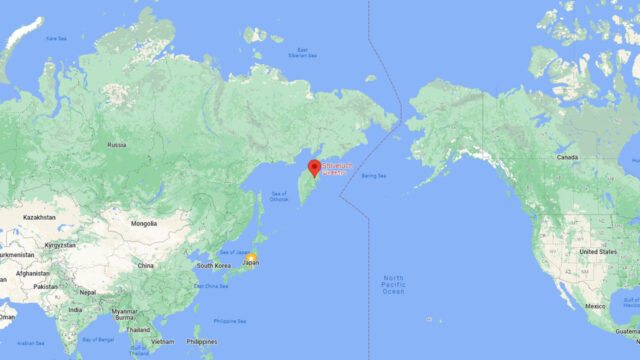
Location of the Shiveluch Volcano in Russia as seen in a screenshot from Google Maps

The Shiveluch volcano in Russia’s far eastern Kamchatka Peninsula erupted early on Tuesday and sent up an ash plume 10 kilometers (six miles) high, posing an increased threat to air traffic, the Kamchatka Volcanic Eruption Response Team (KVERT) said.

The team issued a code red Volcano Observatory Notice for Aviation, noting that ash explosions 15 kilometers (9.32 miles)high could occur at any time. “Ongoing activity could affect international and low-flying aircraft,” it said.

The ash cloud following the eruption drifted to the west and south and measured 400 by 270 kilometers, the Kamchatka branch of the Geophysical Survey of the Russian Academy of Sciences said on Telegram. Russian media reports indicated it was continuing to spread.

Local authorities closed schools and ordered residents in nearby villages to stay indoors, head of the Ust-Kamchatsky municipal region Oleg Bondarenko said in a Telegram post.

One of Kamchatka‘s largest and most active volcanoes, Shiveluch has had an estimated 60 substantial eruptions in the past 10,000 years, the last major one being in 2007.

It has two main parts, the smaller of which — Young Shiveluch — scientists have reported as being extremely active in recent months, with a peak of 2,800 meters (9,186 feet) that protrudes out of the 3,283 meter-high Old Shiveluch.

Mr. Bondarenko said the volcano erupted at 6:31 a.m. local time and that ash was falling on local villages including Klyuchi, where according to a TASS report quoting the Institute of Volcanology and Seismology, ashfall was measured at 8.5 centimeters (3.35 inches), the highest level in 60 years.

“Residents are advised to stay indoors and avoid unnecessary travel,” Mr. Bondarenko added. – Reuters

Yellen to push development bank evolution at spring meetings

 – US Treasury Secretary Janet Yellen on Wednesday will host a roundtable discussion on further steps to evolve the World Bank and other development lenders to tackle climate change and other global crises beyond a $5 billion annual World Bank lending expansion, the Treasury said.

The discussion on the sidelines of the World Bank and International Monetary Fund Spring Meetings will bring together finance ministers from major shareholders and borrowing countries that will cover “ways to maintain momentum to evolve the multilateral development banks to better meet current challenges,” the Treasury said in a statement.

The World Bank has proposed balance sheet changes that would quickly allow it to lend an additional $50 billion over 10 years while maintaining its top-tier AAA credit rating, a step that bank shareholders are widely expected to adopt this week.

US Treasury Undersecretary Jay Shambaugh said the reforms amounted to a “once in a generation transition” of the institutions, and called the World Bank‘s plans a “downpayment” on the reforms that would be deepened in time and spread to other multilateral development banks.

“This was the low-hanging fruit. These were the things we could accomplish in six months after the charge went to the bank,” he told an event hosted by the Brookings Institution on Monday. “We definitely don’t view that as a stopping point.”

Mr. Shambaugh said it was important to fix the banks’ operational structure and incentives and ensure effective use of funds, noting that some of the development banks had “considerable room” on their balance sheets.

A senior Treasury official said Ms. Yellen would discuss changes aimed at harnessing more private capital and creating public-private partnerships to tackle climate change and other global problems such as pandemic preparedness and economic fragility.

The official said Ms. Yellen was hoping to lay out another roadmap to make more progress on the banks’ operational models and financial capacity. – Reuters

Discussion needed on how US can use Philippines bases – foreign minister

ENRIQUE A. MANALO — DFA.GOV.PH

 – Washington and Manila will need to discuss what the US may do with its access to certain military bases in the Philippines, Filipino Foreign Minister Enrique Manalo said on Monday.

The Philippines last week identified four more military bases that the US may access amid shared concerns about China’s growing might.

Speaking a day before the first combined meeting of US and Philippine foreign and defense ministers in seven years, Mr. Manalo urged dialogue and engagement between Washington and Beijing.

He told Washington’s Center for Strategic and International Studies that the so-called 2+2 meeting between the longtime allies on Tuesday “highlights the positive trajectory of our bilateral relations, which is happening now at all levels.”

Experts say the US sees the Philippines as a potential location for rockets, missiles and artillery systems to counter a Chinese amphibious invasion of Taiwan, which China claims as its own.

Asked whether the Philippines would allow such systems for that purpose as part of expanded access under the 2014 Enhanced Defense Cooperation Agreement (EDCA), Mr. Manalo said:

“We basically identified the sites. There will have to be, as in the case of the other sites, discussions on terms of reference, the type of activities … these all have to be agreed on … It will all depend on how discussions go.”

The Pentagon has not specifically said what the additional sites will be used for, except that work would include airport expansion and training involving naval assets.

EDCA allows US access to Philippine bases for joint training, pre-positioning of equipment and building of facilities such as runways, fuel storage and military housing, but not a permanent presence.

US-Philippines relations have warmed considerably under Philippines President Ferdinand Marcos Jr, but Manila treads a delicate path with China, the region’s economic powerhouse.

Mr. Marcos assured China earlier on Monday that military bases accessible to the US would not be used in offensive action, stressing that the arrangement with Washington was designed to boost his country’s defenses.

The remarks came ahead of the largest ever US-Philippines joint military exercises, which will feature live-fire exercises at sea for the first time.

Locations of the new EDCA bases are significant, with three facing north toward Taiwan and one near the disputed Spratly Islands in the South China Sea, where China has built artificial islands with runways and missile systems.

China said last week that strengthened US military deployments in the Philippines would lead to more regional tensions.

Mr. Manalo said Manila wanted more robust economic relationship with the US and saw a growing need for US capital investment in areas including agriculture, food security, clean energy, transport and digital infrastructure. – Reuters

ADVERTISEMENT
ADVERTISEMENT