Home Blog Page 5016

Taiwan president slams ‘irresponsible’ China military drills
XANDREASWORK-UNSPLASH

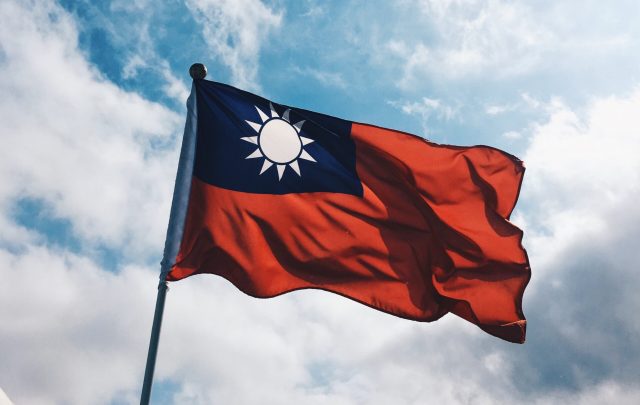
 – China‘s military exercises have caused instability in Taiwan and the region and are irresponsible acts for a major country, Taiwan President Tsai Ing-wen said after Beijing ended three days of drills around the island.

China began the war games on Saturday after Ms. Tsai returned to Taipei following a meeting in Los Angeles with US House of Representatives Speaker Kevin McCarthy.

China, which warned the US not to allow Ms. Tsai to visit or meet Mr. McCarthy, has never renounced the use of force to bring the democratically governed island under Beijing’s control. Taiwan‘s government strongly disputes China‘s claims and repeatedly denounced the drills.

Writing on her Facebook page shortly before midnight on Monday, Ms. Tsai said that as president, “I represent my county to the world”, and that her visits abroad including stops in the United States are not new and what Taiwan‘s people expect.

“However, China used this to launch military exercises, causing instability in Taiwan and the region. This is not a responsible attitude for a major country in the region,” she said.

China simulated precision attacks and blockades of Taiwan during the drills, sending up dozens of fighter jets and bombers.

Taiwan‘s defense ministry said that on Monday, 91 Chinese military aircraft flew in missions around the island.

Taiwan‘s official Central News Agency said that was a record, though the defense ministry said it could not verify whether that was the case.

Ms. Tsai said Taiwan‘s armed forces and coast guard reacted calmly and professionally, and she thanked everyone involved.

“Although China‘s military exercises have come to an end, the nation’s military and national security team will continue to stick to their posts and defend the country,” she added.

The exercises have also caused concern in Japan, especially as its southern islands sit close to Taiwan and could become caught up in a conflict.

The Japanese island of Okinawa is host to a major US air force base, and last August when China staged war games to protest the visit of then-US House Speaker Nancy Pelosi to Taipei, Chinese missiles landed within Japan’s exclusive economic zone.

Japanese defense minister Yasukazu Hamada on Tuesday described China‘s military drills around Taiwan as “intimidating training” to seize sea and air control around the island.

China appeared to have shown an “uncompromising attitude” regarding Taiwan issues through the drills, Hamada told reporters.

Life in Taiwan has continued as normal despite the tensions, with no signs of panic or disruption, and civilian flights around the island, including over the Taiwan Strait, were also uninterrupted.

Both Taiwan‘s ruling and opposition parties, in a rare show of unity, put out a joint statement from their parliament caucuses condemning the drills.

“The people and government of Taiwan have the right to conduct normal exchanges with other countries and contribute to the international community through international participation,” the statement said. “The Chinese authorities have no right to obstruct and cannot change the strong will of the Taiwanese people to go out into the world.” – Reuters

Japan to chair G7 finance meeting in Washington

 – Finance Minister Shunichi Suzuki said on Tuesday that Japan would chair a Group of Seven (G7) financial leaders’ meeting on Wednesday in Washington to discuss the global economy and financial markets, the strengthening of supply chains and the Ukraine crisis.

The G7, which includes Britain, Canada, France, Germany, Italy, the United States and Japan, is expected to reaffirm its solidarity in providing financial support for Ukraine and sanctions against Russia, Japanese officials have said.

Mr. Suzuki said Japan wanted to explain its financial support for Ukraine to G7 peers, as Tokyo proceeds with legal revisions needed to provide loans and other measures to back the war-torn country.

“As we lead the debate as G7 chair, we will exchange frank opinions about recent market developments and inflation and want to maintain close coordination on international cooperation in strengthening of supply chains,” Suzuki added. He was speaking to reporters shortly before leaving for Washington.

The G7 financial leaders’ meeting will be held on the sidelines of International Monetary Fund and World Bank annual gatherings.

At the broader G20 gathering, which is chaired by India this year, financial leaders are expected to discuss support for developing countries that are saddled with debt and other issues surrounding global economy, Suzuki said.

Japan has actively contributed to debt problems and support for developing countries. We want to explain Japan‘s efforts and to promote international cooperation,” he added.

Developing countries have accumulated debt after years of cheap money channeled via advanced economies’ monetary easing. A more recent interest rate tightening cycle, with the exception of Japan, has made it harder for some of those countries to repay debt. – Reuters

Chinese airlines swamped with cabin crew applicants as travel rebounds

STOCK IMAGE | Image by Blinkofaneye from Pixabay

 – Chinese airlines undertaking the biggest hiring drives in more than three years as travel rebounds are facing a deluge of applicants for cabin crew roles as fresh university graduates turn to the relatively high-paying career in a bleak job market.

In contrast to Western countries, where cabin crew roles are relatively low-paid and mostly do not require a university degree, becoming a flight attendant in China typically requires a bachelor’s degree and preferably passing a challenging government-administrated English test.

During the pandemic, the total number of flight attendants in China fell by around 11,000, or an 11% drop from the pre-pandemic level of 108,955 in 2019, according to data from the Civil Aviation Administration of China (CAAC), due to attrition rather than the widespread layoffs seen in the West.

Carriers including Xiamen Airlines, China Southern Airlines and Spring Airlines are now on a hiring spree as domestic travel recovers and they plan to resume flights to popular international destinations.

They can pick from an overwhelming number of applicants at a time when a record 11.58 million college graduates are about to enter one of the country’s worst job markets in decades. The gloomy global economic outlook has weakened export demand and companies in sectors like technology, education and property are cutting staff.

Hainan Airlines, which plans to hire more than 1,000 flight attendants this year, has already received more than 20,000 applications, it told Reuters.

Its job fair held in Jinan in February attracted 900 candidates and the company hired just 60 people, meaning a selection rate of around 6%.

China Southern, which plans to hire 3,000 cabin crew this year, said it already had more than seven times as many applicants by the end of December.

Before the pandemic, around 10% of cabin crew applications were typically successful, industry experts said.

“There have always been a large number of young girls and boys who want to do this job, as the income is not bad, usually between 10,000 ($1,454) and 20,000 yuan a month, and it is fun, allowing you to fly around the world,” said Li Hanming, an independent expert on China’s aviation industry.

In 2021, only 6.1% of fresh college graduates earned more than 10,000 yuan a month, the Global Times reported in February, citing education consulting and research institute MyCOS.

Wang Shenbo, who applied for a flight attendant role at Hainan Airlines, said the majority of his classmates were continuing to study for a master’s degree in hopes of getting even better paid jobs.

“Some of them are not interested in the work of flight attendants, unlike me… and many of my classmates have found a job but are dissatisfied with the salary level,” he told Reuters.


HIGH FARES

Despite the surge in job seekers, airlines may find it difficult to deploy new hires immediately because of year-long ground training courses, which could slow their efforts to boost capacity quickly and keep airfares high, Li said.

“Carriers have pretty bright forecast for 2024 so they need to hire crew members now, otherwise they will be short of hands next year,” he added.

China’s domestic capacity surpassed 2019 levels from mid-March, but international flights have recovered to just 30% of pre-pandemic levels, according to data from flight tracking app Flight Master.

As the peak summer season approaches, Chinese airlines are adding international capacity. Flag carrier Air China, for example, said it would return to pre-pandemic routes including Beijing-Rome, Beijing-Ho Chi Minh City and Chengdu-London.

But for now the limited capacity has led to higher fares.

“I paid 18,000 yuan for a one-way economy ticket to fly from Frankfurt to Beijing,” said Jin Huo, a businessman, “I used to pay a third (of that) for a round trip.” – Reuters

Eruption in Russia’s Kamchatka threatens aviation -response team

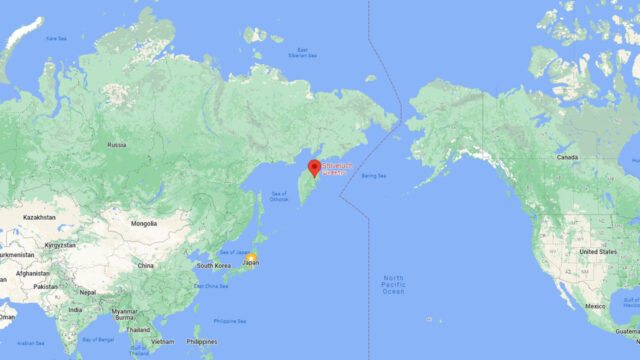
Location of the Shiveluch Volcano in Russia as seen in a screenshot from Google Maps

The Shiveluch volcano in Russia’s far eastern Kamchatka Peninsula erupted early on Tuesday and sent up an ash plume 10 kilometers (six miles) high, posing an increased threat to air traffic, the Kamchatka Volcanic Eruption Response Team (KVERT) said.

The team issued a code red Volcano Observatory Notice for Aviation, noting that ash explosions 15 kilometers (9.32 miles)high could occur at any time. “Ongoing activity could affect international and low-flying aircraft,” it said.

The ash cloud following the eruption drifted to the west and south and measured 400 by 270 kilometers, the Kamchatka branch of the Geophysical Survey of the Russian Academy of Sciences said on Telegram. Russian media reports indicated it was continuing to spread.

Local authorities closed schools and ordered residents in nearby villages to stay indoors, head of the Ust-Kamchatsky municipal region Oleg Bondarenko said in a Telegram post.

One of Kamchatka‘s largest and most active volcanoes, Shiveluch has had an estimated 60 substantial eruptions in the past 10,000 years, the last major one being in 2007.

It has two main parts, the smaller of which — Young Shiveluch — scientists have reported as being extremely active in recent months, with a peak of 2,800 meters (9,186 feet) that protrudes out of the 3,283 meter-high Old Shiveluch.

Mr. Bondarenko said the volcano erupted at 6:31 a.m. local time and that ash was falling on local villages including Klyuchi, where according to a TASS report quoting the Institute of Volcanology and Seismology, ashfall was measured at 8.5 centimeters (3.35 inches), the highest level in 60 years.

“Residents are advised to stay indoors and avoid unnecessary travel,” Mr. Bondarenko added. – Reuters

Yellen to push development bank evolution at spring meetings

 – US Treasury Secretary Janet Yellen on Wednesday will host a roundtable discussion on further steps to evolve the World Bank and other development lenders to tackle climate change and other global crises beyond a $5 billion annual World Bank lending expansion, the Treasury said.

The discussion on the sidelines of the World Bank and International Monetary Fund Spring Meetings will bring together finance ministers from major shareholders and borrowing countries that will cover “ways to maintain momentum to evolve the multilateral development banks to better meet current challenges,” the Treasury said in a statement.

The World Bank has proposed balance sheet changes that would quickly allow it to lend an additional $50 billion over 10 years while maintaining its top-tier AAA credit rating, a step that bank shareholders are widely expected to adopt this week.

US Treasury Undersecretary Jay Shambaugh said the reforms amounted to a “once in a generation transition” of the institutions, and called the World Bank‘s plans a “downpayment” on the reforms that would be deepened in time and spread to other multilateral development banks.

“This was the low-hanging fruit. These were the things we could accomplish in six months after the charge went to the bank,” he told an event hosted by the Brookings Institution on Monday. “We definitely don’t view that as a stopping point.”

Mr. Shambaugh said it was important to fix the banks’ operational structure and incentives and ensure effective use of funds, noting that some of the development banks had “considerable room” on their balance sheets.

A senior Treasury official said Ms. Yellen would discuss changes aimed at harnessing more private capital and creating public-private partnerships to tackle climate change and other global problems such as pandemic preparedness and economic fragility.

The official said Ms. Yellen was hoping to lay out another roadmap to make more progress on the banks’ operational models and financial capacity. – Reuters

Discussion needed on how US can use Philippines bases – foreign minister

ENRIQUE A. MANALO — DFA.GOV.PH

 – Washington and Manila will need to discuss what the US may do with its access to certain military bases in the Philippines, Filipino Foreign Minister Enrique Manalo said on Monday.

The Philippines last week identified four more military bases that the US may access amid shared concerns about China’s growing might.

Speaking a day before the first combined meeting of US and Philippine foreign and defense ministers in seven years, Mr. Manalo urged dialogue and engagement between Washington and Beijing.

He told Washington’s Center for Strategic and International Studies that the so-called 2+2 meeting between the longtime allies on Tuesday “highlights the positive trajectory of our bilateral relations, which is happening now at all levels.”

Experts say the US sees the Philippines as a potential location for rockets, missiles and artillery systems to counter a Chinese amphibious invasion of Taiwan, which China claims as its own.

Asked whether the Philippines would allow such systems for that purpose as part of expanded access under the 2014 Enhanced Defense Cooperation Agreement (EDCA), Mr. Manalo said:

“We basically identified the sites. There will have to be, as in the case of the other sites, discussions on terms of reference, the type of activities … these all have to be agreed on … It will all depend on how discussions go.”

The Pentagon has not specifically said what the additional sites will be used for, except that work would include airport expansion and training involving naval assets.

EDCA allows US access to Philippine bases for joint training, pre-positioning of equipment and building of facilities such as runways, fuel storage and military housing, but not a permanent presence.

US-Philippines relations have warmed considerably under Philippines President Ferdinand Marcos Jr, but Manila treads a delicate path with China, the region’s economic powerhouse.

Mr. Marcos assured China earlier on Monday that military bases accessible to the US would not be used in offensive action, stressing that the arrangement with Washington was designed to boost his country’s defenses.

The remarks came ahead of the largest ever US-Philippines joint military exercises, which will feature live-fire exercises at sea for the first time.

Locations of the new EDCA bases are significant, with three facing north toward Taiwan and one near the disputed Spratly Islands in the South China Sea, where China has built artificial islands with runways and missile systems.

China said last week that strengthened US military deployments in the Philippines would lead to more regional tensions.

Mr. Manalo said Manila wanted more robust economic relationship with the US and saw a growing need for US capital investment in areas including agriculture, food security, clean energy, transport and digital infrastructure. – Reuters

Economy likely slowed sharply in Q1

Traffic builds up along South Luzon Expressway, April 5, 2023. — PHILIPPINE STAR/RUSSELL PALMA

By Luisa Maria Jacinta C. Jocson, Reporter

PHILIPPINE economic growth likely slowed sharply in the first quarter as consumption weakened amid elevated inflation and rising borrowing costs, analysts said.

“While we believe private consumption continued to be a key driver of growth given its high share, the momentum has likely been slowing as the reopening boost has faded while high inflation remained a headwind,” Makoto Tsuchiya, assistant economist at Oxford Economics, said in an e-mail.

He said first-quarter gross domestic product (GDP) had likely expanded by 4.4%, much slower than the 8.2% a year earlier and 7.1% in the fourth quarter of 2022.

The government is targeting 6-7% GDP growth this year.

ING Bank N.V. Manila Senior Economist Nicholas Antonio T. Mapa said the better-than-expected 7.6% growth last year was driven by robust household consumption.

However, household spending, which is one of the biggest contributors to Philippine economy, has been affected by high inflation that reached a 14-year high of 8.7% in January.

“We believe the (growth) momentum will slow in the first quarter of 2023 given the triple threat of peak inflation, elevated borrowing costs and muted support from government spending,” Mr. Mapa said in a Viber message.

“It would be hard to count out an upwards surprise in first-quarter growth given how open the economy is and the pace of household spending,” he added.

To curb inflation, the Bangko Sentral ng Pilipinas (BSP) has hiked borrowing costs by 425 basis points (bps) since May 2022, bringing the benchmark rate to 6.25%.

Inflation slowed to 7.6% in March from 8.6% in February, which the BSP has said is consistent with its assessment that inflation would remain elevated in the near term but gradually return to the 2-4% target by the fourth quarter.

“We certainly are starting to see signs of a peak in the surge in household borrowing that helped to power private consumption last year,” Pantheon Chief Emerging Asia Economist Miguel Chanco said in an e-mail.

Weaker exports had also likely weighed on first-quarter GDP expansion.

“We expect goods exports to be a big drag on headline growth. As monthly trade data show, sequential momentum for goods exports has been falling rapidly since late last year into this year on the back of weaker electronics as well as a general slowdown in external demand. We think the latter factor particularly will weigh on Philippine exports throughout the year,” Mr. Tsuchiya said.

The country’s trade deficit widened to a five-month high of $5.74 billion in January as exports sharply declined. During the month, exports saw their steepest drop since the 26.7% decline in May 2020. In terms of value, it was also the lowest since the $4.54 billion in May 2020.

“The two-digit decline in exports in January implies a deteriorating external environment despite China’s reopening,” Ruben Carlo O. Asuncion, chief economist at Union Bank of the Philippines, Inc., said in an e-mail.

The slower pace of remittances also likely dampened GDP growth in January to March.

“Moreover, we’re now starting to see remittance growth — in peso terms, which matters more for actual spending — start to moderate, as the effects of last year’s currency collapse start to fade from year-on-year growth,” Mr. Chanco said.

Mr. Asuncion said lower cash remittances from overseas Filipino workers (OFW) would affect the buying capacity of their families and dependents in the Philippines.

In January, cash remittances coursed through banks rose by 3.5% year on year to $2.76 billion, the lowest in two months. The growth was also slower than 5.8% in the previous month.

Mr. Asuncion cited other indicators that point to slower first-quarter growth such as the high unemployment rate and a decline in bank lending.

“Moreover, bank loans sharply decelerated in January with the drag from real estate sector loans in a high interest rate setting, which does not bode well for broad spending on consumption and investments,” he added.

Mr. Asuncion said first-quarter GDP growth could be 5.8%-7.4%.

“GDP growth is gliding lower but still expected to surpass 6%, and curbs inflation’s further upside unlike in previous quarters when GDP overshot its potential by a mile,” he added.

The Philippine Statistics Authority is scheduled to release first-quarter GDP data on May 11.

Dark clouds hang over IMF-WB spring meetings

THE International Monetary Fund (IMF) logo is seen outside the headquarters building in Washington, U.S. — REUTERS

By Keisha B. Ta-asan, Reporter

WASHINGTON — Global finance officials and central bankers gathered here on Monday for the start of the spring meetings of the World Bank (WB) and International Monetary Fund (IMF) amid a worsening economic outlook, geopolitical tensions and elevated inflation.

Finance Secretary Benjamin E. Diokno and Bangko Sentral ng Pilipinas (BSP) Governor Felipe M. Medalla are scheduled to attend the WB-IMF meetings.

The Philippine economic team, which includes Budget Secretary Amenah F. Pangandaman and National Economic and Development Authority Secretary Arsenio M. Balisacan, will also hold an economic briefing on April 12 (US time) for about 180 senior executives and representatives of major US companies and industry groups.

“The message is one of optimism: how the Philippines has transformed itself into one of the fastest-growing economies in the fastest-growing region in the world,” Mr. Diokno said in a Viber message to reporters.

At the economic briefing, Philippine officials are planning to unveil business opportunities for foreign investors in the Philippines and highlight the country’s “strong economic story.”

Last year, Philippine gross domestic product (GDP) expanded by 7.6%, the highest in 46 years. The government expects growth to slow to 6-7% this year, reflecting the gloomy global outlook.

However, the IMF now expects global economic growth to slip below 3% this year, and remain around 3% in the next five years.

IMF Managing Director Kristalina Georgieva last week warned its global economic growth outlook over the next five years is the lowest since 1990.

“Despite surprisingly resilient labor markets and strong consumer demand, despite the uplift in China, we expect the world economy to grow less than 3% this year,” she said in a speech. 

She said global growth remains weak both in the near and medium terms, but Asia remains a bright spot. India and China are likely to make up half of global growth this year, she added.

“For low-income countries, higher borrowing costs come at a time of weakening demand for their exports. And we see their per-capita income growth staying below that of emerging economies. That is a severe blow, making it even harder for low-income nations to catch up,” Ms. Georgieva said.

To brighten growth prospects, Ms. Georgieva said there is a need to fight inflation and safeguard financial stability.

“Fighting inflation has become more complex with the recent banking sector pressures in the United States and Switzerland, serving as a reminder of how difficult it is to transition from a period of low-interest rates and ample liquidity to high interest rates and scarce liquidity,” she said.

Ms. Georgieva noted that as long as financial pressures remain limited, central banks are expected to stay the course in the fight against inflation by “holding a tight stance to prevent a de-anchoring of inflation expectations.”

In the Philippines, headline inflation slowed for the second straight month in March to 7.6% from 8.6% in February. However, core inflation, which discounts volatile items like food and fuel, quickened to a fresh 22-year high of 8% in March from 7.8% a month earlier.

To tame inflation, the Philippine central bank has raised borrowing costs by 425 basis points since May last year. This brought the benchmark policy rate to a near 16-year high of 6.25%.

Ms. Georgieva said central banks should address risks to financial stability whenever they emerge by carefully monitoring risks in banks and nonbank financial institutions, as well as weaknesses in sectors such as commercial real estate.

“In other words, central banks should continue to use interest rates to fight inflation while using financial policies to ensure financial stability. This is the right course of action, so long as financial pressures remain limited,” she said.

“If that were to change, policy makers would face an even more complicated task, with difficult trade-offs between their inflation and financial stability objectives, and the use of their respective tools. That’s why they need to be more vigilant and more agile than ever.”

The IMF is scheduled to release the latest World Economic Outlook this week.

In its World Economic Outlook update in January, the IMF said the world economy would likely expand by 2.9% this year, slower than 3.4% in 2022.

The IMF sees Philippine economic growth slowing to 5% this year from last year’s 7.6% amid a tighter policy stance and elevated inflation. For 2024, the IMF expects the Philippines to grow by 6%.

Worker upskilling needed to address IT-BPM ‘talent crisis’

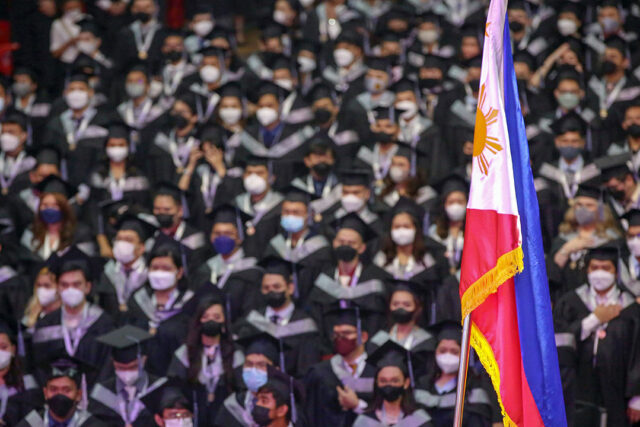
College graduates are seen during commencement rites in Manila, June 6, 2022. — PHILIPPINE STAR/KRIZ JOHN ROSALES

By Revin Mikhael D. Ochave, Reporter

THE PHILIPPINES needs to have a national talent upskilling program to address the lack of qualified workers for jobs in the information technology and business process management (IT-BPM) sector, according to industry groups.

Jack Madrid, IT and Business Process Association of the Philippines (IBPAP) president, said a national talent upskilling program would help improve the IT-BPM workforce and ease the “talent crisis” plaguing the sector.

He told BusinessWorld in an e-mail there is a need to form an IT-BPM services online talent hub, as well as establish early-stage interventions to improve the employability of senior high school and higher education institution graduates.

He also proposed raising the capacity for specialized degree courses to increase talent supply for the IT-BPM sector.   

“This will involve multiple interventions across multiple years that will require collaboration between Philippine IT-BPM’s stakeholders in the government and academe,” Mr. Madrid said.

The IBPAP is the umbrella association representing the local IT-BPM industry.

Mr. Madrid noted the Philippines is not exempt from the talent supply gap in the global market.

“In fact, according to the Philippine IT-BPM Industry Roadmap 2028, many organizations cite the need for a continuous supply of quality and skilled talent as the sector’s most critical growth engine,” he said.

Rosario Cajucom-Bradbury, managing director of the Contact Center Association of the Philippines, said many IT-BPM companies have invested in improving the skills of their employees.   

The CCAP, representing the contact center sector, is one of the sub-sector partner associations of the IBPAP.   

“It has become an imperative for many of the IT-BPM or business process outsourcing companies to invest in re-skilling and upskilling their employees to address shortage of ready-to-hire talents with critical skills needed in the near future,” Ms. Cajucom-Bradbury told BusinessWorld in an e-mail. 

She said there are discussions involving the IT-BPM industry, government agencies and academe to update the curriculum to boost the employability of graduates.

“There are ongoing collaborative discussions to make the necessary changes in the curriculum programs and provide high-impact, focused industry internships to increase the employability of graduates, and therefore increase the ability of the Philippines to supply the demand for the right talents to the rapid growth of the IT-BPM industry,” Ms. Cajucom-Bradbury said.   

She said it is important that interventions are implemented not just by companies, but the country as well.

“The upskilling and re-skilling investments of many of the IT-BPM companies of their employees is a preparation to ensure that talents with single skills are transformed with multi-dimensional skills and therefore ready with the critical skills needed for the future, beyond what artificial intelligence (AI) can do,” she said.   

She also noted the IT-BPM industry has adapted to automation, which is designed to increase work efficiency and productivity, and continued to expand.

Meanwhile, Mr. Madrid said IBPAP has implemented initiatives to address talent supply gap such as the Skills Progression Program in collaboration with the Commission on Higher Education to introduce training programs designed by the IT-BPM sector into the curriculum of higher education institutions.

The IBPAP also opened an IT-BPM talent hub where organizations can post their information and job openings, conduct screening processes and engage with potential talent.

“These interventions are meant to ensure that the Filipino talent has the right mix of skills needed to thrive in the IT-BPM industry as it continues to evolve because of new technologies and innovations such as AI, machine learning and intelligent automation,” Mr. Madrid said.   

Under the Philippine IT-BPM Industry Roadmap 2028, the sector is eyeing to generate $59 billion in revenues and create 1.1 million new jobs by 2028.   

For 2023, the IBPAP aims to reach 1.7 million full-time employees and to generate $35.9 billion in revenues.

Power companies seen to post mixed results for Q1

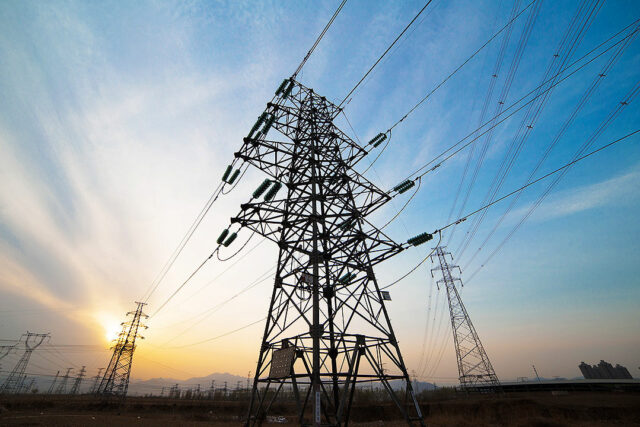
WHATWOLF-FREEPIK

ENERGY companies are expected to deliver mixed results for the first quarter (Q1), according to analysts, with one fund expert saying that the period tends to be generally weaker for the sector.

“From a seasonality standpoint, the first quarter tends to be generally weaker for power companies than other quarters due to cooler weather (less public power consumption) and lack of rain (vital for hydro plants),” Marvin V. Fausto, president of COL Investment Management, Inc., said in an e-mail to BusinessWorld on April 5.

Regina Capital Development Corp. Head of Sales Luis A. Limlingan said power generation companies are expected to see a low single-digit increase or decrease in their net income depending on the contracted capacity mix.

For the first quarter and for the full year 2023, energy companies are expected to deliver a year-on-year increase in revenues, while bottomline performance “could go both ways,” he said in a phone message on April 3.

Meanwhile, RCBC Securities, Inc. head of research Ma. Jidgette Velasco said that the energy sector has a somewhat bleak outlook for this year.

“For 2023, we expect a generally flattish year in earnings results as the power supply outlook remains bleak with the lack of additional power supply,” Ms. Velasco said in an e-mail on April 4.

Last year, almost all of the country’s listed energy companies delivered higher income due to increasing demand, higher electricity sales, and strong revenues.

In 2022, Semirara Mining and Power Corp. posted a record-high net income of P39.9 billion more than double the P16.2 billion recorded a year earlier, on strong domestic coal shipments and higher electricity sales at the spot market.

Manila Electric Co. (Meralco) registered a P27.11 billion consolidated core net income, up 10.2% from P24.61 billion a year earlier on strong energy sales.

Aboitiz Power Corp. reported a 27.4% increase in core net income to P26.5 billion in 2022 from P20.8 billion a year earlier due to contributions from its coal-fired plants.

Meanwhile, the international operations of ACEN Corp. boosted its net income to P13.06 billion in 2022, more than double the P5.25 billion a year ago, offsetting the decline in the company’s local operations.

First Gen Corp. reported a net income of $265 million (P14.3 billion), or 5% higher than the $252 million (P12.4 billion) in 2021, as the company’s renewable platforms delivered higher earnings.

Ms. Velasco noted that Aboitiz Power and Meralco had better-than-expected performance in 2022 “given their strong sales volume and AboitizPower’s effective comprehensive hedging program.”

Semirara, despite posting a record-high net income, underperformed from rising shipping and fuel costs, she added.

“Semirara missed our estimates primarily from the rise in shipping and fuel costs. ACEN also underperformed as it kept its net-buying position in the spot market, where prices have been elevated due to the insignificant additional power supply and Malampaya’s depleting gas fields,” Ms. Velasco said.

COL Investment Management’s Mr. Fausto expects better earnings for the power sector this year. “Growing demand amidst a potentially tight supply environment translates to higher pricing opportunities for the power companies.” — Ashley Erika O. Jose

Meralco to shift EV services to new subsidiary Movem

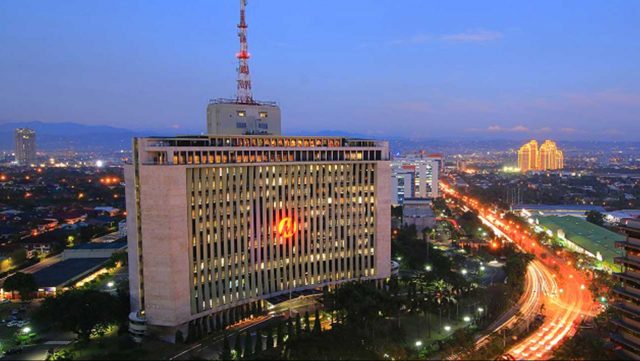
MERALCO.COM.PH

MANILA Electric Co. (Meralco) plans to shift some of the services provided by its electric vehicle (EV) unit eSakay, Inc. to a newly established subsidiary, Movem Electric, Inc., a company official said.

“We are just going to transition ourselves to Movem…, [and] a lot of it will be ‘yung ginagawa namin na (what we are currently doing such as) integration, offering vehicle charging stations, and integration services,” Meralco First Vice-President and Chief Sustainability Officer Raymond B. Ravelo told BusinessWorld on March 28.

In a previous regulatory filing, Meralco announced the establishment of a new subsidiary that will concentrate on creating and implementing various electric transportation solutions.

“The incorporation of Movem Electric, Inc. is in line with Meralco’s plans to be a major player in the growing electric vehicle industry,” the company said.

According to Mr. Ravelo, the new subsidiary will offer different services networks depending on the purpose and need of a client’s charging stations.

“It depends, so some of it will be depending on the use of the charging station. It could be a fast charger or a slow charger, it will be fit for purpose,” Mr. Ravelo added.

Meanwhile, the power utility giant’s other unit eSakay will now focus on public transportation as it continues the operation of its fleet of eJeepneys.

“eSakay as it is today has a transport service offering. Both private and public, we offer and manage transport services to multiple private sectors and institutions,” he said.

The Electric Vehicle Industry Development Act (EVIDA) has led to an increase in the use of EVs due to the rising cost of conventional fuel. The act also zeroes the rate on EV transportation.

As the EV industry becomes more “economically viable,” Meralco anticipates growth due to an increase in demand for EV units and transportation services, according to Mr. Ravelo.

“I guess we still want to see how this is going play out as EVIDA is very new, we’re anticipating that eSakay and the new company will be a big contributor,” he said.

“Maybe in a few months or a few years’ time we’ll have a better sense,” he added.

Meralco’s controlling stakeholder, Beacon Electric Asset Holdings, Inc., is partly owned by PLDT Inc. Hastings Holdings, Inc., a unit of PLDT Beneficial Trust Fund subsidiary MediaQuest Holdings, Inc., has an interest in BusinessWorld through the Philippine Star Group, which it controls. — Adrian H. Halili

From holy oil to sceptres and a spoon: King Charles’ coronation ceremony

KING CHARLES — REUTERS

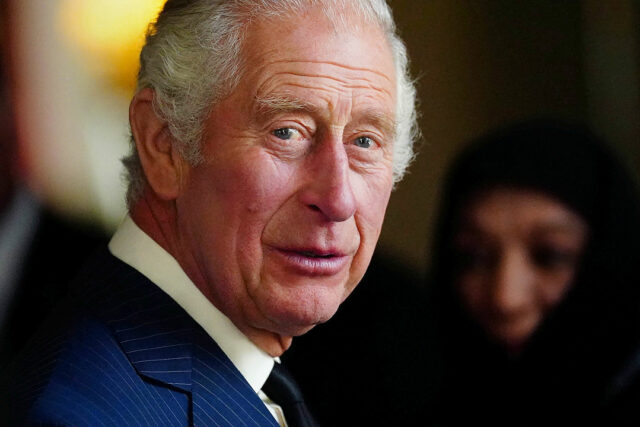
— The ceremony for King Charles’s coronation at Westminster Abbey in London on May 6 will involve historic regalia ranging from scepters and maces to a ring and a spoon. Here are details of the Crown Jewels that will be used, as outlined by Buckingham Palace on Sunday:


St. Edward’s Crown | Source: https://bit.ly/3KMw8oq

ST. EDWARD’S CROWN

Charles will be crowned with the historic St Edward’s Crown that has been used since the coronation of King Charles II in 1661 after the monarchy was restored following the 10-year republic of Oliver Cromwell. It was removed from the Tower Of London in December for modifications for May’s ceremony.

The crown, which weighs about 2.2 kg (4 lb 12 ounces), is made up of a solid gold frame set with rubies, amethysts, sapphires, garnet, topazes and tourmalines, and has a velvet cap with an ermine band.

It replaced an original crown believed to date back to the 11th century Anglo-Saxon king of England, Edward the Confessor.

Charles will also wear the 1 kg (2.3 lb) Imperial State Crown at the end of the service, the headwear regularly used by British monarchs for official occasions such as the State Opening of Parliament.

Made for the coronation of Charles’ grandfather George VI in 1937, it is set with 2,868 diamonds in silver mounts including the 105-carat Cullinan II, the second biggest stone cut from the Cullinan Diamond, which was given by the government of the Transvaal in South Africa to Edward VII on his birthday in 1907.

The crown also features the large “Black Prince’s Ruby”, along with 17 sapphires, 11 emeralds and 269 pearls, including some of which are said to have been bought as earrings by Tudor monarch Queen Elizabeth I.


Sovereign’s Scepter with Cross | Source: https://bit.ly/3KrkOwN

SOVEREIGN’S SCEPTER WITH CROSS

The Cullinan 1 diamond, also known as the Star of Africa, which weighs in at 530 carats and is the world’s largest colorless cut diamond, was set in the bejeweled golden scepter which has been used in every coronation since 1661.

The scepter, which has undergone a number of alterations over the centuries, represents the sovereign’s temporal power and is associated with good governance.


SOVEREIGN’S SCEPTER WITH DOVE

This is the second scepter used in the ceremony, representing the sovereign’s spiritual role. It also dates from 1661. It is made from a gold rod in three sections, mounted with diamonds, rubies, emeralds, sapphires and spinels. At the top is an enameled dove with outspread wings, which represents the Holy Ghost.


Sovereign’s Orb | Source: https://bit.ly/3GSB355

THE SOVEREIGN’S ORB

The Sovereign’s Orb, another item commissioned for Charles II’s coronation, is a globe of gold with a cross mounted on top, surrounded by a band of diamonds, emeralds, rubies, sapphires and pearls with a large amethyst at the summit. It is a representation of Christian sovereignty.


CORONATION RING

The Coronation ring, known as “The Wedding Ring of England” and composed of a sapphire with a ruby cross set in diamonds, was made for the coronation of King William IV in 1831. Worn at every coronation since then, it symbolizes kingly dignity.


Left to right: The Sword of Offering, the Sword of State, and the Sword of Mercy | Source: https://bit.ly/3UkbuiJ

SWORDS AND MACES

A number of swords will feature in the coronation procession.

These include the Sword of State, which symbolizes royal authority and was made in about 1678, and was used at Charles’ investiture as Prince of Wales in 1969. Also to feature will be the Sword of Temporal Justice, the Sword of Spiritual Justice and the Sword of Mercy, which were first used in the coronation of Charles I in 1626.

The bejeweled Sword of Offering, made for the coronation of George IV in 1821, is one of the objects used during the coronation ceremony.

Two maces, made of silver gilt over oak and date from between 1660 and 1695, will also feature. These are the ceremonial emblems of authority which are carried before the sovereign at events such as the State Opening of Parliament.


AMPULLA

The golden ampulla, which dates from 1661, is a flask in the shape of an eagle that holds the holy oil, which was consecrated in Jerusalem in March and will be used to anoint the king.


Coronation Spoon | Source: https://bit.ly/3ZYMQoS

CORONATION SPOON

The silver-gilt spoon is the oldest piece in the regalia, probably made for Henry II or Richard I in the 12th century. It was used to anoint King James 1 in 1603, and has featured at every coronation since.


BRACELETS

Two armills, golden bracelets representing sincerity and wisdom, are placed on the sovereign’s wrists. They are thought to relate to ancient symbols of knighthood and military leadership.

They date back to 1661 and have been used at every coronation from King Charles II’s until King George VI’s in 1937, with new armills specially prepared for Queen Elizabeth in 1953.

ADVERTISEMENT
ADVERTISEMENT