Home Blog Page 4972

Musk says Tesla will put sales growth ahead of profit

MILAN CSIZMADIA-UNSPLASH

Tesla Inc. boss Elon Musk on Wednesday doubled down on the price war he started at the end of last year, saying the electric vehicle (EV) maker would prioritize sales growth ahead of profit in a weak economy.

The company posted its lowest quarterly gross margin in two years, missing market estimates, as it slashed prices aggressively in markets including the United States and China to spur demand and fend off rising competition.

Shares in the Austin, Texas-based automaker were down 6% in after-hours trading.

“It’s better to shift a large number of cars at lower margin and harvest that margin in the future as we perfect autonomy,” Musk told analysts on a conference call. He said although the economy remained uncertain, the EV maker’s orders exceeded production.

Mr. Musk, who had said earlier that he would have liked to achieve 2 million vehicle deliveries this year, declined to reaffirm that on Wednesday but stood by the company’s official target of 1.8 million deliveries.

Tesla‘s worrying China sales figures indicate demand for its vehicles is slowing more than expected in the face of rising competition from local EV companies,” said Jesse Cohen, senior analyst at Investing.com.

Tesla said in a statement it still believed its operating margin would remain the highest among big carmakers.

The company reported total gross margin of 19.3%, short of market expectations of 22.4%, according to 14 analysts polled by Refinitiv.

Tesla also did not report its automotive gross margin, a figure closely watched by investors, with Musk saying the weak economy making it hard to provide margin outlook.

The company posted an automotive gross margin of 19% excluding regulatory credits in the first quarter, down from 24% the previous quarter, according to Reuters’ calculation.

On Wednesday, Tesla said its average selling price declined in the first quarter from a year earlier, but it did not elaborate.

Analysts say the EV maker may need to cut prices further, pressured by a price war especially in China even as its new factories in Berlin and Texas churn out cars.

Tesla in the first quarter reported record inventory of $14.38 billion, up from $6.69 billion a year earlier.

It burned $154 million in cash during the quarter, and would have consumed more but for a $1.6 billion gain attributed to “proceeds from maturities of investments.”


NEW MODELS

Mr. Musk in 2020 announced plans to produce a new battery cell to halve the cost of the most expensive part of an EV, but the company has been struggling to ramp up production for those cells.

Tesla aims to cut assembly costs by half, but did not say when it will debut long-awaited affordable electric vehicles. Tesla fans have for some time hankered for Tesla to refresh its aging model line-up.

In January, Mr. Musk said Tesla expected to start production of Cybertruck this summer, but that volume production would not occur until next year.

Mr. Musk said on Wednesday’s call that he expected a delivery event for Cybertruck in the third quarter.

Tesla‘s net profit fell by nearly a quarter to $2.51 billion from a year earlier, hurt by higher raw-materials, logistics and warranty costs as well as the production ramp-up of its 4680 battery cells.

Income adjusted for one-time items and revenue was in line with estimates from Refinitiv. – Reuters

Seagate to pay $300 million penalty for shipping Huawei 7 million hard drives

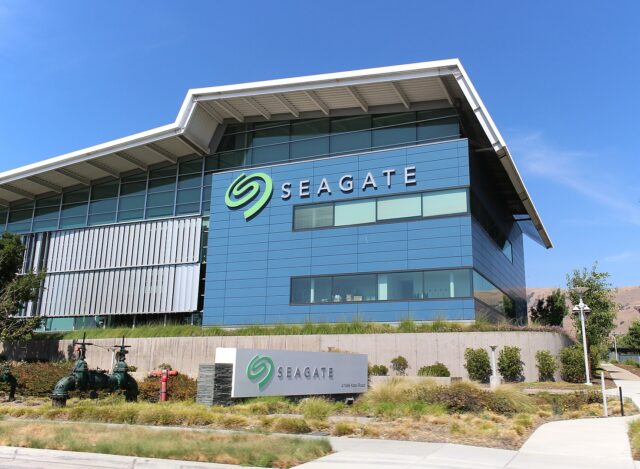
STOCK PHOTO | Seagate Technology's operational headquarters in Fremont, California. Photographed by user Coolcaesar on July 24, 2021. | CC BY-SA 4.0 | https://bit.ly/3LePy5u

Seagate Technology Holdings PLC has agreed to pay a $300 million penalty in a settlement with US authorities for shipping over $1.1 billion worth of hard disk drives to China’s Huawei in violation of US export control laws, the Department of Commerce said on Wednesday.

Seagate sold the drives to Huawei between August 2020 and September 2021 despite an August 2020 rule that restricted sales of certain foreign items made with US technology to the company. Huawei was placed on the Entity List, a US trade blacklist, in 2019 to reduce the sale of US goods to the company amid national security and foreign policy concerns.

The penalty represents the latest in a string of actions by Washington to keep sophisticated technology from China that may support its military, enable human rights abuses or otherwise threaten US security.

Seagate shipped 7.4 million drives to Huawei for about a year after the 2020 rule took effect and became Huawei‘s sole supplier of hard drives, the Commerce Department said.

The other two primary suppliers of hard drives ceased shipments to Huawei after the new rule took effect in 2020, the department said. Though they were not identified, Western Digital Corp WDC.O and Toshiba Corp 6502.T were the other two, the U.S. Senate Commerce Committee said in a 2021 report on Seagate.

The companies did not respond to requests for comment.

Even after “its competitors had stopped selling to them … Seagate continued sending hard disk drives to Huawei,” Matthew Axelrod, assistant secretary for export enforcement at the Commerce Department’s Bureau of Industry and Security said in a statement. “Today’s action is the consequence.”

Axelrod said the administrative penalty was the largest in the history of the agency not tied to a criminal case.

Seagate‘s position was that its foreign-made drives were not subject to U.S. export control regulations, essentially because they were not the direct product of U.S. equipment.

“While we believed we complied with all relevant export control laws at the time we made the hard disk drive sales at issue, we determined that … settling this matter was the best course of action,” Seagate CEO Dave Mosley said in a statement.

In an order issued on Wednesday, the government said Seagate wrongly interpreted the foreign product rule to require evaluation of only the last stage of its manufacturing process rather than the entire process.

Seagate made drives in China, Northern Ireland, Malaysia, Singapore, Thailand, and the United States, the order said, and used equipment, including testing equipment, subject to the rule.

In August, the US Department of Commerce sent the company a “proposed charging letter,” warning the company that it may have violated export control laws. The letter kicked off some eight months of negotiations.

Reuters broke news of the charging letter in October.

Seagate‘s $300 million penalty is due in installments of $15 million per quarter over five years, with the first payment due in October. It also agreed to three audits of its compliance program, and is subject to a five-year suspended order denying its export privileges.

The company said in light of the settlement it would report its fiscal third quarter 2023 financial results before the market opens on Thursday, rather than a previous plan for after the close of trade. – Reuters

UN chief to convene meeting to work on way forward on Afghanistan

REUTERS

 – UN Secretary-General Antonio Guterres will convene envoys on Afghanistan from various countries next month to work on a unified approach to dealing with the Taliban authorities, the United Nations said on Wednesday.

The closed-door meeting in Doha on May 1-2 was announced after UN Deputy Secretary-General Amina Mohammed suggested on Monday the gathering “could find those baby steps to put us back on the pathway to recognition … of the Taliban, a principled recognition – in other words, there are conditions.”

Her remarks sparked backlash from some countries. The Taliban administration’s desire for recognition is viewed as key international leverage to press for an inclusive government and respect for rights, particularly for women, in Afghanistan.

“The intent and purpose of this meeting was never to discuss recognition of the Taliban and any discussion at the meeting about recognition would be unacceptable,” said a U.S. official, speaking on condition of anonymity.

Russia’s UN Ambassador Vassily Nebenzia also told reporters the meeting was not intended to be about recognition, but rather “be looking for the opinions of those special envoys on how they see the way out for Afghanistan.”

The Taliban seized power in August 2021 as US-led forces withdrew following 20 years of war.

In December, the 193-member UN General Assembly approved postponing, for the second time, a decision on whether to recognize the Afghan Taliban administration by allowing them to send a United Nations ambassador to New York.

UN spokesman Stephane Dujarric told reporters on Wednesday the Doha meeting will aim to “reinvigorate the international engagement around common objectives for a durable way forward on … Afghanistan.”

Earlier this month the Taliban began enforcing a ban on Afghan women working for the United Nations after stopping most women working for humanitarian aid groups in December. Since toppling the Western-backed government, they have also tightened controls over women’s access to public life, including barring women from university and closing most girls’ high schools.

The Taliban says it respects women’s rights in accordance with its strict interpretation of Islamic law.

Mohammed told an event at Princeton University on Monday that discussion of recognition of the Taliban administration “has to happen … The Taliban clearly want recognition and that’s the leverage we have.”

Dujarric sought to explain Mohammed’s comments, stating on Wednesday the issue of recognition was “clearly in the hands of the member states” and that Mohammed was reaffirming the need for an internationally coordinated approach.

“She was not in any way implying that anyone else but member states have the authority for recognition,” Dujarric said. – Reuters

People lost faith in childhood vaccines during COVID pandemic, UNICEF says

MUFID MAJNUN-UNSPLASH

 – People all over the world lost confidence in the importance of routine childhood vaccines against killer diseases like measles and polio during the COVID-19 pandemic, according to a new report from UNICEF.

In 52 of the 55 countries surveyed, the public perception of vaccines for children declined between 2019 and 2021, the UN agency said.

The data was a “worrying warning signal” of rising vaccine hesitancy amid misinformation, dwindling trust in governments and political polarization, UNICEF, the United Nations Children’s Fund, said.

“We cannot allow confidence in routine immunizations to become another victim of the pandemic,” Catherine Russell, UNICEF executive director, said in a statement. “Otherwise, the next wave of deaths could be of more children with measles, diphtheria or other preventable diseases.”

The change in perception was particularly worrying, the agency said, as it comes after the largest sustained backslide in childhood immunization in a generation during COVID disruptions.

In total, 67 million children missed out on one or more potentially lifesaving vaccines during the pandemic, and efforts to catch up have so far stalled despite increasing outbreaks.

The picture on vaccine confidence varied globally, according to the UNICEF report, its flagship annual State of the World’s Children.

In countries including Papua New Guinea and South Korea, agreement with the statement “vaccines are important for children” declined by 44%, and by more than a third in Ghana, Senegal and Japan. In the United States, it declined by 13.6 percentage points. In India, China and Mexico, confidence remained broadly the same or increased, the report added.

The report stressed that vaccine confidence can easily shift and the results may not indicate a long-term trend.

Despite the fall in confidence, more than 80% of respondents in almost half of the countries surveyed still said childhood vaccines were important.

The data was collected by the Vaccine Confidence Project at the London School of Hygiene and Tropical Medicine. – Reuters

BoP surplus hits $1.27 billion in March

BW FILE PHOTO

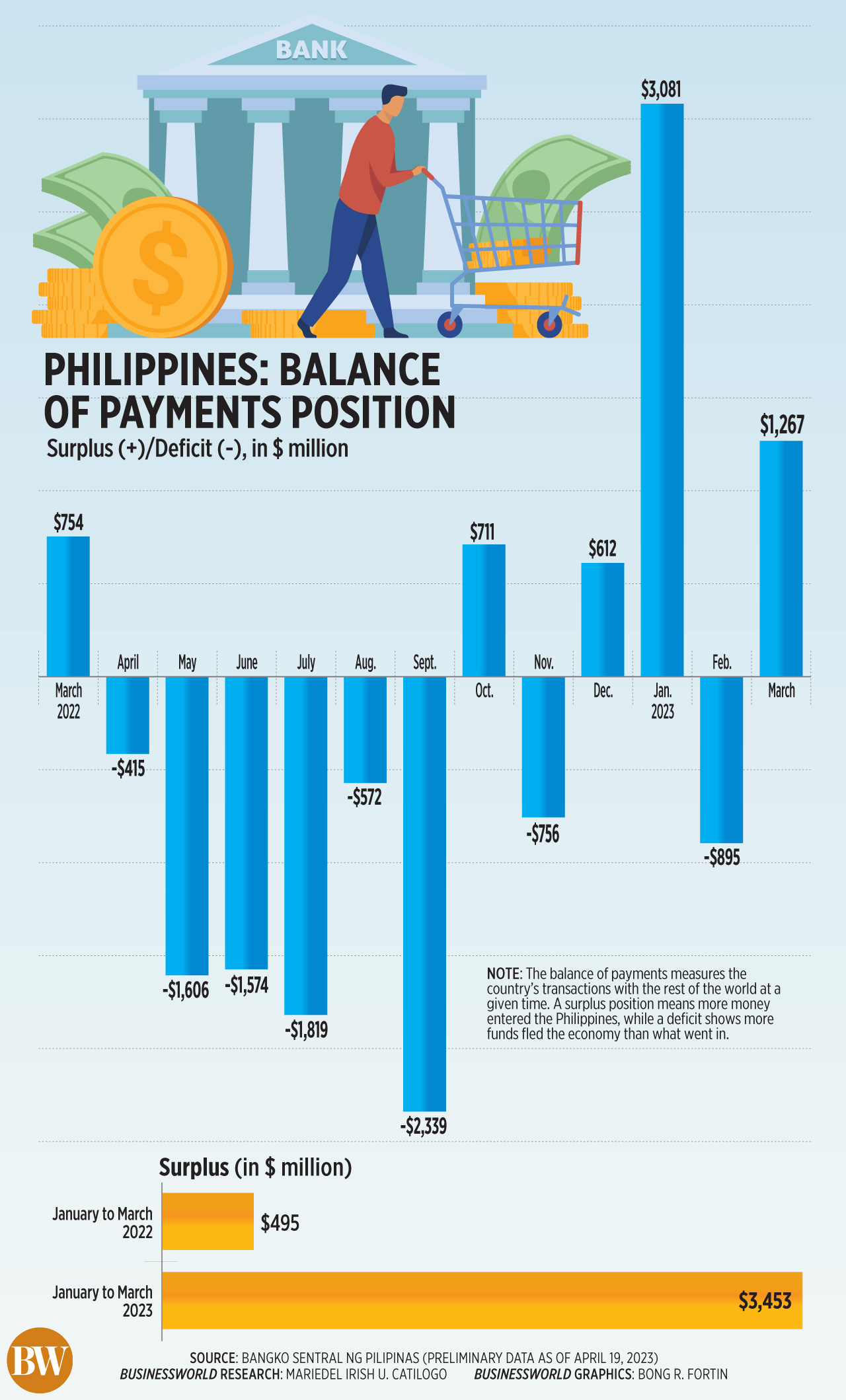
THE PHILIPPINES’ balance of payments (BoP) surplus hit a two-month high of $1.27 billion in March, mainly driven by foreign currency deposits from the National Government and the central bank’s investments abroad. 

Data released by the Bangko Sentral ng Pilipinas (BSP) on Wednesday showed that the March surplus was bigger than the $754-million surfeit a year earlier. This is also a turnaround from the $895-million deficit in February.   

This is also the biggest BoP surplus since the $3.08-billion surfeit in January.

Philippines: Balance of payments position“The BoP surplus in March 2023 reflected inflows arising mainly from the National Government’s (NG) net foreign currency loans, which were deposited with the BSP, and net income from the BSP’s investments abroad,” the central bank said in a statement.   

The BoP gives a glimpse into the country’s transactions with the rest of the world. A deficit means more funds left the country, while a surplus shows that more money came in.

“The BoP surplus in March was likely supported by a narrowing trade gap. Latest trade data showed that the deficit in February was at the lowest in four months amid a weaker outturn in both exports and imports,” China Banking Corp. Chief Economist Domini S. Velasquez said in a Viber message.   

Preliminary data from the Philippine Statistics Authority (PSA) showed the trade gap shrank to $3.88 billion in February, the smallest since the $3.72-billion deficit in November 2022.

Merchandise exports fell by 18.1% year on year to $5.08 billion, while imports slipped by 12.1% to $8.95 billion from a year earlier.

At its end-March level, the BoP reflects a final gross international reserve of $101.5 billion, up by 3.4% from the $98.2 billion a month earlier.

This is enough to cover 6.1 times the country’s short-term external debt based on original maturity and 4.2 times based on residual maturity.   

It also represents buffers equivalent to 7.6 months’ worth of imports of goods and payments of services and primary income.

For the first quarter, the BoP position stood at a $3.45-billion surplus, ballooning from the $495-million surfeit in the same period last year.

Union Bank of the Philippines, Inc. Chief Economist Ruben Carlo O. Asuncion said remittances from overseas Filipino workers contributed to higher BoP inflows.

Cash remittances hit a record high of $32.54 billion in 2022, up by 3.6% from $31.42 billion in 2021.

However, latest BSP data showed remittance growth slowed to 2.4% in February from 3.5% in January, marking the weakest annual growth since 2.3% in July 2022.

“The NG has also continued to borrow resulting to higher net foreign borrowings, probably as buffer for future spendings. Moreover, higher foreign direct investments (FDI) have also contributed to the rising BoP surplus,” Mr. Asuncion said in a Viber message.

Treasury data showed gross borrowings in February surged by 606% from P53.121 billion in the same month a year ago. External borrowings almost doubled to P15.984 billion in February from P8.121 billion in the same month in 2022.   

Meanwhile, FDI net inflows plunged 45.7% to $448 million in January from $824 million in the same month a year ago, data from the central bank showed.   

“Overall, we think that the BoP may continue to be in surplus, but not for long as the global economic recession risk overhang continues to linger and darken the global economic outlook,” Mr. Asuncion said.   

For her part, Ms. Velasquez expects the BoP position to end at a slightly narrower deficit this year as price pressures from the Russia-Ukraine war fade.

“The subdued external outlook as advanced economies continue to face recessionary risk will keep exports weak, but we expect Chinese demand to buoy exports towards the second half of the year,” she said.   

Ms. Velasquez said investments abroad may support the BoP position amid the recent implementation of investor-friendly reforms.

The central bank expects the BoP position to end the year with a $1.6-billion deficit, narrower than the $7.3-billion deficit in 2022. — Keisha B. Ta-asan

DBCC to review macroeconomic assumptions, growth targets

BUDGET SECRETARY AMENAH F. PANGANDAMAN — DBM

By Luisa Maria Jacinta C. Jocson, Reporter

THE DEVELOPMENT Budget Coordination Committee (DBCC) is set to review the government’s macroeconomic assumptions and growth targets at its meeting on Monday.

Budget Secretary Amenah F. Pangandaman said economic managers will see if there is a need to tweak the medium-term macroeconomic assumptions, growth targets and fiscal program, in light of recent developments.

“We’ll try to see if we are on track or if we adjust (the assumptions). First are targets, we’re trying to see if we can meet the targets in revenues and spending,” she said in a roundtable interview with BusinessWorld reporters and editors in Quezon City on Wednesday.

At its last meeting in December, the DBCC narrowed the gross domestic product (GDP) growth target for 2023 to 6-7%, from 6.5-8% previously, due to external headwinds and a global slowdown. It kept its 2024-2028 growth goal at 6.5-8%.

The DBCC also projected inflation to reach 2.5-4.5% this year.

This year, the Philippines’ macroeconomic indicators have been positive, Ms. Pangandaman said.

“So far, we are consistent, if you look at the numbers, we just have to wait for first-quarter gross domestic product (GDP) growth. But so far, our numbers are okay. Inflation is going down and the labor force participation rate is increasing,” she said.

The Philippine Statistics Authority (PSA) is set to release April inflation data on May 5 and first-quarter GDP data on May 11.

Inflation eased to 7.6% in March from 8.6% in February and a 14-year high of 8.7% in January. This brought the average first-quarter inflation to 8.3%, well above the central bank’s 6% full-year forecast.

Ms. Pangandaman said the government’s spending and revenue collections have been on track.

This year, the DBCC expects full-year disbursements to reach P5.117 trillion, while revenues will hit P3.71 trillion.

Budget Undersecretary Joselito R. Basilio said that if there are any revisions made by the DBCC, it would be for quarterly fiscal program or revenue targets.

“Definitely, the medium-term fiscal framework is consistent, there may be just quarterly changes in the fiscal program or revenue targets, but that’s still consistent,” he said at the same roundtable interview.

However, economists said the DBCC should consider revising its macroeconomic assumptions and targets.

Union Bank of the Philippines, Inc. Chief Economist Ruben Carlo O. Asuncion in a Viber message said that full-year economic growth projection should be revised downward to 5-6%, while the inflation assumption should be raised to 5-7%.

“There may be a need to revise lower the GDP growth estimates amid risk of recession in the US, which is the world’s largest economy as could be exacerbated by the US banking turmoil that would increase the odds of US recession,” Rizal Commercial Banking Corp. Chief Economist Michael L. Ricafort said in a Viber message.

Mr. Ricafort noted that Philippine growth of at least 5.5-6% remains “possible for the coming years.”

The collapse of the Silicon Valley Bank and Signature Bank triggered a banking crisis in the US and rattled financial markets across the globe. This marked one of the biggest bank failures since the 2008 global financial crisis.

The International Monetary Fund expects US growth to slow to 1.6% this year and further to 1.1% in 2024, much lower than the 2.1% growth it registered in 2022.

PHL envoy prioritizes GSP renewal bid in US

United States dollar banknotes and American flag displayed on a laptop screen are seen in this multiple exposure illustration photo taken in Poland on Dec. 26, 2022. — JAKUB PORZYCKI/NURPHOTO VIA CONNECT

By Keisha B. Ta-asan, Reporter

THE PHILIPPINE EMBASSY in the United States is prioritizing the renewal of the country’s participation in the US Generalized System of Preferences (GSP) trading scheme, the ambassador said.

Philippine ambassador to the US Jose Manuel D. Romualdez told BusinessWorld the Philippines has a better chance of renewing the GSP as the current US Congress is cool to any kind of free trade agreement (FTA) at this time.

“I think that the US is open to that one (GSP renewal), and that requires obviously a Congressional act… That’s why this visit of our economic team, and of course, hopefully, a presidential visit will emphasize the importance of our economic ties with the United States. That would probably put a little more emphasis on the GSP,” Mr. Romualdez said in an interview at the Philippine embassy in Washington, D.C. last week.

“We’re working on the GSP as a priority, and the FTA will be a continuing effort on our part to see how we get one done.”

The Philippines has been pushing for the reauthorization of its GSP eligibility after it expired in 2020. The program allowed duty-free entry of more than 5,000 Philippine products into the US, including electronics and agricultural products.

Also, Mr. Romualdez said the Philippines will continue pushing for a bilateral FTA with the United States, even though he called it a “big challenge.”

“There are many American companies who actually wanted this, and they told President Marcos this when he met with them in New York last September,” he said.

“But the problem is, the FTA is going to be approved by the US Congress and there seems to be very little appetite for any kind of FTA at this time. Even the Executive branch of the US government is not very optimistic that it can be done. It may take some time.”

US Trade Representative (USTR) Katherine Tai on Tuesday told Manila-based journalists that the US government is currently not keen on negotiating FTAs with its trading partners including the Philippines. 

Trade Secretary Alfredo E. Pascual on Wednesday said this would not prevent the Philippines from continuing to pursue an FTA with the US.

“The important thing is we’re not closing the door to formalizing trade relations between the Philippines and the United States,” Mr. Pascual told reporters on the sidelines of a forum in Taguig City.

He noted Ms. Tai was just echoing the position previously made by US President Joseph R. Biden, Jr.   

“Ms. Tai cannot say otherwise because President (Biden) has already made the pronouncement that there would be no FTAs during his term. She is just voicing that, and we understand. We had a discussion on this and we understand where she is coming from. But it cannot prevent us from further pushing,” Mr. Pascual said. 

IPEF AS AN ALTERNATIVE
As an alternative to FTAs, the US is pushing for the Indo-Pacific Economic Framework for Prosperity (IPEF). But the US-led trade framework would focus on wider trade agreements with multiple countries.

“Clearly, what [the US] wants to do is to have a wider reach rather than just one [country]. But obviously the Philippines wants to have a special arrangement like what [we have in other countries],” Mr. Romualdez said.

Launched in May 2022, the IPEF pushes for resilience, sustainability, inclusiveness, economic growth, fairness, and competitiveness among the 14 participating nations. This includes the US, Australia, Brunei, Fiji, India, Indonesia, Japan, South Korea, Malaysia, New Zealand, the Philippines, Singapore, Thailand, and Vietnam.

Mr. Pascual said the IPEF is not a trade agreement, but it will address some constraints.

“It is IPEF that we will use as a platform to work on this formal trade relations between the Philippines and the US because the US has initiated the IPEF to improve the trade environment,” he said.

OTHER TRADE DEALS
For Mr. Romualdez, the Philippine government should also pursue other FTAs with other countries.

“Personally, and this is what I told our economic team, I think that we should try to work more on developing an FTA with other countries that will have an opportunity for us to increase our exports to these areas, rather than really just look at the United States,” he said.

The Philippines and Japan entered into an FTA in 2008. The Philippines is also part of the China-led Regional Comprehensive Economic Partnership (RCEP).

Mr. Romualdez said the country has to balance its relationship with the US and China amid trade tensions between the world’s two largest economies.

“This is where the thin line that we have to work on because we want to have a bigger trading partnership with China, because they are a big market. At the same time, their products are also acceptable to us. So, this is really a very challenging situation for us,” Mr. Romualdez said.

He said the Philippines can expand its exports to the United States by ensuring its products are competitive.

“If we can have the right kind of products that Americans would love to have, like for instance, food items that are popular, it’s a big market (350 million),” the ambassador said. — with Revin Mikhael D. Ochave

SC issues Writ of Kalikasan vs Golden Rice, Bt eggplant

IRRI

THE SUPREME COURT (SC) has issued a Writ of Kalikasan against the Department of Agriculture (DA), ordering it to stop the commercial propagation of genetically modified rice and eggplant products.

In a statement on Wednesday, the High Court said it issued the Writ of Kalikasan in relation to the petition filed by the Magsasaka at Siyentipiko Para sa Pag-Unlad ng Agrikultura (MASIPAG) on Oct. 12, 2022.

During its en banc session on Tuesday, the High Court asked the secretaries of the departments of Agriculture, Environment, Health, as well as the heads of the Bureau of Plant Industry, Philippine Rice Institute, and the University of the Philippines-Los Baños to file a verified return within 10 days.

“We welcome this move by the Supreme Court in issuing the Writ of Kalikasan on Golden Rice and Bt eggplant and its recognition that these genetically modified crops pose grave danger to our environment and health,” MASIPAG national coordinator Alfie Pulumbarit said in a statement.

MASIPAG, a group of farmers and scientists, had sought a temporary environmental protection order (TEPO) against the DA to stop the commercial cultivation of Golden Rice and Bt eggplant until proof of safety and compliance with legal requirements is shown.

The group claimed the Golden Rice and Bt eggplant are genetically modified organisms (GMO) that pose risks to the environment and the health of consumers.

The petitioners claimed that Golden Rice is modified by inserting a gene from maize and a gene from bacteria extracted from soil. They also argued that Bt eggplant was harmful since it produces its own toxin to kill insects that usually consume and damage regular eggplants.

MASIPAG also sought the declaration of all biosafety permits for Golden Rice and Bt eggplant declared null and void. It also asked the DA to perform independent risk and impact assessments on the products, as well as seek prior and informed consent from farmers and indigenous peoples.

““We hope that the Supreme Court shall grant our prayer to issue the TEPO. It is most urgent that the propagation of Golden Rice and Bt eggplant shall be stopped as our local rice diversity and associated biodiversity are at stake with the threat of gene contamination coming from these genetically modified crops,” Mr. Pulumbarit said.

The High Court has not uploaded a full copy of the ruling on its website.

A Writ of Kalikasan is a legal remedy that protects citizens from environmental damage that threatens life, health, or property in two or more cities.

The Philippine-based International Rice Research Institute approved the commercial cultivation of Golden Rice in 2021, while Bt eggplant was given the green light on Oct. 18, 2022. — John Victor D. Ordoñez

‘No extension,’ says DICT on SIM registration

PEOPLE are seen using their mobile phones along Claro M. Recto Avenue in Divisoria, Manila, Dec. 27, 2022. — PHILIPPINE STAR/EDD GUMBAN

THE Department of Information and Communications Technology (DICT) has ruled out an extension of the registration of subscriber identity module (SIM), seven days before the deadline.

In a press release on Wednesday, DICT said that it had received a request from public telecommunication entities (PTEs) to extend the deadline, but said “at this point, there is no extension of SIM registration.”

“With the April 26 registration deadline drawing near, we encourage everyone to reqister to promote the responsible use of SIMs and provide law enforcement agencies the necessary tools to crack down on perpetrators who use SIMs for their crimes, consistent with the declared policy of the law,” it added.

The DICT also reminded the public of the repercussion of non-registration, which is the deactivation of the subscribers’ SIMs and eSIMs, barring them from using their PTEs’ calling, texting and digital wallet services.

“The DICT reiterates that the SIM Registration Act places primacy on the fundamental rights of Filipinos and is replete with safeguards to ensure the confidentiality and security of user data,” it said.

Republic Act No. 11934 or the SIM Registration Act requires all SIM users to register their SIMs under their name until April 26, or risk SIM deactivation. It aims to help mitigate the proliferation of text scams and other mobile phone-aided criminal activities.

Previously, the three PTEs — Smart Communications, Inc., Globe Telecom, Inc., and DITO Telecommunity Corp. – requested the extension of the SIM registration’s deadline for at least 120 days. The call came after they noticed that about half of the subscribers nationwide have not yet registered.

Data from the DICT showed that only 73.03 million or 43.2% of the 168.98 million subscribers nationwide have registered.

Of the total SIMs registered, 36.11 million are Smart subscribers, 31.59 million are from Globe, while DITO recorded 5.33 million. — Justine Irish D. Tabile

Usual office users seen to drive post-pandemic demand

ANDREY ANDREYEV-UNSPLASH

TRADITIONAL offices along with information technology and business process management (IT-BPM) firms will continue to drive post-pandemic office demand, a real estate consultant said, as it recorded more spaces taken up by these entities in the first quarter of the year.

“[Growth will still be driven] by the [IT-BPM] sectors and the traditional offices because earlier, the Asia Development Bank said that the Philippines will most likely grow by 6% this year and 6.2% next year,” said Leechiu Property Consultants (LPC) Chief Executive Officer David Leechiu in a press briefing on Wednesday.

“[This] will make us one of the fastest growing economies and that means consumption. Many companies are wanting to come here to tap into that market,” he added.

For the first quarter of 2023, total demand for office spaces more than doubled to 264,000 square meters (sq.m.) from 124,000 sq.m. seen in the same period last year.

Demand for office spaces mainly came from IT-BPM and traditional sectors.

According to LPC Director for Commercial Leasing Mikko Barranda, live demand during the quarter reached 497,000 sq.m. with Metro Manila, contributing the bulk at 73% of the total, with provincial areas at 27% accounting for the rest.

“Despite the havoc brought by the pandemic … we’ve seen heightened market activity across all sectors of the real estate, which tell us we are in the midst of a post-pandemic recovery.” Mr. Barranda said.

Office space demand in Metro Manila was mainly driven by traditional offices at 49% or 178,000 sq.m. The rest are accounted for by IT-BPM at 114,00 sq.m. and Philippine offshore gaming operators (POGOs) at 71,000 sq.m.

Meanwhile, the majority of demand in provincial areas was driven by IT-BPM at 96% or 130,000 and traditional offices occupied 4% or 5,000 sq.m.

The total vacancy during the first quarter totaled 2.6 million sq.m., 40% of which are fragmented spaces.

“We expect another 969,000 sq.m. to be completed by the end of 2023,” LPC said in its report.

According to data from LPC, the supply of office spaces will significantly start to decline from 2024 until 2026. It expects overall vacancy to decline to 207 sq.m. in 2026 from the 1.32 million sq.m. expected this year.

“Another 1 million [sq.m.] will enter the market this year, but we will see a deficit of buildings in 2024 to 2026, which tells us this is an opportunity for developers to capitalize,” Mr. Barranda added. — Adrian H. Halili

DigiPlus secures P3-B loan for capital spending

BW FILE PHOTO

DIGIPLUS Interactive Corp. has secured a P3-billion loan from Asia United Bank Corp. that the listed gaming company will mainly use as capital expenditure to expand its operations, it said on Wednesday.

“We aim to capitalize on this positive momentum by revolutionizing our users’ experience by investing in new technologies, introducing new and innovative products, and enhancing our quality of service,” DigiPlus President Andy Tsui said in a statement.

“This loan financing is a significant milestone as we look to ground our leading position in the retail gaming industry of the country,” Mr. Tsui added.

The company’s capital spending budget will be used mainly for the expansion of its newly launched digital platform, BingoPlus, and its onsite gaming operations.

“BingoPlus has become a community and entertainment hub and a source of revenue for government in funding social and educational programs,” the company said.

The platform saw significant growth with more than 1,700 jackpot winners since its inception

In a separate disclosure, the company reported a net income of P686.86 million, a reversal of the P894.62-million loss it incurred the prior year, driven by the resumption of on-site operations and the launch of the new platform.

“What we accomplished in 2022 is remarkable,” Mr. Tsui said in an earlier statement, adding that the company “re-aligned its new business strategy and returned to profitable operations. We believe that there is strong momentum in our future business growth and the outlook is positive.”

It reported that revenues more than tripled to P8.91 billion from P2.81 billion in 2021 driven by its retail games business, which contributed 91.7% or P8.16 billion of the total.

“The retail business is expected to keep its profitable operations as it gains the favor of the social gamers, bingo-loving Filipinos,” the company said.

DigiPlus is planning to expand site operations to different areas, acquire more machines, and expand its game offering.

“DigiPlus also completed a round of private placement value up to Php1.85 billion just in the first quarter of 2023 to support its operational plans and strategies,” it added.

DigiPlus shares closed 3.35% higher on Wednesday at P2.78 apiece. — Adrian H. Halili

Raslag board clears P1.2-B loan for solar plant

RASLAG Corp. said on Wednesday that its board had approved obtaining a P1.2-billion loan from the Bank of the Philippine Islands to fund the construction and development of a solar farm.

In a stock exchange disclosure, Raslag said the funding will be used for its 35.159-megawatt (MW) Raslag 4 solar plant in Talimundoc, Magalang, Pampanga.

The company’s board also gave the approval for the selection of F.D. Laxina Construction Services and Trading Corp. as the land developer for the solar project.

Raslag said its board had also given the green light in obtaining another loan from the Ayala-led bank amounting to P250 million to bridge the partial financing of the land and acquisition for Raslag-6 solar farm.

In a disclosure in January, Raslag said it was planning to acquire about 42 hectares of land in Gerona, Tarlac to serve as the site for Raslag-6.

Raslag, a renewable energy developer, has installed to date 23.19 megawatt-peak (MWp) of commercially operating plants. About 18.01 MW are under construction, apart from proposed projects with a capacity of around 95.2 MW.

At the local bourse on Wednesday, shares in the company closed 0.65% lower to end at P1.53 each. — Ashley Erika O. Jose

ADVERTISEMENT
ADVERTISEMENT