Home Blog Page 4946

BSP launches credit scoring model

BW FILE PHOTO

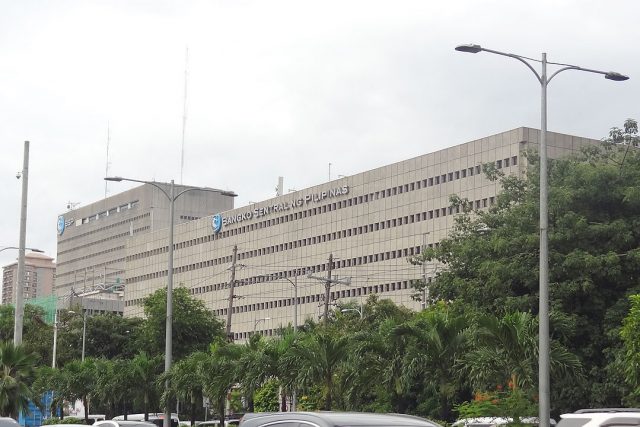
THE BANGKO SENTRAL ng Pilipinas (BSP) has launched a credit scoring model that is expected to enhance credit risk assessment by lenders.

The Credit Risk Database (CRD) Scoring Model was developed as part of a technical cooperation program between the BSP and the Japan International Cooperation Agency (JICA).   

It is expected to serve as an additional tool that lenders can use to analyze the creditworthiness of micro-, small-, and medium-sized enterprises (MSMEs).

The CRD utilizes a data-driven approach to boosting lenders’ confidence in financing MSMEs, especially those without credit history or enough collateral, the BSP said.

“The CRD scoring model will [not only] contribute to bridging the funding gap to MSMEs, but it will also enhance credit risk management among financial institutions,” BSP Governor Felipe M. Medalla said at the launch event on Tuesday.

Sakamoto Takema, chief representative of JICA, said the CRD can contribute to the BSP’s goal of enhancing access to finance under the National Strategy for Financial Inclusion.

“The overall goal is to enhance the capacity of credit risk assessment of each financial institution, and to promote risk-based lending rather than collateral based lending. It will strengthen the country’s financial system by expanding and streamlining lending to MSMEs,” Mr. Takema said.   

Mr. Takema said JICA has agreed to extend the CRD project period for another year and will extend support for phase 2.

The CRD project was launched virtually in December 2020 at the height of the pandemic. The project has expanded with the help of 32 participating rural and universal and commercial banks.

BSP Deputy Governor Bernadette Romulo-Puyat said the CRD is a tool that may significantly expand credit access of small and medium enterprises.

“MSMEs make up 99.6% of business establishments in the country providing 64.7% of employment to the country’s workforce and contribute about 35.7% to the country’s gross domestic product,” she said.

Mr. Medalla noted that there is a “one-size-fit-all policy” towards lending to small businesses in the country, citing the Republic Act 6977 or the Magna Carta for MSMEs.

“A highly specialized Japanese bank for instance — [which] has less than a hundred employees because they are focused on lending to Japanese firms in the Philippines — are being told to lend to MSMEs and agriculture,” he said, adding that the law becomes a “tax” on foreign investors.

Mr. Medalla said that banks have opted to incur penalties for noncompliance instead of taking on the risks associated with lending to small businesses.

Lenders are mandated by the Republic Act 6977 or the Magna Carta for MSMEs to allocate 10% of their credit portfolio for small businesses to boost the sector — 8% for micro and small enterprises (MSEs) and 2% for medium-sized enterprises.

In April 2020, the BSP allowed MSME loans to be counted as part of banks’ reserve requirements in a bid to boost lending to the sector at the height of the pandemic. — Keisha B. Ta-asan

Philippine central bank expands hedging facility to ease FX risk

BW FILE PHOTO

THE Philippine central bank amended its rules to encourage hedging against foreign-exchange risk, easing pressure on the peso which slipped to a four-month low last week.

The monetary authority expanded the coverage of the currency rate risk protection program or CRPP and loosened some requirements to encourage its use. The facility, which allows clients of larger banks to hedge their eligible foreign currency obligations or transactions through non-deliverable forwards, now includes non-trade transactions and investments.

“The lessons from last year’s weakness in the peso show that spillover of risks is inevitable in an increasingly global and interconnected world,” central bank Governor Felipe M. Medalla said in a statement on Tuesday.

The peso fell to P56.40 per dollar on April 20, its lowest since December 1. It has gained in the past three days, trading at P55.499 at 3:26 p.m. local time. The Philippine currency plunged to P59 in 2022.

Amendments in circular dated April 18 include:

Expansion of eligible foreign-exchange obligations and transactions to include non-trade transactions and investments

Aligning documentary requirements with existing regulations on foreign-exchange transactions and removing notarial rules

Operational changes such as the applicable US dollar interest rate to be used in the computation of the non-deliverable forward rate.

“The CRPP should enhance trading in the future,” said Nicholas Mapa, a senior economist at ING Bank N.V. in Manila. While the expanded hedging facility may have aided the peso’s recovery, mid-month corporate demand for dollars has also subsided, Mr. Mapa added. — Bloomberg

First NFT insider-trading trial turns on art instead of stock

The Brawl 2 by Arya Mularama -OPENSEA.IO

A FORMER product manager at the NFT marketplace OpenSea is set for the first-ever insider trading trial involving digital assets — and the object of his alleged crimes is pop art rather than stock.
Nathaniel Chastain, 32, was responsible for selecting which non-fungible tokens (NFT) would be highlighted. That usually led to an immediate spike in the price of the assets.

Prosecutors say that while OpenSea would keep the identity of featured tokens secret until they appeared on its home page, Mr. Chastain bought dozens of them beforehand and then sold them immediately afterward for as much as five times the purchase price, violating his duty to keep the information confidential.
Jury selection starts Monday in Manhattan federal court and the trial is expected to last one to two weeks.

NOT SECURITIES FRAUD
Most insider trading cases are centered around securities fraud, such as buying stock of a company ahead of a pending acquisition or merger based on information that was supposed to be kept secret, or avoiding losses by dumping shares of a drugmaker after learning about the negative results of a clinical trial before it’s announced to the public.

Mr. Chastain is instead charged with wire fraud, which allows prosecutors to avoid the thorny issue of whether or not an NFT is a security, a question that’s been hotly debated in the world of digital assets.

The government used a similar approach in the first insider-trading case involving cryptocurrency. Ishan Wahi, a former Coinbase Global, Inc. manager, pleaded guilty in February to two counts of conspiracy to commit wire fraud for trading on confidential information he learned about when the exchange was going to list new tokens.

Mr. Wahi faces as long as 20 years in prison on each count when he is sentenced next month, although he agreed to federal guidelines that call for him to serve 36 to 47 months behind bars as part of his plea deal.

A victory in the OpenSea case is likely to encourage further use of the strategy by prosecutors as a tool to ferret out fraud in nontraditional markets while regulations for digital assets are still being crafted.

Mr. Chastain has argued NFTs aren’t securities or commodities and therefore aren’t subject to the government’s theory — and that what he took isn’t misappropriated property, as required by the law, because it had no “inherent economic and market value and is based on the unspoken personal thoughts and ideas of employees.” He also contended that he didn’t commit money laundering because the transactions were done on a public blockchain.

‘MARKETING CONCEPT’
“A marketing concept, such as what should essentially be featured in an art gallery window, which has no determinable economic or saleable value and is based on an employee’s unspoken thoughts — regarding the mere selection of an item for prominent display — does not fit this bill,” Mr. Chastain’s lawyer, David I. Miller, said in a court filing.

A group of more than 300 defense attorneys filed a letter in support of Mr. Chastain’s request to throw out the indictment, saying that a finding that all “confidential business information” is property would “effectuate a breathtaking expansion of federal fraud and criminalize a broad swath of conduct never before thought criminal.”

“It would, indeed, capture virtually every instance of an employee using internal employer information for nonwork purposes,” the group said. “Wire fraud does not reach every employee who diverts ‘confidential’ information received at work to the employee’s own purposes.”

US District Judge Jesse Furman, who is presiding over the trial, rejected Mr. Chastain’s attempts to exclude the phrase “insider trading.” The judge said that while the case may not fit into the traditional mold, the term is still descriptive of his alleged conduct in the case — using confidential information about an asset to trade that asset on a public market.

THE BRAWL 2
Mr. Chastain bought a total of 45 NFTs on 11 separate occasions as part of his scheme, prosecutors said. Some of the works he is accused of profiting from include The Brawl 2 by Arya Mularama, which was featured on OpenSea’s homepage on Aug. 2, 2021, and Flipping and spinning by Russ Morland, which was highlighted about a week later.

The government alleges Mr. Chastain made more than $57,000 in profit from the scheme. Mr. Chastain told his girlfriend in a text message after his arrest that he earned about 19 ethereum from the sales outlined in the indictment, which would be about $35,359 based on a Sunday spot price, but he argues that he never converted the proceeds to dollars and therefore never realized any gain.

Mr. Chastain was asked to resign in September 2021 after the community began questioning whether he was front-running sales and the company instituted policies barring employees from buying or selling featured NFTs while they were being highlighted on the home page. He was arrested in June 2022 and faces as much as 20 years on each count if convicted, although he’s unlikely to serve that much time if found guilty.

The case is USA v. Chastain, 22-cr-305, US District Court, Southern District of New York (Manhattan).


NFTs tied up in Three Arrows collapse to be sold by Sotheby’s

SOTHEBY’s is preparing to sell a collection of digital art recovered by liquidators unwinding failed cryptocurrency hedge fund Three Arrows Capital Ltd.

Auctions and private sales of non-fungible tokens (NFT) in the GRAILS collection, assembled by Three Arrows mostly in 2021, will kick off next month in New York, according to a statement. Pieces up for grabs include Chromie Squiggle #1780 by Snowfro and Ringers #879 by artist Dmitri Cherniak.

The sales will help raise money to repay Three Arrows creditors owed more than $3 billion following its sudden collapse last year. Liquidators sifting through the wreckage have been rounding up assets for months, but have repeatedly said the process is impeded by a lack of cooperation from founders Su Zhu and Kyle Davies.

Three Arrows’ liquidators chose Sotheby’s to sell the digital art because they believe the high-end auction house will be able to maximize the value of the assets, according to a spokesperson for Teneo, the consultancy in charge of winding down the hedge fund. (See the collection here: GRAILS:PROPERTY FROM AN ICONIC DIGITAL ART COLLECTION | Art Auction & Sales | Sotheby’s (sothebys.com)).

The hedge fund assembled much of its collection near the height of a frenzy for NFTs that has since cooled. — Bloomberg

Imagination makes us human — this unique ability to envision what doesn’t exist has a long evolutionary history

FREEPIK

YOU can easily picture yourself riding a bicycle across the sky even though that’s not something that can actually happen. You can envision yourself doing something you’ve never done before — like water skiing — and maybe even imagine a better way to do it than anyone else.

Imagination involves creating a mental image of something that is not present for your senses to detect, or even something that isn’t out there in reality somewhere. Imagination is one of the key abilities that make us human. But where did it come from?
I’m a neuroscientist who studies how children acquire imagination. I’m especially interested in the neurological mechanisms of imagination. Once we identify what brain structures and connections are necessary to mentally construct new objects and scenes, scientists like me can look back over the course of evolution to see when these brain areas emerged — and potentially gave birth to the first kinds of imagination.

After life emerged on Earth around 3.4 billion years ago, organisms gradually became more complex. Around 700 million years ago, neurons organized into simple neural nets that then evolved into the brain and spinal cord around 525 million years ago.

Eventually dinosaurs evolved around 240 million years ago, with mammals emerging a few million years later. While they shared the landscape, dinosaurs were very good at catching and eating small, furry mammals. Dinosaurs were cold-blooded, though, and, like modern cold-blooded reptiles, could only move and hunt effectively during the daytime when it was warm. To avoid predation by dinosaurs, mammals stumbled upon a solution: hide underground during the daytime.

Not much food, though, grows underground. To eat, mammals had to travel above the ground — but the safest time to forage was at night, when dinosaurs were less of a threat. Evolving to be warm-blooded meant mammals could move at night. That solution came with a trade-off, though: Mammals had to eat a lot more food than dinosaurs per unit of weight in order to maintain their high metabolism and to support their constant inner body temperature around 99 degrees Fahrenheit (37 degrees Celsius).
Our mammalian ancestors had to find 10 times more food during their short waking time, and they had to find it in the dark of night. How did they accomplish this task?

To optimize their foraging, mammals developed a new system to efficiently memorize places where they’d found food: linking the part of the brain that records sensory aspects of the landscape — how a place looks or smells — to the part of the brain that controls navigation. They encoded features of the landscape in the neocortex, the outermost layer of the brain. They encoded navigation in the entorhinal cortex. And the whole system was interconnected by the brain structure called the hippocampus. Humans still use this memory system for remembering objects and past events, such as your car and where you parked it.
Groups of neurons in the neocortex encode these memories of objects and past events. Remembering a thing or an episode reactivates the same neurons that initially encoded it. All mammals likely can recall and re-experience previously encoded objects and events by reactivating these groups of neurons. This neocortex-hippocampus-based memory system that evolved 200 million years ago became the first key step toward imagination.
The next building block is the capability to construct a “memory” that hasn’t really happened.

The simplest form of imagining new objects and scenes happens in dreams. These vivid, bizarre involuntary fantasies are associated in people with the rapid eye movement (REM) stage of sleep.

Scientists hypothesize that species whose rest includes periods of REM sleep also experience dreams. Marsupial and placental mammals do have REM sleep, but the egg-laying mammal the echidna does not, suggesting that this stage of the sleep cycle evolved after these evolutionary lines diverged 140 million years ago. In fact, recording from specialized neurons in the brain called place cells demonstrated that animals can “dream” of going places they’ve never visited before.

In humans, solutions found during dreaming can help solve problems. There are numerous examples of scientific and engineering solutions spontaneously visualized during sleep.
The neuroscientist Otto Loewi dreamed of an experiment that proved nerve impulses are transmitted chemically. He immediately went to his lab to perform the experiment — later receiving the Nobel Prize for this discovery.

Elias Howe, the inventor of the first sewing machine, claimed that the main innovation, placing the thread hole near the tip of the needle, came to him in a dream.

Dmitri Mendeleev described seeing in a dream “a table where all the elements fell into place as required. Awakening, I immediately wrote it down on a piece of paper.” And that was the periodic table.

These discoveries were enabled by the same mechanism of involuntary imagination first acquired by mammals 140 million years ago.

The difference between voluntary imagination and involuntary imagination is analogous to the difference between voluntary muscle control and muscle spasm. Voluntary muscle control allows people to deliberately combine muscle movements. Spasm occurs spontaneously and cannot be controlled.

Similarly, voluntary imagination allows people to deliberately combine thoughts. When asked to mentally combine two identical right triangles along their long edges, or hypotenuses, you envision a square. When asked to mentally cut a round pizza by two perpendicular lines, you visualize four identical slices.

This deliberate, responsive, and reliable capacity to combine and recombine mental objects is called prefrontal synthesis. It relies on the ability of the prefrontal cortex located at the very front of the brain to control the rest of the neocortex.

When did our species acquire the ability of prefrontal synthesis? Every artifact dated before 70,000 years ago could have been made by a creator who lacked this ability. On the other hand, starting about that time there are various archeological artifacts unambiguously indicating its presence: composite figurative objects, such as lion-man; bone needles with an eye; bows and arrows; musical instruments; constructed dwellings; adorned burials suggesting the beliefs in afterlife, and many more.

Multiple types of archaeological artifacts unambiguously associated with prefrontal synthesis appear simultaneously around 65,000 years ago in multiple geographical locations. This abrupt change in imagination has been characterized by historian Yuval Harari as the “cognitive revolution.” Notably, it approximately coincides with the largest Homo sapiens‘ migration out of Africa.

Genetic analyses suggest that a few individuals acquired this prefrontal synthesis ability and then spread their genes far and wide by eliminating other contemporaneous males with the use of an imagination-enabled strategy and newly developed weapons.
So it’s been a journey of many millions of years of evolution for our species to become equipped with imagination. Most nonhuman mammals have potential for imagining what doesn’t exist or hasn’t happened involuntarily during REM sleep; only humans can voluntarily conjure new objects and events in our minds using prefrontal synthesis. — The Conversation via Reuters Connect


Andrey Vyshedskiy is a Professor of Neuroscience at Boston University.

Arts&Culture (04/26/23)


Museum Foundation holds tour of Batangas

THE MUSEUM Foundation of the Philippines has organized Batangas and Beyond!, a tour that explores the heritage and history of the province, and includes visiting the capital, Batangas City, and neighboring towns of San Jose and Ibaan. The tour will be held on May 6, with a meet up time of 7:30 a.m. at the National Museum of Fine Arts in Manila. The fee of P4,500 per head includes transfers, meals and a special tour program. There will be a walking tour of Batangas City’s old bayan which includes visiting the Museo Puntong Batangan, Plaza Mabini, and the 16th century Basilica of the Immaculate Conception. The tour includes special access to the basilica’s sacristy to view its collection of religious antiquities including the original 18th century silver altar. There will be an al fresco lunch of Batangas specialties at the private Acosta-Pastor residence, a well preserved bahay-na-bato dating to 1883. The tour includes a visit to a traditional women’s weaving community cooperative in the town Ibaan, and a merienda (snack) and guided tour at Vilela’s, a family-run integrated farm and agricultural facility. This tour is supported by the Batangas City Cultural Affairs Committee and Tourism Office. For inquiries and reservations, contact Tanya Pico at executive director@museumfoundationph.org, or call, text, or Viber 0918-901-7500.


New dates added to Ang Huling El Bimbo the Musical

ANG HULING El Bimbo the Musical returned to the Newport Performing Arts Theater last weekend, featuring a new cast, fresh choreography, production, and the iconic songs of the Eraserheads. The show has performances every Friday and Saturday at 8 p.m., and matinee performances every Saturday and Sunday at 3 p.m. this April, with new show dates recently added in May to accommodate more theatergoers. Presented by Newport World Resorts’ production outfit Full House Theater Company, Ang Huling El Bimbo tells the tale of four friends Anthony, Emman, Joy, and Hector in the past and present. Tickets are now available at Newport World Resorts Box Office, TicketWorld, and SM Tickets outlets with prices ranging from P1,079 to P3,776. It is recommended for audiences aged 13 years old and above. For more information on Ang Huling El Bimbo the Musical and its show schedule, visit www.newportworldresorts.com and follow @newportworldresorts and @fullhousetheater on Facebook and Instagram, @nwresorts on Twitter.


Manobo artist holds puppetry workshops

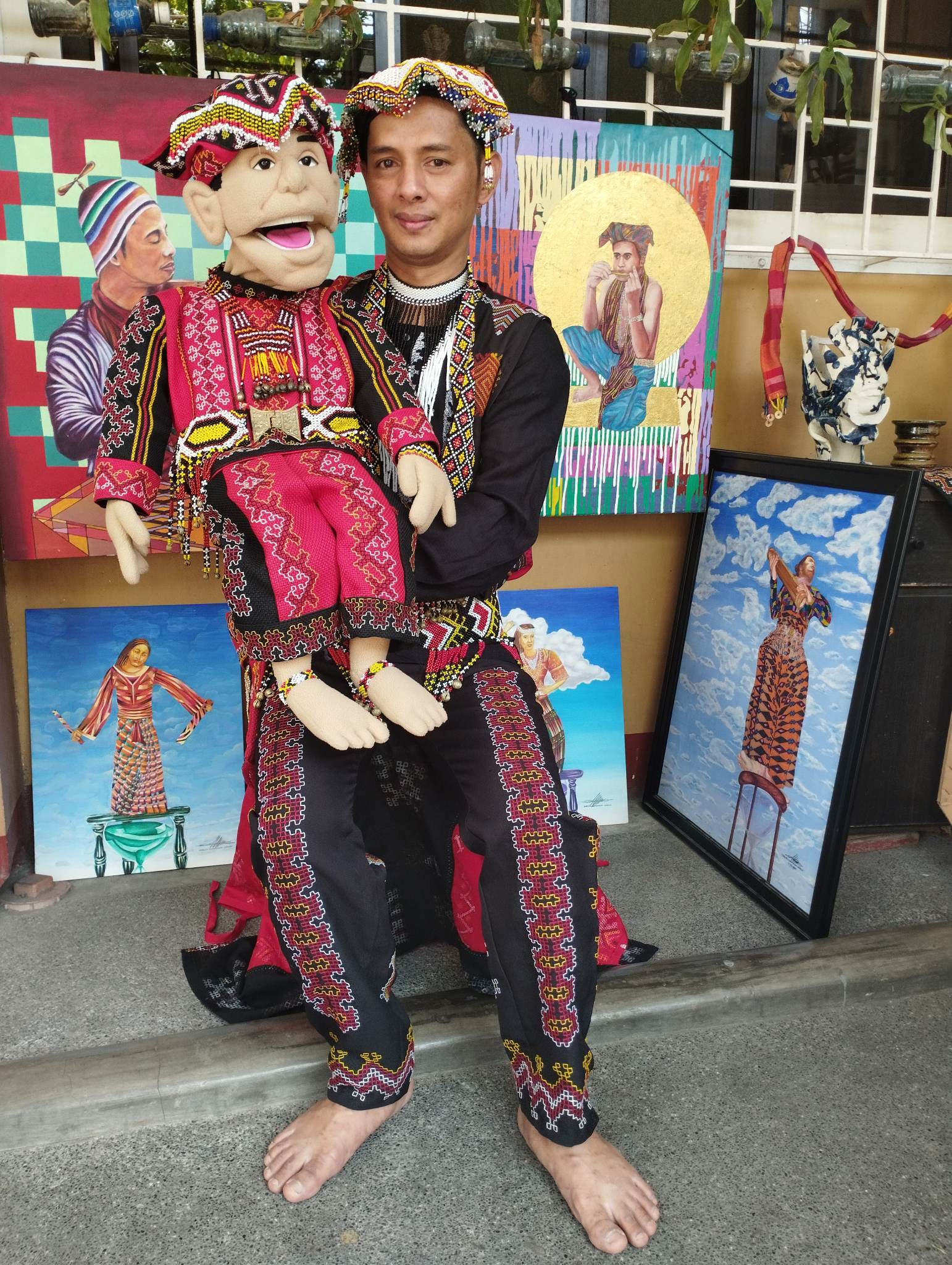
YOUNG actors and actresses from the different parts of Mindanao will gather to learn the tradition and rich heritage of masks and puppetry in the Philippines and beyond on May 1. Entitled Papet, Papet… Pang Bata’t Matanda?, the free lecture-workshop by award-winning Manobo artist Carlito Camahalan Amalla was organized by the Kamayoka Center through the Sining Kambayoka Ensemble (SKE). It is the official folk theater company of Mindanao State University in Marawi. The event is in celebration of the group’s golden anniversary in 2024. The talk is likewise in preparation for the youth’s performances under the Cultural Exchange Program of the Cultural Center of the Philippines (CCP). Mr. Amalla, who currently teaches under the Design Foundation of the School of Arts, Culture, and Performance (SACP) of the De La Salle-College of Saint Benilde, will walk the participants into the vibrant history and culture of masks and puppetry across the world. He will provide an overview of its unique characteristics that makes it distinct from popular counterparts, such as Wayang Golek, a Sundanese puppet art from West Java, Indonesia. Mr. Amalla will likewise discuss its role in storytelling and conveying messages, and the relevance of the art in modern society. He will guide the young artists on how to create their own puppets. The lecture-workshop will conclude with a recital featuring the finished outputs of the participants. Papet, Papet… Pang Bata’t Matanda? will be held at the Mindanao State University, Marawi City.


Call for applications to VLF 18 Writing Fellowship

The Cultural Center of the Philippines (CCP) through the Artist Training Division, is now accepting applications for the Virgin Labfest (VLF) 18 Writing Fellowship Program. Deadline for application is on or before May 16. The VLF 18 Writing Fellowship Program is a two-week mentorship program on the study and practice of dramatic writing for the stage. The fellows will take part in lectures, discussions, and workshops on playwriting and script critiquing. They will also be given tickets to this year’s festival plays, as well as the opportunity to participate in the talkback and interaction with known playwrights and directors. This year, the VLF Writing Fellowship Program will be held from June 13 to 25, onsite at the CCP and other alternative venues, and will culminate with a staged reading of the fellows’ works on June 25, at the CCP. Interested applicants should be a college student or a young professional, 29 years old or below. The applicant should not have any play produced by a professional theater company nor any play published in a literary journal. They must not have won in any national or international playwriting/screenwriting competition. Applications should include: duly accomplished and signed Application Form (download from: https://tinyurl.com/VLF18WFPAppForm), and a sample of their stage plays, full or excerpts. The announcement of accepted applicants is on May 30. There is a registration fee of P2,500. Fellows must be present for the entire duration of the program, rehearsals and performance for the Culminating Showcase. The Virgin Labfest, an annual festival of unpublished, unstaged, untried and untested works of playwrights, directors and actors. For inquiries on the Virgin Labfest 18 Writing Fellowship Program, contact the CCP Artist Training Division via phone at 8832-1125 local 1605 (look for Kris Reyno) or via e-mail at artist.training@culturalcenter.gov.ph.


MO_Space opens 2 exhibits

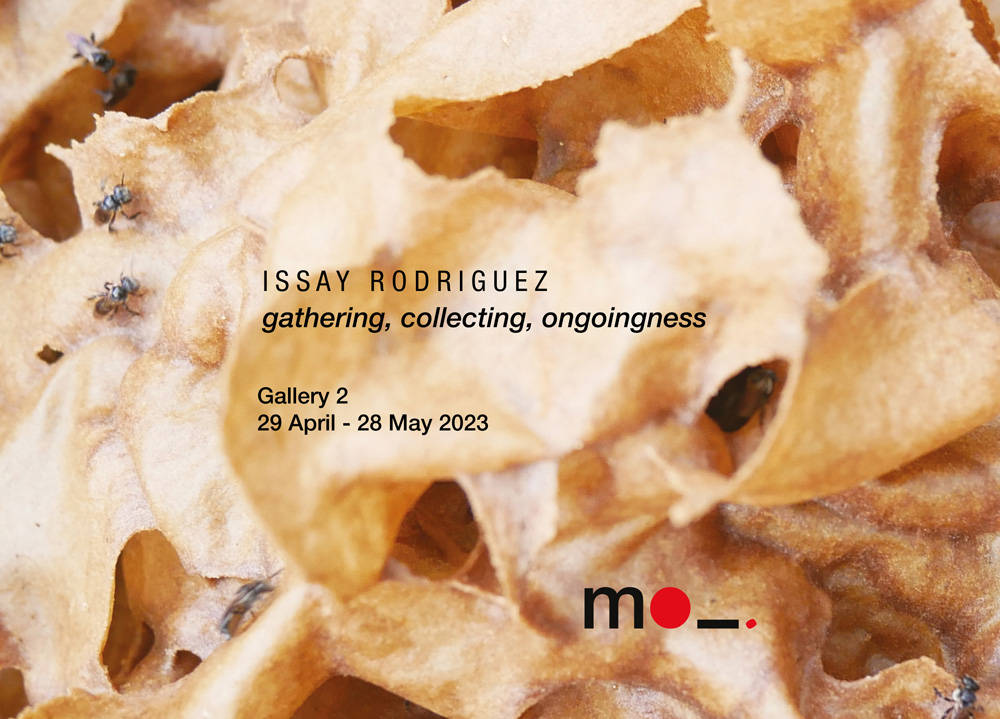
MO_SPACE presents Lou Lim’s exhibit, “Hands Flower,” at the Main Gallery, and Issay Rodriguez’ “Gathering, Collecting, Ongoingness at Gallery 2 on April 29. Both exhibits will run until May 28. Contemporary artist Lou Lim manipulates liquid qualities of acrylic paint by funneling them down onto the canvas, spilling on the surface area of the immaculate surface, and allowing the drip to flow on all four corners. Meanwhile, the foundation of Issay Rodriguez’s long-term research on the life of bees is at the core of “Gathering, Collecting, Ongoingness,” which features works that introduce the audience to the fundamentals of the artist’s interest in understanding and assessing the inter-specie relations between humans and bees. A series of photographs capturing recent encounters with the Philippine native stingless bees are at the center of this exhibition as Rodriguez aligns the activities of working as an artist to that of bees: forage (gathering), pollinate (collecting or exchanging), and continue doing so as a matter of designation by life’s natural design. These similarities propel Ms. Rodriguez to pursue and engage the studies of bees in her practice as vessels that facilitate “ongoingness” as a relationship between the two. MO_Space is at the 3rd level of MOs Design, B2 Bonifacio High Street, 9th Avenue, Bonifacio Global City, Taguig. The gallery is open daily from 10 a.m. to 7 p.m.


Silverlens opens Santiago Bose exhibit

SILVERLENS has opened the exhibit “SANTIAGO BOSE, Spirited Traces, Part of the series conceived by Dr. Patrick Flores in 2019”. The exhibit is ongoing until May 20. The Santiago Bose exhibition project was conceived to let the body of work of the artist unfold incrementally but also decisively across three iterations. This mode of presenting the decades-long labor of Mr. Bose has given the curator the chance to parse his artistic practice into episodes and turning points, into shifts over time or persistent fascinations through and through. In other words, the oeuvre has played out like a series or relay and has not been unveiled like a monolith or foisted on an audience as a spectacle. In 2024, Silverlens will be publishing a book on Santiago Bose written by Dr. Patrick Flores that will delve into the life and practice of the artist to culminate this series of exhibitions. Silverlens is at 2263 Don Chino Roces Ave. Ext., Makati. It is open Tuesdays to Saturdays, from 10 a.m. to 5 p.m.

Dancing with the Stars and Strictly judge Len Goodman, 78

LEN GOODMAN (center) with his fellow Dancing with the Stars judges Carrie Ann Inaba and Bruno Tonioli in 2005.

LONDON — Len Goodman, the head judge on British television dancing competition Strictly Come Dancing and its US version Dancing with the Stars, died aged 78, the BBC said on Monday.

Mr. Goodman was a successful professional ballroom dancer, winning the British championships in his late twenties before retiring from the sport and opening a dance school.

Much later in life, he chaired the judging panel on Strictly from its launch in 2004 until 2016, and on its US counterpart for most of the period from 2005 until 2022.

He took a warm, supportive but critical approach as he watched celebrities taking on tangos and waltzes, adding a down-to-earth touch to the otherwise frequently flamboyant panel of judges.

“Len… appealed to all ages and felt like a member of everyone’s family. Len was at the very heart of Strictly’s success. He will be hugely missed by the public and his many friends and family,” BBC Director-General Tim Davie said.

Mr. Goodman was born and grew up in London, and said he only took up dancing reluctantly at the age of 19 after a doctor said it would help him recover from a foot injury.

As a teacher, he said his priority was to make ballroom dancing “enjoyable and sociable.”

Speaking in 2012, following treatment for prostate cancer, he said he most hoped to be remembered for being “genuinely nice.”

“I would like there to be people who can honestly say: ‘Len! Oh yeah, there was more good than bad in him.’,” he said.

Strictly was one of the BBC’s most popular entertainment shows, attracting an average of more than 11 million viewers at its peak in 2010. As many as 27 million viewers watched some episodes of Dancing with the Stars in its early seasons. — Reuters

SM Prime plans launch of $1-B mall REIT by second semester

SY-led SM Prime Holdings, Inc. is targeting to launch its first real estate investment trust (REIT) in the second half of the year from which it expects to raise $1 billion.

“We actually intend to raise about $1 billion,” SM Prime Jeffrey C. Lim said during a media and analysts briefing on Tuesday. “Total valuation [for the REIT] will be around $3.5 billion to $4 billion.”

Portfolio details for the REIT are ready and will initially be composed of 12 to 15 centers, he said, adding that around 30 to 35 of the company’s 82 malls nationwide are fully matured, making it possible for the company to initially transfer 12 to 15 of them to the REIT.

“We are still doing some evaluation with bankers. And we believe that the key really is the timing,” Mr. Lim said.

“We want to make sure that when we launch it, it will be something that is sustainable and we can deliver our commitments,” he added.

For 2023, the company is earmarking P80 billion for capital expenditure, SM Prime Chief Financial Officer John Nai Peng C. Ong said. The amount is about the same as what the company had allotted for its spending budget last year.

He said the allotted budget will “significantly” be spent on the malls and SM Prime’s residences, while around 10% will be for the firm’s leisure, commercials, hotels, and convention centers.

The year’s budget does not include the expenditure for the Pasay reclamation project, which will create a 360-hectare lot that will connect to the Mall of Asia Complex.

SM Prime intends to put in a $2-billion budget for the project, with the first $1 billion set to be used for 2023 and funded through the REIT.

“The proceeds of the REIT will be used for SM Prime’s expansion project,” Mr. Lim said. “Large chunk of the proceeds from the REIT will be for the reclamation project.”

In 2022, SM Prime reported a 38.1% growth in its consolidated net income to P30.1 billion from P21.8 billion a year earlier. The listed holding firm’s consolidated revenues increased by 28.6% to P105.8 billion last year from the P82.3 billion recorded in 2021.

For 2023, Mr. Lim said that he expects the company’s retail segment to drive revenue growth as the collection of full rental fees continues coupled with growing mall foot traffic.

On Tuesday, shares in SM Pride declined 25 centavos or 0.74% to P33.70 apiece. — Justine Irish D. Tabile

Under Lisbon’s streets, ancient Roman galleries tell story of the past

A PERSON crouches down in the Roman galleries under downtown Lisbon, Portugal, April 20. — REUTERS/PEDRO NUNES

LISBON — Twice a year, a hatch in a busy Lisbon street opens to reveal steps leading to one of the Portuguese capital’s most ancient sites: a 2,000-year-old Roman structure that still holds the buildings above it together.

Dating back to the first century AD, the “cryptoportico” subterranean maze of tunnels and passageways was built by the Romans, who occupied the city then known as Olissipo beginning around 200 BC. The city remained under Roman control for several centuries.

“This structure guaranteed and, 2,000 years later, continues to guarantee that the buildings above our heads are stable and safe for those who live, work and walk up there,” said Joana Sousa Monteiro, director of the Lisbon Museum, as she toured the site known as the Roman Galleries.

It opens up for only a few days in April and September each year. The space is usually flooded due to an aquifer running beneath the city. The water, which is essential for its preservation, must be pumped out to allow access.

The galleries were first discovered in 1771, when Lisbon was being rebuilt after the devastating Great Earthquake of 1755.
Tickets to visit the galleries usually sell out within 15 minutes. Among the lucky ones who managed to buy one was Gustavo Horta, a Brazilian who lives in Lisbon.

“It’s unmissable,” he said shortly after climbing up the steep stairs out of the underground galleries. “I’ve waited two years to go on this tour.” — Reuters

Meralco secures 1-year power supply deal with AboitizPower 

MANILA Electric Co. (Meralco) has secured another emergency power supply agreement (EPSA) for one year with a unit of Aboitiz Power Corp., an official of the electricity distributor said.

“This EPSA [is] intended to mitigate Meralco’s WESM (Wholesale Electricity Spot Market) exposure,” said Jose Ronald V. Valles, Meralco’s first vice-president and head of its regulatory management, in a virtual press briefing on Monday.

Meralco forged the power supply deal with AboitizPower’s Therma Luzon, Inc. for a 370-megawatt (MW) capacity at P8.14 per kilowatt-hour (kWh), Mr. Valles said.

He added that the company had requested for a certificate of exemption from the Department of Energy (DoE) to allow the immediate implementation of the EPSA.

The exemption from the competitive selection process was granted by the DoE and covers 670-MW for the period March 26, 2023 to March 25, 2024. The capacity includes Therma Luzon’s 370 MW and another EPSA being supplied by South Premiere Power Corp. (SPPC) at 300 MW.

Last month, Meralco announced that it had forged an EPSA for one year with SPPC.

Meralco’s EPSA will cover the 670-MW capacity it lost from SPPC, a unit of San Miguel Global Power Holdings Corp. The contract with SPPC was forged in 2019 at P4.2455 per kWh. It was subjected to a writ of preliminary injunction by the Court of Appeals, indefinitely suspending the power supply agreement.

Mr. Valles said Meralco’s EPSA with both parties will end earlier if the court injunction is lifted.

However, in a resolution promulgated on April 3, the appellate court upheld its decision granting an injunction in favor of SPPC, denying the motion for reconsideration filed by Meralco and the Energy Regulatory Commission.

This is not the first time that Meralco forged an EPSA with AboitizPower. Meralco previously signed an EPSA with the company’s GNPower Dinginin Ltd. Co. through a deal forged on Dec. 15, 2022 until Jan. 25, 2023 at a rate of P5.96 per kWh.

The contracting parties agreed on a second EPSA, which was secured on Feb. 3 to last until Feb. 25. The second deal has a full fuel pass-through structure with an implemented rate of P8.53 per kWh.

In 2022, San Miguel Global Power sought a temporary rate increase, jointly filed with Meralco, saying that SPPC and another unit San Miguel Energy Corp. incurred a combined loss of P15 billion. The rate increase was meant to recover part or P5 billion of the units’ losses.

The company cited a “change in circumstance” when surging fuel costs breached the price range contemplated during the execution of the contracts with Meralco. But the ERC denied the petition, saying this had no basis as the PSA is a fixed-rate contract.

Meralco’s controlling stakeholder, Beacon Electric Asset Holdings, Inc., is partly owned by PLDT Inc. Hastings Holdings, Inc., a unit of PLDT Beneficial Trust Fund subsidiary MediaQuest Holdings, Inc., has an interest in BusinessWorld through the Philippine Star Group, which it controls. — Ashley Erika O. Jose

Rare outing for six Shakespeare’s First Folio copies in London

COMMONS.WIKIMEDIA.ORG

LONDON — Six highly rare first edition collections of William Shakespeare’s plays will go on show in London next week in what auction house Christie’s says will be the largest display of the works in Britain.

The exhibition, which marks the 400th anniversary of the publication of Shakespeare’s First Folio in 1623, runs in Christie’s London showroom from May 2 until May 26. The copies will then go back to their owners.

The editions were compiled by Mr. Shakespeare’s friends and published seven years after his death. They contain 36 of the 37 plays he wrote, arranged for the first time as comedies, tragedies, and histories.

“If we didn’t have the publication of the First Folio, it is very likely that half of Shakespeare’s entire output, so 18 plays, would not exist and these include plays such as Macbeth, Julius Caesar, All’s Well That Ends Well,” Margaret Ford, Christie’s international head of books, told Reuters at a preview on Monday.

“We don’t know exactly how many copies were published, but the most likely guesstimate is 750 copies, and 235 copies survive in some form. The majority are imperfect, but there are some complete copies there as well.”

In 2020, a First Folio sold for a record $9.97 million at auction.
Five of the six copies come from private collections, and the sixth from the Senate House Library at the University of London.

“It’s the only time that the public can see six copies of the First Folio together exhibited,” Ms. Ford said.

“Six copies may not sound like a lot to the average person but… to put it in context, the last time that even four copies were exhibited was 100 years ago for the 300th anniversary when the British Library exhibited four of their copies.” — Reuters

Filipinos have grim health outlook — Manulife

FILIPINOS are becoming more worried about how long they will remain healthy, especially as they consider the costs of critical illnesses amid economic uncertainties, according to a study by Manulife.

While Filipinos on average expect to retire at 59 years, they expect to remain healthy for only three years post-retirement, the insurance company said in a statement, citing the results of its 2023 survey.

Filipino millennials aged 25 to 34 were the most pessimistic, thinking they would only remain healthy until they are 55, below the average perceived health longevity.

“Filipinos are realizing that personal health issues cannot be isolated from the financial implications of critical illness, along with wider economic uncertainties,” said Rahul Hora, president and chief executive officer at Manulife Philippines.

“While it is inevitable that our bodies change as we age and that the state of the global economy may be beyond our control, Filipinos can take proactive steps to strengthen their health and finances and have a more financially secure future.”

The financial risk posed by poor health lies in the cost of medical treatment, a significant concern for many Filipinos, Manulife said. Almost half or 49% of those surveyed said the expense of treatment was their No. 1 health concern.

Other concerns were loss of income or job because of illness (37%) and not knowing who will take care of them in case they got sick (26%). Almost all of those surveyed were worried about at least one illness, with heart disease, diabetes and cancer being their top three main fears.

The Manulife study also found that about a third of Filipinos thought they enjoy excellent physical and mental health.

With concerns about their health and health longevity, almost all Filipinos said they were taking actions to manage their well-being through exercise (65%), better diet (62%), regular body checks (52%) and closer self-monitoring (50%).

Despite their concerns about the future, especially about health, most of those surveyed (57%) felt confident about their finances, with 77% expecting their finances to improve in the coming 12 months.

Almost three-quarters expressed confidence in being able to achieve their financial goals (72%), such as saving for retirement (55%), paying for healthcare and medical treatment costs (43%) and emergencies (36%).

“This optimism, which may be reflective of a post-COVID euphoria and, to an extent, the mobility of the workforce, is tempered by the threat of inflation (75%), which emerged as the most prominent financial concern among Filipinos surveyed, more than in any of the other markets surveyed in the region,” Manulife said.

The other main threats cited were economic slowdown (56%) and rising healthcare costs (38%).

These concerns may have merit given that 81% of the respondents said cash and bank deposits were the primary ways they think they could achieve their goals.

“Cash is particularly exposed to inflation, which can see it quickly depreciate in real terms in a way that can be very costly to savers,” Mr. Hora said.

The Manulife study showed that 80% of Filipinos positively viewed retirement planning, well above the regional average (68%).

For many, it was their top personal finance goal (55%). But only 30% had such a plan in place. However, including those with plans already in place, 70% said they would have plans set up within three years. 

Most are looking at relying on their cash savings or deposits (46%), potential inheritance from family members (18%), government or state subsidy (18%) or support from their children (17%).

“While these sources of financial support may be available to some, they are not guaranteed and can only go so far.” Mr. Hora said. “They may exact a heavy toll on relationships, as expectations and burdens placed on supporting parties, especially if they are family members or loved ones, are often causes of conflict.”

Filipinos were interested in insurance (80%), the highest in the region (68%), mainly because of the protection it offers against financial risk (54%).

However, Filipino insurance ownership of 59% is the lowest in the region (70%). In the coming 12 months, 87% of those surveyed said they intended to buy insurance, with health (36%), life (34%) and hospitalization (33%) insurance topping the list.

“It’s reassuring that Filipinos recognize the value and protection that insurance offers. After all, the insurance premiums will be far less than the cost of critical illness treatment,” Mr. Hora said.

“The best first step for those unsure how to purchase the right insurance plan for their needs and budget would be to talk to their trusted financial advisor, who would lay out and explain the various options without any obligation.”

The Manulife survey was conducted via online questionnaires in seven markets — mainland China, Hong Kong, Indonesia, Malaysia, Philippines, Singapore, and Vietnam.

A total of 7,224 people aged 25 to 60 years were surveyed in December 2022 and early January 2023. In the Philippines, 1,004 people were surveyed. Each person surveyed either owned insurance or intended to buy insurance. — Norman P. Aquino

Ovialand launches P990-M housing project in Bulacan

RESIDENTIAL property developer Ovialand, Inc. has launched a P990-million housing development in Baliwag, Bulacan to mark its foray outside South Luzon, the company said on Tuesday.

“We have received very strong interest from residents in Baliwag regarding our developments. In addition, we are seeing potential clients for Seriya from people working and living in Northern Metro Manila,” Ovialand President and Chief Executive Officer Marie Leonore Fatima Olivares-Vital said in a statement.

“These give us more motivation to provide the Premier Family Living experience to our clients as they aspire to provide a better quality of life for themselves and their families,” Ms. Olivares-Vital added.

Ovialand plans to build a total of 536 house-and-lot units from duplexes to townhouses. Turnover of housing units will begin by September this year. The sale of units at the Seriya residential development is expected to generate about P2 billion in revenues, the company said.

Residential units will be built within an 8.9-hectare estate, which is planned for future expansion to 15 hectares. The project’s amenities include an air-conditioned clubhouse, a swimming pool, and a community chapel.

“In 2021, Ovialand embarked on its 10-year growth plans to have a nationwide presence by 2030,” Ms. Olivares-Vital said.

“We will do this by implementing a disciplined regional growth strategy, replicating our success and efficiency in South Luzon into new areas where Filipinos are seeking for the best value that their hard-earned money can buy,” she added.

The housing development in Baliwag is along the Candaba highway. It is 10 minutes away from the Pulilan exit of the North Luzon Expressway, which the company said makes it accessible to potential clients from Metro Manila and nearby provinces. — Adrian H. Halili