Home Blog Page 4927

DICT accepts proposals for inaugural startup grant fund
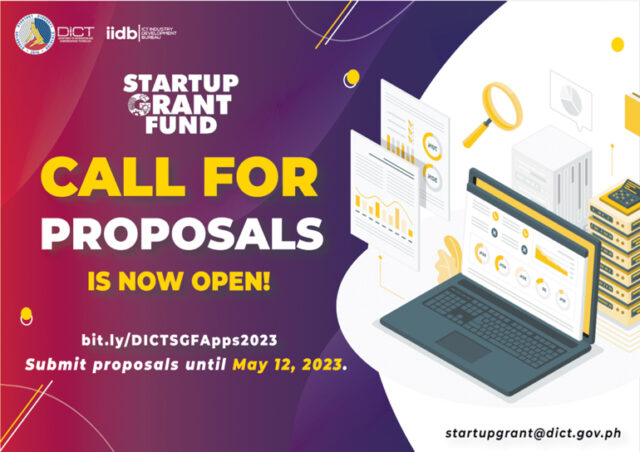
Photo from startup.gov.ph

The Department of Information and Communications Technology (DICT) is accepting applications for its first-ever startup grant fund, aimed at funding young ICT-based Filipino startups.

Targeted at helping new and early-stage enterprises with development, capacity building, and network expansion, the DICT established the DICT Startup Grant Fund (SGF) in compliance with Republic Act No. 11337 (Innovative Startup Act).

The grant’s purpose is to help early-stage ICT-based entrepreneurs develop their goods and services by providing them with the resources they need to either build a prototype or build a minimum viable product (MVP).

According to a statement published on startup.gov.ph, the SGF will fill the gap in Philippines’ early-stage funding by providing equity-free capital of up to five million pesos, which would increase the quality of Filipino businesses and assist investors reduce their risk.

The proponents shall go under the screening process where enablers from different startup communities, the government, and venture capitals shall assess and evaluate their feasibility, technologies, and investability. Members of the SGF technical evaluation and grants committees will select distinguished startups who convey a great potential to bring significant contributions to society.

With the intention of bolstering, promoting, and developing an innovative and entrepreneurial ecosystem and culture in the Philippines, the Innovative Startup Act was signed into law in 2019, aiming to facilitate the development and operation of innovative new enterprises and businesses by removing barriers to entry and giving rewards.

The government has long been aiming to promote innovation in the entrepreneurial ecosystem, with former Department of Science and Technology Secretary (DoST) Fortunato dela Peña expressing the hope that the Philippines might rank 42nd in the Global Innovation Index (GII) by 2022.

However, owing to various factors the country instead fell to 59th place in 2022 among 132 economies in the world. The slip in the GII rankings is the country’s second consecutive drop in placement, when it landed the 51st place in the 2021 Index from 50th place in 2020.

“It must be noted that this lower performance, the Philippines continues to perform above regional average among its neighboring countries in Southeast Asia, East Asia and Oceania,” the report said.

The World Intellectual Property Organization (WIPO), the organization who tracks the GII, however recognized the Philippines’ ability to perform above expectations for its level of development, as it produced more innovation outputs relative to its level of innovation investments.

The DICT Startup Grant Fund aims to bolster the innovation in the country’s startups by providing opportunities to expand on creative ideas set on improving Filipino lives.

The call for proposals shall be open until May 12. For inquiries, email startupgrant@dict.gov.ph.

Meanwhile, interested startups proposing for the SGF of the DoST-Philippine Council for Industry, Energy, and Emerging Technology Research and Development only have until May 2 at 5 p.m. to submit their proposals.

As stated in a post published last month in the agency’s official Facebook page, the said SGF will primarily prioritize startups focused on the following key research areas: Sustainable Industries; Learning/Education; Solutions for the Creative Industries; Industry Data Driven Solutions; and Climate Change Technologies.

Startups that will be picked for this program have a chance to get funding support of up to P5 million for 18 months. — Bjorn Biel M. Beltran


Sprout Solutions secures $10.7M in Series B funding round led by Cercano

Philippine HR technology platform Sprout Solutions has secured $10.7 million in Series B funding from seven prominent global venture capital firms. The round was led by Cercano Management, with participation from SoftBank Ventures Asia, AFG Partners, GSR Ventures, Integra Partners, ACA Investments, and Mynavi Corp..

The successful Series B round brings the total investment in Sprout to date to $18.3 million. This also marks the first investment by Cercano, SoftBank Ventures Asia, GSR Ventures, ACA Investments, and Mynavi Corp. in a Philippines-based company.

“Securing this funding is a testament to the hard work and dedication of our team and our commitment to providing best-in-class HR and business solutions to companies in the Philippines,” said Patrick Gentry, CEO and co–founder of Sprout. “We are excited to work with our new investors to accelerate our growth and further expand our product offerings.”

Already the leading homegrown HR tech company in the Philippines, Sprout offers HR and payroll applications and integrated solutions that streamline recruitment, employee engagement, and performance management processes. With over 1,000 corporate clients and 180,000 active users, the company is now in a unique position to become the most relevant B2B SaaS provider in the country.

“HR SaaS is mission-critical in the Philippines and the rest of Southeast Asia, where businesses are emerging and scaling very rapidly but local HR and payroll requirements remain highly complex. Sprout is a clear category leader in this space with their emphasis on technology, a comprehensive suite of solutions, and proven product-market fit. We see immense potential in the solutions they are building and are excited to join them on this journey,” said Tommy Teo, managing director and head of Southeast Asia at Cercano Management.

Sprout’s strong financial performance since its inception in 2015, along with its successful series A funding round in 2019, has paved the way for this new funding opportunity. In September 2022, Sprout also acquired Linnia, an AI and process automation platform. The acquisition strengthened Sprout’s HR ecosystem by enabling key workflow automation that simplifies people’s tasks across client organizations. Sprout is anticipated to cross $10 million in annual recurring revenue (ARR) in second quarter of 2023.

According to Harris Yang, vice-president of SoftBank Ventures Asia, “The Philippines has a highly complex labor law where employee record keeping, government compliance of payroll reporting, and employee time-keeping are major pain points. Through its localized digital HRIS, payroll, and time-keeping solutions, we believe Sprout will be the leader in HR digitization in the Philippines.”

Ivan Ong, partner at Asian fintech venture capitalist AFG, added that Sprout has demonstrated its ability to scale across companies of all sizes in the Philippines and is well-positioned to expand across Southeast Asia.

Meanwhile, Shota Sakurai, Philippines representative at Mynavi, said that as a leading HR company in Japan, Mynavi will provide its know-how and networks for the further expansion of Sprout, which has gained a lot of local support with their strengths in localization and scalability.

A current look into the global labor market

The world of work has changed since the pandemic, from the shift to a remote or hybrid arrangement to the heightened need for upskilling and reskilling. The labor market also saw an increase in unemployment, then went through the phenomenon called the “Great Resignation.”

Even as organizations across the world are now striving to move forward from the global crisis, however, the labor market continues to face challenges amid political and economic crises.

Such crises are likely to expand inequalities in the labor market, given certain groups of workers and companies are impacted unequally, according to the International Labour Organization (ILO) in Monitor on the World of Work 10th edition released in October 2022.

The report saw uneven recovery among economies and jobs.

Employment has attained or even moved past the pre-pandemic levels in most advanced economies; while a struggle with labor shortages is being faced by several employers. But in low- and middle-income economies, deficits are apparent.

Meanwhile, high-skilled jobs saw a more robust recovery by the second quarter of last year. Whereas, low- and medium-skilled occupations were still under their level in the same quarter in 2019.

Employment and job opportunities

A slowdown in hiring is being seen across the world amid the economic uncertainty. Nonetheless, in the global labor market, the economic slowdown expected to carry on this year would not seem to be close as the severity experienced in 2020 and 2009, said Allen Blue, vice-president for product management and co-founder at LinkedIn.

“While hiring is likely to continue to slow, it’s coming down from record highs; and the slowdown in output growth in 2023 is not generally expected to be reflected in large rises in unemployment,” Mr. Blue wrote in an article published on the World Economic Forum’s (WEF) website.

Meanwhile, labor markets remained to be tight, looking at the ratio of job openings to applicants on the professional networking platform.

“On average, we’re not seeing really strong competition for roles that you might expect amidst a more challenging economic outlook. There are two active applicants for every open role in the UK (United Kingdom) and France, for example, and one active job opening for every active applicant in Germany and the US (United States),” Mr. Blue said.

In terms of opportunities, jobs are being generated amid the challenges of climate change and cyber threats as well as the need for businesses to drive growth, according to LinkedIn.

Jobs in sustainability are in demand in 13 countries. Demand also jumped for sales and business development roles. Cybersecurity roles, meanwhile, appeared in the “Jobs on the Rise” list of LinkedIn for 18 countries.

Furthermore, Mr. Blue also remarked on the need to invest in future jobs and upskilling people. Citing WEF data, he noted that the shift in the division of labor between humans and machines would create an estimated 97 million new jobs but would displace 85 million by 2025.

“What’s clear to me is the fundamental need to identify and invest in the jobs of the future, while equipping people with the skills and support needed to transition into them. It’s mission-critical that we do more to break down systemic barriers and ensure that opportunities, skills, and education are equally distributed,” he said.

Gender gaps

Gap and disparity concerning gender also remained to be an issue in the world of work.

In terms of paid hours worked by women and men, the gender gap further became a concern during the pandemic. The hours worked by women nevertheless recovered at the end of 2021 and early 2022. Despite addressing this gap has progressed recently, the ILO noted that the gap was still high, suggesting a “worrying situation.”

Women worked 14.5 fewer paid hours per week than men, which is equivalent to 57.5 paid hours per every 100 worked by men, according to the ILO.

“At the pace of progress of the last year, it would take more than 60 years to close this gap,” the organization noted.

The ILO also noted in an article that progress is still slow in gender parity in terms of women’s share in management. While this has been increasing globally and is a bit higher than the pre-pandemic, the rise was only 0.9 percentage points since 2015.

Women took 28.2% of management positions in 2021, according to the ILO.

“At the current rate of progress, more than 140 years would pass before gender parity in managerial positions would be achieved,” the organization said. — Chelsey Keith P. Ignacio

Historic events behind the annual global celebration of workers

Illustration of the first American Labor parade held in New York City on Sept. 5, 1882 as it appeared in the Sept. 16, 1882 issue of Frank Leslie’s Illustrated Newspaper. — commons.wikimedia.org

More than a holiday that gives another opportunity for individuals to take a breather from work, Labor Day celebrates workers and acknowledges their contributions to society.

The annual observance of Labor Day, also called International Workers’ Day, was the result of the widespread protests around the world calling for safer and fairer working conditions, eight-hour working days, and higher salaries. The goal of the eight-hour working days was to limit the length of working days in order to protect the working class from exhaustion and unfair working conditions.

The notion of Labor Day started with union activist Peter J. McGuire who created the United Brotherhood of Carpenters in 1881. He suggested organizing a ceremony honoring American workers in 1882.

According to the United States’ Department of Labor, the first Labor Day holiday in the United States was celebrated on Sept. 5, 1882, in New York City.

Later on, the decision to choose the first day of May for Labor Day was influenced by what happened in 1884 when the American Federation of Organized Trades and Labor Unions demanded for an eight-hour workweek to take effect by May 1, 1886.

This event prompted the first international congress of socialist parties, which was held on July 14, 1889 in Paris, France, to dedicate May 1 of every year as the “Workers Day of International Unity and Solidarity.” The first Labor Day celebration in May, then, was held the following year.

Another major event that influenced the labor movement is the Pullman Strike on May 11, 1894. The Pullman Strike is a widespread railroad strike of workers of the Pullman Place Car company that reduced the low wages of its employees in response to the economic depression.

In the Philippines, Labor Day is celebrated to commemorate the laborers and their long struggles, and recognize their courage and bravery in fighting for better working conditions.

The first Labor Day in the country is said to be on May 1, 1903, when thousands of workers trooped in by the Union Obrera Democratica de Filipinas held a protest and marched from Plaza Moriones in Tondo to Malacañang, demanding a then American-led government for better and fairer working conditions.

Further solidifying the celebration of Labor Day as a national holiday in the country are the passage of a bill in 1908 making the first day of May as a national holiday; and the signing of Presidential Decree No. 442, known as the Labor Code of the Philippines, on May 1, 1974.

As Tatler Asia explored on an article published on its website, the Filipino working class is among those who were given the lowest wages worldwide and continues to face challenges in employment practices. Thus, fighting for the labor movement and celebrating Labor Day is still significant as before.

“The data presented by the e-commerce platform Picodi showed that the Philippines ranked 95th out of 106 countries in terms of the average wage, recorded at $308 or P15,200 in 2020,” Tatler Asia shared.

Until today, Labor Day is still significant for most countries. On top of honoring laborers and the labor movement, people celebrated this national holiday in different ways. For instance, Labor Day has also become a summer festival and a weekend for family gatherings. In addition, the holiday is also celebrated through parades and even protests and political speeches.

In recognition of the 121st Labor Day in the Philippines this year, the Department of Labor and Employment is celebrating the national holiday with the theme “Pabahay, Bilihing Abot-Presyo, Benepisyo ng Matatag na Trabaho Para sa Manggagawang Pilipino.” — Angela Kiara S. Brillantes

Twala, SC collaborate to establish legal framework for electronic notarization

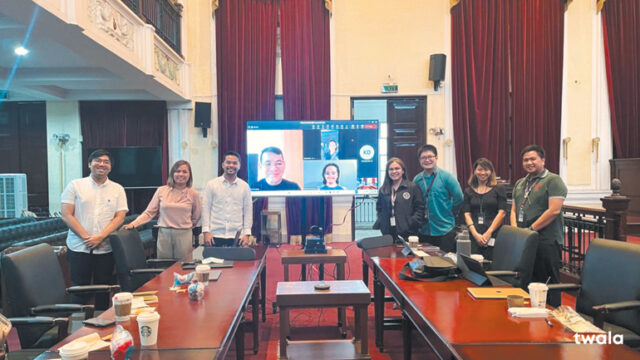
Twala team poses a photo with Supreme Court (SC) representatives in the SC Main Session Hall after discussing legal and technological aspects of electronic notarization as part of the consultation process in establishing the legal framework for electronic notarization in the country.

Twala, a blockchain-powered digital identity and digital signature platform, recently collaborated with the Philippine Supreme Court (SC) to provide inputs in their ongoing work to draft rules to allow electronic notarization in the country.

The consultation meeting, which took place on April 12, is part of the SC’s efforts to establish a legal framework for e-notarization.

As digital technology continues to advance, electronic notarization has become increasingly important in providing a secure and efficient way of verifying and authenticating digital documents. Twala’s blockchain technology offers a tamper-proof way of verifying digital signatures, ensuring the authenticity and integrity of electronic documents.

The Department of Science and Technology (DoST) awarded Twala a P4.6-million grant in 2022 through the DoST Startup Grant Fund program to help it advance its research and development in distributed ledger technology or blockchain with applications in secure e-signatures, digital signatures, and digital identity.

The consultation of SC with tech startups like Twala is a significant step towards the adoption of electronic notarization in the country. By leveraging blockchain technology, Twala can provide a more secure and efficient way of notarizing documents, benefiting individuals and businesses.

With the use of modern technology, including blockchain, electronic notarization can provide a more efficient and secure way of verifying and authenticating digital documents, unlocking billions in value for both the private and public sector.

Twala has also partnered with DoST-Advanced Science and Technology Institute (DoST-ASTI) to accelerate research and development in the field of blockchain technology. The Memorandum of Understanding, signed last Feb. 28, aims to promote innovative solutions that can address the pressing challenges faced by various industries in the Philippines and beyond.

Twala also announced the closed beta launch of Twala ID, a self-sovereign ID that aims to provide secure and privacy-centric identity solutions. The collaboration with DoST-ASTI is expected to further develop the technology and provide innovative solutions to support e-governance.

Furthermore, the partnership will involve conducting research studies, sharing expertise and knowledge, and leveraging each other’s resources and capabilities. Twala will also tap into DoST-ASTI’s vast network of partners and stakeholders to expand its reach and impact in the market.

Filipino, Israeli startups partner to fight data leaks in PHL

Traxion Tech and I+ Cyber officially solidify their partnership in a virtual signing ceremony, attended by (clockwise, from upper left) Ann Cuisia, Assaf Marco, Tomer Heyvi, Frances Carlos, and Thomas Glucksmann via Zoom early in March.

Partnership to bring country’s first-ever Threat Operations Center-as-a-service

Philippine IT company Traxion Tech Inc. has partnered with I+Cyber, a cybersecurity service provider with headquarters in Israel, to bring the first-ever Threat Operations Center (TOC)-as-a-service to the Philippines. 

As a technology solutions provider, Traxion Tech offers a range of services, including digital transformation, cybersecurity, and blockchain solutions. Traxion Tech has a team of experienced technology experts who work closely with clients to develop customized solutions for specific technology needs.

I+Cyber, meanwhile, combines the capabilities of threat intelligence, breach intelligence, attack surface management, and managed security services to offer a comprehensive TOC platform. It generates cyber threat alerts and reports that clients can use as bases for their preventive or remedial actions.

I+Cyber’s TOC platform is a centralized hub that collects intelligence on advanced persistent threats, botnets, and crimeware and delivers security alerts to clients. The TOC has the capacity to provide insights on cyber threats beyond what the clients’ own internal security measures can gather, thus giving them a broader view of the threat landscape.  Its platform is manned by I+Cyber’s own international cyber security experts who can work closely with clients’ internal security teams to provide threat information.

Traxion Tech and I+Cyber founded their partnership while in Tel Aviv, Israel while attending the CyberTech Global Conference on last Feb. 1. During the event, attended by hundreds of global technology companies from all over the world, Traxion Tech was one of the Philippine delegates welcomed personally by Philippine Ambassador to Israel Pedro Laylo, Jr.

“A lot of innovations are being generated in Israel, where one of the areas of expertise is in cybersecurity. A good number of [Israeli] companies are now assisting countries and their companies in this area,” said Tomer Heyvi, head of the Israel Economic Mission to the Philippines who witnessed the contract signing between the two companies.

Israel is dubbed as the “startup nation,” having the highest startup per capita in the world, according to the 2019 Global Startup Ecosystem report. It is also the most research-intensive country globally.

“For any technology to succeed in a market, every Israeli company needs a good partner. Traxion is one of the most amazing partners it can wish for,” Mr. Heyvi added. “I am sure that Traxion Tech can leverage [I+Cyber’s] solution in the Philippines and hope to see the nation’s [cyber] resilience improve.”

“Traxion Tech is in the field of digital transformation, delivering software and other solutions; so, it is a must that we protect the businesses of clients. This partnership will bring not just protection but confidence as well to the Philippine market,” said Ann Cuisia, chief executive officer (CEO) of Traxion Tech.

I+Cyber is led by CEO Assaf Marco, a seasoned Israeli professional with over 20 years of experience in diverse markets across the world, which has given him a unique perspective on the challenges and opportunities facing the cyber security industry.

Debt service bill surges in February

A horse-drawn Kalesa passes through the Ayuntamiento building in Intramuros, Manila, Nov. 6, 2017. The Bureau of the Treasury’s office is located at the Ayuntamiento building. — REUTERS/DONDI TAWATAO

By Luisa Maria Jacinta C. Jocson, Reporter

THE NATIONAL Government’s debt service bill surged to P375.714 billion in February on the back of significantly higher amortization payments, the Bureau of the Treasury (BTr) reported.

Data from the BTr showed the February debt service bill jumped by 1,135% from P30.423 billion in the same month a year ago.

Month on month, debt payments rose by 685.5% from P47.831 billion in January.

Of the total debt service bill in February, the bulk or 90.9% went to amortization. The rest went to interest payments.

Principal payments for February soared to P341.605 billion from just P2.193 billion a year ago and P861 million in January.

Payments for domestic debt skyrocketed by 90,756% to P303.461 billion in February from P334 million a year ago.

Amortization on foreign obligations rose by 1,951% to P38.144 billion in February from P1.859 billion in the previous year.

Meanwhile, interest payments rose by 20.8% to P34.109 billion in February from P28.23 billion a year ago.

Month on month, interest payments fell by 27.4% from P46.97 billion in January.

Broken down, interest on local debt declined by 14% to P21.924 billion from P25.507 billion a year ago.

Domestic interest payments consisted of P12.723 billion in fixed-rate Treasury bonds, P7.458 billion in retail Treasury bonds, and P1.31 billion in Treasury bills.

Interest on foreign debt surged by 370% to P12.815 billion in February from P2.723 billion a year ago.

In the first two months of the year, the debt service bill reached P423.545 billion, 72% higher than P246.261 billion in the same period last year.

Amortization payments during the period more than doubled (124.6%) to P342.466 billion from P152.48 billion.

Meanwhile, total interest payments dropped by 13.5% to P81.079 billion in the two-month period from P93.781 billion a year ago.

HIGHER RATES
ING Bank N.V. Manila Senior Economist Nicholas Antonio T. Mapa in a Viber message said rising interest rates drove up debt payments, on top of elevated debt levels.

At the end of February, outstanding debt hit a record high of P13.75 trillion.

“Higher debt service data was due to a combination of factors: higher interest payments due to aggressive Federal Reserve rate hikes (and) higher inflation that increased overall government expenditures including interest payments on borrowings,” Rizal Commercial Banking Corp. Chief Economist Michael L. Ricafort said in a Viber message.

The US Federal Reserve has hiked rates by 475 basis points (bps) since March 2022, bringing the Fed funds rate to 4.75-5%.

The Bangko Sentral ng Pilipinas (BSP) has raised rates by 425 bps since May 2022, bringing the key policy rate to a near 16-year high 6.25%.

Inflation slowed to 8.6% in February from a 14-year high 8.7% in January. However, this was still above the central bank’s 2-4% target and 6% full-year forecast.

“Debt servicing could still be higher from March to April, especially in April due to large Treasury bond maturities that are included in the government’s principal payments and still relatively higher interest rates that lead to more expensive borrowing costs,” Mr. Ricafort said.

This year, the government’s debt service program is at P1.6 trillion, 23.3% higher than the P1.298-trillion program in the previous year.

Debt service payments reached P1.293 trillion in 2022, up by 7.4% year on year.

PHL debt vulnerability seen as ‘moderate’ — ADB

THE PHILIPPINES’ public debt and external debt vulnerabilities are seen as “moderate,” the Asian Development Bank (ADB) said.

In its latest sovereign debt heat map analysis from 2022-2023, the ADB said the Philippines ranks “relatively poorly” due to current account deficits, currency depreciation, and low import coverage of reserves.

The heat map determines thresholds against which the relevant risk indicators can be included in the low, moderate, or high categories.

The ADB gave the Philippines a “moderate” ranking in the heat map, as its public debt took up 59.2% of gross domestic product (GDP) and external debt at 27.1% of GDP from 2022 to 2023.

The National Government’s outstanding debt hit a record high of P13.75 trillion at the end of February.

The ADB cited several risks that contributed to higher debt for many countries.

“Persistent current account deficits are a major risk factor in Bhutan, Maldives, Mongolia, the Federated States of Micronesia, the Lao People’s Democratic Republic, Nauru, Georgia, the Philippines, and Kazakhstan,” the ADB said.

In 2022, the Philippines’ current account deficit widened to $17.8 billion from the $5.9-billion shortfall in the previous year.

The current account deficit is expected to narrow to a $17.1-billion deficit which is equivalent to -4% of GDP, the central bank said.

The ADB also noted volatile exchange rates heighten risks, particularly in Lao People’s Democratic Republic, Timor-Leste, Myanmar, Korea, the Philippines, and Nauru.

The peso slumped to an all-time low of P59 against the US dollar in October last year amid aggressive monetary tightening and elevated inflation.

The ADB’s Asia Sovereign Debt Monitor showed that many countries’ debt remains well above the regional average. Many countries sharply accumulated high levels of debt during the coronavirus disease 2019 (COVID-19) pandemic to scale up emergency and recovery spending to protect their citizens and prop up their economies, the ADB noted.

“Several other countries saw debt ratios grow by more than 20 percentage points (ppt): the Lao People’s Democratic Republic (43 ppt), Fiji (36 ppt), and the Philippines (22 ppt),” it said.

While public debt ratios are stabilizing in the medium term, the ADB said these are still at “significantly high levels by historic standards and not uniformly so across the region.”

“Even where ratios seem to be somewhat in check, growing costs and difficulty of refinancing debt amid quantitative tightening constitutes an increasing drain on vital fiscal resources at a time when economies are reeling from the pandemic and struggling to maintain or rebuild at least some space for further fiscal support, lest long-term development goals will have to suffer,” it added.

As of end-December, the Philippines’ debt-to-GDP ratio stood at 60.9%. This is still above the 60% threshold considered manageable by multilateral lenders for developing economies.

To better stabilize debt levels across the region, the ADB said that countries will need to address risks such as low economic growth, persistent inflation, and rising commodity prices.

Data showed that a lack of fiscal normalization would bring debt ratios to 58% of GDP by 2025, or nearly 7 ppt above the baseline.

The ADB said governments must implement reforms that will rationalize fiscal expenditure, optimize subsidy schemes, and implement a sovereign debt restructuring mechanism.

“While there are few universal prescriptions for a group as diverse as Asia and the Pacific, full transparency about their debt and its management, and increased mobilization of domestic resources to the extent possible, should be a prerogative to all,” it added. — Luisa Maria Jacinta C. Jocson

Manila’s heritage sites in danger amid rapid development

NATIONAL SHRINE of Our Lady of the Abandoned, Sta. Ana, Manila — BERNARDINO M. CABILIN

By Brontë H. Lacsamana, Reporter

STEPHEN JOHN PAMORADA, a 29-year-old native of the San Nicolas district in Manila, the Philippine capital, grew up in an area filled with colonial period architecture.

When he was young, he would type “old Manila” in Google to find beautiful photos of how the city used to be. In contrast, he would see with his own two eyes the same spots in the photos being demolished over time, one by one.

“That was the turning point for me to get involved in heritage conservation,” Mr. Pamorada said via Zoom.

Now as lead convenor of Manileños for Heritage (M4H) and tour guide with Renacimiento Manila, he helps Manileños gain knowledge about the rich heritage of their city and the skills to preserve it.

“This means empowering locals to write letters and petitions to the National Historical Commission of the Philippines (NHCP) or National Commission for Culture and the Arts (NCCA) to save heritage sites,” he said.
Most recently, residents of Village 885, Zone 97 in Manila petitioned to block the construction of a major property developer’s condominium project about 170 meters from Spanish colonial-era Santa Ana Church.

In January, heritage advocacy group Renacimiento Manila also sounded the alarm to protect two sites from demolition — the 1920s Art Nouveau-style Traders Building in Binondo, and the Zamora and Paterno Houses built in the 1800s in Calle Hidalgo, Quiapo.

Under the National Cultural Heritage Act of 2009, a structure that’s more than 50 years old must be protected, and any construction work within it and around its 200-meter buffer zone must be authorized by NHCP.

“Unfortunately, there’s internal politics in LGUs where their cultural office and the engineering and building officials that issue demolition permits fail to coordinate,” said Mr. Pamorada, citing instances where the heritage law is not closely followed.

As middlemen, advocates can write the mayor a letter about this, or call the attention of cultural agencies so they can monitor the situation and ensure less destructive plans for the sites.

Both NHCP and NCCA are at the forefront of safeguarding Philippine heritage, whether these are historical structures, traditional food, art forms like music and dance, or intangible practices.

“We’re mandated to conserve, promote, and popularize the nation’s cultural heritage… because of its primordial role in fostering nationalism and uniting our people,” NCCA chief Victorino M. Manalo told an April 18 briefing for National Heritage Month in May.

In 2021, NCCA published the Philippine Registry of Cultural Property, which showed that the district of Sta. Ana had the most heritage sites at 88, followed by the districts of San Nicolas and Malate with 78 and 55.

The numbers have likely gone down due to rapid urban development, said Mr. Pamorada, who used to lead the data gathering.

Much can still be done for the Traders building in Binondo and Zamora Houses in Quiapo because their facades are intact, but many other structures are not so lucky.

The Capitol Theater made headlines in 2022 after almost completely being demolished, with only ruins of its worn-out facade remaining and seemingly waiting to be torn down for a condominium to take its place.

‘A COUNTRY OF LAWS’
Making a registry is the easy part, with NCCA and the Heritage Conservation Society of the Philippines having done their own audits, architect and urban planner Paulo G. Alcazaren said in an interview.

“The problem is that most landowners and developers just go over the heads of the local government,” he said. “There are many guidelines — we are a country of laws, after all — but nobody follows them.”

One of the themes for National Heritage Month is urban heritage, which “emphasizes the call for heritage conservation especially in the urban setting in the 21st century.”

Last year, local housing prices rose faster, driven by strong demand for duplex housing and condominium units, according to the Philippine central bank.

The property development was evident in the residential real estate price index, which went up by 7.7% year on year in the fourth quarter, quicker than 4.9% in 2021.

“In an imperial Manila setup, where we crowd here and create demand for housing and commercial spaces, the cost-benefit analysis is clear,” said John Paolo R. Rivera, an economist and associate director at the Asian Institute of Management’s (AIM) Dr. Andrew Tan Center for Tourism.

“Developers know it’s less costly and more profitable to demolish and then build, than to sustainably preserve and operate old sites,” he said.

He added that it’s only in places where tourism is the bread and butter, like Intramuros in Manila, Vigan in Ilocos, or Taal in Batangas, where investing in heritage is an easy choice. It’s not the case elsewhere.

Marjorie Jayne O. Zamudio, sales manager for Bridgeway Travel & Tours, said a few inbound tourists express interest in learning about authentic Filipino culture, lifestyle and values in Metro Manila.

“Agencies like ours that do customized tours based on the requirements of our clients find that there’s a niche that seeks out local heritage,” she said via Zoom.

Due to rising demand, the tour operator developed a program called “Back to the Roots,” formed from various clients who were Filipinos by blood but born and raised overseas, mostly in the US.

Heritage is a big priority for people who want to go back and understand their culture, Ms. Zamudio said.

International tourist arrivals in the Philippines hit 2.65 million last year, according to the Department of Tourism (DoT), exceeding the target by a million. The target this year is 4.8 million.

Mr. Manalo of NCCA said heritage sites could only draw big income for the Philippine economy if these are well-preserved and promoted, as with what the beautifully maintained Angkor Wat does for Cambodia.

Mr. Pamorada said districts in Manila like Quiapo, Santa Ana and his neighborhood of San Nicolas all have the potential to become beautiful tourist areas in a city that’s otherwise known for urban decay.

“Our culture may come across as lacking compared with South Korea, which invests in soft power like K-pop and K-dramas, or Thailand, which invests in gastro-diplomacy to popularize their food,” he said.

But there are efforts to change this mindset — cultural mapping by Grupo Kalinangan, heritage walks by Renacimiento Manila and NCCA’s programs to incentivize local governments to keep cultural inventory.

AIM’s Mr. Rivera said the monetary value of heritage sites goes up from the fact that, after hundreds of years, they still exist because efforts and funds were put in to keep them beautiful.

“That will only happen here if we can better acknowledge their potential.”

San Miguel’s beer unit posts 38% profit increase

SAN MIGUEL Corp.’s beer business reported a 38.2% rise in consolidated net income for the first quarter to P6.8 billion due to higher revenues, the company said during the weekend.

San Miguel Brewery, Inc. reported a 29.95% increase in revenues to P38.3 billion for the three months from the P29.7 billion posted in the same period last year.

The company said in a statement that the increase in its top line was due to “the positive sales performance of both its domestic and international operations amid the continued easing of COVID-19 restrictions.”

Its consolidated operating income also rose by 25% to P8.4 billion compared with the previous year.

The company’s domestic beer volumes increased by 26.1% driven by its new brand campaigns, offtake-generating programs, and easing restrictions.

For its international operations, the company reported a 28.5% surge in sales volume due to its export business and Hong Kong operations.

San Miguel Food and Beverage, Inc. operates its beverage business through San Miguel Brewery and Ginebra San Miguel, Inc.

The subsidiaries of San Miguel Brewery include Iconic Beverages, Inc.; Brewery Properties Inc.; San Miguel Brewing International Ltd.; San Miguel Brewery Hong Kong Ltd.; San Miguel (Baoding) Brewery Co., Ltd.; San Miguel Beer (Thailand) Ltd.; San Miguel Marketing (Thailand) Ltd.; and PT. Delta Djakarta Tbk. — Adrian H. Halili

DITO prepares to pilot-test low Earth orbit satellite this year

DITO Telecommunity Corp. is expecting to finalize a deal that will allow it to start this year pilot testing low Earth orbit (LEO), a satellite technology that can offer connectivity for far-flung areas.

The deal is with OneWeb Network Access Associates Ltd., a London-based company backed by the United Kingdom government and India’s Bharti Enterprises Ltd.

“It is not yet finalized. We are expecting it to be finalized as soon as possible. Our talks with them are already in the advanced stage, it is more of checking whether [everything’s] okay and the commercial rates,” DITO Chief Technology Officer Rodolfo D. Santiago said.

The expenses for LEO satellite are expected to be a bit more expensive, he said, adding that the companies have yet to discuss in detail how these will be divided.

“It has not been talked about in detail. It’s costly compared to fiber and microwave. But in terms of other satellite technology, the LEO technology is better because it has lower latency and it has higher capacity,” Mr. Santiago said.

Mr. Santiago said DITO is also in talks with other companies that offer different solutions.

“We are also talking with other satellite companies that have sent their offer,” he said.

“There are other satellite companies that have a different technology like geostationary. We are also looking into that. In fact, I think there will be a discussion on its proof of concept for pilot testing to check if it’s okay,” he added.

A geostationary satellite or an Earth-orbiting satellite is placed at an altitude of approximately 35,800 kilometers (km), while a LEO satellite is normally placed at an altitude of around 1,000 km above Earth.

According to Mr. Santiago, areas like the Autonomous Region in Muslim Mindanao, Basilan, Sulu, and Tawi-Tawi will benefit from the rollout of satellite connectivity.

“But even here in Luzon and Visayas, there are off-grid places like those in the mountainous areas in the north, how will you connect them?,” he said.

OneWeb’s network is composed of 648 satellites along 12 synchronized orbital planes 1,200 km above Earth. — Justine Irish D. Tabile

Ayala healthcare unit seeks further business expansion

AYALA CORP. sees growth potential in its healthcare unit AC Healthcare Holdings, Inc. as it seeks to expand its businesses across the country, an official said on Friday.

“To date, AC Health has served 6.1-million lives our goal is to touch around 24-million Filipinos by 2030. We are now gearing up for further growth,” AC Health President and Chief Executive Officer Paolo Maximo F. Borromeo said during the parent firm’s annual stockholders’ meeting.

Its generic pharmaceutical business, Generika Drugstore, plans to open an additional 50 stores this year from 750 locations across the country.

“Our goal is to reach 1,000 stores nationwide by 2025, and ensure that all Filipinos thorough the country have access to affordable and quality generic medicines,” Mr. Borromeo added.

Additionally, I.E. Medica, Inc. and MedEthix, Inc. plan to bring in more generic and biosimilar medicines for cancer, women’s health, and primary care.

“[This] will allow us to expand our local pharma cabinet to bring down treatment costs in the country,” he said.

AC Health’s hospitals and clinic group has been integrated under the Healthway Medical Network. The rebranding will be launched in phases throughout the year. It continues to expand its network toward different regions.

“The rebranding encompasses all of our multi-specialty clinics, the ambulatory and surgical center in the Philippine General Hospital, our four hospitals, and the soon-to-open cancer center,” Mr. Borromeo said.

The company plans to open three new clinics in Cebu, Cagayan de Oro, and Davao, which will bring its total network to 15 outpatient centers and 200 corporate branches.

“As we continue to build our ecosystem, we will leverage the synergies within our network to deliver quality and affordable healthcare for all,” he added.

Meanwhile, Mr. Borromeo said that the company has invested about P10 billion to date. For the year, the company has allocated P7 billion in capital expenditures.

He said that going public is not part of AC Health’s roadmap as it still has sufficient capital from its parent company.

On Friday, Ayala Corp. shares rose by 0.95% or P6 to close at P639 apiece. — Adrian H. Halili

ADVERTISEMENT
ADVERTISEMENT