Home Blog Page 4882

PSEi up on better-than-expected Q1 GDP growth

PHILIPPINE SHARES extended their climb on Thursday after better-than-expected gross domestic product (GDP) growth for the first quarter (Q1) and slower consumer inflation in the United States.

The benchmark Philippine Stock Exchange index (PSEi) gained 16.87 points or 0.25% to close at 6,675.46 on Thursday, while the broader all shares index went up by 5.38 points or 0.15% to 3,551.48.

“Stocks inched higher today after the Philippines reported better-than-expected first-quarter GDP growth. Adding to that was the announcement of another drop in US CPI (consumer price index) at 4.9%,” AB Capital Securities, Inc. Vice-President Jovis L. Vistan said in a Viber message on Thursday.

“Overseas, US inflation rate in April eased to 4.9% from 5% in March. This boosted sentiment as the US Federal Reserve may pause hiking rates already, especially if the trend continues,” Philstocks Financial, Inc. Research Analyst Claire T. Alviar said in a Viber message.

First-quarter GDP growth slowed to 6.4% from the 7.1% in the fourth quarter of 2022, preliminary data from the Philippine Statistics Authority showed.

This was also below the 8% in the first quarter of 2022.

Still, this was faster than the 6.1% median estimate of a Businessworld poll of 23 analysts conducted last week.

The government targets 6-7% GDP growth for the year.

Meanwhile, US consumer prices increased in April on higher gasoline costs and rents, while underlying inflation remained strong as used motor vehicle prices rebounded, potentially ensuring that the Federal Reserve keeps interest rates elevated for a while, Reuters reported.

The US CPI rose 0.4% last month after gaining 0.1% in March, the Labor department said on Wednesday.

In the 12 months through April, consumer inflation increased 4.9% after advancing 5% on a year-on-year basis in March.

The Fed has raised interest rates by 500 basis points since March 2022.

At home, the majority of sectoral indices closed higher on Thursday, except for mining and oil, which fell by 179.07 points or 1.7% to 10,350.77, and industrials, which declined by 26.77 points or 0.27% to 9,556.52.

Meanwhile, property climbed by 25.61 points or 0.93% to 2,771.82; services added 6.75 points or 0.42% to end at 1,584.06; financials went up by 5.88 points or 0.31% to 1,874.07; and holding firms rose by 7.83 points or 0.11% to 6,621.25.

Value turnover increased to P6.24 billion on Thursday with 23.28 billion shares changing hands from the P4.64 billion with 721.31 million issues traded on Wednesday.

Decliners outnumbered advancers, 98 versus 66, while 62 names closed unchanged.

Net foreign selling stood at P939.28 million on Thursday versus the P64.86 million in net buying recorded on Wednesday. — A.H. Halili with Reuters

Peso weakens as GDP growth slows in Q1

BW FILE PHOTO

THE PESO dropped against the dollar on Thursday as economic growth slowed in the first quarter.

The local currency closed at P55.75 versus the dollar on Thursday, down by eight centavos from Wednesday’s P55.67 finish, data from the Bankers Association of the Philippines’ website showed.

The local unit opened Thursday’s session stronger at P55.58 per dollar. Its worst showing for the day was at P55.78, while its intraday best was at P55.54 versus the greenback.

Dollars traded went down to $1.29 billion on Thursday from the $1.41 billion recorded on Wednesday.

The peso weakened as gross domestic product (GDP) growth slowed in the first quarter, Rizal Commercial Banking Corp. Chief Economist Michael L. Ricafort said in a Viber message

“The peso weakened after Philippine economic growth slowed to 6.4% in the first quarter of 2023, but above expectations of 6.1%,” a trader likewise said in an e-mail.

GDP growth slowed to 6.4% last quarter from 7.1% in October-December 2022, preliminary data from the Philippine Statistics Authority showed.

This was also below the 8% expansion seen in the first quarter of 2022.

Still, this was faster than the 6.1% median estimate in a BusinessWorld poll of 23 analysts conducted last week.

The government targets 6-7% GDP growth for the year.

Mr. Ricafort added that a generally stronger dollar and higher global crude oil prices also dragged the peso down.

The dollar index rose by 0.45% to 101.87 on Thursday, Reuters reported.

Meanwhile, Brent crude rose by 52 cents or 0.7% to $76.93 a barrel by 0828 GMT, while US crude futures gained by 48 cents or 0.7% to end at $73.04.

For Friday, the peso could depreciate further ahead of a potentially strong US producer inflation report set to be released overnight, the trader said.

The trader expects the peso to trade between P55.65 and P55.80, while Mr. Ricafort sees it moving from P55.65 to P55.85 against the dollar. — AMCS with Reuters

MWSS, water suppliers sign revised concession agreements

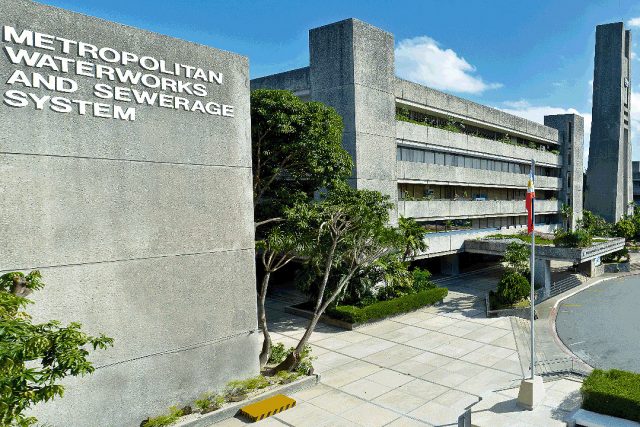
THE Metropolitan Waterworks and Sewerage System (MWSS) and its distributors have signed the revised concession agreement (RCA) governing the supply of water in Metro Manila, the companies said on Thursday.

In a separate stock exchange disclosure, Maynilad Water Services, Inc. and Manila Water Co., Inc. confirmed that the amended RCAs were signed on May 10, to retroactively take effect on July 1, 2022.

“We wish to inform the Exchange that a seventh Amendment to the Revised Concession Agreement between the MWSS and Manila Water dated March 31, 2021 was signed by the parties on May 10, 2023 (notarized copy was received by MWC on May 11, 2023),” Manila Water said.

“Along with the Amendments to the RCA, the Republic issued on 10 May 2023 the Undertaking Letter in the form agreed on by the Parties. The Undertaking Letter’s effectivity retroacts to 1 July 2022,” Metro Pacific Investments Corp., which holds a majority stake in Maynilad, said in its regulatory filing.

Maynilad said that the amendments include the deletion of the composition and decisions of the regulatory office from the list of issues not subject to arbitration.

The amendments are intended to align some of the RCA provisions with the revised implementing rules and regulations of the Build-Operate-Transfer Law.

Maynilad, the west zone water concessionaire, said that among the amendments are the adjustments in the consumer price index factor to 3/4 from the 2/3 of the percentage change in the CPI of the Philippines, which it described as consistent with the government’s effort to reinvigorate public-private partnerships.

Maynilad also said that the foreign currency differential adjustment (FCDA) will also be reinstated but only with regard to MWSS loans being serviced by Maynilad and to principal payments on drawn and undrawn amounts of foreign-currency loans as of June 29, 2022.

Maynilad also said that the revised RCA also entails a modified FCDA for loans agreed upon after June 29, 2022, that may only be availed of in the event of “extraordinary inflation” or an “extraordinary deflation” in the value of the peso.

Maynilad also said that the RCA also streamlines the list of events that constitute material adverse government action.

Metro Pacific Investments Corp., which has a majority stake in Maynilad, is one of three Philippine units of Hong Kong-based First Pacific Co. Ltd., the others being Philex Mining Corp. and PLDT, Inc.

Hastings Holdings, Inc., a unit of PLDT Beneficial Trust Fund subsidiary MediaQuest Holdings, Inc., has an interest in BusinessWorld through the Philippine Star Group, which it controls. — Ashley Erika O. Jose

BIR collects P837B in first four months, ahead of target

People line up to file their income tax returns at the Bureau of Internal Revenue office in Intramuros, Manila, April 18, 2022. — PHILIPPINE STAR/ RUSSELL A. PALMA

THE Bureau of Internal Revenue (BIR) said on Thursday that it collected P837.92 billion in the four months to April, exceeding its target for the period by 1.3%.

The BIR said in a tweet that the target was P826.86 billion.

This year, the agency is tasked to collect P2.6 trillion. The BIR collected P2.34 trillion in 2022.

The BIR accounts for about 70% of the government’s revenue.

“We need (to) address four areas of concern: intensification of enforcement activities, taxpayer services, integrity and professionalism, and digitalization. Fixing these areas will bring the BIR to greater heights. I am confident that as long as we address these areas, the BIR will reach its collection goal for 2023,” BIR Commissioner Romeo D. Lumagui, Jr. said.

Meanwhile, the BIR also announced that it filed a criminal complaint against a software management company.

The company was found to be owned “by a single proprietor which is being actively managed by her husband, who was found to be a BIR employee.”

“The software management company and the BIR official manipulate sales machines to reduce actual sales and evade payment of taxes,” it said in a statement.

“The initial revenue loss from the tampered (equipment) was computed to be approximately P6.1 billion which is detrimental to the BIR’s mission of collecting taxes for nation-building,” it added. — Luisa Maria Jacinta C. Jocson

PSA upgrades estimate of Q1 palay production to 4.80 million metric tons

PHILIPPINE STAR/EDD GUMBAN

PRODUCTION of palay, or unmilled rice, is now estimated at 4.80 million metric tons (MT) in the first quarter, an upgrade from the previous estimate of 4.54 million MT, the Philippine Statistics Authority (PSA) said.

In a report on Thursday, the PSA said its new estimate was based on the standing crop as of March 1.

The new estimate remains below the initial forecast of 4.84 million MT issued on Jan. 1.

The PSA said the area planted to rice rose 3.2% to 1.18 million hectares, with yield per hectare thought to have grown 2.4% to 4.08 MT.

The PSA said about 632.40 thousand hectares or 53.8% of the updated standing crop has been harvested.

“Out of the area harvested as of March 1, 2023, actual production was recorded at 2.55 million metric tons,” it said.

Of the area remaining to be harvested, 12.5% of the crop is in the reproductive stage while 87.5% is maturing.
The PSA also updated its initial estimate of corn production for the first quarter to 2.56 million MT, which would represent an improvement over the year-earlier output of 2.44 million MT.

The new estimate, however, is 0.1% lower than the PSA’s initial forecast for the period of 2.564 million MT issued on Jan. 1.

Area planted to corn during the period is estimated to have risen to 2.6% year on year to 671.20 thousand hectares.

The yield per hectare of corn is thought to have increased 2.2% year on year to 3.72 MT, compared to the 3.64 MT actual yield a year earlier.

“About 398.67 thousand hectares or 57.9% of the 688.62 thousand hectares updated area of standing crop have been harvested as of March 1,” the PSA said.

Farmers are also estimated to have harvested 1.43 million MT of corn across 398.67 hectares of farmland.

Of the remaining corn crop, 7.6% is at the reproductive stage while 92.4% is at the maturing stage. — Sheldeen Joy Talavera

Onion import plan needed by June

PHILSTAR FILE PHOTO

THE Department of Agriculture (DA) said on Thursday that an onion import plan needs to be released by June, addressing the need for inbound shipments to be “properly timed” in order not to distort prices during the domestic harvest.

“By June, we should have a plan para tamang-tama (to get the timings right). Taking into consideration how many days it will take our imported commodities to get into the country,” DA Spokesperson Kristine Y. Evangelista told reporters by phone.

“Farmers will not be affected if we only import during the lean season and at the same time, calibrated imports para tama lang ang dami ng ating commodity (so the quantities are appropriate),” she said.

Jayson H. Cainglet, executive director of Samahang Industriya ng Agrikultura, said imports would take 60-90 days, giving the industry sufficient time to prepare.

However, he said that the Bureau of Plant Industry (BPI) needs to be clear on its supply and demand estimates, including the volume of onion currently in cold storage.

He said that most onion growers in Nueva Ecija, Pangasinan, and Tarlac completed their harvest last month. The next harvest is due in February.

“We were surprised (in a hearing) the BPI had no inventory estimate of volume in cold storage given that harvest is about to end,” he said.

“We are very much concerned… that we will see a repeat of last year’s crisis,” he added.

BPI Spokesman Jose Diego E. Roxas said in a Viber message that the supply of white onions as of April was 12.843.35 metric tons, sufficient to meet demand until September.

The supply of red onions was estimated at 98,393.86 metric tons, “which may be sufficient to cover demand until November.”

Mr. Roxas said cold storage inventory data has yet to be released because the bureau is still monitoring the totals.

Mr. Cainglet said onion imports need to arrive between August and November to get the Philippines through the lean months.

He added that the price of both imported and domestic onion should not exceed P200 per kilogram with the current farmgate price between P50 and P100 per kilo. He estimated the landed cost of imports at P30-P40. — Sheldeen Joy Talavera

Salt industry dev’t bill hurdles House committee

PHILIPPINE STAR/EDD GUMBAN

A HOUSE committee has approved a substitute bill outlining plans to revive the salt industry.

The House Agriculture and Food committee approved on Thursday the proposed Philippine Salt Industry Development Act, which seeks to modernize domestic salt production after a drastic decline in output due to urbanization, population growth, and competition from imports.

KABAYAN Party-list Representative Ron P. Salo, who chaired the technical working group that fine-tuned the bill, said the measure goes beyond regulation and compliance with industry standards but heralds a “major paradigm shift” in policy for the salt industry.

“Taking into consideration the current state of the salt industry, this bill takes a more proactive and developmental approach to promote the growth and competitiveness of the industry,” Mr. Salo told the committee.

The measure calls for the drafting of a Philippine Salt Industry Development Roadmap (PSIDR), a five-year short-, medium-, and long-term development plan which will lay down the needed programs to increase salt production and make the Philippines a net exporter of salt.

The PSIDR also seeks to expand the number of salt-producing areas and promote public and private investment in industry development programs.

The roadmap will also categorize salt producing areas into artisanal, gourmet, and iodized salt centers, while developing salt ecotourism.

The measure also creates a salt industry development council chaired by the Secretary of Agriculture and co-chaired by the Secretary of Trade.

The bill will also classify salt as an agricultural product, giving the Department of Agriculture (DA) jurisdiction over the industry. It is currently overseen by the Department of Environment and Natural Resources.

Applications for salt farm leases will now be handled by the Bureau of Fisheries and Aquatic Resources.

“By classifying salt as an agricultural product and transferring the administration of the salt industry to the DA, we can provide better support to our salt farmers and producers,” Mr. Salo said.

The bill gives salt farmers and processors priority access to credit and guarantee schemes of government financial institutions. The Philippine Crop Insurance Corp. will also provide coverage for salt development and equipment. — Beatriz Marie D. Cruz

Power cooperative grades to increase weighting of governance, compliance

PHILSTAR FILE PHOTO

THE National Electrification Administration (NEA) said its new evaluation system for electric cooperatives (ECs) will feature an increased weighting for compliance and other governance considerations, including financial performance.

In the new system, a maximum of 40 points will be given to ECs deemed to be exemplars of good governance practices, while the top rating will be denied to ECs that fail to meet compliance deliverables despite otherwise favorable scores on the points system.

“We amended the criteria for EC Categorization to establish accountability and responsibility in ECs’ compliance and fiduciary obligations, and to ensure implementation of EC good governance,” Antonio Mariano C. Almeda, NEA administrator, said in a statement.

NEA said the financial components of good governance include healthy debt levels, liquidity, financial results, and audit rating.

The NEA said that financial efficiency will also be determined through the EC’s collection efficiency; payments to power suppliers, to the NEA and to banks and other financial institutions.

The new evaluation weightings were approved by the NEA board of administrators on April 25.

Under the previous rules, NEA gave a 25-point weighting to financial performance. Institutional strengths were graded on a scale of 30 points, technical capacity 20 points, level of electrification 20 points, and compliance with reporting requirements five points.

NEA said the old institutional governance component included 20 points for the performance of the board of directors and general manager, member participation and involvement, action on consumer complaints or requests and the results of a customer satisfaction survey.

NEA said technical performance will be rated on system losses and reliability.

“A demerit of two points shall be imposed against ECs which were not able to conduct a Competitive Selection Process (CSP) as scheduled in the Power Supply Procurement Plan,” NEA said.

A triple A rating indicates that the EC scored 95-100 points; AA 90-94 points; A 85-89 points; B 75-84 points; C 50-74 points; and D 49 points or less.

The new rules require an EC aspiring to the AAA category to meet standards for system losses, reliability, collection efficiency, financial performance, and payment of power suppliers. The EC must also have conducted district elections and organized an annual general membership assembly.

“An EC which fails to comply with any of the herein listed parameters shall only be categorized as “AA” notwithstanding a total score of 95 or above,” NEA said. — Ashley Erika O. Jose

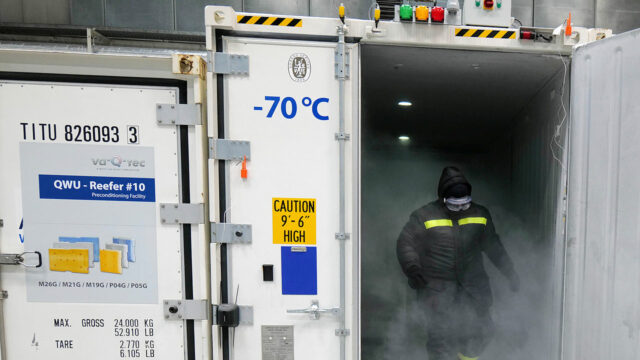
Refrigerated truck company cites ‘immense’ potential of cold storage market

REUTERS

CENTRO NIPPON Fruehauf Cooltech, Inc. (CFCI), a maker of temperature-controlled cargo van bodies, expressed confidence in the growth potential of the Philippine cold chain market, particularly the segment that involves hauling perishable goods.

 “The potential of the cold chain industry in the Philippines is immense, and we are committed to meeting the growing demand for temperature-controlled transport solutions,” CFCI Plant Manager Edd Nieva said in a statement on Thursday.

“Our Cooltech brand is designed to provide high-quality and reliable refrigerated van bodies that meet the specific needs of the cold chain industry, ensuring that perishable goods are transported at the required temperature throughout the journey,” Mr. Nieva said.

Citing Allied Market Research, CFCI said the global cold chain market’s compound annual growth rate is estimated at 15.9% between 2021 and 2028 due to surging demand for processed food, advancements in the cold chain industry, and the growing need for temperature-controlled logistics in developing countries.

“The cold chain industry in the Philippines has been growing steadily over the past few years, driven by the increasing demand for food products such as fruit, vegetables, meat, and dairy products,” CFCI said.

CFCI touted its after-sales services in addition to van body sales.

“We understand the importance of after-sales service and support, which is why we provide regular maintenance checks, repairs, and replacement of parts to ensure that our refrigerated van bodies are operating at optimal levels,” Mr. Nieva said. — Revin Mikhael D. Ochave

Open-pit mining can coexist with environmental protection — think tank

PHILSTAR FILE PHOTO

THE environmental impact of open-pit mining should not pose an obstacle to the practice, which increases the efficiency of mining operations and potentially generates more funding for development, the Philippine Institute for Development Studies (PIDS) said.

“There should be no dilemma resulting in exclusive decisions from a choice between a mining project and environmental or social welfare,” it said in a policy note.

In 2021, the government lifted a four-year ban on open-pit mining.

“The ban was (imposed) for environmental reasons and supposedly to prevent perpetual liability. At the same time, the eventual lifting was justified by the prospect of economic opportunities and the existence of best practices that can mitigate environmental risks,” it added.

PIDS noted that mining industries “are destructive, regardless of the method used.” 

“Compared to other mining methods (i.e., underground and offshore mining), the impacts of surface mining, which includes open-pit mining methods, on the environment and social welfare are more evident and felt by the public,” it said.

It said the risks include pollution, erosion, groundwater depletion, and water contamination.

However, it also noted that revenue from mining can “spur much-needed developmental economic activity.”

In 2021, the mining and quarrying sector accounted for P144.4 billion or 0.8% of gross domestic product.

“Based only on three prospective open-pit mining projects stalled by the ban, excise taxes from these projects can reach P11 billion annually,” it added.

PIDS said that the government should establish sustainability indicators and monitoring and evaluation platforms.

“As such, putting a monetary value on environmental or social welfare costs may not be practical. Nonmonetary environmental impact metrics and indices that are acceptable to all stakeholders have yet to be established,” it said.

“Clear-cut, acceptable, measurable, and transparent metrics must be established for approving or disapproving projects,” it added.

PIDS said metrics and performance indicators are necessary for ecological integrity, biodiversity, public health and safety, rehabilitation requirements, and benchmarking.

“Correspondingly, there is a need to standardize the monitoring procedures of performance metrics that are acceptable to all as the basis for compliance or noncompliance,” it said.

“Other subsequent laws or government-issued orders, circulars, or guidelines that aim to update existing mining-related laws (e.g., environmental, social, fiscal) must adapt to global standards, sustainable practices, and the needs of the times,” it added. — Luisa Maria Jacinta C. Jocson

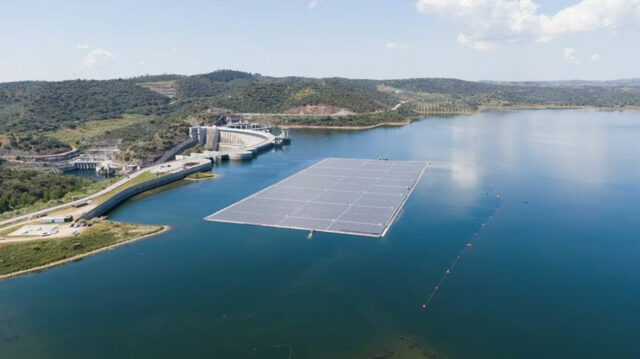
Higher auction floor price sought for floating solar

REUTERS

THE Philippine Solar and Storage Energy Alliance (PSSEA) said it asked the Energy Regulatory Commission (ERC) to raise the green energy auction reserve (GEAR) price for floating solar projects.

“PSSEA respectfully prays that the Honorable Commission consider P7.3661/kWh (kilowatt-hour) as the GEA-2 GEAR Price for Solar PV on Water and for the removal of the SESC as one of the requisites for solar developers,” PSSEA said in its position paper.

SESCs, or solar energy service contracts, are a prerequisite for solar developers. Under the current rules, only developers with SESCs can register to participate in the green energy auction program (GEAP).

Theresa C. Capellan, president of SunAsia Energy, Inc. and PSSEA chairperson, told reporters that the current rate for floating solar is inadequate.

According to the preliminary GEAR prices released by the ERC for the second round GEAP, the price for floating solar is P4.7565 per kWh, while that for ground-mounted solar is P4.2395 per kWh.

“They have to take into consideration that floating solar has a different ecosystem, it is like they are comparing it to ground-mounted. We just want it to be data-driven. If they are saying the capacity factor is 20%, then share the data, but the ERC never shared the data,” Ms. Capellan said on the sidelines of the SunAsia and Energy department’s ceremonial turnover of solar energy operating contracts on Wednesday.

In PSSEA’s position paper, the association argued that unlike ground-mounted solar panels, floating solar project costs are at least 20% higher due to the need to build floaters and account for the cost of mooring.

“They are requiring us to submit the data to show our (calculation) so they should also release theirs. What we submitted was P7; that is the industry position,” Ms. Capellan said.

“We are very thankful that they have recognized that the technology is different. That’s a good step but I think they have to understand that in order to open the doors to make floating solar commercial, they have to give high tariffs so that the pioneer that will (have to resolve) all the initial problems… can be compensated,” Ms. Capellan added. — Ashley Erika O. Jose

Casimero promises to send Nghitumbwa’s head flying

JOHN RIEL CASIMERO (second from left) and Fillipus Nghitumbwa (right) during the press conference in Okada Manila in Parañaque — TREASURE BOXING PROMOTION AND JOHNNY ELORDE MANAGEMENT INTERNATIONAL

FORMER three-division world champion John Riel Casimero promises an action-packed fight when he takes on the WBO Global Super Bantamweight champion Fillipus Nghitumbwa in his homecoming bout this Saturday, May 13 at Okada Manila in Parañaque.

In a pre-fight press conference held yesterday at Elorde Ballroom in Sucat, Parañaque, both fighters vowed to do their best to emerge victorious this weekend. The boxers were joined by Treasure Boxing Promotion founder CEO Masayuki Ito and co-promoter Johnny Elorde, president of Johnny Elorde Management International.

Former three-division world champion John Riel Casimero (32-4, 22KOs): “I am very excited for this fight. I am going to take his head off. Thank you to all who came here, especially to the press and our promoters. Fight day is almost here, it would be a great fight.”

WBO Global Super Bantamweight champion Fillipus Nghitumbwa (12-1, 11KOs): “I am ready for this fight. I am ready to go and ready to take this guy out. I am more than ready for Saturday.”

Masayuki Ito, Chief Executive Officer of Treasure Boxing Promotion: “This will be the first time that we are promoting in the Philippines so we are hoping that it is going to be an amazing day. We know that there are a lot of Filipino boxers and we hope to promote more events in the future.”

ADVERTISEMENT
ADVERTISEMENT