Home Blog Page 4881

Salt industry dev’t bill hurdles House committee

PHILIPPINE STAR/EDD GUMBAN

A HOUSE committee has approved a substitute bill outlining plans to revive the salt industry.

The House Agriculture and Food committee approved on Thursday the proposed Philippine Salt Industry Development Act, which seeks to modernize domestic salt production after a drastic decline in output due to urbanization, population growth, and competition from imports.

KABAYAN Party-list Representative Ron P. Salo, who chaired the technical working group that fine-tuned the bill, said the measure goes beyond regulation and compliance with industry standards but heralds a “major paradigm shift” in policy for the salt industry.

“Taking into consideration the current state of the salt industry, this bill takes a more proactive and developmental approach to promote the growth and competitiveness of the industry,” Mr. Salo told the committee.

The measure calls for the drafting of a Philippine Salt Industry Development Roadmap (PSIDR), a five-year short-, medium-, and long-term development plan which will lay down the needed programs to increase salt production and make the Philippines a net exporter of salt.

The PSIDR also seeks to expand the number of salt-producing areas and promote public and private investment in industry development programs.

The roadmap will also categorize salt producing areas into artisanal, gourmet, and iodized salt centers, while developing salt ecotourism.

The measure also creates a salt industry development council chaired by the Secretary of Agriculture and co-chaired by the Secretary of Trade.

The bill will also classify salt as an agricultural product, giving the Department of Agriculture (DA) jurisdiction over the industry. It is currently overseen by the Department of Environment and Natural Resources.

Applications for salt farm leases will now be handled by the Bureau of Fisheries and Aquatic Resources.

“By classifying salt as an agricultural product and transferring the administration of the salt industry to the DA, we can provide better support to our salt farmers and producers,” Mr. Salo said.

The bill gives salt farmers and processors priority access to credit and guarantee schemes of government financial institutions. The Philippine Crop Insurance Corp. will also provide coverage for salt development and equipment. — Beatriz Marie D. Cruz

Power cooperative grades to increase weighting of governance, compliance

PHILSTAR FILE PHOTO

THE National Electrification Administration (NEA) said its new evaluation system for electric cooperatives (ECs) will feature an increased weighting for compliance and other governance considerations, including financial performance.

In the new system, a maximum of 40 points will be given to ECs deemed to be exemplars of good governance practices, while the top rating will be denied to ECs that fail to meet compliance deliverables despite otherwise favorable scores on the points system.

“We amended the criteria for EC Categorization to establish accountability and responsibility in ECs’ compliance and fiduciary obligations, and to ensure implementation of EC good governance,” Antonio Mariano C. Almeda, NEA administrator, said in a statement.

NEA said the financial components of good governance include healthy debt levels, liquidity, financial results, and audit rating.

The NEA said that financial efficiency will also be determined through the EC’s collection efficiency; payments to power suppliers, to the NEA and to banks and other financial institutions.

The new evaluation weightings were approved by the NEA board of administrators on April 25.

Under the previous rules, NEA gave a 25-point weighting to financial performance. Institutional strengths were graded on a scale of 30 points, technical capacity 20 points, level of electrification 20 points, and compliance with reporting requirements five points.

NEA said the old institutional governance component included 20 points for the performance of the board of directors and general manager, member participation and involvement, action on consumer complaints or requests and the results of a customer satisfaction survey.

NEA said technical performance will be rated on system losses and reliability.

“A demerit of two points shall be imposed against ECs which were not able to conduct a Competitive Selection Process (CSP) as scheduled in the Power Supply Procurement Plan,” NEA said.

A triple A rating indicates that the EC scored 95-100 points; AA 90-94 points; A 85-89 points; B 75-84 points; C 50-74 points; and D 49 points or less.

The new rules require an EC aspiring to the AAA category to meet standards for system losses, reliability, collection efficiency, financial performance, and payment of power suppliers. The EC must also have conducted district elections and organized an annual general membership assembly.

“An EC which fails to comply with any of the herein listed parameters shall only be categorized as “AA” notwithstanding a total score of 95 or above,” NEA said. — Ashley Erika O. Jose

Refrigerated truck company cites ‘immense’ potential of cold storage market

REUTERS

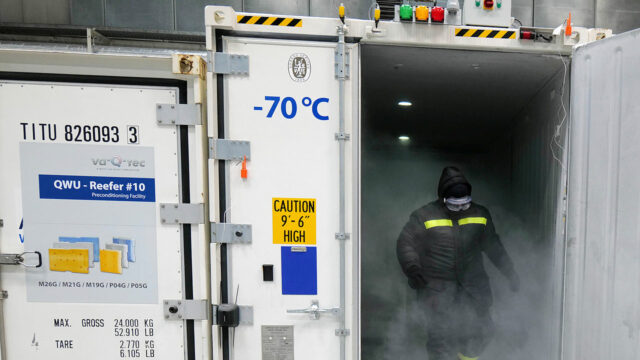
CENTRO NIPPON Fruehauf Cooltech, Inc. (CFCI), a maker of temperature-controlled cargo van bodies, expressed confidence in the growth potential of the Philippine cold chain market, particularly the segment that involves hauling perishable goods.

 “The potential of the cold chain industry in the Philippines is immense, and we are committed to meeting the growing demand for temperature-controlled transport solutions,” CFCI Plant Manager Edd Nieva said in a statement on Thursday.

“Our Cooltech brand is designed to provide high-quality and reliable refrigerated van bodies that meet the specific needs of the cold chain industry, ensuring that perishable goods are transported at the required temperature throughout the journey,” Mr. Nieva said.

Citing Allied Market Research, CFCI said the global cold chain market’s compound annual growth rate is estimated at 15.9% between 2021 and 2028 due to surging demand for processed food, advancements in the cold chain industry, and the growing need for temperature-controlled logistics in developing countries.

“The cold chain industry in the Philippines has been growing steadily over the past few years, driven by the increasing demand for food products such as fruit, vegetables, meat, and dairy products,” CFCI said.

CFCI touted its after-sales services in addition to van body sales.

“We understand the importance of after-sales service and support, which is why we provide regular maintenance checks, repairs, and replacement of parts to ensure that our refrigerated van bodies are operating at optimal levels,” Mr. Nieva said. — Revin Mikhael D. Ochave

Open-pit mining can coexist with environmental protection — think tank

PHILSTAR FILE PHOTO

THE environmental impact of open-pit mining should not pose an obstacle to the practice, which increases the efficiency of mining operations and potentially generates more funding for development, the Philippine Institute for Development Studies (PIDS) said.

“There should be no dilemma resulting in exclusive decisions from a choice between a mining project and environmental or social welfare,” it said in a policy note.

In 2021, the government lifted a four-year ban on open-pit mining.

“The ban was (imposed) for environmental reasons and supposedly to prevent perpetual liability. At the same time, the eventual lifting was justified by the prospect of economic opportunities and the existence of best practices that can mitigate environmental risks,” it added.

PIDS noted that mining industries “are destructive, regardless of the method used.” 

“Compared to other mining methods (i.e., underground and offshore mining), the impacts of surface mining, which includes open-pit mining methods, on the environment and social welfare are more evident and felt by the public,” it said.

It said the risks include pollution, erosion, groundwater depletion, and water contamination.

However, it also noted that revenue from mining can “spur much-needed developmental economic activity.”

In 2021, the mining and quarrying sector accounted for P144.4 billion or 0.8% of gross domestic product.

“Based only on three prospective open-pit mining projects stalled by the ban, excise taxes from these projects can reach P11 billion annually,” it added.

PIDS said that the government should establish sustainability indicators and monitoring and evaluation platforms.

“As such, putting a monetary value on environmental or social welfare costs may not be practical. Nonmonetary environmental impact metrics and indices that are acceptable to all stakeholders have yet to be established,” it said.

“Clear-cut, acceptable, measurable, and transparent metrics must be established for approving or disapproving projects,” it added.

PIDS said metrics and performance indicators are necessary for ecological integrity, biodiversity, public health and safety, rehabilitation requirements, and benchmarking.

“Correspondingly, there is a need to standardize the monitoring procedures of performance metrics that are acceptable to all as the basis for compliance or noncompliance,” it said.

“Other subsequent laws or government-issued orders, circulars, or guidelines that aim to update existing mining-related laws (e.g., environmental, social, fiscal) must adapt to global standards, sustainable practices, and the needs of the times,” it added. — Luisa Maria Jacinta C. Jocson

Higher auction floor price sought for floating solar

REUTERS

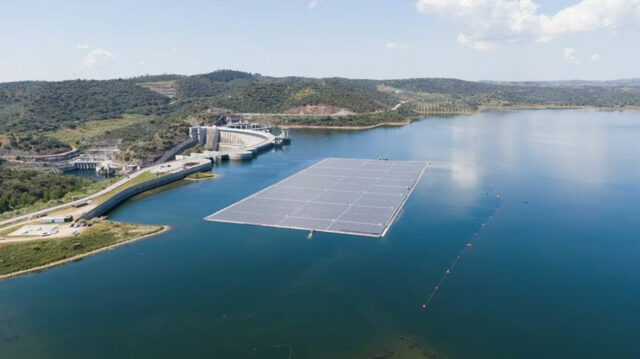
THE Philippine Solar and Storage Energy Alliance (PSSEA) said it asked the Energy Regulatory Commission (ERC) to raise the green energy auction reserve (GEAR) price for floating solar projects.

“PSSEA respectfully prays that the Honorable Commission consider P7.3661/kWh (kilowatt-hour) as the GEA-2 GEAR Price for Solar PV on Water and for the removal of the SESC as one of the requisites for solar developers,” PSSEA said in its position paper.

SESCs, or solar energy service contracts, are a prerequisite for solar developers. Under the current rules, only developers with SESCs can register to participate in the green energy auction program (GEAP).

Theresa C. Capellan, president of SunAsia Energy, Inc. and PSSEA chairperson, told reporters that the current rate for floating solar is inadequate.

According to the preliminary GEAR prices released by the ERC for the second round GEAP, the price for floating solar is P4.7565 per kWh, while that for ground-mounted solar is P4.2395 per kWh.

“They have to take into consideration that floating solar has a different ecosystem, it is like they are comparing it to ground-mounted. We just want it to be data-driven. If they are saying the capacity factor is 20%, then share the data, but the ERC never shared the data,” Ms. Capellan said on the sidelines of the SunAsia and Energy department’s ceremonial turnover of solar energy operating contracts on Wednesday.

In PSSEA’s position paper, the association argued that unlike ground-mounted solar panels, floating solar project costs are at least 20% higher due to the need to build floaters and account for the cost of mooring.

“They are requiring us to submit the data to show our (calculation) so they should also release theirs. What we submitted was P7; that is the industry position,” Ms. Capellan said.

“We are very thankful that they have recognized that the technology is different. That’s a good step but I think they have to understand that in order to open the doors to make floating solar commercial, they have to give high tariffs so that the pioneer that will (have to resolve) all the initial problems… can be compensated,” Ms. Capellan added. — Ashley Erika O. Jose

Casimero promises to send Nghitumbwa’s head flying

JOHN RIEL CASIMERO (second from left) and Fillipus Nghitumbwa (right) during the press conference in Okada Manila in Parañaque — TREASURE BOXING PROMOTION AND JOHNNY ELORDE MANAGEMENT INTERNATIONAL

FORMER three-division world champion John Riel Casimero promises an action-packed fight when he takes on the WBO Global Super Bantamweight champion Fillipus Nghitumbwa in his homecoming bout this Saturday, May 13 at Okada Manila in Parañaque.

In a pre-fight press conference held yesterday at Elorde Ballroom in Sucat, Parañaque, both fighters vowed to do their best to emerge victorious this weekend. The boxers were joined by Treasure Boxing Promotion founder CEO Masayuki Ito and co-promoter Johnny Elorde, president of Johnny Elorde Management International.

Former three-division world champion John Riel Casimero (32-4, 22KOs): “I am very excited for this fight. I am going to take his head off. Thank you to all who came here, especially to the press and our promoters. Fight day is almost here, it would be a great fight.”

WBO Global Super Bantamweight champion Fillipus Nghitumbwa (12-1, 11KOs): “I am ready for this fight. I am ready to go and ready to take this guy out. I am more than ready for Saturday.”

Masayuki Ito, Chief Executive Officer of Treasure Boxing Promotion: “This will be the first time that we are promoting in the Philippines so we are hoping that it is going to be an amazing day. We know that there are a lot of Filipino boxers and we hope to promote more events in the future.”

Carlos Yulo eyes Asian Championship in Singapore, skips Asian Games for World Championship

CARLOS YULO — PHILIPPINE STAR/JUN MENDOZA

AFTER spearheading the country’s four-gold medal haul in the Phnom Penh Southeast Asian Games, Carlos Yulo set his sights at the Asian Artistic Gymnastics Championships slated June 10 to 18 in Singapore where he hopes to earn his World Championship spot.

Mr. Yulo scooped up a pair of mints in the individual all-around and parallel bars and the same number of silver in the still rings and team event to power the country to a four-gold harvest in the sport.

But a bigger battle looms for the pocket-sized wonder from Leveriza in Manila as he is out to secure his place in the Worlds set Sept. 29 to Oct. 8 in Antwerp, Belgium where he would also gun for a precious slot to next year’s Paris Olympics.

“Carlos (Yulo) is back in Tokyo, Japan for training for the Asian Championships,” Gymnastics Association of the Philippines president Cynthia Carrion Norton yesterday told The STAR.

And Mr. Yulo has gotten bolder as he aims to qualify not just in his favorite individual apparatuses like floor exercise, vault and parallel bars among others but also in the individual all-around event.

Because of the Antwerp meet, Mr. Yulo has decided to skip the Hangzhou Asian Games, which would run smack into the former since the latter is scheduled Sept. 23 to Oct. 8.

It is Antwerp where Mr. Yulo’s berth to the Olympics would be decided as the 23-year-old two-time world and three-time Asian champion shoots for the one piece of hardware missing in his vast collection — an Olympic gold. — Joey Villar

Philippines’ Edwin Giron stumbled but finished 800-meter race despite severe cramps

PHNOM PENH — Filipino men’s 800-meter run prospect Edwin Giron checked in seventh and last in his heat at 3:33.02, a far cry from his personal best of 1:51.99.

But it’s not so much his clocking or final placing in the 32nd Southeast Asian Games here that merits attention but the way he finished the race.

Mr. Giron was setting the pace when he stumbled to the ground due to severe cramps, allowing his six opponents to overtake. Medical personnel were ready to stretcher him out of the oval but the back-to-back UAAP king refused, asking them to help him stand up instead.

Grimacing in pain but showing grim determination, Mr. Giron ran the last 200 meters of the race on a bad limp to cheers and applause from the appreciative crowd at the Morodok Techo National Stadium.

The cramped-up Pinoy trackster reached the finish line around two minutes after the top runner of the heat, Wan Muhammad Zahari (1:53.870). He gratefully fell on the track using both hands as support and rolled over to the field in exhaustion.

Unknown to many, Mr. Giron also raced while mourning the death of his father, who passed away back home.

For this amazing triumph of the spirit, Mr. Giron deserved the gold medal. — Olmin Leyba

Jalen Brunson, Knicks go distance, beat Heat in Game 5

JALEN Brunson scored 38 points and joined Quentin Grimes in playing all 48 minutes Wednesday night for the host New York Knicks, who staved off elimination by beating the Miami Heat 112-103 in Game 5 of the Eastern Conference semifinals.

The Knicks, who led by as many as 19 points in the third quarter before the Heat whittled the deficit to two points late in the fourth, trail the series three games to two heading into Game 6, scheduled for Friday night in Miami.

Mr. Brunson pulled down nine rebounds and had seven assists. He and Mr. Grimes — who had eight points, five assists and four rebounds — became the first pair of Knicks to play all 48 minutes in a playoff game since Walt Frazier and Jerry Lucas did so against the Boston Celtics in Game 5 of the Eastern Conference finals on April 23, 1972.

RJ Barrett had 26 points and Julius Randle added 24 points for the Knicks. The duo teamed up with Mr. Brunson to score all the points in New York’s decisive 23-5, third-quarter run. Jimmy Butler put up 19 points, nine assists and seven rebounds for the Heat, who squandered a 10-point, second-quarter lead. Bam Adebayo had 18 points and eight rebounds while Duncan Robinson scored 17 points off the bench. Max Strus added 14 points and Caleb Martin collected 11 points in a reserve role.

The Heat ended the first quarter on a 16-4 run to take their biggest lead at 24-14 before the Knicks opened the second period by hitting their first seven shots during an 18-2 run that lasted just 2:54.

Miami scored the next nine points, after which neither team led by more than three points the remainder of the quarter. Randle’s 3-pointer just before the buzzer gave the Knicks a 50-47 lead entering halftime.Reuters

Coach burden

Celtics head coach Joe Mazzulla wasn’t exactly at a loss for words in describing his charges’ evident lack of fight in their outing the other day. In fact, he was clear in what he deemed to be the reason for their setback, which has placed them on the brink of playoff elimination. He said it was the “first really, really bad game” of the green and white in the postseason. Whether or not he’s right, though, is subject to debate. After all, they did have a handful of other clunkers, including in the first round against the Hawks.

In any case, Mazzulla should consider one significant reason the Celtics will be heading into Game Six of their semifinal round series today with survival at stake: his own seeming lack of capacity to excel in the moment. For example, there was no excuse for their inability to come up with victory in Game One; even with newly minted Most Valuable Player awardee Joel Embiid sidelined due to injury, they found themselves on the wrong end of the score off an inexcusable failure to contain supposed milk carton model James Harden. And then there was their final possession in overtime of Game Four, during which he decided not to call timeout to set up a proper potential match-winning play even though the action had been slow to develop on the court.

To be sure, Mazzulla has pronounced strengths that the Celtics appreciate; not for nothing did they post the second-best regular season record in the National Basketball Association. And coming off their tumultuous breakup with erstwhile bench tactician Ime Udoka, he represented much-needed stability and trust. That said, his biggest pluses are apparently his biggest minuses as well; his predilection for familiarity, especially in pressure-packed situations, has stunted his inclination to introduce adjustments on the fly. It’s why they have kept going for isolation sets far from the basket even when shots aren’t falling. And it’s why they have continued to rely on the same coverages despite the Sixers’ sustained success in the elbows.

Make no mistake. The Celtics have more than enough in their arsenal to bounce back today and force a winner-take-all contest at the TD Garden. If nothing else, they have institutional memory to lean on in their latest comeback attempt. Still, they would do well to understand the importance of innovation. They simply cannot do the same things that have led to their downfalls over and over again and expect a different result. And, bottom line, the onus is on Mazzulla to get the message while there’s still time.


Anthony L. Cuaycong has been writing Courtside since BusinessWorld introduced a Sports section in 1994. He is a consultant on strategic planning, oprerations and human resources management, corporate communications, and business development.

Philippines, Vietnam agree to expand ties beyond rice trade

PCO

By Kyle Aristophere T. Atienza, Reporter

PHILIPPINE President Ferdinand R. Marcos, Jr. and Vietnamese Prime Minister Pham Minh Chinh have vowed to expand their relations beyond rice trade to include tourism and defense.

Mr. Marcos on Wednesday met with his Vietnamese counterpart on the sidelines of the Association of Southeast Asian Nations (ASEAN) Summit in Indonesia, where they also talked about boosting trade of other products, the presidential palace said in a statement on Thursday.

Philippine-Vietnam ties should expand beyond rice, Mr. Marcos Jr. told Mr. Pham. The market is “ripe for continued development” in agriculture, transfer of technologies for climate change and products that Vietnam had excelled in, he added.

Vietnam is the world’s third-largest rice exporter, and the Philippines has for years been its biggest buyer.

Mr. Marcos Jr. said he sees Vietnam as an important partner in rehabilitating the Philippine tourism sector amid a coronavirus pandemic.

About 32,970 Vietnamese visited the Philippines in February to September last year, according to the Tourism department.

The Philippines had 2.65 million international visitor arrivals in 2022 and P208.96 billion ($3.75 billion) in tourism revenue, more than 25 times higher than a year earlier, according to government data.

The government targets 2.6-6.4 million international tourist arrivals this year.

Vietnam would supply rice to the Philippines at reasonable prices for the long term, Mr. Pham told Mr. Marcos at their meeting, Reuters reported.

Hanoi has “great empathy” for Manila, the Vietnamese leader said, noting that Filipinos often face natural disasters that affect farm output.

Leonardo M. Lanzona, who teaches economics at the Ateneo de Manila University, said there’s nothing much to expect from the talks, calling on the public to be critical of partnerships being forged by Mr. Marcos with his counterparts during foreign trips.

“I am just wondering how much of all these are for show business,” he said in a Facebook Messenger chat. “World prices change, and we cannot expect Vietnam to stabilize its prices and forego its economic objectives just for the sake of strategic cooperation.”

“The more compelling solution is for the country to develop its best strategy in response to whatever best strategy that its trading partner has,” he said. “We need to rethink how we are going to transform our agriculture sector to reach its full capacity amid all of these tensions and economic challenges.”

The Philippines plans to import 330,000 metric tons of rice this year. The National Food Authority wants rice imports through government-to-government deals.

“Vietnam is a reliable economic partner in the area of stabilizing the country’s rice market, particularly during times of tight domestic production,” Terry L. Ridon, a public investment analyst and a former lawmaker, said via Messenger chat. “However, this is also indicative of the need for the Philippines to continue its rice self-sufficiency objectives, because no agriculture-rich nation should be dependent on importing its main food staple.”

He said engaging Vietnam and other Southeast Asian countries “diversifies our exposure to a wider stretch of economies,” reducing reliance on larger economies like China and the United States, which are both being blamed for increasing regional tensions.

“This ensures that in the event of rising political tensions between global powers, the country can rely on other partners for various goods and services,” Mr. Ridon said.

The three-day 42nd ASEAN Summit and Related Summits take place amid increasing tensions between China and the US, which has vowed to defend Taiwan in case of a Chinese invasion.

Aside from criticizing China’s aggression against self-ruled Taiwan, Washington has also been vocal against Beijing’s expansive activities in the South China Sea.

Mr. Ridon said Vietnam could expand its investments in the Philippines through the amended Public Service Act, which liberalizes key public services.

“The law provides an avenue to expand Vietnamese investments in various infrastructure projects,” he said. “They may enter as technical or financial partners in prospective projects. Hanoi should welcome a further expansion of Filipino investments in Vietnam.”

‘SUBDUED’
The palace said Mr. Marcos and his Vietnamese counterpart had also agreed to boost the two countries’ defense cooperation. It did not elaborate.

The Philippines, Vietnam, China, Brunei, Taiwan and Malaysia hold different — in some cases overlapping — territorial claims over the South China Sea.

Vietnam claims the Paracel Islands, which are also claimed by both China and Taiwan. It also claims the entirety of the Spratly Islands — having occupied 25 features — as do China and Taiwan.

China is the largest trading partner of both the Philippines and Vietnam.

Despite their relatively stable relations, Hanoi has been standing up to China’s aggression in the disputed waterway. In 2014, the two countries quarreled over a Chinese plan to move its oil platform to waters near the disputed Paracel Islands.

Raymond Powell, a fellow at the Stanford University’s Gordian Knot Center for National Security Innovation, earlier told BusinessWorld Vietnam is likely appreciative of the Philippine Coast Guard’s maritime transparency, which aims to expose China’s aggression in Philippine waters.

“However, any open support from Hanoi is likely to be subdued and measured,” he said in an e-mail.

The US-Vietnam relationship has been on an upward trajectory, with their bilateral trade growing “over 200-fold since normalization,” according to the Center for Strategic and International Studies.

Efforts to resolve legacies of the Vietnam war as well as “shared threat perceptions” regarding China have greatly contributed to their improving ties, it said in a 2014 report.

“Vietnam makes much of its independent foreign policy, which includes an iron-clad commitment not to join any one country or bloc against another,” Mr. Powell said. “While Vietnam’s government internally considers China its top security threat, its external statements and actions remain restrained unless its own interests are directly threatened.”

Mr. Powell noted that if the Philippine government seeks to partner with Vietnam in the South China Sea, it would have to be creative “so as not to trigger Hanoi’s strong disinclination toward joining blocs or provoking Beijing’s ire.”


Marcos worried about South China Sea tensions

PHILIPPINE STAR/KRIZ JOHN ROSALES

PHILIPPINE President Ferdinand R. Marcos, Jr. on Thursday told his Southeast Asian counterparts he was deeply concerned over tensions in the South China Sea.

In his intervention at the retreat session of the 42nd Association of Southeast Asian Nations (ASEAN) Summit in Indonesia, Mr. Marcos cited “infringements on our sovereignty, sovereign rights and jurisdiction.”

The incidents have “palpable consequences” for the safety and welfare of Filipinos, “particularly our fisherfolk and coastal communities,” he said.

The three-day summit was held amid worsening regional tensions primarily caused by China’s increasing assertiveness in the South China Sea, which it claims almost in its entirety. Tensions have also increased between China and the US over self-ruled Taiwan.

On Monday, the day Mr. Marcos flew to Indonesia for the Southeast Asian gathering, the Gordian Knot Center for National Security Innovation said several Chinese maritime militia vessels accompanying a Chinese research ship were headed to Vietnam’s waters.

Earlier in the day, the center reported that those Chinese maritime militia vessels “appear to have interrupted their deployment to the Spratlys” and approached the path of seven ASEAN and Indian ships conducting a maritime exercise that sailed through the South China Sea. 

Mr. Marcos, speaking to his fellow ASEAN leaders, urged countries to abide by the 1982 United Nations Convention on the Law of the Sea (UNCLOS), calling it the “Constitution of the oceans.”

“We will continue to urge all to abide by the 1982 UNCLOS, as the constitution of the oceans,” he said. “We must ensure that the South China Sea does not become a nexus for armed conflict.”

“We must avoid the ascendance of might and the aggressive revision of the international order. In an increasingly volatile world, we require constraints on power contained by the force of the rule of law,” he added.  

Mr. Marcos noted that despite “continued attempts to deny and obstruct our ability to exercise our sovereign rights in our exclusive economic zone,” the Philippines will remain firm in upholding and protecting its entitlements under UNCLOS.

The Philippines is committed to the full and effective implementation of the Declaration of Code of Conduct in the South China Sea, a 2002 document signed by China and ASEAN members reaffirming freedom of navigation and overflight, peaceful settlement of disputes, and self-restraint in the waterway.

In the 2002 document, the parties agreed that the adoption of a code of conduct in the South China Sea would further promote peace and stability in the region.

Mr. Marcos called for an early conclusion of the code of conduct, which dates back to 1992, when ASEAN leaders signed a declaration that emphasized the “necessity to resolve all sovereignty and jurisdictional issues pertaining to the South China Sea by peaceful means, without resort to force.”

They aimed to establish a code of international conduct over the waterway that they said should be based on the “principles contained in the Treaty of Amity and Cooperation in Southeast Asia.”

Mr. Marcos said the rule-based regional architecture should be underpinned by the centrality of ASEAN “towards inclusive engagement in the Indo-Pacific region.”

Meanwhile, the Philippine leader reiterated his call for the immediate end of violence in Myanmar, calling for the enforcement of a five-point consensus issued in 2021.

The consensus called for an immediate end to violence in Myanmar; a dialogue among all involved parties; the appointment of a special envoy; humanitarian assistance from ASEAN; and a visit to the country by a special envoy.

“We continue to call on Myanmar to abide by and implement the Five-Point Consensus, and for our external partners to complement ASEAN’s efforts in the context of the Five-Point Consensus,” Mr. Marcos said.

He also expressed concern over tensions in the Korean Peninsula, calling for “denuclearization” of the area.

Mr. Marcos also sought a peaceful resolution of the conflict between Russia and Ukraine. — Kyle Aristophere T. Atienza

ADVERTISEMENT
ADVERTISEMENT