Home Blog Page 4880

Halle Bailey ‘honored’ to play Ariel in The Little Mermaid remake

THE Little Mermaid (2023) —IMDB.COM

LOS ANGELES — Black American singer Halle Bailey has said she was “honored” to play Ariel in the live action remake of The Little Mermaid, adding she hoped to inspire children of color with the new iteration of the beloved Disney animation.

The 23-year-old plays the mermaid princess who dreams of being a human in the movie, which had its world premiere in Los Angeles on Monday night, more than 30 years after the original was released.

“My hopes for this film are just for people to take away such love and joy and happiness when they leave and especially for all of the Black and brown little… boys and girls to be able to see themselves being represented on such a big scale,” Ms. Bailey told Reuters.

“I’m just honored to be in this position.”

There was a racist backlash online when the film’s trailer was released last year, but many videos were also posted showing delighted Black children on seeing her as the Disney princess.

“It’s so important for little girls to see themselves in things, in movies, in representation,” said Awkwafina (Nora Lum), who voices the seagull Scuttle.

Melissa McCarthy takes on the role of the villainous Ursula, Javier Bardem plays King Triton, and Jonah Hauer-King portrays Ariel’s love interest, Eric.

“We all love that instinctive romance that you have between Disney characters but in a live action version … we wanted something maybe even deeper,” Mr. Hauer-King said of the new film’s approach to Ariel and Eric’s romance.

The film’s premiere took place amid a nearly week-long strike by thousands of film and television writers in Hollywood.

“There is not such a thing as a storytelling without writers. They’re the base of what we do and I hope they get the respect and the treatment that they deserve in these negotiations,” Mr. Bardem said. — Reuters

The pandemic isn’t over   

A FEW days ago, the World Health Organization (WHO) declared that COVID-19 is no longer a public health emergency of international concern. This declaration prompted a series of marked changes in policies related to the illness that claimed the lives of close to 7 million people globally.

The International Health Regulations, a binding international agreement among 196 countries, defined the emergency as “an extraordinary event which is determined to constitute a public health risk to other states through the international spread of disease and to potentially require a coordinated international response.”

This refers to a situation that is serious, sudden, unusual or unexpected. It also means having implications for public health beyond the affected country’s national border. The emergency may require immediate international action.

Since the WHO declaration of the emergency in January 2020, several internationally coordinated actions were undertaken. This included curtailing free movement of people and goods in a determined bid to delay the spread of highly virulent strains of COVID-19.

On May 5, the coronavirus status was downgraded as a result of the pandemic being on a downward trend in the past 12 months. Even death rates have continued to spiral down. Hospitals and health professionals have almost gone back to normal, allowing them to serve non-COVID patients. WHO Director-General Tedros Adhanom Ghebreyesus said this downward trend “has allowed most countries to return to life as we knew it before COVID-19.”

Global health experts attributed this breakthrough to the “highly effective vaccines developed in record time to fight the disease.” Due to biopharmaceutical development, there have also been COVID diagnostics that could be availed of in facilities and pharmacies for testing at home. A wide array of treatment options has likewise been made available to prevent and treat mild, moderate and critical infections.

While there is optimism about recent developments, there is a need to proceed with caution. The declaration of the end of the emergency is not the end of the pandemic. Health experts stressed that the end of the COVID-19 pandemic could only be seen with the emergence of a new one.

In fact, the WHO said the virus is here to stay. Tedros said COVID-19 is “still killing, and it is still changing.” Moreover, there are still risks of developing new variants that can cause surges.

In the Philippines for example, the OCTA Research Group said the COVID-19 positivity rate had increased to 20.9% as of Monday. It even projected 1,500 to 1,700 new cases on a single day this week.

While many have developed immunity where COVID-19 could not do major damage to one’s health, there are also many who continue to fight for their lives in intensive care units or are experiencing the so-called long COVID.

Long COVID affects some people who have been sick with COVID-19, and they may experience long-term effects from their infection, according to the US Centers for Disease Control and Prevention (CDC). They continue to experience prolonged signs and symptoms after an initial COVID infection. These symptoms include difficulty in breathing, fatigue, brain fog and even fever for some.

Tedros compared the impact of COVID to “scars” that should serve as a permanent reminder of the potential for new viruses to emerge, with devastating consequences. These consequences include deaths, overwhelmed health systems and major economic losses.

Looking back at what worked and what did not work can help the country navigate its way out of the pandemic. The pandemic response has been characterized by urgency, partnership and innovation.

Urgency and innovation, in particular, paved the way for the development and scaling up of vaccines, treatments and diagnostics at record speed and scale. Partnership, on the other hand, allowed for the rollout of vaccines, tests and treatments. These must continue to respond to the rapidly changing virus, and prepare for any future pandemics and health threats.


Teodoro B. Padilla is the executive director of the Pharmaceutical and Healthcare Association of the Philippines, which represents the biopharmaceutical medicine and vaccine industry in the country. Its members are in the forefront of research and development efforts for COVID-19 and other diseases that affect Filipinos.

Holcim suspends terminal operations in Bulacan

HOLCIM PHILIPPINES FACEBOOK PAGE

HOLCIM Philippines, Inc. said on Thursday that its board of directors approved the temporary suspension of operations at its terminal in Calumpit, Bulacan.

In a disclosure to the Philippine Stock Exchange, the company said that the suspension will help mitigate the increasing cost and limited supply of kraft paper rolls in the global market.

The high costs and supply chain bottlenecks are said to contribute to the higher cost of cement kraft paper bags.

The company identified 18 personnel who will be affected by the terminal’s temporary business closure.

Its board of directors authorized the company to declare the affected personnel as “retrenched” and to pay them separation benefits.

The company is a member of the Holcim group which has cement manufacturing facilities in La Union, Bulacan, Batangas, Misamis Oriental, and Davao.

It also has aggregates and dry mix business and technical support facilities for building solutions.

Holcim shares fell 2% or P0.08 to P3.92 on Thursday. — Justine Irish D. Tabile

Resignation, 30-day notice and ‘gardening leave’

It does not make sense to me to make resigning workers render 30 days’ further work. It is usually justified by the need to hire and train a replacement and effect a smooth transition. However, I would rather not allow a resigned person stick around. For one, I’m afraid that the resigned person would not even lift a finger to look for a replacement and could be a bad influence to the new employee, especially if the resigned worker is leaving under questionable circumstance. What do you think? — Lazy Susan.

The 30-day rule for the effectivity of one’s resignation is required for the protection of employers. The idea is for a resigning worker to participate in a smooth transition and help minimize the disruption in business operations. Still, much depends on the judgment of the employer, who can waive that right and allow the worker to leave the premises immediately.

In reality, you can’t get many things from a resigned person in 30 days. In many circumstances, it would be awkward for that person to hang around, especially if the circumstances behind the departure are negative, such as being bypassed for a promotion or the rejection of a request for increased pay.

There’s a chance that a replacement can’t be hired right away if the pool consists of external candidates. That’s why it’s better to promote someone from within or do an intra or inter-department transfer. It’s a better approach, from the standpoint of motivating your other workers.

After all, the resignation of an average performer or a long-serving piece of deadwood is always welcome, as it allows the organization to infuse new blood and change the work environment.

GARDENING LEAVE
Requiring a resigned person to stay for 30 days should not be automatic. Employers must use their judgment, and consider the option to dispense with it altogether, weighing the pros and cons along the way.

Disgruntled resignees must not be allowed to be physically present in the office; at best they should be on call for online consultation, as needed. This means paying the resignee full pay and perks during that 30-days, without deducting from their earned vacation leave credits.

Better to spend additional money than risk the organization’s future.

Do this carefully and courteously. Maintain goodwill with that person, who aspires to obtain a favorable recommendation for the next employer. In other words, both the employee and employer must not burn bridges.

Not many managers know that they can give resigned workers the option to take “gardening leave,” which runs out the clock on the 30-day period without the need to be present in the office.

Gardening leave has its origins in the UK, where the departing worker is allowed to stay home during the notice period to tend to a notional garden. The idea is to prevent the worker from destroying or tampering with company records or copying trade secrets and other confidential information.

OTHER REASONS
It is also advisable for employers not to mindlessly force their resigned workers to work within the 30-day period. There are many imperceptible reasons for this:

One, the resignee may be a bad influence on others. The departing worker could badmouth management or colleagues. The resigned person could also invite other workers to seek employment elsewhere.

Two, the resignee may not be productive. There is no assurance that the departing worker will be doing work that benefits the organization. Better to have that person simply work from home, to complete a transition project with definite deliverables, for which presence in the office is not necessary.

Three, the resignee may portray himself as excessively important. No one is indispensable. Your departing worker may spread word that the department can’t survive without him, which should not be true if management is ready with a dynamic succession plan.

In conclusion, don’t treat a worker’s resignation like it’s the end of the world. Don’t be tempted to make a counter-offer. You may not know it, but in general, resignations could lead you to more favorable situations down the road.


Join Rey Elbo’s “Kaizen Study Mission” to Toyota City, Japan on July 23-29, 2023. Reward your best workers and managers for their excellent ideas resulting in eliminated waste. Chat with him on LinkedIn, Facebook, Twitter or e-mail elbonomics@gmail.com or via https://reyelbo.com


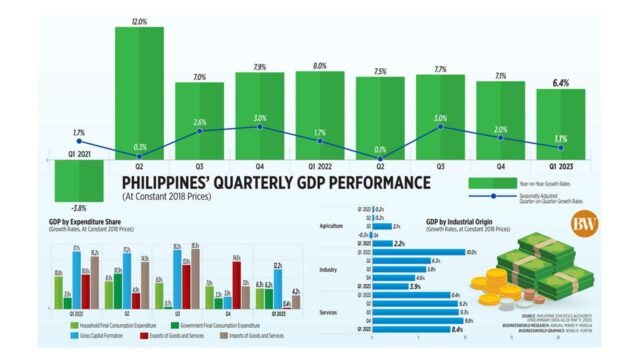
Philippines’ quarterly GDP performance

THE PHILIPPINE ECONOMY grew by 6.4% in the first quarter, the slowest in two years as elevated inflation and rising interest rates dampened consumer spending, the statistics agency said on Thursday. Read the full story.

Philippines’ quarterly GDP performance

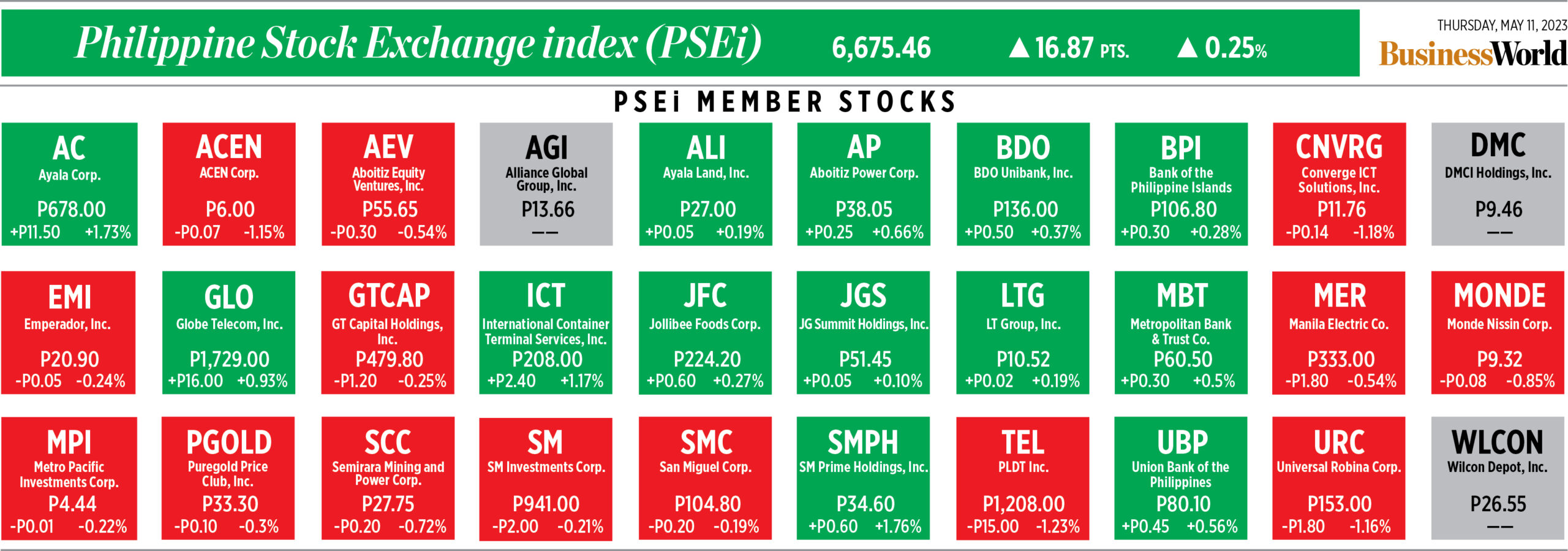
How PSEi member stocks performed — May 11, 2023

Here’s a quick glance at how PSEi stocks fared on Thursday, May 11, 2023.


PSEi up on better-than-expected Q1 GDP growth

PHILIPPINE SHARES extended their climb on Thursday after better-than-expected gross domestic product (GDP) growth for the first quarter (Q1) and slower consumer inflation in the United States.

The benchmark Philippine Stock Exchange index (PSEi) gained 16.87 points or 0.25% to close at 6,675.46 on Thursday, while the broader all shares index went up by 5.38 points or 0.15% to 3,551.48.

“Stocks inched higher today after the Philippines reported better-than-expected first-quarter GDP growth. Adding to that was the announcement of another drop in US CPI (consumer price index) at 4.9%,” AB Capital Securities, Inc. Vice-President Jovis L. Vistan said in a Viber message on Thursday.

“Overseas, US inflation rate in April eased to 4.9% from 5% in March. This boosted sentiment as the US Federal Reserve may pause hiking rates already, especially if the trend continues,” Philstocks Financial, Inc. Research Analyst Claire T. Alviar said in a Viber message.

First-quarter GDP growth slowed to 6.4% from the 7.1% in the fourth quarter of 2022, preliminary data from the Philippine Statistics Authority showed.

This was also below the 8% in the first quarter of 2022.

Still, this was faster than the 6.1% median estimate of a Businessworld poll of 23 analysts conducted last week.

The government targets 6-7% GDP growth for the year.

Meanwhile, US consumer prices increased in April on higher gasoline costs and rents, while underlying inflation remained strong as used motor vehicle prices rebounded, potentially ensuring that the Federal Reserve keeps interest rates elevated for a while, Reuters reported.

The US CPI rose 0.4% last month after gaining 0.1% in March, the Labor department said on Wednesday.

In the 12 months through April, consumer inflation increased 4.9% after advancing 5% on a year-on-year basis in March.

The Fed has raised interest rates by 500 basis points since March 2022.

At home, the majority of sectoral indices closed higher on Thursday, except for mining and oil, which fell by 179.07 points or 1.7% to 10,350.77, and industrials, which declined by 26.77 points or 0.27% to 9,556.52.

Meanwhile, property climbed by 25.61 points or 0.93% to 2,771.82; services added 6.75 points or 0.42% to end at 1,584.06; financials went up by 5.88 points or 0.31% to 1,874.07; and holding firms rose by 7.83 points or 0.11% to 6,621.25.

Value turnover increased to P6.24 billion on Thursday with 23.28 billion shares changing hands from the P4.64 billion with 721.31 million issues traded on Wednesday.

Decliners outnumbered advancers, 98 versus 66, while 62 names closed unchanged.

Net foreign selling stood at P939.28 million on Thursday versus the P64.86 million in net buying recorded on Wednesday. — A.H. Halili with Reuters

Peso weakens as GDP growth slows in Q1

BW FILE PHOTO

THE PESO dropped against the dollar on Thursday as economic growth slowed in the first quarter.

The local currency closed at P55.75 versus the dollar on Thursday, down by eight centavos from Wednesday’s P55.67 finish, data from the Bankers Association of the Philippines’ website showed.

The local unit opened Thursday’s session stronger at P55.58 per dollar. Its worst showing for the day was at P55.78, while its intraday best was at P55.54 versus the greenback.

Dollars traded went down to $1.29 billion on Thursday from the $1.41 billion recorded on Wednesday.

The peso weakened as gross domestic product (GDP) growth slowed in the first quarter, Rizal Commercial Banking Corp. Chief Economist Michael L. Ricafort said in a Viber message

“The peso weakened after Philippine economic growth slowed to 6.4% in the first quarter of 2023, but above expectations of 6.1%,” a trader likewise said in an e-mail.

GDP growth slowed to 6.4% last quarter from 7.1% in October-December 2022, preliminary data from the Philippine Statistics Authority showed.

This was also below the 8% expansion seen in the first quarter of 2022.

Still, this was faster than the 6.1% median estimate in a BusinessWorld poll of 23 analysts conducted last week.

The government targets 6-7% GDP growth for the year.

Mr. Ricafort added that a generally stronger dollar and higher global crude oil prices also dragged the peso down.

The dollar index rose by 0.45% to 101.87 on Thursday, Reuters reported.

Meanwhile, Brent crude rose by 52 cents or 0.7% to $76.93 a barrel by 0828 GMT, while US crude futures gained by 48 cents or 0.7% to end at $73.04.

For Friday, the peso could depreciate further ahead of a potentially strong US producer inflation report set to be released overnight, the trader said.

The trader expects the peso to trade between P55.65 and P55.80, while Mr. Ricafort sees it moving from P55.65 to P55.85 against the dollar. — AMCS with Reuters

MWSS, water suppliers sign revised concession agreements

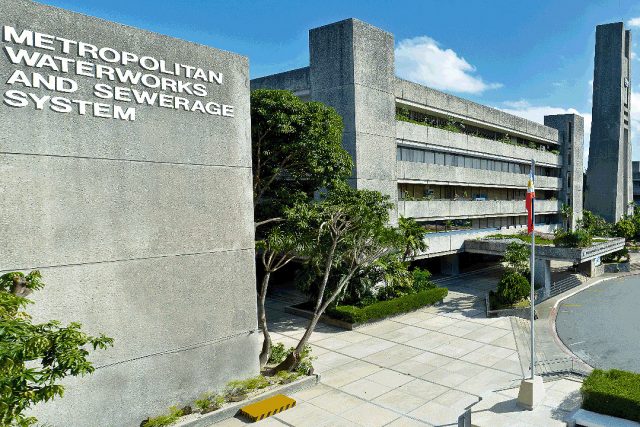
THE Metropolitan Waterworks and Sewerage System (MWSS) and its distributors have signed the revised concession agreement (RCA) governing the supply of water in Metro Manila, the companies said on Thursday.

In a separate stock exchange disclosure, Maynilad Water Services, Inc. and Manila Water Co., Inc. confirmed that the amended RCAs were signed on May 10, to retroactively take effect on July 1, 2022.

“We wish to inform the Exchange that a seventh Amendment to the Revised Concession Agreement between the MWSS and Manila Water dated March 31, 2021 was signed by the parties on May 10, 2023 (notarized copy was received by MWC on May 11, 2023),” Manila Water said.

“Along with the Amendments to the RCA, the Republic issued on 10 May 2023 the Undertaking Letter in the form agreed on by the Parties. The Undertaking Letter’s effectivity retroacts to 1 July 2022,” Metro Pacific Investments Corp., which holds a majority stake in Maynilad, said in its regulatory filing.

Maynilad said that the amendments include the deletion of the composition and decisions of the regulatory office from the list of issues not subject to arbitration.

The amendments are intended to align some of the RCA provisions with the revised implementing rules and regulations of the Build-Operate-Transfer Law.

Maynilad, the west zone water concessionaire, said that among the amendments are the adjustments in the consumer price index factor to 3/4 from the 2/3 of the percentage change in the CPI of the Philippines, which it described as consistent with the government’s effort to reinvigorate public-private partnerships.

Maynilad also said that the foreign currency differential adjustment (FCDA) will also be reinstated but only with regard to MWSS loans being serviced by Maynilad and to principal payments on drawn and undrawn amounts of foreign-currency loans as of June 29, 2022.

Maynilad also said that the revised RCA also entails a modified FCDA for loans agreed upon after June 29, 2022, that may only be availed of in the event of “extraordinary inflation” or an “extraordinary deflation” in the value of the peso.

Maynilad also said that the RCA also streamlines the list of events that constitute material adverse government action.

Metro Pacific Investments Corp., which has a majority stake in Maynilad, is one of three Philippine units of Hong Kong-based First Pacific Co. Ltd., the others being Philex Mining Corp. and PLDT, Inc.

Hastings Holdings, Inc., a unit of PLDT Beneficial Trust Fund subsidiary MediaQuest Holdings, Inc., has an interest in BusinessWorld through the Philippine Star Group, which it controls. — Ashley Erika O. Jose

BIR collects P837B in first four months, ahead of target

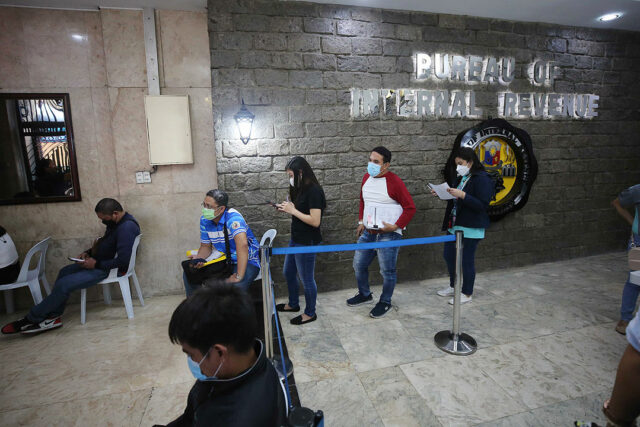
People line up to file their income tax returns at the Bureau of Internal Revenue office in Intramuros, Manila, April 18, 2022. — PHILIPPINE STAR/ RUSSELL A. PALMA

THE Bureau of Internal Revenue (BIR) said on Thursday that it collected P837.92 billion in the four months to April, exceeding its target for the period by 1.3%.

The BIR said in a tweet that the target was P826.86 billion.

This year, the agency is tasked to collect P2.6 trillion. The BIR collected P2.34 trillion in 2022.

The BIR accounts for about 70% of the government’s revenue.

“We need (to) address four areas of concern: intensification of enforcement activities, taxpayer services, integrity and professionalism, and digitalization. Fixing these areas will bring the BIR to greater heights. I am confident that as long as we address these areas, the BIR will reach its collection goal for 2023,” BIR Commissioner Romeo D. Lumagui, Jr. said.

Meanwhile, the BIR also announced that it filed a criminal complaint against a software management company.

The company was found to be owned “by a single proprietor which is being actively managed by her husband, who was found to be a BIR employee.”

“The software management company and the BIR official manipulate sales machines to reduce actual sales and evade payment of taxes,” it said in a statement.

“The initial revenue loss from the tampered (equipment) was computed to be approximately P6.1 billion which is detrimental to the BIR’s mission of collecting taxes for nation-building,” it added. — Luisa Maria Jacinta C. Jocson

PSA upgrades estimate of Q1 palay production to 4.80 million metric tons

PHILIPPINE STAR/EDD GUMBAN

PRODUCTION of palay, or unmilled rice, is now estimated at 4.80 million metric tons (MT) in the first quarter, an upgrade from the previous estimate of 4.54 million MT, the Philippine Statistics Authority (PSA) said.

In a report on Thursday, the PSA said its new estimate was based on the standing crop as of March 1.

The new estimate remains below the initial forecast of 4.84 million MT issued on Jan. 1.

The PSA said the area planted to rice rose 3.2% to 1.18 million hectares, with yield per hectare thought to have grown 2.4% to 4.08 MT.

The PSA said about 632.40 thousand hectares or 53.8% of the updated standing crop has been harvested.

“Out of the area harvested as of March 1, 2023, actual production was recorded at 2.55 million metric tons,” it said.

Of the area remaining to be harvested, 12.5% of the crop is in the reproductive stage while 87.5% is maturing.
The PSA also updated its initial estimate of corn production for the first quarter to 2.56 million MT, which would represent an improvement over the year-earlier output of 2.44 million MT.

The new estimate, however, is 0.1% lower than the PSA’s initial forecast for the period of 2.564 million MT issued on Jan. 1.

Area planted to corn during the period is estimated to have risen to 2.6% year on year to 671.20 thousand hectares.

The yield per hectare of corn is thought to have increased 2.2% year on year to 3.72 MT, compared to the 3.64 MT actual yield a year earlier.

“About 398.67 thousand hectares or 57.9% of the 688.62 thousand hectares updated area of standing crop have been harvested as of March 1,” the PSA said.

Farmers are also estimated to have harvested 1.43 million MT of corn across 398.67 hectares of farmland.

Of the remaining corn crop, 7.6% is at the reproductive stage while 92.4% is at the maturing stage. — Sheldeen Joy Talavera

Onion import plan needed by June

PHILSTAR FILE PHOTO

THE Department of Agriculture (DA) said on Thursday that an onion import plan needs to be released by June, addressing the need for inbound shipments to be “properly timed” in order not to distort prices during the domestic harvest.

“By June, we should have a plan para tamang-tama (to get the timings right). Taking into consideration how many days it will take our imported commodities to get into the country,” DA Spokesperson Kristine Y. Evangelista told reporters by phone.

“Farmers will not be affected if we only import during the lean season and at the same time, calibrated imports para tama lang ang dami ng ating commodity (so the quantities are appropriate),” she said.

Jayson H. Cainglet, executive director of Samahang Industriya ng Agrikultura, said imports would take 60-90 days, giving the industry sufficient time to prepare.

However, he said that the Bureau of Plant Industry (BPI) needs to be clear on its supply and demand estimates, including the volume of onion currently in cold storage.

He said that most onion growers in Nueva Ecija, Pangasinan, and Tarlac completed their harvest last month. The next harvest is due in February.

“We were surprised (in a hearing) the BPI had no inventory estimate of volume in cold storage given that harvest is about to end,” he said.

“We are very much concerned… that we will see a repeat of last year’s crisis,” he added.

BPI Spokesman Jose Diego E. Roxas said in a Viber message that the supply of white onions as of April was 12.843.35 metric tons, sufficient to meet demand until September.

The supply of red onions was estimated at 98,393.86 metric tons, “which may be sufficient to cover demand until November.”

Mr. Roxas said cold storage inventory data has yet to be released because the bureau is still monitoring the totals.

Mr. Cainglet said onion imports need to arrive between August and November to get the Philippines through the lean months.

He added that the price of both imported and domestic onion should not exceed P200 per kilogram with the current farmgate price between P50 and P100 per kilo. He estimated the landed cost of imports at P30-P40. — Sheldeen Joy Talavera

ADVERTISEMENT
ADVERTISEMENT