Home Blog Page 4879

Jollibee’s earnings decline 11% to P2B; franchise deal for PHO24 stores terminated

JOLLIBEE Foods Corp. reported a nearly 11% decrease in attributable net income for the first quarter to P2.06 billion from P2.31 billion the previous year despite strong revenue growth.

“Our first quarter financial results reflected continued strong momentum, delivering another quarter of strong top line and operating income growth,” Jollibee President and Chief Executive Officer Ernesto Tanmantiong in a statement on Wednesday.

“We remain focused on navigating through these uncertainties and are confident in our ability to deliver another year of strong growth,” he added.

The company’s consolidated revenues for the quarter grew by 28.5% to P55.09 billion from the P42.86 billion recorded in the same quarter last year.

System-wide sales — which measure all sales to consumers, both from company-owned and franchised stores — rose by 31.1% to P78.64 billion from P59.98 billion.

For the Philippines, system-wide sales increased by 36.7% while same-store sales went up by 31.6%. Outside the country, system-wide sales jumped by 23.3%, while same-store sales rose by 8.8%.

As of the end of March, the company has operated 6,542 stores worldwide with 3,281 in the Philippines and 3,261 in its international business.

“We continued to invest in new stores that will help drive sustainable value for our shareholders. We opened 111 stores and grew store network by 4.7% versus prior year. We are on track to achieving our 550-600 new store target for 2023,” Mr. Tanmantiong said.

Operating income for the period ending March, surged to P3.6 billion, up 80.9% from the same quarter the previous year.

NEW BUSINESSES
In a separate disclosure, Jollibee said that the entity behind the PHO24 business had signed agreements to transfer the asset to East-West Restaurant Concepts.

“The franchise agreement for the operation of PHO24 stores in the Philippines was also terminated,” it said, adding that the business operates 14 stores in Vietnam.

SuperFoods Group, which owns Highlands Coffee and PHO24, signed the agreement with the wholly owned subsidiary of Viet Thai International Joint Stock Co. (VTI).

VTI is the partner of Jollibee’s wholly owned subsidiary, JSF Investments Pte. Ltd. (JSF), in the SuperFoods Group.

Jollibee said it will be concentrating its resources on building and growing its new businesses, namely: Tim Ho Wan, Yoshinoya, and Milksha.

It said Tim Ho Wan is targeting to open 100 restaurants within the next few years in China, which it described as one of the group’s “four pillar markets.” It has 16 existing stores in Shanghai and two in Beijing.

Jollibee said its 50-50 joint venture Yoshinoya Jollibee Foods, Inc. plans to open 50 stores in the Philippines in the long term. Japan-based Yoshinoya is a beef bowl business that is recognized globally.

The joint venture is the franchisee of Yoshinoya in the Philippines. It has seven stores in the country.

Jollibee Worldwide Pte. Ltd. has a 51% stake in Milkshop International Co. Ltd., which owns Milksha, a popular Taiwanese bubble tea brand.

The Jollibee group, together with Milkshop’s founder, plans to grow the Milksha brand globally.

On Wednesday, Jollibee shares slipped by 0.62% P1.40 to P223.60 each. — Adrian H. Halili

ACEN joint venture plans energy storage system in Vietnam

AMI AC Renewables, through its subsidiary AMI Khanh Hoa, has signed a memorandum of understanding with Honeywell International, Inc. to collaborate on a 7.5-megawatt-hours battery energy storage system (BESS) project in Khanh Hoa, Vietnam.

AMI AC Renewables is a joint venture between ACEN Corp. and AMI Renewables.

In a statement on Wednesday, ACEN said the pilot project, which was co-funded by a grant from US Mission Vietnam, will demonstrate how energy storage can help Vietnam integrate more renewables into its power system.

The project plans to use an energy storage system of Honeywell and integrate it into a 50-megawatt-peak solar farm, which is operated by AMI Khanh Hoa.

“The success of the BESS project at AMI Khanh Hoa will be among the achievements for the bilateral cooperation relationship in technological, technical, and economic development between the US and Vietnam, and help contribute to Vietnam’s target of Net Zero emissions by 2050,” Nguyen Nam Thang, AMI AC Renewables chief executive officer, said in a media release.

AMI AC Renewables has been developing and operating renewable energy projects in Vietnam, including the 252-megawatt (MW) wind project in Quang Binh and the 80-MW solar plants in Khanh Hoa and Dak Lak.

In 2021, AMI AC Renewables received a grant of $2.9 million from the US Mission Vietnam to develop the project.

“Battery energy storage solutions are vital to advancing sustainability efforts. We look forward to collaborating with AMI AC Renewables to extend renewable energy availability from the Khanh Hoa solar farm beyond hours when there is no sunlight,” said Ramanathan Valliyappan, general manager of Honeywell Process Solutions Asia Pacific.

Energy storage is being put forward as a key element of the energy transition partnership between Vietnam and its international partners to support Vietnam’s net zero ambition by 2050.

At the local bourse on Wednesday, ACEN shares closed unchanged at P6.07 each. — Ashley Erika O. Jose

PAL to buy nine A350-1000s for long-haul fleet, future demand

FLAG carrier Philippine Airlines (PAL) is set to welcome nine A350-1000s to add to its fleet which it said will help with its expansion plans.

Under PAL’s “Ultra Long Haul Fleet” project, the nine Airbus aircraft will be operated on nonstop services from Manila to North America.

“The A350-1000 combines greater range capability with the higher capacity we need to serve future demand. It’s the perfect aircraft to enable PAL to meet its expansion plans in a sustainable way, while offering passengers the highest levels of onboard comfort,” PAL Chief Operating Officer Captain Stanley K. Ng said in a statement.

The new aircraft will join PAL’s two A350-900s that are currently flying to destinations in North America, Asia, and Australia.

“Flying passengers farther and in greater comfort, the A350 brings a step-change in fuel efficiency and an immediate significant contribution to reduced emissions. We look forward to working closely with our long-standing customer Philippine Airlines as it moves forward with its long-haul fleet modernization program,” Airbus SE Chief Commercial Officer Christian Scherer said. 

Mr. Ng said that the additional aircraft will allow the company to fly nonstop transpacific and transpolar routes all year and provide it the ability to directly link the Philippines to Europe.

A350s offer the longest-range capability of any commercial airliner in production today as it is capable of flying 8,700 nautical miles or 16,100 kilometers non-stop.

As of April 31, Airbus’ wide-bodied AS50 family had won 928 firm orders from 54 customers, 530 of which currently fly in 40 airlines for long-haul routes.

Aside from A350-1000s and A350-900s, PAL also operates A330-300s to serve the Middle East, Australia, and various points in Asia.

The company also flies single-aisle A320s and A321 on its domestic and regional network out of hubs in Manila and Cebu. — Justine Irish D. Tabile

Century Pacific Foods earns P1.5B

CENTURY Pacific Food, Inc. (CNPF) reported on Wednesday a 6.4% rise in attributable net income to P1.5 billion in the third quarter from P1.41 billion a year ago.

“Entering the year, we are mindful of the challenges ahead — from supply constraints in one of our business units to macroeconomic headwinds and the carryover inventory from 2022,” said CNPF Chief Finance Officer Richard Kristoffer S. Manapat said in a press release.

During the first quarter, the company reported a 13% increase in consolidated revenues to P15.6 billion “despite high bases set during the pandemic.”

The majority of the company’s topline figure is contributed by marine, meat, milk, and other emerging segments such as pet food, coconut, and plant-based alternatives. Revenues from the branded business segment grew by 7% year on year.

Earnings before interest, taxes, depreciation, and amortization increased by 7.7% to P2.3 billion.

The company’s original equipment manufacturer export business inched up 1% to P2.6 billion compared to its previous record.

“Despite inflationary pressures, net profit margin was sustained at P9.6%. CNPF saw strong cashflow generation for the period with operating cashflows amounting to P1.9 billion,” the company said.

On Wednesday, shares in Century Pacific Food went up 20 centavos or 0.77% to close at P26.20 each. — S. J. Talavera

Dinner for a Cause: Plate for a Paw

HOUNDHAVENPH

Proceeds from a dinner will go towards a special kind of retiree: former K9 dogs

NONPROFIT organization Hound Haven Philippines, Inc. will be holding Plate for a Paw, a dinner at renowned chef Sau del Rosario’s Cafe Fleur in Poblacion, Makati on May 20 at 5 p.m.

With tickets at P3,800 each, guests will be treated to a four-course meal, with Mushroom Confits Salad and either Crab Cakes or Wild Mushroom Ravioli to start. Butternut Squash soup will be served, and guests can choose from either Salmon Steak with Beurre Blanc or Boneless Fried Chicken for the main course. Pot de Creme or Sticky Toffee Pudding will be served for dessert.

A special auction will also be held. All proceeds would go to Hound Haven’s center in Bulacan.

Hound Haven’s mission is to rehabilitate retired K9 units to make them suitable for adoption. K9 units are often used by the police and the military for security purposes, such as sniffing for bombs and illegal drugs.

Hound Haven’s co-founder, Maxin Arcebal, discussed the costs of caring for ex-K9 units during an interview last week. According to her, the cost of the upkeep of their center, including veterinary expenses, go up to about P200,000 a month. “Rehabilitation is really tailor-fit to each K9’s specific needs,” she said. For example, they have taken in dogs with mange, and another whose leg had to be amputated after being injured in the line of duty. “They require constant and regular medical attention,” she said. “It’s really costly to be taking care of senior dogs, especially those with health issues.”

Hound Haven was founded in 2015, but their center was opened in 2017. According to her, they decided to cater to K9 units because the country does not have animal shelters specifically for those working dogs. “We have so many shelters rescuing abandoned, abused, and neglected dogs,” she said.

To date, Ms. Arcebal counts that they have taken in 20 or more dogs, and have had 10 or more dogs fostered to families. At the beginning, they were only working with retired dogs from the Philippine Army K9 Batallion, but they have since expanded their operations to work with dogs from the Philippine Air Force and the Philippine National Police. On top of that, they take in one rescue dog each year.

Hound Haven was also in talks with the Commission on Audit (CoA), which in 2021, released CoA Circular No. 2021-011 (Guidelines on the Disposal of Unserviceable Working Dogs of all National Government Agencies or NGAs and Instrumentalities, local government units or LGUs, and GCs and their Subsidiaries). The circular requires all government agencies that employ K9 units to retire their dogs after eight years and to put them up for adoption, according to an explanation by Ms. Arcebal. “I wouldn’t say we played a large part in that, but I’m just happy that we were involved in the talks that led to the release of that circular,” she said.

According to her, medium to large-sized dogs (like those used in K9 operations) usually live up to 12 to 15 years. “If they live longer, consider yourself really lucky,” she said.

Because the goal for each dog in Hound Haven’s center is to be taken in by a family, Ms. Arcebal tried to list the qualifications for a family to take in a senior ex-working dog. “I really can’t give you a list; it’s hard.” She said that they always get that question, and families ask about how much they should be earning, or how much space they should have. “We don’t really have those hard qualifications. What we’re looking for is a gut feel. It sounds cliche and too romanticized, but when we do our interviews, our question really is: would we be friends with this family?”

She warns: “If you’re willing to take care of a senior dog, you have to be ready for that dog to have a lot of health complications, and you only have about five years left with that animal,” she said. “You’re looking for commitment, which is something you can’t measure.”

To sign up for Plate for a Paw, contact Hound Haven through houndhavenph.org or on Instagram at houndhavenph. Tickets are available until May 13. — Joseph L. Garcia

Roxas Holdings’ net loss widens

ROXAS HOLDINGS, Inc. (RHI) saw its attributable net loss widen to P390.31 million for the second quarter of its financial year from P296.57 million a year earlier.

“It has been difficult for local sugar refineries to compete given the high prices of raw sugar feedstock and outside and of outside fuel costs which have increased significantly in recent years,” said RHI Chairman Pedro E. Roxas in a statement on Wednesday.

“These costs eroded the white premium margin to entice local refineries to process and refine raw sugar,” he added.

In its unaudited financial statement, the company also reported a six-month net loss of P586.25 million attributable to equity holders of the parent firm, wider than P491.49 million previously brought about by higher input costs. The company’s fiscal year starts in October and ends in September of the following year.

The listed sugar producer reported that its revenues from contracts with customers jumped by 71.9% to P5.69 billion from P3.31 billion in 2022.

Mr. Roxas also attributed the losses to the challenges brought about by the closure of the sugar refinery operations of its subsidiary Central Azucarera Don Pedro, Inc.

On the other hand, yield improvements were seen in its ethanol plant under San Carlos Bioenergy, Inc. due to the adoption of programs.

In the six-month period, the company’s costs of sales rose 73.1% to P5.82 billion from P3.36 billion previously.

Meanwhile, operating expenses fell 3.9% to P272 million from the P283 million reported a year earlier.

The company said that it intends to “explore means to operate the refinery viably and address its impending risks” through deals with sugar mills and traders.

“It likewise continues to study options to potentially generate cash from its unutilized land and other assets,” the disclosure read.

RHI is a holding company engaged in the operations of mill and refinery facilities to manufacture sugar and allied products. Its other subsidiaries are CADP Insurance Agency, Inc., CADP Port Services, Inc., RHI Pacific Commercial Corp., and Northeastern Port Storage Corp. — Sheldeen Joy Talavera

Will the $850 menu at Noma Kyoto change your life?

SCREENGRAB FROM ANDERS & KAITLIN YOUTUBE CHANNEL

RENE Redzepi’s charisma can charm dragons. Through two decades, the Danish chef’s lofty gastronomic ambitions and unfussy approach to hospitality turned his Copenhagen restaurant Noma into a culinary magnet — paradoxically inaccessible to most diners, yet enchantingly popular. He has withstood controversies, relocations, critics, closures and Michelin’s long refusal to give him a third star, before it finally relented in 2021.

Those charms have made Noma the restaurant that gastronomes have to get to when they visit not only Copenhagen but any place in the world Mr. Redzepi decides to set up shop. That’s why I flew all the way to Japan from London. He had brought Noma to Kyoto, making it the center of the gourmet universe for the season. Every foodie wanted to be there.

I’d never been to Japan before this Spring. And yet I kept running into people I knew. I was at a table in a humble izakaya in Ebisu, Tokyo — of which there are innumerable in Tokyo — when a photographer I know only from Instagram called out to me from the counter. He was headed for Noma’s pop-up at the Ace Hotel in Kyoto, too. Of course, we discussed who else was headed there.

Foodies were flying into the country from Hong Kong, London, New York, Mexico City, Adelaide and elsewhere. My booking was for dinner, but lunch at the hotel was a particular magnet for famous chefs keen to see what Mr. Redzepi was cooking up. David Muñoz of DiverXo in Madrid was in attendance at the same time as Rasmus Munk, who runs the extravagantly theatrical Alchemist, the latest Copenhagen rival to Noma.

The world is an enormous place, but the community of food lovers can make it feel like a small town. And like any community, privilege is key to standing: Booking at Noma Kyoto’s very limited run (March 15 to May 20) provides bragging rights for a lifetime of dinner conversations.

I’d missed out on the restaurant’s other incarnations — Tokyo, Tulum, Sydney — so I was determined to be present for this one. I jumped on the reservation queue back in November 2022 as soon as it opened and got a table for four in a scrum that filled out the Ace immediately. (I later tried to change the booking, but it was impossible; I was told to sell my spots if I couldn’t make it. I reordered my work schedule — and life — instead.) At Juugo, a monastic but delicious little soba shop in northwest Kyoto, I met a couple from Hamburg who’d been on the waitlist for months and hopped on a plane when a place opened up for them at the last minute.

The table-grubbing was worth it, along with the price tag (775 euros — $853 or £681 — plus 10% service charge, wine or juice pairing included). The meal was magical. Mr. Redzepi has spent years cultivating relationships with suppliers in Japan, first with his 2015 Tokyo pop-up and then with his ill-fated but critically acclaimed entry into the Tokyo’s restaurant scene, Inua, which fell victim to COVID’s shutdown of the global economy.

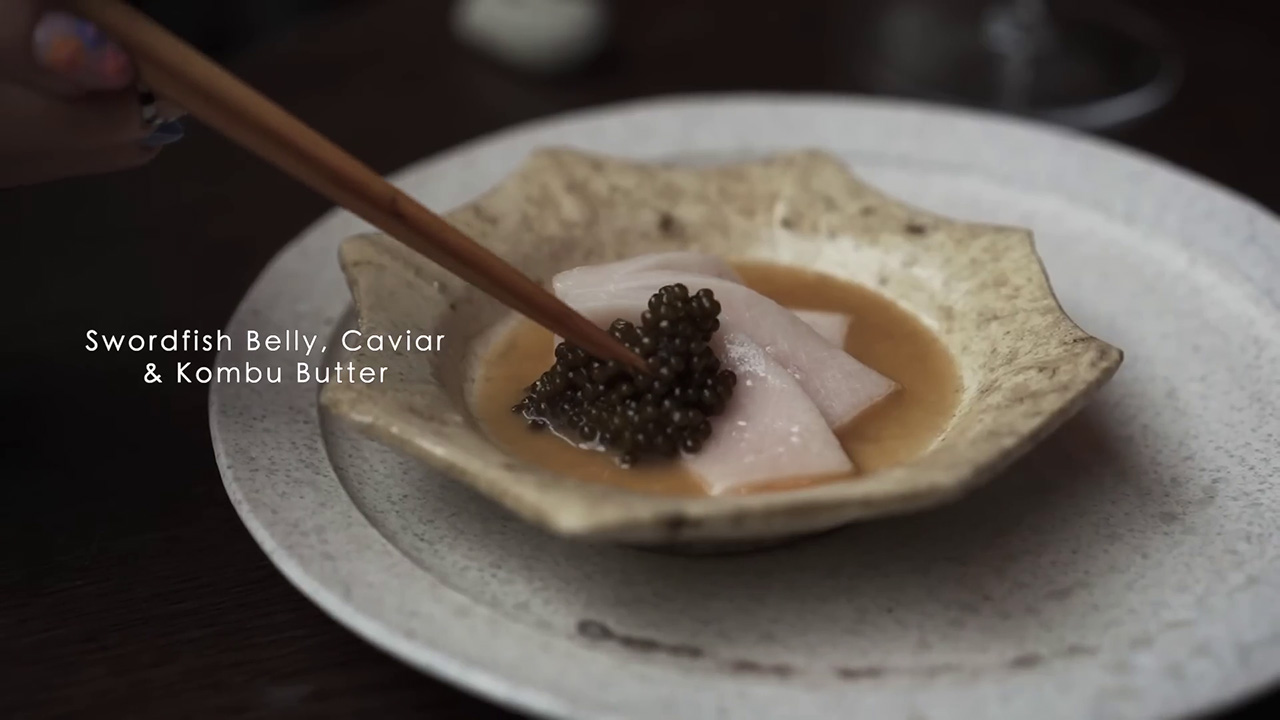
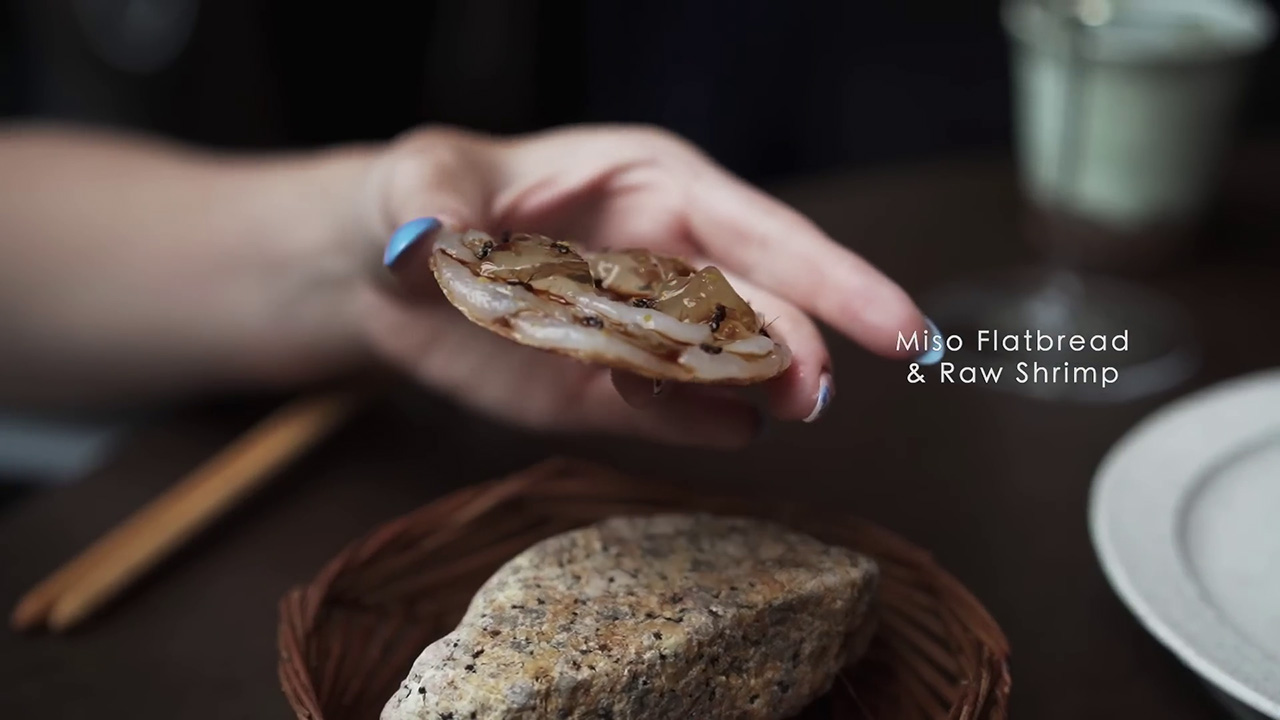
That commitment to local farms has paid off with exceptional produce in Kyoto — from tofu to tomatoes to seafood, including kinki, a large-eyed fish prized for its unctuous flesh, silky texture and vibrant color. Appropriately, there are places in Japan with the name Noma, which can mean “amid the field” or even “amid the wild.” It’s a good match for the way Mr. Redzepi sources and forages for the very best products: the most vibrant citrus from farms in southern Japan, the perfectly in-season crunchy yet tender bamboo shoots, the plumpest swordfish belly. His long relationship with Japanese fermentation techniques is in full display: with koji cakes and miso tartlets, probing savory depths.

The dinner was a showcase not only for nihonshu — what’s called sake in the broader world — but for Western-style wines cultivated and produced in Japan. Japanese wines I’ve had before tended to be one-dimensional, designed to be drunk with specific food. The bottles served at the Ace were revelations: complex and fun all on their own. Among them, the 2020 Fumizuki Blanc from Hakodate in Hokkaido and the 2019 A Hum from Hokuto, Yamanashi.

Yet as Japanese as the ingredients and drinks were, the language spoken by dishes was Nordic: the piney, floral, sweet-and-sour, musty, fermented culinary lexicon that Mr. Redzepi has taught global gourmands to love. There was a shabu-shabu with seaweed instead of meat and vegetables with what I believe was a touch of bergamot in the bubbling broth, and the luscious sashimi of swordfish in an equally luscious pool of kelp butter. Noma’s vaunted trompe l’oeil and culinary wizardry was also in evidence: a gorgeous rose carved out of an intense tomato; a delicately sliced bamboo shoot splayed like a pale rainbow by an iridescent dashi of tea and squid; beautiful green rice — every grain as polished as a cultured pearl — served with crab and rose petals. Almost everything was a pièce de résistance — so much so that a lobster with sancho pepper and its fiery red head as a baroque ornament, a marvel in any other space, seemed almost ordinary.

Noma Kyoto was a transubstantiation: the soul of Copenhagen embodied in Japanese ingredients. It’s the kind of culinary metaphysics Mr. Redzepi has executed before with other kitchen traditions, but it comes off as high art here in the sophisticated, tradition-bound old capital of the archipelago.

But for all the mileage I plan to get out of my Noma Kyoto experience, the meal in Japan that’s truly burnished my foodie status was in Tokyo. I got to eat at Nihombashi Kakigaracho Sugita in Tokyo, acclaimed as the best sushi restaurant in the country. A 22-course extravaganza, it’s even more difficult to get into than Noma Kyoto: It might be the toughest reservation on Earth. The best way to snag a spot at the counter — which can fit nine people — is to come as a guest of a Sugita regular. And if you think I’m giving up the identity of my regular for your benefit, think again.

I will remember both Noma Kyoto and Sugita forever. But I’m likelier to get back to Noma (albeit in Copenhagen, and maybe just once or twice more before it closes at end of next year). I don’t know if I’ll ever be able to return to Sugita.

Still, here’s a tip for other culinary status seekers. In an offhand conversation, Mr. Redzepi told me that he’d like to do an autumn version of Noma Kyoto. So, get ready, get set… — Bloomberg

Term deposit yields mixed on slower inflation

BW FILE PHOTO

YIELDS on the central bank’s term deposits were mixed on Wednesday due to weak demand amid easing inflation and expectations of a pause in policy tightening.

Total bids for the term deposits of the Bangko Sentral ng Pilipinas (BSP) reached P227.758 billion on Wednesday, lower than the P260-billion offer as well as the P319.649 billion in tenders last week for a P330-billion offering.

Broken down, the seven-day papers fetched bids amounting to P138.846 billion, below the P160 billion auctioned off by the BSP and the P187.453 billion in bids for a P190-billion offer a week ago.

Accepted rates were from 6.53% to 6.64%, inching up from the 6.4995% to 6.63% margin in the prior auction. This caused the average rate of the one-week papers to inch down by 0.07 basis point (bp) to 6.5882% from 6.5952% previously.

Meanwhile, tenders for the 14-day deposits amounted to P88.912 billion, less than the P100 billion offered by the BSP and lower than the P132.196 billion seen the previous week for a P140-billion offering.

Banks asked for yields ranging from 6.4995% to 6.67%, slightly wider than the 6.4995% to 6.65% margin seen on May 3. With this, the average rate of the two-week deposits edged higher by 0.07 bp to 6.6166% from 6.6159% in the previous week’s auction.

The central bank has not auctioned off 28-day term deposits for more than two years to give way to its weekly offering of securities with the same tenor.

The term deposit facility (TDF) and the 28-day bills are used by the BSP to mop up excess liquidity in the financial system and to better guide market rates.

The average yields on the term deposits were mixed following the release of April inflation data, Rizal Commercial Banking Corp. Chief Economist Michael L. Ricafort said in a Viber message.

Headline inflation eased to 6.6% in April, the slowest in eight months or since the 6.3% print in August 2022, the Philippine Statistics Authority reported on Friday.

This was below the 7.6% print in March and the 7% median estimate in a BusinessWorld poll and was within the Bangko Sentral ng Pilipinas’ (BSP) 6.3-7.1% forecast range for the month.

For the first four months, inflation averaged at 7.9%, well above the BSP’s 2-4% target and 6% forecast for the year.

Following slower April inflation, Mr. Ricafort said market players now expect the Philippine central bank to pause monetary policy tightening as prices are expected to cool further in the coming months. 

The BSP has raised borrowing costs by 425 bps since May last year to curb elevated inflation, bringing the key policy rate to 6.25% — the highest since 2007.

BSP Governor Felipe M. Medalla earlier said that if inflation slowed further in April, the Monetary Board may consider keeping policy rates on hold at its next meeting on May 18.

He also said inflation may return within the 2-4% target by fourth quarter of this year.

Mr. Ricafort added that markets also expect a pause in the US Federal Reserve’s rate hikes.

Fed Chair Jerome H. Powell last week left the door open to a pause in its tightening cycle amid signs of an economic slowdown.

The Fed last week raised borrowing costs by 25 bps to a range between 5% and 5.25%.

Since March 2022, the US central bank has raised rates by a total of 500 bps — Keisha B. Ta-asan

OFW remittances drive adoption of digital payments in PHL — Visa

RUPIXEN.COM

REMITTANCES from overseas Filipino workers (OFWs) are driving the use of app-based digital payments, according to a report by Visa.

The report showed there was a high frequency of sending and receiving remittances among Filipinos, as 48% of Filipino respondents said they send money internationally at least once per month, while 77% said they receive money a few times a year.

More than half or 57% of Filipino respondents also said they intend to use digital platforms for remittances more often in the future.

“Remittance habits are also changing with ease of use and better technology — we are seeing remittances being sent and received in less than a day in Asia Pacific, spurring increased frequencies,” Visa Asia-Pacific Head of New Payment Flows T.R. Ramachandran said in a statement.

“Beyond livelihoods, we are also seeing more remittances made in support of key life milestones, such as funding college education, making investments for the long term, or saving for an overseas property purchase,”  Mr. Ramachandran said.

While a number of remittance users are using digital platforms, Filipino respondents said they were generally open to it, as they see these as a secure way to send and receive money.

The report showed that majority or 71% of Filipino respondents said they adopted app-based solutions to receive funds from OFWs.

Filipinos surveyed also said they primarily receive remittances (70%) rather than sending (17%), Visa said.

It also showed that female OFWs send money earned from their jobs in domestic work or healthcare industries, remitting just as much as their male counterparts.

“Fast, easy and secure payments can make a profound difference to families, communities, and economies around the world,” Mr. Ramachandran said.

“This new research shows incredible acceleration of digital payments and how consumer expectations of speed and ease of use is underpinned by the demand for better security,” he added.

However, Visa said in the report that high fees and issues with calculating the exchange rate remain pain points in the adoption of app-based digital remittance for the broader Asia-Pacfic.

“Almost all physical surveyed remittance users report at least one issue, such as speed, convenience, and a confusing/difficult process,” Visa said.

It said that remittances are not just a lifeline for everyday needs, but also a key economic driver in the Philippines, with remittances contributing an estimated 9.3% in gross domestic product in 2021, according to data from the Philippine Statistics Authority.

The central bank wants 50% of total retail transactions done digitally and to bring at least 70% of Filipino adults into the financial system by this year under its Digital Payments Transformation Roadmap. — A.M.C. Sy

Shell Pilipinas incurs net loss as oil prices decline 

SHELL Pilipinas Corp. recorded an attributable net loss of P310.24 million in the first quarter, turning around from a net income of P3.53 billion a year ago, amid the decline of oil prices.

In a regulatory filing on Wednesday, Shell Pilipinas said it would continue to pursue its growth target despite “various challenges” such as the volatility of oil prices and higher interest rates.

In the first quarter, the company recorded core earnings of P800 million, 45% higher year on year, which was driven by strong marketing delivery, while sales volume went up by 8%.

“We create value for all our shareholders by growing our reach and impact, profitably. Guided by our Powering Progress strategy, we sustain our momentum of recovery quarter by quarter,” said Lorelie Q. Osial, president and chief executive officer of Shell Pilipinas.

Shell Pilipinas said that for its mobility business, it achieved volume growth of 8%. For the first quarter, it said seven of its mobility stations became operational.

Kit Arvin M. Bermudez, vice president for supply and distribution, said the company had reduced more than 90% of its carbon emissions from operations as of end-2022.

Mr. Bermudez said the company targets to further reduce its carbon emissions through partnerships and sustainable business ventures.

“We continue to invest and grow in the country as an energy user, provider, and partner in energy transition. We are here to assure and ensure that we will be providing more and cleaner energy solutions to meet the ever-evolving needs of Filipinos today and in the future,” Ms. Osial said.

At the local bourse on Wednesday, shares in the company shed 62 centavos or 3.66% to end at P16.32 apiece. — Ashley Erika O. Jose

Collaborations at Gilarmi

Discovery Primea’s General Manager David Pardo de Ayala

SPECIAL collaborations and experiments are firing up Discovery Primea’s new menu selections at the Gilarmi Lounge.

Discovery Primea opened in 2015 at the site of the former Gilarmi Apartments, one of Makati’s earlier skyscrapers. It was built in the 1960s, and named after businessman Virgilio Hilario and his wife, the first Miss Universe Armi Kuusela. To pay tribute to what had been there before, the lounge was named after the storied building.

Last week, Discovery Primea served slider portions of their new additions to their Burger Library: The Le Bistro 2.0 (mozzarella, Parmesan, Emmental cheese and caramelized onion), The Italian Job (beef and prosciutto patty, mozzarella, and tomato fondue), and The Mushroom (crispy mushroom “katsu,” cabbage slaw, and tonkatsu sauce). Surprisingly, the clear winner for most of us was the Mushroom, despite its lack of meat. While plant-based food sometimes tries to mimic the taste of meat, this one relies on the sheer pleasure of mushrooms, and one doesn’t even look for, or miss the meat. We suggested to Discovery Primea’s executive chef Luis Chikiamco that the mushroom patty could be served as a rice bowl (he’s thinking about it).

They also served their newest cocktail: a Negroni.

Yes, every self-respecting bar has the Italian cocktail made of gin, Campari, and sweet vermouth, but at Gilarmi, they aged the concoction in an American oak barrel. The resulting drink is more mellow, with a rounded finish, but still packs quite a heavy punch.

For dessert, they collaborated with Sebastian Ice Cream’s Ian Carandang, who made four desserts. We started out with the Mango Mango Mango (yema cake, puffed tapioca, and mango sorbet), then Sss’mores (chocolate in different textures, Sebastian’s Graham ice cream, and torched marshmallows), Tea and Cakes (Miso creme brulee, yema sponge, Sebastian’s Green Tea ice cream), and his version of Halo-Halo (Ube poppits and sapin-sapin ice cream, leche flan). We’re still deciding if we liked Sss’mores or Tea and Cakes better, but we really recommend both.

Discovery Primea’s General Manager David Pardo de Ayala

Discovery Primea’s General Manager David Pardo de Ayala said that more outside collaborations are being planned in the future: he said that Mr. Chikiamco is in talks for a dinner with former TV chef Rob Pengson, and a Singaporean chef.

“I think you need to keep refreshing your menu: giving people something to talk about,” he said. “The hotel experience, especially in F&B, cannot be monotonous.”

Gilarmi Lounge is open daily from 10 a.m. to 10 p.m. For reservations and inquiries, guests may call 7955-8888 or e-mail primea.restaurants@discovery.com.ph. — Joseph L. Garcia

Financial firms’ measures against cyberattacks now more effective, BSP says 

BW FILE PHOTO

THE FINANCIAL SECTOR’S measures against cyberattacks are becoming more effective as the number of compromised consumers has been decreasing, the Bangko Sentral ng Pilipinas (BSP) said.

However, the value of losses from cyber fraud continued to increase in 2022 and remains a concern as the central bank pushes for further digitalization in the financial industry, the Philippine central bank said in an e-mail to BusinessWorld.

“While the amount of cyber fraud losses continues to increase from 2020 to 2022, the number of compromised customers is notably decreasing year on year. The relative decrease in customers affected shows the effectiveness of protection mechanisms,” the BSP said. 

The regulator said it has sought to improve the industry’s cyber resilience against digital attacks in line with the BSP’s Cybersecurity Roadmap.

The BSP is also “actively enhancing” its monitoring capabilities to help foster a responsive regulatory landscape.

In March last year, the BSP issued Circular No. 1140 that amends risk management regulations to mitigate the losses from online fraud and illicit activities.

It also issued regulations on cybersecurity risk management (BSP Circular No. 982 dated Nov. 9, 2017) and cyber incident reporting (BSP Circular No. 1019 dated Oct. 31, 2018).

However, digital fraud and attacks remain “an area of concern” for the central bank as cybercrimes in the financial services industry are evolving.

“Based on the reports on crimes and losses submitted by BSP Supervised Financial Institutions (BSFIs), the majority of the cyber fraud losses emanate from account takeover or identity theft, as well as phishing and its variations. This shows that cyber threat actors are targeting human vulnerabilities to perpetrate cyber fraud,” the BSP said.

Account takeover is a form of identity theft that involves unauthorized access to a consumer’s online account, which then allows criminals to steal for financial gain.

A TransUnion report said about 71% of Filipinos surveyed in the fourth quarter last year said they were targeted by digital fraud attempts across a wide range of communications channels, and 11% among all surveyed fell victim during the same period.

Phishing and smishing (both at 46%) were the most commonly reported fraud schemes experienced by Filipino consumers, followed by third-party seller scams (33%) and identity theft (25%).

“While the increased migration of financial consumers to digital financial platforms provided an impetus for threat actors to conduct their fraudulent activities online, the BSP and BSFIs continue to work together to ensure the safety and security of digital financial services,” the central bank said.

“The central bank ensures that risks are appropriately managed and consumer protection is upheld by its supervised institutions,” it said.

The BSP also reminded BSFIs to come up with effective cyber defense and resiliency strategies, use multi-layered security controls, and implement measures equal to their risk-taking activities. 

BSFIs should also ensure the protection of its customers, the BSP added.

International Monetary Fund (IMF) Deputy Division Chief in the Monetary and Capital Markets Department Tommaso Mancini-Griffoli said in an interview with BusinessWorld that the financial sector is becoming increasingly digitalized.

“The implications of this are macro critical. The private sector is moving rapidly in the space and is requiring clear regulation, clear supervision, clear rules of the game, so that they know where to invest,” Mr. Mancini-Griffoli said. 

“The public sector needs to ramp up its infrastructure for it to serve the purpose of providing stability and interoperability in the digital world,” he added.

Latest data from the BSP showed the share of digital payments in the total volume of retail transactions in the country rose to 30.3% in 2021 from 20.1% a year earlier amid growing adoption of online transactions.

Meanwhile, the value of payments done online represented 44.1% of total retail transactions last year, higher than the 26.8% share in 2020.

The BSP wants digital payments to make up 50% of all transactions both in volume and value by this year. — Keisha B. Ta-asan

ADVERTISEMENT
ADVERTISEMENT