Home Blog Page 4871

Sugar regulator still gauging mill output before determining volume of next import shipment

FACEBOOK.COM/VICTORIASMILLINGCOMPANY

THE Sugar Regulatory Administration (SRA) said on Tuesday that the volume of sugar to be imported will be determined later in the month following a survey of domestic mill output.

“We would like to assure our sugar stakeholders that we will carefully study supply conditions before we peg the final figure,” said SRA Acting Administrator and Chief Executive Officer Pablo Luis S. Azcona in a statement.

President Ferdinand R. Marcos, Jr., who concurrently serves as Agriculture Secretary, has approved additional sugar imports of a maximum of 150,000 metric tons (MT), following an SRA recommendation. 

Mr. Azcona said about 100,000 MT of this will serve as additional buffer stock to compensate for the gap in production created by the one-month delay in the milling season to September.

The delay had been implemented to allow the sugar crop more time to mature, potentially increasing yields.

Mr. Azcona has said a new sugar order will be released on or before the end of May.

Meanwhile, Mr. Azcona said refined sugar output fell because mills suffered a shortage of bagasse — a byproduct of the cane crushing process that is used as fuel for the mills. The bagasse shortage was in turn “caused by massive rains, particularly in Negros Island, which provides more than half of our country’s sugar.”

He added that the closure of Central Azucarera de Don Pedro in Batangas earlier this year also affected supply.

He said only 11 out of 24 sugar mills in the country are still milling, with many of them to close out their season by the end of May.

He said production to date of 1,760,840 MT and another 20,000 MT expected from the mills still operating will not be able to cover demand of 2.2 million MT.

“We will soon be conducting consultations on what we can do in preparation for the next milling season to improve productivity towards self-sufficiency, and again we may strongly consider delaying the opening of the milling season as part of the solution,” he said.

National Federation of Sugarcane Planters President Enrique D. Rojas, who has called for more transparency in sugar data, had asked the SRA to consult more widely before arriving at an import decision.

“We are happy that SRA is apparently seriously studying the sugar supply and demand figures before coming up with the final volume for import,” he said.

“Sugar producers will appreciate very much if SRA can be more consultative and transparent in the decision-making process (before) additional imports,” he added. — Sheldeen Joy Talavera

SC’s water rates ruling seen correcting early PPP ‘excesses’

BW FILE PHOTO

By John Victor D. Ordoñez, Reporter

A SUPREME COURT (SC) ruling prohibiting water concession holders from recovering their corporate income tax by passing on the cost to customers closes the door on practices introduced in the early days of public-private partnerships (PPPs), analysts said.

“The Supreme Court was correct to reverse one of the most glaring excesses of early public-private partnerships projects, in which the government negotiated away the public interest to secure actual, unjust gains for its private partners,” Terry L. Ridon, convenor of public policy think tank Infrawatch PH, said in a Facebook Messenger chat.

In a Dec. 7, 2021 decision received by former Bayan Muna legislators on May 17, the High Court declared Maynilad Water Services, Inc. and Manila Water Co., Inc. to be public utilities providing basic services, barring them from recovering their income tax as operating expenses.

Under Republic Act No. 6234 or the law establishing the Metropolitan Waterworks and Sewerage System (MWSS), the water concessionaires and the MWSS are allowed a rate of net return not exceeding 12% of the rate base of its assets in operation.

Former Bayan Representatives Neri J. Colmenares and Carlos Isagani T. Zarate, who filed the petition in 2015, sought to void the arbitration clause in the 1997 concession agreements between the water companies and the MWSS.

The provision the plaintiffs challenged allowed Maynilad and Manila Water to recover their income taxes by classifying them as operating expenses.

Under the concession agreements, the water companies were required to pay MWSS “concession fees” in exchange for the exclusive right to operate waterworks and sewerage operations in the east and west service areas of Metro Manila.

Through the provision in the agreements, the water companies were allowed to bill water consumers above “standard rates,” which would also be subject to the 12% rate limit.

Citing 2002 SC jurisprudence, the court said public utilities are prohibited from including these income taxes in rates chargeable to consumers.

“Though it did not grant a refund, ruling that Maynilad and Manila Water cannot pass on the 12% corporate income tax to the consumer will benefit the people since it should result in lower water rates,” Ephraim B. Cortez, president of the National Union of Peoples’ Lawyers, said in a Viber message.

“There is no question that, though they are private entities, they are subject to the stricter requirements of the Public Service Act.”

Under the Public Service Act, companies classified as public utilities are regulated and supervised by administrative agencies, which in the case of the water concessionaires is the MWSS.

The MWSS is authorized by law to periodically fix water rates and sewerage services fees at levels deemed to be fair and equitable.

Jennifer C. Rufo, Maynilad’s head of corporate communications, told BusinessWorld on Sunday that the revised concession agreement between the water distributors prohibited water companies from passing on their corporate income tax to consumers.

Maynilad and Manila Water announced in separate disclosures on May 11 that the amended agreements were signed on May 10, to retroactively take effect on July 1, 2022.

“The payment of corporate income taxes should never be subject to private sector cost recovery under any circumstance, as it subjects the public to additional burdens while expanding private partner gains for essentially the same service,” Mr. Ridon said.

Japanese investors pressing for more ecozone proclamations

JAPANESE investors are counting on the government to proclaim more economic zones, according to the Philippine Economic Zone Authority (PEZA).

PEZA said the pace of proclamations was an issue brought up by the Japanese Chamber of Commerce and Industry of the Philippines, Inc. (JCCIPI) during the group’s annual general meeting on May 17.

The chamber also brought up the lack of competitiveness in the Philippine investing environment.

“JCCIPI members are asking if the Office of the President (OP) can speed up the process for ecozone proclamation to provide ready-for-occupancy sites for new and expanding investors,” PEZA Director General Tereso O. Panga told reporters via Viber.

“The President has tasked PEZA, OP, and the Department of Trade and Industry (DTI) to harmonize and streamline the ecozone proclamation process to facilitate the creation of more ecozones, particularly in the countryside,” he added.

Mr. Panga added that another issue raised by the JCCIPI is the need for more flexible rules regarding on-site work for ecozone locators.

“Their clamor is for PEZA registered business enterprises (RBEs) to be able to avail of flexi-work with incentives following the same treatment for Board of Investments (BoI) RBEs,” Mr. Panga said.

“In PEZA, we are pushing for hybrid workplaces with a maximum 30% allowance for work from home (WFH) by our locators. Most of our locators would like to keep their PEZA registration and sites, while availing of flexible work,” he added.

In September, the Fiscal Incentives Review Board allowed registered information technology and business process management (IT-BPM) firms to offer 100% WFH arrangements if they shift their registration to the BoI from PEZA.

Meanwhile, PEZA and the JCCIPI agreed to strengthen efforts to attract more investors and promote the Philippines as an investment destination.

“The remarkable contributions of our Japanese locator companies serve as a prime example of the strong partnership and economic progress achieved through the collaboration between Japan and the Philippines, which we continue to fortify,” Mr. Panga said.   

To date, 884 Japanese enterprises are registered with PEZA, having invested P745.637 billion and generating direct employment of 345,807 workers.

For 2023, PEZA has approved three Japanese investments involving capital of P20.951 billion.

“It is now up to us to follow through on the investment pledges we received during the various investment missions abroad done especially by President Marcos, the best salesman in promoting the Philippines for greater trade and investment opportunities,” Mr. Panga said.

This year, PEZA is targeting 10% growth in investment approvals. It approved P140.7 billion worth of investments in 2022, more than double the 2021 total. — Revin Mikhael D. Ochave 

BIR warns against use of multiple taxpayer ID nos.

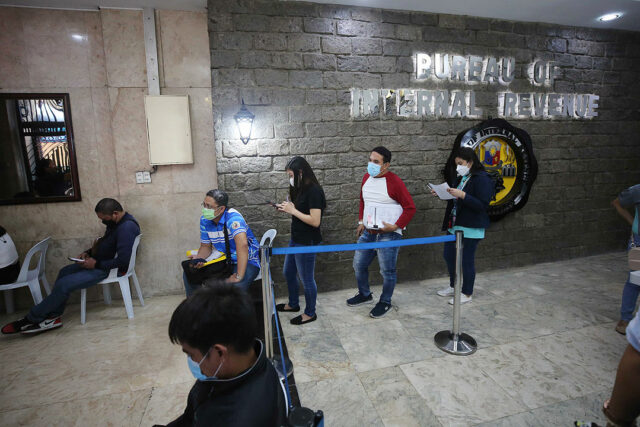
People line up to file their income tax returns at the Bureau of Internal Revenue office in Intramuros, Manila, April 18, 2022. — PHILIPPINE STAR/ RUSSELL A. PALMA

THE Bureau of Internal Revenue (BIR) warned that using more than one Taxpayer Identification Number (TIN) is a “serious” violation of tax law.

“The acquisition of multiple TINs by a taxpayer is a serious offense that can lead to legal repercussions and significant revenue losses for the government,” the BIR said.

“Any individual who secures more than one TIN is violating the National Internal Revenue Code of 1997, as amended. Said act is punishable by law, and the offender may face criminal liability,” it added.

Penalties include a fine of up to P1,000 or imprisonment of not more than six months or both.

The BIR said that the law stipulates only one TIN may be assigned to each taxpayer.

“The TIN is a unique identifier assigned by the BIR to every taxpayer. It is a crucial component of the tax system that enables the BIR to monitor and track taxpayers’ compliance with their tax obligations,” it said.

Taxpayers using more than one TIN may “face difficulties in their financial transactions, such as when opening a bank account or applying for a loan.”

“Moreover, having more than one TIN can lead to confusion and errors in the filing of tax returns, which can result in penalties and additional taxes owed,” it added.

The BIR also said it has implemented measures to “identify and prosecute individuals who violate the TIN provision.” — Luisa Maria Jacinta C. Jocson

Goat meat output dips in first quarter 

BAR.GOV.PH

GOAT MEAT production in the first three months dropped 3.6% from a year earlier, the Philippine Statistics Authority (PSA) said, while animal numbers during the period rose.

In its situation report, the PSA said volume in the three months to March was 14.94 thousand metric tons (MT) on a liveweight basis.

Western Visayas was the top producer at 1.85 thousand MT, followed by Ilocos Region (1.83 thousand MT), Davao Region (1.53 thousand MT), Northern Mindanao (1.51 thousand MT), and Central Visayas (1.48 thousand MT).

“These regions accounted for 54.9% of total goat production during the quarter,” the PSA said.

As of March 31, the PSA estimated the overall goat inventory at 3.96 million head, up 1% from a year earlier.

Of the total, about 99.3% were raised on smallhold farms while the remainder were raised on semi-commercial and commercial farms.

Goats from smallhold farms totaled 3.93 million head, up 1% year on year.

Meanwhile, the size of the flock in semi-commercial farms fell 4.4% year on year to 14,358 head.

The Central Visayas flock was 607.37 thousand head, followed by Western Visayas and Central Luzon with 482.18 thousand and 437.30 thousand, respectively.

“These three regions accounted for 38.6% of total goat population as of March 31,” the statistics agency said.

The average farmgate price of goat for slaughter during the period was P214.80 per kilogram, liveweight, up 17.4% from a year earlier.

“In the first quarter of 2023, the highest average farmgate price was observed in March at P231 per kilogram, liveweight, while the lowest average farmgate price was recorded in Feb. at P199.89 per kilogram, liveweight,” the PSA said. — Sheldeen Joy Talavera

Customs, ESCAP in joint study on digitized trade

BW FILE PHOTO

THE Bureau of Customs (BoC) said it and the United Nations Economic and Social Commission for Asia and the Pacific (UNESCAP) have entered into a partnership to study electronic data exchange in trade transactions.

“The collaboration falls under the Framework Agreement on Facilitation of Cross-border Paperless Trade in Asia and the Pacific (CPTA), a UN treaty that aims to expedite the implementation of digital trade facilitation measures for trade and development,” the BoC said in a statement.

“We believe that the implementation of paperless trade will not only help us achieve these objectives but also enhance transparency and reduce expenses,” Customs Commissioner Bienvenido Y. Rubio added.

Mr. Rubio said that the BoC is committed to “facilitating trade and ensuring the efficient and effective movement of goods across borders.”

The partnership will work on a feasibility study on the electronic exchange of trade-related data and documents in the Philippines.

“The study delves into a comprehensive analysis of the technological capabilities, legal frameworks, and operational requirements necessary for the implementation of electronic trade data exchange,” it said.

“Furthermore, it aims to identify potential challenges and risks and develop effective strategies to mitigate them,” it added. — Luisa Maria Jacinta C. Jocson

Political rifts show as Marcos pivots to US away from China

PHILIPPINE STAR/KRIZ JOHN ROSALES

By Kyle Aristophere T. Atienza, Reporter

MORE fault lines could emerge within the ruling coalition as President Ferdinand R. Marcos, Jr. tweaks the Philippines’ foreign policy amid the US-China rivalry, according to political analysts. 

“As the Philippines tilts increasingly toward the US, the influence of leaders and advisers who wanted to promote robust ties with China — our big neighbor and largest trade partner — will diminish,” Lucio B. Pitlo III, a research fellow at the Asia-Pacific Pathways to Progress Foundation, said in a Facebook Messenger chat.

The removal of former President and Pampanga Rep. Gloria Macapagal Arroyo as senior deputy Speaker caused tensions in the ruling coalition, with Vice-President Sara Duterte-Carpio leaving the ruling party Lakas-CMD.

Mr. Marcos Jr., 65, has veered away from his predecessor’s pivot to China, which has been conducting expansive activities in Philippine-claimed territories in the South China Sea.

In February, Mr. Marcos Jr.  gave the United States access to four more military bases on top of the five existing sites under their 2014 Enhanced Defense Cooperation Agreement — a move that has angered China.

Last month, the two countries held their largest-ever military drills.

Ms. Arroyo, who is president emeritus of Lakas-CMD, is a key backer of the political alliance between the family of Mr. Marcos and that of former President Rodrigo R. Duterte, who has been critical of the current administration’s pivot to the US.

Ms. Arroyo, who had supported the previous government’s China policy, last month met with China Foreign Affairs Director Wang Yi and leaders of the Communist Party of China.

“The background, credentials and bias of key advisers and leaders can help shape the country’s foreign policy. So who’s in and whose out can offer valuable insights on the country’s direction,” Mr. Pitlo said.

The Philippines under Ms. Arroyo, once described by Mr. Marcos as his “secret weapon” especially in his foreign trips, entered into a joint marine seismic undertaking with China in 2004, allowing it and Vietnam to explore Philippine islands in the Spratlys, including Reed Bank in western Palawan.

The Supreme Court voided the deal this year for being illegal.

Ms. Arroyo had said the presidency of her successor and top critic, the late Benigno “Noynoy” S.C. Aquino III, was “just an interruption” in the “good relationship” between Manila and Beijing.

In 2013, the Philippines under Mr. Aquino sued China before a United Nations-backed tribunal in the Hague over its expansive claims in the South China Sea.

In 2016, the court favored the Philippines and voided China’s claim to more than 80% of the sea based on a 1940s map.

“It could be possible that the ‘secret weapon’ in international relations may explode anytime soon,” Chester B. Cabalza, founding president of the International Development and Security Cooperation in Manila, said in a Facebook Messenger chat.

“In order not to defuse the wildfire and maintain the status quo in Manila’s balancing act between Beijing and Washington, some reorganization at the House of Representatives is necessary.”

‘STRONG CLOUT’
After Ms. Arroyo’s demotion, rumors that she was seeking to grab the House leadership from Speaker Martin G. Romualdez, Lakas-CMD’s president, circulated.

But the former president said her actions “have been misconstrued,” denying that she was plotting a coup against Mr. Romualdez, a first cousin of Mr. Marcos.

She did say she had aspired to become Speaker after Mr. Marcos won the presidency. “But it soon became apparent that he was most comfortable with then Congressman Martin Romualdez as Speaker. I quickly realized the wisdom embedded in that sentiment,” she said in a recent statement.

Various political blocks at the House have issued statements of support for Mr. Romualdez and Mr. Marcos after Ms. Arroyo’s demotion, including Mr. Duterte’s PDP-Laban and the Nacionalista Party of former Senate President Manuel B. Villar.

The Nationalist People’s Coalition and National Unity Party also backed Mr. Romualdez.

Ms. Duterte-Carpio, in her statement seen as supportive of Ms. Arroyo, cited “political toxicity” and “execrable political power play.”

The vice-president’s father, Mr. Duterte, had criticized US military expansion under EDCA.

“China wants a new leverage in its competition with the US,” Mr. Cabalza said. “It could be seen as an optic of political warfare. The superpowers will try to influence our political elites.”

“Arroyo’s strong clout with Beijing may interfere with Manila’s robust relations with Washington at the moment,” he added.

The Philippines under Mr. Marcos has launched a transparency strategy that seeks to expose China’s aggression at sea.

Mr. Duterte, who led a foreign policy pivot to China when he took office in 2016, had been criticized for gambling Philippine territories to appease China in exchange for investment pledges, few of which had materialized.

“The current foreign policy adjustments might be a factor in whatever tensions that we are witnessing within the Marcos coalition,” Arjan P. Aguirre, who teaches political science at the Ateneo de Manila University, said in a Messenger chat.

“This is due to the known closeness of Arroyo to China. We can assume that this impending shift would undermine her workings in the Marcos government.”

The Philippines could not afford to be institutionally weak amid increasing tensions in the region, Mr. Cabalza said.

“Aggressors in our backyard are watching our political drama,” he said. “The Philippines needs strong institutions to survive the security dilemma against the backdrop of competing powers.”

Mr. Romualdez, in a statement days after the tension, cited the need to block destabilization efforts in the House so they could all focus on legislation.

Despite this, the Speaker on Monday approached Ms. Arroyo at her desk as he entered the plenary, which was debating a priority bill.

Mr. Romualdez kissed the former president’s hand and bowed before her — a Filipino gesture of paying respect to the elderly — and went to the rostrum and granted a lawmaker’s motion to allow Mr. Gonzales, the senior deputy speaker, to take his oath.

Ms. Arroyo, who is now just a deputy speaker, stood beside her successor during his oath. The two held hands with the Speaker for a picture taking. .

“Being institutionally weak in a tough neighborhood where great power competition and regional flashpoints are rife puts us at a disadvantage,” Mr. Pitlo said.


Philippines to test digital food stamp program

PHILIPPINE STAR/MICHAEL VARCAS

THE PHILIPPINES will pilot test a digital food stamp program in July that will benefit as many as a million families under the lowest income bracket, the Social Welfare department said on Tuesday.

The program, which will initially cover 3,000 families, is now in the design stage, Social Welfare Secretary Rexlon T. Gatchalian told a news briefing.

“We are working with the World Food Program, [which] has vast technical expertise when it comes to running food stamp programs worldwide,” he said, adding that the Asian Development Bank (ADB) would provide almost $3 million for the six-month pilot.

Mr. Gatchalian said his agency has hired consultants “to take a second look at what’s being designed so that there’s check and balance.”

Under the program, the agency will release electronic cards loaded with food credits worth P3,000. The cards will be used by beneficiaries to buy a “select list” of food commodities from accredited sellers.

“The tap cards will not be loaded with money, but they will be loaded with food equivalents,” he said. The agency is working with the Food and Nutrition Research Institute in crafting the program.

“The baskets of goods are always composed of 50% carbs, 30% protein, 20% fats.”

The program, called “Walang Gutom 2027,” will be conditional, targeting only the bottom one million households that do not make more than P8,000 a month.

“We will supplement the families’ intake to eliminate the feeling of hunger,” Mr. Gatchalian said, noting that the program could help Filipinos become part of the country’s workforce.

“The condition is when you’re signed up, you have to go to your nearest public employment office, get a certification that you are now being counted as part of the workforce, no matter what job it is.”

A Social Weather Stations (SWS) poll in May showed that half of Filipino families or 14 million households described themselves as poor in the first quarter of 2023 — a steady figure from the December poll.

The Philippine Statistics Agency’s labor force survey showed that the Philippines’ underemployment rate had fallen to its lowest level in 18 years.  That means many Filipinos still can’t cope with rising costs or have difficulty in buying their basic food needs.

A separate SWS poll in March showed 51% of Filipino families rated themselves as poor, unchanged from December. SWS said 31% of families considered themselves borderline poor, while 19% said they were not poor.

The percentage of food-poor families, meanwhile, rose to 39% in March from 34% in December.

Of the 14 million families who considered themselves poor, 1.8 million were newly poor, 1.8 million were usually poor and 10.4 million had always been poor.

Think tank Ibon Foundation said that by hours worked, the number of people employed full time fell by 568,000 between Dec. 22 and March 23. Those in part-time work increased by 15,000.

It said that by class of workers, employment in private establishments fell by 475,000 to 23.1 million in March.

With no formal wage and salary work in enterprises so scarce, 21.1 million Filipinos were struggling with the low or no pay from self-employment and informal work, Ibon said.

The food stamp program will be tested in sites with different geopolitical characteristics, including an area in the Bangsamoro region in Mindanao.

It will also be tested in remote provinces, in an urban poor setting, a calamity-stricken area and a rural poor area, Mr. Gatchalian said.

In 2022, the ADB was the Philippines’ top source of active official development assistance among 20 development partners. Its annual loan financing for the Philippines averaged $1.4 billion (P78 billion) from 2010 to 2022. — Kyle Aristophere T. Atienza

Executive officials assert written sugar order not needed before importation

A vendor places sugar in plastic bags for sale. — PHILIPPINE STAR/EDD GUMBAN

THE IMPORTATION of sugar does not need a sugar order, Executive Secretary Lucas P. Bersamin told the Senate Blue Ribbon Committee on Tuesday. 

Speaking at a probe on the allegedly illegal importation of sugar ahead of Sugar Order (SO) No. 6, Mr. Bersamin said, We were aware that the sugar order was not absolutely necessary for the importation to be made.  

He said that if the sugar imports already entered the country, an SO would only be essential for the issuance of clearances by the Sugar Regulatory Administration (SRA) because these would be required by the Customs bureau.  

Agriculture Senior Undersecretary Domingo F. Panganiban told the same hearing that President Ferdinand R. Marcos, Jr.s verbal order was enough basis.   

The directive of the president to import sugar is a valid basis for allowing importers to import sugar, he said, quoting Mr. Marcos Jr.’s words: Lets import.  

Senator Ana Theresia RisaN. Hontiveros-Baraquel countered the executive branch officialsposition, saying, My plain understanding is that under the law, a sugar order is needed to allow sugar importation. Otherwise, we just blow the whole system thus far wide open.  

Mr. Bersamin cited section 117 of the Customs Modernization and Tariff Act, which states that,In the case of importation, submission of requirements after the arrival of the goods prior to the release from the customs custody shall be allowed only in cases provided for by governing laws or regulations.  

If we dont require sugar orders anymore, we allow unfettered importation even on regulated commodities,Ms. Hontiveros-Baraquel said. If we allow the unilateral handpicking of importers, we allow the possible thriving of cartels and monopolies, contrary to the interests of the Filipino people.  

Committee Chairman Senator Francis N. Tolentino told reporters after the hearing that Mr. Bersamin, being a former Chief Justice maybe he is familiar with the law and what he said had a basis.  

The Blue Ribbon committee previously ruled the need for an SO in a 2022 investigation on the importation of 300,000 metric tons of sugar, allegedly without the presidents consent.  

The Senate should hold the line,Ms. Hontiveros-Baraquel said. The executive (branch) cannot set that aside. It is the legislature that should clarify, and if at all, amend it.  

She said the committee will review existing laws and may recommend amendments to specify the need for an SO before importation.  

Large shipments of sugar were brought in earlier this year and were released on Mr. Panganibans authority. The arrival date of the shipments was not covered by new or earlier import orders.   

National Economic and Development Authority Secretary Arsenio M. Balisacan said the sugar inflation rate was at 38.8%, when headline inflation was at a 14-year high or 8.7%, indicating the countrys insufficient sugar supply. Beatriz Marie D. Cruz

Entry of bivalent vaccines into PHL continues to be delayed; SC asked to hasten ruling on COVID-vulnerable prisoners  

PHILIPPINE STAR/KRIZ JOHN ROSALES

THE ARRIVAL of the Philippinesfirst batch of COVID-19 bivalent vaccines, which have been donated by a still undisclosed country, will once again face a delay, according to the Department of Health (DoH), citing permit issues. 

“As per the DoH — Bureau of International Health Cooperation, there shall be a slight delay in the arrival of the bivalent vaccines as there are permits that are still needed to be coordinated,” DoH told reporters in a document that provided replies to journalistsquestions.  

“Rest assured that the DoH is exhausting all efforts to receive the vaccines by the end of the month.”  

Last week, the agency said about 391,000 donated bivalent doses, which target both the original COVID-19 strain and its Omicron subvariants, were expected to arrive in the country this week.   

Thedeliveryhasfacedseveraldelaysafterastateofcalamitydeclarationdue toCOVID-19 — whichsetguidelinesonindemnificationandimmunityfrom liabilityrequiredbyvaccinemakers — expiredonDec.31.  

Almost a month after the Health department reported in January that the delivery process had hit a “roadblockdue to the state of calamitys expiration, the agency made an announcement in late February that donated vaccines would arrive by end-March.   

In mid-May, the DoH said that the 391,000 bivalent doses will be arriving hopefully by next week.  

As of March 20, a total of 4,377,164 Filipinos have gotten their second booster shot, the agency said.  

The DoH had opposed a proposal by the private sector for them to be allowed to buy bivalent vaccines, saying it could worsen vaccine wastage in the country.   

VULNERABLE 
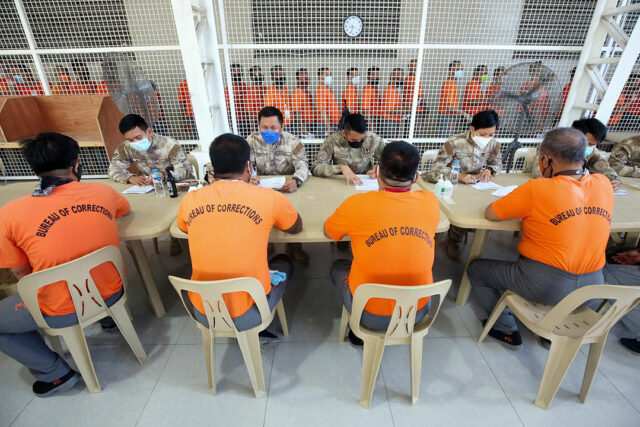
Meanwhile, a human rights group on Tuesday asked the Supreme Court (SC) to fast-track its decision on its plea to a Writ of Kalayaan, which could be used to release prisoners who are vulnerable to coronavirus. 

In a letter to Chief Justice Alexander G. Gesmundo, Kapatid urged the High Court to have consultative discussions with human rights groups and other stakeholders to set up rules for establishing the new legal remedy.  

“Gerardo Dela Peñas abject condition exemplifies why the SC Writ of Kalayaan should at the soonest be institutionalized to protect persons deprived of liberty whose right to life, right to health, and the right against cruel, degrading or inhuman punishment is violated not only by substandard prison conditions but also by snail-paced bureaucratic procedures,” Kapatid convenor Fides M. Lim said.  

He was referring to the case of an 83-year-old political prisoner, the oldest in the country.  

In 2021, the group filed a petition for the court to develop rules for the proposed legal remedy that seeks to bolster the protection of human rights for prisoners.  

Kapatid said it had submitted names of elderly and sick political prisoners, but the Department of Justice has yet to free any of them despite the recent mass releases of elderly prisoners.  

The SC committee on human rights in December recommended the approval of the Writ of Kalayaan, which would supplement existing remedies such as the writ of amparo, habeas data and habeas corpus.  

Justice Secretary Jesus Crispin C. Remulla earlier told the United Nations (UN) Human Rights Council that the government aims to release 5,000 inmates by June. He said in March that the government had released 4,124 prisoners since he took office on July 1 last year.  

Many of the countrys jails fail to meet the UNs minimum standards given inadequate food, poor nutrition and unsanitary conditions, according to Human Rights Watch.  

“Mr. Chief Justice, let’s bring him [Mr. Dela Peña] home alive,” Ms. Lim said. Kyle Aristophere T. Atienza and John Victor D. Ordoñez

ABAC gathering in Cebu to highlight PHL opportunities, regional cooperation 

THE ASIA-PACIFIC Economic Cooperation Business Advisory Council (ABAC) will meet in Cebu on July 27 to 30, where investment opportunities in the Philippines and regional collaboration will be discussed.   

As we prepare to host ABAC in the vibrant heart of Cebu, we stand on the cusp of boundless opportunities and exciting discoveries,Aboitiz Group President Sabin M. Aboitiz, the 2023 ABAC Sustainable Growth Working Group vice-chair, said in a statement on Tuesday.  

Lets write a new chapter in the Asia-Pacific story, where collaboration sparks innovation, and our shared vision for a prosperous future becomes a reality,he added. 

The meeting, with the theme Equity, Sustainability, and Opportunity,aims to encourage more discussion and collaboration among business leaders, policymakers, and other stakeholders in the region.   

The meeting will also highlight the role of micro, small, and medium enterprises (MSMEs) in the global economy and the changing environment, social, and governance (ESG) investing landscape.    

An archipelago of thousands of interconnected islands, the nation embodies the spirit of cooperation and collaboration that underpins the APEC economies,ABAC Philippines said.  

Like the islands that work together to create a cohesive whole, the APEC economies are interconnected and interdependent, each contributing to the larger ecosystem,it added.    

ABAC Philippines said the ABAC III conference will be held at the NUSTAR Convention Center in Cebu City, with over 200 delegates and guests from the 21 APEC economies expected to attend.    

The previous ABAC meeting was held in Brunei on April 27.   

Created in 1995, the ABAC seeks to provide a private sector perspective in attaining free and open trade and investments in the Asia-Pacific region. Revin Mikhael D. Ochave

House OK’s bill excluding local gov’t interference in Bataan economic zone 

AFAB.GOV.PH

THE HOUSE of Representatives on Tuesday approved on third and final reading a bill strengthening the Authority of the Freeport Area of Bataan (AFAB), giving it sole and exclusive management and operation of what has been designated as an economic zone specializing in space technology locators.  

During the plenary, 289 lawmakers voted in favor of House Bill No. 8001, while nobody voted no, but one congressman abstained.  

Under the measure, all economic and non-economic activities within the Freeport Area of Bataans (FAB) main zone and its expansion areas will be handled by the AFAB.  

The agency is also authorized to sell lands declared alienable or disposable under an approved development plan; undertake and approve reclamation and related projects as well as owning, holding, purchasing or leasing foreshore areas; and exercise sole and exclusive port regulatory and administrative authority.  

The AFAB is mandated to have its own internal police force, firefighters, and a Disaster Risk Reduction Management office to ensure public safety and security within its zone.  

The measure also grants foreign nationals’ eligibility for an investor visa if they 

put in $75,000 either in cash or equipment directly to AFAB or in a registered enterprise.   

The bill seeks to amend Republic Act (RA) No. 11453, An Act Strengthening the Powers and Functions of the AFAB. This law amended RA No. 9728 or the Freeport Area of Bataan Act of 2009, wherein the former Bataan Economic Zone in Mariveles, Bataan under the Philippine Economic Zone Authority was transformed into the FAB.  

In 2022, the AFAB generated P11.3 billion in investments while its locators produced $835 million worth of exports, House Economic Affairs Committee Chairman and Negros Occidental Rep. Gerardo P. Valmayor, Jr. said during panel deliberations on the bill. Beatriz Marie D. Cruz