Home Blog Page 478

Jollibee plans a US listing of its international business

A service assistant carries a takeaway order at a Jollibee Foods Corp. restaurant in Quezon City. BLOOMBERG

(UPDATE) Shares of Jollibee Foods Corp. jumped the most in more than five years after it announced plans to spin off its international business and list it on a US stock exchange by late 2027 as the Philippine fast-food group plots its global expansion.

Jollibee, which increasingly is taking aim at global fast-food giants such as McDonald’s and Yum! Brands Inc. from Los Angeles to Ho Chi Minh City, said Tuesday said it has hired international and local advisers to work on the spinoff and potential US listing.

Jollibee Foods Corporation International would include all of the company’s businesses outside its home market, the company said in a statement filed to the Philippine Stock Exchange, where its Philippine operations will remain listed.

Jollibee shares — after a one-hour trading halt — rose as much as 11.56% on Tuesday, the most since October 2020.

Establishing two listed businesses is designed to sharpen the strategic focus of each company and enhance the “clarity of each equity story,” Jollibee said.

The spinoff would allow investors to value the “stable, cash-generative Philippine business separately from the higher-growth but more volatile international operations,” COL Financial Group analyst Rachelle Biacora said in a note. However, the company’s domestic unit may have a lower market value, which could affect its weighting in some stock indexes, she added.

Jollibee shareholders would receive a number of shares in the international business equal to their company holdings at the time of the listing, the company said.

The food giant owns several brands, including its iconic Jollibee chain known for its sweet-style spaghetti and crispy fried chicken.

Jollibee is building its international profile, striking 27 cross-border deals worth around $1.1 billion since 2000, according to data compiled by Bloomberg. That includes US brands such as Smashburger and Coffee Bean and Tea Leaf, which Jollibee struggled to turn around, and recently, South Korea’s Compose Coffee.

The group had 10,304 stores as of September, of which 6,859 were located overseas across over 30 countries, including China, Canada and Vietnam. International business generated around 43% of Jollibee’s P224.2 billion ($3.8 billion) revenue from January to September. — Bloomberg

Dell revives XPS brand with new laptops to boost PC market share

DELL has brought back its popular XPS laptop lineup a year after retiring the premium brand, as it looks to drum up demand in a sagging personal computer market.

The company on Monday unveiled its thinnest laptops yet, XPS 14 and XPS 16, with plans to launch an even lighter XPS 13 later this year.

The announcement at the annual Consumer Electronics Show in Las Vegas marks a U-turn for Dell following “very broad” feedback from its partners.

“I owe you an apology today. We didn’t listen to you. You were right on branding,” Dell Chief Operating Officer Jeff Clarke said in a media briefing.

Launched in the 1990s, XPS helped Dell carve a share of the consumer market after years of targeting businesses. But the company shifted its strategy last year to sell models under “Dell,” “Dell Pro,” and “Dell Pro Max” names.

With the revival, Dell aims to boost its position in the premium segment amid rising competition from rivals such as HP and Lenovo.

Limited configurations of the first two models will go on sale in the US and Canada on Tuesday, with the XPS 14 starting at $2,049.99 and the XPS 16 at $2,199.99.

The two models will use Intel’s Core Ultra Series 3 processors with built-in Arc graphics, which Dell says deliver up to 57% and 78% faster AI performance, respectively, and more than 50% faster graphics performance than previous models.

Mr. Clarke offered little detail on how Dell will navigate the surge in memory prices that analysts say will force industry-wide price hikes, while adding AI has not generated the kind of demand the company expected a year ago.

Dell is moving away from tier names like “base, plus and premium” to simplify choices for consumers, Kevin Terwilliger, head of product for Dell’s PC business line, told Reuters.

Instead, the company will have mainstream and entry-level laptops under the “Dell” brand, premium products under XPS and Alienware for full gameplay, Mr. Terwilliger said.— Reuters

Pag-IBIG keeps low 3% rate as higher price ceilings lift quality of socialized homes

Filipino workers are expected to benefit from better-quality socialized housing following the government’s approval of higher price ceilings for socialized subdivision and condominium projects, while Pag-IBIG Fund continues to provide affordability through its subsidized housing loan rates under the Expanded Pambansang Pabahay Para sa Pilipino (Expanded 4PH) Program.

The updated ceilings, issued under the Implementing Rules and Regulations (IRR) of the Department of Human Settlements and Urban Development (DHSUD) and the Department of Economy, Planning, and Development (DEPDev) Joint Memorandum Circular No. 2025-001, are intended to reflect current cost conditions and enable developers to deliver improved unit quality and safer housing standards.

“Under President Ferdinand R. Marcos, Jr.’s housing agenda, our goal is clear. Filipino workers should have access to homes that are safe, decent and built to last, and that remain within their reach,” DHSUD Secretary Jose Ramon P. Aliling said. “By updating the price ceilings, we are aligning project prices with today’s cost conditions so developers can build better socialized housing units and sustain construction. This strengthens the housing industry’s capacity to deliver more homes at scale, while keeping Expanded 4PH firmly focused on affordability to make homeownership more attainable for Filipinos.”

Under the IRR, the maximum selling price for socialized house-and-lot units has been adjusted to P844,440 for a minimum unit size of 24 to 26 sq. m., and P950,000 for 27 sq. m. and above.

For socialized condominium projects, price ceilings were also updated based on building classification and unit size, with maximum selling prices set at up to P1.8 million for projects above five floors with unit sizes of 27 sq. m. and above.

For eligible socialized condominium projects in the National Capital Region and other highly urbanized cities, the IRR also allows maximum add-ons based on zonal value of up to P200,000, bringing the allowable maximum selling price for select categories to as high as P2.0 million.

Pag-IBIG Fund Chief Executive Officer Marilene C. Acosta said the Fund will continue to support Expanded 4PH by keeping housing loan terms affordable for qualified members, in line with President Marcos, Jr.’s push to expand access to homeownership. She added that Pag-IBIG Fund will work closely with housing stakeholders, including partner developers, to help speed up unit production and takeouts under the program.

“Our strong fiscal position allows us to continue offering subsidized rates under the Expanded 4PH so our members can truly achieve their dream of owning a home,” Ms. Acosta said. “Even as better socialized homes become available under the new ceilings, we will keep loan terms affordable and work closely with our partners to help fast-track the availability of more housing units for Filipino workers.”

Under the Pag-IBIG Housing Loan for the Expanded 4PH, qualified members may avail of loans at a subsidized 3% interest rate for the first five years of the loan, extendible for another five years for qualified borrowers. This lowers monthly payments to P4,005 for house-and-lot units priced up to P950,000, and about P8,432 for condominium units priced up to P2 million. Through the agency’s Early Bird Promo, the first 30,000 qualified borrowers may enjoy the subsidized rate for the first 10 years of the loan.


Spotlight is BusinessWorld’s sponsored section that allows advertisers to amplify their brand and connect with BusinessWorld’s audience by publishing their stories on the BusinessWorld Web site. For more information, send an email to online@bworldonline.com.

Join us on Viber at https://bit.ly/3hv6bLA to get more updates and subscribe to BusinessWorld’s titles and get exclusive content through www.bworld-x.com.

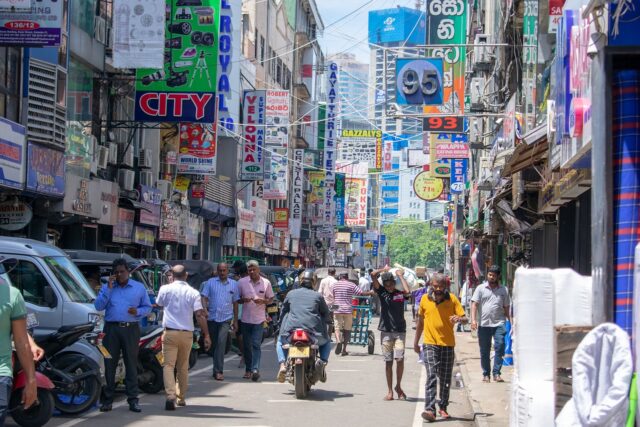
Sri Lanka targets 3 million tourists to aid cyclone recovery

PIXABAY

COLOMBO — Sri Lanka is targeting 3 million tourist arrivals in 2026, a top official said on Monday, after a record 2.36 million last year, as the country seeks to boost revenue and support recovery from Cyclone Ditwah.

Famous for its pristine beaches, ancient temples and Ceylon Tea, tourism is Sri Lanka’s second-largest foreign exchange earner with $3.2 billion in revenues in 2025.

The tourist arrival target, which is an ambitious 27% increase over the previous year, will help Sri Lankans recover from Cyclone Ditwah, which hit the island nation at the end of November killing 645 people, said Vijitha Herath, Minister of Foreign Affairs and Tourism.

Torrential rains and hundreds of landslides damaged over 110,000 houses as well as key roads, railroads, and bridges causing $4.1 billion in damage according to World Bank estimates.

Growth, which was projected at 3.1% for 2026, was reduced to 2.9% by the International Monetary Fund (IMF) in December. An IMF delegation is expected in Colombo this month to conduct the fifth review of a $2.9 billion program with Sri Lanka.

“We are proud that Sri Lanka still managed to record the highest-ever tourism numbers. We are hopeful that tourism revenue will also continue to grow and this will help our economy at a crucial time,” Mr. Herath told reporters.

Sri Lanka is also eyeing about $500 million in investment in the tourism sector in 2026 after attracting $329 million from 126 projects last year, said Buddhika Hewawasam, Chairman, Sri Lanka Tourism Development Authority.— Reuters

25% of Filipinos uncertain life will improve in 2026 — survey

Families enjoying and spending quality time at the Quezon Memorial Circle park grounds in Quezon City on Sunday, Jan. 4, 2026.— PHILIPPINE STAR/MIGUEL DE GUZMAN

According to a nationwide survey by public opinion firm WR Numero, a quarter of Filipinos are unsure if their own lives and their families’ will improve in 2026, highlighting uncertainty among Class E citizens as they enter the new year.

“Some Filipinos are unsure whether life will improve in the upcoming year (25%), while a majority remain optimistic that life will improve in the coming year (55%),” the firm said.

“Two in ten believe that life this year and next year will remain the same (16%), while a small portion (4%) think that life will be worse in the coming year,” it added.

The survey noted that 50% of citizens in income Class E are the least optimistic about their outlook for the new year, followed by Class D at 65% and Class ABC with 66%.

29% of Class E respondents added that they do not have expectations of a better life this year, while 5% expects life to be worse.

The negative outlook for the year was also echoed among Filipinos in Luzon, where 6% anticipates life to be worse in 2026, while 20% predicts the new year will be the same as the previous one.

Visayas had the highest number of respondents claiming to be uncertain about their future at 29%, followed by Luzon at 26%, Metro Manila at 23%, and Mindanao at 20%.

Male participants appeared to be more doubtful about the new year, compared to females, with 27% having lower expectations and 3% less optimistic than women.

IBON Foundation Executive Director Jose Enrique “Sonny” A. Africa said that the uncertainty for the new year, especially within Class E, reflects a deeper structural problem in the country.

“It can only come from the lived experience of economic insecurity and limited prospects by the large majority of Filipinos, in numbers well beyond what grossly understated official poverty estimates admit,” he told BusinessWorld in a message.

“It’s also possible that such sentiments have become heightened with the well-publicized disclosure of the extreme wealth of corrupt contractors, officials and lawmakers,” he added.

In 2025, several government employees received public scrutiny after anomalies in budget allocations were discovered, sparking multiple nationwide rallies.

National President of  Bukluran ng Manggagawang Pilipino Renecio “Luke” S. Espiritu also linked poverty to the dubious outlook of Filipinos for 2026.

“It is no surprise that Class E respondents—mainly comprised of the jobless, underemployed, the poorest of the poor—are least optimistic,” he told BusinessWorld in a Viber message.

“The government, regardless of whoever is in power, has never resolved poverty and is instead promoting inequality through systemic corruption and anti-poor policies,” he added.

Mr. Africa noted that if the government wants to establish a more positive mindset for the new year, it has to fill the gaps in the social protection system.

“The government can address these structural drivers of uncertainty if it wanted to,” he said.  “Support a family living wage and decent work, invest in agriculture to make food cheaper, and invest in Filipino industry to create jobs for the long-term.”

New Year’s Resolution
In the same survey, the firm revealed that across all income classes, wealth and health remain the top priority in the new year’s resolutions for Filipinos.

Among the resolutions declared by the participants are saving money (38%), taking better care of their health (37%), improving career and income (28%), and quality time with family (27%).

24% of the participants also included starting their own business as part of their goals this year, along with being more optimistic (22%), becoming more active in church and religion (16%), and helping the community (10%).

Meanwhile, others are focusing on learning new skills and personal development.

The survey found that 9% aim to study better, 8% want to learn new skills and hobbies, 6% plan to migrate overseas and learn more about social issues, and 4% are planning to be more active and exercise.

WR Numero interviewed 1,412 Filipinos residing in the Philippines for the latest Philippine Public Opinion Monitor, which was conducted from Nov. 21 to 28, 2025, and has a ±3% margin of error and 95% confidence level.— Almira Louise S. Martinez

Delegation led by Yemen’s main separatist group to travel to Saudi Arabia, sources say

A Saudi flag flutters atop Saudi Arabia’s consulate in Istanbul, Turkey, Oct. 20, 2018. — REUTERS

CAIRO — A delegation led by Aidarous al-Zubaidi, the leader of Yemen’s main separatist group STC, will soon travel to Saudi Arabia, two sources told Reuters on Monday, a potential sign of progress towards ending a conflict between separatists and Yemen’s internationally recognized government.

The conflict, which began early last month, has triggered a major feud between the Gulf powers, Saudi Arabia, and UAE, and fractured a coalition fighting Houthi forces.

The Iran-backed Houthis seized the capital Sanaa in 2014 and Gulf countries intervened the following year in support of the internationally recognized government, splitting Yemen into rival zones of control.

The UAE-backed Southern Transitional Council has for years been part of that government, which controls southern and eastern Yemen and is backed by Gulf states, but last month STC forces suddenly seized swathes of territory.

Al-Zubaidi’s visit would come days after the internationally recognized government said late on Friday it had asked Saudi Arabia to host a forum to resolve the southern issue. Riyadh agreed and extended invitations to southern factions.

The STC welcomed the call for dialogue, potentially signaling that all sides now see negotiation as the eventual means of ending the brief conflict.

Government forces backed by Saudi airstrikes on Friday and Saturday took back control of the strategically important Hadramout and Mahra provinces in the east of Yemen.

The crisis triggered the biggest split in decades between formerly close allies Saudi Arabia and the UAE, as years of divergence on critical issues came to a head, threatening to upend the regional order.— Reuters

Strong magnitude-6.2 earthquake strikes Japan’s Chugoku region

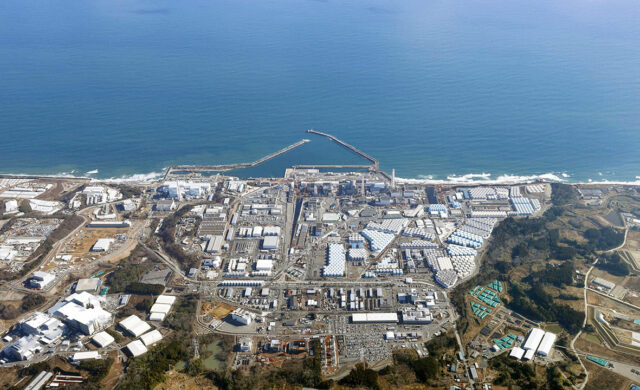
An aerial view shows the storage tanks for treated water at the tsunami-crippled Fukushima Daiichi nuclear power plant in Okuma town, Fukushima prefecture, Japan August 22, 2023, in this photo taken by Kyodo. — KYODO VIA REUTERS

TOKYO — An earthquake with a preliminary magnitude of 6.2 hit the western Chugoku region of Japan on Tuesday, followed by a series of sizeable aftershocks, the Japan Meteorological Agency said.

The epicenter of the first earthquake was in eastern Shimane prefecture, the agency said, adding that there was no danger of a tsunami.

Chugoku Electric Power, which runs the Shimane Nuclear Power Station about 32 kilometers (20 miles) away, said operations were continuing as usual at its No.2 unit. Japan’s Nuclear Regulation Authority said there were no irregularities following the quake.

The plant’s No.2 unit restarted in December 2024 for the first time since all of Japan’s nuclear power plants were shut down in the aftermath of the March 2011 disasters in Fukushima.

The earthquake had a seismic intensity of upper-5 on Japan’s 1-7 scale, strong enough to make movement difficult without support.

Earthquakes are common in Japan, one of the world’s most seismically active areas. Japan accounts for about one-fifth of the world’s earthquakes of magnitude 6 or greater.

West Japan Railway said it had suspended Shinkansen bullet-train operations between Shin-Osaka and Hakata following the quake. — Reuters

Trump administration sets meetings with oil companies over Venezuela, source says

MODELS of oil barrels and a pump jack are displayed in this illustration photo taken on Feb. 24, 2022. — REUTERS

WASHINGTON/HOUSTON — The administration of President Donald Trump is planning to meet with executives from US oil companies later this week to discuss boosting Venezuelan oil production after US forces ousted its leader Nicolas Maduro, according to a source familiar with the matter.

The meetings are crucial to the administration’s hopes of getting top US oil companies back into the South American nation after its government, nearly two decades ago, took control of US-led energy operations there.

The three biggest US oil companies – Exxon Mobil, ConocoPhillips, and Chevron – have not yet had any conversations with the administration about Mr. Maduro’s ouster, according to four oil industry executives familiar with the matter, contradicting Mr. Trump’s statements over the weekend that he had already held meetings with “all” the US oil companies, both before and since Mr. Maduro was seized.

“Nobody in those three companies has had conversations with the White House about operating in Venezuela, pre-removal or post-removal to this point,” one of the sources said on Monday.

The upcoming meetings will be crucial to the administration’s hopes to boost crude oil production and exports from Venezuela, a former OPEC nation which sits atop the world’s largest reserves and whose barrels can be refined by specially designed US refineries. Achieving that goal will require years of work and billions of dollars of investment, analysts say.

It is unclear what executives will be attending the upcoming meetings, and whether oil companies will be attending individually or collectively.

The White House did not comment on the meetings but said it believed the US oil industry was ready to move into Venezuela.

“All of our oil companies are ready and willing to make big investments in Venezuela that will rebuild their oil infrastructure, which was destroyed by the illegitimate Maduro regime,” said White House spokesperson Taylor Rogers.

Exxon, Chevron, and ConocoPhillips did not immediately respond to requests for comment.

Mr. Trump told NBC News the US may subsidize oil companies to enable them to rebuild Venezuela’s energy infrastructure.

Asked if the administration had briefed any oil companies ahead of the military operation,  Mr. Trump said, “No. But we’ve been talking to the concept of, ‘what if we did it?'”

“The oil companies were absolutely aware that we were thinking about doing something,”  Mr. Trump told NBC News. “But we didn’t tell them we were going to do it.”

He told NBC News it was “too soon” to say whether he had personally spoken to top executives at the three companies.

“I speak to everybody,” he said.

CBS News, citing an unnamed source, said executives from the three were expected to meet on Thursday with Energy Secretary Chris Wright.

One oil industry executive told Reuters the companies would be reluctant to talk about potential Venezuela operations in group settings with the White House, citing antitrust concerns that limit collective discussions among competitors about investment plans, timing, and production levels.

BIG PLANS, BIG PROBLEMS
US forces on Saturday conducted a lightning raid on Venezuela’s capital, arresting  Mr. Maduro in the dead of night and sending him to the United States to face narcoterrorism charges.

Mr. Trump said hours after Mr. Maduro’s capture he expects the biggest US oil companies to spend billions of dollars boosting Venezuela’s oil production, after it dropped to around a third of its peak over the past two decades due to underinvestment and sanctions.

But those plans will be hindered by lack of infrastructure, along with deep uncertainty over the country’s political future, legal framework and long-term US policy, according to industry analysts.

Chevron is the only American major currently operating in Venezuela’s oil fields.

Exxon and ConocoPhillips, meanwhile, had storied histories in the country before their projects were nationalized by former President Hugo Chavez.

“I don’t think you’re going to see any company other than Chevron, who’s already there, you know, commit to developing this resource,” said one oil industry executive, who asked not to be named discussing the issue.

Conoco has been seeking billions of dollars in restitution for the takeover of three oil projects in Venezuela under Mr. Chavez. Exxon was involved in lengthy arbitration cases against Venezuela after it exited the country in 2007.

Chevron, which exports around 150,000 barrels per day of crude from Venezuela to the US Gulf Coast, meanwhile, has had to carefully maneuver with the Mr. Trump administration in an effort to maintain its presence in the country in recent years.

Investors were optimistic, betting Washington’s move against Venezuela’s leadership would allow US firms access to the oil reserves. A US embargo on Venezuelan oil remained in full effect, Mr. Trump said.

The S&P 500 energy index rose to its highest since March 2025, with heavyweights Exxon Mobil rising 2.2% and Chevron jumping 5.1%.— Reuters

Philippine annual inflation picks up to 1.8% in December

Shoppers buy fruits at Quiapo Market in Manila. Photo by RYAN BALDEMOR, THE PHILIPPINE STAR

MANILA – Philippine annual inflation was 1.8% in December, above the previous month’s 1.5% rate, the statistics agency said on Tuesday.

Economists in a Reuters poll had expected annual inflation to ease to 1.4% in December. — Reuters

PHL trims 2026, 2027 growth goals

Shoppers purchase New Year’s Eve 2026 decorations on Dec. 27 in Divisoria, Manila. — PHILIPPINE STAR/RYAN BALDEMOR

THE PHILIPPINE government lowered its economic growth targets for this year and 2027, with the impact of the corruption scandal still expected to be felt in the first half, according to Economy Secretary Arsenio M. Balisacan.

At a briefing on Monday, Mr. Balisacan said the Development Budget Coordination Committee (DBCC) had lowered its gross domestic product (GDP) growth targets to 5%-6% for 2026 and 5.5%-6.5% for 2027, following a meeting in December.

These new targets are slightly lower than the earlier 6-7% growth goal for 2026 to 2028.

However, the DBCC retained the 6-7% GDP growth goal for 2028. President Ferdinand R. Marcos, Jr.’s term will end in mid-2028.

“The emerging number, growth scenario for 2025, is something like 4.8-5%,” Mr. Balisacan said. “But if you achieve 5% for the entire year, because the first three quarters’ average is already 5%, that still puts the economy into one of the fastest-growing economies in Asia.”

If realized, the 2025 GDP growth would be much slower than the 5.7% GDP growth in 2024 and below the government’s 5.5-6.5% GDP target.

This will also mark the fourth straight year that the Philippines will miss its GDP growth target.

Economic growth slowed to an over four-year low of 4% in the third quarter, as the flood control scandal affected government spending and hurt business and consumer confidence.

“The developments last year are likely still to be felt this year, although in a diminishing effect, and so we expect growth perhaps in the first quarter or at least in the first half to be still [not quite] as rosy as we would want it to be,” Mr. Balisacan said.

A corruption scandal involving flood control projects has weighed on government spending and household consumption following Mr. Marcos’ exposé in his fourth State of the Nation Address last July. 

Mr. Balisacan said the economic team still expects consumption to drive the economy despite massive budget cuts for infrastructure projects, specifically on flood control.

“Consumption, that’s likely going to be still, supported by employment, growth… and remittances. But we will also expect the rebound of consumer confidence… We do expect that the broad economy will grow as sufficiently strong especially toward the second half,” he said. 

Mr. Balisacan said economic activity should accelerate later in 2026 as governance reforms and improvements in public sector systems take effect, as reflected in the national budget. 

He said the downward revision to the targets reflected global and domestic uncertainties and follows similar assessments by multilateral institutions such as the International Monetary Fund (IMF), World Bank and Asian Development Bank (ADB).

The IMF last month trimmed the 2026 growth projection for the Philippines to 5.6% from 5.7% previously. The ADB sees the Philippines growing at 5.7%, while the World Bank expects GDP growth at 5.4%.

Mr. Balisacan said the recalibration of growth targets will not derail fiscal planning, as authorities remain focused on improving the quality of growth.

He cited increased budget allocations for health, education, social protection and job creation as key to making expansion more inclusive and accelerating poverty reduction.

Jonathan L. Ravelas, a senior adviser at Reyes Tacandong & Co., said the lowered targets reflect “realism” but also underscore that structural reforms are progressing too slowly.

“It signals that we’re under pressure to lift productivity and attract investments. Without bold action — on infrastructure, ease of doing business, and FDI (foreign direct investments) — we risk settling for a 5-6% growth ceiling instead of breaking past 7%,” he said via Viber.

“The message is clear: execution matters now more than ever.”

Ser Percival K. Peña-Reyes, director of the Ateneo Center for Economic Research and Development, said lowering official growth targets can bolster policy credibility by bringing expectations closer to prevailing economic conditions and reducing the risk of repeated forecast misses.

“However, if not accompanied by visible, credible reform action, it also risks signaling structural weaknesses in the economy and in governance under the current administration,” he said via Viber.

“Ultimately, how targets are framed and what policy measures accompany them will determine whether trimming boosts credibility or fuels concerns about economic weaknesses.” Chloe Mari A. Hufana

Marcos vetoes P92.5-billion in unprogrammed funds in 2026 budget

President Ferdinand R. Marcos, Jr. signs the General Appropriations Act (GAA) for Fiscal Year (FY) 2026 during a ceremony at Malacañan Palace on Jan. 5. —PPA POOL/ PHILIPPINE STAR/NOEL B. PABALATE

By Chloe Mari A. Hufana, Reporter

PHILIPPINE President Ferdinand R. Marcos, Jr. on Monday signed this year’s P6.793-trillion national budget but vetoed around P92 billion worth of unprogrammed appropriations amid heightened scrutiny over public spending as authorities probe a graft scandal.

During the signing of Republic Act No. 12314 or the 2026 General Appropriations Act in Malacañang, Mr. Marcos said the veto aims to ensure public funds are spent strictly in line with national priorities.

“To ensure that public funds are expended in clear service of national interests, I vetoed several items of appropriations with their purposes in corresponding special conditions under the unprogrammed appropriations totaling almost P92.5 billion,” he said.

He ordered government agencies to exercise prudent fiscal management while ensuring uninterrupted public service.

Unprogrammed appropriations are meant to give the government flexibility in responding to emergencies or unforeseen needs. However, their use has drawn closer scrutiny amid concerns that excessive or unclear releases could weaken fiscal oversight and accountability.

After the veto, the total unprogrammed appropriations were reduced to the “absolute bare minimum” or about P150 billion from P243 billion in the General Appropriations Bill.

The President said this is the lowest level of unprogrammed appropriations since 2019 and stressed that releases would undergo careful validation.

“My administration will enforce these safeguards without exception, to serve the public interest and to advance our national development goals,” he said.

The Department of Budget and Management (DBM) said the veto underscored the administration’s commitment to fiscal responsibility. 

Acting Budget Secretary Rolando U. Toledo said the Executive thoroughly reviewed this year’s budget to ensure it is consistent with state priorities while taking into account stakeholder recommendations.

VETOED ITEMS
At a separate press briefing, Executive Secretary Ralph G. Recto detailed the vetoed items, including budgetary support for government-owned and -controlled corporations worth about P6.9 billion, fiscal support for the Comprehensive Automotive Resurgence Strategy (CARS) amounting to P4.32 billion, and P2 billion allocated for insurance of government assets.

In a statement, the Board of Investments (BoI) Managing Head Ceferino S. Rodolfo said the agency respects the decision of the President to veto the funds for the CARS program.

“We firmly assure that we are already working with other agencies, principally the DBM, in identifying a mechanism to ensure payment of CARS arrearages especially as these had been based on validated delivery of performance commitments and on a robust and transparent inter-agency process of vetting claims against the CARS program,” Mr. Rodolfo  said. 

Other items struck from the 2026 budget included P80 billion for the Strengthening Assistance for Government Infrastructure and Social Programs (SAGIP), P6.7 billion in public health emergency benefits, P2 billion for compensation of Marawi siege victims, and P210 million for the Nampedai property. 

Also vetoed were smaller allocations that covered local government shares from prior years, payments related to personnel services already lodged in agency budgets, and government counterpart funding for certain foreign-assisted projects, Mr. Recto said.

After the veto, only three items remained under the unprogrammed appropriations: P97.3 billion to support foreign-assisted projects, P50 billion for the revised Armed Forces of the Philippines modernization program, and P3.6 billion for a risk management program.

The remaining unprogrammed fund totals about P150.9 billion, roughly in line with levels last seen in 2019, Mr. Recto added.

The country began 2026 under a reenacted budget until Jan. 4 after delays in the bicameral conference committee deliberations late last year. Congress only ratified the budget bill on Dec. 29, 2025.

Mr. Marcos said expenditures lawfully incurred during the reenacted period would be considered by the Budget department in formulating fund releases for the year.

‘CLEANEST EVER’
Senate President Vicente C. Sotto III called this year’s budget the “cleanest ever,” pertaining to the cutback of unprogrammed funds.

‘It seems the President wants it squeaky clean,” he told reporters via Viber. “He even highlighted the Senate provision that prevents political patronage by politicians.”

House Speaker Faustino G. Dy III pledged strict congressional oversight to ensure funds are spent legally, efficiently and without corruption.

Senate Committee on Finance Chair Sherwin T. Gatchalian said the chamber had already removed the P80 billion SAGIP allocation from the 2026 national budget, underscoring that the fund had long been viewed as a source of abuse and corruption.

In a statement, Mr. Gatchalian said that SAGIP — lodged under unprogrammed appropriations — was eliminated by the Senate.

He said there were no direct vetoes affecting programmed appropriations and that five of the seven items vetoed under the unprogrammed appropriations were originally part of the National Expenditure Program submitted by the Executive branch, which Congress merely reviewed and refined.

He also clarified that the inclusion of the Revitalizing the Automotive Industry for Competitiveness Enhancement program in the unprogrammed appropriations was for book-entry purposes only, similar to the CARS program. The item does not involve the release of cash but serves as legal authority for the Department of Trade and Industry’s BoI to issue tax payment certificates. 

Meanwhile, Gary G. Ador Dionisio, dean of the De La Salle-College of St. Benilde’s School of Diplomacy and Governance, said the 2026 budget provides a measure of stability and continuity for the government amid global economic uncertainty and domestic challenges, reflecting Mr. Marcos’ commitment to ensure the uninterrupted delivery of services, ongoing projects and support programs.

‘The remaining P150 billion [in unprogrammed funds] should be guarded with great caution in order to avoid wasteful expenses including possible corruption of funds,” he said via Facebook Messenger.

“We can’t afford a reenacted budget, in the same manner that we can’t afford to experience another round of huge incidents of corruption.”

BIGGEST ALLOCATIONS
Education received the biggest allocation at P1.015 trillion, equivalent to 4.36% of economic output, meeting the benchmark under the United Nations Educational, Scientific and Cultural Organization’s Education 2030 framework, according to the DBM.

The budget provides for almost 33,000 teaching positions, more than 32,000 nonteaching posts, and funding for about 25,000 classrooms.

The increased funding comes as Filipino learners grapple with a literacy crisis and lag behind their regional peers.

The Department of Public Works and Highways (DPWH) will receive P530.9 billion for 2026 amid the corruption scandal involving flood control projects, making it the second top-funded government agency. However, this is 40% lower than the original proposal of P881 billion.

Mr. Toledo said the budget retained funding for flood control projects but was limited only to those covered by foreign-assisted programs, or about P15.7 billion.

The funding will allow the government to continue implementing projects already under contract and ensure they proceed according to approved plans, Mr. Toledo said.

Health spending increased to P448.1 billion to support universal healthcare, including zero-balance billing, disease surveillance, and the hiring of more health workers. The allocation is also expected to strengthen the Philippine Health Insurance Corp.

The Department of National Defense and the Department of Interior and Local Government will receive P310 billion each.

The Agriculture department will get P297.1 billion to boost food security and productivity, while the Social Welfare department’s budget reaches P270.2 billion. The budget also includes P15.33 billion for disaster rehabilitation and reconstruction, and higher spending for military and uniformed personnel after the pay adjustments set to take effect this year.

The Transportation department will receive P141 billion, while the Labor department will get P73.6 billion, and the Judiciary will receive P70.6 billion. — with Justine Irish D. Tabile


Global trade tensions pose risks to Philippine manufacturing sector

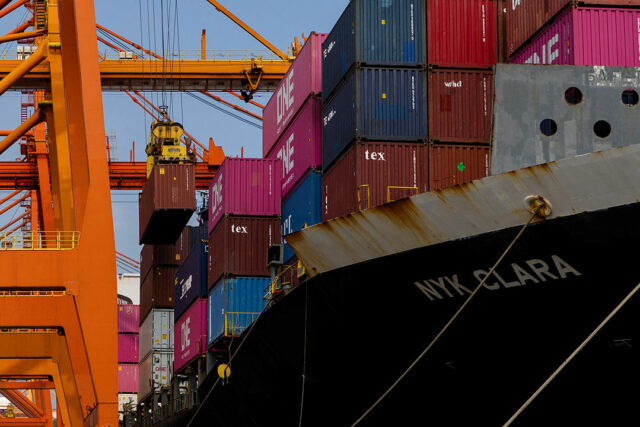
A container is loaded at the Manila International Container Terminal at the Port of Manila, Aug. 11, 2025. — REUTERS/ELOISA LOPEZ

By Aubrey Rose A. Inosante, Reporter

THE Philippine manufacturing sector may face headwinds from increasing global trade tensions that could weaken overseas demand this year, S&P Global said.

“The key headwind for the Philippine manufacturing sector remains external uncertainties,” Jingyi Pan, economics associate director at S&P Global Market Intelligence, told BusinessWorld in an e-mailed statement on Monday.

Ms. Pan said she expects elevated global trade tensions to continue dampening overseas demand in the manufacturing sector in 2026.

The full impact of elevated US tariffs is expected to be felt by most Southeast Asian countries this year. In August 2025, the US began imposing a 19% reciprocal tariff on many goods from the Philippines, Cambodia, Malaysia, Thailand and Indonesia.

Ms. Pan noted that the Philippine purchasing managers’ index (PMI) readings from December indicated “worsening external demand compared with rising new orders from the domestic market.”

Despite the gloomy outlook, S&P Global reported that the Philippines Manufacturing PMI rebounded to 50.2 in December from a 47.4 reading in November, which was the “strongest deterioration” in over four years.

However, foreign demand worsened in December, with fewer new export orders weighing on the overall sales increase.

“The trend is similar on a global scale with various APAC (Asia-Pacific) economies expected to face similar challenges in the new year,” Ms. Pan said.

Despite recent weakness, S&P Global Market Intelligence said it sees growing potential for the Philippines’ manufacturing sector, citing rising labor costs in other markets.

“Greater focus on expanding the manufacturing base, while relieving infrastructure constraints as part of reforms, is expected to support the contribution to growth from the goods-producing sector in the medium term,” she said.

Meanwhile, Pantheon Macroeconomics Chief Emerging Asia Economist Miguel Chanco said the local manufacturing industry will likely continue to have a “hard time” in 2026, though easing borrowing costs could provide some relief.

“Demand remains lackluster on many fronts. Domestically, household balance sheets are still in a fragile state, while business confidence and, by extension, their investment plans, continue to sag,” he said in an e-mailed statement on Jan. 4.

Mr. Chanco said the flood control controversy could further weigh on business confidence and hinder expansion plans in the sector.

“Indeed, but the scandal only really added insult to injury, as business confidence was already faltering before the ICI (Independent Commission for Infrastructure) was set up in September last year,” he said.

Mr. Chanco also noted that business confidence remains very sensitive to swings in the stock market, and equities have been a huge underperformer on this front for some time.

Externally, Mr. Chanco said global economic growth is projected to soften further, which would constrain export growth.

“Cyclically, at least, manufacturers should see lower borrowing costs this year, vis-a-vis 2025, especially in inflation-adjusted terms. This is at least one macro-headwind that should subside more over the coming 12 months,” he said.

OPTIMISTIC OUTLOOK
Meanwhile, the Federation of Philippine Industries (FPI) remains optimistic for the manufacturing sector this year, supported by government reforms.

“We are optimistic for this year 2026, banking on the expansion and implementation of real reforms that affect businesses, together with the strengthening of initiatives like Tatak Pinoy that can build long-term resilience for the country’s manufacturing base,” FPI Chairperson Elizabeth H. Lee said in a statement on Viber.

FPI said that export growth in 2026 could provide a “stronger external tailwind,” particularly in electronics, which account for nearly half of Philippine exports.

The group said that export momentum should help sustain PMI readings above 50, signaling broader expansion in the manufacturing sector.

However, FPI noted that sustained growth will depend on resilience against climate disruptions and supply-chain shocks, as well as diversifying beyond food and electronics into mid-complexity industries such as machinery and chemicals.

In addition, FPI’s Ms. Lee said the December rebound shows Philippine manufacturing can recover quickly when demand stabilizes.

“The PMI shows we are back in positive territory — a clear sign of resilience. The challenge and opportunity now is to turn this recovery into lasting industrial strength by investing in innovation, diversification, and resilience,” she said.

The December improvement was not driven by holiday seasonality, noting the PMI is seasonally adjusted, Ms. Lee said, but rather genuine stabilization following November’s contraction.

ADVERTISEMENT
ADVERTISEMENT