Home Blog Page 4752

UAE donates humanitarian aid to families affected by Mayon

MAYON Volcano spews ash and lava as seen from Legaspi City, Albay on June 11, 2023. — PHILIPPINE STAR/EDD GUMBAN

THE UNITED Arab Emirates (UAE) has donated 50 tons of food and other items for families displaced by Mayon Volcanos unrest, the Department of the Interior and Local Government (DILG) said on Monday.  

The goods, flown in via a chartered flight commissioned by the UAE, were received by the DILG and the Department of Social Welfare and Development (DSWD).   

The President (Ferdinand R. Marcos, Jr.) is very happy and thankful to the royal family of UAE, President Mohamed bin Zayed Al Nahyan, Interior Minister Saif bin Zayed Al Nahyan, UAE Ambassador to the Philippines Mohamed Obaid Salem Alqataam Alzaabi, and the people of UAE for this donation the very first international aid that we received for the victims of Mayon volcano unrest,Interior Secretary Benjamin C. Abalos said.  

DSWD Secretary Rex T. Gatchalian committed to the UAE government that distribution of the relief items will be done within 24 hours.   

He said repacking will be done in Albay to expedite the release.

CoA finds P47-M unused medical equipment in Davao Occidental

BW FILE PHOTO/ MAYA M. PADILLO

THE COMMISSION on Audit (CoA) found P47.1 million worth of donated medical equipment that were unutilized in several hospitals in Davao Occidental due to lack of manpower and power supply.  

In a 2022 audit report made available on May 29 this year, state auditors said donated medical equipment units amounting to P41.11 million were found idle but serviceable at three district hospitals of the province, resulting in the unproductive management of government resources that deprived the intended beneficiaries of its use, and the province of its economic benefits.” 

CoA noted in the same report that the hospitals could not use the medical equipment for several reasons, including a shortage of resident doctors as well as power supply or transformer issues.  

It appears that the said hospitals and their clientele and the constituents within the area did not benefit from these subject medical equipment,state auditors concluded.  

There was [also] no revenue earned from these equipment units, thereby rendering the assets unproductive,it added.  

The Provincial Health Office, in a response cited in the CoA report, said the province will need sufficient supply of electricity to use its health facilities. It also said that several hospitals could not deliver services because these do not have accreditation from the Department of Health.   

The Provincial Health Officer also committed to review necessary documents and transfer some of the donated medical equipment to other health facilities for use. 

CoA also found that fund transfers amounting to P158.36 million from national government agencies were unspent by the provincial government, thereby defeating the purpose for which these funds were granted and depriving the beneficiaries and the public of the benefits they deserve.” 

The Provincial Accountant and offices involved said that most of the fund transfers were already utilized or that implementation is ongoing, and that these were yet to be liquidated with the source agencies. Beatriz Marie D. Cruz

Ukraine announces gains in counterattack against Russia

Army soldier figurines are displayed in front of the Ukrainian and Russian flag colors background in this illustration taken, Feb. 13, 2022. — REUTERS/DADO RUVIC/ILLUSTRATION

KYIV — Ukraine said on Sunday its troops had made territorial advances on three villages in its southeast, the first liberated settlements it has reported since launching a counter-offensive this past week.

Kyiv’s forces posted unverified videos showing soldiers hoisting the Ukrainian flag at a bombed-out building in the village of Blahodatne in Donetsk region and posing with their unit’s flag in the adjacent village of Neskuchne.

“We’re seeing the first results of the counter-offensive actions, localized results,” Valeryi Shershen, spokesperson for Ukraine’s “Tavria” military sector, said on television.

Deputy Defence Minister Hanna Maliar later said Ukrainian forces had “deoccupied” Makarivka, the next village to the south, and advanced between 300 and 1,500 meters in two directions on the southern front.

“No positions were lost on the directions where our forces are on the defensive,” Ms. Maliar added on Telegram.

Reuters was unable to verify battlefield reports.

Russian President Vladimir Putin said on Friday that a Ukrainian military push was underway, but that it had failed to breach Russian defensive lines and taken heavy casualties.

Ukraine’s president, Volodymyr Zelensky, praised his troops in his nightly video address, but made no reference to the specific areas where the fighting was reported.

“Of course, I am thankful to our soldiers for this day,” Mr. Zelensky said, referring only to the two main sectors of the fighting in the east and the south.

“Each one of our combat brigades, each of our units.”

Mr. Zelensky on Saturday had given his strongest signal yet that Kyiv has launched its long-awaited counterattack to seize back land in the east and south, confirming that “counteroffensive and defensive operations” were taking place.

Kyiv officials have imposed a strict period of operational silence and urged Ukrainians not to disclose any information that could compromise the operation.

‘KICKING THE ENEMY OUT’
With so little information out of Kyiv and scant independent reporting from the front lines, it has been almost impossible to assess the battlefield situation.

The video from Blahodatne showed Ukrainian troops inside a heavily damaged building as artillery rumbled in the distance.

“We’re kicking the enemy out from our native lands. It’s the warmest feeling there is. Ukraine is going to win, Ukraine above everything,” an unidentified soldier said in the video on Facebook.

Russia said at least twice this week that it had repelled attacks close by the nearby settlement of Velyka Novosilka.

The Ukrainian advances follow the breach last week of the Kakhovka dam further west in Kherson region that unleashed floods and prompted rescues of residents from submerged areas.

Ukraine and Russia blame each other for the breach.

The Ukrainian-appointed governor of Kherson region on Sunday said Russian forces had shelled three boats evacuating mainly elderly evacuees to safety, killing three and injuring 10.

Shershen later told a radio interviewer that Russian forces had blown up a smaller hydroelectric dam near the scene of the latest combats in an attempt to disrupt the Ukrainian advance.

“This led to the flooding of both banks of the Mokri Yaly River,” he told Ukrainian NV Radio. “This, however, does not affect our counter-offensive actions.”

The occupied southeast is seen as a likely priority for Kyiv’s forces that may aim to sever Russia’s land bridge to the annexed peninsula of Crimea and split Russian forces in half.

Makarikva is around 90 km (55.92 miles) northwest of the city of Mariupol, which lies on the Sea of Azov on the southern rim of the land bridge. Russia captured the major city last year after besieging and bombarding it for several weeks.

Russia has built vast fortifications across occupied territory to prepare for a Ukrainian counterattack using thousands of troops trained and equipped by the West.

Ms. Maliar also said Ukrainian forces were continuing assault operations in the east near the devastated city of Bakhmut and had advanced 250 metres near the adjacent Berkhivka Reservoir.

Russia said it captured the city of Bakhmut last month after the bloodiest battle of Russia’s February 2022 invasion, but Kyiv has said it has been regaining ground on the city’s flanks.

The General Staff of the Ukrainian armed forces said separately that a motorized infantry brigade had advanced on the front line around the eastern city Avdiivka in recent days and captured a Russian position, but it provided no further details. — Reuters

North Korea’s Kim vows to ‘hold hands’ with Putin for strategic cooperation

REUTERS

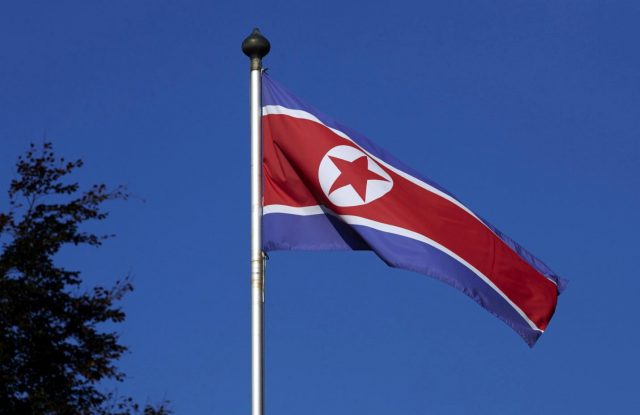
SEOUL — North Korean leader Kim Jong Un has vowed to “hold hands” with Russian President Vladimir Putin and bolster strategic cooperation on their shared goal of building a powerful country, state media KCNA reported on Monday.

Mr. Kim made the pledge in a message to Mr. Putin marking Russia’s National Day, defending his decision to invade Ukraine and displaying “full support and solidarity.”

“Justice is sure to win and the Russian people will continue to add glory to the history of victory,” Mr. Kim said in the message published by KCNA.

Mr. Kim called for “closer strategic cooperation” with Moscow, “holding hands firmly with the Russian president, in conformity with the common desire of the peoples of the two countries to fulfil the grand goal of building a powerful country,” it added.

North Korea has sought to forge closer ties with the Kremlin and backed Moscow after it invaded Ukraine last year, blaming the “hegemonic policy” and “high-handedness” of the United States and the West. — Reuters

Gender biases not improved over past decade, UN says

FREEPIK

GENDER INEQUALITY has remained stagnant for a decade, according to research by the United Nations (UN) released on Monday, as cultural biases and pressures continue to hinder women’s empowerment and leave the world unlikely to meet the UN’s goal of gender parity by 2030.

Despite a surge in women’s rights groups and social movements like Time’s Up and MeToo in the United States, biased social norms and a broader human-development crisis heightened by COVID-19, when many women lost their income, have stalled progress on inequality.

In its latest report, the United Nations Development Programme (UNDP) tracked the issue through its Gender Social Norms Index, which uses data from the international research programme World Values Survey (WVS).

The survey draws from data sets spanning 2010-2014 and 2017–2022 from countries and territories covering 85% of the global population.

The latest analysis showed that almost nine out of 10 men and women hold fundamental biases against women and that the share of people with at least one bias has barely changed over the decade. In 38 of the surveyed countries the share of people with at least one bias decreased to just 84.6% from 86.9%.

The degree of improvement over time has been “disappointing,” said Heriberto Tapia, research and strategic partnership adviser at UNDP and co-author of the report.

The survey also noted that nearly half of the world’s people think that men make better political leaders, while 43% think men are better business executives.

“We need to change the gender biases, the social norms, but the ultimate goal is to change the power relations between women and men, between people,” Aroa Santiago, gender specialist in inclusive economies at UNDP, told Reuters.

Though education has always been hailed as key for improving economic outcomes for women, the survey revealed the broken link between the education gap and income, with the average income gap at 39% even in the 57 countries where adult women are more educated than men.

More direct harm to women’s wellbeing could be seen in views on violence, with more than one out of every four people believing it was justified for a man to beat his wife, the UNDP said. — Reuters

Trump is ‘toast’ if classified records case is proven, ex-attorney general says

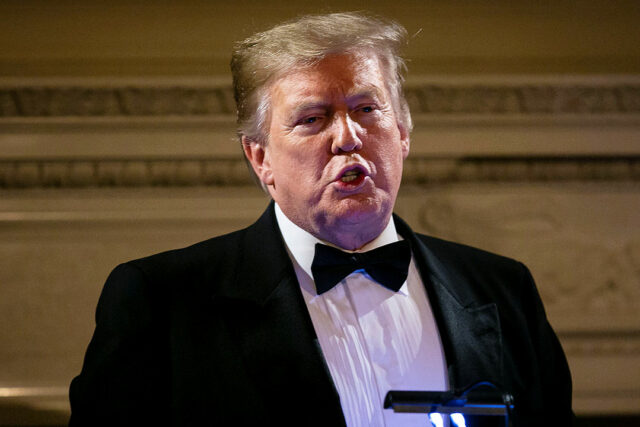
US President Donald Trump speaks at an event in the State Dining Room of the White House, in Washington, U.S., Feb. 24, 2019. — REUTERS

WASHINGTON — Former US Attorney General William Barr on Sunday defended Special Counsel Jack Smith’s 37-count indictment against Donald Trump on Sunday, saying if the allegations the former president willfully retained hundreds of highly classified documents are proven true, then “he’s toast.”

“I was shocked by the degree of sensitivity of these documents and how many there were, … and I think the counts under the Espionage Act that he willfully retained those documents are solid counts,” Mr. Barr, who served under Mr. Trump, told Fox News Sunday.

“If even half of it is true, then he’s toast.”

The comments from Mr. Barr, who was Mr. Trump’s attorney general from February of 2019 through December of 2020, are notable and were made at a time when many other prominent Republicans have been hesitant to criticize the former president and current Republican front-runner in the 2024 White House race.

Mr. Trump responded to Mr. Barr’s comments with criticism and insults. Describing Mr. Barr as a “lazy” and “weak” attorney general, Mr. Trump on his social media platform Truth Social said he only made the comments because he was disgruntled and that they were misinformation. “Turn off Fox News when that “Gutless Pig” is on,” Mr. Trump said.

The former president is due to appear in a federal courthouse in Miami on Tuesday to make his initial appearance on the charges, which include the willful retention of highly sensitive national defense records under the Espionage Act, obstruction of justice, making false statements, conspiracy and concealment.

Mr. Trump told Politico on Saturday that he would continue his presidential campaign, even if he were convicted in the case, saying “I’ll never leave.”

He plans to make remarks at 8:15 p.m. on Tuesday (0015 GMT on Wednesday) at his Bedminster, New York, golf club, his presidential campaign said.

Meanwhile, hundreds of pro-Trump supporters drove in a caravan from Miami to Palm Beach on Sunday to show their support for the former president, as has been done on several previous occasions since he left office.

Cars decked out with American flags and pro-Trump slogans on placards made the 80-mile (130-km) trip, honking most of the way and meeting at a Palm Beach grocery store parking lot for a rally.

Of the 37 counts against Mr. Trump, 31 of them relate to secret and top secret classified documents that he kept after leaving the White House in early 2021.

The indictment alleges that Mr. Trump stored the documents in a haphazard manner at his home in Palm Beach, Florida, refused to give them back to the government, and tried to hide them from the FBI and even his own attorney after a grand jury issued him a subpoena demanding that he turn over all records bearing classified markings.

His attorney Alina Habba, who is not representing him in the case, told Fox News Sunday that Mr. Trump is innocent of the charges and plans to vigorously defend himself in the case.

In the past, Mr. Barr has been a fierce defender of Mr. Trump, going so far as to appoint his own special counsel to probe whether the FBI improperly opened an investigation into Mr. Trump’s 2016 presidential campaign over possible ties to Russia based on flimsy evidence.

But towards the end of his tenure, Mr. Barr’s views on Mr. Trump soured after the former president tried to pressure the Justice Department to launch bogus voter fraud investigations, in a failed bid to overturn the results of the 2020 presidential election.

NOT ‘PERSONAL DOCUMENTS’
Mr. Trump has previously defended his retention of classified records, claiming without evidence he declassified them while in office — a defense that his allies have also repeated.

“I go on the president’s word that he said he did,” US House of Representatives Judiciary Committee Chairman Jim Jordan told CNN’s State of the Union program on Sunday when asked if he had any evidence to back up Mr. Trump’s claim.

In previous litigation related to the FBI’s search of his Florida home, however, Mr. Trump’s lawyers repeatedly declined to make that argument in their court filings, and the indictment also contains evidence that Trump knew he had retained records that remained highly classified.

“As president, I could have declassified it,” the indictment quotes Mr. Trump as saying about one military document he allegedly displayed during a meeting at his New Jersey golf club in July of 2021. “Now I can’t, you know, because this is still a secret.”

Mr. Trump and his allies have also separately tried to argue that the records at the heart of the case are personal in nature and covered by the Presidential Records Act.

“He has every right to have classified documents that he declassifies under the Presidential Records Act,” Ms. Habba told Fox News Sunday.

But Mr. Barr said the claim that the documents were Trump’s personal records is “facially ridiculous.” The records referenced in the indictment are “official records” prepared by government intelligence agencies, he said, and therefore they are the property of the US government.

“Battle plans for an attack on another country or Defense Department documents about our capabilities are in no universe Donald J. Trump’s personal documents,” he said. — Reuters

Starbucks brews up cheaper India drinks as domestic rivals expand

STARBUCKS

MUMBAI/NEW DELHI – Starbucks is revamping its strategy to lure Indians, including children, with smaller, cheaper beverages as it looks to expand in small towns amid a fierce challenge from domestic startups in one of its fastest-growing markets.

Among the first foreign coffee brands to enter tea-loving India, the U.S. giant has taken almost 11 years to open 343 stores, in contrast with private equity-backed chains Third Wave and Blue Tokai that opened about 150 in the last three years.

“As you grow in size, you need to get new consumers,” said Sushant Dash, the chief executive of Starbucks in India, adding that the chain’s “pricing play” would help shatter a perception that it is expensive.

The company has launched a six-ounce drink, “Picco”, which starts at $2.24, and milkshakes for $3.33 as part of its revamp to target affluent Indians who prefer smaller servings.

Starbucks plans to open more stores in smaller towns, said an industry source, who spoke on condition of anonymity.

Both its new offerings are unique to India and unavailable in China, Singapore and the United States.

India’s small but fast-growing specialty tea and coffee cafe market is worth $300 million and set to grow 12% each year, Euromonitor estimates. Canada’s Tim Hortons and Britain’s Pret A Manger are also expanding, but have only a handful of outlets.

“Excessively large portion sizes are an American phenomenon,” said Devangshu Dutta, head of retail consultancy Third Eyesight.

“Indian consumers are value-conscious. If adjusting portion sizes down to what is more normal helps make prices accessible, that’s a double win.”

He was among the analysts who felt the move by Starbucks, operating in India in a joint venture with Tata Group, could further boost its sales, which hit a record $132 million in fiscal 2022/23.

Although Starbucks still dominates in India, rivalry is fizzing in the capital, New Delhi, and the technology hub of Bengaluru, where many Third Wave cafes are often as crowded as Starbucks outlets.

“We’ve lost 30 cups a day to them,” said a barista at a Starbucks shop in Delhi that sells 7,500 drinks a month, referring to a Third Wave that opened nearby months ago, but already sells 3,700.

Starbucks has faced homegrown challengers elsewhere, most notably in China, where its 6,200 stores service the biggest market outside the United States.

There, in just the last five years, Luckin Coffee has used discounts to lure customers to its 10,000 mostly pickup or delivery stores.

BET ON CHAI
In India, where Starbucks has added domestic touches to its offerings over the years to boost their appeal, it is now stepping up that game, just as global giants McDonald’s and Domino’s have done.

It estimates that just 11% of Indian homes drink coffee, as opposed to 91% drinking tea. Hot milky tea, or “chai” as it is known in Hindi, is sold at roadside stalls by the hundreds of cups each day for as little as 10 rupees (12 U.S. cents).

Starbucks, which offered for years just one milk chai “latte” made with tea syrup, has launched “Indian-inspired” tea offerings laced with spices and cardamom, both favourites in many Indian homes, which start at 185 rupees ($2.24).

The drinks were introduced to attract those who do not drink coffee and shun Starbucks, said Dash, adding the company would retain its focus on coffee and not make chai a primary offering.

The launch of smaller, cheaper beverages in India indicates Starbucks may have seen “a decline in traffic related to a pushback” on higher prices, said Chas Hermann, a U.S.-based restaurant consultant and former Starbucks executive.

COMPETITION, SMALL CITIES PUSH
In May, people lured by a one-for-one offer queued in a street outside the first Starbucks store in the western city of Aurangabad, a YouTube video showed in scenes reminiscent of when it first opened in India.

But its rivals are catching up and a price war has begun.

Soon after Starbucks’ May launch of $3.33 milkshakes, designed to attract children, Third Wave launched its own range, a fifth cheaper at $2.71.

In Bengaluru, startup investors and founders hold meetings in Third Wave outlets. It has more than 40 stores there, exceeding the 35 of Starbucks, data from real estate analytics firm CRE Matrix shows.

Third Wave’s chief executive, Sushant Goel, said he planned to add 60 to 70 stores every year, with a focus on big cities. He saw Starbucks’ cheaper, small-sized drinks as a response to competition in “an incredibly price-sensitive market”.

Matt Chitharanjan, chief executive of Blue Tokai, said it had “seen success in converting customers from Starbucks”, partly because of lower prices.

While Dash said he was undeterred by competition, Starbucks recognises the threat, although privately.

In one lease deal for a Bengaluru mall reviewed by Reuters, Starbucks inserted a “cafe exclusivity” clause barring the mall owner from allotting space on the same floor to rival “premium” brands, including Third Wave and Blue Tokai.

“Going deeper into smaller cities, beyond the metros, is the only way to grow,” said Ankur Bisen, head of retail at India’s Technopak Advisors. — Reuters


UK must seize opportunities of AI to remain a tech capital – PM Sunak

STOCK PHOTO | Image by Gerd Altmann from Pixabay

Britain must act quickly to remain a tech capital, Prime Minister Rishi Sunak will tell tech leaders on Monday, urging them to grasp the opportunities and challenges of artificial intelligence.

Mr. Sunak, speaking at the start of London Tech Week, will say the “tectonic plates of technology are shifting”.

“We must act – and act quickly – if we want not only to retain our position as one of the world’s tech capitals … but to go even further, and make this the best country in the world to start, grow and invest in tech businesses,” Sunak will say, according to advance extracts released by his office.

“That is my goal. And I feel a sense of urgency and responsibility to make sure we seize it.”

Governments around the world are now trying to find a balance whereby they can assess and rein in some of the potential negative consequences of AI without stifling innovation.

Britain in March opted to split regulatory responsibility for AI between those bodies that oversee human rights, health and safety, and competition, rather than creating a new body dedicated to the technology.

Mr.Sunak will say the tech sector is at the heart of his priority to grow the economy and outline how the government will work with businesses to capitalise on opportunities presented by transformative technologies, such as AI, which proponents have compared with the arrival of the internet.

During a visit to Washington last week, Mr.Sunak said Britain would host a global summit on artificial intelligence safety later this year to consider the risks of AI and discuss how they can be mitigated through internationally coordinated action.

“The possibilities are extraordinary. But we must – and we will – do it safely,” he will say on Monday. “I want to make the UK not just the intellectual home, but the geographical home of global AI safety regulation.” – Reuters

World Bank must drive private investment in climate transition – Banga

WASHINGTON – The World Bank must use “informed risk-taking” to encourage private investors to get more engaged in helping developing countries deal with climate change and leapfrog fossil-fuel energy sources, its new president Ajay Banga said on Sunday.

Mr. Banga told CNN’s ‘Fareed Zakaria GPS’ program that efforts now underway to stretch the World Bank’s lending capacity and revamp its business model could potentially free up “tens of billions” of dollars, but not the estimated trillions of dollars needed to ensure a just energy transition.

Private sector capital was critical since funds from governments, philanthrophy, the World Bank and other multilateral development banks (MDBs) would never suffice to help poor countries adapt to and mitigate climate change, said Banga, a former Mastercard CEO who took office on June 2.

“The only way forward is to find a way to get the private sector to believe that this is part of their future,” said Mr.Banga, who will visit Peru and Jamaica this week as part of a tour to visit countries in every region where the bank operates.

“What I think we have to do is… to find ways in the MDB system to think of a different playbook – to take on the risks that they cannot take on,” he said.

Private companies were bound to deliver returns for shareholders and could not take on the risks involved, but the bank could help, he said.

“That’s kind of a thing that we can do with informed risk-taking,” Mr.Banga said, noting that renewable energy was now cheaper in many cases than fossil fuels due to improvements in storage and duration.

Affordable electricity was the key starting point for social and economic development in emerging economies, but new solutions were needed to avoid the “emissions-intensive growth model” followed by advanced economies, or there was no hope of curbing emissions by 2050, he added.

The Indian-born executive was nominated by the US for the job precisely because of his previous work in the private sector, and he has pledged to identify barriers for greater investment and find ways to maximize the bank’s impact.

Mr.Banga told CNN he would also work closely with other multilateral lenders and development organizations, noting that he would be joined in his visits this week by Inter-American Development Bank President Ilan Golfajn.

“We need so much to be done. We need all shoulders at the wheel,” he said. “What we don’t need is silos in this effort.” – Reuters

UN nuclear watchdog concerned over water levels at Ukraine plant

The UN atomic watchdog said on Sunday that it needs wider access around the Zaporizhzhia nuclear plant to check “a significant discrepancy” in water level data at the breached Kakhovka dam used for cooling the plant’s reactors.

International Atomic Energy Agency head Rafael Grossi, who is to visit the plant this week, said that measurements the agency received from the inlet of the plant showed that the dam’s water levels were stable for about a day over the weekend.

“However, the height is reportedly continuing to fall elsewhere in the huge reservoir, causing a possible difference of about two metres,” Mr. Grossi said in a statement.

“The height of the water level is a key parameter for the continued operability of the water pumps.”

The destruction of the Kakhovka hydropower dam in southern Ukraine last week has flooded towns downstream and forced thousands of people from their homes.

Both the Kakhovka hydropower dam and the Zaporizhzhia nuclear plant have been occupied by Russia since the early days of its invasion in February 2022.

The water from the reservoir is used to cool the facility’s six reactors and spent fuel storage, the IAEA said.

“It is possible that this discrepancy in the measured levels is caused by an isolated body of water separated from the larger body of the reservoir,” Mr. Grossi said in the statement. “But we will only be able to know when we gain access to the thermal power plant.”

Mr. Grossi said the thermal power plant “plays a key role for the safety and security of the nuclear power plant a few kilometres away,” hence the need for access and independent assessment.

The agency has said earlier that the Zaporizhzhia plant can fall back on other water sources when the reservoir’s water is no longer available, including a large cooling pond above the reservoir with several months’ worth of water. – Reuters

Looking back on the Philippines’ hard-fought independence

Independence Day, much more than another national holiday, signifies hope, freedom, and patriotism for Filipinos. The observance serves as a reminder that after decades of struggle amid periods of colonization, the Philippines has been working hard for its independence and sovereignty.

The journey to Philippine independence was described as “long and tenuous” in an article written by Professor Ricardo Trota Jose of the University of the Philippines. During this time, many revolutions and uprisings took place, giving way to the anti-colonial movement. After the many revolutions that occurred, Spain gave up with the Treaty of Paris, concluding the Spanish-American War, which then led to the country’s proclamation of independence on June 12, 1898.

The Philippines was not truly free yet, however. While a part of the said treaty swore that Spain will give up the Philippines, it also said that the country will become a colony of the United States, which soon sparked the battle and resistance against American colonial rule.

The fight for independence thus continued, ushering in the Commonwealth era, a 10-year transitional period to prepare the Philippines for independence from American colonial rule.

But it was not long after the Japanese invaded the country and the Commonwealth era came to an end.

According to a short documentary titled Liberation: Battle of Manila by the then Presidential Communications Development and Strategic Planning Office and the Presidential Museum and Library, the Philippines and the United States have joined hands together, preparing in taking back the city of Manila; but, unfortunately, the Japanese forces had no intention in declaring Manila as an open city.

The Battle of Manila soon followed, from February 3 to March 3, 1945. The month-long battle caused an extreme downfall in the city as many lives were killed and many people suffered.

“Due to extreme inflation, the city has been suffering from starvation, and there’s a sense of abandonment, confusion, and a breakdown of peace and order,” the documentary narrated.

“The Japanese fired many commercial areas in Manila, causing a panic among the civilian population. The streets have been barricaded. Electricity has been cut off. The food supply is quickly depleting,” it added.

The battle became extreme, and the Japanese used all their forces in stopping the American advance. While Filipinos sought refuge, the massacre and killings continued for days. Slowly, the Filipino-American forces saved several areas in the city which were occupied by the enemy; and soon the battle was put to an end. Yet, the battle’s aftermath saw tremendous damage and a tragedy for the country.

“As the war ended, the Philippines counted the cost. Over a million Filipinos had died or were killed, out of a population of 18 million. Manila and most of the major cities were in ruins. Severe inflation had set in as a result of the Japanese occupation, and farms were fallow; farm animals too had died because of the war. Industries, transportation, and communication facilities were destroyed,” as Mr. Jose wrote in his article.

From then on, the control of the civil government was handed back to the Philippines; and a new Commonwealth era has begun, where Manuel Roxas was elected as president in 1946. Afterward, as soon as July came, the country was busy in preparation for the most-awaited independence celebration of the Philippines.

First celebrated on July 4, 1946, the Philippines held a grand celebration that lasted for two days, and many festivities include religious services, exhibitions, contests, parades, concerts, and dinner feasts. However, in 1962, through Republic Act No. 4166, the country’s Independence Day was changed from July 4 to June 12, recalling the first proclamation if Independence.

This year, the 125th celebration of Independence Day is themed “Kalayaan, Kinabukasan, Kasaysayan” (Freedom, Future, History).

According to Administrative Order 8, which created an interagency committee that will plan and implement programs and projects for the commemoration of the 125th anniversary of Philippine independence, the country will commemorate this anniversary from 2023 to 2026 to “give focus on the freedom that our forebears struggled for towards that they dreamed for the country and the history that we seek to remember and honor them with.”

Moreover to commemorate the 125th anniversary of Philippine Independence, the Bangko Sentral ng Pilipinas (BSP) held a launch event of a brand new collection of commemorative coins to mark the country’s independence and nationhood.

According to BSP Governor Felipe M. Medalla, the commemorative coin set was created in an effort to “preserve the cultural heritage and promote pride in our shared history.”

“It is particularly significant when we do these via coinages that we have created for the 125th Independence Day because in a very real sense, the establishment of a formal currency by any country is part of the definition of being a sovereign nation. And that’s why we have to see it not just a very, very nice souvenir but really a commemoration of the creation of the Republic of the Philippines,” President Ferdinand R. Marcos, Jr. said in his speech delivered during the commemorative coin launch.

This commemorative coin set was produced by the central bank using the most recent digital technology; and it comes in different colors: blue, signifying peace; red, standing for valor; and yellow, symbolizing freedom and sovereignty. The set also comes in different types, namely the P5, P20, and P100 coins.

“We have used the most modern technology which also signifies that the Philippines is at that stage in its development that we are now at the forefront. We will use the best technologies, the best techniques, and everything that is good and new for our country, that’s what it means,” Mr. Marcos also explained in his speech.

“It also reminds us of how far we have come and the significance of what we have achieved in 125 years,” he added.

The coins were designed to signify important events in Philippine history. For instance, the P5 coin pays tribute to Filipino soldiers who defended the country during the Philippine-American war; while the P20 coin honors the first day of being a republic country, and the P100 coin symbolizes the declaration of the country’s independence in 1898. — Angela Kiara S. Brillantes

64% of Filipinos actively engage in ‘woke’ culture to amplify social issues, poll finds

Filipinos are stepping up in the era of digital activism, a study produced by data analytics firm concluded.

A study by Agile Data Solutions notes that 64% of Filipinos are engaging in “woke” discussions primarily “to ignite conversations and awareness about social issues,” and 43% are engaging in “cancel culture” content “to hold individuals or organizations accountable for their actions or statements.”

The study was rolled out online in May 2023 to 600 Filipino participants aged 18 and above using Agile Data Solution’s Hustle PH data gathering app.

Four out of 10 Filipinos expressed that these kinds of content heightened their levels of political engagement, encompassing activities such as activism, voting in elections, and engaging in campaign efforts.

The study also found that 30% identified women’s empowerment as the most critical issue to discuss online, 26% pointed to live-in relationships, and 24% highlighted LGBTQIA+ (lesbian, gay, bisexual, transgender, queer/questioning, intersex, asexual) rights as equally essential topics of online discourse.

“The study reveals that even though most Filipinos may be confused by current ‘woke jargon,’ they actively take a progressive stand on women empowerment, LGBTQ rights and environmental protection,” said Jason Gaguan, founder of Agile Data Solutions.

“The broad range of topics also suggests a community that values diverse perspectives and is actively seeking to broaden its understanding of various lifestyle choices,” he added.

The influence of these cultures is also evident in the respondents’ buying patterns as consumers increasingly prioritize aligning brands’ values with their own. More than half of Filipinos — 57% — said “woke” culture made them “put more emphasis on how goods and services are being marketed or promoted,” and 55% said the same due to being exposed to ‘cancel’ culture.

“Consumers are increasingly becoming conscious of a brand’s values and integrity, and they are willing to make purchasing decisions based on these factors,” Mr. Gaguan said.

Additionally, 51% of those surveyed said “woke” content made them “more focused on who’s selling the goods and services rather than the actual products.” The same goes for 52% of the respondents.

The survey also reveals 44% are “more likely to support brands that share my values or promote social justice.” In comparison, 30% reported avoiding purchasing from companies that had been “canceled” due to offensive or harmful behavior.

“Businesses and organizations should recognize these changing societal norms to better align their marketing efforts to stay relevant and connected to their consumers.”

The poll also finds that Facebook, the most popular social media platform in the Philippines, is also the choice of 81% of participants as a platform for these kinds of discussions. The remaining percentage is split evenly between those who prefer using the short-form video app TikTok and those who favor traditional in-person discussions.

“Whatever trends may come in social media, its overarching objective remains to promote social awareness and ensure accountability,” Mr. Gaguan added.