Home Blog Page 4750

Hog industry seeking details of ASF vaccine trials

REUTERS

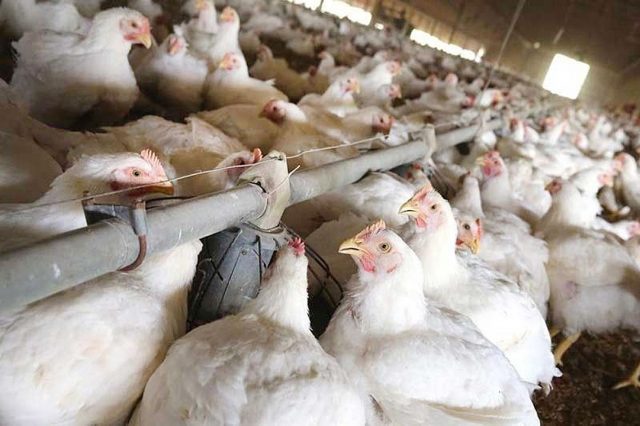
THE hog industry pressed the government for detailed results of clinical trials for a vaccine against African Swine Fever (ASF), and to prepare a plan to subsidize hog farmers seeking to use it.

“We welcome all efforts in developing vaccines against ASF on a commercial scale, but we caution (against) the promotion of a particular vaccine brand without the proper protocols, testing procedures and prescribed guidelines,” Jayson H. Cainglet, executive director of Samahang Industriya ng Agrikultura, said in a Viber message.

Mr. Cainglet called on the Bureau of Animal Industry (BAI) to release in detail the field trial results to allow the industry to assess the efficacy of the vaccine.

He also asked the government to stand ready with subsidies for the vaccine to help hog farmers recover from the outbreak, which began in the Philippines in 2019.

“The hog industry remains predominantly backyard and small-scale. The cost of vaccines should at least be subsidized by the government so that backyard hog raisers are given the same chance of recovering lost income and destroyed livelihoods for the past four years,” Mr. Cainglet said.

BAI Assistant Director Arlene V. Vytiaco announced on Friday that the safety component of the trials was conducted by the BAI while the efficacy trials were conducted at six Luzon farms.

She said that the vaccine tested is the AVAC ASF LIVE vaccine from Vietnam. It has been established that the vaccine produced no side effects on pigs receiving it.

“At the end of the trial, 100% of the vaccinated (pigs) produced antibodies against ASF,” she added.

The bureau has sent a letter of endorsement to the Food and Drug Administration (FDA) for the issuance of a certificate of product registration.

The AVAC vaccine is the third vaccine to undergo clinical trials. The manufacturer is ready to supply 600,000 doses of ASF vaccines, according to Ms. Vytiaco.

Alfred Ng, vice-president of the National Federation of Hog Farmers, Inc., said there might be reluctance to use the vaccine with farmers burdened by the expense of repopulating their herds.

“If the (vaccine) has low levels of protection, then it would be easy for the virus to enter but if the vaccine itself causes the infection within the farm, that is a bigger risk. Those are the things we think might happen,” he told BusinessWorld by phone.

He added a bigger sample size of successful vaccinations might persuade more farmers.

“I am not sure how FDA evaluates and approves vaccines for use, but commercial farmers need to be convinced that the commercial trials are successful and indeed give protection to the pigs against ASF,” he added.

FDA spokesman Job Aguzar said in a Viber message that the BAI endorsement remains subject to a pre-assessment process.

“If acceptable, the FDA shall facilitate the evaluation of the submitted dossier to determine the quality, safety and efficacy of the ASF vaccine,” he said.

“At the same time, a request for permit to import additional doses of the vaccine was received today to support the ongoing phase 2 clinical trials being conducted by the applicant with BAI,” he added.

Janice S. Garcia, cluster coordinator of the BAI-National African Swine Fever Prevention and Control Program, said 15 provinces had active ASF cases as of June 1.

“For the last two weeks, the cases have been confined to the Visayas region. We have few detections from very few municipalities and provinces in Luzon and Mindanao,” Ms. Garcia said. — Sheldeen Joy Talavera

T-bill, bond rates likely steady

BW FILE PHOTO

RATES of Treasury bills (T-bills) and bonds (T-bonds) on offer this week could be broadly steady as investors await the next policy meetings of central banks here and in the United States.

The Bureau of the Treasury (BTr) will auction off P15 billion in T-bills on Monday, or P5 billion each in 91-, 182-, and 364-day papers.

On Tuesday, it will offer P25 billion in reissued 10-year T-bonds with a remaining life of four years and nine months.

Rates on the papers may move sideways as investors expect the US Federal Reserve to pause its tightening cycle this month, which could be matched by the Bangko Sentral ng Pilipinas (BSP) in its own review, Rizal Commercial Banking Corp. Chief Economist Michael L. Ricafort said in a Viber message.

“The larger market risk is whether the BSP will match the upcoming Fed rate hike of 25 bps (basis points) if the latter event materializes,” Union Bank of the Philippines, Inc. Chief Economist Ruben Carlo O. Asuncion said in a report.

The US central bank raised borrowing costs by 25 bps for a 10th straight time at its May 2-3 meeting, bringing the Fed funds rate to 5% to 5.25%.

The Fed has hiked borrowing costs by 500 bps since March 2022.

Its next policy meeting is on June 13-14.

Meanwhile, the BSP on May 18 paused its tightening cycle, keeping its policy rate unchanged at 6.25% for the first time after nine meetings.

Since it began its aggressive monetary tightening cycle in May 2022, the central bank had raised borrowing costs by 425 bps.

The Monetary Board will next meet to review policy on June 22.

T-bill rates could also track the week-on-week declines seen at the secondary market after the BSP on Friday said it would start offering 56-day bills on June 30, which could siphon off some of the excess liquidity from the financial system, Mr. Ricafort added.

At the secondary market on Friday, the 91-, 182-, and 364-day T-bills went up by 2.43 basis points (bps), 9.98 bps, and 3.53 bps week on week to end at 5.7657%, 5.963%, and 5.9314%, respectively, based on the PHP Bloomberg Valuation (BVAL) Service Reference Rates data published on the Philippine Dealing System’s website.

Meanwhile, the five-year tenor, the benchmark closest to the remaining life of the bonds on offer on Tuesday, inched down by 2.09 bps week on week to 5.7394%. The 10-year bond’s rate likewise went down by 10.22 bps week on week to end at 5.8375% on Friday.

Last week, the BTr raised P15 billion as planned from the T-bills as the offer was more than thrice oversubscribed, with total bids reaching P48.726 billion.

Broken down, the Treasury borrowed P5 billion as programmed via the 91-day T-bills, with tenders reaching P13.68 billion. The average rate of the three-month papers inched up by 0.6 bp to 5.783%, with accepted rates ranging from 5.688% to 5.799%.

The government likewise made a full P5-billion award of the 182-day securities as bids for the tenor reached P16.53 billion. The six-month T-bill was quoted at an average rate of 5.879%, down by 1.9 bps from the previous week, with accepted rates from 5.748% to 5.9%.

Lastly, the BTr raised the planned P5 billion from the 364-day debt papers as demand reached by P18.516 billion. The average rate of the one-year T-bill climbed 0.3 bp to 5.948%. Accepted yields were from 5.813% to 5.975%.

Meanwhile, the reissued 10-year T-bonds to be auctioned off on Tuesday were last offered on Dec. 4, 2018, where the government raised P38.136 billion. The papers were awarded at an average rate of 6.975%.

The Treasury wants to raise P185 billion from the domestic market this month, or P60 billion via T-bills and P125 billion via T-bonds.

The government borrows from local and foreign sources to help fund its budget deficit, which is capped at 6.1% of gross domestic product this year. — A.M.C. Sy

AXA Philippines, Toyota introduce first ‘pay-how-you-drive’ insurance product

PHOTO FROM AXA PHILIPPINES

INSURANCE PROVIDER AXA Philippines partners with Toyota Motor Philippines (TMP) for Connected Toyota Insure, the first “pay-how-you-drive” car insurance product in the country. Connected Toyota Insure is an advanced and comprehensive car insurance product under the MyToyota Connect suite of services. It factors in how the vehicle is used when computing for the premium due. This insurance product makes use of a connected device, a technology that monitors vehicles via a network to achieve safe, secure, comfortable, and convenient vehicle usage which users can access through the MyToyota app. Customers will be given a driving score based on driving habits such as cornering, braking, and acceleration. A higher score with low mileage driven corresponds to a bigger premium discount wherein customers can receive a renewal premium reduction of up to 25%.

The product also offers comprehensive coverage for loss and damage, third-party liability, and medical expenses for injuries to the driver and any passenger in the vehicle in case of an accident. It also comes with exclusive value-added services for policyholders such as 24/7 claims assistance, easy filing of claims through the Emma by AXA Ph app, exclusive access to AXA Motor Club’s personal emergency assist services, and repairs through the Toyota Insure Program.

“AXA Philippines and TMP are both committed to further advance road safety through improved driving behavior. Connected Toyota Insure aims not only to incentivize drivers to drive safely and protect what matters, but to help teach drivers how to be smarter and safer on the road to benefit both themselves and society,” said AXA Philippines Chief Marketing Officer Nandy Villar. The offer is exclusively available on Toyota vehicles with connected devices (RAV4, Hiace, Hilux, and Fortuner). For more information, go to https://bit.ly/axatytcti and download the MyToyota app for Android or iOS.

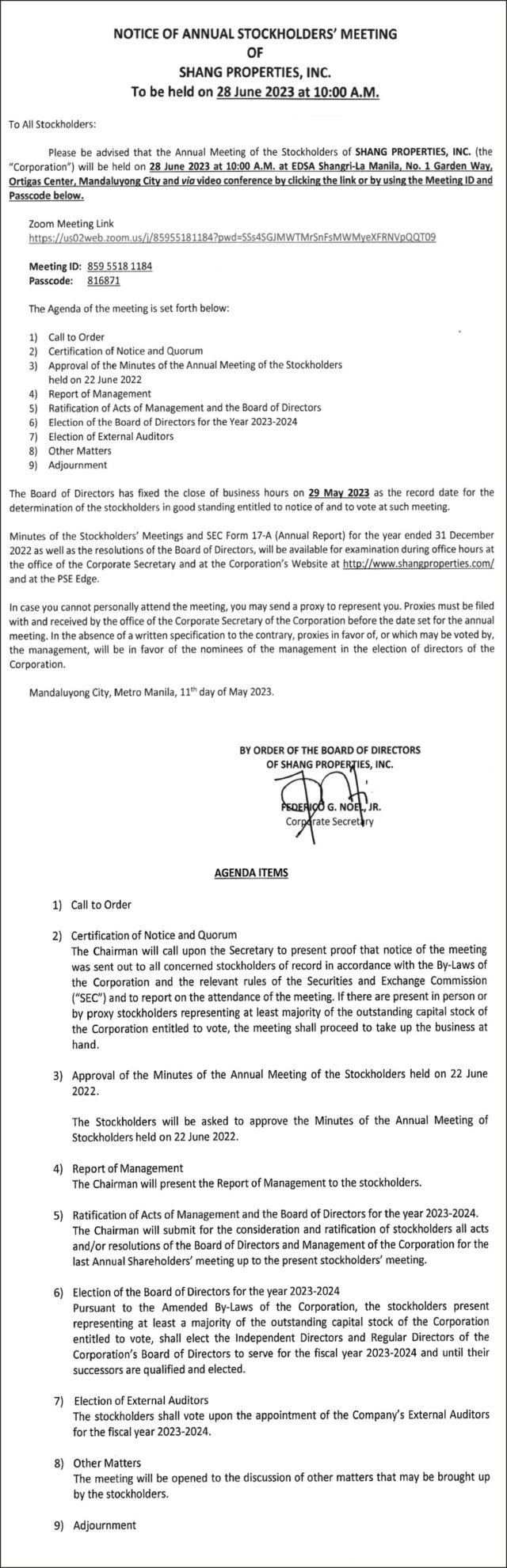
Shang Properties, Inc. to hold 2023 Annual Meeting of Stockholders on June 28


Spotlight is BusinessWorld’s sponsored section that allows advertisers to amplify their brand and connect with BusinessWorld’s audience by enabling them to publish their stories directly on the BusinessWorld website. For more information, send an email to online@bworldonline.com.

Join us on Viber at https://bit.ly/3hv6bLA to get more updates and subscribe to BusinessWorld’s titles and get exclusive content through www.bworld-x.com.

Population policy at a crossroads as population growth dramatically slows

CHARLEIN GRACIA-UNSPLASH

The Philippine Statistics Authority (PSA) recently came out with a preliminary report on births and deaths in 2022: Filipinos are having fewer children, and smaller families are now the norm. The births in 2022 are lower by 111,000 compared to 2021 (1,364,739 in 2021, down to 1,253,472 last year).

The trend for Total Fertility Rate (TFR) has been going down. The TFR was 3.1 children per woman in 2013. In 2017, TFR was 2.7 children per woman. And in 2022, TFR went down to 1.9 children per woman.

In “Population Planning Policy in the Philippines” (1973), Dr. Juan M. Flavier wrote that the country’s Commission on Population and Development (POPCOM) had recommended “to examine legal and administrative policies and measures affecting family size, and if necessary, to revise them to bring about a balance between family size and social and economic goals.”

Apparently, the Responsible Parenthood and Reproductive Health (RPRH) Law was the final measure that brought about that “balance between family size and social and economic goals.” But do we achieve the “social and economic goals” automatically? Why has poverty persisted, despite smaller family sizes? The legally mandated wages continue to fall below the minimum level of income that defines the poverty line.

Dr. Flavier was crystal clear in his paper: “Economic considerations are felt to be the most compelling reason for the national population planning policy. Written documents invariably comment on the economic implications of unbridled population growth.”

Clearly, population policy should not be about responsible parenthood and family planning alone. Even during the COVID pandemic, POPCOM has been drawing attention to increasing poverty and the need for a living wage. Most Filipino families need two jobs to sustain two children, which is now the average Filipino family size.

In 2021, at the height of the pandemic, President Rodrigo Duterte called out POPCOM and the Department of Health (DoH) to address population and urban growth, which was contributing to the country’s vulnerability to COVID. The recommendations of Secretary Karl Chua of the National Economic and Development Authority as POPCOM Chair, Secretary Francisco Duque of DoH and the writer of this column still have to be carried out.

The Department of Budget and Management convinced the Duterte administration to pass on the functions in health and population and family planning completely to local government units (LGUs). This disregarded the complementarity of health and population and family planning programs. The DoH was required to reduce budgets for family health, and family planning was made a partially devolved program, thus affecting the sustainability of the program.

Now that the major assumption for the country’s poverty has seemingly been solved (“too many Filipinos”), policy makers are talking about transforming the large labor force into inputs for economic recovery.

They quickly forget that the decline in fertility has come at a cost that must be maintained. The family planning (FP) program more than doubled, from 3.94 million women in 2012 to over 8 million women and couples in 2021. This came about due to the heroic efforts of local government health and population workers, the POPCOM, and the DoH. Family planning was the only public health program that expanded during the pandemic.

In a Social Weather Stations’ survey in November 2020 on the most important problem of women, a majority cited avoidance of pregnancy as their major problem during the pandemic. Their cited reasons: higher costs, fear of infections in hospitals, and lack of maternity services. It was also noted that marriages declined by 50% in 2020. This resulted in only 1.3 million births in 2021. As over 872,000 Filipinos died that year, the population grew at the lowest rate by around 400,000.

With the pandemic receding in 2022, the assumption is that marriages, births, and population growth might increase, but not to pre-pandemic levels.

These assumptions are only partially true: Marriages are up to around 401,000 (still 10% lower than 2019) and population growth is now 700,000 (from 400,000 in 2021).

However, births have continued to decline, with births down by 111,000 compared to 2021.

One reason is that Filipinos are now more comfortable with smaller family sizes. Only a few regions such as the Bangsamoro Autonomous Region in Muslim Mindanao continue to have more than two children per average family.

A second reason is that couples are still wary of the effects of the pandemic on the health system. They worry over increased health costs and fear of infection.

A third reason is that even if marriages are up, women are choosing to have children at later ages, with highest fertility at the 25-29 age group of women (Source: PSA).

A fourth reason is that women and increasingly men have accepted FP as a part of their daily lives. They see FP as a means to postpone having children or to limit the number of children through modern methods (leaving behind traditional methods). FP is accepted as a method to avoid poverty.

FP demand has been noted to increase as economies worsen and poverty increases. With stagnant wages that cannot sustain more than one or two children, modern FP has become an essential commodity.

Despite all the successes of FP in the previous nine years, erosion has started to set in due to complacency.

In 2021, maternal deaths numbered 2,478 or seven mothers dying in childbirth every day. It was the highest number of deaths in 69 years. They did not die of COVID. They fell victim as collateral damage of the pandemic as birthing centers closed and hospitals limited admissions. The most probable cause would have been a delay in referral for proper care. With the maternal mortality rate now up to 189 per 100,000 births, our Sustainable Development Goals (SDG) target by 2030 now seems insurmountable.

The family health budget in DoH has remained stagnant and will be reduced starting 2024. Unprepared LGUs are now being asked to buy pills and condoms, but their share of national taxes is due to decline in the next two years.

The signs are now clear. The Medicines, Technologies, and Pharmaceutical Services (MTaPS) Program reports that from a high of 50% free contraceptives in 2018 from government, the share of free contraceptives has gone down to 17% in early 2022. Women are now getting their pills from boticas (pharmacies) and supermarkets as health centers run out of pills.

Even POPCOM has closed its family planning clinic and converted it into an employees’ clinic, just as the demand for tubal ligations and vasectomies is increasing. That clinic alone performed over 4,000 tubal ligations and 1,000 vasectomies in the last four years, even during the pandemic.

To further the success of family planning and reproductive health, what we need is a commitment for more resources, not complacency and reduced services.


Juan A. Perez III specializes in public health administration and primary healthcare. He was undersecretary for Population and Development and executive director of the country’s Commission on Population and Development up to Sept. 8, 2022. He occasionally writes for Action for Economic Reforms.


Walmart has not made changes to LGBTQ-themed merchandise

WALMART.COM

BENTONVILLE, Arkansas — Walmart on Wednesday said it has not made any changes to its LGBTQ-related merchandise tied to Pride Month, or to security measures in place at its stores, a week after rival Target pulled some LGBTQ-themed products following customer backlash.

“We haven’t changed anything in our assortment,” Latriece Watkins, Walmart’s chief merchandising officer, said.

Last week, Target pulled some Pride-related merchandise, including items by transgender designer Erik Carnell, saying the products led to “volatile circumstances,” such as confrontations between customers and Target employees, and customers throwing Pride merchandise on the floor.

Walmart also offers LGBTQ-themed merchandise tied to Pride Month, which is celebrated in June, including rainbow-adorned flags, clothing, and accessories. Its “Pride & Joy” collection includes a $7.98 set of enamel pins with messages such as “Be you. Be Proud.” and “You are enough.”

Walmart’s Ms. Watkins said the retailer hasn’t changed its security measures in response to the confrontations Target cited at its own stores, adding that Walmart hasn’t seen similar issues.

“In this particular case, when we think about security …we have not done anything in particular differently related to security in our stores,” Ms. Watkins said. — Reuters

Maynilad hastens initiatives to hit carbon neutrality

MAYNILAD Water Services, Inc. is ramping up its sustainability initiatives to reach carbon neutrality in the coming years.

“We have already commissioned a 1-megawatt (MW) solar panel in our La Mesa treatment plant. We’ve already constructed another 1 MW within the compound also. It will be commissioned in the succeeding months,” Ronald C. Padua, Maynilad’s head of supply operations, told reporters last week.

According to its website, the company is aiming to become climate neutral by 2037.

Mr. Padua said the company is looking at installing solar panels in open spaces within water reservoirs, and gradually shifting its vehicle fleet to electric vehicles (EVs).

Roel S. Espiritu, Maynilad’s quality, sustainability and resiliency head,  said the company is aiming to fully transition to EVs by 2037. At least half of its vehicles are now EVs.

“We are also very aggressive with reforestation,” Mr. Espiritu said.

“We are particularly looking at Ipo for reforestation [and] carbon sequestration,” he said, referring to the reservoir from which the company sources raw water for treatment.

Maynilad serves Manila, except some portions it, as well as Quezon City, Makati, Caloocan, Pasay, Parañaque, Las Piñas, Muntinlupa, Valenzuela, Navotas, and Malabon. It also serves Cavite areas.

Metro Pacific Investments Corp., which has a majority stake in Maynilad, is one of three Philippine units of Hong Kong-based First Pacific Co. Ltd., the others being Philex Mining Corp. and PLDT Inc. 

Hastings Holdings, Inc., a unit of PLDT Beneficial Trust Fund subsidiary MediaQuest Holdings, Inc., has an interest in BusinessWorld through the Philippine Star Group, which it controls. — Ashley Erika O. Jose

Small farmers to receive up to P2.5 million in livestock, poultry-growing grants

PHILSTAR FILE PHOTO

THE Department of Agriculture (DA), through the National Livestock Program, said it will distribute livestock and poultry-growing grants worth up to P2.5 million to targeted small-farmer beneficiaries.

In a memorandum circular dated June 2, the DA laid out the distribution procedures for the Livestock Economic Enterprise Development (LEED) program, which aims “to strengthen the contribution of the livestock and poultry sub-sectors in increasing the income of small-hold farmers.”

Grants for chicken and duck farmers will include 500 hens, 100 roosters or drakes, housing, incubators with hatchers, starting feed, and biologics. Chicken farmers will receive up to P2 million and duck farmers P1.875 million.

Beef cattle and carabao farmers are to receive P1.5 million each, with the grants to include 20 animals, a forage chopper and silage bags, and biologics.

Goat or sheep farmers will receive 25 does or ewes, two bucks or rams, housing, forage chopper, and biologics worth P2.5 million.

Rabbit growers are eligible for up to P1 million, which the package to include 200 animals, housing, feed, and biologics.

“Budget allocation per package may change in the following fiscal year due to price increase in the project components. The number of animals stated in this Guideline is the minimum number of animals for procurement,” the DA said.

The LEED program will be implemented by the DA Regional Field Offices in partnership with eligible and qualified farmers’ cooperatives and associations and local government units. — Sheldeen Joy Talavera

Yields on gov’t debt mixed

YIELDS on government securities (GS) ended mixed last week on expectations of slower May Philippine inflation and steady borrowing costs here and abroad.

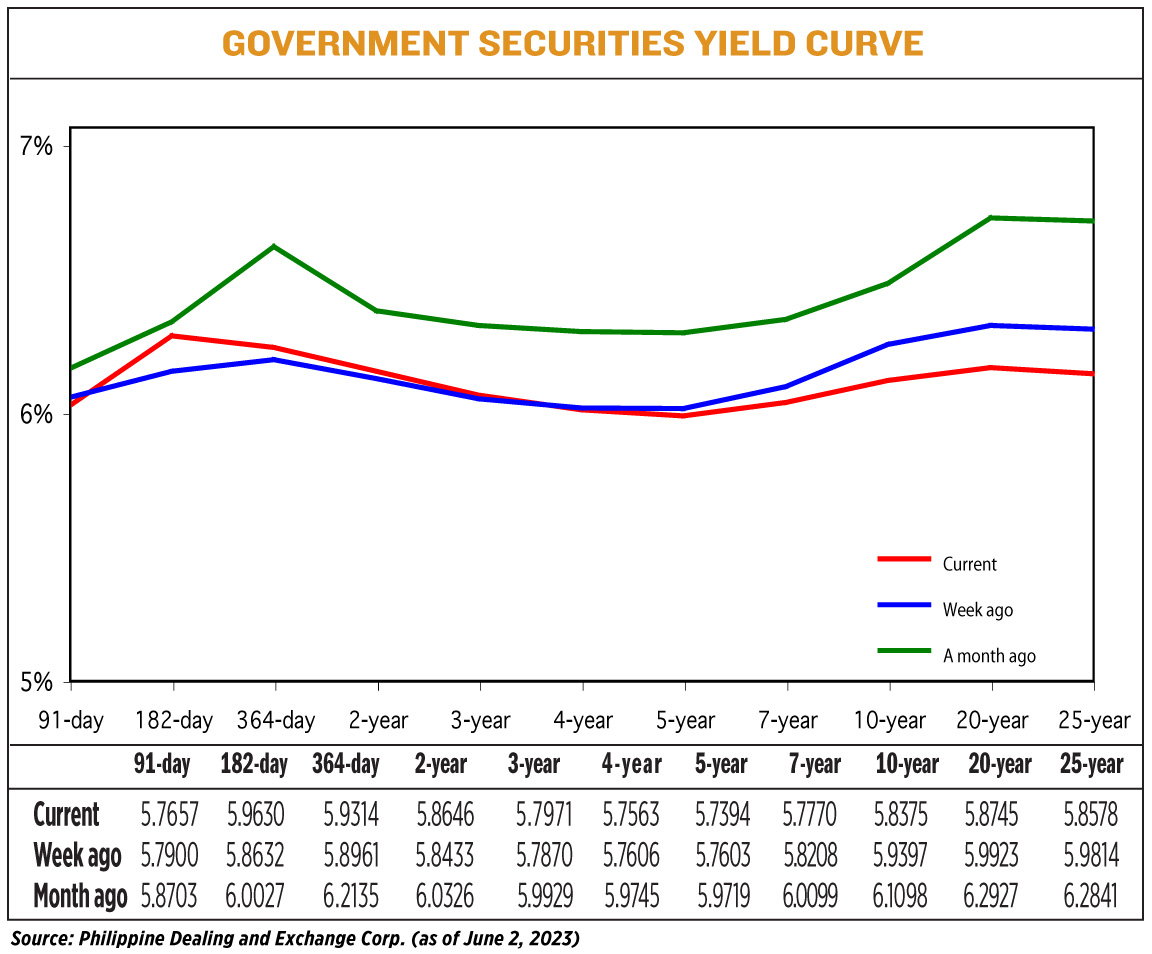
GS yields, which move opposite to prices fell by an average of 2.46 basis points (bps) week on week, according to the PHP Bloomberg Valuation Service Reference Rates as of June 2 published on the Philippine Dealing System’s website.

Yields on the 182- and 364-day Treasury bills (T-bills) went up by 9.98 bps and 3.53 bps to 5.963% and 9.9314%, respectively. Meanwhile, the 91-day T-bills dropped by 2.43 bps to 5.7657%.

At the belly, the two- and three-year Treasury bonds (T-bonds) increased by 2.13 bps (5.8646%) and 1.01 bps (5.7971%), respectively.

Meanwhile, the four-, five-, and seven-year T-bonds decreased by 0.43 bp, 2.09 bps, and 4.38 bps to fetch 5.7563%, 5.7394%, and 5.777%, respectively.

Similarly, at the long end, the 10-, 20-, and 25-year papers dropped by 10.22 bps (5.8375%), 11.78 bps (5.8745%), and 12.36 bps (5.8578%).

Total GS volume reached P4.38 billion on Friday, lower than the P4.66 billion on May 26.

“Market participants were closely analyzing the potential direction of monetary policy rates, leading to mixed yields across the curve,” Kevin S. Palma, Robinsons Bank Corp. assistant vice-president and peso fixed-income trader, said in an e-mail.

“There is prevailing uncertainty regarding the upcoming FOMC (Federal Open Market Committee) meeting in June, with differing opinions on whether the US Federal Reserve will continue to hike rates, pause, or just ‘skip’ hiking,” Mr. Palma added.

Philadelphia Fed President Patrick Harker said on Thursday “it’s time to at least hit the stop button for one meeting and see how it goes,” referring to the June 13-14 Fed meeting, Reuters reported.

A day earlier, Fed Governor Philip Jefferson said “skipping a rate hike at a coming meeting would allow the committee to see more data before making decisions about the extent of additional policy firming.”

The US central bank has raised rates by 500 bps since March 2022, bringing the Fed funds rate to a range between 5% and 5.25%. Its latest move was a 25-bp hike at its May 2-3 review.

Its next meeting is on June 13-14.

The nine-year bond auction’s result last week also reflected positive market sentiment as the Bangko Sentral ng Pilipinas’ (BSP) lower inflation forecast may show that its policy tightening is beginning to take effect,  a bond trader said in a Viber message.

The BSP on May 18 paused its tightening cycle for the first time after nine meetings. Since it began its aggressive monetary tightening cycle in May 2022, the central bank had raised borrowing costs by 425 bps.

Its next policy meeting is on June 22.

For this week, investors may take cues from the May inflation data to be released on June 6 and the five-year bond auction.

“Investors are likely to approach the coming week with a degree of caution and to carefully assess the Philippine inflation report this coming Tuesday. Should the release point to the downside, sentiment may continue to improve for local bonds,” Mr. Palma said.

The US jobs report released on Friday could also affect local yields amid “strong two-way interest” from the market, he added. — Bernadette Therese M. Gadon with Reuters

Century Pacific Food, Inc. sets 2023 Annual Stockholders’ Meeting on July 6

Notice of Annual Stockholders’ Meeting

Notice is hereby given that the Annual Stockholders’ Meeting will be held on Thursday, July 6, 2023 at 8:30 in the morning.

The agenda for the said meeting shall be as follows:

  1. Call to Order
  2. Secretary’s Proof of Due Notice of the Meeting and Determination of Quorum
  3. Approval of the Minutes of the Stockholders’ Meeting held on June 30, 2022
  4. Management’s Report
  5. Ratification of Acts of the Board of Directors and Management During the Previous Year
  6. Election of Directors (including Independent Directors)
  7. Appointment of External Auditor
  8. Approval of the Amendment of the Company’s Articles of Incorporation
  9. Other Matters
  10. Adjournment

A brief explanation of the agenda item which requires stockholders’ approval is provided in the Definitive Information Statement. The Definitive Information Statement, Management Report, and Annual Report for 2022 will be uploaded to the Company’s Website at https://www.centurypacific.com.ph/ and at PSE EDGE under Century Pacific Food, Inc. Company Disclosures.

The record date for the determination of the shareholders entitled to vote at said meeting is on May 16, 2023.

ln light of current conditions and in support of the efforts to contain the spread of COVID-19 virus, stockholders may attend the meeting and vote via remote communication only.

Stockholders should pre-register at this link: https://centurypacific.com.ph/investor-relations/ASM2023 from June 7, 2023 to June 11, 2023.

Upon registration, Stockholders shall be asked to provide the information and upload the documents listed below (the file size should be no larger than 5MB):

A. For individual Stockholders:

  1. Email address
  2. First and Last Name
  3. Address
  4. Mobile Number
  5. Current photograph of the Stockholder, with the face fully visible
  6. Stock Certificate Number and number of stocks held
  7. Valid government-issued ID
  8. For Stockholders with joint accounts: A scanned copy of an authorization letter signed by all Stockholders, identifying who among them is authorized to cast the vote for the account, as well as valid government-issued ID of the authorizing stockholders

B. For corporate/organizational Stockholders:

  1. Email address
  2. Name of stockholder
  3. Address
  4. Mobile Number
  5. Phone Number
  6. Stock Certificate Number and number of stocks held by the stockholder
  7. Current photograph of the individual authorized to cast the vote for the account (the “Authorized Voter”)
  8. Valid government-issued ID of the Authorized Voter
  9. A scanned copy of the Secretary’s Certificate or other valid authorization in favor of the Authorized Voter

Stockholders who will join by proxy shall download, fill out and sign the proxy form found in https://centurypacific.com.ph/investor-relations/ASM2023. Deadline to submit proxy forms is on June 16, 2023.

All registrations shall be validated by the Corporate Secretary in coordination with the Stock Agent. Successful registrants will receive an electronic invitation via email with a complete guide on how to join the meeting and how to cast votes.

Only stockholders of record as of the close of business on May 16, 2023 are entitled to notice and to vote at the meeting.

(SGD.)
MANUEL GONZALEZ
Corporate Secretary


Spotlight is BusinessWorld’s sponsored section that allows advertisers to amplify their brand and connect with BusinessWorld’s audience by enabling them to publish their stories directly on the BusinessWorld Web site. For more information, send an email to online@bworldonline.com.

Join us on Viber at https://bit.ly/3hv6bLA to get more updates and subscribe to BusinessWorld’s titles and get exclusive content through www.bworld-x.com.

Honda Cars PHL to compete in global skills tilt

Honda Cars Makati’s Elijah Dave Villan emerged as champion in the 2023 Honda Asia and Oceania Skills Contest (Service Advisor Category) and will represent the region in the Honda World Skills Contest in October. — PHOTO FROM HONDA CARS PHILIPPINES

FOLLOWING ITS championship-winning stint at the Honda Asia and Oceania Skills Contest’s Service Advisor category, Honda Cars Philippines, Inc. (HCPI) will compete as the region’s representative in the Honda World Skills Contest in October, to take place in Japan.

The aforementioned skills contest for after-sales services covered three categories: General Repair, Periodic Maintenance, and Service Advisor — held at Honda Malaysia Sdn. Bhd., Malacca City, Malaysia last May and was participated in by nine countries.

The skills contest is a program for dealer service associates across the region and in all countries where Honda operates – meant to showcase their skills and align with global best practices on service quality. Delegates from the Philippines have been selected through the 23rd National Skills Contest organized by HCPI last February for its dealerships nationwide. The following were recognized as top-notchers: Arnel Joyosa (Honda Cars Alabang) and Froilan Lacsamana (Honda Cars Manila Bay) for General Repair, Romel Cruzante and Elario Cepcon (Honda Cars Manila Bay) for Periodic Maintenance, and Elijah Dave Villan (Honda Cars Makati) for Service Advisor.

The Service Advisor category highlights service reception and delivery processes, including advanced diagnosis, work-up recommendations, repair work, releasing of the vehicle, and booking the next periodic maintenance visit. The category also demonstrated the use of state-of-the-art equipment that accurately identifies issues with vehicles and provides recommendations for repairs. Mr. Villan of Honda Cars Makati bested contenders from other countries to become category champion. He has been with HCMI for seven years where he started his career as a technician back in 2016.

“The skills competition is among Honda’s initiatives to ensure superior customer satisfaction through our Dealers and their dedicated staff who are our partners. Through national, regional, and global contests, dealer associates advance their technical and service skills. The program also gives them more joy at work because it widens their perspective on the importance of what they do, and how they genuinely help promote quality and safety while providing service,” said HCPI President Rie Miyake.

Visit www.hondaphil.com or a Honda Cars dealership to know more about the latest Honda cars news and offers, including periodic maintenance services with cost guides for different Honda models.

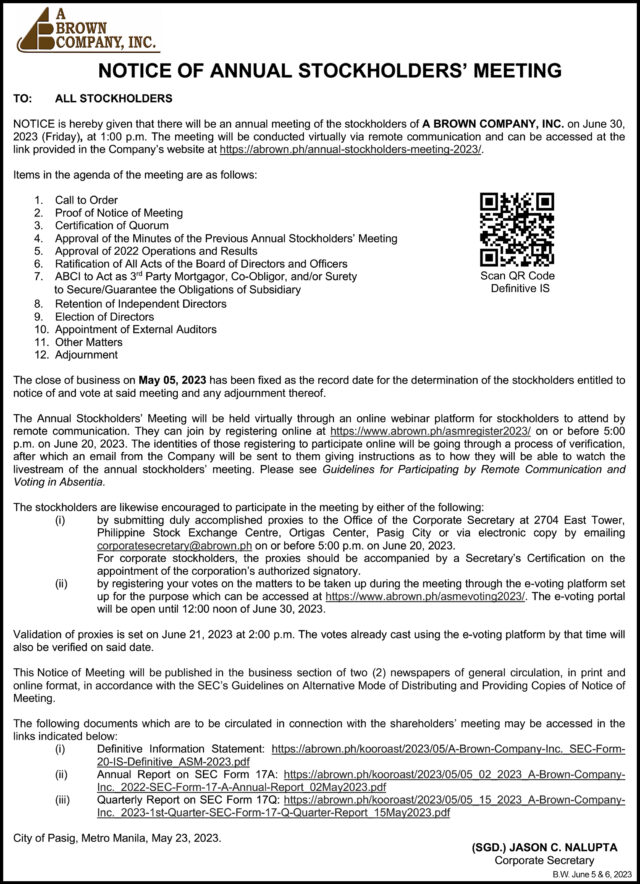
A Brown Company, Inc. to hold annual meeting of stockholders via remote communication on June 30


Spotlight is BusinessWorld’s sponsored section that allows advertisers to amplify their brand and connect with BusinessWorld’s audience by enabling them to publish their stories directly on the BusinessWorld Web site. For more information, send an email to online@bworldonline.com.

Join us on Viber at https://bit.ly/3hv6bLA to get more updates and subscribe to BusinessWorld’s titles and get exclusive content through www.bworld-x.com.