
Home Blog Page 4749

Style (06/12/23)


COS collaborates with Stephen Doherty

COS’ latest collaboration is with Manchester-based, multi-disciplinary artist Stephen Doherty. Limited-edition pieces adorned with exclusive floral artwork, crafted using Mr. Doherty’s unique ink and water technique, evoke the epitomé of summer dressing. The 17-piece collection features Doherty’s florals reimagined on canvas of silk and linen, transforming classic COS silhouettes. Set dressing is embraced throughout the capsule, with each garment designed to be interchanged and styled in endless ways, dressed up or down to suit the mood or occasion. Delicately beaded embroidery embellishes bandeau tops, while unique waistband finishes provide versatile styling and a functional element to the collection. The floral print is also embraced on accessories, reworked onto a leather mule and silk scarves. The capsule is available online and at the COS Store at SM Aura Premier.  


Fendi turns to astrology in capsule collection

FOR SUMMER 2023, Fendi introduces the Astrology capsule, a swim and beachwear collection created for every star sign under the sun. The summer collection draws on iconic collections from the House’s archives — Spring/Summer 1990 and Spring/Summer 1993 — alongside key codes established by Artistic Director of Couture and Womenswear Kim Jones. It features pieces adapted from Fendi’s recent ready-to-wear offering which can be worn from day to night in a palette of white, pink, blue, brown, orange and black with written signs of the zodiac (in English and Italian) and astrological prints originally drawn by Karl Lagerfeld. There are draped satin kaftans and dresses as well as separates and blousons featuring the Astrology print, all designed to be layered over swimwear. There is also an array of languid summer knits — from airy crochet dresses subtly inset with the FF logo, to body-skimming viscose and boyish cashmere jumpers. Sun-bleached denim and silk jersey complete the offer. Menswear by Artistic Director of Accessories and Menswear Silvia Venturini Fendi adopts a similar energy: louche tailoring and slouching fits for the season. Astrology-printed silk shirts, nylon boardshorts, and jersey Ts make the perfect beachfront wardrobe while silk and cotton separates, alongside denim and gabardine outerwear, present elevated accompaniments. For both men and women, there are accessories matching the collection, including bags and footwear and jewelry. Fendi has shops at Greenbelt 3 and The Shoppes at Solaire.


Rustan’s in-store perks for Father’s Day and Men’s Month

FOR FATHER’S DAY and Men’s Month, drop by the Rustan’s men’s department within the month of June to enjoy in-store perks including exclusive promos and activities. Rustan’s has a variety of gift options for Father’s Day including a breezy and colorful shirt from Faherty. A new addition to Rustan’s Man’s lineup, Faherty is a US-based clothing brand known for using soft premium fabrics perfect for barbecues, picnics, game nights, and more. For the eternal boy scout, Lexon is a good place to start with its variety of compact flashlights that can comfortably fit a jean pocket. Innostyle is also an ideal choice for wireless essentials like the PowerGo Magnetic, a powerbank that allows magnetic snap-ang-go charging, high-speed USB charging, and trickle charging mode for low-power devices. For a workstation upgrade, there is a laptop and smartwatch stand from Laut.  Mophie is also a good option with its 3-in-1 charging pads, making it a lot easier to maintain full battery percentage across earbuds, smartphones, and smartwatches. These are just some of the possible Father’s Day gifts available at Rustan’s. Meanwhile, ongoing until June 18 is the End of Season Sale and 0% installment for three months (for a minimum spend) on all men’s brands. Additionally, select men’s brands will continue to offer discounts of up to 50% off until June 30. Shoppers also receive a special freebie for every minimum single receipt purchase of P5,000 at Rustan’s Men’s. There are two kinds of prizes that customers can choose from: a live caricature or a mini illustration workshop. Looking for something wacky to give to dad? The live caricature is the way to go! Catch it from 3 to 6 p.m. at Rustans Makati and Cebu on June 17; Rustan’s Shangri-la on June 25; Rustan’s Alabang on June 18; and Rustan’s Gateway on June 17. For the same minimum single receipt purchase amount, get together at the mini-illustration workshop on June 18 from 3 to 7 p.m. at Rustan’s Shangri-la. There will be more activities and pop-ups on June 15 to 30: tasting booths for wine, whisky, and coffee; a quirky photowall with a Polaroid photographer; and the Rustan’s Man 2.0 pop-up at Rustan’s Alabang Town Center activity area on July 20 to 23.

National Gov’t gross borrowings up 28% in April

BW FILE PHOTO

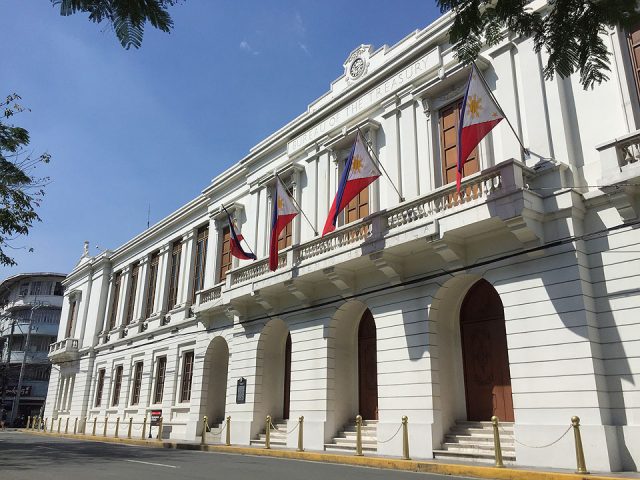
THE National Government’s gross borrowings rose 28.3% in April, the Bureau of the Treasury (BTr) said.

The BTr reported gross borrowings of P129.9 billion in April, against P101.26 billion in the same month a year earlier.

Month on month, gross borrowings declined 45.3%.

In April, domestic debt accounted for 74% of government borrowings.

Gross domestic borrowings increased 44.8% year on year to P96.127 billion during the month.

The BTr raised P94.475 billion from fixed-rate Treasury bonds and P1.652 billion from Treasury bills.

Meanwhile, external borrowings slipped 3.2% year on year to P33.779 billion in April.

This consisted of P27.566 billion in program loans and P6.213 billion in new project loans.

In the four months to April, gross borrowings stood at P1.11 trillion, down 5.9% from a year earlier.

Gross domestic debt fell 14.7% to P780.785 billion in the first four months.

External gross borrowings rose 22.8% year on year to P328.883 billion.

Rizal Commercial Banking Corp.’s Chief Economist Michael L. Ricafort said inflation drove the rise in gross borrowings during the month.

“Higher prices also increased the government’s expenditures and the (need to borrow),” he said in a Viber message.

Headline inflation eased to 6.1% in May, bringing the five-month inflation average to 7.5%. 

This is still above the central bank’s 2-4% target and 5.5% full-year inflation forecast.

“Higher interest rates that increased financing costs may have also contributed to higher borrowing requirements, as well as the weaker peso,” he added.

The Monetary Board paused its aggressive tightening cycle after hiking for nine straight meetings. Since May last year, the Bangko Sentral ng Pilipinas has raised key interest rates by 425 basis points to 6.25%.

“Going forward, government borrowings will be a function of the budget deficits to be financed, as well as the easing trend in inflation and eventually interest rates,” Mr. Ricafort added.

This year, the government plans to borrow P2.207 trillion. This consists of P1.654 trillion from domestic sources and P553.5 billion from external sources. — Luisa Maria Jacinta C. Jocson

Championing maternal health

PATRICIA PRUDENTE-UNSPLASH

Maternal mortality remains a significant public health concern in the Philippines. In 2019, prior to the COVID-19 pandemic, the United Nations Population Fund (UNFPA) estimated that approximately 2,600 women in the country die every year — seven each day — due to complications from pregnancy or childbirth. The agency feared a marked rise in maternal deaths as a result of a health system challenged, overwhelmed, and overburdened by COVID-19. The agency also warned that maternal mortality could increase by 26% from the 2019 level.

Although the World Health Organization (WHO) has recently declared that COVID-19 is no longer a public health emergency of international concern, this does not signify the end of the pandemic, especially its impact on key health indicators. The recent Health Connect Forum by the Philippine Medical Association (PMA) and the Philippine Foundation for Vaccination (PFV) highlighted that COVID-19 continues to challenge the healthcare system on both the supply side or the delivery of services, as well as on the demand side or access to maternal or newborn health services.

Dr. Manuel Vallesteros, the Chief of the Department of Health (DoH) Child, Adolescent and Maternal Health Division, said that the DoH aims to provide Filipino women with full access to health services to make their pregnancy and childbirth safer. He said that the department’s ultimate goal is to reduce the country’s maternal mortality ratio to 70/100,000 live births by 2030.

To promote maternal and child health, the DoH provides antenatal care (ANC), facility-based delivery (FBD), and postnatal care (PNC), as well as implements the DoH Health Sector Strategy for Maternal Health (“Enable, Protect, Care, & Strengthen”) to fulfill the country’s Sustainable Development Goals (SDGs).

ANC is the care a woman gets from health professionals, such as a doctor or midwife, during pregnancy. It includes complete general and obstetrical examination; nutritional assessment; oral health check-up and prophylaxis; screening for smoking, alcohol/substance abuse; health information (Mother Baby Book); iron and folic acid, calcium carbonate supplements, and immunization; laboratory tests for diabetes, HIV, syphilis; and management according to risk to pregnancy.

He cited the 2022 Philippine National Demographic and Health Survey (NDHS), which showed that 86% of Filipino women received antenatal care from skilled providers, 83% had four or more ANC visits during their most recent pregnancy; and 86% who had a live birth took iron supplementation.

Through FBD, the DoH seeks to ensure that all births take place in health facilities where obstetric complications can be treated when they arise. “Over the last 30 years, there has been an upward trend in the percentage of live births delivered by a skilled provider — from 54% in 1993 to 90% in 2022,” Dr. Vallesteros said.

PNC is the care given by health professionals to the mother and her newborn baby immediately after delivery and for the first six weeks of life. The DoH recommends all women receive a health evaluation two days after giving birth. PNC includes immunization such as BCG, DPT, Hepatitis B, and Hib vaccines, among others; lactation management services to support breastfeeding; and education about birth spacing and family planning including postpartum contraception. It also includes nutrition counseling because lactating women have increased nutritional demands; and immediate postpartum and postnatal care including screening for postpartum depression.

“The postpartum visit is an ideal time to access contraception services. Studies show that waiting at least two years between births can optimize health outcomes of both mother and baby,” Dr. Vallesteros said.

It is crucial for government and private sector stakeholders to work together in a whole-of-society approach to address the challenges faced by Filipino women during pregnancy and find solutions to improve maternal health outcomes. There is also a need to emphasize the benefits of promoting maternal health through medically proven interventions such as vaccination, among others. In this day and age, no woman should die giving birth and no child should lose a mother in the process. More about the actions required to urgently address the needs of pregnant women and mothers will be featured in the next column. 


Teodoro B. Padilla is the executive director of Pharmaceutical and Healthcare Association of the Philippines (PHAP). PHAP represents the biopharmaceutical medicines and vaccines industry in the country. Its members are in the forefront of research and development efforts for COVID-19 and other diseases that affect Filipinos.

FPG offers insurance for cycling, moto clubs

PHOTO FROM FPG INSURANCE

FPG INSURANCE is rolling out two new group insurance plans covering members of motorcycle and bicycle clubs. The plans, named MyCyclingClub Mate for cyclists and MyMotoClub Mate for bikers, are designed primarily to promote road safety awareness. As insurance instruments, both plans cover accidental death, permanent disability, medical reimbursement and third-party liability, among other benefits, after an accident when using a motorcycle or bicycle.

FPG’s new insurance plans are a timely response to the surge in the popularity of cycling and biking since the pandemic began. Especially since, unfortunately, the rising number of bicycles and motorcycles on the road comes with higher risks of accidents. During the same period, the Metro Manila Accident Reporting and Analysis System (MMARAS) reported that the number of bicycles involved in road accidents doubled from 2018 and 2019 to 2020. Some 2.1 million bikes were imported here in 2020, up 112% from 2019. As for motorcycles and scooters, available data showed the Philippines posted the fastest growth at 32.3% to 867,453 units in 2021 from 655,440 units the previous year. According to the MMARAS report, the Metropolitan Manila Development Authority (MMDA) recorded a total of 26,768 motorcycles involved in road accidents in 2021 — an increase of 1,560 over the previous year.

Both FPG programs cover bodily injuries caused by an accident anywhere in the world, whether insured is at home or while traveling by land or sea or while riding as a passenger on commercial flights. It even covers dog bites, snake bites, drowning, and natural calamities.

Common provisions of the plans include accidental death, disablement/dismemberment, unprovoked murder and assault endorsement, accidental medical reimbursement, daily hospital income benefit due to accident, fire assistance benefit, and personal liability plan.

For an annual premium of P200, policyholders will get up to P100,000, to cover the cost of the insured’s accidental death. The target market is comprised of motorcycle or bicycle clubs with at least 20 members aged between 18 to 65 years old. The insured must declare their permanent residence address upon issuance.

FPG Insurance celebrates its 65th anniversary on June 5, with a special collaboration with Ayala for the Green Run marathon on June 25. For more information about MyCyclingClub Mate and MyMotoClub Mate, visit FPG Insurance’s website at https://www.fpgins.com.

Investors lukewarm on Ayala Land on costs, MSCI changes

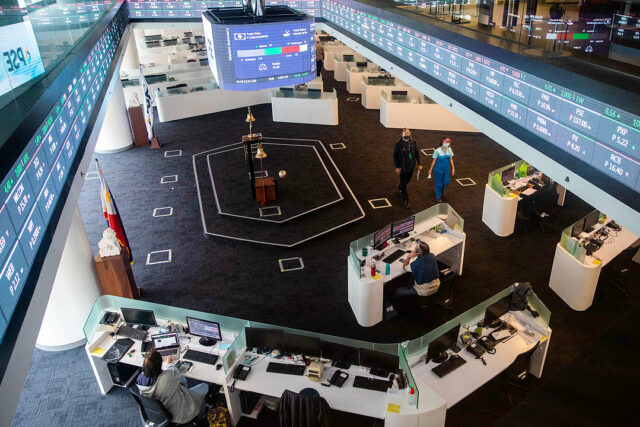
AYALA Land, Inc.’s share price dipped last week as the market stayed on the sidelines after the Morgan Stanley Capital International (MSCI) rebalancing and as the property sector remained affected by more expensive borrowing costs.

The property developer was the fifth most actively traded issue last week with a total of 52.21 million worth P1.34 billion changing hands from June 5 to 9, data from the Philippine Stock Exchange showed.

Shares in the Ayala-led company finished at P24.85 apiece last Friday, down by 4.2% from its June 2 close. Since the start of the year, shares have declined by 28.4%.

“From the looks of it, investors are still risk-on mode in the property sector in general due to the high interest rate environment,” Regina Capital Development Corp. Head of Sales Luis A. Limlingan said in an e-mail.

“In fact, we have seen market participants lightening key index constituents [last] week. If anything, this may be a spillover from the recent rebalancing in which Ayala Land is on a downweight,” he added.

Mercantile Securities Corp. Head Trader Jeff Radley C. See attributed Ayala Land’s share price movement to the MSCI rebalancing, which took effect on June 1.

He said the past few weeks were the outcome of the rebalancing where an outflow was triggered by fund managers who mimic the MSCI.

“Next week, it will be the FTSE rebalancing where there will be an outflow on Ayala Land,” Mr. See said in a Viber message.

Ayala Land is among those included in the MSCI rebalancing. As of May 31, the company had an index weight of 7.78%, with a market capitalization of $3.46 billion.

The index is designed to measure the performance of the large and mid-cap segments of the Philippine market. Some fund managers track the MSCI index composition to realign their portfolios. With 15 constituents, the index covers about 85% of the local equity market. It is reviewed and rebalanced twice a year.

At its policy meeting on May 18, the Monetary Board kept its benchmark interest rate unchanged at a 14-year high of 6.25%. Interest rates on the overnight deposit and lending facilities were also maintained at 5.75% and 6.75%, respectively.

The Bangko Sentral ng Pilipinas has raised borrowing costs by 425 basis points since May last year to temper surging inflation.

For the fourth straight month in May, inflation subsided to a one-year low of 6.1%. However, this remained elevated still as it marked the 14th straight month that inflation breached the central bank’s 2-4% target range.

In the first quarter, Ayala Land’s revenues grew 25.5% to P30.91 billion amid higher contributions from all its business lines. Its after-tax net income climbed by 27.8% to P5.19 billion in the first quarter from P4.06 billion in the same quarter a year ago.

“We project a double-digit growth on Ayala Land’s bottom line, just above P27 billion for 2023,” Mr. Limlingan said.

Mr. See expects investors to continue to experience selling pressure as funds will try to move their holdings.

“Ayala Land just broke its support at P25.90 per share and closed at its low of P24.85 per share. It will continue its selling pressure and might hit P24.00 per share,” Mr. See said.

Mr. Limlingan plotted the key levels at P23.00 per share for the support, and P26.00 per share for the initial resistance. — Lourdes O. Pilar

How PSEi member stocks performed — June 9, 2023

Here’s a quick glance at how PSEi stocks fared on Friday, June 9, 2023.


How minimum wages compared across regions in May

Inflation-adjusted wages in May were 13.9% to 21% lower than the daily minimum wages across Philippine regions. In peso terms, real wages were P54.80 to P88.73 lower.

How minimum wages compared across regions in May

Stocks end week lower as market looks for leads

REUTERS

LOCAL EQUITIES declined on Friday as investors stayed on the sidelines as they awaited fresh leads.

The benchmark Philippine Stock Exchange index (PSEi) fell by 32.21 points or 0.49% to close at 6,507.15 on Friday, while the broader all shares index went down by 8.53 points or 0.24% to end at 3,476.18.

Week on week, the PSEi went down by 4.86 points or 0.07% from its 6,512.01 close on June 2.

“The local market struggled to track higher for the week given persistent selling pressure, which has also likely tempered buying appetite,” China Bank Securities Corp. Research Associate Lance U. Soledad said in a Viber message.

“[The market] continued to shrug off positive local news flows, posting its third straight weekly decline despite the removal of key market overhangs (e.g., MSCI rebalancing, US debt default), continued slowdown in inflation in May, with the BSP (Bangko Sentral ng Pilipinas) chief guiding that policy rates may hold steady as a result of the sustained easing, and a still-robust labor market, with an unemployment rate of 4.5% in April,” Mr. Soledad added.

Headline inflation eased to 6.1% in May from 6.6% in April, the slowest in a year or since the 5.4% in May 2022.

For the first five months, the consumer price index averaged 7.5%, still higher than the BSP’s 2-4% target and 5.5% forecast for the year.

The BSP last month kept borrowing costs steady, with the key rate now at 6.25%.

The Monetary Board’s next policy meeting will be on June 22. The BSP is expected to keep rates steady for its next two to three meetings as inflation continues to ease.

Meanwhile, the unemployment rate fell to 4.5% in April from 4.7% the previous month, equivalent 2.26 million jobless Filipinos, down from 2.42 million in March.

Year to date, the statistics authority reported the unemployment rate average at 4.7%, down from the 5.4% average in 2022, and 7.8% in 2021.

Meanwhile, the employment rate in April rose to 95.5% from 95.3% in March and 94.3% in the same month a year ago.

This translated to 48.06 million Filipinos who had jobs in April, a decrease of 523,000 from the 48.58 million in March.

Sectoral indices were split on Friday. Financials rose by 18.06 points or 0.98% to 1,846.41; mining and oil climbed by 42.67 points or 0.42% to 10,111.01; and services went up by 3.51 points or 0.22% to 1,541.76.

Meanwhile, property sank by 58.10 points or 2.16% to 2,626.98; holding firms dropped by 45.02 points or 0.69% to 6,475.24; and industrials went down by 20.01 points or 0.21% or 9,266.83.

Value turnover rose to P5.66 billion on Friday with 1.22 billion shares changing hands from the P3.86 billion with 626.14 million issues traded on Thursday.

Advancers outnumbered decliners, 92 to 80, while 52 names ended unchanged.

Net foreign selling dropped to P202.11 million on Friday from P416.92 million on Thursday.

The market is closed on June 12 for Independence Day. — A.H. Halili

Peso seen to trade sideways vs dollar before Fed, BSP reviews

BW FILE PHOTO

THE PESO could trade sideways against the dollar this week on expectations that the US Federal Reserve will pause its tightening cycle at its policy meeting this week.

The local currency closed at P56.05 versus the dollar on Friday, strengthening by six centavos from Thursday’s P56.11 finish, data from the Bankers Association of the Philippines’ website showed.

Week on week, however, the peso declined by 16 centavos from its P55.89 finish on June 2.

The local unit opened Friday’s session at P55.999 per dollar. Its weakest showing was at P56.06, while its intraday best was at P55.90 against the greenback.

Dollars traded rose to $979.2 million on Friday from the $957 million recorded on Thursday.

The peso strengthened on Friday amid higher-than-expected US jobless claims, Rizal Commercial Banking Corp. Chief Economist Michael L. Ricafort said in a Viber message.

The dollar bounced off two-week lows on Friday as investors awaited inflation data and the Federal Reserve’s interest rate decision next week for any new clues on how high the US central bank is likely to hike rates, Reuters reported.

The Fed is expected to hold rates steady at its June 13-14 meeting, but is likely to remain hawkish and indicate a probable hike in July as inflation stays above its 2% target.

The dollar index, which measures the currency against six major peers, rose by 0.22% to 103.53.

The greenback is largely rangebound as investors wait for clearer signs of whether the economy will remain strong and inflation elevated, or if it is headed towards a contraction.

Data on Thursday showed the number of Americans filing new claims for unemployment benefits surged to the highest in more than 1-1/2 years last week.

Mr. Ricafort added that lower global crude oil prices also supported the peso.

On Friday, oil fell by more than $3 on reports that the US would give Iran sanctions relief to export oil in return for Tehran reducing uranium enrichment.

Brent crude settled down by 99 cents or 1.3% at $75.96 a barrel, while US West Texas Intermediate crude settled down by $1.24 or 1.7% at $71.29.

For this week, the peso could continue to trade sideways against the dollar as the Fed is expected to keep borrowing costs steady at its June 13-14 meeting, a move which could be matched locally, Mr. Ricafort said.

The US central bank raised borrowing costs by 25 basis points (bps) last month, bringing the fed funds rate to 5% to 5.25%.

It has hiked borrowing costs by 500 bps since March 2022.

Meanwhile, the Bangko Sentral ng Pilipinas (BSP) paused its aggressive monetary tightening last month and signaled it would put the key rate on hold for its next two to three meetings.

The BSP raised policy rates by 425 bps from May 2022 to March 2023.

The Monetary Board will next meet to review policy on June 22.

For this week, Mr. Ricafort sees the peso trading between P55.75 and P56.25 a dollar.

Philippine financial markets will be closed on Monday for the Independence Day holiday. — A.M.C. Sy with Reuters

Filipino children from 5.6M households heavily vulnerable to climate shocks

SCHOOL children wait on one side of a flooded road in Baao, Camarines Sur in this photo taken in January 2023. — NDRRMC

CHILDREN from 5.6 million low-income households in the Philippines face deadly threats from the climate crisis, which worsen the state of education in the country, according to a development organization.

“During climate emergencies, many affected families find it hard to send their children to school or even access healthcare,” Save the Children Philippines said in a statement on Sunday.

“Children suffer the most because they look for work to help augment their daily needs,” it said.

As climate shocks significantly affect the livelihood of low-income families, Filipino girls are at greater risk of being “abused, neglected, exploited, or subjected to child marriage,” the organization said.

“No child deserves to grow up in poverty and an unsafe environment. But the reality is grim,” Save the Children Philippines said. “Millions of Filipino children remain poor due to inequality and discrimination, and their situation is exacerbated by the climate.”

According to the 2023 Global Slavery Index of international human rights group Walk Free, climate change worsens modern slavery as it intensifies structural gender inequalities, which mostly affect women, and creates an economic condition that forces parents to give away their children for marriage in order for them to secure some financial stability.

Citing the United Nations, the report said that 80% of those displaced by the climate crisis are female.

“When climate change affects local economies, a larger section of the population loses domestic jobs and engenders internal migration to better-off economic centers,” Hansley A. Juliano, a political economy researcher, told BusinessWorld.

“This promotes congestion in metropolis that also reduces quality of life due to population density,” he added. “This density also feeds exploitative industries who are willing to hold these vulnerable people in low paying jobs, which includes illegal labor and flat-out trafficking.”

The Philippines, considered as an agricultural country, is highly vulnerable to climate change. Last year, Greenpeace told BusinessWorld that as much as 80% of Metro Manila could be submerged by 2030, potentially impacting 87% of its gross domestic product.

Filipino farmers are among the sectors that are heavily affected by the climate crisis, which increases the frequency of extreme El Niño events.

El Niño is expected to derail the growth of the Philippine agriculture sector which, in the first quarter, expanded by 2.1%, a turnaround from the 0.3% decline in the same quarter a year ago.

In 2019, the agriculture sector was severely hit by the weather pattern, with the damage to the sector hitting as much as P8 billion.

Save the Children Philippines urged the Philippine government to craft child-centered climate change mitigation and adaptation plans, noting that many Filipino children lack access to basic services on health, education, proper nutrition, or adequate housing.

“Without urgent and concrete actions to mitigate the negative impact of climate change and support for the most vulnerable families, we are at a setback in fulfilling children’s right to survive, learn, be protected, and thrive,” it said.

President Ferdinand R. Marcos, Jr., who vowed to work towards a shift to green energy, has yet to declare a climate emergency, which would authorize the government to mobilize funds to step up climate mitigation efforts.

The House of Representative made a declaration in 2019, but Greenpeace said last year that a “follow-through” from the National Government has yet to be seen. — Kyle Aristophere T. Atienza

Study supports bill that will legalize motorcycle taxi service

BW FILE PHOTO

THE PHILIPPINE Congress has been urged to fast-track the passage of a bill that will legalize the operation of motorcycle taxis, citing its role in plugging gaps in public transportation and employment while addressing the need for regulation to ensure safety. 

In a research paper released recently, transportation expert Rene S. Santiago and Libra Konsult, Inc. Senior Advisor Nigel Paul Villarete said there is adequate manpower available for motorcycle taxi drivers and significant demand for the service.

“Scarcity of employment opportunities enlarges the supply of MC-Tx (motorcycle taxi) drivers, [and] the inadequacy — if not total absence — of alternative modes of public transport in many areas which, in turn, fuels demand,” they said in their study titled “Out from the Cold: Unboxing Habal-Habal in the Philippines (and the Motorcycle-taxis in the Global South)”.

Habal-habal is the colloquial term for unregulated motorcycles that have long been providing service for a fee, especially in rural and remote parts of the country where there are no other forms of public transport.

Mr. Santiago, former president of the Transportation Science Society of the Philippines, called to focus on “technical regulation” of MC taxis to address concerns on road and passenger safety.

“The correct one is technical regulation via the 3 Es (engineering, enforcement, education) — particularly annual vehicle inspections — should be strengthened — for all motor vehicles, not just motorcycles or habal-habal. Our roads are unsafe, to begin [with],” he said in a Viber chat.

“It would be better if the bill will also be prioritized and passed as it will provide the public more opportunities for livelihood and [be] a good option for commuters,” Ronald Gustilo, national campaigner of Digital Pinoys, said via Viber.

Mr. Gustilo, however, said the proposed measure should add stiffer penalties that would discourage overpricing.

“The MC taxi for hire act should also include a mandatory period for settling cases like overpricing and safety violations,” he said. 

He added that traffic regulations and improvement of roads should be implemented along with the legalization of motorcycle taxis. 

Mr. Santiago noted that existing ride hailing companies and accredited motorcycles-for-hire already function under relatively adequate regulatory provisions.

These services are operating through a provisional authority as Republic Act (RA) No. 4136, or the Land Transportation and Traffic Code prohibits the use of two-wheeled vehicles for public transport.

The proposed Motorcycles-For-Hire Act, which will amend RA 4136, is still pending at the committee levels in both the Senate and the House of Representatives.

Senator Mary Grace S. Poe-Llamanzares, chair of the public services committee, said in a Viber chat, “The committee is currently waiting for submissions from the inter-agency MC taxi committee and other major stakeholders before it releases the committee report.” — Beatriz Marie D. Cruz

ADVERTISEMENT
ADVERTISEMENT