Home Blog Page 4748

The promising marriage of blockchain and AI: ChatGPT’s impact

DILOKASTUDIO-FREEPIK

This week we have an exciting new topic. Because in the ever-evolving landscape of technology, two prominent forces, blockchain and artificial intelligence (AI), are paving the way for groundbreaking innovations. While each has made significant strides independently, the integration of these two powerhouses holds immense potential for revolutionizing industries worldwide. One notable development in this intersection is the rise of ChatGPT and its impact on the blockchain industry.

We know that blockchain, with its decentralized and transparent nature, has disrupted traditional systems across various sectors. However, as this transformative technology continues to mature, there is still room for improvement. This is where ChatGPT, an AI chatbot model, steps in to elevate the blockchain industry to new heights.

One of the key benefits of ChatGPT in the blockchain realm is the enhancement of customer service. With blockchain technology still in its early stages, many individuals are yet to fully grasp its complexities. Here, ChatGPT’s personalized and interactive customer support becomes invaluable. Through its conversational capabilities, ChatGPT provides users with swift and efficient answers to their queries, driving a more seamless and user-friendly experience.

Moreover, the integration of ChatGPT brings efficiency gains to the blockchain industry. By leveraging AI’s analytical prowess, ChatGPT can swiftly process vast amounts of data and deliver real-time insights. This empowers blockchain companies to make well-informed decisions promptly, enhancing operational efficiency, and enabling them to stay ahead in this rapidly evolving landscape. As ChatGPT continues to mature, we can only anticipate the novel capabilities it will bring to the table, further propelling the blockchain industry forward.

The integration of blockchain and AI represents a symbiotic relationship between two distinct yet complementary skill sets. Blockchain technology thrives on the expertise of traditional software developers, while AI engineers bring statistical prowess to the table. The coexistence of these skill sets ensures that both technologies continue to evolve, leading to transformative breakthroughs across various sectors. It’s a harmonious fusion of innovation, where the possibilities are limitless.

CHATGPT STUDY
There’s a study called “The ChatGPT Effect on AI-themed cryptocurrencies” that explores how ChatGPT, created by OpenAI, has affected cryptocurrencies related to AI.

When ChatGPT was launched, it became very popular and had millions of users within a week. This suggests that there are great opportunities in the AI industry, and it also makes AI-related cryptocurrencies look more attractive to investors. In other words, the attention and success of ChatGPT have influenced the prices of cryptocurrencies connected to AI.

The study was done by researchers named Lennart Ante and Ender Demir. They used a particular method called event study to examine the market efficiency of 15 AI-related cryptocurrencies. They collected data from CoinGecko, a website that provides information about cryptocurrency markets.

Their findings showed that after ChatGPT was launched, 90% of the AI-related cryptocurrencies experienced higher-than-expected returns. On average, these cryptocurrencies gained around 41% more value over a two-week period. This means that the attention and popularity of ChatGPT had a positive effect on the prices of AI-related cryptocurrencies.

This study is important because it shows how people’s perception and excitement about a new technology, like ChatGPT, can influence the prices of related cryptocurrencies. It also highlights the role of narratives — the stories people tell — in shaping expectations and influencing financial markets. Understanding these factors is crucial for understanding how markets work and how different technologies can affect them.

As we witness the impact of ChatGPT on the blockchain industry, we are reminded of the broader implications of this integration. It signifies the convergence of cutting-edge technologies and opens doors to unprecedented opportunities. The potential for collaboration between blockchain and AI goes beyond customer service and efficiency gains; it promises disruptive advancements across industries, from finance and healthcare to supply chain and beyond.

In the dynamic realm of technology, where change is constant, the marriage of blockchain and AI through ChatGPT represents a powerful force that will reshape industries. As we look to the future, it is clear that this integration will continue to unlock new avenues for growth, innovation, and value creation. The journey has just begun, and the possibilities are endless. Let us embrace this transformation, one step at a time, as we witness the rise of a revolutionary technological era.


Dr. Donald Lim is the founding president of the Blockchain Council of the Philippines and the lead convenor of the Philippine Blockchain Week. He is also the Asian anchor of FintechTV.
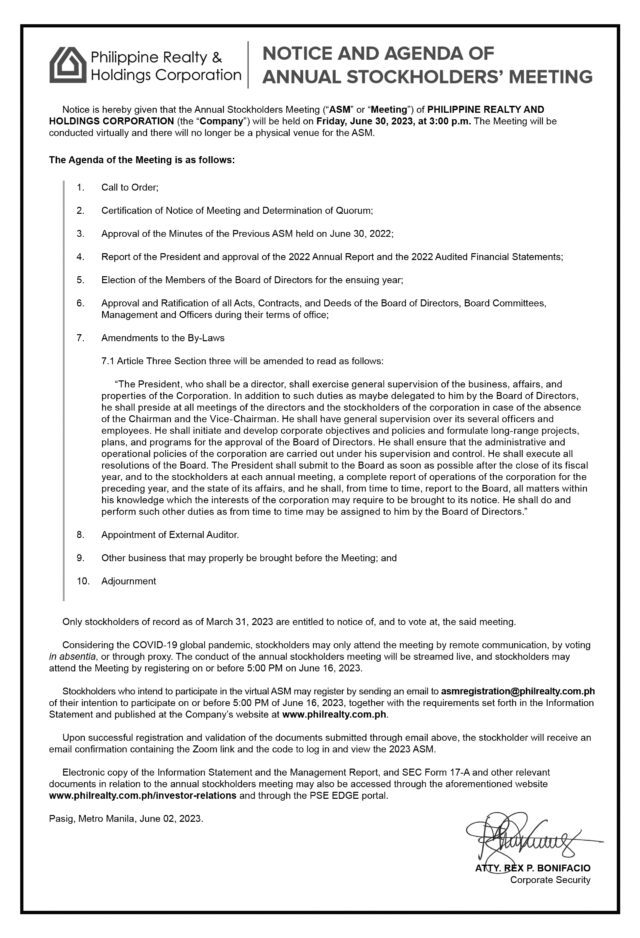

Philippine Realty and Holdings Corp. sets 2023 Annual Stockholders’ Meeting on June 30


Spotlight is BusinessWorld’s sponsored section that allows advertisers to amplify their brand and connect with BusinessWorld’s audience by enabling them to publish their stories directly on the BusinessWorld website. For more information, send an email to online@bworldonline.com.

Join us on Viber at https://bit.ly/3hv6bLA to get more updates and subscribe to BusinessWorld’s titles and get exclusive content through www.bworld-x.com.

How Chinese superfans became a force of nationalist activism in the name of their ‘idols’

BTS receiving a Bonsang award at the 31st Golden Disk Awards in Seoul on Jan. 14, 2017. —COMMONS.WIKIMEDIA.ORG /AJEONG_JM

THANKS to the efforts of their fans, artists like South Korean band BTS have their faces everywhere in China (where they are known as “idols”) — from the subway, to media articles and brand collaborations.

In 2016, Chinese fans of Jackson Yee (a.k.a. Yi Yangqianxi), a former member of popular Chinese boy band TFBoys, celebrated their idol’s birthday in style. They partied on a cruise in Shanghai, bought a video advert in Times Square, and flew cake-shaped hot air balloons over London and New York.

As in other east Asian countries, idol fans in China are changing from passive consumers of products to promoters, striving to personally grow their idols’ popularity, reputation, and business value. This development added an estimated ¥100 billion (£613 million) to the Chinese idol market in 2020.

Research in 2015 and 2018 found that Chinese idol fans now also act as one of the main digital forces in cyber nationalist activism, supporting the Chinese state’s core values, such as positive energy and patriotism.

In a paper published earlier this year, my coauthor Ting Luo and I analyzed the ways idol fans co-opted nationalism in their reaction to the COVID pandemic.

We looked at over 6 million posts about the pandemic from December 2019 to December 2020 on Sina Weibo (a Twitter-like social media platform in China) that contained promotional messages about idols. Through in-depth interviews with idol fans, we unpacked the ways they engaged with mainstream discourse to publicize and glorify their idols.

These nationalist expressions are often triggered by political incidents and events. The most notable example is the “Diba Expedition.” Following the Taiwan election in 2016, fans organized and swamped the Facebook pages of Taiwanese politicians with emojis and memes, for example.

Idol fans are both organized and disciplined. Our evidence shows that they also used discussions around the COVID pandemic to promote their idols.

HOW THE PANDEMIC INFLUENCED FAN BEHAVIOR
In Weibo posts, idol fans argued that albums, songs, and films by their idols relate to the pandemic. Many claim they made a contribution to pandemic efforts and engaged in charity work in the name of their idols.

These activities are typical of the chart-beating behaviors of fandoms, carried out to boost the popularity of their idols.

Idol fans in our study and others understand the logic of celebrity ranking lists on Weibo. This is when artists need enough posts, reposts, and likes to be on the trending page, upping their profile among the wider public. Fans commonly post and comment on Weibo to create positive images of their idols.

The public images these fans have built are also nationalist. Idols are seen as role models, who make positive contributions to society, even in difficult times. In idol fans’ social media expressions of national pride and compliance to state rules during the pandemic, they posted their idols as loyal to the nation, the people, and the party state.

As one fan told us: “We want to make our idol appear as a high-class artist. To achieve the goal, we need evidence of our idol being invited for and participating in performances/shows by the official media or the state. [Without recognition from the state] no matter how well an idol’s album sells, people would consider the idol no more than an online influencer.”

Idol fans often interpret “nationalism” as loyalty to national identity and adherence to the state’s policies and rules. Many of them deliberately demonstrate this understanding in their fan posts on social media. For example, idol fans actively joined the state-directed campaign on China’s National Mourning Day and expressed national pride while quoting their idols in the posts.

They also purposefully respond to political and social events as a way to promote their idols’ nationalist ideals.

In addition to commercial strategies such as subway advertisements, music streaming, and crowdfunding, these fans see participation in events organized by the state and official media as recognition by the state.

Such “official stamps” can bring both material benefits and political status and reputation for their idols, ultimately boosting their popularity.

Our research has shown that idol fans engage not only the commercial logic common in Japanese and Korean K-pop/idol culture (more publicity brings more commercial value) but also the political logic propagated by the state in China (more “official stamps” bring more political value and commercial value in return).

The skillful deployment of nationalism strategies in their everyday life prepares idol fans, so that the mantra of “love for idols” can quickly transform into “love for the state.” — The Conversation via Reuters Connect

Yan Wang is a Lecturer in Digital Sociology at the Lancaster University.

Digitizing healthcare to require big IT skills push

REUTERS

By John Victor D. Ordoñez, Reporter

HEALTHCARE workers in the Philippines need to develop information and communications technology (ICT) skills as more healthcare firms shift to digital platforms, according to a healthcare management services and solutions company.

“During the pandemic, we saw an increase in the utilization of digital technology in general,” Carelon Global Solutions President Rajat Puri told BusinessWorld in an e-mail.

“What the industry should do is to invest in training and skill programs to come up with hard skills and refine them to cater to the healthcare industry.”

Philippine healthcare companies should guide healthcare workers on interacting with customers through digital media, he added.

Carelon, which rebranded from Legato Health Technologies in January, has two offices in the Philippine capital region and two more in Iloilo.

The company specializes in using digital tools to streamline operations for healthcare organizations.

Mr. Puri said his company has started implementing artificial intelligence (AI) to boost client efficiency.

“When we talk about digitalization and AI as complementary skills, it cannot be seen as reducing the need for labor, as labor will always be there,” he said.

Nora K. Terrado, head of Carelon Global Solutions Philippines, said in February that the health management information systems market in the Philippines has the potential to expand with the enhancement of talent development, infrastructure, and ease of doing business.

She said the market could be worth P28 billion by 2028 if the industry focuses on these growth enablers.

The Asian Development Bank has said the pandemic increased the need for digital skills with companies continuing to shift towards digitalization.

The Department of Labor and Employment has said it is working on narrowing the gap between worker skills and employee needs this year through upskilling programs.

The Philippines ranked 80th out of 133 countries in the Institut Européen d’Administration des Affaires’ (INSEAD) Global Competitive Index 2022. INSEAD evaluated how countries and cities grow, attract and retain talent.

“As we’re looking at investing in AI and digital technologies which is a must, I also believe that the need for upskilling labor will be more important than ever because the world is moving,” Mr. Puri said.

“It’s very clear that whatever Filipinos are working on, it’s evolving with digitalization.”

EEI to build construction-related training center

EEI CORP. on Thursday said that it plans to train 500 employees for its future projects through a new training center that will offer construction-related courses and skills.

In a regulatory filing, the company said that it seeks to accommodate 500 trainees and offer training for material welding as well as training in skills related to electro-mechanical and light industries.

The company also said that the training center will be designed to provide manpower upskilling for its future domestic and overseas projects. The center will have building- and infrastructure-related courses.

EEI will also offer training sessions for engineers and staff on Supervisory Development Program, Engineering Development Crash Course, and Construction Project Management for Project Managers and Directors to provide or improve their supervisory or managerial skills.

The training center is a two-storey building for classroom sessions and practical application of construction-related activities, which will be located in Tanza, Cavite, and is expected to be completed by December 2024.

The company said that the construction of the new facility is part of its efforts to recover from the effects of the pandemic.

“To deal with the issues and challenges, we evaluated our operations, identified and addressed weak points, restructured and continued upskilling our workforce, and strengthened our stakeholder relations,” said EEI President and Chief Executive Officer Henry D. Antonio in a statement.

The company said an initial 500 people will be trained in the facility or 20% of the manpower required for its projects.

The company also signed an agreement with Dualtech Training Center Foundation, Inc., which will offer and incorporate a Values to Virtues (V2V) Workshop in the EEI Training Modules. It said the first batch of participants in the V2V workshop will be coming from EEI supervisors and managers, and will begin in July.

“EEI is committed to physically and figuratively build foundations for an inclusive and better tomorrow for our stakeholders not just for our clients but also for our very own employees,” Mr. Antonio added.

On Thursday, EEI shares fell by 6.31% or 35 centavos to P5.20 apiece. — AHH

Does competition make us less moral? New research says yes, but only a little bit

DILOKASTUDIO-FREEPIK

Many of our economic and even social interactions are competitive. We use markets to find jobs, but also dates. What does this mean for our morals? Does capitalism give us the American dream, or American Psycho? Does the experience of competition keep us honest, or drive us towards cheating?

These profound questions preoccupied the minds of some of the great classical economists, who saw capitalism as rife with both good and bad moral influences. Adam Smith mostly focused on the good, whereas Karl Marx was admittedly less optimistic.

To test this question convincingly in the lab, our project coordinators invited dozens of behavioral scientists to contribute their own experimental designs, resulting in observations of more than 18,000 people in total.

Our results, published in Proceedings of the National Academy of Sciences, show that competitive interactions tend to make people’s behavior slightly less moral — and offer some intriguing clues about why this might be so.

We are not the first to take a scientific approach to the question of competition and morality. However, individual tests have delivered mixed results, possibly because of differences in the definitions and measures of morality used.

Some of the early results were provocative, such as a finding that people in competition were less likely to prevent the death of a mouse. However, these results were hard to replicate or interpret.

One way to account for differences in the design of individual studies is to conduct a “meta-analysis,” evaluating and combining the results of many different studies. However, meta-analysis often has troubles of its own, as selective reporting and publication bias can influence which studies are available to be included in the analysis.

To really get some reliable results, we went a step further and carried out a “prospective meta-analysis.”

The “prospective” part means that all the studies to be included in the analysis were registered before they were done. This prevents cherry-picking of results, or bias in what kind of results are published.

Our project involved 45 different experiments carried out by teams around the world. Each team independently designed an experiment to test the effects of competition on morality.

The results of these studies, which involved observations of more than 18,123 individual participants, were then collated and analyzed.

The meta-analysis revealed that competition has an overall negative effect on morality, but the effect is very small. (The effect is measured by a number called Cohen’s d. A value of 0.2 is considered a small effect, and the value we found was only 0.1.)

As expected, we also observed a substantial variation in the effects as measured by different experiments. Some were positive, some were negative, and the sizes of the effects also varied.

So, despite the advantages of our new prospective meta-analysis, the jury is still out regarding the overall effect of competition on morality.

Perhaps the question is too general to answer properly without a particular context. The devil may be in the details.

My team (one of the 45 involved in the meta-analysis) used a number-guessing game between two people as an instance of competition. This was followed by an individual game of honesty, which was our measure for the effects on morality.

This individual experiment resulted in a small negative overall effect of competition (d = –0.1) much like the meta-analysis, but it failed to reach statistical significance on its own.

However, exploratory analysis of our results revealed a potential breakthrough.

We found it was only the losers of the number-guessing game who became more dishonest, with a larger effect (d = –0.34). The winners of the competition stage, on the other hand, showed no change in their honesty behavior.

These exploratory results — yet to be replicated — suggest a reason why competition does not affect morality much on average. Perhaps it is being disadvantaged in a competitive process that corrupts, not competition per se.

THE CONVERSATION VIA REUTERS CONNECT

Hollywood actors, studios agree to media blackout for labor talks

LOS ANGELES — The SAG-AFTRA actors union and the group representing major Hollywood studios agreed not to talk to the media during contract talks that started on Wednesday.

The actors’ union is seeking pay increases and protections around the use of artificial intelligence in negotiations with the Alliance of Motion Picture and Television Producers (AMPTP), which represents Walt Disney Co., Netflix, Inc., Comcast Corp. and other companies.

“SAG-AFTRA and the AMPTP began formal negotiations for a new contract, and with the agreement that neither organization will comment to the media about the negotiations during the process,” the parties said in a statement.

The actors’ negotiations are taking place as the Writers Guild of America (WGA) remains on strike. The work stoppage, which began May 2, has shut down late-night talk shows and halted production of shows such as a new season of Stranger Things.

SAG-AFTRA members have authorized a strike if their talks fail to yield an agreement by June 30. — Reuters

Binance CEO’s trading firm received $11B in client assets

LONDON — Merit Peak, an offshore trading company controlled by Binance Chief Executive Officer (CEO) Changpeng Zhao, received around $11 billion of client assets through a Seychelles-based firm set up to take customer deposits, a US Securities and Exchange Commission (SEC) filing shows.

The SEC filing, which on Tuesday asked a US court to freeze Binance’s US assets, came a day after the SEC sued Binance, its billionaire CEO Mr. Zhao, and the operator of its US affiliate exchange, for allegedly operating a “web of deception.”

In its 13 charges, the SEC alleged that Binance and Mr. Zhao used Merit Peak and Sigma Chain, another trading firm controlled by Mr. Zhao, to commingle corporate funds with client assets and use the monies “as they please.” This put customers’ assets at risk while Binance sought to “maximize” its profits, the SEC wrote in its civil complaint on Monday.

In response to the SEC’s lawsuit, Binance said it would defend its platform vigorously. “All user assets on Binance and Binance affiliate platforms, including Binance.US, are safe and secure,” it said in a statement on Monday.

The funds received by British Virgin Islands-based Merit Peak between 2019 and 2021 flowed from Key Vision Development Ltd., also controlled by Mr. Zhao, the SEC filing on Tuesday showed.

The $11 billion sent from Key Vision to Merit Peak form part of the $22 billion in assets — mostly belonging to Binance and its US affiliate — that Merit Peak received between 2019 and 2021, the SEC filing on Tuesday showed.

Binance did not respond to Reuters’ e-mailed questions on the filing, and a spokesperson did not respond to a voice message. 

Reuters reported last month that Key Vision and Merit Peak, along with Binance’s Cayman Islands holding company, formed the core of the global crypto exchange’s financial network.

In response to that article, Binance denied mixing customer deposits and company funds, saying users who sent money were not making deposits but rather buying Binance’s bespoke dollar-linked crypto token.

The SEC said in its lawsuit that Merit Peak, which described itself as trading with the “self-made wealth” of Mr. Zhao, operated on both the Binance.com and Binance.US platforms.

The SEC said in the filing on Tuesday it could not determine why an entity “purportedly trading” on Binance.US with Mr. Zhao’s personal funds “acted as a ‘pass through’ account for billions of dollars of Binance Platforms customers’ funds.”

Between 2019 and 2023, Sigma Chain’s US bank accounts received almost $500 million, mostly from Binance and BAM Trading, with $15 million coming from Key Vision, the SEC’s Tuesday filing said.

FX WIRES
The SEC’s filing on Tuesday gave further examples of how Binance and Mr. Zhao, one of the most prominent figures in crypto, allegedly moved “billions of dollars” through the United States.

Some of Mr. Zhao-owned accounts have sent monies “offshore” over the last few months, the SEC wrote in the filing.

Through 2022, a US account for a company called Swipewallet, of which Mr. Zhao is the beneficial owner, sent $1.5 billion in foreign exchange wires offshore, the SEC said in the filing without elaborating. The SEC said in such processes, dollars are converted to a foreign currency before transmitting to a beneficiary.

Binance acquired Swipe, a digital wallet and debit card platform, in 2020. There have been no public posts on Swipe’s social media accounts since early last year. Swipe did not respond to a request for comment.

In some of the most detailed examples of the fund transfers by Binance and Mr. Zhao, the SEC’s filing on Tuesday alleged that on Jan. 1 this year, $840 million was deposited into eight companies owned by Binance and Mr. Zhao, with $899 million withdrawn from those accounts “during that same time frame.” At the end of March, all but one of the accounts had a balance of zero, the SEC said.

The SEC’s filing also said between January and March this year, multiple Binance bank accounts then wired over $162-million offshore to a foreign account belonging to a Singapore company beneficially owned by Binance’s back office manager, Guangying Chen, a close associate of Mr. Zhao.

Binance did not respond to requests for comment on these alleged transfers.

Some $32 million was also sent from Sigma Chain to Ms. Chen, the SEC said, without elaborating. Ms. Chen did not respond to Reuters’ requests for comment. — Reuters

Rejection letters

We receive daily follow-ups from applicants, and it takes so much time to answer them. As much as we’d like to be professional in our dealings, we have to prioritize our heavy workload. What’s the best way of managing this situation, especially for applicants who were rejected? — Starry Night.

Many of us can’t handle everything, even if we wanted to. But we must do something to project a professional image for the organization. We do it in the hope of maintaining goodwill with all applicants who might be customers as well.

Over the long term, the roles could just as easily be reversed — they could become the recruiters while we could be applicants. If you’re looking for a good example of the Golden Rule, you can start with your current situation.

Make yourself amiable to everyone. Be decorous and decent at all times. I know this may be difficult to do. Fortunately, it’s not impossible.

STRATEGIES
Take a few steps back to reflect on your situation. Think of the best approach to help you perform at your finest. Consider the following strategies:

One, insert a disclaimer in your job ads. Part of the ad should say something like this: “Due to the numerous applications we’re receiving every day, we regret we can’t reply to applicants following up by e-mail, text, phone calls, or personal visits to the office.” If you have this in your ad, rational applicants would readily understand the situation.

If some applicants persist despite the disclaimer, that’s a good reason for you to reject them for poor reading comprehension or failure to follow simple instructions. At any rate, when rejecting people, it’s better to remain silent. No talk, no mistake.

Two, send a bulk e-mail to all rejected applicants. As soon as you’ve hired someone for the vacated post, your best approach is to send a generic “thank you” e-mail to all rejected applicants. You can assign this task to a human resource clerk, or even to a temp working off a template that you provide.

Without encouraging false hopes, inform applicants that you’re keeping their curriculum vitae (CV) on file for future reference. Encourage them to update their CVs as needed, to be sent to a dedicated e-mail address. Also, you can ask them to follow the company’s social media accounts for the latest job vacancy announcements.

Last, write an appreciation e-mail to special applicants. These include the number two and three candidates on your shortlist, applicants for executive positions and individuals who were recommended by a government official. Show your genuine appreciation for their interest in your organization, regardless of how you feel.

You must be careful not to betray your true feelings, especially in the case of applicants recommended by politicians. Much depends on the specific circumstances. Sometimes, it’s better not to write a rejection letter at all if you run the risk of bruising someone’s ego.

You’ll be able to identify the ego cases by the time you’re done with the interview process.

BASIC RULES
To further demonstrate your professionalism, write the best rejection letter appropriate for certain individuals. There’s no such thing as “one-size fits all” template that accommodates all personalities. In general, follow basic rules in communication:

One, thank the applicant for their interest in your organization. The candidate has taken the trouble to update their CV, contacting you, wearing their best clothes and showing up for the interview. These are valuable to applicants. What’s the best way to convey your appreciation? Try something like this:

“We enjoyed our time with you when we met on (interview date) and carefully considered all your answers to our competency-based questions for (the position being advertised…).”

Two, explain the objectiveness of the hiring process. Be diplomatic in saying that the best candidate with strong credentials won out, in the judgment of a management panel. Use “we” and “our” to indicate that a collective decision was made. You can reinforce this impression by saying something like: “Our chosen candidate has clearly shown us how he plans to quickly turn things around and sustain these initiatives over the long term.”

Last, end with a positive impression. Write something that could give the rejected applicant the equivalent of a firm handshake and a warm smile. This could mean a lot to a rejected applicant. Your cordiality will be remembered by the recipient, who may come off with the impression that the decision was a close one.

Try a parting statement along these lines: “We really appreciated the opportunity of meeting you in the course of the hiring process. We wish you the best of luck!”


Join Rey Elbo’s Kaizen Study Mission to Toyota City, Japan on July 23-29, 2023. For details, chat with him on Facebook, LinkedIn, Twitter or e-mail elbonomics@gmail.com or via https://reyelbo.com

C-level collaboration for sustainability

Historically, organizations treated environmental, social, and governance (ESG) as an annex of corporate social responsibility. It is now dawning on them that ESG is actually a significant factor in their day-to-day operations, strategy, and transactions. CEOs are now rethinking ESG through the lens of organizational growth.

ESG issues have become critical for policy makers and stakeholders across different industries. Organizations must adapt to the risks and opportunities of this steadily growing development, and CEOs should concretize sustainability to create value for their clients and stakeholders.

This is where the Chief Sustainability Officer (CSO) comes in. The CSO establishes a company’s sustainability maturity level, such as its carbon baseline, and they are responsible for innovating sustainability plans. Lastly, the CSO must be knowledgeable about the organization’s vulnerabilities to adapt and mitigate risks.

The 2022 EY Long-Term Value and Corporate Governance Survey showed that 43% of leaders at prominent European organizations believe that their respective Boards are not committed to incorporating ESG factors in their long-term strategy, which they considered a significant hurdle.

The climate crisis has only worsened in the past years, and other problems such as COVID-19 highlighted the need for concrete ESG targets. The 2021 EY Global Corporate Reporting Survey showed that 84% of Chief Finance Officers (CFOs) perceive that stakeholders are now more focused on societal impact and inclusivity due to the pandemic. EY studies also showed that including ESG factors in an organization’s corporate strategy can boost revenue, primarily from ESG-focused consumers. Conversely, ESG failures like poor labor conditions can irreparably hurt a company’s reputation.

Given the stakes, Boards must work closely with CSOs in incorporating ESG into the organization’s overall strategic direction. By articulating a clear ESG agenda, the Board can assist the CSO in meeting their targets. This mutually beneficial partnership helps balance both profit and purpose. While the data show that there are still gaps between the Board and the CSO, there are three ways to achieve effective collaboration.

ELEVATE AND ENABLE THE CSO ROLE
While it is ideal for an organization to have a CSO, it is not a requirement. In place of this, there should be a designated person or group to oversee ESG-related affairs. Establishing proper governance is imperative, and it sends the message to clients and stakeholders that the company is serious about ESG.

The CSO can help organizations mitigate risks and adapt to vulnerabilities by analyzing their ESG maturity levels. Periodic reviews help transform insights into mechanisms for continuous improvement. The Board can assist by facilitating the reviews and clear communication with investors.

PRIORITIZE ESG AGENDA
CSOs cannot stand alone; their success depends on the Board’s cooperation. There is a clearly defined link between sustainability and strategy, and both parties should ensure that ESG is assimilated into the organization’s long-term strategy. Bridging the two can drive progress and elevate the company’s position in the global market. For example, climate risk is one of the more tangible components of ESG that can impact investor interest.

One of the significant challenges of integrating ESG into an organization’s strategy is ensuring that the latter is appropriately articulated among different business functions. Given its multifarious and rapidly evolving nature, both parties should have a growth mindset when approaching ESG.

DEVELOP ROBUST ESG DATA SYSTEMS
Clients and stakeholders seek explicit action on ESG issues such as health and safety, climate change, and transparency. The 2021 EY Global Institutional Investor Survey showed that 89% of respondents want global standards to be requisite for organizations.

Establishing a tight working relationship between the CSO, other organizational functions and audit committees could help the company articulate and achieve its ESG-related goals. They can devise risk-mitigating plans based on calculated scenarios and present these to investors. Better engagement can also give an organization a competitive advantage compared to its less transparent peers.

As mentioned earlier, ESG goals must be clearly articulated – specifically in financial terms. By properly linking ESG areas to economic performance, organizations are more likely to prioritize them. Conventionally, ESG is considered a framework; collaboration between relevant parties can help concretize this to achieve results.

CSOs can drive this change by creating business programs and policies to help create sustainability-related value for organizations, such as reducing carbon emissions. Boards and CSOs must work together to create value for their clients and stakeholders.

PRIORITIZING ESG
ESG is becoming an increasingly urgent albeit complex issue the world faces today. Organizations must be more mindful of their carbon footprint, brand reputation and labor practices as the market evolves. ESG underscores business in many ways as a developing strategic and cultural mindset, and integrating ESG-related strategies is a continuous and collaborative process by the CSO and the Board, along with others within the business, that can help organizations differentiate themselves in the global market.


Wilson P. Tan is the chairman and country managing partner of SGV & Co. and the president of FINEX. This article is for general information only and is not a substitute for professional advice where the facts and circumstances warrant. The views and opinion expressed above are those of the author and do not necessarily represent the views of SGV & Co. and FINEX.

Entertainment News (06/09/23)


More perks at NCT Dojaejung’s concert 

A new seat plan, T-stage, and more perks have been prepared for NCT DoJaeJung’s Scented Symphony: Perfume Fancon, part of the promotion of its debut extended play album, Perfume. The concert will be held on June 24 at SM Mall of Asia Arena. Tickets to the event are available via SM Tickets and range in price from P2,750 to P11,750, all of which come with perks and fan benefits. Plus 100 Send Off slots have been added to SVIP and Lower Box tiers. NCT DoJaeJung is the newest addition to the artist roster of SM Entertainment. The group is made up of three singers Doyoung, Jaehyun, and Jungwoo. The name of their sub-unit is a combination of the first letters of their names. In March, SM Entertainment announced that NCT DJJ would debut with their first extended play, and in April, the lead single “Perfume” was released digitally and physically worldwide alongside the music video of the song. The mini album is named after the lead single, Perfume, and includes five other tracks: “Kiss,” “Dive,” “Strawberry Sunday,” “Can We Go Back,” and “Ordinary.”  The concert is presented by Ovation Productions and Viu Philippines and is not part of any world or Asia tour. For more details and updates a, check the official website and Facebook Page of Ovation Productions at https://ovationproductionsmanila.com/ and https://www.facebook.com/ovationproductions/ .     


New Lego Certified Store opens at Shangri-La Plaza

The first LEGO Certified Store under Ban Kee Trading, Inc. management in the Philippines is set to open on June 18 at the Shangri-La Plaza mall. It will feature the brand’s latest store design and new experiences, offering interactive play and fun for more Lego collectors nationwide — especially considering that there are exclusive gifts with purchase. Among the features found in the Lego Certified Store is the curated stall, an area with open Lego sets that visitors can touch and interact with. For this season, it is all about the Ninjago sets, so customers on June 18 can have a firsthand look at the sets. An LED TV will show details about the presented items and products in the stall. There is also The Disruptor Bay where collectors can engage with intricate model set details. With its uniquely oversized moveable magnifying glass feature, visitors can explore the intricacies of meticulously crafted built sets from various angles, immersing themselves in the finest details. The new store will feature BAM or Build a Mini Figure where customers can customize Lego mini-figures. They can even make it look like themselves or their loved ones, matching their hair color, facial features, and clothes as closely as possible. Then there is The Digibox, an AI-powered monitor that instantly displays and animates onscreen any Lego set a customer scans. On the store’s grand opening, customers will get exclusive gifts-with-purchase such as the Lego store set and Lego brick laptop bags for a minimum purchase amount. Stocks are limited so Lego fans are encouraged to visit the opening to get their hands on these rare items. For details visit www.bankeebricks.ph, follow the LEGO Certified Store on Facebook and Instagram, and Ban Kee Trading, Inc. on Facebook and Instagram.


The Aurora Music Festival is going to Cebu

After the fun last April at Clark, the Aurora Music Festival is going to Cebu City on Sept. 16. It will be held in the open lot at the former Marreco, Brgy. Poblacion Mandaue, Cebu. It will feature a lineup of iconic OPM (original Pilipino music) artists and legends, including Ely Buendia who’s fresh from the Eraserheads US Tour, Bamboo, Silent Sanctuary, and Armi Millare. The promoters say the lineup also includes an iconic 1990s band, and this will be announced very soon. The Cebu Aurora Festival will also feature some of the hottest bands in Cebu: Missing Filemon and Phylum. The festival is strictly for individuals aged 18 and above. The Cebu Aurora Music Festival is presented by Epic Events, EggStop, and Mr. Maccchiato. Tickets are now available via https://ticket.cebuaurorafest.com and https://smtickets.com/. For inquiries, call 0945-644-5926 or message the FB page at https://www.facebook.com/CebuAuroraFest.    

The Supreme Court celebrates Pride Month. It shouldn’t.

STOCK PHOTO | Image by Chandlervid85 from Freepik

(Second of two parts)

The decision of the Supreme Court to “acknowledge and honor” the LGBTQIA++ poses doubt as to the consistency of its judgment: in Ang Ladlad vs. COMELEC, it declared: “At this time, we are not prepared to declare that these Yogyakarta Principles contain norms that are obligatory on the Philippines. There are declarations and obligations outlined in said Principles which are not reflective of the current state of international law, and do not find basis in any of the sources of international law enumerated under Article 38(1) of the Statute of the International Court of Justice.” Having said that, at the United Nations level, almost 100 State members have either rejected or otherwise refrained from expressing support for the so-called LGBT “rights.”

Hence, this utterly relevant (and very true) insight by our Supreme Court (again from Ang Ladlad): “not everything that society — or a certain segment of society — wants or demands is automatically a human right. This is not an arbitrary human intervention that may be added to or subtracted from at will. xxx [To do so will have] the effect of diluting real human rights.”

Even more importantly, the Supreme Court is duty bound (by Constitutional and legislative fiat) to protect the rights of women. However, the explicit celebration of the “T” (“transgender”) in LGBTQIA++ raises the question of whether the Supreme Court believes that a biological male should now be considered a “woman” and thus entitled to “women’s rights” simply because (as merely mentioned but not fleshed out in the Safe Spaces Act) such a biological male adopted a female identity.

But to do so would contradict the (correct) ruling by the Supreme Court in Silverio vs. Republic, in that while surgery may alter a person’s “body and appearance through the intervention of modern surgery, no law authorizes the change of entry as to sex in the civil registry for that reason.” The Court went on to say (again correctly) that to recognize the sex change “will have serious and wide-ranging legal and public policy consequences.” First is its effect on marriage, which is a “special contract of permanent union between a man and a woman.” Furthermore, “there are various laws which apply particularly to women such as the provisions of the Labor Code on employment of women, certain felonies under the Revised Penal Code and the presumption of survivorship … These laws underscore the public policy in relation to women which could be substantially affected” if sex changes were recognized.

As the Supreme Court wisely points out (in a great example of rejecting judicial legislation), “the sex of a person is determined at birth” and is “immutable.” Thus, “sex is defined as ‘the sum of peculiarities of structure and function that distinguish a male from a female’ or ‘the distinction between male and female.’ Female is ‘the sex that produces ova or bears young’ and male is ‘the sex that has organs to produce spermatozoa for fertilizing ova’.”

As an added note, the foregoing was implicitly bolstered later by the Supreme Court in Republic vs. Cagandahan, a sui generis case involving a hermaphrodite where the Supreme Court carefully noted that the person in question “has not taken unnatural steps to arrest or interfere with what he was born with,” letting “nature take its course” rather than “force his body into a categorical mold.”

FOLLOW THE MONEY
The Supreme Court, by having a “tarpaulin, freedom wall, and Pride shirts,” with “cash advances” made available to “defray all expenses,” also raises the question of whether these fall under a legally enacted budget item. Because all the foregoing products (unless private donations or voluntary private spending are involved) require the disbursement of tax money, which can only be done if such was put under a specifically identified budget item by Congress. Thus, Article VI.25.2 provides: “No provision or enactment shall be embraced in the general appropriations bill unless it relates specifically to some particular appropriation therein. Any such provision or enactment shall be limited in its operation to the appropriation to which it relates.” The foregoing Constitutional provision, in turn, is enforced by Congressional enactments, notably Section 220 of the Revised Penal Code.

A MATTER OF RIGHTS
In the end, it all goes back to the Constitution. Whatever your views may be on homosexuality or related sexual issues, the fact still remains that the Constitution has a clear declaration that “no person shall be deprived of life, liberty, or property without due process of law nor shall any person be denied the equal protection of the laws.” Are the LGBTQIA++ deserving of respect and dignity? Utterly so. They are definitely and assuredly within the ambit of Constitutional protection because every human being is inherently entitled to it. But what the Supreme Court did by celebrating Pride Month as it officially declared, is that it proffered treatment to a specific (albeit ambiguously defined) sector of society not available to any other.

This is all the more so considering that no specific Constitutional provision or law specifically authorizes, recognizes, or gives preference to the LGBTQIA++. It leads to a lot of unnecessary difficulties, particularly on bias and appearance of bias, especially if the Supreme Court is confronted with a legal case involving the LGBTQIA++ versus another party (e.g., a Catholic organization or independent news media), which the new Code of Professional Responsibility and Accountability proscribes and as has been long taught by the Supreme Court itself.

It also raises a question on Constitutional rights: the LGBTQIA++, ostensibly and as popularly seen, promotes a homosexual lifestyle which some religions disagree with. How are the faithful who are members of the judiciary supposed to respond to this? There is the question on free speech, particularly that of the “chilling effect” it may have on court personnel and the rest of the legal profession. If the Supreme Court itself is acknowledging and honoring the LGBTQIA++, even “encouraging” all personnel to wear Pride shirts, then how does that affect the ability of court personnel and all other lawyers to disagree with, protest, or criticize the LGBTQIA++? No matter how activities and wearing of Pride shirts are said be merely “encouraged” or “voluntary,” in our culture the moment one’s superior suggests something that is tantamount to an order. Then consider that the Supreme Court is the final authority as to who enters the legal profession, the disciplining of lawyers, and has administrative supervision (including hiring, promotion, and continued employment) of judges and court personnel. The complex difficulties brought about by the Supreme Court’s decision to celebrate Pride month is palpable, obvious, and foreseeable.

Which brings us to this reiterated point: the freedoms of religion and speech are expressly and specifically declared in the Constitution, enjoyable by all. To give the LGBTQIA++ treatment not available to others is not upholding equality, it is the imposition of a privilege. The Supreme Court — on terms of prudence alone — would have done well to refrain from making itself vulnerable to appearances of preference, especially when no Constitutional or legislative provision requires it.

A CONSTITUTION OF THREE EQUAL BRANCHES
All the foregoing queries are made with utter respect to and reverence for the Supreme Court.

Yet, being a Republic under our Constitutional system, such questions need to be raised to clarify every citizen’s understanding of rights, due process, and the rule of law.

It also must be said: the interpreting and upholding of the Constitution is not the exclusive domain of the Supreme Court but is also the function, authority, and responsibility of the Congress and the President (which they can definitely exercise by congressional enactment or resolution and presidential action or pulpit, respectively). Ultimately, it’s the People, the true holder of sovereignty and the Constitution’s author, that should be heard, deferred to, and have final say.


Jemy Gatdula is a senior fellow of the Philippine Council for Foreign Relations and a Philippine Judicial Academy law lecturer for constitutional philosophy and jurisprudence

https://www.facebook.com/jigatdula/

Twitter  @jemygatdula

ADVERTISEMENT
ADVERTISEMENT