Home Blog Page 4711

‘Netflix Effect’ lifts Korean content but market control worries grow

STOCK PHOTO | Image by Tumisu from Pixabay

 – When Netflix co-CEO Ted Sarandos visits South Korea this week he will find an entertainment industry that has achieved global fame through hits such as “Squid Game” and “The Glory”, but also growing worries about the service’s effects on the local market.

South Korea has created some of Netflix’s biggest shows, which have become synonymous with the broader international success of the country’s cultural exports and spurred the Californian company to invest $2.5 billion in local content.

Mr. Sarandos is expected to arrive in Seoul on Tuesday, according to industry sources, and meet with film students during his first visit as co-CEO. He will also meet Prime Minister Han Duck-soo on Thursday to discuss the video streaming market.

But while Korean shows are hugely popular on Netflix, with 60% of global users watching at least one title last year, calls are growing for the government to support locally funded projects and secure the rights for content.

The government last week announced plans to provide 500 billion won ($390.09 million) to help local streaming platforms compete with global rivals such as Netflix amid soaring production costs.

“The media and content industry will thrive when various platforms compete instead of being dominated by only a few, which will benefit both creators and consumers,” said Heo Seung, public affairs director at South Korean streaming platform Watcha.

South Korea exported $13 billion worth of content in 2022 including video games, music and broadcasting, according to the Korea Economic Research Institute, eclipsing electric vehicle and rechargeable battery shipments.

The “Netflix Effect”, a term coined for the phenomenon that launches actors and directors from obscurity to instant stardom when their shows appear on the platform, is a part of South Korea’s success.

Against this backdrop, President Yoon Suk Yeol welcomed Netflix’s $2.5 billion investment as a “big opportunity” for both South Korea and the U.S. streaming giant.

Netflix’s market weight in South Korea dwarfs that of local platforms such as Tving, Wavve and Watcha.

In 2022, the US firm reported an operating profit of 14.28 billion won in South Korea, a stark contrast to Tving’s operating loss of 119 billion won.

Netflix boasted a 38.2% market share in South Korea last year, according to Mobile Index, overshadowing Tving’s 13.1%.

Unlike the EU, South Korea does not have laws requiring foreign streaming services to produce or invest in local content.

That has prompted some Korean politicians to call for Netflix to better reward creators when their projects succeed.

Netflix said it aims to compensate local creators fairly at the initial production stage, regardless of how well their shows perform.

“Compensation is an important part of that, but so is the creative expression our local team supports, along with the global audience reach of our service,” a Netflix spokesperson said in an emailed statement.

Creators who have worked with Netflix say the company has taken a chance on them when others did not. “Squid Game” creator Hwang Dong-hyuk said in various interviews in 2021 the series was rejected multiple times before being picked up by Netflix.

Aditya Thayi, a London-based filmmaker who directed upcoming Netflix documentary “King of Clones”, told Reuters Netflix is changing the game by “evening the playing field for Asian filmmakers.”

While the project was commissioned by Netflix UK, it centres on genetic cloning fraud in South Korea and includes file clips from broadcasters’ archives. Such footage alone can cost up to$40,000 to acquire, Thayi said, making it prohibitively expensive for independent producers without funding.

Lim Jong-soo, a professor at Sejong University, said Netflix has given South Korean producers more opportunities but that the government could do more to help, such as by securing IP rights for creators.

“The government needs to come up with a system to ensure that excess profits can be returned to South Korean creators.” – Reuters
Defense, critical tech on agenda as India’s Modi heads to US for landmark visit

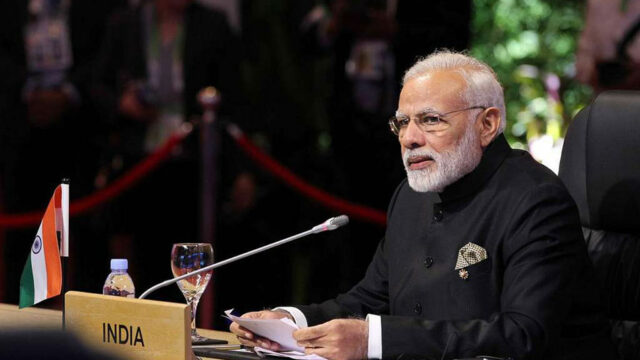
INDIAN PRIME MINISTER NARENDRA MODI — PHILLIPINES GOVERNMENT VIA PICRYL.COM

 – Indian Prime Minister Narendra Modi heads to the United States this week for a visit billed as a turning point for bilateral relations, with deeper cooperation in defense industry and sharing high technology in sharp focus.

The visit is expected to give India access to critical American technologies Washington rarely shares with non-allies, strengthening a new bond that is underpinned by not just global politics but also business and economics.

Washington and New Delhi, whose relationship was marked by mutual suspicion during the Cold War, have been moving closer for over two decades now with successive US presidents displaying bipartisan support for stronger ties with the emerging Asian economy and regional power.

President Joe Biden has built on that legacy and expanded cooperation as the United States sees India as a vital partner in its efforts to push back against China’s expanding influence worldwide and strengthen security in the Indo-Pacific.

Washington also wants to wean India away from its traditional defense partner Russia. New Delhi continues to do business with Moscow and has increased its purchases of cheap Russian oil in the aftermath of the invasion of Ukraine, much to the frustration of the West.

India too has overcome its “hesitations of history” – as Modi put it in a 2016 address to US Congress – and looked West amid its own military tensions and fraying ties with China.

Though Mr. Modi has made several previous visits to the United States, this will be his first with the full diplomatic status of an official state visit, just the third of Mr. Biden’s presidency and third by any Indian leader.

“It’s a milestone in our relationship…It is a very significant visit, very important visit,” India’s Foreign Secretary Vinay Kwatra told reporters on Monday.

A key achievement expected to be showcased is in the area of defense cooperation, especially between military industries of the two countries, Kwatra said, as India seeks to produce more weapons and equipment at home for itself and also for export.


JET ENGINES, DRONES, SEMICONDUCTORS

Major announcements expected during Modi‘s visit are US approval to General Electric to manufacture engines in India for its domestically produced fighter jets, India’s purchase of 31 armed MQ-9B SeaGuardian drones made by General Atomics worth $3 billion, and removal of US obstacles that prevent smoother trade in defence and high technology.

“People will be looking back on this visit by Prime Minister Modi as a real springboard for the US-India relationship, as it relates to defense … issues in particular,” Ely Ratner, Assistant Secretary of Defense for Indo-Pacific Affairs, said at a June 8 event.

A stronger India that can defend its own interests and can contribute to regional security is good for the United States, he said, adding that there is an aspiration to see India as an exporter of security in the region.

Cooperation in semiconductors, cyberspace, aerospace, strategic infrastructure and communication, commercial space projects, quantum computing and the use of artificial intelligence in industrial and defense fields, will also be discussed, a senior Indian official said.

During the three-day visit that begins in New York on June 21, Mr. Modi will be hosted by President Biden for a state dinner and a private family dinner, attend lunch with Vice-President Kamala Harris and Secretary of State Antony Blinken, and address a joint session of Congress for the second time in nine years.

Mr. Modi will also meet American CEOs and lead an International Yoga Day event at the UN headquarters.

“This is not a routine visit, this is a fundamental turning point between India and the US,” C. Raja Mohan, Senior Fellow at the Asia Society Policy Institute in New Delhi.

“This is not a question of containing China or anti-China. This is about producing a new balance of power in Asia, which is a multipolar Asia, where there is no single power dominating it,” he said. – Reuters

Blinken urges China’s vigilance on its firms providing tech to Russia

US Secretary of State Antony Blinken. Official White House — CAMERON SMITH VIA FLICKR

BEIJING – US Secretary of State Antony Blinken said on Monday he had asked China’s government to be vigilant about private companies that may be providing Russia with technology that could be used against Ukraine, although he said he had seen no evidence Beijing is providing lethal assistance to Moscow.

“What we do have ongoing concerns about, though, are Chinese firms, companies, that may be providing technology that Russia can use to advance its aggression in Ukraine and we have asked the Chinese government to be very vigilant about that,” Mr. Blinken told reporters.

Mr. Blinken spoke on a rare visit to Beijing during which China and the United States agreed to stabilize their intense rivalry so it does not veer into conflict, although the visit did not yield any major breakthrough.

Mr. Blinken met on Monday, the second day of his visit, with Chinese President Xi Jinping.

Western powers have provided Ukraine with billions of dollars in military assistance since Russia invaded in February 2022. China has faced accusations, which it denies, of supplying lethal weapons to Moscow. China and Russia announced a “no-limits” partnership shortly before Russia invaded Ukraine.

“With regard to lethal aid to Russia for use in Ukraine, we and other countries have received assurances from China that it is not and will not provide lethal assistance to Russia for use in Ukraine,” Mr. Blinken said.

“We appreciate that, and we have not seen any evidence that contradicts that,” he told reporters.

Asked for comment on Mr. Blinken’s remarks, the Chinese embassy in Washington said China is committed to promoting peace talks and has not provided weapons to either side in the Russia-Ukraine conflict.

“We oppose the unfair prohibition or restriction on normal economic and trade activities between Chinese and foreign companies. We urge the US side not to undermine China’s legitimate rights and interests in any form when handling the Ukraine issue and its relations with Russia,” spokesperson Liu Pengyu said in an emailed statement. – Reuters

‘Great Resignation’ continues as quarter of workers look to change jobs – PwC

STOCK PHOTO | Image by Mohamed Hassan from Pixabay

MUMBAI – A quarter of workers surveyed by PwC expect to change jobs in the next 12 months, up from 19% last year, as they are increasingly left cash-strapped in a cooling economy while dealing with inflationary pressures.

Even as the ‘Great Resignation’ continues, around 42% of the employees surveyed by PwC in its new study of the global workforce said they are planning to demand pay raises to cope with the higher cost of living, up from 35% last year.

Some 46% of respondents to the ‘2023 Hopes and Fears Global Workforce Survey’, which polled 54,000 workers in 46 countries, said either that their households were struggling to pay bills every month, or that they could not pay bills most of the time.

“With the ongoing economic uncertainty, we see a global workforce that wants more pay and more meaning from their work,” said Bhushan Sethi, joint global leader of PwC’s people & organization practice.

Some 38% said they had money left over at the end of the month, down from 47% last year. Around one worker in five is doing multiple jobs, with 69% of those saying they were doing so for additional income.

“Purpose, company culture and inclusion also remain key to employee concerns,” the survey found.

Workers who are struggling financially are also less able to meet the challenges of the future, including investing in developing new skills and adapting to the rise of artificial intelligence (AI).

Among the workers surveyed who were doing better financially, more than one-third said AI will improve their productivity, while a quarter expected AI to create new job opportunities.

Younger workers, including Gen Z and millennials – people born after 1981 – expect to see a positive impact from AI on their careers over the next five years, the survey found. – Reuters

[B-SIDE Podcast] How common tower companies help boost digital transformation

Follow us on Spotify BusinessWorld B-Side

The Philippines’ mobile network operators (MNOs) are now using shared towers to accelerate and lower the cost of digital transformation in the country as a result of the government’s common tower policy.

In this B-Side episode, Suresh Sidhu, chief executive officer and founder of EdgePoint Infrastructure Sdn. Bhd., speaks with reporter Miguel Hanz L. Antivola how telecommunications infrastructure companies support the Philippines’ digital transformation.

TAKEAWAYS

Seeking operations from third-party telco infrastructure companies grants cost efficiency and focus for MNOs.

“We can offer them much longer-term solutions for using our infrastructure,” Mr. Sidhu said on the difference in investment horizon for telco infrastructure companies building shared towers.

The total cost comes down for all MNOs, where their capital expenditures (capex) are converted to operational expenditures (opex), and sites are shared by multiple operators.

“Using us, [payback is] closer to seven to ten years, so rather than spending all that capex themselves up front, the leasing of the site gives them a payback that is much longer and, therefore, much better for them.”

“Colocation pricing is often somewhere in the region of 10-20% from the market price… so things are a lot cheaper for them as well.”

“The price we offer is reflective of the fact that any single site is able to be shared, and we don’t need just one operator to recover our investment.”

Other advantages for MNOs include ‘colocation discounts,’ faster market operations, and immediate access to sites.

“They don’t have to focus so much on infrastructure… That’s our job.”

“The operators can spend more time thinking about network quality and customer service.”

Process clarity is a key challenge for telco infrastructure companies in the Philippines.

“Acquiring the site and getting the landlords to agree to lease the rent — [it] takes a lot of time,” Mr. Sidhu said.

“You need to make sure that you’re talking to the right landlord. You know that you’ve got everything in order. I think that’s a key challenge,” he added.

This challenge of process clarity includes securing the necessary permits and establishing trustworthiness with landlords, both of which slow down the time it takes to build a tower.

“I think the local government units (LGUs) are also trying quite hard, but we know we can always improve and automate more processes.”

Local production of materials will boost telco infrastructure operations.

Mr. Sidhu noted that telco infrastructure companies in the country rely on tower imports, which result in longer wait time and greater cost.

“There’s not a lot of local production, and I think having and encouraging more local fabrication in the Philippines will improve time for delivery, as well as costs quite considerably,” he said on maximizing the local supply chain.

“Right now, we probably have to use multiple vendors, which is fine, but typically in a mature tower country, you have fewer bigger partners to help you deliver the sites.”

However, Mr. Sidhu also sees progress in terms of the growing number of skilled vendors in the country.

“Hopefully, they continue to grow and become more professionally established and skillful because it’s always a little different putting up a site in sandy soil, marshy soil, mountain areas, urban sites,” he said of local manufacturers who can help them install and prepare a site.

“We’re looking forward to some of these partners getting bigger and bigger over time, and therefore building more and more skill, so we can use them more regularly.”

Analytics and artificial intelligence (AI) will become an important part of telco infrastructure companies.

Aside from the continuous growth of 5G networks in the Philippines through good site acquisition, telco infrastructure companies also look forward to using analytics and AI to improve operations.

“What we’re now doing is using crowdsourced data to put analytics in place, to also offer ideas to the operators where we see they may need it,” Mr. Sidhu said.

“So we are able to transform over time, from being a reactive order taker to a proactive solution provider for operators.”

“It’s starting now, but we need to get more mature.”

Solving the backhaul transmission through satellites can complement the goal, but it still needs to mature.

Low Earth orbit (LEO) satellites have the opportunity to provide network coverage and stable broadband access to remote locations in the country, Mr. Sidhu noted.

“You can build a site almost anywhere, but the issue is what we call backhaul transmission,” he said.

“So if I build a site on one end of the country, but the nearest site is blocked by a mountain or 50 mountains, how am I going to connect that site?”

“We see them as more complementary and potential partners… The technology has to mature a little bit to become more reliable.”

“There’s some regulatory matters that probably have to be sorted out, but overall, we think it can be a complementary part of the solution for our countries’ infrastructure.”

Recorded remotely on June 5, 2023.

Follow us on Spotify BusinessWorld B-Side

PHL competitiveness ranking dips — report

PHILIPPINE STAR/MIGUEL DE GUZMAN

By Justine Irish D. Tabile, Reporter

THE PHILIPPINES dropped four spots in an annual global competitiveness report amid global inflation, public health crises, and geopolitical concerns.

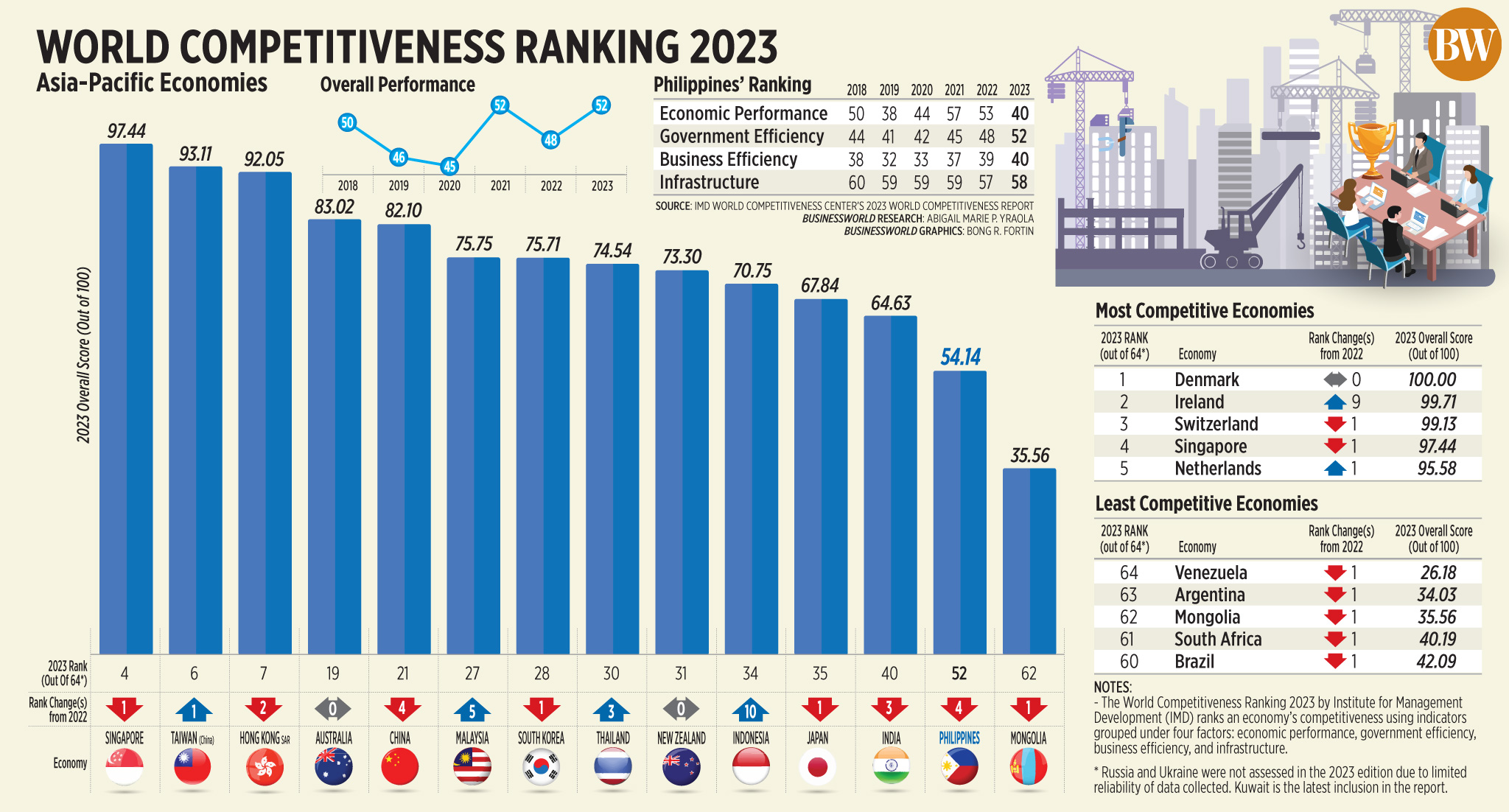
In its 2023 World Competitiveness Yearbook, Switzerland-based International Institute for Management Development (IMD) placed the Philippines 52nd out of 64 economies, from 48th in 2022.

World Competitiveness Ranking 2023

This year’s drop marked the sixth year that the Philippines stayed in 13th place out of 14 economies in the Asia-Pacific region.

IMD ranked the economies using 255 indicators spread across four competitiveness factors: economic performance, government efficiency, business efficiency, and infrastructure.

“The Philippines suffered declines in three out of the four main factors or dimensions of Competitiveness,” the Asian Institute of Management (AIM) Rizalino S. Navarro Policy Center for Competitiveness said in a statement.

The center has been the IMD’s Philippine partner institute in producing the competitiveness yearbook since 1997.

The Philippines declined a notch to 58th in 2023 in the infrastructure factor, which the IMD described as a perennial challenge for the country.

Foundation for Economic Freedom (FEF) President Calixto V. Chikiamco said the decline is “not surprising and that the comments are valid.”

“Infrastructure remains poor and inefficient, like the Ninoy Aquino International Airport. Power availability is uncertain. Water will be rationed. The poor infrastructure and services are turning off investors,” Mr. Chikiamco said in a Viber message.

To improve, the Philippines should adopt a whole-of-nation approach, he said.

“Get private sector involved, for example, expand the school voucher system to cure the ills in education; abolish quantitative restrictions in food imports; get more public-private partnerships in infrastructure done; hasten implementation of Public Service Act Amendment to woo foreign investors,” he said.

The country’s business efficiency factor dropped to 40th in 2023 from 39th in 2022 while its government efficiency factor suffered the biggest decline — to 52nd in 2023 from 48th in 2022, according to IMD.

The Philippines also declined in all the sub-factors under government efficiency: to 55th from 51st in public finance; dropping one place to 14th in tax policy; to 56th from 53rd in the institutional framework; falling five places to 57th in business legislation; and to 53rd from 50th in the societal framework.

Meanwhile, the country saw an improvement in the economic performance factor, jumping 13 places to 40th. Sub-factors under economic performance saw better results: to 30th from 48th in domestic economy, to 9th from 19th in employment, and to 39th from 58th in prices.

The Philippine economy expanded by 7.6% in 2022, surpassing the Development Budget Coordination Committee’s (DBCC) 6.5-7.5% target for the year and better than the 5.7% gross domestic product (GDP) growth in 2021.

In the first quarter, GDP expanded by 6.4%, marking the slowest pace in two years and settling within the government’s 6-7% target for the year.

Meanwhile, the unemployment rate further eased in April this year to 4.5% from 4.7% in March and 5.7% in April last year. It was the lowest jobless rate since 5.3% in January 2020.

Inflation cooled in May, the lowest so far in 2023, to 6.1% from 6.6% in April. Although slowing down, the rise in consumer prices in May was still faster than the 5.4% a year earlier and marked the 14th straight month it breached the central bank’s 2-4% goal.

The IMD said the Philippines continues to face challenges in sustaining economic recovery and growth momentum amid global downside risks and in strengthening social protection and healthcare systems for inclusive development.

It noted that the country also faces problems in addressing learning gaps, reducing climate change vulnerability, and reinforcing efficient public management strategies to support fiscal responsibility.

Rizal Banking Corp. Chief Economist Michael L. Ricafort said in a Viber message that “the decline in the country’s competitiveness ranking largely brought about by higher prices or inflation that reduced purchasing power and a drag on economic growth.”

“Higher inflation locally and worldwide since 2022 resulted in higher interest rates that increased borrowing/financing costs for consumers, businesses/industries, government, and other institutions, thereby could have also slowed down investments and overall economic growth,” he added.

Mr. Ricafort said the recession in the US, slowed down exports and foreign direct investments, while the pandemic lockdown weighed on the Philippines’ competitiveness despite easing restrictions in the latter part of 2022.

MOST COMPETITIVE
Denmark topped the competitiveness index again in 2023, followed by Ireland and Switzerland in second and third places, respectively.

In the Asia-Pacific region, the top three most competitive economies are Singapore, Taiwan, and Hong Kong — in that order. 

“Political fragmentation is a result of COVID-19 and the Ukraine war, and a major upshot is that more and more countries — Singapore, Saudi Arabia and India, for example — are pursuing their own interests,” said Arturo Bris, director of IMD’s World Competitiveness Center.

“With inflation pressures easing and uncertain stock markets, we are now able to see winners and losers in a context where multiple crises overlap,” Mr. Bris said.

The countries covered by the 2023 World Competitiveness ranking were different from the 2021 report after Kuwait joined the list for the first time, ranking 38th out of 64 economies.

Meanwhile, Russia and Ukraine were not assessed due to limited data reliability, the IMD said.

Easing prices a reason to pause — BSP

PHILIPPINE STAR/MIGUEL DE GUZMAN

By Keisha B. Ta-asan, Reporter

THE CONTINUED downward trend of consumer prices is a “good reason” to keep rates unchanged, the Bangko Sentral ng Pilipinas (BSP) chief told reporters on Monday.

BSP Governor Felipe M. Medalla said the Philippine central bank’s policy actions will be largely driven by its inflation target and not by the moves of the US Federal Reserve.

“[With] the most recent numbers, it’s very clear that the inflation rate is declining. Our expectation is, by September or October, inflation is below 4%… It’s a good reason to pause,” he said in mixed English and Filipino.

Headline inflation eased to 6.1% in May from 6.6% in April, data from the local statistics agency showed. However, this marked the 14th straight month that inflation breached the BSP’s 2-4% target range.

Year to date, inflation averaged 7.5%, well above the central bank’s 5.5% forecast for the year.

“On the other hand, the markets may see a further reduction in the difference between the BSP and Fed policy rate as a signal for a weaker peso, which may not be a good thing because inflation is still a problem,” Mr. Medalla said.

“Therefore, we have to be conscious about the interest rate differential but that is not the main driver. The main driver is the domestic inflation picture,” he added.

The US Federal Reserve decided to keep its target interest rate unchanged at 5-5.25% during its June 13-14 meeting, the first pause after it raised borrowing costs by 500 basis points (bps) since March last year.

Meanwhile, the Philippine central bank is widely expected to keep benchmark interest rates steady at 6.25% on Thursday, based on a  BusinessWorld poll of 15 economists conducted last week.  

If realized, this would be the second straight meeting the BSP will leave interest rates untouched. The BSP hiked policy rates by 425 bps from May 2022 to March 2023 to tame inflation.

Mr. Medalla also said the markets are “too optimistic” about when the US central bank will cut policy rates.

“If you listen to the Fed officials, that’s not the case,” he said. “The fact that they have maintained rates and sent a signal that they’re still quite concerned, means we cannot roll out future increases.”

The BSP chief also hopes market players may see that a narrower interest rate differential with the US Federal Reserve does not mean a weaker peso, as this could become self-fulfilling prophecies.

“If the rate differential gets a little bit narrower, it doesn’t necessarily mean a reason for the peso depreciation.

The peso reached a record low of P59 against the dollar in October last year as the greenback surged amid hawkish signals from the Fed.

On Monday, the peso closed at P55.74 versus the dollar, up by 12 centavos from its previous finish, data from the Bankers Association of the Philippines’ website showed.

This is the peso’s strongest close since its P55.725-a-dollar finish on May 23.

In an e-mail interview, ANZ Research economist Debalika Sarkar said the BSP will have to monitor external developments and assess the impact of its previous rate hikes on the economy.

“The ‘hawkish pause’ by the US Fed last week and a still elevated trade deficit in April do not offer much policy flexibility at this stage. We thus do not see a policy pivot by the BSP until the first quarter next year,” she said.

The country’s trade-in-goods balance, or the difference between exports and imports, reached a deficit of $4.53 billion in April. The gap is lower than the revised deficit of $5.1 billion in the previous month and $5.32 billion in the same period last year. It was the slimmest trade gap in two months. The country’s trade balance has been in deficit for almost eight years.

Security Bank Corp. Chief Economist Robert Dan J. Roces said the BSP is expected to keep policy rates steady at 6.25%, but there are still risks to the outlook.

“We estimate inflation to fall within the 2-4% target around September or October of this year, but inflation, peso depreciation, and Fed policy action risks remain tilted to the upside,” he said.

“Thus, the BSP may want to keep interest rates ahead of the curve at some point after this month to keep these risks in check, and continue to signal a ‘hawkish hold’ itself in the meantime,” he added.  

After June 22, the BSP’s next policy meeting is scheduled on Aug. 17.

Farm output subsidies in PHL regressive, says WB

PHILIPPINE STAR/KRIZ JOHN ROSALES

THE PHILIPPINES has one of the most regressive agricultural output subsidies, the World Bank (WB) said.

In a report, the Philippines ranked first among 16 countries in terms of regressive output subsidies, followed by Mexico, Canada, Japan, and Vietnam.

Meanwhile, Brazil, Kazakhstan, and Indonesia had the most progressive subsidies.

The World Bank conducted an analysis to examine the distributional impact of agricultural subsidies in multiple countries, which then indicates the scheme’s progressiveness or regressiveness.

“As with any subsidy linked to production amounts, output subsidies will naturally be regressive, since richer farmers will always produce more output and therefore receive a larger share of the subsidy than poorer farmers,” it said.

“Nevertheless, this analysis uses a lower threshold for what is considered progressive. It examines whether poorer regions in each country receive a relatively larger share of output subsidies than their share of agricultural production value,” it added.

For example, a subsidy is considered “progressive” if the country’s poorer regions receive a larger share of producer single commodity transfer (PSCT) than their share of agricultural production. On the other hand, if poorer regions receive a smaller share, then the subsidy is regressive and acts “more like a tax than a subsidy.” 

A PSCT indicator measures the annual monetary value of gross transfers from consumers and taxpayers to agricultural producers, including its market price support and output subsidies.

According to the World Bank, 80% of the world’s extremely poor and 75% of the moderately poor live in rural areas and engage in agriculture.

“In many cases, agricultural subsidy programs double as rural development, livelihood, and safety net programs. Therefore, another important indicator of the usefulness of agricultural subsidies is how progressive they are — that is, what share of the subsidy is captured by the lowest income quantiles,” it added.

The World Bank said the Philippines would benefit from shifting its output subsidies from rice to maize.

Data from the report show that rice receives the most subsidies among all commodities across countries, followed by maize, wheat, sugar, and soybeans.

“The analysis also finds that if countries were to shift their output subsidies on rice, a very water-intensive crop responsible for exacerbating harmful externalities like water scarcity, salinization, and carbon dioxide emissions, to maize, then their subsidies would become significantly more spatially progressive,” it added.

The World Bank said that output subsidies should re-evaluate what crops receive which subsidies and prioritize those that poorer households produce, such as maize.

“In many countries, this approach implies a shift away from subsidizing rice, which would entail other environmental co-benefits like reducing agriculture’s water and carbon footprints,” it said.

“Although the distributions of PSCT transfers on crops across countries vary considerably, the distribution of production tends to be more progressive for maize than for other crops — that is, maize tends to be produced in poorer areas of the country,” it added. — Luisa Maria Jacinta C. Jocson

USDA expects country’s pork output to drop 5%

PHILIPPINE STAR/WALTER BOLLOZOS

THE PHILIPPINES is expected to produce a lower volume of pork due to the continuous spread of African swine fever (ASF) in top-producing regions, the United States Department of Agriculture (USDA) said.

The USDA estimated the country’s pork production to reach 925,000 metric tons (MT), down by 5.13% from its previous forecast of 975,000 MT.

The agency lowered its projection in response to ASF’s continuous spread into other provinces within the Central and Western Visayas regions, including Negros Occidental, Negros Oriental, and Aklan.

“In 2022, the Central and Western Visayas regions had become the first and third-largest producers following the decimation of swine inventories elsewhere in the country,” the USDA said.

The production from Central Visayas, which accounted for 13.2% of the overall pork output, rose by 7% to 2.78 million MT last year. Pork output from Western Visayas increased by 12.4% to 2.61 million MT or 12.4% of the total production.

The agency noted, however, that the projection has not covered the impact on output brought by earlier outbreaks in the provinces of Iloilo and Cebu within the said regions.

The USDA said that despite prospects of an ASF vaccine following successful local trials, “such a vaccine would be unlikely to materially impact 2023 production.”

Earlier this month, the Bureau of Animal Industry (BAI) said that it had completed clinical trials. The agency has sent a letter of endorsement to the Food and Drug Administration for the issuance of a certificate of product registration.

As of June 1, up to 15 provinces have active ASF cases, according to the BAI. It said the cases had been confined to the Visayas region while few detections had been reported in Luzon and Mindanao.

Jayson H. Cainglet, executive director of Samahang Industriya ng Agrikultura, reiterated the call for the creation of first border facilities to contain the ASF outbreak.

“Without first border inspection facilities and indemnification from the government, the spread of ASF will continue. Unfortunately, it is the backyard farms that are being infected dahil sila ang hindi pa makasabay sa (because they are the ones that still can’t catch up with) enhanced biosecurity sa (in) farms,” he said in a Viber message.

The USDA also lowered its projection of pork imports this year to 500,000 MT from the initial forecast of 525,000 MT.

Citing the BAI data, pork imports dropped by 17% to 114,820 MT during the first quarter.

Meanwhile, the Philippines is said to have held higher frozen inventories “to support its supply chain and begun rebuilding stocks on time with historical precedent.”

“Importers will face a similar dilemma at the end of 2023 as they had in 2022, needing to decide how much extra to hold given the continued uncertainty of another extension of lower import duties,” the USDA said.

The agency said that retail prices of local pork “continue to hold steady” while imported pork and local farmgate prices are seen declining.

As of Friday, price monitoring of the Department of Agriculture (DA) indicated that markets in Metro Manila sold pork belly or liempo at between P310 and P390 per kilo while pork shoulder or kasim at P280 to P340 per kilo. 

CHICKEN OUTPUT FORECAST
Chicken production and imports are seen to be flat at 1.47 million MT and 520,000 MT, respectively, according to the USDA.

“Philippine poultry industry contacts have voiced increased interest in a potential bird flu vaccine to help combat the now long-standing threat HPAI (highly pathogenic avian influenza) has posed and hope there will be a decision on the authorization and emergency use of avian influenza vaccines by September 2023,” the USDA said.

In terms of inventory, frozen chicken meat, excluding mechanically deboned meat, in accredited cold storage facilities remains “near historically high levels and reflective of growing import requirements,” according to the agency.

The Philippine Statistics Authority reported that the first-quarter production of chicken has increased by 3.3% year on year to 470,210 MT.

Meanwhile, chicken imports rose by 32% to 102,745 MT during the first quarter as per data from the BAI.

“Chicken retail prices remain elevated with a growing spread compared to farmgate in 2023,” it said.

Whole chicken was sold between P150 and P200 per kilo in Metro Manila markets, according to the DA. — Sheldeen Joy Talavera

Fête De La Musique broadens its horizons for its 29th year

FROM calm acoustic sessions and guitar-driven bangers to lowkey DJ sets and danceable tunes, the free music event from France now celebrated globally every June is exploring a deeper cause.

This year, the Philippine edition of Fête De La Musique, known simply as FDLM or Fête PH, is using its live celebrations across 43 stages from June 16 to 24 to bring awareness to ocean conservation.

“I was wondering the whole night why this year’s Fête is called ‘Mersea.’ At one of the stages an organizer said it’s a mix of mer (sea) and merci (thank you) in French, showing both gratitude and the goal of supporting ocean conservation. I found that really cool!” said Diane, a 24-year-old roaming the scattered pocket stages in Makati City on June 17.

She added that, as an avid fan of many local music acts who shifted focus towards “more important causes over the pandemic,” it made total sense for Fête PH to be more intentional with their influence.

“I’m huge on the swaying and bopping and headbanging, but it feels way better knowing that it’s all for something, too,” she added.

Since June is also World Environment Month, the festival partnered with the United Nations Development Program (UNDP) and the Department of Environment and Natural Resources (DENR) for coastal clean-up and tree-planting in Metro Manila, Siargao, and Cebu.

Xavier Leroux, executive director of Alliançe Française de Manille, told reporters at a media briefing that the challenge this year was “to make [FDLM] more purposeful, to connect culture with advocacy.”

They also partnered with ScarletBox.io for a fundraising campaign for the Philippine seas. The platform is featuring 1,000 NFT (non-fungible tokens) art pieces by 10 renowned photographers taken in La Union, Palawan, and Siargao.

The photographers whose works will be sold to raise funds are Chino Neri, Mike Eijansantos, Lancer Salva, Camille Robiou du Pont, Terence Ver Angsioco, Kat Jack, A Decade, Ganden Medved Po, ADAM, and Archie Geotina.

The art sale starts on June 19.

Giselle Tomimbang, president of B-Side Productions and co-producer of Fête de la Musique, told BusinessWorld that the festival’s attendee record in the country so far was set in 2019, with about 40,000 audience members.

However, the pandemic has “put things into perspective,” with last year’s 14,000 attendees now being the reasonable number to beat, and quality of events now the priority rather than quantity.

“We used to have Manila-centric Fêtes, but during the pandemic, many [people] moved elsewhere like to the islands or started putting more value in mother nature,” she added. “I think that’s really influenced how we view the world and how we use the platforms we have.”

THE LIVE MUSIC
On June 23, the main stage for Fête de la Musique 2023 will be in Greenbelt 3, Makati, and will feature performances from Blaster & the Celestial Klownz, Lola Amour, She’s Only Sixteen, Cheats, Ena Mori, and Uncle Bob’s Funky Seven Club.

“My friends and I treat the pocket stages as kind of a warm-up for the main stage next week,” Diane told BusinessWorld while walking to her fifth stage for the night.

Like many other Millennial to Gen Z attendees, who make up the brunt of the Filipinos going to Fête, she’s spoiled for choice — there were 31 pocket stages in Makati that weekend, which provided a wide range of genres.

The participating venues included H&J Sports Bar & Restaurant, A’toda Madre, Mang Rudy’s Tuna Grill And Papaitan, Social House, saGuijo Cafe, Alamat Filipino Cuisine, Boogie MNL, Enzo’s View Bar at Jade Hotel and Suites Makati, Nokal, Kampai, The Spirits Library, Bourbon New Orleans PH, The Apartment, Sarisari Cocktails, Apotheka, Ugly Duck, Justin Alonte Studio, White Banana, Bagnet 8065, Kuya Boby’s Restobar, Seltsam, Mansion Sports Bar & Lounge, La Colina, Coyote Ribs & BBQ, Dear Adam Sweet Lucy, Kosumosu PH, Commune, Balcony Music House, Futur:st, and Keepers Poblacion.

“I’ve been to four, now on my way to the fifth, and hoping to visit at least eight! We’re all just so hungry for live music,” said Diane.

“I’m also glad there’s stages in other cities, because I have friends in Baguio, Laguna, and Siargao who can have their own experiences too.”

Fête PH 2023, in partnership with the Department of Tourism, will have destination stages in Albay, Baguio, Baler in Quezon Province, Cebu, El Nido in Palawan, Laguna, Pampanga, Siargao in Surigao, Tagaytay in Cavite, and Zambales. Almost all performances will be held on June 24 while Siargao is hosting its stage on June 21.

French jazz act Rémi Panossian Trio will also be flying in from France to perform on June 21 at the Raffles Makati and on June 22 at the Alliance Française de Manille.

For the lineup of events, visit Fête de la Musique PH | Facebook.

Fête de la Musique in the Philippines 2022 is presented in partnership with the Embassy of France and B Side Productions. — Brontë H. Lacsamana

How hip-hop learned to call out homophobia — or at least apologize for it

THE RAPPER Offset apologized over a homophobic slur.

IN THE 2018 song “Boss Life,” the rapper Offset, part of the multiplatinum-selling rap group Migos, rhymed: “I do not vibe with queers.”

Such casual use of a perceived anti-gay slur is not uncommon in the history of hip-hop. But the discussion that Offset’s lyrics provoked gave an insight to how the genre is evolving.

Addressing claims of homophobia, the rapper wrote on Instagram: “I didn’t write the line about gay people. … I got love for all people.” He continued: “To me [by] ‘queer’ I don’t mean someone who’s gay. I mean lame people who film you, post it and stalk you. Lingo that means strange or odd.”

I have no reason to question Offset’s sincerity, although other artists have criticized him for the slur.

But as a scholar of hip-hop and social consciousness, what interests me more is that Offset felt the need to reply at all; many of his rap predecessors have not felt the need after similar incidents.

As rap music approaches its 50th anniversary in August, I believe it is increasingly embracing challenges to — and debates about — homophobia. That is, hip-hop has evolved to the point where anti-gay rhetoric invites condemnation from members of the culture. It is still present in some rap lyrics — as indeed is true of all genres, from pop to country — but hip-hop is changing because of more progressive cultural views and greater LGBTQ+ representation.

Hip-hop has always been a socially conscious genre — but whereas it has historically challenged racial discrimination, it has slowly evolved on issues related to gender and sexuality.

Arguably one of the most poignant social commentaries on institutional racism at the time, “The Message,” released in 1982 by Grandmaster Flash and the Furious Five, included the anti-gay slur “f**” in a disparaging context.

Indeed, throughout the 1980s and 1990s, high-profile rap groups such as N.W.A and artists like DMX similarly used pejorative language against members of the gay and lesbian community.

Perhaps the most famous rapper using homophobic lyrics is Eminem. On The Marshall Mathers LP, he rhymed, “Hate f**s?/The answer’s yes.” In the aftermath of this controversy, Eminem performed with famous gay singer Elton John at the 2001 Grammys. Nevertheless, on follow-up albums he continued to use the slur. Throughout this controversy, there was only a muted response from the rap community itself.

Advocacy groups such as the Gay and Lesbian Alliance Against Defamation have long campaigned against the use of such language, lambasting Eminem’s hateful rhetoric and lyrics alluding to violence against members of the LGBTQ+ community.

And such lyrics have real-world impacts. Indeed, researchers who studied the link between rap music and resistance among young men of color to coming out found that it influenced some gay men’s decision to conduct any same-sex practices on the “down low” to avoid revealing their sexuality.

In the latter 2000s, attitudes began to change. For example, in 2005 Kanye West apologized for his past homophobia and even urged fellow artists to cease using lyrics that degrade the LGBTQ+ community. “I wanna just come on TV and just tell my rappers, just tell my friends, yo, stop it,” he said in reference to derogatory anti-gay slurs. In 2012, Jay-Z decried discrimination against gay people and promoted gay marriage.

These individual actions did not end anti-gay expression in rap, but it does, I believe, show progress among those in the hip-hop community. And others, from Nicki Minaj to Fat Joe, later followed suit as the 2010s progressed.

Furthermore, hip-hop artists and fans have increasingly welcomed what could be described as a queer aesthetic once frowned upon. Some cisgender male lyricists have appropriated parts of queer culture as part of their act.

For instance, popular Atlanta rapper Young Thug often cross-dresses, wearing women’s clothing. In a 2016 MTV interview regarding his wardrobe choice he stated, “In my world, you can be gangsta with a dress, or you can be gangsta with baggy pants.”

This contrasts with earlier rap. Such attire would be unthinkable in the 1990s when the belief was that “real” men “don’t wear tight clothes,” in the words of New York rappers Thug Slaughter Force. This idea was rooted in the belief that “hypermasculine” and “macho” straight guys wore loose-fitting clothing.

However, many present-day male rappers wear tight-fitting clothes — a fashion choice once considered “gay” and therefore demeaned in the rap world. Moreover, such outfits are created by gay fashion designers, a point that Offset acknowledged while defending himself against claims of homophobia.

Being comfortable with a gay aesthetic is one positive development. Even more telling, I believe, is the growing number of mainstream LGBTQ+ rappers. For many years there were no high-profile gay hip-hop artists. In fact, as late as 2014 Larry King was asking interviewees if they thought there would “ever be … gay rap artists.” There were, of course, but major record labels at that time rejected signing them.

Over the past decade, there has been a rise in the number of successful gay and lesbian emcees. Albeit the music of openly gay Lil Nas X is more pop than rap, it has sold over 1 million copies. Moreover, he has collaborated with other mainstream lyricists like Nas, Jack Harlow, Cardi B, and Megan Thee Stallion — all cisgender straight emcees.

Lesbian rapper Young M.A achieved platinum status and works with industry rappers. Even 50 Cent, no stranger to homophobic lyrics, praised her on Instagram: “Young M.A the hottest s*** out right now. I don’t like a lot of s***, but this is Tuff.”

Perhaps the best example of how hip-hop has evolved on issues of sexuality can be seen in the case of Tyler the Creator. Early in his career, Tyler frequently used anti-gay slurs, such as in the 2011 song “Yonkers” in which he says “I’ll crash that f***ing airplane that that f****t n**** B.o.B. is in.” But in 2018 he “came out,” revealing his attraction to a man in his music. In the song, “I Ain’t Got Time,” he rhymes “I been kissing white boys since 2004.”

Eminem responded by calling him a homophobic slur but later apologized.

In a perfect world there would be no slur to apologize for. But it does show that hip-hop has evolved to a point at which self-reflection and conversations are taking place on past and present instances of homophobia.

As the genre hits 50, previously marginalized LGBTQ+ voices are beginning to be heard — along with denouncements of homophobia by straight artists.

That’s not to say that anti-gay beliefs don’t persist in the music of some. In his 2020 song “Pimpin’ Ain’t Eazy,” Kodak Black uses the anti-lesbian slur “d***,” rapping, “Like a d***, man, you n***** can’t f*** with me.”

But hip-hop is not alone. Homophobia, transphobia and other forms of prejudice persist in the United States and across the globe.

And at least for now, rap artists are called on it – increasingly by members of their own community. — The Conversation via Reuters Connect


Matthew Oware is a Professor of Sociology at the University of Richmond in Richmond, Virginia, USA.

DoTr’s proposed 15-year NAIA concession won’t do much, says consortium

PHILSTAR FILE PHOTO

A 15-YEAR concession period proposed by the Transportation department and the Manila International Airport Authority (MIAA) will not significantly transform the Ninoy Aquino International Airport (NAIA), according to a consortium backed by six conglomerates, saying that a 25-year concession period is a more practical option.

“Under a 15-year concession period, the passenger service charge increase will be more abrupt than say a 25-year concession period,” Kevin L. Tan, Manila International Airport Consortium (MIAC) director and Alliance Global, Inc. chief executive officer (CEO), said on the sidelines of a media briefing on Monday.

“Honestly, I think that a 15-year concession period will not really do much in terms of transforming the airport. We have already studied that before and we have actually backed out of that proposal because we don’t think it would be meaningful for the Filipinos,” he added.

Mr. Tan was referring to the joint proposal submitted by the Department of Transportation (DoTr) and the MIAA to the National Economic Development Authority.

Under the P141-billion solicited proposal of the two government agencies, the private concessionaire will have 15 years to operate the airport and recover its investment.

Sought for comment, DoTr Undersecretary for Aviation and Airports Roberto C.O. Lim said in a phone message: “A 15-year concession period is adequate to improve passenger experience to meet international standards and increase the runway and terminal capacity through investment in technology, innovation, digitalization, deployment of equipment and passenger processing systems which are already in use in other airports.”

“DoTr and MIAA are also open to a longer concession period under defined circumstances warranting its extension,” he added.

On April 27, the MIAC, composed of Aboitiz Infracapital, Inc., AC Infrastructure Holdings Corp., Alliance Global–Infracorp Development, Inc., Filinvest Developments, and JG Summit Infrastructure Holdings Corp., and the Global Infrastructure Partners, submitted an unsolicited proposal for the rehabilitation of NAIA.

PROJECT COST
In the regulatory filings posted by the companies in April, they said that the proposal was valued at over P100 billion. Filinvest Development Corp. said in a disclosure on Monday that it solely referred to the initial investment throughout the first five years.

“Maybe there’s a confusion on the project’s cost, but the project cost involves the upfront payment of P57 billion and the around P211 billions of development cost. The initial proposal was like that, nothing changed,” Cosette V. Canilao, president and CEO of Aboitiz Infracapital, told reporters on Monday.

According to Mr. Tan, the MIAC will offer both significant unprecedented capital and economic value in its unsolicited proposal.

The consortium will make an upfront concession payment of around P57 billion, “a never-before-seen amount for any upfront concession payment,” he said.

The proposal also includes a P57 billion in committed capital for rehabilitation in the first five years of operations, as well as P154 billion in long-term capital commitments through 2048.

The project is also seen to contribute around P280 billion from ongoing revenue shares and taxes and P258 billion from net economic benefits such as employment creation.

“These equate to over P805 billion [in value] through a 25-year concession period. If you notice, a lot of the investments come in the beginning part and then the rest come towards the first five years and then beyond. The investments are slightly frontloaded in order for it to really really have a meaningful and transformational change for NAIA,” Mr. Tan said.

MASTERPLAN
The consortium said that the NAIA masterplan will have multiple phases centered on the P267- billion investment.

Its three main development phases will include improvements to capacity and reliability as well as the overall experience of passengers.

The first phase of the masterplan, called “Quick Wins,” will be implemented over the first two years with the goal of quickly increasing the airport’s capacity to 54 million passengers per annum (MMPA) by 2025 from the current P31 MMPA.

The initial phase will cover the improvements and optimization of processes, introduction of new concepts and technology, airfield upgrades, facade refreshing, and landscaping, among others.

For the second phase, the consortium is looking to increase the capacity of the airport to 62.5 MMPA by 2028 through expansion and development of the terminal floor area of Terminals 2 and 3, airfield facilities and enhancements to cross-terminal transportation.

The last phase targets to increase the airport’s capacity to 70 MMPA by 2048 and covers long-term expansion and development such as the additional expansion of Terminals 1 and 2 and airfield and runway upgrades.

According to the consortium, the terminal annex will receive 52% of the P57 billion in capital expenditures (capex) for the first five years, followed by civil works (24%), asset renewals (7%) and people mover system (4%) and “Quick Wins” (5%), with the remaining 8% going to other expenses.

Meanwhile, the estimated capex split for the P211-billion budget from 2024 to 2048 is 57% on growth projects and 43% on asset renewals. — Justine Irish D. Tabile

ADVERTISEMENT
ADVERTISEMENT