Home Blog Page 465

RCBC levels up employee experience with Adrenalin Max 2.0: Building future-ready, connected talent journeys
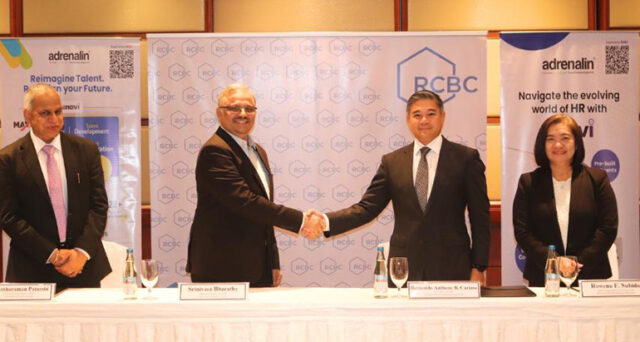
Rizal Commercial Banking Corp. (RCBC), a proud member of the Yuchengco Group of Companies (YGC), isn’t just innovating for its customers; it’s innovating for its people.

In its latest move, the bank has launched Adrenalin Max 2.0, the next-generation human capital management (HCM) platform that redefines how over 7,900 RCBC employees across 450 branches nationwide connect, grow, and thrive. It marks the next chapter in RCBC’s decade-long partnership with Adrenalin, a global HR tech leader trusted by more than 2,000 enterprises worldwide.

For RCBC, this is more than a tech upgrade; it is a people-first transformation.

“Our vision is to empower generations of Filipinos through financial innovation, and that begins by empowering our own people,” said Rowena F. Subido, first senior vice-president and head of RCBC’s Human Resources Group. “This HR technology upgrade is a direct investment in our most important asset: our talent.”

Empowering the People Who Power RCBC

Ms. Subido explained that the shift to Adrenalin Max 2.0 reflects RCBC’s broader commitment to building a culture where every employee feels valued, supported, and equipped to succeed.

“By transitioning to a next-generation HR solution, we are unburdening our teams from administrative tasks so they can focus on higher value work, creating cutting-edge financial solutions and delivering the exceptional customer experience that sets RCBC apart,” she said.

Adrenalin Max 2.0 brings together all HR functions, from recruitment and onboarding to development, operations, and remuneration, into one intuitive, data-driven system. It is built for speed, flexibility, and accessibility, whether you are a branch manager in Cebu or a new Gen Z hire in Manila.

“Today’s workforce is diverse, from seasoned bankers to our newest digital natives,” Ms. Subido shared. “Our goal is to give everyone the most human-centric experience possible, defined by flexibility, speed, and accessibility. This is not just about digitization; it is about transformation.”

From Candidate to Alumni: A Seamless Experience

That idea of transformation runs deep in RCBC’s DNA. Over the years, the bank has connected thousands of employees across branches, subsidiaries, and affiliates under one unified culture: One RCBC.

Ms. Subido recalled how RCBC’s early investment in digital HR systems helped it stay resilient during the pandemic, a commitment recognized by the People Management Association of the Philippines (PMAP) when RCBC won the People Program of the Year in 2022 for its Workforce Readiness Program.

“Now, with Adrenalin Max 2.0, we are taking our transformation even further,” she said. “We are enhancing our seamless, centralized system to accelerate hiring, boost data accuracy, and make every employee feel even more supported and empowered. Upgrading to the most modern, unified HCM platform is crucial in creating a cohesive, frictionless employee journey for everyone.”

HR as a Strategic Growth Partner

If you ask Ms. Subido, HR’s role in RCBC is not just administrative; it is strategic.

“Our HR Group has evolved from a support function into a vital growth partner,” she explained. “By unifying data and automating routine work, we can focus on strategic people initiatives, workforce readiness, and improved employee experience.”

This evolution enables HR to use enhanced analytics to forecast talent needs, reduce cycle times, and maintain agility in an ever-changing financial landscape.

But even as technology takes center stage, RCBC never loses sight of its human core.

“Technology should enhance human connection, not replace it,” Ms. Subido said. “By streamlining processes, we are giving our employees back their most valuable resource: time. That means more time for branch managers to engage with customers, build relationships, and deliver the kind of personalized service technology alone cannot replicate.”

The Power of Partnership

On the Adrenalin side, the partnership with RCBC has been more than a decade in the making, growing stronger through collaboration and trust.

“For any relationship to last this long, both organizations have to work closely,” said Srinivasa Bharathy, managing director and CEO of Adrenalin. “RCBC’s deep involvement and our team’s dedication have helped us digitally transform their HR practices over the years.”

Adrenalin Max 2.0, launched globally in 2023, was built for the modern, multi-generational workforce.

“The platform was designed for everyone, from Gen Zs to senior professionals,” Mr. Bharathy explained. “We call it the ‘candidate to alumni’ journey, meaning the experience begins even before someone is hired and continues long after they leave as part of the RCBC alumni community.”

That philosophy of connection and continuity is what makes the RCBC–Adrenalin collaboration stand out in the industry.

“RCBC’s decade-long partnership with Adrenalin is a testament to our shared commitment to co-innovation,” Mr. Bharathy added. “Together, we are setting a new benchmark for talent experience that powers service excellence and drives sustainable growth.”

People First, Always

For RCBC, the link between empowered employees and exceptional customer experience is undeniable.

“Our recognition as the Best Bank for Customer Experience is a direct result of our people-first philosophy,” Ms. Subido emphasized. “An empowered employee is confident, engaged, and dedicated to going the extra mile for our customers. Investing in our people is, ultimately, an investment in our customers’ trust.”

RCBC’s partnership with Adrenalin Max 2.0 is more than an HR upgrade; it is a statement. A statement that innovation begins within. That the best customer experiences start with empowered employees. And that the future of banking is not just digital; it is human.

About RCBC

Rizal Commercial Banking Corp. (RCBC) is one of the top banks in the Philippines. Currently ranked as the fifth largest privately owned bank in the country, RCBC has been offering a full range of financial products and services to individuals and businesses nationwide for over 65 years.

Recognized as the Best Bank for Digital and Best Bank for Customer Experience, RCBC continues to drive innovation through customer-focused, technology-driven solutions. The bank is a proud member of the Yuchengco Group of Companies (YGC), one of Southeast Asia’s most established conglomerates. Learn more at www.rcbc.com.

About Adrenalin

Adrenalin helps enterprise HR leaders create connected talent experiences and automate HR processes with AI, empowering them to become strategic growth partners.

Adrenalin Max 2.0 unifies Talent Acquisition, Development, Operations, Remuneration, and Engagement on a configurable platform built for the fastest time-to-value, with enterprise guardrails for AI agents and an intuitive UX that enables faster adoption.

NAVI, Adrenalin’s digital talent hub, brings native AI agents and digital experts to automate repetitive yet critical HR tasks. Trusted by 2,000+ enterprises worldwide with payroll compliance across 40+ countries, Adrenalin has a global presence across Asia Pacific, the Middle East and Africa, and the United States. Learn more at www.myadrenalin.com.


Spotlight is BusinessWorld’s sponsored section that allows advertisers to amplify their brand and connect with BusinessWorld’s audience by publishing their stories on the BusinessWorld Web site. For more information, send an email to online@bworldonline.com.

Join us on Viber at https://bit.ly/3hv6bLA to get more updates and subscribe to BusinessWorld’s titles and get exclusive content through www.bworld-x.com.

European leaders back Trump’s call for Ukraine ceasefire at present lines

REUTERS

LONDON — European leaders, including from Britain, France, Germany and the European Union, issued a joint statement with Ukraine on Tuesday backing US President Donald Trump’s call for a ceasefire at present battle lines.

“We strongly support President Trump’s position that the fighting should stop immediately, and that the current line of contact should be the starting point of negotiations,” the statement said.

Trump and Russian President Vladimir Putin are planning to meet in Budapest, capital of Hungary, a NATO and EU member that has maintained warm relations with Moscow throughout the Ukraine war.

Russia has in the past demanded Ukraine cede more territory before a ceasefire, while Ukraine and its European allies have long called for an immediate halt to fighting so that talks can take place.

Trump called for a ceasefire on present lines after meeting Ukrainian President Volodymyr Zelenskiy at the White House on Friday.

The statement said European leaders would meet later this week at an EU summit and in the format of the “coalition of the willing” of countries that back Ukraine. Zelenskiy will attend the coalition of the willing meeting on Friday in London.

The coalition – put together by France and Britain in February – has held talks for months at various levels to try to define plans for what countries could contribute militarily for Ukraine and to deter Russia from attacking it again once there is a final truce.

“We must ramp up the pressure on Russia’s economy and its defense industry, until Putin is ready to make peace. We are developing measures to use the full value of Russia’s immobilized sovereign assets so that Ukraine has the resources it needs,” Tuesday’s statement added. — Reuters

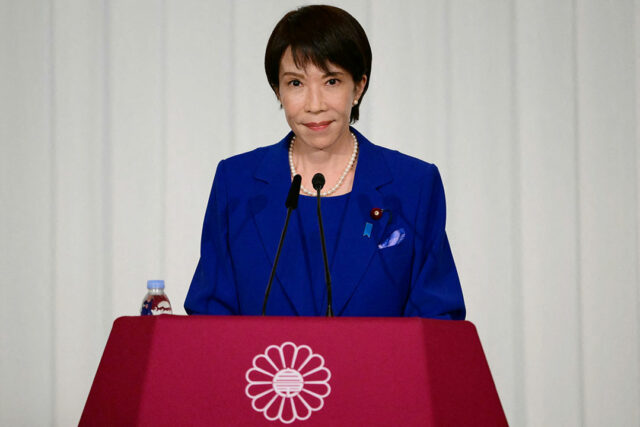
Japan’s Takaichi to become prime minister after winning lower house vote

Sanae Takaichi, the newly elected leader of Japan’s ruling party, the Liberal Democratic Party (LDP), attends a press conference after the LDP presidential election in Tokyo on October 4, 2025. — YUICHI YAMAZAKI/POOL VIA REUTERS

TOKYO — Sanae Takaichi, leader of Japan’s ruling Liberal Democratic Party, won the lower house vote to choose the next prime minister on Tuesday, clearing the way for her inauguration as the country’s first female premier later in the day.

Takaichi received 237 votes, topping the majority of the 465-seat chamber, according to a lower house staff.

She will likely be approved by the less-powerful upper house as well and sworn in as Japan’s 104th prime minister this evening to succeed the incumbent Shigeru Ishiba, who last month announced his resignation to take responsibility for election losses.— Reuters

Colombia recalls ambassador to US after Trump’s tariff threat, drug remarks

COLOMBIA’s flag flutters in front of an embassy after US President Donald Trump said he would impose retaliatory measures after the South American country turned away two US military aircraft with migrants being deported in Washington, US on Jan. 26, 2025. — REUTERS

BOGOTA — Colombia said on Monday it has recalled its ambassador from Washington after US President Donald Trump said he would raise tariffs on the South American nation and stop all payments to it, intensifying a feud stemming from US military strikes on vessels allegedly transporting drugs.

Trump also called Colombia’s leftist President Gustavo Petro an “illegal drug leader” on Sunday, which Petro’s government described as offensive, marking a new low in relations between Bogota and Washington.

“Daniel Garcia-Pena, Ambassador of Colombia in the United States of America, has been recalled for consultations by President Gustavo Petro and is now in Bogota,” Colombia’s foreign ministry said. “In the coming hours the national government will inform of the decisions taken.”

Petro has objected to the US military’s strikes against vessels in the Caribbean, which have killed dozens of people and inflamed tensions in the region. Many legal experts and human rights activists have also condemned the military actions.

Trump said US financial aid to Colombia would be cut off and details about the new tariffs would be unveiled on Monday, but it was not clear what funding Trump was referring to.

Colombia was once among the largest recipients of US aid in the Western Hemisphere, but the flow of money was suddenly curtailed this year by the shuttering of USAID, the US government’s humanitarian arm.

As of late Monday evening, the Trump administration had made no tariff announcement, but Petro had held a meeting with US charge d’affaires John McNamara at the presidential palace. No details of the meeting were made available.

COLOMBIA’S LARGEST TRADING PARTNER
The oil-producing nation currently pays 10% tariffs on most imports to the US, the baseline level Trump has imposed on many countries.

The US is Colombia’s top trading partner, and shipments north account for 35% of the South American country’s exports, according to the Colombian-American Chamber of Commerce, while 70% of imports from the US are items not produced in Colombia.

Colombia’s foreign ministry has vowed to seek international support for Petro, who first rose to prominence as a senator by exposing links between right-wing paramilitary groups involved in drug trafficking and corrupt politicians, as well as for the country’s autonomy.

Petro on Sunday condemned a new bombing of a vessel which killed three people, saying the boat belonged to a “humble family,” and not the leftist National Liberation Army rebel group, as claimed by US Secretary of Defense Pete Hegseth in his own comments.

“Mr. Trump, Colombia has never been rude to the United States … but you are rude and ignorant to Colombia,” Petro said on X. “Since I am not a businessman, I am even less a drug trafficker. There is no greed in my heart.”

Petro has pledged to tame coca-growing regions in the country with massive social and military intervention, but the strategy has brought little success.

Colombia’s currency closed down 1.28% to 3,883 pesos per US dollar in trading on Monday.

Colombia, a major exporter of oil, coal, coffee, flowers and bananas, posted a $338 million trade deficit with the US between January and July, according to government statistics agency DANE.

Investors from the US invested $2.27 billion in Colombia in the first half of the year, according to central bank figures, some 34% of total foreign investment received during that period.— Reuters

European-Philippine Business Dialogue 2025 reinforces momentum for stronger EU-PH trade relations

From left to right: Jaime Urquijo, Ayala Corp. chief sustainability and risk officer; Tony Peralta, ECCP Southern Mindanao Business Council chairman; Lars Wittig, ECCP vice-president & APAC IWG Plc senior vice-president; Paulo Duarte, ECCP president & Robert Bosch, Inc. managing director; Hon. Frederick D. Go, Special Assistant to the President for Investment and Economic Affairs; EU Ambassador to the Philippines H.E. Massimo Santoro; Sharon Toh, EU-ASEAN Business Council vice-chair and treasurer & head of ASEAN, Society for Worldwide Interbank Financial Telecommunication; Florian Gottein, ECCP executive director; Juha-Pekka Hoikka, Airbus Helicopters Philippines, Inc. managing director / Airbus chief representative-Philippines; Tarang Gupta, Alaska Milk managing director; and Albert Perez, ECCP treasurer & Paul Morgann founder/CEO

In a significant show of support for renewed momentum behind the European Union-Philippines Free Trade Agreement (EU-PH FTA) negotiations, key stakeholders from the public and private sectors convened on Oct. 16, 2025 at the 2025 European-Philippine Business Dialogue (EPBD) and European Investors’ Night held at Raffles & Fairmont Makati City.

Organized by the European Chamber of Commerce of the Philippines (ECCP) and the EU-ASEAN Business Council (EU-ABC), this year’s dialogue carried the theme “Keeping the Philippine Centrestage” — a reference to the country’s increasing relevance as a vibrant hub for trade and investment in Southeast Asia.

As the flagship platform for high-level policy dialogue and investment promotion between Europe and the Philippines, the 2025 EPBD attracted a wide range of participants, including top-level executives, diplomats, government officials, and thought leaders. Key discussions centered around the resumption of the EU-PH FTA negotiations and the Philippines’ role in driving inclusive, sustainable growth within the ASEAN region.

In his welcome remarks, ECCP President Paulo Duarte emphasized the significance of the upcoming trade discussions between the European Union and the Philippines. He stated, “As negotiations for the EU-Philippine Free Trade Agreement resume next week, the Philippines is at a crucial juncture to strengthen its trade, investment, relationship with one of its key economic partners.”

Echoing this sentiment, European Union Ambassador to the Philippines H.E. Massimo Santoro shared a message from the EU Delegation in Manila. He stated, “let’s continue to work hand-in-hand, to build not just stronger economies, but also a shared future. One that is prosperous, green and inclusive.” His remarks highlighted the EU’s commitment to sustainable and inclusive growth, reinforcing the shared vision for a resilient and forward-looking partnership.

The dialogue sessions addressed timely topics including the EU-PH Free Trade Agreement (FTA), the future of EU-PH trade and investment relations, opportunities for European investors, strategies for enhancing investor confidence, the Philippines’ spending priorities and fiscal policies, and private sector insights.

Bridging Continents, Keeping the Centrestage: The Philippines in the EU-ASEAN Trade Arena

In her remarks, Executive Director Evariste Cagatan of the Department of Trade and Industry-Board of Investments highlighted the Philippines’ commitment to fostering stronger economic ties with the European business community. She affirmed the country’s readiness to provide a supportive environment for foreign investors, stating, “The Philippines is ready to welcome and support you, our dear European investors, and there is no better time to deepen our partnership than now.”

Her message emphasized the strategic opportunities available in the country and encouraged European investors to take part in the Philippines’ growth journey.

Launch and Handover of the 2025 ECCP Advocacy Papers

This year’s dialogue also featured the launch of the ECCP’s 2025 Advocacy Papers, the Chamber’s flagship publication, which was distributed to key government offices and the heads of mission of European embassies in the Philippines. These papers highlight key policy priorities identified through extensive consultations with stakeholders and partners. It likewise reflects the Chamber’s steadfast commitment to constructive engagement with our government partners.

ECCP Executive Director Florian Gottein emphasized the collective effort behind this important initiative. He noted that the Advocacy Papers reflect the insights and recommendations of industry leaders and policy advocates who share a common goal: “That is to help shape a more competitive and sustainable business environment in the Philippines.”

Unlocking the Philippines’ Economic Potential: The Role of Policy Reforms and Private Sector Growth

In her address, Hon. Lea Grace B. Salcedo, Deputy Director-General for Operations of the Anti-Red Tape Authority (ARTA), emphasized the government’s commitment to creating a more efficient and investor-friendly business environment. She encouraged greater collaboration between the Philippines and its European partners, stating, “As we look into the future, we invite our European partners to deepen their engagement with the Philippines, whether it is renewable energy, digital transformations, healthcare, work education. There is a vast potential for collaboration.”

Her message reflected ARTA’s ongoing efforts to reduce bureaucratic barriers and promote ease of doing business as a key driver for economic growth.

In her keynote address, Department of Budget and Management (DBM) Secretary Amenah F. Pangandaman outlined the government’s strategic spending priorities aimed at fostering a more competitive and resilient economy. She emphasized the importance of international collaboration and acknowledged the critical role of the European Union in supporting the Philippines’ national development goals. “The EU is an invaluable partner of the Philippines in our Agenda for Prosperity. We look forward to our continued partnership in pursuing regional growth and security, fostering our shared values of transparency and accountability, and achieving our vision of a Bagong Pilipinas anchored on sustainability and inclusivity,” she stated.

Secretary Pangandaman also expressed optimism about the potential for deeper collaboration between the public and private sectors in driving inclusive growth and long-term progress. “I’m confident that together, we can promote economic expansion and move in a wide range of opportunities towards fulfilling our agenda for prosperity and the vision of the model Philippines,” she added. Her message reinforced the government’s commitment to transparent, efficient, and future-ready fiscal management as a key pillar in building a stronger and more inclusive economy.

In a session highlighting private sector insights, Michael G. Tan, Board Member of PMFTC, Inc., underscored the importance of trust and collaboration in fostering inclusive growth, stating, “We believe that the EU and Philippine partnership can be a powerful force for good, enabled by mutual trust, fairness, and shared prosperity.” His remarks reflected the private sector’s strong support for deepening bilateral ties and promoting a business environment grounded in cooperation and long-term value creation.

Echoing the spirit of collaboration, Secretary Arsenio Balisacan of the Department of Economy, Planning, and Development (DEPDev), highlighted the government’s commitment to sustaining reforms that enhance the country’s global competitiveness. He stressed the importance of partnerships among the government, private sector, and international institutions in achieving economic transformation. “Together with the private sector, our institute, and international partners, the Philippines remain steadfast in its commitment in building a dynamic, competitive, and inclusive economy, one that’s future ready and full of opportunities,” he stated.

In his remarks, Usec. Karlo Fermin S. Adriano, Undersecretary of the Fiscal Policy and Monitoring Group at the Department of Finance (DoF), highlighted the important role of sound fiscal policies in driving economic growth and creating a conducive environment for trade and investment. He acknowledged the longstanding cooperation between the European Union and the Philippines, and emphasized the need to continue building on this partnership to unlock future opportunities. “So tonight, as we commemorate the success of European-Philippine cooperation, let us look ahead with optimism and resolve to the new opportunities that await us,” he stated.

European Investor’s Night

The European Investors’ Night, held in the same evening, offered a more informal yet impactful networking platform, celebrating enduring business partnerships while fostering new connections across industries.

Both events underscored the shared commitment of European and Philippine stakeholders to creating a more predictable, sustainable, and inclusive business environment. As negotiations on the EU-PH FTA move forward, the outcomes of the 2025 EPBD are expected to play a key role in shaping the dialogue around future economic collaboration.

Delivering the keynote message on behalf of President Ferdinand Marcos, Jr., Hon. Frederick D. Go, Special Assistant to the President for Investment and Economic Affairs, emphasized the Philippine government’s unwavering commitment to creating a more attractive and investor-friendly business environment.

He highlighted the administration’s ongoing efforts to implement transformative economic reforms, noting, “The Philippines is pursuing the most open and liberal investment policies in our history. Streamlining processes, reducing operational barriers, and crafting strategies that foster investor confidence.” His message reinforced the government’s dedication to strengthening the country’s position as a prime investment destination, grounded in transparency, efficiency, and long-term growth.

The 2025 European-Philippine Business Dialogue and European Investors’ Night are organized by the ECCP and the EU-ABC, in partnership with DEPDev, the Philippine Economic Zone Authority (PEZA), and the Philippine Board of Investments (BoI).

We also recognize the invaluable support of a diverse group of partners and organizations. The IT & Business Process Association of the Philippines (IBPAP) and the Semiconductor and Electronics Industries in the Philippines Foundation, Inc. (SEIPI) served as Industry Partners, while PMFTC, Inc. as the Gold Partner. Ayala Corp., Concentrix, Elsal Ventures, HSBC, Lufthansa Technik Philippines, Pru Life UK, and SGV & Co. contributed as Bronze Partners.

The events are strongly supported by a network of Advocacy Partners, including the Delegation of the European Union to the Philippines, Embassy of Finland in Manila, Embassy of the Republic of Poland in Manila, Embassy of the Republic of Slovenia in Manila, Embassy of Sweden in Manila, Embassy of Ukraine in the Philippines, Embassy of the Czech Republic in Manila, Embassy of the Federal Republic of Germany in Manila, Embassy of Ireland in the Philippines, Embassy of Romania to the Philippines, and The Royal Norwegian Embassy in Manila.

The events also featured Booth Partners: GROW, Inc., PNB, and Loft, with ADP proudly serving as the Table Top & Conference Kit Partner. B.Braun, Bureau Veritas, Coca-Cola Europacific Aboitiz Philippines, Jollibee Group, Nestlé, and Nague Malic Magnawa and Associates (NMM) Customs Brokers joined as Table Top Partners.

Advocacy is further bolstered by Advocacy Supporters – Advantage Austria, the British Chamber of Commerce in the Philippines, the French Chamber of Commerce in the Philippines, the German-Philippine Chamber of Commerce, Inc., the Italian Chamber of Commerce Philippines, the Nordic Chamber of Commerce of the Philippines, the Polish Chamber of Commerce in the Philippines, and the Swiss Chamber of Commerce of the Philippines.

The events’ prestigious venue partner is Raffles & Fairmont Makati, while leading media outlets The Manila Times, BusinessWorld, and the Philippine Business and News support the event as Media Partners.

Together, these esteemed partners played a vital role in the success of the 2025 EPBD and European Investors’ Night, promoting collaboration and deepening business ties between Europe and the Philippines.


Spotlight is BusinessWorld’s sponsored section that allows advertisers to amplify their brand and connect with BusinessWorld’s audience by publishing their stories on the BusinessWorld Web site. For more information, send an email to online@bworldonline.com.

Join us on Viber at https://bit.ly/3hv6bLA to get more updates and subscribe to BusinessWorld’s titles and get exclusive content through www.bworld-x.com.
Maynilad Water seeks to raise up to $591 million in IPO

BW FILE PHOTO

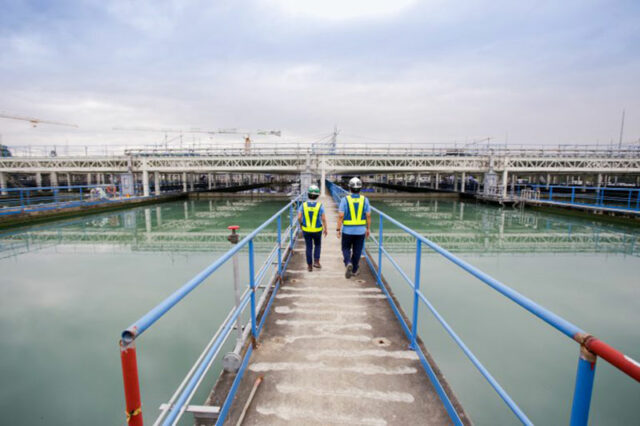
Hong Kong’s First Pacific said on Tuesday that its Philippine affiliate Maynilad Water Services would raise up to 34.33 billion pesos ($590.58 million) in an initial public offering, making it the country’s biggest listing in four years.

Shares of the largest private water concessionaire in the Philippines have been priced at 15 pesos per share.

The initial public offering will be the country’s largest since food maker Monde Nissin’s record IPO that raised $1 billion in 2021.

Majority owned by Metro Pacific Investments Corp, DMCI Holdings and Japan’s Marubeni Corp., Maynilad serves the west zone of Metro Manila and parts of Cavite province.

The offer will open from October 23 till October 29, with trading expected to commence on November 7 on the Philippine Stock Exchange.

Cornerstone investors are likely to buy more than half of the offering, Reuters had reported earlier this month.

In a separate statement, First Pacific said the offering comprises a public offer of 1.66 billion shares, along with reserved, overallotment option and upsize option shares.

The listing adds to a growing pipeline of IPOs in the Philippines, where IPO proceeds more than tripled to $234.1 million last year from $72.9 million in 2023, according to data compiled by LSEG.— Reuters

Maynilad sets final IPO price at P15 per share

MAYNILADWATER.COM.PH

WEST zone water concessionaire Maynilad Water Services, Inc. has set the final offer price for its initial public offering (IPO) at P15 per share, according to a notice from the Philippine Stock Exchange (PSE) on Tuesday.

The final price confirms the company’s earlier indicative ceiling, which was lowered from P20 per share following feedback from institutional investors.

Maynilad will offer 1.66 billion common shares to the public and 24.9 million primary shares reserved for First Pacific Co. Ltd.

The company also has an overallotment option of up to 249.05 million shares and an upsize option of 354.7 million secondary shares, bringing the total potential offer size to 2.29 billion shares.

At P15 per share, the offer could raise as much as P34.3 billion in gross proceeds.

The shares will be listed on the PSE’s Main Board under the ticker symbol MYNLD.

The offering is poised to be the largest IPO in the Philippines this year, with reported interest from institutional investors including the United Kingdom’s Mobilist, the International Finance Corp., and the Asian Development Bank.–A.G.C. Magno

Defiant former French president Sarkozy to begin five-year prison term

STOCK PHOTO | Image from Freepik

PARIS — Former French president Nicolas Sarkozy will be put behind bars on Tuesday, starting a five-year sentence for conspiring to raise campaign funds from Libya, in a stunning downfall for a leader once known for his swagger and taste for the global spotlight.

Sarkozy, who was the conservative president of France between 2007 and 2012, will become the first former French leader to be jailed since Nazi collaborator Marshal Philippe Petain after World War Two.

“I’m not afraid of prison. I’ll keep my head held high, including at the prison gates,” Sarkozy told La Tribune Dimanche newspaper ahead of his incarceration.

ACCESS TO TV, LANDLINE AND PRIVATE SHOWER
The conviction caps years of legal battles over allegations that his 2007 campaign took millions in cash from Libyan leader Muammar Gaddafi, who was later overthrown and killed during the Arab Spring uprisings.

While Sarkozy was found guilty of conspiring with close aides to orchestrate the scheme, he was acquitted of personally receiving or using the funds.

He has consistently denied wrongdoing and called the case politically motivated, saying judges were seeking to humiliate him. He has appealed, but the nature of his sentence means he must go to jail as his appeal process plays out.

The former president has already been convicted in a separate corruption case, in which he was found guilty of trying to obtain confidential information from a judge in return for career favors, serving that sentence by wearing an electronic tag around the ankle.

At La Santé prison in Paris, which in the past has housed leftist militant Carlos the Jackal and Panamanian leader Manuel Noriega, Sarkozy will likely be held in the isolation unit, where inmates are housed in single cells and kept apart during outdoor activities for security reasons.

Conditions are similar to the rest of the prison: cells measure 9 to 12 square meters and, following renovations, now include private showers.

Sarkozy will have access to a television – for a monthly fee of 14 euros ($16) – and a landline telephone.

“THE COUNT OF MONTE CRISTO” ON READING LIST
Sarkozy told Le Figaro he would take three books for his first week behind bars, including Alexandre Dumas’ “The Count of Monte Cristo” – the story of a man unjustly imprisoned who plots his revenge against those who betrayed him.

The decision to jail a former president has sparked outrage among Sarkozy’s political allies and the far right.

However, the ruling reflects a shift in France’s approach to white-collar crime, following reforms introduced under a previous Socialist government. In the 1990s and 2000s, many convicted politicians avoided prison altogether.

To counter perceptions of impunity, French judges are increasingly issuing “provisional execution” orders – requiring sentences to begin immediately, even as appeals are pending – legal experts and politicians told Reuters.

Far-right leader Marine Le Pen has been banned from running for office under the same “provisional execution” provision, pending an appeal early next year.

According to an October 1 Elabe poll for BFM TV, 58% of French respondents believe the verdict was impartial, and 61% support the decision to send Sarkozy to jail without waiting for the appeal.

President Emmanuel Macron, who had warm relations with Sarkozy and his wife Carla Bruni, said on Monday he had met Sarkozy ahead of his incarceration.— Reuters

Amazon says AWS cloud service is back to normal after outage disrupts businesses worldwide

Image via Tony Webster/Flickr/CC BY 2.0

SAN FRANCISCO — Amazon.com cloud service returned to normal operations on Monday afternoon, the company said, after an internet outage that caused global turmoil among thousands of sites, including some of the web’s most popular apps like Snapchat and Reddit.

Still, Amazon said some AWS services had a backlog of messages that would take a few hours to process.

AWS hosts applications and computer processes for companies around the world, and the disruption knocked workers from London to Tokyo offline and halted others from conducting normal everyday tasks like paying hairdressers or changing their airline tickets. Users on Monday afternoon had complained of lingering difficulties using services such as digital wallet Venmo and video calling site Zoom.

It was the largest internet disruption since last year’s CrowdStrike malfunction hobbled technology systems in hospitals, banks and airports, highlighting the vulnerability of the world’s interconnected technologies.

It was at least the third time in five years that AWS’s northern Virginia cluster, known as US-EAST-1, contributed to a major internet meltdown.

Amazon did not address a request for more clarity about why that particular data center keeps being impacted. The problems stemmed from what is known as the Domain Name System, or DNS, which prevented applications from finding the correct address for AWS’s DynamoDB API, a cloud database relied upon to store user information and other critical data.

ROOT CAUSE IS NETWORK HEALTH MONITOR
Earlier, AWS said the root cause of the outage was an underlying subsystem that monitors the health of its network load balancers used to distribute traffic across several servers.

The issue, AWS said, originated from within the “EC2 internal network”, Amazon’s “Elastic Compute Cloud” service, which provides on-demand cloud capacity within AWS.

Shortly after 3 p.m. PT (2200 GMT), Amazon said, “all AWS services returned to normal operations. Some services such as AWS Config, Redshift, and Connect continue to have a backlog of messages that they will finish processing over the next few hours.”

Ken Birman, a computer science professor at Cornell University, said software developers need to build better fault tolerance. He said AWS provides tools developers can use to protect themselves in the event of a problem at one of any of its sprawling network of data centers, and developers can also create backups with other cloud providers.

“When people cut costs and cut corners to try to get an application up, and then forget that they skipped that last step and didn’t really protect against an outage, those companies are the ones who really ought to be scrutinized later,” Birman told Reuters.

ISSUE ORIGINATED FROM AWS SITE KNOWN FOR PREVIOUS OUTAGES
AWS provides computing power, data storage and other digital services to companies, governments, and individuals and is the world’s largest cloud provider, followed by Microsoft’s Azure and Alphabet’s Google Cloud.

Disruptions to its servers can cause outages across websites and platforms – ranging from food delivery apps to gaming platforms and airline systems – that rely on its cloud infrastructure.

AWS said on its status page that Monday’s outage originated at its US-EAST-1 location, its oldest and largest for web services. The site suffered outages in 2021 and 2020.

According to documentation on the AWS website, the US-EAST-1 site is often the default region for many AWS services.

“FRAGILE INFRASTRUCTURES”
The problem highlights how interconnected everyday digital services have become and their reliance on a small number of global cloud providers, with one glitch wreaking havoc on business and day-to-day life, experts and academics said.

“This outage once again highlights the dependency we have on relatively fragile infrastructures,” said Jake Moore, global cybersecurity advisor at European cybersecurity firm ESET.

In Britain, Lloyd Bank, Bank of Scotland and telecom service providers Vodafone and BT were all hit, according to Downdetector’s UK website, as was UK tax, payments and customs authority HMRC’s website.

“The main reason for this issue is that all these big companies have relied on just one service,” said Nishanth Sastry, director of research at the University of Surrey’s Department of Computer Science.

Ookla, which owns Downdetector, said over 4 million users reported issues due to the incident.

“For major businesses, hours of cloud downtime translate to millions in lost productivity and revenue,” said Ryan Griffin, US cyber practice leader at insurance broker McGill and Partners.

Wall Street was largely unfazed, sending Amazon shares 1.6% higher to $216.48.

FROM SNAPCHAT TO VENMO: OUTAGE TAKES DOWN APPS
Ookla said at least a thousand companies were affected by the outage.

Apps like Reddit, Roblox, Snapchat, and Duolingo had all been affected.

Artificial intelligence startup Perplexity, cryptocurrency exchange Coinbase and trading app Robinhood all experienced platform disruptions and attributed them to AWS.

Amazon’s own services, including its shopping website, Prime Video and Alexa, were also hit.

Fortnite, owned by Epic Games, Clash Royale and Clash of Clans were among the gaming platforms affected. Uber rival Lyft was also knocked down in the United States.

In a post on X, Signal President Meredith Whittaker confirmed the messaging app was hit by the outage, though billionaire Elon Musk, who owns X, said his platform continued to work.

Amazon remains the global cloud leader in terms of revenue.— Reuters

ERC approves higher FIT-All rate

PHILSTAR FILE PHOTO

By Sheldeen Joy Talavera, Reporter

CONSUMERS may see higher electricity bills starting next month as the Energy Regulatory Commission (ERC) approved a new feed-in tariff allowance (FIT-All) that goes to paying renewable energy (RE) developers.

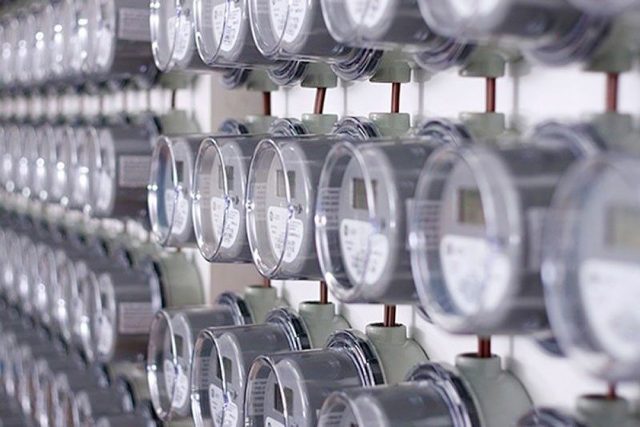
At a press briefing on Monday, ERC Chairperson and Chief Executive Officer Francis Saturnino C. Juan said the commission has approved a new rate of P0.2073 per kilowatt-hour (kWh), higher than the P0.1189 per kWh previously imposed.

“Under the rules of the feed-in tariff system released by the ERC, FIT-eligible plants are guaranteed to be paid the approved rate. And if they already generated and delivered this electricity, they must be paid because this is essentially a commitment we made, and it is grounded in law,” Mr. Juan said.

The FIT-All is a uniform charge billed to all on-grid electricity consumers to support the development and promotion of renewable energy.

Payments are remitted to the FIT-All fund established and administered by the National Transmission Corp. (TransCo). The fund goes towards paying eligible RE developers who have obtained fixed rates for electricity generated by their projects.

As the administrator, TransCo is tasked to file the application before the ERC to determine the annual FIT-All rate.

The ERC said it has conducted public hearings across the country and “carefully reviewed” the application from TransCo.

“This decision is a careful balance. It secures the growth of renewable energy that our country needs, while keeping electricity rates affordable for every Filipino household and business,” Mr. Juan said.

According to the ERC, the new rate covers outstanding payments and maintains a small buffer fund to prevent delays in future payments to RE producers.

The funds are required to settle a P19.06-billion FIT differential and build a P3.74-billion working capital allowance, which serves as a buffer to guarantee timely payment to RE generators.

The ERC has ordered an immediate audit to guarantee that the FIT-All fund is managed properly. All parties involved, including grid operators and power distributors, have been directed to make their records available for this review.

The National Association of Electricity Consumers for Reforms (Nasecore) called for full transparency and accountability in FIT-All rate adjustments, saying that public consultations are not enough.

In a statement sent to BusinessWorld, the consumer group urged the ERC to release an annual audit of the FIT-All fund and provide detailed explanations of calculations used to determine any shortfall requiring rate adjustments.

Nasecore also called on the regulator to consider alternative measures to sustain RE funding without putting too much financial pressure on consumers.

“Transparency is not optional; it is a legal and moral obligation. If ERC fails to release the audit and provide proper documentation and accountability, it can only mean a failure of regulatory oversight. Consumers deserve to see how their money is collected and utilized,” said Nasecore President Patronilo L. Ilagan.

ANOTHER HIKE
The ERC also approved the proposed new market fee of the Independent Electricity Market Operator of the Philippines (IEMOP) covering the period of 2025 to 2027 to improve the operations of the Wholesale Electricity Spot Market (WESM).

The new market fee of P0.0071 per kWh is the cost of administering and operating the WESM, which will be collected from generators transacting in the spot market.

The approved fee covers the operational, administrative, and capital expenditure budgets of both IEMOP as the market operator and the Philippine Electricity Market Corp. (PEMC), which is the WESM’s governing body.

According to the ERC, the market fee ensures “a reliable and transparent WESM,” as it provides cost predictability for generators and guarantees the integrity of the market’s critical functions like pricing, settlement, and data reporting.

The allocation includes critical IT and cybersecurity upgrades.

“This approval is a key step in the ongoing reform of the electricity market. It ensures IEMOP and PEMC can operate sustainably and fulfill their mandates, balancing industry needs with accountability to consumers,” Mr. Juan said. “This decision is part of our continuing efforts to promote a secure, competitive, and consumer-oriented power industry.”

WESM is where energy companies can purchase power when their long-term contracted power supply is insufficient for customer needs.

BoP surplus narrows to $82 million in Sept.

An employee holds US dollar bank notes at a money changer in Jakarta, Indonesia, April 9, 2025. — REUTERS/WILLY KURNIAWAN

By Katherine K. Chan

THE PHILIPPINES’ balance of payments (BoP) surplus sharply narrowed year on year in September, the central bank reported on Monday.

The country’s BoP position was at a $82-million surplus in September, shrinking from the $3.526-billion surfeit in the same month a year ago, preliminary Bangko Sentral ng Pilipinas (BSP) data showed.

This was also narrower than the $359-million surplus seen in August and marked the second straight month that the Philippine external position yielded a surfeit.

Philippines: balance of payments (BoP) position

“The BoP surplus reflected the Bangko Sentral ng Pilipinas’ net income from its investments abroad and National Government’s (NG) net foreign currency deposits with the BSP,” the central bank said in a statement.

BoP refers to the country’s economic transactions with other nations. A surplus indicates more funds entered the country, while a deficit shows that the country spent more than it received.

Last month’s surplus helped narrow the country’s end-September BoP deficit to $5.315 billion. However, this was a reversal from the $5.117-billion surplus posted in the same period last year.

“Preliminary data indicate that the year-to-date BoP deficit was largely due to the continued trade in goods deficit,” the BSP said.

“This was partly offset by the sustained net inflows from personal remittances from overseas Filipinos, trade in services, foreign direct and portfolio investments, and foreign borrowings by the NG.”

The country’s trade gap, or the difference between its exports and imports, was at $32.38 billion in the first eight months of the year, the latest data from the Philippine Statistics Authority showed. This was narrower than the $34.33-billion deficit in the comparable year-ago period.

The Philippines’ trade-in-goods balance has been in deficit for over a decade or since the $64.95-million surplus recorded in May 2015.

“September’s BoP surplus was likely bolstered by net receipts in services trade, overseas Filipino remittance inflows, and net foreign equity investments that, combined, overshadowed trade-in-goods deficit and net foreign bond outflows. This led the third-quarter BoP to be in a surplus position,” Angelo B. Taningco, research head and chief economist at Security Bank Corp., said in an e-mail.

BSP data showed that the country recorded a $274-million surplus in the July-September period. This was smaller than the $3.676-billion surfeit in the same quarter last year.

Mr. Taningco said they expect another surplus this quarter, which would help trim the end-2025 BoP deficit to $4.5 billion.

The BSP expects the overall BoP position to end at a $6.9-billion deficit this year or -1.4% of gross domestic product.

“The smaller BoP surplus reflects fewer one-off inflows and a still-wide trade gap, but the external position remains manageable with steady remittances, strong services exports, and solid reserves,” Robert Dan J. Roces, economist at SM Investments Corp., said in a Viber message.

“As global rates ease and regional demand recovers, investment inflows may return and support liquidity and credit conditions, which should help firms with deep local roots and diverse sources of growth.”

RESERVES
The BSP said the country’s BoP position mirrored the increase in its gross international reserves (GIR) to $109.1 billion at end-September from $107.1 billion as of August.

“The level of GIR remains an adequate external liquidity buffer, equivalent to 7.3 months’ worth of imports of goods and payments of services and primary income,” it said. This is well above the three-month standard.

“Moreover, it covers about 3.8 times the country’s short-term external debt based on residual maturity.”

This ensures that the country has ample foreign exchange to meet its financing needs, such as import and debt payments, the central bank said.

The country’s gross reserves are made up of foreign-denominated securities, foreign exchange, and other assets such as gold. Aside from financing its external obligations, these are used by the central bank to help stabilize the peso and also serve as a buffer against global economic disruptions.

The BSP expects dollar reserves to settle at $105 billion by end-2025.

Digital transformation ‘no longer optional’ amid changing global order

PHILIPPINE STAR/EDD GUMBAN

DIGITALIZATION will not only make the Philippines a more competitive market for investments amid the shifting world order but also help in deterring corruption, industry leaders and a government official said.

At the 51st Philippine Business Conference and Expo on Monday, Philippine Chamber of Commerce and Industry President Enunina V. Mangio said that digital transformation has become more important than ever amid global economic uncertainty due to growing protectionism and changing trade policies.

“We stand at an inflection point where digital transformation is no longer optional — it is imperative for national competitiveness and prosperity,” Ms. Mangio said.

“The question before us is not whether transformation will occur, but whether the Philippines will position itself at the forefront of this change,” she said. “Our neighbors are moving decisively. The competitive landscape is rapidly intensifying. The opportunity for regional leadership exists — but only for those bold enough to claim it, strategic enough to execute it, and committed enough to sustain it.”

In particular, artificial intelligence (AI) is reshaping how businesses are conducted, services are delivered, and complex problems are solved.

“From predictive analytics that optimize supply chains to AI-powered diagnostics that democratize healthcare, from intelligent automation to natural language processing — AI represents a quantum leap in human capability,” she said.

“The question is whether the Philippines will be a creator and beneficiary of these technologies or merely a passive consumer.”

Blockchain technology has also helped improve supply-chain traceability, particularly in authenticating Philippine exports and smart contracts that reduce transaction costs and increase trust, Ms. Mangio said.

However, the Philippines has yet to fully tap the opportunities being offered by digital transformation, she said, as it must address issues concerning data sovereignty, cybersecurity, and privacy protection that continue to hamper its digitalization journey.

“We must confront technological displacement in labor markets and develop comprehensive strategies for workforce adaptation and social protection,” she said.

“We must establish regulatory frameworks that foster innovation while safeguarding the public interest. We must ensure that digitalization benefits are broadly distributed, not concentrated among a privileged minority.”

Philippine Vice-President Sara Duterte-Carpio said that technology can also be a weapon against corruption.

“As we digitize, we automate our processes, make data and all government transactions transparent, and leave no room for scrupulous backdoor transactions,” she said in her keynote address at the event on Monday.

“We take away the power of corrupt leaders to manipulate public funds and capitalize on people’s money for their personal interests, greed, and political ambition.”

Technology can be used to “impose checks and balances, monitor paper trails, eliminate arbitrary and politically motivated decision-making, and prevent unconstitutional budget insertions to curry political favor at the expense of the people’s money,” she said.

However, the government should make sure that it develops and equips Filipinos so that the country can effectively leverage technology, she said.

“Digital transformation will be the bridge to the future, paving the way for inclusivity through training, upskilling, deep-dive mentoring, and industry exposure to equip our human resources,” she said.

“The new skills and knowledge they acquire will prove useful as they figure into roles that require creative and innovative thinking, problem-solving, and leadership.”

She added that the country should aspire to create future innovators, thinkers, producers, and entrepreneurs.

“Our goal is to maximize the potential of our human and natural resources, leveraging the power of technology and digital transformation to create growth centers that host competitive homegrown producers, service providers, and exporters,” she said.

“These strategies will be significant economic drivers that will help create local jobs, increase domestic economic activities, and spur development and progress in domestic and micro-economies across the Philippines.” — Justine Irish D. Tabile