How are Philippine hospitals evolving after the pandemic? What important lessons have they learned from the crisis? In this B-Side episode, BusinessWorld reporter Patricia B. Mirasol speaks with Eugenio F. Ramos, president and group chief executive officer of The Medical City (TMC), about the importance of public-private partnerships, embracing technology, and addressing staff-related difficulties.
Continue to foster public-private partnerships.
The COVID-19 pandemic was a time for everyone in the public and private sectors to set aside their differences and work together, according to Mr. Ramos.
He said that such collaborations, which he called the “silver lining” of a “traumatic” period, need to continue.
“The Philippine healthcare system was really dismal,” he said. “The DoH (Department of Health) needed help. It wasn’t a time for appointing blame [but] for working together.”
TMC initiated calls with other hospitals to ensure that those who cannot be accommodated in its hospital can be sent elsewhere. “We had to collaborate in terms of providing healthcare to those in need,” Mr. Ramos said.
Such collaborations are also necessary because the likelihood of another pandemic lurks, he added.
The complex drivers of zoonosis – such as climate change, pollution, and disasters – are some of the reasons for emerging pandemic threats, according to Noel Lee J. Miranda, a consultant specializing in the topic.
The Philippines already has three viruses that are in the same family as pathogens identified by the World Health Organization as having “pandemic potential”, with a fourth one on the horizon.
Utilize technology for better decision-making and improved efficiency.
TMC’s enterprise – with its flagship complex in Pasig, Manila, four provincial hospitals, and over 50 clinics – is in varying stages of the digital journey.
The company started to use artificial intelligence (AI) for its diagnostic services such as mammograms.
It is also “getting into AI for its ECG (electrocardiogram) and echo (electrocardiogram),” Mr. Ramos said. It is not to replace people but to improve the processes’ efficiency, he added.
The secret to AI is people, according to an August 2020 article by Harvard Business Review.
Gaining a competitive advantage in AI requires transforming “the way companies do business so human resources can be augmented with machine power.”
AI can likewise be used to make faster data-driven changes, a 2023 McKinsey report noted.
“Post-pandemic, we have to prepare ourselves in terms of how we get data. Sometimes, the decisions may not be the best decisions, but those that are quick and helpful to the most number of people,” Mr. Ramos said.
Give staff good reasons to stay.
Healthcare staff are not commodities and should not be treated as such, Mr. Ramos said.
“Filipino nurses are the best in the world, [but] a lot have been siphoned off the country.”
The Philippines is the second-largest exporter of human labor in the world, a 2017 Human Resources for Health study found.
The World Health Organization has projected that by 2030, there will be a shortfall of 18 million healthcare workers in low- to middle-income countries.
The same McKinsey report noted that 39% of its respondents from seven countries plan to leave their jobs within the next three to six months.
Local hospitals need to give them better reasons to stay, said Mr. Ramos.
“Other than giving them a decent salary, empower them with better chances of mobility as far as the career is concerned… A lot want to stay because of their families here.”
NEW YORK/BENGALARU – Elon Musk said in a social media post on Sunday that his proposed fight with Meta META.OChief Executive Officer Mark Zuckerberg would be live-streamed on social media platform X, formerly known as Twitter.
The social media and tech moguls have been egging each other into a mixed martial arts cage match in Las Vegas since June.
“Zuck v Musk fight will be live-streamed on X. All proceeds will go to charity for veterans,” Mr. Musk said in a post on X early on Sunday morning, without giving any further details.
Mr. Zuckerberg, responding on his social media app Threads, said late Sunday: “I’m ready today. I suggested Aug. 26 when he first challenged, but he hasn’t confirmed. Not holding my breath.”
He also suggested that they use a more “reliable platform” that can raise money for charity.
Earlier on Sunday, Musk had said on X he was “lifting weights throughout the day, preparing for the fight”, adding that he did not have time to work out so brings the weights to work.
When a user on X asked Mr. Musk the point of the fight, Mr. Musk responded by saying “It’s a civilized form of war. Men love war”.
The brouhaha began when Mr. Musk said in a June 20 post that he was “up for a cage match” with Zuckerberg, who is trained in jiujitsu.
A day later, Mr. Zuckerberg, 39, who has posted pictures of matches he has won on his company’s Instagram platform, asked Mr.Musk, 52, to “send location” for the proposed throwdown, to which Musk replied “Vegas Octagon”, referring to an events center where mixed martial arts (MMA) championship bouts are held.
Mr. Musk then said he would start training if the cage fight took shape. — Reuters
A young man hugs his pet dog in this undated file photo. — PHILIPPINE STAR/ MICHAEL VARCAS
SOURCE: THE CONVERSATION
Earth has just experienced its hottest month since records began and Australia is now gearing up for an El Niño-fuelled summer. Extreme heat isn’t just challenging for humans – it brings suffering to our beloved pets, too.
Research I was involved in examined how climate change affects the welfare of animals, including pets. My colleagues and I used a concept for assessing animal welfare known as the “five-domains model”. It’s a science-based structure for examining an animal’s:
nutrition
environment
physical health
behavior
mental state.
The model evaluates the complete physiological and behavioral responses of animals to environmental stressors. While the effects of climate change on animals have been studied before, ours is the first study to apply the model to animal welfare specifically.
We examined the academic literature and found climate change will harm animals across all five welfare domains. This applies to both wild and domesticated animals, including pets. So let’s take a look at how various types of pets will fare in a warming world – and how we can help them.
Fish are “ectotherms” – that is, they use external sources of heat to regulate their body temperature. So pet fish are vulnerable to changes in the water temperature of your home aquarium, which may occur during a heatwave.
Extreme water temperatures can cause physical harm to fish. For example, it can increase a fish’s metabolic rate – meaning it needs more oxygen to breathe . It can also cause changes such as slowed growth and reduced feeding.
According to official advice, water in an indoor aquarium should generally be kept at between 20℃ and 25℃ (unless you are keeping tropical fish).
Depending on your budget and aquarium size, you could opt to use a device to control the water temperature. Either way, it’s important to monitor the water temperature regularly.
Also make sure the aquarium isn’t located near a window where it’s exposed to direct sunlight.
Leaving your aquarium unattended for days or weeks in summer can be dangerous, due to the risk of heatwaves. If you’re going on a summer holiday, consider organizing a fish sitter to check on the animal regularly.
Heat stress can change the physiology of birds. For example, research into a wild population of small Australian robins showed during a heatwave, the birds lost body mass and abandoned their nests, and some died.
Heat stress can also cause abnormal behavior in pet birds such as feather picking, when one bird repeatedly pecks at the feathers of another.
In hot weather, regularly check your bird’s cage to make sure it’s clean and stocked with food and water. If the bird is in an outdoor cage or aviary, ensure it is shaded. And a shallow bird bath will help your feathered friend cool off.
Dogs and cats can suffer on hot days. That’s especially true if they are:
older or overweight
have thick coats
have short snouts/flat faces (which restricts air flow and makes it harder for them to cool down).
Heat stress can cause canine hyperthermia, which means the dog’s body temperature becomes dangerously hot.
Watch for early warning signs of heat stress such as excessive panting and erratic movements. These symptoms can quickly escalate, leading to heat stroke and possible death.
More than 80% of dog owners report exercising their dogs less vigorously, or for shorter periods, during hot weather. That can help avoid heat-related illness. But don’t reduce your dog’s activity levels too much, as that may lead to other health problems. Just time the walks to avoid the heat of the day.
Refrain from leaving dogs unattended in vehicles, because they can easily overheat. In fact, it’s better to leave your dog inside home on a hot day, as long as they have a cool place to rest and plenty of water – perhaps even with ice cubes in it. And dogs love to cool off in a kiddie pool or under a sprinkler.
If you take your dog out on a hot day, carry a container of fresh, cool water for them. And don’t forget to slip-slop-slap: apply a sparing amount of pet sunscreen to your dogs’ exposed pink skin such as ear tips and nose.
Like other animals, cats can overheat in hot weather. Symptoms include panting heavily, drooling and a rapid pulse. Like with other animals, if you suspect your cat is suffering from heatstroke, call a vet immediately.
Climate change and associated heat and floods is likely to aid the spread of parasites and illness including tick-borne diseases, flea infestations and heartworm. This puts both cats and dogs at risk.
In hot weather, the advice for cat owners is similar to that of dog owners: ensure your cat has plenty of shade and water, and put pet sunscreen on their ear tips and noses, especially if the cat is white.
If possible, keep the cat inside during the hottest part of the day. Ensure at least one room is cool and ventilated. And in a heatwave, play with your cat either in the early morning or evening, when the temperature has cooled.
While humans have the capacity to understand and prepare for climate change, pets will need our help to cope. This includes not just the pets listed above, but others too, including reptiles, guinea pigs and rabbits.
As heatwaves and other extreme weather events become more common, the onus is on us to keep our pets safe. — Reuters
MANILA (Thomson Reuters Foundation) – In the three years since a private company took charge of the water supply in his home city in the Philippines, Rommel Pido says the flow from his taps has turned a murky brown and his bill has more than doubled.
Nowadays, residents “make do with this iced tea water from the taps”, Pido told the Thomson Reuters Foundation by phone from his home in Bacolod, a city of 600,000 people in the Western Visayas region.
Angry at the deterioration, Mr. Pido and other residents filed a legal complaint seeking to nullify the 2020 joint venture agreement (JVA) that gave the lead role in city water operations to PrimeWater, a company owned by the family of the country’s richest man Manny Villar.
At the same time, the Philippines’ Commission on Audit (COA), an independent state body, issued a series of damning reports about water supply partnerships involving PrimeWater including the Bacolod deal.
The Bacolod case, which is being heard by a regional court, reflects growing unease and protests in the Philippines about the JVAs signed with PrimeWater in about 100 of the country’s 500 government-owned water districts.
The remaining 400 districts continue to operate without private sector participation, though several other companies including MetroPac Water Investments Corporation and Twin Peak Hydro Resources Corp. have signed more limited deals with water districts – mainly to partner on one-off projects.
The deals were enabled by a 2013 government policy that promoted public-private partnerships (PPPs).
But water rights advocates say the agreements are leading to the gradual privatization of water districts across the country of 113 million, with the focus on profit leading services to slide at the same time as bills go up.
They say that violates people’s right to water, as established by the United Nations.
“If the JVA (with Bacolod) becomes nullified, it should be a wake-up call for us that all public utilities should remain with the state or with the people,” said Wilson Gamboa, a former local official in Bacolod and staunch critic of the water deals.
Like many locals in the city, Mr. Pido said it was wrong to hand the provision of a vital service to a private company.
“All they care about is profit,” said Mr. Pido, who works at a community radio station, adding that his monthly bill had risen to 500 Philippine pesos ($8.98) from 200 pesos prior to the deal. He says he also spends hundreds each month on bottled water now.
PrimeWater, which calls itself the country’s fastest-growing water company, did not immediately respond to requests for comment from Context, but last year it blamed the problems in Bacolod on the low production capacity of its reservoirs.
It said dirty water results from reservoir issues, maintenance activities, inconsistent supply of bulk water, and the accumulation of minerals and sediments inside pipes, vowing to make a series of improvements – from replacing pipelines to increasing water pressure.
Officials from the city’s water district did not immediately reply to requests for comment.
SAFE DRINKING WATER
Water quality is a sensitive issue in the Philippines, where more than 22 million people lack access to safe drinking water, forcing them to buy bottled water for drinking and household use in a country with severe plastic pollution problems.
According to the United Nations, 2.2 billion people lack access to safely managed drinking water globally, with floods and droughts linked to climate change exacerbating the situation. Many more lack properly managed sanitation.
In 2020, Kaye Viray and her family were ecstatic to move from a rented apartment in Manila to their own modest home with a yard in Laguna province, about 50 miles (80 km) from the capital.
But when they poured their savings into the home, they had no idea that water supplies in the area were expensive and inadequate, she said.
“The water here is unusable,” said Viray, who lives in a Villar-owned housing development, which is also supplied by PrimeWater.
“Not even for cooking, bathing, or laundry. It has become a source of daily stress for us,” she said, adding that they are sent a monthly fixed rate bill of 260 pesos even if they do not use the murky tap water.
When they do, the bill soars – once reaching 1,000 pesos – far in excess of the rates set by the Local Water Utilities Administration (LWUA), a government body that oversees the development of water supply systems outside Manila.
Complaints by residents to the development’s managers have fallen on deaf ears, she said.
FINANCIAL CHALLENGES
Under the water joint ventures, private companies must “finance, develop, rehabilitate, expand, improve, operate and maintain” all water and sewer systems in any given water district, as well as bill and collect tariffs from consumers.
Many water districts have opted to sign the private sector partnerships because they are short on funding due to limited budget allocations, said Vicente Homer Revil, an administrator at LWUA, which saw its regulatory role on the deals weakened under the 2013 policy guidelines.
“Despite limited financing, we want water districts to be self-sufficient. However, often, when they enter these agreements, we’re not consulted. We’re not part of the bargaining,” Revil told the Thomson Reuters Foundation.
He said LWUA should be consulted prior to reaching deals with private sector partners as part of the joint venture framework.
But he said some water districts have later complained to LWUA about failures to meet the terms of the deals, including financial commitments, such as investments to improve water services.
Rene Amurao, former general manager of the San Pablo Water District in Laguna, said the district had repeatedly refused to partner with PrimeWater over what he called a “lack of transparency” in the contract.
He said the company had not been clear enough about its plans, leading him to fear it would skimp on new investment and seek to profit from existing infrastructure.
The Water for the People Network, a group pushing for water services to be in public hands, said water districts that partnered with PrimeWater were those that had historically provided a good level of service and were well run.
But Mr. Revil said the finances of some such districts – meant to benefit from the joint ventures – had in fact deteriorated sharply since the deals were signed.
The COA cited the case of San Jose Del Monte Water District in Bulacan province, which recorded a net loss of 5.3 million pesos in 2020 compared with net income of 53.6 million in 2018 – a year before a joint venture with PrimeWater came into effect.
PrimeWater has not publicly commented on the findings.
DECLINING INCOME
In its 2021 report on Bacolod’s water district, the COA questioned the legality of the city’s 25-year JVA, highlighting failings including the absence of a feasibility study.
Gamboa said the report pointed to “an unlawful takeover of the entire water district”.
He said PrimeWater had limited the water district’s income to 35 million pesos in the first five years of the deal, a far cry from its average annual income of 100 million pesos, and turned the district into a “mere monitoring unit”.
“They said it’s a partnership, but it’s highly onerous and disadvantageous to us and to the government,” he said.
PrimeWater did not comment on the income issue when it addressed residents’ concerns last year.
At her housing development, Viray said some of her neighbors had sold their homes cheaply and moved elsewhere due to the water supply situation.
She and her family are staying put despite the daily strain of securing supplies for drinking, washing and cooking.
“We just have to live with it and find ways to survive,” she said as she reached for a five-litre bottle of drinking water. — Reuters
The Philippines is racing to defend its share of the nearly $300 billion global business process outsourcing market as it battles deteriorating talent, highlighting the perils of competition especially from a rapidly evolving artificial intelligence.
The Southeast Asian nation, the world’s second-largest provider of outsourcing services, is producing a “low ratio” of graduates with the required level of communication and technical skills, potentially losing an opportunity to add 800,000 jobs in the next five years, according to industry group IT & Business Process Association of the Philippines.
“The most common challenge I hear is comprehension,” Jack Madrid, who heads the country’s main BPO trade group, said in an interview in his office in Manila on Aug. 2. “I think they fail at a more basic level.”
The Philippines is losing its edge in an industry that accounts for around 8% of the nation’s gross domestic product and a major source of foreign exchange inflows at a time of intensifying competition from other countries where new entrants are bidding for a share of the pie. AI-powered bots have been taking away an increasing number of outsourcing jobs since the COVID-19 pandemic.
A longstanding advantage of English-speaking proficiency for natives of the former US colony — a key component of its rise as a call center nation that helped expand its middle class since the dawn of the industry in the 1990s — is diminishing. Illustrative of the deterioration in the quality of education in the country, nine out of 10 Filipino children are unable to read a simple text with comprehension by age 10, according to World Bank data.
“I think we were better English speakers before,” Mr. Madrid said, urging the government to consider reverting to English as a mode of instruction in schools instead of the learner’s mother tongue.
Job applicants in the Philippines are also falling short on basic information technology skills like programming and troubleshooting, which BPOs increasingly need, according to Mr. Madrid.
During the pandemic, the Philippines’ outsourcing industry added 255,000 jobs, representing growth that’s at least 1% below the global expansion, Mr. Madrid said. That suggests that the country may be losing market share to India as well as newcomers such as South Africa, Egypt, Poland, Colombia, Costa Rica.
Part of the problem is poor employability. Only one is hired for every 10 outsourcing job applicants, according to industry leaders.
The skills mismatch is becoming a more urgent issue as artificial intelligence threatens to disrupt industries worldwide. AI and similar technologies are projected to displace almost a quarter of the people in the Philippine outsourcing industry by 2030, according to the Asian Development Bank.
AI’s impact on the industry will be felt in a few years, and BPO workers should start learning how to use new technology to make their jobs more efficient, Mr. Madrid said. “There is time to prepare and upskill, but the time is shortening.”
Despite these challenges, the industry group head still projects an increase of 6%-7% this year in full-time BPO employees from 1.57 million in 2022 while revenues are seen to grow 7%-8% to about $35 billion.
The group has also partnered with the Philippines’ Commission on Higher Education on initiatives including a revamp of the IT education program to align with current trends and develop competencies in the sector, Mr. Madrid said.
The outsourcing industry has mapped out a plan to create 1.1 million new jobs and become a $59 billion industry with 2.5 million employees by 2028. It seeks to increase its contribution to economic output to nearly 9%, as it targets to boost its market share in Europe.
“There are some fundamental weaknesses in our educational system,” Mr. Madrid said. “It’s an old problem but it’s just become much more urgent now.” — Bloomberg
Responsible Energy provider SN Aboitiz Power Group (SNAP), as part of its commitment to promoting a sustainable future for the country, hosted “The ABCs of ESG” on July 18, in continuation of its ‘SNAP Conversations’ series—a quarterly knowledge-sharing event dedicated to fostering insightful discussions on key topics within the power sector and beyond.
The virtual talk focused on Environmental, Social, and Governance (ESG) principles, updates on global standards, and integrating ESG into corporate strategy. It featured Jonas Dumdum, Consultant for Industry Solutions Consulting (ISC) Sector and Lead of Nomura Research Institute (NRI) Manila Sustainability Service.
Dumdum, who reiterated that “sustainability and ESG is not a one-time thing”, provided updates on ESG-related and sustainability matters, highlighting the ongoing efforts to promote the adoption of new global ESG standards at the local level. He also shared important points on ESG integration into the strategy and risk management of businesses. “Companies in the Philippines have yet to fully embrace this. Leading companies in the country have already integrated ESG-related risks and opportunities through their ERM system or through their risk management [program], Business Continuity Plan, or other related systems.”
He noted that sustainability culture can enhance company values, and eventually lead to more effective sustainability frameworks, enhanced external engagements, higher operational efficiency, and better ESG investor performance, “people’s mindset when it comes to sustainability can influence the rest of a company’s efforts to become more sustainable down the line.”
SNAP Vice President for Corporate Affairs, Atty. Mike Hosillos, recognized the pivotal role that businesses hold in the country’s sustainability journey, with emphasis on the significant contribution of renewable energy. “The essence of our business, to generate power from renewable sources, puts us in a unique position to enable society to balance the need for growth while ensuring that we protect, conserve, and promote the resources and environment that will enable future generations to thrive.”
This, he notes, is where SNAP hopes to add value. “SNAP will continue to work on ensuring that through ESG, our business will have a positive impact by growing our renewable energy portfolio. It is our hope that through our business, we can help and enable all of you to achieve your own sustainability aspirations through clean, responsible, and renewable energy.”
Spotlight is BusinessWorld’s sponsored section that allows advertisers to amplify their brand and connect with BusinessWorld’s audience by enabling them to publish their stories directly on the BusinessWorld website. For more information, send an email to online@bworldonline.com.
Join us on Viber at https://bit.ly/3hv6bLA to get more updates and subscribe to BusinessWorld’s titles and get exclusive content through www.bworld-x.com.
By Bjorn Biel M. Beltran, Special Features and Content Assistant Editor
Momentum for the clean energy transition is bigger than it ever has been before, driven by the rapid advancement of key technologies that aim to revolutionize the world’s energy systems.
In fact, the International Energy Agency (IEA), in their latest “Tracking Clean Energy Progress” report released last July, pointed out that clean energy technologies like solar PV and electric vehicles are proving to the world at large what can be achieved with sufficient ambition and policy action.
According to IEA data, sales of electric vehicles surpassed 10 million for the first time in 2022, an almost tenfold rise in just five years. Meanwhile, the largest deployment of renewable electricity capacity ever reached 340 gigawatts (GW). As a result, 30% of the world’s electricity is now produced from renewable energy (RE) sources.
In addition, a record US$1.6 trillion was invested in clean energy in 2022, an increase of over 15% from 2021, showing sustained trust in energy transitions even in an uncertain economic environment.
“The transition to clean energy is occurring at different speeds across regions and sectors, however. For example, nearly 95% of global electric car sales in 2022 took place in China, the United States and Europe. Stronger international cooperation is needed to spread progress on electric cars and other key technologies to all regions, particularly emerging and developing economies,” the IEA said in a statement.
“Clean energy deployment is also occurring faster in some parts of the energy system — such as electricity generation and passenger cars — where costs have fallen and technologies are already relatively mature.”
However, the intergovernmental organization pointed out that rapid innovation is still needed to bring to the market clean technologies for parts of the energy system where emissions are harder to tackle, such as heavy industry and long-distance transport. Despite many positive steps on innovation having been in the past few years, there needs to be much more focus in bringing more low-emissions technologies to market for these areas.
This is most relevant in the Philippines, where the problem of long-distance energy transmission has been causing delays in our own renewable energy development.
Raphael Perpetuo M. Lotilla, Department of Energy Secretary, closes the forum with a keynote address on achieving an energy-secure, environmentally-resilient future.
“Transmission is key. We need to improve on the system impact studies because these have to be addressed upfront rather than later. The SIS (system impact study) unfortunately is rather delayed,” Energy Secretary Raphael P.M. Lotilla said at the BusinessWorld Insights forum last July 26 at the Shangri-La at the Fort in Bonifacio Global City.
The National Grid Corporation of the Philippines (NGCP), the system operator, is conducting the SIS to evaluate the potential effects of incorporating new energy sources on the grid. The Energy Regulatory Commission (ERC) has previously instructed the NGCP to finish the SIS within 60 days, but such deadlines have proven to be challenging to follow.
“The sector has been complaining of delays from one and a half years to two years in the SIS alone. These are the things that we want to be able to address so that RE developers will be able to focus on the rollout of their projects,” Mr. Lotilla said.
Straddling balance between energy sustainability and energy security
Atty. Richard J. Nethercott, president and CEO of the Independent Electricity Market Operator of the Philippines, Inc., delivers his keynote address on creating a secure and sustainable energy grid.
In his keynote address at the forum, Atty. Richard J. Nethercott, president and CEO of the Independent Electricity Market Operator of the Philippines, Inc., pointed out that all stakeholders need to remain committed to the energy transition if the country hopes to overcome the hurdles along the way.
“Our country’s path towards an energy future that is both sustainable and secure demands a resolute commitment to create a robust energy system. With that, it is essential to recognize that while we are in the process of transitioning our energy system to a low-carbon model, it is of parallel importance that we strike a balance between a sustainable and secure energy grid for the Philippines,” he said.
“Sustainability lies at the center of our clean energy vision. Our country is blessed in abundant renewable energy resources which presents a distinct opportunity to reduce our dependence on imported fossil fuels and to stabilize energy prices.”
It will take time, however. Secretary Lotilla was adamant that for the Philippines to transition to 100% renewable energy, the industry must be more honest with itself about how long the transition will take.
“For those who are saying that we can go 100% renewable overnight, then I would like to have more honesty from this sector that we are not in a position to do it,” Mr. Lotilla said.
“The energy transition has to take place over time if it is going to be a just transition. But if we are simply going to do away with (legacy technologies) overnight, then these are going to be lost investments as far as the economy is concerned.”
Nevertheless, Mr. Lotilla restated the government’s desire to create an energy grid powered by renewable energy. He also recognized that such move is the way forward for attaining security, sustainability and affordability of energy prices.
To achieve this, the effective implementation of energy efficiency and conservation measures must be an equally important aspect of the government’s energy programs.
“That doesn’t mean that we are not committed to the transition, but we have to do it in a just and fair way, which is to ensure that variable renewable energy is (complemented) by energy storage systems as well as other sources of power and technology,” Mr. Lotilla said.
From left: Lino M. Bernardo, chief operating officer at Aboitiz Power; Miguel De Jesus, chief operating officer of Philippine operations at ACEN; Alexander Ablaza, president of the Philippine Energy Efficiency Alliance and CEO of Climargy, Inc.; and Oliver Y. Tan, president and CEO of Citicore Renewable Energy Corp., share their thoughts on best mix for the Philippine energy grid.
Felino M. Bernardo, Aboitiz Power Corp.’s chief operating officer for the company’s thermal power generation group, echoed the sentiment. He pointed out that energy security is of utmost importance; and although the goal is to fully transition into renewable energy, the reality is that the technology and the capacity simply are not yet there.
“The moment that the security and reliability of our power system is disturbed, our country is thrown into a spiral of disruption that lowers our overall competitiveness, discourages foreign investors, hurts economic development, and diminishes the attractiveness of our country for investments,” Mr. Bernardo pointed out.
Mr. Bernardo also said that the country’s energy transmission system is a challenge that needs to be addressed for the government to achieve its energy security target.
Responding to the issue of the country’s growing power demands, CEO of Climargy, Inc. Alexander Ablaza said that energy efficiency could be the key.
“Energy efficiency is the one pillar of the energy sector that we have to grow aggressively in the next 20 to 30 years. In many energy discussions, net-zero future discussions, sustainable energy fora, 95% of these conversations are on renewables. We need to change that paradigm, that messaging. Yes, RE is vital and valuable. But energy efficiency needs to be stepped up,” he said.
He cited a June 2023 report released by the IEA that found that ramping up annual energy-efficiency progress from 2.2% today to over 4% annually by 2030 would shave off a significant portion of the world’s greenhouse gas emissions, while simultaneously creating jobs, expanding energy access, reducing energy bills, decreasing air pollution, and diminishing countries’ reliance on fossil fuel imports — among other social and economic benefits.
“Energy-efficiency investment in 2023 is expected to reach record levels, despite a slowdown in year-on-year growth as the high cost of capital weighs heavily on potential new projects. Under current expected and announced policies, efficiency-related investment is projected to rise by a further 50%. However, to see annual progress double, investments in the sector must increase from US$600 billion today to over US$1.8 trillion by 2030,” the report said.
For Citicore Renewable Energy Corp. President and CEO Oliver Y. Tan, the current rate in which the development of RE technologies for renewables like solar and wind energy could make the government’s current goal of increasing the share of renewable energy to 35% by 2030 and 50% by 2040 come sooner than the stated targets.
“For a country such as ours that is very abundant in these natural resources like solar and wind, we can actually achieve a higher mix for renewable energy. In my opinion, a 70-30 renewable energy to fossil fuel mix to serve as backup [is possible]. We hope to see that happening sooner rather than later,” he said.
“Obviously the ideal mix would be 100% renewables, but that’s a little way into the future,” ACEN Corp. COO Miguel De Jesus said, pointing out that the Philippines is in a very privileged position and that the private sector should seize the opportunity while it is there.
“But if we start where we are right now, I think we need to be cognizant on the weight and the reliance we have on our baseload fuels like coal and natural gas. It would take quite a massive push to get there.”
Towards a fully-electrified archipelago
From left: Management Association of the Philippines Energy Committee Chair Ruth Yu-Owen, Meralco Chief Sustainability Officer Raymond B. Ravelo, and Energy Regulatory Commissioner Hon. Catherine P. Maceda discuss the challenges of fully electrifying the Philippines with clean energy.
Raymond B. Ravelo, chief sustainability officer of Manila Electric Co. (Meralco), said that the company has been quickly positioning itself to better take advantage of such opportunities, but the challenge of making clean energy available to all Filipinos at an affordable price needs to be taken into consideration.
“As we craft a plan to light up every Filipino home in the next five years, it needs to be recognized as a very delicate balancing act, where on the one hand it’s got to be accessible and affordable energy, and on the other it’s also got to be clean and sustainable. The assessment and potential adoption of other technologies beyond fossil fuels, and even beyond the currently viable renewable energies, have to be taken into account,” he said.
Such technologies and renewable energy projects must at least be commercially viable in order for any progress to continue. Ruth Yu-Owen, chair of the Energy Committee of the Management Association of the Philippines, said the distribution of renewable energy must be reassessed and reevaluated.
“If we’re talking about a fully electrified archipelago of more than 7,100 islands — of which about 2,000 are inhabited — then we must think beyond our traditional grid connections. This is even more so the case if most of the electricity will come from site-specific renewable energy sources, which the President in his recent SONA has designated as the way forward,” she said.
“My simple recommendation is to free our thinking on electrification from the current gridlock… and enable our citizens to be more invested in deciding how they wish to be provided electricity and how best to use them… That is empowerment at its best,” she added.
All stakeholders in the energy sector, from the generators, policy makers, to the consumers, have a role to play in the coming energy transition, and a more comprehensive understanding of those roles is necessary for such a future to be achieved.
Hon. Catherine P. Maceda, commissioner at the Energy Regulatory Commission, restated the government’s renewable energy targets for 2030 and 2040.
“Steep goals. Can we achieve that? It all depends. These are just targets. But there are so many things that need to be considered when one talks about transforming the power sector. The transmission lines are just one part of that; the generation of power [and] the resources are another part of that. Then you have policy frameworks: Are those policy frameworks responsive or not?” she said.
“When you have a system that addresses all the issues into these different components of the power sector, then the answer to the earlier question would be yes. We can achieve these targets.”
1 of 2
BusinessWorld Editor-in-Chief Wilfredo G. Reyes (leftmost) and BusinessWorld CEO Miguel G. Belmonte (rightmost) with the panelists for the first session of the BusinessWorld Insights Forum
BusinessWorld Executive Vice-President Lucien Dy Tioco (leftmost) and News5 Anchor Jester Delos Santos (rightmost) with the second group of panelists at the BusinessWorld Insights Forum
This edition of BusinessWorld Insights was presented by BusinessWorld Publishing Corp. in partnership with AboitizPower and Meralco; and is sponsored by Ayala Corp., Citicore Renewable Energy, and Shell Energy; with partner organizations American Chamber of Commerce in the Philippines, Asian Society of the Philippines, British Chamber of Commerce of the Philippines, French Chamber of Commerce and Industry in the Philippines, European Chamber of Commerce of the Philippines, the Management Association of the Philippines, the Makati Business Club, Nordic Chamber of Commerce of the Philippines, Philippine Chamber of Commerce and Industry, Philippine Franchise Association; and media partner The Philippine STAR.
A total of 43 out-of-school youths (OSY) completed a months-long entrepreneurial training from the Technological Institute of the Philippines (TIP) Quezon City at the culmination of its “Kabataang NEGOSYANTE” project last June 30.
The project was accomplished through a United States Agency for International Development (USAID) grant under its Opportunity 2.0 program, which was designed to provide second-chance education for Filipino OSY in at least 15 cities across the country.
NEGOSYANTE stands for ‘Navigating, Engaging, and Gearing Out-of-School Youths As New Technology Entrepreneurs.’ Its objective was to teach underprivileged children how to use available technologies that can help them earn possible livelihood opportunities.
Under the mentorship of TIP faculty members, participants were provided with technical skills, business training, and values formation to help them set up their own online businesses through social media and other internet-based applications.
Dr. David Hall, chief of party for the USAID Opportunity 2.0 program and the Education Development Center (EDC), commended TIP for merging its commitment to entrepreneurship with its responsibility to the local community through the “Kabataang NEGOSYANTE” project.
“What we’re trying to do is to strengthen systems to help out-of-school youth in the Philippines back into education and employment. And perhaps, most significantly with this grant, into self-employment,” Dr. Hall said in a video message played at the closing ceremony.
The OSY learners belong to the communities of Barangays Batasan Hills, Commonwealth and Holy Spirit in Quezon City. The outreach program started in June 2022 and ran for about a year. It accommodated a total of 76 learners, 43 of whom were able to complete the training modules.
All participants were honored with certificates and special awards. Cash prizes were also handed out for the top teams that presented best outputs. TIP President Dr. Elizabeth Quirino-Lahoz also graced the concluding activity along with other school executives.
“The collective journey continues, and we should not doubt that together we will make a lasting and positive impact on the world,” said Dr. Angeles de Guzman, dean of TIP Quezon City College of Business Education and project manager for “Kabataang NEGOSYANTE.”
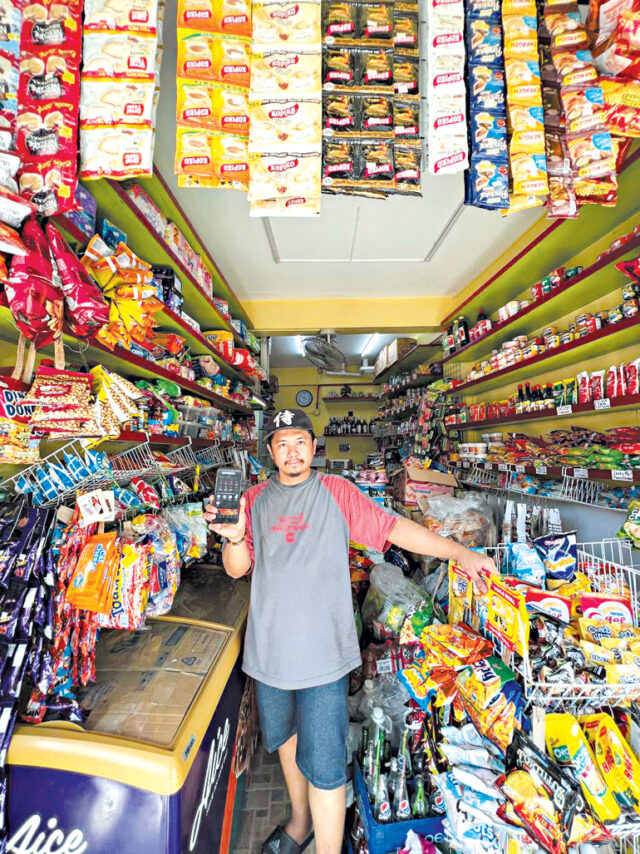
Business-to-business tech company Growsari commemorates its 7th year of empowering micro, small, and medium-sized enterprises (MSMEs) nationwide.
Since its inception in 2016, Growsari has been revolutionizing the retail ecosystem of mom-and-pop stores, more known as sari-sari stores, by providing comprehensive tech solutions to transform them into efficient and competitive retail establishments. Growsari’s vision started with a noble mission — to uplift the lives of local store owners and bridge the gap between traditional retail and modern technology.
Through their innovative platform, Growsari has been instrumental in enabling over 250,000 sari-sari stores across the country, spanning 24 key cities and 400 municipalities. Recently, Growsari has expanded its reach to previously untapped regions, including the provinces of Isabela in North Luzon and Bais, Dumaguete in Visayas, making their impactful presence felt in even more communities.
“We are thrilled with the expansion of Growsari and the opportunity it brings to more stores nationwide,” Growsari’s SariMart General Manager Maimai Madrid-Punzalan.
She added their e-commerce business arm, SariMart, provides customers with the fastest selling consumer goods at distributor prices with the convenience of next-day delivery.
“Now, even more MSMEs can benefit from our comprehensive range of quality goods, helping them compete and thrive in the market,” she added.
Through its financial services arm SariPay, Growsari continues its commitment to assist MSMEs to adapt to the age of digitalization and to modernize their store operation by providing local stores with cutting-edge QRPH payment solutions, enabling seamless and cashless transactions for their customers. Through SariPay, everyone in the community can easily scan and pay, revolutionizing the way business is conducted in traditional mom-and-pop stores. The initiative, in support of BSP’s goal for a cashless society, has already gained significant traction to sari-sari stores, with over 20,000 stores having their own Digital QR.
Growsari also extends a helping hand to entrepreneurs facing cash flow constraints with their innovative “buy now, pay later” program through Elista of SariPay. This forward-thinking approach allows store owners to stock up on inventory and grow their businesses without undue financial strain.
“We are delighted to witness a growing number of stores embracing digitalization with the help of SariPay’s payment solutions, including QRPH and Elista. As we continue to expand our reach and offerings, we are committed to help more than 100,000 stores adapt to digitalization by the end of the year. Together, we are shaping a more efficient and tech-savvy future for Filipino businesses,” SariPay General Manager Sandeep Bhalla added.
Growsari’s platform has garnered accolades for its transformative impact on small retail enterprises, streamlining inventory management, simplifying transactions, and providing access to a broader network of suppliers. By leveraging cutting-edge technology and a deep understanding of the needs of MSMEs, Growsari has earned its place as a trailblazer in the Philippine tech industry.
Gearing up for further expansion and impact, Growsari aims to extend their reach to even more underserved areas, empowering more MSMEs and creating lasting positive change in the lives of Filipino entrepreneurs.
“As we celebrate our 7th anniversary, we remain resolute in our mission. And with the launch of Growsari’s two business units, SariMart and SariPay, earlier this year, I am thrilled to see how we can scale our social impact and bring even more value to over 300,000 store partners by the end of the year,” Growsari CEO ER Rollan said.
Chief Product Officer Rosalind Lee introduces ROLA.
ROLA.ai, the first-of-its-kind crypto community platform, unveiled groundbreaking Web3 features, marking its physical debut in the Philippines. Crypto enthusiasts, beginners, and experts gathered to experience the future of crypto engagement at an interactive event at Revel at The Palace in Bonifacio Global City in Taguig.
Developed by a team of visionary pioneers, ROLA.ai harmonizes with the rapidly evolving Web 3.0 landscape by bringing together a social media platform, gaming interface, metaverse features, non-fungible tokens (NFTs), and an advanced AI algorithm — providing an all-encompassing experience for users with varying levels of crypto knowledge.
“ROLA is not just a platform; it’s a community-centric movement,” said Rosalind Lee, chief product officer of ROLA. “Our goal is to create an environment where everyone has a chance to contribute, learn, and reap the benefits of the crypto world.”
Emphasizing its dedication to inclusivity, ROLA.ai aims to break down the barriers often associated with the crypto space. Its signature feature, Predict2Earn, rewards users with $ROLA tokens for accurately predicting crypto market trends, fostering a collaborative learning space, and democratizing access to crypto.
“We wanted to add an element of gamification to our platform, making it more interactive and exciting. The Predict2Earn feature allows our users to earn rewards while enhancing their market forecasting skills,” Ms. Lee further emphasized.
ROLAverse, another innovative feature, integrates metaverse attributes, such as gaming and NFTs, facilitating social interaction and collaboration.
Beyond simple profit metrics, ROLA.ai offers a unique, decentralized, and engaging experience for its users.
ROLA.ai revealed upcoming features, including “Answer & Earn” with Language Setting, allowing users to translate content into English for global accessibility. Currently, Answer & Earn boasts over 2.8 million monthly interactions and continues to thrive.
In celebration of reaching 100,000 active users, ROLA.ai has also introduced Mocha, an NFT that facilitates blockchain messaging, wherein messages are broadcasted securely through the blockchain network.
Mighty Action Heroes mini-tournament held at the 2nd day of the summit
Yield Guild Games (YGG), considered the world’s largest decentralized gaming guild network, brought together leaders, content creators, and community managers and members for the recent Web3 Community Summit. The summit featured a series of game demos & tournaments, upskilling workshops, and thought-provoking discussions that aimed to grow, support, and empower the country’s thriving Web3 community.
Over a thousand members of YGG’s community base had first-hand experience with brand new and upcoming Web3 games, including Gensokishi, Metacene, Mighty Action Heroes, SingSing as well as player one platform, XPLA. Attendees were given the chance as well to apply to over 100 job opportunities in Web3 with the support of Web3 Jobs Asia.
For YGG Co-Founder Gabby Dizon, the community’s support during the summit showed their relentless passion for Web3, regardless of market conditions.
“Despite the bear market, many builders in the space are continuing to foster community engagement. The hope is that by the time the bull market comes around, you have an empowered and well-informed core community that can teach and mentor others that are looking at coming into the space,” he explained.
Supporting and empowering the local Web3 communities has been the goal of YGG since it began in 2020. Throughout the years, community members were given a deeper understanding of how to participate in Web3 and were equipped with the knowledge they need to make the most of opportunities in the metaverse. Web3 Metaversity, YGG’s education and upskilling program, plays a key role in the education of the community.
Today, Filipinos that were introduced to Web3 through gaming are now an integral part of YGG’s core community, according to Mr. Dizon. He also expressed his excitement for what’s to come in the future, including the development of more Web3 games and experimentations in “tokenomics” and rewards.
“There are people who we’ve met then that are still with us now, regardless of how high we’ve peaked in the market or how low the market went. We are held together by the love of the game and the sheer enjoyment of playing with each other,” he said. “We are also on the cusp of the next wave of Web3 games, and now we have really good partners from all over the world. It’s important for us to have the community rally to see what games to explore and discover and know where to bring their community in the near future.”
For its part, YGG has been encouraging participation and facilitating growth among core community members with programs such as the Guild Advancement Program, where members can earn tokens and badges for their on-chain resumes by participating in the guild’s various activities. Most recently, YGG launched SuperQuests, a program that lets new users learn more about Web3 games as they play.
YGG is also preparing for the upcoming Web3 Games Summit in November, a week-long event featuring a two-day conference, e-sports tournament, hackathon, and more.
“We’re looking forward to showing the world why the best Web3 players in the world are coming from the Philippines,” Mr. Dizon said.
Agile Data gathers the insights they provide their clients through their data collection app, Hustle PH.
In the technology startup landscape, characterized by rapid expansion often at the expense of burning capital and where profitability is commonly deferred, market insights startup Agile Data Solutions, Inc. distinctively positions itself against the prevailing trend. Notably, this unconventional strategy is proving not only feasible but also successful.
The tech startup has announced an annual net revenue of P27 million for 2023, with Cost of Goods Sold (COGS) conservatively sitting at 37%. Co-Founder and Chairman Jason Gaguan attributes the revenue growth to their sustained clientele of international fast-moving consumer goods (FMCG), telecommunications, and technology companies.
“It is our loyal base of customers, local and international companies, who want their consumer and market data fast and reliable that fuels our growth. Their continued trust and reliance on our services is what inspires us to continue to evolve quicker and better,” Mr. Gaguan said.
Agile Data gathers the insights they provide their clients through their data collection app, Hustle PH. The company boasts an active base of 50,000 users acquired organically without any social media marketing spend.
“Our thousands of… Hustle PH app users, continue to grow mainly through word of mouth and some kind-hearted influencers who share our story for free. We just suddenly see spikes in our users and find out a day or two after a famous content creator made a video about us. It just makes us very happy that people organically discover and grow to love our data-sharing and collection app,” Mr. Gaguan exclaimed.
The company started in 2021 and went into full operation in 2022, immediately going head to head with the giants of the market research field, leveraging their data gathering and data organization technology to deliver results faster, more accurately, and largely more cost-efficient.
When asked what makes Agile Data thrive in the ultra-competitive startup environment, Mr. Gaguan answered that it is their product-first mentality and fiscal discipline that powers them.
“We just follow two very basic business principles: always improve the product daily and always earn much more than what we spend. With those at the forefront of every decision we make, we are ensured that we can continue to delight our clients and thrive in any economic or business environment. We continue to find ways to scale our business through our technology rather than by spending massive amounts of cash. From my point of view, that is real sustainable growth,” he said.