Home Blog Page 4420

Maximizing an opportune time for luxury real estate investments

Image by pch.vector on Freepik

The rise in the country’s economic growth is good news for the real estate market as it opens fresh income opportunities for investors. An eye-catching segment within this sector is luxury. More than spending high prices, investing in high-end properties also means valuing uniqueness, comfort, and exclusivity in a space.

After a disruptive recession in 2020, the Philippine economy is almost back. For real estate and investment company Colliers Philippines, this will boost growth in economic hubs inside and outside Metro Manila.

“While the luxury residential segment is once again taking center stage in Metro Manila — the demand for which is partly driven by an affluent and discerning market — Colliers has been seeing this trend in key residential hubs outside of the National Capital Region, with some of the most expensive projects located in master-planned developments in Pampanga, Bulacan, Cebu, Davao, Bacolod, and Iloilo,” Colliers Philippines added in a statement.

According to the firm, there has been a steady demand for luxury developments in the Philippines. The sector increased from 5% in 2021 to 34% in 2022. In addition, Colliers noted about 6,000 premium and ultra-luxury units in 2022, accounting for 25% of high-end properties that were launched last year.

These numbers hint that, the demand for high-end properties will less likely to go away anytime soon; it will continue to increase and will likely influence more support from investors.

Luxury real estate investments continue to be high in demand because investors know that owning luxurious properties does not only entail living a life of luxury but also building financial security through a source of income that produces results in time.

Real estate is known as a smart investment because investing in one can increase its capital growth and value over time. Whether investors intend to use it now or later, it provides better investment returns, according to online real estate platform Lamudi Philippines. With its continuous high demand, more high-end properties tend to sell out fast; and the Philippine real estate market is not only seeing an increase in domestic interest but also in the global context.

Another unique feature of luxury real estate is its prime location which enables exclusivity and luxurious lifestyle, typically located in areas where everything is accessible, specifically, luxurious activities that people can enjoy, whether it’s high-end shopping, entertainment, or various dining options.

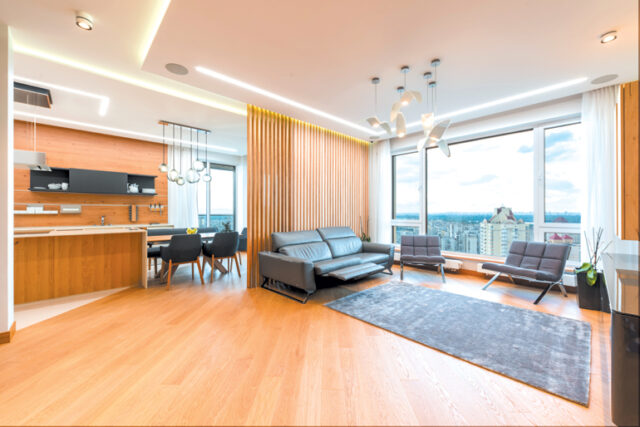
In addition, luxury property designs are everything but generic. The luxurious lifestyle such properties enable are coupled by modern and exquisite designs — like smart interior design features and open and greener spaces — that are aesthetically pleasing and radiates comfort and security to the homeowners.

Privacy and security are also key features that keep investors drawn to high-end properties. Luxury properties, Lamudi Philippines added, are regarded as the “most secured estates,” because they are built with enhanced security management and systems.

Nevertheless, investing in luxury real estate should be done carefully and properly. Otherwise, it can be a costly mistake.

Lamudi Philippines recommends investors, first, to have a clear goal in mind. Investors should ask themselves what they hope to accomplish by investing in luxury real estate. Setting specific objectives can help them identify what is an ideal property for them to invest in. Then, investors should ascertain their budget for investing. They need to know how to properly work on a budget they can afford.

After getting these first two settled, investors should factor in the location of the property, which is one of the most important considerations in making such investments. It is preferred to choose a location that is rich in opportunities, accessible to commercial estates and business districts, and capable of providing convenience and efficiency to residents. Investors should also consider properties crafted by well-recognized real estate developers, especially those that are reputable for consistently producing high-quality developments. — Angela Kiara S. Brillantes

The mark of luxury property

Photo by Max Rahubovskiy | PEXELS

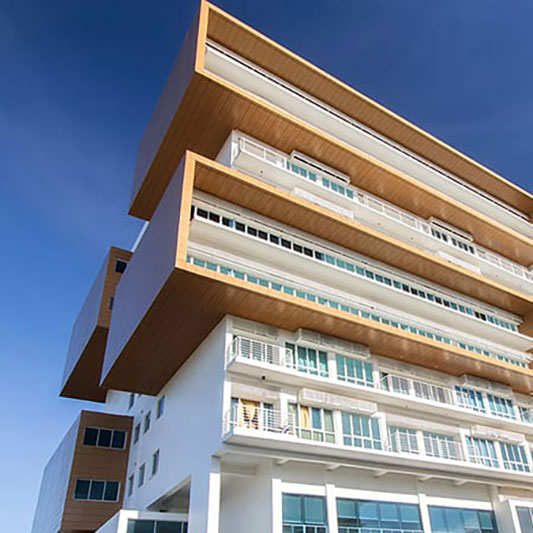
Throughout history, real estate has not merely been a matter of providing shelter but also of embodying status and taste. As societies evolved, so too did the concept of luxury in real estate, setting some properties distinctly apart from the rest.

Luxury real estate is defined differently across different markets, as property values, median resident income, and area development varies. According to reports, global high-end real estate is generally priced in the top 5%-10% of properties in the market.

The term ‘luxury’ in real estate is not just a marketing gimmick. It is an embodiment of a lifestyle choice. While it is easy to assume that any property with a hefty price might qualify as luxurious, the subtle reality delves deeper into qualitative attributes rather than quantitative measures.

Prime location

Real estate professionals have often emphasized location regarding property value. While properties might boast state-of-the-art amenities and lavish designs, their location often sets them apart as an actual luxury asset.

Prime property is defined as the most desirable and expensive real estate in a given location, generally defined as the top 5% of each market by value. According to a report from real estate consultancy Knight Frank, Manila is one of the hottest luxury home markets in the world, beating out other major cities such as Boston, Paris, and Tokyo.

Consequently, the integration of the Philippines into global capital flows and the rise of a powerful real estate sector together have led to a proliferation of exclusive and exceptional spaces, based on a study published in Critical Sociology.

Luxury real estate is often located in areas with easy access to high-end amenities such as shopping malls, restaurants, and entertainment centers. Luxury real estate buyers value the convenience and proximity to these amenities as part of the luxury lifestyle they seek.

Exclusivity and privacy

Exclusivity often translates to greater privacy. Luxury real estate buyers gravitate towards properties that offer seclusion from the outside world. According to the “YouGov Affluent Perspective Report,” 61% of surveyed prioritize privacy when selecting a property, making exclusivity a top criterion.

Privacy and exclusivity are defining factors in high-end and luxury real estate in the Philippines. Luxury homes are often designed with spacious interiors and outdoor areas that provide residents with a sense of seclusion and exclusivity. Hence, gated communities and exclusive neighborhoods with restricted access and security measures create a sense of prestige and privacy for investors and residents.

Amenities redefined

While location has long been a defining factor in property valuation, amenities have emerged as equally significant in setting luxury homes apart from the mainstream. High-end homes offer more than just a space to live as they also provide distinct experiences to residents.

The COVID-19 pandemic further underscored the importance of amenities as they addressed a newfound emphasis on space and wellness. Hence, luxury properties offering swimming pools, movie theaters, fitness centers, meditation zones, or air purification systems gained heightened significance.

While amenities add to the living experience, they also significantly influence the property’s investment value. Luxury amenities help draw in affluent tenants and buyers who are willing to pay a premium for upscale living experiences. According to a study published by the journal Land in 2022, the range of amenities is valued by both households and firms, resulting in higher housing and industrial prices. As such, homes equipped with modern facilities, energy-efficient systems, and unique features become more attractive to potential high-end buyers.

The architecture of distinction

At the heart of every luxury property lies its unique identity, and architecture is often the most pronounced expression of this individuality. Good architecture and quality design have been shown to increase surrounding property values and create a sense of prestige and exclusivity, based on a study published by the Massachusetts Institute of Technology.

Luxury properties often aim to seamlessly blend with their natural surroundings or create a unique environment. Thus, well-designed architecture considers the functionality and practicality of properties, featuring thoughtful layouts, efficient use of space, and high-end amenities.

Beyond the price tag

The increasing number of high-net-worth individuals in Metro Manila is driving the demand for luxury properties that provide exclusivity and a luxurious lifestyle. According to the 2019 Knight Frank’s Prime International Residential Index, Metro Manila has witnessed a significant increase in luxury home prices, with a growth rate of 11.1% year over year in 2018, making it the fastest-growing luxury market in the world.

While the prices of luxury homes are certainly driven by their size and location, the essence of their value lies far beyond mere numbers. The presence of luxury homes can contribute to the stability of the real estate market. Luxury properties often have higher price points and tend to hold their value well, even during economic downturns.

Furthermore, the demand for luxury properties in Metro Manila is pushed by the growing number of foreign investors attracted to the country’s economic growth. Consequently, the luxury real estate market in Metro Manila is expected to continue growing in the coming years. — Mhicole A. Moral

June bank lending slows further

STOCK PHOTO | Image from Freepik

LOAN GROWTH slowed for the third straight month in June, reflecting the impact of the Philippine central bank’s aggressive monetary tightening to curb inflation. 

Preliminary data from the Bangko Sentral ng Pilipinas (BSP) showed outstanding loans of big banks expanded by 7.8% to P10.99 trillion in June from P10.19 trillion a year earlier.

The growth in bank lending was slower than 9.4% in May and 12.1% in June 2022.

“The continued moderation of bank lending highlights the impact of the tightening carried out by the BSP since mid-2022,” ING Bank N.V. Manila Senior Economist Nicholas Antonio T. Mapa said in an e-mail.

He noted that interest rate hikes are designed to slow economic growth and help ease demand-side pressure on inflation.

From May 2022 to March 2023, the BSP raised the benchmark interest rate by 425 basis points (bps) to a near 16-year high of 6.25%.

While rates were left unchanged for a third straight meeting on Aug. 17, the Monetary Board signaled it is ready to resume tightening, if necessary, amid risks to the inflation outlook.

Security Bank Corp. Chief Economist Robert Dan J. Roces said the weaker expansion in bank lending could be traced to economic uncertainties from elevated inflation.

Headline inflation declined to 5.4% in June from 6.1% in May. Despite the decline, it marked the 15th straight month of inflation exceeding the BSP’s 2-4% target band.

“This might have made businesses more cautious about borrowing, leading to a decline in production loans. Additionally, tightened lending standards reflected market risks,” Mr. Roces said.

BSP data showed outstanding loans to residents grew by 7.8% to P10.67 trillion in June from P9.89 trillion a year earlier. However, growth was slower than 9.3% in May and 11.8% in June 2022.

Credit for productive activities declined by 6.3% to P9.55 trillion, slower than 7.9% in May and 11.9% a year earlier.

“With loan growth slower for the [production] sector, we can expect smaller investment outlays, fewer workers hired and overall, less economic activity,” Mr. Mapa said.

Annual loan growth was recorded in several sectors such as electricity, gas, steam and air-conditioning supply (11.8%), information and communications (11.2%), and wholesale and retail trade, and repair of motor vehicles and motorcycles (9.6%).

However, there was an annual decline in loans for professional, scientific and technical activities (-29.2%), education (-5.8%), and arts, entertainment and recreation (-1.6%).

“On the other hand, the surge in consumer loans indicates a shift in where credit is flowing, perhaps due to increased consumer confidence and economic sectors reopening,” Mr. Roces said.

Consumer credit jumped by 23.7% to P1.12 trillion from P906.3 billion a year ago. This was slightly faster than the 22.6% in May.

Credit card loans expanded by 29.3% in June, while salary-based general purpose consumption loans surged by 48.8%. Motor vehicle loans rose by 6.4%.

“Consumer loans remained on the uptick, largely because consumer loans are not generally based on the BSP policy rate. Just recently, the BSP opted to retain the 3% cap on credit card lending, so we do not expect this sector to slow anytime soon,” Mr. Mapa said.

The Monetary Board maintained the ceiling for credit card charges at 3% a month or 36% a year. The monthly add-on rate that credit card users can charge on installment loans is still at 1%, while the maximum processing fee for credit card cash advances remained at P200 for each transaction.

The BSP will review the ceilings on credit card transactions after six months.

“Looking ahead, the trajectory for loan growth remains contingent on several dynamics. We might see a continued rise in consumer loans if economic conditions improve, most especially the sentiment on it,” Mr. Roces said.

The recovery in production loans will depend on global and local economic conditions, such as interest rate adjustments by central banks, he added.

While banks will benefit from higher interest rates, Mr. Mapa said consumers and companies will be “feeling the heat” from high borrowing costs.

“With the BSP noting that policy tightening operates with a lag, we can expect bank lending to continue to slow (as it did in 2019) in the coming months, which could be a sign that growth and productive capacity will be capped,” he added.

BSP Governor Eli M. Remolona, Jr. earlier said the central bank remains hawkish, and cutting policy rates is not on the table, at least not at the Monetary Board’s meeting next month.

The Monetary Board will have its next policy review on Sept. 21. — Keisha B. Ta-asan

Solar panel manufacturing can boost Philippine GDP by as much as $175 million

Solar panels have been installed on top of the roof of a shopping mall in Quezon City. — COMPANY HANDOUT

THE DEVELOPMENT of the solar photovoltaic (PV) manufacturing industry in the Philippines could boost its gross domestic product (GDP) by as much as $175 million in seven years, the Asian Development Bank (ADB) said.

In its Renewable Energy Manufacturing report, the ADB said the Philippines could aspire to establish a 3-5 gigawatt (GW) scaled module assembly facilities by 2030. Half of the output would supply domestic demand.

“To achieve this, investment of $150 million to $250 million would be required over three to five years,” it said. “Realization of this ambition has the potential to generate in 2030 $100 million to $175 million uplift in GDP.”

The solar PV manufacturing industry could potentially generate between 8,000 and 12,000 new jobs, 4,000 to 7,000 of which would be direct jobs, the ADB said.

The industry would also result in about $100 million to $140 million in cost savings annually.

“It is estimated that workforce training and operational excellence, together with achievement of 3-5 GW scale, could enable a 5% to 10% reduction in the Philippines’ production costs to a level comparable with regional leaders,” the ADB said.

“Achieving this cost competitiveness would be key to the viability of the industry and to unlocking its potential benefits for the country,” it added.

Southeast Asia is a solar PV manufacturing hub, but production is mainly in Cambodia, Laos, Thailand and Vietnam.

In the Philippines, Maxeon manufactures cells.

The ADB noted that solar PV demand in the Philippines is mainly hindered by its grid infrastructure.

“While the Philippines has a supportive regulatory environment for renewables and strong near-term renewable energy (RE) targets, its grid would require investment in capacity expansion to accommodate solar PV capacity additions,” it said.

“The Philippines’ grid infrastructure is constrained and unable to accommodate additional solar generation. Government permits for project development and grid connection take a long time to obtain.”

Another barrier to boosting solar PV demand is the Philippines’ low supply of quick-start generation and energy storage solutions.

On the other hand, the ADB said the Philippines’ supportive regulatory environment would help support demand for solar PV manufacturing. The country recently opened the renewable energy sector to full foreign ownership.

However, the ADB said to attract more investments in solar PV manufacturing, the Philippines must also improve ease of doing business by designating zones for the industry, create conducive policies for imports and exports and streamline Customs processes. 

The ADB also recommended partnering with industry leaders to train workers in solar PV manufacturing, reducing costs to original equipment manufacturers through fiscal incentives and expanding grid capacities for higher renewable penetration.

“In export markets, cost competitiveness will be critical. The market for solar PV modules is relatively commoditized, and price is a key buying factor for solar developers,” it added.

The ADB noted China still has the lowest cost of production for solar panels, while Vietnam and Malaysia are estimated to produce at a 15-20% higher cost than China.

Less established manufacturing hubs like the Philippines are estimated to produce solar PVs that are 25-35% higher than China, it added.

The costs of manufacturing solar PVs in the Philippines are higher mainly due to transport costs of inputs, lower buying power of raw materials due to small scale, higher electricity costs and lower yield on input factors.

“Manufacturers cited higher costs and wait times to export modules out of the Philippines versus Malaysia and Vietnam due to lower container traffic volumes. The Philippines also faces challenges with transportation between islands,” the ADB said.

From 2017 to 2021, Southeast Asian manufacturers supplied about a third of global PV module exports.

The ABD said revenues from low-carbon mobility and clean power segments in the region could reach $90 billion to $100 billion by 2030. 

“Southeast Asia already is well-positioned to meet the demand for manufactured inputs into these sectors, as it already produces 9%-10% of the world’s solar PV cells and modules, 50% of global nickel output, and 6%-10% of all electric two-wheelers today,” it said. — Luisa Maria Jacinta C. Jocson

Nearly 68M Asians plunged into extreme poverty in 2022

The government is targeting to reduce its poverty incidence rate to 9% by 2028. — PHILIPPINE STAR/MIGUEL DE GUZMAN

By Luisa Maria Jacinta C. Jocson, Reporter

ALMOST 68 million people in developing Asia were pushed into extreme poverty last year, as many people struggled with the impact of the coronavirus pandemic and rising cost of living, the Asian Development Bank (ADB) said.

“Compared to pre-pandemic estimates for 2022, an extra 67.8 million people were estimated to be extremely poor in developing Asia in 2022,” the ADB said in the latest Key Indicators for Asia and the Pacific report released on Thursday.

The report looks at developing Asia’s progress in achieving Sustainable Development Goal (SDG) 1, which is to end poverty in all its forms everywhere by 2030.

Data from the ADB report showed 3% of the Philippine population was living in extreme poverty in 2021, lower than 6.5% in 2015. Extreme poverty is defined as living on less than $2.15 (P122) a day based on 2017 purchasing power parity figures.

The report also showed 17.8% of the Philippine population was living in moderate poverty (or less than $3.65 a day), lower than 27.1% in 2015.

The ADB said developing Asia’s progress in reducing poverty has been hampered by the COVID-19 pandemic and further aggravated by the cost-of-living crisis caused by elevated inflation.

“Previous forecasts based on available data hinted that the COVID-19 pandemic initially set back progress in reducing poverty in developing Asia by at least two years,” ADB Statistician Arturo Martinez, Jr. said in a webinar.

Last year, inflation in developing Asia accelerated to 4.4%, which the ADB said is a “level unseen in almost a decade.” In 15 economies, food and nonalcoholic drink prices rose by at least 10% while fuel prices were up by at least 8%.

“Cost of living pressures also rose across the region as prices of food, energy and housing hit all-time highs as 2022 unfolded. This stalled developing Asia’s economic performance which only managed to grow by 4.2% by the end of the year, lower than initial forecasts suggested,” it added.

Elevated commodity prices have devalued real wages and generated “longer-term poverty traps,” the ADB said.

Based on the 2017 purchasing power parity (PPP), rates of extreme and moderate poverty in developing Asia were estimated at 3.9% and 18.8%, respectively, in 2022.

“Based on medium-term growth projections, developing Asia may be able to reduce prevalence of extreme poverty to 1% by 2030, however, 8% may still live in moderate poverty, and another 30% in economic vulnerability,” Mr. Martinez said.

To eradicate poverty, achieve zero hunger and build human capabilities, the Asia and Pacific region must spend over $669 billion annually from 2016 to 2030.

IMPACT ON THE POOR
The poor are usually the most affected by the rising cost of living. The ADB noted that even small movements in prices hurt poor people as they spend a significant amount on basic items such as food and energy.

“In most economies, the bottom 50% spent more than half their budget on food and 10% more on energy than an average household,” it said.

Low-income groups are also finding it more challenging to recover from the pandemic.

“Those who just escaped from poverty could be pushed back into it due to reduced purchasing power. Poor people are most likely to be hit hardest due to the higher share of energy and food costs in their budget compared with other income groups,” the ADB said.

Poor people also face a “poverty premium” as they usually have to pay more for certain goods and services.

“Even if we take the increased cost of living out of the equation, it’s quite expensive to be poor because they may incur poverty premiums. Poor people pay more to get access to basic services,” Mr. Martinez said.

For example, the ABD noted that poor people “may end up paying higher unit prices for select food items because they cannot afford to buy in bulk, because they have limited facilities to store food at home.”

The poor also have less access to affordable financial services. “In developing Asia, access to credit for small firms, which provide a major source of employment for people of lower incomes, is constrained due to unfavorable interest rates, complex application procedures, and high collateral requirements.”

POVERTY IN PHILIPPINES
Mr. Martinez said sustained Philippine economic growth can support the further reduction of poverty levels.

In the Philippines, the proportion of the population living below the national poverty line was at 18.1% in 2021. The government is targeting to reduce its poverty incidence rate to 9% by 2028.

“Based on currently available data, growth in the Philippines is one of the highest in the region and is expected to contribute positively in further reducing poverty if it can be sustained in the long-run and if the country can ensure that the benefits of economic growth will trickle down to low-income people,” he said in an e-mail to BusinessWorld.

The ADB currently estimates the economy’s GDP to grow by 6% in 2023 and 6.2% in 2024. The ADB will release updated forecasts next month.

“However, in addition to reducing poverty, it is also important to amplify the resilience of Filipinos. Bringing poor people just above the poverty line may not be enough if they can be easily pushed back below it if another crisis hits,” Mr. Martinez said.

The government should include better social protection coverage and programs that address inequality as part of its strategies to reduce poverty, he added.

In 2020, only 36.7% of the Philippine population was found to be covered by one social protection benefit.

According to the ADB, the bottom 30% of Philippine households faced higher prices for transport-related goods and services compared with the general population at the height of the pandemic-induced lockdowns in 2020.

“Deficiencies in access to basic services, particularly in rural areas where a significant number of poor people live, need to be addressed,” Mr. Martinez added.

The ADB also said that technology and innovation can help reduce poverty, especially in supporting financial inclusion.

“Over the years, developing Asia has lifted their rates of financial inclusion but there is a need to close the gap between men and women in select areas,” Mr. Martinez said.

Agricultural productivity is also key to helping the region reduce poverty and achieve zero hunger.

“Policy measures such as boosting development of the agriculture sector and strengthening the resilience of agricultural households to price shocks and other types of disruptions can be a powerful tool for facilitating faster poverty reduction,” the ADB added.

Mr. Martinez also noted that governments should invest in education for the poor, as poverty can force individuals to prioritize meeting their basic needs instead of going to school.

SEC sets faster settlement of security trades

THE SECURITIES and Exchange Commission (SEC) has approved a shorter settlement cycle for securities trades in a bid to boost activity in the capital market.

In a statement on Thursday, the corporate regulator said the reduced settlement cycle is provided under Memorandum Circular (MC) No. 11 issued on Aug. 11 which amended the 2015 Implementing Rules and Regulations of the Securities Regulation Code (SRC).

MC No. 11 shortened the settlement cycle to T+2, or the transaction date plus two days, versus the previous settlement cycle of transaction date plus three days (T+3) under the 2015 SRC Rules and SEC MC No. 16, Series of 2004.

Another amendment requires a customer’s purchases in a cash account to be paid in full within two business days after the trade date, or shorter than the previous three days under the amendment on SRC Rule 50. The amendment allows investors to receive proceeds from securities trades within two days.

Risk exposure for trading participants will also be reduced by one day.

SEC Chairperson Emilio B. Aquino said the amendments will lower the credit and market risks of unsettled trades and liquidity risks in the payment system, which reduces the overall systemic risk for the capital market.

“It will also encourage greater efficiency in the clearing and settlement process for securities trades. Accordingly, it will contribute in promoting the development of the Philippine capital market and protection of investors,” Mr. Aquino said.

“The shortened settlement cycle is in line with global standards and supports our mission to facilitate cross-border trading and encourage more investors to trade in the local stock market,” he added. 

Meanwhile, the SEC said MC 11 also amended SRC Rule 49 on the computation of net liquid capital (NLC), as well as SRC Rule 52 on the monthly aging of customers’ receivables and the appropriate allowance for doubtful accounts.

It added that amendments were also made to MC 16 to reflect the changes for the computation of the NLC and the schedule for specific and general provisioning for overdue accounts.

“The SEC is continuously crafting plans to introduce institutional changes that would help develop and further deepen the Philippine capital market, as we aim to lift investor confidence amid the trend in both regional and global markets today,” Mr. Aquino said. — Revin Mikhael D. Ochave

Filinvest Land readies technology park expansion

PROPERTY DEVELOPER Filinvest Land, Inc. (FLI) is expanding its Filinvest Technology Park in Calamba City, Laguna as part of efforts to boost its presence in the Southern Tagalog region.

In a stock exchange disclosure on Thursday, FLI said it held the groundbreaking ceremony for its 25-hectare Filinvest Innovation Park-Ciudad de Calamba (FIP-CDC), which seeks to expand the 50-hectare technology park. 

FLI said the entire FIP-CDC is an economic zone registered with the Philippine Economic Zone Authority (PEZA), making it eligible for tax perks, simplified trade processes, and special visa privileges for foreign employees. 

“FIP-CDC is an expansion of FLI’s 50-hectare Filinvest Technology Park, a PEZA ecozone established in 2002 in Ciudad de Calamba, a 350-hectare Modern Filipino Hispanic Filinvest townscape. FIP-CDC joins FIP New Clark City in Capas, Tarlac as FLI’s concrete commitment to catalyzing the country’s economic growth through its strategically located innovation parks,” FLI said.

Once completed, FID-CDC will lease out ready-built factory (RBF) and built-to-suit units aimed at the various requirements of prospective locators.

The first two RBFs are projected to be finished by end-2023, while further land development of FIP-CDC lots will be finished by mid-2024.

According to FLI, the RBFs meet Grade A warehouse specifications including higher ceiling clearance and floor load capacity, elevated production floors with loading docks, and superior infrastructure support for utilities, including access to high-speed internet, and fire detection and suppression.

The RBFs will also have provisions for the installation of rooftop solar panels and rainwater harvesting.

“FIP-CDC marks a significant step forward for FLI as we expand our industrial presence in the Southern Tagalog region. With its cutting-edge green and digital features, FIP-CDC will offer a prime environment for logistics, e-commerce, and light manufacturing locators. We are proud to provide a platform that not only supports businesses but also contributes to the growth of the local economy,” FLI President and Chief Executive Officer Tristaneil D. Las Marias said. 

On Thursday, FLI shares at the local bourse were steady at 67 centavos apiece. — Revin Mikhael D. Ochave

Long-time musical partners Kyla and Jay R share a stage

AFTER 20 years of being lauded both individually and as a pair for paving the way for local R&B, soul, and hip-hop to make it in the mainstream, Filipino musicians Kyla and Jay R return for a long-awaited callback to their roots in Back In Time: Kyla and Jay R The Reunion Concert.

Their return to the big stage, the first in many years, will take place at the New Frontier Theatre in Cubao, Quezon City, on Sept. 2.

Kyla and Jay R (which are the stage names of Melanie Hernandez Calumpad and Gaudencio Sillona III, respectively) began singing and collaborating with each other in the 1990s. They had also been paired as a love team — a popular gimmick that appeals to Filipinos’ love for romance — which fans nicknamed “JayLa.”

Today they are married to different people, but they remain strong musical partners. Their chart-toppers include the likes of “Let the Love Begin,” “Say That You Love Me,” and “Undeniable.”

For Jay R, agreeing to the reunion concert was a no-brainer, especially given their natural chemistry as singers.

“I’m a big fan of Kyla. We’ve been friends for 20 years and we’ve worked together for that long as well. Actually, we’ve only fought one time before,” Jay R said during a press conference on Aug. 24.

“I miss her voice onstage, when she’s singing. She really puts you in a trance,” he added.

The so-called “R&B King of the Philippines” also shared that they can’t even remember the last time they performed together, having only appeared on television and in a few events in the last few years.

In a previous press conference, Kyla said that Jay R brings out the best in her, to which he responded likewise.

“As a singer her range is so high and her kulot (a term for melodic ornamentation while singing) is so different. When we were first starting out, we had our own ad libs but at the time I was trying to do something different and jazzy, then Kyla took it to a different level,” he said.

As for the concert’s title, Back in Time, Jay R explained that it was named after the song he is most excited to perform with his musical partner.

Composed in 2008, it was the first and only song that he produced on his own from start to finish. However, they never got to make a music video or any sort of visual for it.

“Every time we get a chance to sing this song, I’m very excited, especially because I wrote it for us,” said Jay R. “It’s the first song that I wrote in just 30 minutes!”

Like Kyla herself, the track holds a dear place in his heart, he said.

The upcoming concert will likely have a setlist of 30 songs, some of which will be included in a medley. For both musicians, the goal is to “give the audience something nostalgic but new at the same time.”

Tickets for Back In Time: Kyla and Jay R The Reunion Concert are now available via TicketNet online and all TicketNet outlets nationwide, with ticket prices ranging from P1,500 to P8,100. The concert is presented by GNN Pop, a subsidiary of GNN Entertainment Productions, and Cornerstone Entertainment. — Brontë H. Lacsamana

Megaworld plans 3rd Gen. Trias residential condo

LISTED property developer Megaworld Corp. is set to build its third residential condominium development in General Trias, Cavite to expand its portfolio nationwide. 

Megaworld said in a stock exchange disclosure on Thursday that the condo development, called the Maple Park Residences, is a 14-storey project located within the 140-hectare Maple Grove township. 

The new development will offer 200 units and is expected to be completed by 2028 and generate sales of up to P1.8 billion once finished. 

“Inspired by the parkside living concept prevalent in Scandinavian countries, Maple Park Residences will offer a total of 200 smart home units in varying unit types and sizes ranging from studio (up to 30 square meters), studio with balcony (up to 35 square meters), one bedroom with and without balcony (up to 44.5 square meters), and two bedroom with and without balcony (up to 76.5 square meters),” Megaworld said. 

Maple Park Residences will be accessible to future residents through the six-lane Maple Grove Blvd., which is integrated into the General Trias-Tanza Bypass road project.

“Apart from the link between Maple Grove’s road networks and the General Trias Bypass road, the future direct link between the Cavite Laguna Expressway (CALAX) exit and Open Canal will significantly cut down travel time for all Maple Grove residents, especially those coming from Metro Manila, other cities in Cavite, and even Laguna,” Megaworld Cavite First Vice-President for Sales and Marketing Eugene Em Lozano said. 

According to Megaworld, one feature of Maple Park Residences will be an electric vehicle charging station at the parking area that can accommodate multiple vehicles, marking the first-ever Megaworld residential condo development to have the said facility. 

Other features include low flow rate fixtures to promote water conservation, occupancy sensors in hallways and parking floors for energy conservation, LED lights for units and common areas, a rainwater harvesting system, and a materials recovery facility.

For the interior, Megaworld said Maple Park Residences will have a high-ceiling lobby that carries a balance of Japan-Scandinavian fusion style. Several retail spaces will be occupied in the ground floor area.

The second level features various amenities such as an adult pool with an in-water lounge, a children’s pool, a pool deck, and an alfresco lounge area. Other amenities include a fitness gym, a children’s playground, and a function room.

“The concept behind Maple Park Residences draws inspiration from the Scandinavian countries as well as communities in Makati where residents are surrounded by lush open spaces in the middle of a modern and urban city. Maple Park Residences will offer both the excitement of urban living and the laidback setting of Cavite,” Mr. Lozano said.

Aside from Maple Park Residences, the Maple Grove township hosts two other residential condominium developments, namely: the 10-storey The Verdin and the 16-storey La Cassia Residences. It also has an upscale residential village and other towers.

Megaworld previously announced that it had earmarked P15 billion to develop Maple Grove as “Cavite’s first-ever modern central business district” within 10 years. The township will soon have its own transport hub, chapel, biking and jogging tracks, futsal field, and lifestyle mall. 

In the first half of the year, Megaworld posted a P7.9 billion attributable net income, higher by 34% than P5.9 billion a year ago, amid surging property demand. 

On Thursday, shares of Megaworld at the local bourse fell two centavos or 0.99% to end at P2.01 apiece. — Revin Mikhael D. Ochave

The power of the mind camera

Movie Review
Aftersun
Directed by Charlotte Wells

By Brontë H. Lacsamana Reporter

ONLY recently did I get to watch what I now call the best film from last year — Charlotte Wells’ Aftersun, a sincere yet haunting look back at a long-gone father-daughter relationship. It’s a film that takes a while to understand but hits you like a ton of bricks once you do, hence why I saw it for a second time a month after the first.

In many ways, it really does take time to properly get to things that matter. This is definitely true for the film’s director Wells, who was inspired by her own final holiday with her father 20 years earlier.

Aftersun follows Sophie Paterson (played by charming newcomer Frankie Corio), an 11-year-old girl from Ireland who is happy to be on holiday with her father at a beach resort in Turkey. The film uses MiniDV footage interspersed with 35mm-shot scenes of laughter, silence, fun, awkwardness, and brief sadness, as the present-day Sophie tries to reconcile the father she knew with the man that she never did.

The loving yet troubled father, Calum Paterson, is brought to life by Paul Mescal (breakout star of Irish drama Normal People), who eventually garnered an Oscar nomination for Aftersun. He brings a subtle, caring nature to the role, despite the flawed and unpredictable aspects of his character.

Both leads play their parts to perfection, showing a believable chemistry and connection that a close father and daughter would have. This makes the events that come all the more painful, harnessing the raw power of old home video footage that either of the pair casually wielded during their vacation, as anyone would have before the invention of camera phones. The memories depicting Sophie’s coming-of-age mixed with the nurturing yet sometimes turbulent interactions with her fun-loving father convey a painful honesty that doesn’t feel like fiction.

However, the film is more poignant and hits much harder on a second viewing than on the first. By then, you’ll have processed the vague bundle of emotions and unresolved threads presented onscreen. Having reached the end and realizing that it isn’t a straightforward telling of what happened and what to feel about it makes you better able to read the little details the second time around (and feel the pain more when it comes).

My first viewing was online, on my little laptop screen, while my second viewing was on the big screen, care of the A-List Series curation of acclaimed films being shown in the Philippines. I am pleased and grateful that I chose to rewatch this on a bigger screen, so as to appreciate the details more.

(The Film Development Council of the Philippines’ World Cinema Festival is screening this film, along with other acclaimed world cinema titles from 2022, at various Ayala Malls Cinemas until Aug. 29.)

When I first watched Aftersun, I wasn’t immediately compelled to rank it as my favorite or as the best film of last year. It takes a while to understand what Wells is trying to convey, given the mismatch of certain moments with others being an interesting puzzle to work out. In a way, it’s what anyone who has lost someone inevitably feels, rewinding memories to try to understand what it means, went wrong, what could have been.

Sophie even gives it a name in what seems to be a regular small moment in their vacation. She is filming her unwilling, somewhat agitated dad using the miniDV camera, asking him personal questions. Calum refuses to answer, so Sophie turns off the camcorder and says she will instead record him with her “mind camera.”

Aftersun is, in effect, a film from Wells’ own “mind camera.” Though it’s produced with a relatively decent budget and fictionalized to a great extent, it is her output from recording and rewinding her own memories, a beautiful take on how the people we’ve lost live on in fragmented, complex, elusive, and frustratingly incomplete ways. And, in my opinion, it is a blessing to cinema that she shares it with us.

I cried in a certain scene near the end, one that ties the film together by blurring the line between what’s real and what’s imagined. It’s the scene that convinced me to eventually watch it on the big screen. You’ll know it when “Under Pressure” by Queen and David Bowie starts playing and continues in a gradual crescendo towards a stunning needledrop, maybe the best use of the song in any film.

Make no mistake; this isn’t a typical tearjerker. It’s a quiet film that recreates how people immortalize both the romanticized traits and the imperfections of loved ones who have passed and come to terms with how a joyful time can actually hide a deep melancholy that makes the memories bittersweet.

It’s phenomenal, how Wells was able to make a tender yet cohesive work — her debut film! — on such an emotionally charged subject matter with such restraint, careful not to oversell the tragedy. Its brilliance shines through when it fills in the blanks as we, along with Sophie, sift through the rare moments captured years and years ago, both on old home video clips and on her own little mind camera.

Italpinas unit signs joint venture for P1.2-billion project in Cagayan De Oro 

ITALPINAS.COM
ITALPINAS.COM

A MAJORITY-OWNED subsidiary of listed construction firm Italpinas Development Corp. (IDC) has signed a joint venture agreement for a P1.2-billion property development in Cagayan de Oro City to grow its project portfolio.

In a stock exchange disclosure on Thursday, IDC said its majority-owned subsidiary IDC Prime, Inc. had agreed with a certain Gilda Go on Aug. 23 for the development of her 6,790-square-meter property along Rosario Limketkai Ave. in Brgy. Lapasan into a mixed-use project.

IDC Prime’s board approved the execution of the joint venture with Ms. Go on Aug. 2. 

“Ms. Go is contributing a prime property, consisting of 6,790 square meters,” IDC said, adding that its unit will develop the property into a mixed-use development.

“IDC will provide management and technical oversight. Total project cost is estimated to be P1.2 billion,” it added.

“IDC intends to grow its project portfolio by farming out the development to its subsidiaries, leaving IDC free to explore new locations, negotiate additional joint ventures, and tap diverse funding sources,” the company added.

“The agreement was negotiated by IDC, but the development of the project was assigned to IDC Prime in order to disperse operations, and leave IDC free to make the strategic decisions, and pursue more projects,” it added.

According to IDC, Ms. Go will be entitled to 20% of the number of sellable units with a value not less than P100 million at the pre-selling price, while IDC Prime will be entitled to the remaining 80% of the sellable units.

IDC said IDC Prime, Inc. had estimated a gross profit margin of 59.40%.

On Thursday, shares of IDC rose one centavo or 1.28% to end at 79 centavos each. — Revin Mikhael D. Ochave

Rolling Stones fans see signs of new album in local newspaper ad

Rolling Stones — PHOTO FROM ROLLINGSTONES.COM

LONDON — Have the Rolling Stones just announced the release of a new album? The band’s representatives say “no comment” but the fans, who have been waiting for a new LP for almost two decades, think they might be about to get some satisfaction.

Their hopes have been raised by an innocuous-looking advert in a small London newspaper heralding a new glass repair store called “Hackney Diamonds.”

The brightly colored promotion in the Hackney Gazette said the business was established in 1962 — the same year the Rolling Stones formed — and the new store would open in September.

“Our friendly team promises you satisfaction. When you say gimme shelter we’ll fix your shattered windows,” the advert said in the newspaper’s Aug. 17 edition, referencing some of the group’s best-known hits.

It directs readers to a website where users are asked to register their interest, with privacy terms signed off by the groups’ label Universal Music Group (UMG).

“The Rolling Stones are poking fun at themselves,” read one message on the Facebook fan page The Rolling Stones Sessions. “Creative publicity has started on the long-awaited new album.”

“I am one of those fans that craves new music, so I just can’t wait to hear the album. I’m really excited and ready,” wrote Jack Q Frost Jnr on messaging site Reddit.

Last year, The Rolling Stones marked their 60th anniversary with a European tour, covering 10 countries including Britain.

An album by the Rolling Stones featuring new original music would be their first since 2005’s A Bigger Bang. — Reuters

ADVERTISEMENT
ADVERTISEMENT