Home Blog Page 4408

Quality health, education programs seen as key to maximizing 4Ps impact

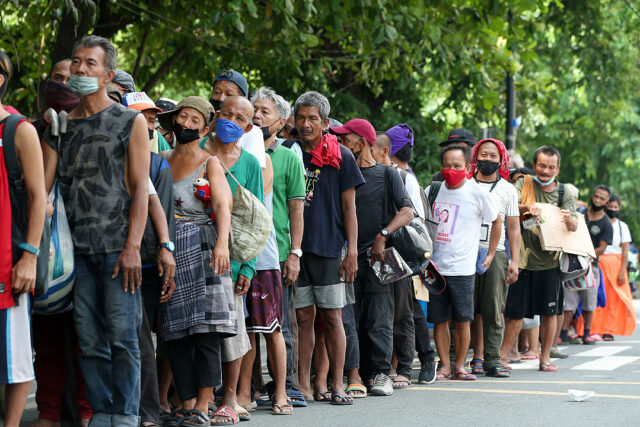
HOMELESS Filipinos are seen awaiting their turn to get free food at T.M. Kalaw in Manila. — PHILIPPINE STAR/KRIZ JOHN ROSALES

QUALITY EDUCATION and health programs will maximize the development impact of cash transfer programs like the Pantawid Pamilyang Pilipino Program (4Ps), the World Bank said.

“The quality of education and health, not just service use, is critical to achieving the expected gains in human capital. Like all conditional cash transfer programs, Pantawid acts on the demand side. The project’s conditionalities, such as the family development sessions, have been fundamental to bringing about behavioral change,” it said in a report.

“The program was quite effective in changing attitudes and behaviors (increasing school attendance and supporting regular visits to health clinics) but not as much in affecting development outcomes such as learning, stunted growth of children, or maternal mortality,” it added.

The World Bank said these outcomes “depend crucially on the quality of services provided.”

“Supply-side conditions need to operate together with incentives on the demand side (such as Pantawid conditionalities) to achieve gains in human capital,” it said.

The 4Ps require recipients to submit to health checks and keep children in school to leverage the impact of the cash into behaviors deemed helpful in achieving development goals.

The World Bank also noted the importance of continuous monitoring and evaluation to ensure the program is constantly evolving.

“The management information system regularly ensures that Pantawid beneficiaries receive the appropriate grant based on their degree of compliance with conditionalities; it is constantly updated to regulate complex interdependent processes. At the same time, evaluation of processes and results is needed to inform the government of the necessary changes to keep the program effective,” it added.

Government ownership is also key to sustaining cash transfer programs, the multilateral lender said.

“The success of a large, nationwide social protection program like Pantawid lies in creating and strengthening the operational and institutional systems needed to support it,” it said.

“Thanks to its solid institutional base, Pantawid expanded much faster than originally anticipated — faster than similar programs in any other country globally —and became the third-largest conditional cash transfer program in the world in population coverage,” it added.

The 4Ps were first launched in 2007 and made a permanent feature of government entitlements in 2019. — Luisa Maria Jacinta C. Jocson

Education, labor reforms seen as potential growth drivers — Moody’s

PHILIPPINE STAR/ MIGUEL DE GUZMAN

EDUCATION and labor sector reforms could complement population-driven growth in South and Southeast Asian, Moody’s Investor Service said in a report.

“Closing the gaps in both educational achievement and workforce participation would provide scope for further economic gains and boost incomes,” Moody’s Investor Service said.

An enhanced education sector will mitigate potential job losses for certain segments of the services industry such as business process outsourcing, especially in India and the Philippines, the report said.

Moody’s said the development of engineering and programming may provide higher value-added job opportunities given the increasing complexity of products on offer.

The report noted that the Philippine average for years spent in education is nine, according to the United Nations Development Programme’s national human development index.

This is the highest average number of years in education, more than Indonesia, Vietnam, and Pakistan, it added.

Moody’s said this was due to a greater percentage of females completing secondary school in the Philippines.

“Among the big six, the Philippines and Vietnam are relatively well placed, although — as their scores for education, and labor and income indicate — neither currently has positive exposure to these factors,” the report said. — Aaron Michael Sy

The arm’s length principle for retail companies

There are a variety of reasons why associated enterprises enter into commercial transactions with each other. The most common is the ease and speed of processing and delivery, since the setup allows the parties to bypass the common processes of doing business with a non-affiliate (e.g., supplier accreditation, credit investigation, etc.) due to the special relations between the affiliated companies.

One thing to consider in such arrangements is that transfer pricing rules dictate that transactions between or among affiliated entities observe the arm’s length principle. This means that whatever price is charged for a similar good sold or service rendered to a related party must be comparable with that charged to an independent or unrelated party.

Sometimes, related party transactions are simple and straightforward arrangements, as is the case with the sale of products which are being offered for sale also to third-party buyers. One example might be a retailer who offers for sale the same pool of commodities to buyers, regardless of whether the latter are affiliates or not.

Hence, if the requirement under the arm’s length principle is simply to ensure that a particular seller charges the same price for similar goods or services sold to unrelated and related buyers, are billing invoices and receipts showing the same prices sufficient evidence to prove that the transaction with related parties complies with the arm’s length standard? The simple and perhaps immediate response to this question would be “yes,” if we focus merely on the nature of the subject of the transaction. However, as is generally the case when determining prices for a particular commodity, there are a lot of factors to be considered which extend beyond the costs incurred in producing the good or providing the service to the end consumer.

This is where transfer pricing documentation (TPD) or transfer pricing policy come into the picture. A TPD supports the analysis performed on the surrounding factors that may impact the pricing of a specific transaction entered into between or among related parties. The analyses cover not only internal factors (e.g., functions performed, assets employed, risks assumed, etc.) but also external factors (e.g., economic and industry, regulatory environment, etc.) that usually affect pricing determination.

Going back to the case of retailers, how then is transfer pricing analysis or the arm’s length principle applied on their related party transactions?

As mentioned earlier, a transaction involving the resale of goods, especially where the reseller does not perform any value-adding activity to the goods being offered for sale, may appear very straightforward. However, a careful examination of the factors surrounding the transaction must be made in order to determine an appropriate transfer pricing method that would identify the arm’s length price.

The possible TP methods that can be applied in the case of retailers are the following:

COMPARABLE UNCONTROLLED PRICE (CUP) METHOD
The CUP method compares the price of the products sold by a retailer to the related party with the price of product sold to third-party buyers. This is the most direct way of ascertaining an arm’s length price but requires the highest degree of comparability of the nature and characteristics of the product, terms and conditions of the transaction with related and third-party buyers. In case of differences, reliable adjustments should be made to eliminate the material effects of such differences.

The CUP method can be applied in two ways — internal and external CUP method.

The internal CUP compares the price of the product charged by the retailer to the related party buyer with the price charged by the same retailer to an independent party. For example, Retailer Corp. sells a specific type of multi-purpose tripod at P900 per unit. Buyers of Retailer Corp. are generally third-party end-consumers. However, in case a related party of Retailer Corp. procures the same multi-purpose tripod from Retailer Corp., the selling price should ideally be comparable to the price charged by Retailer Corp. to third-party buyers (i.e., P900 per unit).

Please note that in using internal CUP, it must be demonstrated that the internal comparables are not transactions that were performed/entered solely to justify that the related party transactions are at arm’s length or to artificially create a comparable uncontrolled transaction that serves as a benchmark.

On the other hand, external CUP compares the price of the product sold to a related party buyer with that of the price charged between two independent parties. For example, Distributor A supplies industrial cleansing liquid to retailers who are all affiliate entities. Distributor A does not supply to third-party retailers. Assuming Distributor B, a direct competitor of Distributor A, sells comparable cleansing liquid to non-affiliate retailers at P80 per kilo, then the price charged by Distributor A to its affiliate retailers should be comparable to the selling price of Distributor B to non-affiliate retailers, that is, P80 per kilo.

Again, the CUP method requires the highest degree of comparability of retail transactions with related and third-party buyers. With that said, a comparability analysis must be performed first between the related and independent transactions. In performing this analysis, it is crucial to know the product characteristics, such as physical features and quality; whether the goods sold are compared at the same points in the supply or production chain; product differentiation is in the form of patented features such as trademarks, design, etc.; volume of sales if it has an effect on price; timing of sale if it is affected by seasonal fluctuations or other changes in market conditions; whether cost of transport, packaging, marketing, advertising, and warranty are included in the deal; whether the products are sold in places where the economic conditions are the same; and whether a business strategy is adopted in the controlled transaction that would produce material difference on the price of the controlled transaction as against the price in an uncontrolled transaction.

The above factors affecting the comparability could be qualitative or quantitative. For example, the products compared shall be of the same kind or model and of the same brand. Products that may appear identical physically but differ in terms of branding would have price variability. Of course, the more well-known the brand is, the higher the price. After-sales service must also be considered since a product sold with warranty that has extensive coverage or is provided for a longer period would normally call for a higher price than products sold without warranty, even if they are similar in nature or even in brand. Similar products sold on different occasions, such as regular sales or promotions, would also lead us to expect differences in pricing. The same is true when differing payment terms are applied, such as in the case of cash or deferred sale and installment sales, where the latter would normally entail higher pricing.

To reiterate, the CUP method is acceptable provided that reliable adjustments can be made to eliminate the factors enumerated above that affect the price of the product.

RESALE PRICE METHOD (RPM)
Another transfer pricing method that can be used in the case of retailers is the RPM. RPM is applied when a product that is purchased from a related party is resold to an independent party. The resale price method evaluates whether the amount charged in a controlled transaction is at arm’s length by reference to the gross profit margin realized in uncontrolled transactions. RPM is most appropriate in a situation where the reseller adds relatively little value to the product.

To illustrate, say Retail Company sells hydraulic desks to non-affiliate buyers. The hydraulic desks are purchased by Retail Company from its affiliate, Manufacturing Company. Assuming the market price of a hydraulic desk with similar features or similar built as that sold by Retail Company is P20,000. In addition, hydraulic desk retailers in the market report a gross margin of 25%. The application of RPM is that the gross margin of independent retailers is P5,000 (P20,000 selling price multiplied by 25% gross margin). This means that the market cost of the product is P15,000 (P20,000 selling price minus P5,000 gross margin).

In the above illustration, the hydraulic desks must be sold by Manufacturing Company to Retail Company at a transfer price of P15,000.

TRANSACTIONAL NET MARGIN METHOD (TNMM)
As opposed to the CUP method and RPM which compare prices charged for comparable transactions, TNMM compares net margins relative to an appropriate base, such as costs, sales or assets attained by an entity from a controlled transaction, as against those attained by comparable independent entities involved in similar transactions. This method is based on the concept that similar firms operating in the same industry would tend to yield similar returns over time.

The advantage of TNMM is that it allows for differences in the characteristics of the products being sold or the terms and conditions surrounding the sale, which generally have no material influence on the net margin.

TNMM uses profit level indicators (PLI) in evaluating whether the transactions with related parties comply with the arm’s length standard. In the case of retailers, which mostly do not perform any value-adding activities to the products they sell, the appropriate PLI is generally the operating margin. Operating margin is calculated by dividing a company’s operating income (before interest and tax) by its net sales.

TAKEAWAY
Given the differing circumstances surrounding retail sales transactions, it is imperative that retailers who regularly transact with related party buyers are able to support their transfer prices by giving due consideration to all factors that may have an influence on their pricing. The best way to do that, of course, is to prepare and maintain TPD. Hopefully, more retailers with regular and material related party transactions will realize the importance of the TPD and consider it a necessary “add-to-cart” item.

Let’s Talk Tax is a weekly newspaper column of P&A Grant Thornton that aims to keep the public informed of various developments in taxation. This article is not intended to be a substitute for competent professional advice.


Arianne Cyril L. Mandac-Villarama is a senior manager from the Tax Advisory & Compliance Practice Area of P&A Grant Thornton. P&A Grant Thornton is one of the leading audit, tax, advisory, and outsourcing firms in the Philippines, with 29 Partners and more than 1000 staff members.

Tweet us: @GrantThorntonPH

Facebook: P&A Grant Thornton, pagrantthornton@ph.gt.com

www.grantthornton.com.ph

US-Philippine civic mission to Thitu sought amid rising China tensions

AN AERIAL photo of Philippine-occupied Thitu Island, locally known as Pag-asa, in the contested Spratly Islands. — REUTERS

By Kyle Aristophere T. Atienza, Reporter

FILIPINO and American troops should conduct civic missions at the Philippine-occupied Thitu Island in the South China Sea, according to a US think tank, after an Aug. 5 water cannon incident that stoked long-running diplomatic tensions over China’s expansive claims in the waterway.

While a civic mission involving American troops “would hardly seem like an audacious step,” ending Washington’s “no-boots-on-the-ground” policy in the South China Sea could be a signal that the US won’t shy away from its commitments to its treaty obligations, Raymond M. Powell, the South China Sea lead at Standford University’s Gordian Knot Center for National Security Innovation, said in an analysis piece posted on the SeaLight website on Aug. 28.

Mr. Powell said the US has been “far too slow” to adapt its South China Sea policy to the new reality, having kept its distance from the occupied features in the waterway to avoid conflict.

Unfortunately, China interpreted the reticence as a weakness and exploited the status quo, while America’s treaty ally, the Philippines, “bore the brunt of China’s gray-zone expansionism.”

While Washington’s ambiguous posture toward South China Sea claims may have made a lot of sense in 1990, “an increasingly expansionist Chinese regime has repeatedly and audaciously exploited this weakness in the US stance to its own gain,” Mr. Powell said.

He cited China’s increasingly “aggressive and hostile” military and paramilitary threats that have upended the status quo.

The Chinese Embassy in Manila did not immediately reply to a Viber message seeking comment.

The US journey toward backing its treaty ally’s posture within its exclusive economic zone in the South China Sea could start with sending US and Philippine military doctors and engineers to Thitu Island, he said.

Thitu Island, which the Philippines calls Pag-asa, is the largest of the nine features occupied by the Philippines in the Spratly Islands, locally known as the Kalayaan Island Group.

Pag-asa is home to almost 200 Filipinos, more than four decades since the Philippines established a municipality in Kalayaan in 1978.

“I have no doubt that even this modest step will meet with shrill accusations from Beijing that the US is provoking China by challenging its ‘indisputable sovereignty over the South China Sea islands,’” Mr. Powell said.

The move could also prompt protests from Vietnam and Taiwan, both of which have their own overlapping claims, he added.

But a possible negative reaction from Vietnam and Taiwan could be handled with “quiet and proactive” diplomacy since both countries “will recognize that their own core interests are not really threatened by closer US-Philippine integration.”

“In fact, they will more likely (secretly) appreciate moves that complicate their chief rival’s strategic South China Sea calculus,” Mr. Powell said.

“The expected People’s Republic of China outrage, on the other hand, should be greeted with heart-warming pictures of the US and Philippine military medical outreach and civil engineering projects, as well as more solemn reminders of America’s treaty commitment to Philippine security,” he said.

The joint civic mission gives meaning and consent to the collective deterrence fostered by allies against incessant Chinese misbehaviors, Chester B. Cabalza, founder of Manila-based International Development and Security Cooperation, said in a Facebook Messenger chat.

“The proposed US-Filipino joint civic mission to Pag-asa Island reaffirms the strong security ties of the two allied countries,” he said. “It gives a more credible posture on the crusade of the Philippines to save its territories and maritime features from intruders and the expansionist Chinese regime.”

Mr. Cabalza said many Filipinos have long waited for the US to challenge China “in our own backyard.”

The Philippines is the US’ oldest ally in the Indo-Pacific region. The two countries became treaty allies in 1951, when they signed a mutual defense treaty that compels both nations to protect each other in case of an attack by a third party.

Tensions between the Philippines and China in the South China Sea have worsened after the Chinese Coast Guard fired water cannons to block Manila’s resupply mission at Second Thomas Shoal on Aug. 5.

The US was among the countries that immediately issued statements of concern after the incident.

The government of President Ferdinand R. Marcos, Jr. has given the US access to four more military bases under their 2014 Enhanced Defense Cooperation Agreement. It also plans to hold sea patrols with the US, Japan and Australia.

Gov’t urged to scrap drug war instead of police arrest quotas

PHILIPPINE STAR/ MIGUEL DE GUZMAN

By John Victor D. Ordoñez, Reporter

THE PHILIPPINES should halt its deadly anti-illegal drug campaign to end police impunity instead of doing away with a weekly quota system for arrests, human rights advocates said at the weekend.

“As long as the war on drugs is an active policy, the police will keep killing because they have enjoyed multiple years of impunity,” iDefend, a human rights group, said in a Twitter message.

“iDefend does not believe the problem lies in the quota system, but in the whole coercive environment of violence created by former President Rodrigo R. Duterte’s war on drugs,” it added.

At a House of Representatives hearing on the Department of Justice (DoJ) budget on Aug. 23, Justice Secretary Jesus Crispin C. Remulla said his agency wants to do away with the quota system, blaming it for low conviction rates, especially in illegal drug cases.

He said he had spoken with national police chief Benjamin C. Acorda, Jr. and his predecessor about removing the quota system for good.

DoJ and police records showed that 80% of criminal cases are dismissed for lack of probable cause, DoJ spokesman Jose Dominic F. Clavano IV said in June.

The Justice Secretary also urged the Commission on Human Rights (CHR) to respect the Marcos government’s decision not to rejoin the International Criminal Court (ICC) and allow state investigation of the deadly war on drugs.

This comes after SAGIP Party-list Rep. Rodante D. Marcoleta cited news reports of CHR saying it would cooperate with the ICC’s probe of the government’s anti-illegal drug campaign.

iDefend welcomed CHR’s commitment to help the ICC, but noted it is still up to the DoJ to prosecute erring officials in relation to the drug campaign.

The ICC on July 18 rejected a Philippine appeal to suspend its probe of Mr. Duterte’s war on drugs, paving the way for its prosecutor to later indict and order the arrest of local officials who aided the campaign.

It reopened its probe of Mr. Duterte’s campaign against illegal drugs in January, saying it was not satisfied with government efforts to probe human rights abuses.

CHR in July said the Marcos government should view the ICC’s decision as an opportunity to show its commitment to punish human rights violators.

iDefend said Congress should prioritize measures that propose a health-based approach to the drug issue in the country and legislation that protects human rights defenders.

Ephraim B. Cortez, president of the National Union of Peoples’ Lawyers, said DoJ’s commitment to improve case build-up should also focus on erring cops.

“The investigation of these kinds of cases should not be left to policemen who may tend to whitewash the investigation,” he said in a Viber message. “Policemen and their superiors involved in operations where someone is killed should be immediately investigated.”

Interior and Local Government Secretary Benjamin C. Abalos, Jr. on Aug. 14 said his agency would consult with the National Police Commission about revising the three-strike policy for erring police officers.

This was after six Navotas policemen shot and killed Jerhode Baltazar on Aug. 2 after he was mistaken for a suspect in a previous shooting incident.

DoJ earlier raised the standards for filing criminal cases, requiring state prosecutors to ensure cases lead to a “reasonable certainty of conviction” to ease jail congestion. The agency also halved the bail amount for poor Filipinos.

Justice Undersecretary Hermogenes T. Andres has said his department was working on improving the capabilities of local law enforcement agencies to gather evidence and investigate crimes to boost convictions.

CHR could provide ICC Prosecutor Karim Ahmad A. Khan with documents related to reports of human rights abuses during the deadly drug war, Mr. Cortez said. “This will compensate for the unwillingness of the Philippine government to cooperate with the ICC.”

Last month, President Ferdinand R. Marcos, Jr. said the Philippines would no longer engage with the ICC after it rejected a plea to suspend its probe of the drug war.

CHR has said Mr. Duterte had encouraged a culture of impunity by hindering independent probes and failing to prosecute erring cops.

The Philippines has accepted 200 recommendations from the United Nations Human Rights Council, including investigating extralegal killings and protecting journalists and activists.

The government estimates that at least 6,117 suspected drug dealers were killed in police operations. Human rights groups say as many as 30,000 suspects died.

Philippines should address low preschool enrollment — Unicef

Kindergarten students engage in art activities during class in Marikina classes, Aug. 25, 2022. — PHILIPPINE STAR/WALTER BOLLOZOS

LOCAL GOVERNMENTS and schools should keep annual data on children aged three to five years and boost ties with their guardians to address low enrollment in early childhood education, according to a United Nations body.

In a statement, the United Nations Children’s Fund (Unicef) said data on how many of these children are enrolled, along with the reasons contributing to their failure to enroll should serve as a basis for “planning and implementing interventions” of schools and local governments.

Low enrollment of children in pre-kindergarten is largely caused by parents’ perception that their children are still too young for school, the UN body said, citing data from the Philippine Institute for Development Studies.

It also cited the unequal distribution of daycare centers between first-class and the lowest-income municipalities.

“Empowering parents and caregivers is also an important factor in learning recovery,” it said.

Among the six countries that participated in the Southeast Asia Primary Learning Metrics 2019 study, Filipino children had the largest gap in test scores between those with the highest-engaging parents and the lowest ones, “denoting that parents’ involvement in academic activities is essential in children’s school performance,” Unicef said.

“Parents and caregivers should be equipped with the right knowledge and skills to be involved in their children’s development and learning, making their academic success more achievable,” it said. It called for activities that nurture parent-child relationships and improve children’s self-esteem and motivation to improve educational outcomes.

Unicef also asked government officials to intensify local actions tied to national education priorities.

It urged the Department of Education to help regional and division offices as well as schools “realign their respective development plans with national directives.”

“Resources and political will to support education should ensure equitable access to education for the most disadvantaged children, including those with disabilities, those living in remote areas, children belonging to indigenous groups and girls,” it added. — Kyle Aristophere T. Atienza

Immigration training, not stricter travel guidelines, to stop trafficking — analyst

By Beatriz Marie D. Cruz, Reporter

ARRESTING incidents of human trafficking in the country requires capacitating Bureau of Immigration (BI) officers to detect fraud more than imposing stricter regulations on travelers, a congressman-turned-convenor of a think tank said on Monday.

“If government is concerned in the rise in human trafficking cases through international borders, the remedy is not to impose more regulations to entire classes of Filipino travelers,” Infrawatch convenor Terry L. Ridon said in a Viber chat with reporters.

Mr. Ridon’s comments come on the heels of the Inter-Agency Council Against Trafficking’s (IACAT) updated guidelines for Filipinos traveling abroad, which were released last week.

Basic travel documents now include a passport that is valid for at least six months from the date of departure, a valid visa, a boarding pass, and a confirmed return or roundtrip ticket.

Self-funded tourists are required to show proof of employment and financial capacity, while travels sponsored by entities abroad should include affidavits of support.

Overseas Filipino Workers (OFWs) should also present their overseas employment certificate (OEC) or any other equivalent documents of the sponsor. Minors will also need travel clearance from the Department of Social Welfare and Development.

Mr. Ridon said the additional documents increase the burden on peoples’ right to travel. “Issued visas [which have already shown to their embassies and consulates,] should constitute presumptive proof of a traveler’s financial capacity to travel and willingness to return to the country,” Mr. Ridon noted.

Instead of making regulations tougher for Filipinos to travel out of the country, he said the government must focus on training immigration officers on how to detect new forms of trafficking, expand their experience through their day-to-day work, and increase the number of personnel assigned at the country’s borders.

Senator Ana Theresia “Risa” N. Hontiveros-Baraquel called to further study whether the additional travel documents are necessary and practical.

“We shouldn’t turn a blind eye to warnings that some of the requirements would only promote delays and are prone to exploitation by corrupt immigration officers,” Ms. Hontiveros-Baraquel said in a statement.

Justice spokesman Jose Dominic F. Clavano IV last week said the guidelines are part of the government’s efforts to “streamline and organize existing [travel] requirements.”

SC faults PAGCOR funding

PHILSTAR FILE PHOTO

THE SUPREME COURT (SC) has upheld a Commission on Audit (CoA) ruling that disallowed financial assistance paid by former high-ranking officials of the Philippine Amusement and Gaming Corp. (PAGCOR) worth P2 million for a flood control project in a subdivision in Laguna. 

In a 24-page decision dated Aug. 18 and made public last Thursday, SC said the disallowance was proper since state funds could not be used for private projects, in this case, the Pleasant Village Homeowners Association’s (PVHA) flood control project. 

Although it was established that PAGCOR is allowed to fund infrastructure and sociocivic projects, it must be public in nature and not as an “incidental advantage to the public or to the state” that results from the promotion of the interests of a private entity. 

“The provision is clear and absolute in requiring government funds to be spent or used solely for public purposes,” Associate Justice Ramon Paul L. Hernando wrote in the ruling, citing the Government Auditing Code. — John Victor D. Ordoñez

Veterans’ disability pension hiked 

PHILSTAR FILE PHOTO

SENATE President Juan Miguel F. Zubiri on Monday said a newly signed law that increases the pension of veterans with disabilities is a long overdue improvement to the previous benefits set 30 years ago. 

Following President Ferdinand R. Marcos, Jr.’s signing of the measure into law last Aug. 24, pension rates have been increased depending on the veteran’s disability rating. 

From the previous P1,000 received by a veteran with the lowest disability rating at 10%-30%, it will now be P4,500. The pay increases on scale up to P10,000 for those whose disability rating is the highest at 91% – 100%. 

Moreover, the new law automatically qualifies a veteran who turns 70 years old to a disability pension of P1,700. — John Victor D. Ordoñez

Luzon-Visayas bridge sought 

A CONGRESSMAN on Monday called on the country’s economic managers to include a proposed bridge connecting Luzon and Visayas under the government’s Mega Bridge Master Plan Project.  

“We are calling on the government’s economic planners to include the Sorsogon-Northern Samar Bridge in the Mega Bridge Program,” Minority Leader Marcelino C. Libanan said in a statement. “The bridge will solve the recurring problem of seaport congestion and thousands of passengers getting stranded during weather disturbances,” he said.  

The Luzon-Visayas crossing bridge, which will connect seaports located in the municipality of Matnog in Sorsogon in Luzon and the municipality of Allen in Northern Samar in Visayas, could help enterprises transport their goods across islands and even save one-and-a-half hours of travel time, said Mr. Libanan.  

A 2019 study commissioned by the National Economic and Development Authority (NEDA) said construction of the bridge will take six years and costing around P284 billion. — Beatriz Marie D. Cruz

Probe on teen’s killing sought 

A MINORITY lawmaker has urged the administration of President Ferdinand R. Marcos, Jr. to look into the recent killings of minors that were allegedly committed by police and called for reforming the country’s police system. 

“We demand a thorough and impartial investigation into this incident,” said Deputy Minority Leader and party-list Rep. France L. Castro in reference to the killing of a 15-year-old boy during an “anti-criminality” inspection in Rizal province last Aug. 20. 

“We are deeply disturbed and saddened by the senseless killing of John Frances Ompad. This is another case of police brutality that highlights the dire situation of human rights in our nation. It is unacceptable,” Ms. Castro added. 

This was preceded by an incident of mistaken identity when Navotas City cops gunned down a 17-year-old boy last Aug. 2. The lawmaker said these tragic incidents underscore the urgent need for police accountability and the demand to put an end to the culture of impunity in the country. — Beatriz Marie D. Cruz

21 Moro clan wars settled 

COTABATO CITY — Central Mindanao has settled 21 blood clan wars in predominantly Moro towns in Region 12, paving the way for an improved investment climate which, for decades, had been stunted by armed conflicts.   

The latest rido or deep-seated hostility that raged for two years and exacted fatalities on both sides was settled last weekend between two rival blocs in the Moro Islamic Liberation Front (MILF) in the adjoining towns of Pikit, Cotabato and Pagalungan, Maguindanao del Sur.
On Monday, Ronald Halid D. Torres, chairman of the Bangsamoro Business Council, noted how mediators from various sectors were involved in settling these conflicts across 63 Bangsamoro barangays in the region known as the Special Geographic Area-Bangsamoro Autonomous Region in Muslim Mindanao (SGA-BARMM). 

Mr. Torres expressed optimism that the development ushers in a favorable business climate, where there exists ease in attracting investors from outside the region to put up capital intensive agricultural projects in so-called SGA areas, which are suitable for large-scale propagation of Cavendish banana, palm oil, and short-term crops such as cassava, soybeans and hybrid corn. 

Dr. Kadil M. Sinolinding, a member of the 80-seat Bangsamoro parliament, said one factor that hastened the resolution of clan wars is the construction in recent months of public markets, barangay halls, municipal government buildings and police stations as part of management and peace-building initiatives. — John Felix M. Unson