Home Blog Page 4384

Gov’t urged to scrap drug war instead of police arrest quotas
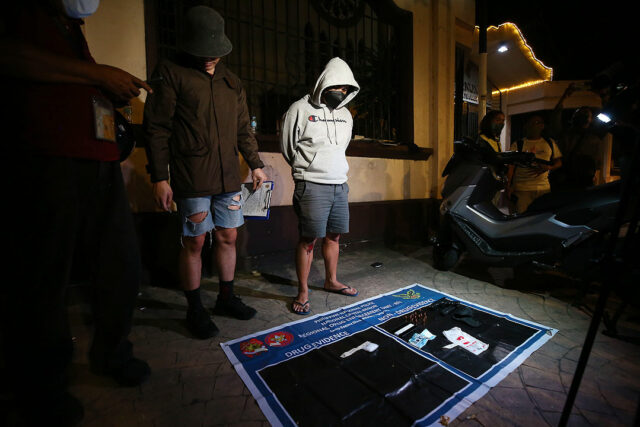
PHILIPPINE STAR/ MIGUEL DE GUZMAN

By John Victor D. Ordoñez, Reporter

THE PHILIPPINES should halt its deadly anti-illegal drug campaign to end police impunity instead of doing away with a weekly quota system for arrests, human rights advocates said at the weekend.

“As long as the war on drugs is an active policy, the police will keep killing because they have enjoyed multiple years of impunity,” iDefend, a human rights group, said in a Twitter message.

“iDefend does not believe the problem lies in the quota system, but in the whole coercive environment of violence created by former President Rodrigo R. Duterte’s war on drugs,” it added.

At a House of Representatives hearing on the Department of Justice (DoJ) budget on Aug. 23, Justice Secretary Jesus Crispin C. Remulla said his agency wants to do away with the quota system, blaming it for low conviction rates, especially in illegal drug cases.

He said he had spoken with national police chief Benjamin C. Acorda, Jr. and his predecessor about removing the quota system for good.

DoJ and police records showed that 80% of criminal cases are dismissed for lack of probable cause, DoJ spokesman Jose Dominic F. Clavano IV said in June.

The Justice Secretary also urged the Commission on Human Rights (CHR) to respect the Marcos government’s decision not to rejoin the International Criminal Court (ICC) and allow state investigation of the deadly war on drugs.

This comes after SAGIP Party-list Rep. Rodante D. Marcoleta cited news reports of CHR saying it would cooperate with the ICC’s probe of the government’s anti-illegal drug campaign.

iDefend welcomed CHR’s commitment to help the ICC, but noted it is still up to the DoJ to prosecute erring officials in relation to the drug campaign.

The ICC on July 18 rejected a Philippine appeal to suspend its probe of Mr. Duterte’s war on drugs, paving the way for its prosecutor to later indict and order the arrest of local officials who aided the campaign.

It reopened its probe of Mr. Duterte’s campaign against illegal drugs in January, saying it was not satisfied with government efforts to probe human rights abuses.

CHR in July said the Marcos government should view the ICC’s decision as an opportunity to show its commitment to punish human rights violators.

iDefend said Congress should prioritize measures that propose a health-based approach to the drug issue in the country and legislation that protects human rights defenders.

Ephraim B. Cortez, president of the National Union of Peoples’ Lawyers, said DoJ’s commitment to improve case build-up should also focus on erring cops.

“The investigation of these kinds of cases should not be left to policemen who may tend to whitewash the investigation,” he said in a Viber message. “Policemen and their superiors involved in operations where someone is killed should be immediately investigated.”

Interior and Local Government Secretary Benjamin C. Abalos, Jr. on Aug. 14 said his agency would consult with the National Police Commission about revising the three-strike policy for erring police officers.

This was after six Navotas policemen shot and killed Jerhode Baltazar on Aug. 2 after he was mistaken for a suspect in a previous shooting incident.

DoJ earlier raised the standards for filing criminal cases, requiring state prosecutors to ensure cases lead to a “reasonable certainty of conviction” to ease jail congestion. The agency also halved the bail amount for poor Filipinos.

Justice Undersecretary Hermogenes T. Andres has said his department was working on improving the capabilities of local law enforcement agencies to gather evidence and investigate crimes to boost convictions.

CHR could provide ICC Prosecutor Karim Ahmad A. Khan with documents related to reports of human rights abuses during the deadly drug war, Mr. Cortez said. “This will compensate for the unwillingness of the Philippine government to cooperate with the ICC.”

Last month, President Ferdinand R. Marcos, Jr. said the Philippines would no longer engage with the ICC after it rejected a plea to suspend its probe of the drug war.

CHR has said Mr. Duterte had encouraged a culture of impunity by hindering independent probes and failing to prosecute erring cops.

The Philippines has accepted 200 recommendations from the United Nations Human Rights Council, including investigating extralegal killings and protecting journalists and activists.

The government estimates that at least 6,117 suspected drug dealers were killed in police operations. Human rights groups say as many as 30,000 suspects died.


Philippines should address low preschool enrollment — Unicef

Kindergarten students engage in art activities during class in Marikina classes, Aug. 25, 2022. — PHILIPPINE STAR/WALTER BOLLOZOS

LOCAL GOVERNMENTS and schools should keep annual data on children aged three to five years and boost ties with their guardians to address low enrollment in early childhood education, according to a United Nations body.

In a statement, the United Nations Children’s Fund (Unicef) said data on how many of these children are enrolled, along with the reasons contributing to their failure to enroll should serve as a basis for “planning and implementing interventions” of schools and local governments.

Low enrollment of children in pre-kindergarten is largely caused by parents’ perception that their children are still too young for school, the UN body said, citing data from the Philippine Institute for Development Studies.

It also cited the unequal distribution of daycare centers between first-class and the lowest-income municipalities.

“Empowering parents and caregivers is also an important factor in learning recovery,” it said.

Among the six countries that participated in the Southeast Asia Primary Learning Metrics 2019 study, Filipino children had the largest gap in test scores between those with the highest-engaging parents and the lowest ones, “denoting that parents’ involvement in academic activities is essential in children’s school performance,” Unicef said.

“Parents and caregivers should be equipped with the right knowledge and skills to be involved in their children’s development and learning, making their academic success more achievable,” it said. It called for activities that nurture parent-child relationships and improve children’s self-esteem and motivation to improve educational outcomes.

Unicef also asked government officials to intensify local actions tied to national education priorities.

It urged the Department of Education to help regional and division offices as well as schools “realign their respective development plans with national directives.”

“Resources and political will to support education should ensure equitable access to education for the most disadvantaged children, including those with disabilities, those living in remote areas, children belonging to indigenous groups and girls,” it added. — Kyle Aristophere T. Atienza

Immigration training, not stricter travel guidelines, to stop trafficking — analyst

By Beatriz Marie D. Cruz, Reporter

ARRESTING incidents of human trafficking in the country requires capacitating Bureau of Immigration (BI) officers to detect fraud more than imposing stricter regulations on travelers, a congressman-turned-convenor of a think tank said on Monday.

“If government is concerned in the rise in human trafficking cases through international borders, the remedy is not to impose more regulations to entire classes of Filipino travelers,” Infrawatch convenor Terry L. Ridon said in a Viber chat with reporters.

Mr. Ridon’s comments come on the heels of the Inter-Agency Council Against Trafficking’s (IACAT) updated guidelines for Filipinos traveling abroad, which were released last week.

Basic travel documents now include a passport that is valid for at least six months from the date of departure, a valid visa, a boarding pass, and a confirmed return or roundtrip ticket.

Self-funded tourists are required to show proof of employment and financial capacity, while travels sponsored by entities abroad should include affidavits of support.

Overseas Filipino Workers (OFWs) should also present their overseas employment certificate (OEC) or any other equivalent documents of the sponsor. Minors will also need travel clearance from the Department of Social Welfare and Development.

Mr. Ridon said the additional documents increase the burden on peoples’ right to travel. “Issued visas [which have already shown to their embassies and consulates,] should constitute presumptive proof of a traveler’s financial capacity to travel and willingness to return to the country,” Mr. Ridon noted.

Instead of making regulations tougher for Filipinos to travel out of the country, he said the government must focus on training immigration officers on how to detect new forms of trafficking, expand their experience through their day-to-day work, and increase the number of personnel assigned at the country’s borders.

Senator Ana Theresia “Risa” N. Hontiveros-Baraquel called to further study whether the additional travel documents are necessary and practical.

“We shouldn’t turn a blind eye to warnings that some of the requirements would only promote delays and are prone to exploitation by corrupt immigration officers,” Ms. Hontiveros-Baraquel said in a statement.

Justice spokesman Jose Dominic F. Clavano IV last week said the guidelines are part of the government’s efforts to “streamline and organize existing [travel] requirements.”

SC faults PAGCOR funding

PHILSTAR FILE PHOTO

THE SUPREME COURT (SC) has upheld a Commission on Audit (CoA) ruling that disallowed financial assistance paid by former high-ranking officials of the Philippine Amusement and Gaming Corp. (PAGCOR) worth P2 million for a flood control project in a subdivision in Laguna. 

In a 24-page decision dated Aug. 18 and made public last Thursday, SC said the disallowance was proper since state funds could not be used for private projects, in this case, the Pleasant Village Homeowners Association’s (PVHA) flood control project. 

Although it was established that PAGCOR is allowed to fund infrastructure and sociocivic projects, it must be public in nature and not as an “incidental advantage to the public or to the state” that results from the promotion of the interests of a private entity. 

“The provision is clear and absolute in requiring government funds to be spent or used solely for public purposes,” Associate Justice Ramon Paul L. Hernando wrote in the ruling, citing the Government Auditing Code. — John Victor D. Ordoñez

Veterans’ disability pension hiked 

PHILSTAR FILE PHOTO

SENATE President Juan Miguel F. Zubiri on Monday said a newly signed law that increases the pension of veterans with disabilities is a long overdue improvement to the previous benefits set 30 years ago. 

Following President Ferdinand R. Marcos, Jr.’s signing of the measure into law last Aug. 24, pension rates have been increased depending on the veteran’s disability rating. 

From the previous P1,000 received by a veteran with the lowest disability rating at 10%-30%, it will now be P4,500. The pay increases on scale up to P10,000 for those whose disability rating is the highest at 91% – 100%. 

Moreover, the new law automatically qualifies a veteran who turns 70 years old to a disability pension of P1,700. — John Victor D. Ordoñez

Luzon-Visayas bridge sought 

A CONGRESSMAN on Monday called on the country’s economic managers to include a proposed bridge connecting Luzon and Visayas under the government’s Mega Bridge Master Plan Project.  

“We are calling on the government’s economic planners to include the Sorsogon-Northern Samar Bridge in the Mega Bridge Program,” Minority Leader Marcelino C. Libanan said in a statement. “The bridge will solve the recurring problem of seaport congestion and thousands of passengers getting stranded during weather disturbances,” he said.  

The Luzon-Visayas crossing bridge, which will connect seaports located in the municipality of Matnog in Sorsogon in Luzon and the municipality of Allen in Northern Samar in Visayas, could help enterprises transport their goods across islands and even save one-and-a-half hours of travel time, said Mr. Libanan.  

A 2019 study commissioned by the National Economic and Development Authority (NEDA) said construction of the bridge will take six years and costing around P284 billion. — Beatriz Marie D. Cruz

Probe on teen’s killing sought 

A MINORITY lawmaker has urged the administration of President Ferdinand R. Marcos, Jr. to look into the recent killings of minors that were allegedly committed by police and called for reforming the country’s police system. 

“We demand a thorough and impartial investigation into this incident,” said Deputy Minority Leader and party-list Rep. France L. Castro in reference to the killing of a 15-year-old boy during an “anti-criminality” inspection in Rizal province last Aug. 20. 

“We are deeply disturbed and saddened by the senseless killing of John Frances Ompad. This is another case of police brutality that highlights the dire situation of human rights in our nation. It is unacceptable,” Ms. Castro added. 

This was preceded by an incident of mistaken identity when Navotas City cops gunned down a 17-year-old boy last Aug. 2. The lawmaker said these tragic incidents underscore the urgent need for police accountability and the demand to put an end to the culture of impunity in the country. — Beatriz Marie D. Cruz

21 Moro clan wars settled 

COTABATO CITY — Central Mindanao has settled 21 blood clan wars in predominantly Moro towns in Region 12, paving the way for an improved investment climate which, for decades, had been stunted by armed conflicts.   

The latest rido or deep-seated hostility that raged for two years and exacted fatalities on both sides was settled last weekend between two rival blocs in the Moro Islamic Liberation Front (MILF) in the adjoining towns of Pikit, Cotabato and Pagalungan, Maguindanao del Sur.
On Monday, Ronald Halid D. Torres, chairman of the Bangsamoro Business Council, noted how mediators from various sectors were involved in settling these conflicts across 63 Bangsamoro barangays in the region known as the Special Geographic Area-Bangsamoro Autonomous Region in Muslim Mindanao (SGA-BARMM). 

Mr. Torres expressed optimism that the development ushers in a favorable business climate, where there exists ease in attracting investors from outside the region to put up capital intensive agricultural projects in so-called SGA areas, which are suitable for large-scale propagation of Cavendish banana, palm oil, and short-term crops such as cassava, soybeans and hybrid corn. 

Dr. Kadil M. Sinolinding, a member of the 80-seat Bangsamoro parliament, said one factor that hastened the resolution of clan wars is the construction in recent months of public markets, barangay halls, municipal government buildings and police stations as part of management and peace-building initiatives. — John Felix M. Unson

Philippine typhoon Goring weakens as it nears Taiwan

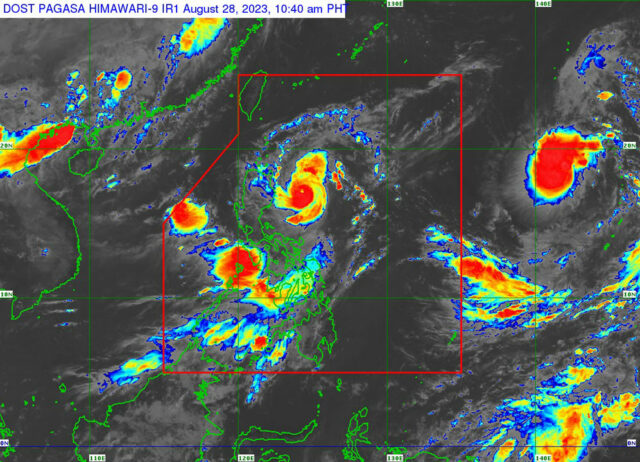
Tropical storm Saola (local name: Goring) headed towards Taiwan on Monday while bringing heavy rain to the northern Philippines, cutting power to some towns and forcing the evacuation of nearly 2,000 people, authorities said.

With Saola forecast to make landfall over southern Taiwan late on Wednesday or early on Thursday, the typhoon’s maximum winds eased to 155 kilometers per hour (96 miles per hour), with gusts of up to 190 kph (118 mph), the weather agency said.

The seventh tropical storm in the Philippines this year, Saola had sustained winds of 185 kph (115 mph) and gusts of up to 230 kph (143 mph) on Sunday evening.

Besides the wind, rain and power cuts, it forced nearly 2,000 people to seek shelter in evacuation centers, the disaster agency said.

“Flooding and rain-induced landslides are still expected, especially in areas that are highly or very highly susceptible to these hazards,” the weather bureau said in an advisory.

The provinces of the northern Philippines are among the country’s biggest producers of rice, corn, and vegetables.

An archipelago of more than 7,600 islands, the Philippines sees an average of 20 tropical storms a year, though few make landfall there. — Reuters

Foxconn billionaire Terry Gou to run for president in Taiwan

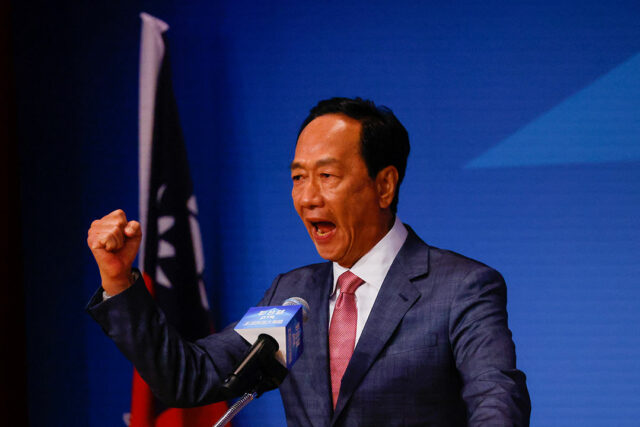
Terry Gou, Foxconn founder announces bid for Taiwan presidency during a press event in Taipei, Taiwan Aug. 28, 2023. — REUTERS/ANN WANG

TAIPEI — Terry Gou, the billionaire founder of major Apple, Inc. supplier Foxconn, said on Monday he was entering the race to be Taiwan’s next president as an independent candidate in 2024 elections.

Mr. Gou stepped down as Foxconn chief in 2019 and made a presidential bid that year, but dropped out after he failed to win the nomination for Taiwan’s main opposition party, the Kuomintang KMT, which traditionally favors close ties with China.

He made a second bid to be the KMT’s candidate for the presidential election to be held in January earlier this year, but the party chose instead Hou Yu-ih, the mayor of New Taipei City.

Gou has spent the past few weeks touring Taiwan and holding campaign-like rallies, fuelling speculation he was planning to run as an independent.

“Under the rule of the Democratic Progressive Party in the past seven years or so, internationally, they lead Taiwan towards the danger of war. Domestically, their policies are filled with mistakes,” Mr. Gou said, adding “the era of entrepreneur’s rule” has begun.

“Give me four years and I promise that I will bring 50 years of peace to the Taiwan Strait and build the deepest foundation for mutual trust across the strait,” he said in a plea to Taiwan voters.

“Taiwan must not become Ukraine and I will not let Taiwan become the next Ukraine.”

Mr. Gou’s main theme in his pre-campaign events has been that the only way to avoid war with China, which claims Taiwan as its own territory, is to get the DPP out of office.

Mr. Gou must gather close to 300,000 voter signatures by November 2 to be qualified as an independent candidate, according to elections regulations. The Central Election Commission will review the signatures and announce the results by November 14.

Taiwan Vice President William Lai, the presidential candidate for the ruling Democratic Progressive Party (DPP), is the favorite to win the election as he leads the polls.

Former Taipei mayor Ko Wen-je of the small Taiwan People’s Party has generally been running second in the polls, with Mr. Hou a distant third.

In a call for “unity,” Mr. Gou on Monday urged Mr. Ko and Mr. Hou to sit down with him and discuss plans to join forces in order to win the election against the DPP.

The KMT expressed “extreme regret” on Mr. Gou’s bid and urged Mr. Gou to support the party’s candidate, Mr. Hou.

China has a particular dislike of Mr. Lai for comments he has previously made about being a “worker” for Taiwan independence, a red line for Beijing.

The DPP champions Taiwan’s separate identity from China, but the government it leads has repeatedly offered talks with China that have been rebuffed.

The run up to the election is taking place at a time of increased tensions between Taipei and Beijing, as China stages regular military exercises near the island to assert its sovereignty claims.

When asked about the issue of conflict of interest with Gou being a major shareholder of Foxconn, which has massive investment in China, Mr. Gou said he’s willing to “sacrifice” his personal assets in China in the event of a Chinese attack.

“I have never been under the control of the People’s Republic of China,” he said. “I don’t follow their instructions.” — Reuters

Jakarta launches its first LRT, hopes to ease traffic

EN.WIKIPEDIA.ORG

JAKARTA — Indonesian President Joko Widodo on Monday launched the first elevated rail line for Greater Jakarta, hailing the $2.13 billion project as a step towards easing the capital’s chronic road congestion and worsening air pollution.

The driverless, 41.2 km (25.6 miles) Light Rail Transit (LRT) system connects central Jakarta and its satellites cities in West Java, Bekasi and Depok.

People in Greater Jakarta commonly use a 418 km (260 mile) Commuter Line which serves around 1.2 million passengers per day.

Jakarta has been ranked among the world’s most polluted cities since May and earlier this month topped the charts compiled by Swiss air quality technology company IQAir.

The president blamed the pollution on excessive road traffic and industries using coal and said nearly 1 million vehicles enter Jakarta each day.

“Jakarta is always on the top 10 of list of cities with the worst traffic jams,” he said. “Traffic jams and pollution always exist in Jakarta.”

The capital, which has a population of more than 10 million, is also served by an existing, 16 km long underground mass rapid transport (MRT) line that connects the southern areas to downtown Jakarta.

Indonesia has started building a new city on Borneo island called Nusantara to replace the congested Jakarta as capital of Southeast Asia’s biggest economy. The project, which has no timeframe for completion, is a key part of the president’s legacy as he prepares to leave office next year. — Reuters

Pope Francis to fly across world to visit Mongolia’s tiny Catholic flock

ANNETT KLINGNER-PIXABAY

VATICAN CITY/ULAANBAATAR — Mongolia’s Catholics — all 1,450 of them – could be squeezed standing into St. Peter’s Basilica dozens of times over and their number is smaller than the congregation of a small parish in some small towns.

So why is Pope Francis, 86 and in need of a wheelchair, traveling 8,278 kilometers to visit them this week?

Essentially, to paraphrase British climber George Mallory’s response in the 1920s as to why he wanted to climb Mt. Everest, because the Catholics are there.

“I can’t even fathom this,” said Arvanai Hashdorj, 19, a university student who attended Mass on Sunday at the Cathedral of Saints Peter and Paul in the Mongolian capital Ulaanbaatar on Sunday. “So I am very grateful”.

Mr. Hashdorj told Reuters he had recently returned from the Catholic Church’s World Youth Day gathering in Lisbon, where young people from countries with millions of Catholics noted in conversations with him that the pope had not yet visited their countries.

Visiting places where Catholics are a minority is part of Francis’ policy of drawing attention to people and problems in what he has called the peripheries of society and of the world.

He still has not visited most of the capitals of Western Europe.

Pope Francis, who will be attending an inter-religious service in Mongolia, said at his weekly noon address on Sunday that he would be visiting “a Church that is small in numbers but vivacious in faith”.

Last year, Francis named Archbishop Giorgio Marengo, an Italian, the first cardinal to be based in Mongolia, where he is the Catholic Church’s administrator.

“The originality of this trip is related to the originality of the country sparsely populated and with such a small Catholic community,” Marengo said last month in Rome.

“This shows how for him (the pope), every single member of the faithful is important,” said Mr. Marengo, who has been a missionary in Mongolia for more than 20 years.

Mongolia has nine parishes, compared to 25,500 in Italy. The smallest one, hundreds of miles from the capital, has only between 30-40 members.

Still, the visit will show how far it has come since locals watched “these funny foreigners praying,” Mr. Marengo said.

‘GREAT RELIGIOUS TRADITION’
Francis said on Sunday that he felt honoured to visit “a noble and wise people” with a “great religious tradition”.

About 60% of Mongolians identify as religious. Among those, 87.1% are Buddhist, 5.4% Muslim, 4.2% Shamanist, 2.2% Christian and 1.1% followers of other religions, according to the US State Department.

There are only two native Mongolian Catholic priests.

“I wanted to show the world that there is a Catholic Church (in Mongolia) and it’s beautiful,” said one of them, Father Peter Sanjaajav, after saying Mass at the Cathedral the pope will visit on Saturday as part of the Aug. 31-Sept 4 trip.

The country of about 3.3 million people is strategically significant for the Roman Catholic Church because of its proximity to China, where the Vatican is trying to improve the situation of Catholics amid sometimes scratchy relations with the communist government.

Mongolia was part of China until 1921 and still has close ties with Beijing. Diplomats say it could be used as an intermediary with China.

It was not clear if any Catholics from China would be allowed to cross the border to see the pope.

China is by far Mongolia’s biggest export market, buying most of its coal, copper and cashmere, and Ulaanbaatar also relies on China’s rail network to deliver its goods to third countries.

Mongolia has seen a revival of Tibetan Buddhism since the collapse of the Soviet-backed Communist government in 1990, and the Dalai Lama is regarded as its main spiritual leader.

However, China has repeatedly put pressure on Mongolia not to allow the 88-year old exiled Tibetan leader to visit, branding him a dangerous separatist. — Reuters