Home Blog Page 4331

ASEAN urged to lower costs by developing RoRo links

MATNOG Port is a jump-off point for cargo and passenger vehicles traveling from Luzon to Visayas and Mindanao, the central and southern parts of the country. — MARINA 

ROLL-ON/ROLL-OFF (RoRo) shipping links need to be developed across the region to lower logistics costs, business groups said.

“One area that I think moving forward that we should look into is RoRo logistics … ASEAN should have a RoRo system,” Philippine Chamber of Commerce and Industry President George T. Barcelon said at a panel discussion at the 21st International CEO Conference. 

“There are already plans … And if this were to (become) reality, the logistics costs within the ASEAN region will be reduced,” he added, noting the existence of a blueprint for links that connect the Philippines, Indonesia, Malaysia, and Thailand.

Mr. Barcelon said during the visit of Indonesian President Joko Widodo six years ago, a RoRo service started plying the Davao City-General Santos City-Bitung (Sulawesi) route. However, he said that the service faced challenges and was not given much support.

“Somehow that was not really focused on (and then the) pandemic came in. So, now that we are opening up and having this ASEAN meeting, I’m really just going back from where we left off,” he said.

He added that the revival of the RoRo network will benefit Mindanao in particular, generating exports for a major Philippine agricultural hub.

“If agriculture is properly developed, then we will have enough produce to export. And exporting to neighboring countries like Malaysia and Thailand… will be cost-effective via RoRo,” he said.

Thailand Management Association Chairman Nithi Patarachoke said with global trade carried mainly by ship, ASEAN needs to better leverage its strategic location astride the Pacific and Indian Oceans.

“Therefore, we need to unlock ASEAN’s free trade potential by developing ports and surrounding areas, enhancing connections with other global ports, developing coastal tourism and most importantly, marine environment preservation,” he said.

Philippine Exporters Confederation, Inc. President Sergio R. Ortiz-Luis, Jr. said that the RoRo service is the most “practical” way to build up regional links.

“We need to revive it because we cannot build bridges everywhere. RoRo is the most practical way for us to do so,” he said.

He added that this will drive Philippine exports by addressing challenges in the supply chain, particularly in the Visayas and Mindanao.

“They have difficulty delivering products, especially agricultural products, and RoRo is the cheapest way for them to do it,” he said. — Justine Irish D. Tabile

Marcos foreign visits did not boost FDI performance — ex-NEDA chief

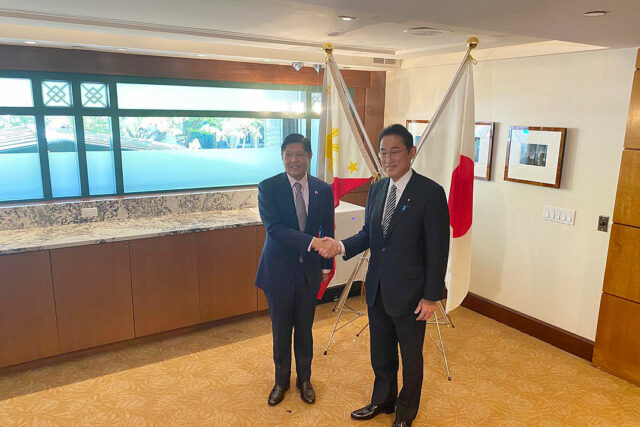
JAPANESE Prime Minister Fumio Kishida (R) met Philippine President Ferdinand R. Marcos, Jr. on Sept. 21. — PHL MEDIA DELEGATION POOL

THE Marcos administration’s foreign travels have not generated sufficient investment, judging by the Philippines’ weak foreign direct investment (FDI) performance this year, a former chief economic planner for the Duterte government said.  

In an interview with One News PH, former National Economic and Development Authority (NEDA) Secretary Ernesto M. Pernia said FDI net inflows remain weaker than they were before the pandemic.  

“It speaks of ineffectiveness. When the President travels and when (his delegation) comes home, they say they got a lot of commitments, but look at our FDI. It’s a little (below) $4 billion (in the first half),” Mr. Pernia said.

The Bangko Sentral ng Pilipinas (BSP) reported on Monday that FDI net inflows declined 3.9% year on year to $484 million in June. This was the lowest net inflow since the $465 million recorded in January.

In the first half, FDI net inflows dropped 20.4% to $3.9 billion.

“Weak FDI inflows this year may have been due to economic uncertainty, especially with still-elevated domestic inflation,” China Banking Corp. Chief Economist Domini S. Velasquez said in a Viber message.

“The slowing global economy also did not help shore up confidence in emerging markets like the Philippines,” she added.

Inflation accelerated to 5.3% in August from 4.7% in July, marking the 17th consecutive month that inflation came in beyond the BSP’s 2-4% target range.

In the first eight months, inflation averaged 6.6%, on pace to exceed the central bank’s revised 5.6% inflation forecast for the year.

Ateneo de Manila economics professor Leonardo A. Lanzona said unemployment remains high, debt levels are becoming a crisis, and robust economic growth in 2022 was “obviously transitory.”

“These were clear signs even then of an economy that was out of sync. Commitments (to invest) were thus made simply to be polite and diplomatic. These were entirely meant to be broken,” Mr. Lanzona said.

He noted that good politics leads to good economic fundamentals.

“The current budget proceedings are indicative of how the system of checks and balances is inoperable in this country.  Certain groups and individuals are given so much power and ‘courtesy’ that funds are being allocated for the wrong purposes and spent inefficiently,” he said.

Last month, the Office of the Vice President’s P2.39-billion budget request for 2024 breezed through the House committee on appropriations after her congressional allies voted to end the hearings as a gesture of “parliamentary courtesy.”

“Poor policies such as the establishment of rice price caps and investment funds are going to be implemented and endorsed even by people who should know better. Dissent in various places is not being heard and (some) in the government are forced to resign,” Mr. Lanzona said.

The government implemented price controls on rice on Sept. 5 to contain inflation.

The ceiling has been set at P41 per kilo for regular milled rice and P45 per kilo for well-milled rice.

Analysts said the price ceiling should only be a temporary measure, citing unintended consequences if the measure is prolonged, like full-blown rice supply crisis.

“If this political structure (continues), it is unlikely (to attract) foreign direct investment,” Mr. Lanzona added.

Ms. Velasquez said the government should ensure that the economy remains sufficiently vibrant to attract FDI.

“This may be challenging in the near term, however, as the lower-than-expected second-quarter gross domestic product (GDP) print released last month will likely stall investor sentiment,” she said.

The economy expanded by 4.3% in the second quarter, the weakest performance in two years. This compares with the 6.4% posted in the first quarter and the year-earlier 7.5%.

In the first half, GDP growth averaged 5.3%, below the government’s 6-7% target.

“I hope free trade agreements such as the recently signed deal with South Korea and the ratification of RCEP (Regional Comprehensive Economic Partnership) will help attract FDI,” Ms. Velasquez said.

“Additionally, we may see more of an impact from liberalization, investment-friendly measures (e.g., green lanes), and overseas investment missions,” she said.

“Improvements in infrastructure as well as measures to reduce the cost of doing business will also help make the country more competitive and attractive as an investment hub,” she added.

The BSP expects FDI net inflows of $9 billion by the end of 2023, rising to $11 billion by the end of 2024.

At the MUFG-Security Bank 2023 Philippine Investment Business Seminar and Business Matching Fair on Tuesday, Trade Undersecretary and BoI Managing Head Ceferino S. Rodolfo said the Philippines will remain attractive to investors due to ongoing reforms.

“As you may know, we were able to realize very high FDIs and recorded $28 billion worth of FDI from 2020 to 2022,” Mr. Rodolfo said.

“For this year, we will continue to attract investment due to the implementation of recently passed game-changing economic policy reforms, among others,” he said.

The reforms include amendments to the Retail Trade Liberalization Act, Foreign Investments Act, Public Services Act, as well as the new Implementing Rules and Regulations of the Renewable Energy Act, Mr. Rodolfo said.

“(These) have opened businesses to 100% foreign ownership, leaving only a few sectors with foreign equity restrictions,” he said.

“Indeed, we are seeing more interest from investors and more projects realized after the passage of these amendments,” he added.

Mr. Rodolfo said the government is still looking to pass bills that promise to further improve the investment climate.

In the pipeline is the proposed Public-Private Partnership Act, the amendment of the Electric Power Industry Reform Act, and the proposed Internet Transactions Act, also known as the E-commerce Bill.

“We are confident that in the coming years, these bills will provide a positive contribution to our attractive business environment, especially as we aim to be in the top three in terms of average flows of inward FDIs in the region during the time of this administration,” he said. — Keisha B. Ta-asan, Justine Irish D. Tabile


Crop production falls 0.9% by volume in second quarter

DA.GOV.PH

CROP OUTPUT in the second quarter fell 0.9% year on year to 17.88 million metric tons (MT), the Philippine Statistics Authority (PSA) said.

In a report, the PSA said leading the decline were corn, sugarcane, rubber, and sweet potato.

Corn production fell 0.8% to 1.47 million MT, while sugarcane output dropped 11.3% to 2.83 million MT. Rubber volumes fell 8.5% to 112.59 thousand MT, and sweet potato output declined 7.5% to 151.65 thousand MT.

Fisheries output declined 11.5% during the quarter to 1.08 million MT, led by skipjack (gulyasan), which recorded a 49.2% decline in output. Milkfish (bangus) production fell 19.1%, while that of seaweed dropped 4.9%, Output of fimbriated sardines (tamban) fell 42.2%, and that of yellowfin tuna declined 23.2%.

Meanwhile, livestock and poultry production rose 0.6% and 1.5%, respectively for the quarter.

Livestock production hit 540.46 thousand MT, led by hogs, which recorded a rise of 1% year on year to 422.72 thousand MT.

Poultry production rose 1.5% to 680.5 thousand MT, led by chicken.

“Chicken output, with a 70.2% share of total volume of poultry production, grew 3.2%,” the PSA added. — Adrian H. Halili

Road operators still considering toll relief for farm goods haulers

PHILIPPINE STAR/ MICHAEL VARCAS

TOLL ROAD operators are still considering a Department of Finance (DoF)  proposal to exempt trucks carrying agricultural products from paying the adjusted tolls, the Toll Regulatory Board (TRB) said.

“We have endorsed the proposal to toll operators and concessionaires and at this time all of them are studying how to possibly implement the exemption,” TRB Spokesperson Julius G. Corpuz told BusinessWorld by phone on Monday. 

The DoF wants to exempt produce trucks from paying the adjusted toll fees as an inflation containment measure. The DoF said trucks would still have to pay the old toll without the recent adjustments.

The government has broadly tried to dampen food price pressures by, among other things, imposing a nationwide price ceiling on rice. The ceiling is set at P41 per kilogram for regular milled rice and P45 per kilo for well-milled rice.

The DoF has also proposed to temporarily reduce tariffs on rice imports to zero.

One of the toll operators’ top concerns is how to identify trucks  carrying agricultural goods, Mr. Corpuz said, adding that the Class 3 category covers trucks carrying all types of goods.

“The other part of it is what kind of agricultural goods are going to be exempted. These are being reviewed by the toll operators and concessionaires,” he added. 

Mr. Corpuz said there is no definite timetable for the toll road operators to review the proposal.

BusinessWorld solicited comment from toll road operators but they had not replied at the deadline.

In August, inflation rate accelerated to 5.3% from 4.7% in July mainly driven by rising pump prices and food costs.

Former Agriculture Undersecretary Fermin D. Adriano said the DoF’s plan to exempt trucks from  the toll hike will help mitigate high food prices.

“I support DoF position…(which will keep logistics costs down). Ultimately consumers pay for those costs through high food prices,” Mr. Adriano said in a Viber message on Tuesday.

Samahang Industriya ng Agrikultura (SINAG) said it supports the DoF plan.

“We have long proposed to have a green lane for vehicles exclusively carrying agriculture products to cut on logistics costs across commodities,” SINAG Executive Director Jayson H. Cainglet said in a Viber message. 

However, Mr. Cainglet said that the government should also go after smugglers and hoarders, who were blamed when the government sought to justify its price controls. — Ashley Erika O. Jose

Bill cutting stock transaction tax to also lower tax on lotteries, horse racing bets

BW FILE PHOTO

THE House Ways and Means committee has included amendments to the proposed Capital Markets Efficiency Promotion Act which will lower taxes on lottery winnings as well as the documentary stamp tax imposed on horse racing bettors.

 The unnumbered substitute bill included a provision to reduce the tax on winnings above P10,000 awarded by the Philippine Charity Sweepstakes Office (PCSO), as well as lotto winnings, to 10% from the current 20%. Winnings below P10,000 will be exempt.

The Documentary Stamp Tax (DST) on PCSO lottery tickets and horse race bets will also be reduced to 10% from the current 20%.

“The reasonable rates of taxes on lottery winnings and on PCSO tickets will help raise funds for the Universal Health Care Program under Republic Act No. 11223 and other priority health programs of the National Government,” Committee Chairman and Albay Rep. Jose Ma. Clemente S. Salceda told the panel.

The committee approved the Capital Markets Efficiency Promotion bill on Sept. 6.

The measure seeks to lower the stock transaction tax to 0.1% from the current 0.6%.

It also aims to reduce the tax on dividends for non-resident investors to 10% from the current 25%. Mr. Salceda said the provision will help enhance the Philippines’ competitiveness with its neighbors.

“We expanded the definition of ‘shares of stock’ to include warrants, options to buy and sell shares of stock excluding employee stock option plans, other types of derivatives, and transactions representing short selling of securities. This amendment serves to address the uncertainty in tax treatment of secondary transfer or sale through a stock exchange,” Mr. Salceda said.

The Securities and Exchange Commission is tasked by the bill to draft rules governing the market for short sales. 

If signed into law, the measure will also eliminate the debt transaction tax, which featured in an earlier version of the bill.

Mr. Salceda has said that the Philippines’ 0.6% stock transaction tax is the highest within Association of Southeast Asian Nations.

“Vietnam and Indonesia only impose 0.1% while other neighboring countries exempt the sale of shares of stock (from tax). This keeps the Philippine bond and equity markets small relative to our regional peers,” he said during last week’s committee meeting.

The Philippine Stock Exchange has 283 listed companies, while other stock exchanges in the region have between 425 and 963, Mr. Salceda said last week. — Beatriz Marie D. Cruz

Debt moratorium for some ARBs extended further

FACEBOOK.COM/DARGOVPH

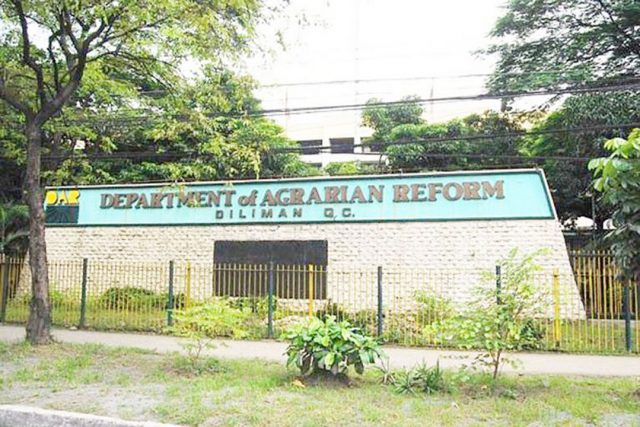
THE moratorium on debt payments by agrarian reform beneficiaries (ARBs) first declared via executive order in September 2022 has been extended by two years, the Department of Agrarian Reform (DAR) said.

The extension of the moratorium to Sept. 13, 2025 was announced to coincide with the presentation at the Palace on Monday of the Implementing Rules and Regulations (IRR) for the New Agrarian Emancipation Act, or Republic Act No. 11953.

The law is expected to benefit an estimated 129,059 ARBs tilling 158,209.94 hectares of land “whose land awards did not reach the cut off period of July 24, 2023,” the DAR said in a statement.

President Ferdinand R. Marcos, Jr., in his original moratorium declaration last year via Executive Order No. 4, had frozen ARB amortization and interest payments for one year.

“As we chart a path towards a more self-sufficient and equitable Philippines, this administration reaffirms its commitment to enrich the lives of our farmers, ensure the rapid industrialization of our farmlands and promote sustainable and inclusive growth in the countryside,” the President said at the presentation of the IRR. RA 11953 had been passed by Congress in July 2022.

Agrarian Reform Secretary Conrado M. Estrella III has said that condoning the debt of ARBs will cost P57.57 billion and provide relief to over 600,000 beneficiaries tilling 1.17 million hectares.

He said the government will also take over the outstanding obligations of more than 10,000 ARBs tiling agrarian reform land surrendered under the voluntary land transfer and direct payment scheme.

“I call upon the beneficiaries to utilize your land not only to cater to your families but also to the rest of the nation,” Mr. Marcos said. — Kyle Aristophere T. Atienza

Budget release rate hits 95.3% at end of August

BW FILE PHOTO

THE Department of Budget and Management (DBM) said it had released P5.02 trillion of the 2023 national budget by the end of August.

The DBM’s Status of Allotment Release report indicated a release rate of 95.3%, behind the year-earlier pace of 96.5%.

This leaves P248.3 billion in undistributed releases from the budget.

At the end of August, the release rate of government agencies and departments stood at 97.1%, equivalent to P3.4 trillion of their allotments.

Special Purpose funds released P351.55 billion or 68.1% of their allocations.

Meanwhile, Automatic Appropriation releases amounted to P1.36 trillion or 84.6%.

These include the P887.52 million for retirement and life insurance premiums of various National Government agencies and P10 billion for the Rice Competitiveness Enhancement Fund. — Luisa Maria Jacinta C. Jocson

Proposed CREATE amendments seek to clear up VAT refund rules

PHILSTAR FILE PHOTO

THE chairman of the House Ways and Means committee is proposing to amend the Corporate Recovery and Tax Incentives for Enterprises (CREATE) law to address conflicting provisions regarding the value-added tax (VAT), among others.

“This reform aims to reconcile the disparities between the CREATE Act and its implementing rules and regulations, primarily on VAT-related transactions,” Albay Rep. Jose Ma. Clemente S. Salceda said in a Ways and Means hearing on Tuesday.

“The Department of Finance’s (DoF) changes to the implementing rules and regulations were okay, but they placed a conditionality with respect to the refund system. We took that as an opportunity to further enhance our incentive system,” he added.

Mr. Salceda said he filed the “CREATE MORE” bill on Aug. 29. On Sept. 8, the DoF submitted its comments on the proposal. The Board of Investments (BoI) likewise submitted initial comments.

Under the draft substitute bill, the corporate income tax (CIT) rate for the enhanced deduction regime will be set to 20%, from 20-25% previously.

“Essentially, now for those after the 10-year transitory period or new entrants after expiry of the income tax holiday, if you choose enhanced deduction, instead of 25% as CIT on taxable income it will just be 20%. It will be lower than the gross income earned (GIE). We are definitely biased towards enhanced deductions because we want performance,” Mr. Salceda said.

The proposal also places the enhanced deduction for power costs at 200% from 150% previously.

“It’s a way of reducing your power costs by financial engineering. If you’re paying P6 or P4 (per kilowatt-hour), then it will be deducted from taxable income at P8,” he added.

It also allows enhanced deductions for expenses related to trade fairs, missions, or exhibitions of 200%, from 100% previously.

Meanwhile, Mr. Salceda also noted that local taxes of registered business enterprises (RBEs) will be collected by investment promotion agencies from those granted income tax holidays (ITH) and enhanced deductions.

“For those under ITH, your host local government units are providing services (for which) of course they will ask for some form of (payment). Right now, it’s between 1-2%. It will be the IPA (that will) collect and distribute (the proceeds). It will be simplified, no need to contact the LGU,” he said.

“Our only problem is those approved by BoI that are not within the Philippine Economic Zone Authority (PEZA) or the Clark Development Corp. zones. (For those cases) we are asking the BoI to merely appoint BIR to collect,” he added.

“For those that are BoI-registered… the LGUs will be allowed to waive their share under the law… Instead of 1-2%, we’re making it 1.5% (to) standardize national and local business tax to reduce any form of negotiation between LGUs and RBEs,” he added.

The proposal also seeks to “harmonize” VAT-related issues.

“We are replacing the ‘directly and exclusively used’ condition (for transactions to qualify for VAT exemption) with ‘directly attributable (to export operations)’, which is I think acceptable to most chambers,” Mr. Salceda said.

It also empowers the President to grant incentives, “thereby allowing the motu proprio grant of incentives packages.”

“The President is allowed by this law to match any package that will be offered by any of our competitors,” he added.

The proposed amendments also allow the Fiscal Incentives Review Board to grant VAT-zero rating and VAT exemptions to domestic market enterprises with investment capital of over P500 million. — Luisa Maria Jacinta C. Jocson

ERC: Revised CSP guidelines expected by end of September

THE Energy Regulatory Commission (ERC) said on Tuesday that the review of draft rules for the competitive selection process (CSP) is ongoing and is due for completion by the end of the month.

“We’re targeting to release the new revised draft within the week, so we can have a [public consultation] again next week; by the end of September, we can finalize the guidelines,” ERC Chairman and Chief Executive Officer Monalisa C. Dimalanta told reporters on the sidelines of Giga Summit 2023.

The draft implementing guidelines governing the procurement, execution, and evaluation of power supply agreements (PSAs) entered into by distribution utilities (DUs) for the supply of electricity to their captive markets was published on Aug. 14.

The ERC notified the Department of Energy (DoE) on Aug. 25 of the necessity to consider the results of various consultations and the need to revise the draft CSP guidelines further.

The ERC seeks to revise the guidelines set by Department Circular No. DC2018-02-0003, which outlines policy on procurement by DUs for their captive markets in both on-grid and off-grid areas.

“We’re going through the draft again on the points that (were raised in consultations) …so we’re revisiting that,” she said.

In CSP, a competitive bid is conducted to obtain a supply of electricity, with winning bids evaluated by a standard set of criteria.

In 2019, the Supreme Court affirmed its decision requiring all PSAs submitted by DUs to the ERC beginning June 30, 2015 to undergo CSP, rendering prior agreements ineffective as a basis for determining rates. — Sheldeen Joy Talavera

Rice tariff removal seen benefiting broader segment of PHL society

BW FILE PHOTO

THE Philippine Chamber of Commerce and Industry (PCCI) said that the removal of tariffs on rice imports will help the broader population deal with rising prices, though it warned that prolonging the free entry of rice imports will ultimately harm farmers.

“The world price of rice is going up. So, to help our general population who are having a hard time because other food prices are (also rising), we hope that the import duties can be removed,” PCCI President George T. Barcelon told reporters on the sidelines of the 21st International CEO Conference.

However, Mr. Barcelon said that the government should weigh how long the import duties should be removed.

“We don’t want it (to run) too long because this will impact our farmers as the price of palay will be cheaper,” he said.

Reports have emerged of traders offering farmers less for their palay (unmilled rice) because of the expected availability of fresh shipments of cheap rice imports, which domestic rice will need to compete with.

“There has to be a balancing act. But in the meantime, since we›re short of rice, when we import, I hope it doesn’t have taxes for now so that we can lower the cost of rice,” he added.

The Department of Finance proposed last week to temporarily reduce the 35% rice import tariff to 0% or a maximum of 10%.

Mr. Barcelon also said the price controls on rice will be temporary.

“From what I heard from Finance Secretary Benjamin E. Diokno, (the caps) will not last very long… According to some projections, our harvest in the next few months will be good, (which will) mean more supply,” he said.

He added, however, that consumers must not aggravate the situation by buying more than they need.

“We have enough rice (for) many months … The public should just buy enough for their needs. They should not be part of the problem,” he said.

In a statement issued on Tuesday, the Department of Trade and Industry (DTI) said it was able to sell a total of 1,371 sacks of well-milled rice through its Rice on Wheels for Retailers program.

“The program started on Sept. 8 and is set to run as long as demand is present in the market,” the DTI said.

“The rice millers and retailers who are working with us initially committed 30,000 sacks, which will be sold in the coming weeks, as previously mentioned, (while) demand is present,” it added.

The program, which is carried out in collaboration with Bulacan rice millers and traders, is part of the DTI’s efforts to implement Executive Order (EO) No. 39, which set price ceilings for regular-milled and well-milled rice at P41 and P45, respectively, starting Sept. 5.

“For now, the program serves as a mitigating measure for those affected by the implementation of EO 39. We will adjust the timeline of the program depending on the result of our monitoring in the coming weeks,” the DTI said. — Justine Irish D. Tabile

NFA loss of import function gave private traders too much control over rice supply — AgriNurture

THE removal of the National Food Authority’s (NFA) rice import function effectively handed control over the rice supply to private traders, AgriNurture, Inc. (ANI) President and Chief Executive Officer Antonio L. Tiu said in an interview with ANC.

“The private sector will only step when there is profit to be made… I do not agree (with the removal of) the NFA’s power to import rice,” he said.

The Rice Tariffication Law of 2019 (Republic Act No. 11203) privatized the function of importing rice formerly carried out by the NFA. Instead, private traders were allowed to bring in their own shipments but had to pay a tariff of 35% on Southeast Asian grain.

The law was intended to relieve the government of having to pay for rice imports. The tariff also generated revenue for the government and helped finance the Rice Competitiveness Enhancement Fund, which is tasked with modernizing the rice industry.

Mr. Tiu said parts of the law “are not advantageous to the country as a whole” and need to be reviewed.

“For example, you are not supposed to restrict the NFA from importing rice because the NFA is supposed to be the agency in charge of the food security, particularly the rice buffer stock,” Mr. Tiu added, referring to the NFA’s role of maintaining a reserve for release during calamities and shortages.

The NFA is now restricted to buying domestic rice to meet its buffer stock quota.

Mr. Tiu said limiting the NFA to buying domestic rice causes “seasonal problems in rice availability every year.”

“This seasonality problem can only be addressed by importing for the short term for the foreseeable future, because attaining rice self-sufficiency may take years if not decades to achieve,” he added.

The Philippines imported 2.19 million metric tons of rice in the eight months to August, down 42.8% year on year as international rice prices rose after major producers like India announced restrictions on exports.

“This rice problem is more on the macro side; we have neighbors suffering from a shortfall in terms of harvest as well. We have neighbors aggressively buying for their buffer stock program, and we have neighbors preparing for war,” he said.

“So, we have to look at long-term solutions (beyond) the price controls on rice,” he added.

Last week, the government issued Executive Order No. 39, which temporarily imposed price caps on rice at P45 per kilo for well-milled rice and P41 for regular-milled. — Adrian H. Halili

Senate vows to fund South China Sea defenses

PHOTO FROM ARMED FORCES OF THE PHILIPPINES

By John Victor D. Ordoñez and Kyle Aristophere T. Atienza, Reporters

THE PHILIPPINE Senate expressed support for the country’s defense agencies, along with the Philippine Coast Guard (PCG), vowing to increase their budgets to sufficiently upgrade maritime security capability amid tensions with China in the South China Sea .

“The Senate is one and united in assisting your budgets and increasing your funds for proper equipment for the West Philippine Sea situation,” Senate President Juan Miguel F. Zubiri said at Tuesday’s joint committee hearing on matters of the South China Sea.

Mr. Zubiri gave the Senate’s commitment to back funding requirements for the PCG and the Armed Forces of the Philippines (AFP) “whether it be confidential, intelligence funds or funding that will give you proper equipment for your needs in the West Philippine Sea.”

He noted that senators had already planned to transfer the confidential funds of government agencies that do not need them to the National Security Agency and other intelligence-gathering bodies of the state.

Senator Francis T. Tolentino said a newly formed Senate Maritime and Admiralty Zones Committee on Sept. 14 would tackle proposals establishing Philippine maritime zones, archipelagic sea leans, and boosting the country’s archipelagic defense.

Meanwhile, Jay L. Batongbacal, director of the University of the Philippines Institute for Maritime Affairs and Law of the Sea, told the same hearing that a United States aircraft did not violate international law when it was deployed to monitor a Philippine resupply mission last week.

JOINT FILIPINO-US TROOPS MUST BE STATIONED IN SCS — ANALYST
An international security analyst is urging the Philippine government to replace the BRP Sierra Madre — the rusty World War II-era ship grounded at Second Thomas Shoal (Ayungin Shoal) to serve as a military outpost in the South China Sea (SCS) — with a permanent structure that will be manned by Filipino and American troops.

Blake Herzinger, a research fellow in the Foreign Policy and Defense Program at the United States Studies Center, noted that China might exploit the deteriorating condition of BRP Sierra Madre, which was intentionally run aground in the shoal in 1999.

“The United States and the Philippines should act before being forced to react to deteriorating conditions aboard the ship,” he said in analysis published by Texas National Security Review, noting that failure to do so would create conditions “for loss of Philippine sovereignty, a reenactment of China’s seizure of the Philippines’ Scarborough Shoal in 2012.”

A possible conflict in the shoal in the future could also create a crisis within the bilateral US-Philippine alliance, he added.

“The Philippines should remove the Sierra Madre and replace it with a permanent structure manned by combined rotational forces from both the Philippines and the US Marine Corps,” Mr. Herzinger said, noting that a combined outpost could deter Beijing’s efforts to block resupply missions in the West Philippine Sea.

He said that while a more muscular approach could lead to increased tension “given the Chinese military’s considerable force presence in the area,” “the coercive tactics long employed against littoral states in the region would be less effective against the US Navy, which could dispel the image of Chinese forces enjoying unchallenged dominance in the region.”

Mr. Herzinger said the best structure to replace the World War II-era vessel would be “a repurposed oil platform, oil rig, or accommodation platform.”

“Development of a combined facility would require a ready-made structure able to quickly replace the Sierra Madre immediately following its removal,” he said.

“Or, alternatively, the new facility could be emplaced as an upgraded living structure for the marines living aboard it, with the Sierra Madre to be disassembled after the new outpost is installed,” he added.

Meanwhile, the security expert said Beijing will likely physically challenge the emplacement of a platform with elements from its navy, coast guard, or maritime militia.

But a significant show of US naval and air power during the emplacement of the facility “would force Beijing to shoulder risk and be a step toward reversing years of unimpeded aggression,” Mr. Herzinger said.