Home Blog Page 428

Globe plans $1-B capex for 2026

GLOBE.COM.PH

GLOBE TELECOM, INC. is likely to set a capital expenditure (capex) budget of about $1 billion (around P59.39 billion) this year as it ramps up network expansion, its president said.

“Most of it will really go to data services. More or less the same level at $1 billion in cash capex,” Globe President and Chief Executive Officer Carl Raymond R. Cruz told reporters on the sidelines of an event on Friday.

Most of the company’s capex will be allocated to network expansion, including data services and its fiber network, he said, adding that Globe is working to strengthen its fiber infrastructure.

“Fiber network is important. It accounts for the data traffic, especially with artificial intelligence (AI), data traffic will really increase by probably tenfold,” Mr. Cruz said.

For 2025, Globe set a capex guidance of below $1 billion, which was allocated to essential network upgrades. As of September 2025, the company said it had invested about P31.4 billion in capital expenditures.

On Friday, Globe partnered with Elon Musk’s Starlink to bring direct-to-cell satellite services to the Philippines, making the country the first in Southeast Asia to offer the technology.

Starlink’s direct-to-cell technology allows mobile devices to connect directly to low-earth orbit (LEO) satellites, providing text, voice, and data connectivity, particularly in remote areas with limited coverage.

The initiative forms part of the Ayala-led telecommunications company’s efforts to ramp up investments in technologies aimed at helping bridge the country’s digital and connectivity gap.

Globe targets the commercial rollout of the service by end-March, the company said.

In the third quarter of 2025, Globe’s attributable net income declined by 12.79% to P5.25 billion from P6.02 billion, while revenues fell by 1.68% to P44.36 billion from P45.12 billion.

For the nine months ended September, net income dropped by 14.04% to P17.69 billion from P20.58 billion, while gross revenues slipped to P131.59 billion from P134.74 billion.

Mr. Cruz said the company continues to see growth opportunities in data centers amid rising demand.

Globe remains on the lookout for potential data center expansion, he said, noting that its data center in Fairview is on track for full completion this year.

“Yes, in fact, we already have a tenant. We have not officially opened it but it is already operational,” he said. — Ashley Erika O. Jose

Focusing on Filipino design excellence

Marcos-era design center resurrected under Marcos Jr.

THE SIGNATURE trade shows of the Center for International Trade Expositions and Missions (CITEM) include Manila FAME, which is centered on home, fashion, and lifestyle goods, and IFEX Philippines, which focuses on food and ingredients. Both a flaw and feature of these shows are their limited weekend runs, creating excitement, scarcity, and three-day selling dates. But when the show is over, the magic is all gone. Now an old-new facility in Pasay City, finished just in time for the 2026 ASEAN Summit, might just change all that.

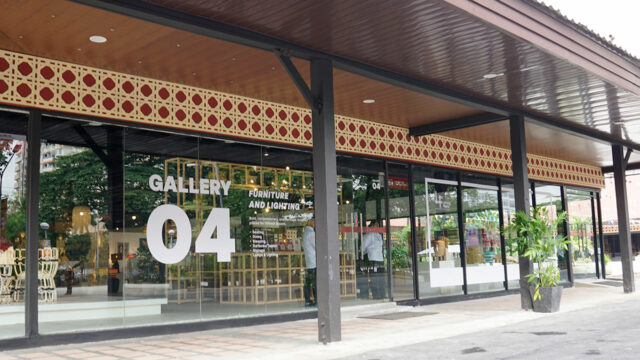
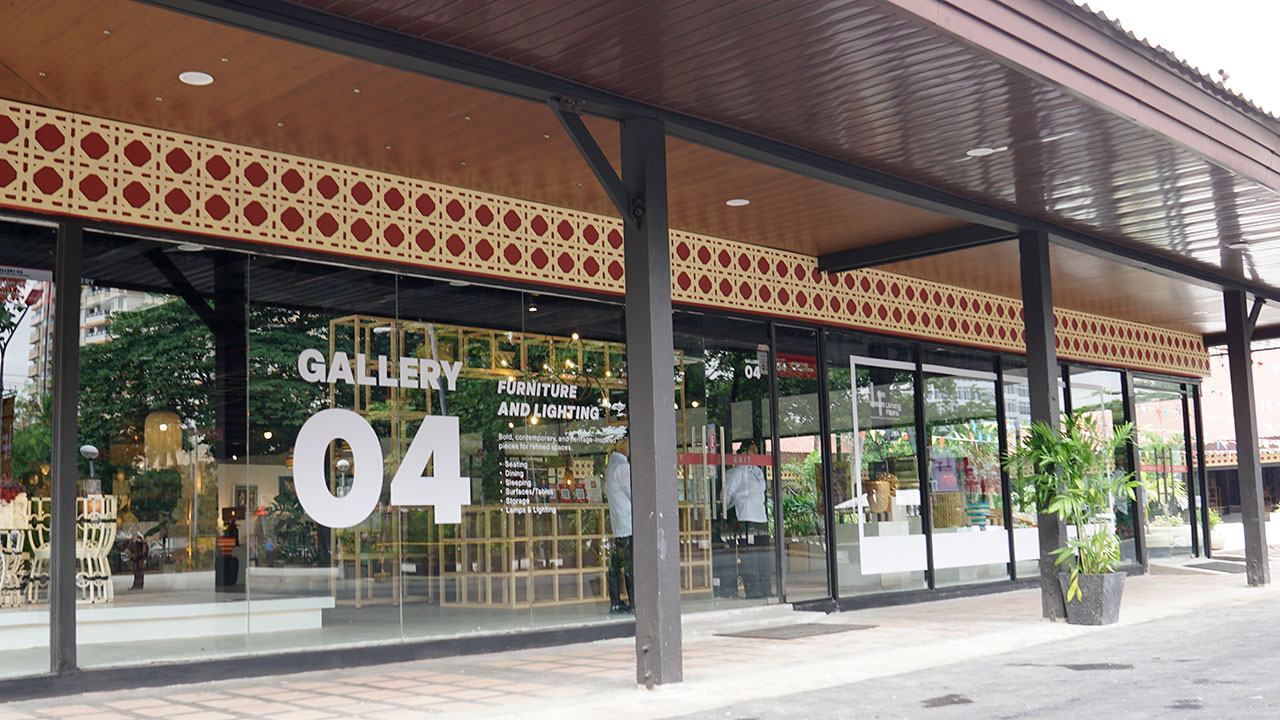
Originally opened in 1983 as the PhilTrade Center, the new Likhang Filipino Exhibition Halls displays some of the best that Philippine artisans can offer in a variety of sectors — home and lifestyle, fashion and accessories, traditional arts and crafts, food and beverages, and wellness.

The exhibition halls opened on Jan. 15 with much fanfare, attended by President Ferdinand R. Marcos, Jr., his wife, first lady Marie Louise “Liza” Araneta-Marcos, and his mother, former first lady Imelda R. Marcos, amid a crowd of diplomats and other dignitaries. The senior Mrs. Marcos, now in a wheelchair, spearheaded the first PhilTrade Center in 1979, also meant to exhibit the same categories of artisanal goods during her husband Ferdinand E. Marcos, Sr.’s dictatorship, which ended in 1986 with the EDSA Revolution.

Department of Trade and Industry (DTI) Assistant Secretary Al Modesto Valenciano recalled in a press conference prior to the opening that after the Marcos Sr. era, the PhilTrade Center had been used by antique shops, and most recently — prior to the younger Mr. Marcos’ Executive Order No. 75 — had been occupied by restaurants catering to Philippine offshore gambling operators (POGOs).

Executive Order No. 75, “Strengthening the Center for International Trade Expositions and Missions,” says, “For this purpose, within six months from the effectivity of this Order, the CITEM, in coordination with the Department of Budget and Management (DBM) and such other relevant agencies, shall come up with a roadmap that will detail the strategic plans and programs to further strengthen the mandates of CITEM, including among others, the establishment of an exhibition facility and/or permanent showrooms and outlets designed to host trade shows, exhibitions, conferences, and other similar events, subject to existing laws, rules and regulations.” The new facility is part of the fulfillment of this order.

“Three days might not be enough for both the buyers and the exhibitors,” said CITEM Executive Director Leah Pulido Ocampo about the trade shows they currently conduct and their limited scope.

According to her, all of the exhibitors at the refurbished area (numbering about 200, spread out over several galleries with different categories), are from CITEM shows like FAME and IFEX. “It’s an extension of the three-day events. So now, we have a 365-a-year, seven days a week, 10 hours a day exhibition center,” she said.

“The reason why the First Lady Liza Marcos was very urgent in giving us a short period of time [to set up the center]… because this is basically one of the major destinations of the ASEAN delegates for the ASEAN summit,” she said. Mr. Valenciano said that the project began in July 2025 and was finished in December (in contrast, the senior Mrs. Marcos finished the site in the 1970s in 12 days, according to a press release).

Brands represented in the facility include: Calfurn, Contemporaneo, Filipino Creazione, Finali Furniture, JB Woodcraft, and Prizmic & Brill for furniture; Albertina Import and Export, Inc., Allanae Printshop & Paper Products Corp. (APPP.Co), Creativly Studio for gifts and holiday decor; and Carl Jan Cruz, Arnel Papa, Bitagcol, and Jor-el Espina for fashion.

The CITEM trade shows sometimes feature limited supplies due to the nature of their usually artisanal make, but since a year-round supply of goods is needed for the exhibition halls, Ms. Pulido Ocampo noted that “Supply is actually relative as far as CITEM is concerned. What we’re trying to do is to teach our exhibitors to look for their specific niche. You do not entertain buyers if you know that you cannot supply.”

The goods are also available to buyers on a retail basis.

Meanwhile, the Design Center of the Philippines, along with its library and product development facilities, will be moving to the exhibition halls. “[The] Design Center will be moving our offices here; our full operations would come [in] March,” said Rhea Matute, executive director of the Design Center. “The idea is really it’s a one-stop complex for the creative industries.”

Mr. Marcos said in a speech: “This space was conceived and inaugurated in 1979 — Mommy, talaga you are always ahead of your time — under your stewardship, the First Lady Imelda Romualdez Marcos. It was founded on a simple belief: that Filipino design and craftsmanship deserved a place on the world stage. So today, we proudly carry that vision of yours, Mom, we carry it forward to the year 2026.

“There is nothing but immense pride that comes from recognizing our own, from seeing materials shaped by Filipino hands, ideas rooted in Filipino culture, and designs that feel both familiar and exceptional,” he said.

The Likhang Filipino Exhibition Halls is located at the International Trade Center Complex (formerly PhilTrade), Roxas Blvd., Pasay City. It will be open for free to the public starting on Jan. 20. Likhang Filipino’s hours are from Tuesday to Sunday, 10 a.m. to 7 p.m. For details, visit its official website https://likhangfilipino.com.ph. For questions, e-mail info@citem.com.ph. — Joseph L. Garcia


Bank assets grow to P28.7 trillion as of Nov.

DRAZEN ZIGIC-FREEPIK

THE PHILIPPINE banking industry’s total assets rose by 7.44% year on year at end-November, mainly driven by an increase in loans, preliminary data from the Bangko Sentral ng Pilipinas (BSP) showed.

Banks’ combined assets increased to P28.722 trillion as of November 2025 from P26.734 trillion in the same period in 2024.

Month on month, total assets went up by 1.52% from P28.292 trillion as of October.

Banks’ assets are mainly supported by loans, deposits, and investments. These include cash and due from banks as well as interbank loans receivable (IBL) and reverse repurchase (RRP), net of allowances for credit losses.

BSP data showed that universal and commercial banks accounted for the bulk of the industry’s assets with P26.82 trillion as of November.

Thrift banks followed with P1.337 trillion, while digital banks held P158.978 billion in assets.

Meanwhile, rural and cooperative banks had P406.214 billion in assets as of end-September, based on the latest available BSP data.

The banking sector’s total net loan portfolio inclusive of IBL and RRP stood at P15.894 trillion at end-November, growing by 11.66% year on year from P14.234 trillion previously. Month on month, this inched up by 1.91% from P15.596 trillion as of October.

Net investments, or financial assets and equity investments in subsidiaries, climbed by 6.53% to P8.39 trillion during the period from P7.876 trillion a year prior and by 1.54% from P8.263 trillion at end-October.

Net real and other properties acquired likewise jumped by 20.44% year on year to P136.991 billion from P113.746 billion. It also edged up by 0.64% from P136.113 billion the previous month.

Meanwhile, Philippine banks’ other assets rose by 15.91% to P2.248 trillion at end-November from P1.939 trillion a year earlier. Month on month, it slipped by 0.54% from P2.26 trillion.

On the other hand, cash and due from banks dropped by 20.13% to P2.054 trillion from P2.571 trillion in the comparable year-ago period, but climbed by 0.8% from P2.038 trillion at end-October 2025.

Meanwhile, Philippine banks’ total liabilities amounted to P25.07 trillion at end-November 2025, up by 7.14% from P23.399 trillion a year prior and by 1.63% from the P24.668 trillion seen at end-October.

The majority of banks’ liabilities were deposits, which went up by 7.32% year on year to P21.239 trillion from P19.79 trillion.

Broken down, peso-denominated deposits stood at P17.561 trillion, while foreign currency deposits were at P3.678 trillion. — Katherine K. Chan

PAL expects five Airbus A350-1000 deliveries this year

PHILIPPINE AIRLINES unveiled its first Airbus A350-1000 on Jan. 17. — ASHLEY ERIKA O. JOSE

PHILIPPINE AIRLINES (PAL) received its first Airbus A350-1000 aircraft on Saturday and expects to take delivery of five of its nine remaining orders this year.

“With our first Airbus A350-1000, this aircraft represents the very best of modern aviation technology, and will serve as an anchor of our long-haul operations,” PAL Holdings, Inc. President and Chief Operating Officer Lucio C. Tan III said during a media unveiling of the aircraft on Jan. 17.

“Over the past year, we invested in a more modern and efficient fleet. We have also strengthened financial discipline and redesigned our operating model,” he also said.

PAL plans to deploy the aircraft — the first of its kind in Southeast Asia — on flights to North America and other international destinations.

The Airbus A350-1000 is a modern long-haul widebody aircraft designed to carry a large number of passengers on long-distance flights.

PAL’s newest aircraft offers business, premium, and economy class cabins.

Mr. Tan noted that the A350-1000 will diversify and strengthen PAL’s fleet while supporting the airline’s sustainability agenda, as the aircraft is designed to be fuel-efficient.

The national carrier has also outlined a refurbishment plan for its older aircraft as part of its fleet modernization and growth strategy.

PAL is refurbishing 18 Airbus A321ceo aircraft, which will operate across Asia by 2027. Routes include Tokyo (Haneda and Narita), Osaka, Jakarta, Bali, and Guam starting this year, and other key Asian destinations by 2026-2027.

PAL plans to roll out three refurbished aircraft this year, nine in 2026, and six in 2027.

PAL Holdings reported an attributable net income of P9.03 billion for the January-to-September period in 2025, up 33.58% from P6.76 billion a year earlier, supported by higher passenger revenues of P116.56 billion, from P115.66 billion. — Ashley Erika O. Jose

The effort to stop AI nudes is missing a deterrent

STOCK PHOTO | Image by Kjpargeter from Freepik

By Sarah Grundle

WHEN REPORTS spread that users on X were asking the platform’s AI chatbot, Grok, to turn photos of celebrities and non-public figures — including minors — into sexualized images, public outrage rightly focused on the violation inflicted on the victims. The majority of this content targets women, and it causes reputational damage and psychological distress.

But there’s another kind of damage that is being overlooked in the discourse: what this technology does to the people who create these images. This isn’t an attempt to summon sympathy for bad actors. It’s worthy of attention because naming the self-inflicted costs could act as a much-needed deterrent.

Over the years, concerns about pornography’s ubiquity have been about how easy access and exposure may be negatively influencing sexual behavior and even eroding relationship bonds. What we’re seeing with Grok and other tools should heighten those worries.

For all its raw immediacy, traditional pornography is still at arm’s length — a sexual fantasy typically acted out by consenting adults who are strangers to the spectator. But AI-generated pornographic deepfakes can drastically narrow that distance. Suddenly the viewer is the producer, and the images can turn a coworker, a barista, or a date into an explicit simulation, blurring the line between fantasy and a real sexual partner.

In the process, what we’ve been taught should be a respectful, reciprocal pursuit is replaced with a private shortcut that requires no consent.

Throughout history (or at least since women stopped being chattel), the fact that humans are biologically wired to want sex has helped drive the onerous emotional work of connecting to other people. That includes learning to communicate, tolerating the uncertainty and fear that comes with vulnerability, and negotiating needs with another person. These are skills that require effort and mastery, but the prospect of a sexual and romantic connection has often been a powerful motivator.

When someone can generate an AI image of the person they want, looking exactly how they want them to look, and doing exactly what they want them to do without their consent, it encourages the technology’s user to bypass those building blocks. They’ve essentially gotten the “reward,” while skipping the work that’s essential for forming lasting relationships offline, training themselves, click by click, to prefer the controllable to the real.

As a psychologist who specializes in romantic relationships, I’ve seen enough to know that this can quickly become a cycle that’s hard to notice until it’s entrenched. A pattern that I’m noticing more of in my practice are patients, mostly men, who come in dissatisfied with their dating lives, but they don’t always recognize the porn they are consuming as the culprit. These men can perform sexually but struggle with emotional connection. They want partnership, but the negotiation and compromise of opening up in early dating feels exhausting. So, they start using interactive porn like webcam sites and live-streamed content and, without really noticing it, their use increases insidiously.

They’re not consciously choosing to avoid dating; in fact, they say they want a relationship. Over time, though, this more interactive porn becomes a central feature of their lives. Sometimes they come in worried about that habit. But more often, I’m the one who has to point out that their porn use has eroded both their ability to connect and their desire to try.

What I’m seeing isn’t anecdotal. Research suggests that when people move from watching porn alone to using interactive content, they are more likely to struggle with intimacy and relationships. What’s driving the challenge — users getting a feeling of connection without having to risk anything — is instructive. Combined with what’s been found so far about AI’s effects on romantic relationships, it helps explain the healthy societal norms pornographic deepfakes can disrupt.

Every real relationship skill gets built through productive conflict — disappointment, compromise, and communication — not through effortless, frictionless fantasy. If a person never has to subject themselves to someone saying no, stumble through explaining what they want, or suffer the indignity or embarrassment of things going wrong, they’re not developing the capabilities of sustaining a real relationship.

We’re quick to tell people that nonconsensual image generation is wrong because it violates the person depicted. That part of the message is essential. But it’s only half the story. We also need to constantly tell users that they will become less able to find satisfaction with real partners and ultimately lonelier.

As AI rapidly changes and more impressionable young people get access to it, getting that fuller warning out may stop someone before they ever rationalize trying something this harmful.

BLOOMBERG OPINION

Nina Penlington on why suits aren’t dead

INDEPENDENT tailor Nina Penlington poses for a portrait in London, Nov. 27, 2025. — REUTERS/ISABEL INFANTES

WHEN Nina Penlington pivoted from her career in the British civil service to making suits as an apprentice to top tailors, she subsequently stitched herself into the fabric of London’s prestigious Savile Row, the historic street internationally regarded as the golden mile of tailoring, where bespoke menswear has been crafted for icons from Charles Dickens to Winston Churchill and Elton John since the 19th century.

Since leaving London in 2024, she’s launched her bespoke, eponymous tailoring brand. From her attic workshop in Budleigh Salterton, a town in southwest England, Penlington — who is gearing up for her second UK trunk show this February — spoke to Reuters about her time on Savile Row, what the future holds for suits, and why you shouldn’t dress for anyone’s gaze but your own.

This conversation has been edited for length and clarity.

Q: What first attracted you to tailoring?

A: I had a bit of a funny, kind of slow, strange route in. I grew up in North Wales in a seaside town, a bit bigger and less salubrious than (Budleigh Salterton). My mum taught me to sew when I was three years old. I had a little hand crank sewing machine and we used to sew together.

I was a civil servant out of university for five years or (so). I worked for a minister at the House of Lords, which is a bit bonkers. I really felt like I was in the wrong place. I was just so miserable. So I quit my job and I went back to the London College of Fashion, which used to offer a one-year hand tailoring course. It really showed you all of the bits and pieces and allowed the students to figure out whether they had an aptitude. It was a really great opportunity to get my hands back into sewing, but I realized it wasn’t really the sewing that was drawing me in. It was the pattern cutting and that side of it, really.

I graduated from that course and then just happened to get an apprenticeship at Dege & Skinner on Savile Row, which was astounding really because they’re so rare.

Q: You’ve worked for many of Savile Row’s top tailors. Who has had the biggest impact on your style?

A: I had six months in New York where I studied a bit at Parsons (School of Design) and while I was there, I heard of this job on the grapevine back in Savile Row to be a cutter in Davide Taub’s team at Gieves & Hawkes. For me, Davide is the best living cutter in the world. In terms of my outlook on my work, he’s my biggest inspiration for sure.

Q: How has it been to launch your own brand?

A: I feel like I’ve built relationships with people over the last few years that have made them really want to support me, but also customers who have found me or re-found me who were determined to help me through the really tricky stages of setting up a business.

I still don’t have branded hangers or covers for any of that stuff. One of my customers was laughing, he was like, “Well, I’m glad you were thoughtful and frugal enough to not go all in on that stuff now because you could ruin yourself by trying to be too glossy.”

Q: What did it take to develop your Beatles-inspired “Get Back” and rock ‘n’ roll Western suit styles?

A: So, let’s start with the “Get Back” suit. For me, it’s literally a ’60s West End tailored suit; it’s such a classic of its time. I had a customer who wanted me to make that suit around when the Peter Jackson (The Beatles: Get Back) documentary came out. Paul McCartney wears it with a really rummy (collarless) Granddad shirt half the time.

There’s nothing particularly special about it — it’s just a beautifully cut suit in a really classic color that McCartney wears super well. And for me, it’s a really easy shorthand to say to customers: If you want a classic suit from me, that’s what that is. It’s a way of communicating an idea of a really classic suit that can be worn in a beaten-up way.

With the Western Suit, I have a large wardrobe of Western shirts that I’ve been collecting over the years from a great lady who works out of Salt Lake City. The suit was just this idea in the back of my mind for a really long time. I couldn’t quite figure out what cloth to use. It was only when I found this overcoating twill. A really hefty 15 ounces (that’s) rugged and refined; as soon as I landed on that, it all came together.

Q: How do you think dressing for the female gaze versus the male gaze applies to suits and tailoring?

A: I’ve been re-learning this stuff in the last year since I started my own label because for a very long time I just personally felt that neither of those things should matter. You dress for you and tailoring is a great level playing field for that.

The male and female gaze is kind of important in terms of sales; I’ve got to figure out who’s looking at that and who wants to buy it. But for me as a person, I don’t buy into it. When I want to wear a suit, it’s because I really want to feel great and powerful. If I want to feel a bit more feminine, then I have a different part of my wardrobe for that and you can mix those two together.

If someone’s coming to me for the first time and they’re a bit unsure of what they want, I’ll ask them to go back and look at their wardrobe and see what they’ve already got and see what they can wear this suit with already, so you’re not having to buy new things just to wear this one suit.

Q: What does the future hold for tailoring and Savile Row?

A: Every five years or so, the same article appears in the same place — it’s basically a rewrite of “Savile Row’s dead, suits are dead” and it was happening long before the pandemic and working from home.

I think Savile Row and tailors across the world have done really well. We’re moving a lot quicker with fashion and garment making than we have. I always thought that we were quite glacial about how trends move in Savile Row, but now people are making overshirts and all of the things that you can wear in a bit more (of a) casual way. It’s not fashion — we’ve never been fashion — but we’re promoting the craft and sustainability.

People who enjoy wearing good quality garments are going to end up in tailoring at some point because the stuff you’re seeing in high-end luxury goods (and) department stores is nowhere near as well made as our stuff. I think people are starting to realize that going to some brand name and dropping three grand on a suit isn’t worth (it); it’s not the same as coming to someone and spending a little more than that on a bespoke garment that’s yours. — Reuters

The perspectives expressed in Culture Current are the subject’s own and do not necessarily reflect the views of Reuters News.

Debt yields climb on supply pressure

YIELDS on government securities (GS) ended mostly higher last week as investors took positions in anticipation of supply pressure from upcoming bond issuances.

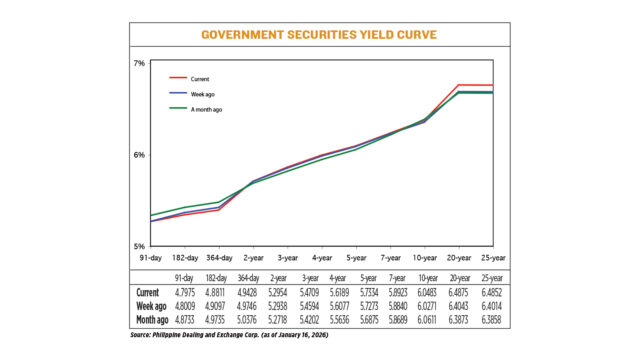
GS yields, which move opposite to prices, went up by an average of 1.48 basis points (bps) week on week, based on the PHP Bloomberg Valuation Service (BVAL) Reference Rates as of Jan. 16 published on the Philippine Dealing System’s website.

At the short end of the curve, rates went down across the board. The 91-, 182- and 364-day Treasury bills (T-bill) dropped by 0.34 bp (to 4.7975%), 2.86 bps (4.8811%), and 3.18 bps (4.9428%), respectively.

Meanwhile, all yields at the belly and the long end ended higher week on week. Rates of the two-, three-, four-, five-, and seven-year Treasury bonds (T-bonds) rose by 0.16 bp (to 5.2954%), 1.15 bps (5.4709%), 1.12 bps (5.6189%), 0.61 bp (5.7334%) and 0.83 bp (5.8923%), respectively.

The 10-, 20-, and 25-year bonds also went up by 2.12 bps, 8.32 bps and 8.38 bps to yield 6.0483%, 6.4875% and 6.4852, respectively.

GS volume traded amounted to P71.97 billion on Friday, higher than the P55.42 billion recorded a week earlier.

“The upward drift in yields was driven largely by de-risking toward the latter part of the week as investors positioned ahead of the upcoming bond auctions scheduled through the end of January, which are concentrated in the longer segments of the curve. With supply pressure building on the long end, investors took a more cautious stance, prompting yields to inch higher,” ATRAM Trust Corp. Chief Investment Officer Alessandra P. Araullo said in a Viber message. “Global cues played a minimal role as local markets mainly responded to supply expectations rather than external macro drivers.”

On Tuesday (Jan. 20), the Bureau of the Treasury (BTr) will auction off P30 billion in reissued 20-year bonds with a remaining life of seven years and two months.

It will also hold a dual-tranche bond auction on Jan. 27, where it will offer reissued three- and 20-year debt.

Ms. Araullo said the market focused on the upcoming issuances amid a lack of fresh leads.

“At this stage, inflation is no longer the primary driver of yield movements. While past CPI (consumer price index) readings provided initial direction, the market has now shifted its focus toward bond supply and auction outcomes… With no fresh catalysts on the local macro front, inflation has taken a back seat; the market is instead positioning for how upcoming issuances will be received.”

Rate cut expectations for the Bangko Sentral ng Pilipinas (BSP) following the below-target 2025 Philippine CPI data released earlier this month caused a slight decline in GS yields early on, but inflation risks for this year also capped the downside, a bond trader said in a Viber message.

“The movers [last] week were mainly from delayed data releases from the US. Both softer US inflation reports with a strong bump in US retail sales underscored the strength of US consumption spending, which solidified views that the Federal Reserve might not need to deliver a rate cut by the end of the month,” the trader added.

US data last week showed inflation pressures were stable in December, but consumers faced higher food prices and rents, Reuters reported.

Though economists expect the Fed will keep its benchmark overnight interest rate in the 3.5%-3.75% range at its Jan. 27-28 meeting, reductions in borrowing costs are anticipated this year to safeguard the labor market.

Economists expect the government to report next Thursday that the personal consumption expenditures (PCE) price index, excluding the volatile food and energy components, increased 0.2% in November, matching the estimate for October. The PCE inflation data, tracked by the Fed for its 2% inflation target, was delayed by the 43-day federal government shutdown.

For this week, the bond trader said GS yields may continue to be range-bound.

“Despite the expected release of PCE inflation and US GDP reports [this] week, yields might move sideways with some downward pressure as the latest economic data from the US and the Philippines are unlikely to change current market expectations for both the Fed and the BSP moves just yet,” the trader said.

Ms. Araullo said yield movements will be largely driven by the results of the BTr’s bond auctions. “With the upcoming issuances concentrated in the longer parts of the curve, investor demand will determine whether yields continue to edge higher or stabilize,” she said. “If the auctions attract strong bidding, this could support buying momentum and help cap or even reverse the recent uptick in yields.”

“However, weak demand — especially for longer-dated bonds that carry heavier supply — could limit bond rallies and keep upward pressure on yields. Given the absence of major local catalysts, the market will be taking its cues primarily from these auctions. Supply dynamics will guide investor behavior across tenors, and the tone set by the first rounds of bidding will likely influence sentiment for the rest of January.” — Lourdes O. Pilar with Reuters

JFC shares rise on 2025 performance, growth plans

REUTERS

By Matthew Miguel L. Castillo, Researcher

SHARES of Jollibee Foods Corp. (JFC) ticked up last week as the company affirmed positive developments in 2025 and outlined its global growth objectives, analysts said.

Data from the Philippine Stock Exchange (PSE) showed that Jollibee was the sixth most actively traded stock by value last week, with 6.28 million shares worth P1.31 billion changing hands by Friday.

On a weekly basis, Jollibee’s share price rose 1.5% to P213.40 from the previous week’s close of P209. This outpaced the industrial sector’s 1% gain but remained below the PSE index’s (PSEi) 1.8% increase.

Year to date, the stock has climbed 16.1% from P180 at the end of 2025, outperforming the industrial sector’s 6.2% and the PSEi’s 6.8% growth over the same period.

During the Jan. 12-16 period, JFC released separate disclosures on its 2025 performance and plans for strategic international expansion.

Chief Finance Officer Richard Shin said the Philippine-based fastfood giant was preparing an international spin-off, targeting a US listing by late 2027.

Mr. Shin added that the move would “improve transparency” and allow investors to assess the domestic and international businesses on their own merits.

This statement was followed by an update to an earlier evaluation of the company’s 2025 performance, reaffirming positive results.

Investors reacted favorably to the disclosures, analysts said.

Juan Alfonso G. Teodoro, equity trader at Timson Securities, noted that the update on 2025 results “helped confirm momentum,” while the international spin-off provided a forward-looking catalyst.

Regina Capital Development Corp. Head of Sales Luis A. Limlingan added that the disclosures validated investor expectations, prompting a shift from speculative positioning toward more measured accumulation.

Mr. Teodoro observed that the stock has been recovering from a 52-week low of P172.70 last month, and last week’s developments “helped accelerate” the rebound as investor confidence improved.

Mr. Limlingan noted that the disclosures served more as consolidating factors rather than primary drivers of the recent upward momentum.

Investors responded positively to Jollibee’s global strategy, which signals stability and independent growth domestically and internationally.

“This framing sharpens the investment case, as buying JFC increasingly represents exposure to both defensiveness and growth optionality,” Mr. Limlingan said.

However, he cautioned that the stock has remained range-bound despite the positive developments, with markets awaiting execution of key milestones.

“While details of the spin-off are still evolving, the potential for shareholders to eventually participate in JFCI has helped underpin sentiment,” he added.

According to Jollibee’s latest quarterly report for the third quarter of 2025, attributable net income rose 8% to P3.03 billion, while revenues grew 13.1% to P72.6 billion. This brought the first nine months of 2025 totals to P8.65 billion in net income and P211.5 billion in revenues.

For the first quarter of 2026, Mr. Teodoro projects earnings of P3.51 billion.

Aside from company-specific news, upbeat market sentiment, expectations of another rate cut, and speculation of higher demand for food and dining may have also supported the stock last week, he added.

For this week, Mr. Limlingan said near-term support is seen at P200, with a stronger downside buffer at P190, “where prior buying interest emerged.”

Resistance levels are placed at P216 to P223, “marking a more meaningful technical ceiling from earlier in the year.”

Mr. Teodoro set the support and resistance levels at P209-211 and P220-225, respectively.

Cheap sweetened drinks are costing Filipino lives

STOCK PHOTO | Image by Phototastyfood from Freepik

When an illness affects a household, it rarely only affects one person. It reshapes a family and forces difficult choices that no one should have to make. For many Filipino families, getting sick means worrying about how to pay for a doctor and medication and missing work. What starts as a health issue turns immediately into a fight for survival.

The World Health Organization (WHO) has warned that sweetened drinks are becoming more affordable in many countries, including the Philippines, because taxes have not sufficiently decreased their affordability. For many low-income households, sweetened drinks are all they can afford, especially when clean and healthier options are costly.

Diabetes is no longer just a health issue in the Philippines; it is becoming an economic crisis. According to the International Diabetes Federation in the Philippines, about 4.7 million Filipinos were living with diabetes in 2024, with a prevalence rate of 7.5%. Diabetes has also been consistently among the top five causes of death in the country with 43,944 lives lost in 2024 alone, according to the Philippine Statistics Authority.

Globally, the situation is equally alarming. The WHO notes that diabetes, especially type 2, characterized by insulin resistance, is rapidly rising in low- and middle-income countries. Chronic complications like cardiovascular disease, kidney failure, and nerve damage make it a costly burden, both for individuals and for government health systems.

My grandmother, an avid drinker of sweetened beverages, was diagnosed with diabetes years ago. Meals at her house were incomplete without a 1.5 liter bottle of soda or a pitcher glass of powdered juice. Surprisingly, even though it’s been 15 years since my usual long summer trips to my grandmother’s house, the price of soda has barely increased, making it easier for families to keep choosing the same drinks, even as the health risks grow. Its affordability keeps it within reach.

This cultural embedding of sugary beverages is significant. Studies in the Philippines by Aguilar & Tolabing (2025) reveal a high prevalence of daily sugar-sweetened beverage (SSB) consumption: over 64.41% of Filipinos aged 15 to 70 report drinking at least one sweetened drink per day. For many, these drinks are a part of everyday life.

To put the sugar content of these beverages into perspective, a standard 12-ounce can of a popular soft drink contains around 39 grams of sugar, or nearly 10 teaspoons. On the other hand, a typical serving of a popular local powdered drink carries about 16 to 18 grams of sugar. When consumed daily, these sugary beverages contribute heavily to the increased risk of insulin resistance and ultimately, type 2 diabetes.

Because of this habit and culture of SSBs being a staple in a normal Filipino household, it wasn’t surprising to me when my grandmother was diagnosed with diabetes. But what surprised me and continues to weigh on my mind is how much this disease costs her every day, and what it means for the Filipino economy at large.

The rising economic burden of sweetened beverages is reflected in the day-to-day realities faced by individuals living with diseases attributable to SBs. In 2021, a patient with type 2 diabetes without complications spent an estimated P33,873.99 each year on consultations, medication, and routine monitoring. By 2023, this amount had already increased to P36,113.64. For those who develop complications, the financial burden becomes far heavier. In 2021, total medical costs for a patient with complications reached P89,248.13. This was nearly three times higher than managing diabetes without complications. By 2023, this climbed to P91,899.96, driven largely by higher hospitalization-related expenses.

According to a study on the status of diabetes care in the Philippines (PhilDiabCare 2020), 49.41% of diabetes cases develop complications. Hence, this means that in 2021, out of the 420,012 diabetes patients attributable to SBs, approximately 207,528 patients had complications, while in 2023, out of 446,607 patients, around 220,668 had complications. Multiplying this by the estimated individual cost of treatment based on the presence of complications, the total direct cost of type 2 diabetes in 2021 was a whopping P25.72 billion, while it was P28.44 billion in 2023.

Given this burden, why should the government act and impose stronger tax measures, especially when it comes to sugar-sweetened beverages? First, because SSBs are a modifiable risk factor. Unlike genetics, sugar consumption through drinks is something that can be taxed and discouraged through policy. Second, the government already has a precedent, under the TRAIN (Tax Reform for Acceleration and Inclusion) law, sweetened drinks are taxed P6 per liter for drinks sweetened with caloric or non-caloric sweeteners, and P12 per liter for beverages using high-fructose corn syrup. But policy can go further and stronger by adding automatic indexation, removing exemptions on products like 3-in-1 coffee, and raising tax rates by at least 20%. Third is the return on the Universal Health Care Law. The same WHO-Philippines study shows that preventive Non-Communicable Disease interventions are cost-effective: investing in public health now can save not just lives, but economic burden in the long run. Preventing diabetes means fewer hospitalizations, less medication burden, and a more productive workforce.

In my view, the Philippine government must intensify its fight against sugary drinks. It must treat SSBs as a good that is harmful and costly to society.


Ella Iellamo is a health advocate and a former member of Action for Economic Reforms’ health policy team.

New tech seen cutting hatchery reliance on wild mangrove crabs

MSUIIT.EDU.PH

MINDANAO State University’s Iligan Institute of Technology is developing a recirculating aquaculture system to improve hatchery survival rates for mangrove crabs, which is ultimately expected to reduce the reliance on wild-caught crabs for breeding.

The Philippines is a major producer of mangrove crabs (Scylla serrata), supplying both domestic and export markets. However, most hatcheries still rely on wild-caught broodstock, which has raised sustainability concerns.

The system, called SmartRAS provides controlled rearing conditions for immature adult crabs, particularly through temperature regulation and improved water quality management.

According to the research team led by Mercedes M. Pates, conventional broodstock systems typically record survival and spawning rates of below 40%. SmartRAS aims to address this through a polychaete-assisted biofilter that naturally improves and stabilizes water quality.

SmartRAS, developed from a project supported by the Philippine Council for Agriculture, Aquatic and Natural Resources Research and Development (PCAARRD), combines the biofilter with optimized temperature control, targeting a significant reduction in stress among broodstock and improved reproductive performance.

Project findings showed higher survival, spawning, and hatching rates in the modified recirculating system compared with conventional broodstock management. The system maintained lower ammonia and nitrite levels, indicating improved water quality.

The project also identified 27 degrees Celsius as the temperature at which broodstock exhibited the highest survival and reproductive performance.

“By compartmentalizing the tank, this modified RAS design effectively reduced cannibalism, a common issue in crab culture, leading to higher survival rates. Larvae produced in the RAS environment were healthier and of better quality compared to those from conventional systems,” PCAARRD said in a statement.

Researchers said the system could help reduce dependence on wild-caught broodstock and support more consistent seed production once development and validation are completed. — Vonn Andrei E. Villamiel

Look! SM opens 3rd branch of luxe beauty store

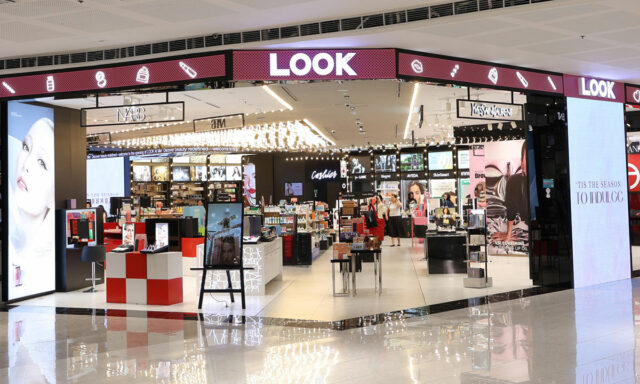
SM AURA and SM Mall of Asia’s luxury beauty store Look (actually, LOOK at Me, but a previous logo design — now fixed — is the cause of the confusion for the store’s name) opened a third branch in SM North EDSA on Jan. 13.

LOOK at Me operates under Watsons Philippines, sharing this parentage with SM Beauty and the Watsons stores under the joint venture (JV) created by the SM Group and Hong Kong-based A.S. Watson & Co. Ltd. when it opened in the Philippines in 2002.

“Part of the JV is for Watsons to operate the beauty section of the SM store,” said Danilo Chiong, managing director of Watsons Philippines. The beauty offerings of SM are thus divided into three categories. Watsons provides personal care and daily essentials; the beauty department of the SM Stores has mass cosmetics and fragrance; and Look at Me, which was described by Mr. Chiong as “It’s your sosyal (fancy) big sister.” Speaking in a group interview before a store tour, he said, “We pride ourselves with being the home for rare, cult, and premium beauty finds.”

The brands in the store make up an impressive roster. Prada, YSL, Armani, Versace, Dolce & Gabbana, Maison Margiela, Viktor & Rolf, and Mugler are in their scent arsenal. Complementing these are Korean and Japanese skincare brands including Dr. Jart+, Laneige, Innisfree, Beauty of Joseon, COSRX, Round Lab, and Torriden. Global favorites such as The Ordinary, Rhode, Charlotte Tilbury, Shiseido, and NARS are also represented.

Aside from the premium brands available in-store, they also level up the experience with makeup artists who double as personal shoppers.

The store’s first location was in SM Aura, opening in 2020. “Before the pandemic happened, we saw the gap where there was no curated go-to store for premium beauty,” said Mr. Chiong. “We’re so active in beauty because it’s a thriving business in the Philippines in general. Health is a big driver for us. Health is growing exponentially for Watsons, but you can’t turn your eye away from beauty.”

About their growth in beauty, he said, “I think Filipinos just personally love looking good,” noting that this also means an increase in sales in fragrance. “I think Filipinos would find a way. We will always smell good, look good; in some shape, way or form. Even if you’re tired, you’ll find some form of self-care.”

While they can’t say where they are opening a fourth location, it will definitely be outside Metro Manila, said Mr. Chiong. “We want to bring that Look experience to more customers.”

After five years of experience since the opening of its first location, Mr. Chiong gave some notes on beauty consumer behavior: “Consumers are getting younger and smarter. I think Gen Z is the biggest consumer market right now. They’re very smart, they have money. They’re more intentional with their purchases.”

To respond to this, the salespeople in their staff undergo upgraded training, so customers really get what they want. Mr. Chiong says that sometimes, customers come with screencaps from TikTok and Instagram and ask for the same exact product, so this new cohort really knows what they want, and they want it fast. “I think Filipinos are very on-trend when it comes to beauty.”

The 3rd branch of LOOK at Me is on the second floor of SM North EDSA’s The Block in Quezon City. — Joseph L. Garcia
Peso to trade sideways before US data

PHILIPINE STAR/IRRA LISING

THE PESO may trade sideways against the dollar this week as market players await the release of key US economic data, which could affect the US Federal Reserve’s policy decision this month.

On Friday, the local unit closed at P59.35 per dollar, rising by 11 centavos from its record-low finish of P59.46 on Thursday, data from the Bankers Association of the Philippines showed.

However, week on week, the peso was down by 10.5 centavos from its P59.245 close on Jan. 9.

“The dollar-peso traded lower on improving global risk sentiment after US President Donald J. Trump softened his tone on Iran, as well as moderate demand for the peso following signals from the BSP (Bangko Sentral ng Pilipinas) that they are taking a measured approach to foreign exchange market intervention,” a trader said in a phone interview on Friday.

BSP Governor Eli M. Remolona, Jr. earlier said that they make “minimal” intervention in the foreign exchange market only to smoothen out sharp swings in the currency.

“There’s tremendous pressure to defend the peso and we’ve resisted that pressure,” he said on Jan. 8.

The peso also rose on Friday amid fresh developments regarding the Fed’s leadership that helped improve sentiment, Rizal Commercial Banking Corp. Chief Economist Michael L. Ricafort said in a Viber message.

The dollar gained on Friday after US President Donald J. Trump praised economic adviser Kevin Hassett at a White House event and said he may want to keep him in his current role, prompting speculation he is less likely to be named as chair of the Federal Reserve, Reuters reported.

The dollar index, which measures the greenback against a basket of currencies including the yen and the euro, rose 0.06% to 99.41, with the euro down 0.1% at $1.1594. The index reached a six-week high of 99.49 on Thursday.

The US currency was boosted last week by data showing an improving US labor market, which has pushed back expectations of further Federal Reserve rate cuts until June.

Fed Vice Chair for Supervision Michelle Bowman said on Friday a fragile job market that could weaken quickly means the US central bank should stand ready to cut interest rates again if needed.

For this week, the trader said the peso could move sideways as players await the scheduled releases of US economic data, including reports on gross domestic product, personal consumption expenditures, jobless claims, and manufacturing.

The market could also take cues from developments on the US-Iran talks, the trader added.

Both the trader and Mr. Ricafort see the peso moving between P59.10 and P59.50 per dollar this week. — A.M.C. Sy with Reuters

ADVERTISEMENT
ADVERTISEMENT